Reading view

Why are people obsessed with (and stealing) Pokemon cards again?
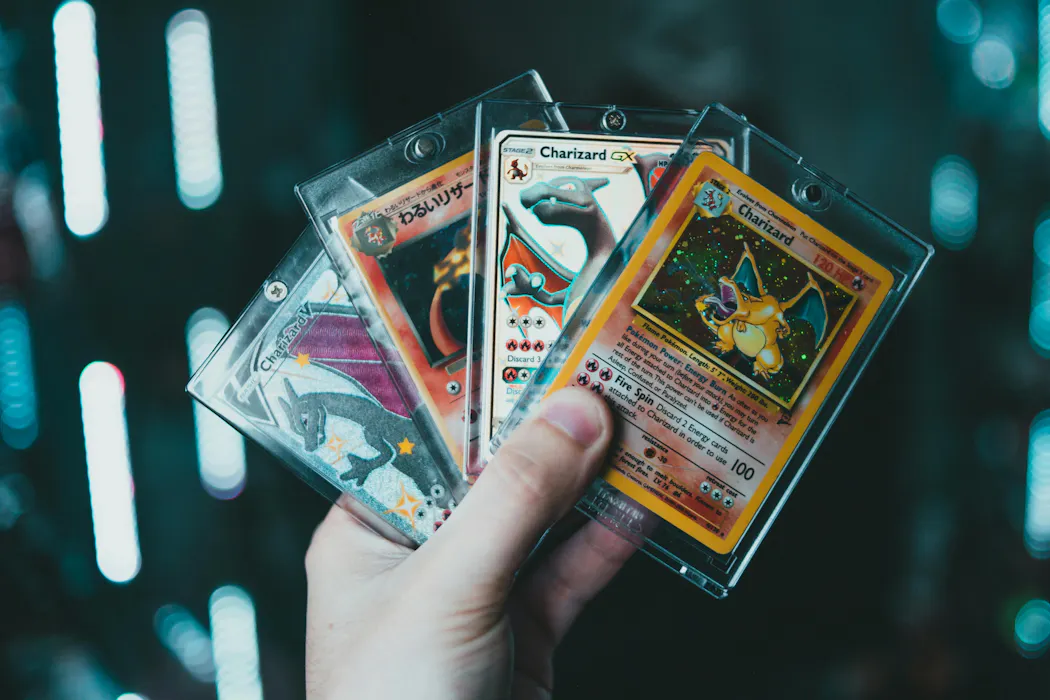
Pexels/Erik Mclean, CC BY

In 1973, Japanese food company Calbee started attaching free collectable baseball player cards to its potato chip packets (and continues to do so today). It was mimicking a trend that had already taken off in tobacco markets in Japan and overseas. Baseball, Japan’s national sport, was an obvious choice for Calbee to attract consumers.

Some four years later, rival company Lotte joined the trend, launching a chocolate wafer snack with Bikkuriman “surprise man” stickers. These stickers quickly caught on – and eventually spawned an entire fantasy world that made its way to anime and manga.

Both Calbee and Lotte helped set a template for how children’s collectables could become objects of desire, competition and, later, nostalgia. Bikkuriman is still sold today, with rare 1980s Super Zeus stickers going for thousands of dollars to adult collectors.

It was against this backdrop that Satoshi Tajiri (born 1965) grew up. He would have been about 12 when the first Bikkuriman card was released. Satoshi himself would end up creating one of the most popular collectable card games in the world: Pokémon.

These cards are now so highly coveted they are driving international crime, getting banned from schools, and locked behind glass cabinets in stores.

Creating the cultural conditions for a hit

Satoshi drew on a childhood memory when he created Pokémon (short for “Pocket Monsters”): catching insects and trading them with friends.

He imagined a Nintendo Game Boy game where players could collect and exchange monsters. After seven years in development, Pocket Monsters Red and Green launched in February 1996. This was followed by a trading card game in October.

In 1997, the anime began airing on Japanese television, with a protagonist also named Satoshi (the name still used in Japan today). Pikachu – originally just one of 151 monsters – became the face of the franchise.

Like Bikkuriman, Pocket Monster spread rapidly across games, TV and print media. But unlike Bikkuriman, it also aimed to cross borders.

The English-language version of the game was released in 1998, with its name changed to Pokémon. “Pocket Monsters” may have sounded awkward, or even suggestive, to English speakers. Although it remains the official name in Japan, most Japanese fans also use the portmanteau, Pokémon.

Character names were also adapted and anglicised for overseas audiences.

For instance, Satoshi became Ash. Nyarth, a bipedal cat thought to be inspired by the Japanese lucky charm maneki-neko, became Meowth, to match the English-language cat sound. (Pikachu, drawing on the Japanese onomatopoeia of “pika” and “chu”, was retained.)

Soon enough, the character names, types and Pokédex numbers became shared internationally, allowing players the world over to connect through a shared Pokémon language. In 2004, the first World Championship for the Pokémon Trading Card Game was held in the United States.

Squirtle in your neighbourhood

It’s difficult for any single commodity to maintain popularity over decades. During the early 2010s, Nintendo suffered significantly, even falling into deficit, and the Pokémon franchise faced competition from rivals such as Yu-Gi-Oh! and Yo-Kai Watch.

The old-school model of marketing through traditional media was no longer enough for global dominance. To survive, Pokémon would need to adopt the logic of new media platforms – and catch the eye of the online generation. Then came Pokémon GO.

The 2016 smartphone app was developed by American software company Niantic, in collaboration with Nintendo and The Pokémon Company.

Through augmented reality, parks, shopping streets and neighbourhoods gained new meaning as potential locations for your next Pokémon catch. One grandfather in Taiwan made the news for using 64 smartphones at once.

Some players even travelled internationally to capture region-exclusive Pokémon, such as Kangaskhan in Australia, which was clearly modelled on a kangaroo.

Downloaded more than 500 million times, the enormous success of Pokémon GO played a key role in re-energising the global Pokémon fandom. Many players sought out the cards they had collected as children.

Interest was further amplified by the release of Pokémon TCG Pocket. Released in 2024, this app digitised the old-school Japanese tabletop to make it accesible for all.

Chasing profits and childhood memories

Then there was another, less predictable factor that drove the popularity of Pokémon cards: COVID lockdowns. With more time at home, people dug out old binders and rediscovered their childhood cards – many of which had high value – and began trading to make money.

This has led to a renewed interest in rare cards such as the Pikachu Illustrator, which was distributed in 1998 to the winners of an illustration contest. The card features artwork by Atsuko Nishida, Pikachu’s original designer. With only 39 copies known to exist, collectors call it the “holy grail” of Pokémon cards.

Earlier this year, influencer Logan Paul sold his Pikachu Illustrator for US$16.492 million, setting a record for the most expensive trading card ever sold.

This potential for profit has led to a surge in Pokémon card-related crime, as the cards are easy to carry, hide and move internationally. We’ve seen a wave of burglaries targeting hobby shops all over the world, including in Australia, the US and Japan.

Many fans may now find themselves unable to purchase cards due to the economic bubble. Still, it seems demand is high; roughly 10.2 billion cards were printed from 2024 to 2025.

Pokémon cards are a rare kind of tangible object. They connect the digital to the physical – the past to the present – and Japan to the world. They aren’t just collectables; they are a cultural currency, which, unfortunately, can be stolen.

The Conversation

Tets Kimura does not work for, consult, own shares in or receive funding from any company or organisation that would benefit from this article, and has disclosed no relevant affiliations beyond their academic appointment.
  •  

Chilling effects of Trump’s war on free speech extend far beyond campus walls – and that’s the point

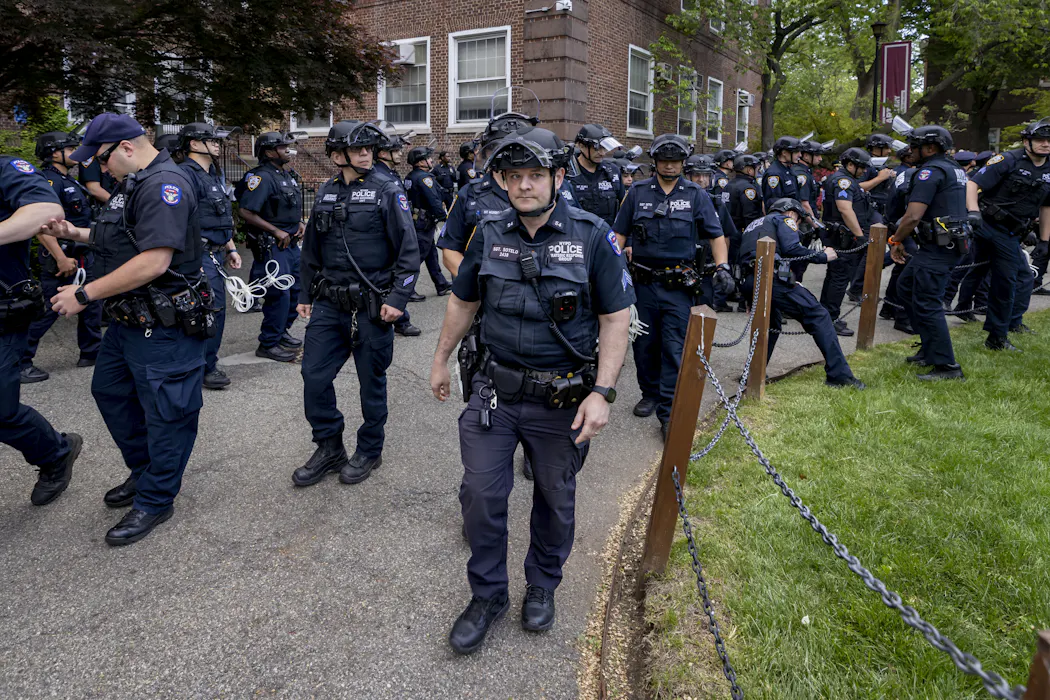
Police clear the campus of Brooklyn College on May 8, 2025, after students established an encampment to protest the Gaza war. Michael Nigro/Pacific Press/LightRocket via Getty Images

Younger Americans have soured on the second Donald Trump presidency, but they are not protesting it.

Despite an unpopular Iran war and an even more unpopular Trump administration, college campus protests nationwide have gone silent. And at many schools, student activism is virtually nonexistent.

This silence comes in the wake of a relentless Trump administration war on campus speech that has involved lawsuits, arrests, deportations and expulsions.

Reports cite a range of complicated factors for the restraint, from apathy to technology-induced incapacity. But as public policy and law and social science experts, we believe students aren’t protesting for a very simple reason: They are afraid. They are self-censoring and disengaging from campaign activism to avoid punitive measures.

In law and social science, we call this impact a chilling effect – the behavioral tendency for people in face of a threat to self-censor and restrain their activities for self-protection.

It’s increasingly clear to us that these impacts are not incidental or ancillary to Trump administration policy. Rather, the chilling effects are the point. This is the closest thing to a consistent governing strategy in Trump’s second term.

The broader chill of Trump threats

Chilling effects can be subtle, but today they are everywhere. And it’s not just students who are chilled by Trump administration threats.

Professors are censoring themselves in lectures and rewriting syllabuses. Researchers are stripping grant applications of words that might attract federal scrutiny, or abandoning the topics entirely. Media outlets are modifying their news coverage to avoid Trump lawsuits or sanctions.

Law enforcement and regulatory agencies are refusing to investigate Trump-aligned actors inside or outside government, and major national law firms are declining cases challenging Trump administration policies.

Publishers are “stepping back” from LGBTQ+ books and other progressive subjects. Many in targeted immigrant communities are afraid to leave home to go to work or school.

In most cases, these people and institutions are not being specifically targeted or threatened by Trump. But they are afraid, and their fear is doing the administration’s work for it. They stay silent, avoid attention and confrontation, and look the other way. In other cases, they change their speech and behavior to accommodate or conform to the administration’s worldview.

Of course, there are counterexamples, such as the winter protests in Minneapolis in response to brutality by agents with U.S. Immigration and Customs Enforcement, and the recent “No Kings” rallies. But even here, the broader but less visible trend – chilling effects – is evident.

A man dressed in black faces dozens of police officers.
Minneapolis police officers arrest and scatter protesters on the campus of the University of Minnesota in Minneapolis on Feb. 5, 2026. Richard Tsong-Taatarii/The Minnesota Star Tribune via Getty Images

For instance, in recent reporting on the latest No Kings rallies, many media outlets observed that students were noticeably missing, despite the Trump administration’s unpopularity among younger Americans.

A persistent strategy

We believe none of this is by accident.

In a new book, “Chilling Effects: Repression, Conformity, and Power in the Digital Age,” one of us – Jon Penney – explains how law, technology, and state and corporate power are weaponized to chill and repress, and the dangers this poses for the United States and other democratic societies. The other – Bruce Schneier – has extensively studied the security infrastructure enabling this.

What we see isn’t gratuitous government cruelty, chaos or vengeance. Instead, we see a persistent strategy to maximize fear and chilling effects in ways that are corrosive to freedom and democracy.

Research suggests that surveillance, personal threats, uncertainty and abuse of power are key factors in doing so. The federal government has a clear and systematic pattern of employing these very mechanisms across a number of domains far beyond campuses.

They are evident in militarized raids by Immigration and Customs Enforcement and in journalists being arrested and indicted for reporting on protests. They are made clear in the long list of political enemies the Trump administration has investigated or threatened, including the Federal Reserve chairman. And they can also be seen in the weaponization of technology, including ramping up surveillance to target critics and protestors.

Corrosive to freedom and democracy

History offers some guidance on impacts.

During the McCarthy era, overreaching laws, surveillance, and public and private sector reprisals ostensibly targeted alleged communists. But the real aim was often to suppress progressive journalists, trade unions and political opposition.

In the 1960s, these same tactics were reused by Southern states to chill the Civil Rights Movement. Historians have written about how the widespread fear and conformity of these periods reshaped American society in enduring ways, including the destruction of progressive political movements and both delaying and muting the Civil Rights Movement itself.

When such state threats are systematized, they can foment a broader climate of fear, self-censorship and conformity. In that climate, dissenting speech, political opposition, democratic mobilization and other checks on power become increasingly difficult, even dangerous. It is no surprise, for instance, that Trump critics regularly admit to self-censorship, fearing for their safety.

Chilling effects are thus not only repressive – causing self-censorship – but productive. They produce conforming and compliant speech and behavior, which can have longer-term social impacts. They not only undermine protected rights and suppress accountability but can promote social change – even without a popular mandate to do so.

Police stand on the grounds of a college campus.
University of Chicago police patrol the campus after dismantling a pro-Palestine encampment on May 7, 2024. Alex Wroblewski/AFP via Getty Images

This latter point is often missed. It explains Trump’s assaults on universities and cultural institutions such as the Kennedy Center for the Arts and the Smithsonian. Often dismissed as peculiar Trump obsessions, they are fully consistent with Project 2025 – the sweeping policy blueprint for Trump’s second term authored by a coalition of conservative groups and its call to target the “institutions of American civil society” and “wield federal power” to “reverse” decades of progressive cultural advancements.

In the near term, this means an increasingly weakened democratic society, with the government and its patrons enjoying freedom to pursue their objectives. Over the long term, this can mean a changed society as more conformist and compliant speech and culture become more widely accepted and entrenched.

Not inevitable

In our view, this future is not inevitable, just as the McCarthy era “Red Scare” and violent civil rights era repression were not. In both cases, fear and chilling effects were resisted in law and civil society, as they can be today.

But the central mechanisms – surveillance, uncertainty, personal threats and abuse of power – would need to be addressed. For instance, new legislation could ensure justice for lawless government actors and constrain surveillance. Courts can block abuses of federal power, including illegal arrests, detentions and mass citizen databases.

The media, lawyers and civil society can hold the government accountable. And students, teachers, universities and cultural institutions can resist the tendency to self-censor and conform.

The citizen mobilization in Minnesota and the No Kings rallies are examples of that. But to resist chilling effects and their dangers over the long term, this would have to be the norm, not the exception.

The Conversation

Jon Penney has acted as an expert witness, on a pro bono basis, for the American Civil Liberties Association in litigation challenging the legality of government surveillance.

Bruce Schneier does not work for, consult, own shares in or receive funding from any company or organization that would benefit from this article, and has disclosed no relevant affiliations beyond their academic appointment.

  •  

What is ‘cycle syncing’, and how might it affect menstruation?

Yan Krukau/Pexels

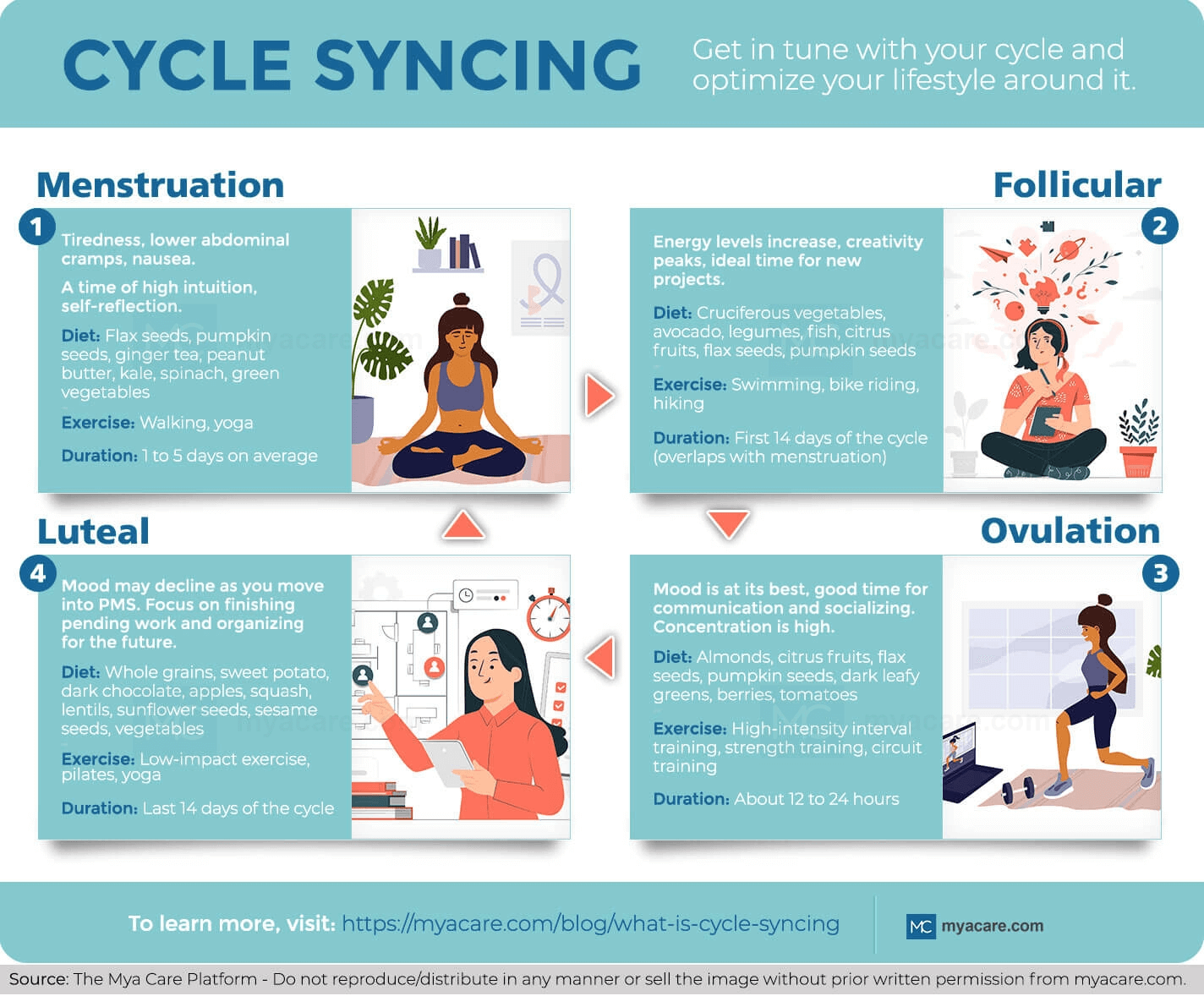
Menstruation is once again a hot topic on social media, thanks to a new health trend known as “cycle syncing”.

It involves aligning your diet and exercise habits to each phase of your menstrual cycle. For example, you may only do gentle exercises such as yoga or eat more fermented foods during the first phase of menstruation.

Social media influencers are spruiking cycle syncing as a more natural way for women to manage negative symptoms, such as period pain, and be more in tune with their bodies.

So how does it work? And is it supported by research?

The menstrual cycle

During menstruation, the body sheds the uterus lining to prepare for pregnancy. This usually happens every 28–35 days. But bleeding is only one part of the menstrual cycle. The menstrual cycle can be divided into three main phases:

  1. follicular phase, where the body releases a hormone called the follicle-stimulating hormone to help follicles grow in the uterus

  2. ovulation, where the ovary releases a mature egg that may or may not be fertilised

  3. luteal phase, where the body releases a hormone known as progesterone that thickens the lining of the uterus, in preparation for pregnancy. But if the egg is not fertilised, the uterus will shed its lining and this cycle repeats.

Throughout the menstrual cycle, fluctuating hormone levels can cause symptoms such as fatigue, cramps, bloating, mood swings and changes in appetite.


Read more: Planning a baby? A fertility app won’t necessarily tell you the best time to try


Does ‘cycle syncing’ work?

Advocates of cycle syncing say it helps women manage period symptoms and meet the the body’s changing energy needs during menstruation.

However, specific claims often conflict with each other. For example, some who promote cycle syncing suggest eating fermented foods and fresh vegetables during the follicular phase, while others recommend eating lean proteins and wholegrains. Certain cycle syncing advocates emphasise doing cardio workouts and other high-intensity exercise in the follicular phase. Meanwhile, others say swimming or cycling are better options to manage period symptoms.

However, there is little evidence to support these claims.

Various systematic reviews – which summarise all the available research on a specific question – have found no evidence that doing exercise during certain phases of the menstrual cycle improves muscle development or performance. This is the case with both resistance training which aims to build strength, and aerobic exercise, which increases your heart rate.

It also does not appear to reduce your risk of muscle injuries. Research shows immune function may fluctuate throughout the menstrual cycle, but one systematic review found this variation is unlikely to impact exercise.


Read more: Can exercise reduce period pain? And what kind is best?


However, research suggests female athletes may feel less motivated or confident playing sport in the late luteal phase. They were also more likely to think they performed worse at the start and end of their period. This may be because symptoms such as cramping, back pain and tiredness make exercise seem much harder during menstruation.

But research suggests certain types of exercise, including strength training and relaxation-based exercises, may help relieve period pain.

There’s even less evidence examining the link between nutrition and different phases of the menstrual cycle. One 2024 study suggested women may be hungrier or eat more during their luteal phase, compared to the follicular phase. This may be because during the luteal phase, the body consumes more energy to prepare for a potential pregnancy.

However, one systematic review found no conclusive evidence that changing your diet reduces symptoms such as cramps, bloating and fatigue.

What to do instead

Existing studies looking at the relationship between diet, exercise and different menstrual phases have produced extremely varied results. And there are still many gaps in current research, including what the mechanism behind cycle syncing actually is and what its benefits may be.

So for those who want to manage period symptoms, the best approach is to be patient with yourself and listen to bodily cues. For example, if you slept badly because of night-time cramps, you don’t need to do a high-intensity workout the next morning. Consider going for a walk instead. And if you feel extra hungry near the end of your period – in the luteal phase – it’s fine to eat a little more.

The jury’s out as to whether cycle syncing actually works. But making small lifestyle tweaks could help make your time of the month that bit more manageable.

The Conversation

Emmalee Ford is employed by Family Planning Australia, a non-government sexual and reproductive health organisation.

  •  

Chilling effects of Trump’s war on free speech extend far beyond campus walls – and that’s the point

Police clear the campus of Brooklyn College on May 8, 2025, after students established an encampment to protest the Gaza war. Michael Nigro/Pacific Press/LightRocket via Getty Images

Younger Americans have soured on the second Donald Trump presidency, but they are not protesting it.

Despite an unpopular Iran war and an even more unpopular Trump administration, college campus protests nationwide have gone silent. And at many schools, student activism is virtually nonexistent.

This silence comes in the wake of a relentless Trump administration war on campus speech that has involved lawsuits, arrests, deportations and expulsions.

Reports cite a range of complicated factors for the restraint, from apathy to technology-induced incapacity. But as public policy and law and social science experts, we believe students aren’t protesting for a very simple reason: They are afraid. They are self-censoring and disengaging from campaign activism to avoid punitive measures.

In law and social science, we call this impact a chilling effect – the behavioral tendency for people in face of a threat to self-censor and restrain their activities for self-protection.

It’s increasingly clear to us that these impacts are not incidental or ancillary to Trump administration policy. Rather, the chilling effects are the point. This is the closest thing to a consistent governing strategy in Trump’s second term.

The broader chill of Trump threats

Chilling effects can be subtle, but today they are everywhere. And it’s not just students who are chilled by Trump administration threats.

Professors are censoring themselves in lectures and rewriting syllabuses. Researchers are stripping grant applications of words that might attract federal scrutiny, or abandoning the topics entirely. Media outlets are modifying their news coverage to avoid Trump lawsuits or sanctions.

Law enforcement and regulatory agencies are refusing to investigate Trump-aligned actors inside or outside government, and major national law firms are declining cases challenging Trump administration policies.

Publishers are “stepping back” from LGBTQ+ books and other progressive subjects. Many in targeted immigrant communities are afraid to leave home to go to work or school.

In most cases, these people and institutions are not being specifically targeted or threatened by Trump. But they are afraid, and their fear is doing the administration’s work for it. They stay silent, avoid attention and confrontation, and look the other way. In other cases, they change their speech and behavior to accommodate or conform to the administration’s worldview.

Of course, there are counterexamples, such as the winter protests in Minneapolis in response to brutality by agents with U.S. Immigration and Customs Enforcement, and the recent “No Kings” rallies. But even here, the broader but less visible trend – chilling effects – is evident.

A man dressed in black faces dozens of police officers.
Minneapolis police officers arrest and scatter protesters on the campus of the University of Minnesota in Minneapolis on Feb. 5, 2026. Richard Tsong-Taatarii/The Minnesota Star Tribune via Getty Images

For instance, in recent reporting on the latest No Kings rallies, many media outlets observed that students were noticeably missing, despite the Trump administration’s unpopularity among younger Americans.

A persistent strategy

We believe none of this is by accident.

In a new book, “Chilling Effects: Repression, Conformity, and Power in the Digital Age,” one of us – Jon Penney – explains how law, technology, and state and corporate power are weaponized to chill and repress, and the dangers this poses for the United States and other democratic societies. The other – Bruce Schneier – has extensively studied the security infrastructure enabling this.

What we see isn’t gratuitous government cruelty, chaos or vengeance. Instead, we see a persistent strategy to maximize fear and chilling effects in ways that are corrosive to freedom and democracy.

Research suggests that surveillance, personal threats, uncertainty and abuse of power are key factors in doing so. The federal government has a clear and systematic pattern of employing these very mechanisms across a number of domains far beyond campuses.

They are evident in militarized raids by Immigration and Customs Enforcement and in journalists being arrested and indicted for reporting on protests. They are made clear in the long list of political enemies the Trump administration has investigated or threatened, including the Federal Reserve chairman. And they can also be seen in the weaponization of technology, including ramping up surveillance to target critics and protestors.

Corrosive to freedom and democracy

History offers some guidance on impacts.

During the McCarthy era, overreaching laws, surveillance, and public and private sector reprisals ostensibly targeted alleged communists. But the real aim was often to suppress progressive journalists, trade unions and political opposition.

In the 1960s, these same tactics were reused by Southern states to chill the Civil Rights Movement. Historians have written about how the widespread fear and conformity of these periods reshaped American society in enduring ways, including the destruction of progressive political movements and both delaying and muting the Civil Rights Movement itself.

When such state threats are systematized, they can foment a broader climate of fear, self-censorship and conformity. In that climate, dissenting speech, political opposition, democratic mobilization and other checks on power become increasingly difficult, even dangerous. It is no surprise, for instance, that Trump critics regularly admit to self-censorship, fearing for their safety.

Chilling effects are thus not only repressive – causing self-censorship – but productive. They produce conforming and compliant speech and behavior, which can have longer-term social impacts. They not only undermine protected rights and suppress accountability but can promote social change – even without a popular mandate to do so.

Police stand on the grounds of a college campus.
University of Chicago police patrol the campus after dismantling a pro-Palestine encampment on May 7, 2024. Alex Wroblewski/AFP via Getty Images

This latter point is often missed. It explains Trump’s assaults on universities and cultural institutions such as the Kennedy Center for the Arts and the Smithsonian. Often dismissed as peculiar Trump obsessions, they are fully consistent with Project 2025 – the sweeping policy blueprint for Trump’s second term authored by a coalition of conservative groups and its call to target the “institutions of American civil society” and “wield federal power” to “reverse” decades of progressive cultural advancements.

In the near term, this means an increasingly weakened democratic society, with the government and its patrons enjoying freedom to pursue their objectives. Over the long term, this can mean a changed society as more conformist and compliant speech and culture become more widely accepted and entrenched.

Not inevitable

In our view, this future is not inevitable, just as the McCarthy era “Red Scare” and violent civil rights era repression were not. In both cases, fear and chilling effects were resisted in law and civil society, as they can be today.

But the central mechanisms – surveillance, uncertainty, personal threats and abuse of power – would need to be addressed. For instance, new legislation could ensure justice for lawless government actors and constrain surveillance. Courts can block abuses of federal power, including illegal arrests, detentions and mass citizen databases.

The media, lawyers and civil society can hold the government accountable. And students, teachers, universities and cultural institutions can resist the tendency to self-censor and conform.

The citizen mobilization in Minnesota and the No Kings rallies are examples of that. But to resist chilling effects and their dangers over the long term, this would have to be the norm, not the exception.

The Conversation

Jon Penney has acted as an expert witness, on a pro bono basis, for the American Civil Liberties Association in litigation challenging the legality of government surveillance.

Bruce Schneier does not work for, consult, own shares in or receive funding from any company or organization that would benefit from this article, and has disclosed no relevant affiliations beyond their academic appointment.

  •  

Why are people obsessed with (and stealing) Pokemon cards again?

Pexels/Erik Mclean, CC BY

In 1973, Japanese food company Calbee started attaching free collectable baseball player cards to its potato chip packets (and continues to do so today). It was mimicking a trend that had already taken off in tobacco markets in Japan and overseas. Baseball, Japan’s national sport, was an obvious choice for Calbee to attract consumers.

Some four years later, rival company Lotte joined the trend, launching a chocolate wafer snack with Bikkuriman “surprise man” stickers. These stickers quickly caught on – and eventually spawned an entire fantasy world that made its way to anime and manga.

Both Calbee and Lotte helped set a template for how children’s collectables could become objects of desire, competition and, later, nostalgia. Bikkuriman is still sold today, with rare 1980s Super Zeus stickers going for thousands of dollars to adult collectors.

It was against this backdrop that Satoshi Tajiri (born 1965) grew up. He would have been about 12 when the first Bikkuriman card was released. Satoshi himself would end up creating one of the most popular collectable card games in the world: Pokémon.

These cards are now so highly coveted they are driving international crime, getting banned from schools, and locked behind glass cabinets in stores.

Creating the cultural conditions for a hit

Satoshi drew on a childhood memory when he created Pokémon (short for “Pocket Monsters”): catching insects and trading them with friends.

He imagined a Nintendo Game Boy game where players could collect and exchange monsters. After seven years in development, Pocket Monsters Red and Green launched in February 1996. This was followed by a trading card game in October.

In 1997, the anime began airing on Japanese television, with a protagonist also named Satoshi (the name still used in Japan today). Pikachu – originally just one of 151 monsters – became the face of the franchise.

Like Bikkuriman, Pocket Monster spread rapidly across games, TV and print media. But unlike Bikkuriman, it also aimed to cross borders.

The English-language version of the game was released in 1998, with its name changed to Pokémon. “Pocket Monsters” may have sounded awkward, or even suggestive, to English speakers. Although it remains the official name in Japan, most Japanese fans also use the portmanteau, Pokémon.

Character names were also adapted and anglicised for overseas audiences.

For instance, Satoshi became Ash. Nyarth, a bipedal cat thought to be inspired by the Japanese lucky charm maneki-neko, became Meowth, to match the English-language cat sound. (Pikachu, drawing on the Japanese onomatopoeia of “pika” and “chu”, was retained.)

Soon enough, the character names, types and Pokédex numbers became shared internationally, allowing players the world over to connect through a shared Pokémon language. In 2004, the first World Championship for the Pokémon Trading Card Game was held in the United States.

Squirtle in your neighbourhood

It’s difficult for any single commodity to maintain popularity over decades. During the early 2010s, Nintendo suffered significantly, even falling into deficit, and the Pokémon franchise faced competition from rivals such as Yu-Gi-Oh! and Yo-Kai Watch.

The old-school model of marketing through traditional media was no longer enough for global dominance. To survive, Pokémon would need to adopt the logic of new media platforms – and catch the eye of the online generation. Then came Pokémon GO.

The 2016 smartphone app was developed by American software company Niantic, in collaboration with Nintendo and The Pokémon Company.

Through augmented reality, parks, shopping streets and neighbourhoods gained new meaning as potential locations for your next Pokémon catch. One grandfather in Taiwan made the news for using 64 smartphones at once.

Some players even travelled internationally to capture region-exclusive Pokémon, such as Kangaskhan in Australia, which was clearly modelled on a kangaroo.

Downloaded more than 500 million times, the enormous success of Pokémon GO played a key role in re-energising the global Pokémon fandom. Many players sought out the cards they had collected as children.

Interest was further amplified by the release of Pokémon TCG Pocket. Released in 2024, this app digitised the old-school Japanese tabletop to make it accesible for all.

Chasing profits and childhood memories

Then there was another, less predictable factor that drove the popularity of Pokémon cards: COVID lockdowns. With more time at home, people dug out old binders and rediscovered their childhood cards – many of which had high value – and began trading to make money.

This has led to a renewed interest in rare cards such as the Pikachu Illustrator, which was distributed in 1998 to the winners of an illustration contest. The card features artwork by Atsuko Nishida, Pikachu’s original designer. With only 39 copies known to exist, collectors call it the “holy grail” of Pokémon cards.

Earlier this year, influencer Logan Paul sold his Pikachu Illustrator for US$16.492 million, setting a record for the most expensive trading card ever sold.

This potential for profit has led to a surge in Pokémon card-related crime, as the cards are easy to carry, hide and move internationally. We’ve seen a wave of burglaries targeting hobby shops all over the world, including in Australia, the US and Japan.

Many fans may now find themselves unable to purchase cards due to the economic bubble. Still, it seems demand is high; roughly 10.2 billion cards were printed from 2024 to 2025.

Pokémon cards are a rare kind of tangible object. They connect the digital to the physical – the past to the present – and Japan to the world. They aren’t just collectables; they are a cultural currency, which, unfortunately, can be stolen.

The Conversation

Tets Kimura does not work for, consult, own shares in or receive funding from any company or organisation that would benefit from this article, and has disclosed no relevant affiliations beyond their academic appointment.

  •  
❌