Login
Login
Volunteer for Pollinators: Join Community Science in Ontario
With National Volunteer Week now underway, it’s an ideal time to reflect on the role people play in protecting Ontario’s biodiversity. Community science is one meaningful way to get involved. And as spring returns to Ontario, pollinators begin to reappear in fields, forests, wetlands, and gardens making them a natural group of species to observe for community science programs.
While these sightings may feel routine, they are becoming less predictable for many species. Pollinator populations are declining due to habitat loss, pesticide exposure (especially neonicotinoids), disease, invasive species, and climate change. These threats are reshaping where species can survive and fragmenting habitats that once supported stable populations. Getting involved as a volunteer observer is one of the most direct ways to support pollinator conservation in Ontario.

Why Pollinator Sightings Matter
Pollinators — such as bees, butterflies, moths, and even birds — are important indicators of ecosystem health. They support plant reproduction and help sustain food webs across the province and country. Because many species depend on specific plants or habitats, even small environmental changes can have significant impacts.
This also makes pollinators especially valuable for community science. Each observation helps researchers track biodiversity changes across Ontario over time.
Pollinators at Risk in Ontario
Under the Endangered Species Act, 2007, many species at risk received legal protection. However, Ontario’s new Species Conservation Act, 2025, introduced through Bill 5, changes how species are protected and may reduce protections for some, including certain pollinators.
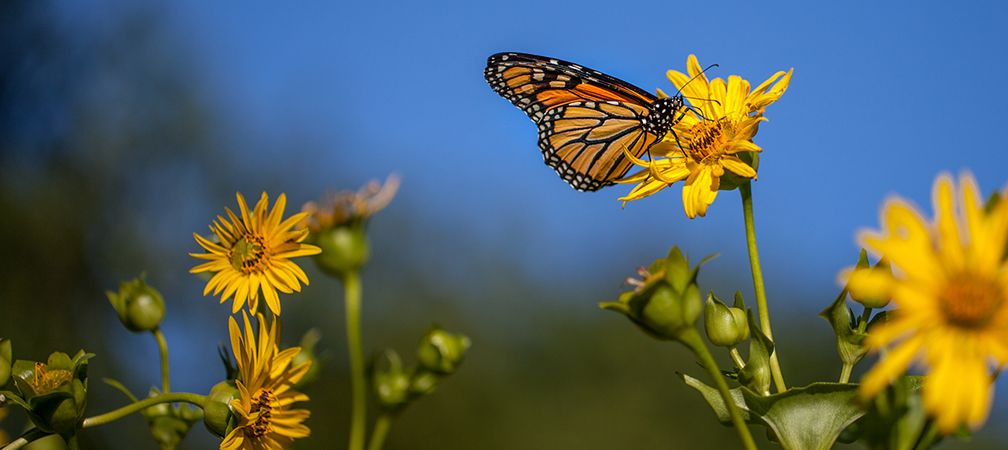
Monarch (Endangered in Canada / Special Concern in Ontario)
Herbicides and insecticides reduce milkweed, a crucial piece of the Monarch’s breeding habitat. Their long-distance migration also exposes them to threats such as habitat loss and declining wildflower availability.
Rusty-patched Bumble Bee (Endangered)
Once common in southern Ontario, this species has declined sharply. The last confirmed observation records in Canada come from two Ontario Parks, Pinery Provincial Park (2009) and St. Williams Conservation Reserve (2000).
Mottled Duskywing (Endangered)
This butterfly depends on rare oak woodlands and plants such as the New Jersey Tea and Prairie Redroot. These habitats are limited and fragmented, making populations vulnerable.
West Virginia White (Special Concern)
An early spring butterfly that depends on Two-leaved Toothwort. Invasive garlic mustard is a threat to this species as it disrupts egg laying behaviour.
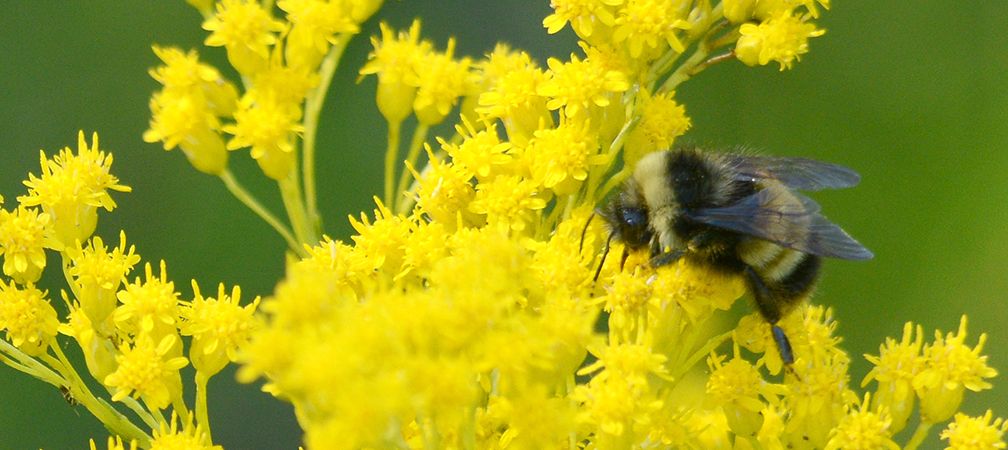
Yellow-banded Bumble Bee (Special Concern)
An early spring pollinator of wild plants and crops such as blueberries and apples. This bumble bee’s abundance has decreased in Ontario and is associated with habitat loss, pesticide exposure, climate change, and disease.
Contribute your Sightings
If you spot these or other species, you can contribute to community science projects:
- Butterflies and moths can be recorded through the Ontario Butterfly Atlas and the Butterflies in My Backyard project
- Bumble bees can be reported via Bumble Bee Watch
- Birds via Ontario Breeding Bird Atlas
- Reptiles and Amphibians via Ontario Reptile and Amphibian Atlas
You can also join the global community of iNaturalist users to share and verify observations. The Natural Heritage Information Centre has a Rare Species of Ontario project.
The Ethics of Observation
Observe wildlife responsibly to avoid disturbance and ensure useful data. Follow A Nature Viewer’s Code of Ethics and be aware that many species are protected under Ontario’s Fish and Wildlife Conservation Act and Canada’s Species at Risk Act.
Every observation matters. Whether you notice pollinators in your garden, birds overhead, or frogs in a wetland, your sightings contribute to a better understanding of Ontario’s ecosystems—and how they are changing.