Reading view

Man jailed for 10 months after throwing ‘seditious’ leaflets from public housing flat

Man jailed 10 months over banned political slogan thrown from gov’t housing

A Hong Kong man who threw anti-government leaflets from his public housing flat has been sentenced to 10 months in prison after pleading guilty to committing seditious acts.
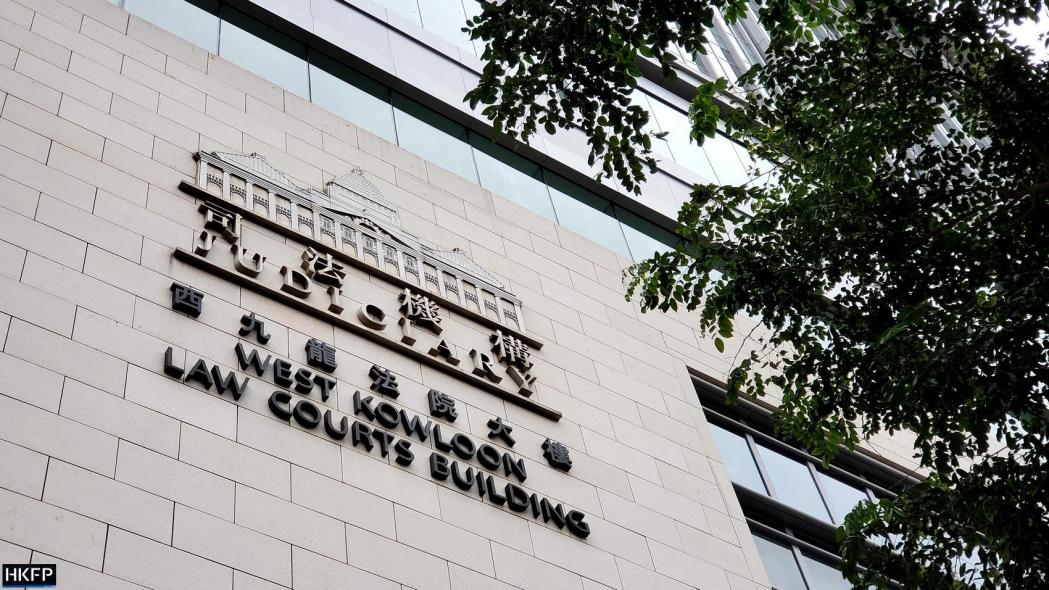
West Kowloon Law Courts
West Kowloon Law Courts Building. File photo: Kelly Ho/HKFP.

Raymond Wong appeared at the West Kowloon Magistrates’ Court on Tuesday to receive a 10-month jail sentence handed down by Chief Magistrate Victor So for two counts of “doing with a seditious intention an act or acts that had a seditious intention,” local media reported.

Wong, a 55-year-old construction worker, admitted to throwing the leaflets from his unit in On Tat Estate, Kwun Tong, on two occasions in October 2024 and December 2025.

He was arrested in April, and the following month, he pleaded guilty to the charges –  an offence under Hong Kong’s homegrown national security law, also known as Article 23.

In mitigation, he apologised to his girlfriend and his daughter, as their public housing unit would be reclaimed by the government due to his offence.

Citing a psychological report, Wong’s lawyers said that the defendant did not know how to control the resentment that had built up from losing his full-time job after the 2019 protests and the Covid-19 pandemic.

‘Premeditated and planned’

Noting that the leaflets were thrown after National Day two years ago and before last year’s Legislative Council (LegCo) elections, Magistrate So said that Wong’s actions were “premeditated and planned to some degree.”

On October 2, 2024, Kwun Tong district councillor Hsu Yau-wai reported 41 sheets of paper to the police after finding them on the podium of Lai Tat House at the estate. The papers had slogans on them saying “kill police” and derogatory remarks about mainland Chinese people.

On December 5 last year, two days ahead of the “patriots only” LegCo polls, a property manager found papers scattered near that same area, with written slogans such as “Liberate Hong Kong, do not vote.”

Police officers at a Tai Po polling station for the 2025 LegCo elections, on December 7, 2025. Photo: Kyle Lam/HKFP.

Wong’s lawyers said on Tuesday that his methods were “primitive” and had limited impact compared with online posts.

So said he accepted the defence’s argument but pointed out that Wong explicitly incited people to kill police officers, mainland Chinese, and government officials.

Wong incited enmity towards the police and referred to mainland residents with “derogatory” and “dehumanising” language, and his use of the slogan “Liberate Hong Kong,” considered secessionist under Beijing’s national security law in Hong Kong, also challenged national sovereignty, the magistrate added.

Calls to boycott the LegCo polls also amounted to an effort to undermine public confidence in the city’s electoral system, So said.

The turnout for last year’s polls was the second-lowest on record, at 31.9 per cent. Beijing overhauled the city’s electoral system in 2021 to ensure that only those deemed patriotic enough can run.

The move reduced democratic representation in the legislature, tightened control of elections and introduced requirements for candidates to obtain nominations from a small circle of political elites.

  •  

Construction worker pleads guilty to distributing ‘seditious’ materials, incl. calls to boycott ‘patriots only’ polls

Court sedition

A 55-year-old man has pleaded guilty to making and distributing “seditious” materials, including ones that called for a boycott of the “patriots only” legislative elections last year.

West Kowloon Law Courts Building. File photo: Kyle Lam/HKFP.

Raymond Wong, a construction worker, was charged and brought to the West Kowloon Magistrates’ Courts on Thursday afternoon.

He was arrested by national security police on April 21, a government statement said on Thursday. His arrest was not known to the public before, as police did not issue information about it at the time.

Wong was charged with two counts of “doing with a seditious intention an act or acts that had a seditious intention,” an offence under Hong Kong’s homegrown national security law, also known as Article 23.

According to a court document, Wong allegedly made “paper sheets written with statements” and threw them “into a public space” from a 12th-floor flat in On Tat Estate, a public housing estate in Kwun Tong. The first count of the sedition offence was dated October 2, 2024, and the second one was dated December 5, 2025.

Local media reported that on October 2, 2024, a Kwun Tong district councillor found pieces of paper with phrases including “blow up corrupt police officers” scattered on the estate’s podium. The district councillor called the police and handed over 41 sheets of paper.

On Tat Estate, a public housing estate located in Hong Kong's Kwun Tong. File Photo: Wikimedia Commons.
On Tat Estate, a public housing estate located in Hong Kong’s Kwun Tong. File Photo: Wikimedia Commons.

On December 5 last year, two days before the “patriots only” Legislative Council elections, a staff member at the estate’s property management company found sheets of paper reading “liberate Hong Kong, do not vote,” also on the estate’s podium.

Police were called, and they seized 16 pieces of paper with seditious phrases. Wong’s fingerprints were found on two of them.

Wong’s case was adjourned to June 9 for sentencing to await his background report, a social welfare report and a psychological report.

Sedition is punishable by up to seven years in jail. If the defendant is found to have colluded with an “external force” when committing the offence, they face a maximum of 10 years behind bars.

Jail terms handed down at the magistrate’s court, however, are capped at two years, or three when a defendant is convicted of more than one offence.

The maximum penalty for sedition was increased in March 2024, when lawmakers passed Article 23. Before that, it was punishable by up to two years, when sedition fell under a colonial-era ordinance.

  •  
❌