Reading view

Unofficial results show PPP leading the GB race with victory on 10 seats

Unofficial and preliminary election results for 24 seats of the Gilgit-Baltistan Legislative Assembly show that the PPP is leading the race with success in 10 constituencies.

According to the unofficial results, second in the race is PML-N with six seats, while independent candidates, including two PTI-backed ones, emerged victorious in seven constituencies. Majlis Wahdat-i-Muslimeen was able to win just one seat, the results showed.

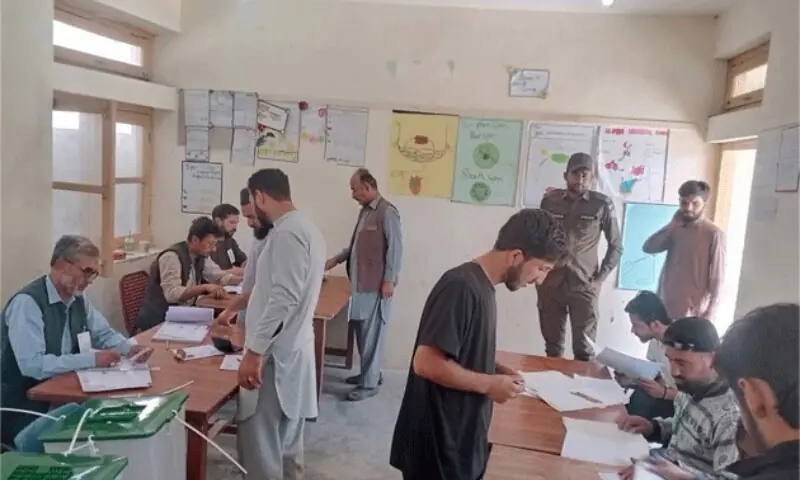
Polling for the 24 seats had concluded peacefully on Sunday evening amid tight security arrangements.

Unofficial Provisional Results

Gilgit-Baltistan Assembly Elections

24 seats · Results as reported

PPP 10
PML-N 6
Independent 5
PTI-backed Ind. 2
MWM 1
SeatDistrictWinner
GBA-1GilgitPPP
GBA-2GilgitPML-N
GBA-3GilgitPTI-backed Ind.
GBA-4NagarPPP
GBA-5NagarPPP
GBA-6HunzaPTI-backed Ind.
GBA-7SkarduPPP
GBA-8SkarduMWM
GBA-9SkarduPPP
GBA-10RounduPPP
GBA-11KharmangPPP
GBA-12ShigarPPP
GBA-13AstorePML-N
GBA-14AstorePML-N
GBA-15DiamerIndependent
GBA-16DiamerIndependent
GBA-17DarelPPP
GBA-18TangirPML-N
GBA-19GhizerPPP
GBA-20GhizerPML-N
GBA-21YasinIndependent
GBA-22GhanchePML-N
GBA-23GhancheIndependent
GBA-24GhancheIndependent

* Unofficial provisional results. PTI-backed candidates ran as independents.


The Gilgit-Baltistan Assembly has a total of 33 seats — 24 of which are contested through direct elections, six are reserved for women, and three are reserved for technocrats and professionals. Political parties can nominate candidates for the reserved seats through proportional representation.

The general elections for GB took place after a four-month delay, which was attributed to harsh winter weather.

A total of 396 candidates contested the elections, with 266 running as independents. Only eight women contested the elections, five of them as independent candidates.

The total number of registered voters in the region’s 10 districts was 963,034, including 566,097 male and 396,937 female voters.

PPP’s allegations

The voting process remained largely peaceful throughout the region.

However, as the voting closed, PPP Secretary General Nayyar Hussain Bukhari alleged delays in the provision of Form-45.

A Form-45 is the result of the vote count prepared by a presiding officer (PO) at each polling station.

“We have contacted the chief election commissioner and informed him about the matter,” Bukhari said in a statement.

Separately, PPP spokesperson Shazia Marri said in a statement that the “delay in the issuance of Form-45 was unacceptable”.

She also alleged that voter lists were altered before the election and polling stations were changed, saying that these actions indicated rigging.

PPP alleged earlier that the Balachi polling station in Astore-II’s Bunji area was relocated from the roadside to the top of a hill overnight while the voting was underway.

In a post on X, the party noted that the polling station had 206 registered voters, asserting that the “local population is known for its strong support” of the PPP.

“This decision appears to be an attempt to affect the PPP’s vote bank and discourage voters from participating in the polling process,” it alleged.

The party added that residents blocked the Gilgit-Skardu Road in protest of this action.

In her statement, Marri said the PPP would not let an attempt to steal the public’s mandate succeed.

She demanded that the Election Commission fulfill its constitutional responsibility and issue correct results.

Meanwhile, PPP’s Nadeem Afzal accused the federal government of “electoral engineering”, alleging that two federal ministers present in GB were pressuring the administration and state machinery to influence results. “The presence of Amir Muqam and Aleem Khan in GB and their activities go against the requirements of a fair election,” he added.

“There are also reports that presiding officers are being pressurised not to issue Form-45, which raises a question on the election’s transparency,” Chan said in a statement.

PPP Secretary General also made these allegations in a video statement.

PTI claims lead in polls, alleges rigging

Similarly, the PTI claimed in a statement that its candidates were leading, according to initial and unofficial results.

“PTI candidates were clearly leading until 7pm. However, immediately afterwards, results from certain polling stations began to emerge with suspiciously high turnouts exceeding 80 per cent and individual ballot boxes having 700-800 votes. These figures raise serious doubts and suspicions,” the party said.

It further said, “This is a blot on the entire electoral process and its transparency.”

The PTI also alleged that its polling agents were not being issued Form-46, terming it a “clear violation of election laws that has further intensified fears of result manipulation”.

It said reports had emerged of members of other parties being caught red-handed with fake ballot papers in multiple areas, including Nagar.

“This rigging is part of a well-planned and systematic conspiracy,” the party has claimed.

It alleged that before polling, voter lists were tampered with in specific constituencies, police and administration were used to change delimitation and polling schemes, and opposition candidates and workers were “systematically harassed and pressurised”.

The PTI warned that any attempt to manipulate the results would have serious consequences.

“PTI will employ every constitutional, legal, and democratic avenue to protect the votes of its supporters. We demand that authentic results from all polling stations be released immediately, Form-45 and Form-46 be provided to every candidate without delay, a swift inquiry be conducted into suspicious polling stations with strict action against those responsible, and the Election Commission fulfil its constitutional duty by ensuring complete transparency,” the party stated.

Polling

As polling began, GB Chief Election Commissioner (CEC) Raja Shahbaz Khan visited various polling stations across Gilgit city to review the process, security arrangements and the overall electoral environment.

He also inspected the facilities and arrangements provided to voters at the polling stations and met polling agents representing different candidates.

Speaking to PTV News, Khan noted that he had visited around 10 polling stations, where security arrangements were satisfactory.

He said women were turning out in large numbers to cast ballots, which reflected strong public awareness about the importance of exercising their democratic right.

He added that all political parties were participating peacefully in the electoral process.

GB caretaker Interior Minister Sajid Ali Baig said he visited various polling stations, where the overall environment remained peaceful.

According to APP, he told a local media outlet that there were public demands for further deployment of police forces in some areas for smooth and secure polling.

The minister said minor irregularities observed at certain locations were being addressed promptly by the authorities concerned.

Who was in the race?

PPP fielded 23 candidates, PML-N 22, Istehkam-i-Pakistan Party (IPP) 15, PML-Q 11, Tehreek-i-Islami Pakistan 10, Pakistan Nazriyati Party (PNP) also 10, while nine candidates from the Jamiat Ulema-i-Islam-Fazl (JUI-F) also contested the elections.

Meanwhile, the PTI, which won the 2020 elections, has remained without an electoral symbol since Jan 13, 2024 and therefore, its candidates were contesting as independents.

In line with its strategy for the national 2024 elections, it allied with the Majlis Wahdat-i-Muslimeen (MWM). A social media post by the party showed their alliance has 22 candidates combined, with MWM nominees bearing the “tent” symbol.

MWM had three candidates in the running, and one candidate from the Sunni Ittehad Council (SIC) also contested the election.

Six candidates each from Jamaat-i-Islami and the Muttahida Qaumi Movement (MQM-P) also contested the elections, along with four candidates from Awami Workers Party (AWP) and one nominee from Awami National Party (ANP).

PPP, IPP, and PNP nominated one woman each.

The main contenders for the winning candidate were Advocate Amjad Hussain from the PPP and former chief minister Hafiz Hafeezur Rehman from the PML-N.

Hussain, president of the PPP’s GB chapter, has served as a member of the GB assembly from 2020 to 2025 and as a member of the GB council from 2009 to 2014. He is contesting from GBA-1 (Gilgit-I).

Rehman, currently the president of the PML-N’s GB chapter, served as the chief minister from 2015 to 2020. He also served as an assembly member from 2004 to 2009. The former CM is contesting the polls from GBA-2 (Gilgit-II).
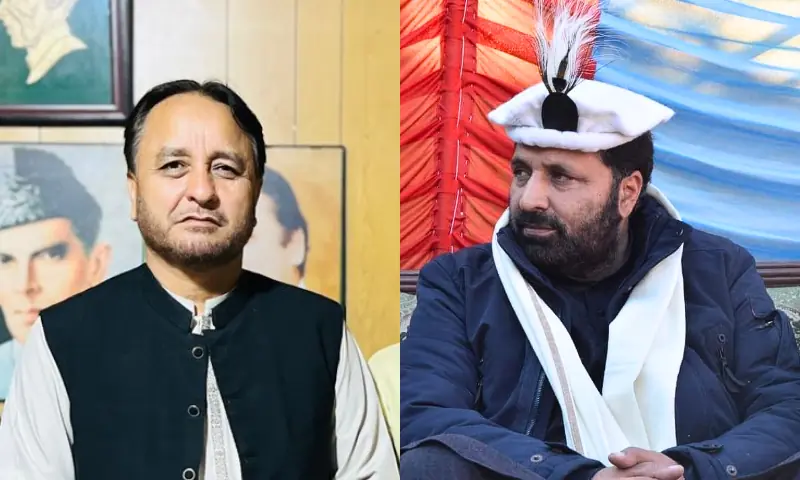
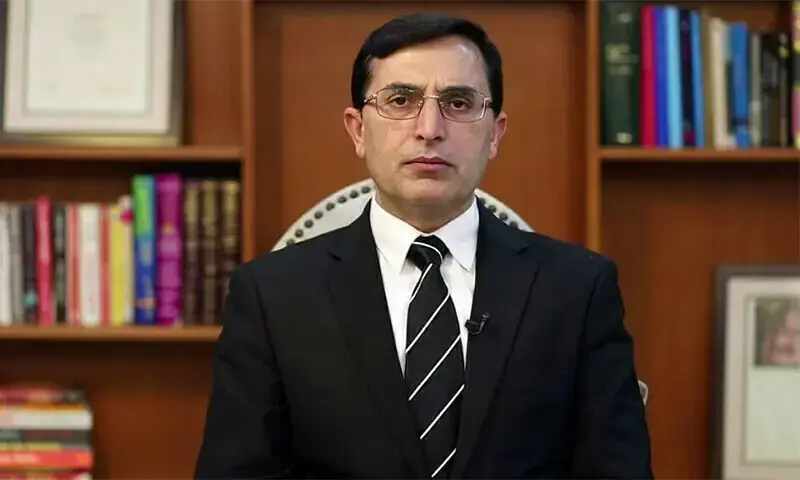
 This photo combo shows PML-N’s Hafiz Hafeezur Rehman (L) and Advocate Amjad Hussain (R). — X/@CMGBPK / Facebook/@AdvocateAmjad
This photo combo shows PML-N’s Hafiz Hafeezur Rehman (L) and Advocate Amjad Hussain (R). — X/@CMGBPK / Facebook/@AdvocateAmjad

GB top court orders ‘fair’ elections after KP CM’s letter

Separately, the GB Supreme Appellate Court directed the election commission to hold elections in a free and fair manner after Khyber Pakhtunkhwa CM Sohail Afridi wrote to Chief Justice Sardar Muhammad Shamim Khan.

A press release by the appellate court recalled that CM Afridi had written a letter to the chief justice, in which he requested equal opportunities for all political parties in the elections.

Subsequently, the statement said, Justice Khan issued a written order to the GB CEC, directing him to conduct the general elections in a “transparent, impartial and fair manner”.

In his response, the CEC assured the chief justice that the electoral process would be carried out under “a transparent, impartial and organised system”.

“In his detailed letter, he has also informed the esteemed court in detail about the steps taken by the election commission to ensure the transparency and impartiality of the elections,” the court’s statement said.

The appellate court affirmed that it was striving to ensure the provision of justice to the people.

PPP pledges rights; PML-N vows projects

In a video statement issued early in the morning, PPP Chairman Bilawal Bhutto-Zardari urged the public across GB to turn up in large numbers and cast their vote on the party’s “arrow” symbol.

“I want to get the people of Gilgit-Baltistan haq-i-hakmiyat (right to govern). I want to get Gilgit-Baltistan constitutional rights. Come, make PPP win so we can make GB the fifth province,” Bilawal said.

He further promised to provide “haq-i-rozgar (right to employment)” to the youth of GB if his party got elected.

“From the riverside to the peak of the mountains, I want to make you the owner of your land,” the PPP chairman said, adding that a vast area of land had been turned into “common land from state land”.

In his video statement, PML-N’s Rehman noted that his party held over 200 corner meetings, more than 40 jalsas and 11 rallies during the election campaign.

He apologised to PML-N supporters for not being able to visit various areas he wanted to due to party duties.

“I hope that your vote will be in support of progress, peace, development that has been paused since 2020, [and] for the eradication of load-shedding,” the former CM remarked.

Rehman emphasised his party’s pledge to work on development projects, construction of roads and metro buses, and better governance.

Tight security

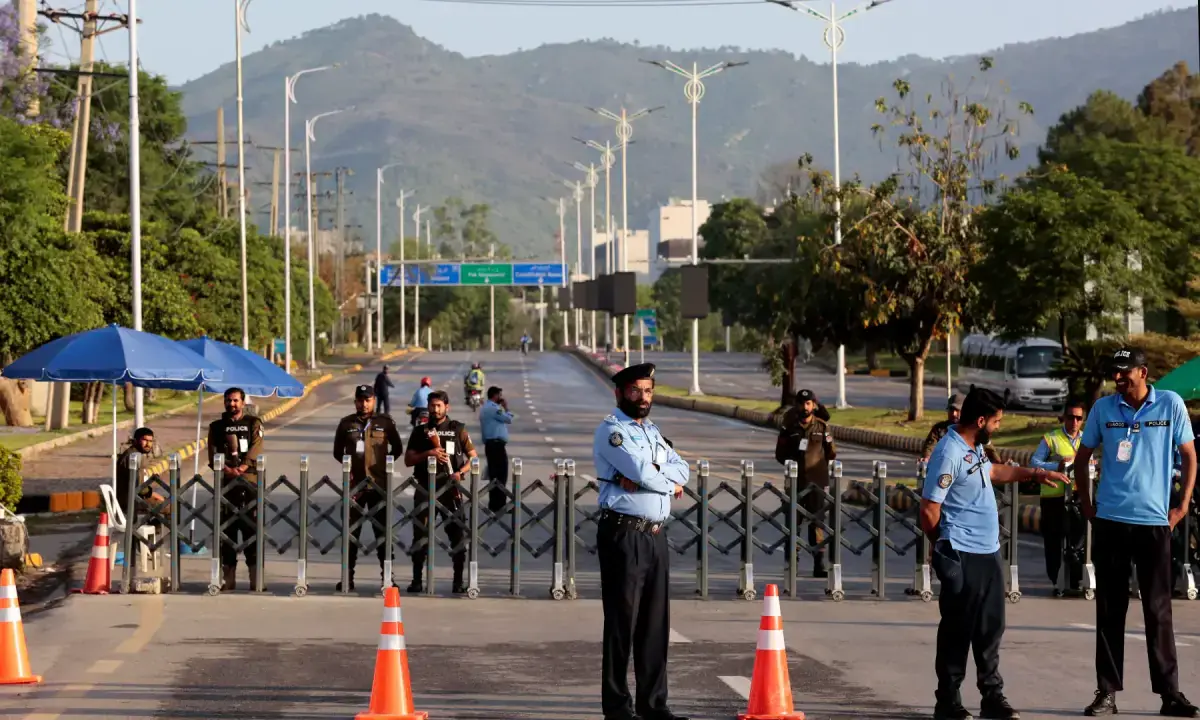
As part of security arrangements, 6,000 Punjab police personnel and 2,000 from Islamabad police — including 150 personnel from its security division — have been assigned for election duty in the mountainous region.

According to a list issued by the GB Election Commission, a total of 1,391 polling stations have been established across the region, of which 488 are categorised as normal, 349 as sensitive and 551 as highly sensitive.

Diamer, with 119 highly sensitive polling stations out of a total of 174, has the highest number of such stations among all districts.

Additional security personnel will be deployed at vulnerable locations, while law enforcement agencies and the district administration will remain on high alert throughout the election process.

On Saturday, the GB CEC urged voters to exercise their democratic right and play a constructive role in maintaining law and order.

He asserted that all necessary arrangements had been put in place to ensure peaceful, free, fair and transparent elections across the region.

CEC Khan had delegated powers of a first-class magistrate to all district returning officers (DROs) and returning officers (ROs) for the peaceful and transparent conduct of the elections.

The election campaign

The last electionsheld on Nov 15, 2020 — had been won by the PTI, which was also in power in the Centre at the time.

However, its Chief Minister Khalid Khurshid Khan was disqualified for an alleged fake degree in July 2023.

Subsequently, a coalition government was formed by members of the PTI, PPP and PML-N with Haji Gulbar Khan — an estranged PTI member — elected by the assembly as the new chief minister.

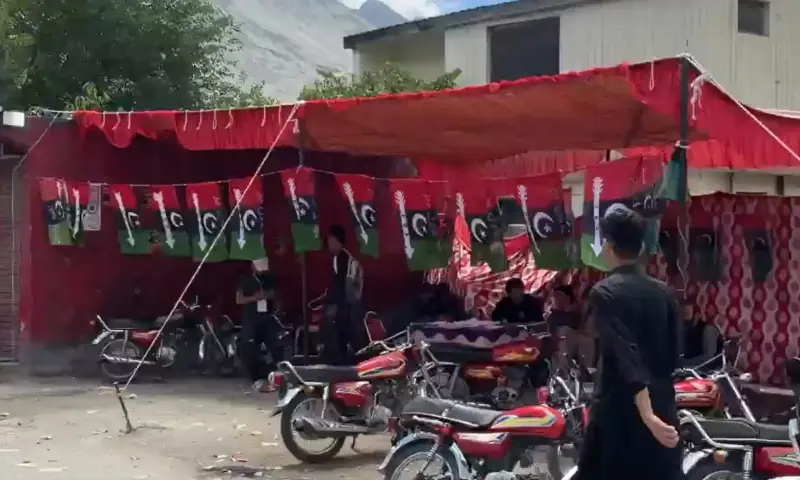
In the run-up to the current polls, the PML-N and the PPP campaigned with full force as their party chiefs toured the region.

PML-N President Nawaz Sharif visited Gilgit, while Bilawal gave fiery speeches at rallies in various districts.

However, the PTI decried a “lack of level playing field” in the current elections after its key leaders were expelled from GB on separate occasions. The party has also alleged other tactics to deter its election campaign activities.

Meanwhile, the PPP raised concerns over the deployment of Punjab police personnel and the participation of federal ministers in the PML-N’s campaign.


Additional input from APP and Ikram Junaidi

  •  

Protests block Karakoram Highway for third day over re-polling, delayed GB poll results

GILGIT-BALTISTAN: Protests blocking the Karakoram Highway in Diamer and other areas continued for a third day against the repolling and delay in the announcement of official results in various constituencies.

Yesterday, the Gilgit-Baltistan Election Commission ordered re-polling on polling stations in Skardu-II (GBA-8), Astore-I (GBA-13), Diamer-I (GBA-15), Diamer-II (GBA-16) and Diamer-III (GBA-17) and directed that the results of the June 7 election must not be consolidated until re-polling in five constituencies is completed.

Supporters of PPP candidate Attaullah from GBA-16 Diamer-II staged a protest outside the district returning officer’s office in Chilas, blocking the Karakoram Highway and demanding the counting of postal ballots and the announcement of the constituency’s final result without delay, as well as the cancellation of re-polling at three polling stations.

The Karakoram Highway has remained closed to all traffic for the third day. Travellers between Gilgit-Baltistan and other parts of the country faced difficulties and used Babusar Road and other alternative routes. However, on Wednesday, protesters temporarily reopened the highway for two hours to allow stranded passengers to pass.

Protesters said the protest would continue until the official results were issued “transparently”.

Speaking to the media, PPP candidate Attaullah said polling was held on June 7 in the presence of all agents and that Form 45 was issued.

“Form 47 was also prepared on the basis of Form 45; now only the counting of postal ballots remains,” he said.

He said that ordering re-polling by delaying the counting of postal ballots was “unacceptable” under any circumstances.

Attaullah alleged that an attempt was being made to snatch the public mandate in GBA-16 Diamer-II.

According to Form 47, independent candidate Imam Malik’s votes were shown to be 24 more than those of the PPP candidate. However, according to official figures, Imam Malik has 180 postal votes while Attaullah of the PPP has 473 postal votes.

The protesters claimed that, according to the clear record of Form 48, Attaullah had won the election by 269 votes.

They said the Election Commission had withheld Form 48 and issued a notification for repolling at three polling stations in the constituency.

They said the Commission’s decision for repolling was a “complete excess and robbery” of the public mandate.

The protesters also staged demonstrations outside the Election Commission’s secretariat in Gilgit, blocking Shahrah-e-Quaid-e-Azam and demanding the announcement of GBA-16 results after the counting of postal ballots, without conducting re-polling at three stations.

Likewise, the PPP candidate for GBA-20 Ghizer-II also protested against the returning officer’s decision to announce the final result without conducting a recount.

Addressing supporters, PPP candidate and Speaker of the GB Assembly Nazir Ahmed Advocate alleged that election authorities had announced the official results without conducting a recount, despite the commission’s order.

He claimed that officials changed their position after deciding not to implement the recount order issued by the commission.

Meanwhile, the Election Commission withdrew its earlier notification ordering a re-poll at 10 polling stations in constituency GBA-08 Skardu-II.

According to a notification issued on June 10, the commission reviewed a fact-finding report submitted by the district returning officer, Skardu, following objections raised over the basis of the re-poll order issued on June 8.

The report concluded that polling at the concerned stations was conducted “peacefully and in accordance with the law, with no evidence of violence, intimidation, polling station capture, tampering of election material or any other irregularity” that could have materially affected the transparency, fairness or result of the poll.

The commission stated that the allegations supporting the request for a re-poll remained unsubstantiated and that the legal conditions required under Section 9 of the Elections Act, 2017, for ordering a re-poll had not been met.

The commission therefore withdrew the June 8 notification directing a re-poll and instructed the returning officer for GBA-08 Skardu-II to proceed with the remaining election process, including the consolidation of results, in accordance with the law.

Following the commission’s order, the returning officer for GBA-08 declared Majlis Wahdat-i-Muslimeen’s (MWM) candidate, Kazim Mesum, the winner.

In another development, the commission ordered an investigation into polling irregularities and alleged corrupt and illegal practices in constituency GBA-09 Skardu-III.

An order issued by the commission to the returning officer GBA-9 said, “Application submitted by Wazir Muhammad Saleem be sent to the DRO, Skardu, for inquiry and report; whether the allegations levelled in the applications are correct? In the meantime, Form-48 will remain suspended till completion of the inquiry.”

“In view of the above directions of the Chief Election Commissioner, Gilgit-Baltistan, you are requested to examine the allegations raised in the applications and ascertain whether the polling process was obstructed, interrupted, suspended, prematurely terminated, or captured by any person or group of persons; whether it was affected by violence, disorder or unlawful interference; whether any ballot box, ballot papers or election material were snatched, stolen, tampered with or unlawfully removed; and whether polling staff or polling agents were prevented from performing their lawful functions, which may have materially affected the transparency, fairness or result of the poll,” the order read.

It urged the district returning officer (DRO) to provide clear findings and recommendations on an immediate basis for submission.

  •  

Senate returns Rs1.43bn to exchequer, beats austerity target by 500pc

ISLAMABAD: The Senate has surrendered Rs1.436 billion to the national exchequer after a year-long austerity drive, exceeding the Finance Division’s target by 500 per cent and setting what officials called a new benchmark for fiscal discipline.

The amount makes up 15.9pc of the upper house’s total budget for 2025-26, according to a statement issued by the Senate Secretariat on Monday.

Senate Chairman Syed Yousaf Raza Gilani ordered the expenditure rationalisation programme within his own office before extending it across the secretariat. Gilani said the Rs1.436bn represented “actual, realised savings” and not projected cuts or deferred liabilities.

Among the measures, the Senate suspended 17 of the 18 procurement projects approved by its finance committee. Recruitment and non-essential spending were rationalised, while administrative overheads and operational costs were placed under “strict scrutiny”.

The official transport fleet was “substantially grounded”, fuel allocations were capped and monitored, and refreshments at meetings were discontinued. Committee proceedings were shifted to digital and virtual platforms to cut logistics costs and all non-essential foreign visits were suspended.

Despite an allocation of Rs60m for new vehicles this year, “not a single vehicle was procured”, the statement said. Additionally, on the chairman’s proposal, the Senate Finance Committee decided to forgo the allocation for the replacement of condemned official vehicles in the next fiscal year, a move expected to save a further Rs140m.

“Public office is a sacred fiduciary trust,” Gilani was quoted as saying. He added that the austerity drive was not a one-time exercise but part of a continuing commitment to “responsible governance and fiscal prudence”.

“Every rupee saved is a rupee returned to the people of Pakistan, in whose trust public resources are held,” the chairman said.

By placing the figures on public record, the Senate said it aimed to promote confidence in state institutions at a time when “economic prudence and efficient utilisation of public funds are national imperatives”.

“These savings are the cumulative result of sustained reforms and disciplined financial management undertaken over time. By placing these figures on public record, the Senate seeks to promote transparency, accountability, and public confidence in state institutions,” the statement said.

The chairman has made it clear that this is not a one-time initiative but part of a continuing commitment to responsible governance, fiscal prudence, and the highest standards of public service.

“Every rupee saved is a rupee returned to the people of Pakistan, in whose trust public resources are held,” Gilani was quoted as saying.

Separately, the Nat­ional Assembly Secre­tariat has saved Rs4.5bn — or 27.3 per cent of its budget — for the current financial year through austerity measures, right-sizing and institutional modernisation, according to Speaker Sardar Ayaz Sadiq.

  •  

SC upholds death sentence awarded to child rapist, killer

ISLAMABAD: The Supreme Court has upheld a sentence awarded to a child rapist and a murderer, ruling that individuals who voluntarily become intoxicated cannot claim exemption from criminal liability.

“Intoxication caused by one’s own negligence or recklessness does not excuse the offence,” affirmed Justice Muhammad Hashim Khan Kakar in a three-page verdict he authored.

The court ruling has put to rest the defence advanced by appellant Sunni Masih, who during the trial had taken a specific plea recorded under Section 164 CrPC that he committed the offence under intoxication.

Earlier, the SC had entertained the plea to determine whether a person could be awarded capital punishment if he commits a crime under intoxication.

Intoxication does not absolve offender of liability for an offence committed under the influence, court rules

A three-judge SC bench, headed by Justice Kakar and also comprising Justice Salahuddin Panhwar and Justice Ishtiaq Ibrahim, had taken up an appeal of Sunni Masih against a Feb 28, 2018, order of the Balochistan High Court regarding confirmation of capital punishment for brutally killing a five-year-old girl, Angel Kumari, in Sibi (Balochistan).

Sunni Masih was booked at the Police Station City, Sibi, for raping and killing the girl in January 2014. He was sentenced to death by the trial court under sections 302(b) (murder), 364-A (kidnapping), and 376 (rape) of the Pakistan Penal Code. His appeal was subsequently rejected by the BHC’s Sibi bench, prompting the present appeal to the SC.

At the hearing before the apex court, the appellant’s counsel did not challenge the merits of the conviction, but sought reduction of the death sentence to life imprisonment, arguing that the case rested solely on the appellant’s judicial confession that the offence had been committed under the influence of intoxication.

Justice Kakar noted that the perusal of the record showed that the child was killed after being raped in a cruel manner and after a detailed assessment of the evidence available on record, both the courts below had concurred in their conclusion regarding the guilt of the appellant having been established beyond reasonable doubt. “Upon our own independent evaluation of the evidence we have not been able to take any legitimate exception to the conclusions concurrently reached by the courts below,” he observed.

“A man who gets drunk voluntarily has no right to claim exemption from criminal liability,” he remarked.

While dismissing the appeal, the SC unanimously held that the impugned judgement was free from any illegality or infirmity, besides there was no misreading or non-reading of evidence. Therefore, the high court judgement did not require any interference by the SC.

Published in Dawn, June 3rd, 2026

  •  

2020 motorway gang rape case: LHC dismisses convicts' appeals against sentences

LAHORE: A Lahore High Court (LHC) division bench on Wednesday dismissed appeals filed by the two men convicted in the 2020 Sialkot-Lahore Motorway gang rape case against their sentences.

An anti-terrorism court had handed down death sentences besides life imprisonment and multiple jail terms to the two convicts, Abid Ali alias Malhi and Shafqat Ali alias Bagga, on March 20, 2021. They challenged their convictions on March 25, 2021.

The appeals contended that several infirmities created doubts about the prosecution’s version of the events and the trial court’s judgement was harsh and against the settled principles of law.

A two-judge bench, comprising Justice Syed Shahbaz Ali Rizvi and Justice Tariq Mehmood Bajwa, issued the verdict on their appeals today after the prosecution concluded its arguments.

In his final arguments, the state prosecutor contended that the prosecution had overwhelming evidence against the convicts and requested the court to uphold their sentences.

He said there was no flaw in the trial court’s decision.

The defence lawyers had completed their arguments before the prosecution’s final arguments.

Motorway gang rape

The country seethed with anger in September 2020 as details had emerged of the gang rape on the outskirts of Lahore, with remarks by the then-city police chief implying that the rape survivor shared responsibility for her rape.

The convicts had gang-raped a French woman of Pakistan-origin in front of her three children after dragging her out of her car that ran short of fuel and stopped during her late night travel on Sialkot-Lahore Motorway.

The Gujjarpura police registered a first information report (FIR) of the incident on September 9, 2020 under multiple sections of the Pakistan Penal Code and the Anti-Terrorism Act, 1997.

  •  

PTI’s Gohar Ali Khan summoned over Imran’s social media activity

ISLAMABAD: The Islamabad High Court (IHC) has reissued a notice to Pakistan Tehreek-i-Insaf (PTI) Chairman Gohar Ali Khan after the party failed to submit a written response to a petition seeking the closure of the X (formerly Twitter) account allegedly operated by party founder Imran Khan.

Justice Arbab Muhammad Tahir heard the petition filed by Advocate Ghulam Murtaza on Thursday.

During the hearing, Justice Tahir inquired whether any representative had appeared from the jail in connection with the matter. Referring to a recent decision relating to Bushra Bibi, the judge directed counsel to study the ruling, observing that the court had already outlined the legal course of action in cases involving the alleged misuse of prison meetings.

The judge also instructed the law officer representing the Advocate General’s Office to ensure that the Advocate General reviewed the court’s earlier decision on the issue. Addressing a sub-inspector who appeared on behalf of the National Cyber Crime Investigation Agency (NCCIA), Justice Tahir directed that a proper law officer from the agency appear at the next hearing.

Scrutiny of challan completed in prohibited funding case

The court further told counsel for the Pakistan Telecommunication Authority (PTA) that specific questions would be framed for the next hearing regarding the regulator’s authority and responsibilities.

The PTA was directed to explain what action it could legally take as a regulatory body. The hearing was subsequently adjourned until Sept 10.

Prohibited funding case

Meanwhile, in a separate development, the scrutiny process of the challan in the prohibited funding case, formerly known as the foreign funding case, against Imran Khan and other accused has been completed by the court of Judge Abdul Ghafoor Kakar.

During the proceedings, Special Prosecutor Wasiq Malik informed the court that the Registrar’s Office had transmitted the challan for scrutiny.

After completing the review process, the banking court adjourned proceedings in the prohibited funding case until July 9. The case was registered by the FIA against the PTI founder and other accused persons.

Judicial Complex attack case

In another PTI-related case, Judge Tahir Abbas Sipra of the Anti-Terrorism Court expr­essed displeasure over the continued absence of Punjab’s ex-chief minister Pervaiz Elahi, a co-accused in the Judicial Complex attack case.

During the hearing, Elahi’s counsel submitted a request seeking exemption from personal appearance. However, Judge Sipra questioned why the former chief minister was appearing before other courts while repeatedly failing to attend proceedings in his court.

The judge warned that a medical board could be constituted to determine whether Elahi was genuinely unwell.

In response, Elahi’s counsel assured the court that his client would appear at the next hearing and requested one final opportunity. Accepting the assurance, the court adjourned the case until July 22.

The Judicial Complex attack case was registered at a CTD police station against PTI leaders and workers following violent incidents linked to court appearances by the party founder.

Published in Dawn, June 12th, 2026

  •  

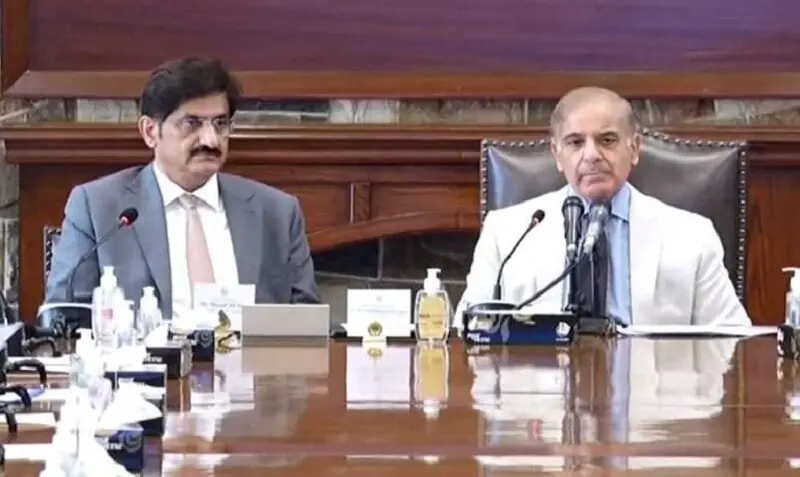
CM Murad approaches PM Shehbaz for restoration of curtailed water supplies

HYDERABAD: Sindh Chief Minister Syed Murad Ali Shah has urged Prime Minister Mian Mohammad Shehbaz Sharif to halt the filling of dams until the monsoon season to prevent a severe crisis in the province.

In a letter sent on Thursday, he warned that vital water supplies were being diverted away from Sindh, causing major shortages during the crucial early Kharif sowing season. He called on the PM to direct the Indus River System Authority (Irsa) to guarantee Sindh’s water shares under the 1991 Water Apportionment Accord.

CM Murad strongly criticised the continued release of water into the controversial Taunsa-Panjnad and Chashma-Jhelum link canals, which divert water from the main Indus River system to Punjab’s tributaries.

According to the chief minister, Sindh is facing a 41 per cent shortfall in its allocated water supply. On June 6, the province’s water utilisation stood at 57,867 cusecs against its accord allocation of 98,700 cusecs. By contrast, Punjab faced just a 10 per cent shortfall, drawing 97,970 cusecs against an allocation of 109,100 cusecs.

Writes to premier over filling of dams in Punjab while water crisis in Sindh deepening

The shortages come despite a significant 40 per cent improvement in overall water availability compared to last year. Total inflows into the Indus River system currently stand at 216,894 cusecs, up from 154,407 cusecs during the same period last year.

River inflows (in cusecs): Indus (at Tarbela): 110,000 (78,800 last year), Kabul (at Nowshera): 43,200 (24,700 last year), Jhelum (at Mangla): 35,410 (30,000 last year) and Chenab (at Marala): 28,284 (20,907 last year).

National reservoirs also show a 16 per cent increase in storage, totalling 4.07 million acre-feet (MAF) compared to 3.504 MAF last year. Current storage levels include 1.173 MAF at Tarbela, 2.667 MAF at Mangla, and 0.23 MAF at Chashma.

Mr Shah pointed out the paradox that despite higher inflows and healthier reservoirs, Sindh’s canal withdrawals have dropped by 33 per cent from 86,293 cusecs last year to 57,867 cusecs this year.

Meanwhile, diversions to the Chashma-Jhelum and Taunsa-Panjnad link canals have risen by 16 per cent, from 23,586 cusecs to 27,316 cusecs.

“There is a growing concern that operational priorities are focused on storage maximisation in reservoirs and canal diversions, rather than ensuring equitable distribution,” Mr Shah wrote.

He warned that the low water levels at Sindh’s barrages were now threatening supplies to both Sindh and neighbouring Balochistan, adding that Sindh continues to support Balochistan despite its own acute shortages.

Published in Dawn, June 12th, 2026

  •  

AJK refugee seats cannot be abolished, Senate told

• Sanaullah says 12 reserved seats represent families displaced from held Kashmir
• Opposition alleges ‘massive rigging’ in GB elections; PTI stages walkout
• Minister tells lawmakers Rs5.4bn disbursed in fuel subsidy
• House unanimously passes five bills

ISLAMABAD: Adviser to the Prime Minister on Political and Public Affairs Rana Sanaullah on Wednesday told the Senate that 12 reserved seats for refugees in the Azad Jammu and Kashmir (AJK) Legislative Assembly would not be abolished, saying they represented families displaced from India-occupied Kashmir.

Responding to a point raised by the upper house’s opposition leader, Allama Raja Nasir Abbas, Sanaullah said the seats could not be abolished through executive orders.

He added that all political parties in AJK, its parliament and other constitutional for­ums supported retaining refugee representation within the constitutional framework.

The adviser said the government had accepted 37 of the 38 demands put forward by the Jammu Kashmir Joint Awami Action Committee (JAAC).

“The government remained engaged with JAAC for several months,” he said, adding that a written agreement was signed after negotiations on 37 demands.

“The sole outstanding demand concerning refugee seats in the AJK Legislative Assembly involved constitutional and legal complexities,” he told the House.

On June 5, the AJK government designated JAAC a proscribed organisation under anti-terrorism laws.

Sanaullah said JAAC had initially emerged in 2023 with demands relating to electricity tariffs and wheat subsidies.

He added that the government addressed the committee’s major demands by providing electricity at Rs4 per unit, subsidised wheat and a Rs23 billion relief package for the region. He alleged that certain elements sought to create instability ahead of the upcoming elections in AJK despite repeated offers of dialogue.

“They knew the polls are due before August 4 and gave a call for protest on June 9 back in January,” he said, adding that peace and stability in AJK would be maintained in accordance with the law.

‘Massive rigging’

Opposition leader Raja Nasir Abbas alle­ged “massive rigging” in Gilgit-Baltistan’s June 7 general elections, saying the results were “against the wishes of the people”.

He warned that “rigging weakened public confidence” and said “creating a distance between the people and the system” would have dangerous consequences. He also refer­red to recent unrest in AJK, saying political interference would bring further turbulence.

“The ban on information gives rise to rumours and turbulence,” he said, adding that the people of GB had concerns about the “oc­­cupation of land and minerals by outsiders”.

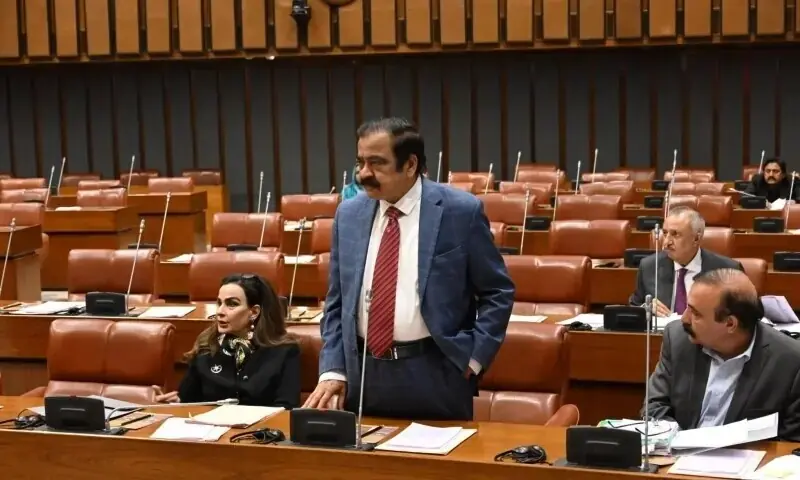
After Deputy Chairman Syedaal Khan Nasar did not allow the opposition leader to continue speaking on the issue, PTI members staged a protest walkout. The deputy chairman said the opposition leader should contact the GB Election Commission if he had complaints.

Fuel subsidy

Finance Minister Muhammad Aurangzeb told the House that the government would continue efforts to protect low-income groups from higher fuel prices while maintaining economic stability.

Responding to a calling-attention notice by Senator Mohsin Aziz, he said Rs5.4bn had been disbursed so far under a targeted fuel subsidy programme, besides Rs4.61bn in support for small farmers amid rising international fuel prices.

He said an overall subsidy of Rs129bn was provided after tensions in the Middle East pushed up global oil prices. The government shifted from a general subsidy to a targeted programme for motorcycle owners, public transport users, transport operators and small farmers.

Around 800,000 motorcycle owners had benefited, while financial assistance ranging between Rs35,000 to Rs100,000 was provided to passenger and goods transport vehicle owners.

In the first phase, Rs3.5bn was distributed among more than 105,000 vehicle owners, while Rs1.9bn was disbursed among over 65,000 beneficiaries in the second phase through a transparent verification system.

The House unanimously passed five bills: the Motion Pictures (Amendment) Bill, the Travel Agencies (Amendment) Bill, the Pak­istan Tourist Guides (Amendment) Bill, the Pakistan Hotels and Restaurants (Amend­ment) Bill, and the Pakistan International Air­­lines Corporation (Conversion) (Repeal) Bill.

Published in Dawn, June 11th, 2026

  •  

Govt launches scheme to bring small shop owners into tax net

ISLAMABAD: Following the apparent failure of the Tajir Dost Scheme announced a year ago to expand the tax net, the government on Friday unveiled another scheme, dubbed the ‘Fixed Tax Asaan Scheme’, for small traders and shopkeepers with an annual turnover of up to Rs200 million.

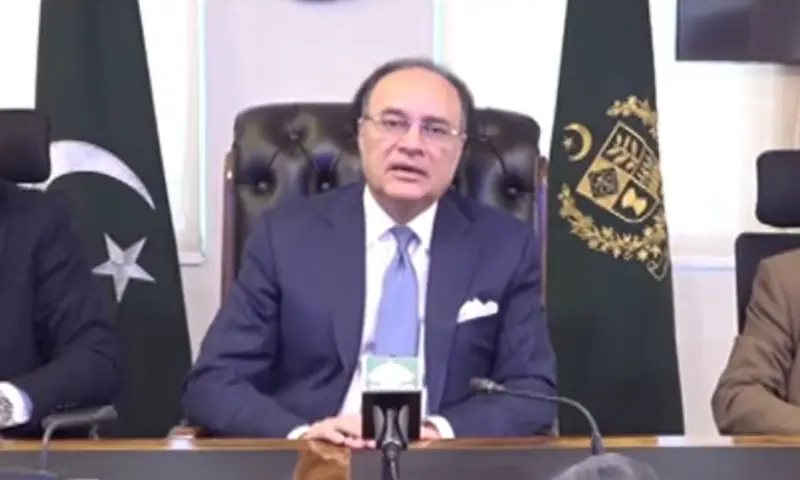
The announcement was made through a recorded message by Finance Minister Muhammad Aurangzeb, Minister of State for Finance Bilal Azhar Kiani, and Member, Federal Board of Revenue (FBR), Hamid Attique Sarwar. They said the fixed tax regime had been finalised in consultation with trader bodies and representatives in response to their demand for a simplified tax compliance mechanism.

Kiani, who led the government team in detailed negotiations with the trader community, said the new fixed tax scheme would apply to businesses with an annual turnover (total sales) of up to Rs200 million. Under the scheme, a tax of one per cent would be payable through a simple form that would be made available in all local languages.

The finance minister said the payable tax would be adjustable against withholding tax already paid, provided that a minimum of Rs25,000 was paid at the time of filing the tax form. Otherwise, the standard tax rate of 1pc would apply.

He said the scheme would be optional for traders, who could choose to join it or continue under the normal tax regime. Those opting for the fixed tax scheme would be issued a special plaque for display at their business premises, containing details such as their name, registration number and National Tax Number (NTN), along with a QR code.

According to the minister, a tax inspector would be able to scan the QR code on the plaque and, if it was found to be genuine, would not be permitted to enter the premises for tax-related inspections.

Kiani said those opting for the new scheme would be exempt from the Point-of-Sale (POS) requirement as well as from audits. In exceptional cases, any tax dispute that arose would be resolved in consultation with the relevant traders’ association.

Non-filers and existing filers would also be eligible to join the scheme, provided their annual turnover had not exceeded Rs200 million in any of the preceding three years and the minimum tax payable was higher than that paid in the previous year.

He said a third category of traders — those who remained outside both the fixed tax scheme and the normal tax regime — would be liable to a fine of Rs10,000 per month for the first month, rising to Rs25,000 per month in the second month and Rs51,000 per month in the third month.

The minister of state added that the new fixed tax scheme had been designed based on lessons learned from past failed schemes and “would be successful this time”.

He said kiosks and pushcart-based small traders would be exempt from the fixed tax scheme.

Sarwar said there were around 4.4 million traders, of whom about 3.5 million would be covered under the new scheme. He said larger traders, classified as Tier-1 and mostly operating in the branded sector, would not be allowed to opt for the scheme. The number of such Tier-1 businesses was estimated at between 50,000 and 100,000.

Sarwar said most of those falling under the new scheme were paying little or no tax, and even their small contributions would make a significant difference instead of burdening compliant taxpayers. He stressed that the scheme should not be described as an amnesty scheme.

Officials said the scheme would cover those who had operated a business for at least three years, maintained a shop or business premises, and belonged to professions other than specialised services. Small taxpayers who were already filing tax returns before 2025 could also join the simplified scheme if they met the required conditions.

Traders would be able to register through the FBR website, mobile apps or tax practitioners, and would be required to maintain simple and organised records of sales, expenses, purchases and other business transactions for ease of compliance.

Advantages like Active Taxpayer List (ATL) status, lower withholding taxes, and improved financial credibility would become available to those opting for the scheme.

The development comes ahead of the presentation of the federal budget for the next fiscal year (FY2026-27). Scheduled for June 10, the budget is expected to be formulated under the tight oversight of the International Monetary Fund (IMF).

  •  

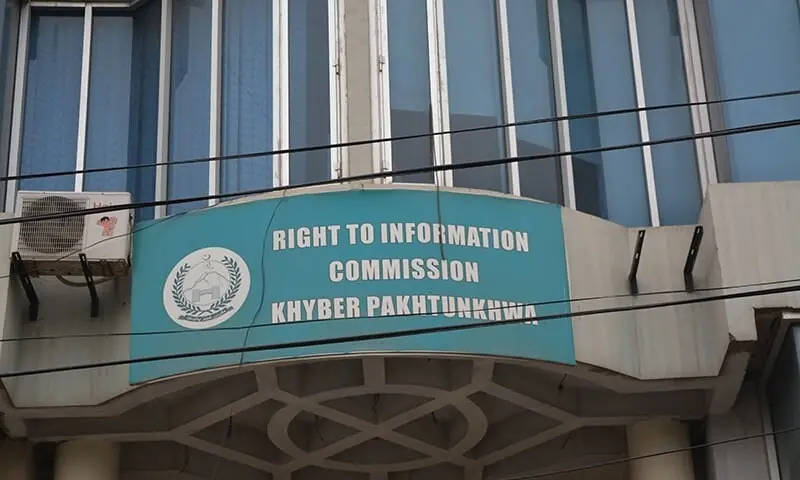
Fafen calls for overhaul of KP Right to Information Act

ISLAMABAD: Twelve years after Khyber Pakhtunkhwa became Pakistan’s first province to enact a Right to Information (RTI) law, the Free and Fair Election Network (Fafen) notes the pioneering framework remains “underutilised and vulnerable to disinformation due to weak enforcement and structural gaps”.

In a policy brief released Saturday titled “From Pioneer to Performer: Making Khyber Pakhtunkhwa’s Right to Information Act Work Against Disinformation”, Fafen urged the KP Assembly and provincial government to launch targeted legal and institutional reforms to transform KP’s pioneering right to information framework into an effective mechanism for proactive disclosure and public accountability.

KP enacted the law after Article 19A on the “right to information” was added to the Constitution through the 18th Amendment in 2010.

But Fafen’s assessment of 190 provincial public bodies’ websites found a stark implementation gap: on average, public bodies proactively disclosed only 57 per cent of the information the law requires them to publish.

“Such information gaps create space for speculation, misrepresentation, and disinformation about government actions,” the brief noted, stressing that proactive, enforced and accessible publication of official data is the most effective counter to false narratives.

In its policy brief, Fafen identified three main legal flaws and two institutional gaps holding back the Act. It noted that the definition of “public body” was excluded many private entities and NGOs that receive public funds, subsidies, tax concessions or government contracts.

“The law mandates proactive disclosure but lacks enforcement mechanisms, timelines, and penalties for non-compliance. Public bodies publish information in different formats, making data hard to compare, use, or verify,” it added.

The brief also pointed out that the KP Information Commission lacks financial and operational autonomy, affecting its ability to enforce the law. The commission cannot conduct periodic inspections of records or issue binding instructions on record management and disclosure timelines.

Fafen recommended widening the “public body” definition to cover all private/NGOs receiving public money directly or indirectly.

“The definition of ‘information’ should explicitly include digital and machine-readable records. Citizens should have the right to inspect works and documents, obtain certified copies, and receive information electronically,” it maintained.

It called for giving the commission powers to inspect public bodies’ records and issue binding instructions on record management, disclosure requirements, and timelines and creating a dedicated “Khyber Pakhtunkhwa Right to Information Fund” to secure financial independence.

It also suggested an audit of the annual accounts by the Auditor General of Pakistan and tabling the same before the KP Assembly and Public Accounts Committee.

Furthermore, it called for the introduction of digital tracking of RTI requests with email/SMS notifications at each stage of processing. It also stressed the need to develop an RTI mobile application and allow virtual hearings to reduce access barriers for citizens in remote districts, and mandatory, tailored disclosure formats for different categories of public bodies.

“The commission should develop these formats in consultation with departments, update them annually, and publish all data on a central portal to improve consistency, usability and comparability,” the brief noted.

The brief is part of Fafen’s “Countering Disinformation through Reliable Government Information” campaign.

The KP law was a landmark in 2013, but without proactive disclosure and tech upgrades, it risks falling behind citizens’ expectations in 2026. Fafen’s findings mirror broader concerns about transparency in Pakistan. If KP upgrades its law, it could set a standard for other provinces and the federal government.

  •  

Drug addict kills wife for money in Swat

SWAT: An ice drug addict killed his wife in the Balasor Chuprial area of Swat on Saturday, residents said.

They said that the suspect had a history of drug addiction and had reportedly been arrested and jailed multiple times in narcotics-related cases. On the day of the incident, the woman was reportedly on her way to seek medical treatment. Her 17-year-old son had given her money for the treatment expenses, they said.

The residents alleged that when the woman reached near a graveyard, her husband attempted to take the money from her. When she refused, insisting that the money was needed for her treatment, the suspect allegedly attacked and killed her before fleeing with the cash.

The couple’s three-year-old daughter was also present at the scene.

According to a resident who was among the first to arrive after hearing the child crying, the young girl was found sitting beside her mother’s body, clutching her mother’s shoes and crying inconsolably.

The witness said he carried the child home, but throughout the journey she refused to let go of her mother’s slippers.

Community members said the tragedy should serve as a wake-up call for society and authorities regarding the growing menace of drug abuse. They warned that unless effective measures were taken to curb the spread of ice drug and other narcotics, even more devastating incidents could occur in the future.

The residents urged law enforcement agencies to intensify efforts against drug trafficking and addiction.

The Matta police registered a case against the suspected killer and started a search for him.

Published in Dawn, June 14th, 2026

  •  

150 personnel from Islamabad police's security division assigned to GB election duty

RAWALPINDI: In addition to 6,000 Punjab police personnel, 150 police personnel from the security division of Islamabad Capital Territory (ICT) police have been assigned for Gilgit-Baltistan (GB) election duty, with a total of 2,000 personnel expected to be dispatched to the region.

General elections in GB are scheduled for Sunday, with election campaigns already underway by major political parties.

The 150 police personnel selected from the security division for GB election duty had been guarding high-profile buildings and installations in the federal capital, as well as performing sensitive security duties, such as escorting foreign delegations.

They will leave for GB on Thursday amid tight security and will be back in Islamabad on June 9 (Tuesday).

Of the 150 ICT police personnel, 30 personnel have been selected from the Special Protection Unit (SPU), five from the President’s House, 20 from the Prime Minister’s House, six from the Prime Minister’s Office (PMO), 10 from the Foreign Office (FO) guard duty and 10 from the high security zone.

The security division wing of Islamabad police has been guarding several high-profile buildings, including the President’s House, the PM House, PMO, National Assembly, Police Lines, Special Services Group (SSG) Lines and the District Judicial Complex.

The security division also escorts foreign delegations visiting Islamabad and its SPU is deputed with Chinese nationals.

Meanwhile, convoys of Punjab police personnel to be deployed in GB for election security duty started departing from Rawalpindi and Lahore on Tuesday, escorted by armed police personnel and accompanied by Rescue 1122 ambulance to ensure their safe transportation.

“The deployed escort will not leave the convoy without handing it over to another district’s escort,” a directive from the additional inspector general (AIG) operations said.

According to sources, a convoy of 18 buses carrying 1,028 police personnel of Punjab Highway Patrol (PHP) left Police Lines Headquarters Rawalpindi for GB on Tuesday.

The Punjab police chief has directed Rawalpindi City Police Officer Syed Khalid Hamdani, the Lahore capital city police officer, regional police officers of Gujranwala, Sheikhupura and Sargodha, and the district police chiefs to ensure the provision of security to police convoys travelling to GB.

In line with the AIG’s directives, four armed police personnel will be deployed with each bus for security as more than 100 buses, including pick-up vans, have been arranged for transporting the police personnel.

Of the total number of buses, 48 buses and four pickups will be used to transport 2,348 police personnel from the PHP to GB.

The motor transport officers (MTOs) of Rawalpindi Police Lines and PHP Headquarters Lahore will be responsible for briefing the drivers about the destination and ensuring the deployment of buses with fitness certificates.

Punjab authorities had initially approved the deployment of 5,000 personnel to GB and later gave the nod for the deployment of 1,000 more police personnel for election security duty.

The police personnel will be equipped with anti-riot gear, having seasonal clothes and each bus used for their travel to GB will be accompanied by four armed police personnel.

PPP raises concerns about Punjab police deployment

In a related development, the PPP has raised questions over the deployment of Punjab Police personnel in GB on election duty.

In a video statement, PPP Central Information Secretary Nadeem Afzal Chan said, “The public has many reservations about the Punjab police, which is coming [to GB].”

He requested the Punjab police not to adopt the same “attitude” that it did towards the people of the province, emphasising there was a “huge difference” between the public in both regions.

Chan added that having a “federal police or institution” overseeing election duties would have been a better choice than having the Punjab police. He stressed it was the responsibility of the GB election commissioner and other stakeholders to ensure that “free and fair elections” were held.

The PPP leader contended that a few recent decisions taken by the GB election commissioner had raised concerns among the public as well as political parties.

Chan further claimed that federal ministers were campaigning for their parties in GB, in an apparent reference to the defence and planning ministers accompanying PML-N President Nawaz Sharif on his Tuesday visit.

The PPP leader also objected to the issuance of a no-objection certificate (NOC) to Nawaz, asking, “How can you issue an NOC to a government executive once the election schedule has been issued?”

  •  
❌