
 Login
Login
Challenges confronting the aviation business, future air travel impacted — Ahmad Ibrahim
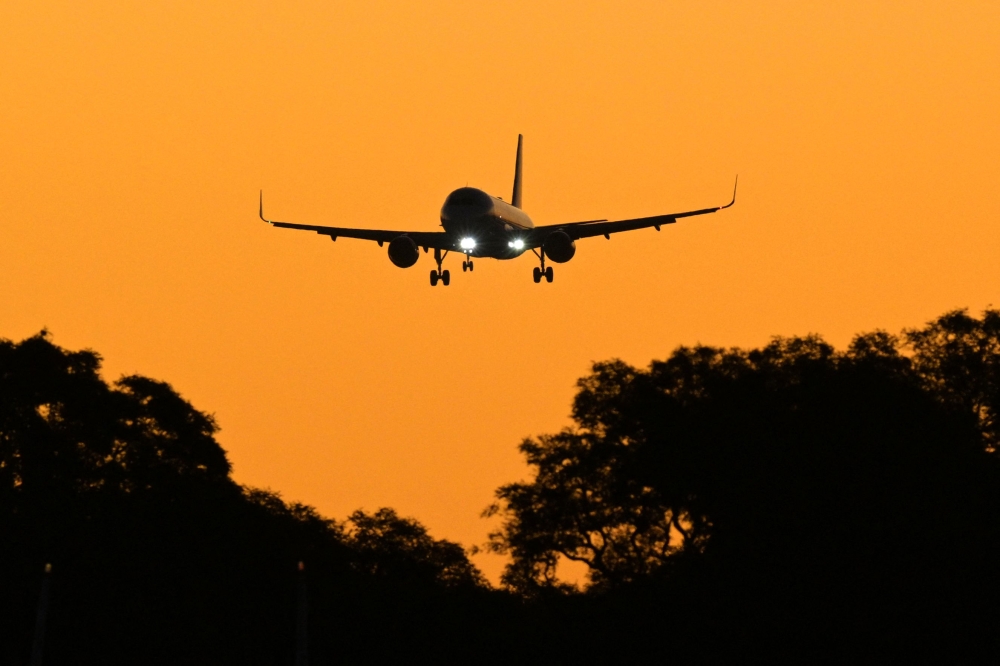
JUNE 11 — If you’ve flown recently, you’ve felt it. The cancellations. The ticket prices. The carbon footprint. The uncomfortable truth: the aviation industry isn’t just having a bad year. According to a new analysis, the sector is facing a “perfect storm” of three serious, simultaneous crises. And unlike a cracked engine, you can’t just bolt a patch on these problems.
Let’s break down the three demons haunting the business. You might think that with all the tech in the cockpit — auto-pilot, AI, satellite navigation — we need fewer pilots. Wrong. We’re running out. Fast. The authors point out that thousands of seasoned captains hit mandatory retirement age every year. Meanwhile, the pipeline of new pilots is bone dry. Why? Because flight school now costs as much as a medical degree, and the hours required to get a license are brutal. During Covid, airlines encouraged early retirements and buyouts. Now, they’re shocked — to find that those pilots aren’t coming back.
For the common man, this means your regional flight to the small city is getting cancelled not because of weather, but because there is literally no one legally allowed to land the plane. Airlines are scraping the bottom of the barrel, lowering hiring standards, and burning out the pilots they have with mandatory overtime. The result? Exhausted crews and a safety net that is stretching thinner than it has in decades.
The Second Demon: The aging fleet & the “Spare Parts Apocalypse”. Remember the supply chain mess that emptied grocery store shelves? It hit airplanes ten times harder. The researchers highlight a terrifyingly mundane problem: spare parts. Modern planes are wonders of engineering, but they rely on hyper-specialised components made by single factories in single countries. When those factories shut down during the pandemic — or when geopolitical fights like in Ukraine cut off titanium and nickel supplies — the whole system seized up.
Airlines are now keeping their old, gas-guzzling Boeing 737s and Airbus A320s flying years past their intended retirement dates because they can’t get the parts to build new ones. We are literally flying museum pieces. This isn’t just inefficient; it’s expensive. Older planes break more often, leading to the “mechanical issue” delays that ruin your connection. The industry calls it “fleet aging” or duct-tape engineering at 35,000 feet.
The Third Demon: The Green Paradox. Here is the cruellest irony. The aviation industry knows it has a carbon problem. It accounts for about 2.5 per cent of global CO2 — and that’s rising fast. So, what’s the solution? According to the paper, the proposed fixes — Sustainable Aviation Fuels (SAF), hydrogen engines, electric planes — are either decades away or laughably impractical. Right now, SAF costs three to five times more than regular jet fuel. To make a dent, you’d have to cover a landmass the size of Spain in crops just to grow the fuel. So, the industry is stuck. If they fly less, they go bankrupt. If they fly the same, they cook the planet. If they raise ticket prices to pay for green fuel, they lose passengers to high-speed rail or Zoom calls. The researchers call this the “sustainability trap”. We want guilt-free flying, but the physics of lifting 200 tons of metal into the sky means there is no guilt-free option.
What does the study actually tell us? It tells us that aviation’s golden age is over. The era of cheap, reliable, guilt-free flights was a historical anomaly powered by cheap oil, a surplus of ex-military pilots, and zero carbon accountability. Now, the bill has come due. Passengers will face three new realities: Expensive (to pay for green fuel and pilot wages), Unreliable (due to old planes and missing parts), and Controversial (because flying will be seen like smoking — a habit you know is bad).
The researchers don’t offer magic wands. They offer a warning. The next time you’re sitting on a tarmac, delayed for the third hour because “the crew timed out” or “a sensor is on backorder”, don’t just blame the airline. Blame a decade of kicking the can down the runway.
* The author is affiliated with the Tan Sri Omar Centre for STI Policy Studies at UCSI University and is an Adjunct Professor at the Ungku Aziz Centre for Development Studies, Universiti Malaya.
** This is the personal opinion of the writer or publication and does not necessarily represent the views of Malay Mail.
