
 Login
Login
Yeo Bee Yin warns RON95 subsidy cut for T20 could fuel inflation and hurt economy
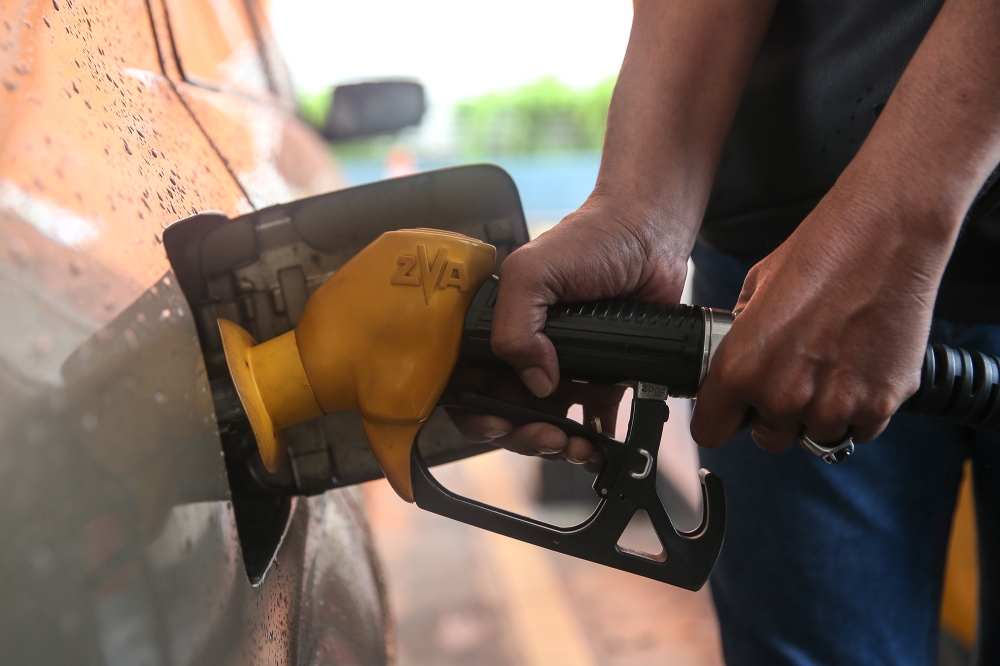
KUALA LUMPUR, May 12 — Puchong MP Yeo Bee Yin has cautioned that it is the “wrong time” to remove RON95 fuel subsidies for higher-income Malaysians, warning of broader inflationary and economic risks.
She said Prime Minister Datuk Seri Anwar Ibrahim’s announcement that the government has agreed in principle to remove subsidies for higher-income groups raises fundamental questions that must be addressed before any final decision is made.
First, she questioned whether the timing is appropriate given risks of inflation, contracting consumption, and a potential economic slowdown.
“Fuel price hikes are never contained within a single demographic; they ripple through the entire supply chain,” she said.
She added that many in the T15 and T20 categories are small business owners, service providers and employers, meaning higher transport and operational costs would likely be passed on to consumers.
“This creates a secondary wave of inflation for essential goods and services, ultimately hurting other lower-income groups,” she said.
Yeo said the T15 and T20 groups are also key drivers of domestic private consumption, and higher fuel costs could dampen demand in retail, hospitality and services sectors.
She warned that the combined impact of inflation and weaker domestic consumption could worsen an already fragile economic outlook amid global uncertainties, including tensions in the Middle East.
She said subsidy rationalisation must be carefully managed to avoid unintended macroeconomic consequences, noting that the government is likely to introduce stimulus measures to cushion economic pressures.
“Putrajaya must answer this: is there truly a net positive impact on the economy when the government uses one hand to remove subsidies—effectively increasing inflation and reducing demand—and the other to cushion it through a supplementary budget?” she said.
Yeo said the government must consider the broader fiscal impact, including potential stimulus spending required to offset economic slowdown.
She added that the worst time to remove subsidies is during a crisis when expansionary fiscal policy, rather than contractionary measures, is needed to support the economy.
Even if subsidy removal proceeds, she questioned how eligibility would be determined fairly beyond a simple income threshold.
Yeo said gross household income alone is a blunt instrument, noting that living costs vary significantly by location and household obligations.
She said a household earning RM13,000 may live comfortably in rural areas but struggle in the Klang Valley when factoring in housing, childcare, education and elderly care.
She also warned that if the T15 threshold is implemented, nearly one-third of households in Selangor and Kuala Lumpur, and 40 per cent of households in Putrajaya, could be affected.
“This policy risks further squeezing the urban middle class, many of whom are already struggling to keep up with the high cost of living,” she said.
Yeo said using household income as the sole criterion is fundamentally unfair as it ignores geographical cost differences and household responsibilities.
She also warned that any implementation system, whether through ID verification or tiered pricing, could lead to congestion at petrol stations and create opportunities for a grey market and corruption.
In conclusion, Yeo said the removal of RON95 subsidies carries major structural implications and should not be rushed.
“Putrajaya must prove with data that this move will not trigger an inflationary spiral or a net economic loss before asking the people to bear this burden,” she said.
“Fiscal reform should not become a code word for squeezing the urban middle class to their breaking point,” she added.
She said Malaysia should be strengthening the economy during volatile global conditions, not risking a self-inflicted cost-of-living crisis.
