Login
Login
Durian, diversity and diplomacy: Why China’s youth are learning Malay to connect with Malaysia
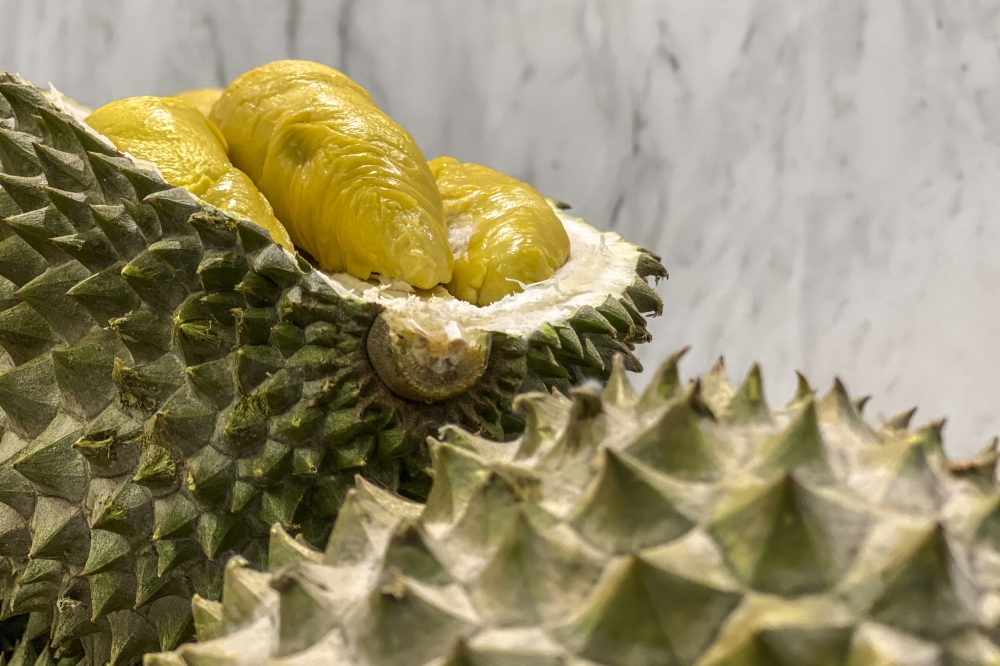
KUALA LUMPUR, May 5 — A desire to savour the rich taste of fresh durian, the ‘king of fruits’ and to witness Malaysia’s beautiful beaches firsthand inspired Yang Zhi Jun from Chengdu, China, to learn and master the Malay language.
The 21-year-old, who chose to pursue Malay studies at Chengdu University of Foreign Languages, had dreamed of visiting Malaysia for the past three years.
That dream became a reality in late April when the third-year student arrived in Malaysia as one of 59 participants in the 2026 China-Malaysia Youth Language and Cultural Interaction Camp, organised by Dewan Bahasa dan Pustaka (DBP) in collaboration with 13 higher education institutions in China.
Held from April 27 to 30, the camp aimed to strengthen bilateral ties between Malaysia and China in education, particularly through the promotion of the Malay language, cultural exchange, and youth leadership development.
Yang, who also goes by her Malay name Zarina, could hardly contain her excitement when sharing her experience with Bernama.
“Our visit was short, just three days, but I had the chance to taste real durian at Jalan Alor in Bukit Bintang.
“In China, we usually get frozen durians imported from Malaysia, but if you want to taste fresh durian straight from the spiky fruit, you have to come to Malaysia,” she said.
Malay language as a career advantage
Another participant, 20-year-old Ratna Chen, a third-year Malay language major at Sichuan International Studies University, said her decision to learn Malay was influenced by the wide range of career opportunities in Malaysia, often highlighted by friends and family back home.
“Many seniors have secured good jobs in Malaysia and are earning well. For a brighter future, I chose to major in Malay at university.
“Although it was challenging at first, especially in terms of pronunciation and grammar, our lecturers, who are Malay teachers fluent in Mandarin, helped us a lot not only in mastering the language but also in understanding Malay culture and traditions,” she said.
Cultural appeal and Belt and Road influence
Director of the Centre for Malaysian Studies at Beijing Foreign Studies University (BFSU), Prof Dr Su Ying Ying, said increasingly close Malaysia-China relations in recent years have encouraged people from both countries to learn each other’s languages and better understand their cultures.
She noted that Malaysia is widely seen in China as a culturally rich, safe and welcoming country, making it an attractive travel destination.
“Malaysia’s cultural diversity is a major draw. Many parents in China strongly support their children in pursuing Malay studies.
“In addition, the Belt and Road Initiative (BRI) has played a significant role in boosting interest in the Malay language, as many related projects are being carried out between Malaysia and China, with numerous major Chinese companies establishing operations here.
“This creates job opportunities for students and offers a practical pathway for building careers in Malaysia while broadening their global outlook,” she said.
Statistics from Malaysia’s Home Ministry show that as of August 15, 2025, there were 30,679 Chinese nationals registered as professional expatriates in Malaysia.
Under the Malaysia My Second Home (MM2H) programme, 26,162 mainland Chinese nationals were residing in Malaysia as of December 2024, holding long-term visas for retirement, education and investment purposes.

Language as a bridge across cultures
Meanwhile, DBP Chairman and National Laureate Datuk Dr Anwar Ridhwan said language is not merely a tool of communication but also a vehicle of thought, a carrier of values, and a reflection of a nation’s civilisation.
“In international relations, language serves as a bridge connecting differences in culture, history and worldviews.
“When Chinese citizens learn Malay, they are not just learning a language or exploring a culture, they are gaining an advantage: understanding the soul of the Malaysian people, fostering cultural appreciation, expanding educational and career opportunities, and strengthening regional cooperation.
“As the Malay proverb goes, ‘tak kenal maka tak cinta,’ one cannot love what one does not know,” he explained.
He added that programmes such as the language and cultural interaction camp help nurture strong Malaysia-China ties through youth-driven cooperation and mutual understanding.
Boosting tourism through language
Beyond cultural exchange, proficiency in Malay among Chinese nationals could also help promote Visit Malaysia 2026 and encourage more tourists from China.
President of the Malaysia International Tourism Development Association, Captain Mahadzir Mansor, said Mandarin-speaking Malaysians and Malay-speaking Chinese nationals alike play a role in promoting Malaysia’s tourism offerings, from traditional food to scenic destinations.
To attract more visitors, the association plans to introduce a ‘digital cultural card’ from mid-year, allowing Chinese tourists to collect points redeemable for discounts on travel packages.
“We are targeting around 500,000 tourists from China through this initiative.
“If achieved, it will have a significant impact on the country’s tourism sector and economy,” he said when met on the sidelines of the launch of the Visit Malaysia 2026 Digital Cultural Card Project here. — Bernama