
 Login
Login
From guns to sewing machines: Scarred teens in Central Africa stitch futures after stolen childhoods
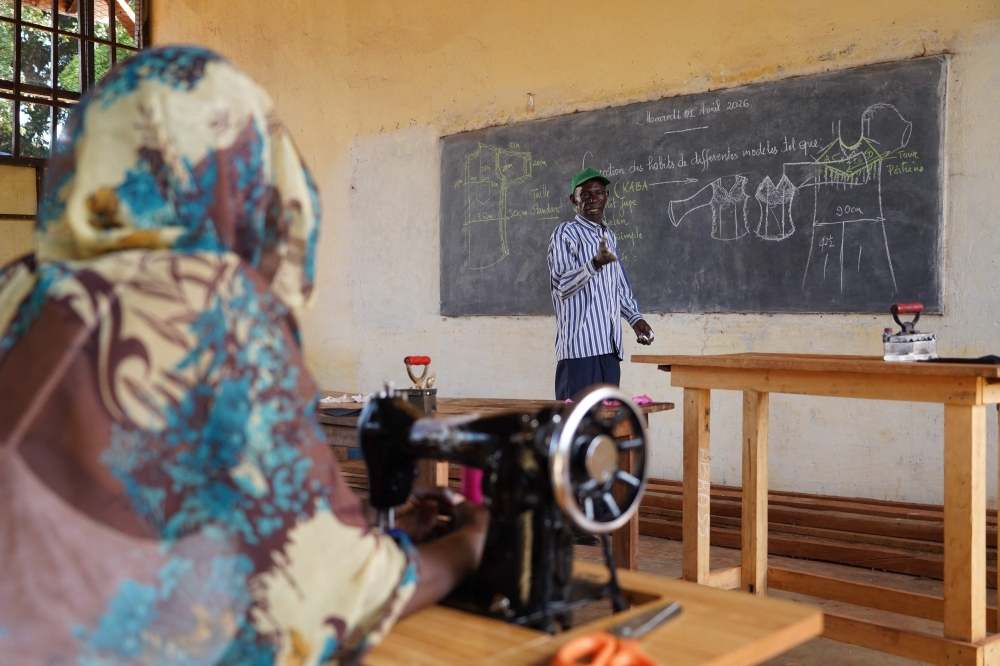
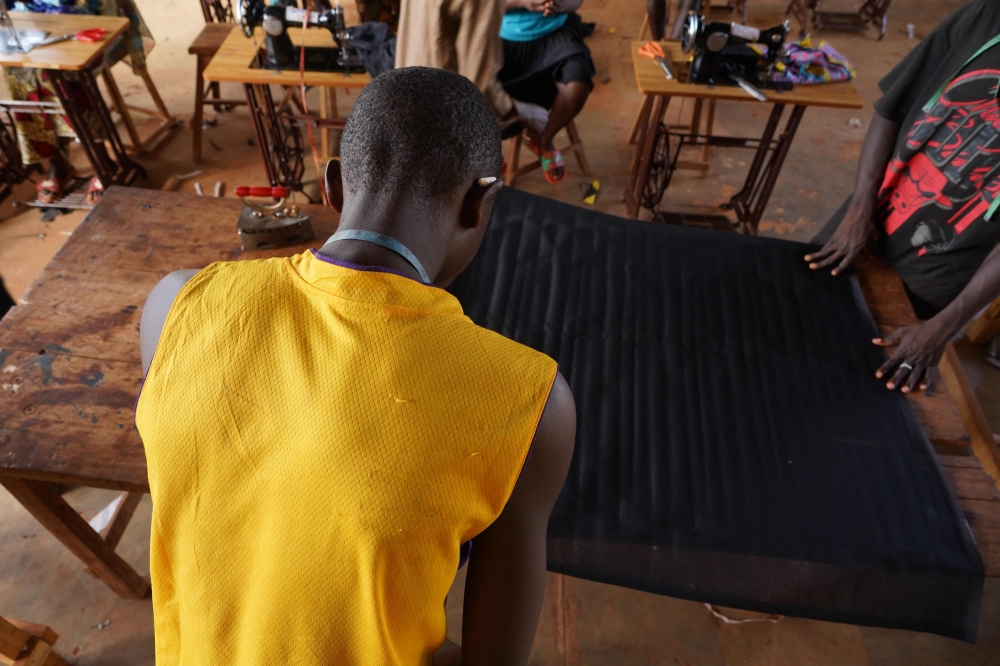
BRIA (Central African Republic), May 6 — In a classroom in Bria in the unstable eastern Central African Republic, former child soldiers were learning to sew.
It is a way to help the 14- to 17-year-olds move on from the violence they suffered at the hands of the country’s many armed groups.
“It’s not easy teaching them. Some still carry that violence within them. Others are still very stressed,” Christophe Yonaba, a teacher with the Esperance charity, said.
“Sometimes they sit there, silent,” he said of his tailor apprentices. “Then suddenly they get restless, as if they’ve seized up inside,” he said.
The east of the CAR, whose subsoil is rich in diamonds, has been torn apart by years of armed conflict.
“These teenagers have all, at some point, been captured by armed groups,” 53-year-old Yonaba said.
According to the United Nations children’s fund (Unicef), around 2,000 Central African youngsters are still in the clutches of such fighting forces.
At the height of a civil war that dragged on from 2013 to 2018, around 20 groups were operating in the east.
The figure has now fallen to 14 thanks to peace agreements and disarmament programmes.
But armed groups continue to control certain areas of the east, particularly on the border with Sudan and South Sudan.
Since late last year, fighting between the army and rebels has intensified in the region.
The conflict has displaced tens of thousands of civilians, mostly women and children, within the country and towards the neighbouring Democratic Republic of Congo.
Past trauma
Awa — AFP has changed the names of all the minors in this story — was just 14 when she was abducted by the Unit for Peace in the Central African Republic (UPC), one of the largest rebel groups.
She was held captive for around three months.
Sitting at the front of Yonaba’s class, where sewing machines have replaced traditional desks, she shied away from talking about the past and preferred to focus on the present.
“Today, I feel fine. I like what I’m doing here.
“There are other children who’ve had similar experiences to me. We help each other with the work,” the young girl told AFP.
She said she was happy to now live “a sort of normal life”.
Amadou, 16, was trained as a baker by the NGO and now makes bread and doughnuts every morning in a traditional oven in his village.
He spent a year and a half in the ranks of the UPC.
“We weren’t asked to use weapons but we were there — like servants.
“We did all the thankless tasks and didn’t get any rest. And on top of that, they spoke to us rudely and harshly,” he said struggling with the painful memories that resurfaced.
Rising demand
Talking about the violence of their past can be traumatic.
Rachelle, who is learning about livestock farming with Esperance, said she was used as a sex slave when she was just 14.
The ordeal went on for a year.
“They forced me to do things. I had to in the end, otherwise there would have been consequences,” she confided bravely.
Rachelle refused to say any more.
The memories continue to haunt her, though.
She especially wonders about her mother, who was kidnapped at the same time as she was and has not been heard from since.
Esperance, which is partly funded by Unicef, helped 52 young people find a vocation and a job last year.
It offers psychological support as well as training.
Recent disarmament programmes have contributed to a rise in demand for its services.
“Before, we might have received one call a month. Now, it’s every week,” said Karl Malone, who is in charge of uncovering new cases of child soldiers in the Bria region.
“This year, we’ve received enough funding to help 100 children,” he said.
“But there are at least 117 who need help. And we can’t take care of them,” he sighed.
Like other aid organisations, Esperance has been affected by the drop off in international funding, particularly from USAID, the US development agency.
USAID was dismantled by US President Donald Trump shortly after he returned to power. — AFP
