
 Login
Login
From war-era timber to turtle patrols: A Pulau Perhentian eco sanctuary rebuilt for conservation and sustainability
KUALA LUMPUR, May 3 — By the time most guests on Pulau Perhentian have turned in for the night, the real work begins.
Under dim red lights, volunteers walk the shoreline in near silence, watching for movement in the sand — a telltale sign that a mother turtle has come ashore to lay her eggs. For Hayati Mokhtar, these nocturnal patrols are where her story truly begins.
What started as a small, almost experimental effort more than a decade ago has since grown into a sustained fight against poaching, habitat loss and human pressure — one that she helped build from the ground up.
“I felt that I was a custodian of a little bit of nature,” she said, recalling how inheriting small plots of land on islands off Terengganu pushed her toward conservation.
Trained as a visual artist in London, Hayati’s journey into conservation wasn’t straightforward, but a chance collaboration with marine conservationists — and the discovery of turtle tracks on her land — set things in motion.
At the time, turtle nesting sites were vulnerable, with eggs often taken before they could hatch.
“It was just surveying how many turtles came up and trying to save the eggs before the poachers came,” she said.
Back then, turtle eggs were openly sold in markets, making them an easy target. Boatmen and resort workers would follow tracks from the sea and dig up nests before conservation teams could intervene.
While such trade has since been outlawed, Hayati says the temptation hasn’t disappeared.
“It’s an ongoing thing… when people see turtle tracks, it’s very tempting just to dig them up,” she said.
What began as a small, largely improvised effort has since grown into a structured conservation initiative. Hayati’s early work on Lang Tengah, which started with little more than volunteers and basic monitoring, eventually developed into Lang Tengah Turtle Watch, a grassroots project focused on protecting nests and collecting data.
Over time, the initiative evolved into Pulihara, a registered society now led by her former collaborator, who had previously worked on turtle conservation in Terengganu with WWF-Malaysia.
Nights on patrol
Protecting the nests is neither glamorous nor easy.
Patrols begin after dinner and stretch into the early hours of the morning, with volunteers rotating shifts through the night.
“You don’t know when they’ll come — it could be midnight, 1 am, 2 am,” she said.
Armed with red lights — which are less likely to scare off nesting turtles — teams walk the beaches, relocate eggs when necessary, and keep watch against poachers.
Over time, these grassroots efforts evolved into a structured conservation initiative, eventually drawing support from corporates and organisations. Today, the project continues under a formal body, reflecting how far it has come from its informal beginnings.
Encouragingly, there are signs of recovery.
“Turtles have started to rebound … but conservation never stops because the turtles cross borders and remain vulnerable to fishing nets and consumption in other regions,” she said.
A house rebuilt plank by plank
If the turtle work reflects Hayati’s persistence, her home on Pulau Perhentian reveals something just as telling — patience.
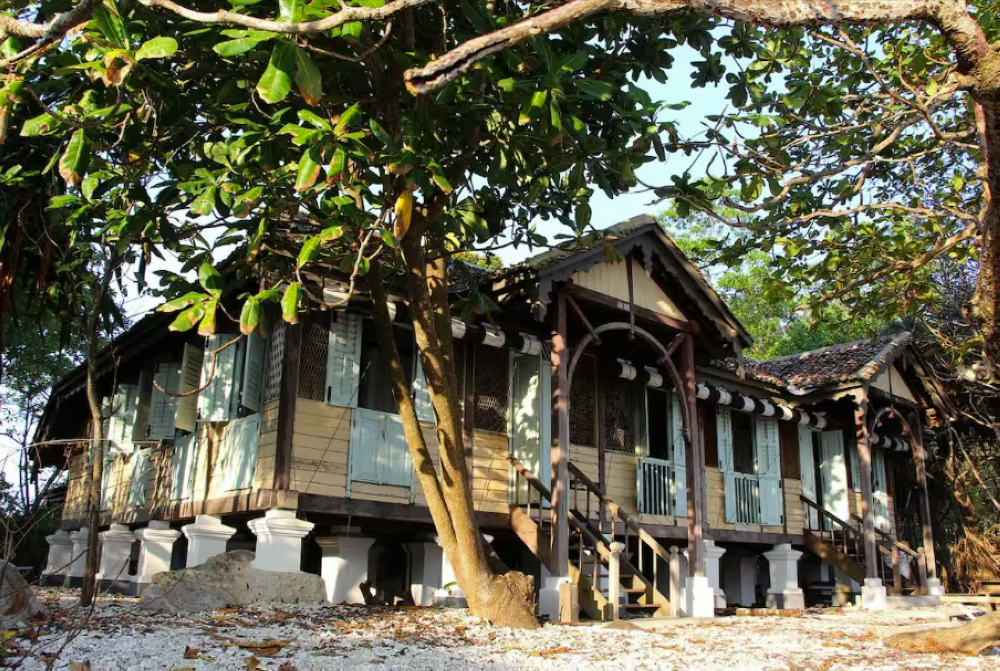
The wooden house that now sits on her plot did not start there. It began hundreds of kilometres away in Perak.
“A friend called me and said, ‘Hayati, do you want a house?’” she recalled, laughing at the memory.
The structure was an old government quarters in Batu Gajah, slated to be dismantled. Instead of letting it be lost, Hayati decided to move it — entirely plank by plank.
With the help of workers, the house was carefully taken apart. Each piece was transported to the island and reassembled over time — a process slowed by logistics, weather, and the monsoon season.
“It took about two years just to rebuild the structure and then another year for all the detailing, the wiring, the piping,” she said.
The effort revealed more than just craftsmanship. It uncovered history.
On one of the pillars, a faint marking remains: 1944.
“That means the house was already there during the war, and the wood would have been even older — probably from the 1930s.”
Rather than replace it with new materials, Hayati made a conscious decision to preserve what already existed.
“In those days, the quality of the wood was superb. There was a lot of forest,” she said.
“I pride myself on the fact that no new rainforest was used.”
Even repairs followed the same philosophy. Instead of buying new timber, she sourced salvaged wood from dismantled houses elsewhere in Peninsular Malaysia.
“It’s all recycled, upcycled, giving something a second life,” she said.
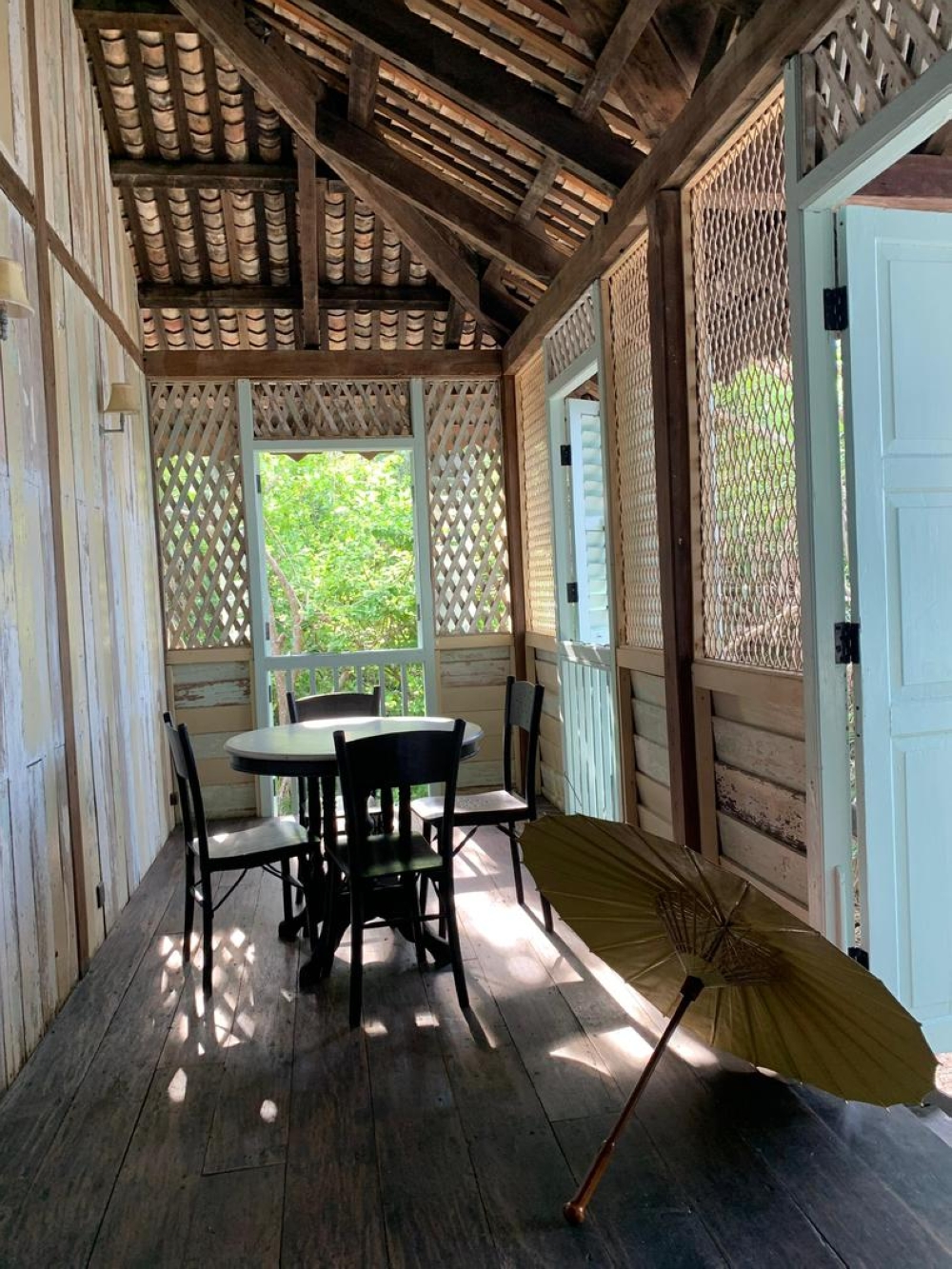
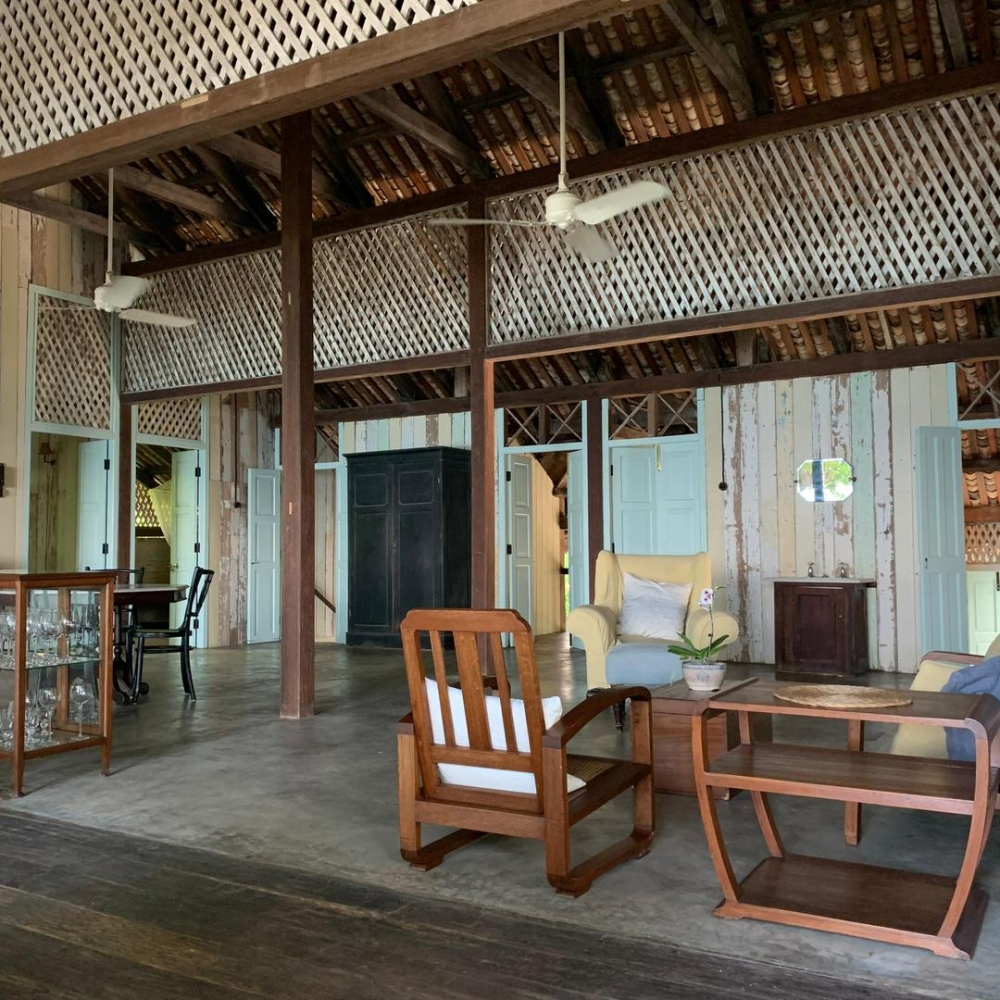
The house itself was originally built as a semi-detached unit for two occupants, with a separate rear section for staff — a layout Hayati retained, with slight modifications to suit modern living.
Today, it stands as a blend of past and present: antique fans, repurposed furniture and open, airy spaces designed long before air-conditioning became the norm.
“There’s no air-con as the house was designed for ventilation — open windows, airflow… that’s how people lived.”
Built with intention
From the beginning, sustainability was part of the design — not an afterthought.
Hayati installed solar panels early on, choosing to power the house without generators.
“It’s quiet … no petrol fumes, no noise,” she said.
“You just depend on the sun.”
Guests, she admits, sometimes have to adjust — especially on cloudy days when energy use needs to be kept in check.
“People have to be mindful, as if there’s not much sun, you cut down. Don’t leave fans running.”
“But all of that is part of the experience.
“You’re living in an old house, built in the 1930s, using recycled materials,” she said. “It’s a window into the past — but also a way of thinking about the future.”
Over time, the house has become more than just accommodation.
Guests can snorkel, spot turtles feeding in nearby seagrass beds, or even join conservation-related activities — from visiting turtle projects to participating in reef clean-ups and removing ghost nets.
Hayati recalls families who have stayed multiple times, planning reunions around the island retreat.
“Some have come back four times… and already booked for next year,” she said.
Still, like much of the tourism sector, the venture isn’t immune to global uncertainties, from pandemics to geopolitical tensions affecting travel patterns.
Giving back to people, too
Beyond turtles, Hayati’s work extends to the community.
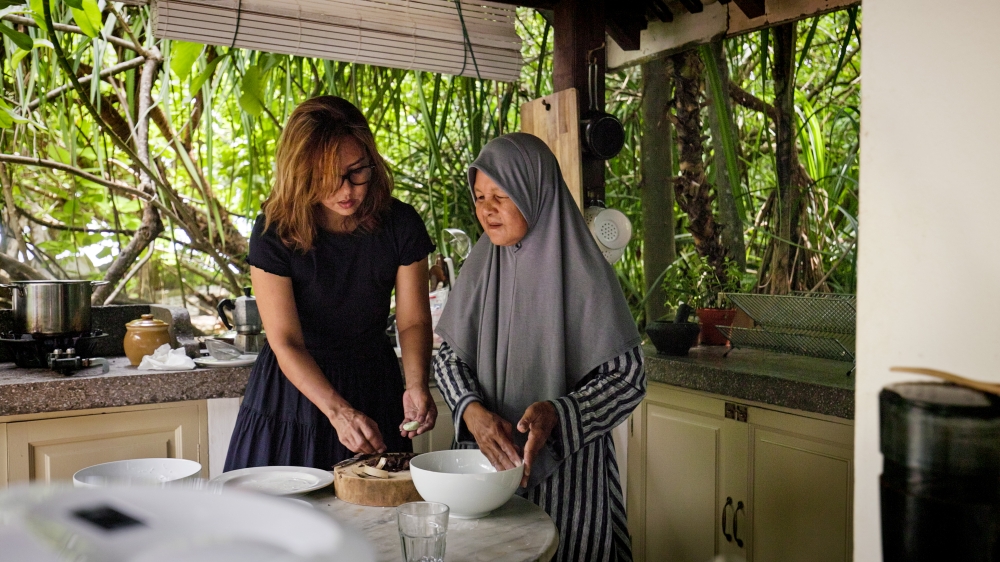
She collaborates with local villagers to provide traditional meals for guests, supports small-scale vendors and even creates opportunities for refugees — including hiring a cook on a UNHCR pass to run a small food business tied to the homestay.
“I try, whenever I can, to help women, refugees, underprivileged people,” she said.
It’s a model that ties conservation, culture and livelihood together — ensuring that protecting the environment also benefits the people living alongside it.
