Reading view

From war-era timber to turtle patrols: A Pulau Perhentian eco sanctuary rebuilt for conservation and sustainability

Malay Mail

KUALA LUMPUR, May 3 — By the time most guests on Pulau Perhentian have turned in for the night, the real work begins.

Under dim red lights, volunteers walk the shoreline in near silence, watching for movement in the sand — a telltale sign that a mother turtle has come ashore to lay her eggs. For Hayati Mokhtar, these nocturnal patrols are where her story truly begins.

What started as a small, almost experimental effort more than a decade ago has since grown into a sustained fight against poaching, habitat loss and human pressure — one that she helped build from the ground up.

“I felt that I was a custodian of a little bit of nature,” she said, recalling how inheriting small plots of land on islands off Terengganu pushed her toward conservation.

Trained as a visual artist in London, Hayati’s journey into conservation wasn’t straightforward, but a chance collaboration with marine conservationists — and the discovery of turtle tracks on her land — set things in motion.

At the time, turtle nesting sites were vulnerable, with eggs often taken before they could hatch.

“It was just surveying how many turtles came up and trying to save the eggs before the poachers came,” she said.
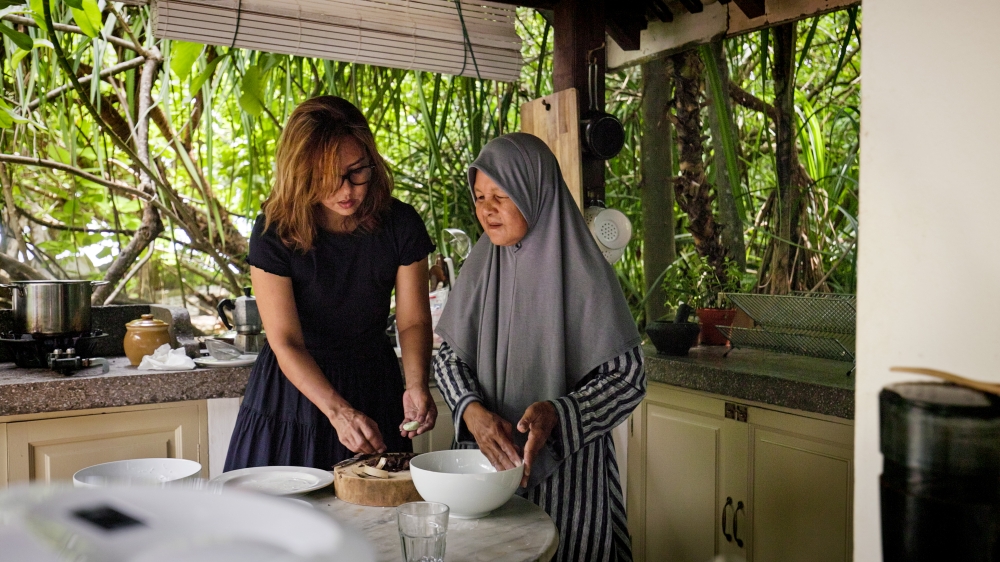
Hayati and her staff member, Kak Mah preparing onde-onde for guests to try.

Back then, turtle eggs were openly sold in markets, making them an easy target. Boatmen and resort workers would follow tracks from the sea and dig up nests before conservation teams could intervene.

While such trade has since been outlawed, Hayati says the temptation hasn’t disappeared.

“It’s an ongoing thing… when people see turtle tracks, it’s very tempting just to dig them up,” she said.

What began as a small, largely improvised effort has since grown into a structured conservation initiative. Hayati’s early work on Lang Tengah, which started with little more than volunteers and basic monitoring, eventually developed into Lang Tengah Turtle Watch, a grassroots project focused on protecting nests and collecting data.

Over time, the initiative evolved into Pulihara, a registered society now led by her former collaborator, who had previously worked on turtle conservation in Terengganu with WWF-Malaysia. 

Nights on patrol

Protecting the nests is neither glamorous nor easy.

Patrols begin after dinner and stretch into the early hours of the morning, with volunteers rotating shifts through the night.

“You don’t know when they’ll come — it could be midnight, 1 am, 2 am,” she said.

Armed with red lights — which are less likely to scare off nesting turtles — teams walk the beaches, relocate eggs when necessary, and keep watch against poachers.
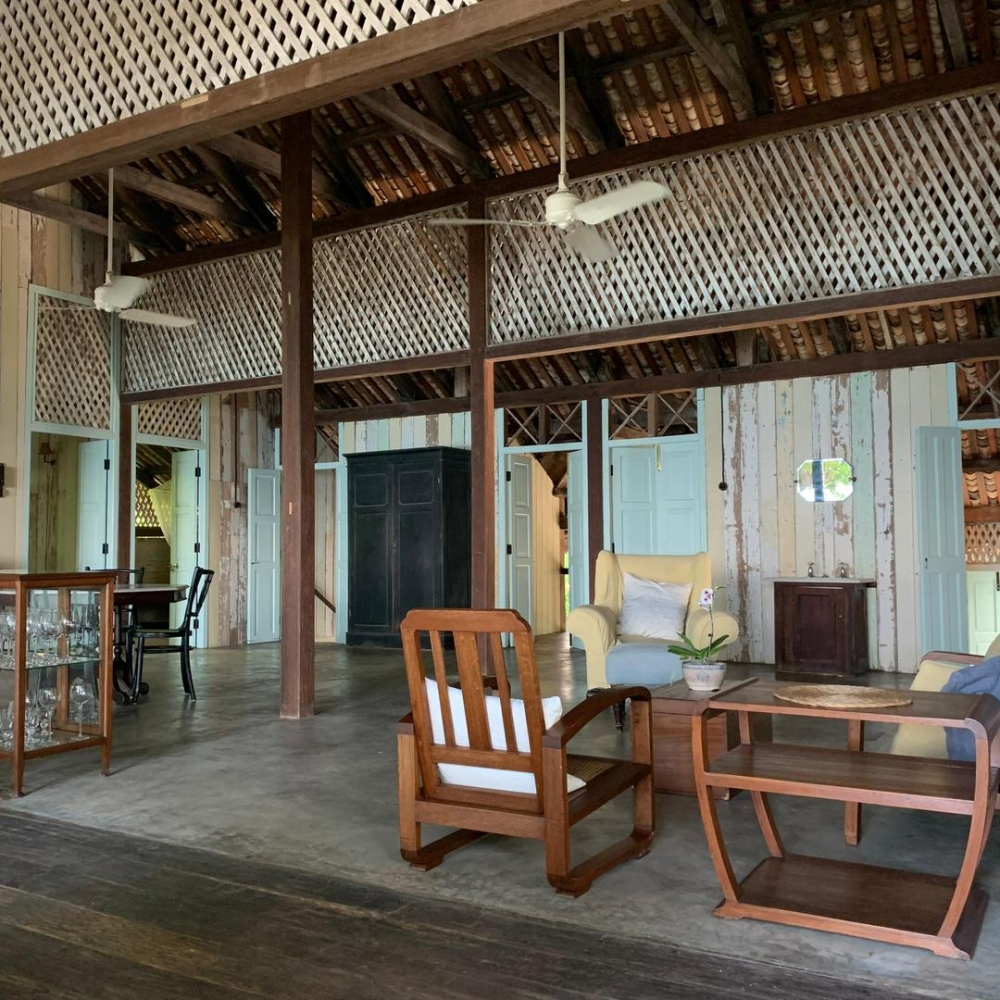
Built from reclaimed timber and designed for natural ventilation, the house reflects a balance between old-world architecture and modern sustainability.

Over time, these grassroots efforts evolved into a structured conservation initiative, eventually drawing support from corporates and organisations. Today, the project continues under a formal body, reflecting how far it has come from its informal beginnings.

Encouragingly, there are signs of recovery.

“Turtles have started to rebound … but conservation never stops because the turtles cross borders and remain vulnerable to fishing nets and consumption in other regions,” she said.

A house rebuilt plank by plank

If the turtle work reflects Hayati’s persistence, her home on Pulau Perhentian reveals something just as telling — patience.

The wooden house that now sits on her plot did not start there. It began hundreds of kilometres away in Perak.

“A friend called me and said, ‘Hayati, do you want a house?’” she recalled, laughing at the memory.

The structure was an old government quarters in Batu Gajah, slated to be dismantled. Instead of letting it be lost, Hayati decided to move it — entirely plank by plank.

With the help of workers, the house was carefully taken apart. Each piece was transported to the island and reassembled over time — a process slowed by logistics, weather, and the monsoon season.

“It took about two years just to rebuild the structure and then another year for all the detailing, the wiring, the piping,” she said.

The effort revealed more than just craftsmanship. It uncovered history.

On one of the pillars, a faint marking remains: 1944.

“That means the house was already there during the war, and the wood would have been even older — probably from the 1930s.”

Rather than replace it with new materials, Hayati made a conscious decision to preserve what already existed.

“In those days, the quality of the wood was superb. There was a lot of forest,” she said. 

“I pride myself on the fact that no new rainforest was used.”

Even repairs followed the same philosophy. Instead of buying new timber, she sourced salvaged wood from dismantled houses elsewhere in Peninsular Malaysia.

“It’s all recycled, upcycled, giving something a second life,” she said.
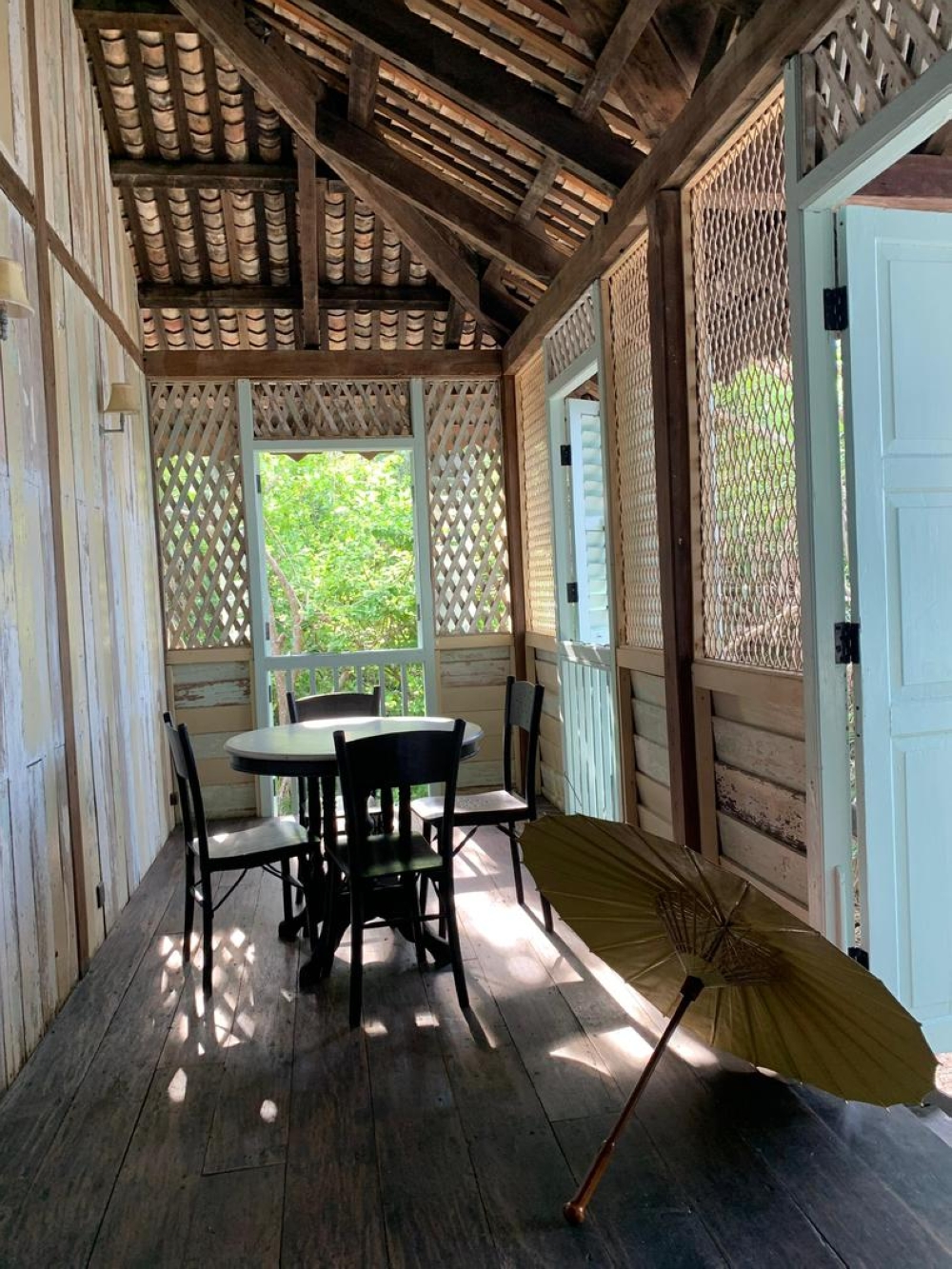
The Resthouse: A restored wooden home on Pulau Perhentian, rebuilt plank by plank from a pre-war structure in Batu Gajah and now fully powered by solar energy.

The house itself was originally built as a semi-detached unit for two occupants, with a separate rear section for staff — a layout Hayati retained, with slight modifications to suit modern living.

Today, it stands as a blend of past and present: antique fans, repurposed furniture and open, airy spaces designed long before air-conditioning became the norm.

“There’s no air-con as the house was designed for ventilation — open windows, airflow… that’s how people lived.”

Built with intention

From the beginning, sustainability was part of the design — not an afterthought.

Hayati installed solar panels early on, choosing to power the house without generators.

“It’s quiet … no petrol fumes, no noise,” she said. 

“You just depend on the sun.”

Guests, she admits, sometimes have to adjust — especially on cloudy days when energy use needs to be kept in check.

“People have to be mindful, as if there’s not much sun, you cut down. Don’t leave fans running.”

“But all of that is part of the experience.

“You’re living in an old house, built in the 1930s, using recycled materials,” she said. “It’s a window into the past — but also a way of thinking about the future.”

Over time, the house has become more than just accommodation.

Guests can snorkel, spot turtles feeding in nearby seagrass beds, or even join conservation-related activities — from visiting turtle projects to participating in reef clean-ups and removing ghost nets.

Hayati recalls families who have stayed multiple times, planning reunions around the island retreat.

“Some have come back four times… and already booked for next year,” she said.

Still, like much of the tourism sector, the venture isn’t immune to global uncertainties, from pandemics to geopolitical tensions affecting travel patterns.

Giving back to people, too

Beyond turtles, Hayati’s work extends to the community.

She collaborates with local villagers to provide traditional meals for guests, supports small-scale vendors and even creates opportunities for refugees — including hiring a cook on a UNHCR pass to run a small food business tied to the homestay.

“I try, whenever I can, to help women, refugees, underprivileged people,” she said.

It’s a model that ties conservation, culture and livelihood together — ensuring that protecting the environment also benefits the people living alongside it.


  •  

After withdrawing support, Negeri Sembilan Umno says MB’s fate now with BN, PH leadership

Malay Mail


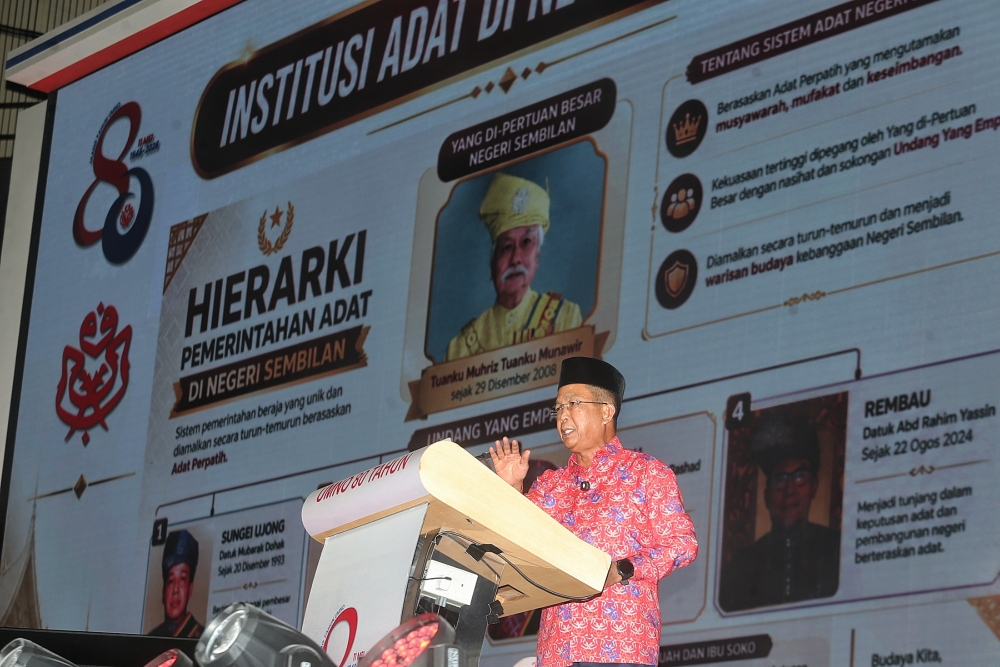
KUALA LUMPUR, May 2 — Negeri Sembilan Umno will defer to party leadership on its next course of action following its withdrawal of support for the menteri besar, including any decision on a potential replacement, its chief Datuk Seri Jalaluddin Alias said today.

Jalaluddin said the state chapter would abide by decisions made by Barisan Nasional (BN) and Pakatan Harapan (PH) leadership, including whether the next menteri besar should come from outside Umno.

“We will wait and see what the leadership decides, be it BN or PH. It is not for Negeri Sembilan Umno to determine,” he told reporters when met outside Merdeka Hall at the World Trade Centre.

He stressed that the current political crisis was “extraordinary”, following the decision by 14 Umno assemblymen on April 27 to withdraw support for the menteri besar.

Jalaluddin said the move came after issues the group could no longer accept, adding that the crisis was triggered by what he described as mismanagement by the menteri besar that disrupted the state’s political harmony.

“This is not about politics, power or ‘tebuk atap’ (back door). This concerns governance and the institutions of adat and the Negeri Sembilan monarchy,” he said.

He added that the loss of confidence by the 14 assemblymen was final and not a shifting political stance.

“If we have pulled support and the menteri besar continues to govern, it means we have lost trust,” he said.

Jalaluddin reiterated that Umno Negeri Sembilan is prepared to take on the role of opposition if directed by party leadership, potentially until the next general election.

“What we will do next depends on Umno’s decision. We don’t mind being in the opposition and if we are to be in the opposition, we will remain so until GE16,” he said.

On speculation over a replacement menteri besar, including the possibility of a PKR candidate, he said the matter was premature.

He warned that public debate surrounding the issue risked creating confusion, particularly among younger Malaysians, and could harm the reputation of Negeri Sembilan’s adat institutions.

“The question now is not about individuals or positions, but about the responsibility of a menteri besar. We cannot allow a crisis like this to happen, especially one involving adat,” he said.

“When such matters are debated openly, many will not fully understand adat. This can lead to negative perceptions and confusion among youths and students,” he added.

Jalaluddin said Umno was compelled to act to prevent further damage.

Earlier in his speech, Jalaluddin said many had accused Umno of betraying the government, but they forget that in 2023, Umno Negeri Sembilan won 14 seats — the most among all parties.

In the 2023 Negeri Sembilan state polls, Umno secured 14 seats, followed by PKR (five), DAP (11), Perikatan Nasional (five), and Amanah (one).

Jalaluddin pointed out that with the strongest representation at the time, he could have moved to destabilise the government earlier if he had intended to do so.

“If I wanted to stir something, I could have done it then but I respected the federal leadership’s call to maintain peace and stability so that we could work together,” he said.

He said Umno had continued to play its role within the state government over the past two-and-a-half years, including holding four executive council (exco) positions.

Rejecting accusations of a “tebuk atap” (backdoor takeover), Jalaluddin said such claims were misplaced.

“Tebuk atap is when you try to take over the government from outside. We are already part of the government — we have exco positions and allocations. What ‘tebuk atap’ is this?” he asked.

He stressed that the withdrawal of support was prompted by dissatisfaction with the state government’s handling of a recent crisis, which he said could not be compromised.

“We are also close to the general election, but we cannot compromise when there is failure in governance,” he said.

Jalaluddin said Umno Negeri Sembilan would now sit in the opposition for as long as it believes the state government is not performing effectively.

He added that the party would focus on strengthening its position ahead of the next general election.

“We will do our best to win all seats. We do not need to cater to others’ feelings. As chairman of the state Umno machinery, it is my responsibility to ensure we are in a dominant position,” he said.

He also rejected claims that Umno’s actions were motivated by a desire for power or positions.

“Umno Negeri Sembilan is not greedy or hungry for posts. We did not want to disrupt the momentum, but we acted because we have principles we cannot abandon — integrity, and our promises to religion and nation,” he said.

Reaffirming the party’s stance, Jalaluddin ended with a firm message: “No retreat, no surrender.”


  •  

Umno must reinvent itself or risk irrelevance, says Mohamad Hasan as party marks 80th anniversary

Malay Mail


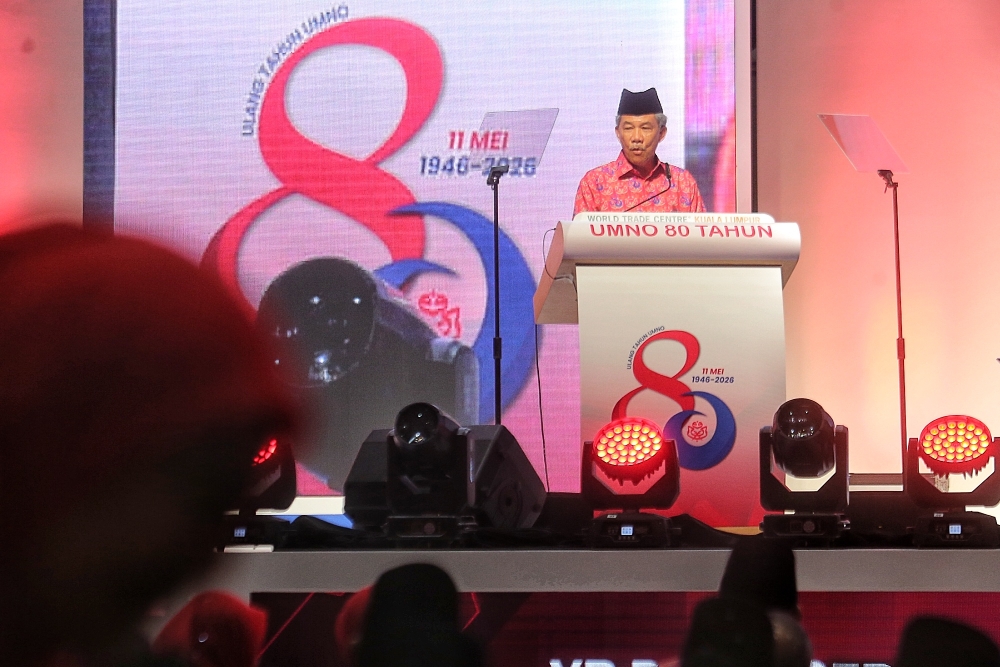
KUALA LUMPUR, May 2 — Umno deputy president Datuk Seri Mohamad Hasan today called for a sweeping reinvention of the party, warning that it risks being left behind if it fails to adapt to shifting voter sentiment and reconnect with Malays who are increasingly drifting away.

Speaking at Umno’s 80th anniversary gathering — which coincided with his 70th birthday — the Rembau MP said the party could no longer rely on legacy or nostalgia to stay relevant.

“Reality is, Malays are not as close to us as before. Some even say they no longer need Umno,” he said.

“However, Umno is not dead. Despite all the trials and tribulations, Umno is being tested and whenever we are tested, we come back stronger,” he said in his opening speech at the convention at the World Trade Centre.

Mohamad acknowledged that the party’s loss of federal power in 2018 had eroded public trust, but said Umno has since drawn strength from the crisis and grassroots loyalty.

Framing the party’s future around adaptability, he stressed that Umno must move away from rigid political formulas and adopt a more flexible, data-driven approach ahead of state elections and the next general election.

“Elections today are no longer static. This is not weakness — flexibility is our strength,” he said, adding that modern campaigns are now a “war of data” rather than traditional ceramah-driven contests.

He cautioned that internal divisions would undermine any chance of a political comeback.

“If we fight among ourselves before the general election, we will lose,” he warned.

He also urged the party to undertake a deeper ideological reset, saying Umno must better define its direction in the face of digitalisation and globalisation, particularly as younger, digitally native voters grow up in a borderless political environment.

At the same time, Mohamad said Umno must balance its role as a political vehicle for Malays and Islam with the realities of Malaysia’s multicultural society.

“Umno’s future cannot be separated from Malaysia’s ambitions; it must align with them,” he said.

Despite acknowledging waning support, he insisted Umno remains central to Malaysia’s political stability, arguing that strong governments still depend on the party’s participation, alongside its experience in managing crises and the loyalty of its grassroots base.

Looking ahead, Mohamad said Umno’s goal is to return as a dominant political force, but only if it is willing to change.

“If we do not change, the rakyat will change us,” he said, adding that with state elections in Johor and Melaka approaching, the party needed a clear direction to secure victory.

He said Malays were no longer as “mesra” with Umno as before and claimed that many had forgotten the party’s contributions to nation-building.

“That’s fine, we will fix this and we will do it with the people’s sentiments as the driving force. We will ask what future we want, what kind of Malaysia we want, and build our strong nation on the backbone of strong, proud Malaysians,” he said.

Mohamad added that challenges must be faced with an open mind, saying his 70th birthday marked a personal shift in focus.

“It’s not about me or my career anymore. At this point, all I want to do is give back to the people, the party, Islam, and Malays, and we will strive to be the dominant force in Malaysia again,” he said.

  •  

Umno sees membership surge as online registration dubbed ‘gamechanger’, says Asyraf Wajdi

Malay Mail


KUALA LUMPUR, May 2 — Umno secretary-general Datuk Asyraf Wajdi Dusuki today said the party has recorded an extraordinary surge in new memberships, crediting a “gamechanger” move by the party president for enabling online registration.

Asyraf said that in a break from tradition, this year’s party celebration is not an exclusive event.

“We have never distanced ourselves from the people. This year’s celebration is special — it runs until May 5,” he said in his opening speech on day two of Umno’s 80th anniversary at the World Trade Centre today.

“But what happened yesterday was something else entirely.”

According to the party secretariat, something “extraordinary” occurred when the online membership registration system, which also issues membership cards, saw crowds forming long before counters opened.

“We opened the counter at 10 am, but by 8.30 am, people were already queuing up for their cards,” Asyraf said.

He added that since online registration was first opened on April 20 until 8 am today, a total of 13,954 new members had joined Umno through the initiative, and thanked party president Datuk Seri Ahmad Zahid Hamidi for the effort.

“So a huge thanks and congratulations to Datuk Seri Zahid for this successful initiative,” he said.

The breakdown showed Umno Youth recording 8,233 new members, followed by 1,260 from Wanita Umno and 1,240 from Puteri Umno.

Johor recorded the highest number of new members, followed by Pahang and Perak.

“I can say here, almost every day, this number is increasing,” he said.

“This shows what the president wished for — not to make it difficult for youth to join Umno by easing the process of filling up membership forms. The supreme council can then acknowledge them as equal members alongside other Umno members.”

Asyraf described the online registration system as a “gamechanger”, saying full credit should go to the party president.

“This is a gamechanger by our president. All credit and praise should go to him for this,” he said.

He stressed that Umno’s 80th anniversary celebrations were not merely ceremonial, but carried significant implications for the party’s future direction.

“Our journey will be difficult, but our party is ‘keramat’ (sacred). We will continue to strengthen religion and race, and ensure our multicultural nation continues to be blessed by God,” he said.


  •  

Rafizi says summoned by MACC over Arm Holdings JV probe, expects possible charges

Malay Mail

KUALA LUMPUR, May 1 — Pandan MP Datuk Seri Rafizi Ramli has been called up by the Malaysian Anti-Corruption Commission (MACC) to give his statement over an ongoing probe linked to the government’s joint venture with Arm Holdings.

In a statement posted on social media this afternoon, Rafizi said he received the notice around 3pm today, requiring him to appear at the MACC headquarters in Putrajaya on May 4 at 10am.

He said the summons relates to investigations into the government’s collaboration with Arm Holdings, a global chip design firm, which has come under scrutiny in recent months.

He also said that a report was suddenly lodged with the MACC by Perkasa, an NGO that has never previously shown interest in corruption issues. 

“Allegedly, the agreement was made hastily and to the detriment of the nation. When asked by the media, the Perkasa representative didn’t want to comment further because he said he didn’t understand it much himself,” said Rafizi on his official X account.

“Since February, this case has become the MACC’s top priority.

“There is no monetary motive. No money is involved,” he said.

He said he expected that after his statements are taken next week, he may be charged with breach of trust for allegedly providing false information or for causing the Cabinet to sign hastily. 

He added, “Insya Allah, I am prepared with my team of lawyers. It will be a long and fascinating trial, because many of the country’s top leaders will be called as witnesses.”

Despite the investigation, Rafizi noted that the joint venture with Arm Holdings is still ongoing, with the government continuing to promote it as a key step towards developing Malaysia’s own semiconductor capabilities.

He also described the probe as a warning to other politicians and public officials.

Rafizi said he will comment on this issue tonight on his YBM podcast on YouTube at 9pm. 

  •  
❌