
 Login
Login
What is OPEC and how does it shape global oil markets?
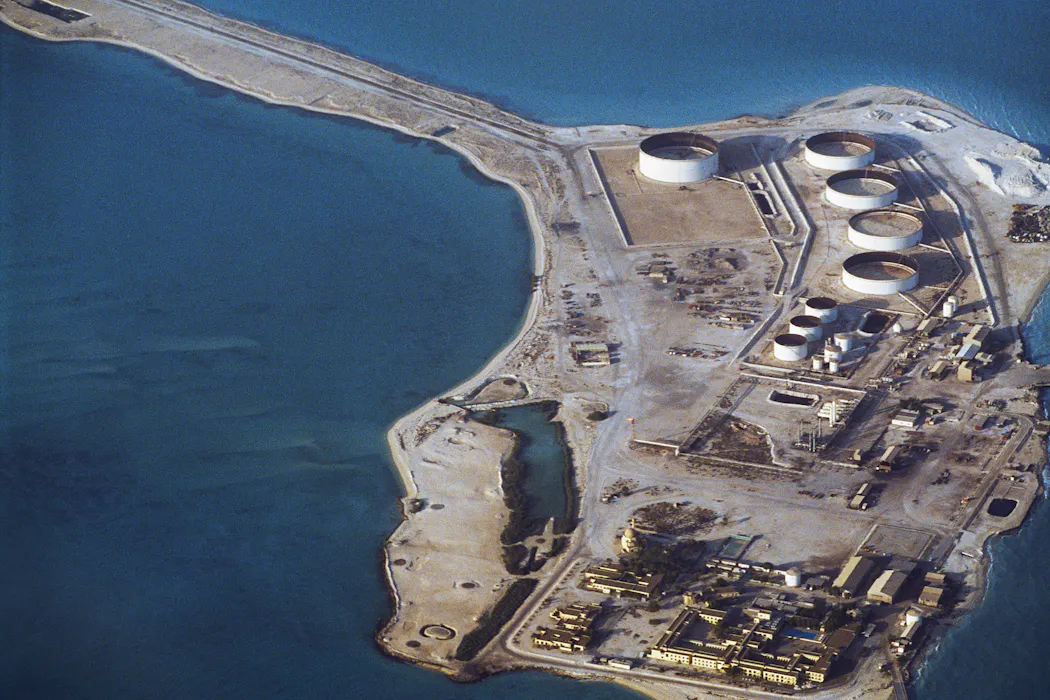
Oil is once again making headlines.
This week, the United Arab Emirates (UAE) made the shock decision to leave the Organisation of the Petroleum Exporting Countries (OPEC).
OPEC is network of oil-producing nations formed in 1960 with the aim of stabilising oil prices in ways that reduce competition and increase profits for member states.
In the decades since, OPEC has become one of the dominant players in the global oil market. This was evident during the 1970s oil shock, where global oil prices quadrupled largely due to OPEC-led cuts to production and sales.
But OPEC has just lost one of its largest producers in the UAE.
So will this dampen OPEC’s influence? And what does this mean for global oil prices?
The origins of OPEC
Before OPEC, there were the “Seven Sisters”. This refers to the seven Western international oil companies – Texaco, Exxon, Mobil, Chevron, Gulf Oil, British Petroleum and Royal Dutch Shell – that dominated the petroleum industry in the 19th century. They did this by controlling virtually every step of the oil supply chain, from extraction to refining to transport.
By the end of the Second World War, the Seven Sisters had gained control of Middle East oil production. They did this by forming contracts with Middle Eastern rulers that effectively gave the companies total control of their oil reserves.
Eventually, these governments got tired of being dominated by the Seven Sisters. For them, the final straw came in 1960, when the oil companies made cuts to the posted price – the price a company publicly agrees to pay for oil. In protest, four Middle Eastern oil-producing states – Iran, Iraq, Kuwait and Saudi Arabia – along with disgruntled Venezuela formed their own cartel in September 1960. And OPEC was born.
Since then, OPEC has expanded to officially include Algeria, the Republic of the Congo, Equatorial Guinea, Gabon, Libya and Nigeria.
Read more: Will oil prices ever truly go back to ‘normal’?
How does OPEC influence oil prices?
OPEC was formed with the explicit aim of setting the global oil price by regulating the supply of oil. Its goal remains the same today.
To achieve this, OPEC sets production quotas for member countries. This creates either a scarcity or glut of oil. Creating a scarcity increases profits for OPEC members while creating a glut prevents other producers – such as the US – from challenging their dominance.
In 1973, OPEC showed its power for the first time by embargoing oil exports to the US. Within months, OPEC members were able to nearly quadruple global oil prices.
The embargo drove the world into recession, leading the US Federal Reserve to repeatedly cut interest rates. And the economy of import-reliant Japan shrank for the first time since the Second World War.
However, OPEC has only ever controlled part of total global oil production. Between 1992 and 2022, OPEC production on average accounted for 40% of the global crude oil supply.
In 2016, OPEC expanded its influence by forming an alliance with Russia and nine other non-member nations. This alliance is known as OPEC+, and today controls about 44% of global oil production.
Read more: The UAE is leaving the OPEC oil cartel. What could that mean for oil prices?
Are OPEC’s actions legal?
The short answer is, it’s complex.
OPEC is often described as a cartel – a group of exporters working together to improve profits and reduce competition.
If OPEC operated in the private sector, its control of production quotas and pricing would be considered illegal. Cartels are banned because they are anti-competitive, in that they artificially control prices, stifle innovation and restrict production. They do this all while maintaining the illusion of competition.
But OPEC’s members are not businesses. They’re nations. Several American legal rulings maintain OPEC’s actions are not cartel activities and, as a result, cannot be brought to court.
Read more: When oil prices spike, where does the money go?
Is OPEC getting weaker?
Since 2000, OPEC’s strength has waned due to two key factors.
One is the resurgence of the US as a global oil power. In the 20th century, US oil production peaked in 1975 before falling sharply as the country’s oilfields ran dry.
But in the 2000s, US oil companies found a way to combine two oil extraction techniques – fracking and horizontal drilling – to great effect. This allowed the US to double its oil production between 2010 and 2020. The US is now the world’s top oil and gas producer, churning out roughly 16.5 million barrels each day. Most of this goes towards domestic consumption.
The second factor is the unpredictability of OPEC’s members. OPEC is an international organisation, but nations can and do leave to pursue their own interests.
Over almost 30 years, Ecuador variously suspended, renewed and withdrew its membership before ultimately leaving OPEC in 2020. This allowed it to increase domestic oil production, free of OPEC’s production quotas.
Read more: The end of oil? As fuel shocks cascade, 53 nations gather to plan a fossil fuel phaseout
Qatar quit in 2019 to concentrate on gas exports, but Qatar’s exit may be construed as a response to OPEC’s waning influence. Its dominance in gas rather than oil may also be a factor.
The UAE has become the latest deserter. Its government now intends to increase oil production, free of its OPEC obligations. However, analysts view the UAE’s decision as a sign of growing rifts between Gulf nations. And the ongoing US-Iran war has only heightened tensions.
The UAE’s exit is a major blow to OPEC’s influence. In today’s volatile world, other OPEC members may also consider quitting the organisation. But only time will tell if that decision is a brave or foolhardy one.

Tina Soliman-Hunter does not work for, consult, own shares in or receive funding from any company or organisation that would benefit from this article, and has disclosed no relevant affiliations beyond their academic appointment.
