Reading view

The bias in medical research: Africa carries a huge disease burden but is missing from clinical trials

Modern medicine prides itself on being a universal science, built on evidence from clinical trials.

But there’s a bias in medical research. While Africa accounts for roughly 25% of the global disease burden and 19% of the global population, the continent’s people are largely invisible in some clinical trials.

The scale of the erasure is revealed in a landmark study of 2,472 randomised controlled trials globally published between 2019 and 2024.

I led this team of researchers, who scrutinised the world’s most influential medical publications to quantify African representation. They included the New England Journal of Medicine, The Lancet, the Journal of the American Medical Association, Nature Medicine, and the British Medical Journal. There were also three leading cardiovascular journals in the study: Circulation, the European Heart Journal and the Journal of the American College of Cardiology.

I am a physician-scientist working at the intersection of cardiometabolic epidemiology and biomedical data science. I also focus on large-scale population studies in Africa and data-driven cardiovascular prevention.

Randomised controlled trials are a cornerstone of evidence-based medicine. Introduced in the mid-20th century, they rigorously evaluate the safety and effectiveness of treatments by randomly assigning participants to different groups. This is done to minimise bias. Trials like these have been central to major medical breakthroughs, from cardiovascular therapies to vaccines. They continue to guide clinical decisions and the development of new treatments worldwide.


Read more: African countries are signing bilateral health deals with the US: virologist identifies the ‘red flags’


What we discovered

Our findings show a profound imbalance in the global clinical research landscape. Across the five most prestigious general medical journals, only 3.9% of trials were conducted exclusively in Africa. In cardiovascular health, the numbers drop to a statistical whisper. Of the major trials published in leading cardiology journals, just two studies (0.6%) were conducted solely on African soil.

This is a crisis of scientific accuracy. When clinical trials exclude African populations, they produce evidence that lacks “external validity”. This refers to how well the results of a study can be generalised beyond the participants. It asks whether findings from a clinical trial will still hold true when applied to different populations, settings, or real-world conditions.

Without that validity, doctors are essentially conducting unmonitored experiments on millions of patients every day.

Modern medicine cannot claim to be universal if entire populations remain invisible in the evidence base. Biology, health systems and disease patterns are not identical across the world.


Read more: Africa is losing health workers when it can least afford to – a pattern rooted in colonial history


The gap and why it matters

Many treatments used across the continent are based on evidence generated in non-African populations, raising concerns about their applicability.

Moreover, most Africa-based trials still focus on infectious diseases, despite the rising burden of non-communicable diseases such as cardiovascular disease.

Emerging evidence shows that genetics, environment and diet can radically alter how a body responds to a drug. It therefore makes no medical sense that an entire continent is left out of the trial net.

There’s also evidence showing that certain treatments have different safety profiles in Black patients. Diabetes and gout are just two examples. So are certain common blood pressure medications, such as angiotensin-converting enzyme (ACE) inhibitors. Research shows that they carry a three- to four-fold higher risk of severe, life-threatening side effects in people of African descent compared to other populations.

When clinical trials exclude populations, doctors are forced to extrapolate findings from one population and apply them to another.

The study also highlights a dangerous lag between global research funding and the evolving reality of African health. The new data show that nearly 76% of trials conducted exclusively in Africa focused on infectious diseases. But the continent is undergoing a massive epidemiological shift. Non-communicable diseases – heart disease, stroke, and diabetes – now account for about 38% of all deaths in many African nations.

The middle class in Africa has tripled to 300 million people from roughly 100 million people in the early 2000s. More people are now living long enough with lifestyles that increase the risk of chronic conditions such as heart disease, diabetes, and hypertension. Consequently, there is a growing need and market for long-term treatments that manage these diseases, rather than short-term therapies for infections. Yet cardiovascular trials continue to be discouraged.

Even within the continent, the data show deep “black holes” of information. South Africa accounted for over 62% of all trials conducted on the continent. Central Africa, a region that’s home to more than 180 million people, was virtually non-existent in the global research record. It contributed less than 3% of the continent’s limited trial output. Possible reasons include South Africa’s decades of cumulative investment, seen in stronger academic hubs, research governance, experienced trial units, and more established sponsor relationships. Other regions face barriers like fewer resourced research institutions, less access to trial platforms, and sometimes language and publication issues that can reduce visibility in top-tier journals.

The inequity extends into the hierarchy of science itself. Even when African sites are included in large, multicontinental trials, they are often relegated to the role of “recruitment hubs” rather than scientific partners. Our study found that African scientists led only 3.6% of multicontinental trials that included an African site.


Read more: Africa needs to speed up research excellence: here’s how


Towards a new era of African science

Africa should not simply be a location where studies are conducted.

It must be a place where research is conceived, led and interpreted. The current model creates a cycle of external dependence where international institutions manage the funding and the data. This leaves local research systems fragile and unable to translate evidence into national policy.

There is need for “ring-fenced” funding for African-led research, the development of regional trial networks, and a mandate for medical journals to report on the diversity of trial populations.

There are signs of a rising momentum. Organisations like Alliance for Medical Research in Africa are working to equip a new generation of African investigators. Africa must create a research ecosystem that is too important for the global community to ignore.

The Conversation

Bamba Gaye does not work for, consult, own shares in or receive funding from any company or organisation that would benefit from this article, and has disclosed no relevant affiliations beyond their academic appointment.


  •  

Will weakening Treaty provisions in NZ law create more problems than it solves?

On the face of it, the government’s desire to make references to te Tiriti o Waitangi consistent across all legislation sounds reasonable.

As Justice Minister Paul Goldsmith argued, current laws variously require decision-makers to “give effect to”, “recognise and provide for”, “honour” or “have particular regard to” the Treaty and its principles.

The cabinet quietly agreed to the advance the policy in February, after a ministerial advisory group suggested it might be helpful to promote consistent wording for each standard of obligation to the Treaty in legislation.

But the group did not recommend reducing those clauses to a single (low) standard of obligation, merely to “take into account” the Treaty principles.

Concerns had already been raised about this review of the law, including by the Waitangi Tribunal and the United Nations Committee on the Elimination of Racial Discrimination.

With legislation confirming the changes due to be introduced before this year’s general election, one of the National-led coalition’s most controversial policies may again ignite the campaign trail.

Predetermined policy?

The origins of the issue lie in the coalition agreement between National and New Zealand First which sought to “reverse measures taken in recent years which have eroded the principle of equal citizenship”. Specifically, it committed the government to:

Conduct a comprehensive review of all legislation (except when it is related to, or substantive to, existing full and final Treaty settlements) that includes “The Principles of the Treaty of Waitangi” and replace all such references with specific words relating to the relevance and application of the Treaty, or repeal the references.

The normal process to achieve such a policy outcome would begin with defining the problem that exists. Officials can then develop a range of policy options to address that problem.

The relative merits and risks of different approaches can be assessed to inform a ministerial decision. During the Waitangi Tribunal hearing, however, officials acknowledged the normal policy development process has not happened.

As the Waitangi Tribunal noted, the outcome of replacing or removing legislative references to “the Principles of the Treaty of Waitangi” was predetermined by the coalition agreement. The existing problem wasn’t defined, nor was there any consideration of how best to achieve the policy objectives.

As described in Cabinet papers, the policy objective is:

to ensure that where it is appropriate to encapsulate the Treaty or the Treaty relationship in legislation, the provisions are clear as to how the Treaty applies in the context of each legislative regime, to reduce uncertainty and support better compliance.


Read more: What is happening with the government’s contentious review of the Waitangi Tribunal?


Clarifying statutory obligations seems like a sound objective. But as the Waitangi Tribunal also pointed out, this does not appear to reflect the stated purpose in the coalition agreement to “reverse measures taken in recent years which have eroded the principle of equal citizenship”.

Nor does it explain why it has been determined that all Treaty principles clauses should be replaced or removed before any analysis of how clear or unclear those provisions are.

In fact, many provisions describe quite specifically how they will give effect to Treaty rights and obligations.

For example, section 3A of the Climate Change Reponse Act 2002 sets out a detailed list of actions which must be done “to recognise and respect the Crown’s responsibility to give effect to the principles of the Treaty of Waitangi”.

These actions include seeking nominations from iwi for appointment to the Climate Change Commission, ensuring Māori are consulted on emissions reduction plans, and taking into account the effects of climate change on Māori in the preparation of national adaptation plans.

It is difficult to see how replacing or removing a provision like this would reduce uncertainty.

‘Significant risk’

There are also Treaty principles clauses which have much broader wording. For example, section 9 of the State-owned Enterprises Act 1986 states: “Nothing in this Act shall permit the Crown to act in a manner that is inconsistent with the principles of the Treaty of Waitangi.”

These types of clauses are referred to as “operative provisions” as opposed to the more detailed “descriptive provisions” such as those in the Climate Change Response Act.

Operative provisions allow greater discretion for the courts to determine the precise obligations they create in specific circumstances.

It could be argued such clauses might benefit from greater clarity or elaboration. But there may well be situations where greater flexibility and discretion is appropriate – and exactly what parliament intended.

Either way, the Waitangi Tribunal noted that the case law and official guidance built up over several decades make the requirements of Treaty principles “easily discoverable”.

In their Regulatory Impact Statement, Paul Goldsmith’s own officials advised the proposed measure “has no apparent benefits and carries significant risk to the Māori-Crown relationship”. Regional hui with Māori were also reportedly removed from the Treaty clause review plans.

Māori have again raised concerns about the policy at the UN, and there is now an application for an urgent hearing before the Waitangi Tribunal. Further legal challenges are likely.

Little wonder, perhaps, that some are now suggesting the policy could generate opposition on the scale of the the failed Treaty Principles Bill which inspired one of the country’s largest ever protests.

The Conversation

Carwyn Jones does not work for, consult, own shares in or receive funding from any company or organisation that would benefit from this article, and has disclosed no relevant affiliations beyond their academic appointment.

  •  

Wastewater data suggests meth use is at a record high. Here’s why we don’t need to panic

Олег Мороз/Unsplash

Data from Australia’s wastewater drug monitoring program suggests methamphetamine use (also known as speed, ice or crystal meth) is at a record high. Cocaine is also up. MDMA may be levelling off. Heroin is fluctuating.

At first glance, these findings from the Australian Criminal Intelligence Commission this week sound alarming.

But before we draw big conclusions about worsening drug use, it’s worth taking a closer look at what this data can and can’t tell us.

What wastewater data actually measures

Wastewater testing works by analysing sewage for traces of drugs people have used. Researchers test samples from treatment plants to estimate how much of a drug has been consumed by the population connected to that system.

It measures metabolised drugs. So it’s able to tell the difference between drugs that have been flushed down the toilet and drugs that have been excreted.

It’s a clever method that avoids some of the issues of self-report surveys, where people may under-report illegal behaviour.

Person flushes a toilet
Wastewater studies measure drugs that humans have metabolised and excreted. Miriam Alonso/Pexels

It also gives close to real-time data unlike population surveys that are only conducted every few years.

But wastewater data can only measure the volume of drugs consumed, not the number of people using them or level of harm they experience.

Wastewater data can’t differentiate quantity from frequency. When it shows increases in particular drugs, we don’t know whether there are more people using the drug, or if the same people are using more of the drug, or using it more often.

It also can’t identify whether changes are due to higher purity.

So when we hear methamphetamine use is at a “ten-year high”, it really means the total quantity detected is higher, not necessarily that more Australians are using methamphetamine, or that harms are increasing.

Do these findings match other data?

National surveys, treatment data, hospital presentations, police seizures and wastewater data all track different parts of the drug system at different time points. And they don’t always move in the same direction at the same time.

Long-running population survey data shows a decrease in the prevalence of methamphetamine use over the past 15 years. Other data shows harms have increased, such as more people needing treatment and more ambulance callouts for methamphetamine. We have also seen a shift toward more potent forms of the drug and more intensive use among a smaller group of people.

That pattern fits with wastewater increases.

The same caution applies to cocaine. Wastewater data shows a steady rise but we can’t tell whether this reflects increased use by people who already use cocaine, or an increase in new users.

Based on other data – including the National Drug Strategy Household Survey, which shows increases in people trying the drug – it’s likely to be both.

Could prescriptions be affecting the data?

One question that often comes up is whether increases in stimulant prescriptions, such as those used to treat attention-deficit hyperactivity disorder (ADHD), could be influencing wastewater results.

There has been a significant increase in prescription amphetamines such as short- and long-acting dexamphetamine for ADHD.

Wastewater can’t easily distinguish between illicit and prescribed amphetamines.

But the scale of increase seen in the volume of methamphetamine is unlikely to be explained by prescription use alone.

MDMA levelling off

The wastewater report suggests MDMA use may be levelling off after earlier peaks. This is consistent with what we know about drug markets.

MDMA tends to follow social patterns. It rises with nightlife and festival culture, and falls when those environments change. We saw a big drop during the pandemic when both access to both MDMA and to festivals was substantially reduced.

There were early signs it was on the increase again. The plateau may reflect a stabilising market after post-pandemic rebounds.

Heroin is different

Heroin shows a more even pattern. Less than 1% of the population uses heroin but they tend to use it regularly, over a longer period.

Fluctuations in heroin use tend to occur when there are changes in supply, purity, or availability of treatments such as opioid substitution therapy, such as methadone.


Read more: How does methadone work as a heroin-replacement therapy? And what about the longer-acting buprenorphine?


What about the high rates in regional areas?

The wastewater report notes higher per capita use of some drugs in regional areas. But population survey data shows a lower percentage of people use illicit drugs in regional areas.

Wastewater data can make regional drug use look higher, not because more people are using drugs, but because a smaller group may be using them more heavily and more often.

Regional communities have fewer treatment services, greater economic stress and tighter social networks that can amplify both supply and harm.

Wastewater data also can’t tell who are visitors to an area and who are residents. Areas with festivals, for example, may show increases during festival season.

So wastewater data cannot be interpreted in isolation; it needs to be read alongside the many other robust data Australia collects.

A resilient and adaptive market

One of the clearest insights from the wastewater data is not about consumption, but about how resilient the drug markets are.

Despite an enormous amount of money and effort spent by law enforcement, markets continue to adapt and, in some cases, grow.

With high prices and strong demand, Australia remains an attractive market. So when one route is disrupted, another often emerges.

Rather than just focusing on reducing supply, policy responses should also prioritise reducing harm.

Patterns of use are becoming more concentrated. A smaller group of people seem to be experiencing more severe problems. These people need earlier and more targeted treatment and support to reduce harm.

In the end, it’s not just about how much drug is being used, it’s about what that means for the people using it.

If you’re worried about your own or someone else’s drug use, you can call the National Alcohol and other Drug Hotline on 1800 250 015.

The Conversation

Nicole Lee works as a consultant in the alcohol and other drug sector. She has previously been awarded grants by state and federal governments, NHMRC and other public funding bodies for alcohol and other drug research. She is CEO at Hello Sunday Morning and a Board member of The Loop Australia.

  •  

Why listening is the most important democratic skill of the digital age

Halfpoint/Shutterstock

In a typical conversation today, it is not difficult to sense when someone has stopped listening. Their attention shifts, their response arrives too quickly, or their eyes drift toward a screen waiting nearby. The exchange continues, but something essential has already been lost. We speak more than ever across platforms, devices, and digital spaces. But are we actually listening to one another?

Public debate today tends to focus on speech. Questions of who can speak, what should be regulated, and whether free expression is under threat dominate discussions about digital life. These are undeniably important concerns, but they rest on an assumption that we rarely examine: that being heard is a natural consequence of speaking.

The ancient Athenians understood that democratic speech required two things in equal measure: the right to speak, and the courage to speak truthfully. But both ideals depend on the presence of something the Athenians rarely discussed explicitly, because in the agora it was simply assumed: an audience willing to genuinely receive what was said. Speech and listening are not rival concerns. They are two sides of the same civic practice, and you cannot defend one without attending to the other.

Today, we have invested enormous energy in protecting and expanding the right to speak. We have paid far less attention to what happens on the receiving end.


Leer más: What ancient Athens teaches us about debate – and dissent – in the social media age


What listening actually requires

Listening is not a passive activity. It is not simply the absence of speaking, nor is it equivalent to hearing words as they pass by. To listen well is to engage with another person’s claim as something meaningful, something that can be understood, interpreted, and responded to on its own terms.

Philosophers call this uptake: the willingness to accurately receive what someone has said before reacting to it. In practice, this means sitting with an argument long enough to genuinely understand it, rather than responding to a simplified or distorted version of it. It means distinguishing what a person actually claimed from what we assumed they meant. It means treating the person speaking as a participant in a shared exchange, not as an obstacle to be overcome.

This is harder than it sounds. We tend to listen in order to respond rather than to understand. We scan for the moment we can push back, for the weakness in the argument, for the opening to make our own point. This is not listening. It is waiting.

The distinction matters enormously in democratic life. When citizens engage with caricatures of opposing views rather than the views themselves, public debate loses its capacity to produce anything other than noise. Disagreement becomes performance. Argument becomes theatre. And the possibility of genuine persuasion, of actually changing one’s mind in light of what another person has said, quietly disappears.


Leer más: Radical listening: two big ideas and six core skills that could help you connect more deeply with others


Digital environments make listening harder

The platforms that now host most of our public conversation were not designed with listening in mind. They were designed for engagement, which is a very different thing.

Engagement, as the major social media platforms measure it, means clicks, shares, reactions and time spent. Content that triggers strong emotions – particularly outrage, indignation and moral alarm – tends to perform well by these metrics. Content that invites careful reflection tends not to.

The result is an information environment that systematically rewards the kind of communication least conducive to genuine listening: fast, declarative, emotionally charged, and designed to provoke a reaction rather than prompt a response.

This is compounded by the way algorithms deliver content to us. We rarely encounter arguments in their full form, made by the people who hold them, in the context in which they were offered. Instead, we typically encounter fragments, screenshots, summaries and paraphrases, often selected precisely because they are easy to dismiss or ridicule. We are, in other words, being trained to engage with caricatures. And caricatures do not require listening. They only require a reaction.

The consequences for democratic life are serious. A public sphere in which people speak constantly but rarely feel genuinely heard is not a healthy one. It is one in which frustration accumulates, positions harden, and the common ground needed for collective decision-making becomes increasingly difficult to find. This is not simply a technology problem. It is a civic one. And it calls for a civic response.


Leer más: ‘Historical time’ helps students truly understand the complexity of the past – and how they fit into it


How to teach (and practice) listening

The good news is that listening, unlike algorithmic design, is something we can directly influence. It is a skill, and skills can be taught.

In educational settings, this means creating spaces where students practice uptake deliberately. Teachers can, for instance, hold debates where students are required to restate a peer’s argument to their satisfaction before offering a critique. This practice creates an environment where equitable participation is a structural expectation rather than an afterthought, and where disagreement is treated as an opportunity to understand rather than to win.

The same discipline applies beyond live discussion. Students can be asked to listen to a podcast, watch a video, or read an article with one task in mind: can you explain its argument fairly before deciding whether you agree with it?

These are not merely classroom exercises. They are rehearsals for democratic life.

These habits can be cultivated outside formal education too. Before responding to something that provokes you, pause long enough to ask whether you have understood the actual argument. Before critiquing a position, restate it in terms its holder would recognise. Separate what a person said from your assumptions about why they said it. These are small adjustments, but practised consistently, they change the quality of exchange.

A democracy that only teaches people to speak freely has only done half the work. In ancient Greece, the agora was not a stage. It was a place of exchange. Restoring that spirit, in classrooms, in conversations, and in the digital spaces we now inhabit together, begins with the quieter and more demanding skill of learning to truly listen.


A weekly e-mail in English featuring expertise from scholars and researchers. It provides an introduction to the diversity of research coming out of the continent and considers some of the key issues facing European countries. Get the newsletter!


The Conversation

Sara Kells no recibe salario, ni ejerce labores de consultoría, ni posee acciones, ni recibe financiación de ninguna compañía u organización que pueda obtener beneficio de este artículo, y ha declarado carecer de vínculos relevantes más allá del cargo académico citado.

  •  

Donkeys are a symbol of endurance for Palestinians – they are also a target of settler violence and care

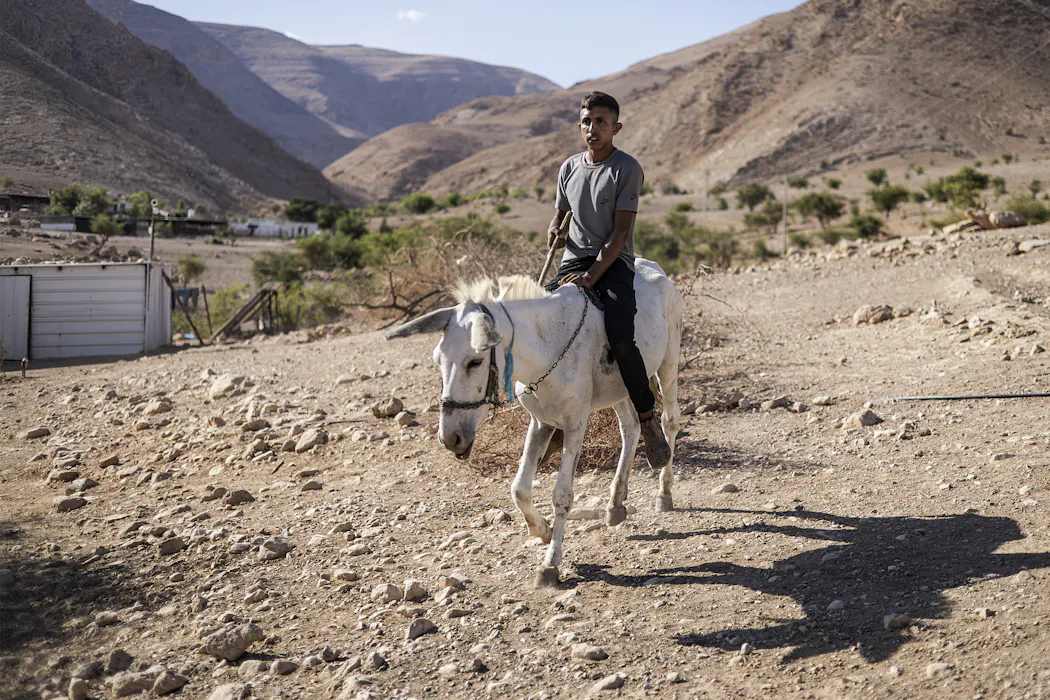
A young Palestinian rides a donkey in the occupied West Bank on Sept. 30, 2025. John Wessels/AFP via Getty Images

Donkeys tend to symbolize humility and redemption; in Jewish tradition, the Messiah will arrive on a white donkey.

But in today’s “land of the Bible,” donkeys have become victims of the war in Gaza and, increasingly, targets of the growing settler violence in the West Bank.

Take what happened in December 2025 near Jaba, north of Ramallah. While a Palestinian child watched, seven Jewish settlers from Gur Aryeh, a small illegal outpost, reportedly led away his family’s three donkeys.

When an Israeli peace activist later arrived at the scene, she found one of the donkeys with a rope around the animal’s neck and in severe pain. She later told me how she had to avert her eyes as she shone the flashlight at the stricken donkey for the rescue crew from the Starting Over Sanctuary, a nonprofit dedicated to treating and rehabilitating animals in Israel, the West Bank and Gaza.

The donkey didn’t survive the journey to the hospital.

While violence toward animals tends to be seen as distinct from that directed at humans, the two phenomena are deeply intertwined. As someone who studies settler colonial violence alongside political ecology and human-animal relationships, I argue that Israeli settlers’ attacks on donkeys as well as the care they practice toward these animals reveal how colonial dispossession happens and is in turn naturalized on the ground.

A donkey stands in front of hills.
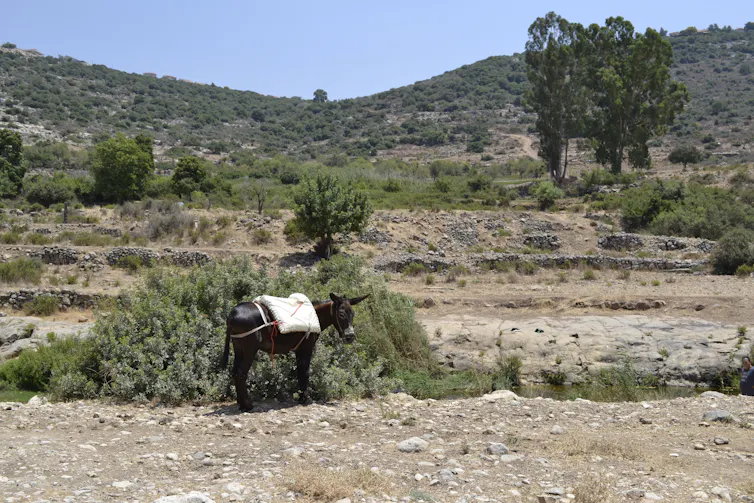
A donkey owned by a Palestinian herder from Deir Istiya in the northern West Bank in June 2025. Irus Braverman, CC BY-SA

Harming animals through direct attack, deprivation, seizure and forced separation has long accompanied Israeli violence against Palestinian communities. During the Nakba in 1948, in which 750,000 Palestinians fled or were displaced from their land by Zionist forces, farm and domestic animals were killed, seized, left without care or driven to starvation.

A similar pattern has occurred in the war on Gaza following the attack by Hamas and other militants on Israel on Oct. 7, 2023. By August 2025, as many as 97% of farm animals in Gaza were killed through bombing, starvation and the destruction of agricultural infrastructure, according to the Euro‑Mediterranean Human Rights Monitor. Farms were razed, and cats and dogs were left to fend for themselves as families were repeatedly displaced from their homes by the Israeli airstrikes.

Carrying the burden for millennia

Donkeys, in particular, carry a deep history in the region and today face heightened vulnerabilities.

First domesticated approximately 7,000 years ago in the Horn of Africa, they transformed human mobility and are still important in the daily lives of millions of poor people around the world.

To Palestinians, donkeys have become emblems of “sumūd,” or steadfast endurance – an ethic they often emphasize to describe daily life under Israeli occupation.

Prominent Palestinian poet Mahmoud Darwish said in a television interview in 1997: “I wish I was a donkey. A peaceful, wise animal that pretends to be stupid. Yet he is patient, and smarter than we are in the cool and calm manner he watches on as history unfolds.”

Amid the ruins in Gaza and with fuel scarce, donkeys have provided vital transport for the injured as well as for goods and belongings.

Palestinian political analyst Ahmed Najar put it aptly on July 20, 2025: “My mother, who is in Gaza, cannot walk. Since October 2023, my family has been displaced seven times. Every time the bombs fell too close or the leaflets rained down warning my family to flee, the only way she could be moved was on a donkey. … (In) the dust and the terror – donkeys became ambulances, buses, lifelines.”

A destroyed building is seen with a person on a cart pulled by a donkey nearby.
A Palestinian man rides a donkey-pulled cart past a damaged U.N.-run school in the Jabalia refugee camp in the northern Gaza Strip on May 31, 2024. Omar al-Qattaa/AFP via Getty Images

The December abduction of a donkey in Jaba was not an isolated incident. Settlers regularly seize and steal donkeys, alongside other farm animals, in raids on Palestinian pastoralist communities, especially in the Jordan Valley and Hebron Hills.

Since October 2023, such attacks have intensified significantly. In March 2025, U.N. agencies documented the theft or killing of more than 1,400 sheep and goats in one Jordan Valley attack.

Palestinian shepherds often ride their donkeys when taking their flocks out to pasture. But as settler harassment has increased, frequently carried out by armed settler shepherds riding on donkeys themselves, Palestinians rarely take their flocks out. With grazing routes rendered dangerous, Palestinian-owned donkeys are left behind, often spending their days tied to a tree – still loved, still named, but no longer moving across a landscape that has become hostile. They stand as quiet reminders of a disappearing pastoralist tradition.

‘Freedom flights’

A short distance from Jaba, a seemingly different donkey story unfolds. At the Starting Over Sanctuary in central Israel, volunteers prepare donkeys for “freedom flights” to Europe.

Since 2018, the charity has operated as Israel’s largest donkey sanctuary, rescuing and rehabilitating animals subjected to abuse, neglect and hard labor, particularly from the country’s south. Since the early 2020s, the Israeli sanctuary has periodically organized rehoming projects for the donkeys, transferring them by airplanes to partner sanctuaries across Europe. After a yearlong pause amid war-related disruptions, and newly overwhelmed with injured donkeys pouring in from Gaza, the Starting Over Sanctuary recently resumed the flights, airlifting the rescued donkeys to sanctuaries in France and Belgium.

When I visited the sanctuary in December 2025, there were 800 donkeys in residence, many rescued by soldiers or informal networks encountering the injured or abandoned animals near conflict zones.

A white donkey and a white car are seen amongst hay.
A donkey and cat at the Starting Over Sanctuary in Herut, Israel, on Dec. 16, 2025. Irus Braverman, CC BY-SA

While the donkey rescues carried out by the Starting Over Sanctuary are clearly motivated by what its workers describe as a deep love for donkeys, several Palestinian analysts and residents frame these rescues very differently. For them, a donkey taken from the Palestinian community represents another form of settler dispossession, regardless of whether that removal is carried out through acts of care by sanctuary workers near Tel Aviv or through physical violence by Jewish shepherds in the West Bank.

The tension between the cruelty toward Palestinian-owned animals by violent settler shepherds and the compassionate rescue of Palestinian-owned animals by Israeli animal activists exposes how animal and human life are mutually entangled, and morally charged, within the structures of what I and many others see as Israel’s settler colonialism.

The donkey stands at the center of these tensions: a symbol, companion, laborer, witness, target of violence and object of compassion.

Normalizing dispossession

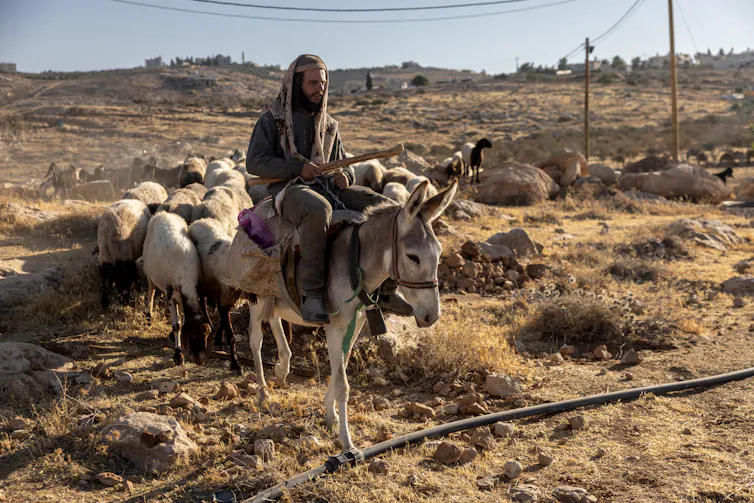
Meanwhile, a third donkey story has been unfolding in the rural landscapes of the Israeli occupied West Bank, where Jewish settlers increasingly use donkeys while grazing sheep across the contested terrain. Settler shepherds on donkeys lead their herds across the open hills in scenes that closely resemble Palestinian herding routines, which were once common in the same areas.

A man sits on a donkey followed by sheep.
An Israeli settler riding a donkey herds his flock of goats and sheep near an outpost in the occupied West Bank on June 29, 2025. Menahem Kahana/AFP via Getty Images

The resemblance is particularly striking because many Palestinians are now barred from practicing their pastoralist traditions in areas where settlers continue to roam freely. The settlers’ use of donkeys evokes a biblical past while recasting pastoralist forms of land use as their inherited birthright, even as Palestinian pastoralism is increasingly framed as backward, ecologically harmful and illegal.

Donkeys thus play an often overlooked role in the broader shift in settler strategy unfolding across the West Bank in the past decade or so – and increasingly since October 2023 – in which small shepherding outposts have moved from the margins to the center of settlement expansion. In recent years, herding has become a key tool for claiming territory beyond the established settlements, allowing settlers to control large swaths of land with minimal infrastructure. These outposts now form a cutting edge strategy for what The Guardian has described as the largest land grab in the West Bank since 1967.

Beyond their material effects, such pastoralist practices by the settler shepherds help normalize this land grab. Donkeys, sheep and cows, alongside olives and other natural entities, are part of ongoing ecological warfare that naturalizes both Palestinian dispossession and settler reclamation, as I explore in an upcoming academic paper in the journal American Anthropologist.

In the occupied West Bank, as in all other places, human and animal vulnerabilities are intertwined. A donkey may be flown to safety, but the humans who depended on her remain in danger. The animal’s rescue, as such, reveals disturbing asymmetries about who gets saved and who is left behind.

The Conversation

Irus Braverman receives funding from the Baldy Center for Law & Social Policy and the National Humanities Center.

  •  

As renaissance fairs become big business, can they retain their counterculture roots?

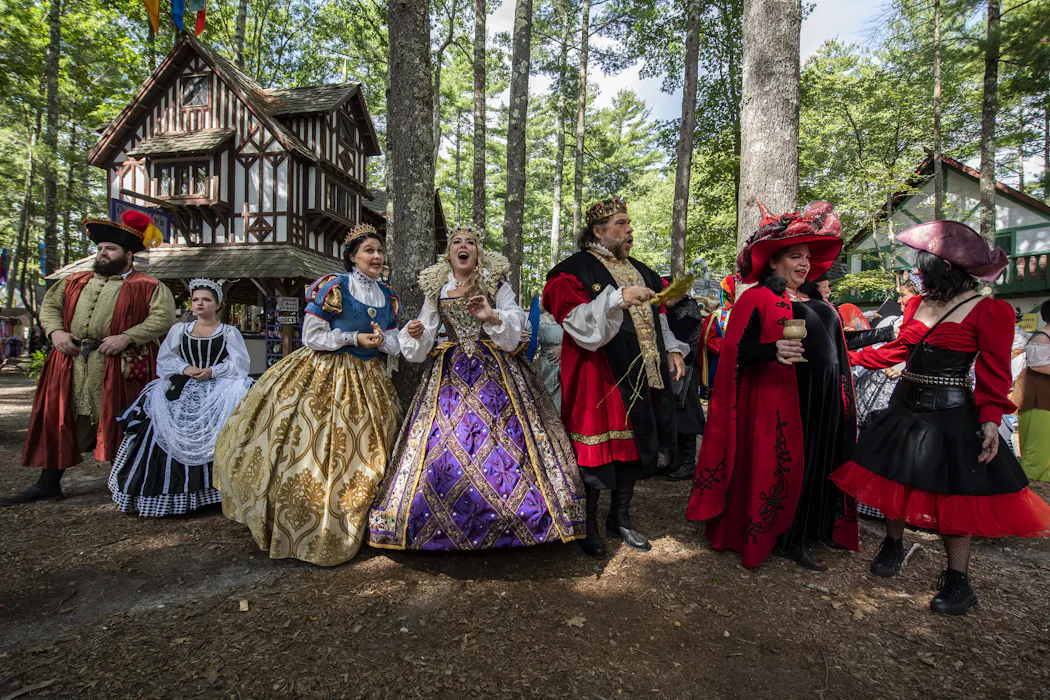
King Richard's Faire in Carver, Mass., was inaugurated in 1982 and is the longest-running renaissance fair in New England. Joseph Prezioso/Anadolu Agency via Getty Images

Within moments of entering the Newport Renaissance Faire, you are ushered to a group of fairies. They pass you a scroll and say, “You must seek out the Bone Man for the first hurdle in your quest.” As you navigate the fair, you find many men dressed in bones, both vendors and fellow attendees. When you find the correct Bone Man – an actor wearing what appears to be a mask made of human skull along with a crown constructed from deer antlers – he stamps your scroll. He then sends you to your next target: the Drunk Viking.

Following the directions of actors in the fair, you meet a variety of performers from many historical eras and fantastic realms, and stumble upon both merchants and merrymakers in your journey. It’s all part of the immersive experience that connects you with the other guests and staff, though many of the costumed staff members, speaking in faux Middle English, are also trying to sell you something.

Renaissance fairs were originally conceived as a creative refuge for artists sidelined by political repression during the Red Scare. Now, they sit at an uneasy crossroads between countercultural expression and commercial spectacle. Having grown into a nationwide industry with tiered tickets, branded merchandise and multimillion dollar valuations, the fairs can easily be seen as an offshoot of a corporate theme park.

As cultural geographers, we wanted to learn more about whether the spirit of the fairs has been changing. So for our recent study, we visited the Tennessee Renaissance Festival, Newport Renaissance Faire, Tennessee Medieval Faire and Tennessee Pirate Fest.

Once upon a time … not so long ago

Although renaissance fairs and festivals recreate the atmosphere of centuries past, the first formally recognized fair took place in May 1963 in Irwindale, California. A public school English and history teacher named Phyllis Patterson was the brains behind the event, which she dubbed the Renaissance Pleasure Faire.

For Patterson, the fair was a chance to celebrate the era’s countercultural values like free expression, experimentation with identity and creative play. It also served as a source of employment for those who had been pushed out of their careers in the film and entertainment industries after being blacklisted or graylisted as suspected communists.

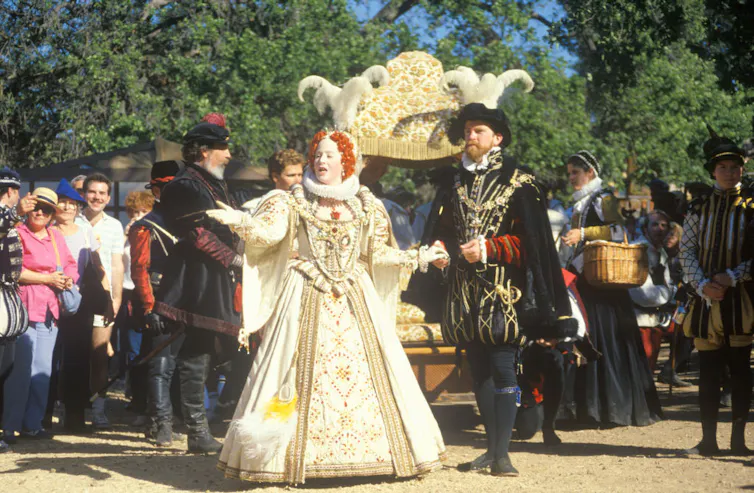
Actors dressed as European royalty from centuries ago perform in front of a crowd of smiling onlookers.
The Renaissance Pleasure Faire in Irwindale, Calif. – pictured here in 1985 – has its origins in the Red Scare. Joe Sohm/Visions of America/Universal Images Group via Getty Images

Patterson herself had refused to sign a Cold War–era loyalty oath required to work in California public schools. At the Renaissance Pleasure Faire, actors, educators and set designers could continue their craft, whether that meant designing costumes, creating characters, performing or writing.

From creative refuge to thriving business

Since those first events in Southern California, renaissance fairs have spread across the U.S., with some constructing permanent structures even though they’re only open seasonally, in the spring or fall. Built to resemble small villages, fair operators create towns-within-towns, fantasy lands where visitors can briefly step away from their routines and obligations.

Their popularity continues to grow, and what began partly as a creative refuge has grown into a thriving entertainment business.

The East Tennessee Renaissance Faire recently announced that it would be relocating after deciding that its original venue in Newport could no longer accommodate the swelling crowds: Within three years, the fair had grown from 600 to 6,000 attendees, spurring a move to a larger site in neighboring Sevierville. New fairs are sprouting up as well: The Chattanooga Renaissance Faire will host its inaugural season in spring 2026.

There are almost always entry fees – US$38 at the Tennessee Renaissance Festival and $53 at the Renaissance Pleasure Faire, for example – and many offer season passes.

Attendees often arrive in costume, but strict rules about adhering to a specific time period or setting rarely apply.

Some visitors dress as Tolkien-style elves, while others show up as Tudor nobles. Viking-clad participants walk alongside fairies and swashbuckling pirates. Some fairs have also developed their own themed weekends – with names like “Viking Victory,” “Fantasy and Folklore,” “Pirate Plunder” and “Celtic Celebration” – that weave history and fiction with few constraints. And those committed to their role will often address each other in playful faux-medieval speech, with greetings like “my lady” or “my lord.”

Vendors, often dressed in costume themselves, sell everything from cloaks, swords and crowns to contemporary jewelry and shampoos. Booths sell era-adjacent fare like Scotch eggs, ciders, mead and turkey legs, while modern cocktails like “The Shipwreck” and “The Blueberry Faerie” can also be had, with visitors paying the equivalent of stadium and arena concession prices.

Renaissance fairs have even spread to countries like Germany and France, reconnecting with their roots. The expansion into new venues – along with the development of offshoots such as pirate- and steampunk-themed festivals – point to profit margins that would have been unthinkable in the early days of the Renaissance Pleasure Faire.

But as with many ventures, the prospect of cashing in comes with complications.

The 2024 HBO Max series “Ren Faire” introduced viewers to the eccentrics and costume-clad vendors involved in the nation’s largest fair, the Texas Renaissance Festival in Todd Mission. The fight over its future involved lawsuits and, eventually, the court-ordered $60 million sale of the event’s property and assets.

King Richard’s Faire, which takes place in Carver, Massachusetts, and is the largest fair in New England, reportedly generates massive daily revenue while allegedly relying on widespread worker misclassification, leaving many performers earning below minimum wage without benefits. Even volunteer “villagers” work only for free admission, and both workers and attendees receive no compensation or refunds when the fair closes due to rain.

Seeking out a space of whimsy

Despite the creeping influence of profit motives, we concluded that renaissance fairs have always been – and continue to be – mostly about community.

Dressing as a fantastical version of yourself or your favorite character bonds you to others dressed up at the festival. Unlike popular Civil War or World War II reenactments where historical accuracy is paramount, renaissance fairs instead invite people to take part in shared, often mythologized ideas about history through performance, costume and play.

For example, each weekend, the Tennessee Renaissance Festival organizes jousts. Competitors and their horses meet at a permanent jousting pitch located at the back of the property. Each knight represents a noble house, and each section of the bleachers is assigned a knight to root for. Announcers explain the rules of each event, while also leading the crowds in chants and cheers. While the knights might fight under titles tied to historical lineages, they represent a jumble of eras and place. They also reject antiquated social norms by including women and ethnic groups who never would have been seen together on a jousting pitch.

A man rides a horse while holding a jousting lance in front of bleachers full of spectators.
A jouster performs at the Texas Renaissance Festival in Todd Mission, Texas, in October 2023. Chen Chen/Xinhua via Getty Images

Here, fidelity to the facts is an afterthought; it actually might ruin the fun.

Beyond the jousting pitch, you can find the queen dictating a game of human chess. A rotating cast of performers play music, tell jokes, juggle and blow fire. Elsewhere, you might stumble across pixies teaching children how to make fairy homes or relax in a mermaid’s magical grotto.

There’s also a comforting simplicity in the narratives of this make-believe world. Ladies are almost always gentle and beautiful, while the men are brave and noble. All the villains are easy to spot – they’re always defeated.

In a real world characterized by political upheaval, information overload, invisible surveillance and shadowy villains, perhaps the fair, with its simple prism of good and evil, becomes a space of comfort – a curated cultural experiment that’s also an improvised escape.

In other words, renaissance fairs wield a quiet power: They forge communities that deliberately blur fantasy, history and everyday life with a wink. Vendors, performers and attendees alike can be Tudors, Vikings, hobbits, elves or mermaids for a day. Few actually believe in elves, or imagine their mock-Elizabethan speech is anything more than cheerful, mangled guesswork.

And that’s the point. There’s joy in pretending – just as there’s a universal pleasure in the weird, the whimsical and the absurd.

The Conversation

The authors do not work for, consult, own shares in or receive funding from any company or organization that would benefit from this article, and have disclosed no relevant affiliations beyond their academic appointment.

  •  

When a president is unfit for office, here’s what the Constitution says can happen

President Donald Trump mimics an Iranian protester being shot while holding a news conference in the White House on April 6, 2026. Tom Williams/CQ-Roll Call, Inc via Getty Images

Bipartisan calls for President Donald Trump’s removal from office increased on April 7, 2026, after he issued threats to destroy “a whole civilization” if Iran refuses to reopen the Strait of Hormuz.

These calls have come from across the political spectrum, from Democratic Reps. Alexandria Ocasio-Cortez of New York and Melanie Stansbury of New Mexico to former Rep. Marjorie Taylor Greene and right-wing pundit Alex Jones. Unlikely allies seem to agree that the president has gone too far and needs to be reined in.

Their concerns have emerged as Iran has walked away from talks to end the war and Trump’s language suggests that he plans to escalate it by destroying the country’s power plants and bridges.

Concerns over Trump’s fitness for office have grown in recent weeks as his commentary has become more erratic.

If lawmakers do attempt to remove Trump from office, here’s what would happen:

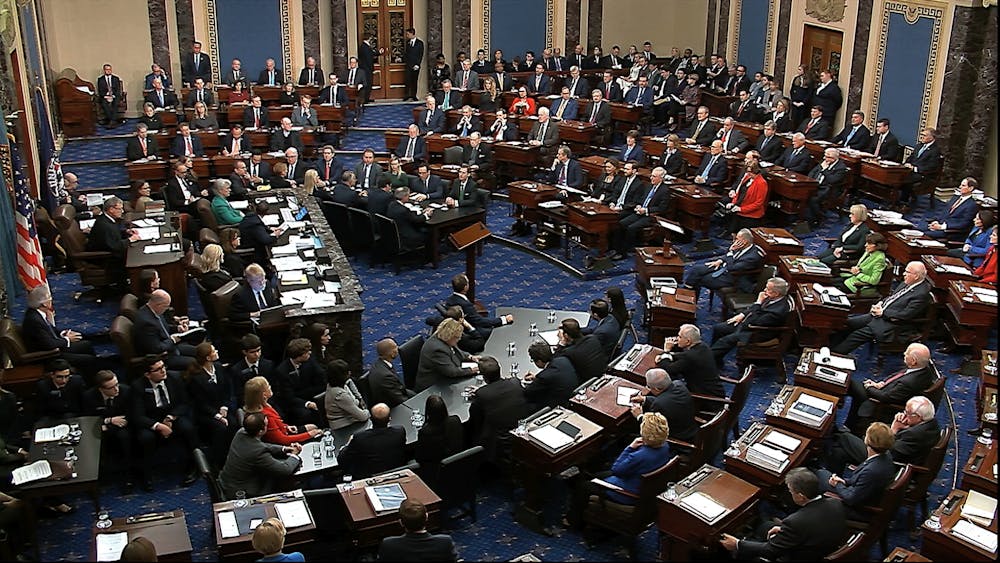
A scene of the Senate voting in Trump's impeachment trial in 2020
Donald Trump has been impeached twice, but has not convicted. Senate Television via AP

25th Amendment

The Constitution’s 25th Amendment provides a way for high-level officials to remove a president from office. It was ratified in 1967 in the wake of the 1963 assassination of John F. Kennedy – who was succeeded by Lyndon Johnson, who had already had one heart attack – as well as delayed disclosure of health problems experienced by Kennedy’s predecessor, Dwight Eisenhower.

The 25th Amendment provides detailed procedures on what happens if a president resigns, dies in office, has a temporary disability or is no longer fit for office.

It has never been invoked against a president’s will, and has been used only to temporarily transfer power, such as when a president is undergoing a medical procedure requiring anesthesia.

Section 4 of the 25th Amendment authorizes high-level officials – either the vice president and a majority of the Cabinet or another body designated by Congress – to remove a president from office without his consent when he is “unable to discharge the powers and duties of his office.” Congress has yet to designate an alternative body, and scholars disagree over the role, if any, of acting Cabinet officials.

The high-level officials simply send a written declaration to the president pro tempore of the Senate – the longest-serving senator from the majority party – and the speaker of the House of Representatives, stating that the president is unable to discharge the powers and duties of his office. The vice president immediately assumes the powers and duties of the president.

The president, however, can fight back. He or she can seek to resume their powers by informing congressional leadership in writing that they are fit for office and no disability exists. But the president doesn’t get the presidency back just by saying this.

The high-level officials originally questioning the president’s fitness then have four days to decide whether they disagree with the president. If they notify congressional leadership that they disagree, the vice president retains control and Congress has 48 hours to convene to discuss the issue. Congress has 21 days to debate and vote on whether the president is unfit or unable to resume his powers.

The vice president remains the acting president until Congress votes or the 21-day period lapses. A two-thirds majority vote by members of both houses of Congress is required to remove the president from office. If that vote fails or does not happen within the 21-day period, the president resumes his powers immediately.

The 25th Amendment
The 25th Amendment to the U.S. Constitution. National Archives via AP

The case for impeachment

Article II of the Constitution authorizes Congress to impeach and remove the president – and other federal officials – from office for “Treason, Bribery, or other high Crimes and Misdemeanors.” The founders included this provision as a tool to punish a president for misconduct and abuses of power. It’s one of the many ways that Congress could keep the president in check, if it chose to.

Impeachment proceedings begin in the House of Representatives. A member of the House files a resolution for impeachment. The resolution goes to the House Judiciary Committee, which usually holds a hearing to evaluate the resolution. If the House Judiciary Committee thinks impeachment is proper, its members draft and vote on articles of impeachment. Once the House Judiciary Committee approves articles of impeachment, they go to the full House for a vote.

If the House of Representatives impeaches a president or another official, the action then moves to the Senate. Under the Constitution’s Article I, the Senate has the responsibility for determining whether to remove the person from office. Normally, the Senate holds a trial, but it controls its procedures and can limit the process if it wants.

Ultimately, the Senate votes on whether to remove the president – which requires a two-thirds majority, or 67 senators. To date, the Senate has never voted to remove a president from office, although it almost did in 1868, when President Andrew Johnson escaped removal from office by one vote.

The Senate also has the power to disqualify a public official from holding public office in the future. If the person is convicted and removed from office, only then can senators vote on whether to permanently disqualify that person from ever again holding federal office. Members of Congress proposing the impeachment of Trump have promised to include a provision to do so. A simple majority vote is all that’s required then.

This is an updated version of an article originally published on Jan. 9, 2021.

The Conversation

Kirsten Matoy Carlson does not work for, consult, own shares in or receive funding from any company or organization that would benefit from this article, and has disclosed no relevant affiliations beyond their academic appointment.

  •  

75 years after she led a student strike that helped end school segregation, Barbara Rose Johns now stands in the US Capitol where Robert E. Lee once did

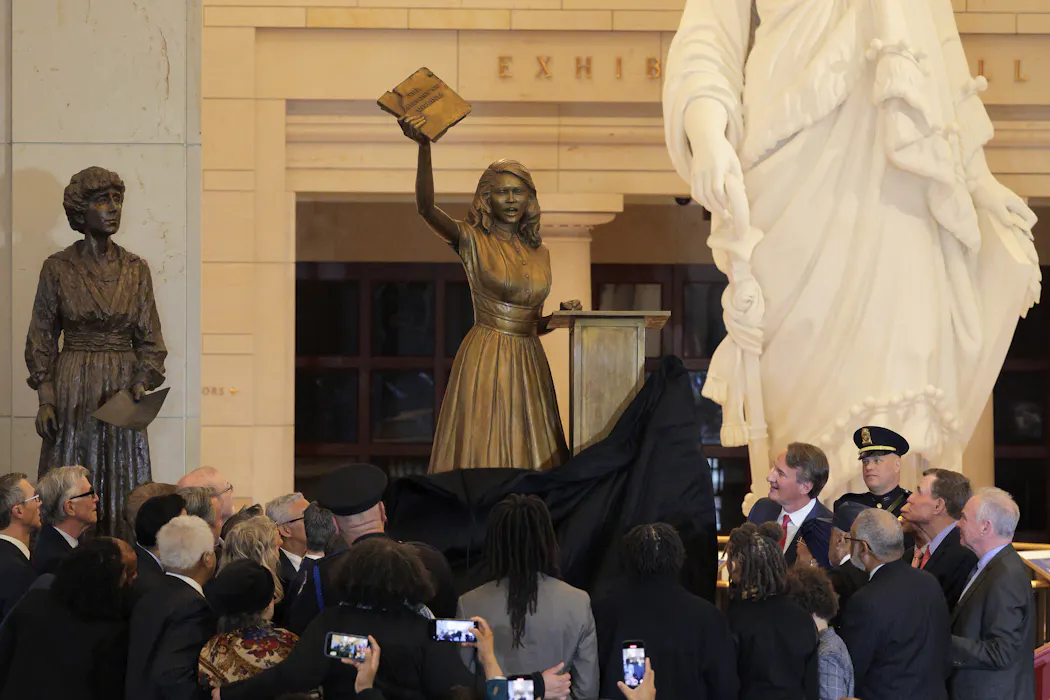
A statue of civil rights activist Barbara Rose Johns is unveiled in Emancipation Hall at the U.S. Capitol on Dec. 16, 2025, in Washington. Chip Somodevilla/Getty Images

The 250th anniversary of the Declaration of Independence isn’t the only important anniversary in 2026. This year also marks the 75th anniversary of an extraordinary case of student activism that helped lead to the Supreme Court’s decision outlawing segregated schools.

In April 1951, 16-year-old Barbara Rose Johns organized a student strike to protest the shabby conditions and inadequate education at her segregated Black high school in Prince Edward County, Virginia.

Prince Edward County is located about 65 miles southwest of Richmond and around 30 miles east of Appomattox, or 48 kilometers, in a part of Virginia known as Southside. African Americans constituted almost half the population, but they were largely prevented from voting before passage of the Voting Rights Act in 1965 and could not eat in local restaurants before passage of the Civil Rights Act of 1964. The public schools were segregated, and for decades there was no Black high school at all.

In 1939, following years of pressure by Black residents, the white authorities opened a high school for African Americans. That segregated institution was named for Robert Roosa Moton, who had been raised in Prince Edward County and served as an administrator at Hampton Institute in Virginia before being appointed as the second head of Tuskegee Institute following the death of Booker T. Washington.

The new building became severely overcrowded almost immediately. Although it was designed for a maximum enrollment of 180, attendance reached 219 the year after it opened and 377 in 1947.

The following year, the school board put up three temporary outbuildings to accommodate the overflow. Many Black residents scorned these buildings as “tar paper shacks” because of their covering and dilapidated condition. They had inefficient wood stoves that provided limited heating, and their thin walls often leaked when rain fell.

The shabbiness of these interim structures became a source of continuing tension, as negotiations between the Black community and white authorities for a more permanent facility dragged on inconclusively into early 1951.

Johns makes her move

As an 11th grader at Moton High School, Johns began talking with some of her fellow students about taking action to protest the shacks and improve their education.

On April 23, 1951, someone lured Moton’s principal, Boyd Jones, out of the building on the pretext that two students were in trouble elsewhere in town. After Jones left, Johns summoned the student body to the auditorium, where she exhorted her peers to walk out to protest the deplorable condition of their school.

Johns also sent a letter to Oliver W. Hill and Spottswood W. Robinson III, two Richmond civil rights lawyers who worked closely with the NAACP, asking for their legal assistance.

The strike went on for two weeks. During that time, Hill and Robinson met twice with hundreds of students and parents. The meetings grew out of the lawyers’ initial skepticism about litigating over school conditions in rural Prince Edward County, where they feared that plaintiffs would be subject to severe physical and economic retaliation.

Those meetings persuaded Hill and Robinson that the Black community broadly supported an effort to obtain desegregation rather than mere improvements in the separate Black schools. The lawyers therefore filed their lawsuit in the United States District Court for the Eastern District of Virginia on behalf of scores of Black students and parents, alleging that segregated schools violated the 14th Amendment.

Victory – and messy history

Johns’ initiative had both short- and long-term consequences.

In the immediate aftermath of the strike, the all-white school board fired Jones, whom they regarded as having put the students up to their activism despite his – and the students’ – insistence that the whole affair was a student initiative.

The lawsuit – and other similar suits filed in South Carolina, Delaware and Kansas – failed in the lower court. The plaintiffs appealed to the Supreme Court, which reversed those judgments and ruled in the consolidated case called Brown v. Board of Education that segregated public schools were unconstitutional.

A yellowed page from a legal decision with the name 'SUPREME COURT OF THE UNITED STATES' at the top.
The first page of the printed copy of the Supreme Court’s desegregation decision in Brown v. Board of Education, May 17, 1954. Smithsonian National Museum of American History

Meanwhile, in the wake of the student strike at Moton, Johns’ family feared that she would be in physical danger if she remained in Prince Edward County for her senior year. They sent her to live with her uncle Vernon Johns, a minister and outspoken civil rights advocate, in Montgomery, Alabama.

Johns graduated from Drexel University and worked for many years as a public school librarian in Philadelphia before her death in 1991.

The post-Brown history of Prince Edward County is very complicated. White authorities closed the public schools for five years to avoid desegregation. For a long time afterward, virtually all the white children went to a private academy that opened when the public schools closed.

But that messy history cannot detract from the courage and impact of Barbara Johns.

In December 2025, her statue replaced that of Robert E. Lee as one of the two Virginians displayed in the U.S. Capitol. Johns is there – along with George Washington.

The Conversation

Jonathan Entin does not work for, consult, own shares in or receive funding from any company or organization that would benefit from this article, and has disclosed no relevant affiliations beyond their academic appointment.

  •  
❌