
 Login
Login
Early reforms help Malaysia weather West Asia crisis better than peers, says finance minister’s pol-sec
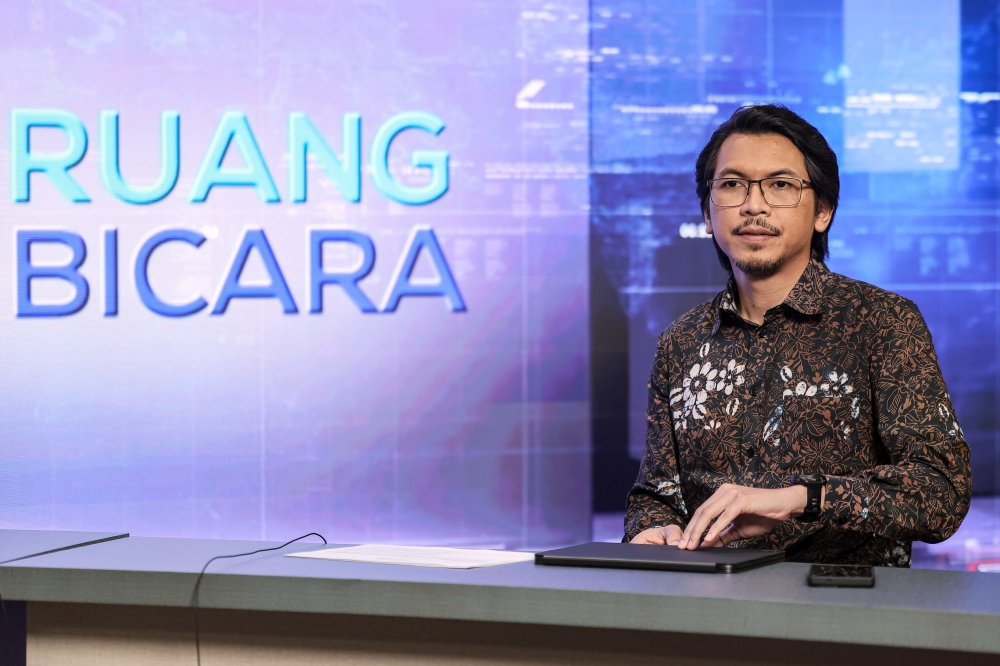
KUALA LUMPUR, April 28 — Malaysia is weathering the fallout from the West Asia crisis better than many peers, supported by early government intervention over the past three years to strengthen economic resilience.
Political secretary to the Finance Minister Muhammad Kamil Abdul Munim said businesses, however, cannot operate as usual due to the crisis, whose implications extend beyond the domestic economy to the global stage.
“While it may appear that the public remains relatively unaffected or that the impact is not significant, this is largely due to the economic resilience we have built over the past three years.
“We have implemented savings measures, subsidy restructuring, and stepped up efforts to combat corruption, leakages and inefficiencies through enforcement, as frequently emphasised by Prime Minister Datuk Seri Anwar Ibrahim,” he said on Bernama TV’s Ruang Bicara programme titled “Global Supply Crisis” on Monday.
Muhammad Kamil said early interventions included targeted subsidy restructuring, fiscal discipline, a firm commitment to fighting corruption, and stronger financial management and governance.
“All these have contributed to our ability to build a more resilient economy.
“Compared with Thailand, the Philippines, Singapore and Indonesia, Malaysia is in a considerably stronger economic position,” he added.
Citing projections from the International Monetary Fund (IMF), which forecast that Malaysia’s economic growth will outpace a slowing global economy, he said this sends a positive signal for the country’s overall economic outlook.
“To gauge current economic strength and performance, we must consider growth, inflation, which remains under control, unemployment, which has fallen to its lowest level in a decade, and the ringgit, which is among the better-performing currencies in Asia.
“In addition, rising investment levels, both domestic and foreign direct investment, reflect continued confidence in the country’s economic framework. Despite global uncertainty, that confidence remains intact, and that is crucial,” he said.
Muhammad Kamil said the government has, from the outset, stressed the importance of fully understanding the MADANI Economy framework, which aims to raise both income ceilings and the nation’s economic capacity through sound governance.
“While some may dismiss it as rhetoric, current figures suggest otherwise. Economic performance is improving, and the fiscal position is strengthening.
“We now have greater fiscal space to confront crises,” he added during the hour-long programme.
As an example, he said fuel subsidies previously stood at about RM700 million per month but have since surged to around RM200 million per day, equivalent to nearly RM6 billion to RM7 billion per month.
“This is to avoid shocks to the public, businesses and industry players. Farmers, transporters and public service users continue to benefit from fuel prices below market levels.
“This demonstrates the government’s commitment. We are able to do this because, over the past three years, we have restored the economy, reduced leakages and strengthened financial management.
“While other countries are beginning to ration fuel or declare energy emergencies, Malaysia remains able to manage both supply and prices,” he added. — Bernama
