
Reading view

Justice Department’s effort to strip citizenship from naturalized Americans could face widespread judicial pushback
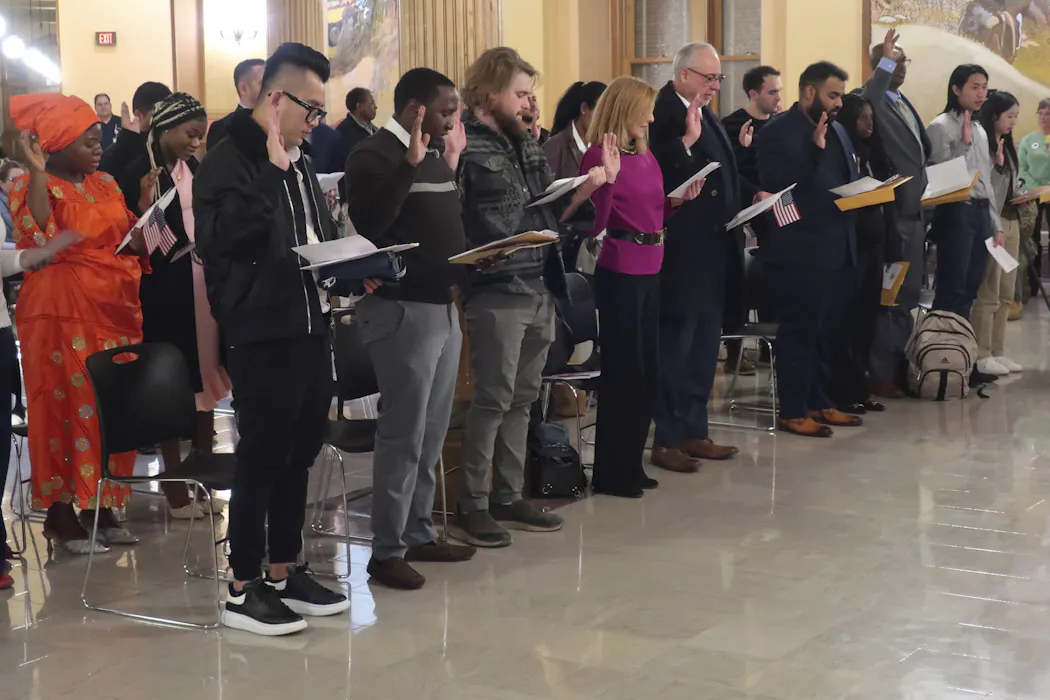
Dozens of immigrants from 18 nations take the oath to become U.S. citizens on Jan. 27, 2025, in Topeka, Kan. AP Photo/John Hanna

The Justice Department has identified 384 foreign-born Americans whose citizenship it wants to revoke as “the first wave” of such measures, according to recent reporting by The New York Times. These cases are being assigned to prosecutors in 39 U.S. attorney’s offices across the country.

The administration has ordered Department of Homeland Security staffers to refer upward of 200 denaturalization cases per month to the Justice Department as part of its crackdown on immigration, compared to an average of 11 cases per year between 1990 and 2017.

This shift comes as the Justice Department faces a severe staffing crisis, having lost nearly 1,000 assistant U.S. attorneys in resignations and firings. The strategy of distributing cases to regional offices appears designed both to increase capacity and to work around the expertise gap created by staff departures.

As we document in recent research, denaturalization risks becoming a tool of political control and intimidation. The lack of any statute of limitations in civil denaturalization gives prosecutors what the Supreme Court in 2017, in Maslenjak v. United States, warned against: “nearly limitless leverage” over naturalized citizens – creating permanent vulnerability for over 20 million naturalized Americans.

A brief history

Denaturalization is different from deportation, which removes noncitizens from the country. With civil denaturalization, the government files a lawsuit to strip people’s U.S. citizenship after they have become citizens, turning them back into noncitizens who can then be deported.

The government can only do this in specific situations. It must prove someone “illegally procured” citizenship by not meeting the requirements, or that they lied or hid important facts during the citizenship process.

The Trump administration’s “maximal” enforcement approach, outlined in a June 2025 Justice Department memo, means pursuing any case where evidence might support taking away citizenship, regardless of priority level or strength of evidence. As our earlier research documented, this has already led to cases like that of Baljinder Singh, whose citizenship was revoked based on a name discrepancy that could easily have resulted from a translator’s error rather than intentional fraud.

For most of American history, taking away citizenship has been rare. But it increased dramatically during the 1940s and 1950s during the Red Scare period characterized by intense suspicion of communism. The United States government targeted people it thought were communists or Nazi supporters. Between 1907 and 1967, over 22,000 Americans lost their citizenship this way.

Everything changed in 1967 when the Supreme Court decided Afroyim v. Rusk. The court said the government usually cannot take away citizenship without the person’s consent. It left open only cases involving fraud during the citizenship process.

After this decision, denaturalization became extremely rare. From 1968 to 2013, fewer than 150 people lost their citizenship, mostly war criminals who had hidden their past.

A man dressed in a suit and tie speaks and points his right index finger.
Sen. Joseph McCarthy appears at a March 1950 hearing on his charges of communist infiltration at the State Department. AP Photo/Herbert K. White

How the process works

In criminal lawsuits, defendants get free lawyers if they can’t afford one. They get jury trials. The government must prove guilt “beyond a reasonable doubt” – the highest standard of proof.

But in most denaturalization cases, the government files a civil suit, where none of these protections exist.

People facing denaturalization get no free lawyer, meaning poor defendants often face the government alone. There’s no jury trial – just a judge deciding whether someone deserves to remain American. The burden of proof is lower – “clear and convincing evidence” instead of “beyond a reasonable doubt.” Most important, there’s no time limit, so the government can go back decades to build cases.

As law professors who study citizenship, we believe this system violates basic constitutional rights.

The Supreme Court has called citizenship a fundamental right. Chief Justice Earl Warren in 1958 described it as the “right to have rights.”

In our reading of the law, taking away such a fundamental right through civil procedures that lack basic constitutional protection – no right to counsel for those who can’t afford it, no jury trial, and a lower burden of proof – seems to violate the due process of law required by the Constitution when the government seeks to deprive someone of their rights.

The bigger problem is what citizenship-stripping policy does to democracy.

When the government can strip citizenship from naturalized Americans for decades-old conduct through civil procedures with minimal due process protection – pursuing cases based on evidence that might not meet criminal standards – it undermines the security and permanence that citizenship is supposed to provide. This creates a system where naturalized citizens face ongoing vulnerability that can last their entire lives, potentially chilling their full participation in American democracy.

The Justice Department memo establishes 10 priority categories for denaturalization cases. They range from national security threats and war crimes to various forms of fraud, financial crimes and, most importantly, any other cases it deems “sufficiently important to pursue.” This “maximal enforcement” approach means pursuing not just clear cases of fraud, but also any case where evidence might support taking away citizenship, no matter how weak or old the evidence is.

This creates fear throughout immigrant communities.

About 20 million naturalized Americans now must worry that any mistake in their decades-old immigration paperwork could cost them their citizenship.

A 2-tier system

This policy effectively creates two different types of American citizens. Native-born Americans never have to worry about losing their citizenship, no matter what they do. But naturalized Americans face ongoing vulnerability that can last their entire lives.

This has already happened. A woman who became a naturalized citizen in 2007 helped her boss with paperwork that was later used in fraud. She cooperated with the FBI investigation, was characterized by prosecutors as only a “minimal participant,” completed her sentence, and still faced losing her citizenship decades later because she didn’t report the crime on her citizenship application – even though she hadn’t been charged at the time.

A woman accepts a small American flag handed to her from a man across a counter.
A woman receives a U.S. flag after passing her citizenship interview in Newark, N.J., on May 25, 2016. AP Photo/Julio Cortez

The Justice Department’s directive to “maximally pursue” cases across 10 broad categories – combined with the first Trump administration’s efforts to review over 700,000 naturalization files – represents an unprecedented expansion of denaturalization efforts.

The Trump administration’s strategy of distributing denaturalization cases across 39 U.S. attorney’s offices – many now staffed by less-experienced prosecutors handling unfamiliar constitutional terrain – may prove counterproductive.

These cases will come before dozens of federal judges, creating opportunities for multiple courts to rule against the policy. This pattern has already been seen with the administration’s detention policy: Federal courts have systematically rejected the administration’s attempt to drastically expand immigrant detention without hearings, with immigrants prevailing in 350 out of 362 cases decided by over 160 judges nationwide.

Denaturalization cases raise even more serious constitutional concerns and could face similar widespread judicial pushback.

The Supreme Court, in Afroyim v. Rusk, was focused on protecting existing citizens from losing their citizenship. The constitutional principle behind that decision – that citizenship is a fundamental right which can’t be arbitrarily taken away by whoever happens to be in power – applies equally to how the government handles denaturalization cases today.

The Trump administration’s directive, combined with court procedures that lack basic constitutional protections, risks creating a system that the Afroyim v. Rusk decision sought to prevent – one where, as the Supreme Court said, “A group of citizens temporarily in office can deprive another group of citizens of their citizenship.”

This is an updated version of an article originally published on July 10, 2025.

The Conversation

The authors do not work for, consult, own shares in or receive funding from any company or organization that would benefit from this article, and have disclosed no relevant affiliations beyond their academic appointment.
  •  

Boom in cremation hides surprising truths about what Americans really want when they die

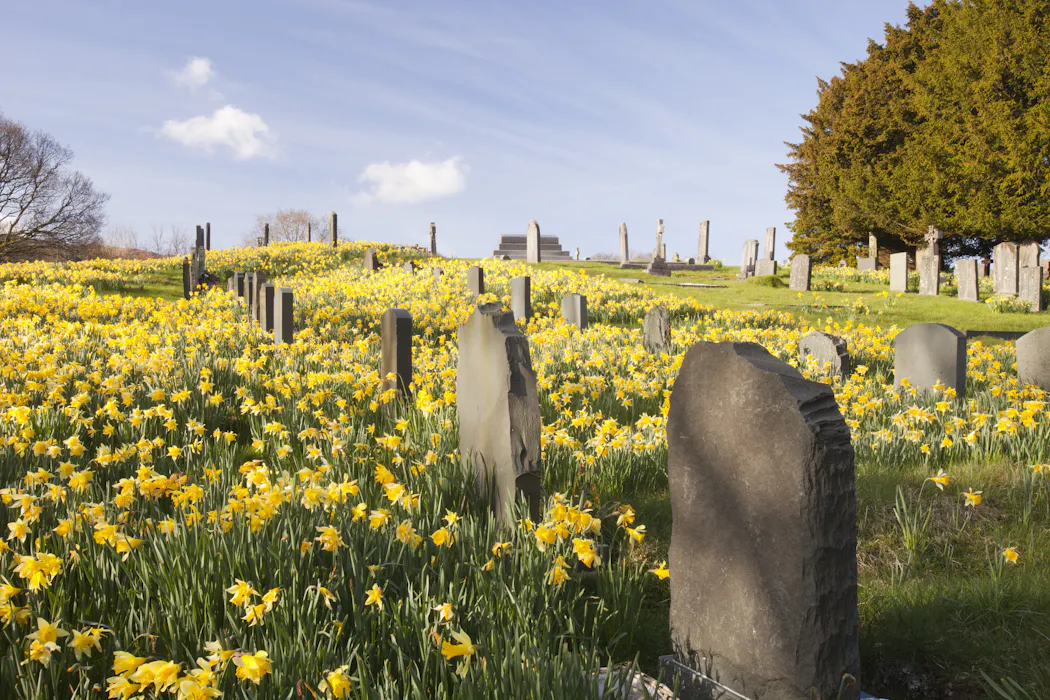
A striking 51.7% of Gen Z respondents ranked casket burial as their first choice, compared with just 27.1% of baby boomers. Ashley Cooper/The Image Bank via Getty Images

Nearly two-thirds of Americans now opt for cremation – a figure that has been steadily increasing over five decades.

On the surface, that proportion tells a simple story: The nation has embraced cremation, while its preference for casket burials has fallen off.

But as a scholar of funeral and cemetery law, I decided to dig deeper into this trend.

I wanted to know whether people were embracing cremation because they actually preferred it, or if they were rejecting casket burial for one reason or another. I also explored whether consumers were open to new options in death care, like water cremation and human composting.

You’re dead – what’s next?

With funding from the Cremation Association of North America and the Order of the Good Death, a nonprofit organization that promotes more informed and less fear-driven conversations about death and dying, I launched the first academic survey on consumer preferences in death care in 2024.

The survey presented over 1,500 American adults in a nationally representative sample with the definitions of six legal methods of disposition in a random order. It asked respondents whether they had “heard” of that method and whether they would “consider” that method. The six methods were cremation, casket burial, green burial, donation to science, water cremation and human composting.

At the end of the survey, respondents were asked to rank the six methods of disposition in terms of preference.

While cremation, casket burial and donation to science are nearly universally available in the U.S., the other three methods of disposition are not.

Green burial – defined as the burial of human remains without embalming, contained only in a biodegradable shroud or casket – is legal in all 50 states and Washington, but is only offered by a small share of cemeteries.

Water cremation, also known as alkaline hydrolysis, is a process in which human remains are placed in a pressurized chamber filled with water and chemicals and eventually reduced to powder. Water cremation is legal in 28 states but not offered by many funeral homes.

Human composting, also known as natural organic reduction, is a process in which human remains are placed in a container filled with natural materials and microorganisms that break the body down to soil. It is legal in 14 states and currently commercially available in only three.

The cremation paradox

A central tension emerged in the survey results: While 72.6% of respondents said they would consider cremation, only 33.4% ranked it as their actual first choice. Casket burial edged it out at 35.9% as the top-ranked preference. Yet the real-world cremation rate – 62% – is nearly double the stated first-choice rate.

So what’s going on?

The survey didn’t ask respondents to explain their reasoning, and it intentionally left out costs because they vary dramatically by region. But the numbers strongly imply that many Americans are choosing cremation not because it is their top preference, but because their actual first choice is either unavailable or too expensive.

For example, 40.4% of respondents indicated that they would consider human composting, and 5.9% ranked it as their first choice. But currently fewer than 1,000 bodies are composted in the United States each year.

That is likely because the vast majority of funeral homes do not offer the service, and consumers may have a difficult time locating the handful of providers. Human composting is also more expensive than cremation. The average cost for a direct cremation is approximately US$2,000, while human composting typically costs $5,000 to $7,000. Given these barriers, it’s certainly possible that many consumers are simply pivoting to their second choice: cremation.

The pattern holds across every region of the country, where actual casket burial rates closely match stated first-choice rates, while cremation rates far exceed them. For example, in the South, the burial rate closely tracked the 45.7% who ranked it as their first preference. But the cremation rate was 53.5%, nearly double the 27.3% who ranked it first.

Baby boomers – the generation currently at the forefront of end-of-life planning – are the most willing to consider cremation at 78.8% and the least willing to consider casket burial at just 54.8%. But are they eagerly choosing cremation or simply defaulting to it due to logistical or financial constraints?

Neo-traditional Gen Zs?

At the same time, the data suggests that the youngest adults in the survey are moving in the opposite direction.

A striking 51.7% of Gen Z respondents ranked casket burial as their first choice, compared with just 27.1% of baby boomers. Only 55.9% of Gen Z was even willing to consider cremation – less than today’s actual cremation rate.

It’s tempting to connect this to widely reported trends among Gen Z toward social conservatism, which includes the generation’s embrace of religions with burial traditions.

The survey does show that conservative respondents strongly preferred casket burial over cremation – 53.1% to 28.4% – and that Roman Catholic or Protestant respondents were significantly more likely to favor casket burial. If Gen Z is trending in those directions, a preference for traditional burial would make sense.

But Gen Z may not understand what casket burial involves.

Nearly half who ranked it first also said they would not consider embalming, even though embalming is typically part of the process. Some young respondents may be confusing casket burial with green burial, or may not grasp the financial realities of their stated preference. A standard viewing followed by a casket burial in the United States generally costs at least $10,000, depending on the cost of the burial plot.

Members of Gen Z, who are roughly between 15 and 30 years old, may also feel a stronger connection to their childhood homes. Other studies have found a correlation between geographic mobility and burial preference, perhaps because burial connects a person to a place in perpetuity.

Only longitudinal data, collected year after year, will reveal whether this data indicates a sticky generational shift or an age effect that fades.

Going green

Although Americans have, for a long time, largely limited themselves to two options, burial or cremation, the survey revealed remarkable openness to new methods.

Only 47.5% of respondents had even heard of a green burial. Yet after reading a brief definition, 56.4% said they would consider it. One-third ranked it as their first or second choice.

Water cremation showed an even more dramatic shift: Only 24% had heard of it, but 39.3% were willing to consider it after learning about it.

These numbers suggest significant unmet demand. Human composting was the first choice of nearly 6% of respondents – a striking figure for a method that has existed for only six years and is available in just a few states.

The big takeaway is that the cremation rate may be artificially inflated because of limitations on awareness, availability and legal access to greener alternatives.

The future of American death care probably isn’t a march toward more cremation. Instead, it’ll probably be a bumpy road of unmet wants, generational surprises and alternatives that need a little more time to get on people’s radars.

The Conversation

Tanya D. Marsh is a board member for Recompose, a funeral home in Washington state that exclusively offers natural organic reduction and a board member for the North Carolina Funeral Consumers Alliance. Funding for the Wake Forest Law Survey on Consumer Preferences in Death Care was provided by the Cremation Association of North America and the Order of the Good Death.

  •  

Supreme Court’s ‘shadow docket’ brings hasty decisions with long-lasting implications, outside of its usual careful deliberation

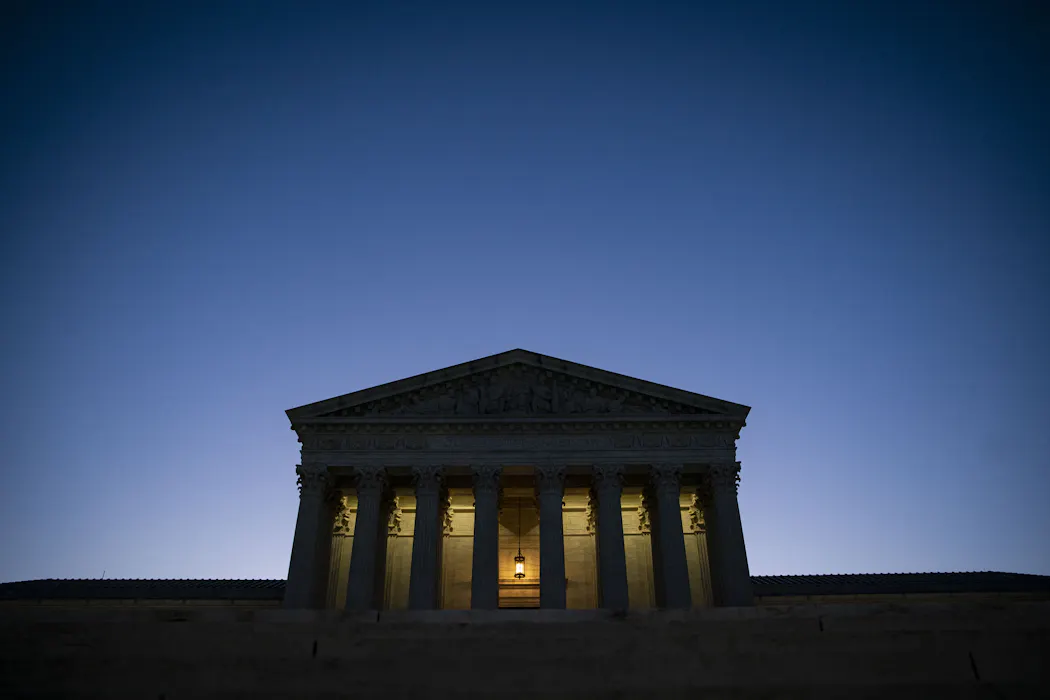
The U.S. Supreme Court is being criticized for decisions that are made quickly and outside of public view. Al Drago/Bloomberg via Getty Images

The recent publication of confidential Supreme Court memoranda by The New York Times has brought to light a pivotal moment in the court’s history. “The birth of the Supreme Court’s shadow docket has long been a mystery,” wrote reporters Jodi Kantor and Adam Liptak. “Until now.”

Originally coined by legal scholar William Baude, the term “shadow docket” refers to the Supreme Court’s emergency docket, which, as Baude wrote, includes “a range of orders and summary decisions that defy its normal procedural regularity.”

That’s law professor-speak for cases that are given abbreviated consideration and accelerated review by the justices, all out of public view – what The New York Times story referred to as the court “sprinting.” These cases aren’t included in the annual list of cases the justices have chosen to consider and that are presented by attorneys in public sessions, called “oral argument,” at the court.

During the second Trump administration, such shadow docket cases have proliferated as President Donald Trump has continued to push boundaries, challenge precedents and expand executive power. These cases have typically involved a request by the presidential administration “to suspend lower court orders” that temporarily block “an administration policy from taking effect,” according to liberal legal advocacy group the Brennan Center for Justice at New York University School of Law.

The lack of transparency in considering and ruling on the shadow docket, combined with the weight of the issues presented to the court via that docket, mean that the practice has come under strong criticism by many court watchers. Here’s how the process works and what you need to know to evaluate it.

A man with short hair, wearing a black robe over a white shirt and blue tie.
Supreme Court Chief Justice John Roberts played a key role in pressing for the court to consider a major case first through the shadow docket. Leah Millis-Pool/Getty Images

The merits docket

The emergency docket is different from the court’s merits docket, which is the customary path for cases to reach the Supreme Court.

Ordinarily, in federal courts, a case begins in a federal district court. An appeal of the decision in the case is made to a federal appeals court. If a party in the case wants to appeal further, they can aim for U.S. Supreme Court review. That requires filing a “petition for writ of certiorari” to the court.

The Supreme Court does not take all the cases for which it has been petitioned. The court holds complete discretion to choose which cases to consider each term and always rejects the vast majority of petitions that it receives. By custom, the court agrees to consider a case if at least four justices vote to grant the writ of certiorari.

For the cases that the court agrees to consider, the parties to that case file briefs – written legal arguments – with the Supreme Court. Third parties can also file briefs with the court to assert their own arguments; these are known as “friend of the court” or amicus curiae briefs.

The justices then read those briefs and hear oral arguments in the case in a public session, during which they can question attorneys for both sides, before they meet and confer. At the end of this conference, the justices vote on the outcome in the case before assigning an author to draft the opinions.

The merits docket – the ordinary process – is methodical. It promotes deliberation and reasoned decision-making resulting in lengthy opinions that explain the justices’ rationale and provide guidance for lower courts in future cases.

The emergency docket

On the other hand, the emergency docket is a process whereby the court makes quick decisions without full briefing and deliberation, and it produces orders and rulings that almost always present little to no explanation.

As Baude wrote, “Many of the orders lack the transparency that we have come to appreciate in its merits cases.”

Most of the court’s rulings and orders in cases on the emergency docket go without explanation. On occasion, however, the court produces short opinions that provide some explanation in emergency docket cases, albeit these are often dissents from the justices who disagree with the ruling.

Transparency is important, especially for the Supreme Court, because it builds trust and legitimacy. According to Gallup, as of September 2025, 42% of respondents approve, 52% disapprove and 6% have no opinion of the Supreme Court. A 2025 Pew Research Center poll found that 48% of Americans have a favorable view of the court, down from 70% five years earlier.

As a constitutional law scholar, I’ve written elsewhere that the low approval might be attributable to the court’s undisciplined overruling of landmark cases regarding individual rights, such as the abortion rights case Roe v. Wade. In my view, it is reasonable to conclude that the court’s lack of transparency, specifically with its growing emergency docket, contributes to distrust in the court.

As the late Justice Sandra Day O’Connor stated, “The Court’s power lies … in its legitimacy, a product of substance and perception that shows itself in the people’s acceptance of the Judiciary as fit to determine what the Nation’s law means and to declare what it demands.”

Conversely, a lack of transparency breeds distrust and erodes institutional legitimacy.

Unprecedented action

The 2016 case at the center of the memoranda published by The New York Times –West Virginia v. EPA – concerned environmental regulation. As the justices’ memoranda illustrate, West Virginia, North Dakota and several energy companies sued the Obama administration over its Clean Power Plan and sought to block the new, transformative regulation from going into effect.

The Clean Power Plan would have required states and energy companies to shift electricity production from higher-emitting to lower-emitting production methods to reduce carbon dioxide emissions.

After losing at the trial court, the states and energy companies filed an emergency appeal to the Supreme Court asking the justices to pause the Obama regulation from going into effect while the parties litigated the case in the lower courts.

This was a highly unusual request because, as Taraleigh Davis at SCOTUSblog confirms, “nobody had previously asked the court to halt such a major executive regulatory action before any appellate court had ruled on it.”

The court granted the unprecedented stay on Feb. 9, 2016, without any explanation as to why it temporarily blocked the Clean Power Plan. It eventually struck down the plan on June 22, 2022.

Defenders of the emergency docket frequently claim that the court’s conduct is permissible because its orders are temporary. In West Virginia v. EPA, the court temporarily blocked the Clean Power Plan from going into effect until it eventually struck it down after hearing the case on its merits docket.

What is overlooked, however, is that even temporary orders from the court can have lasting implications that are difficult, and in some cases impossible, to undo.

Damage done

A group of people holding signs and speaking in front of a large, white building with pillars.
Advocates for Haitians holding temporary protected status appear at a press conference on March 16, 2026, in front of the Supreme Court, which has agreed to rule through its shadow docket on whether they can remain in the U.S. Roberto Schmidt/AFP via Getty Images

Consider the example of one of Trump’s immigration actions.

The administration seeks to terminate the temporary protected status for Haitian nationals, which had shielded them from deportation. But a federal district court temporarily blocked the president from doing so as the litigation continued.

The administration then filed an emergency appeal to the Supreme Court – still pending as of this writing – asking the court to overrule the district court. If granted, the court effectively would allow the administration to revoke TPS for Haitian nationals.

As an amicus brief in the case articulated, if TPS is revoked, Haitians “will be forced to face the untenable options of leaving behind their citizen children and/or partners, bringing family members with them to a country submerged in crisis, violence, and food insecurity, or staying in the U.S. without any legal status or work authorization and facing the constant threat of deportation.”

In other words, if the Supreme Court overrules the district court in this case on its emergency docket, then the Trump administration could deport the Haitian nationals even as their cases challenging the revocation of their TPS continue.

If the Haitian nationals ultimately prevail, reversing their deportation would be exceptionally difficult to do.

The Conversation

Wayne Unger does not work for, consult, own shares in or receive funding from any company or organization that would benefit from this article, and has disclosed no relevant affiliations beyond their academic appointment.
  •  
❌