
 Login
Login
A 1939 Plea to Protect Ontario’s Reptiles
At a friend’s cottage I recently uncovered a copy of The Reptiles of Ontario published in 1939 by the Royal Ontario Museum of Zoology. It’s an artifact that thrills with the mention of the extraordinary nature once found near human settlement.
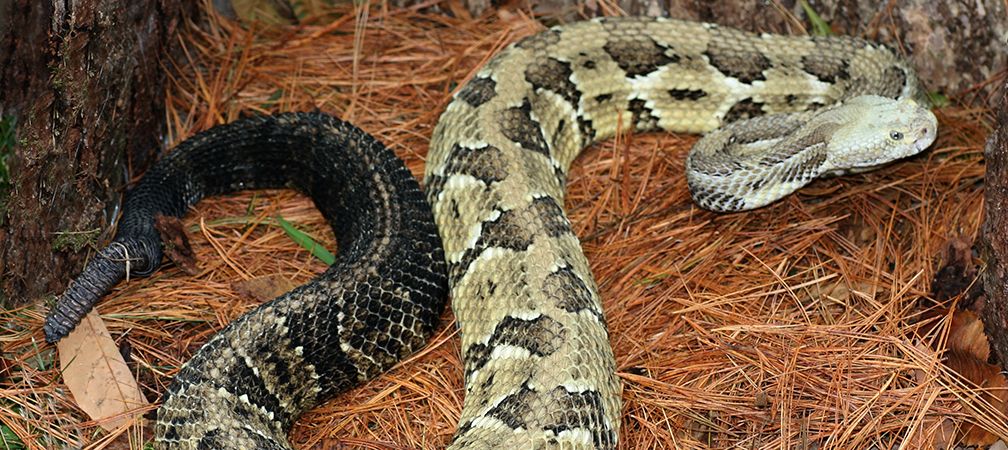
It says that, in 1877, a timber rattlesnake, a species now extirpated from Ontario, was discovered a mile from Niagara Falls and even into the late 1930s this large snake—which can be five feet or longer—was found at Niagara Glen.
The spiny soft-shelled turtle, now endangered, once occurred in Hamilton Bay. The spotted turtle, also endangered, was in the 1930s common around Lake Erie. The eastern hog-nosed snake, currently threatened, was in 1907 found in Toronto.
The book’s most uplifting section is devoted to the Massasauga rattlesnake. The author, E.B.S. Logier, offers it a measure of empathy. In fact, he hints that it has intrinsic value.
This is extraordinary given that it’s long been reviled in the province. From the time of early settlement on, many considered it dangerous. Elizabeth Simcoe, wife of the first lieutenant-governor of Upper Canada, wrote in her diary in the 1790s that 700 rattlesnakes were killed during the building of a mill on the Humber River.
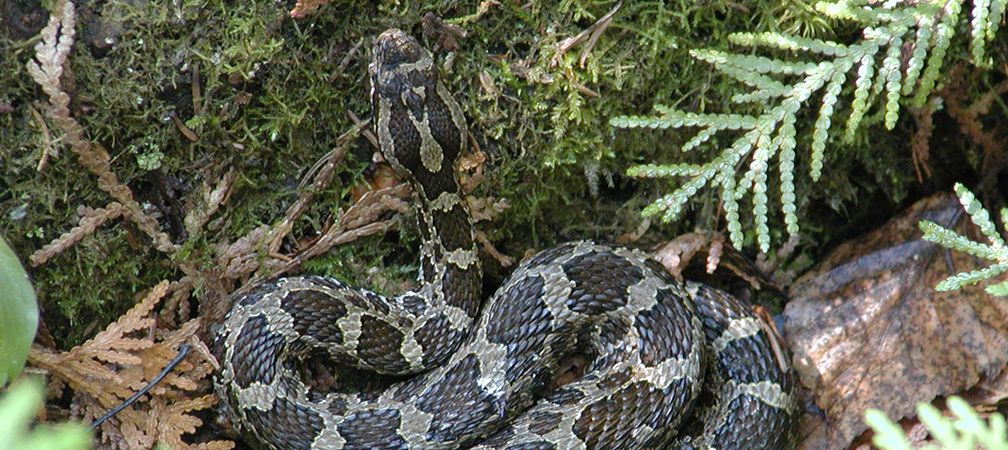
Logier laments that the creature is rarely seen and adds, “There will be multitudes of serious-minded people in the generations yet to come who will wish to see and study rattlesnakes…so there is a responsibility incumbent on us who are living today, and who by the very nature of the case are trustees of an estate to be passed on, not to wantonly destroy any living thing, regardless of whether from our point of view it is a desirable creature or not.”
Logier says we should protect rattlers because it would benefit humans: future Ontarians may want to experience them. But by urging their preservation even if they aren’t desirable ‘from our point of view’ he also suggests wildlife has inherent worth. It’s his use of ‘our point of view’ — coming decades before the modern environmental movement — that’s impressive here.

Further, in calling us “trustees of an estate”, he implies our job is not to exploit the natural world but to safeguard it. This echoes the message and conservation work of Ontario Nature, which reminds us that the environment is entrusted to us for future generations, not as something to own, but as something to steward.
Logier isn’t ready to grant the Massasauga constitutional rights (what might be called “security of the serpent”), but he’s gesturing in that direction.
And given he was writing 87 years ago, that’s admirable.
