
Reading view

Malaysian treasury suggests cutting health and education budgets to sustain fuel subsidy

MALAYSIA: Malaysia’s Finance Ministry has proposed RM5.4 billion (S$1.74 billion) in operating cuts for the health and higher education ministries amid the Iran war’s fiscal impact. A Treasury directive outlined RM10 billion in savings across agencies, including RM3.06 billion from health and RM2.39 billion from higher education. Ministries must submit revised budgets by May 15 to the National Budget Office.

Many believe the strain comes from rising petrol prices, making subsidies essential for ordinary Malaysians. The prospect of budget cuts has sparked discontent, particularly in the health sector, which is already understaffed and overworked. Similar concerns are voiced about the higher education sector, where reductions could further weaken resources. 

On X, one user voiced strong frustration over the proposed health ministry budget cuts, warning that Malaysians could lose their lives if the plan proceeds, sharing multiple criticisms of the suggestion and arguing that the health sector is already overstretched. Some echoed his view, insisting that reductions should instead target other ministries to avoid jeopardising essential services.

Another user stated that the services provided by the government hospitals in Malaysia will always be inadequate. Currently, the fees can be as low as RM5 and RM10. He suggested that the fees should increase slightly to RM10 and RM15, respectively, adding that he constantly sees patients in flashy cars coming for treatment in these government hospitals. 

Others accused the government of continuing crony contracts while essential services face potential cuts, stressing that the Malaysian people matter most during this difficult period. However, there is no concrete evidence to support claims of crony contracts being awarded, making the criticism more reflective of public frustration than a verified fact.

The opposition party PSM, via its X account @PSMGombak, criticised the government for proposing 5% of GDP spending on healthcare while instead signalling cuts. The party urged higher taxes on the wealthy to protect essential services. 

For now, Malaysians may face rapid inflation, worsened by soaring petrol prices. Netizens widely agree that rising fuel costs inevitably drive up the price of essentials like rice and eggs due to the transportation cost. 

This article (Malaysian treasury suggests cutting health and education budgets to sustain fuel subsidy) first appeared on The Independent Singapore News.


  •  

Man with multiple marriages faces jail after alleged assault on pregnant wife

MALAYSIA: In some parts of the world, this man would be called a Romeo for wooing as many as nine wives, but in Malaysia, some are calling him, for some reason, a Ted Bundy after his arrest for causing a miscarriage.

The man, 43-year-old Rosmaini Abd. Raof has allegedly beaten his pregnant wife with a clothes hanger, rubber hose, curtain rod, and broom following a domestic dispute.

This caused the 39‑year‑old victim, a hospital staff member who was 12 weeks pregnant, to miscarry. She received treatment at Sultan Abdul Halim Hospital (HSAH) and suffered injuries to her body and face.

According to various news reports, the man has been married nine times and was released on bail while appealing a 10-year jail sentence for yet another case in which he attacked one of his many spouses.

Of particular relevance is that all his wives, current or former, are civil servants.

Kedah police chief Adzli Abu Shah said at a press conference that the suspect has more than one wife.

“The suspect is believed to currently have three wives and has been married nine times.”

“He would seek partners with stable jobs, as he himself does not have steady employment,” Bernama reported.

The suspect has 11 children and four previous criminal records involving assault, voluntarily causing hurt, concealing a birth and criminal intimidation, the police said.

After the recent incident, the suspect took off and went into hiding. He is now remanded for seven days in Kedah on Wednesday after police arrested him at a homestay in Alor Setar.

The police also confirmed that he is the same perpetrator in the case involving then-pregnant ex-wife, Jahidah Nordin, in Larkin, Johor Bahru, in May 2021. This piece of information shocked many in Malaysia.

People are also asking how this man could be free, given last week’s incident.

The man was convicted of injuring Jahidah, who has remained in a coma until today, but his 10‑year prison sentence was postponed pending appeal.

Police said last week’s case had been reclassified as voluntarily causing grievous hurt, an offence that carries a maximum punishment of 20 years’ imprisonment, a fine or caning.

Public reaction online has been largely critical, with many expressing shock over the case.

Some users suggested the suspect appeared to target women with stable jobs, pointing to a pattern in his relationships.

“He definitely has a type… That’s why he chose victims with government jobs,” one commenter wrote.

Others were baffled by the number of marriages and children involved.

“An unemployed, violent man managed to marry multiple women and father 11 children. Who should be held accountable for this?” another said.

There were also questions about how the suspect remained free despite a prior conviction.

“How is he still not in jail?” one user asked, raising concerns about enforcement and accountability.

This article (Man with multiple marriages faces jail after alleged assault on pregnant wife) first appeared on The Independent Singapore News.

  •  

Allies question raid on journalist over Malaysia’s foreign worker system report

MALAYSIA: Prime Minister Anwar Ibrahim’s government is facing intense criticism after the police in Malaysia raided the home of a Malaysiakini journalist, B Nantha Kumar.

The raid is in connection with investigations into a report on the proposed foreign worker recruitment system.

On April 27, Nantha said two plainclothes police officers arrived at his home and searched his residence in Seri Serdang for about 45 minutes.

“However, no items were seized during the raid,” he said.

However, Nantha was presented with a search warrant stating that police had reason to suspect the premises were being used to store “official cabinet documents.”

The document in question is related to the Turap platform, which is a digital system proposed to centralise and streamline the recruitment of foreign workers into Malaysia, a multi-billion-dollar business.

Last week, police also recorded a statement from Malaysiakini founder and director Premesh Chandran regarding the matter, Malaysiakini reported.

Now, it is an ally in the Madani government, the Malaysian Chinese Association (MCA), which is also a political party under the Barisan Nasional coalition, that is raising questions about the raid on the journalist’s home.

MCA Youth deputy chief Mike Chong Yew Chuan said these actions could have a worrying effect on media freedom.

“These developments raise serious questions about whether the actions are part of a proper investigation, or an attempt to pressure and intimidate the media,” Chong said.

Chong noted that the reports have raised legitimate public interest concerns, while there has been no clear indication that they have been proven false.

“This makes the enforcement actions taken against journalists even more questionable,” he added.

The initiative has drawn scrutiny from policymakers and industry stakeholders.

Ten PKR MPs had previously issued a joint statement opposing the proposed introduction of TURAP.

They cited concerns over overlapping systems alongside existing and planned government platforms. They raised questions over efficiency, transparency and market concentration.

PKR is the party of Anwar Ibrahim.

Opposition parties like Muda and Perikatan Nasional have slammed the Human Resources Ministry for lodging a police report against Nantha’s article on Turap.

According to reports, Nantha was called in on April 1 to give a statement under Section 203A of the Penal Code for alleged unauthorised disclosure of information and under Section 233 of the Communications and Multimedia Act.

This article (Allies question raid on journalist over Malaysia’s foreign worker system report) first appeared on The Independent Singapore News.
  •  

Ex-minister opens old wounds between UMNO and Pakatan in fresh split

MALAYSIA: Prime Minister Anwar Ibrahim’s government is facing more challenges lately, particularly after the chaos created in Negeri Sembilan, a small state near Kuala Lumpur, where members of his Malay ally, United Malays National Organisation (UMNO), left the state government led by his coalition.

Following the chaos, former Health Minister Khairy Jamaluddin, who was a powerful youth chief in UMNO, the party allied to Anwar in the unity government, has rebuked supporters of the PKR (Anwar’s party) who condemned the political chaos in Negeri Sembilan.

The PKR elements attacked UMNO, saying they are following the path of the Perikatan Nasional (PN) that toppled the Pakatan Harapan government, then headed by Tun Dr Mahathir Mohamad, in 2020. The PN was then labelled ‘roof digging’ or backdoor government by PKR and Pakatan.

In a series of Instagram stories, Khairy, who is now a former MP, challenged those accusing UMNO of backdoor politics to compare it with Anwar Ibrahim’s move, when he was the opposition leader in 2008.

At that time, PKR and Anwar found it legal and logical to attempt to bring down the Barisan Nasional (BN) government under Tun Abdullah Ahmad Badawi. Tun Abdullah is the father-in-law of Khairy.

“Many shallow-minded people in PH (Team X and Team B) attack UMNO for being opportunistic and spreading backdoor politics/tebuk atap by exploiting crises to launch a power grab.

“I suggest everyone (especially the younger generation) look up what was planned to happen on September 16, 2008, to know who started tebuk atap politics in Malaysia,” he said.

After he was set free by Abdullah Badawi in 2004, Anwar returned to Parliament via a by-election victory in August 2008.

Later on, Anwar announced that Sept 16 was the deadline for him to form a new federal government. He promised voters he would seize BN’s majority by persuading its MPs to defect to the then Pakatan Rakyat coalition, Malaysiakini reported.

Like in 2021, Anwar had then claimed he had secured sufficient support with over 31 Barisan Nasional (BN) MPs backing him to topple Khairy’s father-in-law. But this attempt failed.

Khairy also noted that when Anwar tried to topple the federal government in 2008, the world was already facing one of the worst economic crises, marked by severe financial instability and global liquidity problems.

To conclude his attacks on PKR and Pakatan, Khairy added that Anwar’s party should be brave enough to face a vote in the state assembly in Negeri Sembilan to let the majority decide who will rule the state or to find out if the current PKR Chief Minister still has a majority.

Fourteen UMNO assemblymen decided to pull the plug on the Pakatan-led government in the state, but the ruler of the state has said the Chief Minister, Aminuddin Harun, will remain in post. Anwar has also declared there is no need for fresh polls in the state.

This article (Ex-minister opens old wounds between UMNO and Pakatan in fresh split) first appeared on The Independent Singapore News.

  •  

Malaysia’s 2031 billionaire growth fuels debate over who really benefits

MALAYSIA: Malaysia’s billionaire population is projected to grow 39% by 2031, with ultra‑high‑net‑worth individuals rising 20.1% to 1,881. Knight Frank attributes this to strong economic expansion, resilient ringgit performance, and active capital markets. Kuala Lumpur’s luxury residences grew 1.1% in 2025, while transactions rose 5.4%. Analysts expect mixed outlooks, but prime assets remain resilient amid reforms and global uncertainty.

Many social media users remain dissatisfied with the situation, arguing it will deepen wealth inequality in Malaysia. A common sentiment online is that billionaires often rise by exploiting ordinary workers, and social media users strongly believe this dynamic is at play.

Political X page @PSMGombak argued that while Malaysia’s wealthy will continue to grow richer, the country may struggle to fund essential services. The post warned that government doctors could face shortages, schools would remain outdated, and public transportation would stay lacklustre — all while the billionaire class expands. 

Another X user described billionaires as a “blight” on society, reflecting frustration that wealth continues to grow while poverty persists. This sentiment underscores concerns that Malaysia still struggles with inequality, and many around the world remain trapped in hardship despite rising fortunes among the elite.

Following that, a commenter argued that Malaysia’s wealth distribution must improve, claiming “a thousand millionaires are better than a single billionaire.” He added that the rich consistently grow richer while the poor become poorer, a phenomenon visible for decades and now plainly evident. 

Meanwhile, there are those claiming that billionaires don’t create wealth, but rather capture it. Another chimed in and said that Malaysia’s rising billionaire count is not a positive indicator, as it reflects worsening inequality. The user claims billionaires capture wealth rather than create it and posed a pointed question: from whom are these fortunes being taken? 

At its core, Malaysia faces deep structural challenges. While the rise in billionaires may look positive on paper, the reality is far less ideal. Ordinary Malaysians continue to suffer from stagnant wages that have barely moved in decades, leaving younger generations struggling to build stable lives. The growing wealth gap underscores how prosperity at the top does not translate into broader progress.

This article (Malaysia’s 2031 billionaire growth fuels debate over who really benefits) first appeared on The Independent Singapore News.

  •  

Malaysia spending S$2.6 million an hour for subsidised petrol

MALAYSIA: Malaysia’s government shoulders a heavy fuel subsidy burden of RM8.28 million (S$2.6 million) per hour, or RM2,300 per second, amid Middle East supply disruptions. Crude oil prices surged past US$110 (S$140) per barrel in March, pushing subsidies from RM6 billion (S$1.94 billion) to RM7 billion by April. Officials warn the commitment is unsustainable, with global supply recovery expected to take months.

Additionally, Malaysia’s work-from-home initiative for government agencies and GLCs has not eased traffic congestion as intended. Despite efforts to cut fuel use, reports show Kuala Lumpur remains plagued by bumper-to-bumper jams. Observers note that commuting patterns have barely changed.

However, social media users remain sceptical of the government’s reported subsidy figures. On X, a citizen questioned whether the numbers cited were rhetorical or actual spending, further asking if the Malaysian government purchased the current subsidised oil after February 27, or if the supply came from earlier stock bought at lower prices.

Others argue the government must continue subsidising fuel, as inflation in Kuala Lumpur had already risen before the war. One noted that spending has increased for most households and boldly suggested the government stop collecting taxes altogether if it cannot sustain the subsidy programme.

Additionally, another highlighted that the Inland Revenue Board of Malaysia collected RM203 billion (S$65 billion) in 2025. He argued this shows the government can afford to maintain subsidies, suggesting the best approach is to reduce spending on redundant agencies rather than cutting fuel support. 

Another citizen boldly argued that the government should stop portraying fuel subsidies as though they come from its own pocket. He stressed that Malaysia’s poor depend heavily on the fuel subsidy and added that the government would not collapse if subsidies were maintained even for several more years.

Many Malaysians believe fuel subsidies can continue despite the war, pointing to Petronas selling refined oil globally as proof that the country can sustain itself. At the same time, work-from-home initiatives have not expanded as widely as the government hoped, leaving most people commuting daily. With traffic congestion persisting, reliance on subsidies remains a pressing issue for households.

.

This article (Malaysia spending S$2.6 million an hour for subsidised petrol) first appeared on The Independent Singapore News.

  •  

Madani threatened with political chaos in small state near KL

MALAYSIA: A move by 14 United Malays National Organisation (UMNO) assemblymen to quit the Pakatan Harapan-led government in the small state of Negeri Sembilan is rocking the foundations of the Madani government built by Prime Minister Anwar Ibrahim.

The unity government comprises Pakatan and Barisan Nasional, with UMNO as the leading party in the Barisan. Pakatan is made up of the Democratic Action Party, which is the biggest party in the coalition, and the PKR, which is Anwar’s party and Amanah.

While there are no talks of frictions between the parties in the unity government, it appears that UMNO is starting to pull some strings in the Madani coalition.

However, if the intended result was the fall of the Pakatan-led government in Negeri Sembilan, then it appears that UMNO has so far failed in this attempt.

The Yang di-Pertuan Besar, Tuanku Muhriz Tuanku Munawir, the Ruler of Negeri Sembilan, has stated that the Chief Minister remains in office, while Anwar has also said there will be no snap polls in the state after UMNO’s pullout from the state government.

UMNO has 14 seats in the 36-seat assembly, and it now has the backing of 5 assemblymen from Perikatan Nasional, which is led by the Islamists PAS. Anwar’s Pakatan has 17 seats.

Negeri Sembilan UMNO has today requested an audience with the Yang di-Pertuan Besar, Tuanku Muhriz Tuanku Munawir, saying they want to inform him of their withdrawal of support for the Chief Minister Aminuddin Harun.

State UMNO chief Jalaluddin Alias said the request for an audience was submitted yesterday evening.

Jalaluddin is also seeking an emergency state assembly sitting to determine the position of Aminuddin and his state government in a probable vote of no-confidence.

This article (Madani threatened with political chaos in small state near KL) first appeared on The Independent Singapore News.

  •  

Controversial Guinness Draught can found in Saudi store shelf, receives backlash in Malaysia

MALAYSIA: About 10 days ago, a Malaysian posted a photo of a Guinness can found in a store in Saudi Arabia, causing a major stir in some quarters.

For some time now, the happenings in Saudi Arabia have attracted backlash in Malaysia, particularly with reports that alcohol is now available for sale in the country where the two holy cities of Islam are located.

According to a local website, the Guinness can was spotted on a store shelf in Madinah, Saudi Arabia. Madinah is the second-holiest city in Islamic beliefs. This is where the Prophet of Islam is buried, in the Masjid Nabawi.

However, the product is not what its iconic branding might suggest. The can in the photo shows the Guinness Draught 0.0, an alcohol-free stout with 0% alcohol by volume (ABV).

In Saudi Arabia, alcohol is strictly prohibited, but this product is sold legally in the country where the Kingdom permits beverages certified at 0.0% ABV.

As expected, the post drew huge responses from Malaysians of all walks of life on Facebook.

Some locals were joking about the 100% alcohol-free tag; others were a bit more sarcastic, saying Muslims will not be allowed to drink those in Malaysia, and some took it seriously, too.

One said they presume it is not going to be categorised as ‘halal’ or permissible in Malaysia. They noted a ‘good’ reason for this.

“I presume it is still not halal in Malaysia because it’s not produced in a halal-certified factory.”

The halal issue has gone viral many times in Malaysia. There were restrictions on Muslims to feast in ‘No Pork, No Lard’ restaurants. These would be restaurants that do not have a ‘halal’ certification.

Then there was the topic of a drunk Malay military officer who crashed his car on a highway against traffic, hitting another car. The accident killed a YouTuber from Bangladesh.

The fact that he was drunk raised some eyebrows among locals. It is haram, the contrary of Halal, for Muslims to drink alcohol.

Back to the case of the Saudi Guinness can, it is sold in supermarkets such as Carrefour KSA and Tamimi Markets. This is a non-alcoholic stout that mimics the taste of the original draught beer without the alcohol content.

On Facebook, some users said the product is sold in Malaysia as a stout, saying: “In Malaysia, it was branded as Guinness Malta.”

However, another chimed, “Now u can drink Guinness Malta in peace.”

On a more serious note, someone else said: The drink could be harmless and can be considered consumable, but still, it was produced by Guinness or Heineken, so it’s forbidden,” expressing their views in the Malaysian context.

Alcohol in Saudi Arabia remains generally illegal, although restrictions have eased for specific, high-income non-Muslim foreign residents and authorised diplomats.

According to Google searches, a restricted, specialised store exists in Riyadh, requiring prior registration and salary verification for entry.

This article (Controversial Guinness Draught can found in Saudi store shelf, receives backlash in Malaysia) first appeared on The Independent Singapore News.
  •  

Malaysia PM wants proof of wrong doing after new corruption video surfaces

MALAYSIA: Days before a new anti-graft chief was appointed, a video clip containing bold claims against both Prime Minister Anwar Ibrahim and his former political secretary, Farhash Wafa Salvador, went viral.

The video is believed to be an extract from a secretly recorded conversation that was released last year and was at the centre of a corruption scandal involving the Prime Minister’s Office and a former aide to Anwar, Shamsul Iskandar Mohd Akin.

The accusations in the video are made by a businesswoman identified as a proxy to Shamsul Iskandar, who was Senior Political Secretary to the Prime Minister from December 2022 to his resignation in November 2025. Her name, already a key prosecution witness in Shamsul’s upcoming corruption trial, is also widely publicised in local media and across several social media platforms.

The case is centred on accusations that a businessman, Albert Tei, had given Shamsul Iskandar RM630,000 (S$202,860) in gifts and cash. Tei made the headlines in 2024 as a whistleblower with several videos sent to the media regarding corruption scandals in Sabah.

In last week’s video, the woman is heard talking to Albert Tei.

She claimed that someone named “Anwar” instructed another person named “Farhash” to steal money to be sent to Africa. and that Farhash has been granted Turkish nationality.

With regards to the viral video, Anwar dismissed allegations that his former aide, Farhash Wafa Salvador, was instructed to steal money and hide it in Africa and urged the media to dismiss such accusations.

“There are all sorts of issues; no need to answer them. If they have reasons, they should provide proof. Do you entertain that? Do you entertain? If 1,000 people comment like that, do I have to answer all? If there is evidence, bring it forward,” he said.

The recent clip was also shared by PAS information chief Ahmad Fadhli Shaari, who urged those named to respond.

Anwar’s response to earlier videos from Albert Tei was that the videos on the Sabah mining scandal alone did not constitute sufficient evidence.

Tei told a local news portal that the clip recently released was part of a recording he made on Nov 21 last year.

This article (Malaysia PM wants proof of wrong doing after new corruption video surfaces) first appeared on The Independent Singapore News.

  •  

Fashion brand’s accounts frozen as Malaysia’a anti‑corruption unit acts

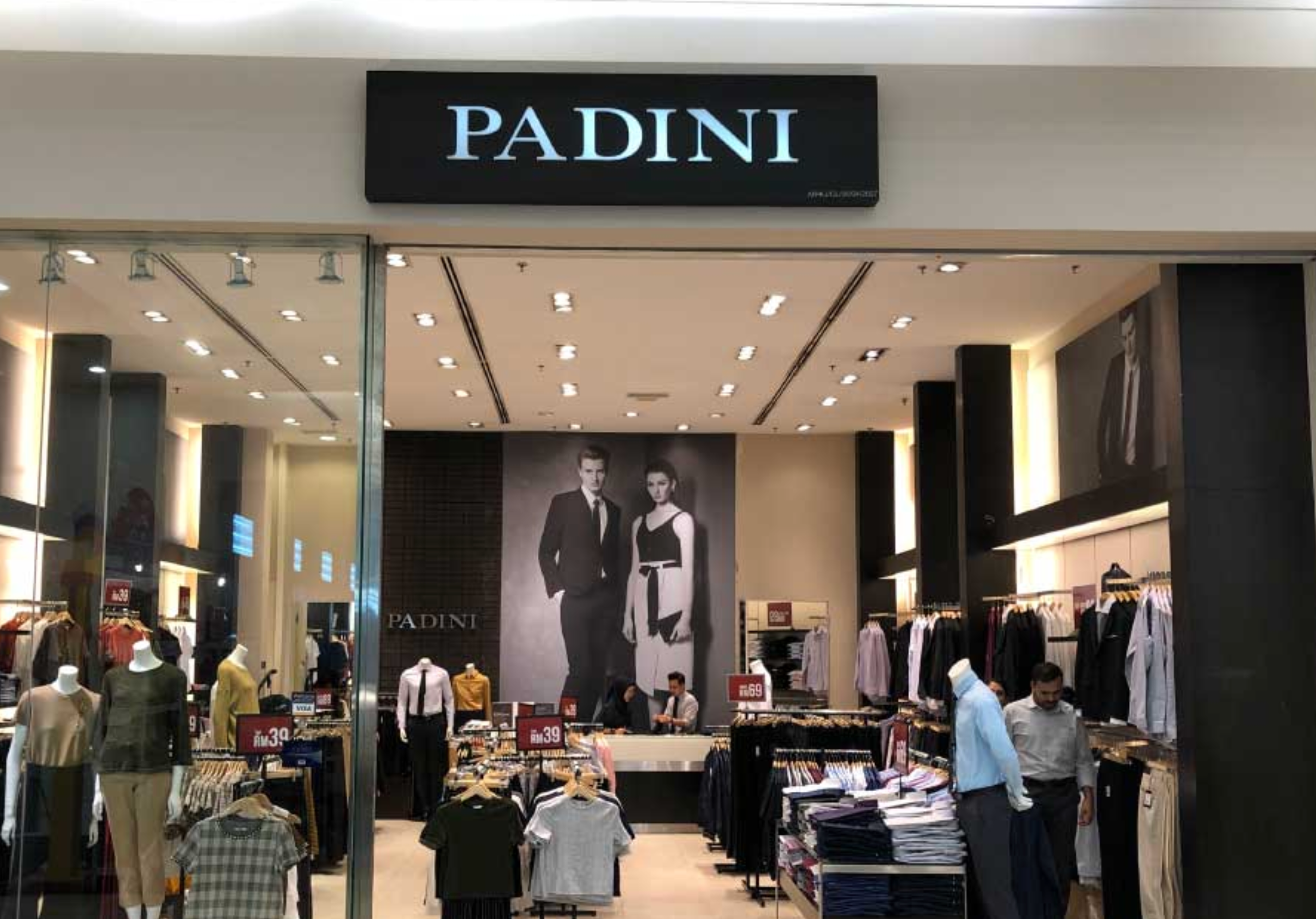
MALAYSIA: Fashion retailer Padini Holdings Berhad denied wrongdoing after several bank accounts were frozen by the Malaysian Anti‑Corruption Commission in a money laundering probe. The freeze involves external counterparties, not management or staff. 

Padini launched an internal compliance review, engaged legal counsel, and assured operations remain unaffected. The group pledged transparency, full cooperation, and updates on material developments.

The beloved fashion label is proudly Malaysian, with outlets across prime shopping destinations nationwide. Branches can be found in major malls such as Tun Razak Exchange, Suria KLCC, and Pavilion Bukit Bintang. On social media, users emphasise that its clothing offers good value, balancing price and quality, reinforcing the brand’s reputation among local shoppers.

Netizens are voicing bold accusations over the situation. On X, one questioned whether Bank Negara Malaysia should intervene if discrepancies exist in the company’s financial records. The user further suggested the issue could be linked to Malaysia’s alleged “corporate mafia” scandal, amplifying public concern and speculation surrounding the case.

Another user raised speculation about whether anyone might seek to take over the long‑standing Malaysian fashion house. The discussion reflects wider curiosity, as the brand has operated for decades without major issues, making current uncertainties more striking to loyal followers and industry observers.

One other user alleged that certain boutiques in shopping malls could serve as money laundering fronts, suggesting some companies may be using retail outlets as a façade to clean illicit funds, fueling speculation and debate online about the legitimacy of such practices in Malaysia’s fashion retail sector.

Despite the accusations, other social media users are defending the brand. One argued that despite accusations, it remains a legitimate business. While a few users claim certain mall outlets are “money laundering fronts,” many counter that Padini stores record strong turnovers, with consistently crowded locations reflecting genuine customer demand.

For Malaysians, finding clothes that are both stylish and affordable remains a challenge. Foreign fast‑fashion labels like Mango and Zara are often priced beyond reach for the masses. Local brands such as Padini fill this gap, offering fashionable, quality apparel at reasonable prices, making them a trusted choice for everyday shoppers across the country.

This article (Fashion brand’s accounts frozen as Malaysia’a anti‑corruption unit acts) first appeared on The Independent Singapore News.

  •  

A ‘pigs tale’ is going viral in Malaysia but for the wrong reasons, draws debate

MALAYSIA: The Selangor government in Malaysia is in the process of shutting down 114 pig farms in the state, particularly in Tanjung Sepat and Sepang.

This follows the Sultan of Selangor’s decree to address pollution and social harmony concerns.

From now on, licenses for such farms will no longer be renewed, and the state will transition entirely to imports. Plans for a closed livestock centre in Bukit Tagar have also been cancelled.

However, the debate in Malaysia has shifted away from the real reasons the farms are shutting down, with most political parties now focusing on whether statements about the farm closures are ‘disloyal’.

Lately, an assemblywoman, Wong Siew Ki, who hails from the Democratic Action Party (DAP), became the target of the opposition parties in Malaysia, coming under heavy fire from what some are now calling ‘the rightist fraternity’ in the country.

The criticism against Wong is based on the Sultan of Selangor’s express disagreement with pig farming activities in the state. Selangor PAS Youth chief Mohamed Sukri Omar previously called for Wong’s suspension from the Selangor state assembly for being disloyal.

Yesterday, PAS Selangor filed 10 reports on the issue of pig farming and urged police to take firm action against the DAP lawmaker.

Its Youth Chief, Mohamed Sukri Omar, said the reports were filed by PAS divisions across Selangor and the number is expected to rise over time. The question many are asking is whether Wong Siew Ki is championing a modern and innovative pig-rearing industry in Selangor or is being disloyal to the ruler of Selangor.

Despite the attacks against her, Wong Siew Ki stood by her proposal to allow modern, closed-system pig farming in Selangor. According to her, the proposal was based on feedback from residents in her constituency, Sinar Harian reported.

“This is my duty as an assemblyman. Any issues related to the people, we bring to the state assembly,” she was quoted as saying.

In her speech, Wong also touched on equality rights under Article 8(2) of the Federal Constitution. She claims pig farming should not be singled out compared to other livestock, as all forms of animal farming carry environmental risks. She also expressed regret that various parties had politicised the issue.

However, several high-profile Malay activists have come out to dissipate the attacks directed at Wong.

Human rights activist and lawyer Siti Kasim and former de facto law minister Zaid Ibrahim insist the DAP state representative was only raising a matter of public interest. DAP members also defended the lawmaker.

They believe that “a decree is not the law” as Malaysia practices a constitutional monarchy.

DAP lawmaker Ramkarpal Singh felt that the call for Wong to leave the state (call made by opposition parties) or be suspended from the state assembly for up to 12 months “will create a dangerous precedent in silencing elected representatives.”

“No doubt, the Sultan of Selangor did call for an end to pig farming in the state, citing its environmental impact and Selangor’s demographic make-up, which is respected.”

“Wong’s proposal, however, doesn’t, in any way, disrespect this but instead, offers constructive alternative solutions to the issue which should not be dismissed outright for the reasons stated above,” argued the former deputy minister of law and institutional reform and Bukit Gelugor MP in a media statement.

Siti Kasim chastised the pro-PAS elements for “immediately spinning the issue into one of lege-majeste to the Sultan,”  

“This is not about pigs. This is about silencing voices they don’t like. This is not a matter of principle. This is political manipulation,” fumed the advocate in a Facebook post. “Pig farming exists as an industry. It involves economics, public health and management. Issues like this need clear policies – not emotions. But some parties are more comfortable playing with religious and emotional sentiments than discussing real solutions.”

Zaid Ibrahim asserted that “a decree is not the law but merely the language of the Istana (palace) when they give their advice”.

“We aren’t a country governed by Kings of yesteryear. We are a constitutional monarchy,” reminded the opposition-slant United Malay’s National Organisation member. “Any assemblymember can raise any issue of public interest, and they must not be stopped from performing their duties. As pig farming involves a livelihood, you can’t just close it down without exploring all options.”

This article (A ‘pigs tale’ is going viral in Malaysia but for the wrong reasons, draws debate) first appeared on The Independent Singapore News.

  •  

Penang’s steady growth puts it among Malaysia’s top industrial hubs

The Democratic Action Party (DAP)’s Chief Minister in Penang, Chow Kon Yeow, said the state has made great strides in the international semiconductor field by building on its existing foundation and keeping up with global trends.

Penang is the only state in Peninsular Malaysia headed by a non-Malay. With the DAP in control, the state’s economy has been revitalised through a shift toward high-value manufacturing (semiconductors, E&E) and services.

Following a political change in 2008, the year DAP won the state elections, Penang adopted business-friendly policies, attracting high foreign investment.

It sustained an average growth of over 5%. By 2024–2025, Penang solidified its role as a global tech hub and a top exporter, achieving a leading GDP per capita in Malaysia.

Even in the face of the impact of the new US tariff policy, the state was still able to maintain stable growth and attract investment.

But for the Chief Minister, the party’s greatest achievement for Malaysia’s political system is the current two-party system.

The country now has a coalition in power with the Pakatan Harapan -of which DAP is a member- in power, and they are in alliance with the former ruling party, Barisan Nasional, alongside the winners from the Borneo states of Sabah and Sarawak.

There is a coalition in the opposition with the Perikatan Nasional (PN), which ruled the country from 2020 to 2022. The Islamists from PAS is the main ally in PN with former PM Muhyiddin Yassin’s Bersatu as the other ally.

According to Chow DAP, through its founding generation of leaders, it helped the country to realise that no one party is the undisputed champion.

“DAP facilitated the two-party system of checks and balances in Malaysia, which is a major democratic process,” he says.

He says now in Malaysia, no political party can consider itself the ruling party before or after a general election.

The party is celebrating its 60th anniversary this year, and for Chow, it is the reforms brought in Penang in particular that are also of great importance.

“The Penang Chief Minister’s (two) term limit was also achieved, and allowing governance to flourish after the change of parties is honourable,” said Chow.

PH, with DAP at the helm, governed Penang for 18 years and has left the impression the coalition has given the people in Penang as a state government that puts the people first and takes care of them.

“We have taken good care of the most basic living needs, such as water and electricity supply, urban services and management, garbage disposal, city appearance management and environmental protection, and other livelihood issues, to meet the needs of the people.”

The state promotes itself as a liveable city, actively pushing for large-scale infrastructure projects in recent years, such as the long-awaited Mutiara light rail transit (LRT) system and Silicon Valley Island reclamation project.

“After the unity government came to power (in 2022), the Penang LRT was finally approved, and construction is underway.”

Chow Kon Yeow also said that Penang’s young new voters are the direct beneficiaries of PH governance, and they may have already felt the effects of Penang’s changes during their secondary school years.

Penang’s policies target young people, including institutionalised funding for schools of all streams, various green and environmental protection projects, the “Science, Technology, Engineering and Mathematics” agenda, and youth volunteer programs.

This article (Penang’s steady growth puts it among Malaysia’s top industrial hubs) first appeared on The Independent Singapore News.

  •  
❌