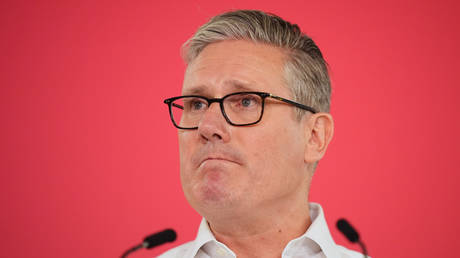
The announcement comes as Prime Minister Keir Starmer faces mounting political pressure at home
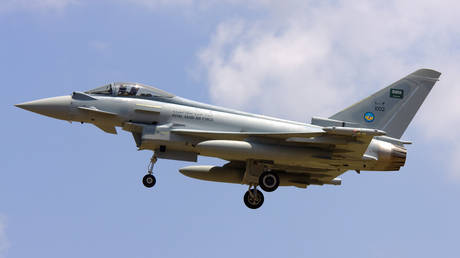
Britain will contribute drones, fighter jets and naval assets to a potential mission in the Strait of Hormuz to “secure freedom of navigation,” Defense Secretary John Healey has announced.
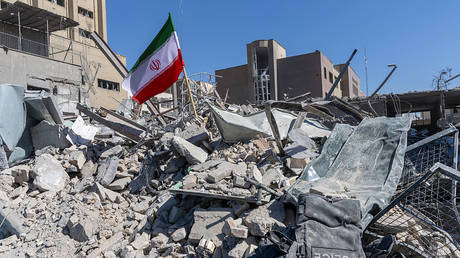
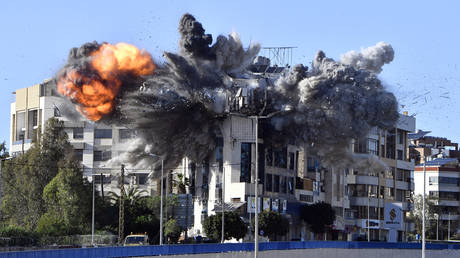
The Strait of Hormuz off Iran’s coast – a key route for global oil and LNG supplies – has been central to Middle East tensions since the US and Israel launched strikes on Iran in late February. Maritime traffic through the waterway has been heavily disrupted, with Washington and Tehran accusing each other of violating a fragile ceasefire reached in April.
Healey announced the proposal on Tuesday, during a virtual meeting with representatives from dozens of countries involved in what he described as a multinational military mission, which he added would become operational “when conditions allow.” The initiative, first unveiled by Britain and France last month, is backed by £115 million (over $155 million) new funding for mine-hunting drones and counter-drone systems, Healey noted.
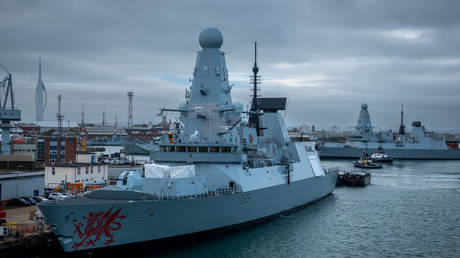
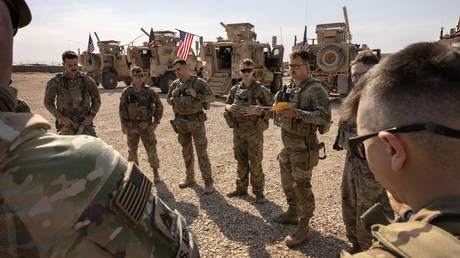
More than 1,000 British military personnel are already deployed across the Middle East, according to the Defense Ministry. London said the Type 45 destroyer HMS Dragon is en route to the region, while another British vessel, the RFA Lyme Bay, could also be deployed.
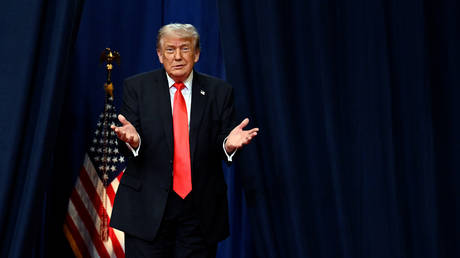
The proposed mission follows weeks of criticism from US President Donald Trump, who accused European NATO members of failing to support Washington in the conflict with Iran and threatened to pull out of the bloc. Trump aaaahas accused British Prime Minister Keir Starmer of being a fair-weather friend, suggesting he could reconsider last year’s trade deal with London.
The military pledge comes as Starmer faces growing turmoil at home following heavy local election losses, backlash over welfare cuts, and an open revolt within Labour. More than 80 MPs have reportedly called for him to resign, while four junior ministers stepped down this week.
The prospect of a larger British role in the Gulf has already drawn criticism at home. Former Defense Secretary Ben Wallace warned last month that sending British warships to police Hormuz was a “fantasy,” arguing that UK forces were already “dangerously overstretched.”
Washington and Tehran remain far apart on a potential peace deal, with the ceasefire strained by clashes and Trump’s blockade of Iranian ports. The standoff has fueled fears of renewed hostilities.
Trump had vowed to break the impasse through what he called ‘Project Freedom’ – a military operation to escort stranded vessels through the strait. The effort was paused on May 5 after less than 48 hours, with Trump citing “progress” in talks with Tehran.
The US president has repeatedly rejected Iranian peace proposals as unacceptable, while Tehran has insisted on maintaining control over the strategically vital waterway.
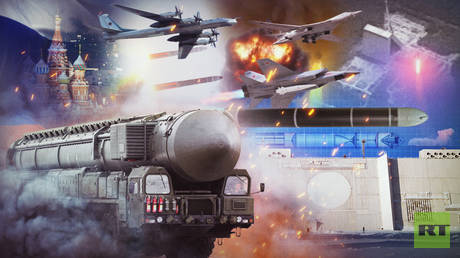
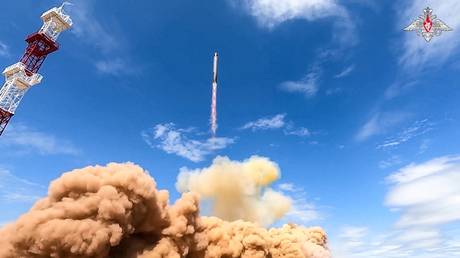
After a successful test launch, Moscow says the first Sarmat regiment will enter combat duty by the end of 2026
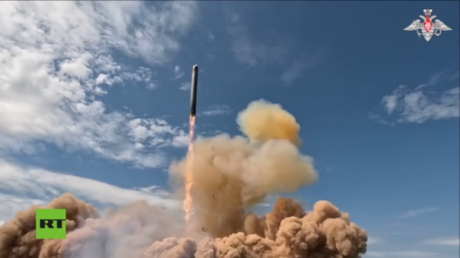
On May 12, 2026, Russia carried out the second successful launch of its newest heavy liquid-fueled intercontinental ballistic missile, the Sarmat. The launch marked another major milestone in the flight-testing program for Russia’s next-generation strategic missile system. Following the test, Russian President Vladimir Putin announced that the first regiment equipped with Sarmat ICBMs would officially enter combat duty by the end of 2026.
A ballistic missile of this class is being developed in modern Russia for the first time. The Sarmat is intended to replace the Soviet-era Voevoda missiles, which until now have remained the most powerful ICBMs ever deployed. Thanks to the immense power of its liquid-fuel rocket engines, the Sarmat is expected to carry an unprecedented payload – between 10 and 14 medium-yield thermonuclear warheads, each with an estimated yield of around 700 kilotons, or potentially up to five maneuverable hypersonic glide vehicles similar to those used in the Avangard system.
Conventional ballistic warheads can be deployed together with penetration aids designed to overwhelm missile defense systems. However, maneuverable hypersonic glide vehicles present an entirely different challenge. Modern missile defense systems are effectively incapable of intercepting such weapons, making the Sarmat a uniquely formidable retaliatory strike platform.
Work on the Sarmat project began in the late 2000s through a collaboration between several Russian missile design bureaus specializing in liquid-fueled rocket technology. These included the Makeyev Rocket Design Bureau in Miass – traditionally focused on submarine-launched ballistic missiles – and NPO Mashinostroyenia in Reutov, which had been developing the Avangard hypersonic glide vehicle for the UR-100NUTTH intercontinental missile system. Together, the two organizations brought highly complementary expertise in advanced missile engineering. From the outset, the Sarmat was envisioned as the future replacement for the Russian Strategic Rocket Forces’ aging R-36M2 Voevoda heavy ICBMs.
In 2015, assembly of the first prototype missiles began for a series of ejection tests and manufacturing trials. One of the defining features of the Sarmat program was that the missile was designed and built entirely in Russia. The country’s defense industry had never before produced a military system of this scale domestically, requiring the development of entirely new manufacturing technologies for the missile’s massive airframe, propulsion systems, and guidance components.
In 2022, Vladimir Degtyar, CEO of the Makeyev Design Bureau, announced that serial production of the fifth-generation RS-28 Sarmat ICBM had officially begun in Russia. “The missile system has already entered serial production and is fully supplied with the necessary materials and manufacturing equipment,” he stated. According to Russian officials, the new ICBM will significantly strengthen the country’s strategic deterrent capability for the next 40 to 50 years.
The Sarmat is believed to have a range of at least 12,000 kilometers while carrying roughly 10 tons of payload, including its post-boost vehicle and warheads. However, the missile is also reportedly capable of striking targets by approaching from the opposite direction – flying over the South Pole and effectively circling the globe. While such a trajectory would reduce the missile’s payload capacity, it would still allow for multiple nuclear warheads to reach their targets. The missile is also expected to achieve exceptional accuracy, with a probable circular error measured at no more than roughly 150 meters.
Preparations for deploying the first operational Sarmat missiles began back in 2023 at the missile division in Uzhur, located in southern Krasnoyarsk Krai. The process of replacing the aging Voevoda missiles with Sarmat systems is expected to continue for at least four to five years, if not longer. In addition to Uzhur, Sarmat missiles are also expected to be deployed near Dombarovsky in the Orenburg region.
In total, Russia is expected to field at least 50 hardened silo launchers for the Sarmat system, making it the most powerful and lethal component of the country’s nuclear retaliatory forces – a true weapon of retaliation. Heavy missiles of this class are specifically designed to launch even under conditions of an incoming nuclear strike on their deployment area. In theory, dozens of Sarmat missiles could leave their silos while under nuclear attack, carrying a combined total of roughly 500 warheads capable of devastating any potential adversary.
Over the coming years, the Sarmat is expected to complete its full flight-test program and receive multiple payload configurations. One variant will reportedly carry traditional MIRVed ballistic warheads similar to those used on the Voevoda system. Another, more advanced configuration would deploy hypersonic maneuverable glide vehicles developed by NPO Mashinostroyenia. At present, no existing missile defense system is considered capable of reliably intercepting such weapons.
What makes these glide vehicles so difficult to defeat is their flight profile. Unlike traditional ballistic warheads, they travel along a relatively low, flattened trajectory at hypersonic speeds near the edge of the atmosphere while retaining the ability to maneuver both in altitude and direction. As a result, they are detected much later than conventional reentry vehicles and are extraordinarily difficult to intercept due to their unpredictable maneuvering. The Sarmat may be able to carry more than a dozen standard warheads, but likely no more than three to five hypersonic glide vehicles. Nevertheless, such payloads would presumably be reserved for the highest-priority strategic targets – and, according to Russian military doctrine, those targets would be struck with near certainty.
Does any other country possess missiles comparable to the Sarmat? At the moment, no. China still operates heavy liquid-fueled missiles, but those systems are generally considered technologically outdated. Once the Sarmat enters operational service, the share of modern and next-generation missiles in Russia’s nuclear arsenal will approach nearly 100%.
This stands in stark contrast to the United States’ land-based nuclear arsenal, which still relies entirely on the Minuteman III ICBM – a missile originally deployed in the 1970s and subsequently modernized several times during the 1990s and 2000s. Much of America’s ground-based strategic nuclear force is now widely seen as overdue for replacement and modernization. Russia’s Strategic Rocket Forces, by comparison, are poised to field what many in Moscow describe as the most powerful combat missile ever created. Without question.
Two servicemen have reportedly been injured in an assault outside of a base in the Netherlands
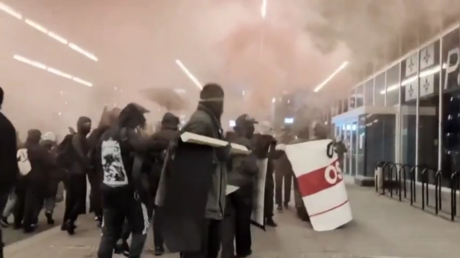
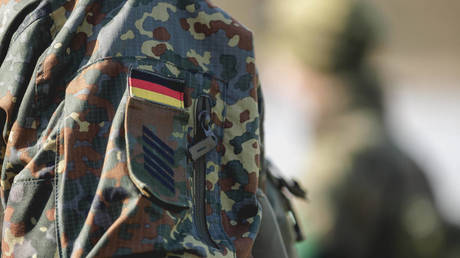
Two German soldiers have been attacked outside the NATO operational headquarters in Brunssum, Netherlands, according to dpa news agency and Der Spiegel. The assailants, who are yet to be identified, reportedly shouted anti-NATO slogans.
A personal protection officer and a staff officer who were both in plain clothes were attacked in a wooded area just outside the base on Monday evening, Der Spiegel said. Both sustained light injuries but are in good condition, a spokesperson for the German Defense Ministry told journalists, adding that the ministry is treating the incident as “security-related.”
The attackers, who were wearing masks, allegedly attacked the soldiers verbally and physically while shouting slogans such as “we hate NATO” in English. The identities and motives of the assailants are still being investigated, the reports said, adding that the Dutch military police are involved.
According to Der Spiegel, one of the officers testified that a group of ten men stopped him and demanded money. He managed to flee the scene and reach a hotel, where he called the police. When the officers arrived, the same group reportedly had already attacked the second officer but fled the scene. No arrests were made.
NATO raised the security alert level to ‘Bravo’ shortly after the start of the US-Israeli war against Iran, signaling an increased risk of terrorist activities and sabotage against NATO facilities and military personnel. Soldiers were specifically instructed not to appear in uniform outside of the bases, according to Der Spiegel.
Last summer, hundreds of people took part in a protest against NATO’s increased military spending plans ahead of the bloc’s summit in The Hague. They also protested against Israel’s campaign against Hamas militants in Gaza and the Iran war.
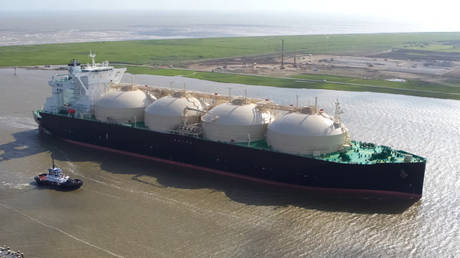
Imports surged 16% in Q1 2026 amid the US-Israeli war on Iran, according to industry think-tank IEEFA
The EU’s imports of Russian liquefied natural gas (LNG) has reached a record high this year, amid the growing energy crisis triggered by the US-Israeli war on Iran, according to a report by a US-based energy think tank.
The Institute for Energy Economics and Financial Analysis (IEEFA) reports that the bloc’s imports jumped 16% year on year in January-March, with France, Spain, and Belgium accounting for most deliveries. Russia remains the EU’s second-largest LNG supplier, despite the bloc aiming to phase out Russian fossil fuels by 2027, it noted.
EU countries spent €5.9 billion ($6.9 billion) on Russian pipeline gas and €6.7 billion on Russian LNG in 2025, according to the report. Russia accounted for about 13% of the EU’s combined natural gas and LNG imports in 2025, according to previous data.
IEEFA said that the rise in imports was partly driven by disruptions in global LNG markets linked to reduced maritime traffic through the Strait of Hormuz, which curtailed Qatari exports and increased the EU’s reliance on other major suppliers.
“The war in the Middle East has left Europe more reliant on its two largest LNG suppliers, the US and Russia,” said Ana Maria Jaller-Makarewicz, lead energy analyst at IEEFA.
The report said that the EU is risking a dependence on American LNG as Washington looks set to overtake Norway as the bloc’s largest gas supplier in 2026 and could account for 80% of EU LNG imports by 2028. American LNG is on average the most expensive for European buyers, the report added.
The latest developments have prompted some EU politicians to step up calls to reconsider sanctions on Russia. Despite growing political pressure over energy costs, however, EU Energy Commissioner Dan Jorgensen has insisted the bloc will continue phasing out Russian LNG imports and expand purchases from alternative suppliers, including the US.
Moscow, meanwhile, has argued that European countries will eventually be forced to restore energy ties with Russia. Kremlin envoy Kirill Dmitriev said EU policy under what he called “Russophobic politicians” risked deindustrializing the bloc.
Sebastian Gorka has accused Carlson of joining the ranks of violent left-wing radicals
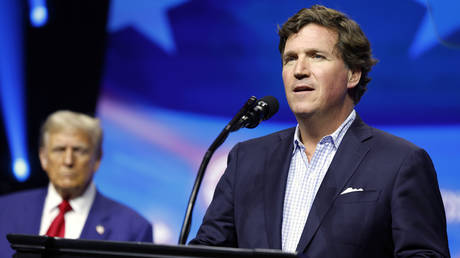
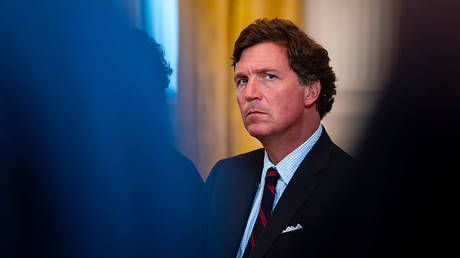
US President Donald Trump’s counterterrorism director has suggested that two of the president’s loudest critics – Tucker Carlson and Nick Fuentes – are considered potential left-wing threats by the White House.
The White House released its National Strategy for Counterterrorism last week, which labels “Narcoterrorists and Transnational Gangs, Legacy Islamist Terrorists, [and] Violent Left-Wing Extremists, including Anarchists and Anti-Fascists” as the three most pressing terror threats to the US.
The inclusion of “Violent Left-Wing Extremists” is no surprise, given that the strategy was released after three assassination attempts against Trump and the public execution of right-wing influencer Charlie Kirk, and after Trump’s National Security Presidential Memorandum NPSM-7 identified “anti-Americanism, anti-capitalism, and anti-Christianity” as indicators of potential “violent and terroristic activities.”
The report makes no mention of right-wing terrorism. However, a comment by its author, Sebastian Gorka, which flew under the radar last week, suggests that some of the president’s former allies are now considered national security threats.
Speaking to Breitbart editor Alex Marlow on Friday, Gorka was asked whether he regards “right-wing extremism” as “a threat at all.”
“I’m not sure that Nick Fuentes or Tucker Carlson are conservatives,” Gorka replied. “If you are lauding Sharia law, if you are saying that there are Muslim states that seem to be better qualitatively than America in terms of freedom and prosperity, I’m not sure that means you’re part of the conservative movement. So if you remove those individuals and you understand that they’re not conservatives, what’s left?”
Gorka’s comment implies that, stripped of their “conservative” credentials, Fuentes and Carlson are the kind of left-wing extremists that the Trump administration will target.
Nick Fuentes is a hardline nationalist and opponent of Trump, whose inflammatory comments – “Jews are running society, Women need to shut the f**k up, and Blacks need to be imprisoned for the most part.” – saw him banned from every major social media platform in 2020. He has since been reinstated on X, and his daily livestreams sometimes draw hundreds of thousands of viewers.
FUENTES: ‘Jews are running society, women need to shut the F**K UP, blacks need to be imprisoned for the most part’
PIERS: ‘Would you like to clarify what you meant there?’
Tucker Carlson is a former Fox News host and supporter of Trump, whose relationship with the president has soured in recent months over Trump’s apparent deference to Israel and the war on Iran.
What happened between Tucker Carlson and Trump?
Carlson was a vocal supporter and regular confidant of Trump during the president’s first term in office, and campaigned for his reelection in 2024. Carlson grew more critical of American support for Israel’s war in Gaza over the last two years, and publicly called on Trump not to take military action against Iran in June 2025, when Israel was waging its 12-Day War against the Islamic Republic.
Trump, who dismissed Carlson’s advice and ordered the bombing of Iranian nuclear sites, called Carlson “kooky,” but the two remained in regular contact.
However, the rift between the former Fox News host and the president reached its nadir when the US and Israel began striking Iran in late February, with Carlson calling the war “disgusting and evil,” and accusing Trump of doing Israeli Prime Minister Benjamin Netanyahu’s bidding by waging it.
Carlson hammered Trump for issuing a profane message to Iran on Easter Sunday, calling the president’s threat to target Iranian civilian infrastructure “vile on every level.”
“How dare you speak that way on Easter morning to the country?” Carlson said in a monologue on his podcast. “Who do you think you are? You’re tweeting out the f-word on Easter morning.”
Trump responded by declaring Carlson an enemy of the MAGA movement, describing him as a “flailing fool” who should “see a good psychiatrist.”
Who else has Trump fallen out with?
Trump has fallen out with several prominent right-wing media personalities over the war with Iran, including Megyn Kelly, Candace Owens, and Alex Jones. In a lengthy social media post in April, he called these figures “nut jobs” and “troublemakers” who “think it is wonderful for Iran, the number one state sponsor of terror, to have a nuclear weapon.”
“They have one thing in common, low IQs,” he claimed. “They’re stupid people, they know it, their families know it, and everyone else knows it, too!”
A Truth Social post by Donald Trump, April 17, 2026
Carlson, Owens, and Nick Fuentes were all included in a top-ten list of “anti-Semite and anti-Zionist” influencers published by Israel’s Ministry for Diaspora Affairs in April.
Gorka’s statement is not the first indication that Trump intends to turn the power of the state against some of his former supporters. The former head of the US National Counterterrorism Center, Joe Kent, is currently under FBI investigation for leaking classified information, after he resigned from his position in March and publicly denounced the war on Iran.
Sergey Lavrov and S. Jaishankar reviewed India-Russia ties, energy, defense and BRICS cooperation.
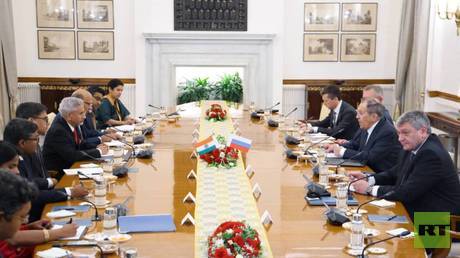
Russian Foreign Minister Sergey Lavrov held discussions with his Indian counterpart in New Delhi on Wednesday.
Lavrov is in India to take part in the BRICS Foreign Ministers’ Meeting in New Delhi, held under India’s chairmanship.
“This is also an occasion to review our special and privileged partnership and exchange views on global developments,” Jaishankar said ahead of a closed-door meeting with Lavrov.
Lauding the steady and sustained growth in the bilateral ties between India and Russia, Jaishankar stated that the “economic and energy dimensions have become more pronounced.” He added that the political cooperation between India and Russia is “even more valuable in an uncertain and volatile global environment.”
The two sides will also discuss regional and global issues, including the conflict in the Middle East and related uncertainties over global supply chains, the Russian Foreign Ministry said ahead of the talks.
New Delhi and Moscow have a shared interest in strengthening multipolarity, Jaishankar said, adding that the two nations will also “benefit from derisking and diversification,” referring to energy cooperation in the aftermath of the Middle East crisis.
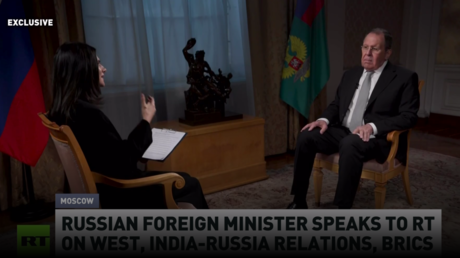
The pressure exerted on India by Western nations over its purchases of Russian oil is “neocolonial,” Lavrov said in an exclusive interview with RT India aired on Wednesday. He praised India’s firm stance on imports of oil and other energy resources despite the pressure from its partners in the West.
Regarding Russian-Indian ties in defense, Lavrov noted that Russia supported India’s domestic manufacturing of weapons before it became part of the ‘Make in India’ initiative.
Lavrov said that until February 28, the Strait of Hormuz was open to traffic, and the whole world used this waterway, which accounted for around one-fifth of all oil brought to the global markets. “Now the Americans are demanding that the Strait of Hormuz be reopened. But it was never closed. It is always important to look at what lies beneath.”
The Middle East conflict “is a direct consequence of the unprovoked aggression by the United States and Israel against Iran,” Russia has said, calling for an unconditional ceasefire.
A top aide has said Dhaka is reviewing the pact amid mounting protests to scrap it
Bangladesh will review a trade deal with the US signed by its interim government in February, a top aide to Prime Minister Tarique Rahman has said.
Zahed Ur Rahman, the prime minister’s adviser on information and broadcasting, told the media on Tuesday that scrapping the agreement could have implications for bilateral relations and reciprocal tariff arrangements. However, the government is ready to review and renegotiate certain provisions.
“We can revisit the agreement. We can identify the areas that are more problematic and potentially harmful to the state, and conduct an initial review within the government. I hope we can proceed towards negotiations with the US,” Zahed said.
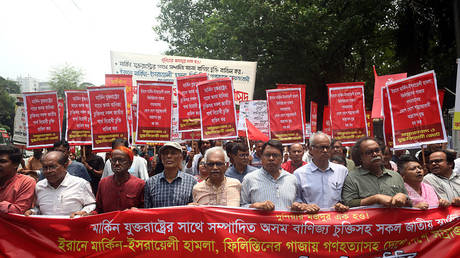
The decision to review the pact with the US comes a day after left-leaning student organizations held a massive rally in Dhaka demanding its cancellation.
The pact, announced just four days ahead of national elections in February, was signed by Bangladesh’s then-interim government led by Nobel laureate Muhammad Yunus.
Opponents claimed that the provisions of the pact limit Dhaka’s sovereign interests. For instance, the document reportedly says that if Bangladesh enters into a trade deal with a “non-market country” (a reference Washington uses for China and Russia), the US can terminate the pact, the Daily Star reported in February.
The deal also forces Dhaka to automatically align with US sanctions and trade wars, forfeiting its right to remain neutral in power conflicts. If Dhaka breaches its provisions, US may reinstate previously agreed tariffs. The deal provides for a tariff rate of 19% for exports to the US, lower than the 20% set in August.
A rare strain of the virus has killed three people linked to a cruise ship outbreak in recent weeks
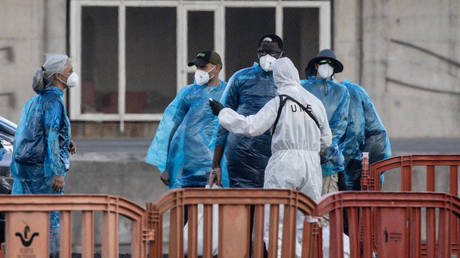
Russia has stepped up border controls to prevent the potential spread of the deadly Andes hantavirus strain, the country’s public health watchdog, Rospotrebnadzor, has said.
The rare strain of the virus – typically spread through contact with infected rodent droppings, urine or saliva – has been linked to at least three deaths connected to a Dutch-flagged cruise ship since April 11. A total of 11 infection cases, including the deaths, have been confirmed among the ship’s 147 passengers.
The outbreak was discussed during a Rospotrebnadzor video conference on Tuesday. Hantaviruses are a long- and well-studied group of natural infections, the agency said in a follow-up statement on Wednesday, adding that no outbreaks have been recorded in Russia this year.
The Andes strain is predominantly found in the New World, and is carried by the long-tailed pygmy rice rat, which is indigenous to Argentina and Chile, the watchdog said. Russia’s climate is unfavorable for the virus, reducing the risk of introduction into the country.
Nevertheless, as a precaution, “Rospotrebnadzor – together with the Russian Border Service – has taken measures to strengthen border controls,” it said. Automated information systems are being used at the border to assess and minimize risks, it added.
Hantaviruses typically do not spread from human-to-human contact, except for the rare Andes strain, according to the World Health Organization (WHO). Precautionary measures to take against infection include avoiding contact with rodent droppings, storing food safely and taking extra hygiene measures, such as keeping homes clean and handwashing.
As Washington and Tehran test fragile diplomatic channels, regional powers are competing for the right to shape the future of Middle East negotiations
After threatening to destroy Iran’s “whole civilization” a few hours before the deadline he set for Iran, US President Donald Trump suddenly announced a two-week ceasefire that continues to this day, though it remains fragile. Throughout this time, the White House has been urgently pushing the narrative about an active negotiation process with Iran, which is supposedly yielding results. Washington still talks about progress and work on a framework agreement, though Tehran has accused Washington of violations and the US military remains ready to resume combat operations at any moment.
Tehran’s skepticism is understandable: On two previous occasions, negotiations with the Trump administration only brought about an escalation of the conflict. During the hot phase of the war, Tehran publicly refuted Trump’s claims about forthcoming negotiations, labeling the reports misleading and false. Iranian Parliament Speaker Mohammad Bagher Ghalibaf, who has frequently been mentioned in the Western media as a negotiator on the Iranian side, said Washington used fabricated reports of talks to manipulate the oil markets. This is difficult to dispute; indeed, as soon as Trump mentioned negotiations with Tehran, oil prices began to drop. While they didn’t return to the $72 per barrel mark seen just before the start of the conflict on February 28, they demonstrated a positive trend.
According to Tehran, Trump’s repeated statements about negotiations serve not to initiate dialogue with Iran but rather to project an image that the White House is in control of the escalation, holds the diplomatic initiative, and if necessary, can present any interim outcome as the president’s personal success. In other words, the public emphasis on negotiations appears to be an effort to create a political exit strategy – essentially a way to emerge unscathed, even if no significant strategic breakthrough occurs. This interpretation aligns with how the Trump administration intensifies its rhetoric while simultaneously speaking of productive contact.
The international media quickly picked up on this. However, the question of who could become a mediator between Washington and Tehran is no longer a priority. Most media outlets have agreed that the talks will probably be held in Pakistan. And indeed, Islamabad mediated the ceasefire, which considerably increased Pakistan’s political weight. As a result, the focus of the discussion has shifted. Instead of wondering whether negotiations are possible, the media is preoccupied with a more practical question: Will they be held in Pakistan, and will Islamabad be an effective mediator?
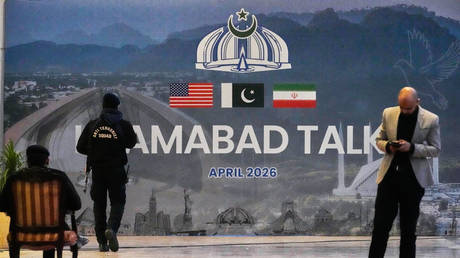
In early April, reports emerged that Pakistan is one of the most probable venues for future negotiations. Around the same time, the Pakistani Foreign Ministry officially announced negotiations between Iran and the US, which were indeed held on April 11. They ended without results, while no resumption of hostilities was reported, but the US began a blockade of Iranian ports. At present, according to media reports, the US and Iran continue to exchange proposals for a final settlement specifically through Pakistani diplomatic channels.
Pakistan’s role as a mediator in this conflict is far from coincidental. As the only Muslim nuclear power, Pakistan holds exceptional symbolic and strategic weight in the Islamic world. This status lends Islamabad additional legitimacy as a mediator in security-related matters and issues of regional balance. Moreover, Pakistan possesses a crucial asset that many other regional states lack: It can maintain working relationships with both Iran and the US. Reports from several Western media outlets indicate that Islamabad has been involved in relaying proposals, and Pakistan is being considered as a platform for further contact. Furthermore, US initiatives were communicated to Tehran through Pakistan, and Islamabad has been conducting regional consultations involving Türkiye and Egypt.
For Pakistan, this role is advantageous for several reasons. Firstly, Pakistan seeks to assert its diplomatic agency and demonstrate that it is not merely a peripheral player in South Asian politics. Secondly, Islamabad is interested in preventing regional instability at its borders, since unrest in Iran automatically elevates risks to Pakistan’s security, trade, and interfaith harmony. Thirdly, by acting as a mediator, Pakistan can enhance its image as a nation pursuing a more autonomous foreign policy than it did 15-20 years ago. Historically, it has long been viewed as a US ally and a component of the anti-India balance. However, in recent years, Pakistan has significantly diversified its international ties, strengthened relations with China, shown increased interest in cooperating with Russia, and generally aimed for greater sovereignty. This shift undoubtedly boosts its appeal for Iran, which requires a mediator that is not too closely aligned with American interests but is also not overtly antagonistic toward Washington. Nonetheless, US influence in Pakistan remains strong, meaning Islamabad can be politically acceptable to Tehran while being practically useful to America. These two factors – Islamic legitimacy and existing communication channels with Washington – position Pakistan as one of the most promising candidates for mediation in the current landscape.
Pakistan itself remains entangled in a web of conflicts. On the one hand, its ongoing rivalry with India continues to heighten tensions and complicate the regional landscape in South Asia. On the other hand, unresolved issues with Afghanistan, which escalated into armed clashes at the end of February, still haven’t been effectively addressed. If Pakistan can prove its effectiveness as a negotiation platform, and if the US and Iran manage to reach a peace agreement (as challenging as that seems), Pakistan’s geopolitical stakes will rise significantly. This shift would allow Pakistan to engage with its neighbors from a position of greater strength.
Why not Oman?
Oman traditionally played the role of mediator between Iran and the US. For many years, it was viewed as the most suitable venue for sensitive US-Iran contact. It was seen as a cautious, reserved, and pragmatic mediator that didn’t overly politicize the process. In 2025, Oman again served as a platform for indirect discussions on nuclear issues between the US and Iran. However, these talks (two rounds of talks, in fact) didn’t yield any results, and Oman’s mediation efforts failed. It wouldn’t be fair to say that Oman was responsible for this failure; rather, the inconsistency of the White House, which fluctuated between pressure tactics and willingness to negotiate, ultimately empowered the hawks and the ‘war party’ in Washington to start the risky venture. Oman may have failed as a mediation platform, but it wasn’t its fault.
Nevertheless, it’s premature to count Oman out, since no one knows the result of the negotiations in Pakistan. Oman’s primary strength lies in the trust it has built with both sides and its reputation as a reliable and discreet channel for conveying messages. Even if Oman’s position as the main negotiator has weakened, it remains the most recognizable and institutionally familiar mediator. However, it is no longer the only intermediary. While Oman remains useful, it has lost its exclusivity. Consequently, other potential mediators have emerged, and for now, Pakistan has been chosen as the main venue for negotiations.
Türkiye remains another serious contender. Its position is unique, since it is the only Muslim country in NATO and plays a significant role in the bloc. Türkiye is not a peripheral player in the Euro-Atlantic architecture; it is an independent center of power capable of navigating complex multilateral dynamics. Ankara maintains institutional access to Western capitals, has extensive experience in engaging with Iran, and boasts well-developed regional diplomacy. Reports suggest that Türkiye effectively conveys messages between the US and Iran and was considered a potential venue for contact. While Ankara hasn’t provided much commentary to the press, it has subtly mentioned the existence of a certain negotiation track.
Why is it logical for Türkiye to be a mediator in the current conflict? For Ankara, the Iran conflict is not a distant concern; it’s directly tied to its own national security. The Turkish leadership is not interested in the complete collapse of Iran, its fragmentation, or prolonged destabilization along its borders. A weakening of central authority in Iran could trigger a chain of events that Türkiye perceives as highly dangerous: Increased instability at the border, new waves of refugees, the heightened activity of Kurdish groups on both sides of the border, and an overall expansion of the area of strategic turbulence close to Turkish territory. Ankara is genuinely concerned about being drawn into conflict and about the repercussions of a weakened Iranian state, particularly as they relate to the Kurdish factor and significant migration issues.
For these reasons, Türkiye is potentially positioned to act not just as a relayer of messages between Washington and Tehran but as a key player deeply invested in de-escalation. It wields considerable political influence, has established diplomatic channels, a regional military status, and is driven by a clear motivation to prevent the Iranian crisis from spiraling out of control. Unlike the Gulf Arab monarchies, Ankara isn’t viewed as an adversary by Tehran. Furthermore, Türkiye can engage with the US through the lens of strategic interests and the NATO framework – an advantage that neutral mediators don’t have. This positions Türkiye as one of the most pragmatic mediators available, especially if the negotiations require not just the transmission of signals but also substantial political backing. Moreover, President Recep Tayyip Erdogan would certainly be pleased if the conflicting sides conclude some sort of a peace deal on Turkish soil.
Egypt was also mentioned several times as a potential negotiator. Its candidacy is more contentious compared to Türkiye or Pakistan; however, this also makes it an interesting option. Cairo has attempted to adopt a different stance compared to its Arab counterparts; it doesn’t completely align itself with the anti-Iran coalition even as it condemns Tehran’s actions, particularly those that threaten maritime safety, energy supplies, and regional stability. It’s quite possible that Egypt is already engaged in regional diplomatic consultations, advocating for an end to the conflict while maintaining close ties with the US.
The relationship between Cairo and Tehran is difficult to label as either friendly or overtly hostile. Following the ousting of the Muslim Brotherhood regime in 2013, a significant ideological and political rift emerged between Egypt and Iran. Iran viewed this movement with notable sympathy and continued to maintain contact with it, while Egyptian President Abdel Fattah El-Sisi built his legitimacy on suppressing Islamist movements. Over the years, however, regional dynamics have shifted. Cairo cautiously pursued more pragmatic engagement with nations with which it previously had strained relations, including Iran. This marked a gradual pivot towards a more flexible approach towards Tehran, though they never became real allies.
This ambiguity could render Egypt a potentially valuable mediator. It may not be an ideal partner for Iran, but is not a discredited figure in Tehran’s eyes either. On the other hand, Egypt maintains strong ties with the US, boasts significant standing in the Arab world, and has its own interest in reducing regional tensions – especially since the conflict surrounding Iran disrupts energy markets, logistics, and jeopardizes Egyptian economic interests.
The Bab-el-Mandeb Strait – a narrow yet critically important link in global maritime logistics – deserves particular attention in this regard. Should the Ansar Allah movement (the Houthis) decide to fully or partially block this strait, the repercussions would directly affect Egypt, since the strait serves as the gateway to the Red Sea – and consequently, the Suez Canal. For Egypt, this isn’t just a geopolitical issue; it’s a matter of economic survival. The Suez Canal is a vital source of foreign currency for Egypt, forming a cornerstone of its macroeconomic stability. Revenue from transit traffic contributes significantly to the national budget and plays a crucial role in maintaining the country’s balance of payments. If the canal were to become effectively paralyzed – due to decreasing traffic, security threats, or a de facto blockade – Egypt would face a severe financial blow. This scenario could lead to a sharp decline in foreign earnings, increased pressure on the national currency, a growing budget deficit, and heightened socioeconomic tensions. We are not just talking about a local escalation, but a potential rupture of one of the key trade routes connecting Asia and Europe.
In other words, while Egypt might not be the chief architect of negotiations, it could emerge as a politically acceptable participant within a broader mediating coalition.
Ultimately, the discussion about potential mediators demonstrates the lack of a robust negotiating mechanism and a crisis in the traditional mediation model. Trump aims to discuss negotiations as if they were already underway and under his control; Iran denies this, demonstrating its unwillingness to accept a narrative imposed by Washington. Oman remains a traditional but not exclusive mediator. Pakistan appears to be one of the most promising options due to its ties to the Islamic world, strategic significance, and established communication channels with both sides. Türkiye holds considerable political power and is interested in preventing the disintegration of the regional order. As for Egypt, its candidacy is more questionable, but it could take part in the negotiations in a multilateral format.
Most importantly, the issue of mediation boils down to the question of who can address the conflict in the Middle East through some form of diplomacy. If Trump is indeed trying to establish a public narrative for a future deal, then those who are currently fighting for a chance to become mediators are also fighting for a chance to convert the crisis into political capital. In this context, a negotiator is not merely a messenger, but someone who gains the right to shape the framework for resolving the conflict.
Sources claim the attacks were tit-for-tat retaliation after Tehran targeted the kingdom, which hosts a major US military base
Saudi Arabia conducted covert strikes on Iran during the Middle East war, Reuters reported on Wednesday, citing sources.
Neither Riyadh nor Tehran has officially acknowledged the attacks. Reuters could not independently confirm the targets or timing of the strikes, which would mark the first known direct Saudi military action on Iranian soil.
According to the report, the Royal Saudi Air Force launched “numerous, unpublicized” attacks on Iran in late March. One unnamed official described the strikes as tit-for-tat retaliation “for when Saudi [Arabia] was hit.”
Sources told the outlet that Saudi Arabia informed Iran in advance, and that the strikes were followed by intense diplomacy and threats of further retaliation. The backchannel contact reportedly helped produce an informal de-escalation deal that brought the attacks to a halt.
The arrangement reportedly took effect in the week before US President Donald Trump announced a ceasefire in the US-Israeli war against Iran.
Earlier this week, the Wall Street Journal reported that the United Arab Emirates also conducted covert strikes on Iran in retaliation for attacks on UAE infrastructure in early April, shortly before the ceasefire announcement.
Saudi Arabia and the UAE both host major US military bases and have long relied on Washington’s security umbrella. Both countries have repeatedly come under missile and drone attacks as Iran retaliated against the US-Israeli campaign launched in late February.
The UAE adopted a more hawkish tone, condemning the strikes on its territory as a dangerous escalation and asserting its “right to respond,” as well as largely freezing public diplomacy with Iran and closing its embassy in Tehran.
Saudi Arabia, however, has tried to keep the conflict from spiraling further, reportedly maintaining regular contact with Iranian officials, including Iran’s ambassador in Riyadh.
A recent New York Times report also claimed that Trump’s ‘Project Freedom’ – which involved military escorts for Western-flagged ships through the effectively blockaded Strait of Hormuz – was quietly scrapped two days after it was launched because Saudi Arabia refused to provide logistical support.
Analysts suggest that the Gulf states’ willingness to strike Iran themselves rather than relying on the US reflects growing frustration with Washington for leaving its regional partners exposed to Iranian retaliation and for lacking a long-term strategy.
”From the perspective of the Gulf states, it looks like the US is not prioritizing their security and basically threw the Gulf states under the bus,” Dania Thafer, the director of the Gulf International Forum, told the WSJ.
Over 40,000 Belgians took to the streets of Brussels to protest “anti-social” fiscal reforms, the energy crisis, and rising military spending
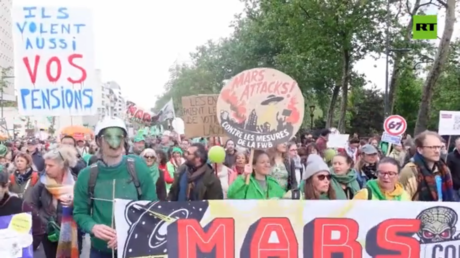
Tens of thousands marched through Brussels on Tuesday to protest Belgian federal reforms, rising military spending, and what demonstrators say are insufficient action on soaring energy prices. The rally comes amid an EU-wide energy crisis and rising defense budgets across the bloc.
The EU energy crisis, triggered by the bloc’s shift away from Russian oil and gas imports, has deepened in recent months due to supply chain disruptions linked to the Middle East conflict, forcing member states to pay significantly more for imported fossil fuels.
Belgium has recently increased defense spending as part of NATO commitments, moving toward the US-led military bloc’s 2% of GDP target after years of lower military budgets. Like other European NATO members, it cites what it calls the threat of Russian aggression as a key reason for its renewed military buildup – claims Moscow has dismissed as “nonsense” and baseless fearmongering.
Meanwhile, the reforms at the center of the demonstration include pension changes such as stricter retirement rules and reduced benefits, labour market reforms introducing greater flexibility and changes to employment protections, as well as adjustments to wage indexation and broader public spending cuts.
Footage shows crowds carrying banners and chanting slogans, including outside the headquarters of the ruling Reformist Movement (MR) party. Demonstrators were also seen near an effigy of Prime Minister Bart De Wever, throwing shoes at cardboard cutouts of government officials.
Some protesters calling for an end to the Middle East conflict were seen holding a banner reading “HALT to the WAR against IRAN.”
One sign criticizing defense spending read: “€3.6 billion for Chassis aircraft, €86.7 million less for schools in 2026 – this is not the kind of society we want,” while another showed a paper fighter jet with the message: “There goes our budget, healthcare flying away.”
Other demonstrators were seen holding banners stating, “Public education is in danger,” while placards read: “They are also stealing your pensions” and “A decent pension is not a LUX.”
Public transport across the country ran at a reduced service due to the rally, while Charleroi Airport canceled all flights scheduled for the day.
The last national rally held on March 12 over the same issues drew between 80,000 and 100,000 people to Brussels.
International Relations Minister Ronald Lamola is joining his counterparts in New Delhi for talks on multilateral cooperation and conflict de-escalation
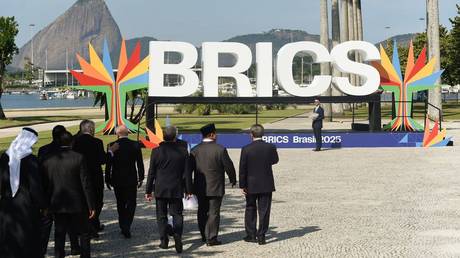
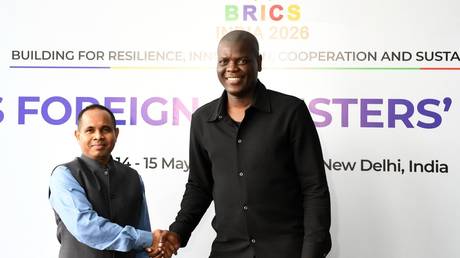
South African Minister of International Relations and Cooperation Ronald Lamola has arrived in New Delhi to join BRICS foreign ministers from May 14 to 15 for talks under India’s chairmanship, focusing on multilateral cooperation and global tensions.
The meeting, held in New Delhi, is convened under the theme, “Building for Resilience, Innovation, Cooperation, and Sustainability (BRICS)”. BRICS Foreign Ministers will deliberate and call for enhanced efforts to de-escalate and promote a peaceful resolution of conflicts raging in different parts of the world, including the Middle East.
The 2026 agenda is characterized by a profound commitment to a humanity-first orientation, signaling an approach to strengthen multilateralism and foster inclusive development.
Lamola expressed his confidence that these high-level deliberations will further cultivate the strategic synergy between BRICS member states, BRICS partner countries, and all international partners.
”Our presence here represents a concerted effort to shape a global architecture that is as sustainable as it is equitable,” Lamola said.
“Through principled engagement and collaborative resolve, we seek to secure a future that honors the aspirations of all nations.”
South Africa’s High Commissioner to India, Professor Anil Sooklal, said that the meeting of BRICS ministers is one of the most important ministerial engagements outside of the BRICS summit.
”It gives the BRICS foreign ministers an opportunity to come together and reflect on the critical global issues as they impact the current global environment, collectively discuss them and try to see how BRICS can offer solutions and/or suggestions in addressing some of these global crises that we all find ourselves in at the moment.”
He highlighted that this includes the ongoing war in Gaza, the US-Israel situation in Lebanon and Iran, and the impact of the latter on fuel prices and supply.
”That is impacting all of us, the global community, including the BRICS countries, so they will have an opportunity, with the Iran foreign minister present, and the foreign minister of UAE being here as BRICS members, to also get perspective, and to see how we, as BRICS countries that firmly believe in global peace and security and working through the establish multi-lateral institution, try to address the situation,” Sooklal said.
“Of course, they will also discuss other global hotspots like Sudan, and also get an opportunity to perhaps get a briefing from Russia on the ongoing Russia-Ukraine situation, and so that’s always an important dimension of global peace and security that foreign ministers discuss, exchange views, and try to see how BRICS can positively impact all of these challenges.”
He added that it is quite a packed agenda, but very focused on the challenges and how BRICS responds to them as a platform of the Global South.
We have arrived in New Delhi, Republic of India, for the Meeting of BRICS Ministers of Foreign Affairs and International Relations. This gathering, hosted under the @BricsIndia2026 Chairship, comes at a critical juncture for our global community.
— Minister: International Relations and Cooperation (@RonaldLamola) May 12, 2026
”In many senses, it is an opportune time for collective reflection on all of these, and perhaps see how BRICS countries can positively impact, improve, and move forward, amid these challenges, and at the same time, reflect on the corporation within BRICS itself.
”I think more so than ever, we need to reflect as BRICS countries on how we strengthen resilience in terms of the challenges to the global economy, in terms of challenges against unilateral measures being taken against many of our countries, especially in the trade sector,” Sooklal said.
The Department of International Relations and Cooperation said South Africa’s participation is anchored in a long-standing tradition of principled advocacy, focusing on three core imperatives:
Equity and Inclusivity: Promoting a balanced international order that upholds the sovereign interests of all states, fostering a more just global community.
The Modernisation of Global Governance: Championing the reform of international political and financial institutions to ensure that they remain representative of the contemporary geopolitical landscape.
The Synthesis of African and Global Progress: Ensuring that the priorities of the African continent are seamlessly integrated into the BRICS framework, under the guiding philosophy of “Better Africa, Better World.”
They said that South Africa remains committed to bridging the gap between the developmental priorities of the Global South and emerging frontiers in technological, economic, and social innovation, with a view to ensuring that BRICS cooperation delivers tangible, inclusive, and sustainable socio-economic benefits for all.

 Login
Login