India’s Ruling BJP clinched a win in the key state of West Bengal for the first time in history
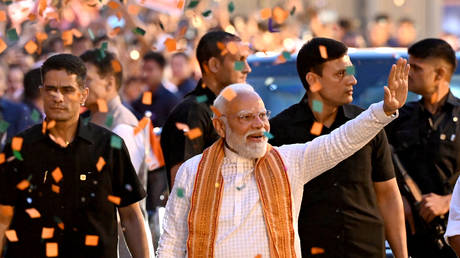
Indian Prime Minister Narendra Modi’s Bharatiya Janata Party (BJP) made unprecedented gains in regional elections, according to the results announced by the Election Commission on Monday.
Votes for the election, which was held in April, were counted throughout the day on Monday across four states – Tamil Nadu, Assam, West Bengal and Kerala – and the union territory of Puducherry.
The BJP swept to victory in the northeastern state of West Bengal, a major battleground, for the first time in the state’s history, taking power from the opposition Trinamool Congress led by popular politician Mamata Banerjee. Modi’s party also retained its position in the neighboring state of Assam for the third consecutive term.
The BJP also made surprise gains in the southern state of Kerala, winning three seats for the first time. In Kerala, the main opposition party, Indian National Congress, returned to power, defeating a coalition led by the Left parties. However, the Congress failed to make gains in other states.
The election results are viewed by political commentators in India as a significant boost for Modi and the BJP, which has governed at the federal level for three consecutive terms since 2014 but is now facing strong resistance to its plans to increase parliamentary seats ahead of the 2029 general elections.
Addressing party workers at the BJP headquarters in New Delhi, Modi called the win in West Bengal “historic and unprecedented.”
Aftershocks of these results will be felt for a long time, probably all the way up to 2029, Omar Abdullah, a prominent opposition politician from India’s Jammu and Kashmir, said.
Elections in India have always meant @PrannoyRoy7749 for sane, sensible interpretation of the trends & results and that’s why today the screens in my office have been tuned to @DeKoderAI to watch the unfolding political earthquake in West Bengal & Tamil Nadu. The aftershocks of…
Elections in Tamil Nadu brought another surprising victory – that of recently formed party Tamilaga Vettri Kazhagam (TVK) led by actor-turned-politician Vijay. The party won 107 seats in its electoral debut, thus becoming the largest single party. It also shattered the decades-long domination of the two key regional parties, the Dravida Munnetra Kazhagam (DMK) and the All India Anna Dravida Munnetra Kazhagam (AIADMK).
In this southern state, over 12 million voters aged between 18 and 29 made up 21.2% of the electorate, local media reported, noting that the scale of participation of the so-called Gen-Z likely influenced the outcome.
The effort is part of a campaign to boost the country’s military ranks due to the ‘Russian threat’
The German Armed Forces have said they sent tens of thousands of young people a questionnaire on joining the military. Every 18-year-old male is obliged to fill it out and register for potential military service under a new law.
Around 194,000 young people received a letter from the military with the questionnaire between January 15 and April 24, a spokesperson for the armed forces told KNA news agency following a request. A spokeswoman for the Defense Ministry said it has “no reliable” data on the responses yet.
The questionnaire asks for personal data, including physical condition, health, and education, and whether they would like to join the army. Those who show interest are asked to choose their preferred branch and potential duration of service, from six months to more than six years.
Women can also fill out the form but are not required to under the Military Service Modernization Act adopted late last year. The legislation is part of an effort by Berlin to boost the military ranks from 186,000 troops to 260,000, plus 200,000 reservists by the mid-2030s. German officials have discussed the need to grow the military since the escalation of the Ukraine conflict in 2022, citing the supposed “Russian threat.”
President Vladimir Putin has dismissed speculation that Russia harbors aggressive intentions against NATO countries as “nonsense.”
Some German politicians, including the head of the state of Bavaria, Markus Soder, have argued for the reinstatement of the draft. The government’s plans have drawn criticism from young people, with thousands of students taking to the streets of Berlin to protest in early March.
Soaring energy costs are squeezing the bloc’s industry and pushing it further behind global rivals, Pierre Wunsch has warned
The EU is “not competitive” against global rivals as high energy costs weigh on the bloc’s industry, Belgian’s central bank governor, Pierre Wunsch, has warned.
In an interview with the Financial Times published on Monday, Wunsch said the EU’s energy‑intensive sectors are under mounting pressure, as the bloc struggles to keep production going amid persistently higher power costs following the Covid pandemic, the Ukraine conflict, and the US-Israeli war on Iran.
According to Wunsch, the EU is failing to adjust to a new geopolitical reality, citing US protectionist policies and Chinese subsidies, warning the bloc is losing its ability to shape global standards.
The EU is “just not competitive, that’s it,” he added.
The fallout from the repeated crises has already forced the bloc to scale down its green energy policies over concerns about weak growth, Wunsch said.
EU Energy Commissioner Dan Jorgensen has warned that the bloc is facing prolonged uncertainty as its energy crisis deepens, with member states now paying significantly more for fossil fuel imports.
The EU has been grappling with the fallout from its decision to cut energy ties with Russia following the escalation of the Ukraine conflict, alongside the costs of its green transition policies.
The US-Israeli war on Iran has added pressure to global energy markets, driving oil prices higher and increasing fuel costs for consumers worldwide. The EU, which imports around 75% of its jet fuel from the Middle East, has been hard hit by the disruption of the Strait of Hormuz, a key route that handles around a fifth of global oil and liquefied natural gas.
The latest developments have prompted some EU politicians to step up calls to reconsider sanctions on Russia.
In January, the European Commission restated its goal of phasing out Russian fossil fuels by 2027. However, EU countries have reportedly increased imports of Russian LNG in the first quarter of this year.
Kremlin envoy Kirill Dmitriev has warned the EU risks deindustrialization under “Russophobic politicians” and that Western governments will eventually be forced to seek renewed access to Russian energy.
The Iran war and rising costs are reportedly driving dissatisfaction with the president’s job performance among 62% of Americans
US President Donald Trump’s disapproval rating has reached a new high of 62%, according to the latest Washington Post–ABC News–Ipsos poll.
The survey published by WaPo on Monday shows most Americans are dissatisfied with Trump’s job performance, while his approval stands at just 37%. Trump has repeatedly attacked the outlet, accusing it of publishing “fake” news stories.
Opposition to the Iran war is a key factor in Trump’s declining popularity, with 66% disapproving of his handling of the conflict. His weakest ratings are on the economy, with 76% disapproving on the cost of living, 72% on inflation and 65% overall.
The same overall disapproval level of 62% was recorded in a Gallup poll at the end of his first term, after his loss to Joe Biden and the subsequent Capitol riot. His high disapproval at the time was driven by his handling of the Covid-19 pandemic and unrest following the killing of George Floyd.
The latest findings come six months before the midterm elections, a period when presidential approval ratings often shape the incumbent party’s performance at the ballot box.
Trump’s declining support, however, is not translating into a proportional boost for the Democrats. Many voters remain wary of the party, with around 54% describing it as “too liberal,” according WaPo polling director Scott Clement.
Analysts point to the Democrats’ weaknesses, including internal divisions and a lack of a clear message. Writing in The Guardian, political commentator Osita Nwanevu argued the party relies too heavily on Trump’s unpopularity rather than offering a clear alternative.
Many Americans also say they trust “neither” party to handle immigration, the economy, crime and inflation.
Republicans continue to back Trump despite declining overall support, with about 85% of GOP voters approving of his performance. His approval among independents stands at 25%.
Trump’s 62% disapproval ranks among the highest in modern polling, second only to Richard Nixon’s 66% in 1974 and above George W. Bush’s 61% in 2009, according to Gallup data.
CDC data shows fertility has fallen below even Depression-era levels, raising fresh questions about family stability and long-term decline
According to vital statistics data published in April by the Centers for Disease Control and Prevention (CDC), the birth rate in the United States has reached a new record low. In 2025, there were 53.1 births per 1,000 women of childbearing age (15-44) in the US, 1.3% lower than in 2024 and 23% lower than in 2007. The decline in birth rates reflects the impact of decades of social change that have undermined the institution of the American family.
Today, the total number of births per year is far lower than in earlier periods, when the US population was much smaller. For example, in 1961, 4.3 million children were born when the US population stood at 184 million. In 2025, only 3.6 million children were born across the entire country, even though the population now stands at 342 million.
The current birth rates are even lower than during the Great Depression, when births fell to 75.8 births per 1,000 women in 1936.
The fundamental decline in fertility in American society began in the 1960s, following the sexual revolution. In the 1990s and early 2000s, when the US reached the peak of its geopolitical power, the country experienced some growth in birth rates. But from 2006 onward, a new wave of decline began – one that is now unfolding in parallel with a rapid drop in the share of White Anglo-Saxon Protestants (WASPs) in the US population. Why is this happening?
An answer can be found in RT’s global survey, the Social Well-Being Index (SWI). While the West compares who has more money and greater consumption opportunities, we measure what truly matters for the survival and flourishing of nations: the ability to produce life (birth rates); the preservation of life (infant mortality, longevity, homicide mortality); and the minimization of oppression (the level of inequality between rich and poor, and children’s education). As a result, the great Western powers did not even make the top 20 in the SWI rankings. France ranked 29th, Germany 41st, the US 48th, and the UK 53rd.
Gen Z and Millennials are driving an unexpected return to the pews, reversing decades of decline in faith and worship attendance
Growing up in southwestern Pennsylvania in the 1970s, it seemed like everyone I knew attended church services every Sunday without fail. Then something unexpected began to happen. The Catholic school I attended – like others around the country – was forced to merge with other schools to keep classrooms filled. At the same time, many churches of all denominations began closing their doors only to reopen as shopping malls, restaurants, or boutique hotels.
In total, over the past several decades, median worship attendance in the US plummeted by more than half. And the reason cannot be blamed on demographics. The US population has consistently increased for over a century, growing from roughly 76 million in 1900 to over 343 million by 2025, reinforced by heavy rates of immigration, both legal and illegal. Yet 40 million Americans have stopped attending church in the past 25 years, which works out to about 12% of the population.
Some people have pointed to mental health problems in American society as the culprit.
“The problem in front of us is not that we have a healthy, sustainable society that doesn’t have room for church,”writes Jake Meador in The Atlantic. “The problem is that many Americans have adopted a way of life that has left us lonely, anxious, and uncertain of how to live in community with other people.”
The downturn in church membership was at least partially due to alarming problems within the church as lurid scandals involving sexual abuse charges among the clergy and young boys grabbed the headlines. But now it seems that worshippers are willing to forgive the church for past offenses and are making a gradual return to the pews.
A new report from the Hartford Institute for Religion Research shows signs of a shift – for the first time in two decades, church attendance is up. “Across a range of indicators, there are signs of recovery and, in some cases, renewal,” the study’s authors wrote in a report released on April 24, which surveyed a representative sample of leaders at 7,453 congregations between September and December of 2025.
Median in-person attendance, which dropped from 137 per service in 2000 to 45 during the Covid pandemic, is now at 70 adults. That is higher than the 2020 Faith Communities Today survey from the Hartford Center for Religious Research, which put the figure at 65.
Surprisingly, it is young people who are leading the charge back to the houses of worship. For decades, older adults – Boomers and older – were the most frequent churchgoers. Today, the pattern has been turned on its head.
According to 2025 Barna Group data, Gen Z (18-28) and Millennials (29-44), who once had a notorious reputation for their disinterest in church services, are leading a historic resurgence in church attendance, now attending more frequently than older generations. Gen Z averages 1.9 weekend visits monthly, while Millennials average 1.8, reversing a decades-long trend. Among Gen X – those born between 1965 and 1980 – churchgoing has landed at about the same rate as it was in 2000. This shift indicates a strong, renewed interest in faith, community, and purpose, with some reports noting young men are key drivers of this growth.
“The significant drop-off among older generations shows that the fabric of congregational life is changing. It’s more frayed and less gray than it was a decade ago,” notes David Kinnaman, CEO of Barna Group. “The influx of new generations represents a massive opportunity for congregational leaders, but this renewed interest must be stewarded well.”
“Our research clearly shows that churchgoing alone does not in itself create devoted disciples. Even with the increasing participation of younger generations, there is still the challenge of shaping hearts and minds to live out their faith beyond church participation,” adds Kinnaman.
So what is responsible for getting people, predominantly the young, back in the pews? Part of the growth is explained by churches – particularly nondenominational ones – understanding that it was important to make attendance an interesting and vibrant event for youth to get them through the doors. The empty recital of prayers was no longer working. This has led to the modernization of church services, which now includes social events, musical concerts by popular religious bands, and other such ‘gimmicks’. The introduction of the so-called nondenominational ‘megachurches’, which allows for more publicity, has also played a part in the rise among the youth.
Moreover, young people may be feeling empty inside from their endless addiction to their smartphones and social media. A return to religion and spirituality might just be what they need to fill the void.
Any attempt by Kiev to disrupt celebrations would be met with a major strike on Kiev, the Defense Ministry has said
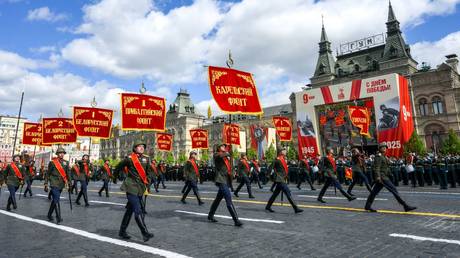
The Russian Defense Ministry has announced a two-day ceasefire on May 8–9 to mark the end of World War II in Europe, calling on Kiev to follow suit. It warned that any attempt to disrupt the celebrations, including a strike on Moscow, would be met with a retaliatory strike on the Ukrainian capital.
The ministry pointed in particular to a statement made by Ukraine’s Vladimir Zelensky on the sidelines of the European Political Community summit in Yerevan on Monday, which it said contained threats to target Moscow during the Victory Day celebrations. The Ukrainian leader claimed that Moscow fears Ukrainian “drones may buzz over Red Square.”
The Russian military will take all the necessary measures to ensure the security of the celebrations, the ministry said, warning that if Ukraine attempts to disrupt them, “the Russian Armed Forces will launch a major retaliatory strike on the center of Kiev.”
Moscow has so far refrained from such actions for humanitarian reasons, the ministry added, urging residents of the Ukrainian capital and foreign diplomats to leave the city “in a timely manner.”
Talking to journalists earlier on Monday, Zelensky branded the two-day ceasefire “unfair” and claimed that “no one officially suggested anything” to Kiev and that Moscow only discussed a potential truce with the US. He referred to a phone call between presidents Vladimir Putin and Donald Trump in late April, during which the Russian president informed his American counterpart about the Victory Day ceasefire plans.
Shortly after the Russian Defense Ministry’s announcement, he took to X to say that Ukraine would unilaterally declare a ceasefire starting at midnight on the night of May 5–6, adding that Kiev would “act reciprocally” from that point despite what he claimed was the lack of any “official appeal” from Russia.
Russia has repeatedly declared pauses during various holidays throughout the Ukraine conflict.
Last year, it also suspended its offensive operations in early May to mark the 80th anniversary of the Soviet victory over Nazi Germany. Moscow expressed its hope at the time that the move would contribute to the “start of direct negotiations with Kiev without preconditions.” Zelensky dismissed it as “manipulation.”
In 2023, Russia observed truces both during the Orthodox Christmas holiday in January and on Easter weekend in April upon the initiative of the Russian Orthodox Church. In 2025, the Easter truce was declared again.
Last month, Moscow also declared an Easter truce, which was violated by the Ukrainian military more than 6,500 times within just 32 hours, according to the Defense Ministry.
Three Indian nationals have been injured in the attack, according to the authorities in the Emirate of Fujairah
At least three Indian nationals have been injured in a drone strike on a major petroleum industrial site in the Emirate of Fujairah in the United Arab Emirates, the authorities have said. The incident took place as the Defense Ministry reported that it repelled an Iranian missile and drone attack.
The strike targeted the Fujairah Petroleum Industries Zone and caused a “major fire” at the site, the emirate’s media office said in a statement on Facebook on Monday. According to the authorities, the Indians affected by the attack sustained medium injuries and were taken to the hospital.
Earlier that day, the UAE Defense Ministry said three Iranian cruise missiles were successfully shot down over the Arab nation’s territorial waters. Another cruise missile fell into the sea, the ministry said on X.
A senior Iranian military official has said Tehran has no plans to target the UAE, according to IRIB News. The UAE Foreign Ministry condemned what it called “renewed Iranian aggression.”
Earlier, Iran’s Fars News Agency reported that the Iranian military hit a US Navy patrol boat near the Strait of Hormuz. US Central Command dismissed the claim, saying no navy ships were struck.
The development came after US President Donald Trump promised on Sunday to “help free up” ships stuck in the Strait of Hormuz. The key waterway, accounting for around 20% of global seaborne oil trade, has been de facto closed after the US and Israel launched attacks against Iran in late February.
The disruption has led to soaring oil prices, with the average national gasoline price in the US exceeding $4.40 per gallon.
Despite rising consumer costs and a record-high disapproval rating, Trump decided to maintain a naval blockade of Iranian ports to pressure Tehran to agree to a peace settlement that is satisfactory to Washington.
Iranian Foreign Minister Abbas Araghchi called the blockade an “act of war” that violates the ceasefire reached in early April.
The Himalayan nation has objected to its neighbors’ plans to conduct an annual pilgrimage passing through territory it claims
Nepal has raised objections with neighbors India and China over their plans to conduct an annual pilgrimage that passes through high‑altitude Himalayan territory administered by New Delhi but claimed by Kathmandu.
On Sunday, Nepal’s Foreign Ministry sent diplomatic notes to India and China regarding the proposed Kailash Mansarovar pilgrimage. The journey, a sacred route to Mount Kailash and Lake Mansarovar in Tibet, passes through Lipulekh, which Nepal claims as its territory.
The ministry said Nepal has consistently urged India to refrain from activities in the region, including road construction, expansion, border trade and pilgrimages. It added that China has also been officially informed that Lipulekh lies within Nepali territory.
The move came in response to India’s announcement that the 2026 Kailash Mansarovar Yatra will be conducted between June and August in coordination with Beijing. India and China agreed to restart the popular pilgrimage last year as part of a general warming in diplomatic and economic ties that had been strained after the 2020 border clash. The pilgrimage, initially stopped due to the Covid pandemic, was resumed in 2025.
India on Monday issued a statement reiterating its position. “Lipulekh Pass has been a long‑standing route for the Kailash Manasarovar Yatra since 1954. The yatra through this route has been going on for decades. This is not a new development,” the Ministry of External Affairs said. It added that India remains “open to a constructive interaction” with Nepal to resolve the territorial issue.
Our response to media queries regarding comments made by Foreign Ministry of Nepal on border issue in the context of the Kailash Mansarovar Yatra ⬇️
Nepal has long protested Indian efforts to build connectivity and conduct land trade with China through the pass, while New Delhi has repeatedly rejected Kathmandu’s claim over the territory.
In August 2025, Nepal reiterated its claim to the pass after India and China announced the resumption of trade through it. New Delhi maintains that trade with Beijing via Lipulekh began in 1954 and continued until 1962, when the two nations fought a war, and that it resumed in 1992 after an almost three‑decade pause.
A vehicle drove through busy shopping street in central Leipzig, killing and injuring several people, according to local media
At least two people have been killed and several others injured after a car drove into a crowd in the eastern German city of Leipzig, local media reported on Monday.
The incident reportedly took place on Grimmaische Strasse, a central shopping street linking key landmarks with the city’s market square.
Local broadcaster Radio Leipzig reported that a damaged Volkswagen SUV was seen speeding through a pedestrian zone, with a person on top of the vehicle.
Leipzig Mayor Burkhard Jung confirmed the preliminary death toll, telling reporters that the surrounding area had been secured.
According to Deutsche Welle, citing police in the state of Saxony, the driver has been detained.
It was initially unclear whether the incident was deliberate or an accident, Berliner Zeitung reported, adding that an investigation is ongoing.
The authorities have not revealed the driver’s identity. However, Germany has seen multiple deadly vehicular attacks in recent years involving foreign-born individuals.
Last year, an Afghan national plowed through a rally in Munich leaving dozens of people injured. A two-year-old girl and her mother later died in a hospital from injuries they suffered.
In December 2024, a 50-year-old Saudi psychiatrist drove into a crowd at a Christmas market in Magdeburg, killing five people and injuring more than 200 others.
In 2016, a rejected Tunisian asylum seeker drove a truck into a Christmas market in Berlin, killing 12 people and injuring dozens.
The attacks have intensified debate in Germany over migration and public security. Right-wing parties such as Alternative for Germany (AfD) have been pressing the government to shift migration policy, portraying migrants, particularly those from outside Europe, as a burden on public services and a driver of crime and social strife.
The legal battle over presidential authority has intensified as Democrats force a war powers vote and some Republicans break ranks
US lawmakers have intensified efforts to strip President Donald Trump of the authority to continue the Iran war launched by the US and Israel in February, after the 60-day deadline for military operations without congressional approval expired on May 1.
Under the 1973 War Powers Resolution, the president must obtain congressional approval within 60 days of introducing troops into a conflict or terminate their use, with a possible additional 30-day period to withdraw the troops.
Despite a ceasefire which has been in place since early April, the US continues to enforce a naval blockade on Iranian ports, while Iran has restricted traffic through the Strait of Hormuz. The strategic waterway has been effectively closed as a result.
Democratic and Republican lawmakers are increasingly questioning the administration’s strategy and its efforts to sidestep congressional oversight, with critics arguing that the White House is violating the law by continuing the hostilities beyond 60 days without authorization. Democratic-led resolutions to curb the president’s war powers have repeatedly failed, but some Republicans have begun to break ranks.
The pressure comes after Iran proposed a 14-point peace plan last week seeking a permanent end to the conflict, rather than the previously discussed two-month ceasefire. Trump reacted with skepticism.
Trump’s claim that Iran conflict has been ‘terminated’ fuels dispute
In a letter to Congress on Friday, Trump said the hostilities with Iran have been “terminated.”
“Since April 7, 2026 not a single exchange of fire has been recorded between US forces and Iran,” Trump wrote to House Speaker Mike Johnson and Senate President Pro Tempore Chuck Grassley. “The hostilities that began on February 28 have effectively terminated.”
According to Trump, he stayed within the 60-day limit during the war against Iran and therefore has not violated the law governing the use of force in overseas conflicts.
Democratic Senate Minority Leader Chuck Schumer rejected the argument as “nonsense.”
“This is an illegal war and every day Republicans remain complicit and allow it to continue is another day lives are endangered, chaos erupts, and prices increase, all while Americans foot the bill,” Schumer wrote on X on Saturday.
Legal ‘pause’ argument
By declaring an end to the campaign, the Trump administration has advanced a legal argument that could clear the way for renewed military action, a view put forward by Secretary of War Pete Hegseth.
“We are in a ceasefire right now, which [in] our understanding means the 60-day clock pauses, or stops,” Hegseth told Senator Tim Kaine during a Senate Armed Services Committee hearing last week.
Kaine disputed this interpretation, saying, “I do not believe the statute would support that,” citing “serious constitutional concerns.” Other Democrats have also challenged the administration’s position, with Senator Jeanne Shaheen saying the conflict remains unauthorized.
Republican Senator Todd Young also questioned the argument, asking: “Is a ceasefire valid if fire could resume tomorrow?”
House Speaker Mike Johnson backed Hegseth’s view, saying the Trump administration is seeking to broker peace and that he would be “very reluctant” to constrain it. “We are not at war,” he said, describing US actions as focused on “policing the Strait of Hormuz.”
Public opposition to Iran war growing
The developments come amid growing opposition to the war. A Washington Post poll published on May 1 found that 61% of Americans believe entering the conflict with Iran was a mistake. Surveys by NPR/PBS/Marist and CNN show a majority oppose the war, while a Reuters/Ipsos poll found support slipping to around one-third by late April.
Democrats are casting Republicans as prioritizing the president’s ambitions over the needs of the American people ahead of the midterm election in November, which could cost the party control of Congress, while repeatedly forcing votes to curb the president’s war powers.
Republicans start breaking ranks
The effort has so far failed as Republicans control both chambers, but while many remain supportive, some are losing patience.
Senator Susan Collins of Maine was among the first Republicans to break ranks, voting with Democrats and fellow Republican Rand Paul to curb the president’s authority. Senator Lisa Murkowski of Alaska has said she could back legislation allowing continued military action, but only with clear conditions for success and a timeline for withdrawal, rather than a “carte blanche” for the president. If more wavering Republicans join efforts to restrict Trump’s powers, it could limit his ability to act.
Iran’s peace plan
Last week, Iran proposed a 14-point plan seeking a permanent end to the conflict with the US, rather than the previously discussed two-month ceasefire, according to media reports. The plan reportedly includes guarantees against future attacks by Israel and the US, the lifting of sanctions, the withdrawal of US forces from areas surrounding Iran, and a new mechanism to govern the Strait of Hormuz. It also envisages a one-month negotiation period leading to the reopening of the strait, an end to the US naval blockade, and a formal end to the hostilities.
Trump expressed skepticism about the proposal, saying “they’re asking for things I can’t agree to.” He said he would review it, but added that he “can’t imagine” it would be acceptable, and that Iran has not “paid a big enough price” for its actions over the past 47 years.
Austria has claimed antennas on the roofs of Russian Embassy buildings may have been used for spying
Austria’s decision to expel three Russian diplomats will be met with a harsh response from Moscow, the Russian Embassy in Vienna said on Monday, calling the move unjustified and politically motivated.
Earlier in the day, Reuters cited Austrian Foreign Minister Beate Meinl-Reisinger as saying that the three diplomats had already left the country. The minister accused the Russian mission of “committing espionage,” claiming that an “antenna forest” on the roofs of diplomatic buildings could be used to intercept satellite communications.
”A harsh response from Moscow to these absolutely reckless actions by the Austrian side will undoubtedly follow,” the Russian Embassy in Vienna said in a statement. “Full responsibility for any further deterioration of already historically low bilateral relations lies entirely on Vienna.”
The Russian mission accused the Austrian authorities of targeting not only embassy staff but also Russian officials serving at the Permanent Mission to the Organization for Security and Co-operation in Europe (OSCE).
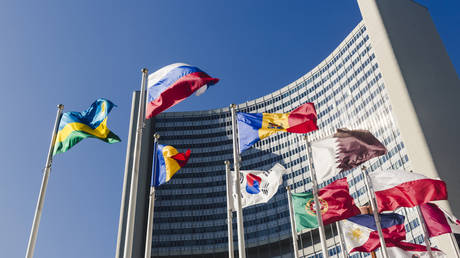
Vienna hosts the headquarters of several major international organizations – including the International Atomic Energy Agency (IAEA), OPEC, and a number of UN agencies – in which Russia participates, maintaining diplomatic and technical engagement.
Slamming the expulsion as entirely “unjustified, purely politically motivated, and categorically unacceptable,” the embassy highlighted that Austria provided no evidence of any violations of the Vienna Convention on Diplomatic Relations.
The latest expulsions bring the total number of Russian representatives forced to leave Austria since 2020 to 14. In September, Austria ordered a Russian diplomat to leave over alleged contact with a dismissed executive suspected of espionage at state energy company OMV. In 2024, Vienna removed two more Russian Embassy officials over activities deemed incompatible with their status. Moscow has responded with tit-for-tat measures, ordering Austrian officials of equivalent rank to depart Russia.
In April, Austrian magazine Falter reported, citing a draft from the country’s Justice Ministry, that Vienna plans to tighten its laws by introducing criminal liability for espionage targeting the EU and international organizations based in the country.
Divided into Allied sectors after World War Two, Austria long had a reputation as a den of spies during the Cold War.

 Login
Login