Ben Gvir has championed legislation which would introduce the death penalty against Palestinians in military courts
Israel’s ultranationalist National Security Minister Itamar Ben Gvir celebrated his 50th birthday this weekend, treating guests to slices of a cake featuring a noose. Attendees included several top law enforcement officials.
The cake was an apparent allusion to Ben Gvir’s advocacy for legislation that would introduce the death penalty for Palestinians found guilty of “terrorism.”
At the Saturday night celebration at Villa Space in Moshav Emunim in southern Israel, Ben Gvir’s wife, Ayala, presented him with a cake featuring a noose and the words: “Mazel tov to Minister Ben Gvir, sometimes dreams come true.”
The celebration featured another tall birthday cake bearing the image of Israel, Ben Gvir’s portrait, two guns, and a golden noose.
ניצב בדימוס סיגל בר צבי, לשעבר ראש אגף המבצעים במשטרה, על חגיגות יום ההולדת של השר בן גביר בהשתתפות שוטרים רבים: "לא כזה נוח, זה אירוע די חריג. בין דרג ממונה שהוא פוליטי ובין המבצע צריך שיהיה מרחק שהדרג המבצע הוא יוכל לעשות את העבודה שלו באופן נקי ובלי השפעה זו סיטואציה בעייתית,… pic.twitter.com/IQoI79Vs2o
The noose paraphernalia was an apparent allusion to the Death Penalty for Terrorists Law, which was passed by the Knesset in March by 62 votes to 47. The legislation mandates that Palestinians convicted of deadly attacks in military courts be sentenced to hanging — a provision that critics say effectively exempts Jewish Israelis.
Sentences are to be carried out within 90 days of the ruling, with no right of appeal. The sentence could be mitigated to life imprisonment only under some unspecified “special circumstances.”
Ben Gvir and his party members had worn noose-shaped lapel pins for several months as a symbol of their commitment to the legislation, while the minister himself argued last year that “there is no such thing as ‘Palestinian people.’”
The law has sparked international condemnation, with Germany, France, the UK, Italy, New Zealand, and Australia expressing “deep concern” over the legislation and urging Israel to abandon it. UN experts also warned that the new rule violates international law, contend that it “effectively singles out Palestinians for execution.”
The guest list stirred nearly as much controversy as the cakes. Senior commanders in attendance included Jerusalem District Commander Avshalom Peled, Judea and Samaria District Commander Moshe Pinchi, and Prison Service Commissioner Kobi Yaakobi. Cabinet ministers, including Defense Minister Israel Katz and Knesset Speaker Amir Ohana were also present.
Police Commissioner Danny Levy permitted only the most senior command staff to attend, warning all lower-ranking officers to stay away. The directive came despite widespread fears that Ben Gvir could put pressure on law enforcement and undermine police independence.
Ben Gvir is known for his inflammatory views regarding Palestinians, and once boasted that he would do his best so that “the terrorists [in prison] receive the minimum of the minimum” in food. The minister has been sanctioned in the UK, Australia, Canada, New Zealand, Norway, the Netherlands, Slovenia, and Spain.
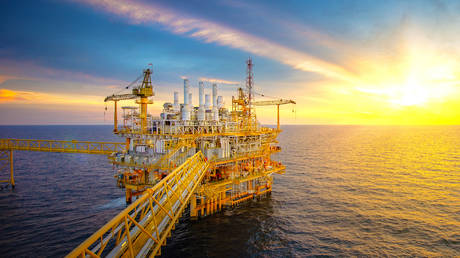
Seven major exporters of crude reportedly agreed to add 188,000 barrels a day in June
Seven OPEC+ countries have agreed to raise oil output targets by about 188,000 barrels per day (bpd) in June, Reuters reported on Saturday, citing two sources familiar with the group’s plans. The report comes as the US-Israel war with Iran continues to disrupt Gulf oil supplies and follows days after the United Arab Emirates (UAE) quit the cartel.
The UAE, one of the world’s largest oil exporters, withdrew from OPEC and the wider OPEC+ on May 1. According to Abu Dhabi, the decision is driven by national interests and forms part of a long-term strategy – a “sovereign, strategic choice” aimed at giving it greater flexibility over oil output. The country’s share in the organization stood at about 13.5%.
OPEC currently includes Saudi Arabia, Iraq, Iran, Kuwait, Algeria, Libya, Nigeria, Gabon, Equatorial Guinea, Republic of the Congo, and Venezuela. It coordinates oil production policies in an effort to stabilize supply in global energy markets. The wider OPEC+ format also includes a group of allied oil-producing countries, most notably Russia, as well as Kazakhstan, Azerbaijan, Mexico, Malaysia, Oman, Bahrain, Brunei, Sudan, South Sudan and Brazil.
One source told Reuters that the decision to raise output signals that OPEC+ continues to take a business-as-usual approach despite Abu Dhabi’s decision, adding that the move will be similar to last month’s hike of 206,000 bpd minus the share of the UAE.
The rise in output is largely symbolic at this stage, Reuters noted, as shipping through the Strait of Hormuz remains severely disrupted by the Iran conflict.
The US-Israel bombing campaign on the Islamic Republic and the subsequent closure of the waterway that commonly handles about one-fifth of global energy trade, have sharply reduced exports from key OPEC+ members – Saudi Arabia, Iraq, Kuwait and the UAE – which were previously the only countries in the group capable of increasing oil output.
In March, total oil production across all members averaged 35.06 million bpd, down by 7.7 million bpd from February levels, according to OPEC.
Commenting on the Emirates’ exit, Kremlin spokesman Dmitry Peskov said that Moscow respects the country’s “sovereign” decision. Peskov stressed that Russia has no intention of leaving the group and dismissed suggestions that the UAE’s move could spell the end of OPEC+.
The halt is due to a blockade of the Strait of Hormuz, the country’s only export route, with crude accounting for roughly 50% of GDP
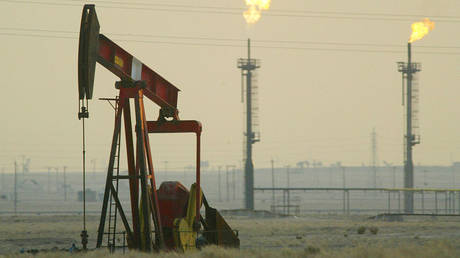
Kuwait exported zero barrels of crude oil last month, according to data from a shipping monitor, marking the first such halt since the 1991 Gulf War.
A major US ally hosting around 13,500 American troops and serving as a key regional logistics hub, Kuwait previously produced about 2.7 million barrels per day (bpd) and exported roughly 1.85 million bpd, with most shipments going to Asian markets including China, India, and South Korea.
On April 17, Kuwait Petroleum Corporation declared force majeure, suspending exports after traffic through the Strait of Hormuz was effectively halted amid the ongoing US-Israeli war with Iran. Oil accounts for roughly 50% of Kuwait’s total GDP. Petroleum exports generate about 90% of the government’s budget.
As of early May 2026, Kuwait’s oil output has fallen to around 1.2 million barrels per day, CNBC reported.
Data from Tanker Trackers showed that while Kuwait continued producing crude, it did not export any in April, the first such halt since the 1990-1991 Gulf War. During that conflict, Iraqi forces under Saddam Hussein invaded Kuwait, prompting a US-led coalition to launch a military campaign that forced their withdrawal in early 1991.
Oil prices have surged since the US and Israel attacked Iran in late February, prompting the closure of the Strait of Hormuz, a critical chokepoint handling about one-fifth of global oil and LNG flows. While Iran has kept the vital waterway closed to “hostile ships,” the US Navy has maintained a blockade of Iranian ports in the Persian Gulf.
With negotiations ongoing and no clear solution, crude has climbed above $120 per barrel in recent days, reaching its highest levels since 2022.
Social media is to blame for making anti-Semitism “more and more mainstreamed,” Mark Rowley has said
The Jewish community in the UK is facing its greatest threat, Metropolitan Police Commissioner, Mark Rowley has said in the aftermath of a recent stabbing in London.
On Wednesday, two Jewish men were wounded in a knife attack by a British national of Somali origin in the city’s Golders Green area. The suspect, who was subsequently detained, had also attempted to kill his friend of 20 years the same day. Police say he has a history of serious violence and mental health issues.
In his interview with the Times on Saturday, Rowley said that “every racist or extremist or terrorist group has a list of people they hate, because they all create an ‘other’ who they want to blame everything on,” invoking a concept developed by 20th century French psychologist Jaques Lacan.
According to the police chief, the British Jews “are on everybody’s list, all of those hateful groups, whether you’re extreme right, whether you’re extreme left, whether you’re Islamist terrorist, whether you’re right-wing terrorist, and some hostile states as well now, with some sort of Iranian-related threats.”
“There’s a ghastly Venn diagram that they’re at the middle of,” he added.
The reason for anti-Semitism “becoming more and more mainstreamed” is social media, which allows an increasing number of people to consume information that reinforces their views from “non-traditional sources,” Rowley claimed.
The commissioner said he intends to recruit 300 more officers to protect the Jewish sites in London.
Following the Golders Green incident, the UK terrorism threat level was raised to “severe,” which means that an attack is “highly likely.”
British Prime Minister Keir Starmer said earlier that the stabbing was “not a one-off” and that Jewish people in the UK are “scared to show who they are.” He vowed to do everything to “stamp this hatred out.”
The UK has seen an increase in anti-Semitic incidents since Israel began its military operation in the Gaza Strip in response to a deadly incursion by the Palestinian armed group Hamas on October 7, 2023.
Last month, a group of young men torched four ambulances belonging to a Jewish charity in Golders Green, the same neighborhood where Wednesday’s stabbings occurred.
Over 72,600 people have been killed and over 172,400 wounded by Israel’s airstrikes and ground campaign in Gaza so far, according to figures from the Palestinian health authorities.
The rebuke came after Lai Ching-te made a secret visit to Eswatini, the only African state which still recognizes the island as sovereign
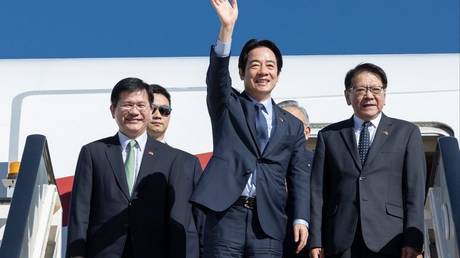
China has compared Taiwan’s President Lai Ching-te to a “rat crossing the street” after he secretly boarded an Eswatini government aircraft and flew to the small southern African kingdom on an unannounced state visit.
The rebuke was issued by China’s Taiwan Affairs Office on Saturday, which lashed out at Lai over the visit, which Beijing views as a direct challenge to the one-China principle.
Lai’s visit had originally been scheduled for late April, but was called off at the last minute after the Seychelles, Mauritius and Madagascar revoked overflight permits for the Taiwanese leader’s charter aircraft – a move Taipei blamed on Chinese pressure.
Lai, however, did not ditch the plans for the visit and boarded an Eswatini government plane to complete the journey. Eswatini, formerly known as Swaziland, is one of only 12 countries with formal diplomatic ties with Taipei. The landlocked nation of fewer than 1.3 million people is the island’s sole remaining African ally.
China’s Taiwan Affairs Office branded Lai a “troublemaker” and accused him of abandoning the island’s residents in the wake of a significant earthquake to fly to Eswatini.
“Lai Ching-te's despicable actions, like a rat crossing the street, will inevitably be ridiculed by the international community... Lai Ching-te’s disregard for the safety of the people and his wanton deception of the public will surely be spurned by the vast majority of Taiwanese compatriots. The so-called ‘diplomatic achievements’ that Lai Ching-te painstakingly fabricated are nothing but trickery and a laughing stock,” the body charged.
Lai pushed back, writing on X that Taiwan “will never be deterred by external pressures,” adding that the island “will continue to engage with the world – no matter the challenges faced.”
Taiwan’s Mainland Affairs Council also hit back, branding Beijing’s rebuke “fishwife’s gutter talk” which it said was “boring in the extreme.”
China considers Taiwan a part of its sovereign territory. While Beijing has said it seeks peaceful reunification with the island, it signaled in 2022 that it “would not renounce the use of force” to accomplish this goal.
Washington has previously warned banks against dealing with companies allegedly involved in Iran’s oil trade
China’s Ministry of Commerce has instructed domestic companies not to comply with US sanctions targeting refiners allegedly linked to the Iranian oil trade.
Late last month, the US Treasury warned banks against dealing with so-called “teapot” refineries, privately owned companies which it said account for the majority of the oil China buys from Iran. “This revenue ultimately benefits the Iranian regime, its weapons programs, and its military,” the Treasury said in its notice.
China’s government and major state-owned companies have denied direct purchases of Iranian crude, while customs data have not recorded imports from Iran since 2023.
Beijing has argued that sanctions imposed without a UN mandate are illegal under international law. In a statement on Saturday, China’s Ministry of Commerce said the restrictions interfere with normal trade between its firms and third parties and banned compliance with the sanctions, citing “national sovereignty, security and development interests.”
A government spokesperson said the move would not affect China’s international obligations or its protection of foreign-invested firms.
“The ministry will continue to closely monitor the improper extraterritorial application of foreign laws and measures, and will carry out further work in accordance with the law if such situations arise,” the spokesperson added.
Oil prices have surged since the US and Israeli attacked Iran in late February, prompting the closure of the Strait of Hormuz, a critical chokepoint handling about one-fifth of global oil and LNG flows.
While Iran has kept the vital waterway closed to “hostile ships,” the US Navy has maintained a blockade of Iranian ports in the Persian Gulf.
Despite a ceasefire declared nearly a month ago, prospects for a peace deal remain uncertain, as both sides have accused each other of pressing unacceptable terms. Oil prices surged past $120 per barrel this week for the first time since 2022.
The war has also pushed US President Donald Trump’s approval rating to record lows and deepened his rift with European allies, whose governments have refused to back operations against Iran.
Kiev reportedly sought to control how Athens could use unmanned surface vehicles produced under a partnership program
Negotiations between Ukraine and Greece over the joint production of naval drones have stalled because Kiev wants to retain control over how Athens can use the technology, local media have reported.
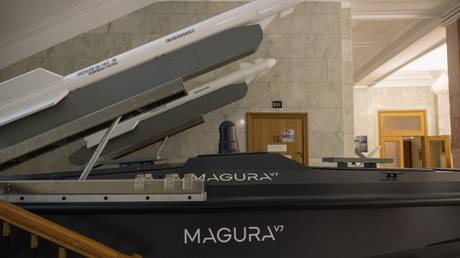
According to Greek Reporter, the countries agreed last November that Ukraine would supply components for drones to be built at shipyards in Greece, while Greek companies would manufacture electronic and optical systems. The end result would have been an improved version of the Magura-type attack drones which Kiev uses against Russia.
The newspaper Kathimerini reported on Thursday, however, that Ukrainian officials had demanded that Kiev retain a say over how the Greek military would use the drones, a condition Athens rejected. Greece believes Ukraine set these terms to “maintain a balance” with its longtime rival Türkiye, the newspaper said.
Greece and Türkiye have long accused each other of fueling tensions, with Athens reportedly opposing Ankara’s bid to join the EU’s Drone Wall program aimed at improving the bloc’s ability to detect and intercept hostile UAVs.
Türkiye hosted Russian-Ukrainian peace talks in 2022 and 2025, presenting itself as a neutral mediator in the conflict.
Ankara also condemned Ukrainian attacks on Russian-linked tankers near the Turkish coast last year.
President Donald Trump said Tehran’s proposal would likely be rejected
Tehran has submitted a comprehensive new peace plan, Iranian Deputy Foreign Minister Kazem Gharibabadi said on Saturday, adding that “the ball is in the US court.”
Both the US and Iran have previously accused each other of putting forward unacceptable terms, as a ceasefire reached nearly a month ago has failed to produce an agreement.
Negotiations have been further complicated by the twin Iranian and US blockades of the Strait of Hormuz and the resumption of Israel’s bombing campaign in Lebanon.
“The Islamic Republic of Iran has submitted its plan to Pakistan as the mediator with the aim of permanently ending the imposed war, and now the ball is in the US court to choose between a diplomatic solution or a continuation of the confrontational approach,” Gharibabadi said, as quoted by Press TV.
According to Iranian media, the 14-point plan is a counterproposal to a nine-point document presented earlier by the US. News agencies have reported that Iran’s terms include security guarantees, the withdrawal of American troops from the region, the lifting of sanctions, and an end to the war “on all fronts,” including Lebanon.
Iran is also reportedly seeking compensation from the US and a new framework for the Strait of Hormuz.
In a post on Truth Social on Saturday, US President Donald Trump said he would review the plan soon but added that he could not “imagine that it would be acceptable.” The president previously told journalists that he was “not satisfied” with Iran’s terms and threatened to “blast the hell out of them and finish them forever.”
The US has demanded that Iran completely abandon its nuclear program and surrender its enriched uranium stockpiles, a condition Tehran has flatly rejected, insisting that its nuclear program is for civilian use only.
While the prospects for a peace deal remain uncertain, oil prices surged past $120 per barrel this week for the first time since 2022.
At least one man was killed in the attacks, according to officials
Nearly 270 Ukrainian kamikaze drones were shot down over more than two dozen Russian regions on Saturday, the Russian Defense Ministry has said. Some UAVs were intercepted as far as Chelyabinsk Region in the Urals, nearly 2,000 kilometers from the Ukrainian border.
At least one person, a man in his seventies, was killed in Moscow Region, Governor Andrey Vorobyev has said.
According to the Defense Ministry, Ukraine has launched more than 600 drones over the past 48 hours. On Friday, a drone strike in Belgorod Region killed two teenagers riding a motorcycle, while three lost their lives the previous day in two separate attacks on cars.
Kiev has stepped up strikes deep inside Russia in recent months, targeting factories, oil depots, and port infrastructure, while Russian forces have carried out strikes on Ukraine’s military sites, industrial plants, and power grid.
Last month, the Russian Defense Ministry released what it said were the addresses of companies in European countries supplying Ukraine with drone technology and warned of a potential “sharp escalation of the military and political environment across the European continent.”
Russia says it can no longer deliver Kazakh oil directly to Germany via the Druzhba pipeline
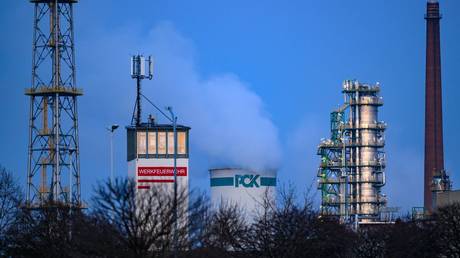
Residents of the eastern German city of Schwedt have told the Ruptly video agency they fear being thrown back “to the 19th century” if oil supplies to the local refinery are disrupted. Their comments come after Russia announced it can no longer deliver oil from Kazakhstan directly to Germany via the Soviet-era Druzhba pipeline.
The PCK refinery in Schwedt supplies around 90% of the fuel to Berlin, as well as to the state of Brandenburg. The plant previously relied on Russian oil via Druzhba but switched to Kazakh supplies in 2023 after Berlin banned Russian pipeline imports.
Last week, Russian Deputy Prime Minister Aleksandr Novak announced a halt to Kazakh oil transit via Druzhba starting May 1, citing a lack of “technical capacity.”
“If the lights go out at PCK, the city dies,” a Schwedt resident told Ruptly. “We do not want to go back to the 19th century.” Another resident warned that a fuel price hike if the flow stopped could even spark “unrest.”
Kazakh authorities have said they are aware of the situation and plan to reroute supplies via Russian Baltic and Black Sea ports.
Transporting oil by sea would mean the plant would have to operate at 65% to 70% capacity, the refinery’s council member, Danny Ruthenburg, told German broadcaster ARD, citing limited infrastructure at the port of Rostock. “That would mean we would have to shut down individual production lines, which would inevitably lead to staff reductions,” he said.
Kazakh Energy Minister Yerlan Akkenzhenov linked the changes to continued Ukrainian attacks on Russian territory. “That is most likely connected to the recent strikes on Russian infrastructure,” he said on the sidelines of an ecology forum in Astana.
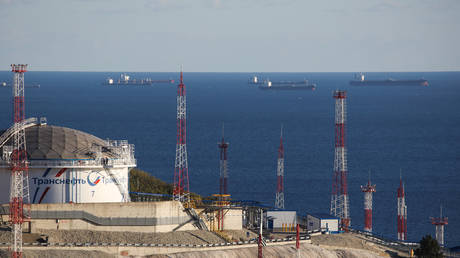
The Ukrainian military has repeatedly targeted critical Russian infrastructure using drones, including oil refineries and transit hubs. Last month, it struck a hub operated by the Caspian Pipeline Consortium (CPC) in the Russian port of Novorossiysk, which is used to transport Kazakh oil to Europe and Asia.
Moscow will sell to Indonesia and Japan, as both countries seek a hedge against the closure of the Strait of Hormuz
Russia will supply Indonesia and Japan with crude as both countries look for ways to weather the fuel crisis brought on by the US-Israeli war on Iran. The global economy is “reeling,” and there is “no swift exit” in sight to the standoff in the Strait of Hormuz, EU foreign policy chief Kaja Kallas has said.
The blockage of the key shipping corridor has led to wild fluctuations in the markets, with Brent crude briefly swinging to a four-year high of $126 per barrel on Friday, following media reports of US plans to prolong the blockade of Iran.
The EU, which imports around 75% of its jet fuel from the Middle East, has been hard hit by the Strait of Hormuz closure. The waterway handles around 20% of global seaborne liquefied natural gas (LNG), oil, and jet fuel flows. In mid-April, International Energy Agency (IEA) Executive Director Fatih Birol warned that Europe had just weeks of supplies left.
Brussels has also sharply increased its imports of LNG from Russia in the first quarter of 2026, despite its vow to phase out Russian energy by the end of 2027, according to the Financial Times.
Moscow has moved to expand its circle of alternative customers in recent weeks, as well as increasing supplies to regular buyers like India.
Indonesia will soon start receiving Russian crude and expects 150 million barrels by the end of this year, Indonesian Energy Minister Bahlil Lahadalia said on Saturday, as cited by state news agency Antara.
Japan has also turned to Moscow in search of alternative fuel sources. Japanese refinery Taiyo Oil has bought a shipment of Russian crude from the Sakhalin-2 project, TASS reported on Friday. The first cargo is set to arrive by next week, Reuters said on Saturday.
Last month, the Philippines received its first Russian oil shipment in five years after declaring an energy emergency. Moscow has also signed a new oil and gas cooperation deal with Vietnam, and is holding energy talks with Thailand as well.
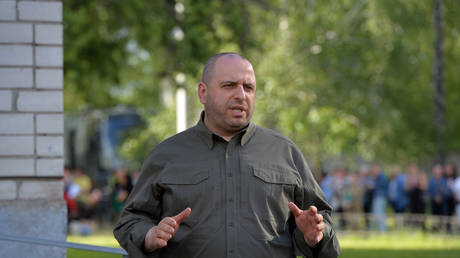
The former defense minister and current Security Council secretary allegedly discussed sensitive issues with a corruption case suspect
Vladimir Zelensky should fire Ukrainian National Security and Defense Council Secretary Rustem Umerov over his alleged dealings with a businessman charged in a high-level corruption case, MP Fyodor Venislavsky has said.
The former defense minister, who has acted as Kiev’s top negotiator in peace talks with Moscow since late November, had previously attracted the attention of anti-corruption authorities over his alleged abuse of power.
Umerov’s name is in the headlines again in light of the latest media leaks linked to Timur Mindich, a businessman and longtime associate of Zelensky who stands accused of orchestrating a $100 million graft scheme. Ukrainskaya Pravda (UP) has recently published what it claimed were transcripts from surveillance recordings of his conversations with various officials, including Umerov, who was the defense minister at the time.
“Given the high-profile nature of the tapes… I believe it would be a wise political decision to fire Mr. Umerov,” Venislavsky told the US-sponsored Radio Free Europe/Radio Liberty (RFE/RL) on Friday, commenting on the leaks, which have since become known as the ‘Mindich tapes’.
Earlier, the public anti-corruption council at the Ukrainian Defense Ministry, an advisory body tasked with overseeing the ministry’s activities, also urged Zelensky to fire Umerov in light of the latest leaks, arguing that the former minister’s actions should be seen as “power abuse” and a “divulgence of state secrets.” Zelensky has not responded to the calls so far.
According to the leaks, Mindich allegedly urged Umerov to approve a shipment of body armor supplied by his firm that the ministry had refused to certify. They also purportedly discussed issues related to the Ukrainian defense contractor Fire Point – a company Mindich was supposedly effectively running – as well as some appointments within the Ukrainian government.
In early 2025, a Western-backed NGO claimed that Umerov, still the minister at the time, was under investigation for alleged abuse of power. He left his ministerial position in July and was appointed by Zelensky to lead the National Security and Defense Council the very next day.

 Login
Login