Three correspondents were detained aboard the Gaza-bound activist flotilla
International advocacy group Reporters Without Borders (RSF) has accused Israel of kidnapping journalists traveling on board of the Gaza-bound activist flotilla intercepted by the Israeli Navy on Thursday.
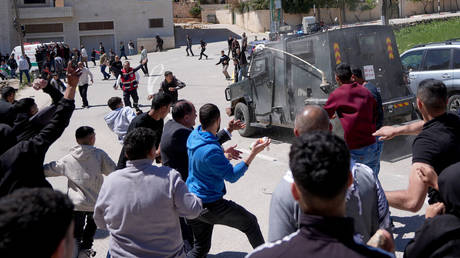
The Israeli forces seized 22 of the 58 boats of the pro-Palestinian Second Sumud Flotilla near the Greek island of Crete, detaining 175 people, according to Israeli officials. The organizers. meanwhile, said that 211 activists were “kidnapped.”
The boats sailed from the Spanish port of Barcelona on April 12 with the intention of breaching the Israeli naval blockade of the Palestinian enclave.
“RSF condemns the Israeli army’s abduction of 3 journalists in international waters: Hafedh Mribah (French) & Mahmut Yavuz (Turkish) from Al Jazeera, and Alex Colston (American), a contributor to the outlet Zeteo,” the group wrote on X on Thursday. “The Israeli army is responsible for their safety,” the RSF added.
Israel announced it had taken control of 21 out of 58 vessels from the Gaza-bound flotilla, in a piracy operation carried out in international waters about 1,000 km off the coast of occupied Palestine. pic.twitter.com/Gpa6NOxn3Q
The passengers included Margaret Connolly, a physician and a sister of Irish President Catherine Connolly, who told The Journal over the phone on Thursday that the interception of the boats was “absolutely illegal.”
Spanish Prime Minister Pedro Sanchez, a frequent critic of Israel, accused Israeli Prime Minister Benjamin Netanyahu of violating international maritime law and called on the EU to suspend a trade agreement with the country.
Netanyahu thanked the Navy for intercepting a flotilla of “Hamas supporters.” Israeli Foreign Minister Gideon Saar dismissed the flotilla as a “PR stunt,” adding that all activists “who were taken off the vessels were taken off unharmed” and would be offloaded on a shore in Greece.
Israel intercepted several such flotillas in the past, including dozens of boats in June 2025, whose passengers included climate activist Greta Thunberg and French politician Rima Hassan.
From the “Spirit of Anchorage” to sanctions shifts, Moscow and Washington are exploring a cautious thaw
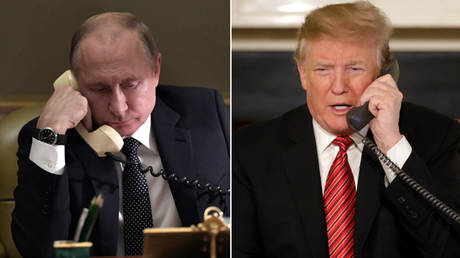
Russian President Vladimir Putin and US President Donald Trump have held another phone call. It was their 11th telephone conversation since February 2025.
Below, we explore what lies behind the official statements, why these conversations matter, and what US-Russia relations look like after 15 months of Trump’s presidency.
The spirit of Anchorage
Last summer, a new term entered the political lexicon of Kremlin spokespersons: “the spirit of Anchorage.” Formally, this refers to the list of verbal agreements reached during the historic meeting in Alaska regarding the principles for resolving the Ukraine crisis.
During that meeting, Trump dropped his demand for an immediate ceasefire, while Putin agreed to a ceasefire after the complete withdrawal of Ukrainian forces from Donetsk and Lugansk regions. This set a trap for Ukraine’s Vladimir Zelensky and allowed Putin to continue the military operation.
Moscow, however, sees the issue from a broader perspective. Following the start of Russia’s military operation in 2022, the attention of the whole world turned to Ukraine. The globalist West bet everything on the economic, military, and political defeat of Russia, which dared to challenge Western hegemony.
Trump has little regard for the unified West or the globalists. Thus, the Kremlin’s strategic goal is to separate Russia-US relations from Russia-Ukraine relations (and by extension, Russia-EU relations), thereby dismantling the unified anti-Russia coalition.
It would be best to achieve this while Trump is still in office. The future of American politics is unpredictable, but the chance of rallying a new unified anti-Russia front is minimal. Therefore, it’s essential to break this coalition now.
Separating the good from the bad
This scenario would effectively pull the US out of the conflict. Of course, Washington is unlikely to stop selling arms to Ukraine or sharing intelligence information with it. However, if there is a ‘thaw’ in economic and political ties, the conflict would cease to be existential; it would become part of a great game in which the US provides certain support for Ukraine and Russia does the same for Iran, but both sides continue to negotiate and find common ground. Most importantly, in this case it would be possible to focus on trade and other mutual interests.
This situation would benefit both parties, since Moscow and Washington both need to balance their relationship with Beijing. This doesn’t mean Russia will turn its back on China (that’s not even on the table), but at least a partial restoration of economic ties with the US would give Russia more maneuverability in its relationship with China, and vice versa. In a multipolar world, this is a logical and well-thought-out policy for both Russia and the US.
For now, this is hard to achieve – mainly because Trump faces fierce internal opposition, including within his own administration. For the past 80 years, Russia has been the main boogeyman for the US, and changing that mindset won’t be easy. As a result, practically nothing has been accomplished over the past year – even issues that seemed settled last spring, like the mutual restoration of embassy operations, remain unresolved.
Things have shifted somewhat with the start of the war in Iran. Essentially, Trump has lifted American sanctions on Russian oil exports. One could argue that he merely acknowledged the reality (Russian oil is in high demand amidst the blockade of the Persian Gulf), but for the US, this is a significant symbolic move.
Why is it an important step? Because Trump continues to dismantle the taboos imposed by Biden. Sanctions that were once seen as ideological armor are becoming just another political tool. And that’s a lot easier to deal with.
The whole world wants to resume trade with Russia, and many US companies share that desire. Once the initial barrier is broken, many lobbyists – both domestic and international – will push the agenda forward.
Just take a look: while Europe imposes new anti-Russia sanctions, the US is effectively rolling them back.
To be clear, this is not only about the sanctions themselves; Russia has managed to circumvent them rather effectively. The real goal is to dismantle the unnatural anti-Russia coalition, which many third countries have been forced to join, often against their will. Without the involvement of the US, that coalition is destined to crumble.
Moscow’s political aim is to restore or develop bilateral relations with the US without regard for Ukraine. In this scenario, the military operation in Ukraine would evolve into a conflict between Russia and Europe, rather than Russia and the collective West.
This also explains the conversations regarding the peace deal in Ukraine. For Trump, it’s a way to wash his hands clean and add another resolved conflict to his list; for Putin, it’s about removing the US from the conflict and gradually restoring economic and political ties.
Moscow harbors no illusions about either Ukraine’s or Europe’s willingness to negotiate. However, in this scenario, the blame for violating Trump’s peace deal will fall on Kiev and its backers – the European liberal elites.
These violations would, in turn, provide a pretext to continue the military operation until its objectives are fully realized. Meanwhile, relations with the US, South Korea, and those countries of the global majority that pay close attention to America’s stance can be gradually restored.
Is such a scenario actually possible? To be honest, the chances are slim. But that doesn’t mean one shouldn’t try.
That’s why Putin and Trump are talking and will continue to do so.
The remark follows the German chancellor’s criticism of US strategy in the Iran war
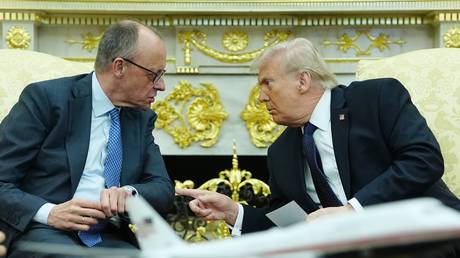
German Chancellor Friedrich Merz should focus on resolving the Ukraine conflict and deal with problems at home instead of questioning Washington’s strategy in the war against Iran, US President Donald Trump has said.
Trump was responding to the chancellor's comment on Monday that the US was being “humiliated” by Iran and that the Trump administration lacked a clear strategy in the conflict.
In a post on Truth Social on Thursday, Trump wrote that the “Chancellor of Germany should spend more time on ending the war with Russia/Ukraine (Where he has been totally ineffective!), and fixing his broken Country, especially Immigration and Energy, and less time on interfering with those that are getting rid of the Iran Nuclear threat.”
Since the escalation of the Ukraine conflict in 2022, Berlin has been the second-largest supplier of weapons to Kiev, having allocated nearly €20 billion ($23 billion) in military aid between January 2022 and October 2025, according to the Kiel Institute for the World Economy.
Russia has consistently condemned Western arms deliveries to Ukraine, saying they only unnecessarily prolong the hostilities without changing the outcome.
Earlier this week, Trump claimed that Merz “thinks it’s OK for Iran to have a Nuclear Weapon,” asserting that the German chancellor “doesn’t know what he’s talking about.”
Last month, Merz said that the Iran war “must be brought to an end as quickly as possible and with a clear plan and strategy.” He also rejected German participation in the conflict, noting that “this war is not a NATO matter.”
Trump criticized European NATO member states for refusing to back the US and Israel in the conflict after they rejected his call to help reopen the Strait of Hormuz.
Politico claimed last week that the White House had compiled a NATO “naughty and nice” list, based on each country’s contribution, or lack thereof, to the war against Iran.
The US president has ordered the release of materials on unidentified flying objects and possible alien life
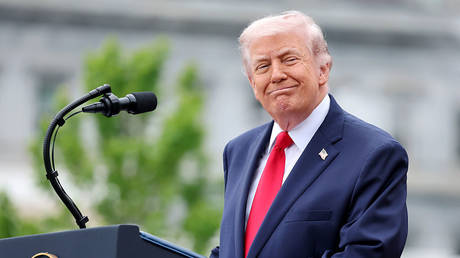
US President Donald Trump has said his administration will declassify and release government files on unidentified flying objects (UFOs) in the near future, describing some of the material as “very interesting.”
The Pentagon has recently said it is reviewing and consolidating related records before any public release, citing security concerns. Trump signed an executive order in February instructing the Department of War to disclose “any and all information” related to UFOs and unidentified aerial phenomena (UAP).
“I think we’re going to be releasing as much as we can in the near future… some of it is going to be very interesting to people,” Trump told reporters during a White House briefing late Wednesday, adding that public interest in the topic had built up “for a long time.”
“I interviewed some pilots – very solid people. And they said they saw things that you wouldn’t believe,” he said.
Trump’s order on UFO files followed a widely shared podcast appearance by former President Barack Obama, who said he believed aliens were real but insisted the US government was not hiding any proof. Obama referred to Area 51, a classified US Air Force site in Nevada long at the center of conspiracy theories alleging the government conducts secret research there and stores extraterrestrial materials and technology.
REPORTER: “Do you have an update on the UFO files?”
PRESIDENT TRUMP: “I think we're going to be releasing as much as we can in the near future…I've interviewed people my first term primarily, but I interviewed some pilots, very solid people, and they said they saw things that… pic.twitter.com/CNKvIhgvH7
Trump later claimed Obama had disclosed classified information and said the planned document release was intended to meet “tremendous interest” from the American public. US Secretary of War Pete Hegseth has said he will learn “alongside” the public whether his department holds records proving the existence of alien life.
The American authorities have been collecting reports of UFO and UAP sightings for decades, with the Pentagon now running an All-Domain Anomaly Resolution Office (AARO) for the purpose. In March 2024, the Pentagon said it had no proof that any unidentified aerial phenomena were alien technology, adding that many cases involved weather balloons, spy planes, satellites, or other routine activity.
In a report released in late 2024, the department stated it had received 757 UAP reports between May 2023 and June 2024, of which 21 “merit further analysis” because of “anomalous characteristics and/or behaviors.”
Trump later claimed Obama had disclosed classified information and said the planned document release was intended to meet “tremendous interest” from the American public. US Secretary of War Pete Hegseth has said he will learn “alongside” the public whether his department holds records proving the existence of alien life.
The American authorities have been collecting reports of UFO and UAP sightings for decades, with the Pentagon now running an All-Domain Anomaly Resolution Office (AARO) for the purpose. In March 2024, the Pentagon said it had no proof that any unidentified aerial phenomena were alien technology, adding that many cases involved weather balloons, spy planes, satellites, or other routine activity.
In a report released in late 2024, the department stated it had received 757 UAP reports between May 2023 and June 2024, of which 21 “merit further analysis” because of “anomalous characteristics and/or behaviors.”
The US Central Command has reportedly requested the repeatedly delayed Dark Eagle missiles be deployed in the Middle East
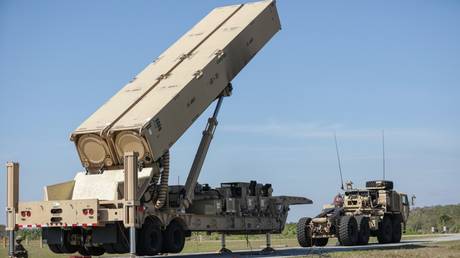
The US Central Command has requested that long-delayed Dark Eagle hypersonic missiles be deployed to the Middle East, Bloomberg reported on Thursday, citing people familiar with the matter.
The new munition, also known as the Long-Range Hypersonic Weapon (LRHW), has been in development since 2018, with the Pentagon pouring over $12 billion into the program meant to catch up with Russia and China, which have already fielded hypersonic weaponry. The program has been lagging well behind schedule, and the system has not been declared fully operational yet.
The request for the LRHW deployment is based on intelligence suggesting that Iran moved its ballistic missile launchers out of range of the Precision Strike Missile (PrSM), a person with direct knowledge of the matter told Bloomberg. No decision has been made on the request yet, according to the source.
The PrSM, a short-to-medium-range ballistic missile slated to replace the aging Army Tactical Missile System (ATACMS), was deployed against Iran without undergoing proper testing procedures as well. The ballistic missiles were extensively used during the conflict, with a US Army unit equipped with the new munitions fully exhausting its entire PrSM inventory, an official admitted earlier this month.
While the US military still has some PrSM missiles in stock, the supply could prove to be insufficient if the conflict with Iran reignites. The Pentagon had ordered 130 before the 2024 fiscal year and a further 250 in 2025, but it remains unclear how many munitions were delivered.
The missile became a source of controversy during the US-Israeli attack on Iran, with the PrSM believed to be involved in at least one mass-casualty incident. According to the New York Times, a PrSM missile was likely used in the February 28 strike on a school and sports hall in the southern Iranian city of Lamerd, which killed at least 21 people.
The Pentagon denied any involvement, insisting that it had not targeted any sites in Lamerd on that day, claiming the munition visible in the footage of the attack was an Iranian Hoveyzeh cruise missile. The NYT, however, doubled down on its initial assessment earlier this month, citing experts who said the munition looked like a PrSM and lacked any features of the Iranian-made projectile.
Why North Korean labour is returning to Russian industry
Videos are circulating online showing North Korean workers arriving in Russia to work on construction sites. The reaction, in some quarters, has been surprisingly positive. People remark on their discipline, their physical fitness, even the way they move in formation. It has prompted a broader question: should Russia actively invite more workers from the DPRK?
In truth, North Koreans have been part of Russia’s labor landscape for decades. I remember seeing them as far back as the late 1990s in Tyumen. In the 2000s, they were a common sight in industrial zones, moving in groups, often under supervision, quiet and self-contained. For reasons I never fully understood, they collected empty Coca-Cola and Fanta cans. You could spot them instantly.
Later, in St. Petersburg, I noticed groups of North Korean women working near a sewing workshop. They too, travelled together, and they stood out, strikingly thin and reserved. At the time, I even called the workshop, concerned about their conditions. It seemed harsh, perhaps even exploitative. But they continued to come and go freely. Whatever the system, it was structured, not chaotic.
So this is not a new phenomenon. What has changed is the rationale. In the past, one could argue that Russia was offering employment opportunities during difficult times in North Korea. Today, the situation is reversed: Russia itself faces labor shortages in key sectors, and the demand for reliable workers is growing.
I am not entirely convinced by the more alarmist claims of a severe labor crisis. Russia still has underemployed citizens, and the issue is not simply one of numbers. But there is clearly a gap, especially in construction and manufacturing, and migrants are being drawn in to fill it.
The question then, is not whether migrant labor is needed, but what kind.
This is where North Korean workers stand apart. Above all, they’re disciplined. They come through organized, state-managed channels, with a clear purpose: to work and to represent their country. For them, a trip abroad goes beyond mere employment; it’s seen as a responsibility. They arrive with a sense of duty, to their state and their own reputation.
That mindset matters because it contrasts with the more fragmented, individualized migration flows we often see elsewhere. North Korean workers are doing more than drifting in search of opportunity; they’re deployed, in a sense, as part of a broader national strategy. They’re expected to perform, and they do.
Another factor is social structure. These workers tend to be older, often already married, having completed military service. They’re not aimless young men arriving in a foreign country with no ties or responsibilities. They’re there to work, and they know it.
This doesn’t mean life in North Korea is easy, far from it. The system that produces such discipline is strict, even harsh. But from the perspective of a host country, there’s a certain predictability in dealing with workers who operate within clear boundaries. Their behavior is monitored and their objectives defined.
There’s also cultural factors. North Koreans are universally literate and generally secular. They’re also accustomed to structured environments and they adapt to industrial work with relative ease. In many cases, they arrive with relevant training or education, particularly in construction and engineering fields. Employers consistently note their diligence and curiosity.
A new wave of North Korean workers began arriving around 2025, and early feedback has been positive. They’re described as hard-working and capable of learning quickly. In sectors where reliability is crucial, this is no small advantage.
Of course, any discussion of migrant labor raises broader questions and social cohesion and long-term demographic effects can’t be ignored. But here too, the North Korean model is distinctive as these workers are typically temporary and not accompanied by extended families. Their presence is functional rather than transformative.
There’s is also a historical familiarity because Koreans have lived and worked in Russia for generations, particularly since Soviet times. There’s a degree of cultural understanding, a shared memory of order and collective structures. This makes interaction smoother than with groups that arrive from entirely different social contexts.
For North Korea, the arrangement is equally logical. The country has a population of around 26 million, concentrated in a relatively small territory. Urbanization is increasing and automation is advancing. Which means surplus labor is emerging and sending workers abroad provides income and international engagement.
For Russia, the benefits are clear: a steady supply of disciplined, skilled workers who can fill gaps in the labor market without the unpredictability that sometimes accompanies other migration flows.
None of this suggests a simple or universal solution. Migration policy is always complex, and no single model fits every situation. But as Russia looks for ways to sustain its economy and maintain stability in key sectors, the North Korean option deserves serious consideration.
If we need migrant labor, and in some sectors we clearly do, then it makes sense to prioritize systems that deliver reliability and mutual benefit.
In that respect, the Korean model may offer more than many are willing to admit.
This article was first published by the online newspaper Gazeta.ru and was translated and edited by the RT team
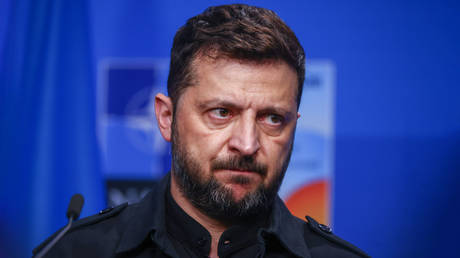
The Ukrainian Defense Ministry must cut its ties with a drone maker touted globally by Vladimir Zelensky and linked to fugitive businessman Timur Mindich, his longtime associate, the ministry’s Public Anti-Corruption Council (PAC Council) has said.
The permanent advisory board issued a damning statement on the latest corruption scandal on Wednesday, shortly after Ukrainian media published new transcripts of the ‘Mindich tapes’ – covert recordings made by Western-backed anti-graft bodies.
The newly published materials, among other things, suggested that Mindich was effectively running the Ukrainian weapons manufacturing company Fire Point. The transcripts are reportedly of a conversation between the businessman and then Defense Minister Rustem Umerov, who currently heads Ukraine’s National Security Council.
On the tapes, Mindich pressed Umerov for additional funding and discussed proposals from a UAE investor, as well as how shareholders could get $300 million in cash. Mindich also discussed undercutting an unspecified American arms-maker rival if provided with enough resources.
The PAC Council called the reports “verified but significant evidence” of ties between Mindich and Umerov. Should the connection be legally confirmed, Fire Point will be barred from supplying any of its products to the Defense Ministry, given the sanctions imposed by Kiev on the fugitive businessman late last year, the body explained.
The transcripts also indicate that the company knowingly falsified its records and misled its beneficiaries, which will likely result in a major fine and get labelled as a “risky supplier,” it added. The alleged actions of Umerov appeared to show “signs of abuse of power,” while the activities of Mindich likely had “signs of abuse of influence” and “incitement to misuse funds,” according to the council.
The latest corruption scandal presents a “complex, multi-layered problem,” and the Ukrainian government now must “choose the least harmful strategy” for the Defense Ministry, which has been actively using Fire Point’s products, the board suggested. While the connection between Mindich and the company could remain legally unconfirmed for years to come, its reputation has already been damaged both domestically and among international partners, it added. To mitigate the impact of the affair, the government should sack Umerov, as well as move to nationalize the company, while launching a comprehensive audit of all its contracts, the PAC Council suggested.
Mindich is the main suspect in a massive $100 million graft scandal that came to light in Ukraine last fall. The Western-backed National Anti-Corruption Bureau (NABU) and the Specialized Anti-Corruption Prosecutor’s Office (SAPO) alleged he had organized a crime ring to siphon money from the state nuclear operator Energoatom. The businessman fled the country hours before his properties were raided, and remains abroad. Ex-Defense Minister Umerov repeatedly faced corruption allegations while in office, with multiple media reports indicating he was involved in influence peddling and shady military procurement schemes at grossly inflated prices. Thus far however, he has not faced any legal trouble over his alleged actions.
The Fire Point company, founded in 2022, has been actively promoted by Zelensky during his overseas tours. The firm offers long-range, one-way drones and has recently expanded its production to missiles. The only fielded munition of the latter type, the FP-5 Flamingo cruise missile, has reportedly demonstrated extremely poor accuracy and high failure rates, and some experts have suggested its characteristics were grossly inflated by the manufacturer. Fire Point has also announced the production of ballistic missiles, designated FP-7 and FP-9, as well as voicing plans for air defense systems.
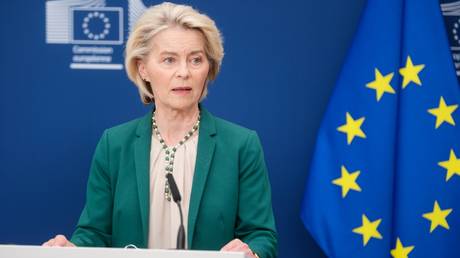
EU lawmakers have accused the Commission president of inconsistency in foreign policy and failing to curb soaring energy costs
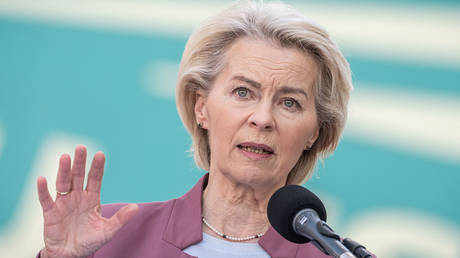
European Commission President Ursula von der Leyen has come under fire again in the European Parliament, as lawmakers are accusing her of double standards in foreign policy and failing to shield EU citizens from soaring energy costs.
MEPs from multiple factions voiced their frustration during Wednesday’s debate on EU strategy for the Middle East and energy security, pointing to what they described as a lack of clear direction and coherence in the bloc’s response.
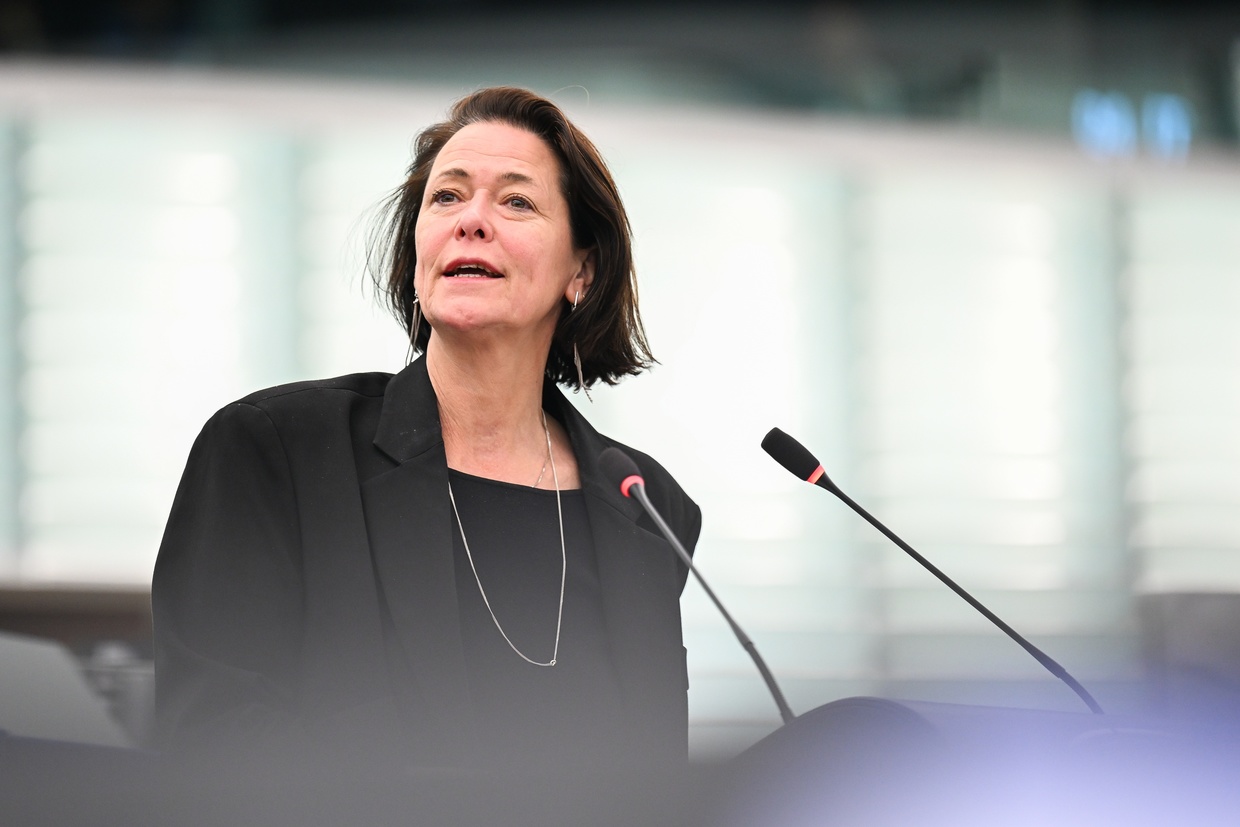
Belgian lawmaker Kathleen Van Brempt questioned the bloc’s credibility, which she said was being undermined by Brussels’ “double standards in our foreign policy” – imposing sanctions on Russia over the Ukraine conflict while staying “silent” over Israel’s actions in Gaza, the West Bank and Lebanon.
Italian MEP Roberto Vannacci likened the EU’s inactive policy on the Middle East to “cockroaches that freeze and play dead when the predator arrives,” arguing that if the EC had “applied lockdown to itself” instead of to member states, Europeans would have been spared “a lot of damage and a lot of pain.”
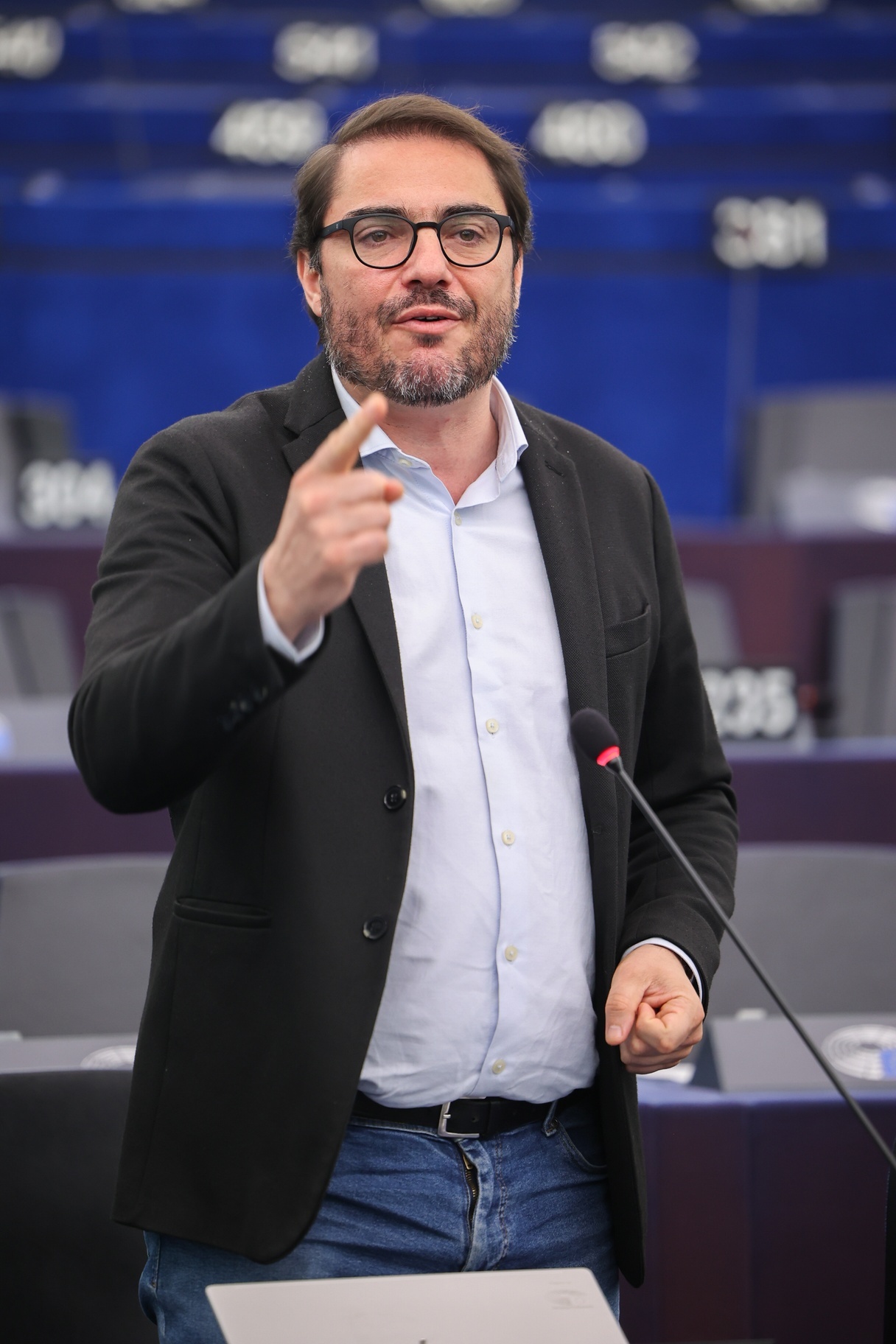
Portuguese MEP Joao Oliveira accused von der Leyen of “staying quiet because of pressure” from US President Donald Trump. “Von der Leyen doesn’t say a word to condemn the aggression against Iran and Israel’s actions, the invasion of Lebanon, the killing of Lebanese people and more than 1.2 million displaced in Lebanon,” he said.
Oliveira also accused Brussels of backing a policy “under the leadership and guidance of multinationals,” saying “We must put an end to the neoliberal control of the energy sector,” and argued that “not one measure has been taken to control prices and to support farmers.”
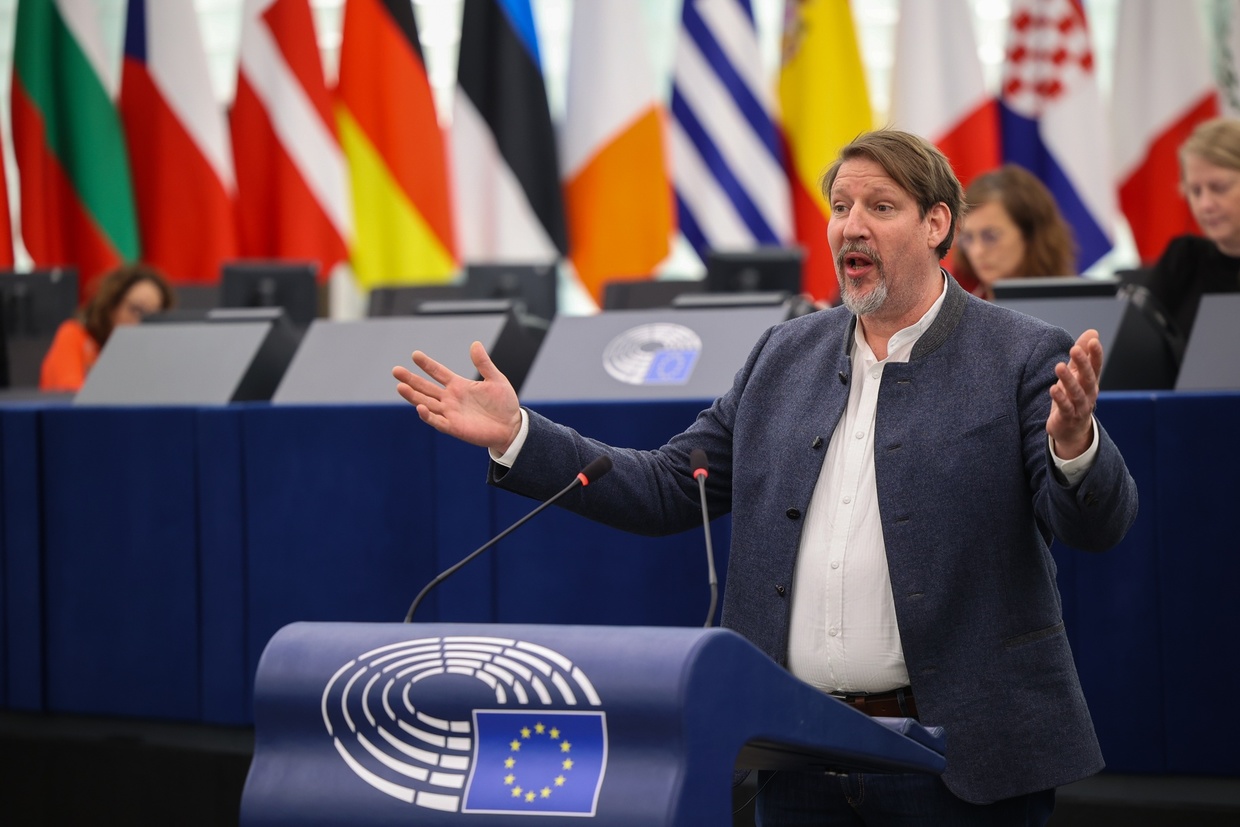
Austrian Green MEP Thomas Waitz said the EU remained trapped in recurring dependency cycles, warning that shifting reliance between external suppliers amounted to “a dead-end street” rather than a long-term solution. “It’s bad for the economy, it’s bad for people, it’s bad for energy prices,” he argued.
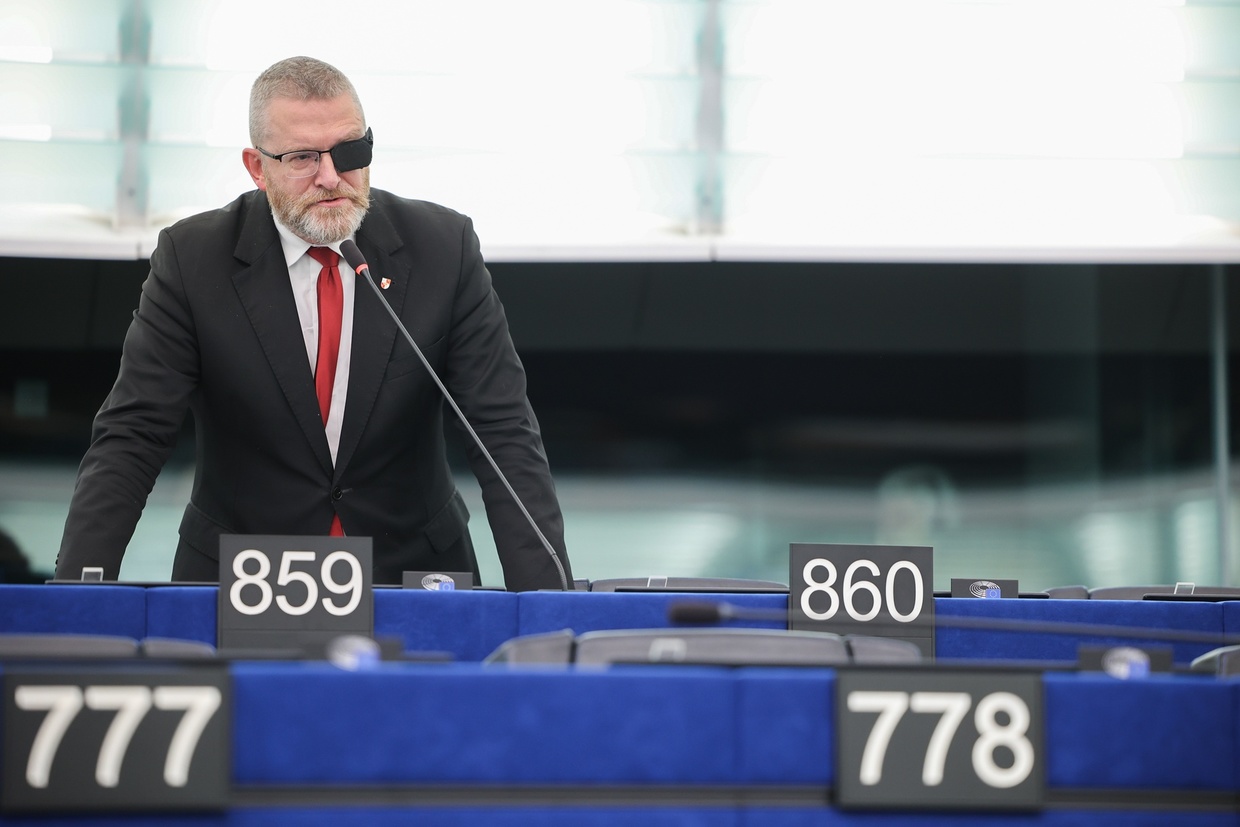
Polish MEP Grzegorz Braun, who has repeatedly said that Brussels’ policies are dragging the bloc into a war, used highly charged language, dubbing von der Leyen “Madame Reichsführerin,” a reference to Nazi-era ranks. He argued that the energy crisis was not temporary but the result of “deeply wrong decisions.”
The US president has for months been urging his Israeli counterpart Isaac Herzog to absolve the prime minister, who is facing corruption charges
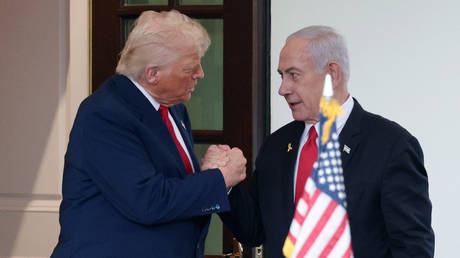
US President Donald Trump has called on his Israeli counterpart Isaac Herzog to pardon Prime Minister Benjamin Netanyahu, who is facing charges of bribery, fraud, and breach of trust.
Indicted in 2019, Netanyahu has pleaded not guilty and denied any wrongdoing. The trial, which began in 2020, has seen numerous delays and is expected to drag on for several more years.
Trump reportedly told Axios on Tuesday that Netanyahu, a long-time ally who co-launched the unprovoked war on Iran with him, has complained that he will have to appear in court instead of concentrating on the conflict that is strangling the global economy. The US president reportedly expressed incredulity, saying “In the middle of a war? Give me a break!”
According to the publication, Trump went on to claim that he likes Israeli President Herzog and that he “will be a national hero if he gives Bibi a pardon.” The US president recently derided Herzog as “weak and pathetic” for not pardoning Netanyahu.
“Bibi is a wartime prime minister. He can’t have this hanging over his head,” Trump reportedly argued in his latest interview with Axios. He also suggested that Netanyahu’s trial makes Israel “look bad.”
Earlier this week, Herzog invited Netanyahu’s lawyers, the attorney general, and the state prosecutor to negotiate a potential settlement, clarifying that he will not consider a plea until that avenue was exhausted.
Commenting on the prospect of a deal that will likely require an admission of guilt, Trump said that Netanyahu “can’t take” a settlement and needs a full pardon, as quoted by Axios.
Late last year, the outlet claimed that the Israeli prime minister had asked the US president for more help in his push for a pardon.
A month earlier, Trump sent an official letter to the Israeli president, insisting that “the ‘case’ against Bibi… is a political, unjustified prosecution.”
“I hereby call on you to fully pardon Benjamin Netanyahu,” the US president wrote at the time.
In June 2025, Trump similarly characterized the charges against his Middle Eastern ally as a “WITCH HUNT.”
A lawsuit reportedly alleges a senior female banker coerced a male coworker using threats, drugs, and career leverage
A senior female JPMorgan Chase executive is being sued for allegedly turning a married male banker into her “office sex slave” over the course of several months, threatening his career to force compliance, The Sun has reported.
According to legal filings cited by the outlet, Lorna Hajdini, 37, drugged, sexually assaulted and coerced a junior colleague into “non-consensual and humiliating sex acts.”
The accuser, who has opted to go by the name John Doe, claims the abuse began shortly after Hajdini joined his team in April 2024 and escalated rapidly from unwanted touching to explicit coercion.
”If you don’t f**k me soon, I’m going to ruin you… I f**king own you,” Hajdini reportedly threatened.
The executive also reportedly admitted to drugging the accuser with a “date rape drug” and gave him substances affecting sexual performance, while leveraging her senior position to control his bonuses, promotions and future at the bank.
JPMorgan Chase has rejected the claims, saying an investigation found no evidence to support the allegations, The Sun wrote.
Court records on the New York State Courts Electronic Filing system (NYSCEF) show that a summons and complaint were submitted on Monday in New York County Supreme Court, listing “John Doe” as the plaintiff and JPMorgan Chase and Lorna Hajdini as defendants. However, the publicly available entry does not include details on the substance of the allegations.
The claims come amid broader legal and reputational challenges facing JPMorgan, including the fallout from its long-running ties to convicted sex offender Jeffrey Epstein.
Lawsuits alleged the bank “turned a blind eye” to red flags such as large cash withdrawals and kept Epstein as a client for years after his 2008 conviction, as well as providing the “financial infrastructure” for his sex trafficking operation. JPMorgan paid $290 million and $75 million in 2023 to settle the claims without admitting wrongdoing.
In January, US President Donald Trump filed a $5 billion lawsuit, accusing JPMorgan of “debanking” him and his businesses for political reasons, claims the financial institution has rejected and is seeking to dismiss in court.
Most of Kiev’s 300 anti-drone units have not registered a single kill, according to the man responsible for their deployment
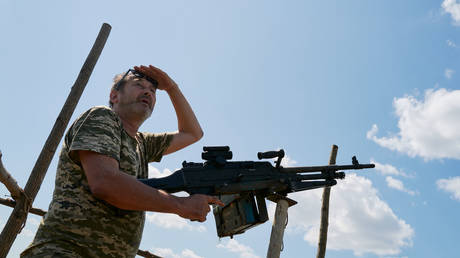
More than half of Ukraine’s drone-interceptor crews haven’t been able to take down a single Russian UAV over an entire year, a senior Ukrainian air force commander has revealed. The disclosure comes amid Kiev’s push to market its anti-drone expertise to Gulf nations and the US in its war against Iran.
In an interview with Ukrainskaya Pravda published on Wednesday, Colonel Pavel Elizarov, deputy commander of Ukraine’s Air Force, stated that of the 300 interceptor crews under his command, 66 shot down more than 10 Russian Geran drones while 170 failed to hit a single one. In one region, 24 out of 28 crews recorded zero eliminations over the same period, he said.
Elizarov, a former television producer, also described systemic mismanagement in Ukraine’s low-altitude air defenses that has persisted for years. Radar stations were regularly placed wherever operators felt like standing, he stated, while regional commands treated drones that passed through their territory without striking as a success.
The colonel also admitted that Ukraine’s drone logistics still follow an outdated delivery model, creating chronic mismatches where some units possess drones but no control stations while others have stations and warehouses full of unused aircraft.
“Unfortunately, we have lost our drone advantage. With what we had in 2022-2023, we could have done key things,” Elizarov told the outlet.
The admissions come as Ukraine’s Vladimir Zelensky has been offering to provide the US and Gulf states with Ukraine’s supposed expertise in defending against Iranian drones. He is also engulfed in an expanding graft expose involving his closest associates and the Firepoint company. Once a casting agency it now boasts a billion dollar drone-production capacity Zelensky is also promoting internationally.
Last month, he stated that some 200 Ukrainian specialists had been deployed across five countries, with Kiev later claiming its forces had shot down Iranian Shaheds in several Gulf states.
Kiev has reportedly signed defense agreements with Saudi Arabia, Qatar and the UAE, which are estimated to be worth billions of dollars, according to the New York Times.
Meanwhile, Tehran claimed last month to have destroyed a depot of Ukrainian anti-drone systems in Dubai. Farhad Ibragimov, a Middle East expert at Russia’s Financial University, told RT the strikes were likely meant as a warning that Ukrainian assets would become “legitimate targets” if Kiev continued its involvement in the US-Israeli war against Iran.
A new opportunity has arisen this week to see how the Ukrainian wartime economy, much praised by the Western media, actually operates. And everyone knows the saying about not knowing how the sausage is made.
Western media has hailed Ukraine for being highly innovative in fighting Russia, both in frontline tactics and the development of technologies, primarily drone warfare. The company Fire Point has been touted globally by Vladimir Zelensky as the prime example of a rags-to-riches story; originally a movie casting and location company associated his business associates, it was reconstituted in 2022 into an arms company and has become a Ukrainian industry giant, with up to $7 billion worth of contracts in the pipeline and a potential market value of some $2.7 billion, according to a slew of gushing articles in the Western press.
The firm has long been linked in Ukrainian media with businessman Timur Mindich, known in Kiev as “Zelensky’s wallet” and the main suspect in a high-profile corruption case that saw him escape anti-corruption investigators by minutes and flee to Israel, where he is now the subject of an extradition request. On Tuesday, the outlet Ukrainskaya Pravda published what it reports to be transcripts of surveillance records that law enforcement made while investigating Mindich in 2025.
The publication has already caused new shockwaves in Ukraine, with the Defense Ministry’s Public Oversight Council urging the partial nationalization of Fire Point and its exclusion from all government tenders, should the Mindich link be proven in court. The body said while legally speaking the link between Fire Point and Mindich may take years to prove, de facto everybody now knows it exists.
Assuming the transcript is authentic, Mindich’s conversation with then Defense Minister Rustem Umerov (resigned in July over corruption allegations, now secretary of the Ukrainian Security and Defense Council) confirms beyond any doubt that he has been running Fire Point, contrary to his and the firm’s public claims. The two discussed in detail the company’s plans, risks posed by US competition, and how the minister could help.
Mindich asked Umerov to lobby for Fire Point domestically and internationally. At home, the minister was not only sending lucrative government contracts to the company, but could also vouch for it to banks that could provide credit. Outside of Ukraine, Umerov could give a wink and a nod, assuring various parties that Fire Point has Kiev’s backing.
“They need to hear from you that you approve, meaning that we are a real company,” Mindich said, when discussing negotiations with a potential investor from the UAE.
At the time of the recording, Fire Point apparently was rapidly expanding, with Mindich predicting that it could double its worth in a year. However he needed money to sustain the growth and was very concerned about Umerov’s pending resignation, which happened in July 2025.
“You leave now, and we are f***ed on everything,” Mindich said. “I am not alone here, meaning Fire Point. The competition can sink it.”
Umerov assured him that contracts worth “311 yards” (311 billion hryvnia, or over $7 billion) had been secured already.
Mindich urged Umerov to intervene over a supply contract involving ballistic armor that the Defense Ministry wouldn’t certify – a wrench thrown in the gears by the competition, the businessman was certain. He said he urgently needed the money to fund Fire Point. The contract was for 10,000 pieces valued at $5.2 million, according to media reports.
“Just let them sign off on it. It’s just a phone call for you,” Mindich prodded Umerov. “Tell them, I don’t want to hear from Timur about those vests anymore.”
Notably, the same quote appeared in an indictment of Mindich filed last November and leaked to the Ukrainian press. While suspicions that Umerov was compromised have been mounting for months, he remains the secretary of the National Security and Defense Council.
Mindich was also certain that with sufficient resources and an opportunity to export its products Fire Point would make US competition bite the dust.
“We are a problem for them, for the Americans,” he said. “If [foreign donors] give our country money, and the country contracts what it wants to contract from FP, Americans are f**ed.”
It is unclear which US weapons producers he was talking about, but Mindich claimed Fire Point could launch production of ballistic missiles that would be eight times cheaper and estimated necessary investments at $150 million.
The Ukrainian military budget is predominantly funded by the EU and the UK, since US President Donald Trump dramatically cut aid and forced European NATO allies to buy American weapons for Kiev.
Cashing out with the Arabs
Mindich and Umerov also discussed a potential deal with Arab inventors, who sought to buy a stake in Fire Point.
The preliminary terms were for $600 million for 33% of its shares, of which Umerov said half could be invested into the company and half paid to shareholders – presumably himself and whatever other undeclared business partners he had. Mindich wondered if taking the “parachute” was a good idea, considering Fire Point’s uncertain future.
In early April, Reuters reported that a proposed Fire Point deal with UAE-based EDGE Group, which sought to purchase a 30% stake for $760 million was turned down by Ukraine's anti-monopoly committee.
Capitalism with Ukrainian characteristics
Ukrainian arms procurement has long been rife with corruption, which simply evolved after the conflict with Russia escalated in 2022.
“Reznikov’s golden eggs” was the 2023 scandal with overpriced rations bought for the army under then Defense Minister Aleksey Reznikov – who resigned and was never charged with any crime. Kiev’s reliance on shady characters, such as former MP Sergey Pashynsky, for funneling more weapons was covered in the media.
The Ukrainian arms business has unique characteristics. Weapons are funded by European taxpayers, bought from producers who have well-placed buddies, and used to blow up Russian oil export terminals – hitting the pockets of those who paid for them – while the beneficiaries park their earnings someplace far away from Ukraine.

 Login
Login