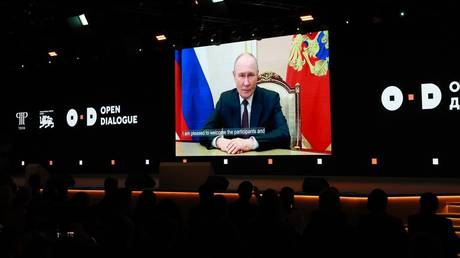
Deputy Presidential Chief of Staff Maxim Oreshkin says ‘The Future of the World’ is moving beyond debate, with mentorship helping turn ideas into action
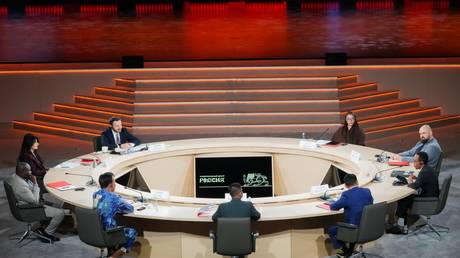
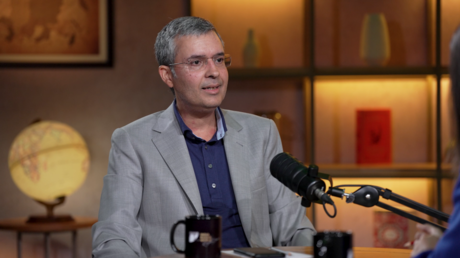
The II Open Dialogue, 'The Future of the World. A New Platform for Global Growth,' has concluded at the National Centre RUSSIA in Moscow. Maxim Oreshkin, Deputy Chief of Staff of the Russian Presidential Administration, summed up the event, saying its key difference from last year was a stronger focus on turning ideas into practice.
”The difference between the second Open Dialogue and the first is that we are paying more attention to the implementation stage of the proposed ideas. A mentorship format has been introduced: Russian businesses and international companies are beginning to work with the essayists and involve them in their projects. They are genuinely helping to implement the essayists’ ideas from the standpoint of business, society, and humanity as a whole. So the format is definitely evolving and becoming stronger, and next year another step forward will be made,” Oreshkin said.
He also stressed the forum’s human-centered approach.
”A person must always remain at the center – their development, the realization of their potential, and the preservation and extension of active life under the demographic changes we are witnessing today. A person’s active life is becoming increasingly significant not only from the point of view of life itself, but also from the point of view of the development of our societies and the economy,” he said.
The winner of the Investment in People track was Lubinda Haabazoka, who proposed creating a common education system within BRICS.
”As the events of recent years have shown, the education system is structured in many ways like the global financial system, where only certain countries have full access, and that access can be restricted or cut off at any moment – as happened, for example, with access to SWIFT. It is the same in education,” Haabazoka said, adding that African researchers often have to adapt to external standards for their work to be accepted by recognized journals.
The forum’s conclusions will be considered at the St. Petersburg International Economic Forum. Essayists will also take part in preparations for the Russia-Africa summit and BRICS-related work. A key feature of the dialogue was continuity, with essayists from previous years serving as experts.
The II Open Dialogue was organized by the National Centre RUSSIA together with the Third Rome Center for Cross-Sector Expertise, with support from the Russian Presidential Administration.
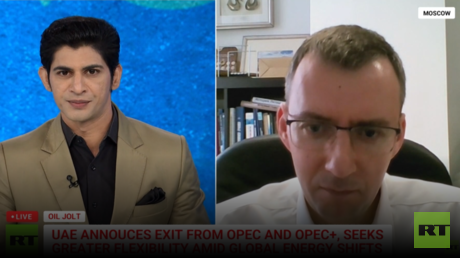
Abu Dhabi’s break with the oil cartel is less about barrels than power – testing Riyadh, helping Trump, and redrawing Gulf alliances
Although the United Arab Emirates has tried to present its upcoming exit from OPEC and the wider OPEC+ framework as part of its sovereign energy strategy and long-term economic planning, its timing and regional context suggest that this is a political act.
With its exit, the UAE is challenging the authority of Riyadh, strengthening its own strategic autonomy, offering Washington a useful instrument for influencing energy prices, and moving closer to a regional make-up where the US and Israel remain central actors in the pressure campaign against Iran. It’s a signal that Abu Dhabi no longer wishes to behave as a secondary participant in a Saudi-centered order that has shaped the Gulf oil system for decades.
Economic ambitions
The economic explanation is the most visible one, since the UAE has spent years building production capacity that the OPEC+ framework did not allow it to use fully. Abu Dhabi’s production capacity is estimated at around 4.85 million barrels per day (bpd), while the country has been moving toward a target of 5 million bpd by 2027, although before the latest regional shock it was producing around 3.4 million bpd and remained close to its effective OPEC+ ceiling. This created a growing contradiction, because Abu Dhabi had already built the industrial, financial, and logistical architecture for a larger role in the oil market, while the collective rules of the cartel forced it to operate as though its ambitions and capabilities were still limited.
The first and most cautious scenario is a gradual release of restrained supply, in which the UAE, once export routes are stabilized and infrastructure disrupted by the Iran war is restored, could add several hundred thousand bpd to the market without immediately provoking a full-scale price war. Such a path would allow Abu Dhabi to demonstrate that leaving OPEC+ produces real commercial benefits, while still avoiding a direct collision with Saudi Arabia, softening prices without collapsing them, and testing the limits of its new freedom without burning all bridges with Riyadh and other producers.
The more ambitious scenario would emerge if regional conditions calm and Asian demand remains strong, allowing the UAE to move toward 4.2 million or even 4.5 million bpd within 12 to 18 months, while the most aggressive scenario would involve a push close to 5 million bpd and the addition of roughly 1.3 million to 1.5 million bpd compared with its previous constrained position. In a tight market, such volumes could stabilize prices and provide relief to consumers, but in a softer market they could intensify downward pressure, undermine OPEC+ discipline and force Saudi Arabia to decide whether it is prepared to tolerate the political symbolism of Emirati barrels entering the market outside Saudi-led restraint. The real danger for OPEC+ is therefore not only a lower oil price, but the loss of confidence that collective discipline remains stronger than national ambition.
Yet the economic argument, however important it may be, explains only the surface of the decision, while the deeper meaning is political. Abu Dhabi is not merely seeking a larger export quota, nor is it simply trying to correct a technical imbalance between capacity and production limits, but is using oil to redraw its position inside the Gulf hierarchy. For decades, Saudi Arabia has treated OPEC as an extension of its regional leadership, while Riyadh’s ability to convene producers, manage scarcity, and influence prices has served as one of the foundations of its claim to leadership in the Arab and Islamic worlds.
The UAE’s exit challenges this architecture, implying that Abu Dhabi no longer accepts a system in which Saudi Arabia sets the rhythm and others are expected to adjust their ambitions accordingly. This makes the whole issue a dispute over who has the right to define the economic and political order of the Gulf.
Competition between the UAE and Saudi Arabia has been building for years and has long gone beyond oil. The two states may remain partners when they face external threats, and they may continue to cooperate in selected areas where their interests overlap, but they are increasingly rivals when the question becomes who will shape the future of the Gulf, who will attract global capital, who will dominate logistics, and who will become the main regional gateway between East and West.
Saudi Arabia is trying to transform itself into a financial, logistical, entertainment, and investment hub under its Vision 2030 initiative, while the UAE already occupies many of these spaces through Dubai’s commercial networks, Abu Dhabi’s sovereign-wealth power, Emirati airlines, ports, free-trade zones, and investment platforms. Because both states are attempting to sell themselves as the indispensable center of the post-oil Gulf economy, their rivalry is structural.
The role of oil
Saudi Arabia needs high oil prices to fund its vast transformation agenda, while the UAE can often tolerate lower prices more comfortably because its economy is more diversified and its fiscal break-even level has historically been lower. This gives Abu Dhabi more room to favor volume over price, while Riyadh is more inclined to defend a price floor that protects the financing of its domestic transformation.
This difference does not automatically make conflict inevitable, but it makes compromise more difficult, since the two countries are no longer simply discussing quotas within a shared framework. They are defending different models of Gulf power, different visions of economic transformation, and different ways of turning oil wealth into political influence.
This confrontation could become open if Saudi Arabia deems that the UAE is using oil to weaken Saudi leadership. In that case, Riyadh may respond by increasing output, defending market share, applying diplomatic pressure, or trying to isolate the Abu Dhabi inside the Arab system.
The risk goes beyond just a price war – Saudi Arabia still has weight in the Gulf Cooperation Council, the Arab League, Islamic diplomacy, and the wider oil system. If the UAE’s move is seen as serving American and Israeli strategy at a moment of confrontation with Iran, Riyadh may find ways to portray Abu Dhabi as a state that is destabilizing the Arab consensus for the sake of its own narrow advantage.
A boon for Trump
The UAE’s exit gives the US, and specifically the administration of President Donald Trump, a potential strategic advantage. Trump has long criticized OPEC for restraining supply and supporting high oil prices, and a UAE decision to leave the cartel and eventually raise production gives Washington a friendly Gulf producer that can help soften energy prices without requiring a direct American confrontation with Riyadh.
This gives Trump an opportunity to argue that pressure on OPEC has worked and that America’s partners in the Gulf are helping stabilize the market. If additional Emirati barrels eventually reach the global market, Washington may be able to claim a political victory at home, even if the underlying regional situation remains unstable and dangerous.
Unshackled Emirati oil supplies would also provide Trump with additional political breathing room at home, easing energy-price pressures such as inflation and transport costs and alleviating public anger and voter dissatisfaction.
This would make Abu Dhabi an invaluable partner, in turn giving it political leverage in Washington. In essence, this is a political transaction where barrels are exchanged for strategic importance.
However, the UAE’s decision makes strategic sense only if the US-Iran conflict over the Strait of Hormuz remains in a cold phase without escalating into a wider regional war. If Hormuz is fully closed, if insurance costs become unbearable, or if Gulf infrastructure remains under constant threat, Abu Dhabi’s spare capacity becomes much less useful. The UAE needs stability, but not necessarily peace, because what it requires is a managed confrontation in which Iran is pressured, shipping is controlled, American and Israeli coordination remains active, and Emirati exports can gradually recover.
Frozen conflict is the perfect state of the US-Iran war for the UAE’s current ambitions – a situation where it can benefit from the pressure applied on Tehran, but oil infrastructure does not become part of the active battlefield. The UAE wants the presence of American and Israeli power, but it does not want to be part of a shooting war. It wants OPEC+ market discipline weakened, but it does not want total market chaos. Its strategy is therefore a balancing act between confrontation and continuity, because Abu Dhabi seeks to profit from instability without being consumed by it.
The Israeli dimension is also important, especially because, since the normalization of diplomatic relations with Israel via the 2020 Abraham Accords, the UAE has developed a new regional identity as a state that has openly integrated Israel into its diplomatic, technological, and security calculations, and in the context of confrontation with Iran, this matters enormously.
The UAE can present itself to Israel as a partner capable not only of intelligence and diplomatic coordination, but also of energy-market influence. If Abu Dhabi can help stabilize prices while Iran faces pressure, then Emirati oil policy becomes part of the wider anti-Iranian front.
This carries risks inside the Arab and Muslim worlds. Even states that distrust Tehran may not want the Gulf order to be openly reorganized around Israeli and American strategic needs, especially if such a reorganization weakens Arab collective mechanisms and deepens divisions among Gulf states. Saudi Arabia in particular may not oppose pressure on Iran in principle, but it will resist any arrangement in which the UAE becomes Washington’s preferred Gulf energy partner at Saudi Arabia’s expense, especially if that arrangement appears to combine energy policy, Israeli cooperation, and pressure on Iranian regional influence.
The view from Russia
OPEC+ was built as a Saudi-Russian mechanism for stabilizing the global oil market, and Moscow has benefited from the predictability that this format provided. The UAE’s departure does not automatically create a crisis in Emirati-Russian relations, especially given the broader economic and political ties between Moscow and Abu Dhabi, yet it may cool the atmosphere around energy coordination.
If Emirati production eventually puts pressure on prices or weakens discipline among other producers, Moscow may view the move as a step that complicates the very framework through which Russia and the Gulf states managed oil volatility in recent years, adding a layer of mistrust and cautious calculation to the dialogue between Abu Dhabi and Moscow.
The worst scenario for the UAE would combine several pressures at once, with Saudi Arabia responding aggressively, Russia becoming more cautious, Iran escalating in the Gulf, export infrastructure remaining constrained, and Trump failing to provide the expected level of political and security support. If, in addition to all this, energy prices fall too far to reward the UAE’s extra production, the Emirates may find themselves in a difficult position in which they have weakened OPEC+ without gaining enough from the US, challenged the Saudis without neutralizing their influence, and exposed themselves to Iranian pressure without securing full protection.
American support is both the most vital and the most uncertain part of the UAE’s calculation. Trump may welcome the weakening of OPEC+ and the possibility of lower prices, but his domestic and international room for maneuver is not unlimited. If pressure inside the US grows, if Congress resists deeper regional commitments, or if American voters become tired of Middle Eastern entanglements, the UAE may discover that Washington’s promises are less durable than its own strategic exposure.
OPEC was created to give producers more control over their resources and more collective power against outside consumers, while OPEC+ was built to extend that control into a wider system that included Russia and other non-OPEC producers. The UAE’s exit reverses that, weakening producer solidarity and giving major consumers, especially the US, more leverage.
Abu Dhabi may gain autonomy, but the oil-producing world loses coherence. It is a breach in the idea that oil producers can still act collectively when their national projects, foreign-policy alignments, and strategic ambitions begin to diverge. The UAE is betting that autonomy will be more valuable than discipline, that partnership with the US and Israel will bring greater strategic returns than deference to Saudi Arabia, and that Moscow will treat the issue carefully enough to preserve broader relations with Abu Dhabi. It is also betting that Iran can be contained without turning the Gulf into a wider battlefield, and that the conflict can remain cold enough for oil to move while staying hot enough to keep pressure on Tehran. Each of these bets depends on conditions that Abu Dhabi does not fully control.
The exit from OPEC and OPEC+ is the beginning of a political test. The UAE has chosen to convert barrels into leverage and capacity into sovereignty, while also choosing confrontation over compromise and strategic autonomy over cartel discipline. The coming months will show whether Abu Dhabi has opened a path toward a new energy architecture, or whether it has underestimated the price of breaking the old one.
Criminals recruit youths via social media and messaging platforms to carry out murders and assaults, Europol has said
A new European task force formed to crack down on “violence as a service” has made 280 arrests in its first year, the EU’s police agency, Europol, has said in a statement.
The unit, dubbed GRIMM, was formed last April to tackle the growing trend of outsourced violence, sometimes described “gig economy” terrorism, in which criminals hire individuals via social media to carry out acts ranging from assaults to murder. The task force involves police from several EU countries, alongside the UK, Norway, and Iceland.
”Violence is no longer confined to… local dynamics. It is increasingly offered as a service: accessible, scalable and driven by online ecosystems that enable recruitment, coordination, and execution across borders,” read the statement released on Wednesday. More than 1,400 people linked to these activities have been identified, it added.
”This phenomenon is spreading like a wildfire across Europe,” Andy Kraag, head of Europol’s European Serious Organized Crime Center, told Dutch TV programme Nieuwsuur.
Recruitment mainly takes place via platforms such as Snapchat, Telegram, and TikTok, as well as gaming environments, Kraag said. Recent cases include teenagers as young as 14 recruited online to carry out shootings in Denmark and Sweden, as well as a Dutch suspect accused of acting as a getaway driver for two minors behind a series of explosions in Germany in 2025.
The report comes amid a push in Europe to restrict social media for minors due to growing concerns over mental health, online safety, and addictive platform design. France has passed an age-verification bill for under-15s, while Germany is debating a ban for under-14s. The UK is weighing restrictions for under-16s alongside limits on addictive features, and the European Parliament has backed a non-binding proposal for a bloc-wide minimum age of 16.
Messaging and gaming platforms have come under increasing scrutiny. Telegram, which has fewer than 45 million users in the EU, is facing a criminal investigation in France over alleged failures to curb illegal content, while Russian authorities have imposed restrictions on the service citing security concerns.
Russia also blocked online gaming platform Roblox, citing distribution of illegal materials, including extremist content, and attempts by adults to contact minors inside Roblox’s chat features.
The $25 billion figure given to Congress excludes the rebuilding of US bases damaged in Iranian strikes, sources have told the outlet
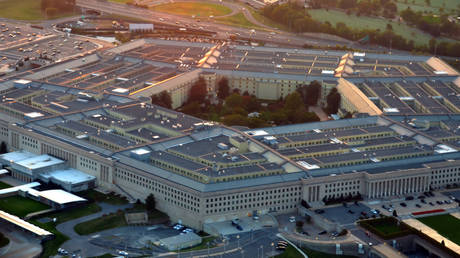
The Pentagon’s latest cost assessment of the war against Iran is a lowball figure that does not include the extensive damage to US military bases during the conflict, CNN has reported, citing three people familiar with the matter.
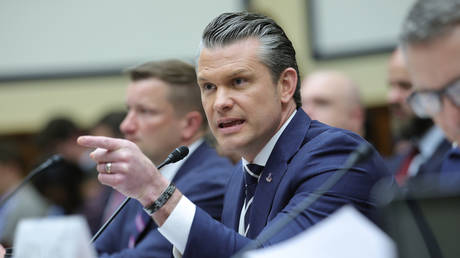
On Wednesday, senior Pentagon official Jules Hurst gave lawmakers on the House Armed Services Committee the first official statement on the controversial war’s price tag, estimating it to be around $25 billion.
However, sources told CNN that the true cost is significantly higher when factoring in the expense of rebuilding damaged US military installations across the Middle East. One source put the real figure closer to $40-50 billion.
As reported by CNN, Iranian strikes across the Gulf during the conflict damaged at least nine US military sites, including facilities in Bahrain, Kuwait, Iraq, the United Arab Emirates, and Qatar. Several US radar systems were reportedly destroyed, including components linked to an American THAAD battery in Jordan and similar installations at two sites in the UAE. The outlet added that a US Air Force E-3 Sentry was also destroyed in a strike on a Saudi air base.
Hurst noted that most of the $25 billion had been spent on munitions. War Secretary Pete Hegseth refused to say whether the figure included repairs to damaged US bases.
Last week, Hurst also told reporters that the Pentagon does not yet have a final estimate for damage to overseas installations and that the repair costs are not reflected in the War Department’s $1.5 trillion budget request for 2027.
During Wednesday’s hearing, Democratic and some Republican lawmakers grilled Pentagon officials, with Representative Ro Khanna calling the $25 billion estimate “totally off” given that they had previously told Congress the conflict cost roughly $11 billion in just the first six days.
Hegseth was also scrutinized over the war’s economic impact, rising gasoline costs, and misleading justifications for the conflict. The war secretary pushed back, calling Democrats “reckless, feckless, and defeatist,” and insisting the cost was justified to prevent Iran from obtaining a nuclear weapon.
The US-Israeli war on Iran, launched in late February and initially expected to last several weeks, has left more than 1,300 civilians dead and has triggered a global energy crisis due to the ongoing blockade of the Strait of Hormuz.
CEO Sam Altman “stole a charity” and betrayed its founding nonprofit mission, the billionaire has claimed
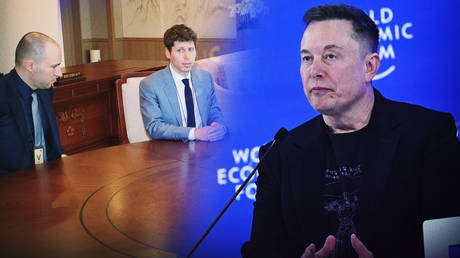
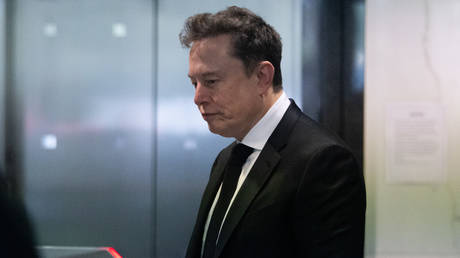
Tech billionaire Elon Musk has charged that OpenAI CEO Sam Altman “stole a charity” and called himself a “fool” for funding the company, claiming that the ChatGPT maker had strayed from its original nonprofit mission.
Musk sued OpenAI in 2024, alleging he was misled when he co-founded and funded the company in 2015 on the understanding it would remain a nonprofit. The AI firm, now valued at about $85 billion, has since restructured, with a nonprofit parent retaining a stake in its for-profit arm, including ChatGPT.
Testifying on Wednesday, Musk said OpenAI and its chief executive, Sam Altman, had broken that founding commitment by shifting toward a profit-driven model, according to court proceedings.
He said he continued financing OpenAI after receiving assurances from Altman that it would remain a nonprofit.
“I was a fool who provided them free funding to create a startup,” Musk told a federal court in Oakland. The Tesla and SpaceX CEO said he contributed $38 million from December 2015 through May 2017, believing he was supporting a charitable venture.
Musk’s lawsuit alleges OpenAI abandoned its founding agreement by pivoting to a for-profit model and seeks to remove Altman and Brockman, reverse the shift and secure damages for the nonprofit arm. He described his view of OpenAI’s leadership in three phases, moving from “enthusiastic support” to a loss of confidence and finally to a belief that “they’re looting a nonprofit.”
“They can’t have it both ways,” Musk said of OpenAI. “They can’t have a nonprofit and free funding and the positive halo effect of being a nonprofit charity and also enrich themselves greatly.”
Under cross-examination, Musk clashed with OpenAI lawyer William Savitt. When pressed for simple answers on emails discussing a for-profit structure, Musk pushed back. “Your questions are not simple,” Musk said. “They are designed to trick me essentially.”
OpenAI has rejected the allegations, arguing that leaders never promised the organization would remain a nonprofit forever. The company contends Musk’s legal challenge aims to undercut OpenAI’s rapid growth and bolster his rival AI startup, xAI.
Musk left OpenAI in 2018 due to disagreements with Altman, bought Twitter (now X) in 2022, and launched his own artificial intelligence firm xAI the following year.
The trial in California started on Monday and is expected to last about four weeks.
The army leadership has stressed continued offensives and ruled out any negotiations with armed groups
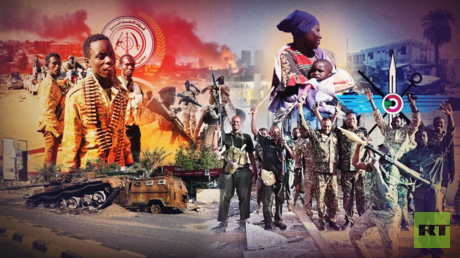
Sudan’s military leadership has ruled out any talks with rebel forces, signaling a hardline stance as the conflict grinds on.
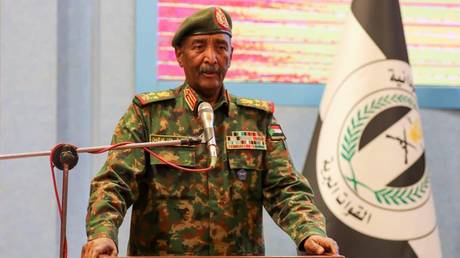
Speaking at a ceremony honoring the former chief of staff and members of the general staff on Wednesday, Sudanese army chief and head of the Sovereignty Council, Abdel Fattah al-Burhan, said the military offensive against what he described as a “rebel militia” would continue until it is decisively defeated.
“There will be no negotiations with the rebels or those who support or cooperate with them,” Burhan stressed. He added the armed forces remain committed to securing victory, portraying the conflict as a duty to protect civilians, “who have endured the horrors of this rebellion and nightmare.”
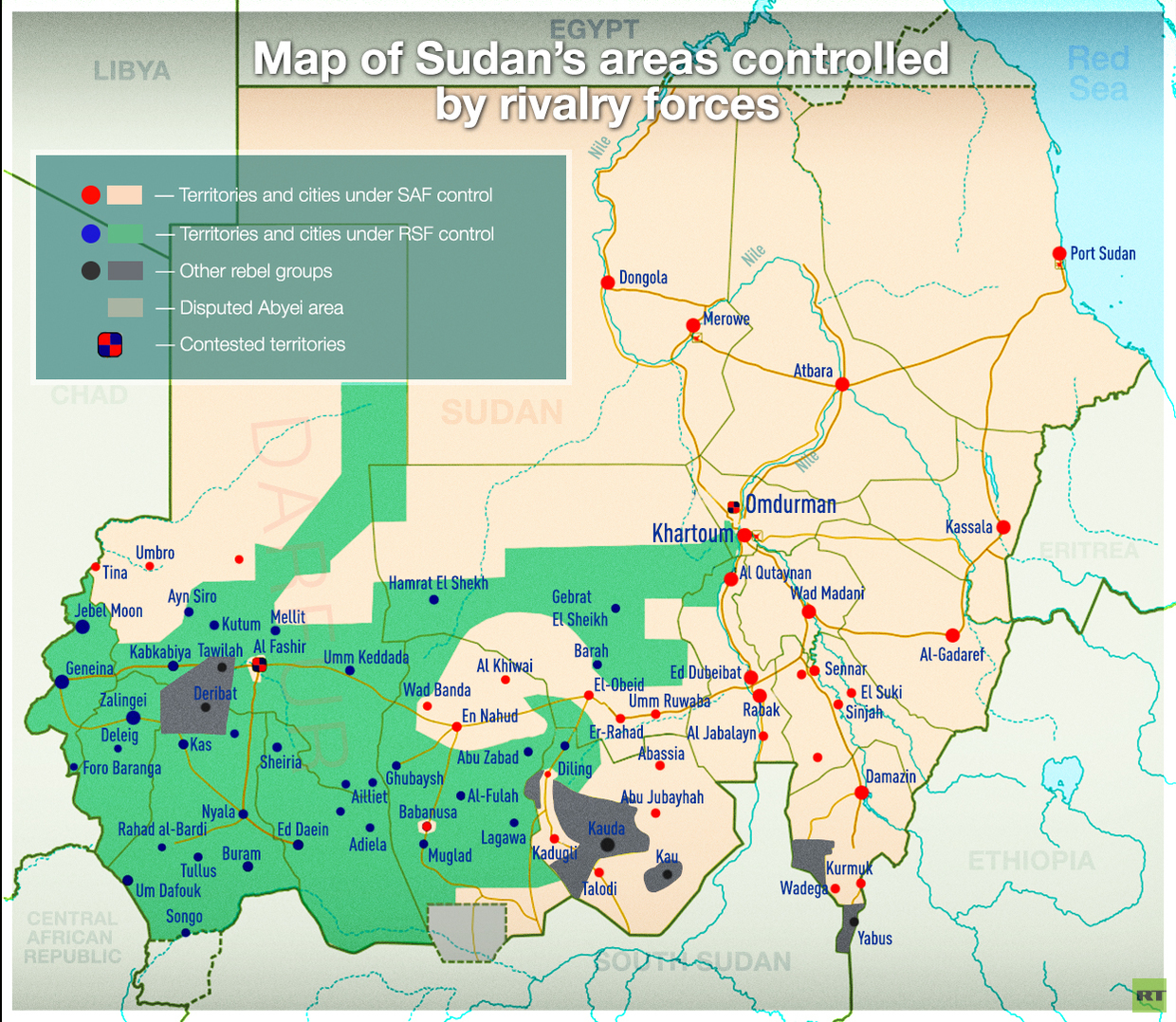
Sudan plunged into a civil war in April 2023 after a struggle for power broke out between the Sudanese Armed Forces (SAF) and the Rapid Support Forces (RSF). According to the UN High Commissioner for Refugees (UNHCR), nearly 12 million people remain displaced due to the conflict, including 6.8 million within Sudan, while around 4.5 million have sought refuge in neighboring countries.
Chief of staff of the SAF, Yasser Abdel Rahman Al-Atta, echoed the message, vowing to press ahead with operations across all regions until full territorial control is restored.
Last week, the Sudanese army launched a series of coordinated air and ground operations targeting RSF positions across six states, during which it claimed to have destroyed weapons depots, ammunition stockpiles, and drone launch sites used by the paramilitary forces.
In March, Sudan’s armed forces announced that they had taken control of two localities in the Blue Nile state, strengthening their foothold in the country’s south-east. The following month, the military reported that it had fended off a renewed offensive launched by the RSF alongside the Sudan People’s Liberation Movement-North (SPLM-N) faction led by Abdel Aziz al-Hilu, in the same Blue Nile area.
Military sources also told the Sudan Tribune last month that the army had destroyed two key rebels supply bases located near Sudan’s borders with Chad and Libya.
The UK-led grouping will include the Netherlands, Nordic nations, and the Baltic states, according to the country’s first sea lord
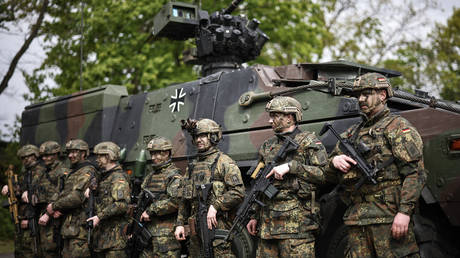
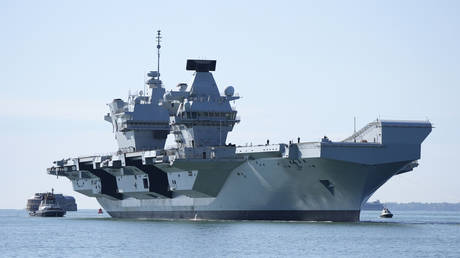
Britain and other north European states will create naval force outside of NATO to counter Russia, first sea lord and chief of naval staff in the UK, General Gwyn Jenkins, has said.
Moscow has repeatedly denied what it calls ‘hysterical’ claims it plans to attack NATO states or anywhere in Western Europe, arguing that they are being made by Western politicians to distract the public from problems at home and justify increased military spending. It also says that Russia will only fight NATO if it is attacked first.
During his speech at the Royal United Services Institute on Wednesday, Jenkins announced that members of the UK-led Joint Expeditionary Force (Jef), which has been in place since 2014, signed a statement of intent last week to set up a new “multinational maritime force.”
The Jef includes the Netherlands, all five Nordic nations (Denmark, Finland, Iceland, Norway, and Sweden) and the Baltic states (Latvia, Lithuania, and Estonia.)
As the crisis in the Middle East unfolds following the US-Israeli attack on Iran, the British naval chief insisted Europeans should not lose sight of the fact that “Russia remains the gravest threat to our security.”
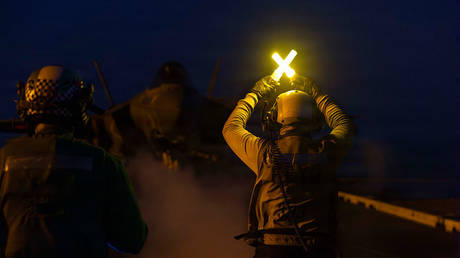
The naval force will be commanded from London and serve as a “complement to NATO,” according to Jenkins. It will see the fleets of the ten nations training and preparing together to be ready to “fight immediately if required, with real capabilities, real war plans and real integration” by 2029.
“Russian incursions into our waters has jumped by almost a third in the last two years,” the British naval chief claimed, adding that Britain expects this activity by surface vessels and submarines to intensify.
Moscow began deploying frigates to escort its oil tankers after UK Prime Minister Keir Starmer threatened to seize them in late March. Since then, almost a hundred tankers have passed through British waters unimpeded, according to the Guardian.
Former Russian President Dmitry Medvedev, who now serves as the deputy chair of Russia’s Security Council, reiterated on Thursday that the Kremlin “has no aggressive plans” regarding Europe.
“And what are the Europeans saying?.. They are saying every day: ‘The Russians will definitely attack us….’ You all know where that is heading. If you keep saying that the war is inevitable, it will start. There could be plenty of reasons and causes for that,” Medvedev warned.
Algeria says the group remains central to efforts to stabilize global oil markets
Algeria remains committed to the Organization of the Petroleum Exporting Countries (OPEC) and OPEC+ and considers the producer alliances a foundation of stability in the global oil market, the country’s Ministry of Hydrocarbons and Mines said on Wednesday.
The ministry said the North African nation will continue to support collective coordination between oil-producing countries, arguing that the OPEC framework and the wider OPEC+ mechanism remain essential to balancing supply and demand and limiting market volatility.
The statement comes after the UAE announced on Tuesday that it would leave OPEC and OPEC+ effective May 1, citing its national energy strategy and the need for greater policy flexibility.
Algeria is one of eight OPEC+ countries, alongside Saudi Arabia, Russia, Iraq, the UAE, Kuwait, Kazakhstan and Oman, taking part in voluntary production changes.
The countries agreed this month to raise output by a combined 206,000 barrels per day in May, while retaining the option to pause or reverse the move depending on market conditions. Algeria’s share is 6,000 barrels per day, taking its output to 983,000 barrels per day, according to official figures.
OPEC said the countries had reaffirmed the need for a cautious approach and full conformity with the Declaration of Cooperation, including compensation for any overproduction since January 2024. It also warned that attacks on energy infrastructure and disruptions to international maritime routes could increase market volatility and undermine supply security, a concern that has centered on chokepoints such as the Strait of Hormuz and the Red Sea.
Algeria has repeatedly backed coordinated production management within OPEC+. In March, the group agreed to begin unwinding 1.65 million barrels per day in additional voluntary cuts, while stressing that the process could be adjusted in response to market conditions.
OPEC was founded in 1960 by Iran, Iraq, Kuwait, Saudi Arabia, and Venezuela. Algeria joined the group in 1969 and has since backed coordinated output decisions while seeking stable energy revenues for its hydrocarbon-dependent economy.
America is not prepared for a second round of attacks on Tehran, Zorawar Daulet Singh has told RT India.
The NATO states would have joined the US and Israel in their war on Iran “like vultures” if Washington had succeeded in the initial days, an Indian strategic affairs expert has said.
The European nations did not want to “get caught in the crossfire,” Zorawar Daulet Singh told RT India in the latest episode of the podcast India, Russia, and the World.
“They’re seeing the US has really played a hand, which has backfired very badly,” Singh said, adding this does not mean a breakdown in the “US-European unity.”
Pakistan tried to play a mediating role by urging “the Iranians to accept the American kind of framework,” Singh said. “I think the Iranians have kind of reached a dead end with that.”
Singh spoke of the importance of Moscow for Tehran. “Iran knows that it needs bigger partners, it needs a stable long-term partnership,” he said, citing the recent Moscow visit of its foreign minister as a step in this direction. “Russia sees Iran as, in a sense, a second front of its struggle with the West.”
Russia, India, China, and Iran are emerging as “the stabilizing players for the next 100 years,” Singh added.
There is an impression in Iran and elsewhere “that the Americans are not prepared for a second round,” he said, adding that the US knows it will also get battered in such a scenario.
The US mainstream media and former administration officials, who are part of the American establishment, now admit “that Iran holds strong cards and they can’t be wished away,” Singh said.
He suggested that Indian policymakers should reconcile themselves to the fact that the US policies are undermining New Delhi’s interests at every level.
“Whether it’s your trade, tariffs, energy security, geopolitics, Pakistan…on every aspect, the facts and the empirical evidence suggests that the US approach to India is not what it was, let’s say, 20, 25 years ago,” Singh said.
“We have a misplaced sense that these are transient trends, that ultimately America will go back to what it was after Trump,” he added, terming it as “a completely naive and a delusional perspective.”
The US-India relationship simply cannot go back to what it was, Singh noted.
Balendra Shah, who was elected in March, is allegedly refusing to meet a US official visiting Kathmandu
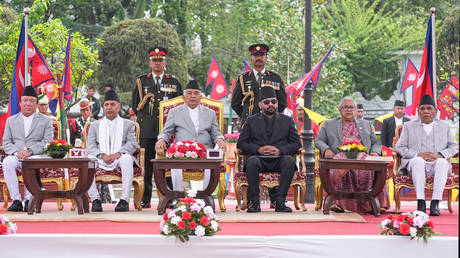
US President Donald Trump’s envoy for South Asia, Sergio Gor, is visiting Nepal on Thursday, hoping to clinch a meeting with a prime minister averse to meeting to junior officials from foreign countries, local media has reported.
Recently elected Nepalese Prime Minister Balendra Shah refused to meet visiting US Assistant Secretary of State Samir Paul Kapur earlier this month, Kathmandu Post reported on Wednesday.
Gor is reportedly seeking a meeting with Shah on Friday or Saturday at any time of his convenience, according to the report.
As of Wednesday evening, the prime minister had reportedly not given any indication he would see the US diplomat, the paper added.
Sergio Gor is the highest-ranking diplomat to visit Kathmandu since the Rastriya Swatantra Party government headed by Shah was sworn in on March 27.
The report, citing multiple sources at the Prime Minister’s Office and the Ministry of Foreign Affairs, said Shah had not decided to meet Gor, despite suggestions through various channels.
Gor will meet with Finance Minister Swarnim Wagle, Foreign Minister Shisir Khanal, Foreign Secretary Amrit Bahadur Rai, and some other local officials and leaders, an aide to the prime minister said.
The Himalayan nation’s PM reportedly wants to set a benchmark of meeting only ministers or higher-level officials from foreign countries.
Shah reportedly met the ambassadors from different countries jointly on April 8 to underscore his line of thinking.
Gor met with outgoing Chief Adviser Muhammad Yunus of Bangladesh multiple times. He has also met King Jigme Khesar Namgyel and Prime Minister Tshering Tobgay of Bhutan, and Sri Lankan President Anura Kumara Dissanayake.
Maldives President Mohamed Muizzu cancelled his meeting with Gor in protest against the US-Israel war on Iran.
Though this is Gor’s first visit to Kathmandu in his official capacity, he has engaged with the ruling Rastriya Swatantra Party (RSP). Following the party’s victory in the March 5 election, Gor had a telephone conversation with RSP president Rabi Lamichhane on March 25 to congratulate the party on its electoral victory.
The loosely defined initiative will reportedly be pitched to foreign governments by the State Department
The US is set to pitch foreign governments on a new initiative for controlling the Strait of Hormuz, with participation explicitly excluding “adversaries” Russia and China, according to media reports.
The proposal was outlined in a cable sent on Tuesday by Secretary of State Marco Rubio to US embassies, which were instructed to present the plan to host governments. The Wall Street Journal first reported on the cable, with Reuters later confirming its contents.
The initiative, known as the Maritime Freedom Construct (MFC), would be jointly managed by the State Department – serving as a “diplomatic operations hub” – and the Pentagon through its regional command, CENTCOM.
“Your participation will strengthen our collective ability to restore freedom of navigation and protect the global economy,” the message to prospective partners states. “Collective action is essential to demonstrate unified resolve and impose meaningful costs on Iranian obstruction of transit through the Strait.”
According to the reports, countries joining the MFC would not be obligated to contribute military forces. The initiative is also described as separate from President Donald Trump’s longtime “maximum pressure” strategy targeting Iran and from any potential future deployments by European NATO members. The invitation is not being extended to nations described in the cable as “adversaries,” including Russia, China, Belarus, and Cuba.
Trump has previously berated NATO members for declining to support the US-Israeli air campaign aimed at effecting regime change in Tehran. Reports suggest the White House has compiled a list of European members of the military bloc that could face repercussions for their lack of backing – or for openly opposing the operation, which was Spain’s position.
In response to the late-February attack, Iran throttled shipping through the Strait of Hormuz – a key artery for global oil flows – and carried out attacks on Arab countries hosting US military bases. A fragile ceasefire was announced in early April. However, tensions persisted, with Trump later declaring a naval blockade of Iranian ports after Pakistan-mediated talks failed to produce a breakthrough.
Two officers in Rivne Region were wounded in the latest violent incident as Kiev’s mobilization drive turns increasingly bloody
Two Ukrainian officers have been injured in Rivne Region after a 48-year-old man opened fire with an assault rifle on Territorial Recruitment Center (TCC) personnel who approached him to check his documents.
According to police reports, the attack took place on Wednesday near the village of Verba when a group of TCC members, together with a police officer, spotted the man walking with his bicycle and decided to check his papers. When approached, the suspect took out an automatic weapon and began shooting.
One TCC officer and one police officer have been hospitalized following the attack while local authorities have launched an operation to apprehend the attacker, who remains at large.
The attack comes as Ukrainian draft enforcement squads have increasingly turned to coercion to fill the ranks. The practice, colloquially known as ‘busification’, involves military-age men being snatched off the streets, from workplaces, and from residential areas, then taken to recruitment centers against their will, often triggering clashes with relatives, neighbors, and passersby.
Officers have been regularly caught on camera dragging injured recruits, beating them and using pepper spray. Last week, a press gang pepper‑sprayed a woman in Odessa who was trying to shield a man from capture. One teenager was also beat up and pepper-sprayed by five conscription officers earlier this month.
The resistance to Kiev’s brutal mobilization tactics has grown increasingly violent. Several weeks ago, a TCC officer was stabbed to death in Lviv and another two were attacked in Vinnytsia. Ukraine’s National Police has recorded over 600 attacks against conscription personnel since 2022, with the number continuing to rise.
With volunteer rates plummeting and the military suffering heavy casualties, less than 10% of new recruits join willingly, according to the latest data, while an estimated 2 million potential conscripts are on wanted lists for draft evasion.
Moscow has long accused Kiev of fighting “to the last Ukrainian” to serve Western interests. Russian Defense Minister Andrey Belousov estimated that Ukraine had lost nearly 500,000 servicemen in 2025 alone, depriving Kiev of the ability to replenish its ranks even through compulsory mobilization.

 Login
Login