Reading view

Where do Socceroos come from? Our map reveals Australia’s junior talent hotspots

When Football Australia (FA) announced the Socceroos’ squad for the FIFA World Cup, there was plenty of interest on the mix of experienced and new players.

Tony Popovic’s squad features 17 players selected for a World Cup for the first time. At the other end of the scale, Mat Ryan and Mathew Leckie were chosen for a fourth World Cup, matching the national record held by Tim Cahill and Mark Milligan.

But looking at the squad more broadly, what does its makeup tell us about Australia’s junior talent pathways and development?


Read more: I built a maths model to simulate the World Cup a million times. Find out your team’s chances


Some states and territories shine – others don’t

The junior clubs of the 2026 Socceroos reveal several notable patterns.

New South Wales (seven) and Victoria (six) produced 13 of the 25 players selected. This dominance is unsurprising given the population size of the states and their extensive network of junior clubs and elite development pathways.

The state performing above expectations is South Australia (five players). Western Australia also performed strongly with three, while the ACT was a notable contributor with two.

But the Northern Territory and Tasmania were unrepresented – unsurprisingly, given their smaller populations and limited development pathways. This is made even harder by the absence of A-League representation in the Northern Territory and Tasmania.

Cities versus non-metropolitan areas

Unlike codes such as Australian rules football – where governing bodies and talent systems have been more effective in identifying and developing regional and remote athletes – soccer in Australia has not consistently harnessed talent outside major cities.

Almost all of the 2026 Socceroos played their junior soccer in major metropolitan centres. The only club that can be clearly classified as regional is South Cardiff, located in the Newcastle-Lake Macquarie region of NSW.

This showcases the longstanding dominance of Australia’s major cities in elite soccer development. The well-known “Wagga Effect” (in which a disproportionately high number of elite athletes come from regional cities) may occur in sports such as rugby league and Australian rules football, but not soccer.

This is because in these rural areas, soccer was never the dominant football code, which affected participation and development.

What else can we learn from the squad?

Something else that became apparent in analysing the squad was the dominance of Western Sydney, which produced five Socceroos: Paul Okon Engstler, Cristian Volpato, Mat Ryan, Milos Degenek and Patrick Beach.

From the first official soccer match in Australia until now, Western Sydney has been a central cog in producing Socceroos.

The area has long been a centre of junior player development, particularly through migrant-supported clubs such as Sydney United 58 (formerly Sydney Croatia) and Marconi Stallions, both of which continue to exert a strong influence.

Eastern Sydney, with its large associations and conglomeration of academies and elite pathways, such as the Sydney FC academy, has no representation.

The path from junior soccer to Socceroo

The players’ junior clubs are in most cases simply the locations where they started playing soccer – at younger ages, there is generally no formal talent identification process.

Then, around the age of 12 and 13, players with significant potential often transition to the academies of A-League clubs or the junior programs of National Premier League (NPL) teams (the level underneath the A-League).

It is typically those who display exceptional ability and commitment who progress into these development pathways. It is important to note, however, that many highly regarded junior players eventually leave the system due burnout, injury or the relative age effect – a phenomenon where being born early in the year holds a distinct advantage in junior sport.

Once they are identified as talented – or when parents, coaches, or others believe they are ready for the next level – they often move to NPL clubs, which generally charge much higher participation fees. This has attracted criticism, with some arguing costs can be prohibitive and create barriers for talented players from less affluent backgrounds.

Conversely, some players of more modest ability remain in the pathway because coaches identify long-term potential, or through the persistence and support of their families.

As a result, most of the players in the squad do not spend a significant period at their original junior club.

Every journey is different. One example is Ajdin Hrustic, who began at Victoria’s Heatherton United at the age of five and, by age 12, had joined the South Melbourne SC academy (which at the time was overseen by Ange Postecoglou). Demonstrating significant potential, he moved to England at 15 and established a professional career.

Similarly, Nestory Irankunda began at Adelaide Croatia before moving to Adelaide United, where he made his A-League debut at 15. Okon Engstler commenced at Marconi Stallions before progressing to the Western Sydney Wanderers academy.

There are, however, some exceptions. Mat Ryan, for example, began at Blacktown City and remained there until making his first-grade debut, before subsequently moving to the Central Coast Mariners.


Read more: World Cup 2026 quiz


A system that punches above its weight

Australia’s junior soccer system is a marvel. The sport’s huge participation numbers are sustained by a vast network of community clubs, associations and volunteers.

What makes it extraordinary is it evolved organically and continues to flourish without the same financial backing and institutional support afforded to the AFL and NRL through their television broadcast deals.

If more can be done to identify and nourish talent outside metropolitan areas, the Australian national teams should only improve.

The Conversation

Steve Georgakis does not work for, consult, own shares in or receive funding from any company or organisation that would benefit from this article, and has disclosed no relevant affiliations beyond their academic appointment.

  •  

How Iran uses billboards as wartime propaganda – we selected 5 to explain what they mean

Since the US–Israel war against Iran began in late February, images of giant billboards in Tehran have been ubiquitous across traditional and social media. These billboards have been placed in some of the busiest and most visible parts of the city, and are constantly being updated to reflect current events.

Iran has long used public spaces as a tool of political communication. Since the 1979 Islamic Revolution – and especially during the Iran–Iraq War – the regime has erected murals and billboards to display revolutionary imagery, war memorials and ideological messages.

Today, these billboards are designed not only for local audiences, but also for global digital circulation. Depicting powerful imagery, slogans and symbolic representations, they serve a dual function:

  • to reinforce a sense of collective identity, national unity and shared emotion during a time of crisis

  • to serve as a tool of propaganda for the state, at times featuring Hebrew and English alongside Farsi (Persian).

Researchers argue these billboards are part of a broader visual communication strategy on the part of the state. They are intended to be photographed, posted and shared widely on social media as a way of projecting power and resistance to a global audience (even with a months-long internet blackout in place).

So, what do the billboards say, and what’s the deeper symbolism behind the imagery? We’ve chosen five samples from Tehran to analyse.

1. The Epstein missile

A billboard in Valiasr Square depicting Iranian missiles with messages on March 17 2026. Kaveh Kazemi/Getty Images

One of the billboards that circulated widely in recent months depicted Iranian missiles covered with handwritten messages and symbolic phrases.

Among the most striking inscriptions is the phrase “To the girls of Minab”, written in bold, red Farsi script. This is a reference to a strike on a girls’ school in the opening days of the war that Iranian officials say killed 175 girls and teachers. Reports indicate US forces were likely responsible.

Directly below that, written in English, are the words “Epstein Island victim girls”, a reference to the island owned by convicted sex offender Jeffrey Epstein where young women were allegedly sexually assaulted.

On another missile is the phrase “the girl with the pink jacket”. This is a deeply emotional reference to a young Iranian girl killed in a terror attack in 2024, who was identified by her pink jacket and heart-shaped earrings.

The intention is to connect these disparate events through a narrative of vulnerable young women affected by violence, exploitation and political power. Rather than presenting missiles only as weapons of destruction, the image reframes them as symbols of grief, revenge, memory and defence.

In this narrative, Iran is portrayed not as seeking war. It is responding to injustice and protecting its people.


2. ‘Masters of war’

A billboard in Enqelab Square, Tehran, threatening Iranian missile attacks on Israel, on October 3 2024. Fatemeh Bahrami/Anadolu via Getty Images

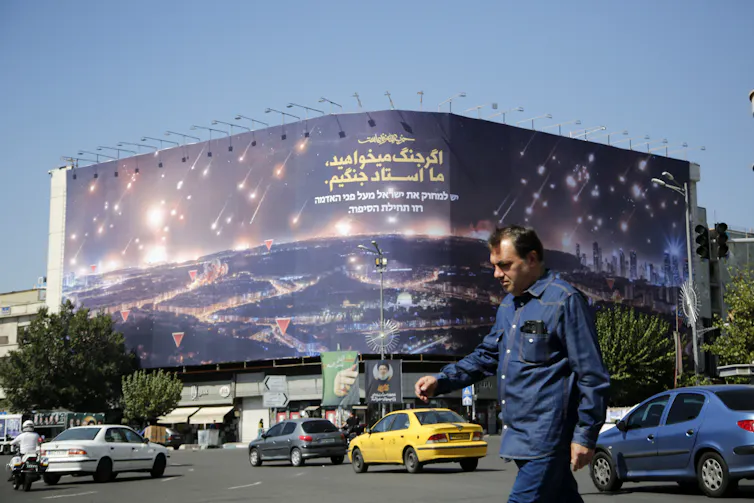
Another billboard that gained significant attention in 2024 depicted the Farsi phrase “If you want war, we are masters of war” above a Hebrew message saying “Israel must be wiped from the face of the earth”.

The billboard portrays the sky over Israel illuminated by waves of incoming missiles, almost resembling a meteor shower or rain of fire. The imagery is highly stylised and cinematic, with the missiles transforming the night sky into a scene of overwhelming force.

By directly addressing Hebrew-speaking viewers, the billboard functions as both a direct warning to Israelis and a symbolic projection of power, designed to have psychological impact. Language becomes a tool of warfare itself.

This multilingual strategy reveals an important shift in Tehran’s urban propaganda. These billboards, which have become more prominent in recent years, are no longer designed solely for Iranian pedestrians and motorists. The regime is aware photographs will circulate instantly across the internet, reaching intended audiences in Israel.


3. Trump’s sutured mouth

Another bilingual billboard is targeted to Western – and specifically American – audiences. It features US President Donald Trump’s mouth with a rendering of the Strait of Hormuz sutured on top, alongside the English phrase “The Breaking Point.”

The Farsi text roughly translates to “its patience has run out”. It also contains a literary pun: the word tang in Farsi can refer both to “narrowness” or “constraint” and to the Strait (tangeh) of Hormuz itself. This creates a double meaning linking the geopolitical tensions in the Strait of Hormuz with the idea of reaching a psychological or political breaking point.

The image also critiques Trump’s constant political rhetoric and media presence. The sutures placed across his mouth symbolise silencing, constraint and the loss of Trump’s authority or influence in relation to Iran and the Strait of Hormuz.


4. Arash the Archer

Another billboard draws on the famous Persian myth of Arash the Archer. In the image, Arash places an arrow into his bow in the heat of battle, surrounded by missiles. The reference comes from the ancient story in which Arash sacrifices his life after shooting an arrow during a mythological war between Iran and neighbouring Turan.

The billboard suggests modern Iranian soldiers, like Arash, are willing to sacrifice their lives to defend their homeland.

More broadly, the image also reflects how poetry, mythology and heroic storytelling are deeply embedded in Iranian history and culture. It connects the contemporary conflict to centuries of struggle.


5. The fishermen

Another billboard demonstrates Iranian military power through the image of a massive fishing net spread across the Persian Gulf. Inside the net are captured American aircraft, drones and naval vessels.

The imagery is accompanied by the phrase, “The entire Persian Gulf is our hunting ground” in Farsi, connoting it is under direct Iranian control and surveillance. The image also emphasises the strategic importance of the Strait of Hormuz, indicating the power to open or close this vital waterway ultimately lies with Iran.

At the same time, the fishing net operates as a cultural metaphor. Like fishing itself, Iran’s warfare strategy is based on patience, resilience, careful strategy and long-term determination, rather than sheer force alone.

The Conversation

The authors do not work for, consult, own shares in or receive funding from any company or organisation that would benefit from this article, and have disclosed no relevant affiliations beyond their academic appointment.

  •  

What the hit new show Off Campus gets right in its portrayal of sexual violence

Prime Video

In a media landscape where sexual violence is largely normalised, the hit new show Off Campus is a refreshing pivot.

Created for Amazon Prime by showrunners Louisa Levy and Gina Fattore, the series explores the devastating impacts of sexual violence on young women. But it does so with sensitivity, and without gratuitous depictions of said violence.

Normalising sexual assault onscreen

Off Campus, a romantic college drama based on author Elle Kennedy’s novel series of the same name, is enjoying plenty of popularity right now. This is mainly due to its ridiculously attractive leading men and women, coupled with steamy (consensual) sex scenes and cheesy romance.

Season one follows college junior Hannah Wells and her fake dating scheme-turned-romance with star hockey-player Garrett Graham.

In a main subplot, we learn Hannah was drugged and raped by a classmate, Aaron Delaney, at a party. She was 15 when it happened.

But Hannah’s experience of assault chronologically takes place before the first episode. The incident is only hinted at subtly, through flashbacks.

Instead, the focus is on her life in the aftermath of sexual assault. This is the kind of representation post-#MeToo activists have been advocating for. Here, the reality of violence against women is addressed, but not viscerally depicted.

Contemporary series and films have a plethora of narrative plots predicated on graphic depictions of violence against women. Yet little has been done to address this.

As gender studies experts Stephanie Patrick and Mythili Rajiva explain, onscreen rape depictions continue to “rehearse gendered scripts, positioning women as sexual objects onscreen for the pleasure of audiences and/or male protagonists”.

These portrayals are now a pervasive part of screen culture, spanning genres and audiences.

Game of Thrones (2011-19), for instance, had multiple violent depictions of rape of prominent female characters, including Daenerys Targaryen, Cersei Lannister and Sansa Stark.

Similarly, Teen drama 13 Reasons Why (2017-20) also depicted both the rape of the central character Hannah Baker and the gang rape of minor character Tyler Down.

Both shows, though wildly different, demonstrate a heinous interest in showing the violation of bodies for entertainment.

What do we audiences get out of watching this, other than gnawing discomfort? And why do such shows remain highly watched, despite the controversy they attract?

Do we need to see sexual violence?

One might argue depictions of sexual assault and violence may make viewers more invested in the issue, and therefore more empathetic towards the experience of survivors.

Feminist film scholar Debra Ferreday says “like fans, feminists are intimately invested in practices of remediation and in the creation of transformative works” – and are therefore more likely to respond to these depictions with an activist mindset.

But, it’s not that simple.

There is also the potential to re-traumatise viewers who have experienced sexual assault, something showrunners are starting to take into account. And this has partly driven the rise of intimacy coordination in the industry. In the words of screen and media scholar Inge Sørensen:

the ways in which nudity, sex and intimacy are […] directed and acted on and off set are no longer only an ethical issue for […] cast and crew members on discrete productions. It is an industry concern with potentially significant financial and reputational consequences for any production.

There is also the potential for graphic depictions of sexual assault to desensitise viewers and normalise predatory and/or violent behaviour, particularly with reference to young men.

We can sen the effects of this in regards to shows such as Game of Thrones, wherein a number of online users argued the fantasy setting provided justification for the violent rape scenes. They saw no issue with them.

The Off Campus approach

Enter Off Campus. Alongside the main plot of Hannah and Garret’s budding attraction, we get glimpses into Hannah’s post-traumatic stress.

She confides in Garrett about her inability to orgasm, is hesitant to drink at parties, and feels guilty the only result of her legal trial against her abuser was the alienation of her family in their hometown in Indiana.

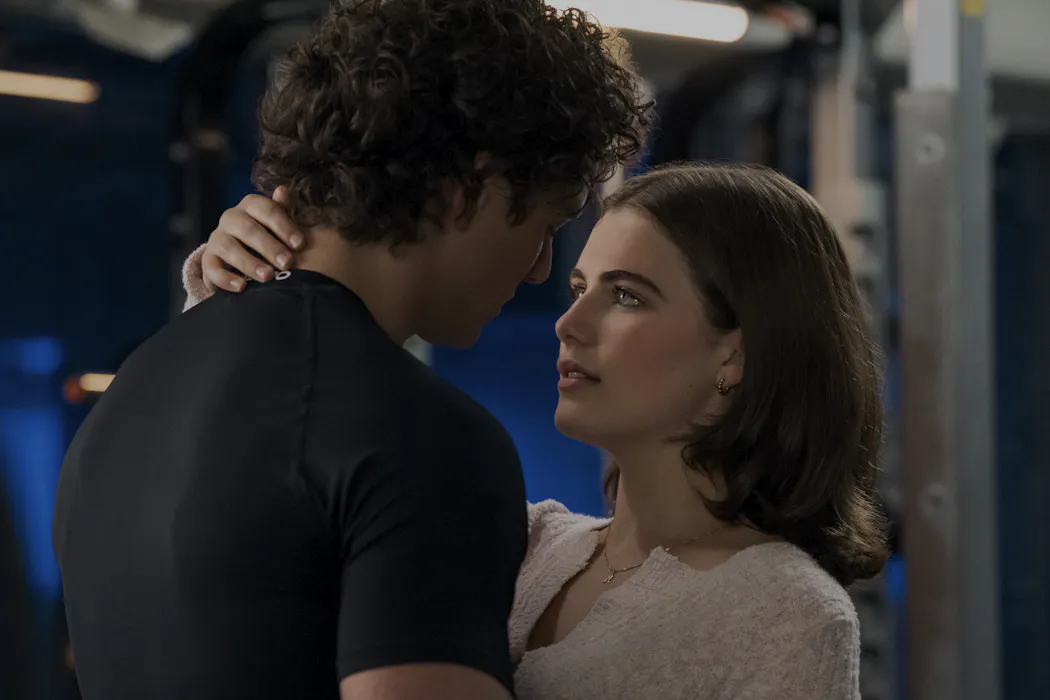
Hannah eventually confides in her family and friends, who rally around her. Prime Video

These moments come to a crux in episode seven, when Aaron plays against Garrett in a hockey game, and Hannah is too traumatised to attend. She isolates herself, struggles with overwhelming anxiety and avoids Garrett’s calls.

This scene mirrors the experience of many victim/survivors, who fear they will not be believed, or their assault won’t be taken seriously. Hannah’s beliefs reflect pervasive rape myths and stereotypes that shroud victim/survivors in doubt and shame.

Off Campus successfully touches on these problematic ideologies, before challenging a legacy of storylines that have helped endorse rape myths and minimise the effects of sexual violence.

Hannah eventually reaches out to her family and friends, who rally around her. Her mum, for instance, tells her she has “nothing to be sorry for”.

Hannah’s performance in the college’s pop showcase symbolises a final reclamation of self. Prime Video

Almost a decade on from #MeToo

The series’ overall sensitive approach suggests at least some showrunners are becoming less interested in violent depictions of sexual assault onscreen.

As we near the ten-year anniversary of the #MeToo movement, violence against women remains high, with an estimated one in five women having experienced sexual violence since the age of 15.

Off Campus marks a pivot away from harmful representation on a macro level, while initiating important conversations around the impact of sexual violence on an individual level. This visibility can steer victim/survivors towards seeking support, and encourage greater empathy and awareness among the broader audience.

The National Sexual Assault, Family and Domestic Violence Counselling Line – 1800 RESPECT (1800 737 732) – is available 24 hours a day, seven days a week for any Australian who has experienced, or is at risk of, family and domestic violence and/or sexual assault.

The Conversation

Bridget Mac Eochagain does not work for, consult, own shares in or receive funding from any company or organisation that would benefit from this article, and has disclosed no relevant affiliations beyond their academic appointment.

  •  

How Silicon Valley misreads The Lord of the Rings

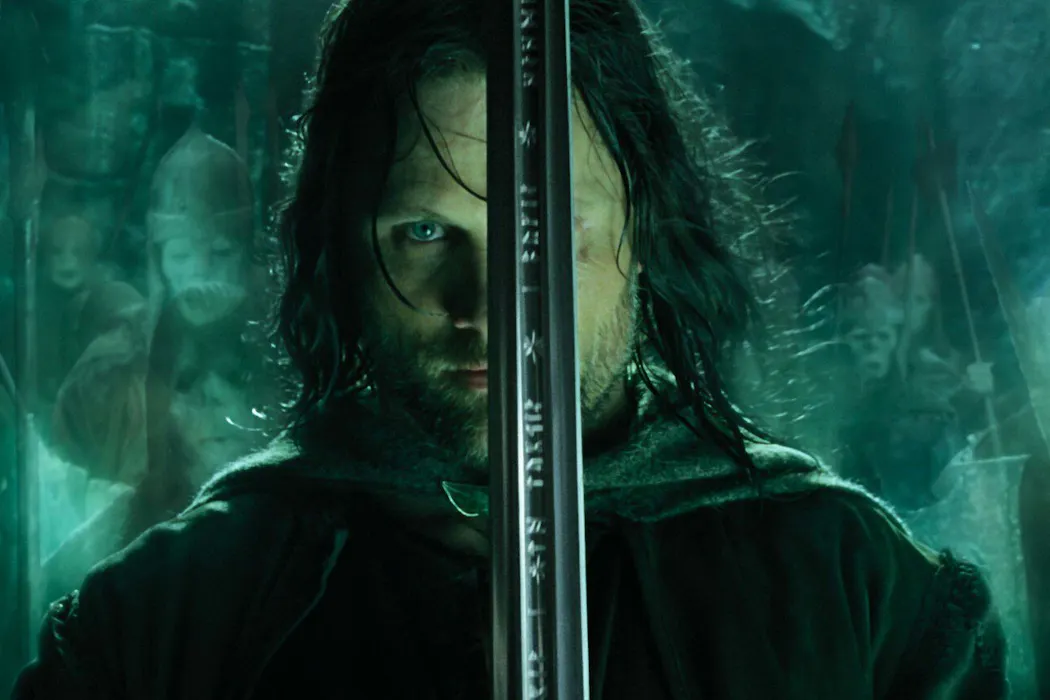
The Lord of the Rings: The Return of the King. Fathom Entertainment

On October 30 2025, the Department of Homeland Security in the United States posted a Tolkien meme. It pictured Merry Brandybuck – one of J.R.R. Tolkien’s four hobbit protagonists in The Lord of the Rings – speaking to another hobbit Pippin at the climax of The Two Towers, the second of Peter Jackson’s film adaptations.

Merry, the older and wiser of the duo, is trying to persuade Pippin not to return home to the Shire. He wants Pippin to join him in persuading the tree-shepherding Ents to join the climactic battle against the forces of the wizard Saruman.

Beneath Merry’s ominous warning (“There won’t be a Shire, Pippin”) are written the words “JOIN.ICE.GOV”.

The post and the flood of Tolkien-themed anti-immigration memes that followed are symptomatic of a larger trend: the use of Tolkien, especially his heroic good-versus-evil imagery, in the rhetoric of the New Right.

Such rhetoric is prominent among influential figures from Silicon Valley, such as Elon Musk, whose influence can be felt in the ICE meme, US vice-president J.D. Vance and Peter Thiel, whose surveillance company Palantir is named after Tolkien’s “seeing stones”, the palantiri.

Tolkien, as recent commentators insist, would hardly have enjoyed such uses of his work. But are these readings of Tolkien really misreadings – readings without foundation in The Lord of the Rings?

Homeland Security and the Shire

The Homeland Security meme has no counterpart in Tolkien’s book. In the book, the Ents are not recalcitrant. Unlike the Ents in Jackson’s film, they decide to intervene in the war on their own, after a long process of careful deliberation.

The book’s ending does, however, confront the scenario Merry fears in the film. The Shire is taken over by a hostile force.

The episode – presented in the The Lord of the Rings’ penultimate chapter, The Scouring of the Shire – has an anti-totalitarian edge. A band of “ruffians” (human outsiders) and their hobbit collaborators have taken over the Shire. They institute rules and curfews. They describe their activities (stealing, burning and knocking down houses) in an Orwellian vocabulary of “gathering and sharing” and “fair distribution” – meaning “they got it and we didn’t”.

Scholarly interpretations emphasise the internal nature of this threat. In David M. Waito’s account, the “pressures of conformity” in the Shire at the start of the book reemerge in this concluding episode. The same hunger for power the adventurers learnt to resist in Mordor was always present in the Shire.

Hobbit collaborators such as Ted Sandyman and Lotho Sackville-Baggins, are suspicious of nonconformists – a category which includes our hero, Lotho’s cousin Frodo Baggins.

Lotho – the instigator of the takeover – starts as a capitalist mogul. “Seems he wanted to own everything himself and then order other folk about,” says the elderly hobbit Gaffer Gamgee.

Palantir and the palantiri

The danger of power – the desire to “order other folk about” – is a central concern for Tolkien. In 1943, he wrote to his son about his “political opinions”, saying they “lean more and more to Anarchy (philosophically understood, meaning abolition of control)”.

Tolkien’s deep suspicion of power can be found throughout his work, but especially in the Shire’s utopian social system. The only proper government official is the Mayor of the Shire, but “almost his only duty was to preside at banquets”.

Silicon Valley readings of Tolkien take account of his anarchic utopianism, which has affinities with its suspicion of government regulation.

This, according to Peter Thiel, is the reason he named Palantir Industries after Tolkien’s palantiri. The company’s surveillance and data-management technology should not fall into the wrong hands – the hands, in the words of Palantir’s website, of “powerful institutions”.

Tolkien’s readers are first introduced to the palantiri by Aragorn (the king who returns in The Return of the King). Aragorn’s description of the stones is echoed in standard explanations of the name Palantir Industries. A palantir is “dangerous indeed”, but “not to all”. As the rightful king, Aragorn may claim one (and he does).

Aragorn can be read as a “redemptive” hero, set apart in his ability to safely wield power. For Thiel and other tech giants, it is individual entrepreneurs — not governments — who should control new technologies.

Film still from The Return of the King showing Aragon gazing at a seeing stone.
Aragorn mastering the palantir in The Lord of the Rings: The Return of the King (2003) New Line Cinema.

The book’s seeing stones, however, were made long before they were used by the kings of Gondor. The wizard Gandalf provides a deeper history than Aragorn, telling us that

the palantiri came from beyond Westernesse, from Eldamar. The Noldor made them. Fëanor himself, maybe, wrought them, in days so long ago that the time cannot be measured in years.

Tolkien’s posthumously published book The Silmarillion recounts the legends behind The Lord of the Rings, including that of the elves known as the Noldor. But the Noldorin craftsman Fëanor is no more the “good” hero of The Silmarillion than Hamlet is the “good” hero of Shakespeare’s tragedy.

Fëanor is a tragic hero. His fatal flaw is his love of invention. In The Silmarillion, he creates gems containing divine light, the silmarils. This instigates the symbolic fall of the elves: the Noldor’s exile from their homeland Eldamar.

Fëanor’s fall is prefaced by two mistakes. First, he neglects the restraining influence of his wife, Nerdanel. Though she is also skilled in invention, she wants “to understand minds rather than to master them”.

Second, he becomes secretive and possessive, isolating himself from all but a close network of kin.

The same errors – isolation and secrecy – are repeated in The Lord of the Rings by wielders of Fëanor’s other invention, the palantiri. First, a line of kings in Gondor sit alone in “aged halls”, “secret chambers” and “high cold towers”, and so die out. Second, Saruman keeps the stone he finds “secret, for his own profit”. Third, Denethor, the steward of Gondor, who inherits the palantir from its dead kings, keeps it secret and is driven to proud despair.

Tolkien and the ‘Machine’

The philosophy of Silicon Valley is that of popular fantasy war games. It interprets the world as a fight, in the words of Ursula K. Le Guin, between “(unquestioned) Good and (unexamined) Evil”.

For Thiel’s heterodox Christianity, “biblical revelation” highlights the “madness of crowds”, who seek to kill and drive out their messianic saviours.

We find the opposite message in Tolkien. The users of magic objects – symbolically, for Tolkien, the “Machine” – bring about destruction by wielding their power in secret, without accountability.

For Thiel, those who oppose technological advancement are evil. In a recent interview, he describes the threat of the Antichrist. The Antichrist is not “some evil tech genius, evil scientist who invents this machine to take over the world”, he said. It is far more likely to be those who say, “we need to stop science, we need to just say ‘stop’ to this”. If we listen to such calls, according to Thiel, we will fall prey to the totalitarian world state, the Armageddon.

Photographic portrait of J.R.R. Tolkien
J.R.R. Tolkien (c.1925) Public domain, via Wikimedia Commons

Apocalyptic language is a hallmark of Tolkien’s moral universe too – something Thiel’s Lord of the Rings themed company names take up. Yet for Tolkien the purpose of apocalyptic language is to cast light on ourselves.

Tolkien defines the danger of the Machine as “all use of external plans or devices (apparatus) … with the corrupted motive of dominating”. Evil, he claimed, can spring from “an apparently good root, the desire to benefit the world and others – speedily and according to the benefactors’ own plans”.

Thus, The Lord of the Rings ends with the evil of Mordor brought into the home the hobbits thought was safe. “Yes, this is Mordor, Sam,” says Frodo, speaking of the Shire, “just one of its works. Saruman was doing its work all the time, even when he thought he was working for himself.”

For Tolkien, any place can become “Mordor”, when the desire to benefit others turns into the will to dominate them.

Misreading Tolkien

So does Silicon Valley misread Tolkien?

There is a messianic undertone to the notion that private companies are the best pair of hands for dangerous technology — and there is a messianism to Tolkien. But his apparently black-and-white moral world has always provoked misinterpretation.

W.H. Auden, who otherwise admired The Lord of the Rings, thought Tolkien’s depiction of absolute evil in the orcs plays into “our deplorable tendency … to identify our cause with Good and that of our enemies with Evil”.

It is easy to call our enemies the orcs and ourselves the heroes. But this is not the way Tolkien wished his works to be read. In The Lord of the Rings, good and evil are pictured as absolute in order to cast light on their character. Goodness is humble and ordinary. It does not seek power over others – though it will stand up for them when they are in need.

Evil is competitive and secretive. It seeks to control others. In Mordor, we see the endpoint of the unrestrained pursuit of power for our own ends – even heroic pursuit of ends we think will benefit the world.

The Conversation

Hannah Frances Roux does not work for, consult, own shares in or receive funding from any company or organisation that would benefit from this article, and has disclosed no relevant affiliations beyond their academic appointment.
  •  

Is milk good or bad for kids? And how much dairy do they actually need?

Catherine Delahaye/Getty Images

If you follow child nutrition content on social media, you’re bound to be confused when it comes to giving your kids milk. Some influencers claim you should avoid milk at all costs, for fear it could cause asthma, allergies or digestive problems. Others say your child probably isn’t drinking enough.

Then there are the different types. Do you give children full cream, low fat or skim milk? Or the array of milk alternatives you can now find on the supermarket shelf? And how much is enough?

Let’s look at the science.

Why we need dairy at every age

It’s important for the small number of people with a cow’s milk allergy or lactose intolerance to avoid dairy.

But for most other children, dairy can provide calcium, iodine, protein and other key nutrients needed for healthy growth and development. It supports key body systems from early childhood through to old age, including:

1. Bone health

Dairy is rich in calcium, helping build strong bones in childhood and maintaining bone health throughout adulthood.

Children who consume enough dairy have higher bone density and some studies link dairy intake with greater height.

Adults who regularly consume dairy tend to have better bone health and lower fracture risk.

2. Heart health

Dairy provides essential nutrients that help regulate blood pressure and support circulation.

Higher consumption of both full-fat and reduced-fat dairy has been linked to healthier hearts in kids and lower rates of heart disease and stroke in adults.

3. Weight management

Contrary to diet-industry myths, dairy supports a healthy weight because it’s high in protein and calcium, which make us feel fuller for longer.

Research shows kids with high dairy intake are less likely to become overweight.

In adults, studies show consuming the recommended daily intake is associated with a lower risk of obesity.

Common concerns about dairy

Some concerns about dairy are valid. But these don’t apply to all children.

Allergy and intolerance

Cow’s milk allergy affects a small proportion of young children, causing hives, vomiting, wheezing or eczema flare-ups. These children need careful medical assessment and may need to avoid dairy.

Lactose intolerance is different. It happens when the body has difficulty digesting lactose, the natural sugar in milk, leading to symptoms such as bloating or diarrhoea. Lactose intolerance becomes more common with age.

Asthma and mucus

Some parents believe dairy worsens asthma or increases mucus production. But research doesn’t support dairy as a cause of asthma symptoms.

Milk can temporarily leave a coating sensation in the mouth and throat that some people interpret as extra mucus. But dairy doesn’t increase mucus production itself.

Nutrition concerns in toddlers

One time parents do need to be careful about dairy intake is during toddlerhood.

During the transition to solid foods, drinking too much milk can reduce children’s appetite for iron-rich foods and increase the risk of iron deficiency.

That’s why health professionals encourage a balance between milk and iron-rich solid foods during toddlerhood.

What the guidelines say

Australia’s dietary guidelines recommend daily dairy consumption from 12 months.

One serve equals:

  • one cup (250 ml) of milk
  • two slices (40 grams) of hard cheese or half a cup (120g) of ricotta
  • three-quarters of a cup (200 grams) of yoghurt.

The number of serves recommended varies by age, sex and life stage:

  • toddlers, 1–1.5 serves
  • girls aged 2–8, 1.5 serves
  • girls aged 9–11, 3 serves
  • boys aged 2–3, 1.5 serves
  • boys aged 4–8, 2 serves
  • boys aged 9–11, 2.5 serves
  • teens, 3.5 serves
  • adults aged 19–50, 2.5 serves
  • women aged 51+, 4 serves
  • men aged 51–70, 2.5 serves
  • men aged 70+, 3.5 serves.

The guidelines also recommend consuming mostly reduced-fat dairy from the age of two.

However, many experts argue this recommendation is based on older assumptions about saturated fat that are increasingly being challenged by newer evidence.

What type of milk is best?

Full-cream, low-fat and skim milk all provide essential nutrients. The only real difference is the calorie and fat content. Full cream milk contains around 3.5% fat, low-fat milk is 2%, while skim has less than 0.2%.

While this leads people to believe reduced-fat milks are better, we now understand dairy’s saturated fat behaves differently from the saturated fat in processed foods, such as sausages and cakes, and has neutral or positive effects on heart health.

So whether your family prefers full-fat, low-fat, or skim, all are healthy options.

Plant-based milks are not nutritionally equivalent to dairy milk, and many contain less protein, iodine and naturally occurring calcium. However they may suit some families’ preferences.

For children who need an alternative due to allergy or intolerance, calcium-fortified soy milk is generally considered the closest nutritional substitute. Unlike other plant-based milks, it provides a comparable amount of both protein and calcium.

How to boost your family’s dairy intake

Many Australians fall short of the recommended dairy intake, while discretionary food consumption is well above recommended levels.

So, a simple way to get more dairy into your family’s diet is to swap discretionary snack foods for dairy-based choices, such as switching from biscuits to small tubs of yoghurt.

You can also introduce more dairy to your diet by:

  • spreading ricotta on toast
  • adding yoghurt to cereal
  • including cheese in salads or on sandwiches
  • using milk or yoghurt to make sauces creamier.

Just watch for added sugars in yoghurts – opt for plain versions and sweeten them with fruit or honey.


Nick Fuller is the author of Healthy Parents, Healthy Kids – Six Steps to Total Family Wellness. His free, practical recipe ideas can be found at feedingfussykids.com.

The Conversation

Nick Fuller works for the University of Sydney and RPA Hospital and has received external funding for projects relating to the treatment of overweight and obesity.

  •  

What does the ‘avant-garde’ look like today? Two new novels give very different answers

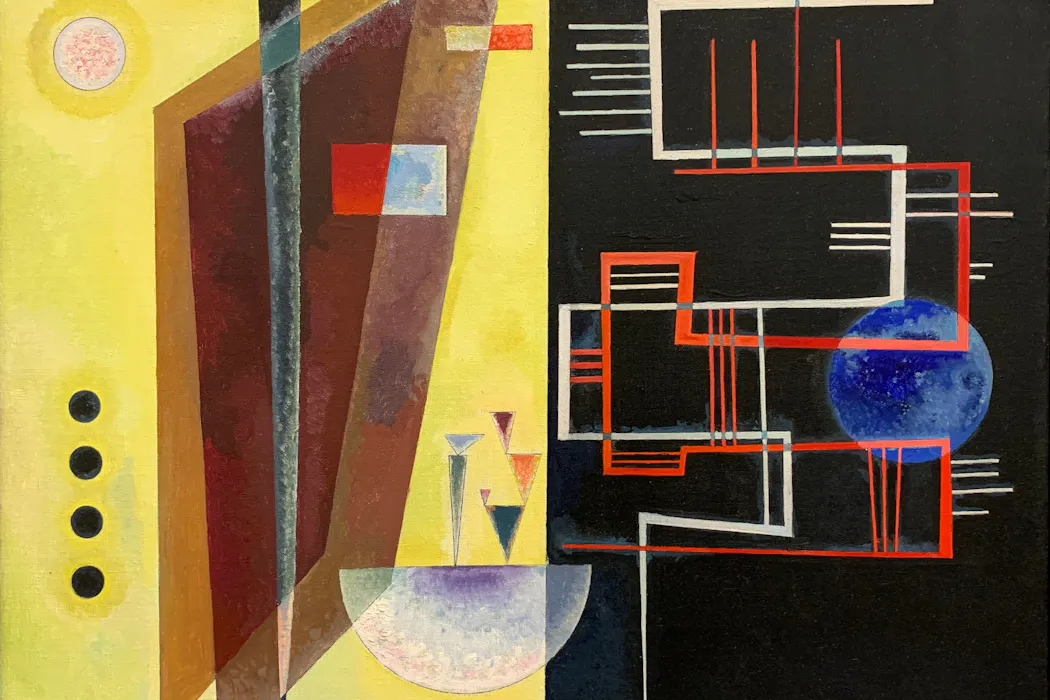
Wassily Kandinsky -- Inner Alliance (1929) Public domain, via Wikimedia Commons

Giada Scodellaro’s Ruins, Child and Anna Poletti’s Hello, World? are very different books. Scodellaro won the 2024 Novel Prize; her book stitches together a history of Black feminist poetry, theory and prose. Poletti’s novel is a work of queer erotic introspection, investigating the limits of domination and submission.

There’s not much to connect them in terms of style, theme or ambition. If there is a common anchor, it is that both dispense with the traditional mechanisms of narrative. They abandon conventional chapter and paragraph forms, prioritising “fragments” as the unit of construction.


Ruins, Child – Giada Scodellaro (Giramondo)

Hello, World? – Anna Poletti (Puncher & Wattmann)


Because of this experimental approach, these books might be considered “avant-garde”. This is a loaded term that originally referred to soldiers who scouted ahead of the army. The military metaphor was attached, in the 19th and early 20th centuries, to writers and artists who worked in spaces yet to be cleared by human consciousness.

Sometimes, but not always, these artists were aligned with progressive politics, and sought to use their works to help people imagine a different, more liberated future.

Neither Ruins, Child nor Hello, World? attempt this gesture. Scodellaro’s novel is interested in the experience of “lateness”; Poletti’s uncovers some of the bonds that make personal progress a fraught project. Both dwell in a kind of political melancholy where the priorities are not revolution, but survival and care.

If these are the radical novels charting new territory in the 2020s, they raise an important question: what does the “avant-garde” look like today?

Hello, World?

Anna Poletti is an Australian queer and feminist media-studies scholar who works in Utrecht. The endorsements on the back cover of her book come from Chris Kraus and McKenzie Wark, heavy hitters of theory and postmodern literature.

Hello, World? follows Seasonal, a genderqueer academic, who moves to the Netherlands for a job. After they break up with their long-term partner, they undergo a sort of katabasis: a journey into the underworld of their deeper sexual drives.

The book compares itself to Pauline Réage’s erotic novel The Story of O and the work of the notorious French libertine the Marquis de Sade. It spends most of its time exploring Seasonal’s dominant/submissive relationship with Laszlo, a self-exiled Hungarian.

The Kraus endorsement calls the book “radical”, and it’s true that it depicts a kind of relationship that is usually kept hidden. Poletti goes to the root of kink culture, trying to chart the ethics that sustain a relationship ultimately built on structured violence.

But the fragmentary approach, which moves between vignette-paragraphs and long text-message exchanges, allows the author to avoid some of the more intense moments between the characters. The book often stops just short of showing us the interior of the erotic relationship. It is elliptical about things that might be interesting for a reader of queer erotica.

That seems to be part of the point. The real subject of the book is the modulations of the relationship, as each character tries to avoid tipping the scales from domination to exploitation.

Seasonal often muses on their relationship to their own trauma. They are troubled when Laszlo uses the language of violence to describe them. It seems neither character can fly by the nets of their cultural and sexual conditioning.

In its exploration of the limits of trauma and violence, Hello, World? does chart somewhat virgin waters. Seasonal is an interesting creation. While they wax theoretical about relationships, they garble judgements about art and politics, declaring no interest in learning about either. They discard their long-term partner with relative ease when he says he won’t have sex with them.

They are straightforwardly dedicated to their own pleasure, in the best Sadean fashion, and largely indifferent to the suffering of those around them.

This complex portrait uncovers some interesting aspects of the doctrine of personal sexual liberation. Seasonal’s fairly uncritical embrace of identity politics and communitarianism leads to a sympathy with some of the arguments of Viktor Orban’s Hungarian nationalism. For all the rejection of the Enlightenment in the novel, the only thing that separates kink from abuse ends up being rational consent.

In the end, Seasonal’s pursuit of sexual freedom makes them into the sort of person they have spent their life rejecting.

As a diagnosis of the politics of self, Hello, World? works quite well. But its deconstruction of progressivism and internalised hetero-patriarchy is not “avant-garde”, nor particularly radical. I wonder what sort of circulation it will have outside the coterie of media-studies lecturers.

Ruins, Child

Like Hello, World?, Ruins, Child is a novel of fragments. But it arranges its fragments in a very different way. It is a tessellate of a huge number of texts drawn from the tradition of Black poetics and radicalism.

The notes identify the main texts as the writings of August Wilson, Toni Cade Bambara, Derek Walcott, Zora Neale Hurston, Langston Hughes and June Jordan. References to art, architecture, music and film are woven through the book.

The image on the front cover is a collage by Lorna Simpson, and collage is certainly one way we might think about Ruins, Child. The narrative is based on Bannu Cennetoglù’s HOWBEIT, a video-art project comprising 128 hours of footage taken between 2006 and 2018. The setting of the novel, Scodellaro explains in her notes, recalls the idea of “The Hill”, a figure of suburban ghettoisation in the work of Wilson and Bambara. The central characters are in constant dialogue with Bambara’s novel The Salt Eaters (1980), which Ruins, Child seems to be remixing.

The novel assembles these parts into a fascinating puzzle, revolving around six characters watching footage taken earlier in their lives. The women live in a crumbling apartment tower, shunted there by a neglectful government. They watch their past selves prepare for a carnival and trade boyfriends, and as the oldest of them, Vonetta, endures a seemingly endless pregnancy. Reality is stretched across decades. We are often left guessing the time and place of a given event.

This indeterminacy of time is right at the heart of the novel. Events seem to be taking place in the not-too-distant future. There is something vaguely prognostic about the world we are creating today: infrastructure and the old forms of society are eroding; the natural cycle of the seasons has given way to extremes of heat and cold.

But this is not an attempt to think about the future, so much as a consideration of what has already been lost. Scodellaro draws on the work of architects Peter Eisenman and Elisa Iturbe, whose theory of “lateness” in architecture is a sort of metaphor for what Ruins, Child is doing with history. Instead of building something new, the novel is picking up pieces. Vonetta, the eternal mother, laughs at people who want to “live in the near future”. She suggests “the mother does not aim for this, she does not think about being avant-garde”.

Philosopher and cultural critic Walter Benjamin mused that ruins, like other fragments, call out for the critic and historian to make them whole again. This means trying to revive the ideas and dreams that went into their creation before they were destroyed.

Ruins, Child brings together the pieces of nearly a century of Black radical writing in a similar gesture of salvation. It dwells in the moments of allegiance and solidarity that have allowed the oppressed to survive in a crumbling world.

Inwards and backwards

Poletti’s hello, world? reflects some cynicism about the progressive project; Scodellaro’s novel explicitly rejects the idea of being “avant-garde”. But neither book has its eyes set on the artistic or political horizon. They turn their eyes inwards and backwards, explaining our failed liberation or saving what they can as the world hurtles to oblivion.

I think both are conservative postures. It may well be that these ways of adapting to our present have contributed to us being where we are. There is a kind of easy melancholy in dwelling on the contradictions of personal politics and stooping to retrieve the relics of the past.

Scodellaro’s book is a wonderfully wrought collage; its clever construction rewards close reading. Poletti’s book has less to offer, though it does carry some important lessons in its slippery portrait of Seasonal.

Neither book is utopian, because neither really believes in politics. That our boldest books are restrained and intimate rather than forward-looking and activist is, I think, as telling a fact about literature in the mid-2020s as anything else.

The Conversation

Giacomo Bianchino does not work for, consult, own shares in or receive funding from any company or organisation that would benefit from this article, and has disclosed no relevant affiliations beyond their academic appointment.

  •  

Feral horse numbers in Australia’s alps are on the rise again. It’s time to act

Theo Clark/Getty

Last year, we noted early signs of recovery in Australia’s high country, following the reduction of feral horse numbers.

These had dropped from 17,000 in 2023 to around 3,000 in 2024 across Kosciuszko National Park, thanks to the management efforts of NSW National Parks staff and contractors.

But horse numbers are already bouncing back. The latest survey data estimate between 6,476 and 16,411 horses now roam the national park.

So, what happened?

A mild summer

The answer is simple. If feral horse eradication is impossible — or politically and legally off the table — then continuous management of horse numbers is essential.

With no aerial culling within the national park in 2025, two factors likely contributed to this rapid rebound.

First, horses move. Control efforts have largely focused on remote parts of Kosciuszko National Park, away from people, trails and roads. Once resident herds in these areas have been culled, horses from surrounding regions – particularly adjacent state forests – likely moved in.

Second, horses breed. After a mild summer with significant rainfall across the high country, most mares will have bred. During Autumn fieldwork, we observed large numbers of foals accompanying herds throughout the region.

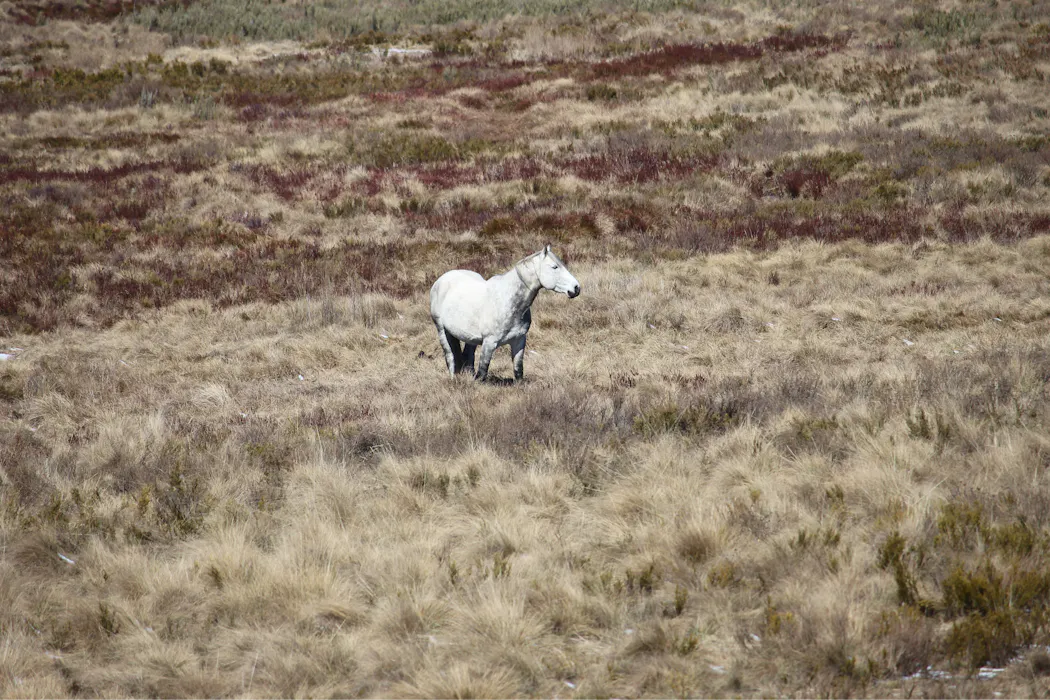
A herd of feral horses in an alpine meadow.
If feral horse numbers aren’t rapidly reduced again, things will get worse for the alpine environment and the horses themselves. crbellette/Getty

A numbers game

If numbers aren’t rapidly reduced again, things will only get worse, both for the fragile alpine environment and the horses themselves. With winter conditions imminent, many horses will struggle to maintain condition as snow covers grazing areas and energy reserves are depleted.

Ironically, some of the strongest opposition to culling overlooks these very real animal welfare consequences. Leaving horse populations unmanaged may ultimately result in prolonged suffering from starvation and exposure, compared with humane control conducted by trained professionals.

Forecast El Niño conditions may further compound these pressures, with drought likely to persist through spring and summer. As water and food become scarce, horses will likely concentrate around creeks, wetlands, alpine bogs, fens and meadows. These are precisely the alpine ecosystems most vulnerable to trampling, grazing and erosion.

And this is where hard-fought gains will be rapidly lost. Banks will become eroded, clear waters fouled and our fabled high plains replaced by overgrazed paddocks.

A long-term effort

We don’t need to look far to see what happens when a population of feral animals goes unchecked. Great Keppel Island, for example, is overrun with a thousand or more feral goats, denuding dune and forcing increasingly exasperated locals to erect fences around their properties

As with horses in Kosciuszko, political hesitancy and delayed action on Great Keppel have allowed ecological damage to escalate while management becomes increasingly difficult and expensive.

New South Wales Environment Minister, Penny Sharpe, recently said the latest Kosciuszko feral horse numbers confirmed the need for “continued management”, required to meet the target of reducing feral horse numbers to 3,000 by mid-2027.

But where did that target come from? It’s a holdover from the repealed Kosciuszko Wild Horse Heritage Act and, when even basic population growth models are applied, the implications become clear. Maintaining a population of 3,000 horses would still require the removal of well over 1,000 animals every two years — indefinitely.

In other words, there is no “set and forget” solution. If horse populations are to remain capped, ongoing culling will be necessary in perpetuity.

Alternative solutions?

Some have suggested that instead of culling, rehoming and fertility control should be used. While many Australians might like the idea of a “brumby” or two grazing in the back paddock, the number of landholders willing and able to care for these animals is far smaller.

Even retired racehorses struggle to find suitable long-term homes once their racing careers end, highlighting the practical limitations of large-scale rehoming programs.

Likewise, although various fertility control options have been suggested, vaccines, intra-uterine devices or surgical sterilisation are all invasive procedures for which horses need to be caught and sedated. These may be effective to maintain a small herd in an easily accessible area. But previous assessments have warned such an approach must be carried out in concert with large scale culling efforts.

Population dynamics vs politics

We don’t have to look far to find other examples of how invasive species management could be improved. In 2016, then New Zealand Prime Minister John Key introduced a bold plan to rid Aotearoa of all introduced predators in the next 30 years.

Predator Free 2050 is the first national-scale initiative to reduce the impacts of introduced predators, capitalising on the invention of new technologies including real-time automated species identification to trap targeted species and mobilising neighbourhoods across the country to join the effort.

Australia faces a different set of challenges — larger landscapes, divided jurisdictions and deeply entrenched cultural and political debates around invasive species management.

But the broader lesson remains the same: meaningful conservation outcomes require long-term commitment, clear targets and the willingness to act before ecological problems become too difficult to reverse.

The Conversation

David M Watson receives funding from the Australian Government (DAFF and DCCEEW).

Patrick Finnerty does not work for, consult, own shares in or receive funding from any company or organisation that would benefit from this article, and has disclosed no relevant affiliations beyond their academic appointment.

  •  

Does the body really ‘keep the score’ after trauma? How the debunked idea of ‘repressed memories’ is making a comeback

Have you heard someone say online or in casual conversation, when responding to someone’s struggles, “well, the body keeps the score”?

For many people, this phrase is a useful way to name the physical toll stress and trauma can take when the body is in “fight or flight” mode.

The everyday use of this phrase also demonstrates the extraordinary reach of the 2014 non-fiction book that popularised it, The Body Keeps the Score by Dutch psychiatrist Bessel van der Kolk. But as the idea has spread, it’s also been simplified.

In fact, this book – which has spent almost six years on The New York Times bestseller list – goes beyond arguing that trauma affects the body. It rests on a far more contentious claim: that traumatic memories live in the body, inaccessible to conscious memory.

This idea of repressed memories has a long and controversial history. Here’s why we’re worried it’s making a comeback.

The memory wars

During the 1990s, the idea of repressed memories sparked a major scientific dispute known as the “memory wars”. Clinicians and memory researchers disagreed over whether traumatic events could be completely inaccessible to conscious memory, only to be recovered later in therapy.

The core idea, rooted in psychoanalytic theory, was that traumatic experiences are so overwhelming that the mind unconsciously represses them as a defence mechanism, removing them from conscious awareness while they continue to produce psychological symptoms.

After more than a decade of research raising serious doubts about repression as a reliable mechanism, many believed this debate had been settled.

Yet the idea of repressed memories is returning.

Today, the claim is not only that traumatic memories can be repressed, but that the body stores them. These repressed, stored memories are said to re-emerge later through physical symptoms.

The Body Keeps the Score suggests healing requires “releasing” or “integrating” these hidden memories of trauma through a variety of alternative, often non-evidence-based therapies, such as yoga, pyschedelic-assisted therapy and guided imagery.

Traumatic experiences are further described as disrupting the nervous system in lasting ways – even beyond a person’s conscious awareness or memory of what happened. This argument has shifted public perceptions of trauma.

Trauma and the body

The kind of memory research we do does not deny trauma, nor that it can affect the body. The concern is specifically about how this relates to memory.

There is broad scientific agreement that stress, often associated with traumatic experiences, can alter hormone levels such as adrenaline, noradrenaline and cortisol, which can then impact other systems of the body. This can elevate blood pressure, affect libido, and influence how safe or unsafe the world feels on a bodily level.

For some people, trauma can lead to post-traumatic stress disorder (PTSD) which involves physical symptoms such as nausea, panic attacks, difficulty breathing, trouble sleeping, and feeling exhausted from constantly being “on guard”.


Read more: What do people mean when they say their nervous system is overloaded or needs a reset?


How memory works

Memory doesn’t work like a recording device we can simply “play back”.

Decades of research show that autobiographical memory is reconstructed each time an event is recalled. This means the context we’re in – including new information, our emotions, and other people’s expectations – can influence what we remember. This may distort or alter our memories.

Suggestive therapy techniques – for example, hypnosis or guided imagery, where patients enter a highly suggestible state – are especially prone to implanting false memories.

Major professional organisations, such as the American Psychological Association and the British Psychological Society have repeatedly warned that these therapeutic techniques designed to recover supposedly buried memories can create false memories.


CC BY-NC

Everyone seems to be talking about trauma. Do we know more about it? Or has the meaning changed? In this five-part series, we explore the shifting definition of trauma, why talking about it doesn’t always help, and what else can work.


Alternative therapies

The Body Keeps the Score promotes a broad range of therapies for trauma as alternatives to more established PTSD treatments, including yoga and psychodrama, which is the use of roleplay to re-enact the traumatic experience.

Some of these approaches may be helpful for some people. There is no harm in doing yoga if you have PTSD and feel it helps to reduce stress.

However, problems arise when these techniques are claimed to be able to help people “access repressed memories”.

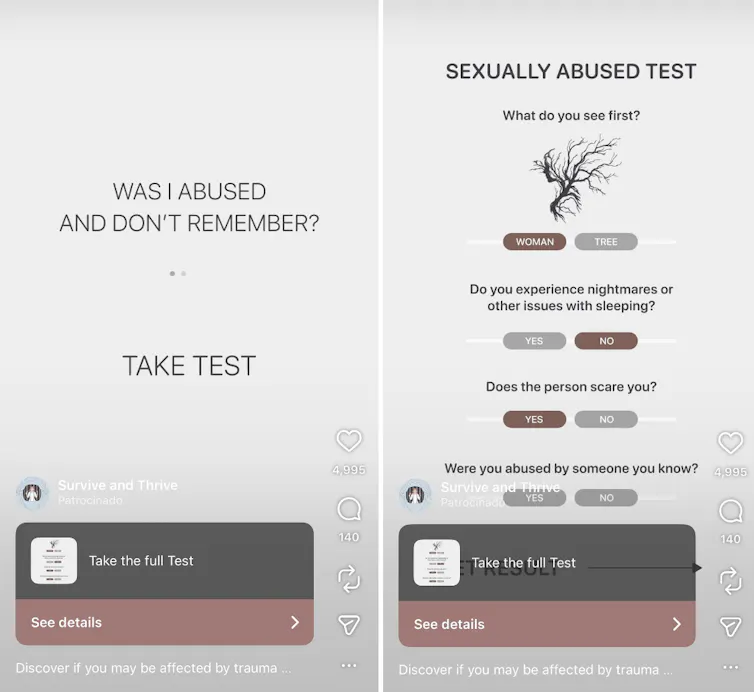
This idea can be exploited. Recent ads on social media suggest nightmares or trouble sleeping could be due to extensive trauma you don’t remember. A quick quiz will deliver your test results and redirect you to a “trauma-informed” online coaching program that you pay for.

This ad on Instagram prompts you to look for physical symptoms as clues to a traumatic past you don’t remember. Instagram

What about psychedelics and MDMA?

More recently, van der Kolk and others have turned attention to psychedelic-assisted therapy.

Substances such as MDMA and psilocybin have shown promise in tightly controlled research settings. They appear to influence brain pathways, though the mechanisms are not yet fully understood.

From a memory perspective, psychedelics raise specific concerns. Research suggests psychedelics can affect memory in some worrying ways.

They make people more suggestible, meaning they are more likely to accept ideas or stories as true, even when they come from an outside source. They also create a powerful feeling that what people experience is deeply and certainly real.

This is a risky combination, because a person could come away with a false memory they feel convinced has happened.

Early qualitative reports already describe cases in which apparent memories of trauma emerged during psychedelic therapy, with uncertainty about their accuracy.

Recent US research found the vast majority of people endorse belief in repressed memories and the idea that “the body keeps the score”. This research is currently being replicated in Australia, with preliminary findings suggesting these beliefs may be even more widespread over here.

The Conversation

The authors do not work for, consult, own shares in or receive funding from any company or organisation that would benefit from this article, and have disclosed no relevant affiliations beyond their academic appointment.

  •  

Seahorses and shark fins are illegally trafficked. An AI tool could help stop this crime

Marine wildlife samples used to create marine detection algorithms. Samples provided by the Australian Museum. Dr Vanessa Pirotta

Shark fins on a plane, seahorses in your bag and sea cucumbers in the post – these are just a few examples of illegal marine wildlife trafficking.

This crime can be hard to detect. But in a new study, published in the journal Frontiers in Ocean Sustainability, we show how artificial intelligence (AI) can be harnessed as a complimentary detection tool to help stop marine wildlife trafficking at international airports and mail facilities.

A global crime

The cross-border trade in live animals, animal parts or products is a global crime, facilitating the flow of billions of illicit dollars each year. It’s known to converge with other criminal activity, including the trafficking in drugs, arms and humans.

The United Nations Office on Drugs and Crime identifies five sources of demand for wildlife trafficking: food, medicine, pets and ornamental plants, specialist collection and adornment.

In some cases, such as pet prestige, people are motivated both by the desire to have a pet and the perceived status it brings to own an exotic animal.

People traffic marine animals too

Wildlife trafficking affects around 4,000 species. Many of the more well-known examples involve land-based animals – ivory from elephant tusks, horns from rhinos and scales from pangolins – the world’s most trafficked mammal.

Closer to home, we also see native Australian reptiles and birds, sometimes shoved in tins, put in socks and packaged up live to be sent overseas.

Marine creatures, unfortunately, are targeted too. This can include live animals such as fish in people’s bags, or dried marine life such as the rise of the seahorse trade and demand for shark fin.

We have small pockets of knowledge of this activity. But the reality is we don’t fully understand how widespread it is.

AI to detect marine wildlife trade

Currently, the best means of detecting illegally trafficked wildlife is humans. And then there are our four-legged friends: biosecurity dogs.

Recently, Australia has also been working to develop the use of AI as a potential means of detecting land-based wildlife in illegal wildlife movements – building on existing detection pathways using 3D X-ray machines fitted with algorithms.

For our latest study, we built on these efforts by developing world-first marine wildlife algorithms. We taught computers to look for shark fins, seahorses and sea cucumbers.

Eight fins illuminated in blue light.
Shark fins scanned under 3D X-ray. Vanessa Pirotta

We did this by collecting a total of 68 samples of dead marine animals, which we scanned in a 3D X-ray machine to create a library of images. We then used this image library to develop algorithms to enable computers to search for what we taught it to look for – in this case, shark fins, seahorses and sea cucumbers.

Samples were scanned alone and then in more complicated scenarios to reflect how people actually traffic marine life. This means if a bag or mail item is hiding a shark fin, seahorse or sea cucumber, the algorithm will be able to flag this to an operator, prompting them to inspect the item.

Out of a total of 298 scans and a training data set derived from these samples, our algorithm had success rates of 95%, 95% and 85% for shark fins, seahorses and sea cucumbers, respectively.

Humans and biosecurity dogs still needed alongside AI

While technology fitted with computer algorithms may help people inspecting luggage or mail, we still need people to verify what computers see. Sometimes the algorithms get it wrong and may miss items.

Despite this, the broader implications of having AI as a second set of eyes searching for trafficked marine life will aid in identifying key trade routes to potentially stop this activity. The next step is relying on implementation of these algorithms at the front lines.

Like computer algorithms and AI, the more we learn, the better we get at detecting and potentially stopping this harmful crime.

The Conversation

Vanessa Pirotta received funding from Rapiscan Systems for this research.

Justine O'Brien receives funding from the San Diego Zoo and Wildlife Alliance; NSW Department of Climate Change, Energy, the Environment and Water; the Australian Research Council; Institute of Museum and Library Services; Great Barrier Reef Foundation; and the Taronga Foundation.

Phoebe Meagher receives funding from San Diego Zoo and Wildlife Alliance and the Taronga Foundation.

Zara Bending serves as a Resident Expert for the Jane Goodall Institute Global and is a Distinguished Research Fellow at the Macquarie University Environmental Law Research Centre.

  •  

Booker winner Douglas Stuart reveals flashes of tenderness in his violent working-class men

Douglas Stuart Martyn Pickersgill/Pan Macmillan

Douglas Stuart’s third novel, John of John, returns to the territory that made his Booker prize-winning Shuggie Bain, and Young Mungo, so unforgettable: the intimate violence of masculinity, and the ways love persists inside families whose members cannot speak or emote plainly to one another.

In Stuart’s Falabay, an imagined town on the Isle of Harris in Scotland’s Outer Hebrides, the wind batters – and people have learned to endure by saying less than they mean.


Review: John of John by Douglas Stuart (Picador)


John Calum (Cal) Macleod returns home from art school in Edinburgh after his father, John, hints at his grandmother’s escalating ailments. For Cal, coming home means regression and constraint. He is indebted, back under the roof of a father who insists, often with overbearing zeal, on obedience and conformity.

In Edinburgh, with dyed hair, new clothes and the agency to publicly express his homosexuality, Cal had begun to assemble a new self. Back in Falabay, Cal is under the roof of his father, a man of unrelenting principle. Control is John’s dialect of love. Proximity must be earned through deference. John forces Cal to listen to bible readings:

because it was too much to ask his son to call him a couple of times a week, or to sit with him by the fire for a few hours and give him all his news. Too much to ask Cal just to be near him.

Intimacy and violence

The Macleods are a weaving family. Stuart, a trained fashion designer, attends to the material textures of that work in imagery of the lanolin that softens and splits skin and fibres that embed themselves in the knuckles of the men.

In two scenes in particular, Stuart demonstrates his skill at writing the tactile and physical. He illustrates John’s attentive care for his son, as well as his violent impulses. After Cal’s hands have been cracked and inflamed by overexposure to artificial heat in the weave shed, John makes him sit, and cares for him “as he might care for any useful tool”.

Cal washed each hand before John dried them on a clean tea-towel. Then John oiled them, rubbing ointment into each knuckle, caressing the webbing between Cal’s forefinger and thumb. Cal winced occasionally, and John went slower, taking care to rub the lotion into the peeling nail beds.

Later, Cal insists on returning the care and tends to his father’s own damaged hands, tweezing wool from John’s inflamed skin and cleaning the wounds. “Look at you two playing nail salons,” Cal’s grandmother, Ella, jokes – yet the intimacy here is unmistakable.

Stuart writes men who are simultaneously opaque to themselves, and overexposed to the community’s judgement.

John polices Cal’s appearance, forbidding him from attending church with neon orange hair, as though colour itself were a provocation. When Cal insists on attending anyway, John beats him in the car.

“He braced his left hand on Cal’s lapel and with his right he punched his son three more times, each blow stronger in its fury and determination.” The beating over, he glimpses his reflection. “Now that the anger had gone, he didn’t know what had possessed him. When he looked in the mirror he saw a devil, and the devil wore his face.”

The scene captures how visibility becomes a moral test in communities trained to prize conformity.

Stuart refuses to excuse John, allowing him full moral agency. Something (the devil) has influenced his behaviour, but John is still the perpetrator. Despite moments of tenderness towards his son, he remains a man who harms people he loves – and crucially, who cannot and will not apologise.

The novel’s most complex reality lies in a truth disclosed early, then handled with delicate restraint: John is in love with his neighbour and childhood friend, Innes. Their relationship is a long, quiet arrangement of glances and hedged intimacies, often reset by John’s fear and Innes’ patience.

“I haven’t had any time alone with you since … I can’t remember when.”
“Cal will be home soon. You have to be patient, please.”
“Am I not the very model of self-control?”
John exhaled as though blowing on a cup of hot tea. Then he nodded slowly. “You are,” he said, “you are.” […] Seeing they were truly alone, he took a step closer. He took Innes’s hand in his, and he stroked the back of it with the side of his thumb.

Stuart gives Innes an eloquent verdict: “It went like this, loving John Macleod. You did it against all reason, against all your better judgement, and in that exact moment he starved the embers into submission, he had the skill to blow on them gentle and ignite them again.” Loving John is an exercise of endurance.

Desire and rejection

For Cal, desire is improvised and punctured by rejection. He answers a lonely-hearts ad and is rebuffed. He fixates on and tries to seduce Innes, an act of longing and misrecognition – a young man reaching for the closest possibility of being known and understood.

If John’s love is performed through maintenance and denial, Cal’s is performed through desperate pursuit. He wants to be seen and held, tenderly.

book cover: John of John

Stuart has a gift for the social contours of villages. In the grudges that accrue and create impenetrable fortresses, Stuart illustrates how family fractures become public currency and harden into comic custom. In Falabay, the MacInnes brothers, Innes and Sorley, share a house without having spoken to each other for 16 years.

Every conversation is duplicated, an arrangement of avoidance, because acknowledgement would concede too much. Cal’s childhood friend, Doll Macdonald, nursing old hurt about Cal “leaving him behind” drinks his life into collapse. Stubbornness provides a kind of safety from ruin. No single slight causes these outcomes, nor could an apology prevent them.

Stuart is attentive to the drawn-out violence of pride and how it makes these men choose solitude over repair, principle over mercy.

Falabay is not glamorised: poverty and precarity pervade the novel, though less centrally than in Shuggie Bain or Young Mungo. Employment is seasonal and signing on (claiming unemployment) becomes an ethical debate whispered over the kitchen table, while the weather decides if your family will eat that night.

Cal’s university debts from Edinburgh haunt the family. In one sharp exchange, John and Cal argue in Gaelic about the dole – is it “dishonest,” or simply necessary?

Controversial on Christianity

Stuart’s handling of religion will be the most controversial element for some readers. It would be wrong to say the novel mocks faith, but it does associate the practise of Christianity with control.

The local minister presides rather than pastors, the congregation is fixated on keeping up social appearances rather than neighbourly care and John is a man who turns Scripture into a blunt instrument of discipline. There’s a matching economy here with the island’s other social systems: faith is kept in working order by policing the boundaries of who belongs.

As a Christian reader, I recognise the ache of filial misunderstanding here, but grace is noticeably absent from the novel. Stuart’s fictional church in Falabay is rendered with nuance, but the faith enacted is mostly a language of pressure: public morality without consolation and doctrine without hospitality.

I longed for a glimpse of forgiveness and repair, especially given the novel’s acute awareness of the ways in which shame distorts the expression of love.

Stuart writes the church in the Scottish Isles as these characters experience it, and he refuses the consolation of counterexample. His refusal is an aesthetic choice as much as a moral one. The novel’s tone remains austere; every consolation is so hard won.

What the novel intricately captures, with unsparing clarity, is how religious performance can lend cover to pride, and how the need to appear righteous can crowd out gentleness and grace.

John of John is a bleak novel, but not entirely hopeless. Tenderness is an event – fleeting, fragile – all the more arresting because of its scarcity. Stuart slows his sentences around these moments: the shoulder‑to‑shoulder quiet after an argument, his grandmother’s silent interventions, the small, comic abrasions of family life.

Readers of Shuggie Bain and Young Mungo will recognise Stuart’s signature: lyrical attention to harm, fierce compassion for children negotiating adult failures, men whose desires costs them dearly, households where harm and love continually conflict.

Falabay may be fictional, but its social world feels unbearably accurate. Stuart has returned to his territory and deepened it.

The Conversation

Caitlin Macdonald is affiliated with The University of Sydney.

  •  

After a landmark international court case backed workers’ right to strike, here’s what could change

The International Court of Justice has just resolved a 14-year dispute over workers’ right to strike – giving trade unions worldwide a significant win.

In a historic decision late last week, the court issued an advisory opinion that the right to strike is protected by a United Nations treaty, the International Labour Organization’s Freedom of Association and Protection of the Right to Organise Convention (also known as convention 87).

The new court decision does not mean we’ll suddenly see outbreaks of strike action all over the world.

However, it does matter right around the world – particularly in 158 countries that have ratified convention 87, including Australia, Canada, Indonesia and the United Kingdom.

A fight triggered by an employers’ ‘strike’

The International Labour Organization (ILO) is unique among the United Nations’ agencies because of its “tripartite” (three part) membership: with representatives from member states, trade unions and employer groups.

In 1948, the ILO adopted convention 87. All the countries that have since formally adopted the convention (a process called “ratification”) committed themselves to protecting freedom of association and the right to organise in their own domestic laws.

The convention made no explicit reference to the right to strike. Yet for decades the ILO’s supervisory bodies – which supervise the implementation of convention obligations – said that the convention did protect the right to strike.

Why? That view was based on the wording of the convention, stating workers have the right to form their own associations and organise their own programmes and activities. Strike action was interpreted as one of those protected activities.

But in 2012, the ILO’s employer representatives decided that longstanding interpretation was wrong – so they staged a “strike” of their own.

For the past 14 years, the employer representatives have refused to cooperate with ILO supervisory processes considering if countries are complying with convention 87 when the right to strike was involved.

Since 2023, that stalemate has been before the International Court of Justice – which is the court which has the power to interpret ILO conventions.

Last week, the court’s judges voted ten to four in favour of the unions’ argument, concluding “the right to strike of workers and their organizations is protected” under the convention.

What was at stake

While countries aren’t legally bound to follow International Court of Justice’s advisory decisions, like this one, they do still carry significant legal and political weight worldwide.

The ILO is the only place in international law where trade unions can make formal complaints if a country is not respecting its obligations to protect the right to strike.

All of that was at risk if the International Court of Justice had made a different decision. A finding that went the other way – in favour of the employers’ case – would have weakened the right to strike worldwide.

Last week’s court finding was a huge win for the international trade union movement.

Australia shows why it matters

The advisory opinion is particularly significant for the 158 nations that have ratified convention 87. Here’s an example of why.

Australia used to be thought of as a country with high rates of strike action.

However, since Australia legislated for a right to strike in 1993, that has stopped being true. In fact, over recent decades, strike action in Australia has stayed as low as it has ever been.

Strike rates in Australia are so low partially because it is harder than people realise to take lawful strike action here.

Since 1993 when a legislated right to strike was introduced, the laws that say when you can strike legally have got tighter and tighter, and the hurdles unions have to jump have got higher and higher.

Even when unions can satisfy the rules around when they can strike, it is easy to get it wrong. When that happens, they can lose the right to strike altogether.

That may sound like a good thing, especially if you’ve ever been caught in a train worker strike, or had to keep children home during a teachers’ strike.

But not being able to strike significantly weakens all workers’ bargaining power. When the cost of living rises and wages don’t keep up, employees end up financially worse off than before.


Read more: Real wages have gone backwards. Even earning $100,000 isn’t what it used to be


What it could mean long term

Like a lot of other nations, Australia won’t see any instant impacts of this new international court advisory opinion.

However, the court’s finding does mean the ILO is no longer stuck in a deadlock. The ICJ decision means that the ILO supervisory bodies can start scrutinising Australia’s strike laws again.

It also means Australian unions have a better chance of bringing complaints about our laws to the ILO – and being successful.

That potential for increased international scrutiny may help shift the dial on Australia’s highly restrictive strike laws.

This is a good thing for workers. A healthy industrial relations system needs a well-protected, accessible right to strike.

The Conversation

Shae McCrystal has received funding from the Australian Research Council. She has published several books including 'The Right to Strike in Australia' and 'Strike Ballots, Democracy and Law'.

  •  

Exoskeletons for people with cerebral palsy are now a reality – but there’s still much to figure out

Cerebral palsy is the most common disability that starts in childhood, affecting about 50 million people worldwide.

Cerebral palsy can impact a person’s ability to move their body. This can result in mobility problems, muscle stiffness or weakness, and abnormal movements. There are often other neurological issues as well, such as epilepsy or visual impairment.

Physiotherapy can help people with cerebral palsy across the lifespan. It uses a range of interventions to improve mobility and function. Conventional physiotherapy includes treadmill training, strength training and task-specific training (such as practising getting in and out of a car).

But there’s another therapy tool that’s been showing promise – exoskeletons. These wearable devices support a person’s body from the outside, helping their posture and movements.

For two decades, lower limb robotic exoskeletons have been a major focus in neurological rehab for adults. The majority of research has been about people with stroke and spinal cord injury.

Can they help with cerebral palsy too? Published in Disability and Rehabilitation Journal, our new systematic review of robotic exoskeletons for cerebral palsy reports promising findings – and more questions to tackle.

From the lab to everyday life

The first exoskeletons to help people walk were developed in the 1960s. These were clunky, complex devices, and took several decades to leave the lab.

Over the past 60 years, exoskeletons have become much more streamlined. In Australia, several have been approved by the Therapeutic Goods Administration in recent years.

There are three main categories of medical exoskeleton. Two of them are essentially stuck in place – these are devices paired with treadmills, such as the Lokomat, and “end-effectors” (static devices similar to an elliptical machine), such as the Innowalk.

The third category are devices which can be used overground, such as the Atlas 2030. With overground devices, users can have more choice in where they move, and interact with their environment more.

They even show promise as longer term assistive devices – something the person might wear in everyday life.

What does the evidence say?

An advisory committee for Australia’s National Disability Insurance Scheme (NDIS) is currently reviewing various supports for people with disability, including robot-assisted gait training.

The results will advise Australia’s peak disability funding body on whether and how to fund therapy with this technology. So, it’s timely to look at the evidence. That’s exactly what our systematic review did.

We asked: what are the effects of wearable overground exoskeleton-assisted therapy on physical, functional, quality of life and participatory domains for people with cerebral palsy? “Participation” refers to being truly involved, rather than just present, in chosen activities.

We included 21 studies representing 241 people with cerebral palsy, with an average age of nine. Then, we extracted and analysed data for all clinical outcomes. This included walking speed, endurance, balance, high-level mobility (running and jumping), strength, goal attainment and more.

Robotic rehabilitation outperformed conventional therapies for four outcomes:

  • walking speed
  • walking endurance
  • balance
  • high-level mobility.

This means using exoskeletons could provide meaningful benefits in these areas for people with cerebral palsy.

For other outcomes, there was not enough data to make recommendations, or results were inconsistent. Skin irritation was reported in some studies, but never prevented ongoing use of the exoskeleton. Where mentioned, user experiences were generally positive, although most studies didn’t evaluate them.

More to discover

Despite our review showing some encouraging benefits of exoskeleton therapy for people with cerebral palsy, there’s much we still don’t know. Very few of the included studies reevaluated outcomes after the person stopped the therapy. So we can’t say whether benefits are sustained.

We also couldn’t categorise results by type or severity of cerebral palsy, or by age. And with only seven adult participants represented in this systematic review, results can be confidently applied to children, but not adults.

There’s some evidence this technology is beneficial, compared to conventional therapy. However, no studies explicitly compared the use of the exoskeleton with the next most equivalent, and more readily available intervention – bodyweight supported treadmill training.

Staff at a hospital in Bilbao, Spain working with a child using the ATLAS 2030 exoskeleton.

Exciting is not enough

Recently, therapy with overground exoskeletons is becoming more available in Australia. Costs for these sessions with trained and experienced clinicians can be supported through NDIS funding. However, currently no scheme in Australia will fund a person to have an exoskeleton of their own.

It’s very common for families to want to “try it all”, particularly new and exciting therapy options. Exoskeletons are definitely exciting and attract significant interest.

However, it’s important that families don’t waste money and time on inappropriate therapies.

Our systematic review supports the use of overground exoskeletons for walking speed, walking endurance, balance and high-level mobility for people with cerebral palsy.

It’s crucial for clinicians to provide appropriate and evidence-based advice on the best treatment options. If someone with cerebral palsy wants to try robotic exoskeleton therapy, the clinician should set clear goals for what results to expect, and step forward with caution.

The Conversation

Nicola Postol does not work for, consult, own shares in or receive funding from any company or organisation that would benefit from this article, and has disclosed no relevant affiliations beyond their academic appointment.

  •  
❌