Reading view

Cities are making it rain more – but not as much as scientists thought
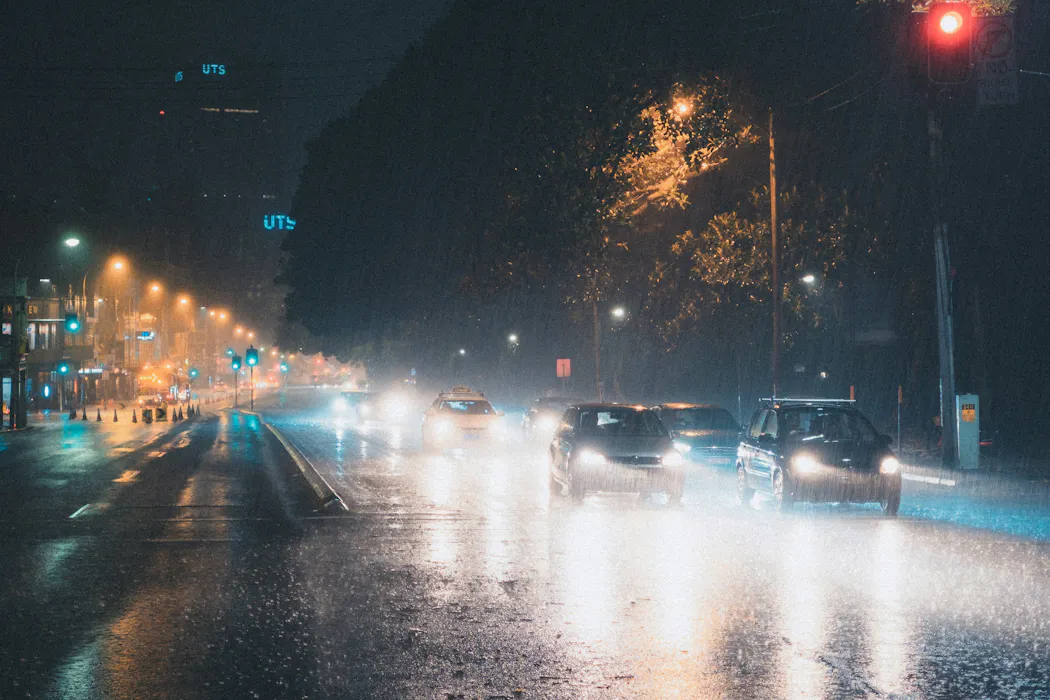
Henry Chen/Unsplash

After another spell of wet weather along Australia’s east coast, with storms, heavy rain and flash flooding across Sydney and parts of New South Wales, it is natural to ask whether our cities are shaping the rainfall that descends upon them.

This matters because most people now live in cities. If urbanisation changes rainfall, even slightly, the effects can reach large populations through flooding, stormwater design, water supply and infrastructure planning.

Satellite data have consistently shown that many cities experience more rain events than the countryside around them. The usual explanation is that cities themselves are involved: urban heat, rougher surfaces, aerosols and changed land cover can all affect how storms develop and where rain falls.

Our new study, published in Environmental Research Letters, asks a related question: how much of this data reflects real changes in rainfall, and how much depends on how we observe it?

Why we need satellites

Understanding rainfall over cities is hard.

Rain gauges accurately measure rainfall at a specific location, but are irregularly distributed and cannot fully capture how rain varies across a large city. Climate models can simulate urban weather in detail, but kilometre-scale simulations across many cities and decades remain computationally expensive.

Satellite observations help fill this gap.

NASA’s Integrated Multi satellite Retrievals for GPM, known as IMERG, provides near-global rainfall estimates at high resolution, and is now widely used for studying rainfall over cities.

What the satellite data shows

We examined IMERG rainfall data across 15 of the world’s largest cities, including Sydney and Melbourne. The cities span different climates and geographic settings, including both coastal and inland regions.

A clear pattern emerged. Rain events occurred more often over urban areas than over nearby rural ones. The strongest signal was not that every storm became stronger, but that satellites counted more hours in which it was raining over cities. Individual events over urban centres often dropped less water than those in surrounding areas.

In other words, the main urban signal in IMERG is more frequent rain, not heavier rain.

Different sensors, different stories

Modern satellite rainfall data combines both infrared and microwave observations.

Infrared sensors estimate rainfall indirectly from the temperature at the top of clouds. They provide broad coverage, but can miss light, shallow or warm rain because these can occur even when the tops of the clouds are not very cold.

Microwave satellites fly in low orbit and detect signals more directly linked to raindrops and ice inside clouds, making them particularly useful for identifying whether rain is actually occurring.

When we separated the IMERG data by observation type, the urban signal mainly came from microwave observations, while infrared estimates showed no urban pattern.

This does not mean the microwave signal is wrong, but it raises a potential problem for long-term studies: microwave observations have changed over time. New satellites have been launched and older ones retired, and across the cities we studied, microwave sampling frequency happened almost twice as often by 2023 as it had in 2001.

This matters because the more often a microwave sensor passes overhead, the more rain events it can detect. A light shower missed in 2002 could now be caught by one of several satellites passing within the hour.

Testing the artefact

To test whether this changing sampling affects observed rainfall trends, we compared the microwave and non-microwave with long-term averages. This meant we could separate out the result of changing satellite sampling from the actual changes in weather.

Changes in microwave sampling explained up to about 20% of the long-term rainfall trends across the 15 cities. For rainfall frequency, cities such as Lagos, London, Melbourne, Beijing, Berlin, Mexico City and Paris showed areas where more than 40% of the apparent trend could be linked to the changing observing system.

The satellites did not create the whole urban rainfall pattern. After accounting for sampling effects, the urban signal remained, but the long-term trend became smaller. So we think it really is raining more often over cities, but perhaps not as much as we thought.

Moving forward

For Sydney, we also compared IMERG with CMORPH, another satellite product, and with Bureau of Meteorology rain gauges. CMORPH showed a similar urban pattern, though the two products are not fully independent because they use overlapping microwave observations.

The gauges are a more independent check, but with too few stations outside the urban core, in Sydney and most cities, the true magnitude cannot yet be confirmed on the ground.

Satellite rainfall data is now used everywhere, in climate science, flood risk, agriculture, insurance and water planning. In many regions it is the only consistent rainfall record over large areas. Our results are a caution: part of an apparent trend can come from the changing observing system rather than real change.

As for why cities get more frequent rain, the likeliest explanations are familiar: urban heat that lifts air, rougher surfaces that nudge winds upward, and aerosols that alter cloud droplets. The signal is real. The task now is measuring it properly.

The Conversation

Shankar Sharma receives funding from the Australian Research Council.

Andy Pitman receives funding from the Australian Research Council.

Jason Evans receives funding from the Australian Research Council.

  •  

Three new Ebola vaccines are being developed. An infectious disease expert explains

When it comes to Ebola outbreaks, it’s not often we have two pieces of good news in one week.

First, we heard there’s new funding of up to US$62 million to fast-track the development of vaccine candidates against the type of virus circulating in the Democratic Republic of the Congo (DRC) and neighbouring Uganda.

Then, we heard authorities had downgraded the confirmed numbers of Ebola deaths and cases in the region.

As of June 2 local time, DRC health authorities reported 344 confirmed cases, including 60 confirmed related deaths. Uganda has reported 15 confirmed cases, including one death. Previously, suspected cases in the region were more than 1,000.

Here’s what we know about the three vaccine candidates announced this week and why we still have a long way to go before this concerning outbreak is under control.

Don’t we already have Ebola vaccines?

Yes, we have two approved Ebola vaccines. One is Ervebo, the other Zabdeno/Mvabea.

Both are effective and approved for protection against the Zaire Ebola virus specifically. However, this is a different virus to the one circulating in the DRC and Uganda currently, the Bundibugyo Ebola virus.

Unfortunately, different types of Ebola virus have different surface proteins that the vaccine targets. This means existing vaccines against the Zaire virus aren’t effective enough to be used against the Bundibugyo virus.

The newly announced funding, from the Coalition for Epidemic Preparedness Innovations, aims to fast-track the development of the first, approved human vaccine specific to the Bundibugyo virus.

This support includes facilitating clinical trials as quickly as possible so if a vaccine proves both safe and effective it will be available as fast as possible.

Here’s what we know about the three vaccine candidates.

1. IAVI vaccine

A World Health Organization (WHO) expert panel called this “the most promising candidate vaccine”.

It’s a single-dose vaccine that’s being developed by the International AIDS Vaccine Initiative (or IAVI) with the University of Texas Medical Branch. It uses a similar approach to the approved Ervebo vaccine.

The vaccine candidate has been tested in macaque monkeys, where it was shown to protect against the Bundibugyo virus.

But it hasn’t yet been tested in humans. The WHO expert panel said clinical trials were likely seven to nine months away.

2. Moderna vaccine

This vaccine candidate is from the same United States-based pharmaceutical company that makes one of the approved COVID mRNA vaccines. The company also has an approved mRNA vaccine against respiratory syncytial virus, or RSV.

It’s developing an mRNA-based vaccine targeting the surface glycoprotein of the Bundibugyo virus.

The company says the latest funding will support preclinical studies (meaning, animal or laboratory studies) and human clinical trials.

3. University of Oxford vaccine

The third candidate is being developed by the University of Oxford and Serum Institute of India. It’s based on essentially the same technology used in the Oxford/AstraZeneca COVID vaccine.

The testing of this candidate is really just starting. And the WHO expert panel said extra animal data was needed. Yet it said this candidate vaccine could be in human clinical trials within two to three months.

If successful, the experts noted a single dose could be suitable for contacts of Ebola cases. However, for high-risk but unexposed populations, such as health-care workers and front-line responders, two doses might be considered.

This group has already produced vaccines against another type of Ebola virus that has been tested in early phase human clinical trials.

Where to from here?

There are many challenges in developing vaccines for diseases like Ebola.

They need to be shown to be safe and effective, receive regulatory approval, manufactured at scale, then transported and delivered into people’s arms.

However, given some of the challenges with vaccine uptake and the negative perception and misinformation surrounding vaccination, it can be harder to recruit people to vaccine clinical trials. That’s especially for studies involving healthy volunteers, often conducted in countries far away from those affected.

The later phase clinical trials are typically conducted in the affected region. But these are often remote, have limited health care resources and may be in conflict zones. These make it even harder to conduct the types of clinical trials needed to show the vaccine candidates are safe and effective.

A vaccine would make a significant difference in our ability to control this outbreak. It would also be a useful tool for protecting against and responding to future outbreaks of the Bundibugyo virus.

But until we have such a vaccine, basic infection control will still be the main way to control the current outbreak.

The Conversation

Paul Griffin in associated with the Immunisation Coalition and AMA Queensland. He was the principal investigator on previous Ebola vaccine candidates.

  •  

How the food industry shapes your child’s fussy eating

Imad 786/Unsplash

Your toddler demands a Bluey-themed yoghurt and has a tantrum when offered something else. If it’s not a Nutella sandwich, your child’s lunchbox comes home uneaten. And the dinner table can become a battleground unless there are sausages, chicken nuggets or pizza on the plate.

These examples of fussy eating are everyday experiences for many parents.

Fussy eating, also known as picky or selective eating, is common, and can be frustrating. It’s often seen as a child or parenting issue. But it’s not merely shaped by what parents do, or the characteristics of the child.

Our new research suggests food fussiness and children’s eating habits are also shaped by commercial interests in food.

This includes mass produced foods that are high in sugar, salt and additives, combined in irresistible combinations and that are heavily promoted to children to maximise sales.

This has important implications for children’s health, and sets up tensions between what parents want their children to eat, and what they’ll actually eat.

What is ‘fussy eating’?

Fussy eating refers to having strong preferences for specific foods. Sometimes it involves not trying new foods, eating a limited variety of foods, or avoiding foods with a specific taste, texture or appearance.

Most research estimates 10–30% of children two to six years old are considered fussy eaters, peaking at around three years old.

The origins of food fussiness lie in the age-old practice of learning which foods are safe to eat and provide enough energy. This is why we often like sweet foods and not bitter ones.

Today, food companies capitalise on this biology of survival. They engineer and market foods to appeal to children, and in ways that confuse their parents.

What we did and what we found

We interviewed 34 parents of children aged one to 18 years old about their children’s eating habits and how they navigated them.

Parents talked about how they felt pitted against powerful food companies that influenced their children’s tastes.

Their comments also revealed fussy eating in children older than most earlier research presumes. We found this is developing in the primary school years when children are exposed to more ultra-processed foods.

Here are some of the common themes.

1. ‘Pester power’

Parents felt responsible for teaching their children about healthy eating, yet this was challenging with so much food marketed directly to children.

Such concerns of children’s “pester power” have arisen with concerted efforts by food corporations to market foods designed to maximise shareholder returns.

One mother of three pre-school and primary school-aged children talked about marketing “bad” foods to kids or placing them in reach:

[…] my 2-year-old is always like Bluey!!! […] You almost don’t want to take your kids to the supermarket […] Of course, my kids [are] gonna throw a tantrum – you’ve got a lollipop at his eye level.

2. Conflicting information

Parents today are swamped with misleading, confusing and often false information about food. This makes it challenging for parents to discern what’s healthy or unhealthy.

A mother of three primary school aged-children said:

You think you’re getting something that’s actually healthy because […] on the packaging, it says it’s healthy. So you trust it […] but it’s actually not.

3. Impossible binds

Social situations that normalise processed foods influence the foods children see as desirable and place parents in impossible binds. A father of three pre-school and primary-school aged children said:

My son used to love hummus. But everyone else around eats doughnuts or chips […] It’s a battle that we’re not gonna win.

In this context, many parents were concerned about pushing healthy food too hard. They worried this could have the opposite effect in the longer term. A mother of two primary school aged children said:

It’s a Catch-22 […] if I put Nutella toast in his lunch box, he’ll eat it. But then do I stay strong and not put shit in his lunch box, knowing that he’s going to be starving and be horrible at the end of the day? […] I don’t want to make it a huge thing because I worry about making food a problem.

Fostering compassion and government action

Dietitians advise parents not to pressure children about food. They say not to hide vegetables, and not to use food as a reward. Instead, they suggest eating together at a table, and persisting with offering healthy options.

Our findings suggest this advice falls flat if it doesn’t consider the commercial food environment. We suggest that more compassion, rather than shame, is needed towards parents about the food they provide.

Fussy eating can be a symptom of commercial interests in selling certain kinds of products. Recognising this may encourage people to demand governments do more to support children’s healthy eating.

Ultimately, food fussiness is much more than arguments at the dinner table. It is also a challenge that involves governments and the food industry.


We would like to acknowledge the following co-authors of the study mentioned in this article: Imogen Harper, Katherine Kenny, Holly A. Harris and Fiona Wright.

The Conversation

Juliet Bennett receives funding from the Charles Perkins Centre Jennie Mackenzie Research Fund, the Faculty of Arts and Social Sciences, University of Sydney, and a family foundation grant.

Alex Broom has received ARC funding and is currently ARC Academic Director (Social, Behavioural & Economic Sciences).

David Raubenheimer receives funding from the ARC and NHMRC.

  •  

I don’t want to kill the spiders, ants and other bugs in my house. What should I do instead?

Rhian Sousa/Pexels

We’ve all been there: just as you’re about to fall asleep, you notice a huntsman spider on the ceiling. Or you walk into your kitchen and find a long trail of ants snaking into your pantry.

Given there are an estimated 10 quintillion individual insects alive on Earth at any one time, it’s no surprise they sometimes find their way into our homes. In fact, the average Australian shares their home with around 100 different insect and spider species.

But the reality is most of these tiny housemates won’t hurt us, and you really don’t need to kill them. In fact, many perform helpful jobs such as catching flies and mosquitoes, or tidying up crumbs.

So, what can you do instead?

Starting with spiders

Remember: many spiders in your home are harmless.

Common spider housemates include:

They’re big and speedy, but huntsmen are gentle giants that rarely bite and their venom can’t hurt humans. They are naturally timid animals that will usually try to avoid us big, scary humans.

A huntsman spider resting on the authors wall.
A huntsman spider resting on the author’s wall.

Black and brown house spiders live in messy webs often on screen doors or in corners. They are sometimes mistaken for funnel-web spiders, and while their venom can cause unpleasant symptoms such as nausea and swelling, they are generally timid and rarely bite.

Daddy long-legs spiders are the source of an urban legend claiming they are the most venomous spider in Australia, but have jaws too weak to break human skin. This is false; there’s no evidence these lovely spiders have venom capable of harming a human.

The author's housemate, a house spider (_Badumna_ sp)  named Arachne, paying its rent by catching flies.
The author’s housemate, a house spider (Badumna sp) named Arachne, paying its rent by catching flies.

There have been no confirmed deaths from a spider bite in Australia in nearly 50 years, partly due to the introduction of effective antivenom and partly because most spiders are very reluctant to bite.

In fact, you are far more likely to be killed by a dog, cow or kangaroo than by a spider.

Even redbacks are shy and non-aggressive and will often play dead rather than bite; most bites occur when the spider is accidentally squeezed, such as when moving a pot plant or putting on a shoe. Although their venom can make us unwell, no one has died from a redback bite since antivenom was introduced in 1956.

While a bite from a Sydney funnel web spider (Atrax robustus) should always be treated as a medical emergency, effective antivenom treatments mean no one has died from a funnel-web bite since 1981.

What about ants and flies?

Most ants in the house are harmless. They are likely scavenging for food, looking for water, or may even be passing through on their way to somewhere else.

Having said that, sometimes it’s hard to figure out what they’re doing. I have a trail of ants that runs up my shower wall – I have no idea what they are doing or why they are there. They’re just part of the family now.

Some people worry insects can spread disease. Yes, cockroaches, ants and flies can potentially transfer bacteria from one surface to another but this is rarely a problem in our homes since a single fly touchdown is unlikely to transfer enough bacteria to cause issues. Our homes also don’t typically have rotting food or faeces lying around where insects can touch it and spread germs elsewhere.

What should I do about them?

In many cases, you don’t have to do anything; the bug or spider in your house is likely harmless and won’t cause problems.

And growing evidence suggests at least some insects, including crickets, can experience pain or pain-like states.

While scientists still debate exactly what insects experience, it’s increasingly clear insects and spiders are far more behaviourally and neurologically complex than once assumed.

Is it really worth causing suffering to an animal that has done nothing wrong other than share your space?

Instead, consider simply capturing the animal in a container and sliding a piece of cardboard or plastic underneath before releasing it outside.

If you live with a phobia, perhaps you could ask a friend or neighbour to do it for you.

Most spiders make great housemates that help control insects, like this adorable jumping spider (_Salticidae sp_)
Most spiders make great housemates that help control insects, like this adorable jumping spider (Salticidae spp)

To make your home less attractive to insects and spiders, you can:

  • cover food sources, including pet food
  • clean up any spilled foods, crumbs or food residues
  • store loose food in sealed containers to prevent pantry moths and grain beetles
  • make sure your bin seals properly when closed
  • ensure your windows have well-fitting fly screens.

Only if everything else fails — or if the spider or insect is genuinely dangerous, which is rare — should lethal control such as pesticides or squishing be considered.

Remember: household insecticides are not necessarily harmless. Some studies have linked insecticide exposure to a range of health concerns (particularly in children).

Learning to live with them

The minibeasts in our homes are fascinating to watch and can provide a source of entertainment and education.

Kids (and adults!) can learn a lot about nature, ecology and science from watching insects and spiders at home. In fact, keeping and observing an insect has even been used as a successful form of therapy for children.

It’s OK to be scared of insects and spiders, but perhaps we should approach it the same way we approach fear of dogs or other furry animals: not through killing but by acknowledging the fear and working towards managing it.

The Conversation

Tanya Latty co-founded and volunteers for conservation organisation Invertebrates Australia and is former president of the Australasian Society for the Study of Animal Behaviour. She receives funding from the Australian Research Council and NSW Saving our Species.

  •  

Are Australia’s carbon farming schemes just hot air? Hardly – forests are regrowing almost everywhere

Trees take carbon dioxide from the air and turn it into wood, storing it for decades. This is why Australian authorities have made forest regeneration eligible for carbon credits.

The largest carbon farming scheme is known as human-induced regeneration. Here, land owners and managers support forests to return on once-forested land. Every tonne of carbon dioxide soaked up by regrowing trees is worth one Australian carbon credit, about A$37.50.

The scheme has around 42 million hectares of land on its books. But only a third of this area is eligible for carbon credits, as the land has to be assessed as likely to regenerate into forest under changed management.

In recent years, some projects have come under fire. Researchers have suggested there’s not enough regeneration or that regeneration would have happened anyway. But independent assessment of these claims suggest these concerns are overblown.

As someone responsible for formally reviewing almost 100 of these projects since 2023, I have visited many sites and verified the data. Overall, I found these projects were being managed well – and forests are regrowing.

How does carbon farming work?

Under the rules, the area can’t have been forested for at least a decade before the project starts. It must have a high likelihood of becoming forested and richer in carbon through regeneration.

If left alone, trees will naturally regrow unless something stops them. Grazing by livestock, feral animals and sometimes native animals is the biggest barrier.

Many regeneration projects are in semi-arid areas with limited water. If water is made freely available for livestock, it can lead to surging numbers of kangaroos, wallabies and other native animals that eat regenerating saplings. This is why one method of limiting grazing is removing artificial watering points.

Fencing is another method. Australian and international researchers have found trees and vegetation on degraded land usually regenerate better when behind fences, though not always.

Does it work?

Australian authorities define a forest as an area dominated by trees over two metres tall, with existing or potential taller trees covering 20% or more of the area.

Participants have to prove forests of local tree species exist in the surrounding area, show the land can support forest and that there are sources of seeds. They also have to show evidence the area could be considered forest 20 years or so after the project begins.

Before carbon farmers can earn credits, the evidence they supply is audited and reviewed by teams of independent experts.

As one of these experts, I have reviewed a great deal of evidence and been on site when data was collected by independent ecologists to confirm how accurate tree cover estimates are. They’re not perfect. But they are very good.

If regeneration is too slow or fails, the area can be removed from the scheme. To date, about 6% of the land considered likely to regenerate has been taken off the scheme. Put another way, that means forests are actually regrowing on 94% of the land considered likely to regenerate.

How human-induced regeneration projects are assessed and audited.

Is criticism warranted?

Prominent critics have questioned the link between stopping grazing and regenerating forest. If this critique was accurate, it would mean there was no permanent boost to forests by ending grazing.

They argue instead in favour of only giving carbon credits to projects where trees are actively planted on previously cleared land.

The problem is, planting is relatively expensive and can be limited in scope. Planting also requires great care in tree species selection and genetics.

By contrast, removing pressure and allowing forests to naturally regenerate avoids these issues. Natural regeneration can also work in areas where planting and tree management would be expensive.

The critics used national-scale maps of woody vegetation to argue tree cover on some projects was falling short.

But as other experts have pointed out, these criticisms don’t stack up. The maps and models they rely on underestimate tree cover, compared to local and precise data gathered by aircraft with high-resolution scanning lasers.

When regeneration areas are independently assessed using similar gold standard methods, almost all show clear signs of regenerating forest.

Where does this leave us?

Worldwide, there are very real and well documented problems with carbon credit schemes intended to protect or restore forests.

This is why it’s important to scrutinise Australia’s human-induced regeneration scheme and others like it. But not all criticisms are valid.

The good news is, gold standard data gathered by participants cross-checked with regular on the ground audits and reviews show the scheme is largely working.

Regeneration can be slow, even after livestock have been removed. Some heavily degraded areas may not regenerate at all. But overall, it is leading to more forests and more carbon stored.

Under Australia’s carbon credit rules, all methods of producing credits expire after ten years. As a result, the human-induced regeneration scheme closed to new participants in 2023. Policymakers are working on new nature-based solutions to store carbon and boost wildlife on privately managed land.

But for the foreseeable future, forests will quietly regrow on huge tracts of land – and their successes and failures will be tracked and measured to make sure Australia has more trees than it would have otherwise.

The Conversation

Cris Brack subcontracts to ANU Enterprise to deliver regular independent reviews of the Human Induced Regeneration program. He has no current research grants but previously received income to help develop Australia’s National Carbon Accounting System (NCAS) and advise industry and government about sustainable natural resource management.

  •  

Patricia Cornwell survived her parents’ breakdown, psychosis and neglect by creating her own worlds

Patricia Cornwell Patrick Ecclesine/Hachette

In 1976, Patsy Daniels, an English major at Davidson College in North Carolina wrote her first book. An autobiographical novel describing a fraught childhood and adolescence, it was never published. In 1990, Patsy, now identifying as Patricia Daniels Cornwell, wrote a forensic thriller, Postmortem, introducing medical examiner Dr Kay Scarpetta to the reading public – and launching a crime fiction series that she claims made her the highest paid female author of the time.

True Crime is the story of how this came about.

Twenty-nine Scarpetta outings later, Cornwell has written a memoir. Selective in its coverage, it’s still a brick of a book. It’s not always a comfortable read. Readers will need to be very interested in the Cornwell back story; the writing is as uneven as I’ve come to expect of her fiction. “I won’t do outlines and I’m not a planner,” she warns.


Review: True Crime by Patricia Cornwell (Sphere)


While the first half of True Crime is a detailed account of her chaotic childhood, apparently drawn from that original autobiographical novel, Cornwell has mined her journals to account for the last 40 years. So, the second half becomes increasingly sketchy. For example:

Early December 1992, I attended the New York premiere of a Few Good Men. Demi [Moore, who was in line to be cast as Scarpetta on film] took me to a party where I met Donald Trump, and we chatted about publishing and writing bestsellers.

To all appearances, Cornwell is a Republican (there are photographs of her with George and Barbara Bush, taken on holiday). It would be interesting to know a bit more about what she made of Trump. But no chance! On we go to the next celebrity encounter: “I said hello to Christopher Reeve and mentioned that I missed him as Superman.”

To her credit, Cornwell notes that Reeve was not much impressed by her awkward conversational overture.

A knack for violence

True Crime opens in 1966, with a snowfall in North Carolina. While ten-year-old Patsy and her two brothers are thrilled by the prospect of building snowmen and sledding, their mother is burning their possessions in “the throes of a psychotic depressive episode, purging for the end of the world as we knew it”. Never quite in charge of her metaphors, Cornwell confides: “Literally, she was at the end of her rope”, when not a literal rope is in sight.

To explain how this all came to pass, Cornwell backtracks to Christmas Day five years earlier, when her father abandoned the family in Miami to debunk with his secretary. Cornwell seems to think her father’s desertion triggered her mother’s paranoia, but it is apparent to me that both parents had a history of mental instability and their marriage was a car crash in slow motion. Not only did her mother suffer psychotic episodes, but so did her father. At one point after the breakup, he attempts to kidnap the children.

Having recently attended a service held by charismatic evangelist Billy Graham in South Florida, Patsy’s grieving mother relocates her children to the town of Montreat in Northern Carolina, where Graham lives in a heavily guarded compound.

Arriving at their gate, the distressed family are taken in and assisted by Graham’s wife Ruth, who shuffles the mother into psychiatric treatment and the children into care. This is disastrous for Patsy, who is subjected to cruel and unusual forms of psychological torture by their foster mother. It’s a tough read.

But Cornwell doesn’t shy away from the tough stuff. On the contrary, she seems determined to make sure we know the worst of it.

This includes being sexually assaulted as a child and as an adult, and her eating disorder in her first year of college. This results in her being admitted to a psychiatric institution; she discharges herself after a month. There, she experiences psychological abuse. Although Cornwell doesn’t make much of this, the treatment of both sexual assault and women’s mental health left a lot to be desired in the 20th century.

Patsy relocates to Davidson College on a tennis scholarship for her sophomore year, where she is attracted to the dashing Charles Cornwell, a professor of English who is 15 years her senior. Following an ardent pursuit of the hapless Charles that reads a lot like stalking, they are married and Cornwell embarks on a career as possibly the worst cadet journalist ever on The Charlotte Observer in Virginia.

Despite egregious errors writing blurbs for the newspaper’s television section and mixing up the designers at a fashion show, Cornwell is appointed to the police beat, where she gets up close and personal with the action. “As much as I hated violence,” she tells the reader, “I seemed to have a knack for writing about it.” More than halfway through the book, my interest picked up.

The next Agatha Christie?

Cornwell decides to write her first murder mystery in the spring of 1984. Entitled The Stick Doll Murders, the story has an African theme involving voodoo and poisons. Knowing nothing about the genre, Cornwell sets off to a secondhand bookstore in Richmond, Virginia, where she buys three paperbacks, by P.D. James, Dorothy Sayers and Agatha Christie.

Cornwell dreams about meeting Christie at a book signing, where after reaching the head of the queue, Christie greets her with the words: “You will take my place.” This is one of many premonitions threaded through the book, presaging the author’s future success. At this stage, however, she still has some way to go.

a smiling blonde woman in black
Patricia Cornwell dreamed of Agatha Christie anointing her: ‘you will take my place.’. Tom Grimes/AAP

Doing research on poisons for The Stick Doll Murders, Cornwell meets with Richmond’s deputy chief medical examiner, Marcella Fierro, who becomes the inspiration for the minor character of Dr Kay Scarpetta in Cornwell’s first three attempts to write a crime novel. Meanwhile, Cornwell is desperate to observe an autopsy.

After Fierro suggests Cornwell become a neighbourhood assistance officer for the Richmond Police department, she is finally granted her wish. While the rookie cops faint and step outside, Cornwell is galvanised by the process and is soon working at the Office of the Chief Medical Examiner.

This is by far the most interesting section of the book. Cornwell dives deeper into her research: “riding with the detectives”, attending homicides and autopsies and writing down everything she sees and hears. Inspiration for the plot of Postmortem arrives in the activities of a “real” serial killer, the Southside Strangler, operating in and around the city of Richmond.

Deciding to move Scarpetta centre stage to tell the serial killer story from her point of view, Cornwell hits her crime writing stride at a moment when serial killers are the crime du jour.

Clueless about fame

The last quarter of True Crime is all about what happened next, but its detail is scant. Cornwell is presented with the British Crime Writers Association Debut Dagger award by Princess Margaret. Awkwardly, it transpires, since Cornwell breaks with protocol by trying to initiate a conversation with the Princess. “I understand you like horses,” she offers, and is greeted with a death stare.

She buys her first Mercedes and has a near fatal accident while driving under the influence, an experience Scarpetta’s niece Lucy later shares. She has her first romance with a woman. Later, she is outed by the press after an affair with an FBI agent she met while doing research at Quantico. She is also stalked. “I didn’t have a clue how to deal with becoming famous,” she tells us – and I believe her.

Cornwell branches out, revisiting the autopsies of Princess Diana and Elvis, “solving” the mystery of Jack the Ripper, making friends in high places and observing death row executions. In 2004, while undertaking research at a psychiatric hospital in Boston, she meets the love of her life, neuroscientist Dr Stayci Gruber, to whom this book is dedicated.

a woman in a white coat in a morgue
Nicole Kidman as Scarpetta. Amazon Prime Video

The last brief section is set in Nashville, when Cornwell arrives on set to film a cameo with Nicole Kidman, who plays Scarpetta in the Amazon Prime series based on her books. (The show has divided her loyal readers, largely as a result of the casting choices.)

In the first episode, Cornwell plays a judge, swearing Scarpetta in as the new medical examiner of the Commonwealth of Virginia. Though stiff, she looks happy, as well she may: a second series is already in production. And she never reads any of her book reviews.

Weighed in the balance, True Crime is a lopsided book: part misery memoir, part confessional. It is the story of a friendless child who created fictional companions and worlds of her own in order to survive and grew up to do it for a living. Scarpetta, her most successful creation, has served Patsy Daniels well.

The Conversation

Sue Turnbull does not work for, consult, own shares in or receive funding from any company or organisation that would benefit from this article, and has disclosed no relevant affiliations beyond their academic appointment.

  •  

Jeff Bezos says poetry without rhyming is easy – but it’s not that simple

Herbert Santos/Pexels

When Jeff Bezos defended major layoffs at The Washington Post last week, he reached for poetry. Pressed on why he would not simply subsidise the paper, he argued payment was a “signal” of relevance: “If people won’t pay for our product, we’re not doing, it’s not a good enough product […] It would be like poetry without rhyming. It’s too easy.”

The analogy was mocked almost immediately. A former Washington Post literary critic imagined Poetry magazine rejecting T.S. Eliot’s The Waste Land for insufficient rhyme. Others responded in the form the occasion seemed to invite:

Roses are red
Violets are blue
Bezos sucks
And his takes do too.

But the mockery missed the more interesting point. Bezos was not really talking about rhyme. He was talking about constraint: the idea that without some external pressure – rhyme in poetry, profitability in journalism – the work becomes too easy, too loose, too self-satisfied.

Poetry was never identical with rhyme

Rhyme is one of the most recognisable features of English verse. It gives pleasure because it returns: a sound goes out and comes back altered. Because it is so easy to hear, rhyme can look like proof of effort. We hear the rule. We hear the poem obeying it. That is exactly why it becomes such a tempting stand-in for seriousness.

In Middle English, “rime” could mean not only rhyme, but metre or verse more generally; so the terms blurred early on. But poetry was never identical with rhyme.

Old English verse, including Beowulf, was organised by patterns of stressed syllables, pauses within the line (caesura) and alliteration, rather than rhyme. Rhyme became increasingly important in English later, especially under French influence after the Norman Conquest. Because it is memorable, teachable and easy to hear, it gradually came to stand in for poetry itself.

But rhyme is not poetry. Nor is end rhyme the only way poetry makes pattern or music. Some of the most important poetry in English does not rely on it at all.

Why rhyme isn’t necessary

John Milton wrote Paradise Lost without rhyme, and defended the decision explicitly, arguing rhyme was “no necessary adjunct or true ornament of poem or good verse”.

What matters here is not mere hostility to rhyme, but the sense that rhyme can tempt a poet into polish before thought has finished its work. He goes further, dismissing rhyme as the “jingling sound of like endings” and even as the “troublesome and modern bondage of riming”.

Shakespeare’s drama offers the clearest proof: it is built largely in blank verse, where the line is shaped by rhythm and the movement of the sentence rather than rhyme, as when Romeo first sees Juliet:

But soft, what light through yonder window breaks?
It is the East, and Juliet is the sun.
Arise, fair sun, and kill the envious moon.

In Romeo and Juliet, the poetry is in the rhythm and the movement of the sentence, rather than rhyme. IMDB

But at its best, rhyme surprises

Much modern poetry also does without regular rhyme. Free verse is poetry that does not rely on regular rhyme or a fixed metre – a regular pattern of stressed and unstressed syllables – and it has always suffered from its name. “Free” makes it sound as though the poet has simply slipped the leash of form.

But, as T.S. Eliot wrote in Reflections on Vers Libre, there is “no freedom in art”: removing rhyme does not remove structure, but throws other patterns into relief. Rhythm, word order, line, repetition and the movement of thought become more exposed. Free verse is not failed rhymed verse. Its discipline is simply less immediately audible.

At its best, rhyme is a genuine source of pleasure and ingenuity. It does more than repeat: it surprises. Lord Byron’s Don Juan is full of rhymes that arrive not as dutiful closure, but as comic swerves or little flashes of intelligence.

Byron addresses the “lords of ladies intellectual” and snaps the stanza shut with “have they not hen-peck’d you all?”. Emily Dickinson, in another key, makes the point just as sharply: in “Because I could not stop for Death”, the poem’s slant rhymes show that rhyme does not have to mean tidy closure; it can work through near-match, disturbance and eerie precision instead.

Eminem’s famous answer to the claim that nothing rhymes with “orange” works by stretching sound across syllables and making the ear hear a likeness it did not expect: “four-inch” and “door hinge”.

That is one of rhyme’s oldest pleasures: not just recurrence, but discovery. Rhyme can be brilliant in exactly this way. It can also be merely mechanical. Bad rhyme is easy. Good rhyme is not. Its presence alone proves less than Bezos thinks.

Rhyme is audible. Profit is measurable. Both look objective, but neither proves very much. A poem can rhyme and still fail; a newspaper can make money and still be trivial. The mistake is to confuse what is easiest to hear or count with what matters most.

The Conversation

Bronwyn Lea does not work for, consult, own shares in or receive funding from any company or organisation that would benefit from this article, and has disclosed no relevant affiliations beyond their academic appointment.

  •  

Why do I wake up so tired after vivid dreams?

Roos Koole/Getty Images

Some mornings when you wake up, your head is fuzzy, your body is heavy, and you don’t feel rested. It felt like you were dreaming all night.

But did all that dreaming actually wear you out? Let’s look at what the science says.

We all dream, but not everyone remembers it

Most dreaming occurs during rapid eye movement (REM) sleep, which makes up 20–25% of our total sleep time.

We have four to six rounds of REM throughout the night, with each round growing longer as morning approaches. We all dream, and most of us dream multiple times a night, whether we remember it or not.

If you wake up during or just after a REM period, you are more likely to remember what you were dreaming.

Whether you remember a dream can also depend on the emotional intensity of the dream and whether you briefly wake up in the night, as well as differences in how individual brains store memories overnight.

People who regularly remember vivid, emotionally intense dreams tend to have lighter, more broken sleep.

What happens in your brain when you dream?

During REM sleep, your brain is running almost as hard as it does when you are awake, firing away, while your body lies completely still. Your muscles are essentially paralysed, which stops you acting out what’s happening in the dream.

At the same time, the parts of the brain that handle emotion – the amygdala, hippocampus and thalamus – are highly active. The prefrontal cortex, which normally keeps things rational and logical, is much less engaged.

So you get vivid, emotionally charged experiences that feel completely real but make no logical sense. That part is normal.

How long do dreams last? And are we any good at judging?

Most people assume dreams are brief, fragmented flashes.

In fact, the evidence suggests otherwise. REM sleep dreams appear to unfold roughly in real time.

When researchers have woken people from REM sleep and asked them to describe their dream, the length of their account closely matches the duration spent in the dreaming stage of sleep (REM episode). A dream that feels like 20 minutes was probably about that long in real life.

Where people go wrong is estimating how much of the whole night they spent dreaming. A stressful or vivid dream feels longer and stays with you. A dull one vanishes before you even open your eyes.

On top of that, we mostly remember dreams we actually woke up during.

Someone who was sure they dreamed all night probably had a completely normal night of REM sleep. They just happened to wake during the emotionally charged parts, and those are the ones that stuck.

So does dreaming itself actually tire you out?

During REM sleep, your brain isn’t resting in the way deep sleep allows. Even so, brain imaging studies suggest this energy use alone doesn’t account for the fatigue people feel after a heavy night of dreaming.

Dreaming on its own does not seem to impact your sleep quality unless it tips into nightmares.

The more straightforward explanation is this: if you remember a dream, you almost certainly woke up during it. Those wake-ups, even the ones you barely register, take time away from deep sleep.

These wake-ups also give the brain less opportunity to clear a waste product called adenosine. During the day, adenosine builds up in the brain. As it accumulates, the pressure to sleep grows. One of sleep’s main jobs is to flush this out, and it does that most effectively during deep sleep. Wake up before it’s done and you might find yourself more tired the next day.

Waking from REM sleep is also harder on the body than waking from lighter stages. It can produce sleep inertia, that thick, foggy state in which your brain refuses to come online. The tiredness is not a consequence of dreaming: it’s a consequence of when you woke up and what stage you were pulled from.

Consider the quality of your sleep

When sleep is cut short or is repeatedly broken, the brain makes up for lost REM time on subsequent nights, spending a higher proportion of sleep in that stage. This is called REM rebound.

REM rebound is a compensatory response rather than a problem in itself. The actual problem is whatever is causing the sleep disruption.

If you regularly remember most of your dreams, feel like the number of dreams you have has increased, or find yourself waking up tired most mornings, your fragmented sleep may mean the brain isn’t getting the deep, restorative stages it needs.

If this describes you, and it affects how you feel and function through the day, it’s worth having a conversation with your doctor.

The Conversation

Yaqoot Fatima receives funding from NHMRC, MRFF and Beyond Blue. She is affiliated with Sleep Health Foundation

Danielle Wilson and Nisreen Aouira do not work for, consult, own shares in or receive funding from any company or organisation that would benefit from this article, and have disclosed no relevant affiliations beyond their academic appointment.

  •  

A philosopher’s take on NZ’s bill to define who counts as a woman or man

stellalevi/Getty Images

In August 2006, at the general assembly of the International Astronomical Union in Prague, astronomers voted on a new definition of a planet, and Pluto was demoted.

Pluto didn’t change, only its definition.

Now New Zealand’s parliament is preparing to vote on the legal definition of “man” and “woman”. If scientists couldn’t end the controversy over what counts as a planet, why should we expect politicians to define who counts as a woman or man?

There is something strange about deciding what something, or who somebody, is by counting votes. The result was awkward enough when scientists were voting in a domain where they knew what they were talking about.

The planet vote didn’t settle the debate at the time, nor nearly two decades later.

And now we want to do the same with humans?

The Legislation (Definitions of Woman and Man) Amendment Bill was introduced by New Zealand First MP Jenny Marcroft and passed its first reading on May 20. It asks parliament to define woman in law as “an adult human biological female” and man as “an adult human biological male”.

The bill assumes there is a settled biological test for whether a person is female or male – one the law can simply borrow and apply. Marcroft thus frames the change as restoring “biological reality” to the law.

But there isn’t a single biological test, and the bill does not specify one. Instead, biology is messier, more qualified and less politically useful.

When chromosomes don’t match what you see

The test that determines what gets written on a birth certificate is a visual inspection of newborn genitals. This works for most births but not all.

It misses out on the variations where external anatomy appears typical for one sex but internal organs don’t match, and it breaks down when what’s visible doesn’t clearly fit either category.

Chromosomes can be used as a more objective test. But while having a Y chromosome makes you male most of the time, there are too many exceptions and also diversity across species.

The production of gametes (sperm and eggs) offers a more stable definition, but it doesn’t substantiate the definition expected in the bill, because boys and older people don’t produce gametes. Nor do people with conditions where they either don’t produce gametes at all or their gametes don’t match the visual test.

Take gametes seriously for a moment. Does “biological female” mean producing eggs? If it does, then women past menopause are not female under the definition – yet they are a large part of the constituency the bill claims to defend.

The bill either excludes them, or it relies on a looser notion, something like a developmental pathway toward egg production or a phenotype historically associated with female reproductive function. At that point the word “biological” is no longer doing the crisp, settling work the bill needs it to do.

Promising clarity, delivering the opposite

The age clause produces a parallel problem at the other end of life.

A girl, on the bill’s definition, is not a woman. Existing legislation that uses “women” to cover both adults and children breaks and would have to be patched with a new vocabulary of “female children” or something else.

Attorney-General Chris Bishop flagged this, warning of “discrimination on the basis of age”.

Labour opposition MP Camila Belich gave the clearest example. New Zealand’s abortion law refers to “women” and where a statute does not specify an age of maturity, the default is 20. Under the bill as drafted, women under 20 may lose access to abortion.

The bill promises clarity but generates a definitional mess. So why pass it? ACT’s Karen Chhour said the bill was not about science, but about whether ordinary people are “allowed to trust their own eyes, speak honestly”.

Take her at her word. The bill isn’t resting on biology but on the social intuition that everyone knows what a woman or a man is and on the wish to have that intuition ratified somewhere durable.

This is a piece of legislation that treats a complex cluster of biological traits as if it were one settled thing, and ties legal meaning to the pretence.

Which brings us back to Pluto. Its reclassification was harmless because Pluto doesn’t care. It will continue its gravitational dance with other celestial bodies regardless of humans calling it a planet or not.

But women and men aren’t planets. The bill’s reclassification tells people whose lives will be deeply affected by the definition that the question has been resolved.

It hasn’t. And it cannot be resolved by a vote in parliament any more than the nature of Pluto could be resolved by a vote at a scientific conference.

If you have to legislate the meaning of woman and man, you have already admitted the word was doing more than describing biology.

The Conversation

Patrick Girard does not work for, consult, own shares in or receive funding from any company or organisation that would benefit from this article, and has disclosed no relevant affiliations beyond their academic appointment.

  •  

Australian unis have dropped again in global rankings. Here’s why we can’t just shrug it off

More than half of Australia’s universities dropped in global rankings this week.

Individual results always bounce around. But this drop, via the Centre for World University Rankings, suggests the decline of Australia’s standing in many global rankings systems is more than a blip.

Centre for World University Rankings president Nadim Mahassen warned

Australian universities are struggling to deliver high-quality education, attract and retain talent, and produce quality research at scale.

Mahassen explained this is “not just an academic problem” but one that undermines Australia’s “long-term future”.

The rankings also follow a high-profile opinion piece by academic Kylie Moore-Gilbert, who wrote last week how she had told her teenage stepdaughter to think twice about going to uni:

right now kids are taking on tens of thousands of dollars in debt to have a terrible campus experience while being graded on who can write the best AI prompts.

What’s going on?

What are rankings and what did they show?

Global university rankings aim to evaluate all universities in the world through a single framework. Each ranking system has a slightly different focus and methodology.

The Centre for World University Rankings measured more than 20,000 universities globally on four factors: education, employability of graduates, number of faculty members who have received top academic distinctions, and research output.

Of the 39 Australian universities included in the exercise, 14 improved their rank compared with last year, four stayed the same and 21 dropped.

Four Australian institutions made it into the top 100. While this number is the same as last year, the Australian National University and University of Sydney fell a few places, to numbers 93 and 100 respectively. The University of New South Wales and the University of Melbourne held the top spots for Australian universities at 52 and 64 respectively, with no change from last year.

June is the start of global “rankings season”, so we will soon see whether these trends continue to hold.

Other high-profile global rankings include those by QS Quacquarelli Symonds, Shanghai Ranking and the Times Higher Education.

A drop but not a shock

Last year, we saw some similar downward trends in Australia’s rankings, which university commentators described as a “wake-up call” for the sector.

So this year’s decline will not be a shock to anyone who works at an Australian university. Administrators also know the rankings can move around from year to year.

However, it is harder to brush off this year’s results. As media reports noted, universities have “tumbled” in rankings after a “scandal-plagued year”. It also follows an increased propensity to label the Australian higher education sector as being in “crisis”.

This label is tied to criticisms that unis are being run like profit-focused businesses, instead of places of education and aspiration, research and development, and civic engagement for the good of the community.

Indeed, as the rankings were released, Mahassen also cautioned Australia’s poor result reflected years of inadequate funding and the “devaluation of science and education as public goods”.

Amid criticisms of universities operating like corporate entities it is important to note federal funding to the sector (not including for HECS/HELP) has declined in recent decades, from 0.9% of GDP in 1995 to 0.6% of GDP in 2021.

Constant concerns

Universities have certainly been making headlines for the wrong reasons in recent years.

Concerns about university executives’ behaviour and pay have become regular stories.

On top of this, we have had a year-long Senate inquiry into university governance, which revealed a lack of transparency about spending on services such as consultancies. Labor senator Tony Sheldon criticised universities for

[taking money] out of the pocket of taxpayers and not going into better services for our students.

These issues have been exacerbated by both threatened and actual cuts to operations and jobs at many universities. This comes amid underpayment cases and precarious work conditions for many academics.

As the late professor Graeme Turner argued in his 2025 book, the Australian university system is “broken and urgently needs fixing”.


Read more: There is declining trust in Australian unis. Federal government policy is a big part of the problem


What are students paying for?

Some Australian undergraduates are taking on huge levels of debt to go to university.

The Job-ready Graduates scheme restructured university fees in 2021 under the Morrison government. It lowered fees in some areas, such as teaching and nursing, while massively increasing the cost of degrees in humanities fields. Despite widespread criticism of the scheme, the Labor government has not scrapped it. Arts degrees now cost more than A$50,000.

These huge costs comes amid moves to reduce in-person lectures and tutorials at some universities.

It also comes as universities – in Australia and around the world – grapple with the rise of AI and what this means for assessments, cheating and the quality of student learning.

No wonder some are questioning whether an expensive uni education is worth it.

The international student factor

But it is not just domestic undergraduate fees and poor executive management that are mixed up in the issues facing our universities.

Rankings are particularly important tools for international student recruitment. Prospective students look closely at the rankings and research and teaching reputations of various unis. A drop in rankings could mean students look to other countries in the competitive global market for the international student dollar.

That dollar is important to Australia. International students have become a crucial funding source for programs and research in our universities. For example, in 2024, Western Sydney University used 24 cents from every dollar an international student pays to subsidise domestic students, research and student services.

Overall, higher education expenditure on research and development reached $16.4 billion in 2024. More than half, around $8.6 billion, came primarily from $13 billion in international education earnings.

As the Group of Eight (which represents the country’s prestigious research universities) notes – inadequate research funding from other sources has led to their reliance on international student fee revenue to cross-subsidise research.

Any loss of income caused by a drop in international student enrolments also impacts Australia’s economy more broadly. International students are now Australia’s largest services export market. The sector was worth $53.6 billion in 2024–25.

What now?

Despite the turmoil around universities, surveys show Australians continue to have higher confidence in universities than in many other institutions, including the federal government.

They have also shown their support for unis facing cuts – such as public opposition to the proposed cuts to the ANU School of Music last year.

This suggests there is some community goodwill towards universities – but we can’t take it for granted. Nor can we take universities themselves for granted.

As Mahassen said, this is not just an academic problem. If our universities are not functioning well, it spills out into the rest of our society, economy and beyond.

The Conversation

Kylie Message works for the Australian National University, which dropped in the rankings discussed in this piece.

  •  

Why are First Nations peoples so opposed to Brisbane’s Olympic stadium at Victoria Park?

Today, construction is set to begin on Brisbane’s controversial Olympic stadium in Victoria Park.

The work comes almost five years after Queensland’s capital was awarded the 2032 Olympic and Paralympic games.

The decision to construct a new stadium in Victoria Park has angered many, including First Nations groups, who launched legal bids and staged protests to halt the development.

However, on Sunday night the park was closed to the public as the Queensland government prepares to begin construction.

But why is the site so special to First Nations groups, and could there have been a fairer course of action?

Why the controversy?

In March 2025, Queensland Premier David Crisafulli announced Victoria Park would be the site for the main venues of the Brisbane games.

Ongoing debate escalated when, in June 2025, the Queensland government passed legislation to exempt Olympic venues from major planning and environmental laws.

This effectively bypassed the park’s heritage listing.

By August that year, a First Nations group launched a legal bid to halt the development. Six more heritage applications followed.

On April 5 this year, another First Nations group established a tent embassy in the park. It ran daily for months while diverse Indigenous cultural activities, tours, and talks were held in the park.

A large gathering and protest was held at the weekend before the government closed the site to the public. Several people were arrested.

What is the significance of Victoria Park?

Victoria Park is a large, state heritage-listed green space, meaning it’s protected under Queensland state heritage legislation.

As co-author Gaja (Aunty) Kerry Charlton expressed on behalf of the Elders of the Yagara Magandjin Aboriginal Corporation, there are strong Indigenous family connections with Victoria Park (which is also known variously as “York’s Hollow”, Barambin – “Windy Place” and Wallan – “Bream”):

Pre-colonial Victoria Park housed vibrant communities who hosted large gatherings like boras, ceremonies, seasonal festivals, celebrations, funerals, sporting tournaments and inter-tribal diplomatic procedures and Lore-Law. This site holds significant cultural heritage for us from then to now and for millennia.

The site was twice (in 1846 and 1849) burnt to the ground during skirmishes with police and soldiers. It continued to be used by Aboriginal groups well into the 1890s and again from the 1930s to 1960. There are Elders alive today who lived there.

Apart from Musgrave Park, it is probably the most significant Indigenous site in Brisbane. It was certainly Brisbane’s largest and most important First Nations camp and corroboree ground.

This was acknowledged in Victoria Park’s recently completed master plan:

for thousands of years, this area has been a central gathering point for groups with different knowledge systems and languages.

The park also comprises inner Brisbane’s last remaining sizeable green space, and it is one of the few inner Brisbane parks to retain some vestige of natural vegetation. Its springs are the only original, still functioning aquifer in the Brisbane region.

In 2024, Brisbane City Council claimed its commitment to “metamorphosing Victoria Park/Barrambin into a natural haven” – restoring the natural landscape, increasing the tree canopy and revitalising the wetlands and waterholes.

Heritage concerns add fuel to the fire

So, what would overriding all this heritage mean? It means setting aside heritage requirements to fast-track development.

The state government’s Olympic delivery plan promised to “integrate” the games within Victoria Park’s master plan.

It remains unclear how this could be possible alongside the objective of “transforming” the park into Queensland’s “biggest” sporting venue.

Adding gigantic stadiums, overpasses, associated infrastructure and increased traffic within an already busy intersection between three major schools, a hospital, the Brisbane Exhibition Grounds and a university, will likely erase most of the park.

Nevertheless, the revised master plan insists two-thirds of greenspace will somehow be retained.

Communities and conversations are crucial

Most Australian cities have a large central park. Victoria Park was Brisbane’s last remaining chance to retain a large park as an integral part of its CBD.

The original vision (and Master Plan) for Victoria Park was that it would become Brisbane’s cultural and environmental “breathing space”. Victoria Park’s traditional custodians were central to this.

As Gaja Kerry Charlton notes:

We, the YMAC Elders, support this submission for all of Victoria Park to be heritage listed to protect it as part of our Yagara cultural heritage and for the wider community to ensure such parklands remain for everyone to enjoy.

The Brisbane 2032 mantra claims it will promote “not just our sporting champions, but equality and inclusion for all.”

Brisbane 2032 should be an opportunity for growth, and in ways that might not be expected: learning how to do development differently.

Hopefully in making the games, we can truly preserve the cultural landscape Brisbane was built upon, instead of again building over our rich Indigenous heritage.

The key to this is to bring the communities back into conversation and be willing to hear their voices and innovate into contemporary planning and design processes.

The Conversation

Ray Kerkhove has advised Save Victoria Park in an informal, unpaid capacity as an archaeologist.

Gaja Kerry Charlton is a cultural custodian and a member of YMAC Elders group, which has received language grants from First Languages Australia. YMAC is a small non-for-profit organisation. She has also advised and supported the activities of Save Victoria Park.

Kelly Greenop receives or received funding from Queensland government Department of Environment, Tourism, Science, and Innovation; Australian Research Council; Federal government; Ian Potter Foundation and Australian Housing and Urban Research Institute. She is a member of the Australian Labor Party and the National Tertiary Education Union.

  •  

Pope Leo warns of AI’s risks to humanity in his first encyclical

Pope Leo XIV has just declared artificial intelligence one of the defining moral challenges of our time, in his first encyclical: a formal letter intended to guide moral, social and theological thought. Titled Magnifica Humanitas (Magnificent Humanity), it argues technology must serve humanity, rather than concentrate power or weaken human dignity.

He presented it at the Vatican alongside AI developer Christopher Olah, cofounder of Anthropic, who acknowledged that companies like his need moral guidance to guard against “incentives and constraints that can sometimes conflict with doing the right thing”, the New York Times reported.

“Technology is not simply a tool,” read the roughly 42,300-word open letter. “When it becomes the standard by which everything is judged, it begins to dictate what matters and what can be discarded, reducing creation to an object of exploitation and human beings to mere cogs in a system driven toward ever greater efficiency.”

It warns that AI is never truly neutral, but “takes on the characteristics of those who devise, finance, regulate and use it”. And it calls for ethical oversight, social justice, protection of workers, responsible governance and peace.

Automated warfare

The encyclical criticises the use of AI in warfare, calling for imposing the “most rigorous ethical constraints” on weapons developed using AI.

As governments invest heavily in autonomous military technologies and AI-assisted defence systems, the “growing ease” of deploying them makes war more likely and “less subject to human control”, it warns. This “violates the principle that armed force should be used only as a last resort in cases of legitimate self-defense”.

The letter also criticises the growing concentration of technological power, and systems that reduce people to data or economic functions. It promotes what it calls a “civilisation of love”, centred on human dignity, solidarity, truth, compassion and the common good.

Pope Leo’s response to the the AI revolution deliberately references his predecessor Pope Leo XIII’s response to the problems of the Industrial Revolution, Rerum Novarum (“Of New Things”), in 1891. Though Magnifica Humanitas was released on May 25 2026, it is symbolically dated May 15, the date of Rerum Novarum.

Industrial Revolution to AI Revolution

An encyclical is not an ordinary papal statement. Traditionally addressed to bishops and the wider Catholic world, it is one of the Catholic church’s most authoritative teaching documents.

The pope no longer has the direct political power the papacy held in the 19th century. But papal teaching still carries moral weight across a global Catholic network of schools, universities, charities, hospitals and community organisations.

The Vatican cannot regulate AI. It cannot write safety standards, police data centres, or force companies to disclose how their systems work. But it can help shape the moral terms of the debate. For more than a century, Catholic social teaching has influenced public arguments about work, inequality, poverty, human dignity and the ethical limits of economic power.

Although popes issued encyclicals long before the modern era, Rerum Novarum made social encyclicals globally influential.

It confronted exploitative labour conditions, widening inequality, and conflict between workers and employers. Pope Leo XIII defended workers’ rights and argued that wealth carried social responsibilities. He criticised both unrestricted capitalism and revolutionary socialism.

The document influenced debates about labour rights and economic justice well beyond the church. In Australia in 1907, Justice H.B. Higgins drew on Rerum Novarum when establishing principles for a fair living wage.

Pope Leo XIV’s encyclical attempts to do for the AI age what Rerum Novarum did for the industrial age: provide a moral framework for a technological transformation reshaping work, power and human relationships.

Human dignity in the age of algorithms

Pope Leo XIV argues human rights are not granted by governments or corporations: they arise from the intrinsic dignity of every person. Technologies should serve humanity rather than reduce people to data, economic units or optimisation problems.

He builds on Pope Francis’ critique of “the tendency to let the logic of efficiency, control and profit alone shape personal, social and economic decisions”, in his 2015 encyclical. It, too, warned of the risks of technology.

Pope Leo XIV argues moral responsibility can’t be transferred to automated systems, regardless of how sophisticated they become. He also rejects transhumanist ideas that human limitations should be technologically overcome, arguing vulnerability, dependence and imperfection are essential to being human. Relationships, care, solidarity and compassion are not weaknesses. “Humanity flourishes not despite limitations, but often through them.”

Running throughout the encyclical is a contrast between a “culture of power” and a “civilization of love”. One treats technology primarily as a tool for domination and control. The other places human dignity, justice and care at the centre of social life.

Why this matters

The significance of Magnifica Humanitas lies in its ability to shape public conversation and moral imagination. Moral frameworks matter. They influence what societies fear, what they tolerate, what they defend – and what they refuse to sacrifice.

Governments are investing in AI capability while still developing frameworks for transparency, accountability and safe deployment. Businesses are adopting AI tools at speed. Schools and universities are rethinking assessment, authorship and learning. Workers are being asked to adapt to systems they did not design and often cannot challenge. And citizens are increasingly governed, assessed and targeted by automated systems they may never see.

Pope Leo XIV’s intervention reminds us the central question is not whether AI will be powerful: it already is. The question is whether that power will be made answerable to human dignity.

The future of AI will not just be decided in laboratories, boardrooms or parliaments. It will also be decided by the moral limits societies are willing to set. Pope Leo XIV’s encyclical is an attempt to draw those limits.

The Conversation

The authors do not work for, consult, own shares in or receive funding from any company or organisation that would benefit from this article, and have disclosed no relevant affiliations beyond their academic appointment.

  •  
❌