Reading view

Does the body really ‘keep the score’ after trauma? How the debunked idea of ‘repressed memories’ is making a comeback

Have you heard someone say online or in casual conversation, when responding to someone’s struggles, “well, the body keeps the score”?

For many people, this phrase is a useful way to name the physical toll stress and trauma can take when the body is in “fight or flight” mode.

The everyday use of this phrase also demonstrates the extraordinary reach of the 2014 non-fiction book that popularised it, The Body Keeps the Score by Dutch psychiatrist Bessel van der Kolk. But as the idea has spread, it’s also been simplified.

In fact, this book – which has spent almost six years on The New York Times bestseller list – goes beyond arguing that trauma affects the body. It rests on a far more contentious claim: that traumatic memories live in the body, inaccessible to conscious memory.

This idea of repressed memories has a long and controversial history. Here’s why we’re worried it’s making a comeback.

The memory wars

During the 1990s, the idea of repressed memories sparked a major scientific dispute known as the “memory wars”. Clinicians and memory researchers disagreed over whether traumatic events could be completely inaccessible to conscious memory, only to be recovered later in therapy.

The core idea, rooted in psychoanalytic theory, was that traumatic experiences are so overwhelming that the mind unconsciously represses them as a defence mechanism, removing them from conscious awareness while they continue to produce psychological symptoms.

After more than a decade of research raising serious doubts about repression as a reliable mechanism, many believed this debate had been settled.

Yet the idea of repressed memories is returning.

Today, the claim is not only that traumatic memories can be repressed, but that the body stores them. These repressed, stored memories are said to re-emerge later through physical symptoms.

The Body Keeps the Score suggests healing requires “releasing” or “integrating” these hidden memories of trauma through a variety of alternative, often non-evidence-based therapies, such as yoga, pyschedelic-assisted therapy and guided imagery.

Traumatic experiences are further described as disrupting the nervous system in lasting ways – even beyond a person’s conscious awareness or memory of what happened. This argument has shifted public perceptions of trauma.

Trauma and the body

The kind of memory research we do does not deny trauma, nor that it can affect the body. The concern is specifically about how this relates to memory.

There is broad scientific agreement that stress, often associated with traumatic experiences, can alter hormone levels such as adrenaline, noradrenaline and cortisol, which can then impact other systems of the body. This can elevate blood pressure, affect libido, and influence how safe or unsafe the world feels on a bodily level.

For some people, trauma can lead to post-traumatic stress disorder (PTSD) which involves physical symptoms such as nausea, panic attacks, difficulty breathing, trouble sleeping, and feeling exhausted from constantly being “on guard”.


Read more: What do people mean when they say their nervous system is overloaded or needs a reset?


How memory works

Memory doesn’t work like a recording device we can simply “play back”.

Decades of research show that autobiographical memory is reconstructed each time an event is recalled. This means the context we’re in – including new information, our emotions, and other people’s expectations – can influence what we remember. This may distort or alter our memories.

Suggestive therapy techniques – for example, hypnosis or guided imagery, where patients enter a highly suggestible state – are especially prone to implanting false memories.

Major professional organisations, such as the American Psychological Association and the British Psychological Society have repeatedly warned that these therapeutic techniques designed to recover supposedly buried memories can create false memories.

CC BY-NC

Everyone seems to be talking about trauma. Do we know more about it? Or has the meaning changed? In this five-part series, we explore the shifting definition of trauma, why talking about it doesn’t always help, and what else can work.


Alternative therapies

The Body Keeps the Score promotes a broad range of therapies for trauma as alternatives to more established PTSD treatments, including yoga and psychodrama, which is the use of roleplay to re-enact the traumatic experience.

Some of these approaches may be helpful for some people. There is no harm in doing yoga if you have PTSD and feel it helps to reduce stress.

However, problems arise when these techniques are claimed to be able to help people “access repressed memories”.

This idea can be exploited. Recent ads on social media suggest nightmares or trouble sleeping could be due to extensive trauma you don’t remember. A quick quiz will deliver your test results and redirect you to a “trauma-informed” online coaching program that you pay for.
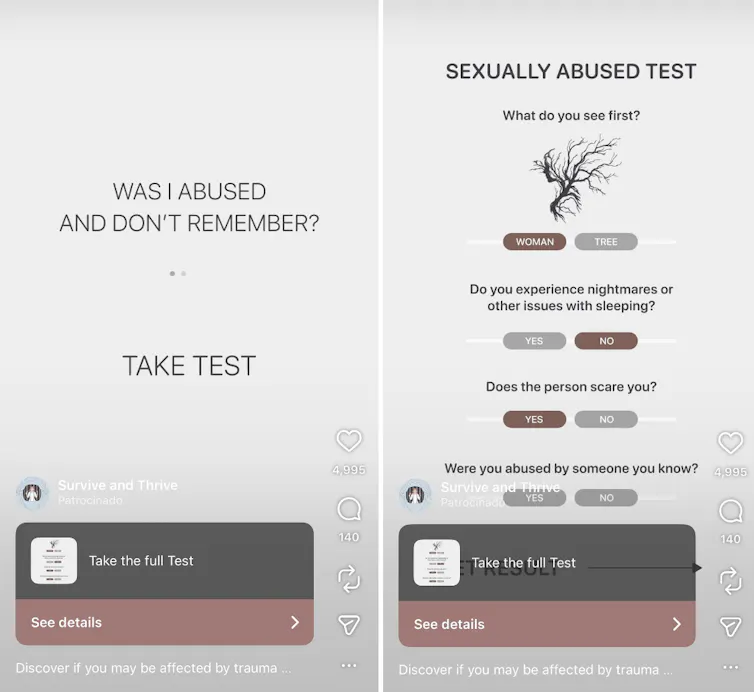
This ad on Instagram prompts you to look for physical symptoms as clues to a traumatic past you don’t remember. Instagram

What about psychedelics and MDMA?

More recently, van der Kolk and others have turned attention to psychedelic-assisted therapy.

Substances such as MDMA and psilocybin have shown promise in tightly controlled research settings. They appear to influence brain pathways, though the mechanisms are not yet fully understood.

From a memory perspective, psychedelics raise specific concerns. Research suggests psychedelics can affect memory in some worrying ways.

They make people more suggestible, meaning they are more likely to accept ideas or stories as true, even when they come from an outside source. They also create a powerful feeling that what people experience is deeply and certainly real.

This is a risky combination, because a person could come away with a false memory they feel convinced has happened.

Early qualitative reports already describe cases in which apparent memories of trauma emerged during psychedelic therapy, with uncertainty about their accuracy.

Recent US research found the vast majority of people endorse belief in repressed memories and the idea that “the body keeps the score”. This research is currently being replicated in Australia, with preliminary findings suggesting these beliefs may be even more widespread over here.

The Conversation

The authors do not work for, consult, own shares in or receive funding from any company or organisation that would benefit from this article, and have disclosed no relevant affiliations beyond their academic appointment.


  •  

Talking about trauma doesn’t always help. Brain scans show one reason why

After trauma, some people develop post-traumatic stress disorder (PTSD), a mental health condition that can involve intrusive nightmares, flashbacks and physical reactions when reminded of the traumatic event, such as a racing heart or difficulty breathing.

Some people with PTSD also develop profoundly negative beliefs about themselves – intense shame, guilt and even feeling responsible for what happened.

For example, someone who experienced a violent assault may believe they somehow deserved to be attacked. Such beliefs can cause significant distress and drive persistent PTSD symptoms.

There are multiple evidence-based forms of cognitive therapy, also called “talk therapy”, that can effectively treat PTSD by helping to reframe these negative self-beliefs.

However, some people don’t respond to these kinds of therapy much – or at all.

In our research, we scanned the brains of 136 people – half who had PTSD, and half who didn’t – while they used cognitive therapy techniques to challenge negative beliefs. We found the reason some people don’t respond to treatment may lie in the way PTSD has restructured their brains.

First, how does talk therapy work for PTSD?

Research shows talk therapies targeting negative beliefs – including cognitive processing therapy (CPT) and trauma-informed cognitive behavioural therapy (TF-CBT) – are broadly effective for PTSD. Most people show meaningful improvement in their symptoms.

Talk therapy for PTSD usually aims to equip patients with skills to challenge distorted negative beliefs through a structured dialogue, known as cognitive restructuring.

During therapy, a therapist might guide the person to counter the rationale underlying beliefs (for example, “who made the decision to commit the assault?”), or consider alternative perspectives (“is there another way of understanding what happened, which doesn’t put the blame on you?”).

Another therapy, prolonged exposure (PE) gradually increases how much someone is exposed to reminders of the trauma, usually alongside reframing techniques. This can be done during therapy (for example, repeatedly describing what happened) or between sessions (for example, revisiting the scene of the trauma).


Read more: Why do some people who experience childhood trauma seem unaffected by it?


But it doesn’t work for everyone

Clinical studies show, after these kinds of cognitive therapy for PTSD, about one-third of people will still have diagnosable PTSD symptoms.

While zero improvement is rare, it means a significant proportion of people still aren’t achieving ideal outcomes from therapy. The factors underpinning this are complex and poorly understood.

But we know some people with PTSD are more likely to show no or little improvement after talk therapy. They include those with:

  • the most severe symptoms
  • persistent exposure to trauma (particularly during childhood)
  • other psychiatric diagnoses, such as depression or substance use disorders.

Some studies also suggest older people, men, those from racial minorities and military veterans show less benefit on average from cognitive PTSD therapies.

This may because these groups are more likely to report other factors which affect how well treatment works. For example, men with PTSD typically have more symptoms of anger problems than women, and less social support.

What we did and what we found

Our recent study showed there may be a neurobiological explanation for why talk therapies work for some people and not others.

We asked 70 people with PTSD, and 66 people who’d been exposed to trauma but without PTSD, to challenge negative self-beliefs via cognitive restructuring while inside an MRI brain scanner.

In people with PTSD, we found their prefrontal cortex (the brain’s “control centre”) was worse at regulating activation in the thalamus – a small structure that works as a relay hub, allowing different parts of the brain to communicate.

These regions work together to let us represent abstract information – such as self-beliefs – in the brain, and to update our beliefs and their associated emotions with new information.

Among people with PTSD in our study, those with more severe negative beliefs showed weaker connectivity in this pathway when using restructuring techniques to challenge negative self-beliefs.

Weaker connection between these regions might hinder people’s ability to update negative self-beliefs with new information, resulting in less benefit from therapy.

So, why might this be?

We know that self-beliefs in people with PTSD are more often heavily influenced by negative information and events – that is, being criticised might make you feel worse about yourself, but being praised won’t make you feel that much better.

The way PTSD changes brain pathways points to why some people’s self-beliefs are harder to counter with positive reframing techniques, meaning these beliefs become “stuck”.

These trauma survivors may understand, on an intellectual level, that they weren’t to blame for what happened. But that understanding never quite shifts the part of them that still feels responsible, and they have little emotional relief.


CC BY-NC

Everyone seems to be talking about trauma. Do we know more about it? Or has the meaning changed? In this five-part series, we explore the shifting definition of trauma, why talking about it doesn’t always help, and what else can work.


What might work instead?

Some people may need treatments that first address the brain’s wiring needed to engage with talk therapy. For example, certain evidence-based approaches aim to build people’s emotion regulation skills before talk therapy.

A therapist will help someone improve their ability to deal with negative emotions, for example by learning effective strategies to tolerate and manage distress. They will unpack how these emotions influence their interactions with other people, so they are better able to take on the challenges of cognitive restructuring in therapy.

Other emerging evidence suggests therapy using MDMA or ketamine for PTSD may help those who haven’t responded to other treatments, by directly influencing brain pathways. Research is exploring how these can be delivered safely.


Read more: Psychedelic drug MDMA could help treat PTSD – but there’s a reason it’s not widely available


For some people, simply trying different treatments can yield better outcomes. What works can depend on a person’s symptoms or preferences. This won’t always be the first treatment someone tries.

However, we know people whose symptoms don’t improve after one first-line intervention (the “best-practice” treatments with the strongest evidence base) are less likely to engage in further treatment.

By refining our understanding of the brain mechanisms underpinning cognitive restructuring, we’re hopeful our work can inform more precise and targeted approaches to treating PTSD.

But there are other limitations

People with ongoing or repeated exposure to trauma, such as first responders, are also at risk of re-traumatisation. This is where past trauma causes heightened reactions to new trauma. Ongoing trauma can also amplify symptoms and make therapy less effective.

Cultural factors may also shape how well standard therapy formats fit. There is growing evidence that culturally adapted or group-based approaches (especially for interpersonal trauma, such as abuse) better serve some communities than the standard model of one-on-one talk therapy.

The Conversation

Trevor Steward receives funding from the National Health and Medical Research Council.

Andrea Putica and James Agathos do not work for, consult, own shares in or receive funding from any company or organisation that would benefit from this article, and have disclosed no relevant affiliations beyond their academic appointment.

  •  

Koala numbers crashed across Australia 100,000 years ago. Global glacial cycles are likely to blame

janclewett/iNaturalist, CC BY-NC

It’s surprising how easy it is to see a koala every day in Australia’s major cities.

The cute, grey marsupial can be found on t-shirts, hanging off people’s bags and pencils, and decorating any decent souvenir shop. But seeing a real koala in the wild has become increasingly tricky in some parts of the country. The iconic marsupial is now listed as endangered in Queensland, New South Wales and the Australian Capital Territory.

But koalas have been in a similar situation before.

As my new study published in the journal Molecular Biology and Evolution shows, koalas experienced a population crash about 100,000 years ago. This finding rewrites our understanding of the genetic history of koalas in Australia – and overturns previous theories about what caused their decline in ancient times.

Turning to the genome

Fossil records of koalas are extremely rare. This makes it difficult to estimate how many koalas were present in the past.

Instead, genomes provide important clues about their evolutionary history. The genome acts as a historical record. It preserves genetic information from ancestral populations that can be used to determine their population size.

Previous genomic studies of koalas have estimated koalas experienced a major population decline roughly 40,000 years ago. This was shortly after the arrival of humans in Australia, suggesting this may have been a contributing factor.

Yet the impact of human arrival on Australian fauna is hotly debated. Some researchers use it to explain the widespread extinction of megafauna during this period.

My new study challenges this theory.

A grey koala sitting in between tree branches.
Koalas are once again experiencing population declines across Australia. dcla/iNaturalist, CC BY-NC

Pushing the timeline back 60,000 years

My colleagues and I set out to construct the first estimate of the koala mutation rate. This is simply the number of mutations that appear in each generation.

Estimating the historical population sizes that have shaped mutation patterns in the genome relies heavily on knowing how often new mutations arise. The problem is that each species has its own unique mutation rate.

To estimate the mutation rate in koalas, we sequenced the genomes of 12 koalas from three families, comprising seven parents and five offspring. This allowed us to count the number of new mutations over each generation.

The whole koala genome has about 3.4 billion sites where changes could occur. We found only 25 mutations per offspring. That’s the equivalent of searching for 25 wrong letters scattered across more than 1,000 copies of The Lord of the Rings trilogy.

We then applied this mutation rate to 457 koala genomes sampled across their entire range. This allowed us to investigate how koala populations have changed over time – including when their numbers crashed.

We found koala population declines occurred around 100,000 years ago – well before humans arrived in Australia. This effectively rules out humans as a cause of the population crash.

Although the mutation rate is a fundamental evolutionary concept, we surprisingly have very few estimates for Australian species. Our estimate is the first from Diprotodontia, the marsupial order which also includes wombats, kangaroos and possums.

Previous studies estimating historical population sizes in koalas have had to rely on mutation rate estimates from distantly related placental mammals such as humans and mice. Applying the koala mutation rate has rewritten the genetic timeline for koalas.

So, what caused the crash?

The koala population crash 100,000 years ago matches a period of intense environmental change across Australia.

The Pleistocene (2.5 million to 11,700 years ago) saw repeated glacial periods, characterised by cold and dry conditions, as well as repeated interglacial periods, characterised by warmer and wetter conditions.

As Australia became drier, the expansion of the Nullarbor Plain established a vast semi-arid shrubland across southern Australia, shrinking suitable koala habitat and separating eastern and western koala populations.

Unfortunately, the population west of the Nullarbor Plain (which was recently described as a distinct species from the modern koala) went extinct around 28,000 years ago.

Although eastern populations were restricted to a small patch of forest on the east coast, they persisted through harsh glacial conditions. Over the last 17,000 years, as conditions became warmer and wetter, they expanded and formed the five genetic groups that are now distributed along the east coast of Australia.

Given our results, we’re now curious to see if other Australian species, including the closest relatives of extinct megafauna, also experienced population declines before humans arrived.

A brown sign signalling the Nullarbor Plain against a blue sky.
The expansion of the Nullarbor Plain established a vast semi-arid shrubland across southern Australia, shrinking suitable koala habitat and separating eastern and western koala populations. Craig Manners/Unsplash

Koalas are back to hard times

Koalas are once again experiencing population declines across Australia.

One similarity between modern and ancient declines is they are both largely driven by reductions in the amount of suitable habitat. The ancient decline was driven by global glacial cycles – an unavoidable result of Earth’s orbit.

However, recent declines have generated a similar bottleneck over a much shorter time window, due to the historical and continued removal of suitable koala habitat. This is made worse by other threats such as hunting, disease, vehicle strikes, feral dog attacks and bushfires.

Fortunately, most koala populations have only recently started losing genetic diversity, and rapid population recovery can prevent further loss and inbreeding.

Hopefully the eastern koala will persist once again.

The Conversation

Toby Kovacs does not work for, consult, own shares in or receive funding from any company or organisation that would benefit from this article, and has disclosed no relevant affiliations beyond their academic appointment.

  •  

How ‘big meat’ shapes science to give steak a healthy glow up

engin akyurt/Unsplash

Headlines might describe meat as “a significant health risk” or “essential for a healthy and balanced diet”.

So what’s behind these seemingly contradicatory statements?

Our new research suggests one reason is who pays for the science behind the studies we see discussed online or via social media.

We examined whether meat industry involvement is linked to how scientific papers portray the health effects of eating meat.

We found studies with ties to the meat industry were 16 times more likely to conclude meat is harmless or beneficial, compared with studies without such ties.

Conflicts of interest in nutrition research are not new. Analyses of sugar, ultra-processed foods, and drinks have found the same pattern: industry-funded studies are more likely to produce outcomes that favour the sponsor’s commercial interests.

This can muddy the evidence base used to guide dietary guidelines and policy, which can influence consumers’ choices.

What we did

The meat industry’s role in shaping nutrition science has received little systematic scrutiny. Our aim was to address this through a simple question: when the meat industry is involved in a study, does that change the study’s conclusion about meat’s health effects?

We searched for nutrition studies published between 2014 and 2023 that examined how eating meat relates to health.

For each study, we recorded declared funding sources, author affiliations and declared conflicts of interest. For example, a study that declared funding by Meat & Livestock Australia was identified as a study with industry ties.

We then classified the paper’s conclusion about meat as favourable, neutral or unfavourable. For example, if a study concluded eating meat may cause cancer, this was classified as unfavourable.

We then analysed whether those conclusions were associated with meat industry ties. We were testing whether there was a statistical link between industry involvement and a more positive “spin” on meat.

What we found

Of the 500 studies included, 78 (15.6%) reported some form of industry involvement.

Studies that disclosed ties to meat related organisations were 16 times more likely to conclude meat was beneficial.

Studies that did not provide a funding statement or conflict of interest declaration also tended to report more positive findings, raising further questions about transparency in nutrition research. Perhaps there was meat industry involvement in this research but it was not declared. We have no way of knowing.

Importantly, we were not judging whether individual studies were “right” or “wrong” about meat’s contribution to health. Instead, we showed that the pattern of conclusions in the literature is strongly linked to who is paying the bills.

This finding is consistent with broader work on food industry sponsorship and outcomes in nutrition science.

Why it matters

Most people will never read an academic paper, but many will encounter its findings via news stories, social media, industry communications or even dietary guidelines.

Journalists and policymakers often rely on “the weight of the evidence” when deciding what messages to send about meat and health.

If industry involvement systematically tilts that evidence base, the public may be misinformed about foods in ways that do not fully reflect all the independent science.

For people trying to make sense of conflicting nutrition headlines, this means apparent scientific disagreement may reflect differences in who supported the research, not differences in the data.

Our findings do not mean every study with meat industry ties study is invalid, nor that independent studies are by default of higher quality. But they do suggest industry involvement should be treated as a key piece of information when weighing up nutrition claims.

For readers, a useful rule of thumb is to look beyond the headline and ask: who funded this study, and do the authors have financial ties to the products being discussed?

Journalists can help by routinely reporting funding sources and conflicts of interest when covering nutrition stories, and by seeking independent experts to contextualise new findings.

What needs to happen next?

Our study adds to growing calls for stronger safeguards around conflicts of interest in nutrition research. At a minimum, clear disclosure of funding sources and conflicts of interest should be non negotiable, and journals should enforce these policies consistently.

However, disclosure only tells us a conflict exists. It does not remove the conflict. Managing, and ideally eliminating conflicts of interest should be a higher priority than solely declaring them.

One way to do this is through greater public and independent funding to enable researchers to conduct studies without relying on support from commercial industries.

The public rightly expects nutrition advice to be grounded in the best available evidence. Our findings suggest that when it comes to meat, industry involvement can tilt that evidence in a certain direction.

Recognising and correcting for that tilt is an essential step towards more trustworthy dietary guidance.

The Conversation

Navid Teimouri receives funding from an Australian government research training program (RTP) scholarship for higher degree by research students.

Katherine Cullerton receives funding from the World Health Organization and NHMRC.

  •  

‘Technostress’: why many older people feel shut out by the digital world

VioNettaStock/Getty Images

From personal health portals to AI assistants that draft emails, the digital age has simplified endless everyday tasks.

But for many older New Zealanders, the rapid march of technology has helped build a wall rather than open doors. Navigating online forms, changing apps, disappearing face-to-face services and the constant threat of scams can be daunting.

There is a term for this unease: technostress. Once used to describe the anxiety and frustration felt by workers, it has more recently been applied to older populations struggling in our digital-by-default world.

While older people’s overall digital engagement has grown over the years, about half of over 50s feel they are being left behind by modern technology.

Amid a planned public sector shake-up that would further digitise services, more than 40% of people older than 60 face barriers for accessing online government information.

More than ever, digital inclusion has become a necessity for older people to access essential services and maintain social connections. Without it, there are serious implications for their psychological, social, cognitive, physical and financial wellbeing.

Our newly published research, based on interviews with 23 people aged over 65, reveals a complex relationship with technology: one that can support independence, but also create new sources of stress and exclusion.

A double-edged sword

The experiences of those we interviewed varied widely. Some used technology very little – perhaps just for texts or phone calls – while others relied upon it heavily for daily chores and work. One study participant spoke enthusiastically about using an AI assistant to support her creative writing.

But regardless of how tech-savvy they were, all felt that keeping up with digital change was a never-ending but necessary challenge. This was especially apparent for those who used tech during their working years but found fewer resources available to upskill in retirement.

Another common theme was feeling targeted by scammers due to their age. For people living on a single income or pension, the financial risk of falling victim to a scam could be devastating and put them off going online.

Broadly, we found technology to be a double-edged sword for older people. For those who felt digitally included, it helped strengthen relationships through sharing photos and videos with family overseas and provided useful access to health information.

For those who felt shut out, technology became a source of distress, frustration and feelings of incompetence. They described struggling with online pension applications or having to relearn familiar software after unexpected updates completely changed the interface.

Some felt the accessibility features built into everyday digital devices were inadequate for their physical needs, causing them to abandon tasks because of eye strain or frustration.

Others felt digital technologies were not culturally responsive, reflecting a predominantly Western worldview. Common errors, such as the mispronunciation of te reo Māori names, could deepen feelings of exclusion and cultural invalidation.

Ageism and equity

Nearly all participants felt digital technologies were not designed with older people in mind, believing they were not viewed as a priority market by mainstream technology companies.

Yet many still blamed themselves for struggling to keep up. Some also described dismissive or impatient responses when seeking help, reinforcing feelings of frustration and inadequacy.

This may suggest a problem of digital ageism: the assumption that older people use technology less because they are unable or unwilling to engage with it.

In reality, meaningful digital participation depends on much more than willingness. It requires people to have the motivation, skills, confidence, access, trust and support needed to engage safely and effectively.

In this context, the challenge is not about age but equity. Fortunately, many organisations and individuals across Aotearoa New Zealand are working diligently on this issue, from advocacy groups to library-based digital skills programmes.

Some local companies have introduced equity products, such as age-friendly digital tablets and lower-cost mobile plans for pensioners. These efforts are essential, but more is needed.

More recent interviews with people working in the field suggest a need to dispel the myth that digital exclusion will disappear as older people increasingly become “digital natives”.

Instead, digital inclusion should be viewed as a fundamental right rather than a luxury in the hands of for-profit companies. This will require targeted policy, increased collaboration across sectors, and active involvement of older people as equal partners in digital design, testing and decision-making.

New Zealanders cannot benefit from even the most well-intended developments, such as telehealth services, if even one aspect of digital inclusion is lacking.

Without deliberate action, the shift to digital services risks widening the very inequities it is intended to reduce.

The author acknowledges the contributions of Rosie Dobson, Cinnamon Lindsay Latimer, Judith McCool, Robyn Whittaker and Vili Nosa to this research.

The Conversation

Melanie Stowell receives a doctoral scholarship from the University of Auckland and support from the Centre for Co-created Ageing Research.

  •  

What’s the difference between intrusive thoughts and suicidal thoughts?

Liza Summer/Pexels

We have thousands of spontaneous thoughts a day. Most of them are mundane, such as “Where did I leave my car keys?”

But every now and then a strange and distressing thought might pop into our mind, such as “What if I hurt myself or someone I care about?”

So, what’s the difference between these random (and sometimes scary) intrusive thoughts and suicidal thoughts?

And when can our thoughts be a warning sign we need help?

What are intrusive thoughts?

Intrusive thoughts are sudden, involuntary thoughts, mental images or urges. They often cover difficult themes such as causing or experiencing harm, contamination, making a mistake, or sexual or religious content.

Sometimes these thoughts can feel alarming or upsetting, especially if they’re unwanted and we feel an urge to get rid of them.

But most people experience intrusive thoughts and having them doesn’t mean you’re a bad person or will necessarily act on them.

It’s unclear exactly why we have intrusive thoughts. It might reflect the natural tendency of our minds to wander. This process is usually helpful, and can help us form new understandings or generate new ideas.

But under stress having intrusive thoughts can become less helpful, particularly when they are unwanted, upsetting or feel hard to control.

So if intrusive thoughts are mostly a signal of stress, not danger, when do they become a problem?

If these thoughts cause you distress and make it hard to manage everyday things such as work, school or relationships, this could be a sign of a mental health disorder such as obsessive-compulsive disorder (OCD), an anxiety disorder, depression or post-traumatic stress disorder.

What should you do about intrusive thoughts?

The more we try to push intrusive thoughts away, the more they return and the more intense they can become.

However, a type of psychological treatment that pairs cognitive behaviour therapy with “exposure and response prevention” is effective for dealing with intrusive thoughts in anxiety or OCD.

This involves allowing intrusive thoughts to be present without trying to control them, then gradually reducing less helpful responses (such as scrolling on your phone to try to block out the thought), so the brain learns the thoughts are not dangerous.

You can try a simple version of this at home:

  • label the thought (for example, “This is an intrusive thought.”)

  • reduce unhelpful coping mechanisms (for example, drinking alcohol to block out unwanted thoughts)

  • let the thought pass (for example, try a visualisation exercise where you imagine the thought drifting down a stream, without engaging with it or trying to get rid of it)

  • refocus your attention on enjoyable activities such as going for a walk, chatting to a friend, or focusing on a task like cooking. This is not to “escape” the thought but to let it sit in the background while you focus your attention on what’s important to you.


Read more: Unwanted unacceptable thoughts: most people have them and we should talk about them


What if your intrusive thoughts are about death, self-harm or suicide?

Intrusive thoughts about experiencing harm such as your own death, self-harm or suicide are surprisingly common. We can also have intrusive thoughts about harm coming to others, including loved ones.

While they can feel upsetting, having thoughts such as “I wish I didn’t exist” doesn’t necessarily mean a person wants to or will act on them. However, it may indicate they are feeling emotionally overwhelmed, anxious or depressed.

Intrusive thoughts about your own death and specific ways of dying can also mean something more serious. It can lead to a greater risk of suicide or self-harm.

When do intrusive thoughts become a warning sign?

If intrusive thoughts are causing you distress, impacting your day to day life or you’re having thoughts about suicide, these are clear warning signs it’s time to get help.

Other important warning signs can include:

  • more frequent or persistent thoughts or images about death or suicide

  • increased hopelessness

  • actively thinking about, planning or preparing for death

  • behavioural changes such as withdrawing from others.

How can I get help and what can I do to help someone else?

You don’t need to manage these thoughts alone.

If you notice these warning signs in yourself, it’s important to ask for support. Talking to someone such a GP, psychologist, psychiatrist, trusted family member or friend can be a good first step.

If you’re having intrusive thoughts about suicide, your GP may ask you to complete a safety plan, which is a helpful reminder of ways to get support and keep safe when difficult thoughts, feelings or urges come up.

If you notice these signs in someone else, it’s important to check-in with how they’re doing at an appropriate time and in a caring way.

Here’s a four-step guide:

  1. Ask directly about suicide. This won’t put the idea in someone’s head. When done sensitively, directly (“Are you thinking about suicide?”) and honestly, it can help people feel less alone.

  2. Listen to the person, take them seriously and stay with them.

  3. Get help (see examples below).

  4. Follow-up and check in regularly.

For more information and support

For more information and resources about intrusive thoughts and OCD you can visit Lifeline, or for young people ReachOut or headspace.

You can visit This Way Up or MindSpot to access evidence-based online treatment programs for intrusive thoughts and OCD.

There are also online treatments for kids and teens with OCD.

If you’re having distressing thoughts about death and dying or suicide and need someone to talk to you can call:

  • Lifeline: 13 11 14

  • Beyond Blue: 1300 22 4636

  • Suicide Call Back Service: 1300 659 467


We would like to acknowledge the contribution of Ann Martin and Jill Newby to this article.

The Conversation

Emily Upton receives funding from an Australian Government Research Training Program Scholarship.

Kayla Steele does not work for, consult, own shares in or receive funding from any company or organisation that would benefit from this article, and has disclosed no relevant affiliations beyond their academic appointment.

  •  

We analysed 14 million Reddit posts to reveal a striking shift in how we talk about mental health

Brett Jordan/Pexels

More people are relying on social media – such as TikTok, Instagram, YouTube and Reddit – to learn about mental health conditions and to interact with people who have shared experiences.

These aren’t only long-familiar disorders such as depression, anxiety and schizophrenia. They also include conditions often placed under the “neurodivergent” umbrella such as autism, ADHD (attention-deficit hyperactivity disorder), Tourette syndrome and dyslexia.

For instance, on TikTok the hashtag #adhd has had more than 50 billion views.

We wanted to explore how social media platforms shape how we understand mental health. So we analysed more than 14 million posts and comments about mental health on Reddit.

We show a shift in conversations toward ADHD and autism, and away from anxiety and depression.

Our findings have important implications for how people make sense of, and seek help for, mental health problems.

A complex relationship

Social media coverage of mental health has made it more visible, with some positive effects. It has probably reduced the stigma of mental illness and increased the use of mental health services.

However, it also has downsides. It can induce or exacerbate eating disorders, can contribute to the spread of symptoms (such as tic-like behaviours), and has been attributed to the rise of questionable self-diagnoses.

Misinformation is common in social media discussions of mental health. One study found a majority of the most popular TikTok videos on ADHD were misleading. Inaccurate information about many other mental health conditions on social media is common.

Discussions change and evolve

Mental health content has not merely risen in volume. Some conditions have increasingly attracted the spotlight, others have receded from view, and the relationships among them have shifted.

In our Reddit study published last year, we found that as the largest ADHD- and autism- related communities (subreddits) became increasingly more prominent from 2012 to 2022, their content gradually became more similar, and their users increasingly overlapped.

Discussions in both communities increasingly emphasised the experiences of adults, challenges in accessing diagnostic assessments, and struggles with personal relationships.

This growing convergence of these two conditions on Reddit illustrates how social media can reshape representations of mental health.

Our latest study takes this further

In our new study, we analysed more than 14 million posts and comments from several of the largest mental health communities on Reddit.

The 14 communities we studied included those related to mood, anxiety, trauma, personality, dissociation and psychosis, as well as those focused on conditions often placed under the “neurodivergent” umbrella, such as autism, ADHD, Tourette syndrome and dyslexia.

We investigated how the people belonging to these communities and the language they used changed from 2015 to 2022.

We explored which communities became more or less closely associated over time – sharing more or fewer members and containing posts and comments with similar or different linguistic content. We also looked at whether these changes reflected shifts in the amount of attention the 14 conditions received.

Although our analysis only covered a seven-year period, it revealed a striking pattern of changes. The two diagrams show how the 14 communities were interrelated at the beginning and end of the period.

The size of the circles represents the relative size of the communities. The width of the links between them indicates how closely they were associated.

In 2015, depression and anxiety were prominent mental health communities on Reddit. They were among the most active and their members and content overlapped with those of many other communities. In this sense, they were “central” to the network.

However, in 2022, ADHD and autism communities had become most popular and prominent, displacing depression and anxiety. ADHD, autism and other neurodivergent conditions became more closely associated with other communities, and consequently more central to the network.

These analyses suggest that on Reddit the mental health landscape has been re-configured. Mood and anxiety disorders once dominated discussions. But discussions of mental health have increasingly pivoted to discussing conditions related to being neurodivergent.

Reddit users do not represent the general population; they tend to be younger, male, more educated, and have a higher income. Nevertheless, our study offers important insights into changes in mental health discussions on one social media platform over time.

Why does it matter?

The rising prominence and centrality of ADHD and autism makes them increasingly popular explanations for mental health problems. This might promote accurate self-diagnosis by people who once would not have recognised the nature of their difficulties.

However, it could also lead people to misinterpret and mislabel their experiences as ADHD and autism when there’s another explanation.

The rising prominence of these conditions on social media may also lead people to interpret mood or anxiety symptoms as signs of ADHD or autism.

Misinterpretations can lead people to pursue inappropriate diagnoses or unhelpful treatment, delaying access to the help they need. This in turn places increasing pressure on mental health services, and can lead to other conditions being overlooked.

The Conversation

Jemima Kang receives funding from an Australian Government Research Training Program Scholarship, an Australian Academy of Technological Sciences and Engineering Elevate Scholarship, and a University of Melbourne Helen Macpherson Smith Scholarship.

Nick Haslam receives funding from the Australian Research Council.

Mike Conway does not work for, consult, own shares in or receive funding from any company or organisation that would benefit from this article, and has disclosed no relevant affiliations beyond their academic appointment.

  •  

A ‘supereruption’ transformed NZ 350,000 years ago. We now know how it happened

Deposits from the Whakamaru supereruption are pictured here on Chatham Island. Katherine Holt, CC BY-NC-ND

Some 350,000 years ago, the centre of New Zealand’s North Island appeared much different than the mountainous, scrub-covered landscape it is today.

Amid a glacial period, temperatures were colder and conditions harsher. Vast beech and podocarp forests blanketed the region, providing habitat for abundant native birdlife.

It was against this tranquil backdrop that the one of the Earth’s most explosive eruptions violently unfolded, releasing enough material to carpet much of the country.

Now, colleagues and I have pieced together traces left by the event to provide an unprecedented picture of how it happened – while shedding important new light on the mechanics of those rare cataclysms that are known as supereruptions.

Reconstructing a supereruption

The Whakamaru supereruption was one of the largest ever recorded on Earth – and the greatest produced by New Zealand’s famous Taupō Volcanic Zone.

Stretching from Whakaari/White Island to Ruapehu, this dynamic area is the product of two powerful geological processes: the Pacific Plate sinking beneath the Australian Plate, and the central North Island simultaneously being pulled apart.

It is home to numerous volcanic features today, from geothermal fields with bubbling hot springs and mud pools, to caldera systems and active stratovolcanoes.

Throughout its 2-million-year history, the zone has experienced four known events of such immense scale that they are formally classified as supereruptions – or those that would score a maximum 8 on the Volcanic Explosivity Index.

Only a few dozen have ever been recorded worldwide – the most recent being the Ōruanui eruption that helped create Lake Taupō around 25,300 years ago.

For volcanologists, they pose some of the field’s greatest mysteries: how can so much magma build up below the surface, and then erupt all at once? And what happens to the surrounding landscapes?

To help answer these questions, we turn to preserved volcanic deposits that can be used to reconstruct the processes that play out during these rare events.

Two signature products of supereruptions are “flow” deposits – hot, dangerous masses of rock and gas that travel along the ground – and “fall” deposits, typically mixtures of crystals and volcanic glass that fall from the air.

The challenge for volcanologists is that typically only fragments of these deposits are preserved – and they are often scattered across great distances.

In the Whakamaru supereruption, massive pyroclastic flows left behind thick layers of dense volcanic rock across the Whakamaru and King Country regions. Ash and pumice spread much farther, blanketing much of the North Island and parts of the Pacific Ocean.

One of the first steps in our study was to build a database of these deposits by matching the unique chemical signature of volcanic glass produced during the eruption.

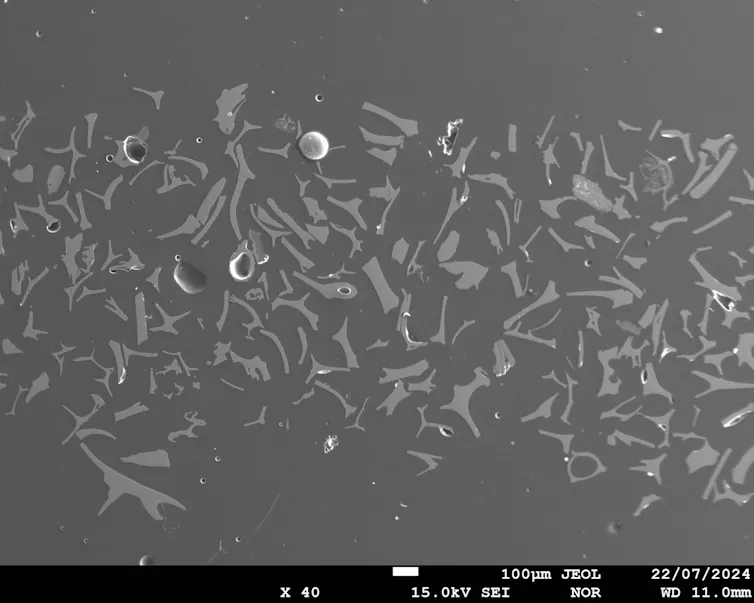
Glass shards from the Whakamaru Supereruption under the electron microprobe. Provided by author, CC BY-NC-ND

This process is similar to forensic science at a crime scene: fingerprints may suggest a suspect, but DNA evidence can confirm the match. In volcanology, deposits can offer clues as to how they got there, but it is their chemical composition which provides the definitive link.

Using this approach, we analysed more than 30 sites around New Zealand and the south Pacific Ocean. All were found to have come from the Whakamaru supereruption.

With these correlated, we were then able to reconstruct this extraordinary episode.

How the supereruption unfolded

At the beginning of the eruption, a large lake likely lay within the central North Island, much like Lake Taupō today.

When the magma reached the surface, it erupted directly into this lake, triggering extremely violent interactions between magma and water, which drove the earliest phase of the eruption.

One of the ashfall deposits from the Whakamaru supereruption at Ōtarawairere, Bay of Plenty. Provided by author, CC BY-NC-ND

It appears this first phase was driven by the evacuation of a singular magma body.

As the eruption progressed, the lake was gradually destroyed and infilled. Eventually, the system transitioned into a much drier style of volcanism.

At the same time, the eruption evolved into a far larger and more complex event beneath the surface. Instead of being fed by one magma chamber, it appears to have triggered a cascading sequence involving at least five separate magma bodies erupting at once.

The amount of ash generated by the eruption is staggering.

Most of the North Island – and even far-away Chatham Island – would have been carpeted in around 30cm or more of material. Areas closer to the eruption were left buried under as much as 4.5m of ash.

One of the ashfall deposits from the Whakamaru supereruption, ~800 km from source on Chatham Island. Provided by author, CC BY-NC-ND

Hot, dense pyroclastic flows also swept across the landscape, leaving deposits up to hundreds of metres thick closer to the eruption source.

Altogether, we estimate the eruption released around 2,300 cubic kilometres of volcanic material – enough to bury the entirety of New Zealand beneath roughly nine metres of debris if spread evenly from Cape Reinga to Invercargill.

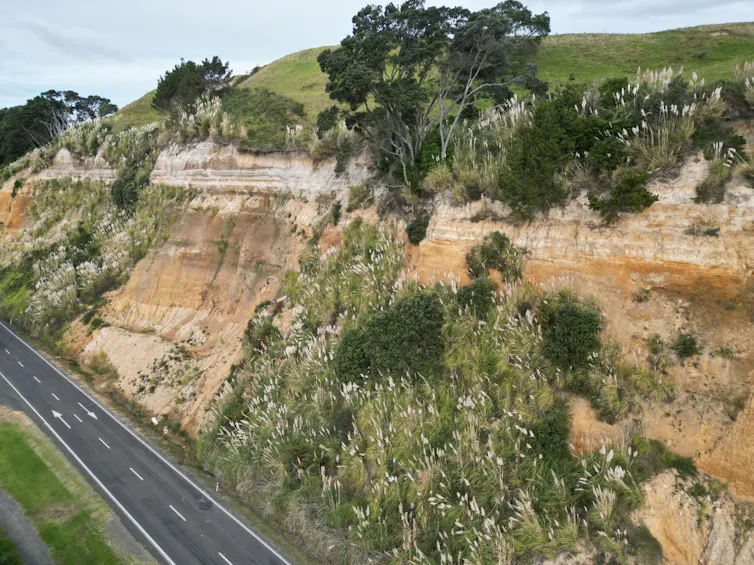
Ashfall deposits (the upper, whiter layers) from the Whakamaru supereruption at the Waiotahe Cliffs, Bay of Plenty. Provided by author, CC BY-NC-ND

Today, the Taupō Volcanic Zone remains one of the most active and powerful volcanic systems on Earth.

Although supereruptions like Whakamaru are rare, Taupō volcano has produced many smaller yet still devastating eruptions throughout its history, all of which would have had major impacts on both New Zealand and the wider world.

Understanding how these types of volcanoes operate is essential, both in preparing for future eruptions and for understanding how past events may have transformed the landscape we see today.

The author acknowledges the contributions of Simon Baker and Colin Wilson to this research.

The Conversation

Anna Miller does not work for, consult, own shares in or receive funding from any company or organisation that would benefit from this article, and has disclosed no relevant affiliations beyond their academic appointment.

  •  

People are using AI to communicate without disclosing it. Is this morally wrong?

Imagine you have used a generative artificial intelligence (AI) tool such as ChatGPT to tidy up notes you took while in a meeting. Your colleague comments on how clear they are. You don’t disclose it was the AI that made the notes clear and not you.

Now consider a different scenario. You are at your mother’s funeral. Her best friend of many years delivers a heartfelt eulogy, wishing her well in the afterlife. But later you discover her friend did not actually write the eulogy in any way – AI did.

The undisclosed use of generative AI in these two scenarios is deceptive. But is it morally wrong?

It’s worth considering this philosophical question in detail, given the rapid uptake of generative AI and the fact research has found people may be strongly incentivised to not disclose their use of generative AI because it may impact their relationships.

This is because people take generative AI outputs, generally, to be less valuable, and regard those who use the technology as less competent and authentic.

Distinguishing different kinds of deception

Roughly speaking, if you’re engaging in a “deceptive act”, you’re trying to get someone to believe something you know is false. However, deception can come in different varieties.

Philosopher John Danaher provides a useful framework to distinguish between three forms of deception by AI or robots. This framework is useful because, just as robots might convincingly mimic human behaviours, generative AI technologies are allowing humans to do the same.

Some deceptions involve lying or misrepresenting the external world, such as telling someone you saw a horse in the street, even though you didn’t. Danaher calls these “external state” deceptions.

Other deceptions involve lying or misrepresenting facts about ourselves, such as making someone believe you’re an accomplished artist, even though the artwork you showed them was generated by AI. Danaher calls these “superficial state” deceptions.

We can also deceive others into believing we lack thoughts, feelings or competencies we actually possess, such as pretending to not understand a language we speak in order to eavesdrop. Danaher calls these “hidden state” deceptions.

So, when is deception immoral?

To go back to the first example, by not disclosing you used AI to tidy up meeting notes, you’ve allowed your colleague to believe you have the capacity to do the work, which might be true. However, you also allowed your colleague to believe that you demonstrated that capacity by doing the work, which is false. This would fall into the category of an “external state deception”.

While this deception is morally objectionable, it’s arguably ethically permissible. Trivial deceptions like this happen all the time – and surely we aren’t obligated to always disclose everything about what we do and why we do it.

For example, we don’t blink an eye at undisclosed use of spell-checking software because, in most situations, being a good speller isn’t important. But triviality depends on context. If someone used spell-checking software at a spelling bee, we might be less forgiving.

The scenario about the funeral speech is similar to the first scenario, but less trivial. Your belief over your mother’s friend’s superficial state – that they wish her well – may or may not be false. However, your belief over the external state of affairs – that the eulogy is a demonstration of those well-wishes – is certainly false.

This is more morally problematic. When we claim an AI-generated output as our own – and particularly one that aims to reflect something about ourselves – we signal to others that we not only endorse the output, but that we have authored it. In this case it matters to us that the friend is the source of the eulogy – and not AI. The external state deception is deceptive in a non-trival way.

We imply the output was directly caused by our thoughts, feelings or competencies. When we don’t disclose our use of AI, we deprive others of the kinds of information needed to form true beliefs about how the world is and how others are. This is wrong if people deserve to have such information.

However, the eulogy example can still show how not disclosing our use of AI can – all things considered – sometimes be permissible. Perhaps, for example, the friend was so wracked with grief, that having AI write the eulogy on their behalf was the only way for them to get the speech written in time for the funeral. So they endorsed the generated output as their own.

In such cases, not disclosing the use of AI may be permissible, even though still a morally objectionable kind of deception. This is because, like triviality in the first scenario, other reasons might sufficiently outweigh the wrongness of non-disclosure.

Using AI more ethically

So, how can people use generative AI more ethically?

If we are to avoid immorally deceiving others, we ought to disclose our use of it in non-trivial cases.

What makes undisclosed AI use non-trivial is malleable and context-dependent. It changes in response to social norms couched within particular social practices.

Being open about AI use gives others the opportunity to form more accurate beliefs about what we are communicating – and the internal states our communication demonstrates.

The Conversation

Siavosh Sahebi is supported by an Australian Government Research Training Program scholarship.

Thomas Montefiore receives funding from the Australian Government through the Australian Research Council.

  •  

Would you buy milk from a gene-edited cow? Consumers may be more open than you think

Getty Images

As temperatures rise, New Zealand’s dairy farmers face a growing challenge: keeping cows cool enough to remain productive.

Heat stress can reduce milk production, harm animals and lower the environmental efficiency of dairy farming. For an economy so heavily reliant on dairy exports, the stakes are significant.

Over recent years, scientists have been exploring whether gene editing can deliver dairy cattle better able to cope with warmer temperatures, while producing fewer methane emissions. There is also potential for dairy products that carry valuable functions, such as being allergy-free.

Yet, regardless of the scientific promise behind such products, they still must gain consumer acceptance. Would shoppers actually buy gene-edited milk?

Our recently published study suggests they might, particularly if the products offer clear personal benefits and are priced competitively.

What we asked consumers

Gene editing enables specific tweaks to be made to an organism’s DNA. This can be done to promote desirable traits or remove undesirable ones – and without necessarily introducing new genetic material.

That sets it apart from traditional genetic modification technology and is seen by some researchers as a more precise approach that may prove more acceptable to consumers.

To understand how people would feel about milk from gene-edited “climate-smart” dairy cows, we surveyed nearly 1,100 New Zealand consumers. Rather than simply ask whether they supported the technology, we wanted to know the trade-offs they might make when faced with real purchasing decisions.

In a choice experiment designed to mimic supermarket shopping, they chose between conventional milk, organic milk and three forms of gene-edited milk.

These included a standard version, an allergy-free version designed to improve digestibility and a version incorporating a “COVID-protection” feature, based on research into milk carrying protective antibodies.

Because cows have not yet been gene-edited for commercial dairy production, our study did not provide participants actual gene-edited milk. Instead, they were asked to evaluate a series of hypothetical products and price points designed to reflect future supermarket choices.

They were first given information about gene editing and “climate-smart” milk before repeatedly selecting their most and least preferred options across a series of shopping scenarios.

This allowed us to examine not just attitudes towards gene editing, but how consumers weigh price, familiarity and potential benefits.

Price and benefits matter most

Overall, we found conventional milk to be the most preferred option. This wasn’t surprising. Consumers often trust familiar foods more than unfamiliar technologies, especially when it comes to products they consume regularly.

But the study also showed that consumer resistance to gene-edited milk is neither fixed, nor particularly high. When it was offered at a lower price than conventional milk, for instance, acceptance increased significantly.

We also found acceptance improved when the milk offered clear and easy-to-understand consumer benefits.

Among all the gene-edited products we tested, allergy-free milk was the most popular. This suggests consumers may be more open to food technologies when they can clearly see how the product benefits them personally.

Branding a product allergy-free, for instance, is tangible and easy to understand. By contrast, broader environmental or technical claims can feel more abstract or uncertain to many consumers.

While some consumers found the idea of milk with COVID-protection features appealing, others may have been sceptical or fatigued by pandemic-related messaging.

Compared with allergy-free milk, the health benefit was also more complex and potentially harder to understand.

A pathway to acceptance?

As climate pressures intensify, food systems around the world will likely face difficult trade-offs between sustainability, affordability and productivity.

Technologies such as gene editing may become more attractive, as they promise faster and more targeted solutions than conventional breeding methods.

Our findings suggest there may be a pathway towards greater consumer openness, particularly when innovations deliver direct and meaningful benefits, rather than vague promises of future sustainability.

At the same time, the study shows consumers still value familiarity and simplicity. Traditional products continue to hold a strong advantage, while price remains a major factor shaping purchasing decisions.

Gene-edited foods may therefore succeed not by replacing conventional foods overnight, but by gradually earning consumer trust through clear benefits, affordability and transparent messaging from producers.

For all the cutting-edge science that surrounds them, the future of these innovations ultimately depends on how well consumers believe they fit into their everyday lives.

The Conversation

Damien Mather has received research funding from the Ministry of Business, Innovation and Employment.

Götz Laible received funding from the Ministry of Business, Innovation and Employment with additional support from CRV Ltd and Livestock Improvement Corporation.

Kara Xiaohui Ma does not work for, consult, own shares in or receive funding from any company or organisation that would benefit from this article, and has disclosed no relevant affiliations beyond their academic appointment.

  •  

Marjane Satrapi’s masterpiece Persepolis transformed the world’s understanding of Iran

Marjane Satrapi, best known for her memoir and film Persepolis, has died, aged 56. The death of this much loved Iranian–French artist, graphic novelist, film-maker and activist has been met with widespread celebration of her life – and its dedication to resistance, freedom and humanity. French president Emmanuel Macron paid tribute to “a great artist who transformed an Iranian childhood into a universal fable”.

Satrapi was born in Rasht (like my own mother) in 1969, then raised in Tehran. She came of age during the Iranian Revolution and the turbulent years that followed. As political repression intensified, members of her family and wider social circle were arrested, persecuted – and in some cases, executed, like her uncle Anoosh, a former political prisoner and exile, executed by the Islamic Republic.

First published in 2000, Persepolis created a transformative shift in comics, memoir and political storytelling. Eventually extended into four volumes, it follows Satrapi’s childhood, her adolescence in Vienna (where her parents sent her to study in 1983) and her later struggle to navigate belonging between Iran and Europe. Satrapi returned to Tehran to attend university in 1989. In 1994, she moved back to Europe.

Satrapi finished her studies in France, where she settled, gaining French nationality in 2006. Last year, she refused France’s prestigious legion d'honneur, over its “hypocrisy” in its dealings with Iran.

Satrapi illustrated the dislocations of revolution, migration, adolescence and return in such a way that her memoir travelled far beyond her home country. Through its deceptively simple black-and-white illustrations, Persepolis became globally influential because it offered an intimate account of revolutionary Iran and exile that challenged dominant stereotypes.

For many readers, Satrapi is still the woman who explained Iran in the simplest, yet most powerful way.

Growing up between worlds with Marjane

Today, reading Persepolis with a cup of tea and a candle lit in Satrapi’s memory, I am struck by how little my reaction has changed since first watching the film at a university screening in France in 2019.

Like Marjane, I grew up between worlds: the child of returnees in the early days of the revolution, a girl who wore the compulsory hijab, listened to Western music, argued with authority, fell in love, had her heart broken and dreamed of lives beyond the horizon. Later, I welcomed political activism, harassment, migration and multiple exiles into my life. Yet what made Persepolis so powerful was not that it reflected my experiences of repression, but that it captured everything beyond.

Satrapi reminded the world that Iranians are not merely subjects of geopolitics or victims of authoritarianism. We have families, friendships, humour, terrible fashion choices, impossible romances and complicated identities.

Like all great memoirs, Persepolis made the particular universal. It allowed readers to see themselves in an Iranian girl from Tehran. In doing so, it made it harder to deny our shared humanity. Her art has the kind of charm that allows everyone to see themselves in one corner of it or another.

In Satrapi’s hands, exile was neither heroic nor tragic. It was disorienting, lonely, creative and politically productive. Her enduring legacy, however, lies not simply in what she told the world about the country she left behind, but in what she revealed about the experience of living between worlds as a human being.

“I was a Westerner in Iran, an Iranian in the West. I had no identity.” Few lines from Persepolis capture the condition of exile more powerfully than this one.

Reading Persepolis at different times of one’s life offers a language for contradictions that often feel impossible to explain: loving one’s country while criticising it, belonging to multiple places while feeling fully accepted by none, and carrying memories across borders that others struggle to understand.

In telling her own story, Satrapi captured something far larger than herself. In her 56 years of life, she stayed true to herself and never forgot where she came from.

Iran: misunderstood and dehumanised

After the Islamic Revolution, the hostage crisis in the United States, the wars with Iraq and the emergence of a new world order after 9/11, Iran became a misunderstood country, its population dehumanised. Satrapi’s memoir restored its complexities and nuances to the imaginations of readers from different backgrounds.

The power of Persepolis comes precisely from its ordinariness. Readers follow the life of a rebellious teenager. They learn about her family, grandparents, friends, teenage crushes, a failed marriage and the arguments that liven up any dinner table. Marjane’s story – garnished with music, humour and grief – reveals how extraordinary historical events are experienced through the mundane rhythms of everyday life.

Yet Persepolis is equally about leaving behind familiarity and home. Throughout, family becomes both refuge and history.

In one of the book’s most moving sections, Satrapi’s beloved Uncle Anoosh tells her, “Our family memory must not be lost.” Decades later, those words resonate for me. Reading them, I often think of my own uncle, Kambiz, whom I lost long before my birth, when he was executed by the Islamic Republic aged 23.

But the significance of this moment extends beyond the boundaries of any single household. In authoritarian contexts, where states often seek to monopolise history and memory, families become custodians of alternative narratives. In stories passed down by parents, grandparents and relatives, Satrapi preserves memories of political imprisonment, resistance – and hope that official accounts might prefer to erase.

Nominated for an Oscar

Satrapi returned to Iran before eventually settling in France, where she built the artistic career that would make her one of the most influential voices of the Iranian diaspora. She created several graphic storytelling books.

She co-wrote and co-directed the animated 2007 film adaptation of Persepolis, and was nominated for an Oscar, becoming the first woman nominated in the category of best animated feature. She went on to direct feature films.

Satrapi’s alternative view of Iran is so compelling because she refuses to romanticise her own country, or to idealise Europe or the West. She rejects both nostalgic nationalism and complete assimilation. Instead, she inhabits the uncomfortable space in between.

For many Iranian migrants and exiles who came after her, this condition feels deeply familiar. Loving a country while criticising it. Belonging to multiple places while feeling fully accepted by none. Carrying memories that others cannot quite understand. Satrapi transformed these contradictions into a language that could be shared.

She critiqued the repression of the Islamic Republic while remaining critical of Western hypocrisy. She condemned fanaticism without embracing cultural superiority. “Between one’s fanaticism and the other’s disdain, it’s hard to know which side to choose,” she wrote in Persepolis.

Importantly, Satrapi never positioned herself as the sole voice of Iran. Rather, she understood her work as a form of translation. As Iran enters yet another period of uncertainty, marked by regional conflict, repression and deepening social fractures at home and in the diaspora, Satrapi continued to insist on the humanity and complexity of Iranian lives.

Her activism included supporting the Woman, Life, Freedom movement, following the death of Mahsa Jina Amini: a 22-year-old Kurdish-Iranian woman detained for allegedly not properly wearing the Islamic headscarf in 2022.

Her final years were spent challenging both the authoritarianism of the Iranian state and what she saw as the West’s persistent tendency to reduce Iranians to geopolitical abstractions, rather than people with histories, aspirations and agency.

A gift for generations of exiles

For many Iranian exiles, Persepolis remains more than a memoir. It is a map. A guide to memory, identity, belonging and survival. It reminds me that exile is not simply a matter of geography, but of consciousness. It has taught me that dignity can be an act of resistance and that memory itself can become a political act in times of political amnesia.

Her characters rarely find liberation through departure alone; instead, they grapple with loneliness, reinvention and the persistent question of belonging. Yet Satrapi approached these themes with humour, tenderness and an insistence on complexity.

Marjane Satrapi spent her life ensuring that humanity, resistance and the memory of Iran is never forgotten. In doing so, she gave generations of readers – and generations of exiles – a more sophisticated language for understanding home, freedom and what it means to remain human between worlds.

The Conversation

Shadi Rouhshahbaz does not work for, consult, own shares in or receive funding from any company or organisation that would benefit from this article, and has disclosed no relevant affiliations beyond their academic appointment.

  •  

Fast Food Nation predicted today’s chronic illness epidemic, 25 years ago

I was a junior doctor on the front lines when journalist Eric Schlosser published Fast Food Nation 25 years ago. Back then, my days (and far too many nights) were spent picking up the pieces of a healthcare system that already felt like it was bursting at the seams.

Fast Food Nation pulled back the curtain on the fast-food industry, showing how a system built for speed, efficiency and profit reshaped what Americans eat, how food is produced and the conditions under which many people worked. More broadly, it revealed the harms of the industrial food system as a whole. The New York Times called it “a fine piece of muckraking, alarming without being alarmist”.

We are no longer looking at a warning of what might happen. We are living through the reality Schlosser predicted: that allowing this hyper-processed, factory-style fast-food model to creep into our daily lives would drive a heartbreaking global epidemic of obesity and preventable chronic illness. Today, we know ultra-processed foods are linked to over 30 serious health problems, including cardiovascular disease (heart attacks and strokes), type 2 diabetes and mood disorders (anxiety and depression).

In an afterword to the 25th-anniversary edition, Schlosser shares angry responses to the book from McDonald’s, the National Restaurant Association and the National Meat Institute. He also describes being heckled at events, including by a man who put him in a headlock in a carpark and shouted, “Why do you hate America, why do you hate America so much?”

Today, United States health secretary Robert F. Kennedy Jr and his MAHA (Make America Healthy Again) movement echo the messages of Scholsser’s book, declaring ultra-processed foods “poison” and the main culprit of the nation’s “chronic disease epidemic”. (At the same time, president Donald Trump worked the McDonald’s drive-thru counter on the 2024 campaign trail and has even made a habit of serving McDonald’s to athletes at the White House.)

A broken food environment

In those early clinical years in 2001, I was treating what I now recognise as the end-stage symptoms of a broken food environment: Type 2 diabetes, heart disease, and the early wave of the obesity epidemic. But at the time, I lacked the perspective of a long career – and the personal stake of being a parent.

I saw the patients, but I hadn’t yet fully grasped what Schlosser calls the “operating system” driving them into my clinic. Reading the book in 2026, the stakes feel vastly different. With two decades of general practice behind me and my own children now navigating their way around a kitchen, the clinical has become deeply personal.

book cover: Fast Food Nation as a Penguin Modern Classic
Fast Food Nation is now a classic.

In 2001, fast food was still draped in a cloak of mid-century optimism. The Golden Arches of McDonald’s, for example, weren’t just a logo. They represented consistency, safety and an image of suburban success.

Schlosser didn’t just critique the menus of the fast-food industry. He deconstructed the entire machine, revealing that a “cheap” burger was a financial illusion. The true costs were being paid by the whole of society: the exploited workforce, the polluted environment and eventually, the unsuspecting taxpayer through soaring healthcare bills.

As a GP, I see this as an important shift in blame. It moves the conversation away from “bad individual choices” and toward an understanding that industrial forces have tipped the scales against our biology.

1. The chemical hijack of our tastebuds

One of the most unsettling parts of the book is the look inside the secret flavour labs of New Jersey: the origin story of our current ultra-processed food crisis. Scientists didn’t just make food taste good, Schlosser revealed – they engineered “mouthfeel” and “aroma” to replace the nutrition lost in processing.

In medical terms, these are neurological hacks. They are designed to hit a bliss point that bypasses the body’s natural satiety signals. (The “I’m full” feeling.)

When we consume these foods, we’re not just eating; we are ingesting an engineered experience that creates a cycle of addiction – one many of our children are trapped in before they even reach high school.

2. The ‘Shadow Workforce’ and human dignity

Schlosser highlighted how the industry relies on treating humans as interchangeable parts within a system. His depiction of fast food is less a collection of convenient eateries and more a meticulously engineered extraction machine that sustains itself by consuming a steady diet of vulnerable human “inputs”.

He describes various people used to keep the system running. Children targeted by “cradle-to-grave” marketing and hazardous night-shift labour. Service workers and immigrants facing injuries on slaughterhouse floors. Independent ranchers (farmers), now functioning as quasi-indentured labour under monopoly power. And the low-income families trapped in areas with a high concentration of unhealthy food outlets.

Ultimately, the industry thrives by externalising its “true cost”, he writes. The silent taxpayer is left to pick up the multi-billion-dollar bill for both the welfare subsidies of underpaid workers and the chronic disease epidemics.

From a public health perspective, when you prioritise “throughput” over human dignity, the trauma and physical toll on workers eventually lands right back in the lap of the public health system.

3. The monopoly on our health

By 2026, the “captive supply” Schlosser warned about has become a reality. “It’s just another way of controlling prices through captive supply,” he wrote. “The packers now own some of these big feeders lock, stock, and barrel, and tell them exactly what to do.”

A handful of companies now control everything from infant formula to meatpacking. This lack of competition isn’t just an economic issue; it’s a national security and health risk. When a system is this brittle, a single failure can threaten our access to basic nutrition.

Monopoly power has effectively diminished our “food sovereignty”, or community control over our own food – the freedom to choose health over convenience.

2026: from debate to rebellion

The most striking change since the book’s first edition is the shift in the political weather. For decades, critics of the food industry were dismissed as “nanny state” enthusiasts.

But in 2026, something has changed. We’ve seen an 83% consensus among voters for clearer warning labels on processed foods. Regardless of your personal politics, the emergence of the MAHA movement, and the unlikely alliance between traditional disrupters and health advocates, show that the old guard’s influence is being substantially challenged.

The movement echoes Schlosser’s core arguments.

The true cost must be paid, he argues. We can’t let corporations privatise profits while the public pays for expensive heart surgeries. Corporations aren’t people: the legal fictions that allow the manipulation and exploitation of children’s diets must be challenged. And agency is essential; we are not victims of an inevitable system.

A GP’s final word

Fast Food Nation shifted the public conversation about food and health away from individual “willpower” and onto systemic corporate accountability. It catalysed the modern food activism movement, forever changing how society calculates the “true cost” of a cheap meal. And it directly paved the way for today’s historic, cross-partisan demands for health reform and food sovereignty that we see today.

As a doctor who has spent 20 years treating damage done by the industrial food complex, I see this book as a necessary health check on the world we’ve built. The true cost of a fast-food burger is never just a few dollars; it’s the quiet, chronic toll it takes on our bodies, our families and our communities.

However, Schlosser’s 2026 update isn’t a “told you so”. It’s a call to take back our agency. The Golden Arches are no longer seen as a “trusted friend,” but as a monument to a model we have finally outgrown. We have the collective power to un-rig the system and choose real food again.

The question is: will we?

The Conversation

Natasha Yates is affiliated with the RACGP.

  •  
❌