❌

Reading view

Mosquitoes learn to link the smell of DEET with a blood meal – new study
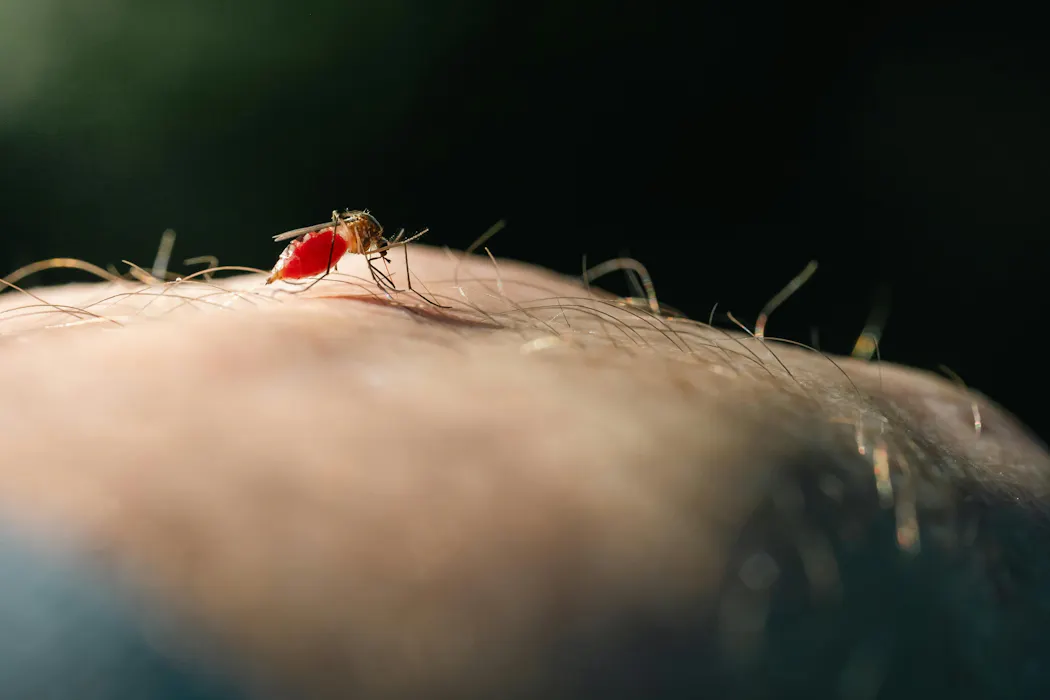
Chris F/Pexels

Mosquito repellents are key to protect ourselves from mosquito bites and the pathogens they might carry. The most widely used active ingredient in insect repellents is N,N-diethyl-meta-toluamide, commonly known as DEET.

Highly effective, long-lasting (approximately five hours) and cheap to make, DEET is a gold-standard insect repellent. But even though it was developed more than 80 years ago, there are important gaps in our understanding of how DEET actually works.

A new paper in the Journal of Experimental Biology led by Claudio Lazzari from the University of Tours, France, now shows mosquitoes can be conditioned to be attracted to DEET.

This provides an important piece of the puzzle in our understanding of how DEET works, and hints that this important mozzie repellent could have a vulnerability.

A vital tool that’s not fully understood

Insect repellents are a major method of protection against mosquito-borne diseases including malaria, dengue, chikungunya, Ross River virus, Japanese encephalitis virus and more. Many of these diseases are expanding on a global scale due to travel, urbanisation and climate change.

Female mosquitoes transmit parasites and viruses when they feed on vertebrate blood, which they need to provide proteins for egg development. To find their next blood meal, mosquitoes are strongly attracted to odours and physical cues emitted by warm-blooded β€œhosts”, including humans.

These include carbon dioxide we exhale, lactic acid in our sweat, and a complex combination of other chemicals that varies between people. Mosquitoes detect all these with sensory organs located in their antennae, proboscis (the pointy mouth part they use to suck blood) and the maxillary palps that flank it.

DEET has been in widespread commercial use since the 1950s, but there’s a lot of scientific debate over how exactly it works as a mozzie repellent. Is it blocking the odour of the host, is it toxic to the mosquito, or something else?

In 2008, groundbreaking research showed DEET blocks the response of sensory neurons to host odours in mosquitoes and vinegar flies. This means DEET is likely β€œconfusing” the mosquito rather than repelling it. A couple of years later, scientists found a small portion of mosquitoes exposed to DEET are insensitive to it, and it’s a heritable trait.

This means mosquitoes do have a physiological response to DEET. But there are also signs some of the mozzie reactions are behavioural. In one study, mosquitoes exposed to DEET were less sensitive to it if exposed again within three hours. This hints they can temporarily get used to the chemical.

A man spraying his arm with insect repellent outdoors.
DEET may not be fully understood, but it’s a vital tool in protecting ourselves against mosquito-borne diseases. Chalabala/Getty Images

What did the new study find?

The new study shows it’s possible to condition mosquitoes to bite more if they’re repeatedly exposed to DEET during a blood meal. Not only does this tell us more about how it repels mosquitoes, but it raises the prospect mosquitoes may actually be attracted towards DEET in some cases.

First, the researchers developed a behavioural test. They kept mosquitoes in tiny cages and moved a food target (a warm bag of blood) towards them, recording proboscis movements when they sensed the target. This was the β€œbiting attempt response”.

To test things further, the team ran a classical conditioning experiment. Mosquitoes were run through one of five β€œtraining programs” exposing them to various combinations of an unconditioned stimulus (heat), a conditioned stimulus (short exposure to DEET in a plume of air) and a reward (a short opportunity to feed on blood).

Here’s where it gets surprising. The mosquitoes whose training program included a squirt of DEET while they were already feeding on blood, afterwards had a significantly higher biting response when exposed to DEET again.

If the mosquitoes were exposed to DEET before being offered the blood bag, none of them tried to bite it.

Then, one of the researchers boldly offered her hands up for testing. One of the hands was treated with DEET. About 50% of the mosquitoes who went through the DEET-blood meal training program tried to bite the hand coated in DEET. By contrast, 100% of untrained mozzies avoided the hand covered in DEET and went for the clean one instead.

What does all this mean?

It’s well established mosquitoes can learn and retain information. What they learn about hosts and their environment can in turn have an impact on disease transmission.

This study indicates DEET doesn’t just affect mosquitoes physiologically. There’s a cognitive response as well, which could be an important part of how it works.

The authors raise the possibility – if the concentration of DEET is not high enough to repel mosquitoes but they still sense it during a blood meal, would these mosquitoes then be more likely to bite people who smell of DEET?

It’s important to note the study happened in highly controlled lab conditions, and the training program the mozzies underwent may not reflect everyday scenarios. Future studies should try and come up with test conditions that better represent real-world situations to see if these results hold up.

At a time when mosquito-borne diseases are on the rise, DEET still provides highly effective protection. What this study contributes is an improved understanding of how DEET works – and how we might improve insect repellents in the future.

The Conversation

Leon Hugo does not work for, consult, own shares in or receive funding from any company or organisation that would benefit from this article, and has disclosed no relevant affiliations beyond their academic appointment.

  •  

AI at the World Cup: smarter tactics, healthy players, safer crowds – but new risks

With 48 teams and 104 games across 16 host cities and three countries (the United States, Canada and Mexico), this year’s FIFA World Cup is projected to be the biggest sporting event ever in terms of attendance, revenue and global viewership.

It also promises to be the most technologically advanced, and artificial intelligence (AI) in particular will touch almost all aspects of the tournament.

This reflects a growing use of AI in soccer and across elite sport, with tools being applied not only to optimise athlete performance but also enhance match officiating, event security and fan experience.

Let’s look at how AI will be used in the World Cup, who may benefit and what risks could emerge.


Read more: We tested the new World Cup ball – this is what you need to know about how it will fly, dip and swerve


How it will be used on the pitch

In our review of AI use in soccer we found various ways it can assist on the pitch:

  • tools to support player, team and match evaluation
  • forecasting of match outcomes and in-game events (such as expected goals and assists, corners, passes, opposition tactics)
  • monitoring athlete workload
  • injury prediction and detection
  • talent scouting.

At the World Cup, coaches will use AI alongside more conventional data to inform how they approach each game, including what opposition strengths they need to negate and what weaknesses they can exploit.

Similarly, high performance staff will use AI to monitor player health and wellbeing, and forecast potential injuries.

The dreaded penalty shoot-out is one area where AI will have a direct influence. Teams will use AI to synthesise historical data to provide insights on goalkeepers and penalty takers’ likely strategies.

A key benefit is the speed at which these analyses can be undertaken. What used to take days of old-fashioned human legwork can now be done in hours, even for entire squads.

Should a game go to a shootout, AI could very likely influence the winning kick or save.

What about referees?

Match officials will also be supported by AI.

While semi-automated offside technology was introduced in the 2022 World Cup, it will be enhanced through the addition of AI-enabled 3D avatars of every player. The aim is to improve referees’ decision accuracy through the use of more precise body dimensions of the players involved.

The avatars will also be used to provide more engaging content when Video Assistant Referee (VAR) decisions are shown to fans. Rather than seeing only generic figures, fans will now see realistic avatars incorporating players’ faces, kit and even their hairstyle.

Another use in match officiating will be referee view technology, which uses body cameras to capture in-game footage from the referee perspective. AI will be used to stabilise images, with the emphasis on enhancing the fans’ immersive experience.

What about off the field?

Crowd management and logistics are other areas where AI will be deployed.

FIFA has built an β€œIntelligence Command Centre” – which will connect data across matches, venues and broadcasters – as well as digital twin models of stadiums to monitor and forecast crowd behaviour.

This will aim to ensure crowd-related issues such as bottlenecks are controlled.

Are there any risks?

While there are many benefits, a broad spectrum of risks will need to be managed.

Key concerns with AI tools are substandard outputs, and loss of skills and meaningful work for humans. To combat this, teams should ensure AI is only used to support human decision making, not replace it.

Data privacy and security will be key concerns, with the possibility of confidential or sensitive information being leaked or accessed by unauthorised or malicious actors. The use of AI in areas such as security and crowd management could also provide the opportunity for highly disruptive cyber attacks.

Equality could be an issue: teams with more financial power may have an advantage through more sophisticated tools.

In an attempt to level the playing field, FIFA has introduced Football AI Pro, an AI tool available to all teams. This soccer-specific large language model supports both pre- and post-match analysis and provides access to more than 2,000 metrics.

The aim is to ensure all nations have access to at least some level of AI support. It remains to be seen which nations actually use it.

Another potential adverse outcome is tactical homogenisation, where games become predictable because every team follows the same AI-generated game plan.

Sadly, AI will likely be deployed for nefarious purposes, for example as part of ticketing scams through AI-generated images, deepfakes, websites and phishing emails. Fans should take care at all times.

AI will be everywhere

AI is fast becoming a key component of high performance sport. It will be leveraged throughout the tournament to support preparation, performance and recovery.

While it could increase the gap between larger and smaller nations, it might also give smaller nations a new edge.

So could 2026 be the year in which AI genuinely contributes to a World Cup win? We won’t see an AI agent scoring a goal, or a robot coach calling the shots (at least not yet) but there is no doubt the winner of the tournament will have relied on AI along the way.

In terms of who that will be – well, we could always ask AI.

The Conversation

Paul Salmon receives funding from the Australian Research Council

Isaiah Jesse Elstak receives Commonwealth funding through an Australian government research training program scholarship.

Scott McLean does not work for, consult, own shares in or receive funding from any company or organisation that would benefit from this article, and has disclosed no relevant affiliations beyond their academic appointment.

  •  
❌