Reading view

A philosopher’s take on NZ’s bill to define who counts as a woman or man

stellalevi/Getty Images

In August 2006, at the general assembly of the International Astronomical Union in Prague, astronomers voted on a new definition of a planet, and Pluto was demoted.

Pluto didn’t change, only its definition.

Now New Zealand’s parliament is preparing to vote on the legal definition of “man” and “woman”. If scientists couldn’t end the controversy over what counts as a planet, why should we expect politicians to define who counts as a woman or man?

There is something strange about deciding what something, or who somebody, is by counting votes. The result was awkward enough when scientists were voting in a domain where they knew what they were talking about.

The planet vote didn’t settle the debate at the time, nor nearly two decades later.

And now we want to do the same with humans?

The Legislation (Definitions of Woman and Man) Amendment Bill was introduced by New Zealand First MP Jenny Marcroft and passed its first reading on May 20. It asks parliament to define woman in law as “an adult human biological female” and man as “an adult human biological male”.

The bill assumes there is a settled biological test for whether a person is female or male – one the law can simply borrow and apply. Marcroft thus frames the change as restoring “biological reality” to the law.

But there isn’t a single biological test, and the bill does not specify one. Instead, biology is messier, more qualified and less politically useful.

When chromosomes don’t match what you see

The test that determines what gets written on a birth certificate is a visual inspection of newborn genitals. This works for most births but not all.

It misses out on the variations where external anatomy appears typical for one sex but internal organs don’t match, and it breaks down when what’s visible doesn’t clearly fit either category.

Chromosomes can be used as a more objective test. But while having a Y chromosome makes you male most of the time, there are too many exceptions and also diversity across species.

The production of gametes (sperm and eggs) offers a more stable definition, but it doesn’t substantiate the definition expected in the bill, because boys and older people don’t produce gametes. Nor do people with conditions where they either don’t produce gametes at all or their gametes don’t match the visual test.

Take gametes seriously for a moment. Does “biological female” mean producing eggs? If it does, then women past menopause are not female under the definition – yet they are a large part of the constituency the bill claims to defend.

The bill either excludes them, or it relies on a looser notion, something like a developmental pathway toward egg production or a phenotype historically associated with female reproductive function. At that point the word “biological” is no longer doing the crisp, settling work the bill needs it to do.

Promising clarity, delivering the opposite

The age clause produces a parallel problem at the other end of life.

A girl, on the bill’s definition, is not a woman. Existing legislation that uses “women” to cover both adults and children breaks and would have to be patched with a new vocabulary of “female children” or something else.

Attorney-General Chris Bishop flagged this, warning of “discrimination on the basis of age”.

Labour opposition MP Camila Belich gave the clearest example. New Zealand’s abortion law refers to “women” and where a statute does not specify an age of maturity, the default is 20. Under the bill as drafted, women under 20 may lose access to abortion.

The bill promises clarity but generates a definitional mess. So why pass it? ACT’s Karen Chhour said the bill was not about science, but about whether ordinary people are “allowed to trust their own eyes, speak honestly”.

Take her at her word. The bill isn’t resting on biology but on the social intuition that everyone knows what a woman or a man is and on the wish to have that intuition ratified somewhere durable.

This is a piece of legislation that treats a complex cluster of biological traits as if it were one settled thing, and ties legal meaning to the pretence.

Which brings us back to Pluto. Its reclassification was harmless because Pluto doesn’t care. It will continue its gravitational dance with other celestial bodies regardless of humans calling it a planet or not.

But women and men aren’t planets. The bill’s reclassification tells people whose lives will be deeply affected by the definition that the question has been resolved.

It hasn’t. And it cannot be resolved by a vote in parliament any more than the nature of Pluto could be resolved by a vote at a scientific conference.

If you have to legislate the meaning of woman and man, you have already admitted the word was doing more than describing biology.

The Conversation

Patrick Girard does not work for, consult, own shares in or receive funding from any company or organisation that would benefit from this article, and has disclosed no relevant affiliations beyond their academic appointment.

  •  

View from The Hill: Tony Abbott to tour the country, trying to energise Liberals

Tony Abbott, the Liberals’ new activist federal president, is preparing to convene meetings around the country in an effort to drum up membership and support for the struggling party.

After the Newspoll published at the weekend showed the Coalition falling to 18% (down 2 points), with One Nation on 31% and Labor on 30%, Abbott acknowledged the threat of the insurgent party as well as the Liberals’ difficulty with credibility.

In a Tuesday email to supporters he wrote:

“Like you, I can read the polls.”

“While the majority of Australians now would like a change of government, there’s an unprecedented split on what’s the best alternative.

"And while many of you have noticed Angus Taylor’s determination to stop the toxic taxes, end mass migration, abolish Net Zero, and put Australia first, some are sceptical about the extent of the party’s change of heart or its willingness to do much about it in government.”

Abbott’s foray into a national tour may alarm some in the party who already fear he will overshadow Taylor, even though he has indicated he’s aware of that problem and knows he should tread carefully.

Abbott wrote: “While it’s the parliamentary party’s job to set and to implement policy, and to provide strong political leadership, you can be confident that the new federal executive will support Angus and his team to continue to be bold and resolute.

"We certainly won’t win the next election as slaves to focus groups and being a little bit less ‘woke’ than Labor.

"As well, you can be confident about our collective determination to work constructively with others who also want a change of government.”

This last point reinforces Abbott’s advocacy of the Liberals co-operating with One Nation in relation to preferences, a view Taylor shares.

Abbott told the Australian Financial Review on Tuesday: “As a general rule, it makes sense for parties of the right to preference each other just as parties of the left have always done”.

Meanwhile Taylor told a news conference: “We will work […] with whoever we can to get rid of this rotten Labor government.

"I want Australians’ first preferences, but I know to get them I have to rebuild trust with those hard working Australians who are angry, because they have been dudded.”

Taylor was facing questions about the Western Australian Liberal leader Basil Zempilas’ comments, who in a Monday speech reflected the pragmatic attitude many Liberals are now taking to One Nation.

Zempilas said One Nation “are a rising political movement, and because of that, One Nation deserve respect”.

“If their support holds, inevitably it will be people in my position’s job to find a way to work with, or alongside, One Nation. That will be important.

"And it’s something that at this stage, almost three years away from our next state election, I have an open mind about,” he said.

Abbott wrote that the meetings he planned would be to give members and supporters the chance to learn from each other and “recommit to giving our country the better government a great people deserve”.

He urged the letter recipients to bring along family and friends who might be supportive.

In his recent speech accepting the presidency Abbott lamented the party’s small membership of about 50,000, saying on a comparison with the Conservative Party in Canada the Liberals should have at least 250,000 members.

He conceded in his email that it “might take some time to persuade sceptical voters” that the Liberal party was their best hope.

Meanwhile ALP national president Wayne Swan has used the spectre of One Nation to drum up donations.

In an email to supporters a week ago, Swan said: “Powerful vested interests are already spending millions to make a Liberal-One Nation Government a reality. That’s why I’m asking for your support today. Every donation helps Labor invest early in the people, technology and campaigning needed to counter the hard right.”

The Liberals could not form government without One Nation, Swan wrote.

He said Hanson had argued “workers should be easier to sack and questioned whether Australians deserve higher wages”.

Labor is also running Facebook ads asking people “to donate to Labor’s campaign because One Nation is polling at record highs”.

The Conversation

Michelle Grattan does not work for, consult, own shares in or receive funding from any company or organisation that would benefit from this article, and has disclosed no relevant affiliations beyond their academic appointment.

  •  

Bangarra’s Sheltering is a powerful showcase of First Nations dance and creativity

Jeff Tan

Frances Rings’ artistic directorship of Bangarra Dance Theatre’s shines through the company’s new triple-bill production, Sheltering.

Rings demonstrates a commitment to uplifting company members and First Nations creatives, with a coherent curatorial vision that shows care for diverse audiences.

This triple-bill is a beautiful sampler of what this important company has to offer to the cultural, political and creative facets of our nation.

A nurturing home for First Nations creatives

Sheltering comprises three individual choreographic works: Keeping Grounded, Brown Boys, and Sheoak.

Sheoak is a 2015 work by Rings herself, commissioned by then Artistic Director Stephen Page.

Keeping Grounded (2023) is choreographed by Indjalandji-Dhidhanu and Alyawarre woman Glory Tuohy-Daniell, with a cast of eight company dancers.

Keeping Grounded is performed by eight company dancers. Daniel Boud

The most recent work is a short dance film called Brown Boys (2024). It was directed by Cass Mortimer Eipper and Daniel Mateo, a Bangarra company member and Gomeroi and Mari Ma’ufanga, Tongatapu (Tonga) man.

Both Brown Boys and Keeping Grounded were first presented in Bangarra’s emerging artist showcase, Dance Clan, and supported from there onto the mainstage program. Creators Tuohy-Daniell and Mateo trained at NAISDA, Australia’s National Indigenous Dance College, and joined Bangarra through its Russell Page Graduate Program, which provides training and mentorship for new company dancers.

Keeping Grounded

Keeping Grounded opens onto an enormous and heavy rope net designed by Dyarubbin woman, Shana O’Brien. Under it, figures twitch and roll like a catch of fish.

The set features a large heavy rope net designed by Dyarubbin woman Shana O’Brien. Daniel Boud

Karen Norris’ textured lighting supports the impression of a coastal setting, and “sets the scene” across the work as it shifts from an evocation of Country to a more technologically-mediated aesthetic.

In an interview with Glory Tuohy-Danille, the choreographer describes how the work invites viewers “to consider how small, almost forgotten actions keep us grounded […] a step barefoot, a moment of stillness, a return”.

Tuohy-Daniell’s movement vocabulary is striking for its literal groundedness, reflecting the central theme highlighted in the work’s title.

The first sections see the dancers bound to the floor with a variation on the typical angular, rolling, swooping and sharply delineated shapes of Bangarra’s Indigenous contemporary style – here purposefully fractured.

Set to a score by Brendon Boney, the movement in this section is broken into one movement per beat, a staccato rhythm that suggests a disconnect from the flow of nature. This “pixellated” quality makes familiar forms new in an exciting way.

Brown Boys

Six-minute dance film Brown Boys is a meditation on the experience of young First Nations men. Daniel Mateo, the writer, choreographer and performer, has a cultural background spanning northern New South Wales and Tonga.

The program notes describe Brown Boys as a total work of art involving poetry, choreography, cinematography, sound and dramaturgy.

Adding to this is the central role of sculpture. Set and costume designer Elizabeth Gadsby has worked with traditional forms to establish a culturally informed aesthetic. This includes a fale (pronouned “fah-lay”), which is a traditional Tongan shelter made of grass matting. This structure frames Mateo’s body inside the film frame.

A fale is a kind of traditional Tongan shelter. Cass Eipper

Ochres, minerals and soils are other material elements featured in the design and choreography. The striking final image shows Mateo literally grounded by a soil mound that takes the silhouette of a 19th century crinoline skirt.

Mateo’s text and performance are extraordinary. His direct and settled gaze to camera, gentle unfolding movements, and spoken word poem, give visibility, dignity and complexity to the figure of the young Indigenous man. That he has “always been beautiful” could not be more persuasively portrayed.

Sheoak

Rings’ mastery of group choreography was recently showcased in her commissioned work for the Australian Ballet, Flora. Having delivered another major work for Vivid 2025, this was likely the right time to revive one of her classics.

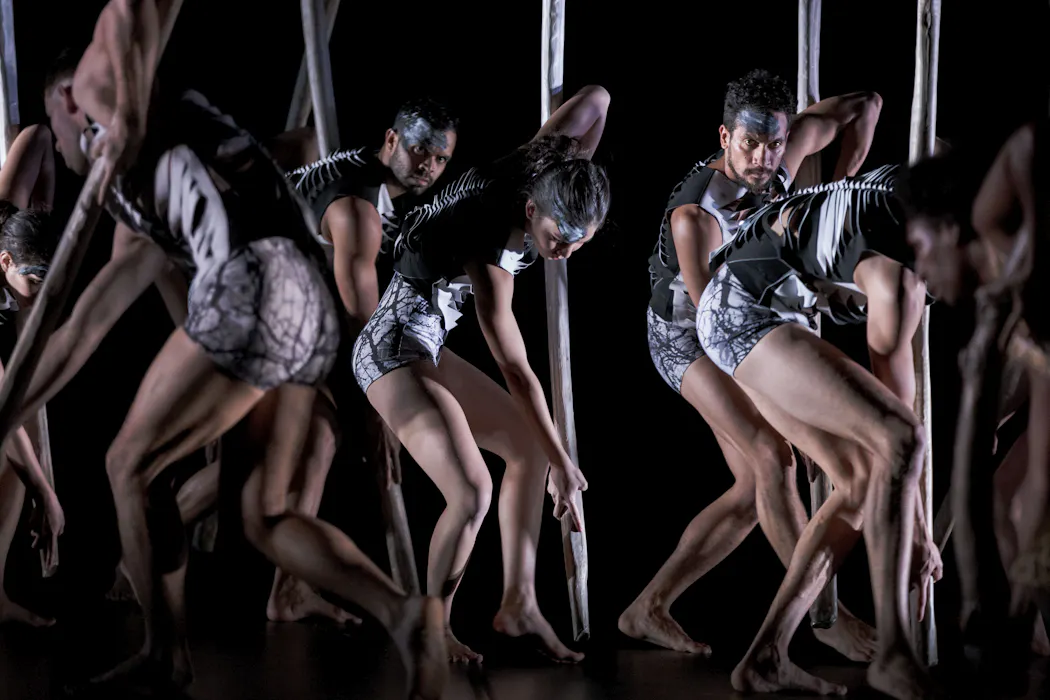
The opening image of Sheoak showcases both Rings’ choreographic skill and Jennifer Erwin’s amazing legacy as a costume designer. The dancers wear shirts with black on white streaks – skeletal puzzle pieces that join together to form larger human sculptures.

Sheoak gives palpable form to the exhaustion and frustration experienced by First Nations peoples. Daniel Boud

The theme of this work is cultural strength, resilience and adaptability, with the sheoak tree as the central metaphor. Dancer Chatelle Lee Lockhart is captivating in the role of this “Grandmother tree”, as it’s known to the Dharawal people.

The choreography weaves around Jacob Nash’s set design, featuring seven two-metre-long branches. The passing of branches signals the struggle to pass on cultural responsibility and knowledge from generation to generation.

The company of technically virtuosic dancers seems right at home in each of the three diverse works of Sheltering. The program particularly underscores Tuohy-Daniell’s potential as a new leading light in Australian choreography

Sheltering as a whole is dedicated to the late David “Dubboo” Page, brother of former Artistic Director Stephen Page. David’s work as composer, singer and musician was central to establishing the Bangarra aesthetic. His music also features in Rings’ Sheoak.

Sheltering is on now at the Sydney Opera House until June 13. The production will show at the Arts Centre Melbourne from June 18 to 27, and at the Queensland Performing Arts Centre from July 9 to 18.

The Conversation

I am writing as an Australian of Irish and Danish political exile, convict, and settler descent working within the Western tradition of contemporary art and dance. I acknowledge the much deeper cultural traditions that bind music, dance, painting, sculpture, and site in the art of Indigenous peoples.

  •  

Iran dragged out the 1979 hostage crisis to humiliate the US. It may try to do the same to Trump now

The weekend exchange of strikes between Iran and Israel has put US President Donald Trump under even more domestic and international pressure to end the unpopular war he launched with Israeli Prime Minister Benjamin Netanyahu more than three months ago.

The Israeli leader favours the continuation of the war until Iran is reduced to a feeble state. This would enable him to win the Israeli general elections later this year and further his goal of expanding Israel’s borders and regional domination in pursuit of a so-called “Greater Israel”.

Netanyahu is against any US–Iran deal that doesn’t meet his objectives. Israel’s invasion of southern Lebanon to repel the Iran-backed Hezbollah group is part of his strategy, which has been boldly countered by Iran.

Tehran, meanwhile, has shown a steely resilience to ensure the war is settled in its favour as a formidable regional actor.

As a result of all this, Trump faces the difficult task of reaching an acceptable deal with Iran and restraining an unruly Netanyahu.

Why the standoff has gone on so long

At this point in the war, what would constitute a “victory” for Trump?

He wants an outcome that can vindicate his decision for starting the war, which has proved to be very costly, generating a worldwide energy crisis and a great deal of economic pain. The war could cause Trump political problems in the midterm elections later this year, too.

He also wants an agreement on Iran’s nuclear program that he could claim is better than the 2015 deal Tehran struck with the Obama administration and its international partners, called the Joint Comprehensive Plan of Action. Trump withdrew the US from the deal in 2018.

But Iran’s Islamic government has so far not been willing to bend to Trump’s demands.

Relying on a mix of ideological devotion to Shia Islam, a strong sense of historical nationalism, and an effective military capability, the regime has not only survived, but made strategic gains.

It has destroyed or damaged many US bases in the Persian Gulf, hit Israel hard with missile and drone strikes, and above all gained control of the Strait of Hormuz. The strait – a critical oil and fertiliser chokepoint – has now become Iran’s most potent lever of resistance and punishment.

The conflict has also given renewed life to the Islamic government and its instruments of power. Many citizens who were opposed to the regime have rallied around the flag in the face of the external threats and for the love of their country.

Further, the war has propelled the government’s Islamic Revolutionary Guard Corps, which is designated by the US and many of its allies as a terrorist organisation, to new heights. It has been able to prove its worth as the key actor defending Iran and its Islamic system.

Meanwhile, Tehran is not as isolated as the Trump administration believes, either. It has the support of both Russia and China. And Iran’s geographical location has worked to its advantage, enabling it to access markets by road through its neighbours and via the Caspian Sea to the north.

The US and Israel still have the advantage when it comes to military power and they can inflict heavy damage on Iran. But Tehran’s strategic gains have placed it in a stronger bargaining position in the peacemaking process.

No matter the level of US military and economic pressure, Tehran is unlikely to succumb to US and Israeli demands to dismantle its nuclear program or relinquish control over the Strait of Hormuz.

The regime was designed to be resilient. It has built a system based on defiance, resistance and pragmatic decision making when faced with serious threats from both inside and outside Iran.

As such, it has the patience and endurance to outlast Trump – and for that matter, Netanyahu.

Echoes of 1979

The regime also has a history of outlasting the United States.

For instance, there are some parallels that can be drawn between the way the founder of the Islamic Republic, Ayatollah Ruhollah Khomeini, dealt with the hostage crisis of 1979–81 – when a militant group of his supporters ransacked the US embassy and took 66 Americans hostage – and the manner in which his successors are now managing negotiations with the US.

Khomeini let that episode drag on for 444 days to both consolidate his power and humiliate the US for having backed the pro-Western monarchy of his predecessor, Mohammad Reza Shah Pahlavi.

His approach played a key role in then-President Jimmy Carter’s defeat to Ronald Reagan in the 1980 US presidential election. The regime released the remaining 52 hostages just minutes after Reagan was inaugurated in January 1981.

The current standoff with Iran is only 100 days old, and it appears the regime is now prepared to use a similar strategy to punish Trump and Netanyahu for attacking Iran.

Iran’s leaders are seemingly determined to turn the tables on their adversaries and humiliate them. Whether they succeed will depend on what Trump does next – and what he’s willing to compromise on to bring Iran to the table for a lasting, mutually acceptable agreement.

The Conversation

Amin Saikal does not work for, consult, own shares in or receive funding from any company or organisation that would benefit from this article, and has disclosed no relevant affiliations beyond their academic appointment.

  •  

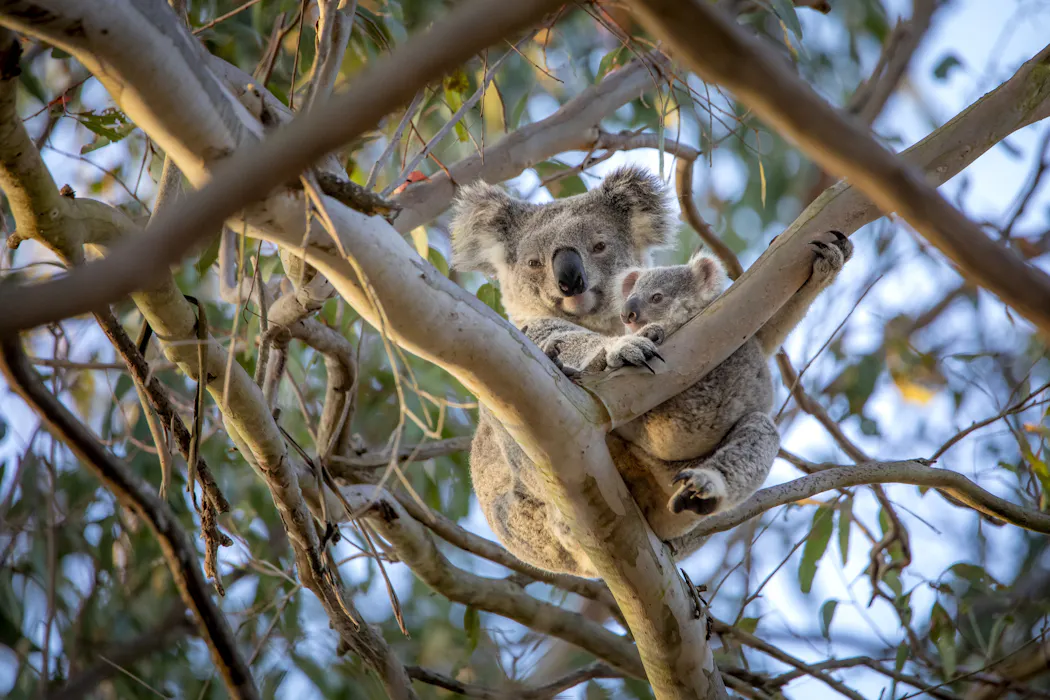
Koala numbers crashed across Australia 100,000 years ago. Global glacial cycles are likely to blame

janclewett/iNaturalist, CC BY-NC

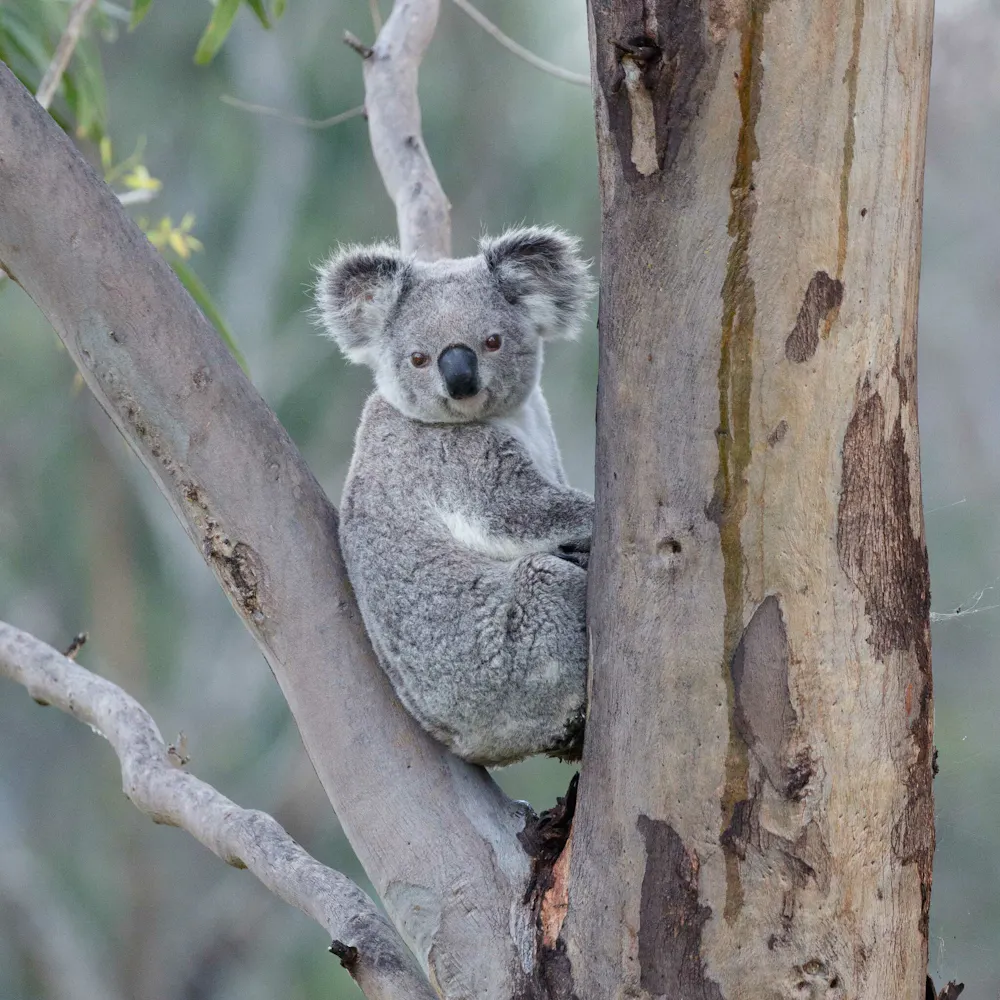
It’s surprising how easy it is to see a koala every day in Australia’s major cities.

The cute, grey marsupial can be found on t-shirts, hanging off people’s bags and pencils, and decorating any decent souvenir shop. But seeing a real koala in the wild has become increasingly tricky in some parts of the country. The iconic marsupial is now listed as endangered in Queensland, New South Wales and the Australian Capital Territory.

But koalas have been in a similar situation before.

As my new study published in the journal Molecular Biology and Evolution shows, koalas experienced a population crash about 100,000 years ago. This finding rewrites our understanding of the genetic history of koalas in Australia – and overturns previous theories about what caused their decline in ancient times.

Turning to the genome

Fossil records of koalas are extremely rare. This makes it difficult to estimate how many koalas were present in the past.

Instead, genomes provide important clues about their evolutionary history. The genome acts as a historical record. It preserves genetic information from ancestral populations that can be used to determine their population size.

Previous genomic studies of koalas have estimated koalas experienced a major population decline roughly 40,000 years ago. This was shortly after the arrival of humans in Australia, suggesting this may have been a contributing factor.

Yet the impact of human arrival on Australian fauna is hotly debated. Some researchers use it to explain the widespread extinction of megafauna during this period.

My new study challenges this theory.

A grey koala sitting in between tree branches.
Koalas are once again experiencing population declines across Australia. dcla/iNaturalist, CC BY-NC

Pushing the timeline back 60,000 years

My colleagues and I set out to construct the first estimate of the koala mutation rate. This is simply the number of mutations that appear in each generation.

Estimating the historical population sizes that have shaped mutation patterns in the genome relies heavily on knowing how often new mutations arise. The problem is that each species has its own unique mutation rate.

To estimate the mutation rate in koalas, we sequenced the genomes of 12 koalas from three families, comprising seven parents and five offspring. This allowed us to count the number of new mutations over each generation.

The whole koala genome has about 3.4 billion sites where changes could occur. We found only 25 mutations per offspring. That’s the equivalent of searching for 25 wrong letters scattered across more than 1,000 copies of The Lord of the Rings trilogy.

We then applied this mutation rate to 457 koala genomes sampled across their entire range. This allowed us to investigate how koala populations have changed over time – including when their numbers crashed.

We found koala population declines occurred around 100,000 years ago – well before humans arrived in Australia. This effectively rules out humans as a cause of the population crash.

Although the mutation rate is a fundamental evolutionary concept, we surprisingly have very few estimates for Australian species. Our estimate is the first from Diprotodontia, the marsupial order which also includes wombats, kangaroos and possums.

Previous studies estimating historical population sizes in koalas have had to rely on mutation rate estimates from distantly related placental mammals such as humans and mice. Applying the koala mutation rate has rewritten the genetic timeline for koalas.

So, what caused the crash?

The koala population crash 100,000 years ago matches a period of intense environmental change across Australia.

The Pleistocene (2.5 million to 11,700 years ago) saw repeated glacial periods, characterised by cold and dry conditions, as well as repeated interglacial periods, characterised by warmer and wetter conditions.

As Australia became drier, the expansion of the Nullarbor Plain established a vast semi-arid shrubland across southern Australia, shrinking suitable koala habitat and separating eastern and western koala populations.

Unfortunately, the population west of the Nullarbor Plain (which was recently described as a distinct species from the modern koala) went extinct around 28,000 years ago.

Although eastern populations were restricted to a small patch of forest on the east coast, they persisted through harsh glacial conditions. Over the last 17,000 years, as conditions became warmer and wetter, they expanded and formed the five genetic groups that are now distributed along the east coast of Australia.

Given our results, we’re now curious to see if other Australian species, including the closest relatives of extinct megafauna, also experienced population declines before humans arrived.

A brown sign signalling the Nullarbor Plain against a blue sky.
The expansion of the Nullarbor Plain established a vast semi-arid shrubland across southern Australia, shrinking suitable koala habitat and separating eastern and western koala populations. Craig Manners/Unsplash

Koalas are back to hard times

Koalas are once again experiencing population declines across Australia.

One similarity between modern and ancient declines is they are both largely driven by reductions in the amount of suitable habitat. The ancient decline was driven by global glacial cycles – an unavoidable result of Earth’s orbit.

However, recent declines have generated a similar bottleneck over a much shorter time window, due to the historical and continued removal of suitable koala habitat. This is made worse by other threats such as hunting, disease, vehicle strikes, feral dog attacks and bushfires.

Fortunately, most koala populations have only recently started losing genetic diversity, and rapid population recovery can prevent further loss and inbreeding.

Hopefully the eastern koala will persist once again.

The Conversation

Toby Kovacs does not work for, consult, own shares in or receive funding from any company or organisation that would benefit from this article, and has disclosed no relevant affiliations beyond their academic appointment.

  •  

‘Technostress’: why many older people feel shut out by the digital world

VioNettaStock/Getty Images

From personal health portals to AI assistants that draft emails, the digital age has simplified endless everyday tasks.

But for many older New Zealanders, the rapid march of technology has helped build a wall rather than open doors. Navigating online forms, changing apps, disappearing face-to-face services and the constant threat of scams can be daunting.

There is a term for this unease: technostress. Once used to describe the anxiety and frustration felt by workers, it has more recently been applied to older populations struggling in our digital-by-default world.

While older people’s overall digital engagement has grown over the years, about half of over 50s feel they are being left behind by modern technology.

Amid a planned public sector shake-up that would further digitise services, more than 40% of people older than 60 face barriers for accessing online government information.

More than ever, digital inclusion has become a necessity for older people to access essential services and maintain social connections. Without it, there are serious implications for their psychological, social, cognitive, physical and financial wellbeing.

Our newly published research, based on interviews with 23 people aged over 65, reveals a complex relationship with technology: one that can support independence, but also create new sources of stress and exclusion.

A double-edged sword

The experiences of those we interviewed varied widely. Some used technology very little – perhaps just for texts or phone calls – while others relied upon it heavily for daily chores and work. One study participant spoke enthusiastically about using an AI assistant to support her creative writing.

But regardless of how tech-savvy they were, all felt that keeping up with digital change was a never-ending but necessary challenge. This was especially apparent for those who used tech during their working years but found fewer resources available to upskill in retirement.

Another common theme was feeling targeted by scammers due to their age. For people living on a single income or pension, the financial risk of falling victim to a scam could be devastating and put them off going online.

Broadly, we found technology to be a double-edged sword for older people. For those who felt digitally included, it helped strengthen relationships through sharing photos and videos with family overseas and provided useful access to health information.

For those who felt shut out, technology became a source of distress, frustration and feelings of incompetence. They described struggling with online pension applications or having to relearn familiar software after unexpected updates completely changed the interface.

Some felt the accessibility features built into everyday digital devices were inadequate for their physical needs, causing them to abandon tasks because of eye strain or frustration.

Others felt digital technologies were not culturally responsive, reflecting a predominantly Western worldview. Common errors, such as the mispronunciation of te reo Māori names, could deepen feelings of exclusion and cultural invalidation.

Ageism and equity

Nearly all participants felt digital technologies were not designed with older people in mind, believing they were not viewed as a priority market by mainstream technology companies.

Yet many still blamed themselves for struggling to keep up. Some also described dismissive or impatient responses when seeking help, reinforcing feelings of frustration and inadequacy.

This may suggest a problem of digital ageism: the assumption that older people use technology less because they are unable or unwilling to engage with it.

In reality, meaningful digital participation depends on much more than willingness. It requires people to have the motivation, skills, confidence, access, trust and support needed to engage safely and effectively.

In this context, the challenge is not about age but equity. Fortunately, many organisations and individuals across Aotearoa New Zealand are working diligently on this issue, from advocacy groups to library-based digital skills programmes.

Some local companies have introduced equity products, such as age-friendly digital tablets and lower-cost mobile plans for pensioners. These efforts are essential, but more is needed.

More recent interviews with people working in the field suggest a need to dispel the myth that digital exclusion will disappear as older people increasingly become “digital natives”.

Instead, digital inclusion should be viewed as a fundamental right rather than a luxury in the hands of for-profit companies. This will require targeted policy, increased collaboration across sectors, and active involvement of older people as equal partners in digital design, testing and decision-making.

New Zealanders cannot benefit from even the most well-intended developments, such as telehealth services, if even one aspect of digital inclusion is lacking.

Without deliberate action, the shift to digital services risks widening the very inequities it is intended to reduce.

The author acknowledges the contributions of Rosie Dobson, Cinnamon Lindsay Latimer, Judith McCool, Robyn Whittaker and Vili Nosa to this research.

The Conversation

Melanie Stowell receives a doctoral scholarship from the University of Auckland and support from the Centre for Co-created Ageing Research.

  •  

Brushing your teeth in hospital could reduce the chance of catching pneumonia

South_agency/Getty Images

You go to hospital for treatment and to get better. But sometimes, you get something much less welcome: an infection.

Pneumonia, an infection of the lungs, is one of the most common and deadly infections people develop in hospital. Around 50,000 patients contract pneumonia in Australian hospitals every year. Around 1,900 of them die from it.

It’s rarely monitored and rarely reported. And to date, few studies have looked at how it can be prevented.

But our new trial, published today in The Lancet Infectious Diseases, shows a surprisingly simple action can make a major difference: brushing patients’ teeth.

We found this can reduce the chance of getting this type of pneumonia, called non-ventilator hospital-acquired pneumonia, by 60%.

What is this type of pneumonia?

Non-ventilator hospital-acquired pneumonia occurs in patients who aren’t on a ventilator, usually outside of intensive care settings.

Patients are infected when bacteria from the mouth or throat are breathed into the lungs.

Patients who develop this type of pneumonia stay in hospital between ten and 48 days longer, and are around eight times more likely to die during their admission.

A simple intervention made a big difference

We studied 8,870 patients across three Australian hospitals to see whether improving oral care – which included tooth-brushing – could reduce this type of pneumonia.

Usually, when patients go to hospital, they don’t pack a toothbrush – especially in emergencies.

In busy hospital wards, oral care isn’t always given the attention it needs, nor are oral care products always readily available. Patients don’t always get reminders to brush their teeth and many patients need help with their oral care.

The intervention in our study was deliberately simple. We:

  • gave patients in hospital a toothbrush and toothpaste in a bag when they were admitted

  • educated patients and hospital staff about the importance of tooth-brushing. The toothbrush also had a written prompt on it – “Brush away pneumonia”

  • assisted patients who needed help with tooth-brushing

  • audited how oral care was being delivered and gave feedback to hospital wards.

We introduced the intervention into one ward at a time over 12 months at each hospital. This gradual roll-out is known as a stepped-wedge cluster randomised trial. It can test new health interventions when it’s too difficult to randomise individuals without revealing who is receiving the intervention and who isn’t.

We found that this relatively simple intervention increased the proportion of people who cleaned their teeth from 16% to 62%.

This increasing oral care led to a 60% reduction in the risk of acquiring pneumonia, from the equivalent of eight infections per month on a typical ward of 30 patients, to less than four infections per month.

This is the largest trial of its kind and the first completed across multiple hospitals.

Why does brushing teeth help?

The mouth is home to billions of bacteria. Oral hygiene often deteriorates when people are unwell, sedated, immobile, or taking certain medications.

When this happens, bacteria build up on the teeth, gums and tongue. If these bacteria are breathed in – even in tiny amounts – they can cause pneumonia.

Daily tooth-brushing reduces this bacteria. It’s a simple mechanical action with a powerful protective effect.

Yet in busy hospitals, oral care is often overlooked. Patients may not know just how important oral care is. Staff are often busy with competing priorities and oral care can be de-prioritised. There is also a general lack of understanding about the importance of oral care.

Patients can help protect themselves

One of the most important messages from our research is patients aren’t powerless. While health-care staff such as nurses play a crucial role, patients who are able to brush their own teeth can meaningfully reduce their own risk.

If you or a loved one is admitted to hospital, you can:

  • bring your own toothbrush and toothpaste
  • brush your teeth twice a day if you’re able
  • ask staff for help if you can’t
  • remind staff if oral care has been missed.

These small actions can reduce the risk of a serious, life-threatening infection.

What happens next?

Pneumonia is costly – in lives, hospital days and the financial cost of care. But because non-ventilator hospital-acquired pneumonia isn’t routinely reported, it’s often invisible.

Our research challenges the assumption that hospital-acquired pneumonia is an unavoidable complication when you go to hospital.

It also highlights the need for hospitals to monitor non-ventilator hospital-acquired infections, in the same way they monitor falls, pressure injuries and other preventable harms.

Finally, our study strengthens the case for including oral care in national infection-prevention guidelines and nursing practice.

Oral care isn’t glamorous, expensive or technologically advanced – but it works. Sometimes, the simplest interventions are the most powerful.

The Conversation

Brett Mitchell receives funding from the Medical Research Future Fund which helped fund the reported study. Brett also receives funding from the National Health and Medical Research Council through an Investigator grant. He is affiliated with Avondale University and the Hunter Medical Research Institute. Brett is Editor-in-Chief of Infection, Disease and Health.

Allen Cheng receives funding from the National Health and Medical Research Council and the Australian Government for research studies and surveillance systems. He is a member of the Infection Prevention and Control Advisory Committee for the Australian Commission for Safety and Quality in Healthcare - the views expressed in this article may not reflect the views of the committee.

Nicole White receives funding from the Medical Research Future Fund which helped fund the reported study. She is a member of the Statistical Society of Australia and holds editorial roles with the Infection, Disease and Health journal and Significance magazine.

Philip Russo is an NHMRC Early Career Research Fellow at Monash University and Director of Nursing Research at Cabrini Health.

Peta Ellen Tehan does not work for, consult, own shares in or receive funding from any company or organisation that would benefit from this article, and has disclosed no relevant affiliations beyond their academic appointment.

  •  

Meet the internet movement trying to tackle the manosphere. It’s called BreadTube

"Breadtubers" Natalie Wynn (@contrapoints) and Mina Le (@gremlita) Youtube.com, Wikimedia, The Conversation, CC BY-NC

The manosphere has frequently featured in news headlines this year. Some of these have focused on how the movement looks on YouTube – a platform that research suggests uses recommender algorithms to boost extreme content.

The manosphere is one of multiple far-right communities on the video platform. It’s known for promoting highly conservative views about gender roles for both women and men, epitomised by figures such as Andrew Tate. Research shows manosphere content is doing real-world harm, particularly in schools.

But there’s another movement attempting to counter the influence of the alt-right online. It’s called BreadTube.

What is BreadTube?

BreadTube is a community of video essayists. Centre-left leaning in their politics, these YouTubers have emerged as a response to alt-right influencers online, aiming to bring a more critical lens to social issues. The “bread” in the name reportedly comes from a 19th century book criticising feudalism and capitalism, called The Conquest of Bread, by Peter Kropotkin.

The most notable channels, such as Contrapoints, Hbomberguy, and PhilosophyTube, all boast channels with nearly two million subscribers. Individual videos have viewership ranging from one million to more than seven million views each.

Some express the explicit desire for their videos to help deradicalise the young men who have been pulled into extreme communities online.

They claim their video style and strategic use of political keywords are intended to exploit the YouTube algorithm, ensuring their videos are shown to people who normally view alt-right content.

We wanted to test that claim: could YouTube users in the manosphere encounter BreadTube content instead, and if so, could that potentially help deradicalise them?


Read more: Meet BreadTube, the YouTube activists trying to beat the far-right at their own game


Our research

In our recently published research, we compared the topics and communication styles of BreadTubers with the manosphere.

First, we analysed 42 transcripts: 12 from BreadTube producers, 12 from manosphere producers and a further 12 from normal, non-politically-oriented YouTubers as a control group.

We found manosphere producers had a narrow focus on women, lifestyle advice, and money, and used a casual, older-brother-like tone to address their audience as a mentor.

By contrast, we found BreadTubers had a more formal tone, discussing a range of social issues, such as inequality and discrimination, as well as health topics, and often cited academic articles to back up their claims.

Unsurprisingly, the groups were therefore very different in their communication style and topics.

Second, we used computational analysis to compare the groups with a dataset of 533 transcripts. This analysis suggested the BreadTube creators tend to produce videos that are complex, but less positive in the emotions they express. This makes sense, as they often analyse social problems.

In contrast, the manosphere analysis revealed less complex videos with more casual language, with the presenters readily expressing positive emotions. Notably, in the analysis of gendered language, only the manosphere was found to discuss women.

These findings supported our qualitative analysis on a much larger scale.

What does this mean?

We found that despite claims BreadTubers tailor their content to reach alt-right communities, their videos remain linguistically very different from those in the manosphere. This means there’s unlikely to be much overlap in audiences across these videos. BreadTube therefore isn’t a magic bullet against radicalisation.

That said, BreadTube creators are still valuable, as they offer a vital, organic alternative to the extremist influencers on YouTube.

BreadTube might differ from manosphere content in notable ways, but it’s the differences that make them worth watching, especially for people who have fallen into niche communities. By providing diverse role models and intellectually engaging content, these channels may act as a preventative circuit breaker for young people before they fall down extremist rabbit holes.

If you’re interested in watching some of these video essays yourself or want to diversify the viewing habits of someone you know, here are five channels we recommend.

1. Contrapoints

Contrapoints produces lavish productions covering everything from philosophy to debates around JK Rowling. Start with her funny and insightful video on social media and envy.

2. Shaun

Shaun produces videos on politics, including case studies on particular events or movements. Start with his critique of the manosphere.

3. Gremlita

Gremlita covers social media, trends, popular culture, and fashion history. Her video on social media advertising and influencer sponsorships is a great starting point.

4. Hbomberguy

Hbomberguy busts myths, such as climate denialism, or misinformation about vaccines. Start with his detailed study of social media and influencer plagiarism.

5. PhilosophyTube

PhilosophyTube makes videos discussing philosophy, such as the work of Nietzsche, Stoicism, and how it relates to modern society. It’s hard to go past her provocatively-titled duo, “Was Nietzsche Woke?” and “Was Nietzsche MAGA?”

The Conversation

Emily Booth receives funding from the Advanced Strategic Capabilities Accelerator (ASCA).

Jooyoung Lee receives funding from Office of National Intelligence (ONI). She is a recipient of National Intelligence Post-Doctoral Grants (NIPG).

Marian-Andrei Rizoiu receives funding from the Advanced Strategic Capabilities Accelerator (ASCA), the Australian Department of Home Affairs, and the Commonwealth of Australia as represented by the Defence Science and Technology Group of the Department of Defence. Marian-Andrei Rizoiu is the Director of the Defence Innovation Network. He is also the Director of the Defence Innovation Network.

  •  
❌