Reading view

How do we help intellectually gifted kids flourish? The answer isn’t just giving them more work

Hryshchyshen Serhii/Shutterstock

When we talk about intellectually gifted children, the debate tends to focus on one of two questions: how we detect this characteristic, and why it doesn’t always translate into higher marks at school. While these are important questions, they overlook another equally important one: what can schools do once they know a student has to learn in a different way to other others?

Even when gifted students are identified, educators tend to offer an uninspiring response. They set more work, or more of the same kind of exercises, as if learning were a simple question of doing more. This is a very common mistake. Instead of increasing students’ burdens, we should be adjusting the level of the challenge itself.

Enriched learning

Educators’ responses to gifted children are typically found at two extremes: inaction or overload. But properly adapted education doesn’t mean giving a child ten exercises where others do five. This only serves to make education repetitive and unstimulating.

If a student has already covered some of the planned content, teachers can reorganise their learning pathway and avoid unnecessary repetition. This frees up time in the school day that, instead of being filled with more of the same kinds of tasks, should be used for enrichment activities and a broader curriculum.

In practice, this means activities such as open problems, research projects, exploring links between disciplines, working on tasks with multiple solutions, critically analysing information, and creating their own outputs.


Leer más: Gifted education programs don’t benefit Black students like they do white students


Javier Tourón, an internationally recognised Spanish expert in this field, points out that enrichment can take various forms: flexible groupings within the classroom, temporary breaks for specific activities, resource rooms, or complementary programmes. But these should always be based on pupils’ actual needs, not as a one-size-fits-all measure.

Don’t overburden, adapt

The question is not whether these pupils need special activities, but rather which curricular and methodological decisions enable them to learn in a meaningful way. This forces us to consider a number of issues:

  1. Objectives: not all students need to progress through the curriculum at the same pace. In a language class where, for example, the class is working on the structure of a narrative text, a gifted student could be given a more challenging objective. This could be experimenting with different narrators, playing with the story’s timeline, or analysing how the meaning of a text changes depending on the point of view.

  2. Tasks: limited, repetitive tasks may be useful at times, but they cannot be the only way of teaching. Gifted students need real intellectual challenges. For example, instead of ten identical calculations, they could be asked to design a problem themselves.

  3. Assessment: it is useful to know what a student already knows. Initial assessments and tests can avoid students repeating what they have already learnt, and free up time for more complex projects.

    In maths, for instance, the final result may only be one part of the assessment. Teachers could also assess how the student reaches the answer, their ability to explain their method, and their comparison of different methods.

  4. Organising learning: effective curriculum adaptation does not always mean taking pupils out of the classroom or creating a completely separate programme. It can often be achieved within the main classroom, provided the school has the flexibility to group pupils, diversify, enrich and personalise the learning experience.

    For example, in language or social studies, while the class is exploring a common topic, gifted students may take on a different role, such as identifying links with other topics, coming up with higher-level questions, comparing sources, or preparing a short presentation for the group.


Leer más: ‘Historical time’ helps students truly understand the complexity of the past – and how they fit into it


A need, not a privilege

These measures are often seen as a privilege, but that is not what they are. They are a way of meeting a student’s specific educational needs.

Inclusion is not just about helping those with difficulties. It also means recognising that diversity takes many different forms and that a school cannot give the same response to all those who learn differently. Ignoring the needs of gifted pupils also leads to exclusion and, in the long term, can cause boredom, disengagement and demotivation.

A universal design

The Universal Design for Learning (UDL) framework is particularly relevant for gifted pupils because it is based on a central tenet of inclusive education: that not all students learn in the same way, nor do they all need the same conditions to participate, progress and fulfil their potential. This would be akin to assuming that every person wears the same size of clothes.

UDL enables teachers to diversify forms of engagement, meaning the ways that students connect with the learning process. This can mean, for instance, offering different project options based on a student’s interests, or challenges of varying complexity.

UDL also covers means of representation (for example, presenting the same content through text, visual diagrams, videos or oral explanations), and of action and expression (for example, giving student the option of demonstrating what they have learnt through an oral presentation, a written text, an infographic, a model or a research project).

As some authors argue, inclusive education is not a question of adapting students to a one-size-fits-all approach to teaching, but of transforming educational design to reduce barriers and expand learning opportunities for all.

This approach benefits not only those with the most obvious difficulties, but also those who need greater intellectual stimulation, flexibility, and opportunities for personal development in order to fully realise their potential.

The whole classroom benefits

The good news is that transforming teaching in this way doesn’t just benefit certain pupils. When a school adapts, stops overburdening students, and presents them with more open-ended challenges, it improves the whole class’s educational experience.

Why, then, do we continue to uphold such a homogeneous approach to teaching in the classroom when we know that diversity is the norm? Giftedness forces us to confront this uncomfortable question.

Catering for the needs of gifted children means improving the way we design the classroom experience. But this is no easy task. It calls for greater investment in training across the entire educational sector, and an open-minded approach that embraces diversity as an inherent part of being human.

The Conversation

Jessica Cabezas Alarcón no recibe salario, ni ejerce labores de consultoría, ni posee acciones, ni recibe financiación de ninguna compañía u organización que pueda obtener beneficio de este artículo, y ha declarado carecer de vínculos relevantes más allá del cargo académico citado.
  •  

A very strong El Niño may be approaching. Here’s what it could mean for the world’s weather

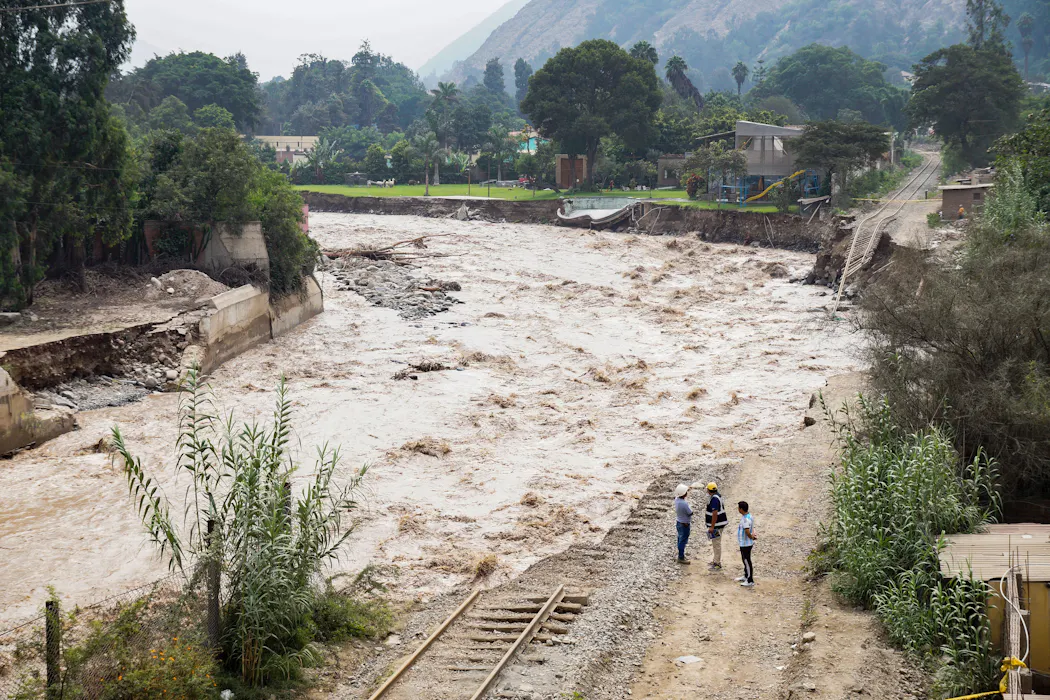
Homes and train tracks were destroyed when heavy rains caused a river to burst its banks in Chaclacayo, near Lima in Peru, on March 19, 2017. Joseph Moreno M/Shutterstock

El Niño is a recurring climate event with impacts across the globe. It has three phases: one cold (known as La Niña), one neutral, and one warm (El Niño).

In 2026, spring in the northern hemisphere took place in a neutral phase, which followed a relatively mild La Niña. Short-term forecast models indicate that by mid-year it is very likely that we will enter an El Niño phase. This El Niño could become very intense towards the end of the year, with talk of a “super-El Niño”. But what effects might it have? And has something similar happened in the past?

A GIF of a map of the Pacific Ocean showing higher temperatures in red, orange and yellow.
Sea surface temperature variation in the tropical Pacific Ocean between February and May 2026. NOAA

An anomalous Pacific current

This occasional anomalous warm ocean current in the Pacific was originally noted by 19th-century Peruvian fishermen. They called it El Niño – “the child” in Spanish – because it often arrived around Christmas time.

It occurred when warm waters from the equatorial Pacific replaced the usual cold waters off the coasts of Ecuador (south of the city of Guayaquil), Peru and northern Chile. These waters are normally quite cold due to the Humboldt Current – which flows from south to north along this sections of South America’s coastline – and due to the upwelling of deep cold waters.

The impact of these currents is significant. Take, for instance, the Chilean city of Antofagasta on the Pacific coast, and Rio de Janeiro on the Atlantic coast. They are at almost exactly the same latitude, the Tropic of Capricorn, but their average sea temperatures are very different: around 18°C in Antofagasta and 24°C in Rio de Janeiro.

For Peruvian fishermen, the arrival of the warmer El Niño current meant the disappearance of their most abundant and prized fish, the anchoveta, which thrives in cold, plankton-rich waters.


Leer más: Tiny oceanic plankton adapted to warming during the last ice age, but probably won’t survive future climate change – new study


An ocean and atmospheric phenomenon

In the 1920s, British physicist and climatologist Gilbert Walker made a surprising discovery. While analysing vast amounts of atmospheric pressure data, he realised that when pressure increased in the South American Pacific, it decreased in northern Australia and Indonesia, and vice versa. In other words, these two regions of the planet, thousands of kilometres apart, were connected in terms of atmospheric pressure behaviour. This is what we now call a teleconnection, a long-distance meteorological link.

This coordinated oscillation in atmospheric pressure across the South Pacific was named the Southern Oscillation. But what does El Niño, an ocean current, have to do with the Southern Oscillation, an atmospheric phenomenon?

As well as having a negative impact on the Peruvian fishing industry, El Niño brings rainfall – sometimes torrential – to the arid regions of Peru and northern Chile, home to the world’s driest desert, the Atacama. In 1957-1958, a very intense El Niño caused torrential rainfall in Peru and other countries, and a severe drought in India and Southeast Asia, spurring further research into the phenomenon.


Leer más: Climate change: how fires and floods are creating uninsurable areas across Europe


In the 1960s, Norwegian-American meteorologist Jacob Bjerknes found that the warming of the South American Pacific caused by El Niño was linked to the Southern Oscillation, thereby establishing a close connection between the ocean and the atmosphere.

When the South Pacific tropical anticyclone – with its associated trade wind pattern that blows from South America towards Australia and Indonesia – weakens, the waters of the equatorial Pacific warm and begin to shift towards Central America. There they branch off, mainly southwards, along the coasts of parts of Ecuador, Peru and Chile. This is how El Niño is generated.

Bjerknes demonstrated that the atmosphere and the ocean are closely linked, and that what happens in one part of the climate system has an impact elsewhere. Combining the names of the oceanic and atmospheric components gave rise to the El Niño’s official name: El Niño-Southern Oscillation (often abbreviated to ENSO).

A map showing sea surface temperatures in 2016.
Sea surface temperature map, with above average temperatures shown in red and below average in blue. The ‘tongue’ that stretches out to the west of South America is characteristic of El Niño associated heating. This NOAA map from 2016 shows one of the strongest El Niños ever recorded. NOAA

The worst El Niño of the 20th century

In 1982–83, the most intense El Niño of the 20th century caused extreme weather events throughout the world, including floods in the American Pacific and in the southern United States, and droughts in north-eastern Brazil and Indonesia. It also caused a very mild winter in the mid-latitudes of Europe, Asia and North America.

From that point onward it was observed that, from time to time, temperatures in the equatorial Pacific also showed a negative anomaly, meaning they were lower than normal. At the same time, the South Pacific high-pressure system strengthened, along with the trade winds. This situation was the opposite of El Niño and was named La Niña.

In short, El Niño brings warm waters and instability, while La Niña brings colder waters than normal and greater stability to Ecuador, Chile and Peru. These phenomena form recurring cycles, though not over fixed periods of time.

The last intense El Niño of the 20th century occurred in 1997–98, causing severe flooding in California. It received widespread media coverage, as the disasters occurred in the US.

An aerial view of a flooded area, with trees and power lines visible.
El Niño can cause severe droughts in some parts of the planet and torrential rain in others. NOAA

How might the next intense El Niño behave?

A super-El Niño would undoubtedly lead, if not in 2026 then certainly in 2027, to a higher global average temperature – a few tenths of a degree above what would be expected given the current rate of global warming. There would also be heavy rainfall in the aforementioned Andean countries, the Argentinian area of Mar del Plata, East Africa, and parts of the southern United States, with severe droughts in Southeast Asia, parts of Australia and northeastern Brazil.

In the Mediterranean basin, the El Niño-La Niña cycle is weaker, largely due to the region’s unique geographical characteristics. However, during a very strong El Niño event it can expect higher than normal temperatures, and perhaps a greater likelihood of extreme rainfall.

In any case, what once appeared to be a phenomenon confined to Peruvian fishing grounds is now known to be a global interaction between the atmosphere and the ocean, with repercussions that can be catastrophic in regions far removed from its source.

The Conversation

Javier Martín Vide no recibe salario, ni ejerce labores de consultoría, ni posee acciones, ni recibe financiación de ninguna compañía u organización que pueda obtener beneficio de este artículo, y ha declarado carecer de vínculos relevantes más allá del cargo académico citado.

  •  

Better patient-nurse relationships can transform mental health care – and make hospital stays shorter

NT_Studio/Shutterstock

Being admitted to a mental health unit can be one of the most vulnerable moments in a person’s life. They often arrive in the midst of a crisis, and are fearful, confused and anxious. But in these situations, one thing can profoundly affect their experience: the relationship established with the nurses who attend them, especially in the first days.

While it may seem secondary to medical treatments or clinical decisions, the therapeutic relationship – meaning the collaborative bond between patient and nurse – has a greater impact than previously thought.

Our study, carried out in 12 Spanish mental health units, demonstrated that this relationship is not always built in the way we might think.

An uneven start

We analysed how both patients and nursing professionals perceived the therapeutic relationship in the first days after a patient was hospitalised. The results were significant. While nurses tended to positively evaluate the relationship, patients were less satisfied. There was a gap between how the care was perceived and how that care actually felt for those receiving it.

There are three key reasons for this difference: communication, trust and participation. Patients especially value feeling heard, understanding what is happening to them and, above all, having a say in decisions about their treatment.

It is not just a question of receiving attention, but of playing an active role in the whole process. One of the most important things for patients is a clear agreement on the goals and means of treatment. When this does not happen, the therapeutic relationship suffers from the outset.

Treatment is not just technical

In our second study, we analysed the experiences of over 250 patients upon being admitted to hospital. We wanted to understand their experiences of being admitted, and what factors influenced it.

The results were clear: the better the patient’s perception of their treatment, the less coercion, humiliation and fear they felt. This is especially important in mental health units because patients often experience certain situations – even those which are clinically justified – as being imposed on them.

However, our data show that the feeling of coercion does not depend solely on the measures applied, but on the context in which they occur and how professionals relate to patients. Aspects such as having private spaces, feeling safe within the unit, receiving emotional support and participating in decisions about treatment all play a decisive role.

In other words, it is not just a question of what is done, but how it is done. The same procedure can be experienced as help or an imposition, depending on the relational quality of the patient’s surroundings.

Improving hospitalisation

As part of this study, we asked ourselves a key question: is there a specific intervention that would improve the therapeutic relationship and, with it, patients’ experiences?

To answer this, we designed a simple but structured intervention: the “Reserved Therapeutic Space”. It consists of designated moments during hospital admission where the nurse and the patient meet without interruption to identify concerns, agree on goals, and monitor the overall process.

It does not aim to add more tasks, but to ensure something that is often lost in the care routine: quality time for communication.

The results were conclusive. Patients who received this intervention showed significant improvement in the therapeutic relationship. They perceived a higher quality of care, especially in key areas such as participation and preparation for discharge.

We observed one especially significant effect: these patients experienced fewer feelings of coercion, humiliation and fear during their admission. In other words, something as apparently simple as having a structured space for conversation and collaboration significantly reduces the negative experiences associated with hospitalisation.

And the effects do not stop there.

One of our most striking findings was that patients who participated in this model were discharged earlier than those who received usual care. On average, their hospital stay was reduced by several days.

This suggests that the therapeutic relationship not only influences how admission is experienced, but also clinical progression itself.

More effective care

Traditionally, the relationship between health workers and patients has been considered a “human” or “ethical” dimension of care – something important but difficult to measure. Our results challenge this. The way staff relate to patients has measurable effects on patients’ emotional experiences, their sense of security, their participation in treatment and, ultimately, their recovery.

This means that listening, conversing, agreeing objectives and building trust are not just add-ons to treatment – they are an essential component of it.

Our findings also have major implications for healthcare systems searching for ways to improve efficiency, reduce hospital stays and optimise their resources.

Improving care is often thought of as introducing new technologies or increasing the intensity of treatments. But sometimes, the most transformative change is much simpler, and involves guaranteeing that the person being cared for has a space where they are listened to, understood, and recognised as central to their own treatment.

The evidence is clear. When people participate, trust and feel respected, they have a better experience of hospital admission and a better recovery. And in mental health, this can make a world of difference.


A weekly e-mail in English featuring expertise from scholars and researchers. It provides an introduction to the diversity of research coming out of the continent and considers some of the key issues facing European countries. Get the newsletter!


The Conversation

To carry out this research, Antonio R. Moreno Poyato and his research team has received funding from the Carlos III Health Institute (PI21/00605, Ministry of Science and Innovation). The project also received partial funding from the European Regional Development Fund (FEDER) and the Col·legi d’Infermeres i Infermers de Barcelona (PR-487/2021).

Khadija El Abidi El Ghazouani y Sara Sanchez-Balcells no reciben salarios, ni ejercen labores de consultoría, ni poseen acciones, ni reciben financiación de ninguna compañía u organización que pueda obtener beneficio de este artículo, y han declarado carecer de vínculos relevantes más allá del puesto académico citado.

  •  

Correfocs are Barcelona’s noisiest tradition – and ‘fire devil’ performers sacrifice their hearing to take part

The _correfoc_ is a major celebration, both in Barcelona and throughout Catalonia. Calvesklein/Wikimedia Commons, CC BY-SA

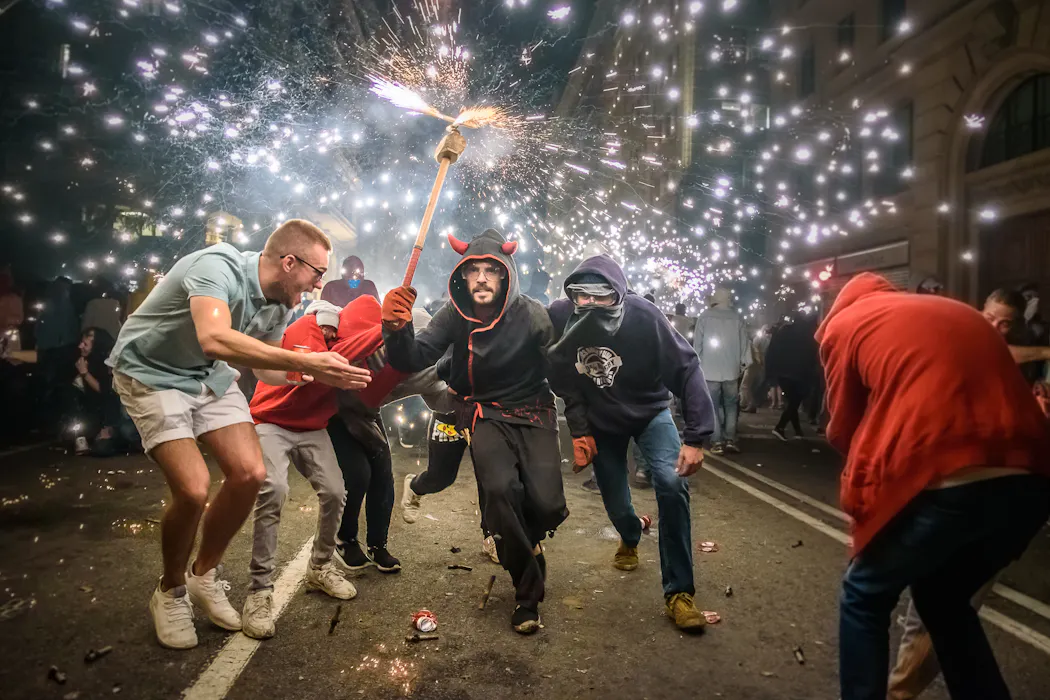
Every year on August 15, the Gràcia neighbourhood of Barcelona is awoken by a pyrotechnic procession of diables, or “fire devils”, running through its narrow streets, shortly followed by groups of drummers. As revellers dance to the rhythm of percussion and explosions, noise and smoke fill the neighbourhood, transforming its atmosphere and marking the beginning of the neighbourhood’s seven-day local festivities.

These annual events – known as correfocs – are an integral part of the neighbourhood’s fabric. But lifelong exposure to extreme noise takes a major toll on the performers’ health, in particular their hearing. So why do they keep showing up?

Fire as culture

Fire has long shaped the rhythms of public life in Catalonia. Its presence can be traced back to before the 14th century and appears in one of the earliest written records of Barcelona’s civic rituals: the Book of Solemnities of 1424. Back then, fire was part of religious celebration. During events such as Corpus Christi, processions moved through the city streets, occasionally accompanied by early pyrotechnic effects or symbolic figures like fire-breathing beasts.

But what started as a ritual element has gradually taken on a life of its own. Over time, fire moved beyond the strictly religious sphere and became a defining feature of Catalonia’s popular culture. Today, it is not just part of the spectacle – it is the spectacle. Fire shapes how communities gather, celebrate and experience the city, embedding itself deeply in collective practices and shared imaginaries.

This is visible throughout the festive calendar, as public celebrations regularly feature large-scale fireworks displays that transform the city into a shared stage to mark local festivities and seasonal transitions. One of the most emblematic moments is the summer solstice on June 23, La Nit de Sant Joan or St John’s Night, when fire and fireworks light up streets, squares and skies.

Fire festivities are organised by neighbourhood groups known as colles (colla in singular), and can be divided into three main kinds of representations.

  • The Ball parlat: Literally meaning “spoken dance”, this is a performance depicting a fight between archangel Saint Michael and Lucifer and his devils. At the end, Lucifer is defeated and leaves, while his devils set off fireworks embedded in their wooden staffs.

  • The Cercavila: This consists of colles parading around the neighbourhood, often wearing costumes and accompanied by music, fireworks and a range of figures depicting giants and humans. They wear costumes, a two-piece set made of thick, flameproof cotton, normally with horns on the hood and a range of custom-painted motifs including devils, snakes, dragons and flames.

  • Correfocs: Exclusively composed of fire colles, these events take place at night. They consist of devils carrying a wooden stick, the maça, with a metal point containing fireworks. These make a sound while they burn, with a loud bang at the end, known as the thunder. The term correfoc is often used to refer to these festivities more broadly, especially outside of Catalonia.

In both the correfoc and cercavila, the devils in multiple colles set off fireworks while dancing to the beat of the drummers who follow them. The soundtrack to these events is a constant, thunderous roar of pyrotechnic noise mixed with percussion.

Noise above the pain threshold

Gràcia – historically a small village that was once separated from the Roman city of Barcino – is one of the oldest neighborhoods in Barcelona. It is made up of narrow streets flanked by 3-5 storey buildings. Noise reverberates in these streets, and traps smoke from fireworks. During a cercavila or correfoc several devils will be “burning” at once, meaning there are multiple fireworks going off simultaneously.

Each pyrotechnic artifact used in the festivities is subject to standard Health and Safety checks, which include a noise limit of 120dB. This is the threshold for pain and hearing damage, equivalent to the noise made by a chainsaw.

But this rule only applies to each artifact individually, and there is currently no requirement to test simultaneous explosions. This means that in a cercavila or a correfoc, especially in narrow streets, noise can reach as high as 175dB – equivalent to a shotgun being fired close to your ear, far higher than the 120dB pain threshold.

The Gràcia devils’ fire and drumming performances take place throughout the week of August 14 to 21 in Gràcia, often multiple times during the day. It is a concentrated exposure to loud music and explosions in a short period of time.

Sacrificing health for community

Belonging to a colla means belonging to an established and appreciated aspect of Catalan popular culture. Many people stay in their colla for decades, while some start aged 18 or under (most have a dedicated children’s section) and never leave. For many lifelong fire devils, accrued hearing loss is just something that comes with the territory.

Some devils even wear their hearing loss as a badge of honour and belonging. But more broadly, ear protection is not something all devils wear, even though gloves, eye protection and flame retardant clothing are widely used.

The real question is whether hearing loss is really an intrinsic part of being a devil, and what prevents devils from protecting themselves. Why, for instance, are the loudest fireworks still tested individually, and not in unison as they are actually used? And why are participants not more strongly encouraged to protect their hearing? These discussions are difficult to open up because they can be seen as questioning or even challenging Catalan popular culture itself.

There is polarisation among devils themselves on the matter. On the one hand, they are aware of their hearing loss and are under no illusions as to what causes it. However, wearing ear protection is not yet widespread in correfocs or cercavilas, just as it isn’t in so many other non-pyrotecnic activities that can damage hearing, such as concerts, discos or even being at a bar with very loud music.

This may be where the answer lies; perhaps it is not a question of belonging but of social habit. It is socially acceptable to, for instance, protect our eyes from sunlight or dust, but we are not yet used to protecting our hearing. In the case of Barcelona’s fire devils, they pay for this dearly.


A weekly e-mail in English featuring expertise from scholars and researchers. It provides an introduction to the diversity of research coming out of the continent and considers some of the key issues facing European countries. Get the newsletter!


The Conversation

karla berrens is a member of the CRIT research group and the CR Polis research centre. She was a member of two cultural associations linked to this article – the Colla Vella de Gràcia and the colla Farrofoc – until 2026.

  •  
❌