Reading view

How switching to smarter lighting can cut energy bills and boost your health
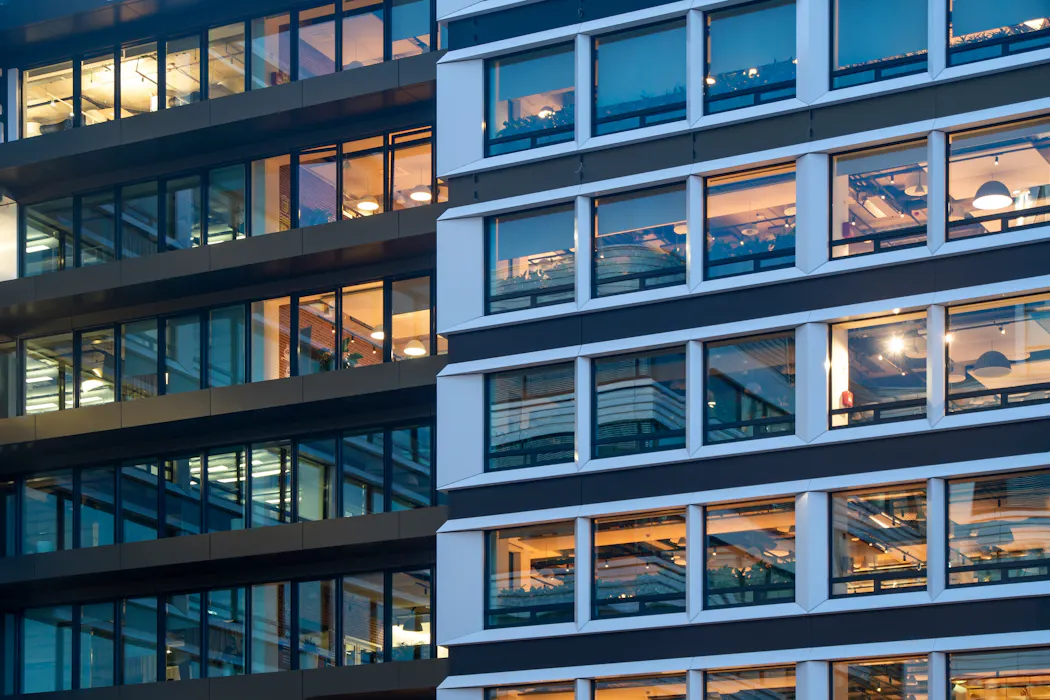
A great shot of/Shutterstock

Lighting accounts for almost 8% of the world’s energy usage. It makes up around 10-20% of domestic energy bills, with an even higher proportion in commercial premises like offices.

But it still has huge potential for improvement. Technological changes and management of consumer behaviour can greatly reduce energy consumption without sacrificing comfort – and even improve health and wellbeing along the way.

LED lightbulbs marked a huge leap forward in energy efficiency. They can reduce energy consumption by 50-80% in comparison with older technology, but their impact goes beyond energy savings, as by emitting less heat than older bulbs, they also reduce the need to cool interiors.

Type of light also plays a role in our bodies, affecting sleep, attention and metabolism. But its impact mainly depends on intensity. Bluer light – typically emitted by screens and “cold” LED bulbs – can alter the brains’ production of melatonin, which impacts sleep and circadian rhythms. Warmer and properly adjusted LEDs, on the other hand, can minimise this effect. They are also more energy efficient than other systems.

Better lighting doesn’t mean more light

A typical mistake in interiors is total, uniform lighting. We flip the switch and illuminate an entire space without considering how each each area of it will actually be used. But lighting needs are far from uniform. For instance, European regulations state that a hallway needs around 100-200 lux, while a workstation needs around 500.

Dividing up spaces can reduce lighting energy consumption by anywhere from 20% to 40% without affecting visual comfort. And further savings – as much as 20-60% – can be achieved through smart lighting systems that use sensors to automatically adjust lighting depending on where people are within a space.

Excessive lighting is another common problem. Many lighting systems exceed recommended levels without producing noticeable benefits, causing unnecessary energy use.

In short, what we need is to use less energy, and adapt spaces to how people actually use them.


Leer más: If everyone in the world turned on the lights at the same time, what would happen?


Benefits of natural light

A building’s most efficient lighting resource is natural light. Outside it can exceed 10,000 lux, while inside it is rarely more than 500 lux. Even so, it is common to leave artificial lights switched on all day, which both increases energy costs and reduces our exposure to natural light.

But an office or residential building design that makes the most of natural light can reduce lighting energy use by 40-70%. It also improves productivity and mood, reduces visual fatigue, and helps to regulate our biological clocks.

At night, artificial light can affect sleep by reducing levels of melatonin, the hormone that helps us to fall asleep. Exposure to natural light during the day helps to improve night time rest and balance our circadian rhythms. Since each person responds differently, it is important to adapt lighting to individual needs.


Leer más: How scientists changed their view of insomnia


Colour temperature also affects the way we feel. Cold light makes us more alert, while warm light is better for rest and relaxation. Dynamic lighting systems allow us to adapt lighting over the course of the day, improving comfort and only using as much energy as necessary.

Sustainability and health certifications

In recent years, energy-efficient lighting has ceased to be an isolated objective, and now forms part of global certification systems that analyse buildings as a whole. The two most important certifications are LEED and WELL.

LEED: energy efficiency and sustainable design

LEED (Leadership in Energy and Environmental Design) has become one of the world’s most widely used standards for evaluating building sustainability.

In lighting, LEED does not just look at energy consumption. It also considers use of natural light, ways of reducing power consumption from lighting, automatic controls and sensors, and the quality of lighting in interior spaces.

Studies show that LEED-certified buildings can significantly reduce global energy consumption, with lighting and heating making a direct impact.

In practice, LEED pushes us towards more energy-efficient buildings, where lighting systems are an integral part of the design as opposed to an isolated, separate element.

WELL: lighting and health

While LEED certification is based on efficiency, the WELL Building Standard looks at human health. In its lighting section, WELL looks at exposure to natural light (including duration), control of excessive light, spectral qualities of artificial light, alterations to circadian rhythms and night-time light exposure, and flexibility of lighting at different times of day.

The WELL Standard illustrates how the paradigm is shifting when it comes to lighting. No longer just a technical parameter, it is now seen as a direct determiner of physical and mental wellbeing. A 2022 study found that following WELL criteria can reduce fatigue, and improve quality of sleep and cognitive performance.

WELL introduces the vital concept that improvements to lighting should not just aim to save money, but also protect our health.


Leer más: Sleepless cities: how urban noise and light keep us up at night


Interior design and energy efficiency

A space’s design is also decisive in energy consumption. For instance, lighter coloured surfaces reflect up to 80% of light, while darker colours increase the need for artificial light.

Research has shown that certain passive design choices can reduce energy use for lighting by 30-50%, all without any technological changes. These include a building orientation that makes the most of natural light, using materials that reflect light, control of excessive light or glare, and indirect lighting.

Carefully designing a space can save as much energy as renovating its entire lighting system.

The lighting of the future

Reducing energy consumption does not depend on one technological fix, but on a broader, integrated strategy that ranges from the layout of a space down to the type of lightbulbs used.

There is not one official statistic that encompasses the potential savings of all of these measures combined, as this figure also depends on the type of building, climate and use. But we do have estimates. For instance, modernising lighting in an office building can reduce lighting energy consumption by 60-90%, depending on how well it is optimised.

But lighting is not just a question of energy use. It is also a key component of health, productivity and wellbeing. The buildings of the future will therefore not just be more efficient, but also healthier, and certified under criteria that cover energy, use, health and design.


A weekly e-mail in English featuring expertise from scholars and researchers. It provides an introduction to the diversity of research coming out of the continent and considers some of the key issues facing European countries. Get the newsletter!


The Conversation

Roberto Alonso González-Lezcano no recibe salario, ni ejerce labores de consultoría, ni posee acciones, ni recibe financiación de ninguna compañía u organización que pueda obtener beneficio de este artículo, y ha declarado carecer de vínculos relevantes más allá del cargo académico citado.
  •  

Why street art doesn’t always make a city better

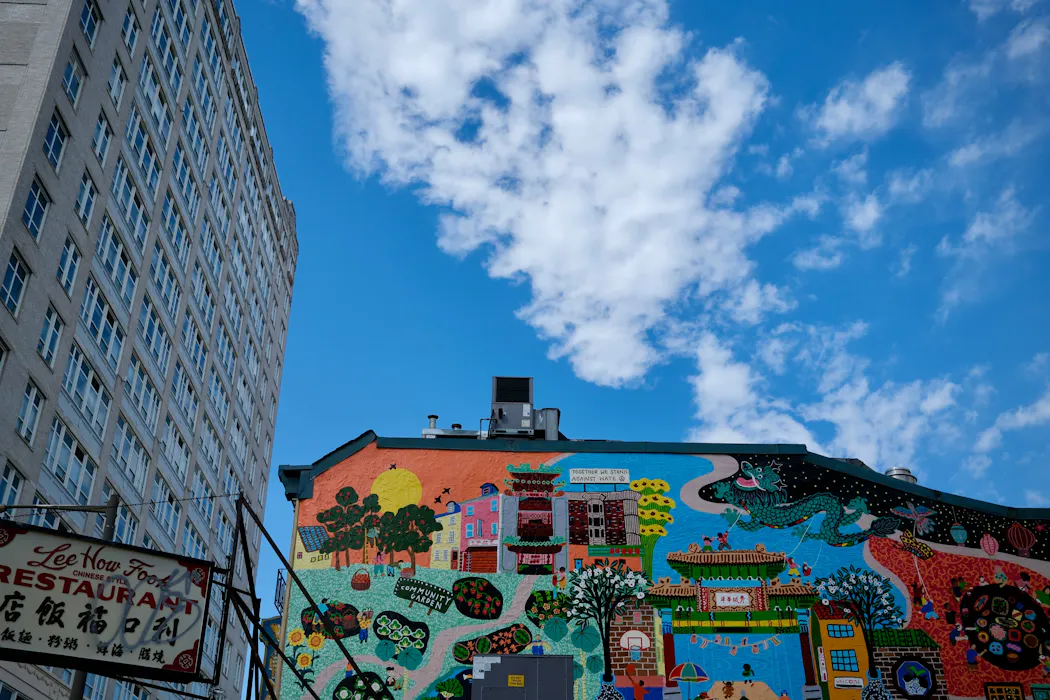
'We dreamt an orchard this way' is a mural designed by Gina Kim for the AAPI Porch Light mural series. It was painted by Kien Nguyen with assistance from Lucía Michel, and can be found on the second floor of the Vietnam restaurant in Philadeplhia's Chinatown. It is part of the Philadelphia Mural Arts programme. roamer.rat/Shutterstock

For years, our understanding of street art has been incomplete. Some people reduce it to decoration, a tourist attraction, or a form of urban cosmetic enhancement. Others eye it suspiciously, viewing it as an unsolicited aesthetic imposition. But neither of these positions tells the whole story.

The fundamental issue is not whether a particular mural is widely liked or disliked, or whether a particular sculpture looks good in photos. The real question is this: how does an artistic intervention change the everyday experience of a town or city?

We are not just talking about the urban landscape, but about how a city can become more integrated, balanced and meaningful for those who live there. In other words, we are talking about quality of life. Urban art can (some would argue it must) introduce everyday beauty, serenity and reflection – things that symbolically activate public space in the service of subjective wellbeing.

Who gets to make urban art?

Well-known urban artists have never flown under the radar. Whether in informal art (such as graffiti) or more mainstream works, artists have always fervently asserted their authorship.

But what street art seeks to do above all else is generate headline-grabbing moments of surprise. Take Banksy’s Girl with Balloon, which captivated people because its simple, minimalist image, found on the street, was able to stir up a range of emotions, from loss and childhood nostalgia to hope and fragility.

Una niña dibujada en gris sobre una pared clara mientras observa cómo un globo con forma de corazón se escapa.
Banksy’s ‘Girl with Balloon’ mural. Dominic Robinson/Flickr, CC BY-NC

Nevertheless, the presence of well-known names establishes a silent hierarchy. This means that artists like Taki 183, Keith Haring, Basquiat, Blek le Rat, Oldenburg, Banksy, OBEY and Kapoor are able to intervene in public spaces, while others are not. It is not enough to simply occupy a wall or produce any old image; it takes artistic skill, authorisation and negotiation, understanding of the context, responsibility, and the ability to create a meaningful experience.

But even among those who manage to make their mark in the public sphere, not every work succeeds in having a positive impact on the quality of shared urban life.


Leer más: Graffiti has undergone a massive shift in a few quick decades as street art gains social acceptance


A deeper question

This is the focus of AUPART, our ongoing research project into urban art and quality of life. The project does not start from the premise that any piece of urban art automatically improves collective wellbeing; it deeply probes this assumption, and seeks to find out whether it is true at all.

Quality of life is not a simple concept, nor can it be directly attributed to a single factor. According to, for instance, the framework set out by the Spanish National Statistic Institute’s Multidimensional Quality of Life Indicator, it depends on material conditions, social relations, perception of the environment, safety, governance, subjective wellbeing and everyday experience of a place.

That is why, when we study urban art, we ask ourselves in what specific ways it can exert an influence, and under what conditions it might have an impact. A work of art should not be judged solely on formal quality, scale or whose signature it bears, but also on its ability to act as a mediator between public space and urban life.

When public art succeeds or fails

Two long-running projects that have done just this are Mural Arts of Philadelphia, which features numerous works that have had an impact on the community, and the Inside Out Project led by the French street artist JR, which has an international reach.

In our study we have analysed works such as Julia, the Jaume Plensa sculpture in Madrid’s Plaza de Colón. With results currently undergoing peer review we cannot claim that it improves quality of life in absolute terms. But we can say that it plays an undeniable role in urban mediation, offering a highly visible artistic presence that can alter the experience of the surroundings, the perception of safety, the symbolic value of place, and emotional connections to the square where it is installed.

A large sculpture of a woman's head, distorted so that it appears almost flat along the sides.
Julia, in plaza de Colón, Madrid. ColorMaker/Shutterstock

However, a work of great artistic merit can also fail socially if it does not fit in with the practical reality of the space where it is installed. This was what happened with Richard Serra’s Tilted Arc, a solid steel plate some 36 metres long, installed in 1981 in Federal Plaza, New York.

The sculpture was criticised, not only for aesthetic reasons but also for its impact on the everyday use of the space. This was actually the artist’s intention, but it did not go down well. By dividing the square, it meant that members of the public had to alter their normal routes. It led to concerns regarding safety and traffic flow, and was removed in 1989 after a lengthy public and institutional controversy.

Beyond aesthetics

It is often believed that street art is in itself enough to regenerate an area. For example in Wynwood, a neighbourhood in Miami, urban mural art has generated visibility and an urban brand, but the district’s evolution has led to growing commercialisation, increasingly standardised murals being commissioned, and concerns about runaway gentrification and the loss of the creative community that made the area famous in the first place. There was reputational and economic success, but that did not equate to social regeneration.

A shop entrance with walls painted in bright colours.
Wynwood’s murals have become a tourist attraction, and even have their own shop. Bada1/Shutterstock

Mural Istanbul, an initiative in the Turkish capital, made similar mistakes. It addressed artistic activism from a solely aesthetic point of view, and was widely seen as a form of social alienation that only aimed to draw attention to a neglected part of the city.

Authors – such as urbanists Malcolm Miles, Ann Markusen and Anne Gadwa, art historian Miwon Kwon and architect Kevin Lynch – have all highlighted from their own perspectives that the value of public art cannot be separated from the society, institutions and territory that make it possible.

It is not enough for people to just see a work of art. It is also essential that they remember it, understand it, apply it to their own understanding of their surroundings, analyse it, evaluate it and, ultimately, feel able to draw inspiration from it.

This was the case with the Heerlen Murals project in the Netherlands. Following the decline of Herleen’s mining industry, the city used community murals to promote social and urban regeneration, improve the image of deprived neighbourhoods, and encourage participation among different groups of citizens.


Leer más: Melbourne’s love-hate relationship with being Australia’s ‘street art capital’


Not just decoration

On its own, street art cannot resoundingly improve life in a city, but it can help to strengthen certain aspects of quality of life. It achieves this when it manages to create stronger bonds with place, stimulates social interaction, reinforces shared identity, helps people understand their surroundings, and manages to be accepted by locals while receiving institutional support.

When this happens, artists become more than image producers – they become somebody capable of creating bonds between their work, place and community, making public space an expression of memory, values and shared forms of belonging.

Following the 2005 riots in the suburbs of Paris, JR launched the project ‘Portraits of a Generation’. He photographed and pasted up portraits of young people from those neighbourhoods across the city. He sought to replace the media’s image of the ‘dangerous youth’ with specific, direct, and strikingly visible human faces.

If we aspire to more liveable, inclusive and culturally vibrant cities, we have to find the conditions under which artistic interventions have positive, measurable effects on public space and community life.

This requires us to prepare each project more thoroughly, assess its social relevance, check whether the location actually needs it, and analyse the context. It means recognising that the impact of urban art is not measured solely by how it decorates the city, but by how it transforms a community’s relationship with the place it inhabits, and acknowledging the value of public space as a catalyst for social learning. If we settle for something that just looks nice, we miss out on an enormous opportunity to improve the places where we live.


A weekly e-mail in English featuring expertise from scholars and researchers. It provides an introduction to the diversity of research coming out of the continent and considers some of the key issues facing European countries. Get the newsletter!


The Conversation

Juan Manuel Ros García receives funding from the Spanish Ministry of Science, Innovation and Universities and the European Union's Regional Development Fund. This article This article forms part of the national project currently underway for which he is the Principal Investigator, reference number PID2023-151204OB-I00, title “La presencia del arte urbano en el espacio público de la ciudad como factor de influencia en la mejora de la calidad de vida de la población tras la pandemia de COVID-19”, MICIU-AEI-10.13039-501100011033.

  •  
❌