Things get a little trickier, though, if you’re looking for a way to mark the arrival of firefly-viewing season with special sweets, but Hikawa Satei has found a way.
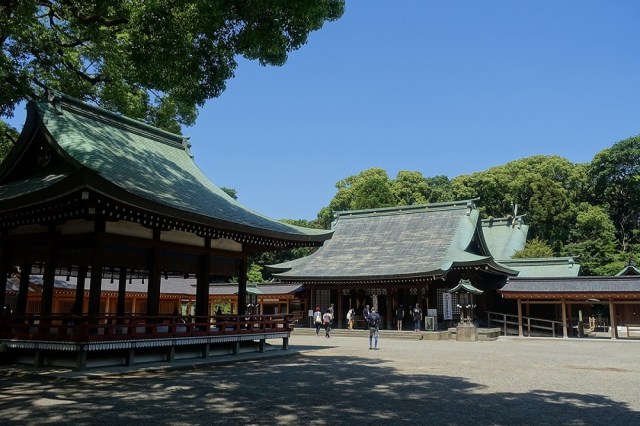
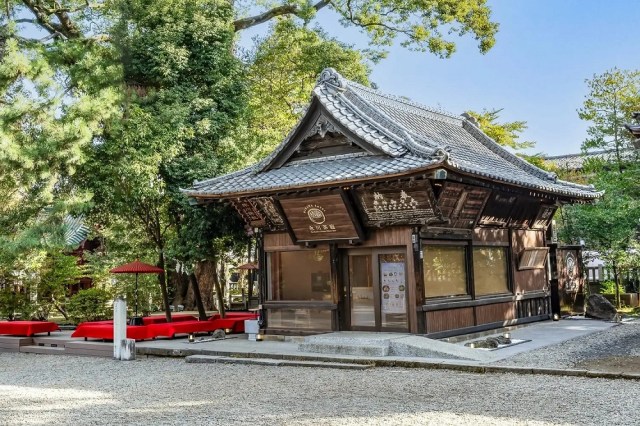
In early June, Hikawa Shrine in Saitama City’s Omiya Ward stays open after sundown so that visitors can see the fireflies, called hotaru in Japanese, that gather on the shrine’s grounds. This year those dates were June 6 and 7, and since Hikawa Satei, the shrine’s cafe and refreshment stand (pictured above), stayed open late on those nights too, they wanted to offer something special, which led to the creation of the TsukikageHotaru, or “Moonshadow Firefly.”
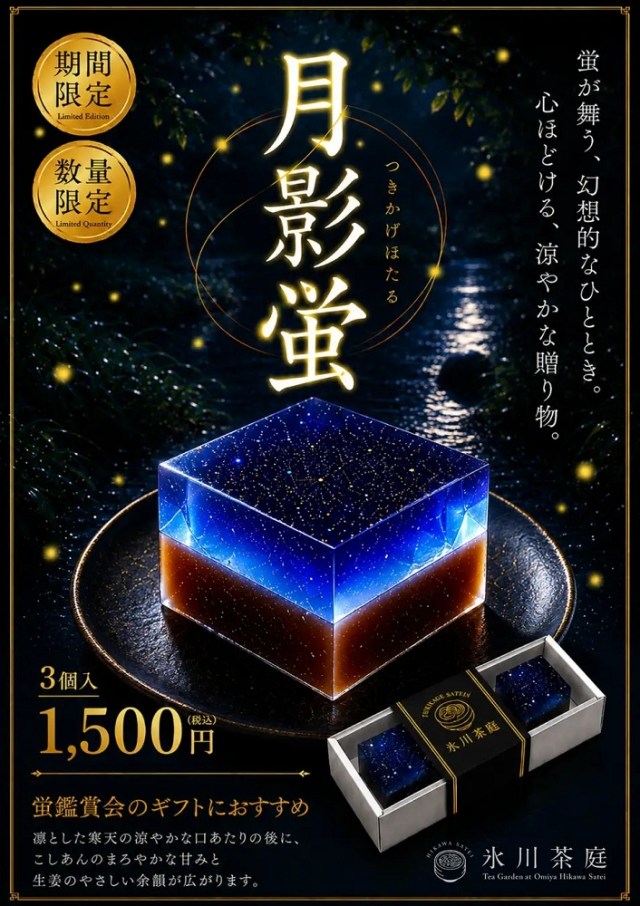
This beautiful dessert has a base of smooth koshi an mizu yokan (sweet red bean gelatin). Placed atop it is a slab of kanten (agar) with a dark blue color representing he night sky, with little bursts of color evocative of fireflies dancing through the darkness. These are actually bits of ginger, not so strong as to create an overtly sharp or spicy flavor, but to add a softly echoing elegant accent point within the sweetness of the mizu yokan and kanten.
The Tsukikage Hotaru is offered in a box of three pieces priced at 1,500 yen (US$9.50), and supplies are limited. Thankfully, though, even if you can’t make it to Hikawa Satei before they run out…
…they have plenty of other breathtaking, mouthwatering sweets too, as you can see in the above post from their official Instagram account, to make the trip worth it.
Cafe information
Hikawa Satei / 氷川茶庭
Address: Saitama-ken, Saitama-shi, Omiya-ku, Takahanacho 4-1, located inside Musashi Ichinomiya Hikaya Shrine
埼玉県さいたま市大宮区高鼻町 4 丁目 1 番地 武蔵一宮氷川神社境内
Open 10 a.m.-5 p.m. Website
At this Japanese convenience store chain, big is an understatement.
It’s been a great few months for convenience store fans in Japan, with chains like 7-Eleven and Lawson upsizing a number of their products with special limited-time campaigns.
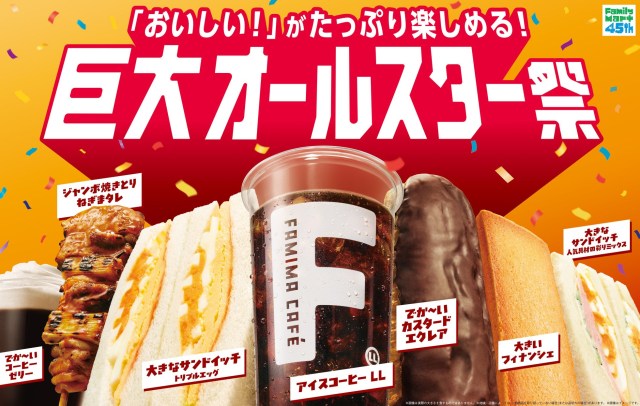
▼ Now, Family Mart is bringing joy to its customers with a “Giant All-Star Festival“.
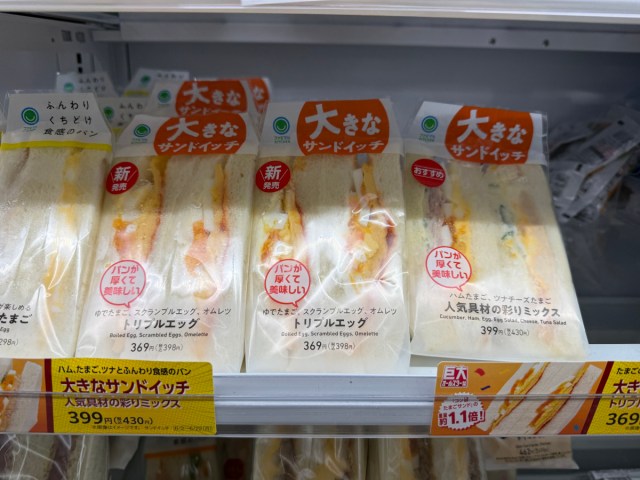
With 14 items in the lineup, covering products like coffee, sweets and sandwiches, there’s something here for everyone. However, unlike 7-Eleven and Lawson, where products were upsized at no extra cost to customers, the products in Family Mart’s campaign come with higher price tags, so customers will want to be more discerning with their choices.
Here to help in that regard is our own discerning reporter P.K. Sanjun, who flatly says that the sandwiches, eclairs, and coffeejelly weren’t as impressive as he’d hoped. While they might resonate with other customers, for him the size upgrade wasn’t giant enough to make him do a double-take, which is the high bar he sets for campaigns like this one.
There were, however, two items in the range that did make P.K. do a double-take.
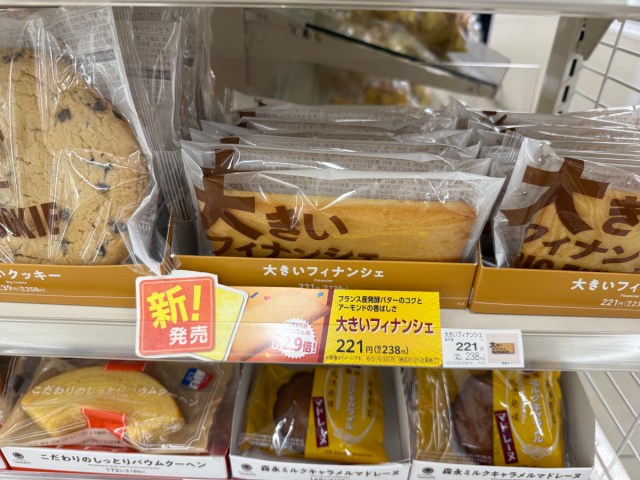
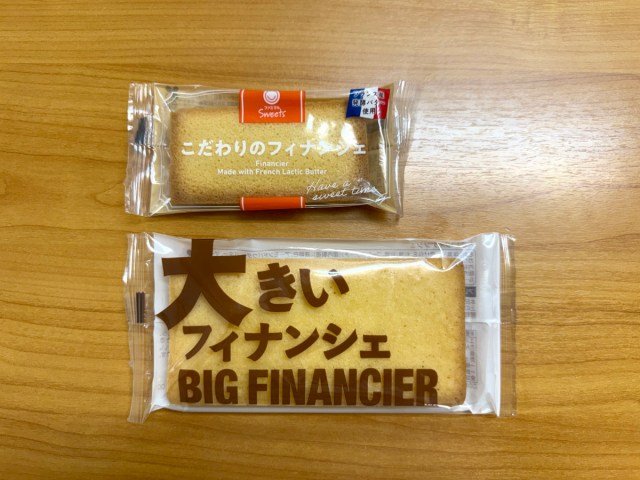
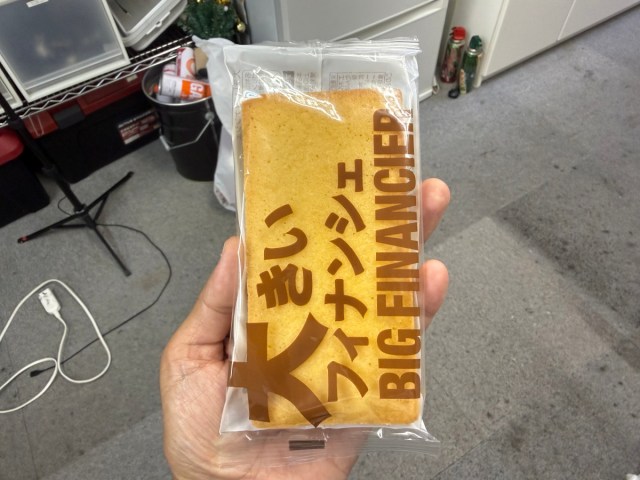
▼ The Big Financier…
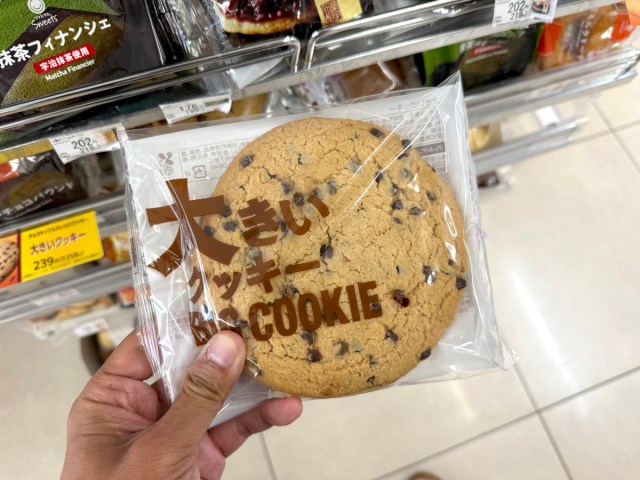
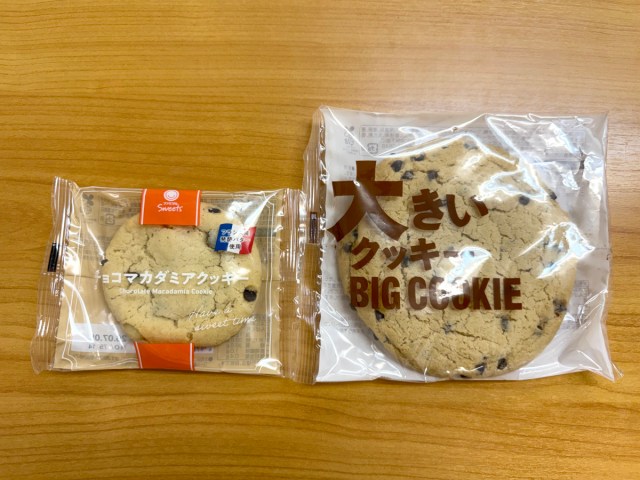
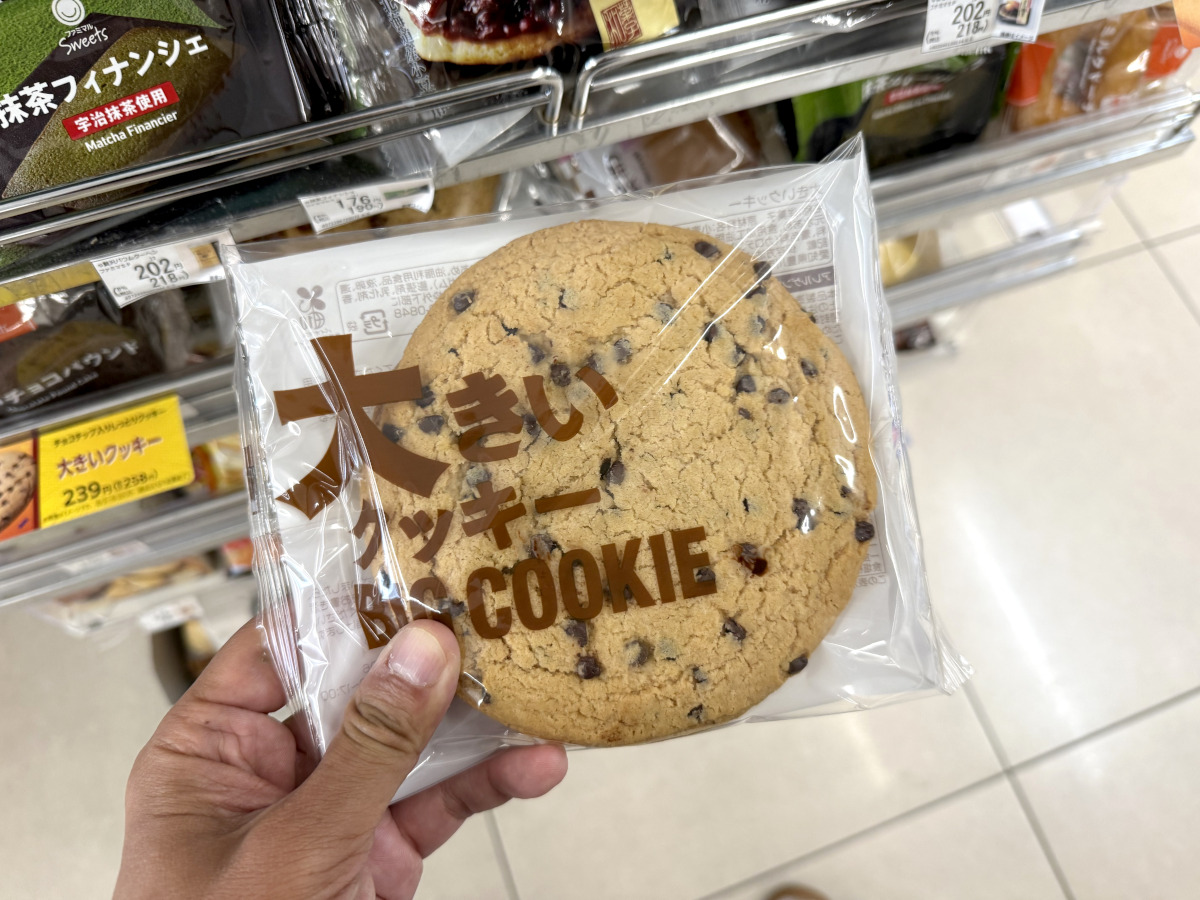
▼ … and the Big Cookie.
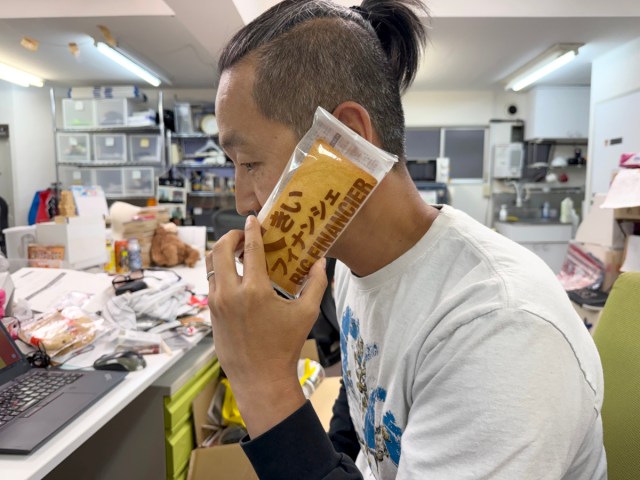
These were two products P.K. didn’t mind paying extra for, as the sheer size of them made them seem like great value for money, even with the price increase. To give you an idea of how big the Big Financier is, P.K. says it’s about the size of an iPhone 16 Pro.
▼ P.K., modelling the financier phone.
Placing it next to the chain’s standard financier, P.K. had a hunch that the giant version was more than twice its size. Checking the website, he learned that the Big Financier is said to have 2.9 times the surface area of the standard version.
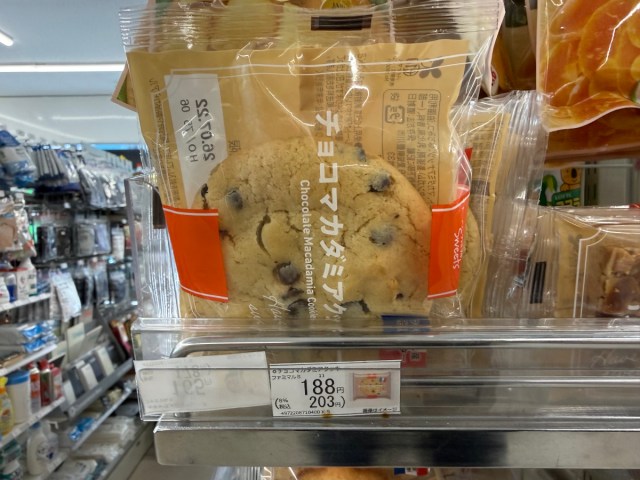
The official website also claims that the Big Cookie is about twice the weight of the chain’s regular chocolate macadamia cookie.
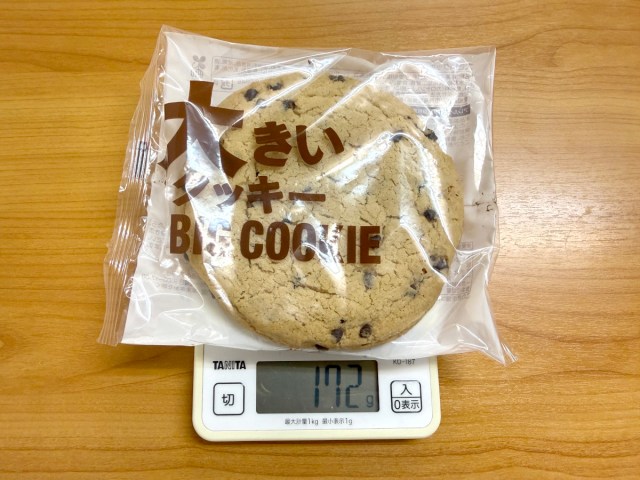
Sensing it was even larger, P.K. whipped out his scales to weigh both cookies. The regular chocolate macadamia cookie weighed in at 60 grams (2.1 ounces), while the large cookie was…
▼ …172 grams!
At almost three times the weight, the increase was way bigger than advertised, and with the price difference being 203 yen (US$1.27) for the regular version and 258 yen for the large, this was fantastic value for money.
▼ In Japan, giving customers more than they bargained for is colloquially known as gyaku sagi (“reversefraud“).
▼ The giant financier was another good deal, with the regular being 150 yen and the large 238 yen.
Compared to everything else in the range, the financier and cookie are outstanding in terms of both size and cost-effectiveness. The upgrade didn’t affect the quality either, as both were as delicious as their smaller versions.
Mr. Sato is filled with appreciation for the other Mr. Sato.
Tokyo has a number of neighborhoods, such as Shibuya and Harajuku, that celebrate trendy, youthful fashions and culture. There’s also a part of the city, though, with a focus on a more mature clientele.
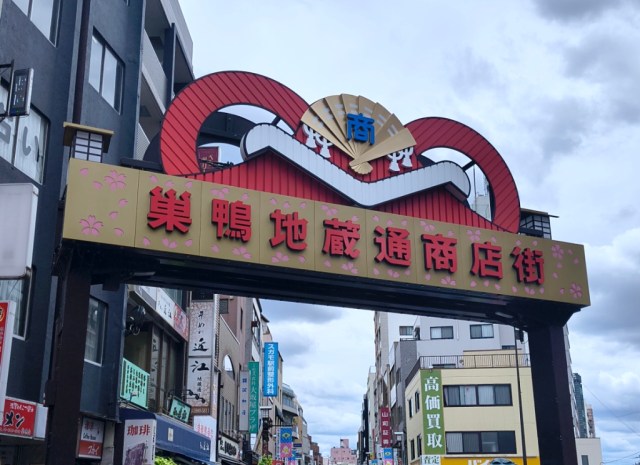
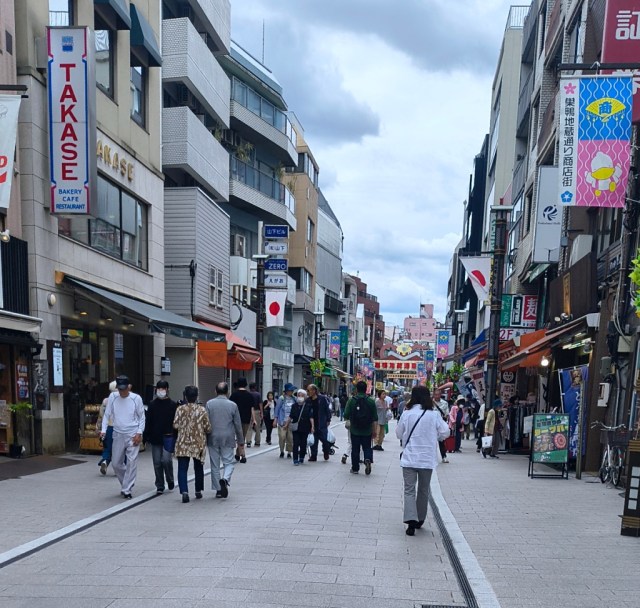
Located part-way between Ikebukuro and Ueno on the Yamanote loop line that encircles the city center, Sugamo is a gathering place for Tokyo’s senior citizens, and while it’s an interesting spot to check out on any day, our ace reporter Mr. Sato timed his most recent visit for June 4.
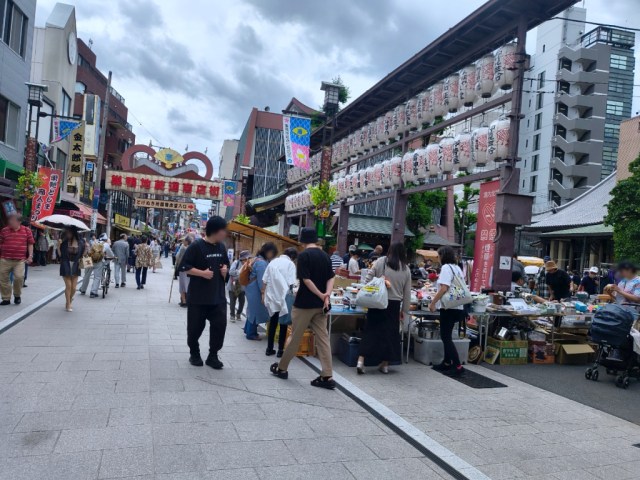
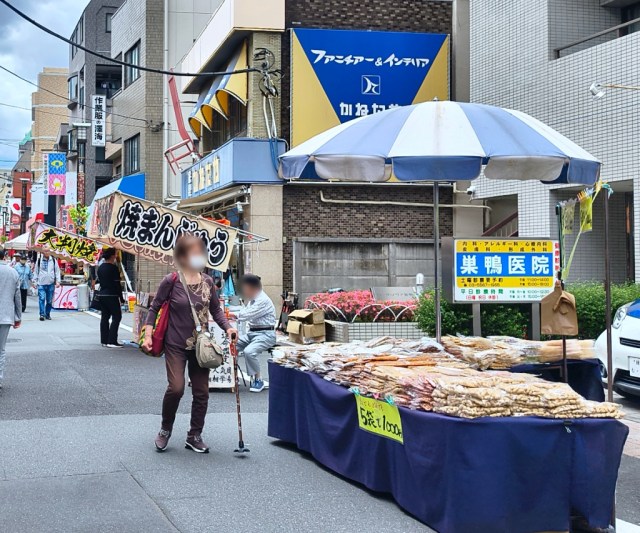
That’s because Sugamo Jizo-dori, the main shopping street in the neighborhood, has a special street market on the 4th, 14th, and 24th of every month. This being Sugamo, it’s not a wild, invasively loud block party, but various merchants set up stalls on the street selling items at especially attractive prices.
Many of the stalls sell snacks, and Mr. Sato found himself tempted by bags of dried fruit for 200 yen (US$1.25) each if you bought five at a time and bundles of three bags of senbei for 500 yen.
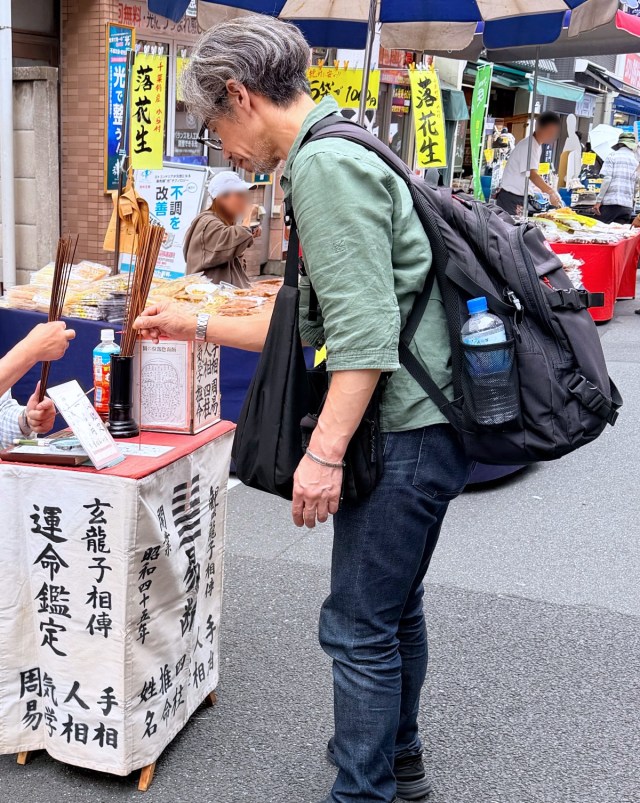
He also got his fortune told by a streetside diviner, a kindly older gentleman who read Mr. Sato’s palm and face for 2,000 yen. According to the fortune teller, there are no proverbial dark clouds looming on Mr. Sato’s horizon, though he expressed some concern over the “sun line” on his right hand not being very distinct. Apparently this is an indication that he’ll need to continue working hard to be successful, but our reporter has never backed away from a challenge, and with the fortune teller adding that though he isn’t destined to be rich, he won’t end up being poor either, Mr. Sato was happy with the overall-good forecast of his future.
▼ Mr. Sato having his fortune told
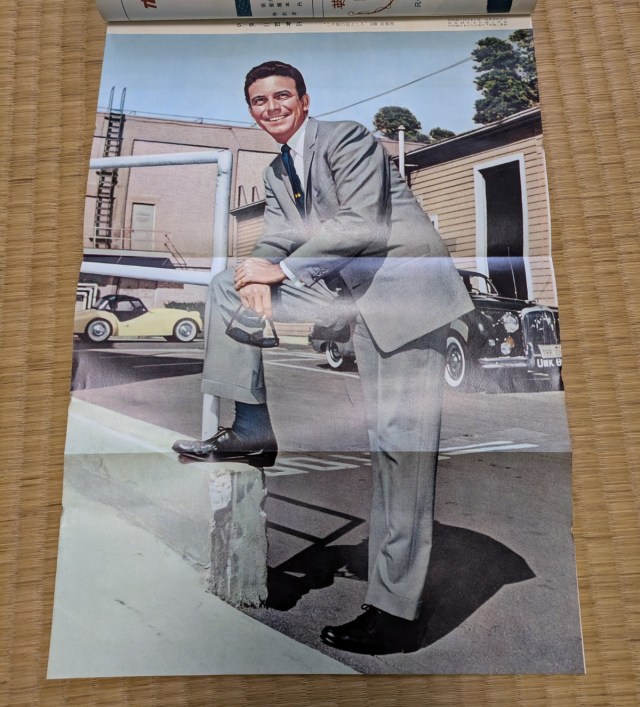
But the highlight of Mr. Sato’s visit to Sugamo’s street market was a pair of vintage fashion magazines he picked up for 100 yen each.
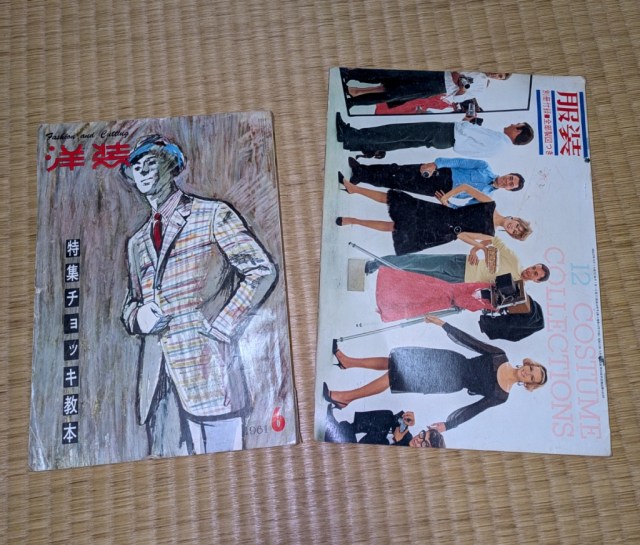
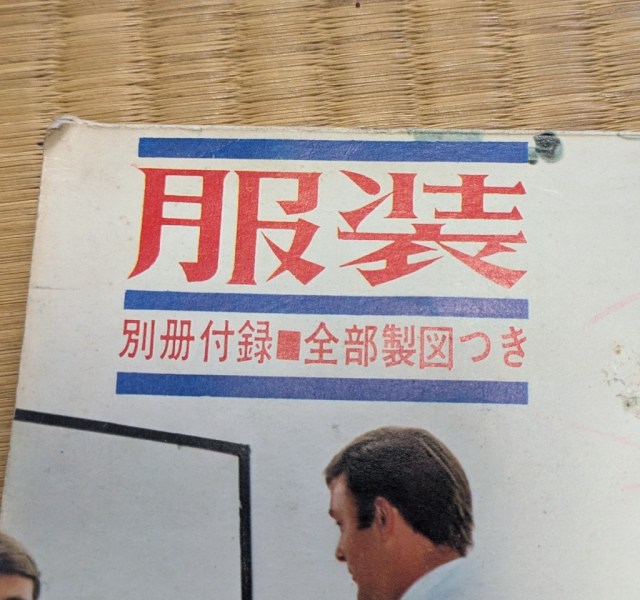
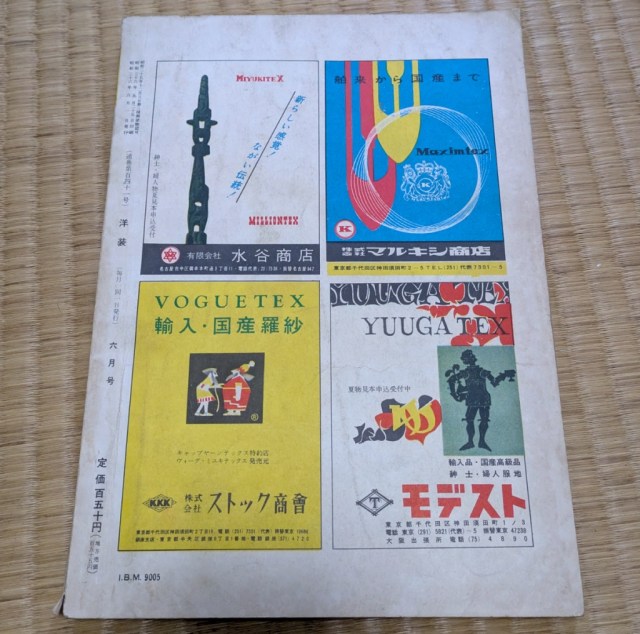
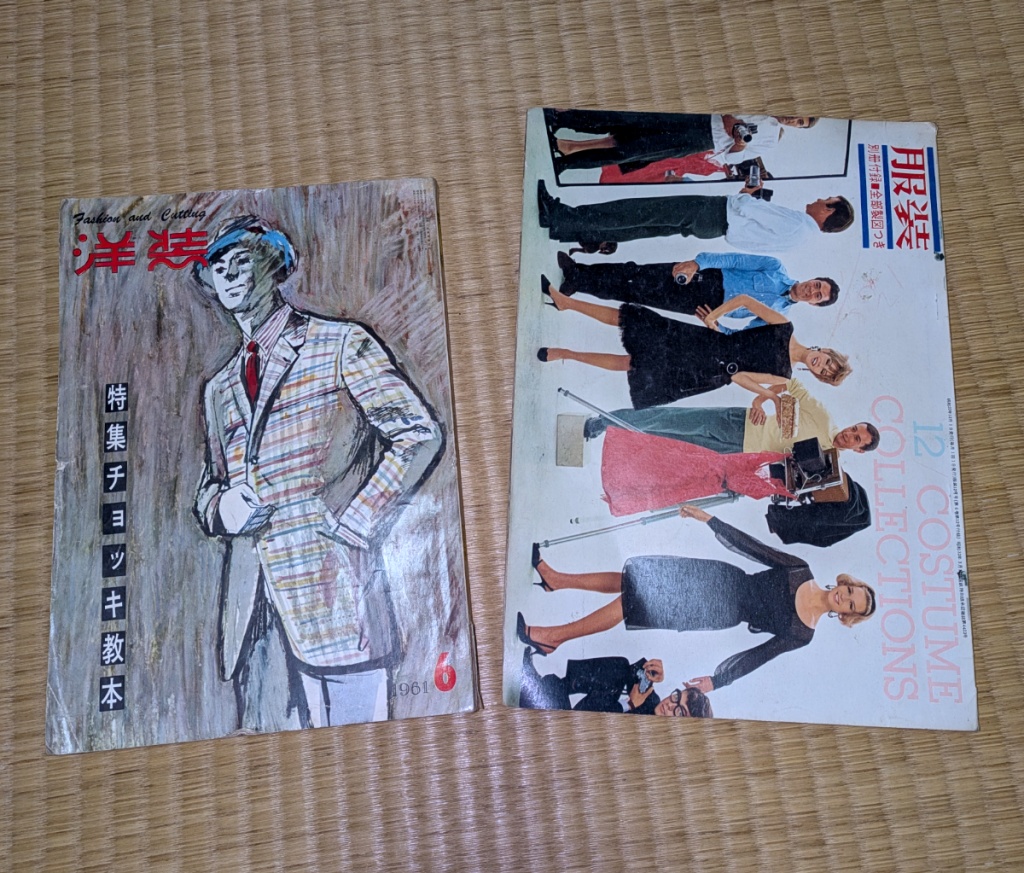
To illustrate just how classic of publications we’re talking about here, one of them is simply titled Fukuso, which means “clothing” in Japanese, and the other is Yoso (“western clothing”).
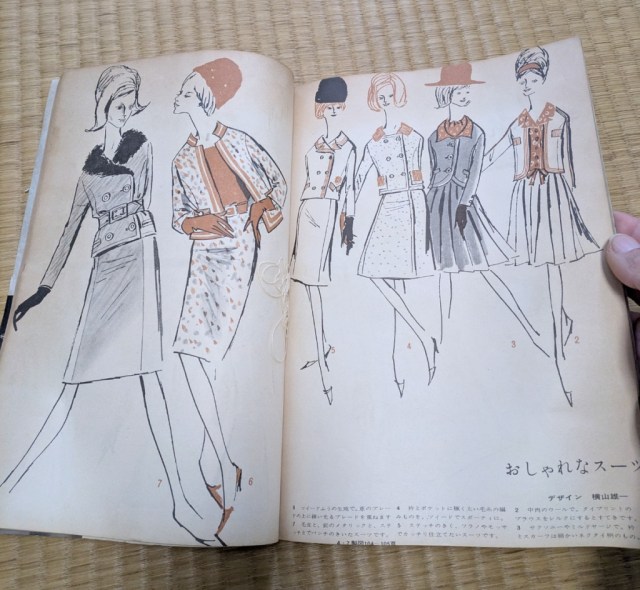
Fukuso was started by Chiho Tanaka, who was born in 1906 and became one of Japan’s first famous designers of Western-style clothing. The issue Mr. Sato purchased is from December of 1962, quite a bit before Mr. Sato was born, and leafing through it he was stuck by the distinctly charming analog feel to its layout and illustrations.
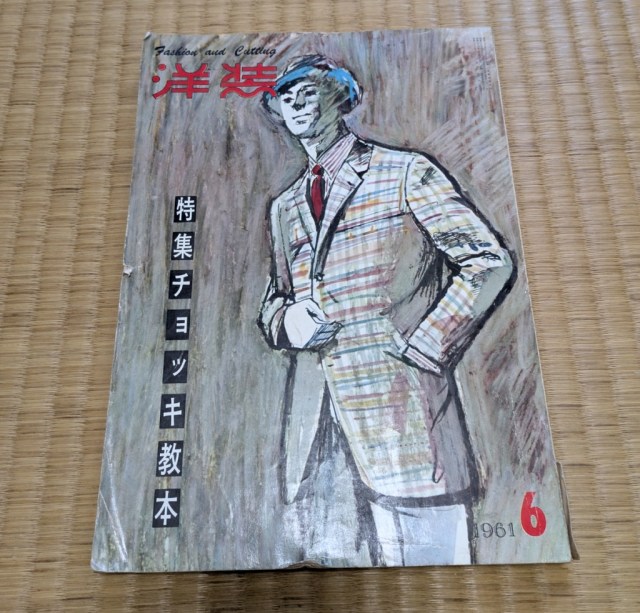
Yoso has an impressive pedigree too, with its editor being Tetsunosuke Hirukawa, the head of the Japan Western Clothing Academy.
▼ Mr. Sato’s issue is from 1961
Yoso in particular was aimed at people working within the apparel industry, highlighting not just new fashions but also effective ways to tailor and produce clothing for clients.
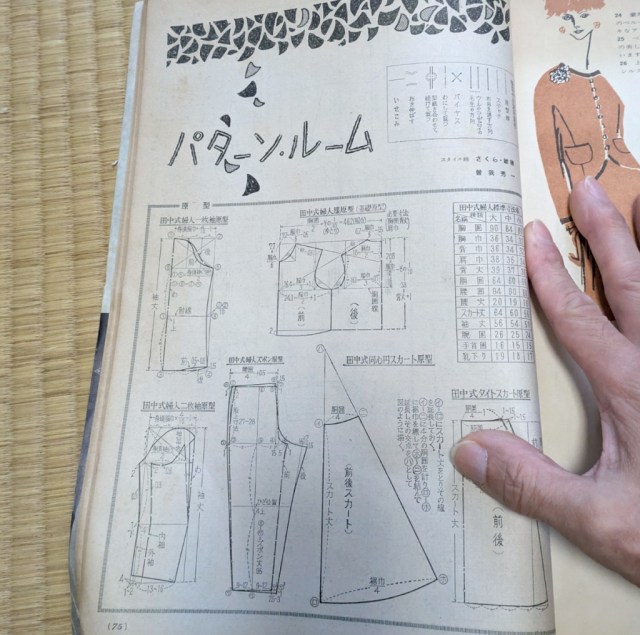
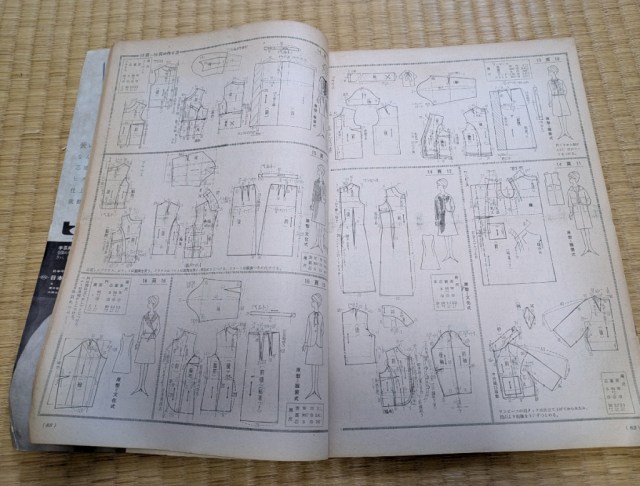
As a matter of fact, looking through the two magazines, Mr. Sato realized that this was his first time to be reading fashion magazines that predate not only the fast fashion era of store like Uniqlo and Gap, but even easy access to department stores for most Japanese people. This was a time when many people still made their own clothing at home, or else splurged for custom-made pieces from a dressmaker or tailer. As such, issues of Fukuso contained a section with patterns for self-sewn garments…
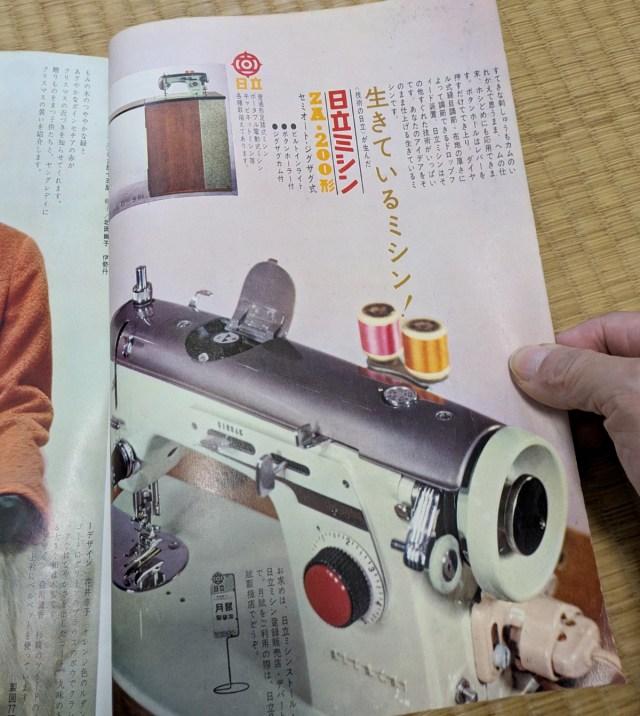
…and information to help readers choose the best sewing machine for their needs.
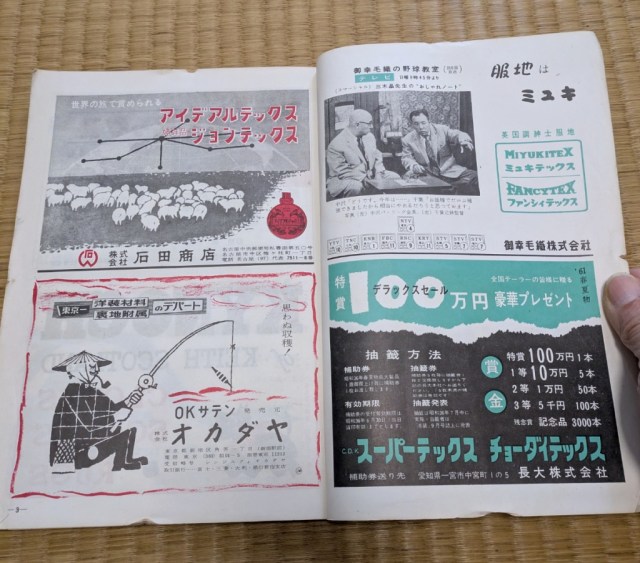
Yoso, being a more professionals industry-focused magazine, instead has advertisements for tailoring services and supplies, some with what very stylish designs.
▼ One of the ads here is for Okadaya (オカダヤ), a sewing supply shop in Tokyo’s Shinjuku neighborhood that’s still in business today.
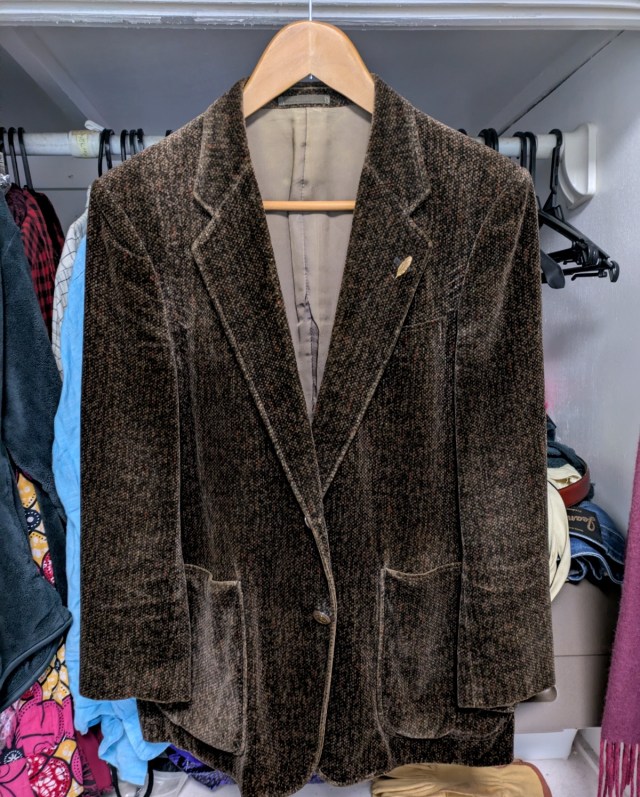
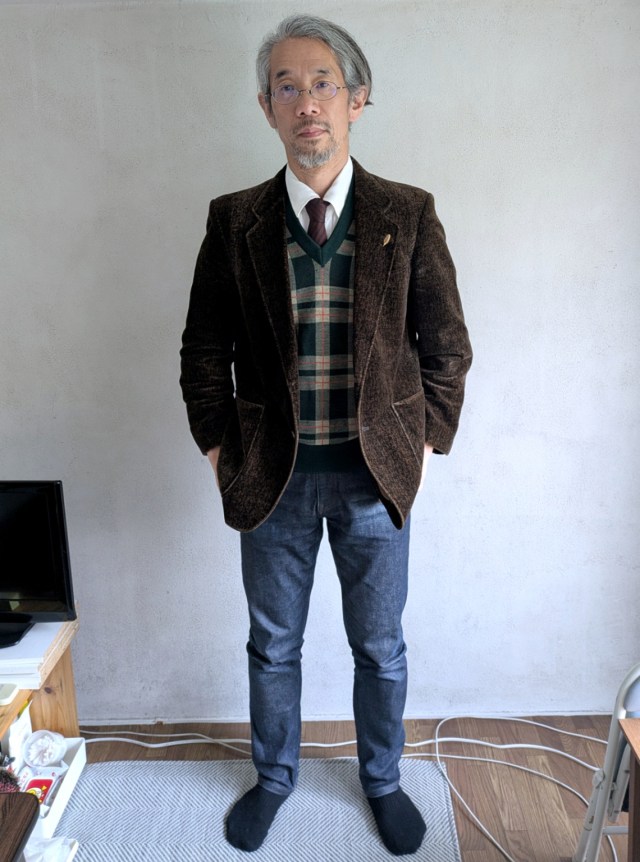
It all left Mr. Sato with a new, direct-feeling sense of how treasured articles of clothing were before you could just, say, dash over to the nearest convenience store and pick up a shirt. And that, in turn, got him thinking again about this velvet sports jacket he owns.
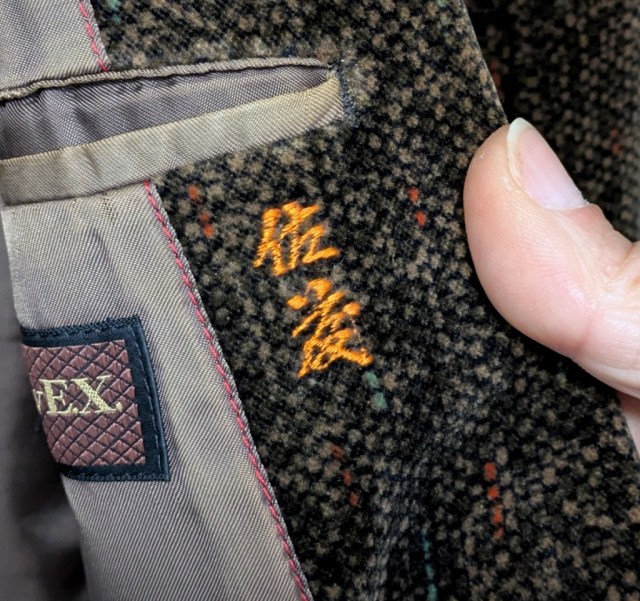
Notice we say “he owns,” not “he bought,” because this jacket originally belonged to Mr. Sato’s dad. With the jacket having been originally purchased around the time that these issues of Yoso and Fukuso were on newsstands, Mr. Sato’s dad wouldn’t have just bought it off the rack, and as further proof of its tailor-made status, “Sato” is embroidered on the inside of the lapel.
Granted, Mr. Sato’s dad gave him the jacket because it no longer fit him, but still, this would not have been a cheap piece of clothing, or one bought without a lot of thought going into the design, material, and its other aspects. And yet, Mr. Sato’s dad wanted him to have it, and several decades after the handover, it’s still in excellent condition.
There’s a bittersweet footnote to this, which is that this month marks one year since Mr. Sato’s dad passed away. When autumn comes, though, he’ll once again take the jacket out of the closet and slip it on, and it’ll feel extra special after his look back on the era in which it was made.
We find out if this new limited-edition Chocolixir really tastes like corn potage soup.
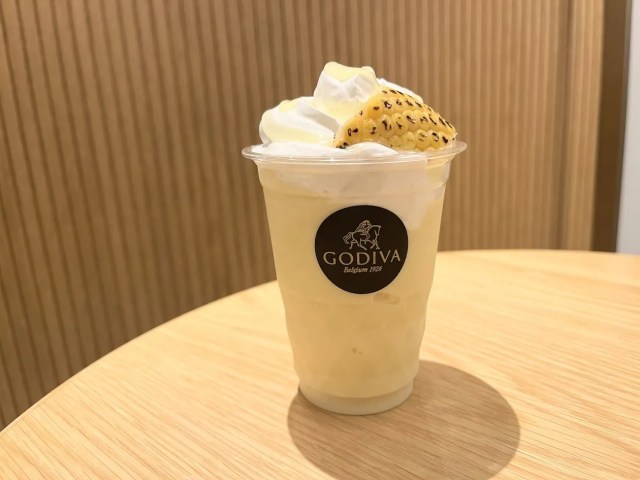
With summer now upon us, stores all over Japan are releasing limited-edition seasonal products to keep us feeling cool and refreshed. Over at Godiva, though, the focus is more on seasonal produce, with a new release that’s like nothing we’ve ever seen before.
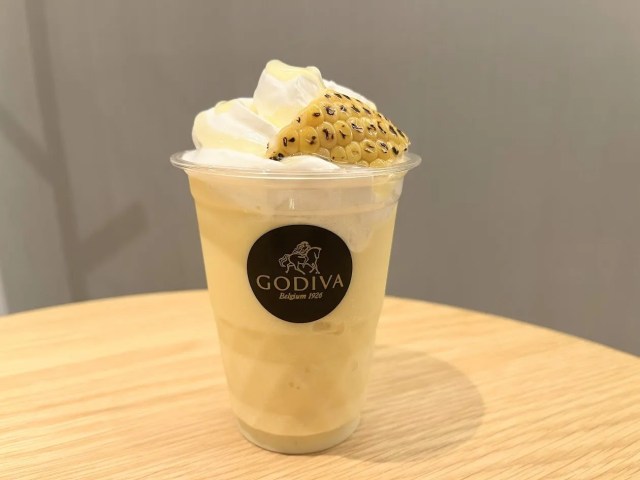
Called the Sweet Corn Chocolixir, this new take on the chain’s signature chocolate-based Chocolixir drink is said to taste like sweet corn potage soup. Although corn potage is incredibly popular throughout Japan, it’s more commonly associated with the colder months, as you can buy the soup hot in cans at vending machines.
Corn is actually harvested in summer, though, so Godiva’s new Chocolixir celebrates the new harvest, and while the flavour sounds intriguing enough on its own, what’s even more surprising is the unusual topping.
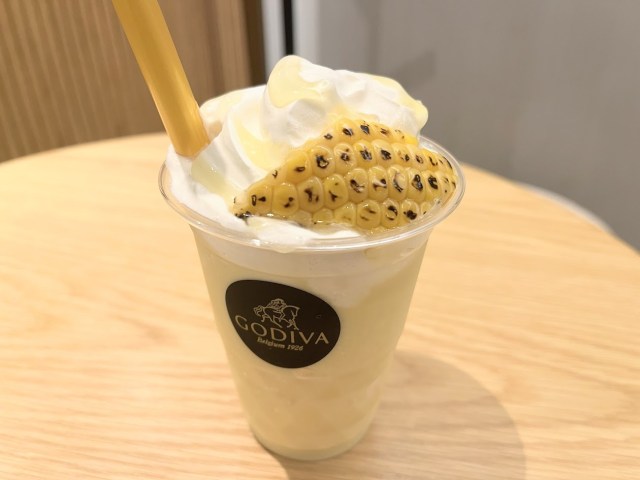
▼ It’s not every day you see whole corn kernels sitting on top of a chocolate drink.
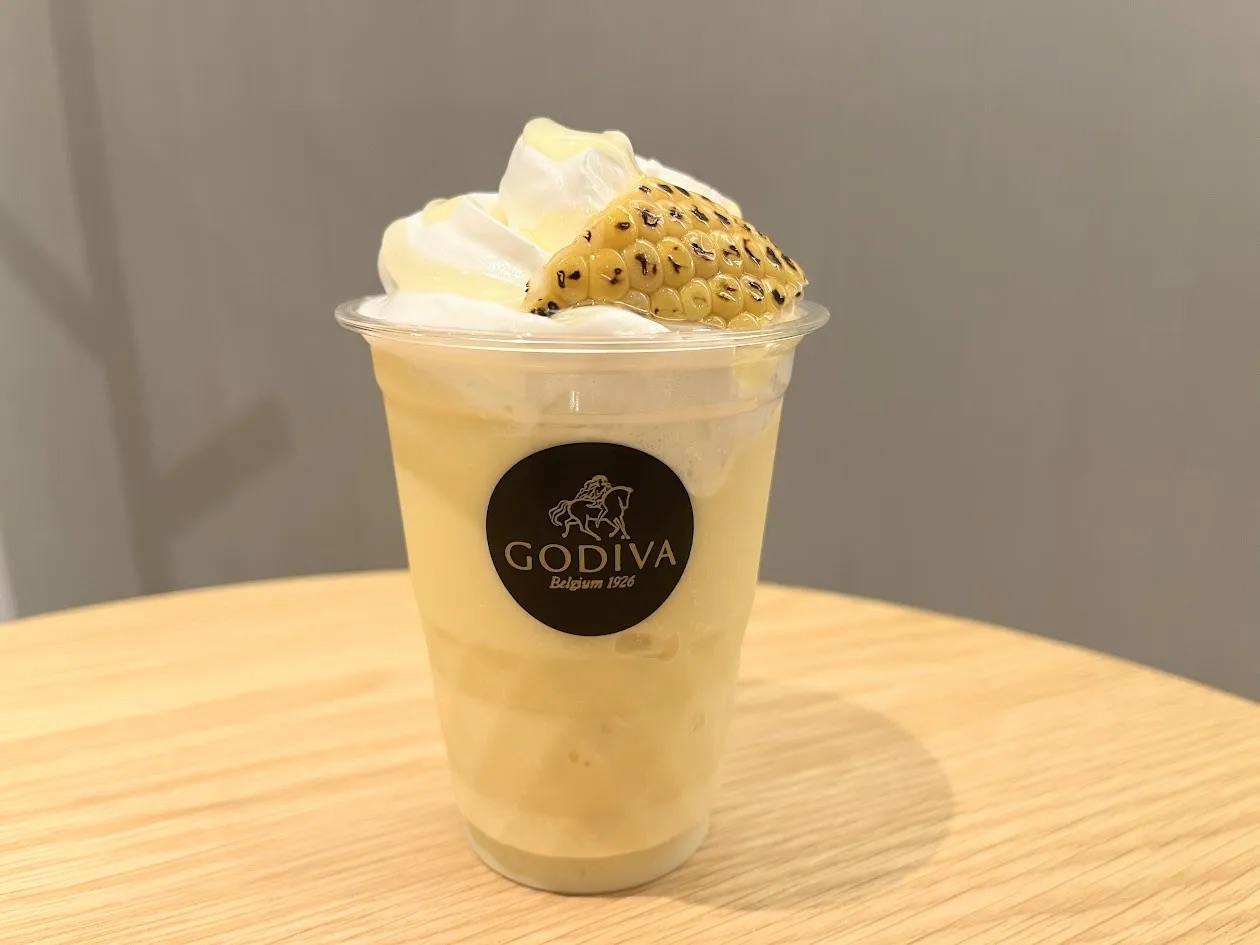
According to Godiva, the new Chocolixer combines the natural sweetness of sweet corn with white chocolate and honey butter sauce. It’s then topped with a generous swirl of whipped cream and finished with roasted corn.
▼ Released on 29 May, the drink is on the menu from 830 yen (US$5.18) for a regular size and 940 yen for a large.
It took us a long time to tear our eyes away from the corn topping when we bought the new drink to try it, but when we did, we were able to appreciate the finer details. Nibbling on the corn revealed it to be wonderfully fresh, sweet and juicy, making it a lovely entree for the drink to follow, while the rich yet light and fluffy cream accompaniment was a fun accent, easing our palate into the deeper flavour combinations. The first sip highlighted the deliciousness of the corn, and we instantly likened it to a slightly sweet chilled corn potage, where you could taste the natural sweetness and subtle saltiness of the ingredients.
Delving further, the combination of white chocolate and rich honey butter sauce was absolutely delicious. This is where the drink truly shines, as the white chocolate brings the whole drink together and elevates the flavour, showcasing the skill of Godiva and reminding us of its chocolate prowess.
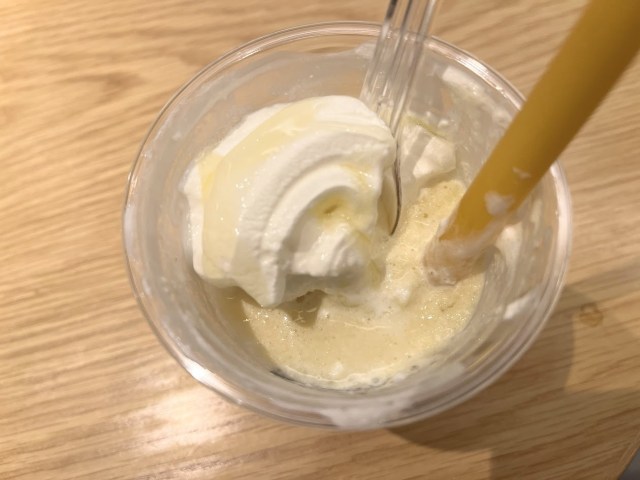
Though we’d been slightly cautious about the corn drink at first, by the end we were seriously impressed. Godiva’s cold chocolate take on corn potage is bursting with sweetness, and the refreshing crunch of ice is a delightful addition, making it the perfect summer beverage.
The only problem is finding a store where you can buy it, as the drink is so popular it was sold out at every participating branch we visited when we first went on the hunt for it. As a general rule, if it’s not listed on the menu at a participating store (see link below for locations) it’s likely to be sold out, but from our experience it would be best to visit a branch as soon as it opens, and a store that’s large but still slightly out of the way, like the one we visited in Tokyo’s Hibiya, will give you a better chance of finding it.
A new model of urban community collaboration in Shinjuku’s Kabukicho area connects the generations using mint as a bridge.
Senior citizens probably aren’t the first demographic that comes to mind when you think of Shinjuku’s Kabukicho neighborhood, which is much more commonly associated with younger crowds, nightlife, and bars. Yet, the area is home to a sizeable population of older folks who depend on facilities such as Shinjuku Day Service for lifestyle support and social activities.
“Day service” is a Japanese term that describes a place akin to a senior center where outpatient services are offered to senior citizens who are still capable of living independently but could use help with certain tasks or socialization activities. Shinjuku Day Service has recently partnered with Smappa! Group, which operates a large number of restaurants, bars, host clubs, and other entertainment facilities throughout Shinjuku, to bring a refreshingly new partnership to Kabukicho tables called the Shinjuku Day Service Mojito.
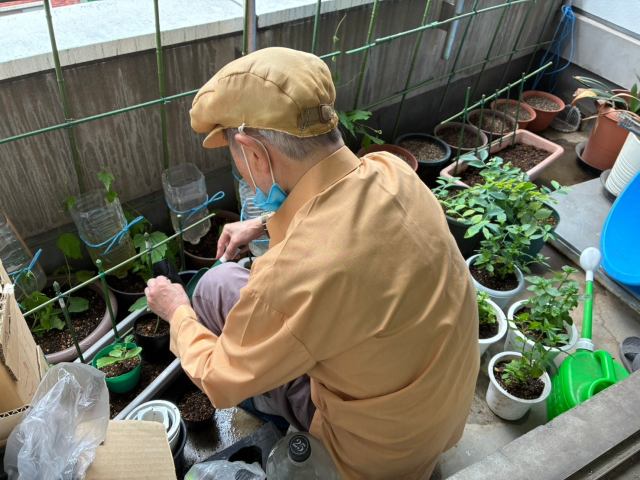
This initiative, which is one of the first of its kind in a major metropolitan area, connects farms, day service facilities, and restaurants/bars together in a community chain of compassion. Senior citizen volunteers grow mint plants organically using seedlings provided by Pipichan Farm in Ome, Tokyo Prefecture, which are then harvested and distributed to several Kabukicho restaurants, bars, and host clubs. Each of these participating locations has designed its own unique cocktail using the mint and is committed to sharing the story of its cultivation with customers.
The beauty of Shinjuku Day Service Mojito is that it creates a sense of purpose for many of the seniors so that they can feel their impact not only within their own community but in the larger Kabukicho community as well. Project organizers have commented that cultivating plants also has important physical and mental benefits for the seniors such as keeping their senses and cognitive abilities sharp. Best of all, involvement in the project is completely voluntary, participants can grow the herbs at their own pace, and they can be involved in other parts of the distribution process if they so choose.
▼ It’s fitting that mint means “virtue” or “warmth of emotions” in Japan’s language of flowers (hanakotoba).
If you’d like to support seniors by purchasing one or more of the collaborative mint cocktails, please see the list of participating businesses below. We think this is an excellent way for seniors to stay active and connected to the community–tied right up there with having their own line of collective trading cards.
Customizable Yukimi Daifuku shop makes an amazing variety of sweet treats so that you can find the perfect one for you.
There are certain problems in life that it’s nice to have. For example, Japan has so many amazing desserts that just picking one can be a tough decision, and that’s not going to get any easier with the opening of My Yukimi Daifuku, a new sweets shop coming to Tokyo’s Nakameguro neighborhood this summer.
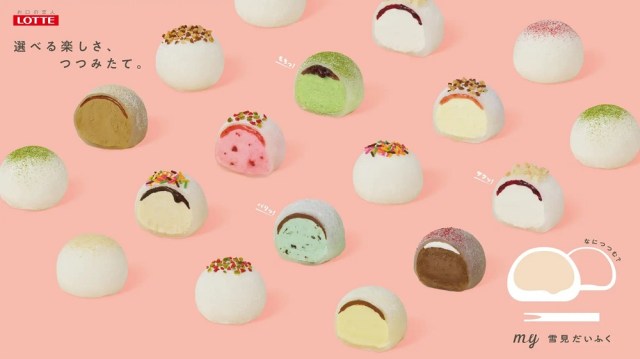
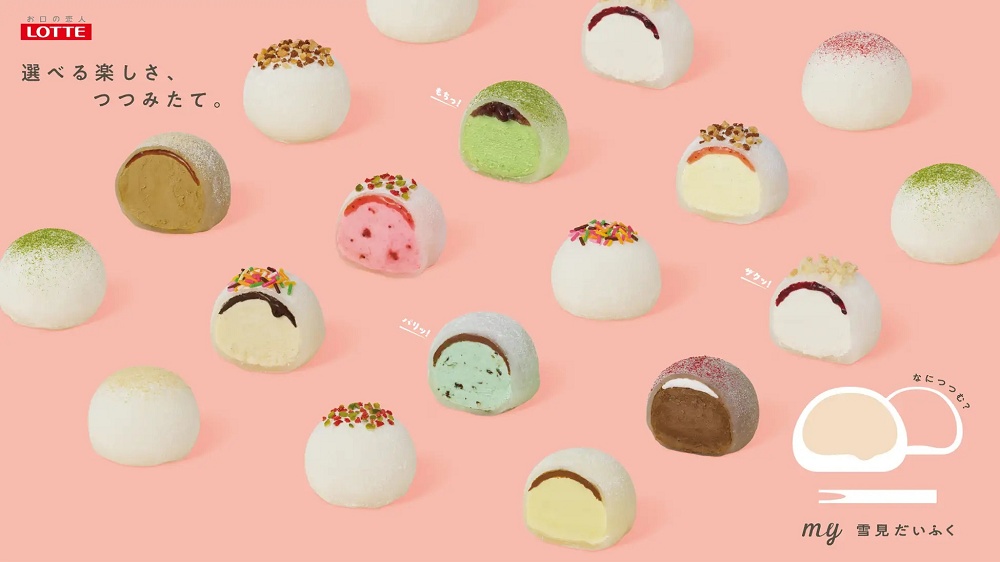
As the name implies, My Yukimi Daifuku is a place for Yukimi Daifuku, confectioner Lotte’s brand of mochi ice cream dumplings, and it’s going to very much be contributing to our delicious dilemma of having so many dessert options, as it’ll be offering 648 different kinds of Yukimi Daifuku.
▼ Pictured: Less than 3 percent of the My Yukimi Daifuku dessert lineup
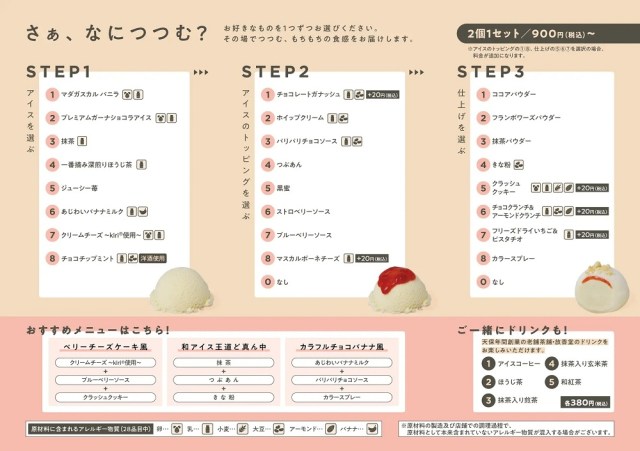
My Yukimi Daifuku arrives at this amazing amount of variety by letting you customize the dumplings to your liking. You start by choosing from one of eight ice cream flavors, matcha, hojicha (roasted green tea), vanilla, chocolate, strawberry, banana, cream cheese, or mint chocolate chip. Next you choose one of eight “toppings” for your scoop of ice cream, but it’s really more like a filling, since the cream and its topping are going to be wrapped in mochi. The options here include chocolate ganache, tsubu an (sweet red bean paste), kuromitsu (brown sugar molasses), strawberry sauce, and mascarpone cheese. Finally, you select one of eight “finishers” to be spread over the top of the wrapped mochi dumpling, such as matcha or cocoa powder, kinako (roasted soybean powder), or cookie crumbles.
▼ The menu, with photographs showing the various stages of production for the Yukimi Daifuku
And even those aren’t quite all the flavors to choose from, as My Yukimi Daifuku will have special treats for early summer (June and July), midsummer (August), and the “lingering heat” of September. For early summer, the featured flavor will be a combination of frozen yogurt, blueberry sauce, and cookie crumbles, for a refreshing, cooling sensation.
The mochi ice cream dumplings are handmade to order to deliver the freshest flavor possible, and also likely because it’d be impossible to keep so many different combinations pre-made in stock. Perhaps in recognition of how hard it’d be to narrow down 600-plus choices, My Yukimi Daifuku sells its mochi ice cream dumplings in sets of two, with prices ranging from 900 to 980 yen (US$5.70-US$6.20) depending on the exact ingredients you choose. Even then, though, you’re going to have some decisions to make, especially since the shop will only be open from June 17 to September 23, meaning that even if you were to go every day, you’d still never run out of new treats to try.
Shop information
My Yukimi Daifuku / my雪見だいふく
Address: Tokyo-to, Meguro-ku, Kamimeguro 1-13-11
Open 1 p.m.- 8 p.m. (weekdays), 11 a.m.-8 p.m. (weekends, holidays)
Open June 17-September 23
Cunning bear managed to escape stand-off with police and hunters.
As we’ve been seeing in recent years in Japan, not only has the number of bear encounters and attacks been steadily rising, but it appears bears have been coming closer and closer to populated areas as well.
Once an incident that only those deep in the mountains and forests of Japan had to worry about, more and more people have been spotting the large and powerful animals in unlikely places, like train stations, and now on the outskirts of Fukushima City, a regional population center with a population of 275,000 people.
In the evening of 1 June, Fukushima police started to receive scattered reports of what appeared to be a bear wandering around the Sasakino area in the northwest part of the city. The next morning, the vice principal of Noda Elementary School in the same area was driving to work when a bear suddenly started chasing his car. The street is also a route many students take to the school, but luckily, the bear appeared hours before any kids were outside.
▼ The main area where the bear was active.
Things only intensified after that. At about 6:30 a.m., the Asiatic black bear, measuring about one meter in length, attacked an employee in his 20s approaching the entrance of Fukushima Steel Works. It then charged through a glass door at the company’s building and mauled a man in his 60s inside.
From there, the bear ran off to a residential area, where it jumped clear over a one-meter (three-foot) wall to enter a nearby field. There, it found and attacked a woman in her 80s, injuring her face. The animal then headed about 500 meters (1,640 feet) to the northwest and attacked the 66-year-old guard of the OKI Symfotech manufacturing plant before entering the building.
Police arrived at the site and surrounded OKI Symfotech with the bear inside, evacuating a perimeter around the plant. Other local businesses and Noda Elementary, which was only a block away, closed for the day. The events so far had all unraveled so quickly, the municipal government could only catch up by this point and issued an emergency cull order around noon that day, granting the local hunters’ association permission to shoot and kill the bear.
However, by this time, it was too late. The bear had managed to hole itself up in a building full of machinery and chemicals. One misplaced shot or a ricochet could have triggered a fire or explosion. Unable to use live ammunition, the hunters resorted to tranquilizer darts, but the bear was in such an agitated state that its own adrenaline counteracted the sedative when struck by a dart.
For the next 35 hours, the standoff continued with the bear surrounded and hunters unable to kill it. Traps were set up to catch it when it would finally try to leave one of the building’s exit points. However, at approximately 11:00 p.m. on 3 June, the animal managed to unlatch one of OKI Symfotech’s windows, climb out undetected, and flee into the night.
▼ A news report with various times the bear was caught on camera
It wasn’t until the following morning that anyone realized the bear had escaped. The cordon around the manufacturing plant was removed, but citizens remained on high alert. Schools and some businesses remained closed, while some operated on increased security, such as disabling automatic doors.
Despite a few scattered reports, one of which turned out to be a wild boar, there were no significant encounters with bears in the area. On 5 June, OKI Symfotech reopened for business and Noda Elementary resumed in-person classes, but requested all students be dropped off by car. Meanwhile, authorities continued searching for the bear, even employing thermal imaging drones, but the creature’s location has not been found.
It might have just returned to wherever it came from, but it’s hard to rest easy when an animal that managed to overcome several obstacles and even outwit the police remains at large. Hopefully, things will return to a state of normalcy for residents soon, but it certainly seems like these kinds of problems are going to get worse if nothing is done on a larger scale to keep bears away from inhabited areas.
20-year-old on family trip to Japan had been missing since May 29.
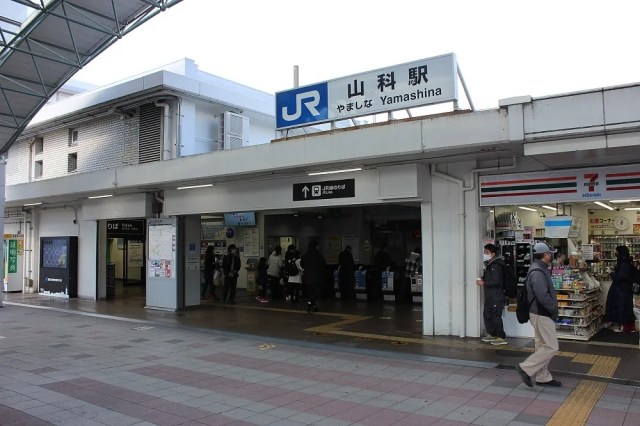
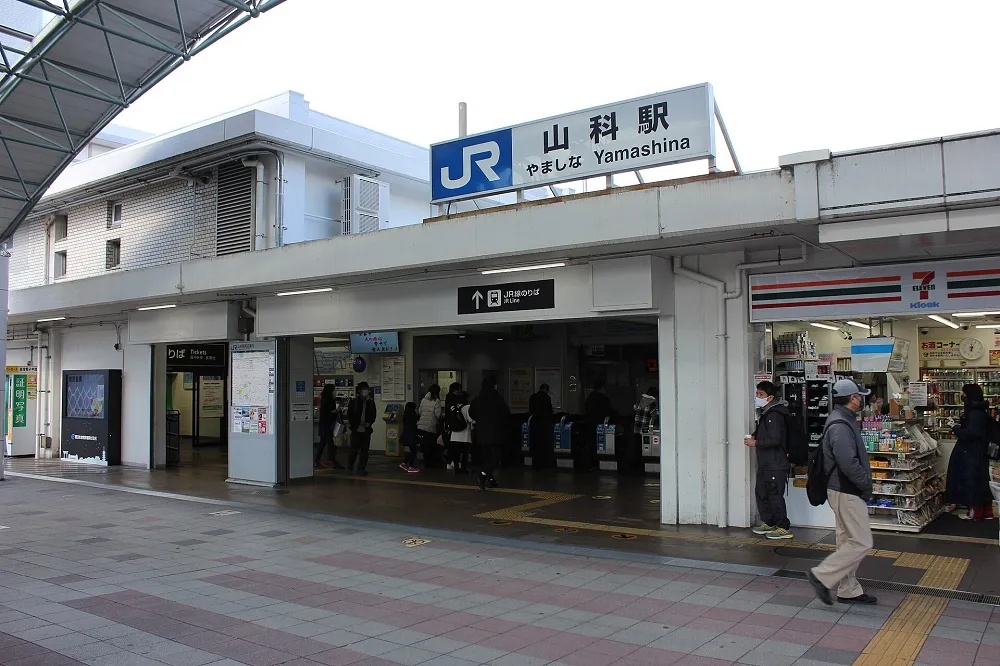
On May 25, 20-year-old James “Weston” Higginbotham arrived in Japan with his parents and younger brother on a family vacation to celebrate the younger sibling’s high school graduation. During the trip, the environmentally minded James argued with his mother over her use of AI, and the ecological impact of such systems, and on May 29, when the family was in Kyoto, James decided to break off from the group and spend time alone. Before James turned off his phone’s location sharing function, it showed that he visited a home supplies store and took the train to Yamashina Station, in the foothills to the east of downtown Kyoto. After exiting Yamashina Station, he could be seen on security camera footage approaching the entrance to a hiking trail after sundown.
James neither contacted his family nor returned to the hotel, and so his parents reported him as missing to the police. Search efforts were hampered by a powerful storm that swept through the area following his disappearance, and despite the use of helicopters and tracking dogs, the police were unable to locate him. In the afternoon of June 6, though, local volunteers who had offered their assistance found a body matching his description near Bishamondo Monzeki, a temple in Yamashina Ward, and the following day investigators were able to confirm that the body was James’.
“Our family is heartbroken to share that Weston was found deceased by a volunteer search-and-rescue group in a mountainous area outside of Kyoto,” said James’ family, who had remained in Japan while the search was ongoing, in a social media post, along with “We are deeply grateful to the countless people across the United States, Japan, and around the world who shared Weston’s story, prayed for our family, offered encouragement, and helped in the search efforts. The outpouring of kindness and support has carried us through the darkest days of our lives.”
The Kyoto Prefectural Police have said that they will not be publicly releasing the cause of death, but that there were no signs of foul play.

 Login
Login