
Reading view

Why Pennsylvania’s low-income residents are feeling the squeeze as gas prices rise
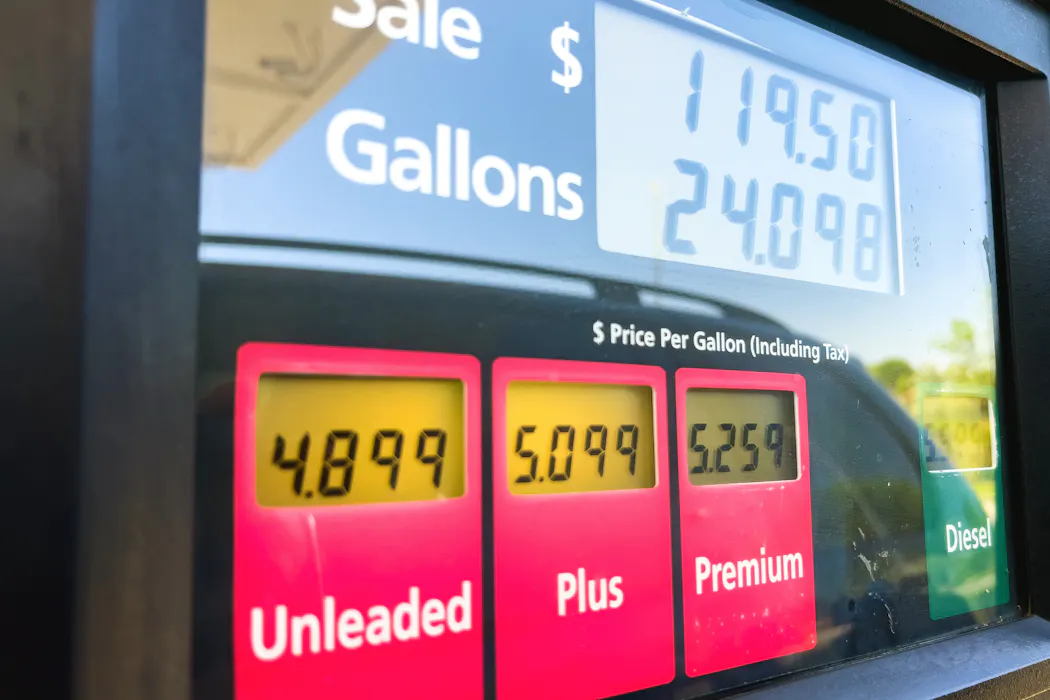
Pennsylvania consistently ranks among states with the highest gas prices. eyecrave productions/iStock via Getty Images Plus

When gas prices rise, not everyone feels the pain equally. For low-income and rural Pennsylvanians, a trip to the gas station can mean choosing between a full tank and groceries. Many factors, such as crude oil costs, distribution and marketing, and to some extent Pennsylvania gas taxes all add up to keep Pennsylvania’s gas prices higher than average.

Pittsburgh gas prices are among the highest in Pennsylvania due to higher urban demand, refinery maintenance issues in the Midwest and supply shortages.

Currently, the average gas price in the U.S. is $4.50. In Pennsylvania, the average is $4.66, and in Pittsburgh it’s $4.91.

To understand why, and what – if anything – can be done about high gas prices, The Conversation U.S. spoke with Hannah Wiseman, an energy and environmental law scholar whose work focuses on how regulation is designed. She explains who gets hit hardest by high gas prices and why relief is so hard to come by.

How do rising gas prices hit low-income Pennsylvanians differently than middle- or upper-income residents?

Low-income people typically have a limited monthly budget, with fewer or no savings to draw from. Each essential expense is a portion of an individual’s or family’s fixed budget, and when an essential expense rises, it eats up more of this fixed budget. For the costs of fuel and electricity, this is called the “energy burden” – the percentage of someone’s income that goes to energy costs. The higher the cost of energy, the more this impacts people’s ability to pay for other essential goods, such as food, medicine and medical care.

Pennsylvania consistently ranks among states with the highest gas prices. What regional conditions make Pennsylvania expensive?

Like any other good, the cost of gas is influenced by the cost of the raw product from which gasoline is refined, crude oil, the costs of operating the facilities that transport and distribute gas, and the amount of retail competition.

As the U.S. Energy Information Administration explains, distance from supply – refineries, ports and pipelines – usually means higher prices. This type of infrastructure is scarcer in the mid-Atlantic region, including Pennsylvania. And some rural areas have fewer gas stations, which can result in less retail competition.

Gasoline prices tend to be lowest in Gulf Coast states, such as Texas, with a current average of $4.01, and Louisiana, with a current average of $3.99, where there are many crude oil refineries and oil pipelines.

A landscape scene featuring two silos and farmland.
Due to lack of public transit, rural Pennsylvania residents rely on their personal vehicles to get to work. aimintang/E+ collection via Getty

How does the lack of reliable public transit in rural areas deepen the inequality issue?

Rural areas tend to have less public transportation – making personal vehicles essential – and people have to drive to their jobs to make ends meet. So when gas prices go up, rural residents often have no option but to fill up their tank at a high cost and potentially forgo other essentials.

Rural populations also have a substantial percentage of individuals defined as the “working poor.” These are low-income individuals for whom getting to work is essential. They are already saddled with high energy burdens, which rise with higher gas prices, and they live in rural areas with few affordable options for getting to work.

Are there existing state or federal programs that help low-income residents offset fuel costs?

Low-income support tends to come from states. Most government programs support home heating costs and utility bill payments for low-income residents; programs are more limited for gasoline. In California during the 2022 spike in gasoline prices the state sent checks to low-income families. Currently, Pennsylvania has no formal legislation in place to assist low-income families with gasoline costs.

Most electric-vehicle owners can no longer rely on the $7,500 federal tax credit for owning one. UCG/Universal Images Group via Getty Images

Electric vehicles remain out of reach for many low-income families. Does the green energy transition risk widening the equity gap?

Many U.S. residents cannot buy electric vehicles, largely because of tariffs on the import of affordable electric vehicles from countries such as China.

Additionally, the H.R. 1 Act erased the $7,500 tax credit for buying electric vehicles. This limited access to EVs widens the gap – wealthier families with electric vehicles can plug in their vehicles and avoid high gas prices, while lower-income individuals lack this option.

What can be done about high gas prices for low-income Pennsylvanians?

Pausing gasoline taxes, which is currently being debated by Pennsylvania state legislators, can reduce prices, but it also lowers revenues needed for public programs.

Direct rebates from the state to low-income individuals offer more value. However, Pennsylvania lawmakers are not presently considering direct rebates.

Read more of our stories about Pittsburgh and Pennsylvania.

The Conversation

Hannah Wiseman is a member of the Center for Progressive Reform. Her research on renewable resources, carbon sequestration, hydrogen, and energy/land use connections has received funding from the Sloan Foundation, Arnold Ventures, the Center for Rural Pennsylvania, the U.S. Department of Energy, and the National Science Foundation.

  •  

When you don’t have the facts, argue the law: How Trump’s EPA is limiting its own ability to protect public health far into the future

The Trump administration is trying to tie the hands of future administrations when it comes to regulating pollution, including greenhouse gas emissions. Chris Sattlberger/Tetra Images via Getty Images

As the Trump administration moves to weaken America’s air pollution rules, it is deploying new legal interpretations that are intended to tie the hands of future administrations for years to come.

In practice, the changes limit the Environmental Protection Agency’s authority under the Clean Air Act. The result allows EPA officials to ignore science, data and the adverse effects their decisions will have on public health and the environment.

But the new interpretations are also designed to apply not just to the rule in which they are first set forth but into the future.

If affirmed by the U.S. Supreme Court in inevitable legal challenges, these interpretations could make it harder for future administrations to restore the public health protections that the Trump administration eliminates. They could also make it difficult to update rules to respond to new information about health risks.

Typically, moves to weaken pollution regulations through novel legal interpretations would have a good chance of being overturned in court. But the EPA’s new interpretations are strategically designed to appeal to the current U.S. Supreme Court’s view of federal agencies’ authority, especially in light of the court’s 2024 ruling in Loper Bright v. Raimondo. In that case, the court overturned what’s known as the Chevron doctrine. A 1984 Supreme Court ruling had established that courts should defer to executive agencies’ legal interpretations of their governing statutes when the text of the law was ambiguous or left gaps. That deference no longer applies.

As a former EPA appointee who helped write and review dozens of regulations under the Clean Air Act during the Obama and Biden administrations, I find these efforts to prevent the EPA from doing its job of protecting public health and the environment to be alarming. Here are two examples of how the new interpretations are playing out.

Blocking future climate regulations

In February 2026, the EPA rescinded its 2009 endangerment finding, a determination under the Clean Air Act that carbon dioxide and five other greenhouse gases “may reasonably be anticipated to endanger public health or welfare” because they contribute to climate change.

The endangerment finding was the scientific and legal basis for EPA rules requiring automakers, power plants and oil and gas operations to cut their greenhouse gas emissions. Erasing it would make it easier for the Trump administration to eliminate greenhouse gas regulations.

Rather than try to challenge the science of climate change, which would be difficult given the growing mountain of evidence, the Trump EPA relied on legal arguments that were intended to dispense forever with the EPA’s ability to regulate greenhouse gas pollutants under the Clean Air Act.

Two men walk toward a podium. One of them, Zeldin, is grinning. The promotional sign reads 'Largest Deregulation in History
President Donald Trump and U.S. Environmental Protection Agency Administrator Lee Zeldin arrive for a White House event to announce a rollback of the 2009 Endangerment Finding on Feb. 12, 2026. Anna Moneymaker/Getty Images

Among the administration’s numerous arguments, two stand out:

First, the Trump EPA says the Clean Air Act should be read to limit the EPA’s authority to regulate air pollution only if its harm to the public is “through local or regional exposure.”

That would mean contributions from U.S. sources to global air pollution, no matter how demonstrable or how much they endanger Americans, are not covered by the Clean Air Act.

Second, the Trump EPA says that reducing greenhouse gas emissions from motor vehicles and engines would be “futile.” It points to global climate modeling that suggest these reductions would not meaningfully reduce the harm to public health and welfare.

What that argument fails to mention is that actions by people around the world to reduce emissions across different sectors add up. Motor vehicle emissions are the No. 1 contributor of U.S. emissions. If this sector is too small to regulate, then nothing is big enough.

Each of these interpretations is contrary to positions that the EPA took in the original endangerment finding, which the D.C. Circuit Court of Appeals upheld in 2012.

Allowing more toxic air pollutants

A second example involves the EPA’s proposal on March 17, 2026, to weaken pollution restrictions on businesses that sterilize medical equipment using ethylene oxide, a known carcinogen.

In that proposal, the EPA is also changing a legal interpretation in a way that would constrain the agency’s ability to protect human health into the future, this time from emissions of toxic air pollutants.

The Clean Air Act, under Section 112, establishes a methodical program for the EPA to regulate industries that emit significant quantities of air pollutants that can cause cancer, birth defects, genetic mutations or neurological harm, or harm reproductive health.

The EPA reviews how facilities control their emissions and sets standards that require all facilities to meet what the best-controlled sources are doing. But Section 112 has an important provision called “residual risk” review: Eight years after the EPA sets the first technology-based standards, it must determine whether the public health risk posed by emissions from the facilities after controls are added is acceptable.

In 2024, the EPA updated its hazardous air pollution rule for facilities that use ethylene oxide to sterilize medical equipment sensitive to steam heat, such as devices containing plastic, rubber or electronic components. Because recent research showed that ethylene oxide posed a much higher risk of cancer than previously thought, the EPA also updated its 2006 residual risk finding and required additional safeguards.

The Trump EPA is now arguing that the agency can assess residual risk only once, even if more recent information shows that the health risk is unacceptably high.

By constraining its own authority, the EPA is withholding standards that would protect thousands of people from a higher risk of cancer. It is also creating a legal precedent that will justify weakening other standards. Those include standards for chemical manufacturing facilities that the Biden EPA updated in 2024 through residual risk review.

That precedent would also prohibit the EPA in the future from taking into account new information about the health effects of any regulated hazardous air pollutant from any type of industry the EPA regulates under Section 112 of the Clean Air Act, including petroleum refineries, chemical manufacturing and paper mills.

Arguing the law

These rules are just two examples of the administration’s “if you don’t have the facts, argue the law” approach.

If the administration’s strategy works, the American public may be living, and dying, with the consequences of these industry-friendly regulations for years to come.

The Conversation

Janet McCabe is a volunteer with the Environmental Protection Network and has held several appointed positions at the United States Environmental Protection Agency. Consistent with the Indiana University Statement of Policy on Institutional Neutrality, the comments contained in this communication are solely my views and are not intended to be construed, and shall not be construed, as the views of Indiana University or comments made on behalf of or by Indiana University.

  •  

What to do if someone you know in Philadelphia or elsewhere is detained by ICE

A handout photo provided by U.S. Immigration and Customs Enforcement of a worksite enforcement operation at a car wash in Philadelphia on Jan. 28, 2025. U.S. Immigration and Customs Enforcement via Getty Images

If someone you know is detained by U.S. Immigration and Customs Enforcement, it can be incredibly challenging to find and communicate with them.

For example, it can take several days just to confirm where they are. Even after locating a loved one, it is possible to lose track of them again, as ICE regularly moves people between facilities without notice.

I’m a law professor at Temple University in Philadelphia, where I work with immigrant rights organizations on issues of ICE arrest and detention.

Here’s what we know about how and where ICE is holding people as of May 2026.

A confusing web of detention facilities

When a person is arrested by ICE, the lack of a centralized immigration detention system makes it hard to figure out where they are.

For ICE detention, the federal government can contract with counties for county jail space or to execute service agreements with private prison companies. ICE also contracts with the Federal Bureau of Prisons to hold immigrants in their facilities.

Pennsylvania is no exception to this patchwork system. Four county jails – in Pike, Clinton, Cambria and Franklin counties – have contracts with the federal government to detain immigrants for ICE. Pike County, for example, received US$16 million from ICE in 2024 and 2025 for use of its jail.

Further, ICE contracts with Centre County so the county can serve as a pass-through for payment to the private prison company, the Geo Group, which runs the Moshannon Valley Processing Center. Moshannon is the largest detention center in the Northeast with 1,876 beds. This pass-through system allows the federal government to avoid the burdensome Federal Acquisition System for contractors. That purchasing system is governed by uniform policies that apply to all federal agencies that enter into contracts for services to ensure that business is conducted with integrity, fairness and transparency.

ICE pays millions of dollars each month to operate the Moshannon Valley facility.

Most recently, ICE set up contracts with two Bureau of Prison facilities in Pennsylvania to hold immigrants: the federal detention center in Philadelphia and the federal prison FCI Lewisburg.

Over 2,000 immigrants in detention in PA

After a person has been arrested by ICE, major federal policy changes that are intended to keep people locked up or have them deported make it difficult to get that person released.

For example, ICE has issued new guidance that expands who is subject to mandatory detention without access to a bond hearing to include anyone who entered the U.S. without a visa. This policy is currently being legally challenged by the ACLU along with other groups.

Additionally, ICE releases many fewer people. Under federal law, ICE has the discretion to release most people, unless they fall into a specialized category of “criminal aliens.” Previously, people were released on parole or on their own recognizance, sometimes with an order of supervision or bond.

As a result, immigration detention has reached unprecedented levels. Over 70,000 people were held in immigration detention in January 2026. As of April 2, 2026, over 2,000 people were held in immigration detention in Pennsylvania.

Crowd of people with one holding a sign that reads 'Sergio is one of us' and another holding a sign that reads 'We stand with Sergio'
Residents of Danville, Pa., hold a candlelight vigil for local business owner Sergio Chavez Jimenez after he was arrested by ICE on Dec. 27, 2025, and detained at the Clinton County Correctional Facility. Paul Weaver/SOPA Images/LightRocket via Getty Images

Isolated from family and legal advice

Once arrested, ICE detainees have a hard time contacting the outside world.

Upon arrival at a facility, they are stripped of their belongings, including their cellphone. They must pay for telephone calls to their family or get others to pay by putting money in their commissary account.

Further, ICE detention facilities are often outside of major urban areas and far from legal services and community support. Moshannon, for example, is over 100 miles from any nonprofit immigration attorneys who provide representation to people in immigration removal proceedings.

Previously, the federal government funded a Legal Orientation Program where nongovernmental legal services offered information, referrals and representation to those in detention. In 2025, the Department of Justice ended the program, justifying its termination based on the executive order entitled “Protecting the American People Against Invasion.” Section 19 of that executive order relates to reviewing, pausing or terminating contracts, grants or other agreements with nongovernmental organizations that support or provide services “to removable or illegal aliens.”

Out-of-state transfers are common

ICE’s movement of people without notice across different facilities is a long-standing practice. However, a recent UCLA study found that out-of-state transfers of noncriminal Latino detainees jumped from 18% to 55% after President Donald Trump’s reelection in 2024.

Transfers are mostly about ICE’s own efficiency in maximizing the filling of bed space. Some advocacy organizations have alleged that transfers are conducted for retaliatory reasons against people who make requests or complain. Transfers are not only disorienting for the person involved but also impede communication with family and access to counsel.

How to find someone in ICE detention

Several online guides provide information about how to locate someone after an ICE arrest and how to prepare one’s family in case of future arrest.

Here are some key tips.

1. Use the ICE online detainee locator.

The locator requires either a person’s country of birth and alien registration number – called an “A number” – or their full name and date of birth. A person might have an A number if they have a past or present case with the government, including having applied for a green card or asylum. It can take 48 hours for ICE to enter information about the person into its database so it can be picked up by the online locator. The name must be an exact match with what was entered into the system.

Webpage of U.S. Immigration and Customs Enforcement
This online search tool can help locate an adult detainee in ICE or Customs and Border Protection custody. U.S. Immigration and Customs Enforcement

2. Contact the ICE field office.

The Philadelphia field office covers Delaware, Pennsylvania and West Virginia. If you are a noncitizen, you might want a U.S. citizen to do this for you out of an abundance of caution, because ICE records information about the person calling. Call 215-656-7164 or email Philadelphia.Outreach@ice.dhs.gov.

3. Contact the consulate.

In many instances, ICE is supposed to notify the consulate of the arrested person’s home country within 72 hours.

4. Reach out to community groups, attorneys and elected officials.

In Philadelphia, community groups such as Asian Americans United, Juntos and New Sanctuary Movement, or the statewide Pennsylvania Immigration Coalition, might be able to help you. An attorney might also be able to help you. Here is a list of nonprofit legal service providers in Pennsylvania.

Further, you can ask for help from your federal elected officials, such as your congressional representative or Sens. John Fetterman or Dave McCormick. If you have a more direct relationship with a local elected official, such as your city council member, it cannot hurt to see whether they can also help you.

How to prepare in advance

If you know someone who is at risk of arrest by ICE, you can help them prepare in advance. Tell them to:

1. Keep copies of their documents in a secure space.

This includes their A number as well as immigration documents, passport, birth certificate, marriage certificate, tax returns and any employment and medical records. If they have children, make sure to include their passports, birth certificates and medical records.

2. Memorize important phone numbers.

They should know the numbers of family members and their attorney in case their cellphone is taken from them.

3. Have an emergency plan.

A family preparedness plan includes designating a caregiver for children in case a parent or guardian is arrested. They should also consider filling out documents that may help a family member or friend to care for their children if they are unavailable because of detention or deportation. These include forms that provide temporary guardianship or custody of minor children, consent for medical care of minor children and information for the Philadelphia School District.

Philadelphia Legal Assistance provides free downloadable packets in English and in Spanish to build a family preparedness plan.

Read more of our stories about Philadelphia and Pennsylvania, or sign up for our Philadelphia newsletter on Substack.

The Conversation

Jennifer J. Lee does not work for, consult, own shares in or receive funding from any company or organization that would benefit from this article, and has disclosed no relevant affiliations beyond their academic appointment.

  •  
❌