Login
Login
Turn Talks Into Your Most Effective Marketing Tool
Turn Talks Into Your Most Effective Marketing Tool written by John Jantsch read more at Duct Tape Marketing
Catch the Full Episode:
 Overview
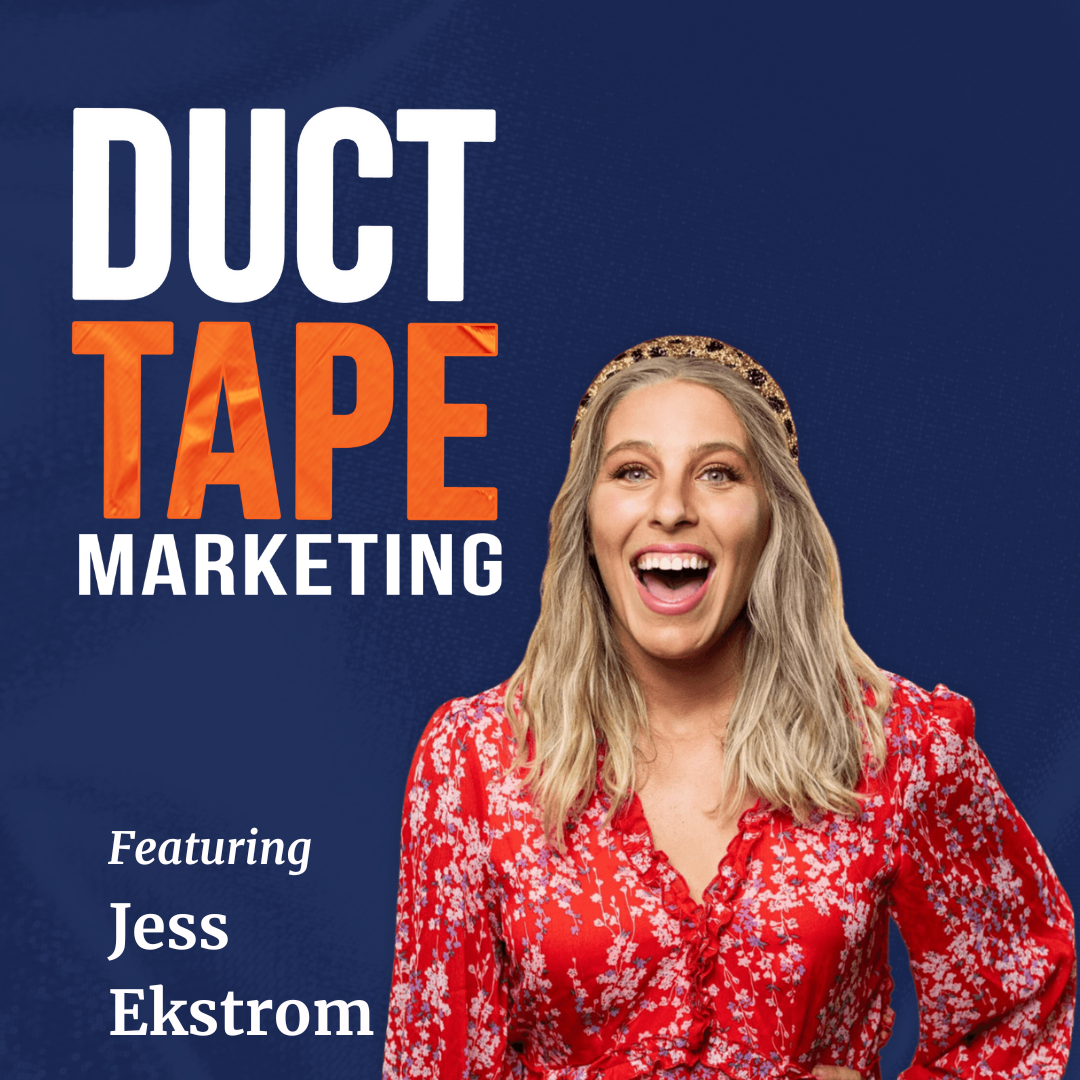
Most small business owners are sitting on one of the most powerful marketing channels available and never use it. In this episode, John Jantsch welcomes back Jess Ekstrom, founder of Mic Drop Workshop, to make the case that speaking from a stage is not a vanity play. It is a lead generation, brand building, and audience growth strategy that compounds over time.
Jess built her first company, Headbands of Hope, almost entirely by convincing professors to let her speak in class. She did not know she could charge for keynotes until a university emailed asking for her fee. Now she teaches entrepreneurs and founders how to turn their story into a signature talk that earns bookings, builds an audience, and drives business without ever feeling like a sales pitch.
This episode covers the difference between keynote speaking and lead gen speaking, why sharing your failures lands better than your wins, how to build a talk backwards from the outcome, and the mindset shift that dissolves stage fright almost instantly.
About Jess Ekstrom
Jess Ekstrom is an entrepreneur, two-time bestselling author, and Forbes top-rated speaker. She founded Headbands of Hope as a broke college student and grew it into a nationally recognized brand before it was acquired. She is the founder of Mic Drop Workshop, where she helps women step into their voice and build careers as confident, paid speakers. Her TED talk on the spotlight vs. lighthouse speaker mindset has driven significant attention to her framework. She hosts the Amplify podcast and can be found at micdropworkshop.com.
Key Takeaways
- Speaking is a marketing channel, not just a career. The keynote can drive awareness, build an audience, and generate leads without ever directly selling anything from the stage.
- Know which lane you are in. Keynote speaking means the talk is the product. Lead gen speaking means you waive your fee in exchange for the right to sell from the stage. Both work. Pick one and be intentional about it.
- Build the talk backwards. Start with a transformation promise: after people hear you speak, what do you want them to do, believe, think, or feel? Everything else builds toward that outcome.
- Spotlight speakers ask what everyone thinks of them. Lighthouse speakers ask what everyone needs from them. The second mindset makes you a better speaker and kills stage fright faster than any rehearsal trick.
- Share what went wrong, not just what went right. Audiences do not connect with wins. They connect with the arc. Admitting the $10,000 wire to a fraudulent manufacturer landed better than any highlight reel.
- Build one signature talk and stick with it for three to five years. Changing your topic every year means no one has time to associate your name with a solution.
- Use the slide deck as a lead magnet. Offer to send notes, discussion questions, and slides via a QR code before your closing. It converts better than almost any other stage-based list building tactic.
- The false finish line is the biggest trap. You do not need a certain follower count, revenue number, or website to start pitching yourself to speak. You need a topic you are excitedly curious about and the willingness to do the reps.
- Simplify, do not complicate. The best speakers remind people of something they already knew but forgot. Novelty is overrated. Clarity wins.
Timestamps
[00:00] Opening hook: the most underused marketing channel for small business owners is a stage.
[00:37] Jess’s background: building Headbands of Hope by speaking in college classrooms before knowing speaking was a paid profession.
[01:37] The moment she realized speaking could be a revenue channel, not just an advertising channel.
[02:22] The difference between an elevator pitch and a keynote, and why the keynote becomes the product.
[03:18] Keynote speaking vs. lead gen speaking: two lanes, two different business models.
[05:03] How to weave what you do into a keynote without it feeling like a sales pitch.
[07:14] Using a QR code slide deck as a lead magnet from the stage.
[08:26] The difference between wanting to be on a stage and actually having something worth saying.
[09:09] The spotlight vs. lighthouse framework from her TED talk, and why it changes everything about how you show up.
[11:18] Why sharing failures lands better than sharing wins, and what that requires you to give up.
[11:36] Her framework for building a keynote: transformation promise, work backwards, simplify.
[17:35] Why having one signature talk beats being a Cheesecake Factory speaker.
[19:52] The billboard exercise: the simplest way to figure out what you should be speaking about.
Memorable Quotes
“The keynote becomes the product. It’s not about selling your product through the keynote. It’s about raising awareness for it and most importantly, sharing a story in a way that inspires someone to do something about it.”
“The more you give, the less nervous you’ll be. And sometimes that means not looking good.”
“No one wants to learn from someone who’s always been at the top. We need the arc.”
“Stop making people think too hard. The best speakers remind people of something they once knew that maybe they forgot.”
“If you’re not willing to stick with a keynote for three to five years, don’t do it. You’re not giving anyone time to associate your name with a solution.”
Connect with Jess Ekstrom at micdropworkshop.com or find her on LinkedIn.
John Jantsch (00:00.977)
So what if the most underused marketing channel for a small business owner isn't a new platform or a bigger ad budget, but the founder standing up and telling their own story from a stage? Hello and welcome to another episode of the Duct Tape Marketing Podcast. This is John Jantsch. My guest today is Jess Ekstrom. Entrepreneur speaker, mom of two and founder of Mike Drop Workshop, where she helps women step into their voice and become confident speakers. Started her first company.
Headbands of Hope. Longtime listeners may recall we talked about that so many years ago on this show. At the time she was a broke college student, built her entire marketing engine by begging professors to let her speak for five minutes in class. That scrappy beginning turned into a career as a Forbes top rated speaker and two time bestselling authors. She's also the host of the Amplify podcast. So Jess, welcome back.
Jess (00:57.162)
It is good to be back. We're going to have to do a fact check on how many years ago I was on this show, but I know two kids and a new business later. Here we are.
John Jantsch (01:06.471)
Well, how old is oldest child?
Jess (01:09.07)
three. But it was long before that. It was long before that.
John Jantsch (01:10.219)
okay. It was, yeah, I was gonna say, I thought that was gonna be arch. Well, I'll go back and research it. So let's talk, we don't have to go back and relive the headbands of hope, although are you still doing anything with that? Okay, okay, cool.
Jess (01:23.01)
Yep. It got acquired, which was really exciting. Yeah, very exciting. And it was great for me to be able to fully step into my drop workshop and let new people in. And it's doing great.
John Jantsch (01:37.127)
So when, at what point did you realize that speaking was, you know, a lot of people talk about it as free marketing and certainly a lot of people want to be highly paid speakers. When did you just decide, hey, that's really a great way, I mean, that's a marketing channel all by itself.
Jess (01:52.492)
I remember the first email I got from Marshall University that said, what is your fee to come speak to our students? And I had to ask about a dozen people what they meant because I was like, what are they talking about? A fee? I pay? I was so confused. I didn't even realize that this was a channel for income because it had been such a good channel for advertising for me. And one of the things that I teach now in my drop to a lot of founders,
John Jantsch (02:03.301)
You're welcome.
Jess (02:22.416)
is the difference between an elevator pitch and a keynote. You know, an elevator pitch is around what you're selling, you know, the problem you're solving. But a keynote is around the story of your startup and making that story transferable to someone else. and then the keynote becomes the product. So it's not about selling your product through the keynote. It's about raising awareness for it, but most importantly,
John Jantsch (02:25.969)
Mm-hmm.
Jess (02:49.238)
sharing the story in a way that inspires someone to do something about it.
John Jantsch (02:52.903)
So maybe there's not either or, you maybe just tell people both can be true. certainly, well, I haven't asked the question yet. Here are two things. Because I have a lot of people that, there are a lot of people that want to be speakers and they start out at a low fee and maybe they work up, I don't know, let's say $10,000 for a keynote. But then.
Jess (02:58.658)
Both can be true.
John Jantsch (03:18.247)
There were other speakers, myself included, when I was getting started that if I got in a room of 50 prospects, I would come away with $100,000 worth of business. I didn't care about being paid because I knew the opportunity to get in that room was more important than what I might make as a speaker. How do you balance those? And again, like I said, can both be true.
Jess (03:38.796)
I think that there are two different lanes that you have to decide what you want to run in. The keynote is your product, which means it's not about selling a product. It's about delivering a keynote. And then the other lane is called lead gen speaking or selling from stage, which means you get no fee, which is exactly what you're talking about, John, but you have free rein to sell from the stage. And in that case, whatever money you make in the back of the room becomes your fee for being there.
But I am a big advocate for the keynote being the product. And in my drop workshop, I teach people a framework called moment to meaning, where you share a moment, a lived experience, and then what's the takeaway for the audience. Your moment can be a story in your business. It can be for me, you know, I told the story probably on your podcast, losing money to a fraudulent manufacturer, starting my business, Headbands of Hope.
John Jantsch (04:09.223)
Mm-hmm.
John Jantsch (04:35.62)
Mm-hmm.
Jess (04:37.206)
And then the meaning is, you know, failures don't have to be the end. It can be, you know, just a pivot in your story. But now I'm not going up there selling headbands of hope, but now everybody knows about it. And so I don't necessarily think that you have to choose between being a lead gen speaker and a keynote speaker. I think use the story of your company in your keynote and that way it becomes a both and.
John Jantsch (04:49.884)
Right.
John Jantsch (05:03.995)
Yeah, you know, it's funny, I do remember early on, I certainly took that very much that approach of I'm just here to deliver lots of value teach you guys lots of stuff. Hopefully it's awesome. And I remember early on a couple times where people come up to me say, like, what do you actually do? You know, how could I actually hire you? And I thought, maybe I somehow need to work that in more than just I'm just here to teach you stuff. So so how do you kind of balance that? I
Jess (05:21.486)
Mm-hmm. Yeah.
Exactly.
John Jantsch (05:33.605)
I never call it selling from the stage because I didn't have like a $500 course that they could go back there and buy. It was really more that at some point, in fact, I had a speaking engagement that early on in my career, I'm sure I wasn't paid for it. And a gentleman came up and said, I really liked what you said. Can you come talk to us? And that was in 2004. They still the client today. So millions of dollars worth of business from that client came from.
Jess (05:36.056)
Right.
Jess (05:40.301)
Yep.
John Jantsch (06:03.245)
him actually coming up to me and saying, I like what you had to say, but like, how do I hire you? So how do you balance kind of that, you know, that you do want people to know that you can help them solve the problem you just described?
Jess (06:09.826)
So.
Jess (06:14.668)
Yeah, right, exactly.
I think alongside with using how you help people as an anecdote in your keynote as a way to get a point across, are, you know, with I work with coaches, they can say, when I coach people on this topic, I tell them this. Or if you're a podcaster, and you want to promote your podcasts, but without being like, scan this QR code and listen to my podcast and leave a review, you can say here's some really interesting guests I've had on my podcast.
And here's what they said. And it's continuing to further the value that you're delivering to the audience without selling them something. But one kind of hack I will give to that, John, you can still use your keynote as an audience building technique that still delivers value in a way where you're delivering them the notes or the recap or the slide deck from your presentation.
in exchange for an email. So when I speak right before my conclusion, I tell them that they can scan a QR code and it's going to send the slide deck to them so that they have it, they can remember it, it's going to give them discussion questions to bring back to their team. But that is also where they're now in my orbit. Now I can also, they want to hear what I'm doing. The next email I send will probably be about mic drop workshop or my book or my podcast.
And so there are ways that you can use that time on stage to just get people into your orbit in a way that provides value. I've tested a lot of different lead magnets from the stage. The slides or the notes convert higher than anything else that I've done.
John Jantsch (07:57.968)
Mm-hmm.
John Jantsch (08:01.807)
Yeah, yeah. So.
How do you also balance? mean, there's a lot of people that look at speaking and think that's also kind of a very, you know, statusy thing, right? I'm doing a keynote here. You see people on LinkedIn all the time talking about the status thing. But what's the difference between wanting to be on the stage and actually having something worth saying from it?
Jess (08:16.354)
Yeah.
Jess (08:26.094)
Such a good question. And I would say most of the women that I work with lean towards the what do I have to say? And how I teach this, this is actually a concept I gave in my TED talk last year that has done really well. So I'll share it here. It's usually when you have that imposter syndrome coming from
what I call a spotlight mindset. Spotlight speakers go up there, spotlights on them. How do I look? How do I sound? They're concerned with public perception. They want to appear impressive. What does everyone think of me? If a spotlight asks, what does everyone think of me? Then the other kind of speaker is a lighthouse, is, what does everyone need of me? You go up there with, I'm going to solve a problem. Where are they at now? Where are they hoping to go? How can I help? And so when you switch from like, how do I be admired?
John Jantsch (08:57.093)
Mm-hmm. Mm-hmm.
John Jantsch (09:14.097)
Mm-hmm.
Jess (09:25.458)
how can I be helpful? All the sudden speaking is less of a flashy opportunity and more of a impactful moment for you. And the irony is, is that you become better for it, your keynote gets better, my nerves got better. When I stopped going up there trying to be impressive. Instead, I would do my research on the
audience. Okay. This is accountants. What are accountants experiencing in 2026? What are their, what keeps them up at night? Okay. Now that I know where they're at, I can help where they want to go. So I think that shift can help people a lot.
John Jantsch (10:04.813)
you know, what's interesting is, you mentioned it, but I felt this, for sure. You know, a lot of people talk about being afraid of public speaking, you know, and a lot of it's that mentality of I'm on stage, everybody's looking at me. but when it's, what am I here to give? yeah, all of a sudden the stress kind of melts away. least that's been my experience. Yeah. Yeah.
Jess (10:16.76)
Mm-hmm.
Jess (10:24.288)
Yeah. The more you give the less nervous you'll be. And to be real, that sometimes means not looking good. I think sometimes when we speak from a place of a lighthouse, we want to share all the wins that we've had as a business owner. look at this thing I did. I'm on the today show. I sold millions of copies, blah, blah, blah. I did that. It didn't land. I didn't get booked from it. When I started to share moments that went wrong and what I did about it.
That's when the rubber started meeting the road because it wasn't about making me look good. had to admit, yeah, I wired $10,000 to a fraudulent manufacturer. That, that sucked. But here's what I did. That's when I think things started to get noticed. So also just getting out of your head that you have to paint yourself as the hero and paint yourself in the best light. No one wants to learn from someone who's always been at the top. We need the arc.
John Jantsch (11:03.6)
Mm-hmm.
John Jantsch (11:18.439)
No questions, because it's true. Nobody's always been at the top. So it's a lie. So do you have a specific framework that you teach for building a talk that really kind of lands?
Jess (11:21.184)
Mm-hmm. No, true. Yeah, they want to root for you.
Jess (11:36.566)
Yeah. I would say start with the aftermath. Before you think about what you want to say, think about what you want to stay. Like, what do you want to stay in the room after you leave? And so I give, we call it a transformation promise. After people hear you speak, what do want them to do? What do you want them to believe? What do you want them to think? What do you want them to feel?
And then once you have that transformation promise, maybe it's after people hear me speak, I'll give like my example. I speak about motivation and how to create motivation that lasts. So after people hear me speak, I want their whole team to be intrinsically motivated to create lasting motivation. Now I have a North star. Now I have the outcome in mind that I can build my keynote around. So then you work backwards. Well, what are the things that people need to understand in order to create motivation that lasts?
Well, they need to know the science behind motivation, how our brain works. They need to know how to be intrinsically motivated instead of extrinsically validated. They need to know how to define their success. So then I start going down the list of what's a checklist that someone needs to understand in order to arrive at that transformation? And then of course, fill those with, well, when did I learn this? What's the story I can answer here? What's a data point?
But I think one of the most important things you can do as a speaker is to simplify, not complicate. I think the spotlight speakers in us want to sound fancy and want to words and stuff that just is hard to understand. And I think one of the most misconceptions about speaking is to be revelatory and groundbreaking and novel. But the best speakers out there,
are reminding people of something they once knew that maybe they forgot. mean, James clear, like simple habits stack up Mel Robbins, you know, and her like, just go for it with her five second rule. Shonda Rhimes, just say yes. None of these things are new. None of these things are groundbreaking, but they saw a path to own it and put their context and their spin on it. So I would say,
Jess (13:57.782)
work backwards, create a transformation promise, and then stop making people think too hard.
John Jantsch (14:06.543)
It's funny, I remember again, early on in my career of speaking, I'd think, how am I gonna talk for 45 minutes? I need 247 slides in order to fill that 45 minutes, right? And then you find yourself just rushing through. And now the same talk, 10 or 12 slides that you actually live in the moment with the people is a lot.
Jess (14:13.241)
yeah.
Jess (14:16.759)
Yeah.
Jess (14:21.431)
Yeah.
Jess (14:29.102)
totally. It's daunting. That's why it's kind of like, you know, if you're a runner or something, it's like instead of running a marathon and thinking 26.2 miles, it's like, how do you break it into five races of five? And so breaking your talk into smaller talks in that way, because now it's pretty variable. I don't know if you've gotten this, but I get asked to speak for an hour, which typically was a norm. And now it'll be like 45 minutes, 30 minutes.
50. So that way you can just plus or minus some of these microtox within it instead of having to start over every time.
John Jantsch (15:05.511)
Yeah, actually, I had the opposite happen one time. One time somebody didn't show, and so they said, can you fill 90 minutes? And by the way, you're on in about half an hour.
Jess (15:12.204)
Mmm.
Jess (15:16.428)
Yes, that is, you gotta be ready to go at any time, but you did it.
John Jantsch (15:21.095)
So you work with a lot of women. don't know if it's predominantly, but you work with a lot of women. And women have their own brand of head trash, I think, around some of this topic that men don't seem to suffer from sometimes. We don't have imposter syndrome because we think everybody's... That we've arrived all the time, right? So...
Jess (15:26.946)
Mm-hmm. Yeah.
Jess (15:36.909)
Yep.
Jess (15:40.534)
Mm-hmm. Right. Yeah. Why not? Why? Of course someone should listen to me. Yeah.
John Jantsch (15:48.903)
You've built multiple companies, you're a mom of two, you work with a lot of folks who have ambition. Do you see that, what are the places where they're quietly kind of sabotaging their balance, you know, before they even notice?
Jess (16:02.766)
That's great question. I think that they have this facade or like this false sense of a finish line that exists somewhere that is never there. Well, in order for me to be a speaker, I have to reach this amount of revenue or I have to have this amount of status or I have to have this many followers or I need to have this accolade. I see that all the time.
People are like, well, I can't pitch myself to speak because my website isn't live yet. I'm like, you have a LinkedIn. Go for it. And so I think it's, can be comforting to people to, and myself included to say, well, I can't do that yet because I don't have this. It's not, I'm not saying never, but I'm saying this. And I would say that pitching yourself and becoming a speaker is less about this.
John Jantsch (16:35.121)
Yeah.
Jess (17:01.112)
false finish line of being an expert in something and more about being excitedly curious about a topic and willing to put in the work. It doesn't mean that there is like some number or something out there that you have to hit in order to be qualified to pitch yourself. It's like, what are you curious enough about? What's been a theme in your life? What have people asked you for advice on that you're willing to put in the work? Put a keynote together, further your research around it every week and
Put your name out there for opportunities. That's probably the number one thing I would say.
John Jantsch (17:35.911)
So do you specifically try to coach people? Because you've mentioned this several times, your keynote. Is that your thing that you're always working on? And if somebody asks you to speak, that's what you're going to tell them? You're not like, what do you need? But it's like, no, here's what I do.
Jess (17:42.158)
Mm-hmm.
Jess (17:49.738)
Yes. So this, I'm so glad you brought this up because this is another, again, I call it a trap. That sounds like a lot, but mistakes. Sometimes I see speakers come into is they think by being dynamic and being able to speak about 20 different things, it's helping them as a speaker when it's actually hurting them. People want your greatest hit. Like I call it being a cheesecake factory speaker where you go. It's like, no one wants
Alfredo sushi and you know, a burger. It's what is your chef's special? What's the thing that you're really good at? And so tell them what you deliver and how it's going to help them. Don't necessarily ask them what they need and create a talk around that. Doesn't mean you can't find ways to customize your talk to that audience. But if you're starting from scratch, every single time you speak, one, it's a lot more work for you. And two, it's a lot less benefit to them because they are not getting something proven.
Like no one wants to be your trial run at this. Do the reps. Yeah, yeah, get good at it. And they want something that's like, yeah, I've given this talk at Coca-Cola. I've given this talk at Chick-fil-A. You know, I've given this talk here. So build one signature talk. That's what I would recommend.
John Jantsch (18:49.735)
Try out some new material.
John Jantsch (18:58.801)
Right. Right.
John Jantsch (19:06.119)
And I think from a practical reality, you'll just get better at it. You'll see where people laugh. You'll see where people get really engaged. And all of a sudden it's like, okay, I can make that better at that moment. And so as opposed to like, have to figure out the structure of this thing.
Jess (19:11.288)
Mm-hmm. Totally.
Jess (19:16.736)
Yeah, absolutely.
Jess (19:22.742)
Absolutely. mean, you can always keep iterating and always should be iterating. think a keynote is a living and breathing thing. Like I'm never done with a keynote. It's, I'm always editing and improving, but I would say if you're not willing to stick with it for three to five years, then don't do it. I see so many speakers that like every year are changing their thing that they're known for. I'm like, you're not given anyone time to associate your name with a solution.
John Jantsch (19:25.637)
Yeah, right.
Yeah.
John Jantsch (19:41.009)
Yeah, it's funny.
John Jantsch (19:46.172)
Yeah.
John Jantsch (19:52.977)
funny, I'm sure comedians experience this all the time, but I've always puzzled how like same talk, different parts are funny one time and they're not at all to the audience the next time. Same with like, you know, some bit that's supposed to be really touching and like, it doesn't look like anybody got it. I just always, there's no question that really, I just always find that really odd. So.
Jess (20:13.901)
Yeah.
Yeah, exactly.
John Jantsch (20:20.217)
I appreciate just you stopping by the Duct Tape Marketing Podcast. Is there some place you'd invite people to, who want to do more speaking, who want to actually learn how to do it right? What would be the next step for them? What would be the first step I should say for them? And then also how can they find out more about working with you?
Jess (20:40.238)
I would say if you want to start speaking, ask yourself, I actually said this to someone today, so I'll say it here. Imagine I gave you money to buy a billboard in your town and or on your local highway. And it was up to you to put whatever phrase or slogan that you wanted to on that billboard.
what would be the thing that you would put on that billboard? Like what is like a mantra, a theme, like something that you keep coming back to that helps people. And so if you wanna just get started, I would think about like, what would you put on an empty billboard and start there? And then you also...
John Jantsch (21:20.485)
All it comes to mind to me is eat more chicken, but that's already taken, so sorry.
Jess (21:23.777)
Yeah.
That's a place to start, John. And then you have the greatest test group of all time with social media, like test, test, and test again. And then if you want help with that, you can come to us at micdropworkshop.com or follow us anywhere. I'm also on LinkedIn, Jess Ekstrom, where you can find me.
John Jantsch (21:46.853)
Awesome. Well, again, appreciate you taking a moment to stop by and hopefully we'll run into you one of these days out there on the road.
Jess (21:52.672)
Yeah, thanks, John.
Sign up to receive email updates
Enter your name and email address below and I'll send you periodic updates about the podcast.

 Overview
 Overview

 Episode Overview
 Episode Overview
 Certified Facilitator. Her work focuses on helping leaders build self-awareness, navigate complexity, and create cultures rooted in trust and accountability.
 Episode Overview
 Episode Overview
 Overview
 Overview
 Episode Overview
 Episode Overview