Reading view

Umno opens doors to ousted Bersatu leaders via Rumah Bangsa initiative, says party veep

Malay Mail

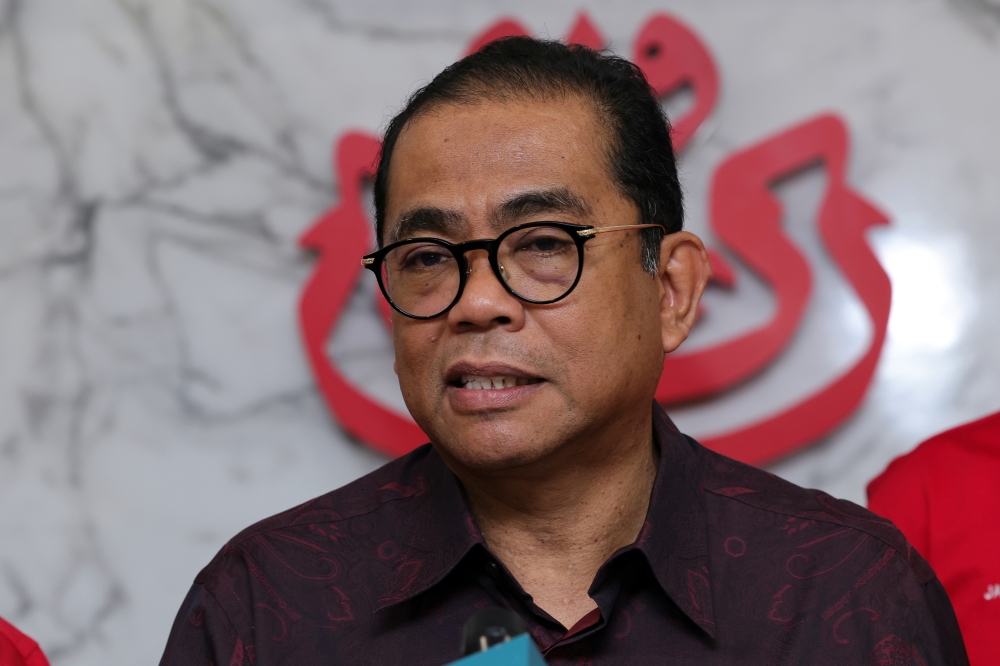
KLUANG, May 12 — Umno is ready to welcome former Bersatu members and leaders subjected to disciplinary action by their party to join its ranks through the Rumah Bangsa initiative, said party Vice-President Datuk Seri Mohamed Khaled Nordin.

The Rumah Bangsa Unification Committee chairman said that as a party that serves as a home for the Malays, Umno remains open to anyone who wishes to align with the party’s struggle.

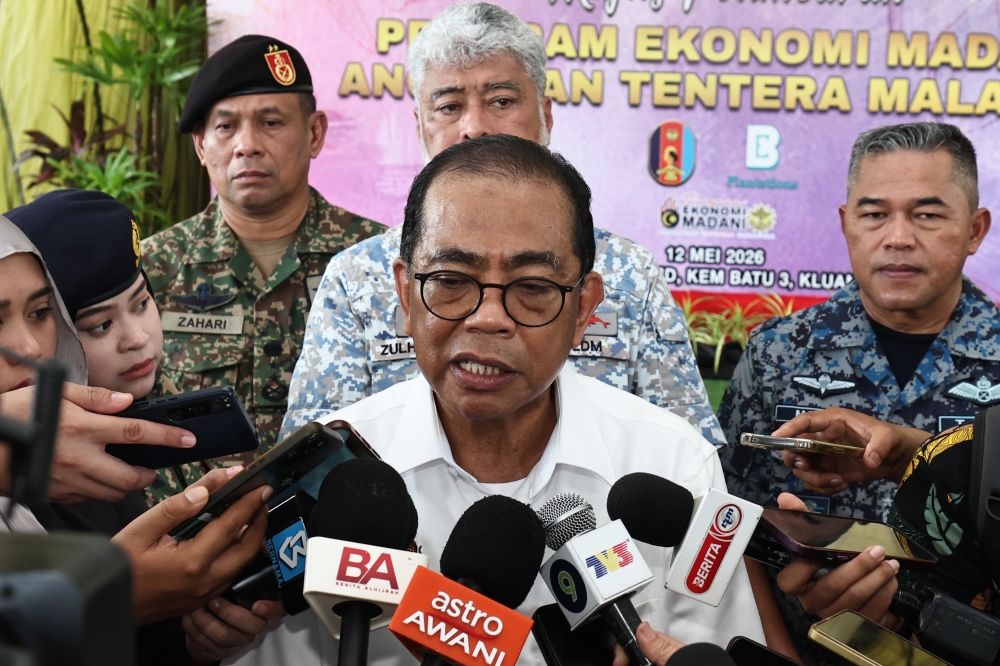
"We are open to accepting anyone because our house is Rumah Bangsa, meaning the house is large enough for everyone," he told reporters after officiating the Malaysian Armed Forces (MAF) Madani Economy programme at Batu 3 Camp here today.

Mohamed Khaled, who is also the Minister of Defence, was commenting on recent decisions by the Bersatu Disciplinary Board to expel and suspend several of its elected representatives and leaders.

Yesterday, the Bersatu Disciplinary Board sacked and suspended four more elected representatives and party leaders for violating Clause 9.1.4 of the party constitution, as well as the party’s Code of Ethics and Conduct.

Last Friday, Bersatu also took disciplinary action against six other leaders, expelling two state assemblymen and immediately suspending four others.

Rumah Bangsa, introduced by Umno President Datuk Seri Dr Ahmad Zahid Hamidi, aims to unite the Malay community and facilitate the return of former members. The initiative has reportedly received over 10,000 applications to date. — Bernama 

  •  

Former Philippines police chief seeks Marcos’s protection amid ICC warrant fears

Malay Mail

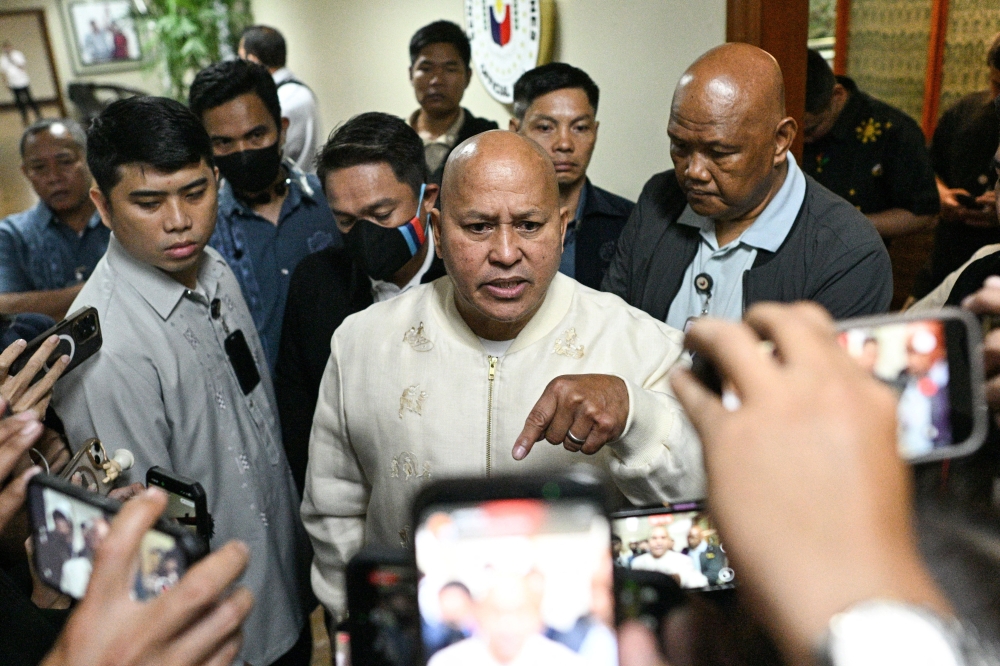
MANILA, May 12 — The top enforcer of former Philippine leader Rodrigo Duterte’s deadly war on drugs urged President Ferdinand Marcos Jr today to not hand him over to the International Criminal Court, but said he was ready to face justice at home.

Fearing arrest ‌and hunkered down in his legislative office for a second day, Senator Ronald dela Rosa said he had faithfully served his country.

The ICC unsealed an arrest warrant yesterday for former police chief dela Rosa, dated November, on suspicion of crimes against humanity, the same crimes 81-year-old Duterte is accused of as he awaits trial in The Hague following his arrest last year.

Dela Rosa, better known as “Bato”, or “rock”, has been under the protective custody of the Senate since law enforcement agents entered the building on Monday, when he reappeared in public for the first time since November. He has denied involvement in illegal killings.

‘I did everything for the country’

“I hope that, as the father of the nation, you will take care of all Filipinos. That is the role of government, to care for its people,” dela Rosa told reporters ‌when asked what his message was to President Marcos.

“I did everything for the country. I did not enrich myself. I ⁠worked faithfully,” he said, his eyes welling with tears.

“Mr. ⁠President, (you) may one day face a situation like this. You may also encounter problems, ⁠and then you will understand, you will ⁠feel what I am feeling ⁠right now.”

Dela Rosa was Duterte’s top lieutenant and oversaw a fierce crackdown during which police say more than 6,000 suspected drug dealers were killed in official operations. Thousands of users were also gunned down in mysterious slumland murders blamed on vigilantes ⁠or turf wars.

Police say those killed during operations had resisted arrest and reject activists allegations of systematic murders and cover-ups.

No word from interpol

Today, police stood in line behind riot shields outside the Senate, where all committee meetings were cancelled following dramatic scenes a day earlier, when dela Rosa was seen scrambling for the safety of his office as agents from the National Bureau of Investigation arrived.

National police chief Jose Melencio Nartatez in a statement on Tuesday said no order ⁠had been received to make an arrest, but police remain “prepared to act in accordance with lawful directives and established procedures”.

The office of the president reiterated that the Philippines is no longer a signatory to the ⁠ICC’s founding treaty but can execute an ICC warrant if requested by Interpol, the same procedure as Duterte’s arrest.

Asked by Reuters ⁠in a text ⁠message how soon an Interpol request could be made, Interior Secretary Jonvic Remulla said: “Only Interpol knows”.

The war on drugs was the key platform that swept Duterte to power in 2016 as a tough-talking mayor who during televised public speeches promised to kill thousands of ‌drug dealers while repeatedly daring the ICC to come after him.

Duterte’s defence team at the ICC has said he maintains his innocence and his tough rhetoric was designed to instil fear among criminals. — Reuters


  •  

Nineteen illegal factories in Pulau Indah demolished after operating for over 20 years

Malay Mail

SHAH ALAM, May 12 — A total of 19 illegal factories in Pulau Indah, Klang have been demolished including utility disconnection through the Integrated Demolition Enforcement Operation to ensure industry compliance with Selangor state land laws.

Selangor Local Government and Tourism Exco Datuk Ng Sue Lim said the operation, which involved 300 personnel from various agencies, was carried out under Section 425 of the National Land Code against premises found to be operating without proper compliance.

“Based on information from the Klang District and Land Office, the entrepreneurs involved have been operating factories without permission at the site for a long period, estimated to be over 20 years.

“An inspection also found that there was no record of a Temporary Occupancy License (LPS) ever being issued to any factory owner at the site in question. Several land expropriation applications received around 2019 to 2020 were also rejected,” he said in a statement today.

Explaining further, Ng said the action was not implemented in a hurry, as the initial engagement process and site vacating instructions were initiated in early 2025, before the first notice was submitted on March 3, 2025.

He said that site visits, monitoring, banner installation and announcements were also carried out on September 19, 2025, in addition to the submission or pasting of the final notice dated April 7, 2026, and the setting of the final date for vacating before the demolition operation on May 10, 2026 was done.

He said that during that period, the state government also took into account the views, applications and appeals for postponements from stakeholders to provide reasonable space to manage the transfer of operations, employees, assets and company equipment respectively.

“However, after a reasonable period has been given, the law still needs to be enforced. Government land must be preserved, industrial areas must be reorganised and public interests must not continue to be affected by activities that do not comply with the law,” he said.

Ng said the existence of unauthorised factories affected the image of industrial areas, environmental control, drainage systems, safety and logistical access, as well as creating unfair competition for legitimate operators who had complied with the conditions of licenses, taxes, development approvals and technical requirements.

He said the enforcement was important to restore the integrity of government land and restructure the industrial areas in a more orderly manner.

“After the demolition operation is completed, the focus will be on site cleaning, demolition waste management, safety monitoring and assessment of land restoration needs.

“The site will then be reviewed within a more planned development framework, in line with the Local Plan, planning guidelines and technical requirements of the authorities,” he said. — Bernama 

  •  

Unrelenting gas prices: India debates strategy as global conflicts hit supply

Malay Mail

NEW DELHI, May 12 — ‌India will at some stage need to assess how long state-run fuel retailers can sustain losses from selling transport fuels below market prices, oil minister Hardeep Singh Puri said at ‌an industry event today.

Petrol and diesel spot prices have surged to multi-year highs globally as the Middle East conflict disrupted supply, but governments in several major economies have held down pump prices to shield consumers from inflation.

A joint secretary in the oil ministry, Sujata Sharma, had earlier said that India had no plans to compensate oil marketing companies for these losses.

Fuel retailers are incurring losses of about 100 rupees (RM4.11) per litre on diesel and 20 rupees per litre on petrol, Sharma said last month.

India is the world’s ‌third-largest oil importer and consumer, meeting more than 90% of its crude oil ⁠needs and about half of its natural ⁠gas demand through imports.

Indian state fuel retailers, ⁠including Indian Oil Corporation, Hindustan Petroleum ⁠and Bharat Petroleum, which ⁠account for most of the fuel sales in the country, have not raised gasoline and diesel prices since April 2022.

A senior government official separately told Reuters ⁠that compensating oil marketing companies while keeping fuel prices unchanged is not fiscally sustainable.

Another official said any price increase would be substantial enough to discourage spending on petrol and diesel, but not so large as to sharply stoke inflation.

Both officials spoke on condition of anonymity due to the sensitivity of the ⁠matter.

Oil minister Puri also said India has crude and liquefied natural gas sufficient for 60 days, and liquefied petroleum gas for 45 days.

Indian Prime ⁠Minister Narendra Modi urged on Sunday a spate of measures including fuel conservation, work-from-home practices ⁠and ⁠limits on travel and imports to ease pressure on the country’s foreign exchange reserves.

The country’s balance of payments is expected to worsen sharply during the current 2026-27 fiscal year, ‌with the deficit projected at about US$66 billion (RM260 billion) to US$70 billion, up from an estimated US$26 billion to US$28 billion in 2025-26. — Reuters


  •  

MACC: Senior executive remanded seven days over alleged RM8,000 graft in Pahang

Malay Mail

KUANTAN, May 12 — A senior executive of a government agency has been remanded for seven days for allegedly being involved in bribery activities amounting to RM8,000.

According to sources, the man, in his 40s, was arrested at about 4pm yesterday when he appeared to give a statement at the Pahang office of the Malaysian Anti-Corruption Commission (MACC).

“Initial investigations found that the suspect is believed to have committed the offence in 2024 by assisting a construction company and a contractor company in obtaining contracts, approving work contract evaluations, securing work completion certifications, and expediting payment claims.

“The suspect is believed to have received bribes from the companies through money transfers into his personal bank account,” the sources said.

A seven-day remand order, until May 18, against the suspect was issued by Magistrate Tengku Eliana Tuan Kamaruzaman after an application by the MACC at the Kuantan Magistrate’s Court this morning.

Meanwhile, Pahang MACC director Mohd Shukor Mahmud, when contacted, confirmed the arrest and said the case is being investigated under Section 16(a)(A) of the MACC Act 2009. — Bernama 

  •  

Keir Starmer vows to continue governing amidst resignation calls

Malay Mail

LONDON, May 12 — Prime Minister Keir ‌Starmer defied calls to resign today, telling ministers he would “get on with governing” despite a “destabilising” 48 hours of growing calls to set out a timetable for his departure after an election drubbing.

At a meeting of his cabinet team of ministers, Starmer, in the top job for less than two years, repeated that while he took responsibility for one of his Labour Party’s worst election defeats, there had been no official move to trigger a leadership contest.

“The past 48 hours have been destabilising for government and that has ‌a real economic cost for our country and for families,” Starmer told ⁠ministers, according to his Downing Street office.

“The ⁠country expects us to get on with ⁠governing. That is what I am ⁠doing and what ⁠we must do as a Cabinet.”

British government bonds rallied weakly on Starmer’s comments, but remained firmly in the red for the day.

His defiance was ⁠in marked contrast to the feelings of many in his Labour Party.

Today, a junior minister resigned after a handful of ministerial aides also left the government. More than 80 Labour lawmakers have publicly called for him to set a resignation date so the party could install a new ⁠leader in an orderly manner.

Starmer had sought to shore up his position on Monday when he promised to act more boldly and with ⁠more urgency to tackle Britain’s many problems.

He had said the country would never ⁠forgive the ⁠centre-left Labour Party if it embarked on a leadership challenge, just two years after its huge parliamentary majority was supposed to bring an end to the political chaos ‌that had gripped the country since Britain voted to leave the European Union 10 years ago. — Reuters

  •  

Want to watch World Cup 2026 matches for free? Download ‘RTM Klik’ app, Fahmi tells Malaysians 

Malay Mail

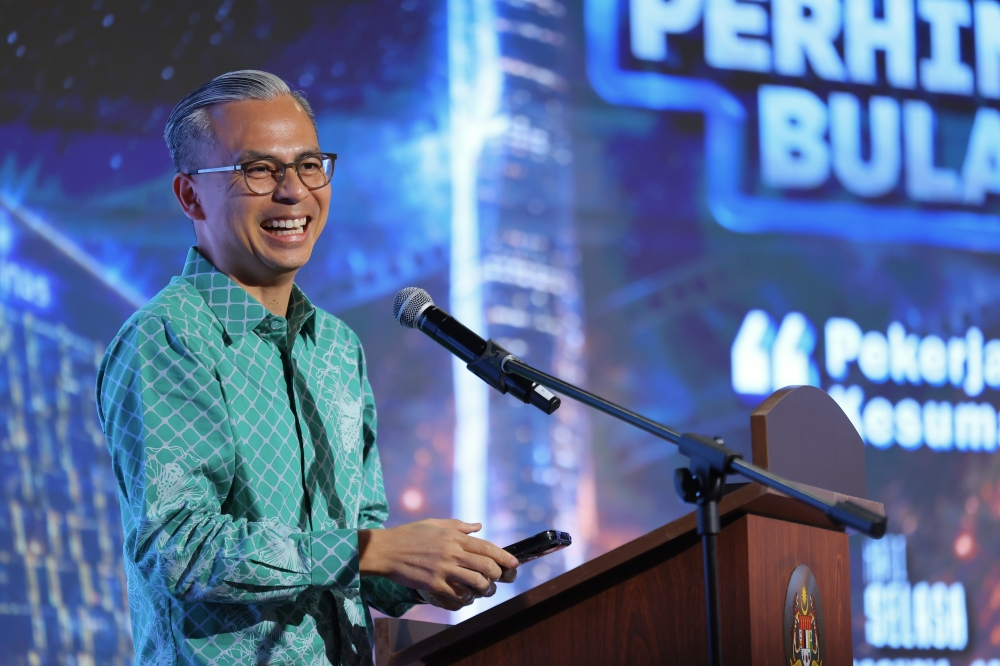
PUTRAJAYA, May 12 — The public is encouraged to download the “RTM Klik” application to ensure they can watch the Fifa World Cup 2026 matches for free. 

Communications Minister Datuk Fahmi Fadzil said the tournament would be aired by Radio Televisyen Malaysia (RTM) and Unifi TV as the official broadcasters of the Fifa World Cup 2026 in Malaysia.

“This is the first time in 20 years that we are providing free World Cup broadcasts for all Malaysians.

“What Malaysians need to do to ensure they do not miss watching the matches for free is to download RTM Klik, or they can watch them anywhere through MyTV and RTM,” he told reporters after attending the Communications Ministry’s monthly assembly here today.

Also present were Deputy Communications Minister Teo Nie Ching, Communications Ministry secretary-general Datuk Abdul Halim Hamzah and Malaysian National News Agency (Bernama) Editor-in-Chief Arul Rajoo Durar Raj.

Fahmi also urged RTM and Unifi TV, as the official broadcasters, to review the football match broadcasts to ensure there were no excessive restrictions that could affect the public’s viewing experience.

“I want this to be looked into to ensure there are no unreasonable restrictions for Malaysians to enjoy the live broadcasts,” he said.

He added that several programmes would be organised ahead of the tournament, widely considered the largest and most prestigious single-sport event in the world. 

Last week, Fahmi said the Fifa World Cup 2026, to run from June 11 to July 19, would be broadcast on various platforms, including free-to-air broadcasts via MyTV as well as streaming platforms through RTM Klik and Unifi TV to ensure comprehensive access.

He said all 104 matches would be broadcast live on Unifi TV, while RTM would air most of the matches either live or on delayed telecast.

The United States will co-host the 2026 World Cup with Mexico and Canada, with the opening match scheduled to take place in Mexico City on June 11, while the final will be held in New Jersey on July 19. — Bernama 

  •  

Singapore woman sentenced to jail for shoplifting 19 bottles of wine, after CCTV face recognition tech catches her in the act

Malay Mail

SINGAPORE, May 12 — A 51-year-old saleswoman who stole 19 bottles of wine from a Sheng Siong supermarket was caught after the chain’s facial recognition system flagged her face to store managers. She was sentenced to eight days in jail on May 12.

According to CNA, Catherine Tan Li Eng pleaded guilty to a single amalgamated theft charge covering seven separate incidents in September 2025, during which she took bottles of Jacob’s Creek wine from the outlet at Block 622D, Punggol Central. The total value of the stolen wine was about S$556 (RM1,718).

The supermarket first noticed missing stock during an inventory check on September 10. Staff reviewed security footage and saw Tan placing wine into a reusable bag and leaving without paying. The footage was used to register her image in the chain’s AI‑driven facial recognition system, which Sheng Siong had rolled out across its outlets in April 2024.

The system was designed to alert managers if a flagged individual re‑entered any store. That alert came the next day, when Tan returned to the same outlet around noon on September 11. A retail manager intercepted her at the self‑checkout kiosk, inspected her bags and found three unsanctioned wine bottles. Police were called, and those three bottles were recovered. Tan later made full restitution, paying about S$470 for the remaining bottles.

In court, Tan’s lawyer argued for a sentence of one to two days’ jail, citing her role as the sole caregiver for her mother and an intellectually disabled cousin, as well as her remorse and full repayment.

District Judge Brenda Chua rejected that proposal as “too low and not appropriate.” She noted that the stolen amount was “not insignificant” and that the amalgamated charge, which bundles multiple thefts into one count, reflected “higher criminality.” An amalgamated theft charge carries a maximum penalty of up to six years’ imprisonment, double the three‑year ceiling for a single theft offence.


  •  

Police forum targets cybercrime, scams and illegal e-waste threats, says IGP

Malay Mail

KUALA LUMPUR, May 12 — The Royal Malaysia Police (PDRM) is continuing to enhance the nation’s security preparedness through the organisation of the PDRM Special Dialogue V 2026 (PSD V 2026) in the efforts to address the increasingly complex and dynamic evolution of transborder crime threats.

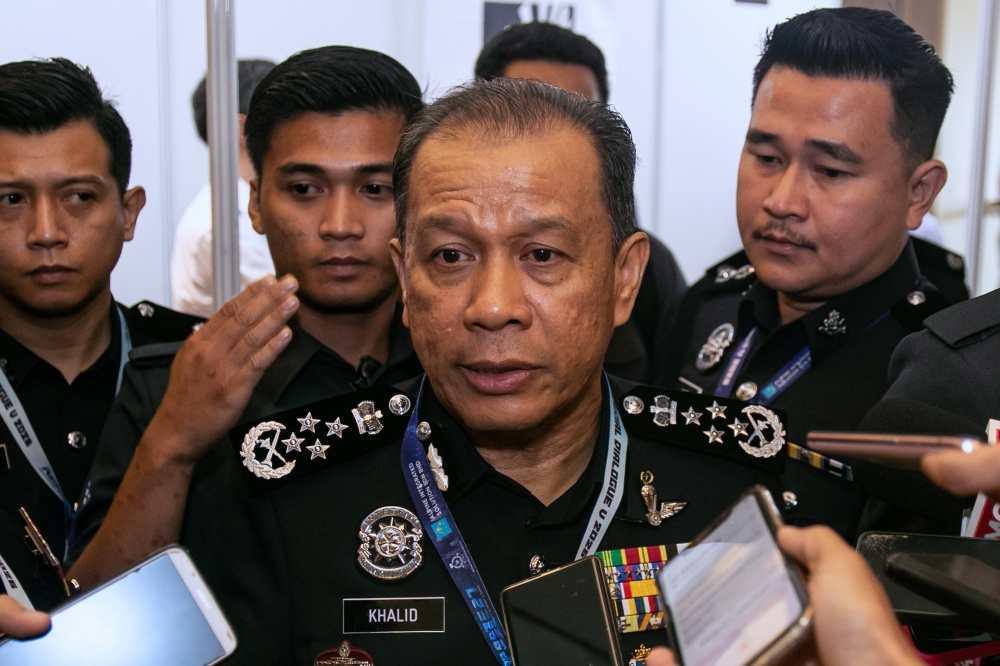
Inspector-General of Police Datuk Seri Mohd Khalid Ismail said the international-level dialogue platform represents a progressive step by the force to bring together technology experts, policymakers and enforcement agencies to formulate effective strategies against contemporary security threats.

He said the main focus of this year’s edition covers critical issues such as online scams, cybercrime, narcotics syndicates and illegal e-waste activities, which have now become serious threats to the country’s economy and environment.

“For 2025 alone, losses due to online scams in Malaysia reached RM2.7 billion. PDRM also uncovered more than 110 illegal e-waste sites through Ops Hazard 3.0, with seizures valued at over RM582 million, proving that today’s threats require a more technical and collaborative approach,” he said in a statement today.

PSD V 2026, spearheaded by the PDRM Management Department in strategic collaboration with Alpine Integrated Solution Sdn Bhd, saw the participation of more than 3,000 attendees, including 200 VIP delegates and 135 technology companies from 17 countries.

The programme also involved several key PDRM departments, including the Criminal Investigation Department, Narcotics Criminal Investigation Department, Commercial Crime Investigation Department, as well as the Internal Security and Public Order Department.

Mohd Khalid said the dialogue serves as a key catalyst towards the organisation of the Asia International Security Summit & Expo 2027 (AISSE’27), which is scheduled to take place at the Malaysia International Trade and Exhibition Centre (Mitec) in January next year.

“The organisation reflects PDRM’s unwavering commitment to ensuring the safety and well-being of the people are continuously safeguarded through the integration of next-generation technologies such as Artificial Intelligence (AI) in border management and digital security monitoring,” he said.

Among the key topics discussed throughout the programme were social engineering threats, crypto scams, human trafficking in the digital era, as well as online child sexual exploitation. — Bernama 

  •  

Defence Ministry lifts MAF procurement fund freeze after anti-leakage measures

Malay Mail

KLUANG, May 12 — The Defence Ministry (MINDEF) has confirmed that the freeze on procurement funds for Malaysian Armed Forces (MAF) assets has been lifted following restructuring measures implemented to ensure there are no issues involving leakages or misuse of funds.

Defence Minister Datuk Seri Mohamed Khaled Nordin said all military asset procurement matters were now proceeding as planned. 

“There is no longer any freeze because we have carried out restructuring measures that can ensure there are no leakages, misuse of funds and related issues,” he told reporters after officiating the MAF Madani Economy Programme at Batu 3 Camp here today.

Previously, he said Mindef was discussing the status of the frozen MAF procurement funds with the Finance Ministry to ensure critical operations and preparedness were not affected.

On January 16, Prime Minister Datuk Seri Anwar Ibrahim ordered all procurement decisions involving the MAF and Royal Malaysia Police (PDRM) linked to corruption issues to be temporarily frozen until procurement procedures were fully complied with.

The freeze followed controversies involving alleged corruption and abuse of power linked to several former top MAF leaders.

Meanwhile, on whether Mindef was reviewing procurement matters following the global supply crisis, Mohamed Khaled said this was among the aspects being closely monitored by the ministry.

He said the National Economic Action Council (MTEN) had also requested Mindef to provide proposals on how the country’s defence sector could adapt to the global supply crisis and conflicts in West Asia.

In this regard, he said the ministry viewed the enhancement of local defence industry capabilities as one of the key areas that needed to be strengthened through an asymmetrical warfare approach.

“For example, we should adopt an asymmetrical warfare approach, which refers to a situation where two countries have vastly unequal military strengths, and countries facing such circumstances would usually adopt this strategy.

“This approach involves a country producing local products in large quantities at low cost while possessing the capability to integrate information technology (IT) and electronic systems,” he said.

Meanwhile, on the case involving a soldier who suffered serious injuries, including a fractured skull, in an incident at Kem Iskandar in Mersing, Mohamed Khaled said the investigation paper had been submitted to the Deputy Public Prosecutor for further action by the relevant authorities.

It was reported that the victim, Abdul Hamid Talib, 25, from Semporna, who serves with the 22nd Commando Regiment at the camp, is unable to speak and currently relies on breathing support equipment. — Bernama 

  •  

Why science diplomacy finally needs its own map — Ahmad Ibrahim

Malay Mail

MAY 12 — The phrase “science diplomacy” conjured a romantic image: a polar bear standing next to a Russian and an American scientist in front of a research vessel, a testament to Cold War cooperation. It was seen as a niche pursuit — a “nice-to-have” soft power tool. But a new, comprehensive analysis published in Scientometrics by Anna-Lena Rüland and her colleagues shatters this outdated notion. Their study, which maps two decades of scholarship, delivers a clear and urgent verdict: science diplomacy is no longer a niche. It has erupted into a full-fledged, global, and strikingly fragmented research field. The question is no longer if science diplomacy matters, but whether our understanding of it can keep pace with its explosive growth.

The numbers alone are staggering. The study reveals a field that has grown from a trickle of publications in the early 2000s to a veritable flood. This is a lagging indicator of a profound shift in global affairs. We are living in an era defined by challenges that respect no borders — pandemics, climate collapse, disruptive AI, biodiversity loss. In this landscape, science is no longer just an input to foreign policy; it is foreign policy. A country’s ability to collaborate on lunar exploration, set standards for 6G networks, or attract global biotech talent is now a primary currency of geopolitical influence. The scholarship is scrambling to catch up.

But the study’s most significant finding is the fragmentation. The authors map a field that is not a single, cohesive discipline but rather a series of “tribes” operating in parallel. You have scholars in international relations debating the geopolitical implications of quantum computing. You have science and technology studies (STS) researchers dissecting the power dynamics in global health collaborations. You have innovation economists measuring the impact of research infrastructure as a diplomatic tool. And you have practitioners — the diplomats and science attachés — writing insightful case studies from the front lines.

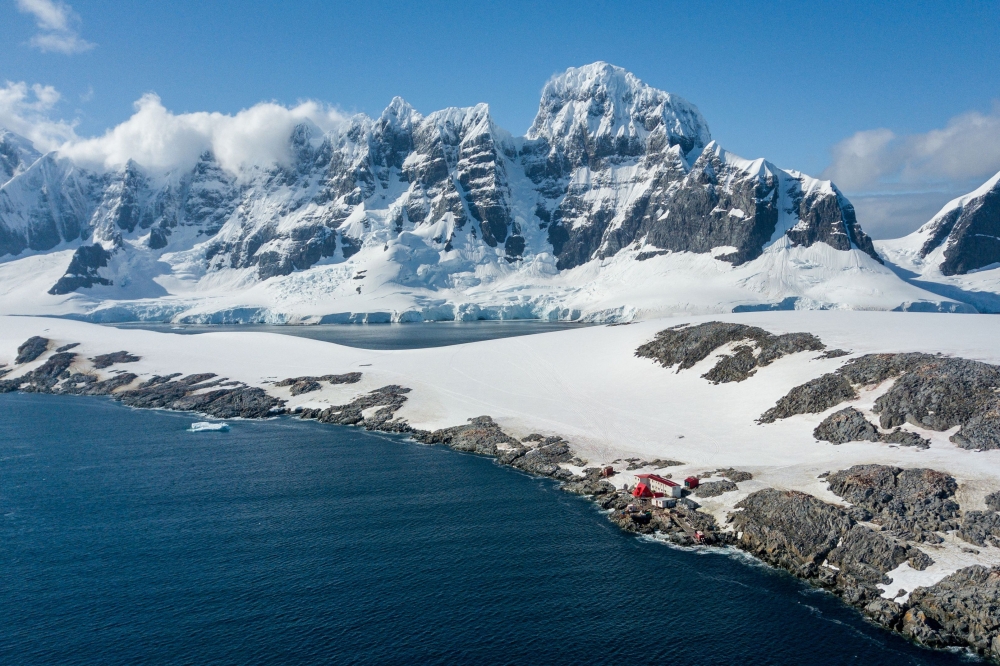
This handout picture released on August 20, 2025, by the University of Santiago USACH, shows an aerial view of Antarctica during a study led by a team of Chilean scientists of the University of Santiago with researchers from the Netherlands and Germany, to determine the presence of heavy metals in Antarctica due to the increase in tourism in the area. — Jose Jorquera/University of Santiago USACH handout pic via AFP

This intellectual siloing is the field’s greatest vulnerability. When these groups don’t speak to each other, the scholarship risks becoming a cacophony of disconnected insights. A diplomat negotiating a climate accord might overlook the deep-seated structural inequalities in global science that a critical STS scholar would highlight. A policymaker designing a “science for development” initiative might fail to account for the geopolitical rivalries that an international relations expert could predict. We are generating more knowledge than ever about science diplomacy, yet we are doing a poor job of synthesising it into a coherent framework that can guide effective action.

The study’s finding of a global, yet unevenly distributed, research landscape is another critical takeaway. While science diplomacy scholarship is emerging from institutions across the Global South, the intellectual epicenters, the most cited authors, and the dominant journals remain overwhelmingly Western. This is a paradox at the heart of the field. Science diplomacy is often championed as a tool for equitable, transnational cooperation, yet the very scholarship meant to understand it risks replicating the very hierarchies of power it seeks to navigate. If the “science” in science diplomacy is increasingly global, but the “diplomacy” in its study remains parochial, we are building a toolkit for a world that no longer exists.

So, what is to be done? The real-world implications are urgent. For governments, this fragmentation means that investing in science diplomacy without also investing in the intellectual infrastructure to understand it is like pouring money into a high-tech engine with no dashboard. We need “science diplomacy translators” — experts who can bridge the gap between the lab, the ministry, and the negotiating table, informed by a synthesis of these disparate scholarly traditions.

For the research community, the challenge is to move beyond case studies and towards more rigorous, comparative, and interdisciplinary work. The next wave of scholarship shouldn’t just ask “is science diplomacy happening?” but rather “under what conditions does it succeed?” and “who truly benefits?” This requires methodological courage: combining network analysis with ethnographic fieldwork, and quantitative bibliometrics with qualitative interviews with policymakers and researchers in Jakarta, Nairobi, and Brasília, not just in Washington and Brussels.

The rise of science diplomacy is a reflection of a world where the boundaries between knowledge, power, and governance have fundamentally blurred. Rüland, Andersen, Hassen, and Kinyanjui have done more than just chart a research field; they have provided a mirror to this new reality. Their findings reveal a dynamic, vital, but dangerously fragmented landscape. The next step is up to both scholars and policymakers: to decide whether to continue operating in their separate silos, or to build the bridges needed to ensure that the promise of science diplomacy — to harness knowledge for a more stable and equitable world — isn’t lost in translation.

* The author is affiliated with the Tan Sri Omar Centre for STI Policy Studies at UCSI University and is an Adjunct Professor at the Ungku Aziz Centre for Development Studies, Universiti Malaya. He can be reached at ahmadibrahim@ucsiuniversity.edu.my.  

** This is the personal opinion of the writer or publication and does not necessarily represent the views of Malay Mail.  

  •  

National Economic Action Council urges local authorities to cut rental rates for traders

Malay Mail


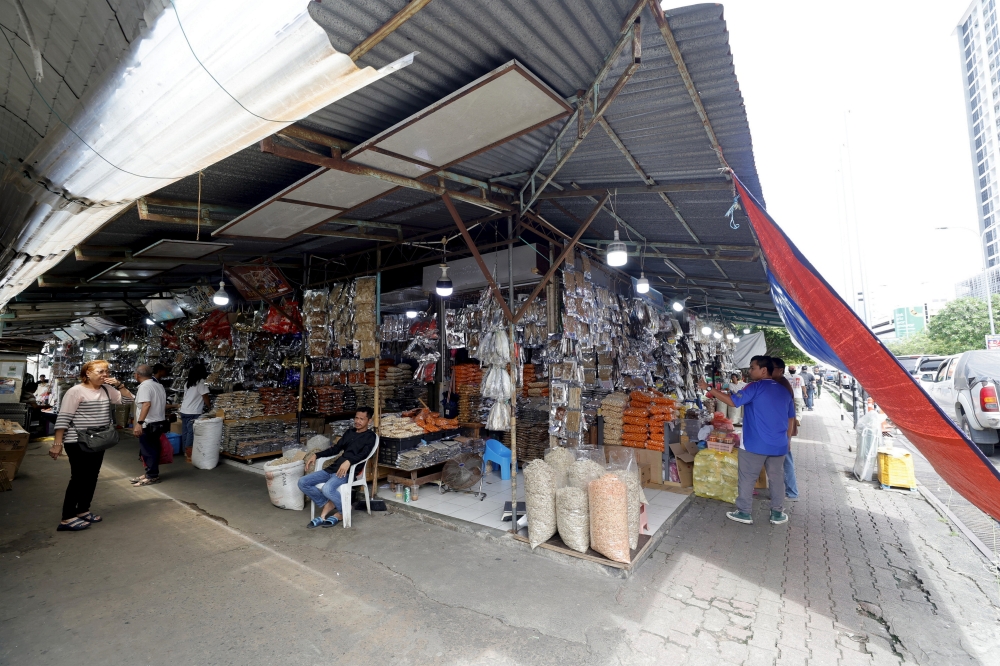
KUALA LUMPUR, May 12 — The National Economic Action Council (MTEN) has urged local authorities and state governments nationwide to immediately reduce rental rates for premises and shops under their management.

Economy Minister Akmal Nasrullah Mohd Nasir Akmal said the move is crucial to help petty traders, night market operators and micro-entrepreneurs cope with rising operating costs, which now account for an average of seven to 58 per cent of their total business expenses.

“They are exposed to weak cash flow and often rely on a single source of income. Without intervention, the risk of business closures could increase significantly,” he said during the online briefing on the global supply crisis today.

He said the initiative has already been rolled out by federal agencies such as the Majlis Amanah Rakyat (MARA), which is offering a 20 per cent rental reduction for 7,135 of its premises starting this month.

Meanwhile, he said Kuala Lumpur City Hall (DBKL) is offering a 50 per cent rental cut for selected hawker stalls until December 2027.

“This can be implemented in a targeted way, depending on the capacity of each local authority. The aim is to ensure petty traders can keep operating, ease their burden and pressure, ensure workers continue to earn, prevent premises from standing empty and keep local economic activity going,” he said.

For the services sector, Akmal Nasrullah said the Services Producer Price Index rose 2.1 per cent in the first quarter of 2026, driven by higher prices in the accommodation, food and beverage, and transport subsectors.

“This trend suggests that cost pressures are now starting to spill over into sectors closer to consumers,” he said.

On the cost of living, he said that while overall food prices remain under control, there has been a slight upward trend in some items from May 4 to 6.

He cited examples such as mackerel, which rose from RM16.76 to RM17.42 per kg, while white prawns increased by 1.2 per cent to RM32.11 per kg.

Also seeing price increases were mustard greens, up 4.0 per cent to RM7.23 per kg, and fresh coconut milk, which rose 6.7 per cent to RM16.88 per kg.

“Although statistics show that food prices remain largely under control, the Prime Minister (Datuk Seri Anwar Ibrahim) and MTEN members have expressed concern that some groups, especially in rural areas, are already feeling the pressure of rising daily prices,” he said.

In this regard, he said MTEN has agreed that the Chief Secretary to the Government, together with all ministry secretaries-general, should coordinate government initiatives and assistance to ensure they reach target groups, especially the poor and vulnerable.

Meanwhile, he said people are increasingly shifting towards more cost-effective lifestyles, with rail passenger numbers rising 7.6 per cent and bus ridership up 10.3 per cent in April compared with the previous month.

For electricity consumption, Akmal Nasrullah said average peak demand for May 4 to 10 rose slightly by 1.4 per cent to 20,097 megawatts, compared with 19,815 megawatts the previous week, noting that the trend suggests electricity consumption remains under control despite unpredictable weather conditions.

“This trend shows that people are starting to adjust their travel patterns and daily spending towards more cost-effective choices, and in the face of volatile global costs, even small shifts like these are important in easing household financial pressure,” he said. — Bernama

 

  •  
❌