Reading view

Lahore court grants interim pre-arrest bail to PM's daughter, son-in-law in Saaf Pani case

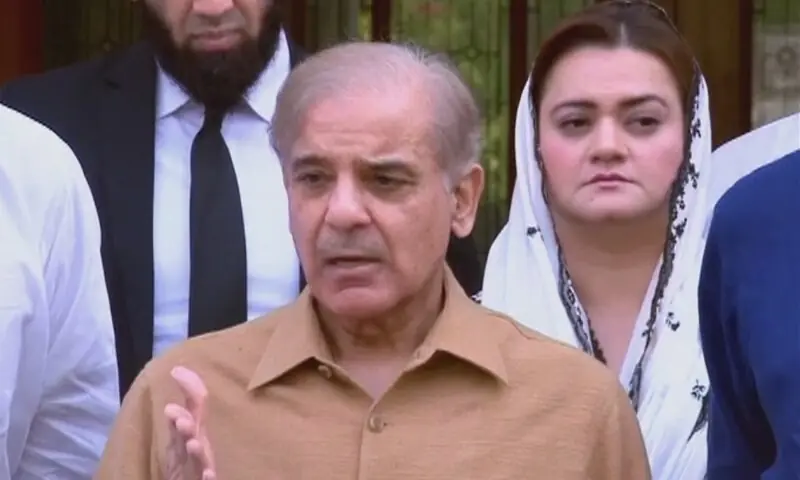
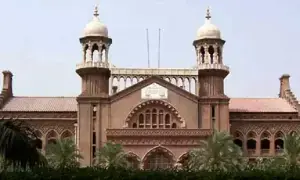
LAHORE: An anti-corruption court on Thursday granted interim pre-arrest bail of Prime Minister Shehbaz Sharif’s daughter Rabia Imran and her husband Ali Imran Yousaf in a case of alleged irregularities in the Punjab Saaf Pani Company (PSPC).

The couple appeared before the court, where Judge Javed Iqbal Warraich presided over the proceedings.

The court allowed the bail petitions and sought a reply from the Anti-Corruption Establishment (ACE) by the next hearing on May 4.

The couple had earlier been declared proclaimed offenders due to their absence from the country. They later approached an accountability court, which last week suspended their arrest warrants and allowed them to surrender before the law.

However, the case was transferred to the anti-corruption court as the accountability court lost jurisdiction following amendments to the National Accountability Ordinance.

The couple was accused of getting illegal monetary benefits by renting out their building to PSPC to establish its office.

Other suspects, including PM Shehbaz and senior bureaucrats, have already been acquitted in the case.

The Saaf Pani scam had surfaced after the National Accountability Bureau (NAB) had launched a thorough probe in November 2017 into alleged corruption in the 56 public-sector companies, including the PSPC, formed by the administration in Punjab led by Shehbaz at the time.

These companies were accused of certain irregularities, recruitment in violation of procurement rules and merit, nepotism, and non-completion of various projects in time.

NAB had launched a probe against Yousaf, accusing him of getting Naveed Akram appointed as chief financial officer of PSPC in violation of merit. Akram was also accused of transferring Rs120 million to Yousaf’s account.

Imran and her husband also secured interim pre-arrest bail in a money laundering case on Tuesday from a special court.

Judge Ashfaq Ahmed heard and allowed the bail petitions of the couple, subject to submission of surety bonds, and restrained the Federal Investigation Agency (FIA) from arresting them till May 7.
  •  

LHC dismisses PTI leaders' pleas seeking suspension of sentences in May 9 cases

LAHORE: A Lahore High Court (LHC) division bench on Tuesday dismissed the applications of PTI leaders Ejaz Chaudhry and Mian Mahmoodur Rashid seeking suspension of their sentences as an interim relief in multiple cases related to the May 9 riots.

Justice Syed Shahbaz Ali Rizvi and Justice Tariq Mahmood Bajwa heard the pleas of the incarcerated PTI leaders.

The PTI leaders had filed appeals challenging their conviction in the May 9 cases alongside applications seeking the suspension of the sentence as an interim relief.

However, the bench dismissed the pleas for interim relief and adjourned the hearing on the main appeals.

Separately, the bench also allowed a similar application filed by PTI leader Afzal Azeem Pahat and suspended his sentence.

Senior PTI leaders, including Chaudhry, Rashid, Dr Yasmin Rashid and Omer Sarfraz Cheema, have been handed down sentences by the anti-terrorism courts in five cases pertaining to violent protests in the country on May 9, 2023, including an attack on the Shadman police station, violence at Sherpao Bridge, the burning of police vehicles and the torching a Supreme Court judge’s squad vehicle near Jinnah House.

The convictions involve charges including abetment of violence and criminal conspiracy, with each accused awarded an average sentence of 10 years’ imprisonment in the respective cases.

It should also be mentioned that Chaudhry, who is a former senator, has been suffering from heart and kidney disease. Over the weekend, the Punjab government had allowed his medical check-up at the Punjab Institute of Cardiology, which revealed that the condition of his kidneys had further deteriorated.

  •  

Lahore court grants interim bail to PM's daughter, son-in-law in money laundering case

LAHORE: A special court (central) on Tuesday granted interim pre-arrest bail to Prime Minister Shehbaz Sharif’s daughter, Rabia Imran and her husband Imran Yousaf in a money laundering case.

The couple personally appeared before the court along with their counsel.

Judge Ashfaq Ahmed heard and allowed the bail petitions of the couple, subject to submission of surety bonds, and restrained the Federal Investigation Agency (FIA) from arresting them till May 7.
Last week, an accountability court had suspended the perpetual arrest warrants issued against the prime minister’s daughter and son-in-law in a case related to alleged irregularities in the Punjan Saaf Pani Company.

The court had accepted their request to surrender before it and directed both of them to appear on May 5.

An accountability court had issued perpetual warrants for their arrest in 2021 and 2022.

Lahore’s National Accountability Bureau (NAB) had filed a reference against PM Shehbaz and 20 others in connection with the Saaf Pani Company case.

The accountability court had subsequently allowed the acquittal pleas of the prime minister and others.

  •  

Father must pay child maintenance during trial, rules Lahore High Court

LAHORE: The Lahore High Court has upheld a conditional remand order in a family dispute, ruling that a father seeking to reopen ex parte proceedings cannot avoid paying maintenance — particularly to a minor child — during fresh trial proceedings.

Justice Raheel Kamran dismissed a petition filed by Faizan Kareem, who had challenged a Dec 18, 2025 order passed by an appellate court (additional district and sessions judge) in Ahmadpur East.

The appellate court had set aside earlier ex parte decrees and remanded the case to a family court for fresh adjudication, subject to the condition that the petitioner pay past and future maintenance as previously determined.

The dispute originated from a suit filed in 2022 by the petitioner’s estranged wife, Yasmin Khan, seeking maintenance for herself and their minor daughter, Bakhtawar. She alleged that the petitioner had expelled them from the home and failed to provide financial support.

The family court proceeded ex parte against the father and, in 2024, awarded Rs6,000 per month each to the wife and the child. Subsequently, the appellate court enhanced the maintenance to Rs10,000 per month, along with a 10 per cent annual increase for the child.

The petitioner later challenged the ex parte decree. His application was initially dismissed but was accepted on appeal. However, the appellate court remanded the matter to the family court for a fresh trial, subject to payment of maintenance.

The petitioner argued that he had divorced the respondent in 2017, rendering her ineligible for maintenance. He also contended that the maintenance amount was excessive and that the appellate court lacked jurisdiction to impose such a condition.

Justice Kamran rejected these arguments and drew a clear distinction between the rights of the minor child and those of the wife.

The judge ruled that a father’s obligation to maintain his minor child is absolute, continuous, and independent of the outcome of litigation. He observed that a child’s needs for food, education, and healthcare do not cease during legal proceedings.

Published in Dawn, April 24th, 2026

  •  

LHC upholds govt’s policy abolishing free electricity units for power sector employees

LAHORE: The Lahore High Court has upheld the federal government’s policy to monetise free electricity units for officers of the Water and Power Development Authority (Wapda) and power distribution companies, it emerged on Friday.

As per the ruling, the benefit was a non-statutory service perk and could be lawfully altered as part of administrative and financial reforms.

Justice Malik Javid Iqbal Wains announced the verdict dismissing a constitutional petition challenging a notification issued by the Ministry of Energy (Power Division) on December 5, 2023.

The impugned notification introduced a policy to monetise free electricity units previously provided to officers in BPS-17 and above working in Wapda and ex-Wapda entities, including distribution and generation companies.

Previously, officers from BPS-18 to 22 were given a total of 75 million units of electricity collectively, costing up to Rs4-4.5 billion annually.

Under the policy, officers are now required to pay electricity bills, while a fixed monetary amount — based on earlier entitled units — has been incorporated into their pay.

The petitioner — Gujranwala Electric Power Company Engineers & Officers Association — through its chairman, had argued that free electricity units formed part of their service conditions and had been consistently enjoyed since their induction.

Senior lawyer Ramzan Chaudhry represented the association during the proceedings and argued that the withdrawal of the facility was illegal, discriminatory and unconstitutional, particularly as lower-grade employees (BPS-1 to 16) continued to receive the benefit.

However, Assistant Attorney General Malik Tanvir Awan defended the federal government’s policy, stating that the move was aimed at financial rationalisation of the power sector, which is facing severe challenges, including circular debt and operational losses.

He maintained that the facility had not been withdrawn but merely converted into a monetary component to streamline administrative processes, reduce inefficiencies and address issues such as delayed recoveries and duplication.

In his judgment, Justice Wains framed a key question as whether free electricity units constituted a vested or statutory right enforceable through constitutional jurisdiction.

The judge ruled that the facility of free electricity units was a service-linked privilege, not a statutory or vested right.

No legal provision or statutory rule was presented to establish the benefit as an enforceable entitlement, the judgment said.

In the judgment, Justice Wains observed that the monetisation policy was a legitimate executive decision, taken as part of broader financial restructuring and did not suffer from illegality or arbitrariness.

Rejecting claims of discrimination, he held that officers in BPS-17 and above constitute a distinct cadre and that differential treatment based on reasonable classification does not violate constitutional guarantees.

Justice Wains concluded that economic and fiscal policy decisions fell within the executive’s domain and courts cannot substitute their judgment unless a clear constitutional violation is demonstrated.

The judgment cautioned against judicial overreach, noting, “Interference of this nature would also run contrary to the doctrine of separation of powers.” The judge also dismissed arguments that the impugned policy violated fundamental rights.

“Accordingly, the impugned notification dated Dec 5, 2023, [..] does not warrant any interference by this court and the same is hereby upheld,” the judgment concluded.

Meanwhile, Power Minister Awais Leghari welcomed the development in a post on X, stressing that abolishing the benefit was a “very old and long-standing demand of the people”.

“Alhamdulillah, for the first time in the history of Pakistan, under the leadership of Prime Minister Shahbaz Sharif, the free units of the power sector employees have been abolished,” the minister said.

He vowed that the power sector “will take every step for the collective betterment of the country and the nation”.


Additional input from Khaleeq Kiani

  •  

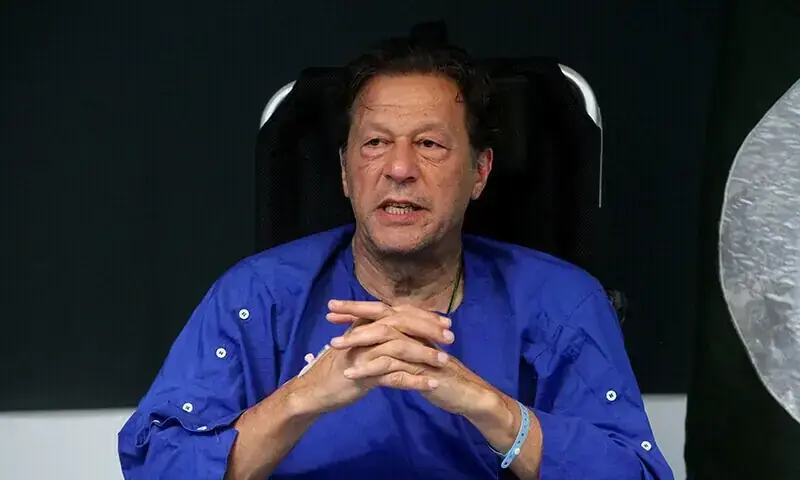
Lahore lawyers demand end to Imran’s solitary confinement

LAHORE: The Lahore High Court Bar Asso­cia­ti­­on (LHCBA) and the Lah­ore Bar Association (LBA) on Tuesday condemned the solitary confinement of PTI founding chairman Imran Khan and deman­ded that his isolation be ended.

The sitting and former office-bearers of both bar associations, currently led by the Hamid Khan-led professional group, held a joint press conference, criticising the solitary confinement of the former prime minister.

Senator Hamid Khan said that the government was targeting Imran Khan through political victimisation as he was not being allowed to meet anyone.

PTI MNA Advocate Sar­dar Latif Khosa demanded that the solitary confinement be ended and Mr Khan be allowed to meet his personal physician and sisters.

LHCBA President Babar Murtaza Khan said if the government could facilitate negotiations between the United States and Iran, it should also be able to engage with its own political leadership.

LBA President Irfan Hayat Bajwa said the constitutional rights of every prisoner and citizen must be respected, adding that prisoners’ rights are also clearly defined under international protocols.

Barrister Salman Safdar, the counsel for Imran Khan, said that the failure to timely hear the cases of the PTI founder and his wife was alarming.

The counsel said he was not being allowed to obt­a­­in a duly signed “vakalatnama” (powers of attorn­­ey) from his client. He qu­­estioned how cases could be pursued in courts without a power of attorney.

He argued that no citizen can be deprived of the right to defend themselves in legal proceedings.

Published in Dawn, April 15th, 2026

  •  

LHC sets aside ruling that struck down policy for regulating foreign funding of NGOs, NPOs

LAHORE: The Lahore High Court on Monday set aside a ruling that had struck down a federal government policy introduced in 2022 to regulate foreign funding of non-governmental and non-profit organisations.

The policy was set aside by a single bench in September 2024, with Justice Asim Hafeez observing the constitutional scheme did not envisage the exercise of legislative powers by the federal cabinet unless such power or authority was exercised under the authority of the legislature.

He had declared the policy unlawful, invalid and of no legal effect.

But a two-member bench comprising Justice Chaudhry Muhammad Iqbal and Justice Syed Ahsan Raza Kazmi observed today that such policy-making squarely fell within the executive domain and was protected from “undue judicial interference”.

The bench restored the Policy for Local NGOs/NPOs Receiving Foreign Contributions 2022.

Multiple intra-court appeals were filed by the federation in the wake of a Sept 6, 2024 judgment.

Advocate Saqib Jillani, who represented the petitioners, argued that the 2022 policy, like an earlier 2013 framework struck down by courts, lacked statutory backing and violated constitutional protections, including the right to freedom of association and business.

The federal government, represented by Additional Attorney General Mirza Nasar Ahmad, challenged the single-bench ruling, maintaining that the policy had been duly approved by the federal cabinet and issued in accordance with the Rules of Business, 1973.

The division bench framed two central questions: whether the federal government had the authority to formulate policies regulating NGOs receiving foreign contributions, and whether constitutional courts could interfere in such policy decisions under writ jurisdiction.

The bench answered both questions in favour of the government.

The bench held that under Articles 90 and 99 of the Constitution, the federal government was fully empowered to conduct its business and formulate policies.

It maintained that the Rules of Business, 1973 — framed under constitutional authority — provide a binding procedural framework for decision-making.

The bench noted that the 2022 policy was approved by the federal cabinet, and issued by the ministry of economic affairs, which was competent to regulate foreign assistance.

The bench described the policy as a comprehensive regulatory instrument governing the receipt, utilisation, monitoring and accountability of foreign contributions by NGOs.

On the question of judicial review, the bench reiterated settled law that courts should exercise restraint in policy matters unless they violated fundamental rights, the Constitution, the statutory laws or were made in bad faith.

“In the absence of such violations, policy-making remains the exclusive domain of the executive,” the bench observed.

The bench further ruled that the single judge had incorrectly invoked Article 18 (freedom of trade and business), holding that the matter instead fell within the domain of Article 99 of the Constitution, which governs the conduct of federal government business.

  •  
❌