Reading view

Lahore Bar Association moves SC against 27th Amendment following transfer of IHC judges

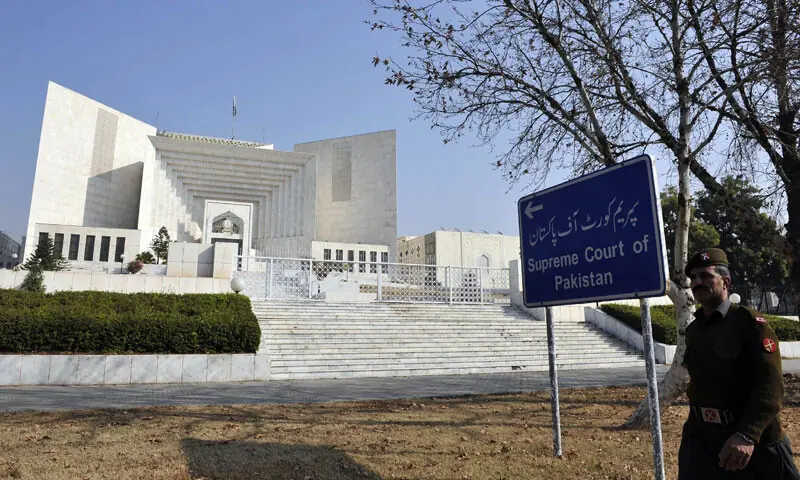
ISLAMABAD: A day after the government notified the transfer of three Islamabad High Court (IHC) judges to other high courts, the Lahore Bar Association (LBA) moved the Supreme Court on Thursday to challenge the constitutionality of the 27th Constitutional Amendment under which these transfers were made.

On Tuesday, the Judicial Commission of Pakistan (JCP) approved the transfer of three judges from the IHC to other courts in a move that drew sharp criticism from lawyers’ bodies for lacking transparency and uniform criteria.

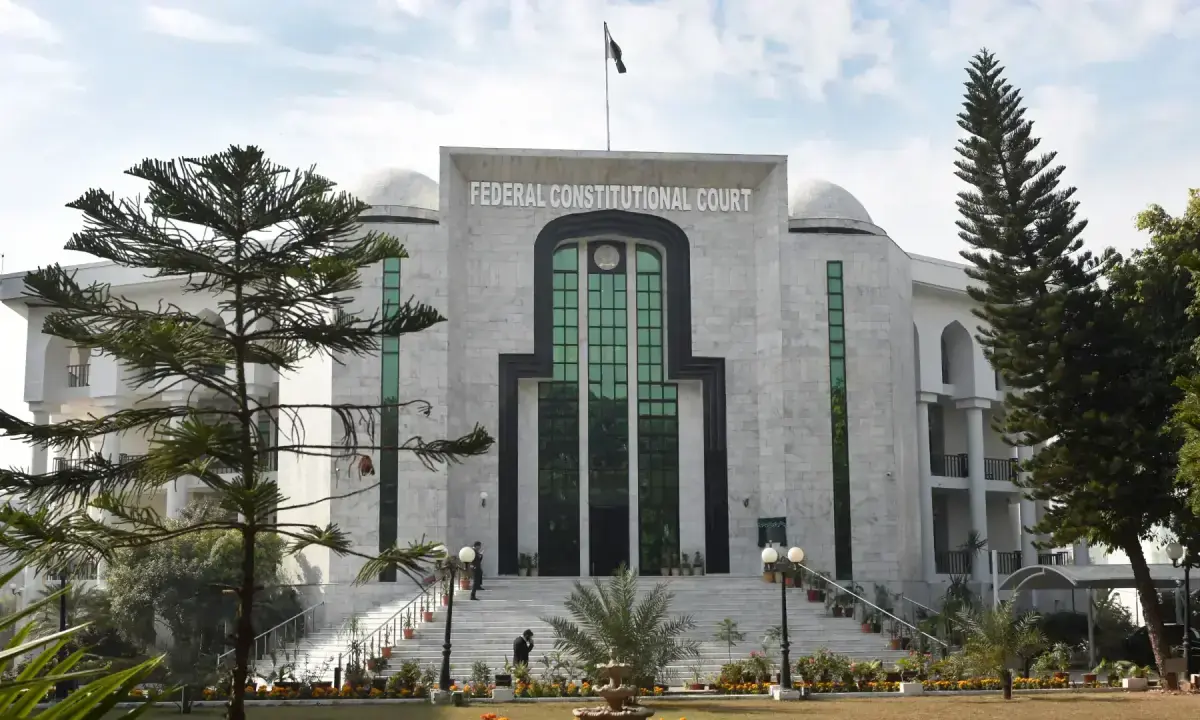
Senior counsel Hamid Khan approached the SC, instead of the Federal Constitutional Court (FCC), on behalf of LBA President Irfan Hayat Bajwa, seeking a declaration that the recent transfer of three judges from the IHC to other high courts is unconstitutional and of no legal effect.

The bar association also requested the SC to declare the omission and repeal of Article 184(3) of the Constitution — an inherent jurisdiction of the SC for the enforcement of fundamental rights but now repealed — through the 27th Amendment as void, unconstitutional and of no effect, being against the basic/salient features of the Constitution.

The petition has also sought a declaration that the now-inserted Article 175(2) — as amended by the 27th Amendment — was void and unconstitutional, and that its formation was also unconstitutional, as it was against the constitutional fundamentals, which the parliament had no power to change or amend.

In the absence of any substantive and disclosed reasons, criteria, or demonstrable institutional necessity, the transfers of IHC judges are unlawful and liable to be declared arbitrary, mala fide in law, and based on extraneous considerations, the petition pleaded.

Similarly, it stated that the transfers had been made without any disclosed reasons, criteria, or demonstrable public interest, thereby rendering the exercise of power arbitrary, opaque, and liable to be set aside.

The Constitution does not contemplate an unstructured or ad hoc exercise of transfer powers; rather, in the present scenario involving multiple transfers, there was a pressing need for a structured, periodic, and across-the-board rotation policy, based on uniform and transparent criteria through law or subordinate legislation, which is conspicuously absent, the petition prayed further.

The petition also argued that the purported 27th Amendment omitted Article 184(3), under which the SC has original jurisdiction to enforce the Constitution and fundamental rights of the people, and that the judicial power of the SC could not be taken away by another branch of the government, i.e., the parliament.

Such an amendment undermines the Constitution and destroys the independence of the judiciary, the petition contended.

The SC being an indivisible judicial institution at the apex, its powers and jurisdiction can not be taken away, the petition emphasised, adding the independence of the judiciary and its necessary parts/concomitants were the appointments, transfers and removal of judges of the superior courts form part of the basic features of the Constitution which were unamendable.

Article 200, having been amended by the parliament, lacked the constituent power as it lacked the mandate and the authority to pass an amendment that destroyed the judicial branch of the government, making it a subservient institution to the executive, which is the biggest violator of people’s rights and mandate, the petition said.

The petition also explained that judges of the FCC, being the beneficiaries and judges in their own cause, and also the creation and its jurisdiction having been challenged through this petition, cannot hear and decide the constitutionality of the 27th Amendment and matters arising thereunder.

Moreover, the action of transfer of judges of IHC under Article 200 as amended by the 27th Amendment cannot be heard by “so-called FCC”, being itself a creation of that amendment, the petition argued.

The petition alleged that the 27th Amendment was a fraud on the electorate and people of Pakistan since neither any of the political parties nor any other member of Parliament had the mandate to vote for the amendment, as they had not been given the mandate to do so by the people.

Nor was it a part of their election(s) manifestos, nor did they have the power to amend the Constitution, as their authority, being a trust as enjoined in the preamble to the Constitution, read with the Objectives Resolution of 1949, which was now a substantive part of the Constitution, could undermine and destroy the independence of the judiciary, the petition stated.

The transfer of judges suffers from the absence of institutional necessity, and in the absence of justification, such actions assume a punitive character, effectively amounting to the removal or sidelining of Judges without due process of law, the petition argued.

Transfer of judges

The transfers from the IHC follow an amendment to Article 200 of the Constitution, which empowers the JCP to recommend such transfers without requiring the consent of the judges concerned. Prior to the amendment introduced through the 27th Constitutional Amendment, a judge’s consent was mandatory for transfer from one high court to another. The revised provision has now vested this authority in the JCP.

It also stipulates that a judge who refuses to accept a transfer may face proceedings under Article 209 before the Supreme Judicial Council.

The transferred judges were among the six who had, in a startling letter written to Supreme Judicial Council members in March 2024, accused the country’s intelligence apparatus of interference in judicial affairs, including attempts to pressure judges through abduction and torture of their relatives and secret surveillance inside their homes.

They were also among the five judges who had formally opposed in February 2025 the then-potential transfer of then-LHC Justice Dogar, warning that his elevation as the IHC chief justice would violate constitutional procedures and judicial norms.

Nevertheless, Justice Dogar was appointed as the acting IHC chief justice on Feb 13, 2025. The next day, he took the oath in a ceremony where all IHC judges were invited, but five of them — including those being transferred — did not attend the ceremony and boycotted it.

Following the development, the IHC went through a major administrative restructuring, which notably reduced the authority of senior puisne judge Justice Kayani — who previously held key decision-making roles — following amendments to the high court rules.

The IHC Administration Com­mittee, previously comprising the chief justice, the senior puisne judge and a senior judge, was restructured to include CJ Dogar and two of his nominees. This reconstitution significantly altered the court’s decision-making authority.

Justice Dogar later took his oath as the IHC CJ on July 8, 2025. And the five IHC senior judges who had opposed his transfer were sidelined in the subsequent reshuffling of key committees.

In September last year, the five judges had submitted separate petitions to the Supreme Court together against a number of issues affecting the court, from the composition of benches to rosters to case transfers.
  •  

SC emphasises impartiality of electoral officers, says any deviation imperils democratic order itself

ISLAMABAD: The Supreme Court on Wednesday affirmed that the discharge of electoral duties demanded scrupulous adherence to the law, transparency in action, and an unwavering commitment to impartiality.

“Any deviation from neutrality or departure from the statutory framework, during the election process, imperils not merely the outcome of a particular election, but the democratic order itself,” emphasised Justice Shakeel Ahmed.

Justice Ahmed observed that “only through these principles public confidence in the electoral process is sustained and the sovereign will of the electorate is preserved”.

Justice Ahmed was a member of the three-judge bench that overturned the Nov 24, 2025 Balochistan Election Tribunal’s ruling and had ordered the Election Commission of Pakistan (ECP) to notify Pakhtunkhwa National Awami Party’s (PNAP) Khushal Khan Kakar as the returned candidate from NA-251 (Sherani-cum-Zhob-cum-Killa Saifullah) for the February 8, 2024 general election.

Headed by Justice Shahid Waheed, the court had taken up a set of appeals moved by Kakar and his opponent, Syed Samiullah, of the Jamiat Ulema-i-Islam.

The controversy arose after the 2024 general election, where respondent Samiullah was initially declared the returned candidate by the ECP on Feb 18, having secured 46,210 votes against the appellant’s 46,117 votes.

Challenging this notification, Kakar filed an election petition before the Election Tribunal, which was partly allowed. The tribunal directed the ECP to carry out repolling at 22 disputed stations and declared the election of the returned candidate void.

In his detailed reasons, Justice Ahmad observed that the electoral functionaries are trustees of the people’s mandate and custodians of the integrity of the electoral process.

He explained that Form-45 constitutes a primary and contemporaneous record of votes counted at each polling station and is prepared immediately after completion of the counting process, in the presence of candidates or their duly authorised agents, and, therefore, carried statutory sanctity.

Form-48, by contrast, is merely a consolidated statement derived from the Forms-45, the judgment said, adding the returning officer (RO) exercises no adjudicatory authority to vary, substitute or recompute the result recorded in Forms-45, except to correct patent clerical mistakes apparent on the face of the record and strictly in accordance with law.

“The RO is bound to strict statutory duties, including neutral and transparent conduct of the election,” the judgment said, adding the RO must act as an impartial officer responsible for maintaining the integrity of the electoral process.

Justice Ahmad emphasised that RO must simply compile the result from Forms-45 into Form-48, but “cannot modify or alter the votes unless ordered or an obvious clerical or arithmetical mistake was discovered and corrected transparently in accordance with law”.

“The RO must also ensure that the record accurately reflects the votes polled”, the judgment said, adding: “If the RO deducts votes from a candidate and adds them to another without lawful authority, the act constitutes tampering with election results, abuse of statutory process and violation of election laws.”

Such conduct has “materially affects the election results and undermined the democratic process”, Justice Ahmad regretted.

The discrepancy between Forms-45 and Forms-48, in the present case, indicates a serious irregularity. By reducing the votes of the appellant and adding them to his rival/the respondent, the RO appears to have exceeded his statutory powers and possibly acted with malafide intent, Justice Ahmad regretted.

Such an alteration, which completely reversed the election results, materially affects the outcome of the elections and undermines the integrity of the electoral process, he said.

Justice Ahmed further said that the controversy brought before the SC strikes at the very heart of Constitutional democracy and the sanctity of the ballot. In a constitutional order founded upon representative governance, the legitimacy of public institutions ultimately rests upon the integrity, transparency and credibility of the electoral process.

Where doubts arose, whether the will of the electorate, as expressed at the polling stations, has been faithfully carried through the statutory process of consolidation, the matter assumes significance beyond the fortunes of individual candidates, he said.

Justice Ahmad reminded that Article 218(3) of the Constitution enjoins upon ECP the solemn and non-negotiable duty to organise and conduct elections honestly, justly and fairly, and to vigilantly guard against corrupt practices.

“This constitutional command is not directory, but mandatory. Any manipulation at the stage of vote consolidation erodes democratic legitimacy and shakes the foundations of the people’s mandate,” he said.

An administrative officer cannot be allowed to substitute his arithmetic for the sovereign will of the electorate. Where the true count of votes is evident from uncontroverted Forms-45, duly acknowledged by ECP, no shadow can be cast upon their authenticity, Justice Ahmad said.

He also emphasised that the SC was not powerless; where the evidence conclusively demonstrates that the appellant secured a lawful majority, the proper course was not to direct a re-poll, but to declare the appellant duly elected.

“The law neither condones manipulation nor permits its fruits to endure. Tampering at the consolidation stage by the RO is even more perilous than irregularities at the polling station,” Justice Ahmad emphasised.

  •  

NJPMC issues guidelines for AI use in judicial institutions

ISLAMABAD: The National Judicial Policy Making Committee (NJPMC) on Wednesday formally issued national guidelines for the use of artificial intelligence (AI) in judicial institutions, the Supreme Court said.

In a press release issued by the SC, the guidelines, approved by the NJPMC in its 57th meeting, established a clear, principled and forward-looking framework for integrating AI into judicial processes across the country.

“At a time when courts faced mounting caseloads and increasing demands for efficiency and transparency, the guidelines positioned AI as a powerful assistive tool — one that enhances judicial performance while firmly preserving human judgment, constitutional safeguards, and judicial independence,” the statement said, calling it a landmark step toward modernising the justice system.

The key highlights of the guidelines include a human-centric approach through which AI would assist — and not replace — judicial decision-making, ensuring judges remained the “ultimate arbiters”.

Likewise, it will promote ethical and transparent use, providing strong safeguards against bias, with emphasis on explainability and accountability.

On data protection, strict adherence to privacy and data security standards for litigants and stakeholders will be maintained, whereas AI-enabled support in case management, legal research, predictive analytics and document processing will ensure practical applications.

The guidelines will help capacity building, for which structured training for judges and court staff to responsibly adopt emerging technologies will be employed, the statement said.

It said that the framework was developed through an extensive consultative process led by the National Judicial Automation Committee (NJAC), headed by SC’s Justice Muhammad Ali Mazhar, adding that it incorporated feedback from all high courts and expert institutions.

“It also aligns with international best practices while remaining firmly rooted in Pakistan’s constitutional and institutional context,” the statement said.

Importantly, while setting a unified national standard, the guidelines respect the administrative and judicial autonomy of high courts, enabling each jurisdiction to tailor implementation according to its specific needs and capacities, the statement said.

“The initiative marks a significant milestone in Pakistan’s judicial reform journey — striking a careful balance between technological innovation and the enduring principles of justice, fairness and independence,” the statement concluded.

  •  

FCC suspends LHC decision that set aside govt's authority to render passports inactive

ISLAMABAD: The Federal Constitutional Court (FCC) on Monday suspended the Lahore High Court’s (LHC) December 23, 2025, decision declaring key provisions of the Passport Rules 2021, which allowed the government to render a citizen’s passport inactive and impose long-term travel bans on deportees and human trafficking suspects, as ultra vires.

With the suspension of the LHC order, the federal government’s authority to inactivate passports and slap long-term travel bans stands restored for the time being, until the top court concludes the dispute in its final judgment.

Headed by Justice Syed Hasan Azhar Rizvi, a three-judge FCC bench that had taken up an appeal moved by the Directorate General of Immigration and Passports (DGIP), issued notices to the respondents, including a citizen named Farhan Ali, the additional director general of immigration at the Federal Investigation Agency (FIA), the FIA Multan Circle deputy director and the director of the FIA regional office in Multan.

The dispute arose when Ali, who hails from Vehari, was deported from Iran. Following his deportation, the FIA recommended that his name be placed in the Passport Control List (PCL). Consequently, the DGIP inactivated his passport and imposed a travel restriction of five years.

He then challenged the inactivation of his passport before the LHC Multan Bench, which, on Dec 23, 2025, ruled in his favour with an observation that the power to inactivate a passport under Rule 23 of the Passport Rules 2021 was beyond the scope of Section 8 of the Passport Act, 1974 and, therefore, ultra vires.

Moreover, the LHC ruled that the imposition of a travel ban or restriction for five years or more under Rule 22(2)(c) was substantially ultra vires of the parent Act, adding that the power to cancel, impound, or confiscate a passport did not inherently include the power to inactivate it.

Meanwhile, the DGIP, in its appeal before the FCC, argued that the LHC declared Rule 22(2)(c) as ultra vires when Ali had never challenged this specific rule in his original writ petition.

The FIA also emphasised that the respondent was deported from Iran and the relevant record showed that he exited the country illegally and violated the immigration laws of a foreign country, in addition to the international law of immigration.

“Pakistan, as a responsible state, has endorsed the United Nations Convention on Transnational Organised Crime, 2000 and signed the protocol for the UN Protocol to Prevent, Suppress and Punish Trafficking in Persons, which is the world’s primary legal instrument to combat human trafficking,” the DGIP’s petition highlighted.

Hence, it is the responsibility of the state to discourage persons who are illegally going abroad and distorting the image of the country. Besides, it was the policy of the government that the person who had caused disrepute to the country at large cannot be allowed to take leverage on the pretext of employment abroad, it contended.

During Monday’s hearing, Justice Rizvi wondered whether the matter was related to those who went abroad illegally, or travel by using “dunki” — often used as a blanket term for all informal migrations.

Additional Attorney General (AAG) Chaudhry Aamir Rehman, who represented the government, contended that Ali’s name was included in the PCL because he was deported from Iran.

Meanwhile, the petition contended that under Section 11 of the Passport Act, 1974, the federal government had the power to delegate functions to the director general of immigration, who framed the Passport Rules 2021. Therefore, Rule 23 was legally valid, it said.

Citing Section 21 of the General Clauses Act, 1897, the petition argued that the power to cancel, impound, or confiscate inherently included the power to “inactivate” – just as the power to create includes the power to modify or revoke.

The petition recalled how the Supreme Court in a human rights case in 2017-18 had directed the formation of standard operating procedures to blacklist human traffickers and deportees, including the cancellation of passports and placement on a blacklist for a specific period.

The petition contended that restricting travel for deportees was consistent with international commitments, adding that the right to travel abroad was not absolute under Article 15 of the Constitution.

The petition pleaded before the FCC to set aside the LHC’s order by rejecting Ali’s original writ petition. The petition urged the court to declare that the placement of an individual’s name on the PCL for five years under Rule 22(2)(c) was not arbitrary or ultra vires.

  •  

CJP says transferring judge back to SHC would render key constitutional ideals redundant

ISLAMABAD: Chief Justice of Pakistan (CJP) Yahya Afridi, who also serves as the chairperson of the Judicial Commission of Pakistan (JCP), has observed that granting the transfer of Justice Khadim Hussain Soomro from the Islamabad High Court (IHC) back to the Sindh High Court (SHC) would render key constitutional ideals — federalism and equitable representation — redundant.

Such a transfer will also reduce the appointments of judges to merely a temporary and reversible administrative arrangement, the CJP feared in his response to informal requests by IHC Chief Justice Sardar Muhammad Sarfraz Dogar to requisition a JCP meeting for the transfer of five judges presently serving in IHC to other high courts.

The IHC chief justice had sought to convene a JCP meeting on April 28 to consider the transfer of senior puisne judge Justice Mohsin Akhtar Kiani to the Lahore High Court (LHC), Justice Babar Sattar to the Peshawar High Court (PHC), Justice Arbab Tahir to the Balochistan High Court (BHC) and both Justice Saman Rafat Imtiaz and Justice Khadim Hussain Soomro to the Sindh High Court (SHC).

Earlier, the CJP had declined the suggestions but on April 7, the JCP’s secretariat received by hand an undated requisition signed by five JCP members.

Article 175A (22) of the Constitution mandates the chairman of the commission to convene a meeting within 15 days if a requisition is signed by one-third of its members.

Referring to Justice Soomro, who was earlier transferred to the IHC from the SHC under Article 200 of the Constitution in February 2025, the CJP, in his response, said seeking the transfer of the same judge out of the IHC defeats the very objective of promoting the ideals of federalism, inclusivity, and equitable representation within the superior judiciary.

Such a course, if acceded to, would render the conscious preservation of constitutional ideals, namely federalism and equitable representation, redundant and denude it of all practical effect, reducing it to merely a temporary and reversible administrative arrangement, the letter regretted.

Thus, the request is fundamentally inconsistent with the very purpose of earlier transfers of three judges to the IHC in Feb 2025.

The CJP reminded that at the time of three transfers to IHC in 2025, it was expressly noted that their transfers from different high courts to the common capital of the federation, i.e. the IHC, was an initiative that aligns with the spirit of federalism enshrined in the Constitution.

The thoughtful consideration given to the linguistic characteristics and equitable representation of all federating units in IHC reflects a commitment to inclusivity and adherence to constitutional ideals, the letter reminded.

CJP Afridi said the requisition, which seeks to transfer Justice Soomro and Justice Imtiaz, both of whom belong to Sindh, to SHC, would result in Sindh being left without any representation in IHC.

Moreover, the request for transfers is not accompanied by any articulated reasons or apparent institutional necessity that would strongly justify the same, the CJP reminded, adding in his view, when a transfer request is unaccompanied by any articulated reasons or apparent institutional necessity, as in the present case, it assumes in its effect and consequence, a penal character resulting in the de facto removal of a judge from office.

The letter highlighted that the requisition seeks to transfer five out of nine existing IHC judges without seeking in exchange the transfer of judges from other high courts to fill the vacancy.

Such a transfer would create multiple vacancies in IHC, potentially leading to further requests for fresh appointments.

Seeking the transfer of more than half of the existing strength of the IHC would inevitably result in judicial uncertainty in filling these want only created vacancies and thus would erode public trust in the safe and efficient administration of justice at the IHC.

Under the scheme of the Constitution, this approach cannot be sustained. The Constitution provides a specific and exhaustive mechanism for addressing matters that may warrant adverse consequences against a judge, including removal from office under Article 209, through proceedings before the Supreme Judicial Council, the CJP observed.

When viewed through the lens of the constitutional scheme set out in Article 209, the present request becomes untenable, CJP Afridi emphasised.

A transfer which, by reason of its context, absence of justification, or penal character, operates as a removal from office cannot be insulated from this constitutional mandate merely by the label attached to it.

To permit such a transfer would be to allow, in substance, what the Constitution expressly forbids in form: the displacement of a judge from office through a route other than that mandated by Article 209, the letter said.

The proposed transfer, insofar as it carries a penal character and results in an effective removal, therefore stands in direct conflict with the exclusive constitutional mechanism governing judicial accountability, the CJP emphasised.

Crucially, it is clarified, CJP Afridi observed, where the substance of the present request effectively seeks to achieve through transfer what the Constitution entrusts to SJC to determine through inquiry and adjudication, such an approach cannot be countenanced.

Accountability, if that is the underlying concern, must be pursued strictly within the constitutional framework; it cannot be advanced indirectly through administrative measures that, in effect, operate as punishment without recourse to the constitutionally mandated process, the CJP said.

Finally, it must also be borne in mind that permitting such transfers would set an undesirable and potentially far-reaching precedent, effectively normalising the treatment of judges as administratively interchangeable or disposable.

Such an approach would carry serious implications for the institutional integrity of the judiciary, while also eroding public confidence in its independence and stability, the CJP said.

More importantly, the proposed transfers, if allowed, would in substance assume a punitive character vis-à-vis the transferred judges: an outcome that finds no sanction anywhere in the constitutional scheme governing the superior judiciary, is wholly alien to the purpose of Article 200 of the Constitution, and runs contrary to the foundational principles of judicial independence and security of tenure.

For the foregoing reasons, the requisition for convening JCP’s meeting for the purpose of transfer of the concerned judges of IHC cannot be acceded to, the CJP observed.

CJP Afridi, however, said that JCP’s secretary may proceed to convene the meeting pursuant to the requisition, as mandated under Article 175A (22) of the Constitution.

  •  

CJP Afridi openly opposes Judicial Commission of Pakistan meeting for judges’ transfer

• In letter to commission, Justice Afridi warns move will set ‘undesirable and potentially far-reaching precedent’
• Fears it will ‘erode public confidence’ in judiciary’s independence and stability
• Last year, he described transfer of three judges to IHC from different provinces under Article 200 as something to be ‘rejoiced’

ISLAMABAD: Chief Justice of Pakistan (CJP) Yahya Afridi has opposed the scheduled meeting of the Judicial Commission of Pakistan (JCP) being called to consider the transfer of five judges of the Islamabad High Court (IHC) to different high courts of the country.

Although the CJP had earlier declined to call the meeting of the JCP, he eventually scheduled the session after it was requisitioned by a two-thirds majority of the commission’s members, an informed source privy to the development confided.

The commission is scheduled to meet at 1pm on April 28, during which it may consider the contents of the CJP’s letter to the JCP in which he expressed his reservations as well as deliberate upon the transfer of five serving IHC judges to different provincial high courts.

In his letter, the CJP expressed concern that allowing transfers of sitting IHC judges would set an “undesirable and potentially far-reaching precedent, effectively normalising the treatment of judges as administratively interchangeable or disposable”.

Such an approach, the source stated while citing the CJP’s letter, would “carry serious implications for the institutional integrity of the judiciary”, thus “eroding public confidence” in its independence and stability.

Article 200 of the Constitution empowers the JCP to recommend transfers without the consent of the judges concerned. However, the consent of judges was mandatory before the 27th Constitution Amendment. The amended provision has now vested this authority in the JCP, where decisions are taken by majority vote, whether the CJP agrees or not.

It is believed that the judges under consideration for transfer include IHC’s senior puisne judge Justice Mohsin Akhtar Kayani, Justice Babar Sattar, Justice Arbab Muhammad Tahir, Justice Saman Rafat Imtiaz and Justice Khadim Hussain Soomro.

‘Rejoiced’

In one of his interactions with the media on Feb 3, 2025, the CJP had supported the idea of transferring judges to the IHC, even tho­ugh he acknowledged reservations regarding the seniority principle.

At the time, the CJP described the transfer of three judges to the IHC from different provinces under Article 200 as something to be “rejoiced”, setting a precedent that should be followed in the fut­ure. “The IHC is the symbol of four federating units and not merely a white marble building,” the CJP had observed while sharing his reason why he agreed with the proposal to transfer three judges to the high court. He had also read out a summary stating that the transfer of the judges from different federating units was fully “synchronised with the spirit of federalism as enshrined in the Constitution”.

“It is also in conformity with Section 3 of the Islamabad High Court (IHC) Act 2010… [there is] thoughtful consideration behind the proposal, [which] illustrates the resolve and equitable share to the linguistic diversity of our country and [a] fair chance of representation to all the federating units in the high court of the common capital of the federation i.e. [the] IHC,” the summary stated.

“Rejoice the fact that the IHC now has judges who are Balochi-speaking or Sindhi-speaking,” the CJP had emphasised, adding: “Had we had a judge from the tribal area in Peshawar, I would have asked to bring him to the IHC too.”

In his current letter to the JCP, the CJP is said to have stated that the proposed transfer of sitting judges out of the IHC would “in substance assume a punitive character” [and pave the way for] “an outcome that finds no sanction anywhere in the constitutional scheme governing the superior judiciary”.

“Besides, such transfer is entirely alien to the purpose of Article 200 of the Constitution and runs contrary to the foundational principles of judicial independence and security of tenure,” the CJP stated.

The CJP observed, the requisition for convening the JCP meeting for the purpose of transferring the IHC judges “could not be acceded to by the undersigned”. On June 19 last year, the SC’s Constitutional Bench, constituted under the 26th Constitutional Amendment, had, by a 3-2 majority, ruled that the transfer of three judges from provincial high courts to the IHC was in line with the Constitution.

Five IHC judges, the Karachi Bar Association, the IHC Bar Association and others had challenged the transfer of Chief Justice Sardar Mohammad Sarfraz Dogar, Khadim Hussain Soomro and Muhammad Asif from the Lahore, Sindh and Balochistan high courts, respectively, before the SC.

The controversy revolved around the alteration of the IHC judges’ seniority list after these transfers, as Justice Dogar was made the senior puisne judge, paving the way for his appointment as IHC chief justice after Justice Aamer Farooq’s elevation to the SC.

Published in Dawn, April 24th, 2026

  •  

Supreme Court adopts digital hearings across multiple cities

The Supreme Court (SC) said on Wednesday it has successfully integrated cutting-edge technology into its judicial processes, redefining how justice is delivered across the country.

The move is a decisive step toward a more transparent, accessible, and citizen-centric justice system, according to a court handout.

Harnessing digital innovation, the SC operationalised seamless multi-location hearings — bringing together benches, counsel and litigants from across Pakistan without geographical constraints.

In a recent landmark hearing, the bench convened at the Principal Seat in Islamabad, while counsels joined simultaneously from Quetta, Hyderabad and Karachi, ensuring smooth proceedings and equal participation.

Demonstrating institutional agility, the SC swiftly adapted to an emergent change in bench composition earlier this week.

Chief Justice of Pakistan (CJP) Yahya Afridi presided over the proceedings from Islamabad, while Justice Ayesha A. Malik joined the bench from Lahore, ensuring seamless continuity without compromising on judicial efficiency.

Further reinforcing this transformation, today’s entire docket was heard with the bench sitting in Islamabad, while counsel and parties appeared from Quetta, showcasing a fully functional, technology-enabled judicial ecosystem.

These proceedings are particularly significant as they mark a decisive shift away from the conventional reliance on physical paper books.

Instead, fully digitised case files were used during the hearings, eliminating the need to retrieve records from branch registries and substantially enhancing efficiency, speed, and transparency.

The SC’s reform initiatives reflect both scale and substance: case files have been digitised to ensure secure and efficient record management; cases barcoded for precise tracking and transparency; digital case-filing introduced to reduce procedural delays and enhance accessibility; electronic transmission of court orders enabling swift delivery of decisions; digital payment systems operationalised to simplify processes for litigants; video-link hearings institutionalised to bridge distances and reduce costs; and an e-office system introduced as an integral component of the broader digitisation ecosystem.

These reforms mark a paradigm shift from conventional courtroom practices to a dynamic, technology-driven model that prioritises accessibility, efficiency, and transparency.

By eliminating logistical constraints and enabling real-time participation from multiple locations, the SC is making justice more inclusive and responsive to the needs of citizens, the announcement said.

  •  

Supreme Court sets aside dismissal of ministry official

ISLAMABAD: The Supreme Court on Tuesday set aside the dismissal of a Ministry of Commerce officer who had been removed from service for unauthorised absence, and remanded his case to the Fed­e­ral Service Tribunal (FST) for a fr­­e­sh decision on his service appeal.

The appeal is to be decided de novo, preferably within three months, after providing an opportunity of hearing to all parties from the date of receipt of the judgement, observed Justice Muhammad Ali Mazhar in a ruling he authored.

Justice Mazhar was part of a two-judge bench headed by Chief Justice of Pakistan (CJP) Yahya Afridi, which heard an appeal filed by Arslan Ahmed against the FST Islamabad’s rejection of his plea on Nov 21, 2023.

The petitioner, Arslan Ahmed, had been granted ex-Pakistan leave from Oct 1, 2018, to Sept 30, 2020.

However, upon the expiry of his leave, he was unable to resume duty due to the suspension of flight operations during the Covid-19 pandemic. In addition, his wife had contracted Covid-19 and was seriously ill.

Orders fresh hearing; questions rationale behind ‘extraordinary leave’ adjustment

Although he was directed to report on Nov 4, 2020, he resumed duty on Jan 27, 2021, after flight operations returned to normal. He participated in inquiry proceedings and, during their pendency, was issued a posting order as deputy secretary (China) via a letter dated March 5, 2021.

After assuming charge, he was informed through a notification dated March 12, 2021, that the period of his absence would be regularised later. Subsequently, in June 2021, his wife, who was working at a hospital in England, fell seriously ill and suffered a deterioration in eyesight.

The petitioner had to travel urgently to England on June 26, 2021, to care for his wife and children, and applied for leave.

How­ever, the ministry, invoking Rule 14 of the Civil Servants (Efficiency and Discipline) Rules, 2020, initiated ex parte proceedings, with communications sent to an incorrect postal and email address.

He later learnt of the proceedings through a colleague via WhatsApp and approached the relevant authority, following which he was granted an online hearing on March 17, 2022.

Despite this, a dismissal order was issued on Sept 21, 2022. Simultaneously, his absence from June 27, 2021, to Sept 6, 2022, was treated as Extraordinary Leave (EOL).

His departmental appeal was rejected, and a subsequent service appeal before the FST was also dismissed.

Justice Mazhar observed that the retrospective adjustment of EOL was not a punishment but a mechanism to reconcile difficult situations. He questioned the rationale behind converting absence into EOL while simultaneously imposing the penalty of dismissal.

He noted that when a competent authority opts to show leniency by regularising absence as EOL, it must independently assess whether dismissal from service is still warranted.

The judgement further expl­ained that Rule 9(3) of the Revised Leave Rules, 1980, empowers the competent authority to grant EOL, but this is not necessarily tied to the imposition of a penalty and depends on the specific facts of each case.

The court also noted that although the original dismissal order did not include EOL adjustment, it was later added inadvertently by deputy secretary (HRM), while official records confirmed that the EOL had been approved by the commerce secretary.

Terming the case suitable for fresh adjudication, the Supreme Court converted the petition into an appeal, set aside the FST’s earlier judgement, and remanded the matter back to the tribunal for a decision within three months after hearing all parties.

Published in Dawn, April 22nd, 2026

  •  

SC to function with minimal staff on Wednesday; no judicial work to be conducted at FCC for 2nd consecutive day

ISLAMABAD: The Supreme Court will be working with the minimal staff at its principal seat in Islamabad on Wednesday, while no judicial work will be conducted at the Federal Constitutional Court (FCC) in the capital for a second consecutive day.

The developments come as extraordinary security measures have been put in place for the anticipated second round of US-Iran peace talks in Islamabad, expected to be held this week. The measures also include restricted entry to the high-security Red Zone, where both the courts are located.

The SC issued a notification on Tuesday, stating that the chief justice of Pakistan “shall function with minimal specified officers/ officials on April 22”.

“However, the remaining officers/ officials shall work from home and shall remain in contact with their immediate supervising officers by keeping themselves connected through cell phone,” it added.

The notification also said that “no adverse order shall be passed in case of non-appearance of any party or advocate in any case of Islamabad fixed in the final cause list on the above date”.

Meanwhile, SC branch registries in Lahore, Karachi, Peshawar and Quetta should remain open on Wednesday, the notification stated.

Earlier, the SC notified separate standard operating procedures (SOPs) in a press release to ensure uninterrupted judicial functioning during “unforeseen public holidays”.

Under the SOPs, administrative and judicial business will ordinarily continue during “emergently declared public holidays” with minimal essential staff arrangements, unless otherwise directed by Chief Justice of Pakistan (CJP) Yahya Afridi.

“The case fixation framework prioritises urgent civil and criminal matters, including family cases, bail matters, criminal review petitions, cases of prisoners above 80 years of age, restoration petitions and compromise matters and cases involving short legal questions,” the statement said.

It added that to reduce pendency, at least 40 per cent of each final cause list would consist of the oldest pending cases up to the year 2018, with progressive inclusion of later years where required.

It said that special facilitation had also been provided for cases filed by counsel from Sindh and Balochistan.

“The SOPs further provide for the issuance of weekly and proposed monthly cause lists, along with the development of an automated case fixation system to enhance transparency, minimise delays, and improve case flow management,” it said.

The statement concluded that the measures reflected the SC’s “continued commitment to efficient, technology-driven, and citizen-centric administration of justice”.

On Monday, the SC had conducted court proceedings, where around 20 cases out of a total of 28 were disposed of, while one of the members of the bench participated from the Lahore Registry via secure video link.

No judicial work at FCC

Meanwhile, the FCC issued a notification stating that on account of closure of the Red Zone in Islamabad as well as “keeping in view the difficulties to be faced by lawyers, litigants and the officers/ officials of the court to attend the court”, the FCC chief justice had ordered that no judicial work should be conducted on April 22 at the court’s principal seat.

“Consequently, the cause list of the court shall stand cancelled.

“However, all officers and staff shall work from home and shall not leave the station. Besides, all four branch registries of the court shall remain open for judicial and administrative work,” the notification read.

Wednesday would be the second consecutive day when judicial proceedings would not be conducted at the FCC.

A day earlier, the court said no judicial work would be conducted at its principal seat in Islamabad on Tuesday in view of security arrangements ahead of the arrival of foreign delegations.

  •  

Federal Cons­titutional Court won’t hear cases today; staff to work from home

ISLAMABAD: In a late-night development, the Federal Cons­titutional Court (FCC) of Pakistan decided that no judicial work would be carried out today (Tuesday) in view of security arrangements ahead of the arrival of foreign delegations — as well as the restrictions on movement imposed on the general public.

The restrictions in question stem from the extraordinary security measures put in place for the anticipated second round of US-Iran peace talks in Islamabad, expected to be held this week.

“The staff as well as the lawyers had the access to reach the FCC from the Margalla Road on Monday, but in case the foreign dignitaries start arriving in the capital city and the counsel or the litigants face any difficulty to attend to court proceedings because of the restrictions on their movement, the court administration may decide to reschedule the cases by cancelling the cause list,” a senior court official told Dawn on Monday.

Subsequently, through a notification, FCC Registrar Hafeezullah Khan announced that the cause list for Tuesday stood cancelled. “However, all officers and staff shall work from home and shall not leave the station,” the notification said, adding that all four branch registries would remain open for judicial and administrative work.

SC conducts hearings at principal seat after police allow lawyers, litigants access to Red Zone

To avoid inconvenience to litigants and their counsel, FCC had announced late on Sunday evening that it would remain closed on Monday, April 20.

A formal notification to this effect was also issued by the court, where FCC Chief Justice Amin­uddin Khan directed all officers and members of staff to perform their official duties from home.

Regarding the Supreme Court of Pakistan, a source privy to events said that proceedings were held at the principal seat in Islamabad on Monday, since police allowed the litigants and their counsel to reach the court after showing their notices, and it is likely that a similar practice would be repeated on Tuesday.

Online participation

As the Supreme Court conducted court proceedings on Monday, around 20 cases out of a total of 28 were disposed of, while one of the members of the bench participated from the Lahore Registry via secure video link.

“In a remarkable demonstration of institutional resilience and technological advancement, the Supreme Court successfully conducted court proceedings on Monday from the principal seat in Islamabad, while Justice Ayesha Malik joined the bench from the Lahore Registry through a secure video link,” stated an SC announcement.

It said this arrangement was necessitated by an emergent situation affecting the composition of the bench at the Lahore Registry. The two-judge bench that conducted the hearing comprised CJP Afridi and Justice Malik.

In ordinary circumstances, such an eventuality would have led to the delisting of all scheduled cases, causing inconvenience to litigants and lawyers.

However, owing to the apex court’s continued investment in digitisation and integration of modern technology, the SC was able to proceed seamlessly with the scheduled hearings without disruption, the handout stated.

Published in Dawn, April 21st, 2026

  •  

FCC upholds ban on book imports from certain countries

• Rules govt can limit trade with India, Israel on security, foreign policy grounds
• Declares ‘right to read’ fundamental to life under Constitution; warns curbs on knowledge risk intellectual, societal decline
• Notes digital access makes book bans increasingly ineffective

ISLAMABAD: The Federal Constitutional Court (FCC) upheld the government decision regarding the ban on imports of books from certain countries based on national security and foreign policy grounds, while simultaneously affirming that a “right to read” is a fundamental right essential for life.

In a landmark decision, the court drew a careful line between a citizen’s fundamental right and the government’s broad authority over foreign trade and national security.

While the ruling strongly affirmed access to knowledge as a core constitutional liberty, it stopped short of striking down the government’s trade ban, preserving its power to block commerce with nations like India and Israel.

Headed by Justice Aamir Farooq, the three-judge bench, which also included Justice Ali Baqar Najafi and Justice Rozi Khan Barrech, set aside a Lahore High Court’s (LHC) specific directives to the government but upheld the substance of the import ban.

The FCC verdict, on an appeal filed by the commerce ministry against the January 2024 ruling of the LHC, was reserved on Jan 21.

Justice Farooq, in the judgment he authored, argued that the right to read was integral to a meaningful existence.

“This right bears an intrinsic nexus with life itself, remains anchored in our constitutional principles and is necessary for the preservation of our societal values,” he wrote.

“The right to read was embedded in our Constitution and for the meaningful fulfilment of the right to life under Article 9, it was essential that individuals were enabled to read and get educated.”

The controversy stemmed from Statutory Regulatory Orders (SROs Nos. 927 and 928(I)/2019), through which the federal government banned all imports from and exports to India and Israel, including law books and journals.

These SROs were challenged before the LHC, with petitioners arguing the ban was unlawful, or “ultra vires,” as it pertained to the import of books.

While the FCC overturned the specific directions issued by the LHC — which had instructed the federal government to appoint an officer to review the policy — the FCC explained that the government had acted within its executive authority.

Justice Farooq observed that the judiciary must respect the separation of powers, particularly in sensitive areas.

“Over the years, the courts have avoided interfering in matters pertaining to national security and foreign policy.

It is the exclusive prerogative of the government to determine with which countries it will establish trade relations,” he noted.

“If FCC is to direct that trade be conducted with one country and not another, it would breach the bounds of judicial authority and encroach upon the domain of the executive, in violation of Article 90 of the Constitution.”

Despite upholding the ban, the judgment extensively detailed the profound importance of access to knowledge.

Justice Farooq stated that restricting access to legal knowledge has consequences, suggesting that an uninformed society is vulnerable and easily misled.

He further emphasised that as law evolves, hindering access to legal texts or books threatens human intellect and national progress.

Justice Farooq linked the right to Pakistan’s constitutional and religious roots, highlighting the 1956 Constitution’s stress on education and the Quranic term “Iqra,” meaning “read”.

He stated that Islam, a religion of knowledge, encourages wisdom, which cannot be gained without reading.

In an additional note, Justice Najafi highlighted the practical challenges of banning books in the digital age, noting its limited effectiveness. He mentioned that professional knowledge is readily accessible online, often for free or nominal fees, making it difficult to justify a ban on law books that can easily be bypassed.

Justice Najafi also cautioned against the broad use of national security as a justification for restricting access to information.

“Certainly, patriotism and national security are the concepts of highest legal and moral grounds which can easily be used to prohibit anything into our country, but it should be applied with due care and caution so as to prepare a strong and intellectually competent nation to face the modern challenges,” he observed.

He concluded that knowledge fortifies society by challenging old ideas and reinforcing beliefs through critical analysis. “Knowledge frees minds that may be trapped by outdated ideas,” Justice Najafi said.

Published in Dawn, April 18th, 2026

  •  

FCC directs CDA to formulate rules regularising Islamabad’s informal settlements

ISLAMABAD: The Federal Constitutional Court (FCC) on Thursday directed the Capital Development Authority (CDA) to finalise regulations for Islamabad’s informal settlements in petitions against the recent demolition drives in the federal capital.

The development comes amid an ongoing demolition drive launched by the CDA, which has targeted informal settlements across the federal capital, as well as historic villages like Saidpur, Malpur and Nurpur Shahan.

Thursday’s hearing was presided over by FCC Chief Justice Aminuddin Khan. During the hearing, he directed the CDA to formulate rules for regularising informal settlements in Islamabad.

Lawyer Faisal Siddiqui appeared on behalf of the petitioner, while lawyer Qasim Chohan represented the CDA. Additional Attorney General Aamir Rehman was also present at the hearing.

“Why have the regulations not been finalised yet?” Justice Khan asked the AAG during the hearing.

At this, the AAG said that “there had been a delay due to the CDA chairman being changed,” assuring the court that the draft was ready and would be approved in the next board meeting.

The petitioner’s counsel maintained that “no one can be evicted overnight.

“This is Islamabad, not Gaza,” Siddiqui said, urging the court to consider the case “not on account of mercy but as a legitimate right.”

Justice Khan, addressing the AAG, asked whether any reserved space existed for informal settlements in Islamabad, to which the AAG said that “there are no slums in the CDA Master Plan”.

“Slums established up to 1995 were recognised on humanitarian grounds,” the AAG informed the court.

At this, Siddiqui argued that “despite the 2001 and 2016 policies, authorities are evicting people from their homes.”

“If the policy exists, then what is the problem?” Justice Khan asked, to which Siddiqui said, “The issue is implementation of the policy, which can be made possible through your order.”

“No one can be evicted without being provided an alternative place,” the petitioner’s counsel said.

CDA’s legal counsel, during the hearing, maintained that the “land allotted for informal settlements in Islamabad was being misused.”

“Despite being given alternative accommodation, the residents did not vacate their previous homes,” Chohan claimed, adding that the CDA was facing difficulties in clearing the settlements.

Siddiqui argued that around 400,000 people were currently living in informal settlements. He added that the CDA Master Plan also stated that 50 per cent of Islamabad’s population lived in such settlements.

During the hearing, the AAG also also claimed that the settlements “were under mafia control”.

After hearing all sides, the court adjourned the hearing for four weeks, providing CDA time to formulate rules.

A day earlier, human rights activists, political workers, lawyers and ordinary citizens, in a meeting convened by the Human Rights Commission of Pakistan (HRCP), appealed to judges of the superior courts to uphold the 2015 Supreme Court stay order against summary evictions of informal settlements, thereby ensuring the constitutional right to housing of the urban working poor.

The HRCP, All-Pakistan Alliance for Katchi Abadis, National Commission for Justice and Peace, Awami Workers Party, Aurat March Islamabad and others noted that the CDA’s brazen anti-poor attitude reflected its failure to meet the shelter needs of the working poor.

During the meeting, it was highlighted that Islamabad remained the only city in Pakistan lacking a comprehensive framework for the recognition of informal settlements, governed in most cases by globally accepted principles of regularisation, with resettlement considered a last resort.

Additional reporting by Umer Mehtab

  •  
❌