Reading view

A world of cultures comes alive at embassy fair in Washington

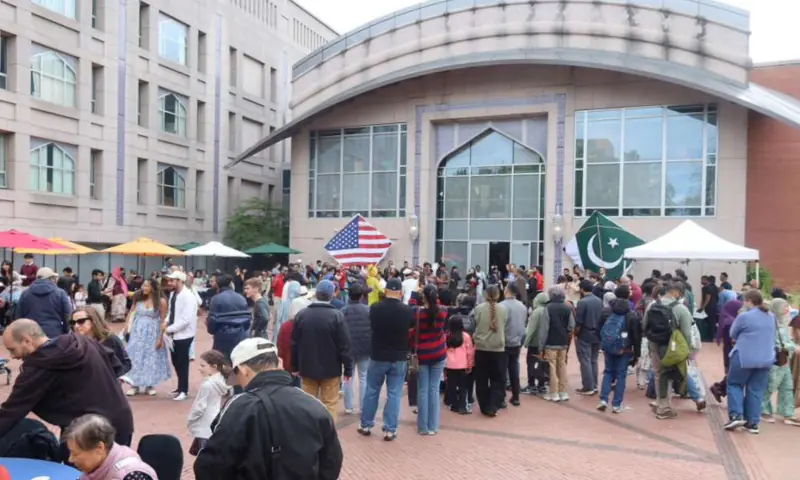
The sound of drums from the Pakistan Embassy could be heard distinctly as soon as visitors turned into International Drive, where the usually quiet diplomatic corridor had been transformed into a global fairground for the annual Passport DC “Around the World Embassy Tour”.

From early morning, crowds moved steadily along the tree-lined street, following a trail of music, aromas and colour that flowed from one embassy to the next. The dhol at the Pakistan Embassy set the tone — deep, insistent, and celebratory — cutting through the spring air and pulling visitors toward gates already filling with activity.

Inside the Embassy of Pakistan in Washington DC, the sensory experience was immediate. The aroma of kebabs and samosas drifted far beyond the entrance, while food trays disappeared almost as quickly as they were placed on counters.

Visitors lingered under displays of truck art, embroidered textiles, gemstones and handicrafts, while mehndi artists worked patiently on outstretched hands and calligraphers wrote names in flowing Urdu script for curious guests who watched each stroke form a language unfamiliar yet visually captivating.

A steady stream of rickshaw rides added a playful rhythm to the embassy grounds, with visitors laughing, posing for photographs, and treating the brightly decorated vehicles as moving pieces of South Asian street culture temporarily transplanted into Washington.

In the background, tabla, flute and harmonium blended into a continuous cultural score that followed visitors from hall to courtyard.

Elsewhere in Washington’s diplomatic enclave, the world unfolded in equally vivid chapters.

At the Ethiopian Embassy, the slow, ceremonial preparation of coffee drew quiet circles of observers. Beans were roasted, ground and brewed in a ritual that held visitors in place, as the rich aroma became one of the most distinctive scents of the day.

Across another courtyard, several South American embassies turned into a burst of music and dance, where salsa rhythms and live bands pulled crowds into spontaneous movement, blending performance and street celebration.

The Bangladesh Embassy offered a different but equally compelling atmosphere. Cultural performances brought the space alive with traditional music and dance, while stalls showcased handwoven textiles, jamdani fabrics, crafts and traditional Bangladeshi products.

Visitors moved between displays of heritage crafts and tables offering familiar dishes — rice-based delicacies, sweets and snacks — introducing many to flavours less known but warmly received. The mix of cultural pride and hospitality drew steady interest throughout the day.

Further along the route, the Mexican Embassy was alive with mariachi music, folkloric dance and bright costumes that swirled through courtyards in bursts of colour. The Brazilian Embassy pulsed with samba and carnival energy, while the Nigerian Embassy showcased bold fashion, Afrobeats and contemporary cultural expression.

At the UAE and Brunei embassies, a quieter elegance defined the space, with fragrances, dates, chocolates and carefully arranged displays reflecting tradition through restraint.

Together, these embassies formed a living map of global cultures, each offering a distinct rhythm yet sharing the same spirit of openness. Diplomacy, often confined to formal rooms and official language, took on a more human expression—spoken through food, music, craft and conversation.

For visitors —Washington residents, Pakistani-Americans, students and tourists from across the United States — the experience was less about observation and more about immersion.

Children tried unfamiliar foods, families paused to listen to unfamiliar music, and strangers asked questions that crossed borders without hesitation.

As afternoon light softened over the capital, the crowds thinned only slightly, with many still moving from embassy to embassy, carrying with them bags of crafts, lingering flavours, painted hands and phone galleries filled with sound and colour.

By the time the gates began to close, the diplomatic enclave returned to its usual quiet.

But for a few hours, it had been something else entirely: a place where Pakistan’s drums, Ethiopia’s coffee ritual, Cuba’s music, Bangladesh’s textiles and dozens of other cultural expressions coexisted in a single, continuous celebration of the world within Washington.


  •  

Bin Laden nearly slipped out of Abbottabad: CIA report

• Al Qaeda leader had agreed in writing to relocate by September 2011
• Two brothers sheltering him sought separation, citing exhaustion
• Agency claims to be entirely unaware of the relocation plan, says delayed raid would have missed the opportunity

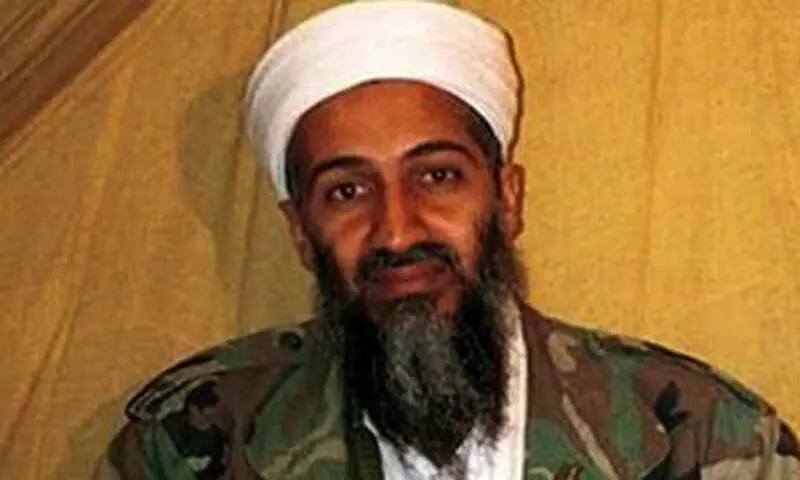
WASHINGTON: A decade after the operation that killed Osama bin Laden in Abbottabad, a fresh Central Intelligence Agency (CIA) account reveals that the Al Qaeda leader nearly slipped out of his hideout months before the US raid.

The CIA’s official record, updated with newly posted documents and released on Friday, shows that Bin Laden was actively planning to leave his hideout in Abbottabad months before the American operation, while simultaneously continuing to direct al-Qaeda operations from within the compound.

According to letters recovered from the compound, Bin Laden had agreed in writing to a relocation plan after sustained pressure from the two brothers who had sheltered him for years.

On Jan 14, 2011, he wrote a formal letter acknowledging tensions and expressing gratitude to the brothers for bearing what he described as the “heavy burden” of their “huge responsibility” for his safety.

In another letter dated February 2, 2011, Bin Laden confirmed that the brothers had “for a long time demanded separation from us” and were “exhausted” by the arrangement.

He agreed to retire from the task and hand over his concealment to others, with a planned move and changeover targeted for September 2011.

The CIA notes that this relocation plan was entirely unknown to US intelligence at the time. Officials reviewing the compound believed the situation to be stable, unaware that Bin Laden’s departure was already being prepared.

“Had the decision to conduct the raid been delayed, this story might have had a very different ending,” the CIA observed.

The documents further reject the notion that Bin Laden had become merely a symbolic figure by the time of his death.

The CIA states that he remained deeply involved in operational planning, providing strategic, operational, and tactical instructions to al-Qaeda. Far from being a figurehead, he remained in charge while in hiding, shaping the group’s direction, communications, and priorities.

The path to Abbottabad began long before the raid itself. Following the September 11, 2001, attacks, CIA-led intelligence efforts focused on individuals linked to Bin Laden’s network.

A key breakthrough came from tracking a trusted courier, identified only by his kunya (operational pseudonym). It took years before this alias could be linked to a real identity.

By August 2010, intelligence had connected the courier to a compound in Abbottabad, a town in Khyber Pakhtunkhwa province.

The CIA assessed the compound as highly unusual. It had high walls topped with barbed wire, double-entry gates, opaque windows, no visible internet or telephone connections, and all trash was burned rather than collected. The two registered owners also appeared to have no visible source of income to justify such a large residence.

These factors led intelligence analysts to assess that the compound was likely being used to conceal Bin Laden, as well as the courier.

Once the target was identified, preparations intensified. The CIA-led operation included the construction of a full-scale life-size replica of the compound, with movable interior walls to simulate possible layouts and prepare assault teams for any internal configuration.

The raid was authorised by US President Barack Obama on April 29, 2011, as a carefully calibrated surgical operation designed to minimise civilian casualties, reduce risk to noncombatants in the compound and surrounding area, and increase the likelihood of confirming Bin Laden’s identity.

On May 2, 2011, US special operations helicopters departed from Afghanistan and arrived at the Abbottabad compound at about 12:30am Pakistan time. One helicopter crashed on arrival, but the assault continued without delay.

Bin Laden was located on the third floor and was killed within about nine minutes of engagement. His body was then moved to the first floor and secured.

Assault teams recovered a large cache of documents and digital material from the compound for intelligence analysis. A backup helicopter extracted remaining personnel and materials, while the crashed helicopter was destroyed on site.

President Obama, monitoring the operation from the Situation Room, received real-time updates throughout the raid, including tentative confirmation of Bin Laden’s identity, followed by further verification later.

Bin Laden’s identity was confirmed through multiple independent methods after the operation.

The CIA describes the raid as a surgical operation designed to limit collateral damage and ensure accurate identification under controlled conditions.

The intelligence haul recovered from the compound was later analysed by a multi-agency task force led by the CIA. The material provided insights into al-Qaeda’s operations, internal communications, affiliates, and future intentions.

The CIA timeline also records that Bin Laden’s body was later buried at sea from the USS Carl Vinson in the north Arabian Sea on May 2, 2011.

The CIA concludes that Bin Laden’s death marked a major milestone in the US-led campaign against al-Qaeda. He was described as the organisation’s founder and only Amir, central to its identity, fundraising capacity, and global operational focus.

The agency emphasises that the mission’s success resulted from years of sustained intelligence work after 9/11, coordinated across the Intelligence Community and military partners.

“The CIA was at the centre of it all,” the report states, highlighting its role in driving intelligence collection, analysis, and operational assessment that led to Abbottabad.

Published in Dawn, May 3rd, 2026

  •  

US awards F-16 upgrade contract for Pakistan, other states

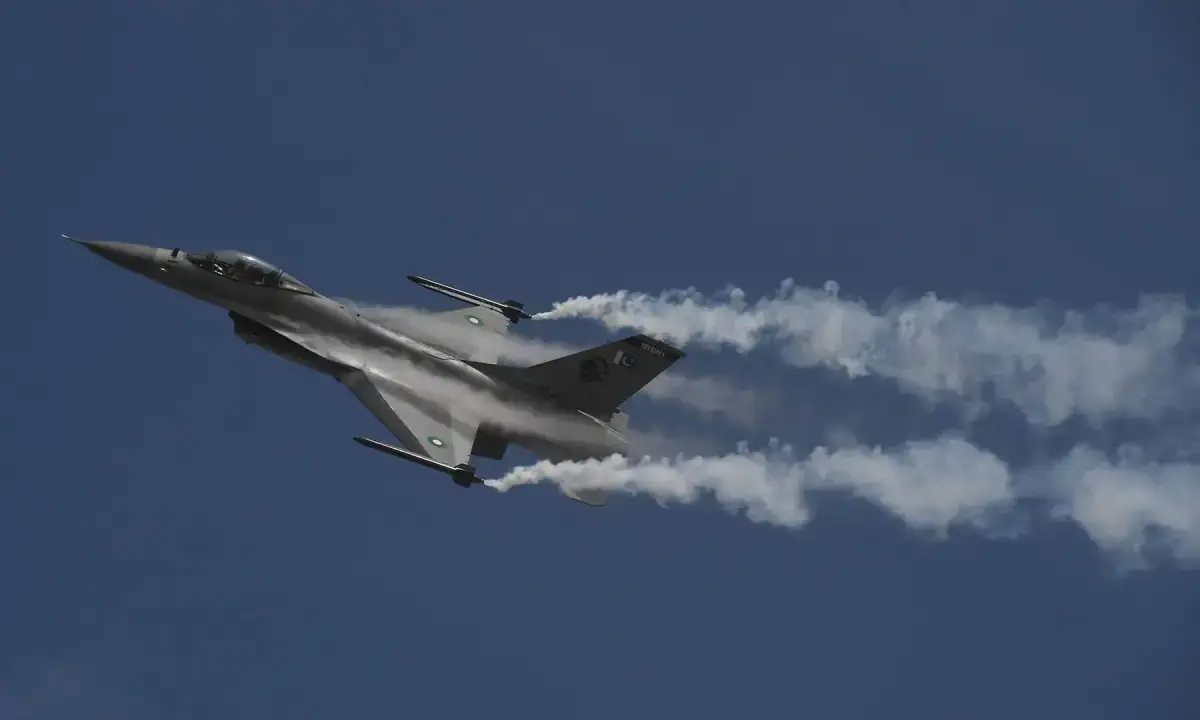
WASHINGTON: The United States Air Force has awarded a $488 million contract to Northrop Grumman Systems Corp. for long-term engineering and technical support of F-16 Fighting Falcon radar systems, with Pakistan among the countries covered by the deal.

According to an official award notice, released this week, the firm-fixed-price, indefinite-delivery, indefinite-quantity contract will support the APG-66 and APG-68 radar systems used on F-16 fighter aircraft. Work will be carried out in Linthicum Heights, Maryland, and is scheduled to continue through March 31, 2036.

The contract covers support for multiple partner countries under the US Foreign Military Sales (FMS) programme, including Bahrain, Belgium, Chile, Denmark, Egypt, Greece, Indonesia, Iraq, Israel, Jordan, South Kor­ea, Morocco, the Nether­lands, Norway, Oman, Pakistan, Poland, Portu­gal, Romania, Thailand and Turkiye.

The award was issued on a sole-source basis by the US Air Force Lifecycle Mana­gement Centre in Utah. An initial $2.64 million in fiscal 2026 non-appropriated Air Force and Navy funds has been obligated at the time of award.

The latest support arrangement underscores the long-term US commitment to sustaining F-16 operational readiness across allied and partner air forces, including Pakistan, which continues to operate a fleet of US-origin fighter aircraft under periodic upgrade and maintenance arrangements.

The development follows a separate US notification in December 2025, when the Defence Security Cooperation Agency (DSCA) informed Congress of a proposed $686 million package to upgrade and support Pakistan’s F-16 fleet.

That package includes Link-16 tactical data systems, cryptographic equipment, avionics upgrades, training and logistical support. The DSCA described the proposed sale as aimed at strengthening interoperability among Pakistan, the US, and partner forces for counterterrorism cooperation and future contingency operations.

The upgrade plan also includes modifications to operational flight programmes, identification friend-or-foe systems, precision navigation tools and secure communications equipment. It further covers simulators, technical documentation, software updates and engineering support.

Lockheed Martin was identified as the principal contractor for the proposed upgrade programme, which US officials said would not require additional personnel deployment to Pakistan and would have no adverse impact on US defence readiness.

The DSCA notification emphasised that the package is intended to modernise Pakistan’s F-16 fleet, extend its service life through 2040, and address operational safety and avionics requirements. It also stated that Pakistan had demonstrated the capacity to absorb the upgrades and maintain its existing fleet.

A diplomatic source familiar with the matter said Pakistan has welcomed continued US support for its F-16 programme, noting that such upgrades would help extend the aircraft’s operational life while maintaining technical compatibility with allied systems.

The source added that Pakistan’s air force has diversified its fleet in recent years, reducing reliance on a single platform while still valuing sustainment of existing F-16 capabilities.

Together, the new long-term support contract and the previously notified upgrade package highlight continued US engagement in sustaining Pakistan’s F-16 fleet within the broader framework of Foreign Military Sales partnerships and regional interoperability objectives.

Published in Dawn, May 2nd, 2026

  •  

Trump's war powers deadline expires Friday as officials cite ceasefire loophole

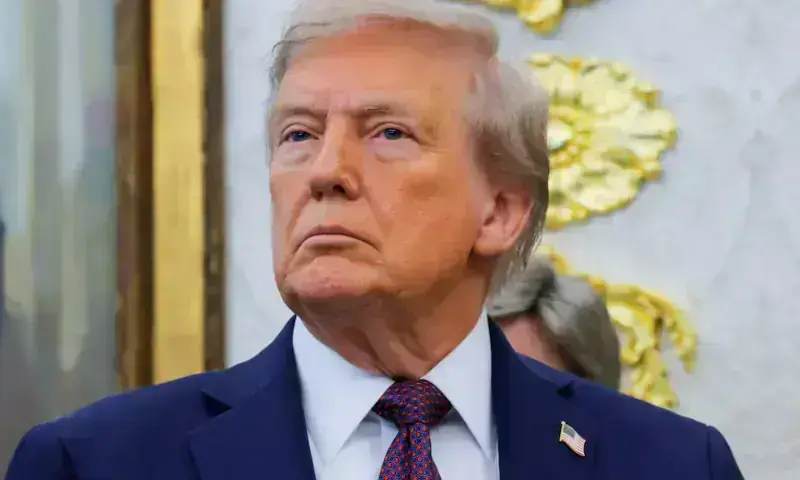
President Donald Trump faces a critical legal deadline on Friday that could determine the future of US military operations against Iran, even as his administration signals it may rely on a controversial legal interpretation to bypass congressional approval.

Under the War Powers Resolution of 1973, a US president must terminate military action within 60 days of notifying Congress unless lawmakers authorise the operation.

The Trump administration formally notified Congress on March 2 following joint US-Israeli strikes launched on February 28, setting up a May 1 deadline.

But administration officials now argue that the deadline may not apply, claiming that a ceasefire with Iran — in place since April 7 — effectively ended “hostilities” under the law. A senior official told reporters the conflict had “terminated” for War Powers purposes, allowing the White House to continue operations without seeking congressional approval.

US Defence Secretary Pete Hegseth reinforced that position during congressional testimony on Thursday, saying the statutory clock “pauses or stops in a ceasefire.”

The claim has triggered sharp pushback from lawmakers and legal experts, who argue that the War Powers Resolution contains no such provision.

Democratic Senator Tim Kaine rejected the interpretation outright, saying “the statute does not allow the president to suspend the 60-day limit” based on a truce. His objection reflects broader concerns among Democrats that the administration is attempting to sidestep Congress’s constitutional authority to declare war.

The War Powers Resolution was enacted in the aftermath of the Vietnam War to prevent presidents from engaging in prolonged military conflicts without legislative oversight. It requires presidents to either obtain congressional authorisation or withdraw forces within 60 days, with a possible 30-day extension in limited circumstances.

Legal analysts say the administration’s reliance on a ceasefire loophole is highly questionable. Experts note that the law makes no mention of ceasefires as grounds for resetting or pausing the clock, particularly when military pressure — including a naval blockade — continues.

Some legal scholars also point out that previous presidents have stretched or ignored the War Powers Resolution, often arguing that it is unconstitutional or does not apply to limited military engagements.

However, critics argue that the scale of the current conflict with Iran — including sustained strikes and economic warfare — makes that argument harder to sustain.

The political response in Congress remains deeply divided. Democrats have repeatedly introduced resolutions to compel the administration to either seek authorisation or end military operations. All such efforts have failed in both chambers, largely along party lines.

Republicans, who control Congress by narrow margins, have mostly backed the president or avoided direct confrontation. Senate Majority Leader John Thune indicated “there are no immediate plans to hold a vote authorizing the war, reflecting a broader reluctance within the party to challenge Trump’s authority.

At the same time, some Republicans have expressed unease. Senator Susan Collins said the 60-day limit “is not a suggestion; it is a requirement,” and warned that any further military action must be supported by a clear strategy and congressional approval.

The debate underscores a longstanding constitutional tension in the United States between the executive and legislative branches over war-making powers. While the president serves as commander-in-chief, the Constitution grants Congress the authority to declare war — a balance that has increasingly tilted toward the executive in recent decades.

Beyond Washington, the legal uncertainty comes amid a fragile and incomplete ceasefire between the United States and Iran. Although direct military exchanges have paused, both sides continue to exert pressure through economic and strategic means.

Iran has effectively restricted shipping through the Strait of Hormuz, a vital artery for global energy supplies, while the United States has responded with a naval blockade targeting Iranian oil exports. The standoff has contributed to volatility in global oil markets, with prices rising sharply in recent days amid fears of prolonged disruption.

Diplomatic efforts have so far failed to produce a breakthrough. President Trump, speaking at the White House, dismissed suggestions that negotiations had stalled, saying only a small circle of officials was aware of the details and insisting that Iran “wants to make a deal badly.”

Meanwhile, US military planners are preparing options should the ceasefire collapse. Reports indicate that the US Central Command has developed plans for a “short and powerful” wave of strikes aimed at forcing Iran back to negotiations.

Other options under consideration include securing Iran’s stockpile of highly enriched uranium or expanding control over key maritime routes.

Analysts say the Trump administration may ultimately choose to ignore the deadline or reinterpret the ceasefire as marking the end of one phase of the conflict and the beginning of another — effectively resetting the legal clock.

Such a move would likely intensify legal and political challenges, potentially setting the stage for a broader constitutional confrontation between Congress and the White House.

  •  

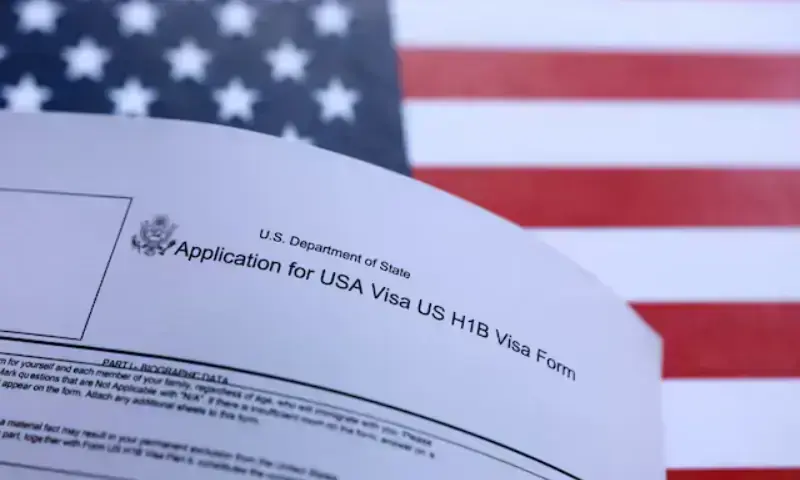
US to refuse visa to applicants who fear returning home

WASHINGTON: The United States has instructed its diplomatic missions worldwide to refuse visas to applicants who indicate fear of returning to their home country, in a new screening measure that has drawn concern from immigration lawyers and refugee advocates.

According to a State Department cable circulated to all US embassies and consulates and cited by American media outlets, consular officers are now required to ask non-immigrant visa applicants two additional questions during interviews: whether they have experienced harm or mistreatment in their country of nationality or last habitual residence, and whether they fear such harm if they return.

Applicants who answer “yes” to either question are to be denied visas immediately, the directive states. The measure applies to visitor, student, and temporary work visa categories, including B-1/B-2, student, and certain work-related visas.

The instruction is reportedly linked to a 2025 executive order by President Donald Trump and has been attributed to Secretary of State Marco Rubio. It is part of what the administration describes as efforts to curb “asylum abuse” by preventing the use of temporary visas as a pathway to protection claims once inside the United States.

State Dept calls visa a privilege, not a right; says individuals who do not intend to comply with immigration laws shouldn’t seek entry

The information was initially circulated by commercial visa assistance companies and was later confirmed by US and international media outlets, including The Washington Post and The Guardian.

Previously, fear-of-return assessments were conducted only when individuals applied for asylum after arriving in the United States. The new policy shifts that screening to the visa application stage abroad, effectively requiring applicants to disclose potential protection claims before entry.

The State Department has defended the directive, reiterating that a US visa is a “privilege, not a right”, and that individuals who do not intend to comply with US immigration laws should not seek entry. Officials argue that the measure is aimed at ensuring the integrity of temporary visa categories.

Immigration lawyers and rights groups, however, have warned that the policy could have far-reaching consequences for legitimate travellers, including students, academics, journalists, and business professionals who may have credible fears of persecution in their home countries. They say a truthful response could automatically result in visa refusal, potentially discouraging lawful travel and undermining international protection norms.

Critics cited by The Washington Post, which first reported details of the cable, also raised concerns that the policy could affect future asylum claims made after entry into the US, though the administration has not clarified how such responses will be treated in later immigration proceedings.

Officials at the Pakistan Emb­a­s­­sy in Washington, when asked about the development, said they had not received any country-specific communication from the US government. They indicated that the measure appears to be part of a global policy shift applied uniformly across all nationalities rat­her than a Pakistan-specific action.

They added that procedural changes in US non-immigrant visa processing are typically circulated internally by the State Department to all embassies and consulates simultaneously, rather than communicated through bilateral diplomatic channels.

The directive is expected to take effect immediately, with consular posts already updating interview procedures.

Published in Dawn, April 30th, 2026

  •  
❌