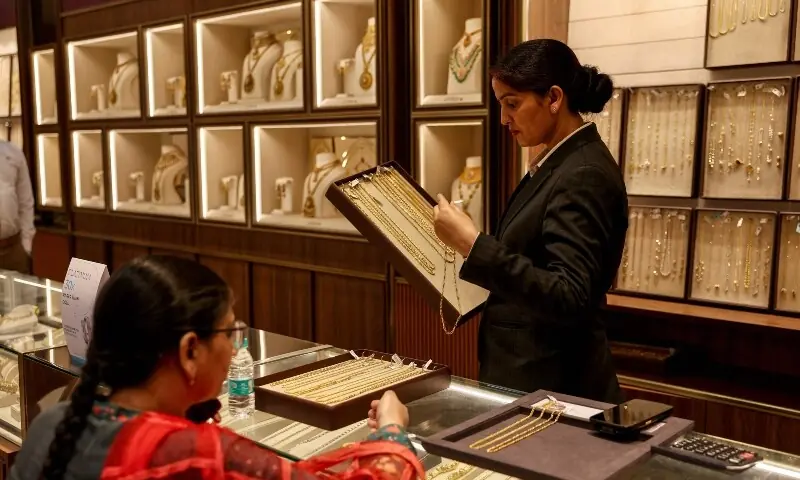
India has boosted its import tariffs on gold and silver in an effort to shore up the sagging value of the rupee and bolster foreign currency reserves hit by war in the Middle East.
Gold imports are financed through dollars, which means buyers have to spend down foreign reserves or convert rupees to make purchases.
Prime Minister Narendra Modi had already appealed days ago to the public to avoid buying gold for a year as the rupee’s year-long slide against the dollar has worsened during the Iran war.
The government more than doubled import taxes on gold and silver to about 15 per cent from the existing 6pc, according to two official orders issued late Tuesday.
The energy supply crisis caused by the Mideast war’s closure of the Strait of Hormuz — through which a fifth of the world’s crude passed — has hit India hard.
India is the world’s third-largest oil importer and the spiking cost of petroleum has hit its foreign currency reserves.
Elevated crude oil prices have increased India’s import bill, putting additional strain on the country’s balance of payments and foreign exchange reserves.
Modi on Sunday urged the people of India to cut down on petrol and diesel consumption in response to the supply disruptions due to the Middle East war.
Gold, seen as a symbol of wealth and prosperity and widely used during weddings as well as festivals, ranks second among India’s imports, after crude oil.
The State Bank of Pakistan (SBP) said on Wednesday that it had recieved $1.3 billion from the International Monetary Fund (IMF).
“The IMF Executive Board completed the third review under the Extended Fund Facility (EFF) in its meeting held on May 8 and approved the disbursement of SDR 760 million for Pakistan. Furthermore, the IMF Executive Board has also approved the disbursement of the second tranche of SDR 154 million under the Resilience and Sustainability Facility (RSF),” the central bank said on the social media platform X.
“Accordingly, SBP has received SDR 914 million (equivalent to about US$ 1.3 billion) under the EFF and RSF in value May 12 from the IMF,” it said.
It said that the amount would be reflected in the country’s foreign exchange reserves for the week ending on May 15.
Last week, the international money lender had approved the latest review of Pakistan’s reform programme. The decision paved the way for disbursements of about $1.1bn from the EFF and $220m from the RSF, bringing total payouts under the two arrangements to roughly $4.8bn.
While the funding provides crucial short-term support, the IMF’s statement emphasised an evolving and uncertain outlook, cautioning that Pakistan’s recent gains are exposed to heightened global volatility, particularly spillovers from the conflict in the Middle East.
“The authorities’ strong implementation, despite the Middle East war, has maintained economic stability and improved financing and external conditions,” the Fund noted in its statement.
However, it cautioned that the shocks emanating from the Middle East war underlined the continued importance of maintaining strong policies to continue building resilience and of moving ahead with structural reforms to achieve sustainable long-term growth.
IMF Deputy Managing Director and Acting Chair Nigel Clarke reinforced this cautionary tone, stressing the need for both discipline and accelerated reforms.
“Amid a more challenging and highly uncertain external environment since the onset of the war in the Middle East, Pakistan needs to maintain strong macroeconomic policies while accelerating reform efforts, which are critical to managing further shocks and fostering higher sustainable medium-term growth,” he said.
Meanwhile, the central bank on Tuesday said that while macroeconomic stability had improved in the first half of fiscal year 2026, the war in the Middle East posed risks to the economic outlook amid heightened uncertainty.
In its half-year report, the bank said supply chain disruptions were likely to affect the inflation trajectory, external trade and remittance flows and the country’s economic activity.
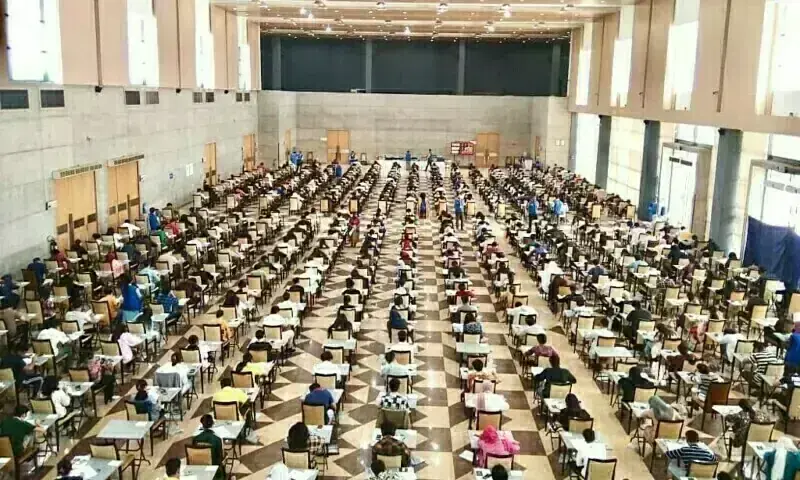
ISLAMABAD: Following a fresh complaint of paper leak, Federal Minister for Education and Professional Training Khalid Maqbool Siddiqui on Tuesday directed the Inter-Board Committee of Chairmen (IBCC) to immediately contact Cambridge authorities to ensure a thorough investigation, factual clarification and urgent measures to protect students’ interests.
Following the leak of Pure Maths 1 paper (9709) and subsequent Cambridge retake of it on June 9, fresh allegations surfaced of AS-level Mathematic paper leak held on Tuesday. Many students stated that the paper was available on social media just a day earlier.
Besides around 160 countries, Cambridge International Education (CIE), part of Cambridge University Press and Assessment, conduct exams in Pakistan of O and A levels. But last year, there was also an uproar by parents and students over leakage of at least five papers.
The issue was debated by the Senate and National Assembly standing committees where several parents also recorded their statements, stating that at least five papers were leaked.
We see a deliberate attempt to undermine integrity of exams, says Cambridge country director
They said that the paper leakage was an injustice with hard working students. Subsequently, Cambridge last year acknowledged that three papers were “partially” leaked and they made adjustments for the affected students.
This year’s fresh allegations, following the Mathematics Pure Paper and AS Mathematics paper incidents, have once again prompted the education minister to take notice.
Dr Siddiqui expressed concern and regret over the alleged leakage of Cambridge examination papers.
He stated that such incidents cause severe mental stress, anxiety, and uncertainty for thousands of students and their parents, particularly for those who prepare for their examinations with hard work, dedication, and honesty.
The minister said that this is an extremely serious matter, especially as similar incidents were also reported last year. He added that Cambridge must further strengthen and secure its examination system, security protocols, and monitoring mechanisms to ensure they remain effective and tamper-proof, thereby restoring and maintaining students’ trust and confidence.
The minister reiterated that the government of Pakistan will not compromise on the educational future of students, the transparency of the examination system, and the protection of merit.
Dr Siddiqui added that all relevant institutions must fulfill their responsibilities with seriousness and accountability.
Meanwhile, sources said that the federal government had also taken cognizance of the issue and a meeting was s likely to be held at the ministry of interior on Wednesday (today), which will likely be attended by officers of education ministry, Cambridge, and the NCCIA.
“Yes, the government has taken serious notice of the paper leakage issue. A crucial meeting in this regard will likely be held at ministry of interior on Wednesday, where a roadmap will be devised,” said a source in federal government.
When contacted by Dawn, Uzma Yousuf, Country Director Cambridge University Press and Assessment, said “We investigate all allegations of leaks.”
She also shared a statement with Dawn, which stated: “We do not comment on individual reports of paper leaks. In the rare case where there is a genuine issue, we update schools at the right time and provide recommended next steps. We ask people only to trust official statements from Cambridge and not add to misinformation which is very unhelpful for students.”
It added: “We are seeing a deliberate attempt to undermine the integrity of examinations. To prevent and deter future activity, we are pursuing different legal routes. In Pakistan, we have reported to the NCCIA, pursuant to the Prevention of Electronic Crimes Act, 2016 and we are about to make a further complaint to the NCCIA in respect of the dissemination of false information in respect of leaks with them. In the UK, we have reported the math paper leak and the social media platform users who we have identified as first posting the leaked papers to the National Fraud Intelligence Bureau (NFIB). We’re also pursuing action in relation to a key social media platform to compel them to share data relating to the illegal sharing.”
“Our priority is to make sure students are not disadvantaged by the wilful malpractice of a few. We do this through certain steps such as cancellation of the leaked paper and offering a new replacement paper.
“This is also a means of discouraging students or individuals who are involved in the selling and buying of leaked papers, as the money they are investing for this theft is being wasted.
“Those who cheat or engage with fake paper sellers face serious consequences, including the withholding of results, disqualification from exams or being banned from taking exams for up to five years,” she said.
TOKYO: Japan’s leading potato chip maker is feeling the crunch from shortages linked to the Iran war, swapping its signature orange-and-yellow packets for black and white.
A household name in Japan, Calbee is known for its savoury potato chips with an array of flavours from seaweed salt to soy sauce and butter.
The company said Tuesday it will “revise the packaging specifications” and use just “two colours” in packaging for 14 product lines beginning later this month or in June.
It did not say which two colours, but the statement showed photos of grey packaging.
Calbee blamed “supply instability for certain raw materials resulting from the escalating tensions in the Middle East”. Local media said the snack-maker has seen its procurement of printing ink compromised by shortages of naphtha, an oil byproduct used in a wide range of industries.
The goods affected included several potato chip products, as well as a breakfast cereal and Kappa Ebisen, a moreish shrimp snack known for the slogan “can’t stop, can’t stop”.
“We will continue to respond swiftly and flexibly to changes in the business environment, including geopolitical risks, while striving to deliver safe, reliable, and satisfying products,” the company said.
Another Japanese food company, Itoham Yonekyu Holdings, also said that going black-and-white or using different kinds of inks for some of its products were among possible options in the future, similarly blaming supply problems due to the Middle East conflict.
Roughly a fifth of the world’s oil normally passes through the Strait of Hormuz, and its de facto closure since the war began in late February has sent prices soaring.
Japan’s Prime Minister Sanae Takaichi previously said Tokyo was expected to have enough naphtha-derived chemical products to last beyond the end of the year after boosting imports from outside the Middle East.
• Legal fraternity mulls moving court • Insiders say JCP may reconsider decision to address ‘imbalance’ in high court due to 2025 transfers
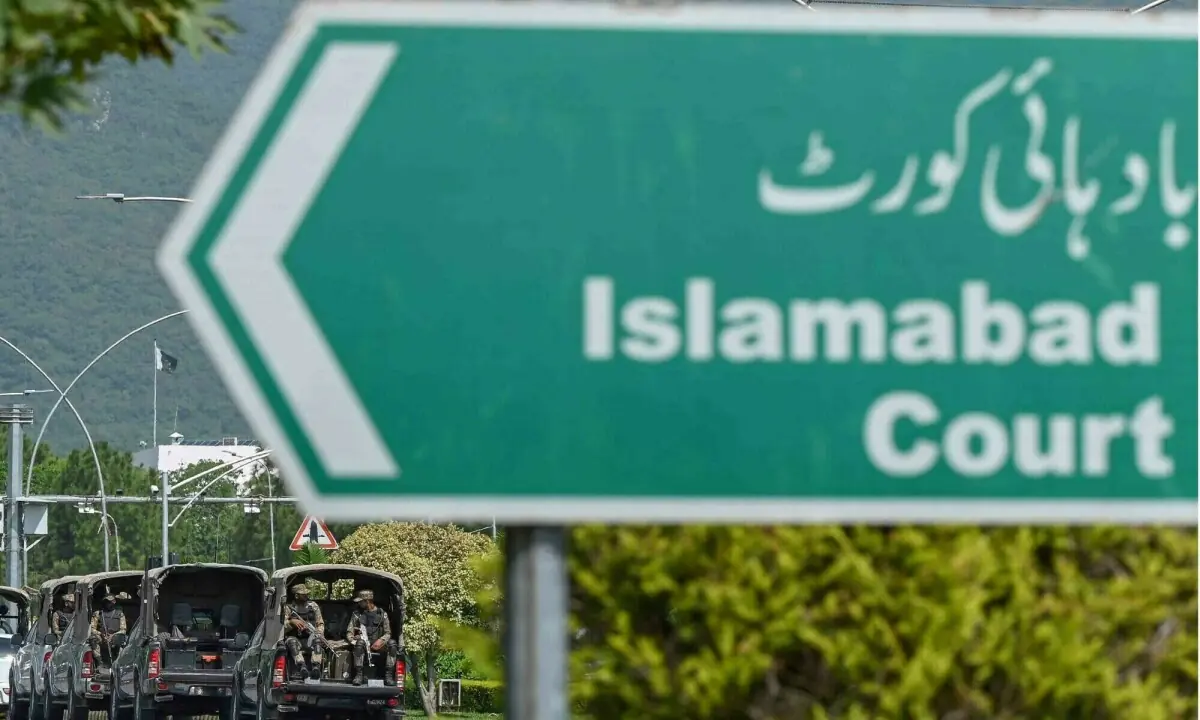
ISLAMABAD: The Judicial Commission of Pakistan’s (JCP) decision against fresh appointments in the Islamabad High Court (IHC) following the transfer of its three judges has invited scrutiny from the capital’s judges and lawyers, who fear that transfers from other provinces would deprive them of representation in the high court.
The controversy started after the JCP, during its April 28 meeting, approved the transfer of Justice Mohsin Akhtar Kayani to the Lahore High Court, Justice Babar Sattar to the Peshawar High Court and Justice Saman Rafat Imtiaz to the Sindh High Court, and decided that the vacant seats would not be treated as fresh vacancies.
The decision, which caused consternation among the judiciary as well, was opposed by lawyers, including the Islamabad High Court Bar Association (IHCBA). In a declaration issued after a meeting of its executive body, the IHCBA stressed the need to fill vacant positions in the high court with “qualified and deserving members of the legal fraternity”.
A JCP member told Dawn the commission believed that to maintain balance among the high courts, the posts should be filled through transfers from the high courts concerned instead of making new appointments. Amid concerns by the legal community, the member, however, agreed that the situation in the IHC was distinguishable considering the transfer of three judges from provincial high courts to the IHC in February 2025.
The member was alluding to the transfer of three judges, including IHC Chief Justice Sarfraz Dogar, to the IHC. Subsequently, no judge from the IHC had been transferred to any provincial high court, and this is now being cited by sections of the legal community as evidence of an imbalance in the arrangement.
Sources within the judiciary told Dawn that efforts were underway to persuade the JCP to revisit its recent decision to address this ‘imbalance’. Some members may urge the commission to treat the latest transfers of IHC judges as ‘reciprocal adjustments’ against the last year transfers, they added. “There is room for review because precedents do exist where the commission revisited its own observations,” a source familiar with the deliberations said.
The source also referred to the case of Justice Ali Baqir Najafi, currently serving as a judge of the Federal Constitutional Court (FCC), whose elevation from the LHC had once attracted adverse remarks from the JCP. Those observations were subsequently expunged by the commission itself. Against this backdrop, the JCP member told Dawn the commission “may reconsider its recent decision in view of the existing composition” of the IHC.
Interestingly, insiders disclosed, the proposal was not discussed at an internal pre-meeting before the formal JCP session and was instead introduced during the proceedings. These pre-meetings are usually convened to evolve consensus among the ‘like-minded’ JCP members.
‘Unhappy legal fraternity’
The development also unsettled judges in the IHC, who are worried about their seniority, and the district judiciary judges, who are worried about its elevation prospects. Insiders said the availability of six vacancies in the high court had created a strong possibility that at least a couple of positions could go to judges serving in the sessions courts, but the JCP decision not only dashed their hopes but also made lawyers unhappy.
Islamabad Bar Council Member Raja Aleem Abbasi argued that the IHC was established for the federal capital territory and that vacancies should be filled from within Islamabad’s legal fraternity.
“Justice Babar Sattar and Justice Mohsin Akhtar Kayani belonged to Islamabad. Therefore, the vacancies created after their transfer should be filled through lawyers from Islamabad,” he said. Abbasi maintained lawyers from all provinces were already practising before the IHC and could be considered against provincial quotas where required.
Pointing out that Islamabad lawyers had suffered last year after the three IHC seats were filled through transfers from other high courts, he warned another three appointments through transfers would further deprive Islamabad-based lawyers of representation in the IHC.
‘Resist with full force’
Calling the move “unacceptable”, Abbasi said the lawyers’ community would resist the decision “with full force”.
Lawyers in Islamabad were already deliberating on challenging the JCP’s decision before the IHC. However, legal experts pointed out that any verdict in such litigation could ultimately be appealed before the FCC, where the matter may receive final constitutional determination.
Even then, there was already a precedent for judicial scrutiny of the commission’s decisions. In 2012, an additional judge of the IHC, Azim Khan Afridi, had challenged the JCP’s decision not to confirm him as a permanent judge of the high court.
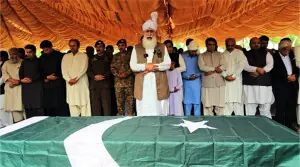
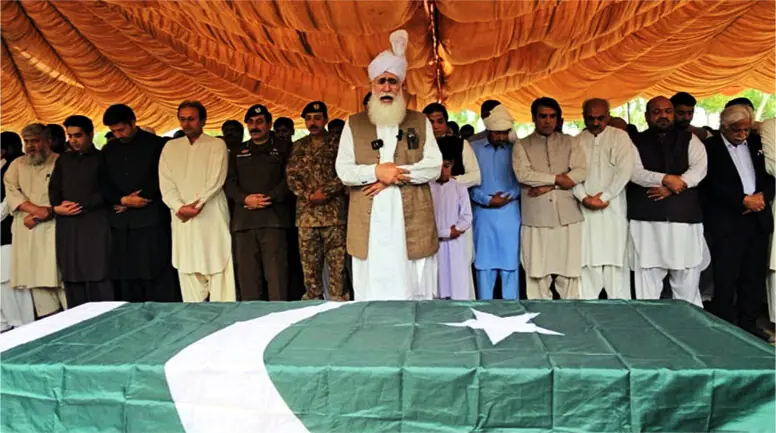
TAXILA/LAHORE: Muhammad Liaqat Ali, who laid down his life to prevent an attack potentially targeting a police post in Jand tehsil of Attock, was nominated for the country’s highest civil award by Punjab Chief Minister Maryam Nawaz.
Officials and locals said Liaqat, a railway employee, was grazing his livestock close to a checkpost near the Punjab-KP border on Monday, when he intercepted the suspected suicide attacker.
His actions reportedly foiled the terrorist’s deadly intentions and prevented large-scale loss of life. Paying tribute to his sacrifice, the chief minister said that people like Liaqat were the real heroes of the Pakistani nation.
She said the deceased had set the highest example of sacrifice for the homeland by laying down his life and announced that he would be nominated for the country’s highest civil award in acknowledgment of his bravery and great sacrifice.
PM Shehbaz Sharif also lauded the courage and patriotism of the deceased, stating that the entire nation salutes the bravery of Liaqat Ali, whose sacrifice was a shining example of national unity against terrorism.
Meanwhile, Liaqat Ali’s funeral was held at Police Lines Attock, where a smart police contingent was also present.
Speaking on the occasion, Federal Minister for Railways Hanif Abbasi expressed condolences and assured the family that the government stood firmly with them and would never forget the sacrifice rendered by the deceased.
He said that the railway ministry would take care of the family of the slain employee as he announced compensation to the tune of Rs8 million for the family. The deceased left a widow, two sons, and one daughter.
THE Human Rights Commission of Pakistan has painted a grim picture of the state of human rights in the country in its latest annual report. In a press release, the organisation pointed out “a severe contraction of civic space, the erosion of judicial independence, and deepening insecurity” in 2025. This is akin to a civil-society charge sheet against state institutions. The report mentions how the “Commission of Inquiry on Enforced Disappearances (COIED) registered 273 new cases [of missing persons] nationwide”. While 13 were traced to state agencies’ centres, 32 to prisons, and some individuals returned, many other individuals remained missing. Harsh legal and institutional mechanisms created a climate of fear and self-censorship while limiting public discourse. Amendments to the Anti-Terrorism Act, 1997, at the centre and in Balochistan, empowered LEAs to detain any citizen for up to three months without charge or judicial oversight, further undermining fundamental rights, due process and protection from arbitrary detentions.
On World Press Freedom Day, the prime minister expressed his government’s commitment to protecting the freedom of the press while also stressing the importance of “credible journalism”. The president said, “A free, independent and diverse media is not a threat to a confident nation, rather a proof of one.” Meanwhile, media bodies and civil society organisations raised alarm over growing curbs on press freedom and the rising risks to journalists. Freedom Network cited the weaponisation of cybercrime laws as one of the most serious threats to media freedom in Pakistan. From April 2025 to March 2026, “at least 129 verified incidents of violations” were reported and included: “two murders, five cases of threat to murder, 58 legal cases (mostly Peca-invoked), 16 cases of assault, 11 cases of threats to harm and two cases of kidnappings”.
Separately, civil society representatives issued an open letter to the PM, warning that “Pakistan’s media landscape was increasingly marked by intimidation, legal pressure and economic vulnerability”. While stressing the need for an independent media committed to truthful reporting and accountability, they highlighted a growing pattern of harassment under cybercrime and anti-terror laws against journalists and human rights activists. Such persecution “had fostered fear within the media community, leading to self-censorship and limiting public access to critical information”.
Ex-senator and president of the PPP human rights cell Farhatullah Babar expressed his views on World Press Day candidly. “Silencing those who speak for rights, justice and the marginalised is silencing the conscience of society itself. The strength of a democracy lies not in suppressing dissent, but in engaging with it,” he said. He also asserted: “Prolonged detentions without trial, delayed hearings, excessive charges and midnight knocks are new tools of coercion … Such practices violate constitutional guarantees under Articles 10-A and 19 … .”
It is all about reaching out and being honest with one another in spite of existing differences.
Another report by the Pakistan Press Foundation said that Pakistani journalism was “dealing with overly active forms of legal challenges — from criminal complaints to summons, the continuation of violent physical attacks coupled with threats of violence, digital threats and harassment online, further amplified in an age of artificial intelligence”. It outlined the full scope of repressive actions the media was subjected to. In a bold May 3 editorial on press freedoms, this paper stated that the entire industry was being “suffocated by the repressive actions of the state that has gradually come untethered from law and principle”. It warned that “a public that abandons its press abandons its last organised defence against the unchecked ambitions of power”.
Our biggest concern revolves around the results of choices made by those in power. There is a gap in perception between the rulers and the ruled. The current politicised climate of distrust and division is promoting social disconnection and impeding dialogue and cooperation. We have a hard time listening to each other. We tend to judge quickly and assume the worst about those who disagree with us. This makes working together to overcome challenges increasingly difficult. The more difficulties we face, the angrier we get, which fuels the cycle of fear and distrust that, in turn, stokes alienation between the state and society. It’s a vicious cycle. The natural response to defend ourselves in the face of threats is to close ourselves off and judge others, instead of opening up and giving them the benefit of the doubt. Too often we are filled with contempt that becomes an obstacle in the way of constructive engagement. Almost all problem-solving requires compromise.
We need a movement to restore civil discourse and engage people in healthy debates to overcome prejudices and create tolerance for divergent viewpoints. The goal should be collective problem-solving. The first step is developing empathy and promoting a sense of mutual belonging. Those who govern should see the world through the eyes of the governed and live it, and build connections to remove fear and distrust. Only then can the rulers truly begin to appreciate the context of the public’s discontent and make genuine attempts to develop understanding and trust. It is all about reaching out and being honest with one another in spite of existing differences — ‘reach and reveal’ should be our motto. We are bound by a humanity common to all, which cannot be erased. We must develop the capacity to love people — family, friends, and strangers — even if we profoundly disagree with them.
In order to rebuild and strengthen the social contract between the state and citizens, course correction is direly needed through persuasion instead of persecution, dialogue instead of deterrence, compromise instead of contempt, dignity in dealing with dissent, decency in discourse, and above all, the promotion of justice. As Martin Luther King Jr said: “Injustice anywhere is a threat to justice everywhere.” Empathy and kindness are the way forward if we want to see what miracles the power of trust can achieve.
• Sisters and KP CM were not allowed to meet ex-PM in jail • PTI condemns ban on Gilgit-Baltistan Democratic Party
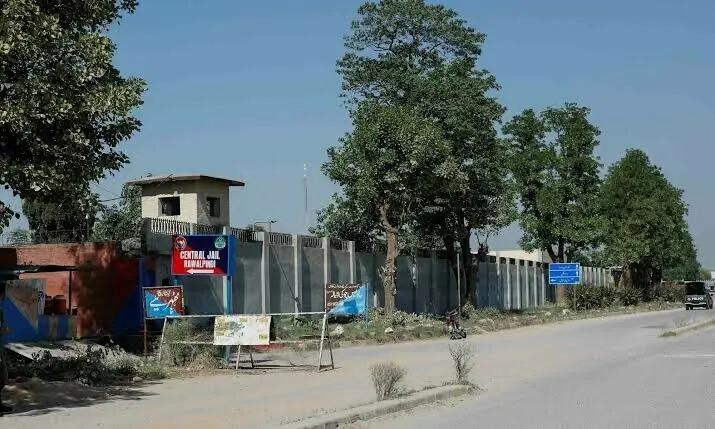
ISLAMABAD: The Islamabad High Court (IHC) on Tuesday sought detailed arguments on a petition seeking meetings of former first lady Bushra Bibi with her family members and personal doctor, as well as provision of essential supplies in Adiala Jail, while a report submitted by the jail superintendent stated that political discussions were held outside the jail after prison meetings.
Justice Arbab Muhammad Tahir, while hearing the petition filed by Bushra Bibi’s daughter Mubashara Maneka, observed that the court would hear the matter in detail and decide it on merit after examining the jail procedures and rules.
During the hearing, petitioner’s counsel Salman Akram Raja, Advocate General Islamabad Naveed Hayat Malik, and Superintendent of Adiala Jail Sajid Baig appeared before the court.
The Advocate General informed the court that the jail superintendent had heard and decided Mubashara Maneka’s representation in his personal capacity and rejected the request for meetings with family members and a personal doctor.
A report submitted by the jail superintendent stated that political discussions were held outside the jail after prison meetings. It also referred to tweets allegedly posted by Bushra Bibi’s sister, Maryam Riaz Wattoo, following meetings with the former first lady.
However, Raja argued that Maryam Riaz Wattoo had never visited Adiala jail and resides abroad. “How can a daughter be prevented from meeting her mother on the basis of tweets by a third person?” the counsel contended.
Justice Arbab Muhammad Tahir directed the Advocate General to obtain an affidavit from the concerned individual if necessary.
The superintendent informed the court that around 7,200 prisoners are currently lodged in Adiala jail, and meetings are held six days a week in accordance with jail rules.
Meanwhile, Imran Khan’s sisters and PTI leaders, including KP CM Sohail Afridi, were not allowed to meet the former PM at Adiala jail on Tuesday. They reached Adiala jail but were not allowed to meet the incarcerated former premier.
Aleema Khan said that it amounted to contempt of court, as there were clear IHC orders allowing family meetings every Tuesday.
Separately, PTI Information Secretary Sheikh Waqas Akram strongly criticised the ban on the Gilgit-Baltistan Democratic Party.
• US expected to press China on de-escalation efforts with Tehran • Taiwan, tariffs and rare earths to dominate talks • China ‘changes Rubio’s name’
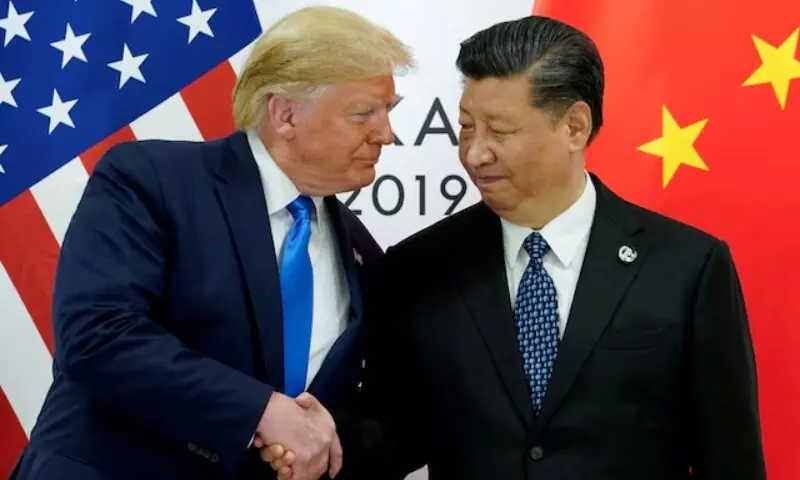
BEIJING: US President Donald Trump has said he expects a “big, fat hug” from his Chinese counterpart Xi Jinping when they meet in Beijing this week, though multiple thorny issues between the two sides could see the former kept at arm’s length.
Taiwan, tariffs, rare earths and the US-Israel war on Iran are among the contentious topics set to be discussed by the two leaders, whose styles of communication could hardly be more different.
Trump’s often bombastic, freewheeling comportment on the international stage contrasts dramatically with Xi’s measured, tight-lipped approach to foreign policy.
In mid-April, the US president predicted that Xi would greet him with a “big, fat hug” upon his arrival in Beijing, adding that “we are working together smartly, and very well!” China, in contrast, did not confirm the visit was taking place until Monday, typical of its reserve on such matters.
Despite the clash of styles, Beijing’s foreign ministry said on Monday that China considers leader-to-leader diplomacy as playing an “irreplaceable strategic guiding role in China-US relations”.
Trump’s trip to China is the first by a US president since he visited back in 2017. During that first-term sojourn, he received what the Chinese termed “state visit-plus” treatment, including a private tea reception in the Forbidden City.
Trump, who will turn 80 next month, and Xi, who will turn 73 a day later, last met face-to-face in October on the sidelines of a regional summit in South Korea. There, the two agreed to a one-year truce in a trade war that saw tariffs on many goods exceed 100 per cent.
His 2026 trip is expected to include a tour of the Temple of Heaven and a state banquet, but analysts say the pomp will not match that of nine years ago.
Since Trump’s first visit, China has learned that while “aggrandisement… plays to his ego, it cannot prevent him from a quick flip-flop in his attitude towards China”, Wu Xinbo, director of the Center for American Studies at Shanghai’s Fudan University, told AFP.
Washington is expected to press Beijing to use its considerable influence with Tehran to help de-escalate tensions and ensure freedom of navigation through the Strait of Hormuz, a vital artery for Chinese energy imports and global oil supplies.
US officials also hope China will avoid obstructing efforts at the United Nations to condemn attacks on commercial shipping in the Gulf.
China, meanwhile, has quietly positioned itself as a potential mediator. Together with Pakistan, Beijing has backed diplomatic initiatives aimed at securing a ceasefire and reopening maritime routes through Hormuz. Chinese and Pakistani officials reportedly advanced a five-point framework earlier this year designed to restart negotiations and contain the regional conflict.
US media reports and diplomatic observers believe both Washington and Beijing have encouraged Pakistan to play a mediating role because of Islamabad’s close ties with Tehran, Beijing and Gulf capitals alike.
Rubio’s ‘name change’
Meanwhile, Secretary of State Marco Rubio was heading to Beijing with President Donald Trump, despite being under Chinese sanctions — a breakthrough apparently made possible after China changed his name’s transliteration.
As a US senator, Rubio fiercely championed human rights in China, which retaliated by imposing sanctions on him twice — adopting a tactic more often used by the US against adversaries.
At his confirmation hearing as secretary of state, Rubio focused heavily on China, which he described as an unprecedented adversary.
Last year, however, Rubio said the Trump administration would not negotiate over the self-governing Taiwan’s future to secure a trade deal with China.
China seems to have found a diplomatic workaround after Trump named Rubio his secretary of state.
Shortly before he took office in January 2025, the Chinese government and official media began using a different Chinese character for “lu” to represent the first syllable in his surname.
Two diplomats said they believed China made the change because Rubio was under sanctions, which included an entry ban, under the old spelling of his name.
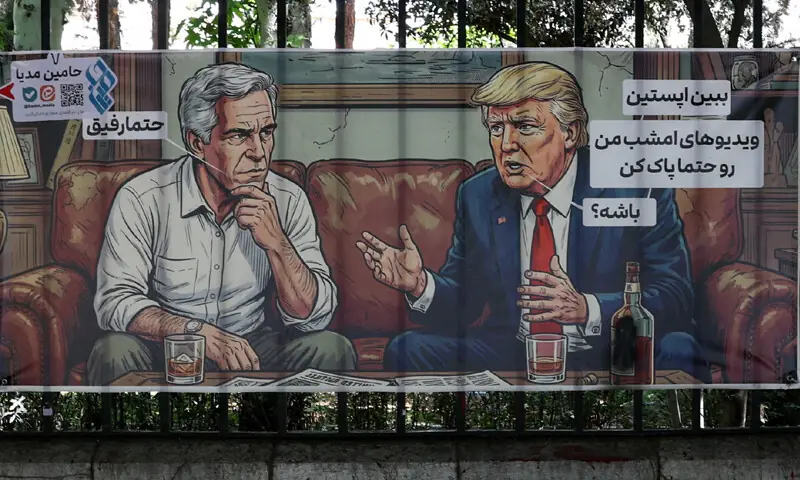
NEW YORK: A US transparency advocacy group has opened a temporary exhibition in New York with only one text on display: a printout of all the files released by the US Department of Justice, roughly 3.5 million pages, relating to financier and convicted sex criminal Jeffrey Epstein.
The library, dubbed The Donald J. Trump and Jeffrey Epstein Memorial Reading Room, has bound all the documents released under the Epstein Files Transparency Act in 3,437 volumes, all numbered and organised on shelves.
“The truth is hard to deny when it’s printed and bound for you to see,” reads the website for the Institute of Primary Facts, the Washington-based non-profit behind the display.
Those interested in seeing the files at the library in Tribeca can do so by registering online.
However, due to errors by the Department of Justice in failing to redact the names of some of the victims included in the documents, the general public is not allowed to consult the files. The exhibit offers exceptions for some professionals like journalists and lawyers.
The pop-up also has a display on the long-standing relationship between President Donald Trump and Epstein, who died in federal custody in 2019 while awaiting trial on sex trafficking charges involving minors.
David Garrett, one of the creators behind the project, believes “there needs to be real public outcry” about how the Trump administration has handled the document release, with many accusing officials of covering up Trump’s ties to Epstein.
US PRESIDENT Donald Trump is doing what he does best: keeping the world guessing with his puzzling declarations. He has rejected Iran’s latest proposal for peace talks, stating, “I don’t like it”. He has also threatened Iran with more strikes. He claims the ceasefire is now on “massive life support”. At the same time, he has asserted that he has achieved all his war objectives. What are we to make of such, often conflicting, statements? One thing that can be deduced from Trump’s declarations is that there is not going to be an end to one of the most consequential conflicts in recent history anytime soon.
Interestingly, Trump’s public rejection of Iran’s peace proposal reportedly followed a telephone call with Israeli Prime Minister Benjamin Netanyahu. Speaking to an American TV channel, Netanyahu warned that the war was not over and nuclear material still had to be taken out of Iran. According to him, “If necessary, we [the US and Israel] can re-engage them [Iran] militarily”. This reinforces suspicions that Israel is not in favour of any peace talks with Iran and is pushing the American president to end the ceasefire, just as it pressed him to launch the war. The ceasefire meant to facilitate peace talks came into effect in April and has been largely observed despite exchanges of fire and reports of strikes in the strategic Strait of Hormuz, which Iran has effectively continued to block.
Meanwhile, Israel continues its bombing of Lebanon in blatant violation of the ceasefire there and is busy extending its borders. A prolonged conflict will have far-reaching implications for regional geopolitics, sharpening the divisions among Gulf countries that are directly affected by the tensions. The Gulf countries that have been closely aligned with the US seem to be divided over the growing perception that Trump is fighting Israel’s war. These countries were left vulnerable as Iran targeted American interests in the region. The divide became more apparent as some nations emphasised the need for peace talks to end the conflict. There have been significant financial and economic losses due to the dual blockade of the waterways that are critical to the global energy supply chain.
It came as a rude shock to the American president when Saudi Arabia denied the US access to its airspace and military bases within the country. Reports indicate that the Saudi crown prince was upset with Trump’s announcement that the US military would escort ships through Hormuz. Trump’s announcement had heightened tensions with Iran, which threatened to attack ships passing through the strait without Tehran’s permission. Riyadh feared that this could lead to an escalation with Iran. Saudi action reportedly forced Trump to abandon his plan.
Although Riyadh has now reversed its decisions on US overflights and the use of bases, it will not allow its territory to be used in support of the US naval operation Project Freedom — a rebuke that marks a significant shift in the kingdom’s position, especially on account of the economic devastation the region has suffered in the conflict. As recently as March, the Saudi crown prince reportedly wanted Trump to continue to bomb Iran to bring down the regime there.
Saudi Arabia is now actively supporting efforts to end the conflict through peace talks mediated by Pakistan. It is part of an alliance that includes Pakistan, Egypt and Turkiye, which is facilitating the dialogue process. Saudi officials are in touch with their Iranian counterparts. The changing stance of the kingdom — for long America’s closest ally in the region — has increased apprehensions among other Gulf countries about being drawn into a prolonged conflict.
The stalemate over the resumption of peace talks between Washington and Tehran is also a cause for concern for Saudi Arabia, as well as Qatar and Oman. American military sites in these countries have been targeted by Iran. It is evident that the US is primarily interested in protecting Israel, and the tension in ties between these countries and the US is becoming increasingly palpable.
In contrast, the conflict has brought other Gulf countries, including the UAE, Bahrain and Kuwait, closer to the US. With US bases on their soil, they have borne the brunt of Iranian retaliation. The UAE, in particular, has been targeted by Iranian missiles and drones, which have had a devastating effect on its economy. As a result, it is now leaning heavily on the US and Israel — which it recognises under the Abraham Accords concluded during Trump’s first term — for its defence. The UAE’s collaboration with Israel has strengthened of late. While accusing the UAE of launching missile strikes, Iran has continued to target the country even during the ceasefire. The impact of Iranian missiles hitting civilian and business infrastructure in Dubai has been particularly significant.
Meanwhile, UAE-Saudi relations have also become strained as the two countries find themselves on opposite sides in the regional civil wars in Yemen, Sudan and Libya. The UAE’s sudden decision to exit OPEC in the middle of the US-Iran conflict has raised questions about the fragile unity of the Gulf nations, which have controlled crude oil prices for decades. Moreover, the conflict with Iran and the schism among Gulf countries have given Israel a sense of impunity regarding its aggression in Lebanon. Gaza’s rehabilitation has also been sidelined, as Israel continues to maintain control over large portions of the territory. Under the cover of the war, Israel has expedited its efforts to annex the occupied West Bank. It is not surprising that the Zionist state opposes any moves to end the war with Iran, as this conflict has dramatically altered the geopolitical landscape of the Middle East — ostensibly to its advantage.
GLOBAL suffering continues as uncertainty over the fate of the war in the Middle East refuses to dissipate. Market analysts and decision-makers have repeatedly warned that the economic damage already wrought — and worsening daily as vital shipping routes through the Strait of Hormuz remain closed — could take months, in some cases years, to reverse.
Every day that passes without clarity on how and when the war will end introduces fresh intensity to the uncertainty roiling global markets and adds to the economic turmoil the world must bear because of it. Iran may have been pummelled militarily but refuses to accept defeat.
The consensus in foreign intelligence circles is that it may be able to endure for a lot longer before economic pressure forces it to reconsider its position. The US, for its part, seems to be losing the endgame, with its leadership’s obduracy drawing it deeper into a quagmire which is not easy to exit.
Thankfully, the diplomatic process continues even as both sides, at least publicly, continue to signal that they are still far from arriving at any amicable settlement. Pakistan continues using its good offices in both capitals to coax them towards a mutually acceptable agreement. Other countries, notably Qatar, have also lent their weight to the efforts to mediate the crisis. Recent signals from regional powers, most notably Saudi Arabia, indicate that key stakeholders remain wary of this conflict’s actual goals and possible outcomes, and are likely to keep their distance from it.
Taken together, these may be healthy signs for those still hoping for peace despite Washington’s rumblings about the ceasefire being on “life support”. Still, the threat from spoilers remains, and recent efforts to bring Pakistan’s role into question, such as news reports casting aspersions on its neutrality, should prompt Islamabad to tread with care and defend itself forcefully wherever it can.
It is hoped that both Iran and the US can soon reach some sort of agreement. In Iran, things seem to have been complicated by hard-line factions’ efforts to assert themselves more forcefully in the talks with the US. Meanwhile, in Washington, US President Donald Trump seems to want to claim complete victory without any acknowledgement of how limited America’s gains have been. A workable settlement will require concessions from both — Tehran accepting limitations on its nuclear capabilities and Washington accepting that total capitulation is not on offer.
Neither will get everything it wants, and the sooner each accepts that, the less damage the world will have to absorb. They would also do well to remember that the longer the stalemate drags on, the more goodwill they will lose in world capitals, including in those countries otherwise sympathetic to their positions. It is best they end this quickly, before more is lost.

 Login
Login