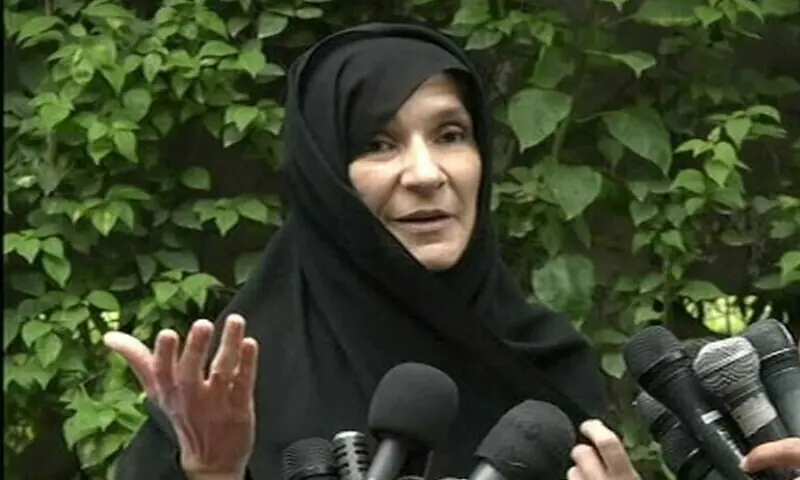
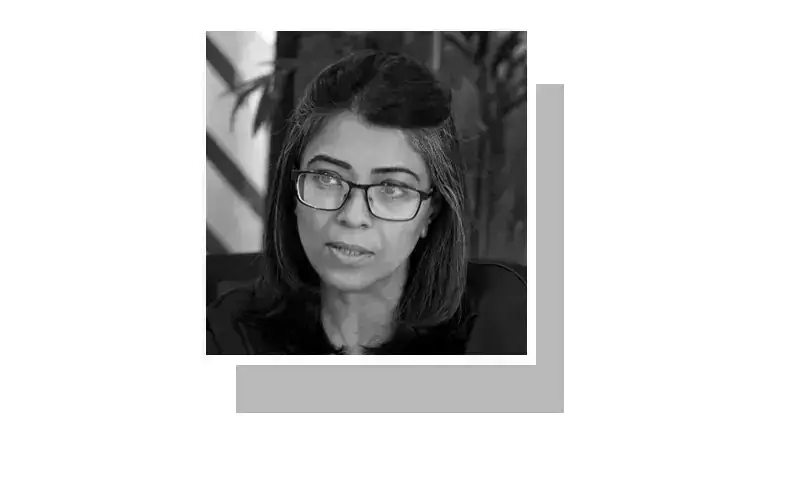
ISLAMABAD: Dr Uzma Khan, the sister of ex-premier Imran Khan, on Monday challenged before the Supreme Court the Islamabad High Court ruling to refuse to shift him to Shifa International Hospital, allow access to his personal physicians, family and counsel, and provide medical details to the family.
Filed through senior counsel Uzair Karamat Bhandari, the petition explained the applicant was not a party to the proceedings before the IHC but was aggrieved by the impugned judgement. In this regard, it referred to the SC decision in H.M. Saya’s case that allowed a person adversely affected by a decree or order to challenge the same before SC.
The petition stated Imran and his wife were currently incarcerated at Adiala jail, while his two sons lived abroad. Being his sister and a doctor by qualification, the applicant had natural love and affection for her brother and was seriously concerned about his health and well-being, which, it alleged, were being jeopardised by the official acts and omissions of the respondents.
It maintained that the appellant was Imran’s closest relative in Pakistan and therefore had the legal standing to file the appeal.
The petition stated that jail authorities had obstinately refused to obtain a vakalatnama in favour of the advocate-on-record signed by Mr Niazi, rendering him unable, so far, to file a petition against the impugned judgement. If the high court judgement was not set aside, it could directly and adversely affect the applicant’s case, it argued, adding that the applicant was therefore aggrieved by, and had locus standi to challenge, the impugned judgement.
The SC was requested to suspend the operation of the IHC ruling during the pendency of the petition and order an immediate medical examination of Imran by physicians of his choice, including Khurram Mirza, Asim Yusuf, Faisal Sultan and Samina Niazi.
It also sought directions allowing Imran access to his physicians, family members and counsel.
The petition contended that the IHC’s denial directly undermined and violated the applicant’s fundamental right to family life under Article 9 of the Constitution.
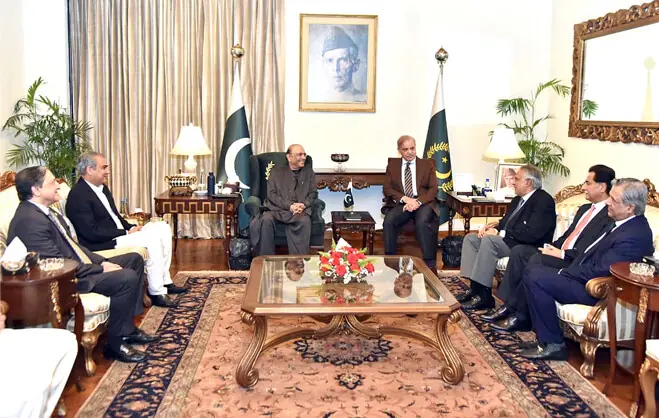
Prime Minister Shehbaz Sharif and his team call on President Asif Ali Zardari at the Presidency. Foreign Minister Ishaq Dar, NA Speaker Ayaz Sadiq, Interior Minister Mohsin Naqvi, Law Minister Azam Nazeer Tarar and Senator Saleem Mandviwalla are also present.—Online
ISLAMABAD: With no end in sight to the conflict in the Middle East, Prime Minister Shehbaz Sharif on Monday ordered that a countrywide austerity drive be extended until June 13.
Meanwhile, with rumours of a possible 28th Constitutional Amendment swirling, the premier and his team also met with President Asif Ali Zardari and his aides on Monday, even as both houses of parliament were in session.
Deputy Prime Minister and Foreign Minister Ishaq Dar, National Assembly Speaker Sardar Ayaz Sadiq, Interior Minister Mohsin Naqvi, Federal Law Minister Azam Nazeer Tarar, and Senator Saleem Mandviwalla were also present at the meeting.
A source privy to developments told Dawn that if enacted, the 28th Amendment would entail “a complete rollback of the 18th Amendment”, which was introduced by the PPP-led government in 2010.
It is feared that this piece of legislation may envisage the return of subjects such as health, population, education, and mines & minerals from the provinces to the Centre, and lead to the re-introduction of the concurrent list.
Meets President Zardari as rumours swirl of possible move to roll back 18th Amendment
Insiders say that President Zardari is not in favour of a fresh amendment, and wants to delay the issue at least until the announcement of the forthcoming federal budget, expected on June 8.
National Assembly officials said that once budget debate begins, no further legislation can be introduced until the process has ended.
However, an official readout issued by the Presidency did not make any mention of this proposed legislative package, simply saying that President Zardari and Prime Minister Shahbaz discussed overall situation of the country, matters related to Afghanistan and evolving situation in the region.
The meeting paid tribute to the martyrs of Marka-i-Haq, applauded the professional capabilities of the armed forces, and reaffirmed the unwavering commitment to national defence.
The president said despite difficult geographical and regional situation, tensions in the Middle East and disruption of supply chains, maximum relief should be provided to the people.
President Zardari directed that possible measures be taken to reduce inflationary pressures, ensure availability of essential goods and provide relief to the common man.
Austerity measures
“The prime minister, on consideration of the recommendations of the committee for monitoring and implementation of fuel conservation and additional austerity measures, has been pleased to extend the applicability of the following additional austerity measures up till 13th June, 2026 with immediate effect,” said a Cabinet Division notification issued on Monday.
The measures extended include a 50 per cent reduction in fuel allowances for official vehicles, with exemptions for operational vehicles such as ambulances and public buses.
Other steps included grounding 60pc of official vehicles and a complete ban on foreign visits by ministers and government officials, excluding those deemed essential to the country’s interests, as specified previously.
“Other additional austerity and fuel conservation measures, as notified from time to time vide this Division’s notifications of even number, shall continue to remain in force over the periods specified in the respective notifications,” the notification read.
“Measures in the case of which no period or end date has been specified, shall remain applicable till further orders,” it added.
Among the previously announced austerity measures, the working week for all government offices was reduced to four days, from Monday to Thursday.
However, the additional holiday was not availed by banks. It also did not apply to the agriculture and industrial sectors, or essential services such as hospitals and ambulance services.
On April 30, the premier also decided to extend fuel subsidies for motorcyclists, as well as public and goods transport, by one month.
The subsidies were part of the targeted relief measures announced for bikers, farmers, and transporters to cushion the impact of global oil price shocks amid the US-Israel war on Iran.
• Experts say New Delhi aims to normalise limited warfare under nuclear risks • Predict future conflicts will focus on cyber, hybrid and narrative strategies
ISLAMABAD: Leading strategic affairs experts cautioned Monday that while the deterrence equation with India may have held during last year’s conflict, the region’s strategic environment is becoming increasingly fragile. Therefore, they emphasised the need to keep deterrence credible and effective.
That message came through at a book launch hosted by the Centre for International Strategic Studies (CISS) in Islamabad.
Experts highlighted that regional stability is strained by tech shifts, disinformation, unresolved disputes, and India’s push to normalise limited warfare under nuclear conditions.
Within that broader framing, advisers to the National Command Authority and Strategic Plans Division echoed a clear post-May 2025 conflict lesson, noting that Pakistan must keep deterrence credible and adaptive.
The strongest note of caution came from retired Lt Gen. Khalid Ahmed Kidwai, an adviser to the National Command Authority and a key figure in Pakistan’s nuclear establishment.
He said recent developments had exposed “both the strengths and vulnerabilities of deterrence stability,” stressing the importance of “responsible nuclear stewardship and strategic restraint”.
Remarks by other experts suggested that nuclear strategists see deterrence less as a static equilibrium and more as a system requiring constant management.
Retired Gen Zubair Hayat, former chairman of the Joint Chiefs of Staff Committee, warned that future conflicts would increasingly involve “hybrid warfare, cyber capabilities and narrative warfare” alongside conventional military means.
Lt Gen Mazhar Jamil highlighted “India’s evolving offensive thinking” as key to the shifting strategic context, urging Pakistan to keep a cohesive deterrence posture and avoid unnecessary escalation.
His remarks suggested that Pakistani strategic planners expect future crises to test thresholds, apply pressure through limited military means and exploit compressed decision-making timelines.
Retired Lt Gen Sarfraz Sattar, also an NCA adviser, echoed those concerns, saying future crises would require a precise understanding of adversary behaviour alongside “credible deterrence backed by coordinated political and military signalling”.
Former ambassador Zamir Akram, currently an SPD adviser, warned that India’s posture was “deepening insecurity” across the region. He argued that mistrust would continue to grow in the absence of “meaningful dialogue” between the two sides.
Retired Brig Dr Zahir Kazmi, an SPD arms control adviser, said deterrence depends equally on “strategic communication, political resolve and cognitive resilience”.
CISS Executive Director Ali Sarwar Naqvi highlighted the region’s volatility due to India’s aggressive stance, emphasising the need for responsible statecraft, ongoing dialogue, and credible deterrence to maintain peace.
Mushahid Hussain Sayed, an ex-chair of the Senate’s foreign affairs panel, stressed the importance of intellectual debate in addressing these emerging security challenges.
IT’S been a year since the May that Pakistan will celebrate. A few cycles ago, we had the unfortunate May 9, which too cannot be forgotten but for reasons best not to get into. But last year brought us a May as bright and celebratory as the May of English poetry. The month didn’t necessarily begin this way — for the clouds of war darkened the horizon after the Pahalgam event, fighting was predicted and correctly so. The end, thankfully, came quickly as did the victory Pakistan could call its own thanks to the downing of multiple Indian aircraft. This is not to say Pakistan did not face an Indian assault or destruction but the downing of aircraft in the plural does get more attention than other damage.
Overnight, the conversation about the mess in the country — from elections to economic fragility to the quality of democracy — gave way to debate about Pakistan’s air force, its skilled pilots and the capacity of Chinese hardware to down the French Rafale. There was also some talk of Indian adventurism which also received its share of the limelight with the events in Canada. Then came the bromance with the latest inhabitant of the White House and the rest as they say is history.
The Iran war has simply added more feathers to Pakistan’s cap, of being a peacemaker and mediator and a trusted ally of sworn enemies that collects accolades from around the world. As Pakistan basks in this international glory, it seems that New Delhi cannot understand the rapidly changing world around it. flummoxed by the noise and attention around Pakistan, it has reacted by passing petty comments at worst.
This has simply added to the celebrations at home — from the critical remarks to the debates about how this change of fortunes happened in India. But at the same time, despite the self-congratulations and praise for individuals who have been given all credit, Pakistan, too, has misread the situation at times. In other words, it may be missing the woods for the trees.
Islamabad needs to also be aware that the celebrations and accolades will not last forever.
To understand what is happening vis-à-vis Pakistan and the world, it is important to take a view longer than the May conflict or change in the White House. Indeed, some of these events are taking place in a world that has moved on from 9/11; where terrorism is no longer the foremost priority in global politics.
After 9/11 and other high-profile attacks in Western cities such as London, and the spectre of terrorist organisations such as Al Qaeda and IS, Pakistan was viewed through the lens of militancy. Despite being a close ally of Washington, doubts remained. In fact, once George Bush, who shared a close relationship with Pervez Musharraf, left the White House, the Pakistan-US relationship became thornier and stormier, reflecting the questions that were being raised about Islamabad’s intentions.
Over time, with incidents such as Mumbai, New Delhi learnt to take advantage of this world — internationally and domestically. From pushing for Islamabad to be placed on the FATF list to having Pakistan-based groups condemned internationally, New Delhi grew more assertive as its economic heft increased as did its relevance to the West. Domestically, the BJP painted Congress as a weak player, which was unable to punish Pakistan for ‘attacks’ such as Mumbai and promised to avenge each transgression. On both planks it succeeded.
But then, the world began to change. The US withdrew from Afghanistan and terrorism seemed less relevant in the face of economic stagnation; populist politics; and the Russian invasion of Ukraine. Terrorism slid down the priority list for the world. Nothing made this more evident than recognition of the new government in Syria. This is also evident in the change of attitudes from Balakot in 2019 to Pahalgam. If Indian accusations were believed in the first incident, in the second they were met mostly with silence. Not just because of the lack of evidence but also the environment.
Oct 7 and the Israeli rampage since has added a second dimension to this world. Islamabad is now being seen and hailed as a peacemaker as well as a security provider in the Middle Eastern region. American President Donald Trump, can’t stop praising Islamabad and if the State Department has a view closer to India’s, at the moment it is too irrelevant and gutted to make a difference.
Finally, it seems New Delhi is also learning to recognise this new world. There is anecdotal evidence the country is considering showing some flexibility in its approach to Pakistan and the idea of engagement. However, whether or not this leads to some qualitative change and talks is not clear. At the same time, it is worth remembering that this may not stop New Delhi from fomenting clandestine trouble within Pakistan’s conflict zones.
Islamabad remains ready to engage. But it needs to also be aware that the celebrations and the accolades will not last forever. The instability in the Gulf can and will lead to pressures for Pakistan, economically and otherwise. The phrase ‘security provider’ sounds impressive but there is little clarity on what it means for the country; and there is an aversion at home to discussing it in detail and what its ramifications — good or bad — might be. This is not good; for only a transparent debate can throw light on unexpected and unwelcome outcomes.
There might be renewed pressure from the West (read: the US) with regard to the Pakistan-China relationship as time goes on; it is worth remembering that it was the first Trump administration which began raising questions about Chinese loans to Pakistan. Indeed, this is reminder enough that Islamabad should use this space it has internationally to focus on the multiple domestic challenges, especially the economy. The good times will not last forever.
PESHAWAR: As many as 74 PTI activists have been acquitted in a case regarding violence on May 10, 2023, which led to the deaths of two people.
Additional sessions judge Faraz Ahmad on Monday accepted an application filed by the defence for acquittal of the accused persons under section 247-K of the Code of Criminal Procedure, which empowers the court to acquit an accused at any stage of the proceedings where there is no probability of conviction.
The judge ruled that the entire case of the prosecution, insofar as the present accused persons were concerned, rests upon bald and unsubstantiated allegations, unsupported by any direct, circumstantial, or legally admissible evidence connecting them with the commission of the offence.
He observed the court was satisfied that there exists “no probability of the accused persons being convicted of the offence, and continuation of the trial would be nothing but a futile exercise” resulting only in unnecessary harassment and abuse of the process of the court.
Case was based on ‘unsubstantiated allegations’, judge rules
The case registered at Faqirabad police station of Peshawar was one of the multiple cases registered across the country from May 9 to 11, 2023, against PTI leaders and workers over violence protests against the arrest of ex-premier Imran Khan.
SHO Waris Khan was complainant in the FIR registered on May 10 on charges of intentional murder, hatching criminal conspiracy and rioting. He claimed he received information that 250 to 300 people along with PTI’s local leadership resorted to indiscriminate firing resulting in firearm injuries to two persons, namely Javed and Bilal, who later died in hospital.
During the investigation, the police nominated and charged the 74 suspects, including PTI’s Peshawar chapter president and Senate by-election candidate, Irfan Saleem.
The PTI leadership denied the charges, alleging both the deceased persons were party workers killed by police.
During the proceedings, the legal heirs of the deceased Bilal, including his parents and wife, testified they had neither charged the suspects nor had the desire to proceed against them. They stated they had no objection to their acquittal in the case.
Defence counsel Mohammad Adeel Butt claimed the suspects had falsely been implicated in the case. He said none of the accused facing trial were charged in the original FIR and there was no eyewitness against them. He requested the court to acquit them as there was no probability of their conviction even if the trial was concluded.
“It is manifest from the record that the accused persons were nominated in the FIR nor apprehended at the spot, and their implication surfaced only during the course of investigation. No private witness, injured person or eyewitness has come forward to nominate or identify them,” the court ruled.
It pointed out no test identification parade was conducted that could assume greater significance when the FIR was initially lodged against unidentified persons. Also, “no incriminating article has been recovered from the possession of the accused persons or at their pointation, nor is there any admission or confession attributable to them despite their alleged custody”, the judgement observed.
At the Jan 7 hearing, the court had noted the prosecution and the complainant SHO were showing disinterest in the case.
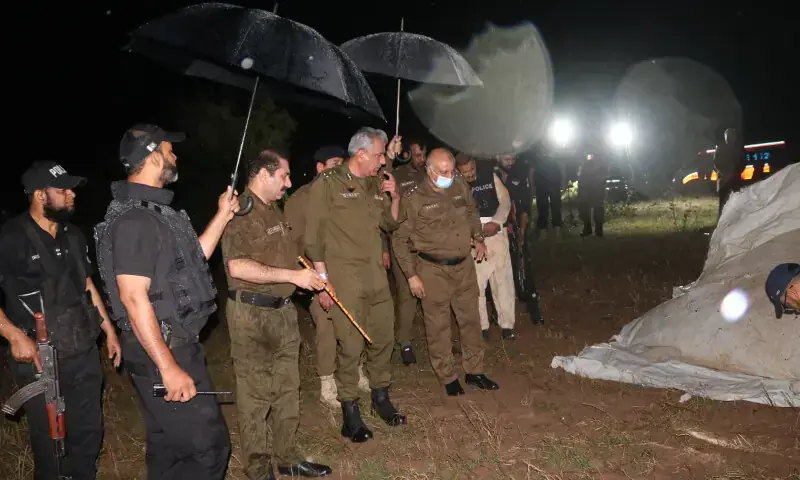
THE attack was audacious and well-coordinated. On the night of May 9, terrorists struck a police outpost in KP’s Bannu district, martyring 15 officers and injuring three, according to official reports. An explosive-laden truck rammed into the post, followed by what seems to have been a coordinated assault from multiple directions involving heavy weaponry and drones.
This suggests sophistication in terrorist tactics, and it seems the sole purpose of the attack was to cause maximum casualties. It is yet another grim reminder of how fraught the security situation remains in the province, where terrorists have repeatedly attempted to challenge the state’s writ.
The human cost, borne once again by police families, cannot be measured. Unfortunately, without a successful counterterrorism plan, chances of similar attacks by terrorists remain very high. The state must ensure that the perpetrators are brought swiftly to justice.
The civilian leadership was quick to condemn the attack, express sorrow and vow to eliminate terrorism. The president attributed the attack to Indian sponsorship and Afghan Taliban sanctuary — accusations that have now become routine in official statements following such incidents. He made it clear that Pakistan would “target not only the terrorists, but also their facilitators and sponsors”. Such pronouncements, too, have become familiar.
While the assertions themselves are certainly not unfounded, what is missing is decisive action on the ground against the terrorists who frequently operate in groups. And such action is not possible without deploying a robust intelligence-gathering strategy and coordinated planning involving all branches of security.
Furthermore, a sociopolitical diagnosis of what is going wrong in the western provinces needs to be shared with the Pakistani public to foster a wider understanding of the roots of this malaise. The state needs to devise a comprehensive response strategy to the emergent threats from terrorists, and this can only be achieved when there is broad buy-in from different stakeholders in Pakistan’s internal security calculus. The messaging from all branches of the state needs to be targeted and consistent.
Unfortunately, it seems that we are confusing the different fault lines that threaten internal cohesion. The security narrative and strategy of the KP government diverges considerably from the state’s position, with the resulting dissonance providing emboldened malign actors greater space to operate; the rising toll from terrorist attacks represents the costs it is imposing on the country.
Repeated vows to eliminate terrorism will remain insufficient as long as there is no united front to back them up with. There is also a dire need for a cohesive anti-terror policy that provides zero room for confusion or double games. Clearance operations continue in problem areas to rid them of terrorists, but without a whole-of-nation approach, eradicating this menace remains an uphill challenge.
• Petroleum minister says removing bottlenecks crucial to implementing long-delayed policy; terms local refineries ‘critical national assets’ • Officials argue upgrades are in line with IMF’s ‘resilience and sustainability’ objectives, will improve fuel quality besides saving money
ISLAMABAD: The oil disruption in the wake of the US-Iran war has compelled the government to dust off its petroleum refining policy, which was passed almost three years ago but could not be enforced due to flawed negotiations with the International Monetary Fund (IMF).
The government has now assured the refining sector of corrective measures in the upcoming budget to revive $6 billion in investments for refining upgrades and expansion. Pakistan is losing up to $2bn in annual foreign exchange due to expensive petroleum product imports instead of crude.
The refining policy returned into the limelight after Finance Minister Muhammad Aurangzeb, at a recent meeting, assured the management of the refineries that the government was serious about removing hurdles to implementing both greenfield and brownfield refining policies amid a loss of $1bn per month on oil imports amid the war.
The minister said the matter would be addressed during the upcoming IMF visit for corrective policy action in the budget for the financial year 2026-27.
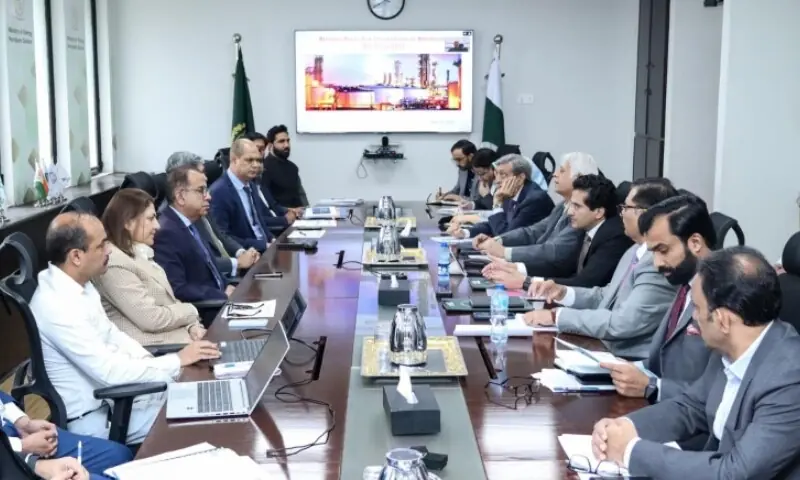
A follow-up meeting between the representatives of the refineries was held at the petroleum division on Monday, where they were asked to submit their updated positions without delay.
Petroleum Minister Ali Pervaiz Malik conceded that “despite the issuance of both refining policies in 2023, progress on implementation has remained stalled”.
He said removing bottlenecks was crucial to moving forward, adding that the government considered local refineries as critical national assets for an uninterrupted fuel supply and energy security.
“The ongoing regional situation arising from the US-Iran conflict has further highlighted the urgency of reducing reliance on external supply chains and ensuring maximum domestic refining flexibility/capability,” he said.
On the other hand, the refineries have linked the investment revival to four major enabling guarantees. They want a stability clause in the refining policy during the three to five years of the implementation phase.
They have proposed the diversion of foreign exchange proceeds of furnace oil exports towards the upgradation of refining projects, besides wanting clearly defined force majeure clauses to ensure that there are no more delays. The refineries also want the sales tax-related losses via the inland freight equalisation margin (IFEM).
Sources told Dawn that the Rawalpindi-based Attock Refinery offered to sign an agreement for refining upgrades the day the government was able to address the sales tax issue, even if it was legalised through the IFEM adjustments.
Sales tax issue
The exemption of sales tax on petroleum products was identified as the key issue affecting the viability of upgradation projects. The minister suggested that a comprehensive proposal addressing these challenges be submitted to the relevant forum (the ECC and the cabinet) before the finalisation of the budget, so that the refining policies could be implemented without delay.
The refining policy was finalised in August 2023 and approved in April 2024 after six years of consultations, but it came to naught since the federal budget 2024-25 practically cancelled the policy. This happened as the finance ministry and the Federal Board of Revenue entered an agreement with the IMF for the withdrawal of existing 10pc customs duty on the import of high-speed diesel (HSD).
The industry said the budget 2024-25 contradicted the ‘Pakistan Oil Refining Policy for New/Greenfield Refineries 2023’ and the ‘Pakistan Oil Refining Policy for Upgradation of Existing/Brownfield 2023’.
The above policies allowed for a 7.5pc customs duty on HSD for 25 years for greenfield projects and a 10pc duty for brownfield projects for six years. The budget also envisaged exemption of sales tax on motor spirit (petrol), high-speed diesel oil, kerosene, and light diesel oil. Previously, these products were zero-rated, which meant that input sales tax on services was technically claimable against sales of these products but was piling up.
Petroleum Division officials said they had been raising with the IMF the long-delayed implementation of the brownfield petroleum refinery policy, which had stalled about $6bn in fresh investment for refinery upgrades, but could not succeed due to lukewarm support from the finance ministry and the FBR.
They argued that this demand also aligned with the IMF’s Resilience and Sustainability Facility (RSF) objectives because the upgrade would help produce petroleum products meeting European standards with minimal carbon and sulphur emissions.
Under the IMF programme, the authorities committed not to grant any tax exemptions already promised to the refineries. As a result, although petroleum products are exempt from sales tax, the required equipment, materials and supplies are subject to sales tax and other duties without input-output adjustments, creating cash flow problems for the refineries.
The petroleum division argued that existing refineries produce environmentally harmful by-products both during refining and consumption, posing health risks and worsening climate conditions. While the government has been seeking RSF funding for various projects, it has been losing out domestically due to obsolete refining technology because of what they termed a “technical misunderstanding” between the IMF, the Ministry of Finance and the FBR. “This is a simple distortion that can be addressed through reasonable dialogue,” one official said.
SOMETHING is notably common in the politics of Donald Trump, Benjamin Netanyahu, Narendra Modi, Nawaz Sharif, Imran Khan, Sheikh Hasina and even Asif Zardari. Several others qualify, naturally, but this little sample explains the way democracy has turned into a zero-sum game between political leaders at the expense of the masses. In other words, all the eminences listed above are either riding the tiger of power or rode one to face its fateful consequences. A zero-sum game is a competitive situation in game theory where one participant’s gain is exactly balanced by another’s loss, meaning the total benefits and losses sum to zero. The total amount of resources is fixed, so one player can only win at the expense of another. The masses can only stare in disbelief. Abraham Lincoln and Immanuel Kant would be horrified by the hollowing out of democracy into a fossil of itself.
All the above leaders would likely be in jail should they get off the tiger’s back, assuming they are not already there or living in exile. The fear of reprisal grips Trump and Netanyahu most starkly. They may be the most powerful men today, going about wrecking the world at will and threatening Armageddon. Trump faces impeachment the moment he leaves office, having revelled in the fear and anguish of his foes during his stay at the helm. The revenge could come earlier, in November, should the mid-term polls give Democrats a majority in both Houses.
Desperately, Trump’s supporters have floated the idea of a perpetual presidency or at least a third term even if it is done without legal sanction. Why do politicians turn to crime to get even with the opponent? Supporters see another remote route to Trump’s reprieve. They saw Gerald Ford granting Richard Nixon the presidential pardon. Trump may be hoping for similar reprieve from J.D. Vance or Marco Rubio, should one of them muscle their way to the next presidency. A Hillary Clinton-supported Democratic presidency, on the other hand, remains Trump’s biggest nightmare come November 2028.
Likewise for Netanyahu, who has been pleading for support from Trump and through him with various power brokers in Israel. He needs their help to dodge serious corruption charges that look set to send him and possibly his wife to prison if and when he dismounts from drunken power. The war with Iran among its other uses has kept the law from catching Netanyahu by the neck. Nawaz Sharif and Pervez Musharraf had a bruising tit-for-tat that left both physically impaired and sent them both to live in exile, by turn. Imran took on Zardari and Sharif, and Zardari’s party joined hands with arch-foe Sharif’s group to ensure that Imran gets his comeuppance. Hasina was fortunate not to be devoured by the Bengal tiger after a timely helicopter ride ferried her to Delhi. The beast on its part had shovelled her off its back with a very mean intent.
Modi is going about wrecking the opposition as a man possessed. The tricks he has used can be regarded as his own patented innovations.
Narendra Modi’s circumstances seem indulgent, for now. But he shares the fraught playbook with Trump, Netanyahu et al. As luck would have it, the Indian opposition is crawling with individual ambitions and calculations stalking a range of diverse regional interest groups, some with links to enticing sources of lucre. Modi blatantly bulldozed his way to scalp another state for his party in West Bengal, recently. The election commission was widely seen as a member of Modi’s team. Voters’ names were removed by the millions, offices of the ruling Trinamool Congress raided, its strategists arrested only to be released after the elections. Aparna Bhattacharya argued in The Wire that “in 150 seats, more than half of West Bengal’s 294, total deletions were greater than victory margins, and BJP won 99. In 2021, it won just 19 of these”.
The strategy was not dissimilar to the ones BJP used in Delhi where the chief minister and his cabinet colleagues were jailed before the elections and freed when the BJP had won. Earlier, Haryana and Maharashtra saw the election commission helping fulfil Modi’s agenda. In Maharashtra, the Supreme Court stepped in to bail out Modi’s coalition by arguing strangely that the wronged chief minister should not have resigned as that had weakened his case. Now Mamata Banerjee has refused to submit her resignation in West Bengal even as a new BJP government has come to power. Let’s see what the apex court says.
A crucial problem for the opposition is Modi’s near total control over the media. Israeli and the American media by contrast display a handy critique of the government despite the ongoing war. Their leaders have faced strident opposition too. Rival TV channels work for and against the Trump establishment, which allows everyone access to different views. Modi’s monopoly of the entire media in northern India has been enabled by the business tycoons who he supports for mutual benefit. Whatever resistance he gets comes from alternative space such as YouTube channels and online media portals like The Wire, Scroll etc.
Modi is going about wrecking the opposition as a man possessed. The tricks he has used can be regarded as his own patented innovations. His stated objective in 2014 was to establish a Congress-free nation, reference to the behemoth once led by Gandhi and Nehru, and which has governed the country through much of its existence. Congress has fallen on bad times since the assassination of two of its charismatic prime ministers, Indira Gandhi and Rajiv Gandhi. The Congress, sans a Gandhi at the helm, has never attained a majority on its own. Rajiv Gandhi’s 400-plus seats in 1984 remains an Indian record. Rahul Gandhi has the charisma but not many reliable Congress colleagues. The BJP chief ministers of Assam and West Bengal, for example, were Congress members before they were slapped with corruption charges by the BJP. Modi bailed them out, a ploy that works entirely at the mercy of the tiger he rides.
ATTOCK: A shepherd laid down his life while averting a suicide attack on the Mankor security post in Attock’s Jand area on Monday, potentially saving dozens of lives, District Police Officer Sardar Marwan Khan confirmed.
Talking to the media, DPO Marwan said the incident occurred near a key security post on the Punjab-Khyber Pakhtunkhwa border, located in Jand tehsil, some 70km from Attock city.
The local shepherd was identified as Liaqat and a former employee of Pakistan Railways.
According to witnesses, Liaqat noticed a suspicious individual in the area while grazing his goats nearby. He confronted the suspect after sensing something unusual about the man’s behaviour.
As he approached, the witnesses said that the suspect detonated the suicide vest, causing a powerful explosion and claiming Liaqat’s life.
Shortly after the blast, officials rushed to the scene, and authorities cordoned off the area. The forensic teams also began collecting evidence from the blast site.
Meanwhile, DPO Marwan and Deputy Commissioner Rao Atif Raza were also present on the scene, while authorities started probing the incident from all angles to determine the identity of the attacker and his facilitators.
According to officials, the post in question is part of a broader nationwide network of inter-provincial joint check posts established by the government to combat smuggling, hoarding, drug trafficking, and the movement of militants.
It is usually manned by personnel from the civil armed forces, Federal Board of Revenue, Anti-Narcotics Force, and other provincial agencies.
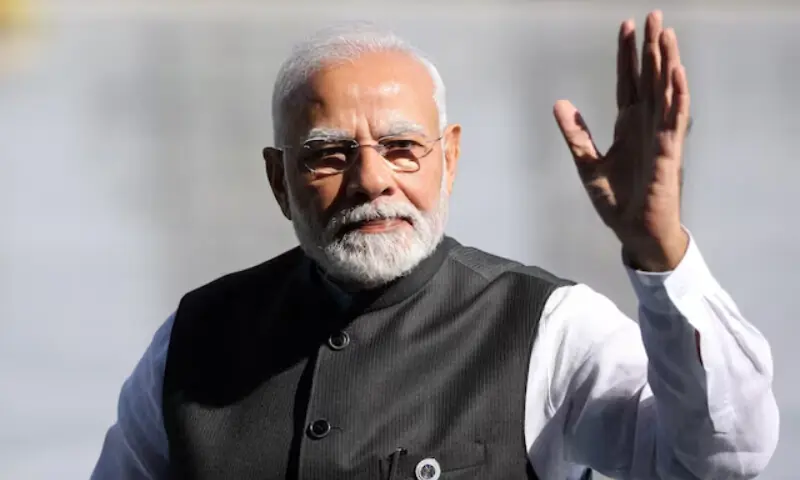
Indian Prime Minister Narendra Modi will embark this week on a multi-nation tour to the United Arab Emirates and four European countries, officials said on Monday.
Modi will start his whirlwind tour from the UAE — where a 4.5 million-strong Indian community lives — on Friday, India’s foreign ministry said in a statement.
Modi will meet with the UAE’s leader, Sheikh Mohamed bin Zayed Al Nahyan, with energy cooperation high on the agenda amid global supply disruptions caused by the Middle East war.
“The visit will serve to promote the significant trade and investment linkages between the two countries,” the statement said.
The premier will then travel to the Netherlands between May 15 and 17 on his second visit there since 2017, with defence, semiconductors and “a strategic partnership on water” between the two countries on the agenda.
Modi’s visit “early in the tenure of the new government will provide an opportunity to further deepen and expand” India’s partnership with the Dutch, the ministry said.
Bilateral trade with the Netherlands — India’s 4th largest investor from Europe — stood at $27.8 billion last year.
Modi then heads to Sweden on May 17 for a two-day visit to hold talks with Prime Minister Ulf Kristersson.
The pair will address the European Round Table for Industry, a major business leaders’ forum, along with European Commission President Ursula von der Leyen, the statement said.
On May 18, Modi will arrive in Norway for the third India-Nordic Summit.
It will be his first visit to the country and first by an Indian prime minister in 43 years. The final leg of the week-long tour will be Italy, on May 19-20.
“The visit takes place in the backdrop of a strong momentum in bilateral ties with both sides proactively implementing the Joint Strategic Action Plan 2025-2029,” India’s foreign ministry said.
The plan seeks to boost bilateral trade and cooperation in defence and security, besides clean energy and technology.
The conflict in the Middle East has piled pressure on India’s economy, and Modi on Sunday urged the Indian population of 1.4 billion to reduce petrol and diesel consumption amid supply disruptions.
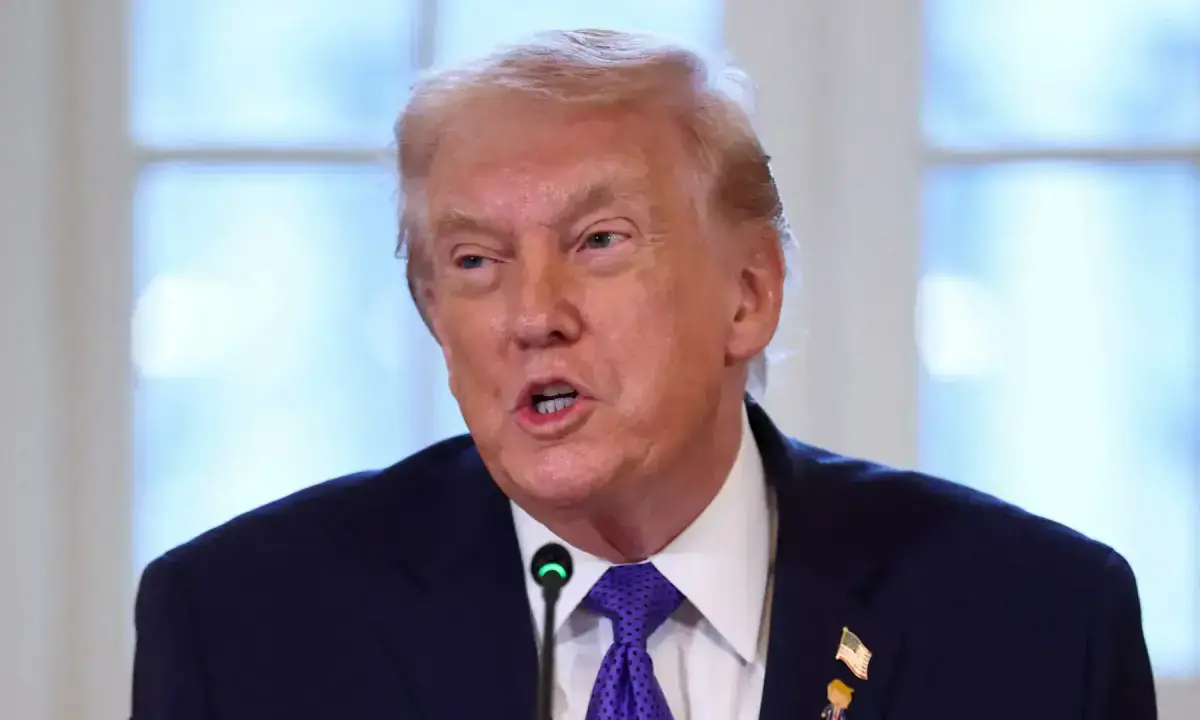
President Donald Trump on Monday said the ceasefire in the Middle East war was on “life support,” rejecting Iran’s latest counteroffer, which it said had included demands for the release of frozen assets and the end of a US blockade.
The president’s reaction to Iran’s position — itself a response to a US proposal — sent oil prices soaring and dashed hopes that a deal could be quickly negotiated to reopen the Strait of Hormuz to commercial shipping.
After slamming the response as “TOTALLY UNACCEPTABLE”, Trump insisted the US would see a “complete victory” over Iran, adding that the truce, which has largely halted fighting in the Gulf for over a month, was on its last legs.
“The ceasefire is on massive life support, where the doctor walks in and says, ‘Sir, your loved one has approximately a one per cent chance of living,’” he told reporters on Monday.
The developments unnerved global energy markets already thrown into chaos by the war and the overlapping blockades imposed by Iran and the US in the Strait of Hormuz — a vital conduit for oil and gas shipments.
“The energy supply shock that began in the first quarter is the largest the world has ever experienced,” the CEO and president of Saudi oil giant Aramco, Amin Nasser, told investors.
“If the Strait of Hormuz opens today, it will still take months for the market to rebalance, and if its opening is delayed by a few more weeks, then normalisation will last into 2027,” he said.
Hunger and starvation
Aside from energy, the world also faces a shortage of fertiliser, much of which comes from Gulf ports, and hence food for tens of millions of people.
Jorge Moreira da Silva, executive director of the United Nations Office for Project Services (UNOPS), told AFP there were just a few weeks left to avert a potentially “massive humanitarian crisis”.
“We may witness a crisis that will force 45 million more people into hunger and starvation.” Trump did not say what had offended him in Iran’s response, but Tehran’s foreign ministry said it had called for an end to the US naval blockade of its ports and to the war “across the region” — implying a halt to Israel’s strikes targeting Hezbollah in Lebanon.
Crucially, ministry spokesman Esmaeil Baqaei told reporters, Iran demanded the “release of assets belonging to the Iranian people, which have for years been unjustly trapped in foreign banks”.
This would not be just a return to the status quo before the United States and Israel launched the war on February 28, but a victory in the Islamic republic’s long-standing campaign against its economic isolation.
“We did not demand any concessions. The only thing we demanded was Iran’s legitimate rights,” Baqaei said.
An end to international sanctions would diminish Washington’s leverage over Tehran as it tries to secure a lasting end to Iran’s nuclear enrichment. The US, Israel and their allies have long accused Iran of seeking atomic weapons, an accusation Tehran has repeatedly denied.
‘It’s not over’
Israeli Prime Minister Benjamin Netanyahu insisted the conflict would not end until Iran’s nuclear facilities were destroyed.
“It’s not over, because there’s still nuclear material — enriched uranium — that has to be taken out of Iran,” he told US broadcaster CBS’s 60 Minutes.
“There’s still enrichment sites that have to be dismantled.”
The Wall Street Journal, citing people familiar with the matter, said Iran’s counter-proposal had included the possibility of diluting some of its highly enriched uranium, with the rest transferred to a third country.
Iran had sought guarantees that the transferred uranium would be returned if negotiations failed or Washington abandoned the agreement, sources told the Journal.
‘Restraint over’
US officials have stressed it would be “unacceptable” for Tehran to control the international waterway.
Trump told Fox News that he was considering reviving a short-lived US operation to escort oil and other commercial shipping through the Hormuz, but that he had not yet taken a final decision.
Saudi sources previously told AFP that Saudi Arabia had prohibited the US from using its airspace and bases for the operation the first time around over fears “it would just escalate the situation and would not work”.
The US Navy is also blockading Iran’s ports, at times firing on ships to disable them or boarding and diverting them.
In a social media post on Sunday, the spokesman for the Iranian parliament’s national security commission warned Washington: “Our restraint is over as of today.”
“Any attack on our vessels will trigger a strong and decisive Iranian response against American ships and bases,” Ebrahim Rezaei said.
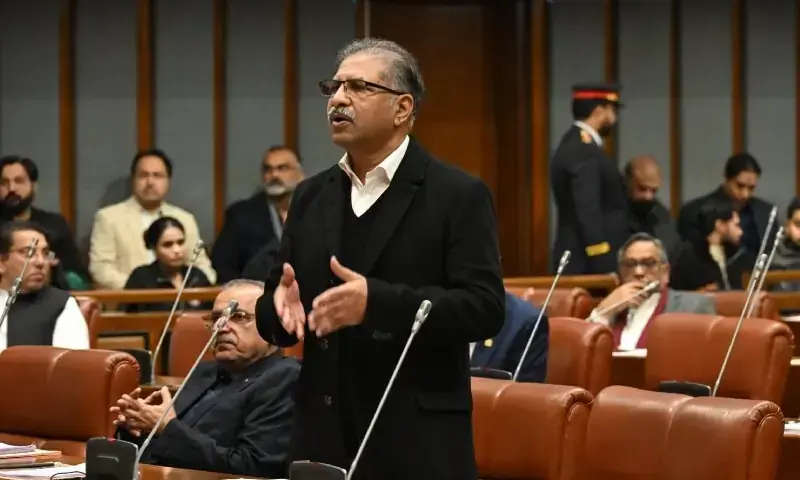
ISLAMABAD: Senators on Monday decried the latest hike in petroleum prices and costly energy, accusing the government of “economic oppression” and calling for an exit from the International Monetary Fund (IMF) programme.
PTI’s parliamentary leader in the Senate, Barrister Syed Ali Zafar, termed the fresh hike in petroleum prices a “petrol bomb” and “economic oppression” against the public, regretting the Rs117.5 per litre levy.
Speaking on the floor of the Upper House, Zafar rejected the government’s claim that international oil prices forced the increase, arguing that global crude prices had instead declined. “Instead of reducing prices, the government has sharply increased petroleum levies on the public,” he said.
He said the government was collecting “more than Rs117.5 per litre in petroleum levy, far exceeding the IMF-agreed limit of Rs80,” terming the policy “daylight robbery” aimed at covering up “economic incompetence”.
Referring to the French Revolution, Zafar said when the poor had no bread, Queen Marie Antoinette was attributed as saying, “Then let them eat cake,” a remark symbolising a ruling elite disconnected from the common man’s suffering.
Drawing a parallel, he criticised the Punjab government for purchasing a luxury aircraft amid inflation, unemployment and rising fuel prices.
“The move reflected the same mindset of rulers living in comfort while the people drowned in hardship,” he lamented.
Zafar said crude oil in Dubai had fallen from $170 per barrel to around $95. Despite this, he noted, petrol was about Rs278 per litre in Delhi and Rs310 in Dhaka, meaning “Pakistanis were paying Rs100 to Rs140 more per litre”.
He warned that the hike would trigger another wave of inflation in agriculture, transport and food. He said electricity tariffs had risen 53 per cent and flour prices 51pc, leaving citizens unable to cope.
Zafar said the government was celebrating IMF instalments, but this meant “the country would soon be burdened with an additional Rs1.5 trillion in debt”.
He claimed Rs37tr had been borrowed in four years “without any meaningful industrial or economic development”.
He said the SBP governor had “admitted” the government purchased $27bn from the open market since 2023 to “artificially support the rupee” rather than strengthen the real economy. He accused the government of misleading Parliament after previously denying such purchases.
He also cited the Federal Investigation Agency’s (FIA) finding that “powerful oil marketing companies had been illegally obtaining subsidies,” saying the government was protecting vested interests while burdening citizens.
Zafar also demanded immediate withdrawal of the fuel hike, an end to “cruel taxation,” and transparency in the pricing mechanism.
He said Pakistan’s debt rose from Rs44tr to Rs81tr in four years, with Rs7.5tr spent on buying dollars to support the rupee.
“The people of Pakistan could no longer bear weekly mini-budgets, endless inflation, mounting debt, and economic deception,” he said.
Muttahuda Qaumi Movement Pakistan (MQM-P) Senator Aamir Waliuddin Chishti warned that Pakistan had the “most expensive energy” and “lowest exports” in the region, saying the country would not escape “the IMF’s clutches” without urgent tax cuts to spur trade.
“Today, the most expensive energy in the region is in Pakistan. Pakistan has the lowest exports in the region,” he said.
“If the situation remains the same, we will not be able to get out of the IMF’s clutches,” he added.
The senator argued that trade growth was tied directly to tax policy.
“Increase in trade is only possible through reduction in taxes,” he said. “Reduction in taxes will increase economic activity.”
“We all have to find a solution to inflation together,” Chishti stated.
Meanwhile, JUI-F Senator Kamran Murtaza raised concern over Senator Abdul Shakoor being placed on the Fourth Schedule, saying the lawmaker had to report to a police station for attendance even as party members faced targeted killings.
“Senator Abdul Shakoor has been placed on Schedule IV. Senator Abdul Shakoor has to go to the police station to mark attendance,” he said.
Schedule IV of the Anti-Terrorism Act, 1997, lists individuals suspected of terrorism or sectarianism. Those listed face restrictions on movement, arms licenses, and bank accounts, and must report to police regularly.
“Our people are targeted and killed, they are martyred,” he added, referring to recent attacks on JUI-F members. The Senate chairperson summoned a report on the matter.
Blue passports for senators’ children
Meanwhile, a bill seeking to extend eligibility for blue (official) passports to the children of senators until the age of 28 triggered debate over existing passport regulations and privileges for public office holders.
Senator Abdul Qadir tabled an amendment to the Passport Act 1974, arguing that senior bureaucrats, including Grade-22 officers, are already entitled to official (blue) passports for their dependents under certain conditions. The proposed legislation aims to extend similar facilitation to lawmakers’ families.
However, the bill faced immediate resistance from the Ministry of Interior.
State Minister for Interior Tallal Chaudhry opposed the proposal, saying that existing passport rules are clear and do not allow the issuance of blue passports to children of parliamentarians.
“The passport regulations are well-defined, and children are not eligible for official passports under current law,” said Chaudhry.
Following the discussion, the Senate Chairman referred the bill to the relevant committee for further deliberation and detailed review.
The blue passport is typically issued to government officials travelling on official duty, along with eligible dependents, under strict regulations.

 Login
Login