Spain said it had begun bringing Spanish passengers ashore from the cruise ship hit by a hantavirus outbreak on Sunday, with groups of nationals from other countries to follow.
The ship anchored near the Spanish island of Tenerife earlier in the day.
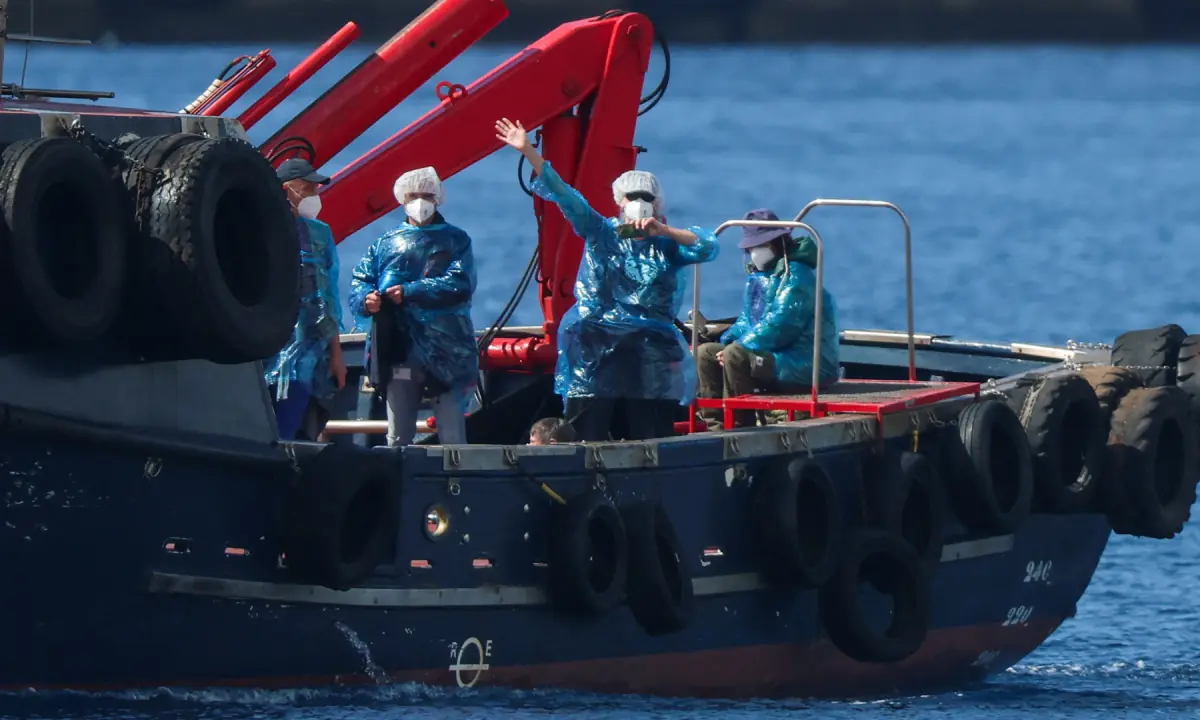
Spanish nationals were the first to disembark on small boats in groups of five and be taken to shore, where they were transferred onto buses and taken to the local airport.
The passengers, who are not showing any symptoms of the virus, will board a flight back to Madrid on a Spanish military plane and be taken to a hospital to be quarantined, government officials said, emphasising that they will have no contact with members of the public.
The luxury cruise ship left for Spain on Wednesday from the coast of Cape Verde after the World Health Organisation (WHO) and European Union asked the country to manage the evacuation of passengers following the detection of a hantavirus outbreak.
No rodents detected on the ship
Countries including Belgium, France, Germany, Ireland, the US, UK and the Netherlands confirmed on Saturday they had sent planes to evacuate their citizens aboard the ship, though local government officials in the Canaries said not all planes had arrived by Sunday morning.
The WHO said in an update on Friday that eight people no longer on the ship had fallen ill, including three who died — a Dutch couple and a German national; of the eight, six are confirmed to have contracted the virus, with another two suspected cases. It has recommended a 42-day quarantine period for passengers aboard the ship starting from Sunday.
Spain’s health ministry said in a report that the ship had passed the appropriate health checks: “There are more than 500 cruise ships a year that come from Argentina and Chile, which is home to the virus, and yet an outbreak of this illness has never happened in the European territory, so the possibility it happens in relation to this ship is remote.”
Hantavirus is usually spread by rodents, but it can, in rare cases, be transmitted person-to-person.
“According to the information provided by the experts who boarded the ship, the hygiene and environmental conditions are appropriate, and they have not detected rodents, so transmission by exposure to rodents on board is not likely,” the report read.
Passengers will not leave the boat until their allocated evacuation plane has arrived, Spanish officials said.
Passengers from the Netherlands will be the next group to leave the vessel, and their plane will also transport passengers from Germany, Belgium and Greece, Spanish Health Minister Monica Garcia said on Sunday.
After that, passengers from Turkey, France, the UK and the US will be evacuated, the minister added, speaking to reporters at the port of Tenerife.
“The final flight of the operation is departing from Australia … It is the most complex flight and is scheduled to arrive tomorrow afternoon,” Garcia said, adding that the final flight would pick up six people from Australia, New Zealand and other Asian countries.
Thirty crew members will remain on board and sail to the Netherlands, where the ship will be disinfected.
All passengers considered high-risk contacts: EU agency
Europe’s public health agency said ahead of the ship’s expected anchoring on Sunday off the Spanish island of Tenerife that all passengers on the cruise ship were considered high-risk contacts as a precautionary measure.
Passengers without symptoms will be repatriated for self-quarantine via specially arranged transport, not regular commercial flights, by their respective countries, the European Centre for Disease Prevention and Control (ECDC) said on Saturday as part of its rapid scientific advice.
Although at disembarkation, passengers will be considered high-risk, not all will necessarily be considered high-risk upon return to their home countries, the ECDC said.
The agency urged symptomatic passengers to be prioritised for medical assessment and testing on arrival, adding they may isolate in Tenerife or be medically evacuated home, depending on their condition.
UK army in ‘daring’ parachute op to aid suspected Hantavirus patient
Earlier on Sunday, British military personnel carried out an airborne operation to deliver urgent medical support for a suspected Hantavirus patient on a South Atlantic island, ministers said.
An army specialist team parachuted onto the island of Tristan da Cunha, Britain’s most remote overseas territory, a defence ministry statement said.
One of three British nationals diagnosed with suspected hantavirus linked to the outbreak on the MV Hondius cruise ship is on the island.
The team of six paratroopers and two military clinicians, all from the 16 Air Assault Brigade, descended from a Royal Air Force (RAF) A400M transport aircraft “in a daring parachute drop”, the statement said.
Vital oxygen supplies and other medical aid were air-dropped almost simultaneously.
The urgent response came after confirmation by the UK Health Security Agency (UKHSA) on Friday of a suspected infection in a British national on the island.
Tristan da Cunha, a group of volcanic islands with a population of around 220 has no airstrip and is accessible only by boat.
With oxygen supplies at critically low levels, officials said an airdrop was the only viable option to deliver care in time and support the island’s two-person medical team.
Foreign Secretary Yvette Cooper paid tribute to the armed forces for an “extraordinary operation”.
The drop involved a long-range flight of nearly 6,800 kilometres from RAF Brize Norton in central England to Ascension Island, followed by a further 3,000-kilometre flight to Tristan da Cunha, the statement said.
On Friday, the WHO said that the hantavirus outbreak posed a minimal risk to the general public.
“This is a dangerous virus, but only to the person who’s really infected, and the risk to the general population remains absolutely low,” WHO spokesman Christian Lindmeier told reporters.
ISLAMABAD: Interior Minister Mohsin Naqvi conveyed to Bangladeshi Minister of State for Foreign Affairs Shama Obaid Islam on Sunday that there were “vast opportunities for investment”, as the two sides agreed to increase cooperation in trade and business.
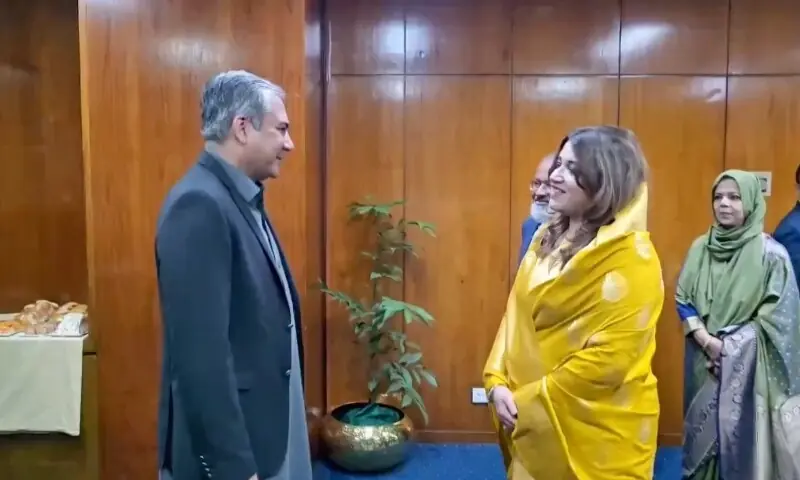
Naqvi, who is on an official visit to Bangladesh, called on Islam in Dhaka, where the two held “detailed discussions on bilateral relations, the regional situation, and Pakistan’s conciliatory role”, according to an official statement released by the Ministry of Interior.
The Bangladeshi state minister appreciated Pakistan’s efforts aimed at resolving the Iran-US conflict, it said.
Pakistan has been leading the efforts for the resolution of the conflict, which began with US-Israeli strikes on Iran on February 28, and hosted the first round of face-to-face talks between Washington and Tehran in April.
The interior ministry’s statement said that during Nqavi’s meeting with Islam, both sides agreed to increase cooperation in the fields of trade, business, and culture and “on maximum mutual exchange of delegations to promote trade and cultural relations”.
“Discussion was also held regarding the visit of Bangladesh’s foreign minister to Pakistan,” it added.
Bangladesh Foreign Ministry Secretary Mohammad Nazrul Islam, Pakistani High Commissioner Imran Haider and other officials were also present at the meeting.
The meeting comes a day after Naqvi signed an anti-narcotics memorandum of understanding (MoU) with Bangladesh Interior Minister Salahuddin Ahmed and offered cooperation on the Safe City Project.
Relations between Islamabad and Dhaka have improved since the ouster of former Bangladeshi premier Sheikh Hasina, during whose tenure ties between the two countries remained shaky.
As fears of renewed conflict hang over Iran, conservationists are shoring up battered historic sites and taking stock of the damage caused by the war with the United States and Israel, though experts warn some repairs could take years.
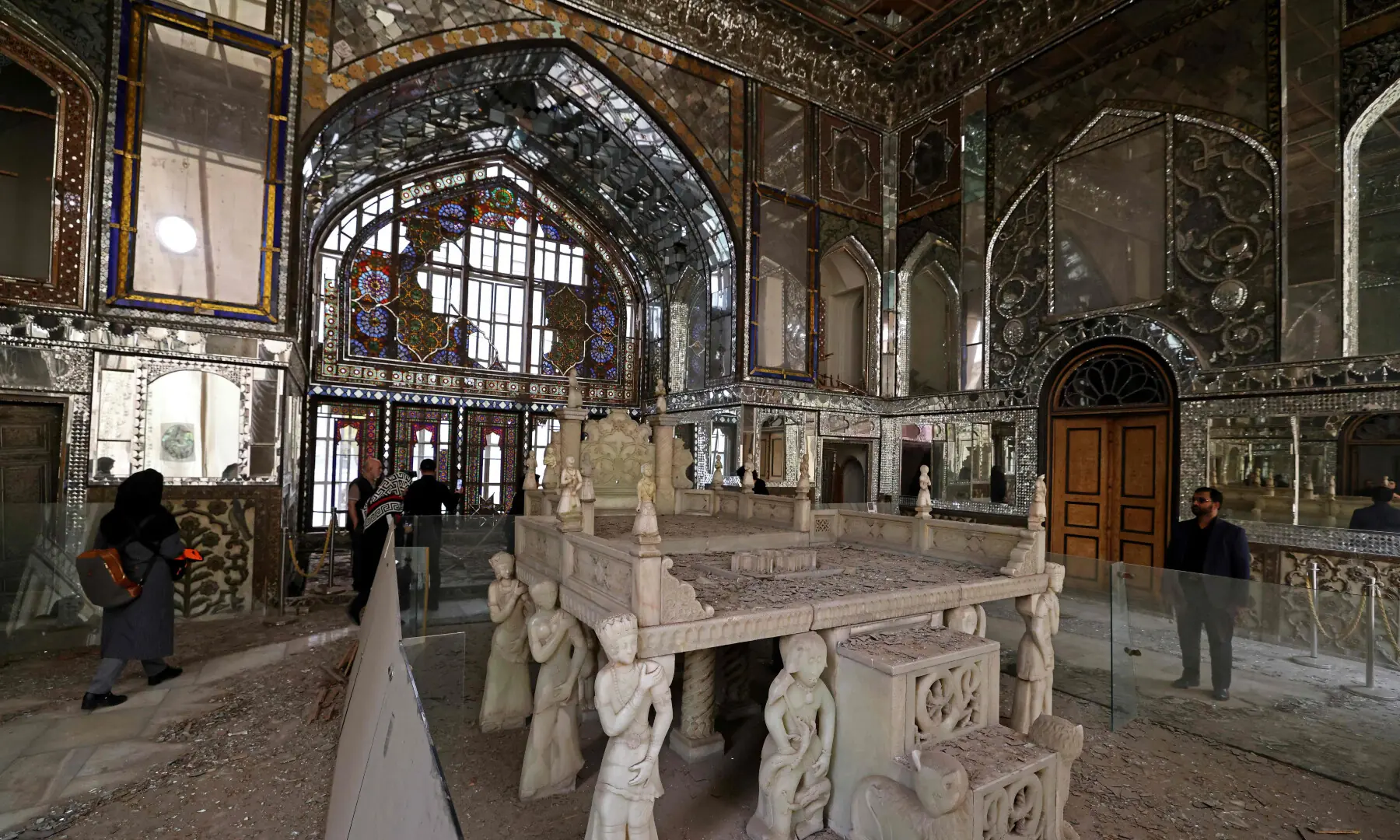
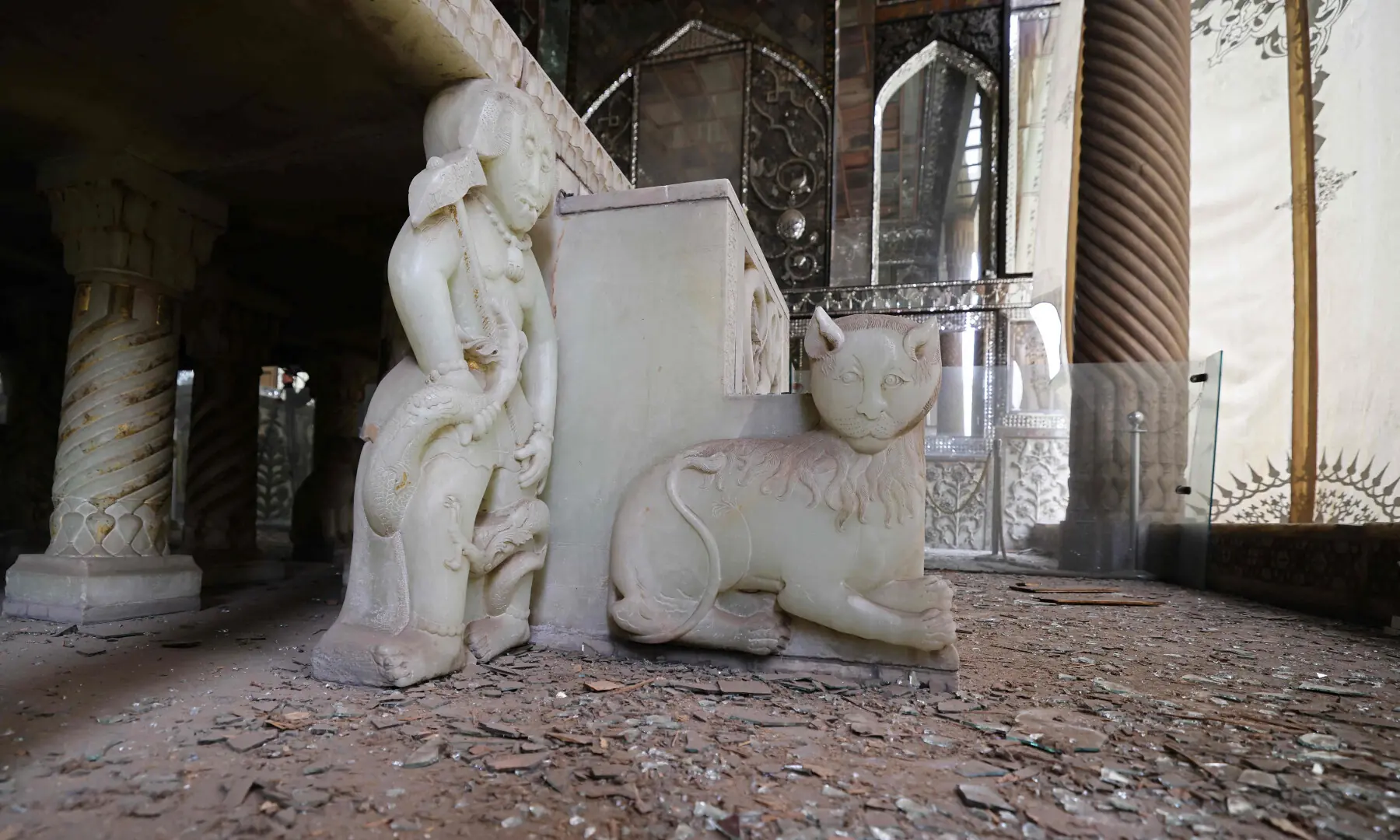
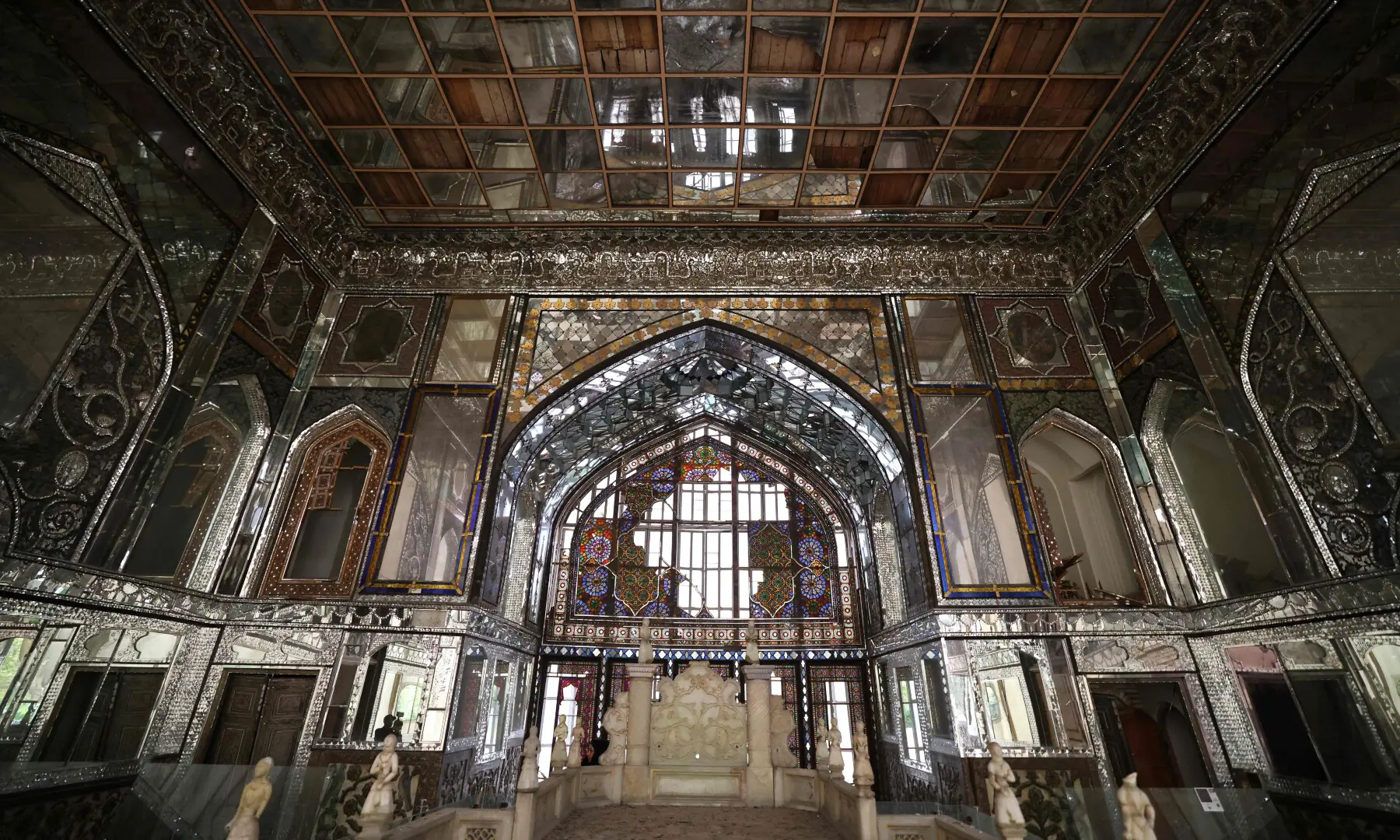
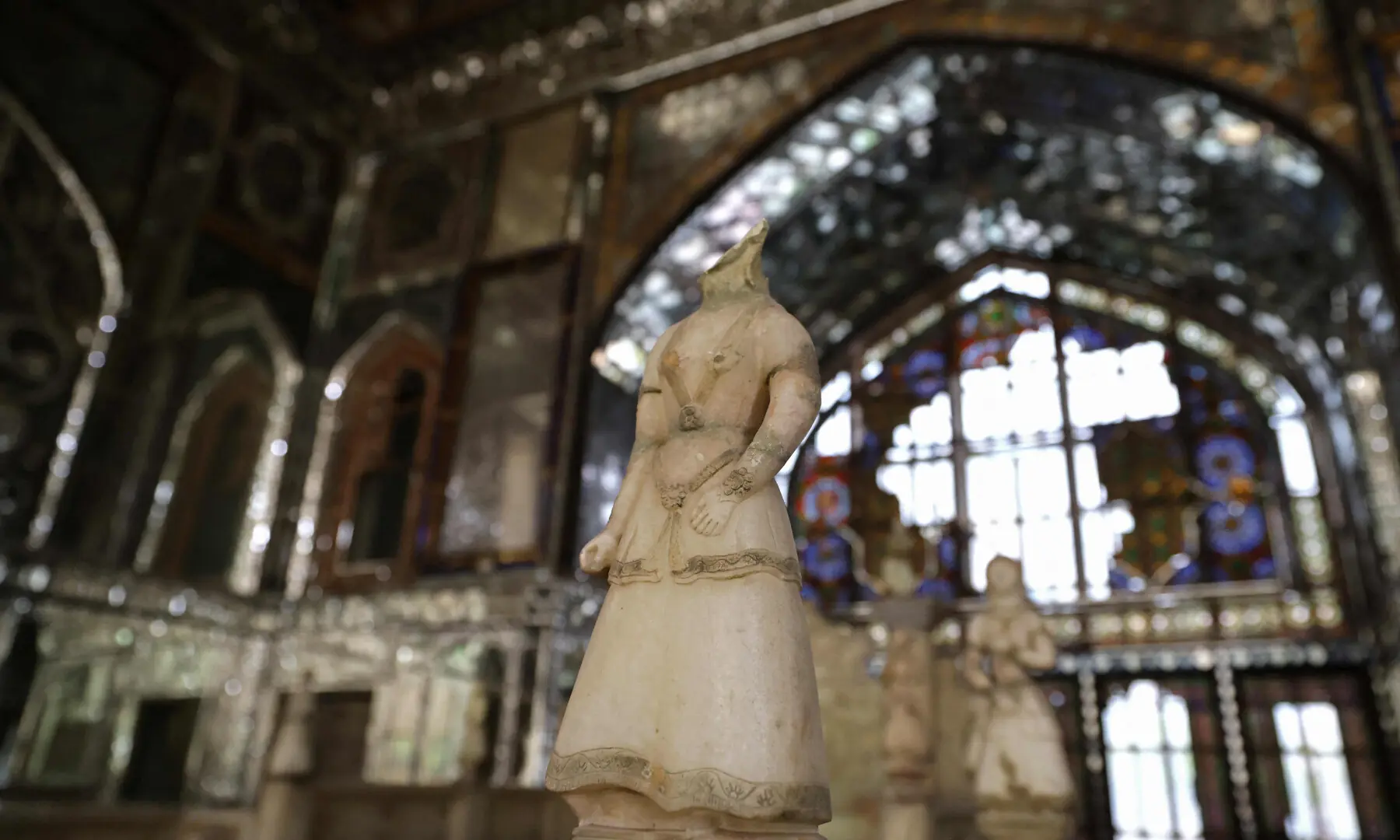
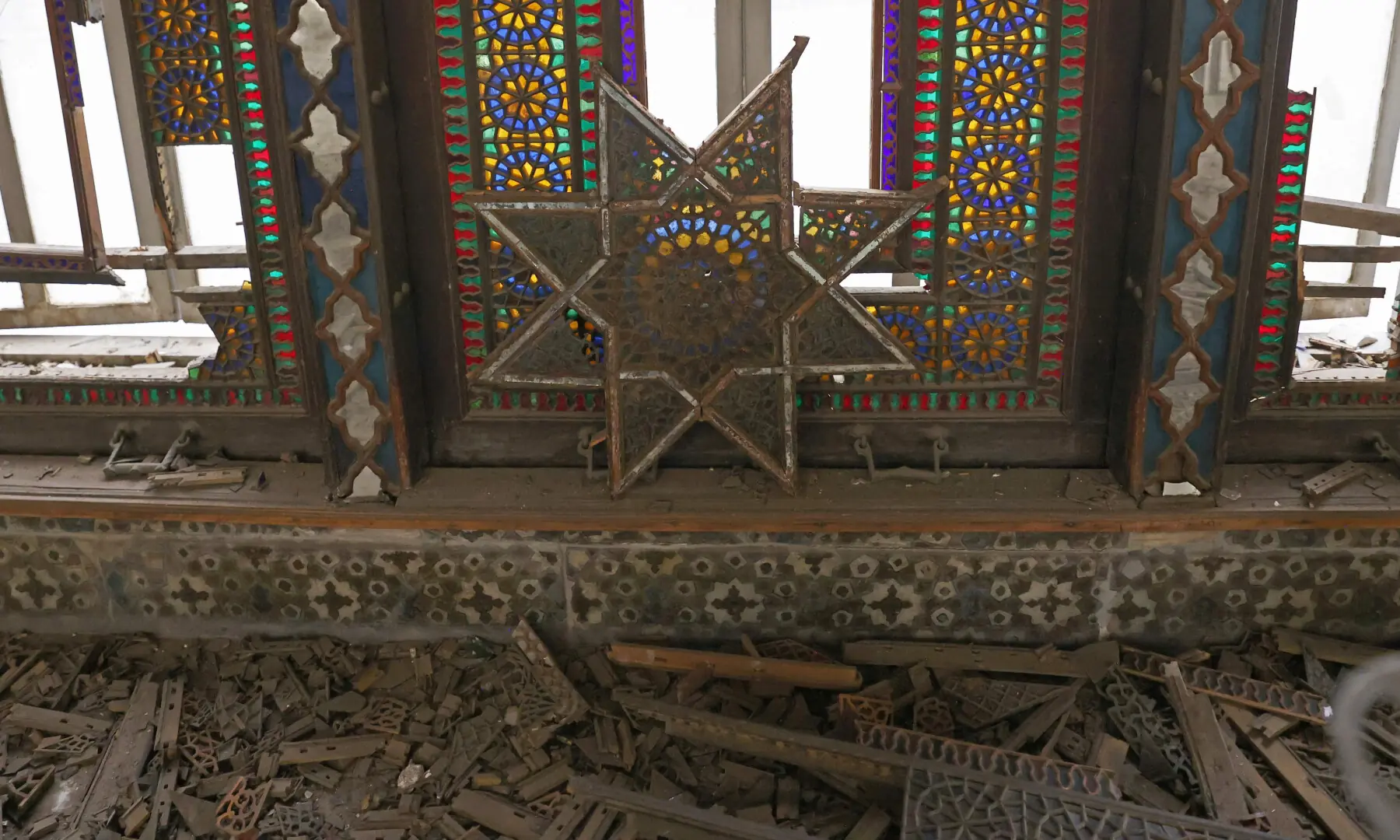
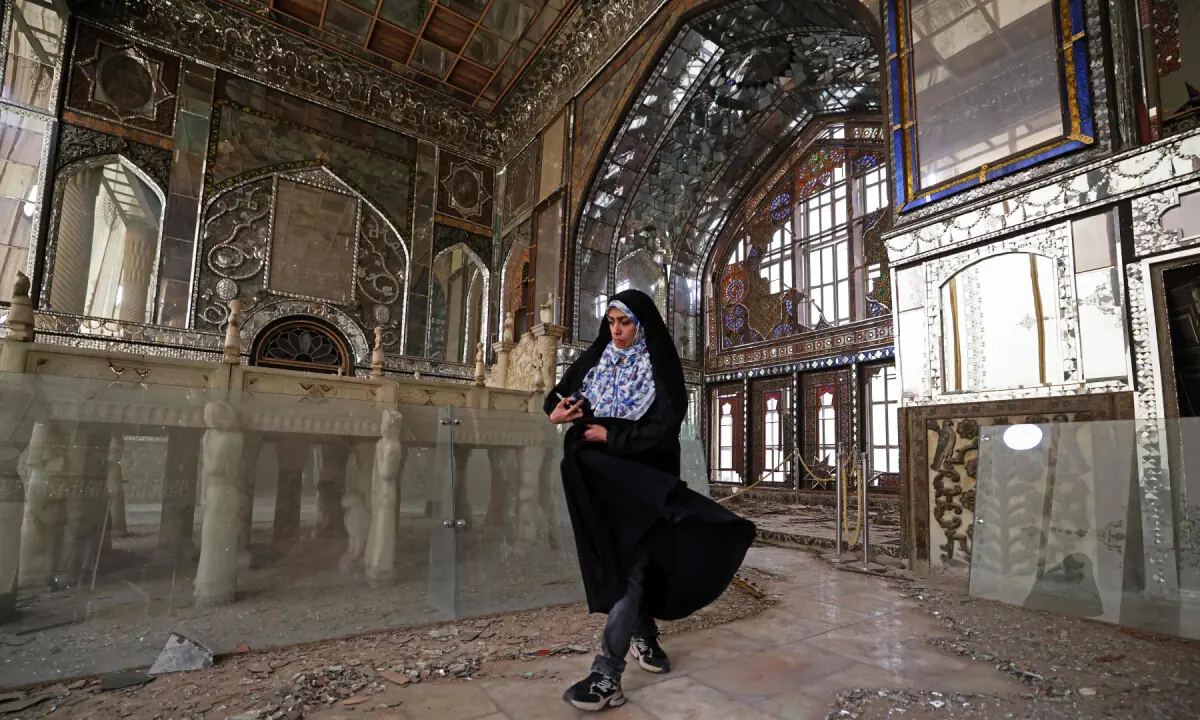
At Golestan Palace, a defining cultural landmark in central Tehran, shattered mirrors, broken doors and debris from ornate ceilings now lie scattered across parts of the site after shockwaves from strikes on the capital following the outbreak of war on February 28.
The former royal residence, known for its sprawling gardens, pools and royal halls, has been listed as a Unesco World Heritage site since 2013.
The fragile truce in place since April 8 has allowed experts to begin gauging the scale of the damage, though the complex remains closed to the public.
Visitors walk through the damaged interiors of the historic Golestan Palace in Tehran on April 4, 2026. — AFP/File
“The damage has been assessed at several levels, but a more detailed specialised evaluation is still underway,” Ali Omid Ali, a restoration specialist and head of the technical engineering department at Golestan Palace, told AFP.
For now, he said, teams are focused on stabilising damaged structures and preventing further collapse before broader repair work can begin.
“We need a more stable situation to start the restoration process,” he said.
Initial estimates suggest work at the site could cost around $1.7 million, though the figure could rise following a full assessment, he added, noting that repairs could take “two or more years”.
The palace, known for blending 19th-century Persian arts and architecture with European styles and motifs, is among at least five Unesco-listed sites damaged during the conflict.
The damaged interiors of the historic Golestan Palace are pictured in Tehran on April 4, 2026. — AFP/File
“Fifty to 60 per cent of its doors and windows are broken,” Jabbar Avaj, director of the Golestan Palace museums, told the official IRNA news agency.
The palace’s famed Mirror Hall — known for shimmering mosaics covering its ceilings and walls — and the Marble Throne, a ceremonial platform supported by statues representing mythical and royal symbols, were “seriously damaged”, he said.
The damaged interiors of the historic Golestan Palace are pictured in Tehran on April 4, 2026. — AFP/File
Beyond the listed sites, the war affected at least 140 culturally and historically significant locations across Iran, according to Hassan Fartousi, head of Iran’s National Commission for Unesco.
Among them are Tehran’s Marble Palace, the Teymourtash house and the sprawling Saadabad Palace complex in northern Tehran, a former royal residence set within a vast park and home to several museums.
“The shadow of war still lingers over Iran’s sky, and in this situation, we cannot plan very well for restoration,” Fartousi said.
While the ceasefire since April 8 has largely halted fighting in major urban centres housing cultural sites, sporadic clashes have occurred in coastal areas and Gulf waters, and talks have so far failed to produce a lasting settlement.
Fartousi also worries that even after repairs, damaged heritage sites may never recover their original character, noting the entire idea of cultural heritage rests on “the concept of originality”.
“Even if we do the restoration with our great artists and specialists in restoration, where will the originality be?” he said.
The damaged interiors of the historic Golestan Palace are pictured in Tehran on April 4, 2026. — AFP/File
Funding remains a major challenge, with the Iranian government yet to announce a restoration budget as it struggles to offset the impact of the war and a US blockade that has severely disrupted exports.
“Unfortunately, Unesco and other international organisations have limited budget,” he said, adding that negotiations were ongoing to secure support.
Asked about the overall cost of restoring the damaged sites, Fartousi simply said: “All of them are priceless.”
The damaged interiors of the historic Golestan Palace are pictured in Tehran on April 4, 2026. — AFP/File
Header image: A visitor walks through the damaged interiors of the historic Golestan Palace in Tehran on April 4, 2026. — AFP/File
Sana stood outside the gates of the police station with her young son, clutching her hand as she trembled from fear of what people would say if she went inside.
The 26-year-old had been subjected to four years of physical, emotional and financial violence at home, and now her husband was threatening to leak their private videos. What held her back was not fear of her abuser but a sentence she had heard her whole life: Sharif larkiyaan thaney nahi jaati. Good girls don’t go to police stations.
At our gate, Sana was not just dealing with her husband’s violence but also battling a deeper, more systemic violence in the shape of a belief system that decided how far she was allowed to seek justice.
This story is not an isolated one. I often hear it as a Sub-Divisional Police Officer serving with the Sindh Police. Each complainant who happens to be a woman or her family apologises to me: “We come from a respectable family. We have never stepped inside a police station.” This disclaimer signals that the act of going to the police needs to be justified.
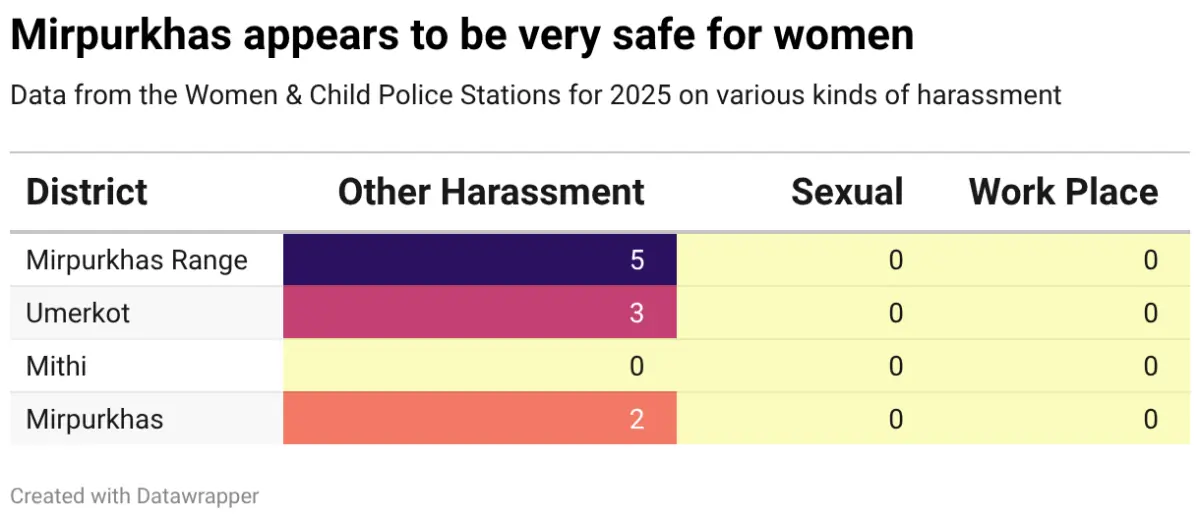
When women say it, the police station ceases to operate as an institutional space where you can report a crime, and it morphs into a dangerous site where you imperil your social identity. There is a striking pattern to this pre-emptive stigma neutralisation. The disclaimer is the same no matter what the crime. It is given when a woman’s husband breaks her arm at home in Larkana, she is raped by her employer in Landhi, threatened by her own uncles in Mirpurkhas, and even when she loses her life savings to some scammer bro sitting in Ratodero with a 5G connection.
The subtext is always the same: If you do go to a police station, you will no longer be considered respectable. This is classic patriarchal control over a woman’s mobility and voice. A sharif aurat is constructed around notions of modesty, obedience and invisibility in public spaces. At the same time, police stations in Pakistan have been historically associated with male domination and crime. But the result is that women are left to endure injustice rather than encouraged to seek a remedy.
This barrier flies in the face of guarantees enshrined in the Constitution of Pakistan that all citizens are equal under the law and deserve its protection. The message should be that a woman going to a police station is not compromising on her dignity but exercising a fundamental right.
The persistence of this stigma is dangerous given the magnitude of violence that is widespread and under-reported. The Human Rights Commission of Pakistan and Aurat Foundation provide some sense of what is out there, but so many cases are never reported or withdrawn because of the thana stigma.
Recently, a young woman walked into a police station with her brother, seeking help for repeated physical violence by her husband. She spoke in fragments at first, hesitant, almost apologetic, describing the abuse she had been enduring. There were signs of fear, but also urgency. Before she could explain her situation, her brother interrupted. He dismissed the severity of the situation with a practised calm. They did not want to pursue legal action and instead asked if they could do something else.
“Bas usse bula ke police wali zuban mein samjha den ke theek se rahen.” Just call the husband and tell him to straighten out in the language of the law. In that moment, the woman’s plea for safety was reframed into a demand for adjustment.
What stood out was not just the violence she had faced, but the boundary her family had already drawn around justice.
Legally, the option to proceed was clear. Under the Domestic Violence (Prevention and Protection) Act and provisions of the Pakistan Penal Code, physical assault and abuse are crimes serious enough that police can arrest the person accused of them and investigate (cognisable offences). The State sees such violence as a crime, and not as a private matter, but in reality, the law often arrives second after family negotiations are held, social calculations are made, and reputational concerns weighed up.
Forty-two Women and Children Protection Cells (WCPCs) have been opened in all ranges and districts of Sindh to make reporting a crime easier (See list of officers, locations and contact numbers below). You can use the WCPC app, Zainab Alert, 1917 or IG Complaint Cell as well. But none of these diminish a physical police station as the most immediate point of access to justice.
The WCPCs have contributed to a noticeable increase in crime reporting, especially for domestic violence, harassment and child abuse, by providing a relatively more sensitive and less intimidating environment staffed by female officers. For instance, the call centre 1715 WCPC from January 1, 2025, to November 2025 received ~82,570 complaints online alone, mostly domestic violence and harassment, which were catered to accordingly. One woman was brought to a police station after making a call to 15. Her husband had thrown hot tea at her face because he claimed she had served him in old utensils. He was immediately arrested.
In that moment, the law was clear, and the institutional response was immediate, but what followed was more revealing than the crime itself. As proceedings began, the woman pleaded, “Please release my husband. He won’t do it again. Just make him understand.” The same system she had called on for help was now being asked to retreat. No wonder she was back again after a month, this time with a graver assault.
Discouraging women from going to police stations does not protect dignity. It protects the perpetrators. Cycles of violence grind on when victims or survivors are dissuaded from resorting to state institutions for support. For many women, fear of social judgement outweighs the promise of legal protection. I see women pleading for a settlement with their husbands and trying to convince them not to be violent towards them, without taking any legal action. Their only concern is to keep the family reputation intact.
They reveal that the barrier is not always access to the system; sometimes it is the conditioned belief that using it fully will cost more than enduring the violence. Families concerned about their social standing discourage the reporting of a crime even in serious abuse cases. But in doing so, they normalise a culture of silence. The media has not helped by loading with controversy a woman’s presence in a police station. This framing is being challenged, but much work remains to be done.
A notion that needs to spread to all parts of society is that a police station is not a place of dishonour. It is a public institution meant to serve citizens, and a woman who walks into a thana is not stepping outside her respectability but asserting her rights.
Meanwhile, change is being driven forward in the attitude of police officials toward female victims. Capacity-building sessions are held regularly on handling female complainants, victims of heinous crimes and other vulnerable groups. A front desk officer will pause and think before saying, ‘Aurat ne kuch to kiya hoga,’ as was the case before. (She must have done something). The rise in the number of women police officers is reshaping how women experience the system. It may not dismantle stigma overnight, but it does create an entry point, a space where hesitation softens.
I have often witnessed that shift the moment a woman steps into my office and takes a visible sigh of relief. A woman who had been defrauded by her husband at first was uncertain about proceeding, but as we walked her through the legal channels, something began to change.
With every interaction, she began to appear more assured. The last time she came to see me, her demeanour was entirely different. “Kya hum kabhi bhi aapke office aaskte hain baghair kisi rukawat ke?” she asked me. Can we come to your office without any problems? For many women, access to justice is not assumed; it is negotiated; it is uncertain and sometimes dependent on who sits on the other side of the table.
Police departments must continue to ensure professionalism, confidentiality and dignity in handling complaints. This will only be possible when the basic unit of the police station is made stronger. Women are taking up key positions and ranks. Encouraging women to report violence is not a threat to social values; it is a reinforcement of the rule of law.
Sharif aurat thaney nahi jaati is not merely outdated, it is also exclusionary. While the feminisation of policing has begun to transform the thana, the greater challenge lies in transforming the mindset that keeps women away from it.
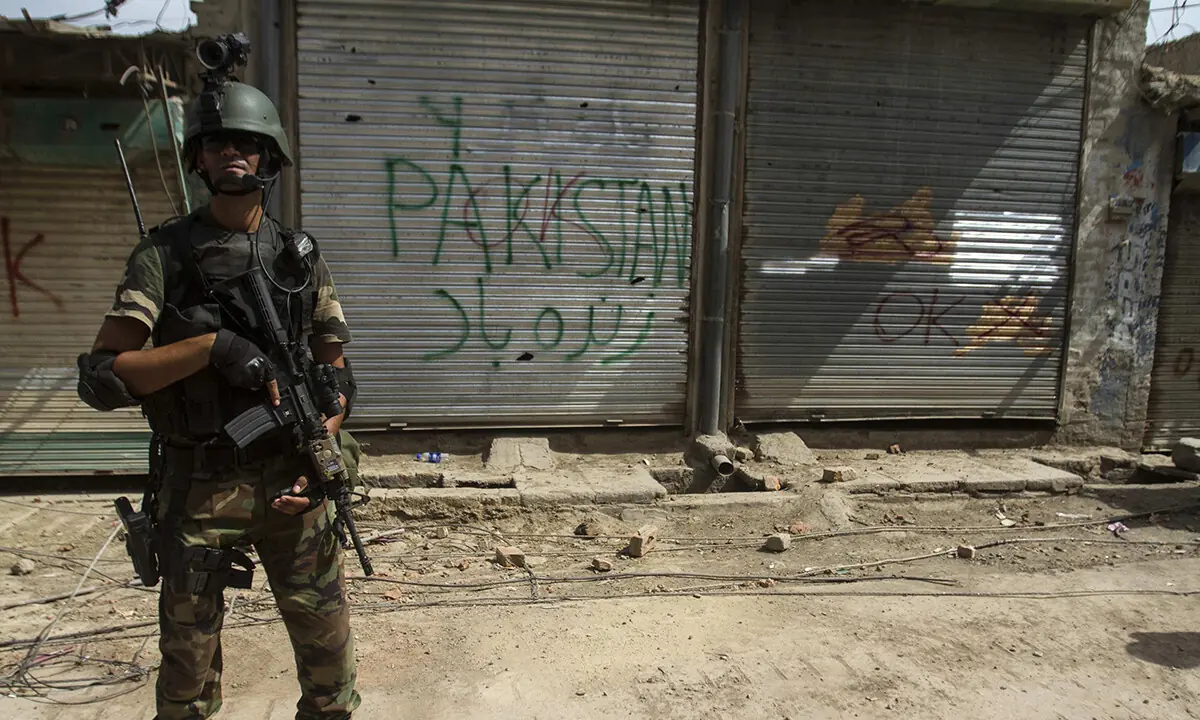
MIRANSHAH: A large-scale security operation against militants continued for the third consecutive day in the Shewa tehsil and adjoining areas of North Waziristan, with reports claiming that seven militants, including two key commanders, were killed during search and clearance operations.
According to sources, several militant hideouts were destroyed during the operation, while security forces intensified actions in multiple localities of the region.
In the Dorwazanda area of Shewa tehsil, the Alam Khel Market was reportedly almost completely demolished during the operation. Local residents claimed that militants had allegedly been using the market as hideouts and movement routes.
Meanwhile, in the Anarkhel area, an alleged militant hideout and a residential compound were also destroyed with explosive material. Sources added that security forces had taken control of several important buildings and installations during the operation, including the Governor Model School, which militants were allegedly using for their activities.
Residents and local sources said door-to-door search operations were continuing in Dorwazanda and nearby areas, while additional contingents of security personnel had been deployed. Security forces also conducted raids on several suspected locations and reportedly seized weapons and other materials.
According to reports, militants suffered heavy casualties during the ongoing operation. Sources claimed that the slain militants were allegedly involved in attacks on security forces and police personnel, as well as incidents of targeted killings.
Security operations were also launched in the Sarkhani area, where intermittent firing and explosions continued to be heard, sources said.
A curfew remained imposed across the affected areas, severely disrupting daily life and causing difficulties for residents. Several families were said to have shifted to safer locations, while business activities remained completely suspended.
Security officials said the purpose of the operation was to eliminate militant elements from the area and restore peace and stability.
Historically, Shewa was considered one of the relatively peaceful areas of North Waziristan. Residents primarily depend on agriculture, livestock and small-scale businesses, and the area is known for its simplicity and strong tribal cohesion.
Even during the military operations launched after 2014, locals say Shewa remained comparatively less affected, and normal life returned sooner than in other parts of the district.
However, over the past year, the situation has deteriorated sharply. Residents attribute the worsening conditions to a rise in targeted killings, quadcopter attacks and increased activity by outlawed militant groups.
In March, after the evacuation of Dorwazanda, Alamkhel, Malokhel and Anarkhel villages in Shewa, families from nearby localities were also fleeing their homes to relatively safer districts.
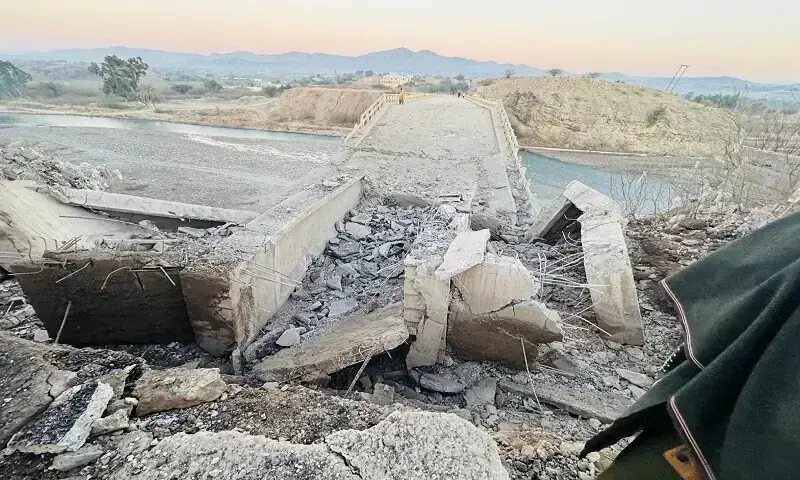
In January, unknown attackers blew up a bridge over the Kurram River, which served as a vital link between several villages, compounding difficulties faced by residents.
Pakistan Telecommunication Company Ltd (PTCL) said on Sunday that consumers may face internet disruptions due to maintenance work on a submarine cable between May 11 and 18.
In a post on X, PTCL said: “A maintenance activity is planned on one of our submarine cables to repair a fault by the International Cable Consortium,” adding that the work will begin on May 11 and may continue until May 18.
“During this period, customers may face internet service degradation during evening hours,” PTCL said.
The state-owned telecom giant manages three undersea optical fibre cable networks that provide international internet connectivity to Pakistan.
Internet users in Pakistan often face disruptions due to persistent submarine cable faults.
According to a report by Top10VPN.com, Pakistan led the world in financial losses from outages and shutdowns of internet and social media apps in 2o23.
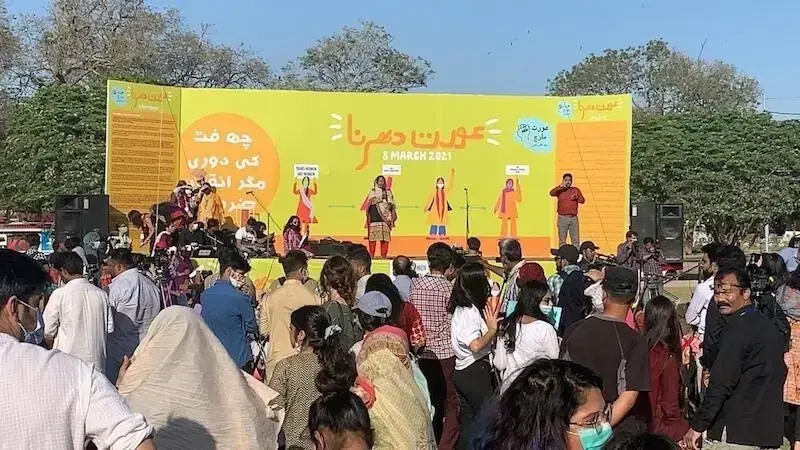
THE Sindh government’s 28-point list of restrictions imposed on Aurat March Karachi is a distressing example of familiar double standards: women are celebrated in speeches and choreographed photo opportunities, only for the state to recoil the moment they demand their rights.
The organisers sought permission to march peacefully for women’s rights. What they received, instead, was a document dripping with authoritarian anxiety. The message could not have been clearer: women may gather, but only if they remain politically harmless.
Rather than facilitating peaceful assembly, the administration chose to police slogans, speech and even clothing. The vague and sweeping conditions betray insecurity.
Why does a march calling attention to gender violence and economic inequality provoke such discomfort in official circles? Why are women demanding bodily autonomy and constitutional rights treated as a threat?
Secure governments do not fear placards, nor do they attempt to dictate what citizens may wear while exercising their rights.
Across Pakistan, as in the rest of the world, the overwhelming majority of perpetrators of violence against women are men. Women face harassment in streets, workplaces and homes. They are subjected to ‘honour’ killings, domestic abuse, forced marriages and institutional discrimination.
Yet instead of confronting the structures that enable such violence, the state’s instinct is to regulate women themselves. The state appears unable to tolerate women speaking in their own voice without bureaucratic approval.
There is an undertone of ‘women should be seen and not heard’ running through these directives — an outdated view masquerading as administrative procedure.
Just consider: in 2026, women in Pakistan must still seek permission to demand dignity while the state reserves the right to determine how loudly, how politically and even how appropriately dressed they may be while doing so. We have miles to go before we can claim to be a progressive society.
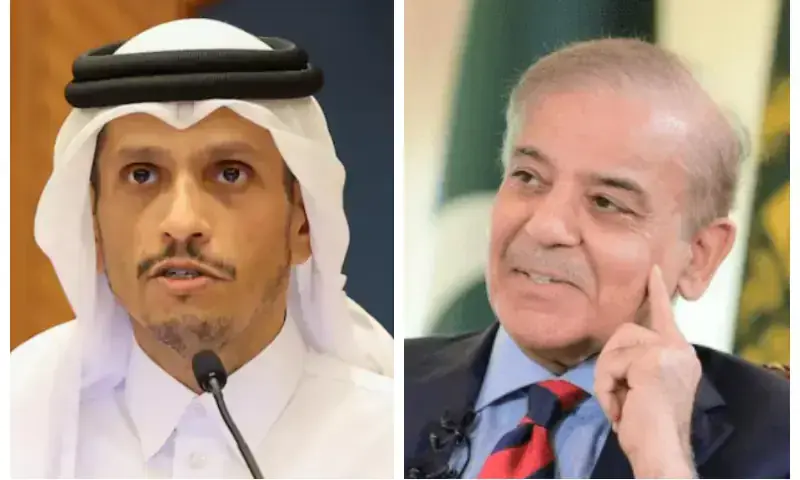
Prime Minister Shehbaz Sharif on Sunday said he and his Qatari counterpart Sheikh Mohammed bin Abdulrahman bin Jassim Al Thani reaffirmed their “shared commitment” to support “constructive dialogue” in the Middle East.
In a post on X, PM Shehbaz said he was “delighted to receive a telephone call from my brother […] earlier today”.
“We exchanged views on the evolving regional situation and reaffirmed our shared commitment to support all ongoing efforts aimed at promoting lasting peace, stability, and constructive dialogue across the region,” the premier added.
The prime minister said he conveyed his “sincere appreciation to my dear brother”, Qatar’s Emir Sheikh Tamim bin Hamad Al Thani, “for his wise leadership and for Qatar’s continued support for Pakistan’s sincere efforts to advance regional peace and stability through dialogue and diplomacy”.
PM Shehbaz further said he looked forward to the Qatari emir’s visit to “Pakistan very soon”.
In its statement on the phone call, the Prime Minister’s Office (PMO) said the two leaders “reviewed the progress of ongoing peace efforts in the region”.
Emphasising the “depth of the brotherly bonds between the two countries”, the PMO said both sides “underscored the importance of constructive engagement by all parties to ensure the success of ongoing peace efforts”.
It further noted that the Qatari emir’s visit “would help both sides to further strengthen and expand the enduring Pakistan-Qatar partnership”.
According to Qatar’s foreign ministry, Sheikh Mohammed affirmed Qatar’s “full support for the Pakistani mediation efforts aimed at ending the crisis through peaceful means”.
He stressed the “need for all parties to respond to these efforts in order to create the appropriate conditions for progress in the negotiations, leading to a comprehensive agreement that achieves sustainable peace in the region”.
The conversation marks the second phone call this week between PM Shehbaz and Sheikh Mohammed. It also follows the Qatari PM’s meeting with US Secretary of State Marco Rubio and Special Envoy on the Middle East Steve Witkoff during his visit to the United States.
Rubio said he discussed “US support for Qatar’s defence”, while Qatar’s foreign ministry noted that “Pakistani mediation aimed at reducing escalation” also came under discussion.
Iran, while questioning the seriousness of American diplomacy, has kept the United States waiting for its response to Washington’s latest proposals to end more than two months of fighting and begin peace talks.
Pakistan initially positioned itself as a facilitator in the peace process between Tehran and Washington after the US and Israel launched attacks on Iran on February 28, setting off a conflict that gave rise to a global fuel crisis. Later, the White House and Iran acknowledged it as the “sole mediator” in the process.
The first round of historic direct US-Iran talks, held in Islamabad on April 11 and 12, ended without an agreement, but also without a breakdown, as a Pakistan-brokered ceasefire was then extended indefinitely by US President Donald Trump.
While Pakistan’s leadership is seeking to bring the US and Iran back to the negotiating table, an impasse remains.
Kim Su-jin and her husband have set aside their doubts and embraced parenthood, joining a small but notable wave of South Korean couples having children despite the country’s steep demographic decline.
South Korea has one of the world’s lowest birth rates, and the government has spent billions of dollars trying to encourage citizens to have more babies and cushion the worst impacts of a shrinking population.
The Asian nation is still nowhere near reversing the trend, but a modest baby bump has come after years of consistently low statistics — even as experts disagree on the underlying causes.
Kim, 32, a freelance music industry worker, gave birth to her daughter in January last year despite earlier financial concerns during her four-year marriage.
She shook off worries over housing, schooling and work “because we believed that having (a baby) would bring us happiness”, she told AFP.
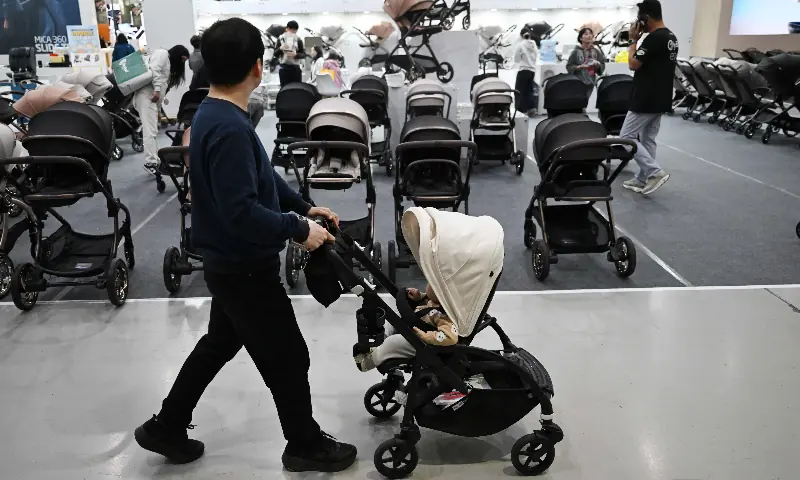
This picture taken on April 30, 2026 shows a man pushing a stroller as he visits a baby fair in Seoul. — AFP
South Korea’s fertility rate hit a record low in 2023 but has picked up since then, with the number of monthly births consistently rising compared to the previous year.
Nearly 23,000 babies were born in February, the most for that month in seven years, according to the statistics ministry.
The on-year growth of 13.6 per cent was the highest for any February since records began in 1981.
Pro-natalist policies
The uptick in births has tracked a similar, though less even, rise in marriages going back to mid-2022, official figures show.
Experts said the trend may reflect more positive attitudes towards family among younger South Koreans.
But they differed on what was driving the shift and how important it was compared with factors such as pro-natalist policies.
Hong Sok-chul, an economics professor at Seoul National University (SNU), said the programmes had been “quite effective”.
“Rather than trying to force marriage or childbirth … the government focused on lowering the direct and indirect costs to make these choices more rational,” he said.
Kim Woo-jin, 33, said vouchers she received from the government had “played a significant role in alleviating the financial burden” of pregnancy, childbirth and child-rearing.
She cited a payment of two million won ($1,400) when her daughter was born last year, a one-million-won voucher to cover maternity fees, and subsidies for transport and post-natal care.
“I believe that the significant improvements (in state support) … played a role in the recent rebound” in births, the office worker said.
Money isn’t everything
South Korea also pays parents a one-million-won monthly allowance during the baby’s first year, while other policies include low-interest loans for young families buying homes, expanded parental leave and subsidised fertility treatment.
Some companies also hand large bonuses to staff who have children. For some couples, though, the incentives have made little difference.
Kim Su-jin, the freelancer, said government support “in reality … provides little substantial assistance”.
“The issue is not merely a matter of a few million won,” she told AFP, citing broader social ills like exorbitant tutoring fees, widespread school bullying and the threat of job losses due to artificial intelligence.
This picture taken on April 30, 2026 shows baby clothes displayed at a booth during a baby fair in Seoul. — AFP
Demographer Lee Sang-lim, also of SNU, said it was “very difficult” to conclude that the latest government policies had caused the upturn in births, noting that several initiatives only began in early 2024 — less than nine months before the increase became apparent.
He said that more than a decade of policies to help boost fertility may have played a role in improving the environment for childbirth and child-rearing.
Fertility or futility?
South Korea’s total fertility rate — the number of children each woman will have on average — increased last year from 0.75 to 0.8, still well below the threshold of 2.1 needed to maintain the population.
Other theories for the baby bump abound, with implications for how long it might last.
Park Hyun-jung, a data ministry official, said in February the rise partly reflected the demographic “echo” of a larger-than-normal cohort born in the early 1990s, now in their peak childbearing years.
Younger generations also appear to feel less traditional stigma around having children outside marriage, with the number nearly doubling between 2002 and 2024, according to official figures.
Still, births outside marriage accounted for only 5.8pc of the total in 2024.
This picture taken on April 30, 2026 shows a woman pushing a stroller as she visits a baby fair in Seoul. — AFP
SNU’s Lee said the recent uptick was driven mainly by marriages and births delayed during the pandemic, though he added that people born in the 1990s appeared “more family-oriented”.
He said it was “difficult to define this as a demographic turning point”, warning births could decline “rapidly” again once that group ages out of its peak period.
Hong, the economist, said “continued aggressive policy support will be necessary”, adding that “the current rebound, while positive, is still insufficient for long-term population replacement”.
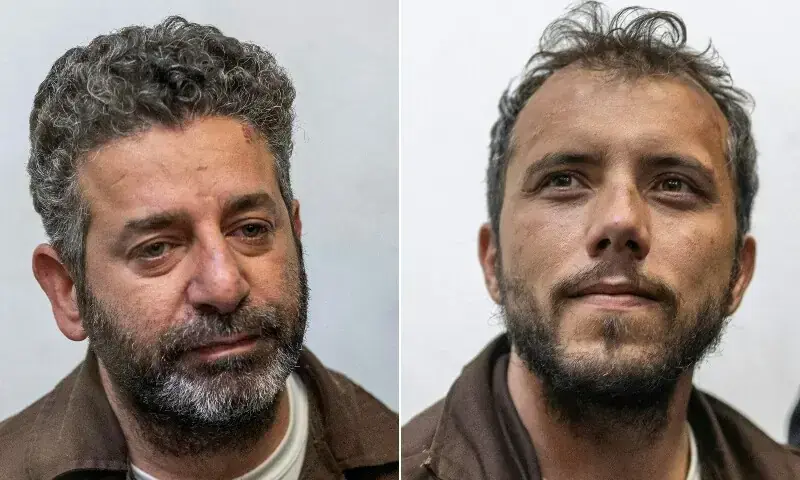
Israel deported on Sunday two foreign activists seized from a Gaza-bound flotilla, in what a rights group representing them described as a “punitive attack” on a civilian mission.
Saif Abu Keshek, a Spanish national of Palestinian origin, and Brazilian Thiago Avila were among dozens of activists aboard a flotilla intercepted by the Israeli navy in international waters off the coast of Greece on April 30.
The pair were seized by Israeli forces and brought to Israel for questioning, while the others were taken to the Greek island of Crete and released.
“Saif Abu Keshek and Thiago Avila, from the provocation flotilla, were deported today from Israel” following an investigation, the Israeli foreign ministry posted on X on Sunday.
Israel would “not allow any breach” of the blockade on Gaza, it added.
Spain, Brazil and the United Nations had all called for the men’s swift release.
On Wednesday, an Israeli court rejected an appeal contesting the pair’s detention.
“From their abduction in international waters to their unlawful detention in total isolation and the ill-treatment they were subjected to, the Israeli authorities’ actions were a punitive attack on a purely civilian mission,” Adalah, the rights group that represented the pair, said after their release.
“The use of detention and interrogation against activists and human rights defenders is an unacceptable attempt to suppress global solidarity with Palestinians in Gaza.”
The flotilla had set sail from France, Spain and Italy with the aim of breaking Israel’s blockade of Gaza and delivering humanitarian aid to the war-ravaged Palestinian territory.
The Global Sumud Flotilla’s first voyage last year was also intercepted by Israeli forces off the coasts of Egypt and Gaza.
Israel controls all entry points into Gaza, which has been under an Israeli blockade since 2007.
Throughout Israel’s war on Gaza that started in October 2023, there have been shortages of critical supplies in the territory, with Israel at times cutting off aid entirely.
In the early 2020s, the Belgian political theorist Anton Jäger coined the term “hyperpolitics”. He noticed that, in this day and age, politics seemed to be everywhere and in everything but was not catalysing any real change. At least not the way politics used to in the 20th century.
The last century was an era of mass political activity (‘mass politics’) driven by large political parties, unions and macro-ideologies. According to Jäger, until the 1980s, political life was anchored by “thick institutions” that acted as a bridge between the individual and the state. But by the 1990s, “post-politics” had set in and replaced mass politics.
In the era of post-politics, the polity became increasingly consumerist in nature and governance was left in the hands of technocrats. Conflict was suppressed and political parties became hollow after delegating important economic and social tasks to ‘experts’ serving the interests of large banks and multinational corporations. Then, from the early 2010s, a sudden return of political energy filled the vacuum left behind by the docility of post-politics. It is this energy that Jäger calls hyperpolitics.
But this energy is nothing like the one that had carried countries towards widespread change and even revolutions in the 20th century. That energy had begun to wane from the 1980s, increasingly replaced by an emphasis on the well-being of the ‘self’ through consumerism and the commodification of identities.
Once anchored by ideologies and movements, politics is now increasingly performed through aesthetics and consumption, as ‘allegiances’ are signalled through brands rather than a sustained struggle
Mass politics started suffering fatigue and the individual became the “new self.” But the new self wasn’t the rugged, reflective and morally ambiguous manifestation of individualism of previous eras. The post-political individual was a ‘sensitive’, self-centred person entirely invested in their own ‘happiness’ and ‘contentment’. In a way, they were more manageable for governments and multinationals.
They consumed politics like they did consumer brands. In fact, corporate brands began to define the identities of these individuals just like political ideologies had done before the 1980s. They ‘became’ the brand they wore, drank, ate etc. In her 1999 book No Logo, the Canadian author Naomi Klein wrote that corporations shifted from selling products to selling ‘meaning’. In 1968, the French sociologist Jean Baudrillard had predicted that objects would no longer be valued for their use but for what they say about the owner’s identity. He was right.
According to the Polish-British sociologist Zygmunt Bauman, when everything, including politics, is treated as a consumer choice, the individual becomes more manageable. Since consumerism is about instant gratification and disposability, long-term political commitment or ideological struggle becomes too time-consuming or boring for the modern individual. Consequently, the idea of individualism also transformed.
One way to demonstrate this is through studying the way lead (male) characters in films evolved. The classic 20th century idea of individualism wasn’t detached from mass politics as such. It was very much part of it. Take the example of the cynical, hard-drinking and chain-smoking character played by Humphrey Bogart in 1942’s Casablanca. He seems uninterested in the political affairs of the world, but ends up contributing to America’s war effort against the Nazis. He realises that his anger towards a lover who had left him was far smaller an issue than the war.
Clint Eastwood’s brooding and detached character in the Dollar trilogy, directed by Sergio Leone in the 1960s, is a loner and a cynic who doesn’t say much but ends up accepting the circumstances that compel him to aid the helpless against thugs.
Quite a number of films across the 1960s and 1970s romanticised this nature of individualism. Amitabh Bachchan’s ‘angry young man’ roles in 1970s’ Bollywood films were in the same mould. Nikhat Kazmi wrote in her book Ire in The Soul that Bachchan’s characters were largely shaped to channel the anger of the people during a turbulent period in India.
However, Bachchan’s Kala Pathar (1979) is an interesting case of the transition that was to come. The angry, brooding character played by Bachchan in the film suddenly embraces ‘normal life’ by plunging into a satisfying romantic partnership. This meant that he didn’t have to bother anymore about fighting his inner demons nor carry the burden of an exploited collective (in this case, a community of coal miners). And unlike his previous angry individual films, he doesn’t die in this one.
By the 1990s, Bollywood films had completely discarded the brooding loner who accepts circumstances that compel him to fight for the people. As the idea of 20th century individualism faded into the docility of the post-politics era, the new ‘aspirational’ lead characters became sensitive souls seeking gratification through lush romantic relationships and corporate brands.
Designer homes, attire and brands became necessities for ‘happiness’ and even for self-actualisation. Religious rituals in films also became extravagant and an expression of sacralised joy. Therefore, faith was also commodified as a consumer product to ‘better oneself.’
But as all this was manifesting the era of post-politics, hyperpolitics exploded on to the scene. Yet, nothing changed much. According to Jäger, since post-politics had emptied established institutions, people entered the hyperpolitical arena as self-gratifying individuals rather than as members of a collective, cohesive body.
Jäger identifies technology as the catalyst. He wrote that social media allows for “low-cost, high-decibel politicisation.” Anyone can participate. To Jäger, though, this participation focuses more on expression rather than on sustained canvassing. In the absence of traditional institutional power to influence material conditions, hyperpolitics redirects energy toward symbolic battlegrounds, where personal consumption and language serve as primary signifiers of collective identity.
The classic Peshawari chappal, for example, which the populist politician Imran Khan preferred to wear, became a brand identity (‘Khan chappal’) that replaced traditional platform-based politics. Supporters became the brand by adopting a specific aesthetic of Khan. Buying and wearing this item functioned as a political act. Not a very convincing portrayal of mass politics, though.
This is an example of consumerist politics, a leftover of the post-politics era but ubiquitous in the era of hyperpolitics as well. The recent boycott movements against certain brands also demonstrate this. For example, most individuals feel they cannot influence the actual conditions in Gaza, so they redirect their energy into ‘consumer-activism.’ They manage their political emotions by curating their social media presence to show they are the ‘right kind of consumer’ because they consume local brands. Of course, for most, an actual physical protest outside the factories of the boycotted brands is out of the question.
To Jäger, this nature of activism produces “high heat” but “low light”, resulting in a culture defined by intense moral outrage and aesthetic posturing that rarely translates into substantive policy shifts or reform.
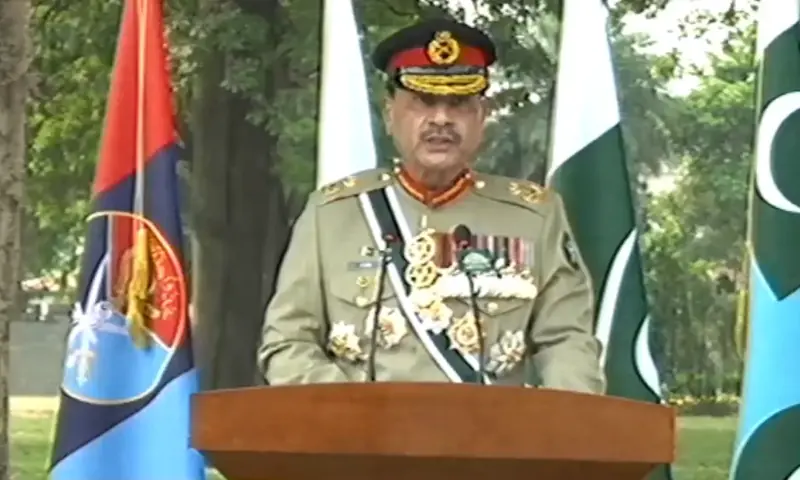
Chief of Defence Forces (CDF) and Chief of the Army Staff Field Marshal Asim Munir warned on Sunday that any future “misadventure” against Pakistan will result in “extremely far-reaching and painful” consequences for the enemy.
He made the remarks at a ceremony held at General Headquarters (GHQ) in Rawalpindi to mark one year since Pakistan’s victory in last year’s conflict with India.
The conflict with India — starting from the April 22 Pahalgam attack to the end of Operation Bunyanum Marsoos with a ceasefire between the two countries on May 10 — has been called “Marka-i-Haq” (Battle of Truth) by the state.
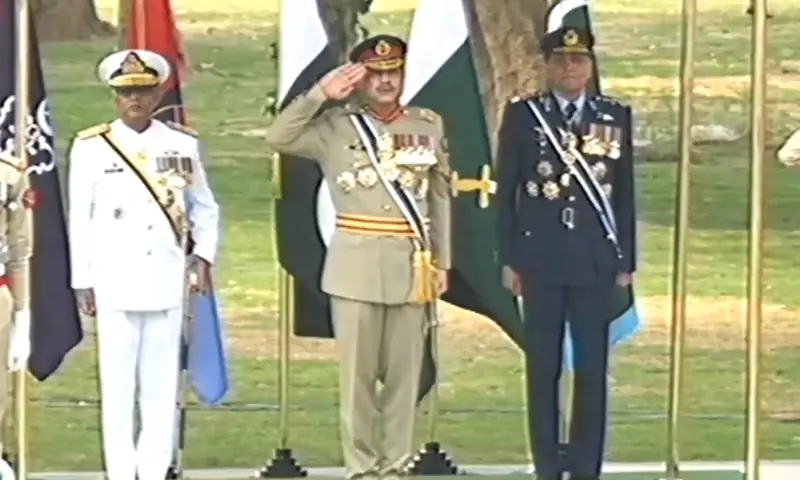
CDF Munir, as the chief guest, addressed the event. Chief of the Air Staff Air Chief Marshal (ACM) Zaheer Ahmed Babar Sidhu and Chief of the Naval Staff Admiral Naveed Ashraf were also in attendance.
Addressing the ceremony, Field Marshal Munir warned: “Our enemies should know that if any attempt is made in the future to carry out a misadventure against Pakistan, then the impact of war would not be limited, but extremely widespread, dangerous, far-reaching and painful.”
At the outset of his speech, the army chief said the day was a “source of pride” for Pakistan, its public and the armed forces.
He recalled that the “enemy made a failed attempt to test our resolve by violating the sovereignty and territory” of Pakistan from the midnight of May 6/7 till May 10. He asserted this was responded to “with full national unity and military force”.
“Marka-i-Haq was not merely a traditional war fought between two countries or militaries, but in reality, it was a decisive marka (battle) between two ideologies, in which, thanks to Allah, the truth won and falsehood was met with defeat,” he noted.
Quoting a Quranic verse on truth and falsehood, he stressed that the May 2025 conflict was “not a sudden incident, but rather a part of India’s false and widening pattern of exploitative tactics”.
“The false flag operations of 2001, 2008, 2016 and 2019 are a testament that even in the past, India has made failed attempts to impose an illegitimate war on Pakistan and […] achieve narrow-minded, long-term political and military objectives through allegations, exaggeration, warmongering and misleading imagination of limited aggression,” CDF Munir said.
“Each time, not only did Pakistan unveil the wrong assumptions of the enemy, but also served it a decisive defeat. In this war as well, India once again was a victim of its obsolete and self-delusional thinking,” he asserted.
The army chief highlighted that the objective of Operation Bunyanum Marsoos was to “unravel the enemy’s behaviour under which, to divert attention from its internal failures, it creates war hysteria by blaming Pakistan for every self-inflicted incident”.
CDF Munir said India was under the false assumption that it could “change the balance of power and prove its dominance over the region by making Pakistan a target of its military aggression and diplomatically isolating it”.
“But in reality, global and defence experts know that India’s ambitions proved to be much larger than its stature and capabilities,” COAS Munir remarked, asserting that Pakistan’s armed forces were not intimidated by the dominance of power and will never do so.
He paid tribute to the martyrs of Marka-i-Haq who “paid the price of this victory with their blood”, including women, the elderly and children killed in Indian strikes.
“All martyrs of Marka-i-Haq and their bereaved families are our crown. Your sacrifices are the guarantor of our independence and everlasting debts,” the army chief said. “We consider our martyrs an amanat, our power and responsibility, and our success a favour of God,” he added.
The army chief proceeded to express his gratitude to the president, the prime minister, the federal cabinet, the national and provincial political leadership, and all political parties for their “everlasting political wisdom, foresight and leadership” that accorded Pakistan success.
“The national leadership, all government institutions and the Pakistani nation gave a message as a single unit that any compromise on the country’s sovereignty, territorial integrity and national honour is unacceptable,” he declared.
CDF Munir stated that Pakistan also “achieved success on the diplomatic front” as its leaders and representatives conveyed Pakistan’s stance on the global stage.
“Similarly, there is no parallel found to the way the Pakistani media, the journalist community, and especially our youth, thwarted the enemy’s propaganda, cyberwarfare and psychological tactics,” he added.
The army chief highlighted that the conflict was not won on just the battlefield, but also “in every section of society” at the national level.
Emphasising that a country’s true power lies with its nation’s unity of thought and action, and patriotism, he lauded the “comprehensive national unity” displayed by the public.
“When the clouds of war loomed, we saw that every ideological and individual identity was transformed into Pakistaniyat — labourers, traders, students, the elderly and the young, and all Pakistani men and women resolved to defend their homeland,” he recalled.
“We witnessed a relation between the nation, the government, and the armed forces by virtue of which the entire nation lined up in defence of the country like an iron wall,” the army chief said.
He then recited a Quranic verse from which the phrase “Bunyanum Marsoos” for Pakistan’s retaliatory operation was derived. The verse was also recited earlier during the ceremony.
“In this battle, not only did the armed forces defeat the aggressor enemy beyond its imagination, but the professional expertise and top military strategy of our ground, naval and air forces forced the enemy to meet defeat,” the military chief said.
The CDF commended the air force personnel for “reducing the enemy’s pride to dust and setting the unique example of the modern era’s longest and decisive air battle” under the leadership of the air chief.
“Not only did they down the enemy’s several modern fighter jets, but also destroyed numerous military installations,” he said.
The field marshal also lauded the naval forces for “keeping the enemy’s naval ships thousands of miles away from Pakistani territory through constant monitoring and vigilant defence of the maritime borders”. He further commended the forces on the Working Border and the Line of Control for thwarting India’s aggression and “causing immense loss by destroying its defence positions”.
He asserted that India “suffered great human and economic losses, the price of which it will keep paying in the times to come”.
The army chief recalled that Pakistan “successfully targeted more than 26 military targets” in India during the conflict, following which New Delhi “expressed the wish for a ceasefire” to international powers.
“Defeated India expressed the desire for mediation through the American leadership, which Pakistan accepted in the interest of wider regional peace,” Field Marshal Munir said.
Future conflicts to comprise ‘multi-domain operations’
The army chief declared that Pakistan’s “defence was absolutely invincible in the face of any foreign aggression”.
“We are strictly committed to maintaining the balance of power in the region and our effective defence deterrence,” he said, asserting that the focal point of the armed forces was the protection of peace rather than aggression.
“And to maintain peace, it is mandatory to be ready for war at all times,” CDF Munir noted.
He observed that traditional wars were a thing of the past, adding that modern and future wars would “comprise multi-domain operations, in which modern technology, including cyber and electronic warfare, drones, long-range vectors, and artificial intelligence would play a crucial role”.
The military chief noted that to “further harmonise Pakistan’s armed forces with multi-domain operations”, the Defence Forces Headquarters has been established, the space programme was being expanded, and the Army Rocket Force Command has been formed.
He cited the induction of Hangor-class submarines in the Pakistan Navy, the acquisition of the “most modern fighter jets” for the Pakistan Air Force (PAF), and the Fatah missile series as “a few examples of this series”.
At the same time, COAS Munir stressed that the “journey of this defence preparedness” was not merely limited to buying new weapons, but extended to a “new thinking, training and research”.
Pakistan’s diplomatic success
CDF Munir highlighted that Marka-i-Haq had direct positive impacts on Pakistan’s foreign policy and diplomatic importance, with the world acknowledging Pakistan as an “invincible power”.
“The number of our friends in the world today is much higher compared to the past,” he said, adding that even those who criticised Pakistan were praising it now.
The army chief also mentioned the “Strategic Mutual Defence Agreement” signed with Saudi Arabia last year as a “great milestone of our diplomatic successes”.
He highlighted Pakistan’s “unbiased and responsible diplomacy” and its role as a host for “historic negotiations” between the United States and Iran.
Field Marshal Munir thanked the US and Iranian leadership, particularly US President Donald Trump, for “trusting Pakistan with this difficult task”.
‘Only one demand from Afghanistan’
In his address, the army chief said India had intensified its “state-sponsored terrorism and the strategy of supporting it”.
“It has realised that it is impossible to defeat Pakistan in the traditional battlefield. Subsequently, it has again resorted to the disgusting behaviour of terrorism,” he said, highlighting that terrorism was also being carried out from Afghanistan’s soil.
“Pakistan has only one demand from Afghanistan: to stop supporting Fitna al Khawarij and Fitna al Hindustan on the directives of India, and to completely eradicate the centres and safe havens of terrorism on its soil,” CDF Munir said.
He commended the country’s law enforcement agencies, security personnel, and public, especially those in Khyber Pakhtunkhwa and Balochistan, for fighting terrorism for the past two decades. The army chief reaffirmed the state’s resolve to eradicate terrorism.
‘Story of Pakistan incomplete without Kashmir’
Field Marshal Munir also mentioned the people of occupied Kashmir.
“Any story of Pakistan is incomplete without Kashmir. The resolution of the Kashmir dispute in accordance with the United Nations’ resolutions and the aspirations of the Kashmiris is necessary to secure freedom from India’s state brutality and violence,” he asserted.
The army chief emphasised that the ground realities of India-occupied Kashmir could not be changed through any demographic or social re-engineering.
“We will continue to raise our voice for Kashmiris’ right to self-determination at every forum, and continue our political, diplomatic and moral support for the Kashmiri people,” COAS Munir affirmed.
Concluding his address, the army chief expressed the hope that the nation would face any future challenges like an iron wall and further strengthen the homeland by continuing on the path of development.
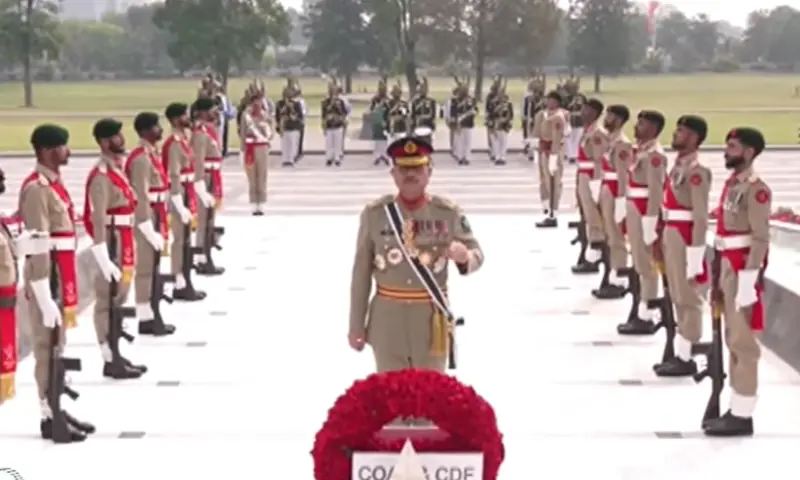
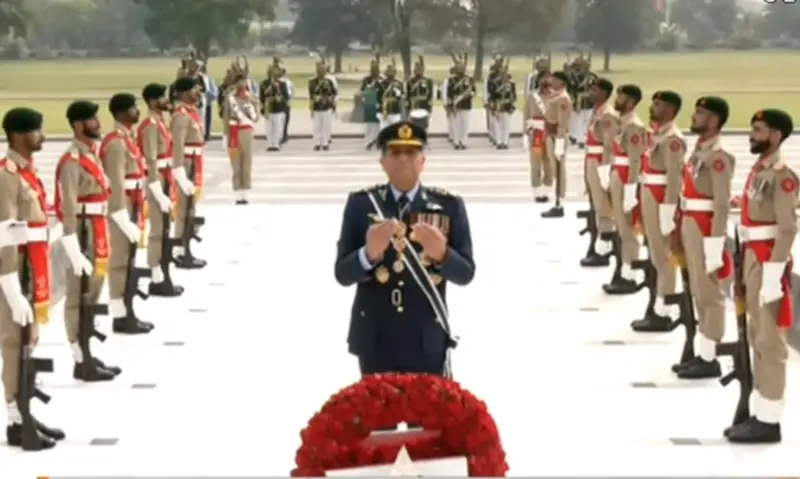
Prior to the army chief’s address, ACM Sidhu and Admiral Ashraf took turns to lay floral wreaths at the Yadgar-i-Shuhada (Martyrs’ Monument).
A salute was presented by smartly turned-out contingents of the three branches of the armed forces, which was followed by the national anthem being played.
‘Defining landmark’
In their messages issued on Saturday, Field Marshal Munir, ACM Sidhu and Admiral Ashraf congratulated the nation and officers and personnel of the armed forces on the completion of one year since the success of Marka-i-Haq.
“Observed with deep reverence, gratitude, and national fervour, the day stands as a testament to the enduring spirit of courage, professionalism, and unity,” a statement issued by the Inter-Services Public Relations (ISPR) quoted them as saying.
“Marka-i-Haq has become a defining landmark in the nation’s journey, reflecting national resolve, military excellence, and strategic maturity. This success not only bolstered national confidence but also established Pakistan as a responsible regional stabiliser, possessing formidable military capabilities,” it stated.
The statement added that Pakistan’s measured and resolute response during Marka-i-Haq “exposed adversarial conspiracies, false flag narratives and disinformation campaigns, diminishing their credibility internationally”.
“Despite facing conventional and hybrid challenges, including proxy terrorism, the armed forces demonstrated superior operational competence across land, air, sea, cyber, and information domains,” it continued.
It further read that in the aftermath of Marka-i-Haq, Pakistan had “further enhanced its defensive capabilities and reinforced full-spectrum deterrence despite resource asymmetries”.

 Login
Login