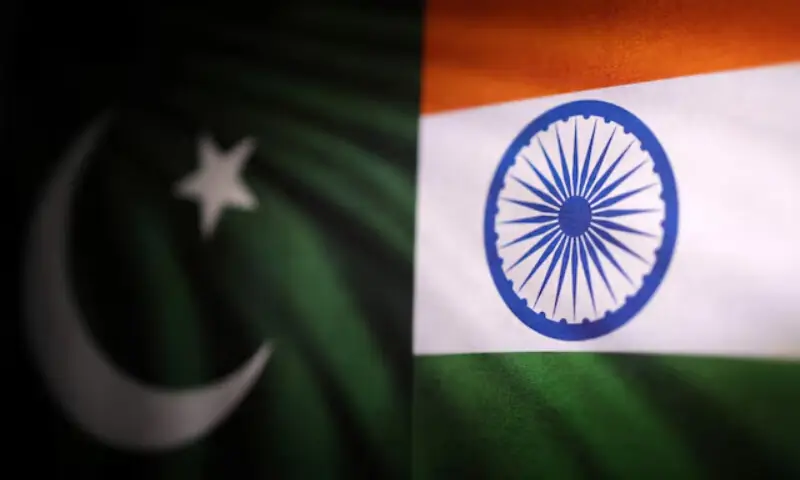
Pakistani players and teams will be able to participate in multilateral events hosted by India but bilateral events remain off the table, India’s sports ministry has said.
India also said the visa process for sportspersons and officials will be simplified, while office bearers of international sports governing bodies will be granted multi-entry visas.
“With regard to international and multilateral events, in India or abroad, we are guided by the practices of international sports bodies and the interest of our own sportspersons,” the ministry said in a memorandum.
“It is also relevant to take into account India’s emergence as a credible venue to host international sports events.”
“In so far as bilateral sports events in each other’s country are concerned, Indian teams will not be participating in competitions in Pakistan. Nor will we permit Pakistani teams to play in India,” the ministry added.
The statement comes as India is set to host the Commonwealth Games in 2030, while they have also bid for the 2036 Olympics and the 2038 Asian Games in Ahmedabad.
India and Pakistan engaged in a military conflict last year, and the deterioration of ties reflected in sporting events as well.
Although India were co-hosts of the Twenty20 World Cup earlier this year, Pakistan played all their matches in Sri Lanka — including a group game against India — as part of an arrangement that the two sides agreed on after India refused to play the 2025 ICC Champions Trophy in Pakistan .
When the two sides met for the ICC Asia Cup last year — their first meeting since the military conflict in May 2025 — the Indian team refused to shake hands with Pakistan’s players at the toss and after the match.
Furthermore, Indian skipper Suryakumar Yadav was said to have “politicised” India’s win in the match by bringing up the Pahalgam attack in occupied Kashmir, saying the victory was “a perfect gift” for his nation.
There has also been a long freeze in bilateral cricket between the nuclear-armed neighbours, who have not played a full series since 2012-13 and now meet largely at neutral venues.
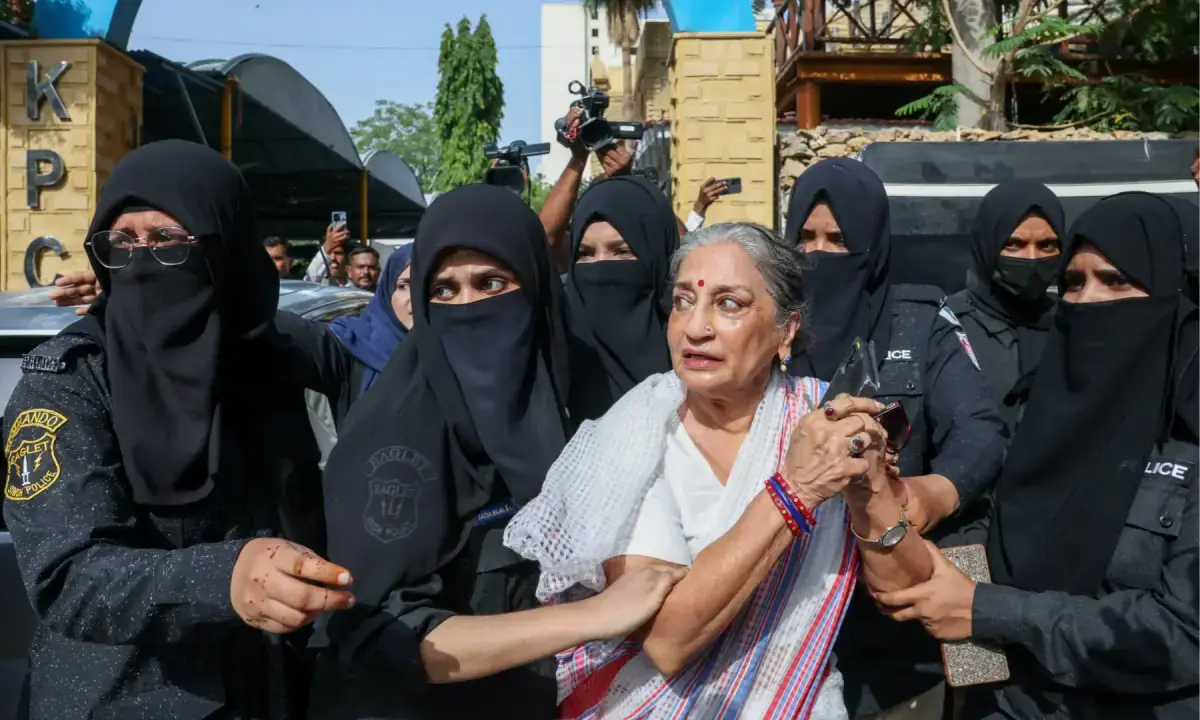
The Sindh police on Wednesday suspended three police officials for alleged mistreatment of Aurat March activists, including Sheema Kermani.
On Tuesday, the activists were detained after they gathered at Karachi Press Club (KPC) for a press conference to demand a no-objection certificate (NOC) for their upcoming annual march in Karachi.
However, the police released all activists after briefly detaining them on the orders of Sindh Home Minister Ziaul Hassan Lanjar.
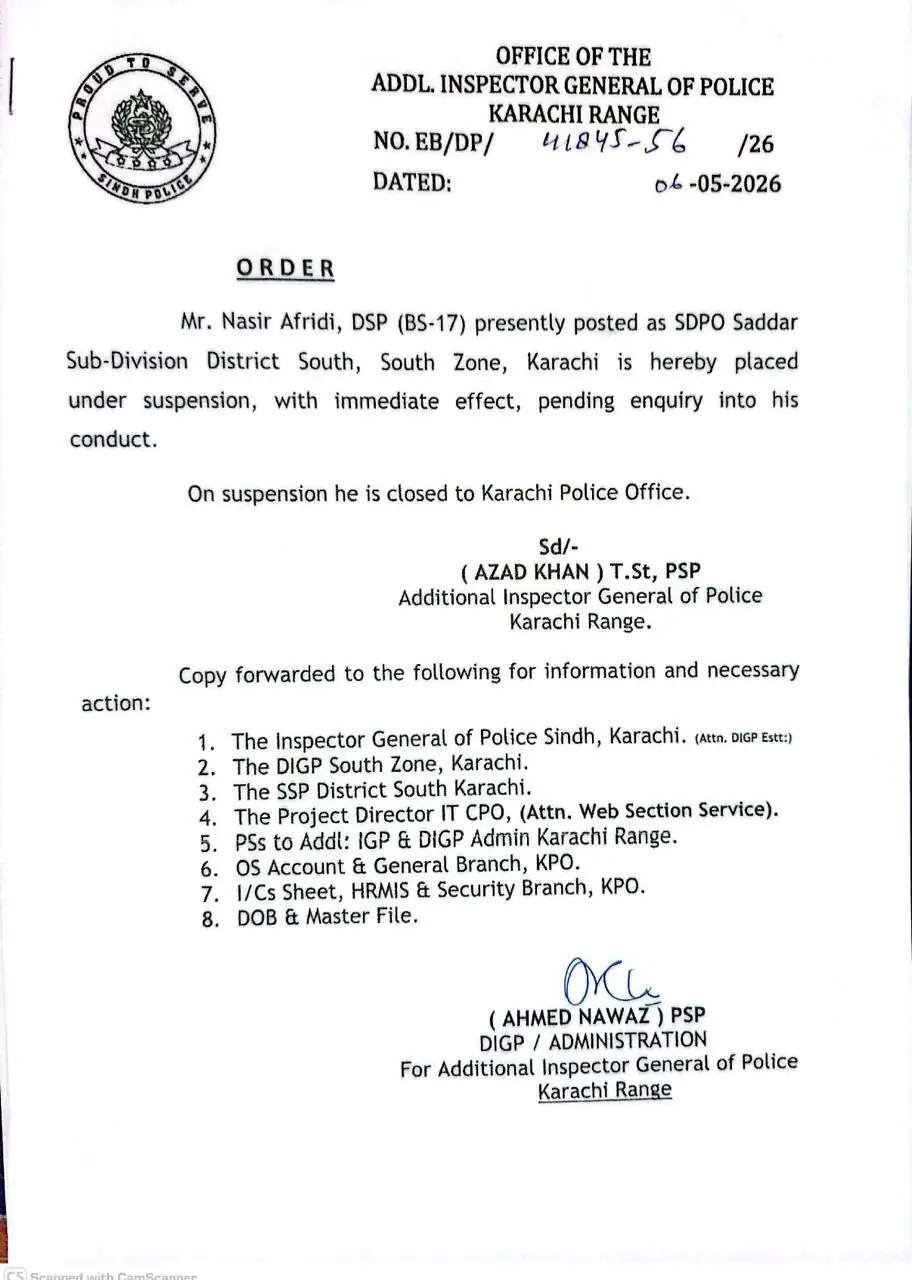
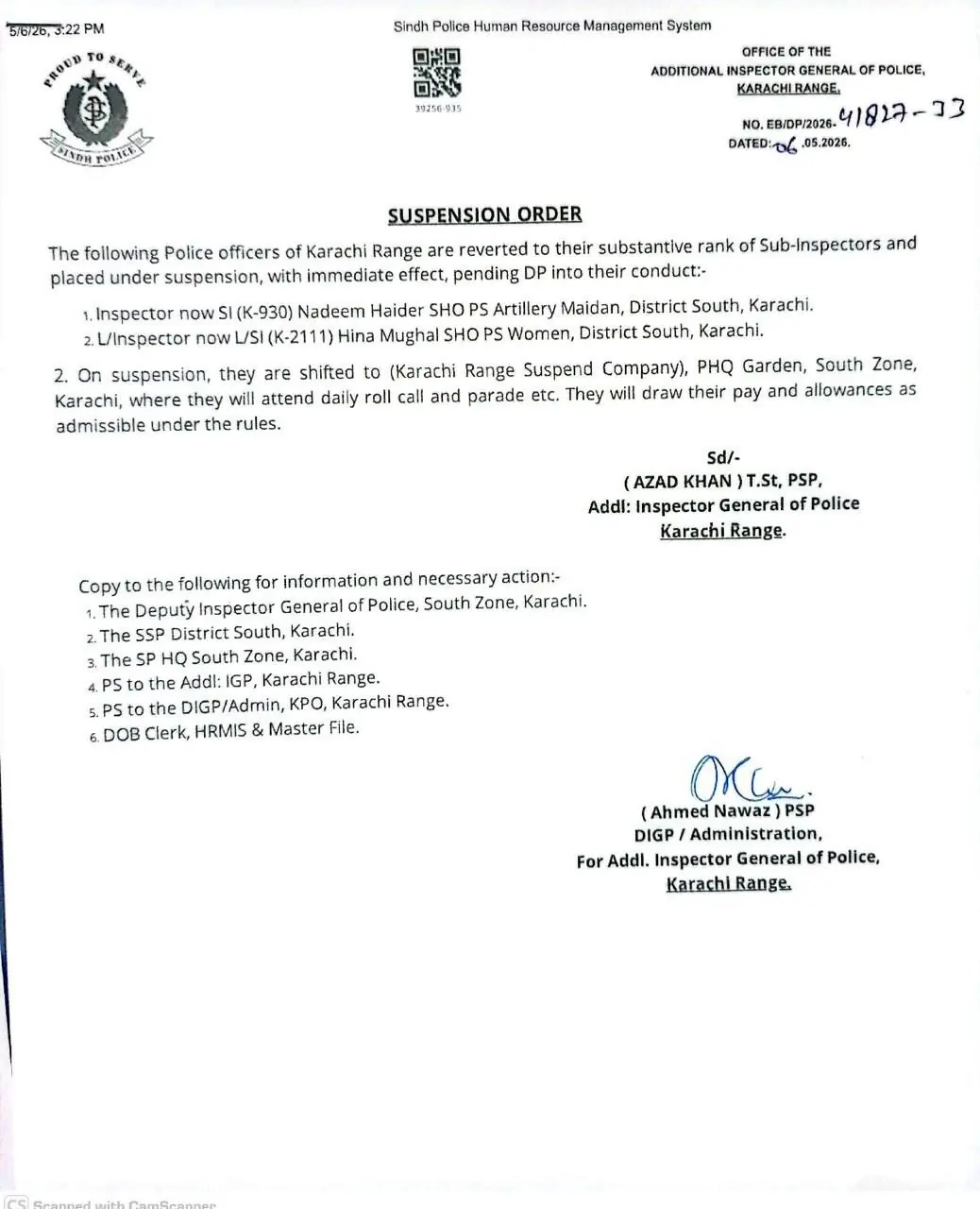
“In connection with the arrest and alleged mistreatment of Sheema Kermani and women human rights activists, Karachi Additional Inspector General (AIG) Azad Khan has issued orders to suspend Saddar Deputy Superintendent of Police (DSP) Nasir Afridi, Women Station House Officer (SHO) Hina Mughal, and Artillery Maidan Police Station SHO Nadeem,” according to an official press release by Karachi Police spokesperson.
“On the orders of the police chief, a transparent inquiry will be conducted and action will be taken against those responsible in accordance with the law,” the release added.
The police chief also directed that such incidents must be avoided by ensuring professional conduct and full respect for the constitutional rights of citizens.
Meanwhile, a statement issued by the spokesperson for Sindh home minister said, “On the instructions of the home minister, action has been taken in connection with the arrest and alleged mistreatment of Sheema Kermani and women human rights activists”.
“The Sindh home minister has ordered an inquiry into the incident,” the spokesperson said.
“Lanjar said there is a zero-tolerance policy against misuse of authority,” the spokesperson stated, adding that respect for women and protection of their rights would be ensured at all costs.
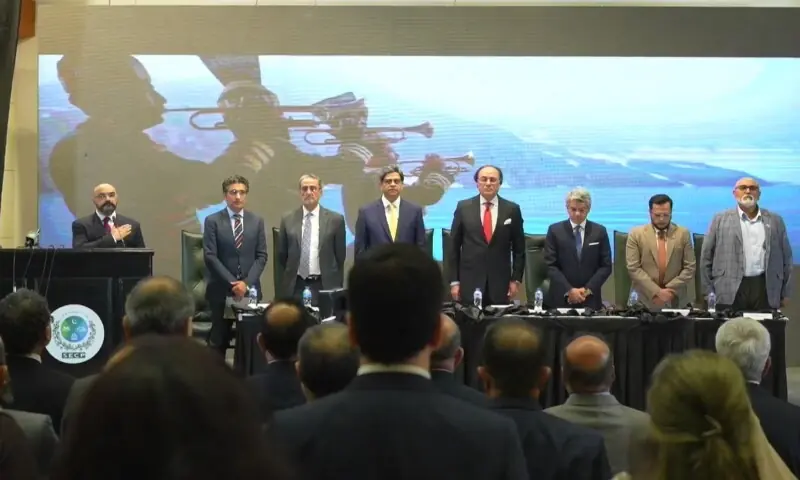
ISLAMABAD: Key capital market institutions of Pakistan on Wednesday established the Capital Market Development Fund (CMDF), aimed at promoting financial literacy, expanding financial inclusion and increasing retail investor participation in the capital markets across the country.
The main participants of the CMDF included the Pakistan Stock Exchange (PSX), Central Depository Company (CDC), National Clearing Company of Pakistan Limited (NCCPL), Pakistan Mercantile Exchange (PMX) and the Institute of Financial Markets of Pakistan (IFMP).
The CMDF was established under the auspices of the Securities and Exchange Commission of Pakistan (SECP) to ensure coordination in the industry and strengthen the institutional capacity in Pakistan’s capital markets.
Addressing the ceremony, Finance Minister Muhammad Aurangzeb said recent regional tensions had reinforced the need for Pakistan to make independent commercial decisions, diversify energy resources, and mobilise domestic capital for national development.
“We must rely on our own resources and strengthen self-sufficiency. Capital markets can play a vital role in providing the financing needed for economic independence,” he stated.
Aurangzeb reaffirmed the government’s commitment to economic stability, sustainable growth and financial sector reforms.
He also emphasised the importance of strengthening capital markets, promoting local investment, achieving self-reliance, and implementing key energy sector reforms, noting that Pakistan’s economy continues to move in a positive direction despite regional and economic challenges.
The finance minister noted that despite regional uncertainties and global economic pressures, Pakistan’s economic indicators were showing consistent improvement.
He added that the government remained focused on strengthening the current account balance and reducing the fiscal deficit while maintaining macroeconomic stability.
Aurangzeb further stated that Pakistan’s stock market had demonstrated resilience during challenging times, reflecting growing investor confidence in the country’s economic direction.
The finance czar also emphasised that the SECP had a critical role in expanding investor awareness, improving ease of investment, and introducing legal and regulatory reforms in the capital market sector.
He assured the government’s full support for reforms aimed at deepening Pakistan’s financial markets.
The agreement was signed by PSX Chief Executive Officer (CEO) Farrukh H Sabzwari, CDC CEO Badiuddin Akber, NCCPL CEO Naveed Qazi, PMEX CEO Khurram Zafar, and IFMP CEO Dr Mobashar Sadik.
Chairman SECP Dr Kabir Ahmed Sidhu highlighted that investor participation in Pakistan’s capital market remained below one per cent of the population despite recent growth.
He also noted that the investor base is targeted to increase to 2.5 million in the coming years through ongoing structural reforms and investor facilitation measures.
Sidhu added that onboarding processes were being streamlined, while Know Your Customer (KYC) and Anti-Money Laundering (AML) frameworks were being simplified to facilitate investor entry without compromising regulatory safeguards.
He further identified financial literacy as a major structural constraint, noting that investor awareness efforts remained fragmented and retail outreach limited, and further emphasised the need for coordinated national efforts to strengthen investor education, improve market understanding, and build investor confidence.
Market insights shared during the ceremony indicated that approximately 24,000 new investors entered the market in April 2026. Equity markets maintained positive momentum, while the debt capital market witnessed relative slowdown, highlighting the need for continued monitoring and data-driven policy interventions.
Sadik presented the strategic framework of the CMDF and described it as a “ring-fenced institutional mechanism” designed to support long-term capital market development.
He said the fund would be seeded with an initial contribution of Rs120 million, with participating institutions contributing one per cent of their annual revenues to ensure sustainability through a self-reinforcing funding model.
Sadik added that the CMDF would operate through four core pillars: strengthening financial literacy and investor awareness, expanding retail investor participation, promoting financial inclusion, particularly among women, youth and underserved segments, and enhancing institutional capacity and market infrastructure.
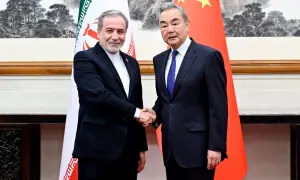
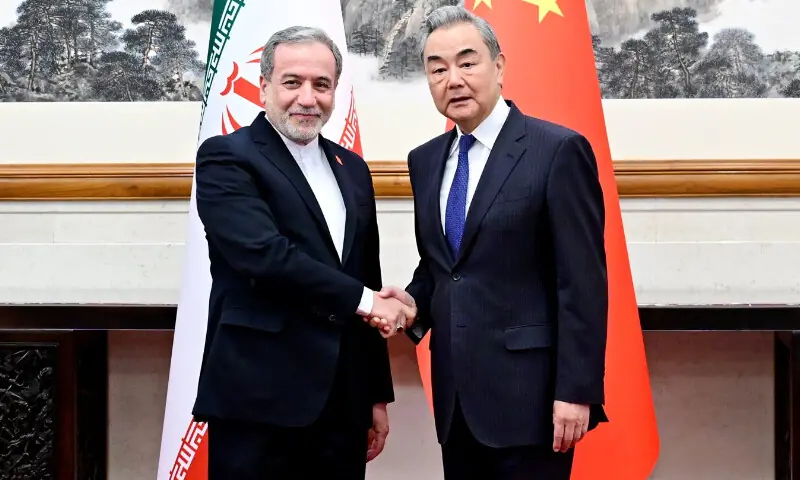
China’s Foreign Minister Wang Yi said Beijing would play a “greater role” in ending hostilities in the Middle East during talks with his Iranian counterpart on Wednesday, a week before US President Donald Trump is due to meet Xi Jinping.
China is a key customer for Iranian oil, defying sanctions imposed by the United States, and is directly affected by the blockage of the Strait of Hormuz, bordered by Iran.
Beijing has quietly engaged in efforts to resolve the weekslong crisis and its diplomacy is credited with playing an important role in the fragile ceasefire agreed between Washington and Tehran.
China “will work harder to ease tensions and end the fighting, continue to support the launch of peace talks, and play a greater role in restoring peace and tranquillity to the Middle East”, Wang told Iran’s Abbas Araghchi in Beijing.
“China considers that a complete cessation of fighting must be achieved without delay, that it is even more unacceptable to restart hostilities, and that continuing to negotiate remains essential,” Wang said, according to a statement from his ministry after the talks.
Manufacturing giant China has been comparatively sheltered from fuel shortages thanks to oil reserves and renewable energy, but costs of oil-derived materials like plastic and fabric have risen significantly.
More than half of the crude imported by sea to China comes from the Middle East and mainly transits through the Hormuz Strait, according to maritime analytics firm Kpler.
Analysts have warned that the war’s impact on China will be felt for months.
During Wednesday’s talks, Wang said China hopes “the parties concerned will respond as quickly as possible to the urgent call of the international community” for a resumption of normal and safe maritime traffic through the Strait of Hormuz.
Trump cited a desire to reach a peace deal with Iran.
Washington demands tight controls on Tehran’s nuclear programme, which Iran has refused to agree to and has led to talks crumbling.
“On the nuclear issue, China welcomes Iran’s commitment not to develop nuclear weapons, while considering that Iran has the legitimate right to the peaceful use of nuclear energy,” Wang said.
The US leader is expected to meet Chinese President Xi in Beijing on a visit the White House said will take place May 14-15.
Beijing has not confirmed those dates.
A foreign ministry spokesman again refused to share details when asked about Trump’s visit at a regular news conference on Wednesday.
Trump would join rulers from the Gulf, Europe and Southeast Asia that have recently landed face time with Xi, who has sought to position China as a stable partner in the face of the US-and Israeli-led conflict.
Trump’s visit would also come more than a year after his sweeping global tariffs wreaked havoc on the supply chain, causing chaos in China’s manufacturing sector.
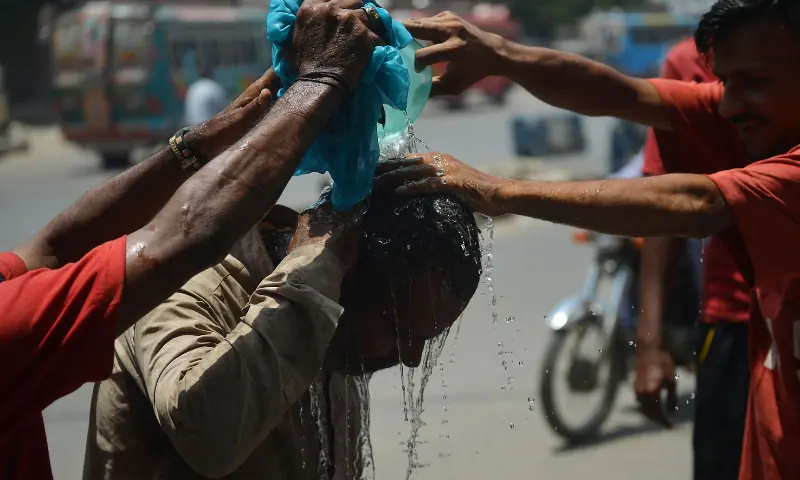
The Pakistan Meteorological Department (PMD) forecast heatwave conditions across the country this week, starting in the south and central areas from Thursday.
“Due to the presence of high pressure in the upper atmosphere, heatwave conditions are likely to develop over southern and central parts of the country from May 7-11 [and] in upper parts from May 8-10,” a press release issued on Wednesday by the PMD said.
It noted that daytime maximum temperatures may rise to 46-50°C in Dadu, Shaheed Benazirabad, Ghotki, Khairpur, Nausheroferoze, Jacobabad, Larkana, Sukkur, Sibbi, Turbat and Panjgur.
It also forecast 43-47°C weather in Dera Ghazi Khan, Layyah, Bhakkar, Rajanpur, Kot Addu, Bahawalpur, Bahawalnagar, Rahim Yar Khan, Multan, Khanewal, Pakpattan, Sahiwal, Karak, Bannu, Lakki Marwat, Tank and Dera Ismail Khan; and 39-43°C in the upper regions, namely Peshawar, Mardan, Swabi, Nowshera, Kohat, Islamabad, Rawalpindi, Attock, Chakwal, Jhelum, Sargodha, Mianwali, Faisalabad, Jhang, Toba Tek Singh, Khushab, Gujrat, Gujranwala, Hafizabad, Mandi Bahauddin, Sialkot, Narowal, Lahore, Okara and Kasur.
Very hot weather is expected in Karachi during the forecast period and the maximum temperature is likely to remain between 35-38°C, the statement added.
However, the Met Office noted that a shallow westerly wave is likely to affect the upper parts of the country on the evening of May 10 and is likely to persist until May 13.
“This system is likely to bring relief from the prevailing hot conditions in the upper parts of the country,” it said.
The PMD advised the general public, “especially children, women and senior citizens”, to be “cautious”, avoiding unnecessary exposure to direct sunlight and remaining hydrated.
It also advised farmers to manage their crop activities and take care of their livestock in view of the weather conditions.
At least 10 people died across Karachi on Monday due to intense heat as the mercury surged to 44.1°C — the highest temperature recorded since 2018 — accompanied by gusts of continental winds that persisted throughout the day, officials said.
The same day, the National Disaster Management Authority (NDMA) issued sweeping emergency protocols and placed hospitals on alert as extreme, above-normal summer temperatures threatened millions across the country.
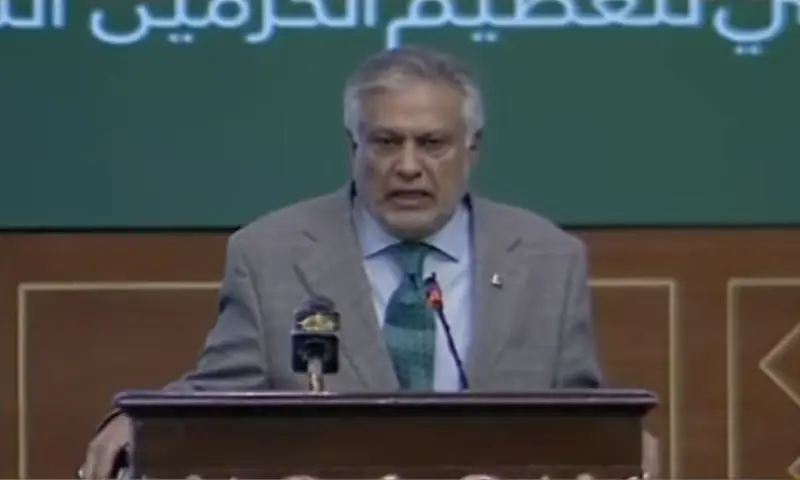
Deputy Prime Minister and Foreign Minister Ishaq Dar expressed hope on Wednesday that the indefinitely extended ceasefire between the United States and Iran could be made permanent.
US President Donald Trump has indefinitely extended what was initially a two-week ceasefire between the two countries, brokered with the help of Pakistan’s mediation, but the conflict — and its widespread economic fallout — remains unresolved.
Addressing the second session of the Ulema Council Conference in Islamabad, the foreign minister said that Pakistan’s efforts had been directed towards securing direct negotiations and a ceasefire — “first it happened, then it was extended, then extended a second time, then a third time”.
“At least the deaths of several hundred people a day — with the toll going into the thousands — has stopped,” he added.
He called on the council to pray for Pakistan’s efforts, saying that they were now geared towards turning the ceasefire into a “permanent end to the war”.
Dar also called on Muslim states to unite in case they had developed any rifts between them, stressing his belief that they would be stronger in their efforts if they worked together.
The deputy premier further noted Pakistan’s role in bringing the US and Iran to direct negotiations for the first time in 47 years. He said that Pakistan “played its full part” from February 28 until today in its response to the conflict.
“After 47 years, we brought the US and Iran to sit down at the same table,” he added, contrasting it with the indirect negotiations that had taken place previously, facilitated by Oman.
He highlighted that Pakistan had engaged with Iran on the issue of their strikes on US bases in other Middle Eastern countries that had heightened tensions in the region, stressing its part in the Muslim Ummah in an effort to halt the intra-regional hostilities.
US and Israeli forces launched the war against Iran on February 28, after which the Islamic republic closed the Strait of Hormuz — a vital route for oil and gas exports — while American forces later launched a blockade of Iranian ports.
The Islamabad Talks, which marked the highest engagement between the two sides since 1979, ended without an agreement, but also without a breakdown.
As the Pakistan-brokered two-week ceasefire agreed on April 8 neared its original deadline, Trump posted on social media that he had decided to extend it indefinitely “upon the request of [Chief of Defence Forces] Field Marshal Asim Munir, and Prime Minister Shehbaz Sharif”.
However, further efforts to secure more face-to-face talks have fallen through, with Trump stating that the two sides could negotiate by phone call if necessary. The Strait of Hormuz and Iranian ports both remain blocked.
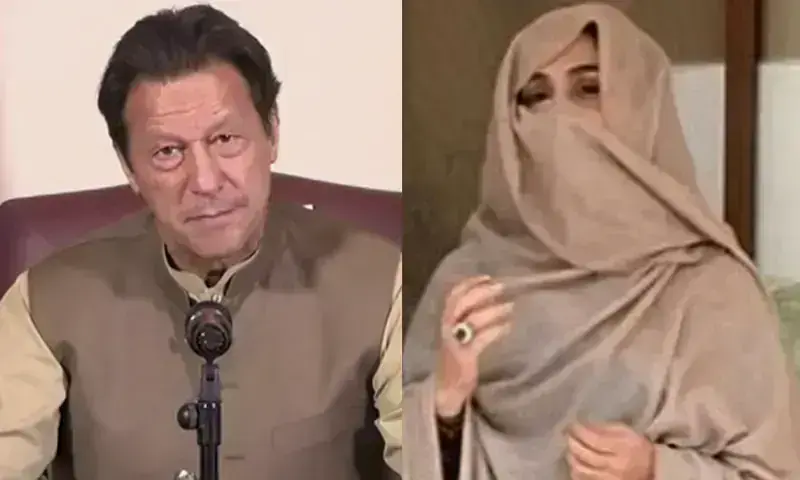
ISLAMABAD: A day before the scheduled hearing in the £190 million corruption case, counsel for former prime minister Imran Khan and his spouse Bushra Bibi on Wednesday said they were not authorised to argue the main appeals against conviction and sought an adjournment of the May 7 hearing.
In an application filed before the Islamabad High Court (IHC), Barrister Salman Safdar, PTI Secretary General Salman Akram Raja and Sarmad Muneeb said their engagement was limited to arguing applications for suspension of sentence, adding that no formal power of attorney or instructions had been obtained for the main appeals.
The lawyers also informed the court that, despite repeated efforts, the authorities at Adiala jail had not facilitated meetings with the clients for the purpose of obtaining instructions or executing fresh powers of attorney.
“The undersigned expresses inability to proceed further in the absence of proper instructions, formal engagement, and requisite Power(s) of Attorney,” the application stated.
The counsel prayed to the court to issue strict directions to the jail authorities to allow meetings with the clients and to adjourn the main appeals fixed for hearing on May 7.
The development comes after a two-member bench of the IHC, headed by Chief Justice Sardar Muhammad Sarfraz Dogar, on April 30 rejected the couple’s plea seeking the suspension of their sentence in the same case, observing that the main appeals were already fixed for hearing. The court had declared the suspension applications infructuous and directed arguments on the main appeals for May 7.
Imran Khan and Bushra Bibi were sentenced on January 17, 2025, by an accountability court to 14 and seven years respectively in the £190 million corruption case, also known as the Al-Qadir Trust case. Both have challenged their convictions before the IHC.
The case alleges that the couple obtained billions of rupees and land worth hundreds of kanals from Bahria Town Ltd to legalise Rs50 billion identified and returned to the country by the United Kingdom during the PTI government.
ISLAMABAD: Chief Justice of Pakistan (CJP) Yahya Afridi has ruled that the constitutional scheme following the passage of the 27th Amendment treated the Supreme Court (SC) and the Federal Constitutional Court (FCC) as coordinate courts exercising clearly demarcated jurisdictions over distinct matters.
The ruling was made in a 13-page order authored by the CJP and issued on a set of petitions arising from a Feb 17, 2020 Peshawar High Court consolidated judgement. It was issued by a two-member bench, comprising CJP Afridi and Justice Shahid Bilal Hassan.
The order stated that the constitutional scheme following the 27th Amendment did not position the SC or the FCC as an appellate forum to each other.
The constitutional amendment was passed by Parliament in November last year, leading to the establishment of the FCC as a court that was to hear all matters of a constitutional nature, including those involving disputes between provincial and federal governments, public interest and the enforcement of fundamental rights of the people. The creation of the FCC was viewed by many as the establishment of a parallel judicial body to strip the SC of its constitutional jurisdiction and leave it only as a court of appeals.
The 27th Amendment also included revisions to Article 189 (1) of the Constitution, which now states: “Any decision of the Federal Constitutional Court shall, to the extent that it decides a question of law or is based upon or enunciates a principle of law, be binding on all other courts in Pakistan, including the Supreme Court.”
The SC order authored by CJP Afridi said the text of Article 189(1) of the Constitution “must deliberately be read in conjunction with the overall post-27th Amendment framework, which intentionally arranges jurisdiction between the Supreme Court and the FCC across distinct domains”.
“Any broader construction of Article 189(1) would have the effect of subordinating one apex court to the other in respect of proceedings constitutionally assigned to fall under its jurisdiction — a result for which there is no warrant in the constitutional text,” it said.
A senior lawyer speaking on condition of anonymity to Dawn opined: “The SC order seems to be an answer to the Dec 18, 2025 judgement of the FCC in which it had held that after the 27th amendment, an exception has been created requiring all courts, including the SC, to adhere to its judgements.”
According to CJP Afridi’s ruling, the SC’s attention was drawn to two jurisdictional issues of the constitutional dispensation after the 27th Amendment.
The issues were explained as: “Common-disputes leading to the proper constitutional routing of writ and non-writ proceedings that are clubbed or proceeded in parallel before the high court; and the treatment of contempt proceedings arising in relation to orders passed by the SC in such matters.”
In the judgement, the CJP observed that the SC and FCC were coordinate courts exercising clearly demarcated jurisdictions. He stated that the constitutional framework after the 27th Amendment assigned “exclusive competence over different categories of proceedings” to the two courts, rather than establishing a “vertical hierarchy”.
Article 189 ensured consistency in legal principles but did not subordinate one court to the other, CJP noted.
“As constitutionally mandated, the application and scope of Article 189(1) are limited to questions of law … and do not extend to the outcome reached in any particular case by FCC,” the order said.
The appellate routes to the SC and FCC were, ultimately, constitutionally distinct and operate independently, the CJP said.
He further observed that Article 175F(2) of the Constitution, read with Article 175F(1), “expressly affords inter-alia jurisdiction”. He added that appeals on judgements or orders of a high court were to be heard by the FCC.
All such matters pending before the SC stood transferred to the FCC, which had the exclusive jurisdiction to hear and decide them, the order said. In contradistinction, the appellate jurisdiction of the Supreme Court was constitutionally defined in Article 185 of the Constitution, it said, citing clause 1 of the article.
It states: “Subject to this Article and Article 175F, the SC shall have jurisdiction to hear and determine appeals from judgments, decrees, final orders or sentences of the high court.”
“Article 185, accordingly, governs the appellate jurisdiction of the SC in respect of appeals arising from judgements, decrees, final orders, or sentences of the high court in cases which do not fall within Article 175F of the Constitution,” the CJP said.
“Thus, the scheme of the Constitution, as it presently stands, is unambiguous: all writ proceedings, except those relating to rent and family matters, are within the jurisdiction of the FCC, whereas all regular proceedings are within the jurisdiction of the Supreme Court,” the order read.
“Consequently, all matters falling within the appellate jurisdiction of the FCC are by … stand transferred to the FCC while all regular proceedings are to be heard and decided by the SC itself.”
The order said that any writ and regular proceedings that had been clubbed together must, therefore, in conformity with the present constitutional framework, be de-clubbed, so that each category of cases may be routed to its proper forum.
The CJP recalled that prior to the 27th Amendment, matters were routinely clubbed where they had proceeded in parallel before the SC or involved common questions of law.
Routing such cases to their respective forums under the present constitutional dispensation, thus, may give rise to a potential complication: both writ-proceedings and regular-proceedings may entail adjudication of the same question of law before the FCC and the Supreme Court, respectively, thereby increasing the possibility of contradictory decisions, the judgment said.
Referring to contempt of court proceedings connected with the case at hand, the SC decided that since the matter emanated from regular proceedings, the contempt proceedings would be heard by it instead of being transferred to the FCC.
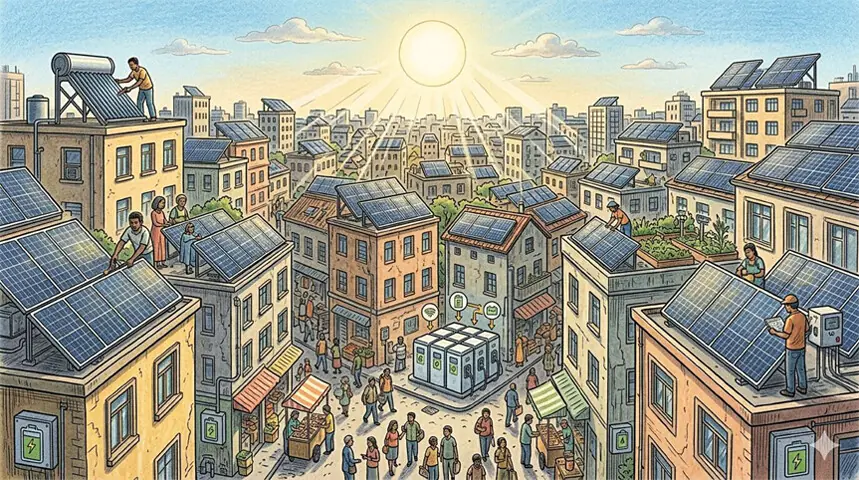
PAKISTAN is undergoing an energy revolution unlike any the country’s planners designed, any donor funded, or any government blueprint envisioned.
Rooftop by rooftop, tubewell by tubewell, factory floor by factory floor, ordinary Pakistanis are building one of the fastest clean energy transitions ever recorded.
In a country simultaneously battered by catastrophic floods, record-breaking heatwaves and an electricity tariff crisis of its own making, the sun has become both an escape route and, quietly, a contributor to Pakistan’s climate commitments.
This is the story of that revolution, and the storm gathering in its wake.
The roots of Pakistan’s solar revolution lie in a catastrophic confluence of policy failure, global market forces and consumer desperation.
Between 2021 and 2024, electricity tariffs surged by 155 per cent, driven by IMF-mandated removal of subsidies, soaring fuel costs from the Russia-Ukraine war, and capacity payments owed to idle CPEC-era thermal plants.
At the peak, electricity bills in some households exceeded monthly house rent in major cities.
Simultaneously, Chinese solar manufacturers faced massive overproduction.
Panel prices fell from 32 cents per watt in early 2024 to 17 cents by yearend, and further to USD 0.08 per watt by 2025.
This ‘perfect storm’, soaring grid costs meeting collapsing panel prices, ignited an unprecedented consumer response.
In FY 2024-25, Pakistan imported 18GW of solar panels, according to Ember and Renewables First, building on 16.6GW in 2024.
Cumulative imports reached 51.5GW by November 2025, making Pakistan the third-largest destination for Chinese solar exports.
Solar’s share of utility electricity tripled from four per cent in 2021 to 14pc in 2024, reaching 25.3pc by early 2025, placing Pakistan among fewer than 20 countries to achieve that milestone.
The consumer-led revolution has been remarkable, but it has also brought in its wake a storm that the government needs to address rather urgently and effectively, believes Ali Ahsan
Urban high-consumption households were the earliest adopters. Pakistan’s volumetric pricing structure penalises heavy usage, as tariffs rose, those with capital went solar first.
Payback periods compressed to one to two years, and a 2015 net metering policy enabled sale of surplus power to the grid.
By December 2024, there were 283,000 net-metered consumers.
However, official figures capture only a fraction, with Renewables First and TransitionZero estimating that between 27GW and 33GW have actually been deployed, mostly off-grid.
In rural Pakistan, approximately 80pc of the country’s 1.5-2 million tubewells historically ran on imported diesel.
As subsidies were removed, solar pumps became dramatically more economical.
Agricultural electricity demand on the national grid fell 34.3pc in 2024.
The World Resources Institute estimates that half of all tubewells would ultimately convert to solar, adding 5.6-7.5GW of distributed photovoltaic (PV) capacity.
The textile sector, consuming nearly one-third of Pakistan’s industrial electricity, has embraced solar to cut costs and meet global sustainability standards.
The European Union’s Carbon Border Adjustment Mechanism (CBAM) has added urgency for export-facing manufacturers.
Industrial firms have each installed multi-megawatt systems. Industrial grid demand fell from 31,008GWh in FY2023 to 27,830GWh in FY2024, a clear signal of structural defection.
Regulatory turbulence
The Pakistani state has begun to respond, not always constructively.
Under the original net-metering policy, solar consumers enjoyed a real benefit of approximately Rs40-50 per kWh; proposed changes slash this to Rs8-10, an almost 80 per cent reduction.
The government’s Economic Coordination Committee has signalled a move to a net billing framework, significantly undermining residential solar investment.
Hasnat Khan, Senior Vice-Chairman of the Pakistan Solar Association (PSA), is unambiguous in his assessment.
“People have invested their hard-earned money to install solar systems and many have even taken loans,” he said in a media interaction”, adding that the new rules “will make it difficult for people to recover their investment” and stressing: This is green energy and it should be encouraged.”
Waqas Moosa, the PSA Chairman, warns of deeper systemic risk: “We anticipate that a lot of consumers will start choosing to go for batteries, which could have profound implications for the relevance and sustainability of the central grid.”
The off-grid exodus
The most consequential and least-discussed dimension of Pakistan’s regulatory crisis is the battery storage inflection point.
As the National Electric Power Regulatory Authority (Nepra) reduces the economic value of grid-connected solar, the rational consumer response is not to abandon solar; it is to pair solar with a lithium-ion (Li-ion) battery and go off-grid entirely.
Alongside 17GW of solar PV panel imports in 2024, Pakistan imported an estimated 1.25GWh of Li-ion batteries.
According to Moosa, 40-50pc of residential customers were already integrating batteries, and that following the net-metering rollback, he expected this to reach 80-90pc.
The World Bank projects that solar-plus-battery systems could supply over a quarter of Pakistan’s peak energy demand by 2030, and battery imports would reach 8.75GWh.
Once a household pairs solar with adequate battery storage, it no longer needs to sell power to the grid, nor, critically, does it need to buy from it in the evening.
Such households exit the grid ecosystem entirely, eliminating their contribution to fixed infrastructure costs.
The utility death spiral
As higher-income consumers defect, fixed costs, including capacity payments owed to idle CPEC-era thermal plants, fall on a shrinking pool of grid-connected consumers, driving tariffs higher, which incentivises more solar-plus-battery adoption.
Electricity sales on the national grid already fell 3pc in 2024 despite a 6pc rise in registered consumers.
By December 2024, net-metered consumers had already shifted USD563 million (PKR159 billion) in fixed costs onto other consumers.
Without structural reforms, regulators project this regressive transfer could reach USD48.34 billion by 2034.
The cruel irony is that the regulatory response, cutting buyback rates, accelerates precisely the outcome it seeks to prevent, pushing consumers towards full off-grid independence.
Accidental green dividend
Pakistan contributes less than one per cent of global greenhouse gas (GHG) emissions, approximately 400-500 million tonnes of carbon dioxide-equivalent annually.
Yet, it consistently ranks among the world’s most climate-vulnerable nations.
The 2022 monsoon floods, amplified by climate change, submerged one-third of the country, killed over 1,700 people, and caused USD30 billion in damages.
Glacial retreat across the Hindu Kush-Himalayan range threatens water security for 255 million Pakistanis.
Heatwaves exceeding 50°C in Sindh and Balochistan are intensifying.
Pakistan’s energy sector accounts for 46pc of domestic GHG emissions, making the solar transition directly relevant to its mitigation obligations.
Pakistan’s Third Nationally Determined Contribution (NDC3.0) in 2025 committed to a 50pc reduction in projected emissions by 2030, with 60pc renewable electricity as a headline target.
The consumer-led solar surge is now contributing measurably, climbing from 4pc of electricity generation in 2021 to 14pc in 2024, one of the highest proportions in Asia.
The Climate Change Performance Index 2026 ranked Pakistan 15th globally, a rise of 16 places.
However, climate experts caution against over-confidence.
If battery storage allows consumers to exit the grid entirely, the residual grid will increasingly run on idle coal and gas plants that Pakistan is contractually obligated to pay for, producing a grid that is simultaneously dirtier and financially unsustainable for those who remain dependent on it.
The way forward
Pakistan’s consumer-led solar revolution has achieved in three years what six decades of government-led electrification programmes could not.
But sustaining this transition, and aligning it with both economic equity and climate goals, demands that the state must act decisively on several urgent fronts.
The single most critical intervention is for the federal government to formally declare a Battery Energy Storage System (BESS) emergency, treating grid-scale storage as a matter of national energy security.
As solar penetration deepens, the evening demand surge following the sunset of distributed generation is becoming structurally destabilising.
The state must urgently commission utility-led storage projects at the transmission and distribution levels to absorb daytime solar surplus and release it during peak evening demand, smoothing the duck curve, reducing reliance on idle thermal plants, and keeping grid-defecting consumers connected.
Without utility-scale BESS, the spiral from grid-tied solar to full battery-backed off-grid independence becomes economically inevitable for growing numbers of consumers.
The government should also remove taxes on solar panels and classify solar energy as a basic necessity.
The imposition of a 10pc General Sales Tax (GST) on imported solar panels, combined with punitive net billing rates, sends a contradictory signal at the worst possible moment.
The government must remove all import taxes on solar panels and formally classify solar energy as a basic necessity of life, equivalent to water or food.
Solar power is no longer a luxury appliance for the affluent; it is the primary means by which millions of Pakistani households are securing affordable electricity, reducing dependence on costly fuel imports, and contributing to the country’s NDC commitments.
Taxing it undermines climate targets, deepens energy inequality, and drives consumers off-grid entirely, removing them from the grid’s revenue base.
Treating solar as essential will ultimately mitigate the effects of climate change by accelerating the displacement of fossil fuel generation across all consumer categories.
There is a need for government-level initiatives for the agricultural sector. Agriculture accounts for 43pc of Pakistan’s domestic GHG emissions and employs 37pc of the national workforce.
The government must launch a dedicated, nationally-coordinated solar for agriculture programme, going beyond the fragmented provincial schemes, to solarise Pakistan’s 1.5-2 million tubewells, provide subsidised solar water pumping systems to smallholding farmers, and integrate solar irrigation with precision water management to address Pakistan’s deepening water insecurity.
Balochistan’s PKR55 billion tubewell solarisation project and Punjab’s solar kit distributions are meaningful beginnings, but they must be scaled, coordinated and extended to cover all provinces under a unified federal agricultural energy policy.
Such an initiative would simultaneously reduce diesel import costs, cut methane and carbon dioxide emissions from the agricultural energy mix, and build climate resilience for the rural communities that are the ones most exposed to Pakistan’s worsening droughts and heatwaves.
On climate finance, Pakistan’s case for international support is unimpeachable.
The NDC 3.0 quantifies the energy transition need at USD101 billion, 35pc of which is contingent on external grant financing.
The global community’s failure to honour its climate finance commitments to one of the world’s most vulnerable nations represents both a moral failure and a strategic miscalculation.
The writer is Research and Publication Manager, Pakistan Solar Association (PSA).
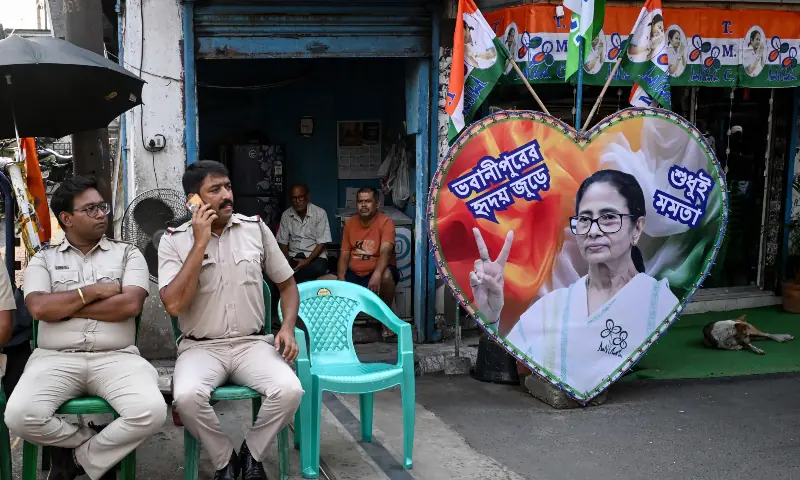
Four people have been killed in political unrest after Indian Prime Minister Narendra Modi’s Hindu-nationalist party celebrated victory in state polls in West Bengal, police and party officials said on Wednesday.
Modi’s Bharatiya Janata Party (BJP) swept polls in the key eastern state of more than 100 million people, winning 206 of the 294 assembly seats, according to results announced on Monday, for its first-ever victory in West Bengal.
West Bengal had been ruled by Modi’s fierce critic and adversary Mamata Banerjee as chief minister since 2011.
Banerjee, leader of the regional All India Trinamool Congress (TMC), also lost her seat in the polls and has rejected the results.
Police said clashes between rival party supporters erupted in the state capital Kolkata after results were announced on Monday.
Analysts say the BJP’s victory in the largely Bengali-speaking state is one of its most significant since Modi was first elected prime minister in 2014, expanding its dominance beyond the Hindi-speaking heartland of north and central India.
The BJP said two party workers were killed, while the TMC said two of their workers were beaten to death.
“Two of our workers were killed after results of the elections were announced on Monday,” BJP state leader Samik Bharracharya told AFP, insisting that the party is “for peace”.
TMC, in a statement on social media, reported the “brutal murder” of two party workers.
“Our party offices were attacked in several areas of the state,” TMC spokesman Narendranath Chakrabort told AFP. “Two of the victims were grassroots political workers.”
A senior police officer, who was not authorised to speak to reporters, confirmed four deaths in clashes and said one officer had been shot in the leg.
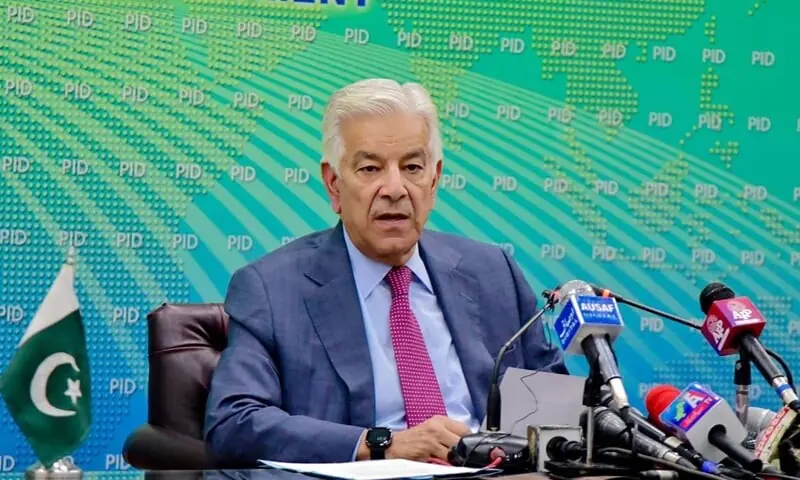
In a televised message marking Marka-i-Haq, Defence Minister Khawaja Asif on Wednesday warned that Pakistan’s reaction to any miscalculation in the future would be “more intense and decisive”.
Last year’s military conflict with India, starting from the April 22 Pahalgam attack to the end of Pakistan’s Operation Bunyanum Marsoos, with a ceasefire ending a military escalation between the two countries on May 10, has been called “Marka-i-Haq” (Battle of Truth) by the state.
In his message, Asif said Marka-i-Haq was not just a “memorable episode for Pakistan, but a line that we have drawn forever”.
Anyone on the other side of this line should understand that Pakistan exercised tolerance and restraint during the 2025 episode, he said, warning that in case of an “incorrect assessment or miscalculation” in the future, the response would be “more intense and decisive”.
He added that Pakistan did not want any fighting in 2025, and it desired the same today. “But there should not be any doubt; Pakistan does not only respond, but it also determines the correct course of consequences. Any adventurism against us will not remain limited [to the other side’s action]; we will decide its course, its beginning and its end,” he said.
He said Marka-i-Haq had “forever buried the impression” that Pakistan could be pressurised or isolated.
“Today, our ability to respond in the air, land and water is effective and fast beyond anyone’s imagination,” the defence minister said.
He further stressed that India must realise that there was no space for “dramatics, false flag operations and miscalculations”. The defence minister warned that repeating “cliched actions” would entail paying a price much higher than before. “It will be equivalent to committing suicide,” he added.
Asif said that Pakistan’s “everlasting national unity” had provided it strength. “Pakistan’s nation, armed forces and the state are moving in a unified direction, and this strength of ours has tipped the balance [in our favour],” he said.
He added that Pakistan’s armed forces met the demands of modern times and were fully prepared to effectively deal with any possible conflict in the future. “Whatever you may plan or whatever your designs may be, we are far ahead of what you think. The entire nation is standing with us like bunyanum marsoos (a solid fortified wall),” the defence minister said, seemingly addressing India.
Asif said Pakistan always wanted peace, but “we don’t want peace devoid of dignity, security and respect for sovereignty. That’s not peace but surrender, and it is completely unacceptable to us.”
He added that the confidence and determination he saw in the country’s youth during Marka-i-Haq inspired him. “The young generation in Pakistan has an understanding of what happened during Marka-i-Haq … Today’s generation is different, it is aware and united and has an emotional connection with Pakistan. And it is this sentiment that is the biggest strength for Pakistan’s bright future.”
Asif concluded his message, again seemingly addressing India, saying: “We know who we are, what we can do and where we stand today. If someone is living in the past, relying on old assumptions, my sincere advice is to align your thinking with modern demands.
“The message is clear: don’t let your internal politics and hatred come out. And if this happens, be ready for the response, which will not be in your control and will not remain limited.”
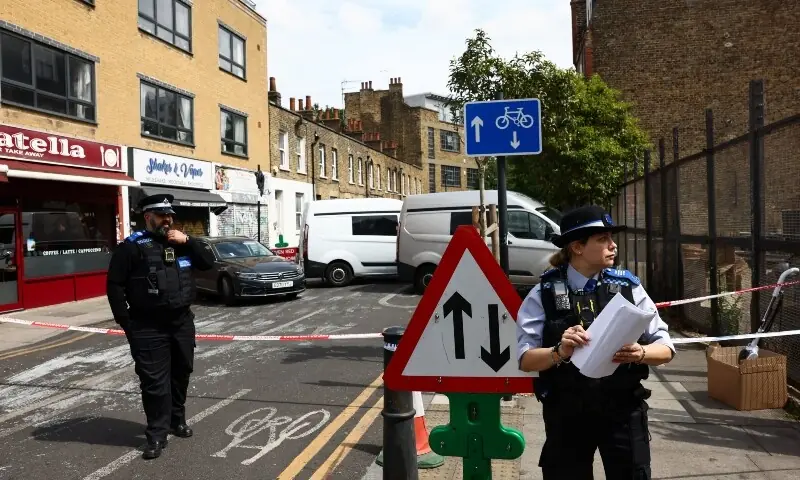
British police are setting up a new team of 100 officers, including counter terrorism specialists, to help protect Jewish communities across London after a series of anti-Semitic attacks, including the stabbing of two men.
The plan announced on Wednesday for a dedicated protection team comes as officers announced more arrests for anti-Semitism, including detaining a 35-year-old man after rocks were thrown at an ambulance belonging to the Jewish community.
London’s top police boss Mark Rowley said Jewish communities were facing “sustained threats” from hostile state actors as well as extreme right-wing groups and elements of the extreme left.
Detectives are examining whether the arson incidents have possible Iranian links, after British security officials warned that Iran was using criminal proxies to carry out hostile activity.
Since late March, there have been a number of high-profile arson attacks with four Jewish ambulances burned and synagogues targeted. Last week, two Jewish men were also stabbed. Both victims survived the attack.
Over the past four weeks, police said they had arrested around 50 people for anti-Semitic hate crimes and charged eight individuals.
On top of that, 28 arrests have been made as part of investigations alongside counter terrorism policing for arson and other serious incidents.
“This new team will be primarily focused on protecting the Jewish community, which faces some of the highest levels of hate crime alongside significant terrorist and hostile state threats,” said a statement from London’s Metropolitan Police force.
British Prime Minister Keir Starmer convened a meeting on Monday with business, health and cultural leaders aimed at trying to tackle anti-Semitism.

 Login
Login