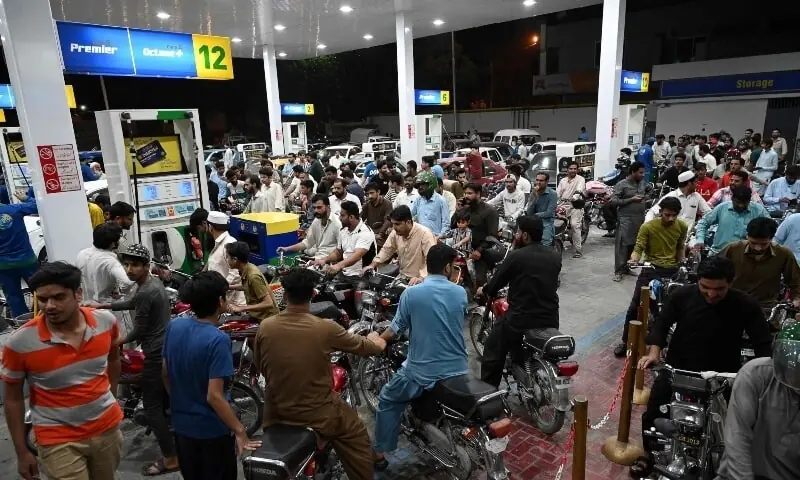
The government raised the price of petrol by Rs14.92 per litre and that of high-speed diesel (HSD) by Rs15 on Friday.
Following the increase, the price of petrol stands at Rs414.78 per litre and HSD’s at Rs414.58.
The Petroleum Division’s press release notifying the increase said the new prices would be effective from May 9.
Petrol is mostly used in private transport, small vehicles, rickshaws and two-wheelers and has a direct bearing on the budget of the middle and lower-middle class. High-speed diesel is mainly used in the heavy transport sector and for large generators.
The government has been revising petroleum prices every week on Friday night following the now-paused US-Israeli war on Iran, which began on February 28. The war also led to a global fuel crunch caused by the closure of the Strait of Hormuz, through which one-fifth of the world’s supply of oil and gas used to pass in peace time.
In the following weeks, PM Shehbaz said he had rejected recommendations to increase fuel prices despite an increase in the global market on three occasions.
But on April 2, Petroleum Minister Ali Pervaiz Malik and Finance Minister Muhammad Aurangzeb announced an unprecedented increase of 43 per cent and 55pc in the prices of petrol and high-speed diesel, respectively. The ministers had also announced a targeted fuel subsidy programme.
However, just a day later, PM Shehbaz slashed the petroleum levy by Rs80 per litre and brought the price of petrol down to Rs378 per litre.
On April 10, PM Shehbaz further decreased diesel prices and petrol prices by Rs135 and Rs12 per litre, respectively.
Last week, the government raised the price of petrol by Rs6.51 per litre and that of high-speed diesel (HSD) by Rs19.39.
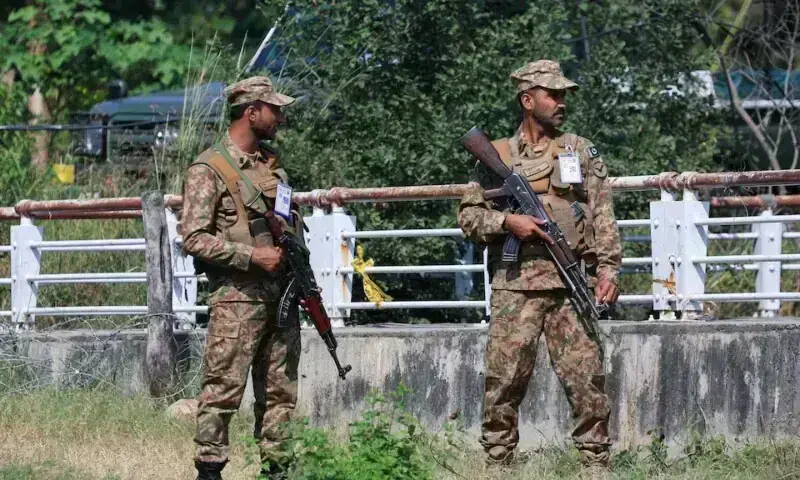
Security forces killed five terrorists in two separate engagements in Khyber Pakhtunkhwa’s Tank and Dera Ismail Khan districts, said the Inter-Services Public Relations (ISPR) on Friday.
In Tank district, an intelligence-based operation was conducted on the reported presence of khwarij.
“During conduct of the operation, own troops effectively engaged khwarij location and after intense exchange of fire, four khwarij, belonging to Indian-sponsored Fitna-al-Khwarij were sent to hell,” said the military media wing.
Fitna al Khawarij is a term the state uses for terrorists belonging to the banned Tehreek-i-Taliban Pakistan.
In another IBO conducted in DI Khan district, a terrorist was killed during a firefight with security forces.
The ISPR said the IBOs were conducted on May 7-8.
“Weapons and ammunition have also been recovered from killed Indian sponsored khwarij, who remained actively involved in numerous terrorist activities in the area.”
A sanitisation operation is being conducted to eliminate any other khawarij found in the area, the ISPR statement added.
The country’s “relentless” counter terrorism campaign under vision ‘Azm-i-Istekham’ “will continue at full pace to wipe out the menace of foreign-sponsored and supported terrorism from the country,” said the ISPR, adding that the sacrifice of innocent civilians further strengthened resolve.
There has been a resurgence in terrorism in Pakistan since the Afghan Taliban returned to power in Kabul in 2021.
Islamabad has repeatedly urged the Taliban administration to dismantle terrorist sanctuaries on Afghan soil, particularly those linked to the banned TTP. Officials say those appeals have gone unheeded.
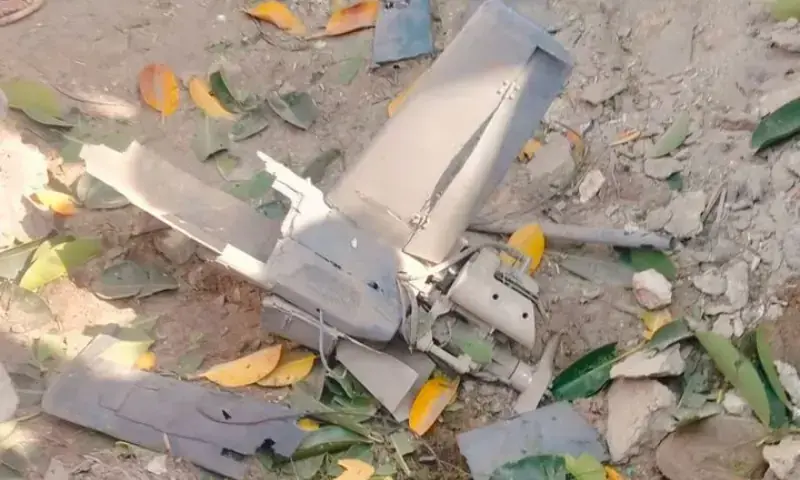
BANNU: A powerful explosion, following the reported crash of a quadcopter drone, injured eight people, including women, in Khyber Pakhtunkhwa’s Bannu district on Friday night.
Security agencies immediately launched an investigation into the matter as panic spread in the area.
According to police, the drone flew into the area from an unknown location and exploded shortly after falling near a residential area, leaving several people injured.
Local residents rushed to the scene and shifted the injured to the District Headquarters Hospital Bannu after initially providing first aid.
The administration at the District Headquarters Hospital confirmed that all injured individuals are receiving medical treatment, while some are said to be in critical condition.
Meanwhile, security sources said the incident is being investigated from multiple angles to determine the nature of the explosion, the origin of the drone, and possible motives.
Local residents expressed deep concern over the incident and urged the government and relevant authorities to conduct an immediate inquiry, identify those responsible, and ensure the protection of civilians.
Last Friday, a suspected cross-border quadcopter strike from Afghanistan wounded two Pakistani personnel.
Officials said a quadcopter targeted a security post in Baizai tehsil, in KP’s Mohmand district.
Bannu district has been the scene of repeated security incidents in recent months, with both civilians and local security forces coming under attack amid a broader surge in militant violence.
Violence in Bannu has included attacks on police and jirga members, prompting targeted operations by police and security forces in various localities to disrupt militant networks.
WASHINGTON: The United States Commission on International Religious Freedom (USCIRF) has once again urged the US State Department to declare India a “country of particular concern,” citing its 2026 assessment and hearing over “ongoing, systematic, and egregious religious freedom conditions” in the country.
The issue was examined during an in-person hearing in Washington on Thursday, where commissioners, lawmakers, scholars, and legal experts shared their views on conditions faced by religious minorities in India, including Christians, Muslims, Sikhs and Dalits, as well as allegations of growing transnational repression targeting critics abroad.
USCIRF Chair Vicky Hartzler said India’s trajectory on religious freedom had continued to decline.
She stated: “Our 2026 Annual Report, USCIRF once again recommended that the State Department designate India as a ‘country of particular concern’ for its ongoing, systematic, and egregious religious freedom conditions.”
Hartzler added that under the current political environment, “The Indian government, at both the national, state and local levels, continues to facilitate and tolerate religious freedom violations through the use of discriminatory legislation, arbitrary detention of religious leaders, and failure to intervene in attacks against religious minority communities.”
She also highlighted the legal framework affecting conversions and security laws, saying: “As of 2026, 13 out of 28 Indian states now have and enforce strict anti-conversion laws,” noting, “These laws also include harsh punishments—in some cases, life imprisonment—for those deemed to have facilitated or conducted religious conversions from Hinduism to another religion.”
USCIRF Vice Chair Asif Mahmood, in his written observation, focused on what he described as growing transnational repression and pressure on religious communities and their institutions beyond India’s borders.
“The Indian government has also targeted religious minorities and advocates beyond its borders, through acts of transnational repression,” he stated, adding that this included “surveillance and monitoring of advocates, and at the most extreme end, assassination attempts predominantly of Sikhs in North America.”
US House of Representatives member Chris Smith focused his intervention on India’s Foreign Contribution Regulation Act (FCRA) and its implications for civil society.
“The government of India has long tolerated and, at times, facilitated serious rights violations against religious minorities, especially Christians, Muslims, and Sikhs,” he said.
He warned of proposed legal amendments, stating: “The vast majority of these are Christian churches and charitable institutions, such as hospitals and schools. In effect, if the amendments to the FCRA are enacted, the total property of entire Christian organisations and dioceses, as well as health-care systems and schools, could soon be vulnerable to expropriation by the government of India.”
Smith added that the proposed changes would significantly expand state powers: “The FCRA amendments would permit state takeover of assets of NGOs whose licenses to receive foreign funds lapse, are denied, or are not renewed.”
Stephen Rapp, former ambassador-at-large for global criminal justice, described what he called a deterioration in patterns of violence and accountability. He stated: “For the past decade, atrocities against minorities are showing signs of becoming less episodic, more normalised, where everyday violence and open calls to violence have become routine.”
“Throughout this grim history, it is seldom that perpetrators have been held to account, and justice done – deeply entrenching impunity,” he maintained.
Rapp also noted India’s ranking in global risk assessments: “India consistently ranks among high-risk countries for mass killings and atrocities in the Early Warning Project’s Statistical Risk Assessment.”
Scholar Angana Chatterji of the University of California, Berkeley, described what she termed a structural transformation of religious and political life.
“Under an authoritarian regime, freedom of religion is imperilled for minoritised communities,” she stated.
She further wrote: “This maelstrom of religionisation has progressively polarised ‘majority’ against ‘minority,’ neighbour against neighbour, endangering religious pluralism.” She also described “the racialised and violent subordination of religious minority communities using state power.”
Raqib Naik, executive director of the Centre for the Study of Organised Hate, alleged large-scale abuses against Muslims and refugees.
“State-led violence and dispossession against Muslims have reached an unprecedented scale,” he said.
He referred to “documented cases of Bengali Muslims, in Assam and other states, being forcibly taken to the border with Bangladesh and thrown across, sometimes gagged and at gunpoint, into a country they have never lived in.”
On Rohingya refugees, Naik added: “Members of the Rohingya refugee community in India have been subjected to similar treatment.”
He also alleged that in 2025, “the Indian Navy forcibly expelled around 40 Rohingya refugees by ferrying them out into the Andaman Sea, handing them life jackets, casting them into the water, and ordering them to swim toward the Myanmar coast.”
Professor Arjun Sethi of Georgetown University Law Centre focused on alleged transnational repression targeting diaspora activists. He stated: “Indian authorities are assassinating activists in North America.”
He referred to the 2023 killing of Sikh leader Hardeep Singh Nijjar, saying that, “Prime Minister Justin Trudeau later informed the world that the Indian government authorised the assassination and was engaged in ‘clandestine information gathering techniques, coercive behaviour targeting South Asian Canadians, and involvement in over a dozen threatening and violent acts, including murder.’”
He also cited an alleged plot against Sikh American activist Gurpatwant Singh Pannun, stating: “Simultaneously, the Indian government was plotting to murder Gurpatwant Singh Pannun, a Sikh American citizen, in Brooklyn, New York.”
Sethi added broader allegations about conditions in India, saying authorities “routinely enable and commit human rights violations across the country and in Kashmir; openly discriminate against Muslim, Christian, Sikh, Dalit and caste-oppressed communities; intimidate and shutter advocacy organisations; lead the world in internet shutdowns; and charge human rights defenders, even poets and comedians, with terrorism-related offences.”
WASHINGTON: The International Monetary Fund’s (IMF) Executive Board on Friday approved the latest review of Pakistan’s reform programme, paving the way for the release of $1.2 billion in financing under the ongoing arrangements.
In Islamabad, Finance Minister Muhammad Aurangzeb also confirmed the approval, saying the decision reflects Pakistan’s continued progress on difficult but necessary economic reforms.
The approval was given at a meeting of the IMF Executive Board in Washington, DC, reflecting its continued support for Pakistan’s ongoing economic reform programme.
The disbursement includes around $1 billion under the Extended Fund Facility (EFF) and approximately $200 million under the Resilience and Sustainability Facility (RSF). With this tranche, total disbursements under the current programme have risen to about $4.5 billion.
The IMF said the approval comes after Pakistan successfully met key structural benchmarks, including tax policy measures and adjustments in energy pricing, aimed at strengthening fiscal discipline and improving macroeconomic stability.
Officials said the programme continues to focus on rebuilding foreign exchange reserves, containing inflationary pressures, and maintaining a tighter fiscal stance amid ongoing external and regional economic challenges.
According to programme details, Pakistan’s reform path going forward will emphasise sustaining a primary budget surplus of around 2 per cent of GDP, broadening the tax base, and improving compliance in previously under-taxed sectors, including retail and agriculture.
Authorities are also expected to pursue additional revenue measures to support a tax-to-GDP increase over the medium term.
Energy sector reforms remain central to the IMF framework, with commitments to regular and predictable tariff adjustments in electricity and gas to reduce circular debt and improve financial viability in the sector.
The programme also envisages continued restructuring and privatisation efforts involving selected state-owned enterprises, aimed at reducing fiscal burdens and improving efficiency.
Officials said the latest review is expected to help support Pakistan’s external position, with inflows contributing to a further strengthening of foreign exchange reserves in the coming weeks.
The IMF has also indicated that Pakistan will continue to maintain a tight, data-driven monetary policy stance to anchor inflation expectations and preserve macroeconomic stability.
Looking ahead, an IMF mission is scheduled to visit Islamabad on May 15 to engage with authorities on the next federal budget framework and review progress on structural reforms.
Pakistan is currently under a $7 billion, 37-month IMF programme, aimed at stabilising the economy through fiscal discipline, structural reforms, and measures to support long-term growth.
Analysts say the approval provides near-term stability for financial markets while reinforcing the government’s commitment to its reform agenda under the multi-year programme, which remains focused on long-term fiscal and external sustainability.
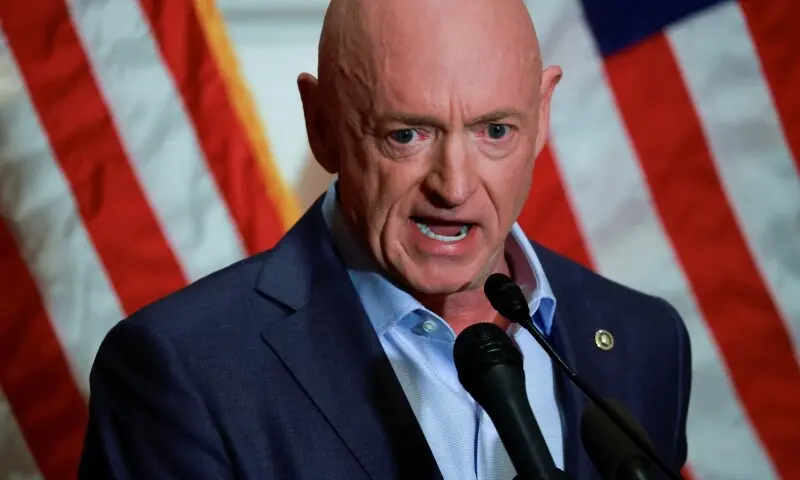
WASHINGTON: A courtroom clash with US War Secretary Pete Hegseth is rapidly transforming Democratic Senator Mark Kelly into one of the most closely watched potential challengers to President Donald Trump ahead of the 2028 US presidential election.
A federal appeals court on Thursday appeared sceptical of Pentagon efforts to punish the retired astronaut and Navy officer over remarks urging US troops to refuse illegal orders, with judges sharply questioning whether the government’s case could stand constitutional scrutiny.
The case has taken on broader political significance in Washington, where Democrats are increasingly searching for figures capable of challenging Trump’s hardline political and security agenda.
Kelly, 62, is a former US Navy combat pilot who flew missions during the 1991 Gulf War before joining Nasa as an astronaut. He later commanded multiple space shuttle missions, including the final flight of Space Shuttle Endeavour in 2011.
He studied at the US Merchant Marine Academy and earned a master’s degree in aeronautical engineering from the Naval Postgraduate School.
Kelly has since built a political profile in Arizona and nationally, and is now widely discussed in Washington political circles as a possible Democratic presidential contender.
According to the magazine Politico, Kelly has raised more than $25 million in recent months, while also using the legal dispute to energise supporters and expand his national fundraising base.
The dispute began after Kelly and five other Democratic lawmakers — all with military or intelligence backgrounds — released a video last year warning against the politicisation of the US armed forces and reiterating that troops are not required to obey unlawful orders.
US President Donald Trump reacted angrily, accusing the lawmakers of “seditious behaviour,” while the Pentagon later initiated proceedings that could have reduced Kelly’s military retirement rank and benefits.
The case reached the US Court of Appeals for the District of Columbia Circuit this week, where a three-judge panel — Judges Karen LeCraft Henderson, Florence Pan, and Cornelia Pillard — questioned the government’s legal reasoning.
Judge Pillard said the central issue appeared to be mischaracterised by the government.
“The text of the video advises that service members have no obligation to obey unlawful orders,” she said. “Nobody in the video says service members have a duty to disobey lawful orders.”
Judges Pan and Henderson also pressed government lawyers on whether the Pentagon’s interpretation of the remarks could justify disciplinary action against a retired officer for expressing a constitutional view, while questioning whether any actual harm to military discipline had been demonstrated.
During the hearing, administration lawyers ultimately conceded that Kelly had not explicitly called for disobedience of lawful orders.
The Washington-based Cato Institute also supported Kelly, arguing that the Pentagon’s attempt to revoke his benefits amounted to unconstitutional retaliation for protected speech.
Outside the courtroom, Kelly said the case had implications far beyond his personal dispute with the Pentagon.
“I am not backing down,” he said. “After 25 years in the Navy, I have given too much to this country to be silenced by an administration that does not want to be held accountable.
“This was a day in court not just for me, but for millions of retired veterans and our First Amendment rights.”
The legal battle has significantly elevated Kelly’s national profile, with some Democrats already viewing him as a potential White House contender in a future election against Trump.
That political attention has also spilt into social media. Soon after the hearing, Kelly posted on Facebook, reiterating his stance and vowing to continue the legal fight. In the comments section under his post, reactions reflected both growing Democratic enthusiasm and Republican alarm.
Legal observers expect the dispute to eventually reach the US Supreme Court, potentially turning it into a major constitutional test of free speech, military authority, and the boundaries of political expression by former service members in the United States.
ISLAMABAD: Senators on Friday voiced alarm over rising violent crimes against women and demanded stronger measures to improve the conviction rate, which the presiding officer, PPP Vice President Sherry Rehman, said stood at “only five per cent”.
The debate began after Balochistan Senator Naseema Ehsan raised the killing of Rubina Chandio for alleged ‘honour’ in Sindh’s Tando Masti.
“Rubina Chandio was killed in Sindh. She was given neither a funeral nor a shroud,” Ehsan said. She added that the woman was shot in front of a crowd, and the case surfaced after videos circulated on social media.
“The culprits involved in this brutal murder should also be hanged publicly,” she added.
Police suspect that Chandio was killed in a karo-kari case in Khairpur district.
‘Honour killings’ persist despite the 2016 anti-honour killing law that removed the option of pardoning by heirs. HRCP data says over 470 women were killed in the name of ‘honour’ in Pakistan in 2023.
Rehman called the situation “deeply distressing and unacceptable”. She said the country was witnessing a “dangerous surge in honour killings, rape, and other forms of gender-based violence”.
“The surge in these cases is deeply concerning. We cannot allow such brutality to become normalised,” she said.
She termed the 5pc conviction rate “an extremely alarming state of affairs”.
“When justice is delivered sporadically, it reflects a systemic failure,” she said, adding that the legislative framework existed, but “what is missing is implementation with resolve and consistency”.
Rehman also rejected the notion that such crimes were limited to remote areas or linked solely to poverty and illiteracy.
“These crimes also occur within influential households. Wealth, status, and education do not erase patriarchal thinking — often, they provide stronger networks of silence and protection,” she said.
She urged that cases be “continuously and rigorously taken up by the Senate Human Rights Committee”.
“True deterrence will only come when a few perpetrators are made unquestionable examples,” she said.
As presiding officer, she referred Chandio’s case to the rights committee for immediate scrutiny.
Federal Minister for Parliamentary Affairs Dr Tariq Fazal Chaudhry assured “full institutional support” to parliamentary committees working on crimes against women. He said the government would provide all necessary assistance whenever a committee seeks input from any ministry or department.
“Cooperation between the government and parliamentary committees is important for better governance and timely delivery of justice,” he said, adding that efforts to strengthen the justice system would continue.
JUI-F flags KP insecurity
Meanwhile, JUI-F Senator Maulana Atta ur Rehman told the House his party members were “unsafe” in Khyber Pakhtunkhwa, citing the “targeted” killing of Maulana Muhammad Idrees.
He said the killers were “so expert” that only Idrees was killed while others in the vehicle were injured.
“Every week some heartbreaking incident happens in our area,” he said.
He also claimed the administration blocked the JUI-F’s protest over the killing.
“We said: you kill us and also don’t let us mourn. What answer do we give to our workers?” he asked.
The senator further said that the PTI had ruled the province for 13 years but has “lost the right to rule”.
“There is no law and order in our province. We are being killed and targeted daily,” he said, adding the provincial government tried to “shift blame to the federal government”.
He also questioned election transparency: “Are lists not prepared in advance?”
Taking aim at the centre, he said the federal government was “only busy brokering peace for America”.
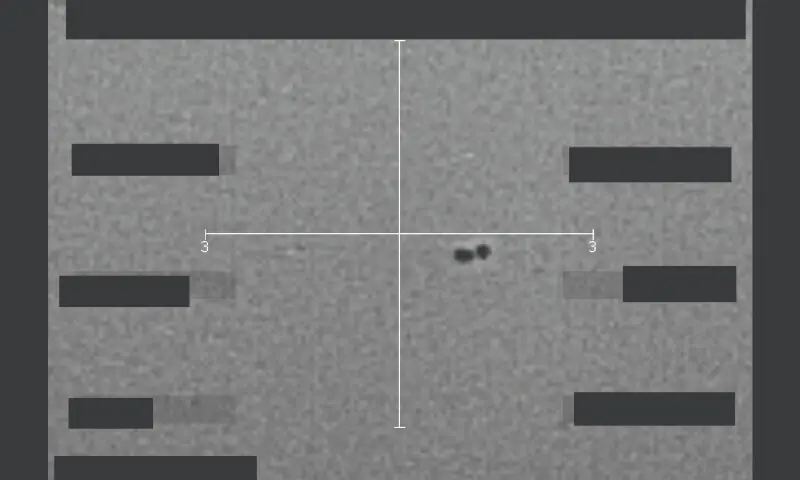
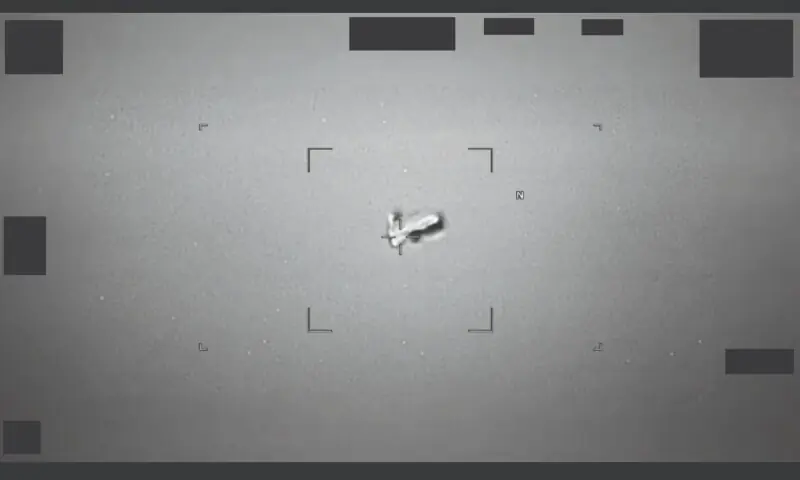
The Pentagon on Friday released a first batch of previously secret files documenting reported sightings of unidentified flying objects (UFOs) — some as far back as the 1940s — a move sought for decades by some Americans.
“These files, hidden behind classifications, have long fueled justified speculation — and it’s time the American people see it for themselves,” War Secretary Pete Hegseth said in a statement.
More than 160 files were released on Friday on the website of the War Department, which officially refers to UFOs as “Unidentified Anomalous Phenomena,” or UAPs.
An image showing an Unidentified Anomalous Phenomenon, or UAP, released by the Pentagon on May 8, 2026. — Photo courtesy US Department of War
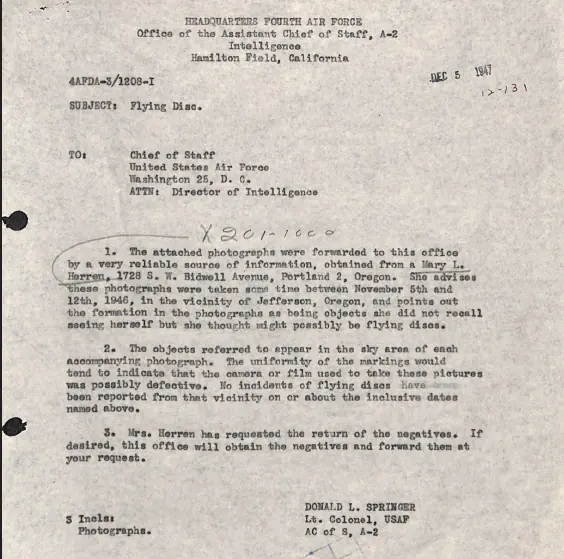
One file — from December 1947 — contains a series of reports on “flying discs.” An Air Force intelligence report — marked “top secret” — from November of the following year features information on reported sightings of “unidentified aircraft” and “flying saucers.”
Another file documents a 2023 incident in which three teams of federal law enforcement special agents independently described “seeing orange ‘orbs’ in the sky emit/launch smaller red ‘orbs’”.
A screenshot of a file on Unidentified Anomalous Phenomena, or UAPs, released by the Pentagon on May 8, 2026. — Screengrab via US Department of War
President Donald Trump directed US federal agencies in February to begin identifying and releasing government files related to UFOs and aliens, saying the move was “based on the tremendous interest shown”.
The Republican president also claimed the same day he issued the release order that one of his Democratic predecessors, Barack Obama, had revealed “classified” information in viral podcast remarks about the existence of extraterrestrial life.
“They’re real, but I haven’t seen them, and they’re not being kept in … Area 51,” Obama told host Brian Tyler Cohen, referring to the top-secret US military facility in Nevada at the heart of many UFO conspiracy theories.
An image showing an Unidentified Anomalous Phenomenon, or UAP, released by the Pentagon on May 8, 2026. — Photo courtesy US Department of War
Trump told reporters at the time that Obama “gave classified information, he is not supposed to be doing that,” while saying of his own beliefs: “I don’t know if they are real or not.”
No evidence has been produced of intelligent life beyond Earth.
Interest in UFOs has been renewed in recent years as the US government probed numerous reports of seemingly supernatural aircraft, amid worries that adversaries could be testing highly advanced technologies.
In March 2024, the Pentagon released a report saying it had no proof that UAP were alien technology, with many suspicious sightings turning out to be merely weather balloons, spy planes, satellites and other normal activity.
Australia on Friday imposed sanctions on the Balochistan Liberation Army (BLA) and three of its senior leaders, according to a statement from Foreign Minister Penny Wong’s office.
“The Australian Government has today imposed counter-terrorism financing sanctions on the Balochistan Liberation Army and three senior leaders for their engagement in and support of terrorist attacks,” said the statement dated May 8.
The Australian Ministry of Foreign Affairs said the BLA is a “group that has conducted violent terror attacks across Pakistan”.
“These appalling attacks have targeted civilians, critical infrastructure, and foreign nationals, as well as the Pakistani state,” the statement read, adding that Australia’s commitment to counter-terrorism and curbing violent extremism is “unwavering”.
“These sanctions help cut off financial support of terrorists, making it harder for them to fund operations, recruit and spread their harmful ideology,” it added.
Wong’s office reaffirmed its commitment to dismantling networks threatening Australia’s security, in collaboration with international partners.
It added that using or dealing with the assets of a listed person or entity, or making assets available to them, is a criminal offence punishable by heavy fines and up to 10 years’ imprisonment.
Pakistan has been lobbying other nations and institutions to proscribe the banned BLA, which perpetrated attacks like the Jaffar Express hijacking in March 2025, where terrorists took control of a train with over 400 passengers on board. The 33 terrorists were killed in an operation launched by the military the next day.
In February, Pakistan’s Ambassador to the United Nations, Asim Iftikhar Ahmad, urged the United Nations Security Council to move swiftly to designate the BLA as a terrorist organisation under its sanctions regime, saying the listing request was already under consideration by the council.
“We hope the council will act swiftly to designate BLA under the 1267 sanctions regime, acceding to the listing request that is currently under consideration,” Pakistan’s Permanent Representative to the United Nations, Ambassador Asim Iftikhar Ahmad, told a UNSC briefing on ‘Threats to International Peace and Security caused by Terrorist Acts’.
Last August, Pakistan welcomed the US’ decision to add the BLA and Majeed Brigade to its Foreign Terrorist Organisation list, according to a Foreign Office (FO) press release.
“BLA/Majeed Brigade is involved in multiple terrorist attacks in Pakistan, including the heinous Jaffer Express terrorist incident and the Khuzdar bus attack that resulted in the loss of precious lives,” the release said.
BANNU: A high-profile terrorist who was killed in a recent operation by security forces in Khyber Pakhtunkhwa’s Bannu district was a member of the Afghan Taliban regime’s special forces, security sources said on Friday.
Security sources said the terrorist, Fatehullah alias Mudassir, was an active member of Yarmook 60 Special Forces Battalion. The unit operates under the Taliban regime’s Ministry of Interior Affairs.
They added that Fatehullah belonged to the Zarmat district of Afghanistan’s Paktia province and was actively involved in terrorist activities in Pakistan alongside the banned Tehreek-i-Taliban Pakistan (TTP).
Reports further suggest that he was also involved in facilitating cross-border terrorist networks and planning various militant operations, the security sources elaborated.
Security sources said that Fatehullah was killed along with his accomplices during an intelligence-based operation (IBO) conducted near Bannu’s Baka Khel Airport on April 9. During the operation, security forces effectively targeted militant hideouts and neutralised the terrorists.
The security sources maintained that the revelations regarding Fatehullah’s Afghan background had raised serious questions over repeated claims by the Afghan Taliban government that their soil would not be allowed to be used against any other country, particularly Pakistan.
Such evidence strengthens concerns regarding cross-border terrorist networks in Afghanistan and regional militant connections, acting against Pakistan, the security sources added.
Bannu district has been the scene of repeated security incidents in recent months, with both civilians and local security forces coming under attack amid a broader surge in militant violence.
Violence in Bannu has included attacks on police and jirga members, prompting targeted operations by police and security forces in various localities to disrupt militant networks.
Eight TikTokers arrested in Swabi
Eight TikTokers belonging to different regions of Swabi were arrested on Thursday and Friday by district police for displaying weapons on social media, a district police officer said.
The officer, Waqas Rafiqe, said that the crackdown against young people displaying arms on social media would continue, and that anyone involved in such practices across the district would be arrested and face the law.
The Chowki Azamabad in-charge arrested a youth who uploaded pictures and videos of himself brandishing weapons on social media, he said, adding that the accused — a resident of Managai village — was creating an “environment of fear” and promoting gun culture among the youth. The weapons were recovered from his possession upon his arrest.
A case has been registered against the accused and further investigation has begun.
Other TikTokers have also been arrested across the district upon identification by the Social Media Monitoring Cell. These include one from Gandogher village who had displayed a Kalashnikov, two from Tat Corona Charbagh in Razaar tehsil, one from Kadi Rashkai, one from Pajman village, and two residents of Parmuli who were reported to have been “posing like movie heroes with weapons in their hands” on social media.
Parmuli police officials said that the videos “had a negative impact on the young generation”, adding that the displayed weapons were recovered.
The interior ministry on Friday denied reports about the “targeted deportation” of Pakistanis from the United Arab Emirates, asserting that no “country- or sect-specific” expulsions from any country, including the UAE, were being carried out.
The ministry’s statement contradicts claims on social media that Pakistanis were being deported from the UAE without any reason.
In recent days, several media outlets have also reported that Pakistanis are being deported from the UAE. Among them, The New York Times published a report earlier today stating that the Gulf country had begun a “large-scale expulsion” of Pakistani workers.
The US news outlet spoke to more than 20 Pakistani Shias who worked in the UAE, the report stated, adding that “all [the workers] said they were suddenly arrested, detained and deported in the past month”.
The article linked the reported expulsion to what it described as an apparent dent in the relationship between the two countries amid the ongoing Middle East conflict.
Following these reports, the interior ministry said in a post on X that it had taken notice of “speculative reporting in sections of media especially social media about targeted deportations of Pakistani nationals from brotherly Islamic country of UAE”.
“Having gone through the details and data, it is necessary to state that all such reporting is mala fide and part of vicious propaganda by vested interest. No country or sect specific deportations from any country including UAE are being carried out,” it asserted.
The ministry said deportations, if any, were a routine process in line with the host country regulations and legal system, violations of their laws and overstay/ illegal documentation.
“At the same time, Pakistani nationals, having fulfilled host country visa and work-based requirements, continue to visit/ access work visas in the UAE and other friendly countries without prejudice,” it said.
“Fake news being peddled to the contrary along with social media posts is malicious and fabricated with a purpose to serve ulterior motives,” said the ministry.
“Any issue … with any Pakistani national is always taken up on a case to case basis with the country concerned through established foreign office channels,” it added.
During a weekly briefing on Thursday, Foreign Office spokesperson Tahir Andrabi was also asked about the “unusually high number” of emergency exit documents (ETD) or outpasses being issued by the Pakistani consulate in the UAE.
In his response, Andrabi said the development was “mainly driven by administrative actions, including immigration status violation and other legal infractions”.
“The Consulate General in Dubai … issued around 2,714 emergency travel documents, while the embassy in Abu Dhabi issued 780 of those, between January to April 2026. So this was the four-month record,” he said.
When asked to confirm whether the Pakistani authorities had made inquiries to the Emirati officials and law enforcement agencies about those reports of expulsions, he said: “Our embassy is in touch with the UAE authorities. Our mission has also ensured that in the wake of the hostilities in the Gulf region, and in the wake of very serious armed attacks against the UAE, which we have condemned, our community fully complies with the local laws, with the local instructions.”
He said the Pakistani community, by and large, except for maybe few sporadic cases, had been cooperating with the local authorities in the UAE.
“So, I think this is what the status is. The Ministry of Interior and relevant departments are also seized of this matter (repatriation). This matter is proceeding as per law. I do not see any political reason for their deportation. These are primarily legal cases, which are being taken care of, both by our diplomatic missions in UAE as well as by the UAE authorities.”
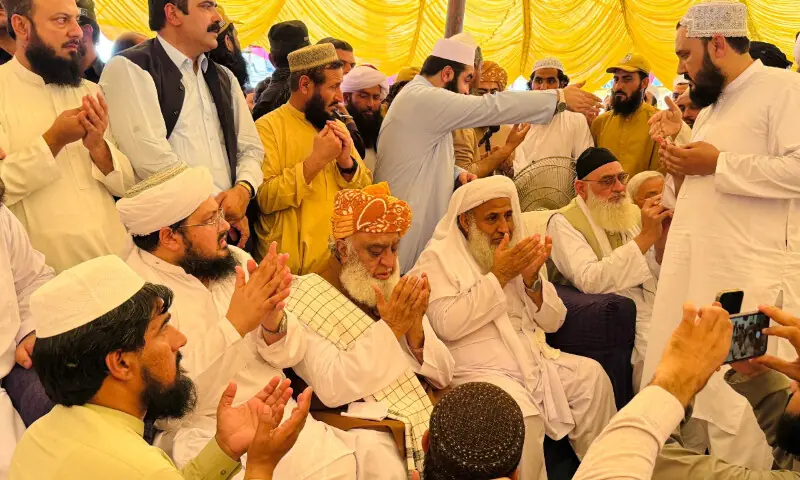
PESHAWAR: The Jamiat Ulema-i-Islam-Fazl (JUI-F) on Friday held a second round of protest rallies across Khyber Pakhtunkhwa against the killing of prominent cleric Maulana Muhammad Idrees, according to a statement released by the party’s media cell.
On Tuesday, JUI-F Chief Maulana Fazlur Rehman announced that the party would hold two rounds of protest rallies — on Wednesday and Friday — against the “martyrdom” of the cleric. The party had also staged demonstrations on Wednesday.
“On the appeal of the JUI-F, protest rallies were held across all districts of the province today after Friday prayers against the killing of Maulana Idrees,” the statement said.
It added that a large protest demonstration was also staged by JUI-F outside the Peshawar Press Club, with protesters demanding the immediate arrest of the killers of Maulana Idrees.
The statement said the protestors decried the worsening law and order situation in the province and the “frequent killings of religious scholars”.
“JUI is being punished for standing with the Constitution, law, and the state,” said the statement.
The statement also quoted JUI-F provincial spokesperson Abdul Jalil Jan as saying: “After Friday prayers today, strong protests were held at district and tehsil levels in Peshawar, Charsadda, Mardan, Nowshera, Swabi, Haripur, Abbottabad, Mansehra, Kohistan, Battagram, Torghar, Shangla, Swat, Buner, Upper Dir, Lower Dir, Chitral, Malakand, Dera Ismail Khan, Tank, Bannu, Lakki Marwat, Karak, Hangu, Kohat, and the tribal districts.”
Addressing the demonstrations, the statement said that JUI-F provincial and district leaders condemned the deteriorating law and order situation across the province, the killing of religious scholars, and government measures against madrasas.
“They said those trying to remove religious scholars from the scene should know that the JUI-F will continue to fight for the defence of Islam and Pakistan. They assured the central leadership that workers across the province would be ready at a moment’s notice,” the party statement added.
A large protest demonstration was also held outside the Peshawar Press Club.
Addressing the protest demonstration, the party leadership held the provincial government, administration, and state institutions responsible for the killing of religious scholars, the statement added.
Maulana Idrees was killed on Tuesday after unidentified assailants opened fire on his vehicle in the Tariqabad area of Utmanzai.

 Login
Login