PAKISTAN is undergoing an energy revolution unlike any the country’s planners designed, any donor funded, or any government blueprint envisioned.
Rooftop by rooftop, tubewell by tubewell, factory floor by factory floor, ordinary Pakistanis are building one of the fastest clean energy transitions ever recorded.
In a country simultaneously battered by catastrophic floods, record-breaking heatwaves and an electricity tariff crisis of its own making, the sun has become both an escape route and, quietly, a contributor to Pakistan’s climate commitments.
This is the story of that revolution, and the storm gathering in its wake.
The roots of Pakistan’s solar revolution lie in a catastrophic confluence of policy failure, global market forces and consumer desperation.
Between 2021 and 2024, electricity tariffs surged by 155 per cent, driven by IMF-mandated removal of subsidies, soaring fuel costs from the Russia-Ukraine war, and capacity payments owed to idle CPEC-era thermal plants.
At the peak, electricity bills in some households exceeded monthly house rent in major cities.
Simultaneously, Chinese solar manufacturers faced massive overproduction.
Panel prices fell from 32 cents per watt in early 2024 to 17 cents by yearend, and further to USD 0.08 per watt by 2025.
This ‘perfect storm’, soaring grid costs meeting collapsing panel prices, ignited an unprecedented consumer response.
In FY 2024-25, Pakistan imported 18GW of solar panels, according to Ember and Renewables First, building on 16.6GW in 2024.
Cumulative imports reached 51.5GW by November 2025, making Pakistan the third-largest destination for Chinese solar exports.
Solar’s share of utility electricity tripled from four per cent in 2021 to 14pc in 2024, reaching 25.3pc by early 2025, placing Pakistan among fewer than 20 countries to achieve that milestone.
The consumer-led revolution has been remarkable, but it has also brought in its wake a storm that the government needs to address rather urgently and effectively, believes Ali Ahsan
Urban high-consumption households were the earliest adopters. Pakistan’s volumetric pricing structure penalises heavy usage, as tariffs rose, those with capital went solar first.
Payback periods compressed to one to two years, and a 2015 net metering policy enabled sale of surplus power to the grid.
By December 2024, there were 283,000 net-metered consumers.
However, official figures capture only a fraction, with Renewables First and TransitionZero estimating that between 27GW and 33GW have actually been deployed, mostly off-grid.
In rural Pakistan, approximately 80pc of the country’s 1.5-2 million tubewells historically ran on imported diesel.
As subsidies were removed, solar pumps became dramatically more economical.
Agricultural electricity demand on the national grid fell 34.3pc in 2024.
The World Resources Institute estimates that half of all tubewells would ultimately convert to solar, adding 5.6-7.5GW of distributed photovoltaic (PV) capacity.
The textile sector, consuming nearly one-third of Pakistan’s industrial electricity, has embraced solar to cut costs and meet global sustainability standards.
The European Union’s Carbon Border Adjustment Mechanism (CBAM) has added urgency for export-facing manufacturers.
Industrial firms have each installed multi-megawatt systems. Industrial grid demand fell from 31,008GWh in FY2023 to 27,830GWh in FY2024, a clear signal of structural defection.
Regulatory turbulence
The Pakistani state has begun to respond, not always constructively.
Under the original net-metering policy, solar consumers enjoyed a real benefit of approximately Rs40-50 per kWh; proposed changes slash this to Rs8-10, an almost 80 per cent reduction.
The government’s Economic Coordination Committee has signalled a move to a net billing framework, significantly undermining residential solar investment.
Hasnat Khan, Senior Vice-Chairman of the Pakistan Solar Association (PSA), is unambiguous in his assessment.
“People have invested their hard-earned money to install solar systems and many have even taken loans,” he said in a media interaction”, adding that the new rules “will make it difficult for people to recover their investment” and stressing: This is green energy and it should be encouraged.”
Waqas Moosa, the PSA Chairman, warns of deeper systemic risk: “We anticipate that a lot of consumers will start choosing to go for batteries, which could have profound implications for the relevance and sustainability of the central grid.”
The off-grid exodus
The most consequential and least-discussed dimension of Pakistan’s regulatory crisis is the battery storage inflection point.
As the National Electric Power Regulatory Authority (Nepra) reduces the economic value of grid-connected solar, the rational consumer response is not to abandon solar; it is to pair solar with a lithium-ion (Li-ion) battery and go off-grid entirely.
Alongside 17GW of solar PV panel imports in 2024, Pakistan imported an estimated 1.25GWh of Li-ion batteries.
According to Moosa, 40-50pc of residential customers were already integrating batteries, and that following the net-metering rollback, he expected this to reach 80-90pc.
The World Bank projects that solar-plus-battery systems could supply over a quarter of Pakistan’s peak energy demand by 2030, and battery imports would reach 8.75GWh.
Once a household pairs solar with adequate battery storage, it no longer needs to sell power to the grid, nor, critically, does it need to buy from it in the evening.
Such households exit the grid ecosystem entirely, eliminating their contribution to fixed infrastructure costs.
The utility death spiral
As higher-income consumers defect, fixed costs, including capacity payments owed to idle CPEC-era thermal plants, fall on a shrinking pool of grid-connected consumers, driving tariffs higher, which incentivises more solar-plus-battery adoption.
Electricity sales on the national grid already fell 3pc in 2024 despite a 6pc rise in registered consumers.
By December 2024, net-metered consumers had already shifted USD563 million (PKR159 billion) in fixed costs onto other consumers.
Without structural reforms, regulators project this regressive transfer could reach USD48.34 billion by 2034.
The cruel irony is that the regulatory response, cutting buyback rates, accelerates precisely the outcome it seeks to prevent, pushing consumers towards full off-grid independence.
Accidental green dividend
Pakistan contributes less than one per cent of global greenhouse gas (GHG) emissions, approximately 400-500 million tonnes of carbon dioxide-equivalent annually.
Yet, it consistently ranks among the world’s most climate-vulnerable nations.
The 2022 monsoon floods, amplified by climate change, submerged one-third of the country, killed over 1,700 people, and caused USD30 billion in damages.
Glacial retreat across the Hindu Kush-Himalayan range threatens water security for 255 million Pakistanis.
Heatwaves exceeding 50°C in Sindh and Balochistan are intensifying.
Pakistan’s energy sector accounts for 46pc of domestic GHG emissions, making the solar transition directly relevant to its mitigation obligations.
Pakistan’s Third Nationally Determined Contribution (NDC3.0) in 2025 committed to a 50pc reduction in projected emissions by 2030, with 60pc renewable electricity as a headline target.
The consumer-led solar surge is now contributing measurably, climbing from 4pc of electricity generation in 2021 to 14pc in 2024, one of the highest proportions in Asia.
The Climate Change Performance Index 2026 ranked Pakistan 15th globally, a rise of 16 places.
However, climate experts caution against over-confidence.
If battery storage allows consumers to exit the grid entirely, the residual grid will increasingly run on idle coal and gas plants that Pakistan is contractually obligated to pay for, producing a grid that is simultaneously dirtier and financially unsustainable for those who remain dependent on it.
The way forward
Pakistan’s consumer-led solar revolution has achieved in three years what six decades of government-led electrification programmes could not.
But sustaining this transition, and aligning it with both economic equity and climate goals, demands that the state must act decisively on several urgent fronts.
The single most critical intervention is for the federal government to formally declare a Battery Energy Storage System (BESS) emergency, treating grid-scale storage as a matter of national energy security.
As solar penetration deepens, the evening demand surge following the sunset of distributed generation is becoming structurally destabilising.
The state must urgently commission utility-led storage projects at the transmission and distribution levels to absorb daytime solar surplus and release it during peak evening demand, smoothing the duck curve, reducing reliance on idle thermal plants, and keeping grid-defecting consumers connected.
Without utility-scale BESS, the spiral from grid-tied solar to full battery-backed off-grid independence becomes economically inevitable for growing numbers of consumers.
The government should also remove taxes on solar panels and classify solar energy as a basic necessity.
The imposition of a 10pc General Sales Tax (GST) on imported solar panels, combined with punitive net billing rates, sends a contradictory signal at the worst possible moment.
The government must remove all import taxes on solar panels and formally classify solar energy as a basic necessity of life, equivalent to water or food.
Solar power is no longer a luxury appliance for the affluent; it is the primary means by which millions of Pakistani households are securing affordable electricity, reducing dependence on costly fuel imports, and contributing to the country’s NDC commitments.
Taxing it undermines climate targets, deepens energy inequality, and drives consumers off-grid entirely, removing them from the grid’s revenue base.
Treating solar as essential will ultimately mitigate the effects of climate change by accelerating the displacement of fossil fuel generation across all consumer categories.
There is a need for government-level initiatives for the agricultural sector. Agriculture accounts for 43pc of Pakistan’s domestic GHG emissions and employs 37pc of the national workforce.
The government must launch a dedicated, nationally-coordinated solar for agriculture programme, going beyond the fragmented provincial schemes, to solarise Pakistan’s 1.5-2 million tubewells, provide subsidised solar water pumping systems to smallholding farmers, and integrate solar irrigation with precision water management to address Pakistan’s deepening water insecurity.
Balochistan’s PKR55 billion tubewell solarisation project and Punjab’s solar kit distributions are meaningful beginnings, but they must be scaled, coordinated and extended to cover all provinces under a unified federal agricultural energy policy.
Such an initiative would simultaneously reduce diesel import costs, cut methane and carbon dioxide emissions from the agricultural energy mix, and build climate resilience for the rural communities that are the ones most exposed to Pakistan’s worsening droughts and heatwaves.
On climate finance, Pakistan’s case for international support is unimpeachable.
The NDC 3.0 quantifies the energy transition need at USD101 billion, 35pc of which is contingent on external grant financing.
The global community’s failure to honour its climate finance commitments to one of the world’s most vulnerable nations represents both a moral failure and a strategic miscalculation.
The writer is Research and Publication Manager, Pakistan Solar Association (PSA).
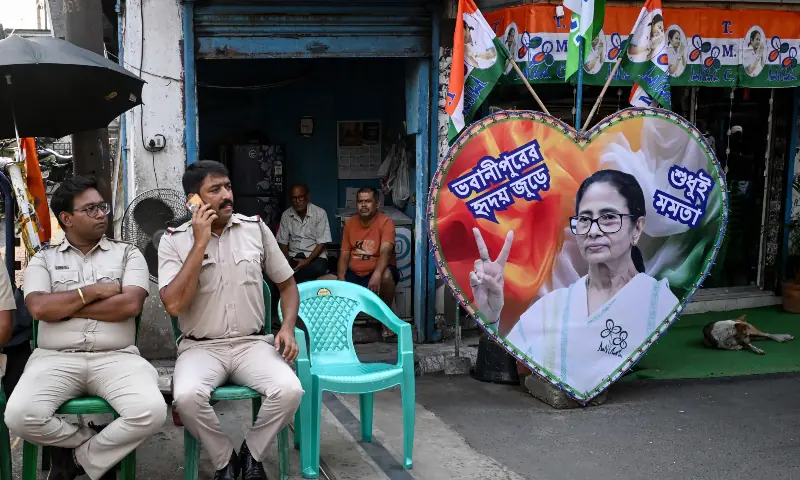
Four people have been killed in political unrest after Indian Prime Minister Narendra Modi’s Hindu-nationalist party celebrated victory in state polls in West Bengal, police and party officials said on Wednesday.
Modi’s Bharatiya Janata Party (BJP) swept polls in the key eastern state of more than 100 million people, winning 206 of the 294 assembly seats, according to results announced on Monday, for its first-ever victory in West Bengal.
West Bengal had been ruled by Modi’s fierce critic and adversary Mamata Banerjee as chief minister since 2011.
Banerjee, leader of the regional All India Trinamool Congress (TMC), also lost her seat in the polls and has rejected the results.
Police said clashes between rival party supporters erupted in the state capital Kolkata after results were announced on Monday.
Analysts say the BJP’s victory in the largely Bengali-speaking state is one of its most significant since Modi was first elected prime minister in 2014, expanding its dominance beyond the Hindi-speaking heartland of north and central India.
The BJP said two party workers were killed, while the TMC said two of their workers were beaten to death.
“Two of our workers were killed after results of the elections were announced on Monday,” BJP state leader Samik Bharracharya told AFP, insisting that the party is “for peace”.
TMC, in a statement on social media, reported the “brutal murder” of two party workers.
“Our party offices were attacked in several areas of the state,” TMC spokesman Narendranath Chakrabort told AFP. “Two of the victims were grassroots political workers.”
A senior police officer, who was not authorised to speak to reporters, confirmed four deaths in clashes and said one officer had been shot in the leg.
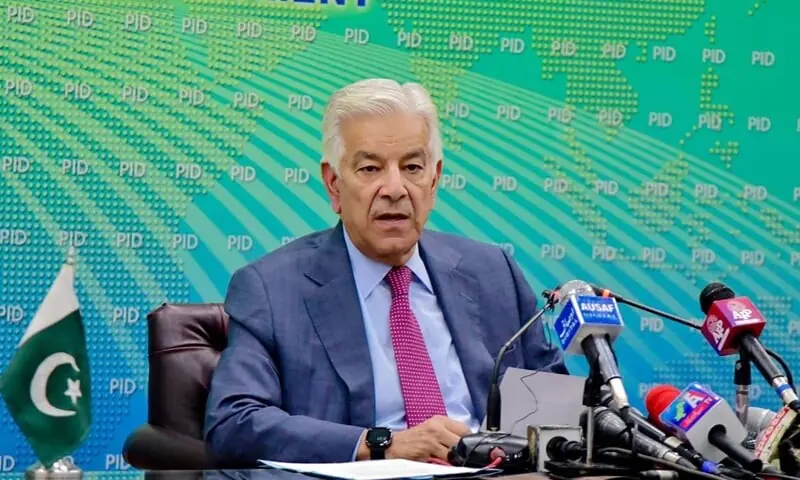
In a televised message marking Marka-i-Haq, Defence Minister Khawaja Asif on Wednesday warned that Pakistan’s reaction to any miscalculation in the future would be “more intense and decisive”.
Last year’s military conflict with India, starting from the April 22 Pahalgam attack to the end of Pakistan’s Operation Bunyanum Marsoos, with a ceasefire ending a military escalation between the two countries on May 10, has been called “Marka-i-Haq” (Battle of Truth) by the state.
In his message, Asif said Marka-i-Haq was not just a “memorable episode for Pakistan, but a line that we have drawn forever”.
Anyone on the other side of this line should understand that Pakistan exercised tolerance and restraint during the 2025 episode, he said, warning that in case of an “incorrect assessment or miscalculation” in the future, the response would be “more intense and decisive”.
He added that Pakistan did not want any fighting in 2025, and it desired the same today. “But there should not be any doubt; Pakistan does not only respond, but it also determines the correct course of consequences. Any adventurism against us will not remain limited [to the other side’s action]; we will decide its course, its beginning and its end,” he said.
He said Marka-i-Haq had “forever buried the impression” that Pakistan could be pressurised or isolated.
“Today, our ability to respond in the air, land and water is effective and fast beyond anyone’s imagination,” the defence minister said.
He further stressed that India must realise that there was no space for “dramatics, false flag operations and miscalculations”. The defence minister warned that repeating “cliched actions” would entail paying a price much higher than before. “It will be equivalent to committing suicide,” he added.
Asif said that Pakistan’s “everlasting national unity” had provided it strength. “Pakistan’s nation, armed forces and the state are moving in a unified direction, and this strength of ours has tipped the balance [in our favour],” he said.
He added that Pakistan’s armed forces met the demands of modern times and were fully prepared to effectively deal with any possible conflict in the future. “Whatever you may plan or whatever your designs may be, we are far ahead of what you think. The entire nation is standing with us like bunyanum marsoos (a solid fortified wall),” the defence minister said, seemingly addressing India.
Asif said Pakistan always wanted peace, but “we don’t want peace devoid of dignity, security and respect for sovereignty. That’s not peace but surrender, and it is completely unacceptable to us.”
He added that the confidence and determination he saw in the country’s youth during Marka-i-Haq inspired him. “The young generation in Pakistan has an understanding of what happened during Marka-i-Haq … Today’s generation is different, it is aware and united and has an emotional connection with Pakistan. And it is this sentiment that is the biggest strength for Pakistan’s bright future.”
Asif concluded his message, again seemingly addressing India, saying: “We know who we are, what we can do and where we stand today. If someone is living in the past, relying on old assumptions, my sincere advice is to align your thinking with modern demands.
“The message is clear: don’t let your internal politics and hatred come out. And if this happens, be ready for the response, which will not be in your control and will not remain limited.”
British police are setting up a new team of 100 officers, including counter terrorism specialists, to help protect Jewish communities across London after a series of anti-Semitic attacks, including the stabbing of two men.
The plan announced on Wednesday for a dedicated protection team comes as officers announced more arrests for anti-Semitism, including detaining a 35-year-old man after rocks were thrown at an ambulance belonging to the Jewish community.
London’s top police boss Mark Rowley said Jewish communities were facing “sustained threats” from hostile state actors as well as extreme right-wing groups and elements of the extreme left.
Detectives are examining whether the arson incidents have possible Iranian links, after British security officials warned that Iran was using criminal proxies to carry out hostile activity.
Since late March, there have been a number of high-profile arson attacks with four Jewish ambulances burned and synagogues targeted. Last week, two Jewish men were also stabbed. Both victims survived the attack.
Over the past four weeks, police said they had arrested around 50 people for anti-Semitic hate crimes and charged eight individuals.
On top of that, 28 arrests have been made as part of investigations alongside counter terrorism policing for arson and other serious incidents.
“This new team will be primarily focused on protecting the Jewish community, which faces some of the highest levels of hate crime alongside significant terrorist and hostile state threats,” said a statement from London’s Metropolitan Police force.
British Prime Minister Keir Starmer convened a meeting on Monday with business, health and cultural leaders aimed at trying to tackle anti-Semitism.
ISLAMABAD: State-run Pakistan LNG Limited (PLL) on Wednesday floated urgent tenders for the import of two liquefied natural gas (LNG) cargoes for delivery between May 12-14 and May 24-26 amid rising temperatures and power shortfall.
The company set May 7 (Thursday) as the deadline for bids, which will be opened the same day, given the urgent need to meet the power demand expected to spike again as the cargo imported in the last week of April has been consumed.
The tender comes after authorities’ expectations of the Middle East crisis easing and the reopening of the Strait of Hormuz did not materialise. Last month, PLL had rejected two bids for the same delivery period but accepted one cargo at $18.4 per million British thermal units (mmBtu).
Qatar, a long-term LNG supplier to Pakistan, had been reluctant to dispatch LNG cargoes stranded in the Gulf amid the closure of the Strait of Hormuz. Earlier, three LNG cargoes from Qatar destined for Pakistan were turned back from the strait due to security reasons.
Both tenders require 140,000 cubic metres of LNG to be delivered on an ex-ship (DES) basis. Each cargo of this capacity for Pakistan typically translates into around 100 million cubic feet per day (mmcfd) of gas supply.
In April, the Oil and Gas Regulatory Authority (Ogra) had notified a massive 19–22 per cent increase in the price of regasified liquefied natural gas (RLNG) to $12.50–$14 per mmBtu for sale at the distribution stage by the two Sui gas companies for the month of March.
The increase was mainly due to higher terminal charges amid lower import volumes and a minor rise in import prices, data from the authority showed.
The basket RLNG price was based on only two cargoes in March, compared to eight cargoes each in February and March, due to a force majeure declared by Qatar.
Both cargoes were imported under two LNG contracts between Pakistan State Oil and QatarGas at an average price of about $7.68 per mmBtu (DES), compared to $7.45 per mmBtu last month, but still significantly lower than $8.9 per mmBtu in March last year.
PLL, one of the public sector entities responsible for LNG imports, did not import any cargo last month. It had, in fact, imported one cargo a few months earlier after a gap of almost a year at about $7.65 per mmBtu through its old contract with a private entity.
The PLL, established almost a decade ago for LNG imports, could not import energy over the past year despite its executives and board of directors enjoying hefty remuneration and associated perks and privileges. It had last floated and LNG tender in December 2023 for delivery in January 2024 but later cancelled the tender.
Facing criticism over loadshedding even before the beginning of summer, the Power Division had already placed an order with the Petroleum Division last week to arrange around 400 million mmcfd of LNG for power generation, amid hopes of the opening of international supply routes.
LNG imports had stopped in March after the closure of the Strait of Hormuz following US-Israel attacks on Iran, which, in retaliation, targeted fuel installations in neighbouring countries, including Qatar, Saudi Arabia, the UAE and Kuwait, among others. Subsequently, Qatar declared force majeure early last month on all its global LNG contracts, including those with Pakistan.
The US State Department has announced the phased closure of its consulate in Peshawar, saying it would transfer operations to the embassy in Islamabad, it emerged on Wednesday.
“Responsibility for diplomatic engagement with Khyber Pakhtunkhwa will transfer to the US Embassy in Islamabad. This decision reflects our commitment to the safety of our diplomatic personnel and efficient resource management,” it said in a statement.
While our physical presence in Peshawar is changing, the administration’s policy priorities in Pakistan remain steadfast. We will continue to engage meaningfully with the people and officials of Khyber Pakhtunkhwa to foster economic ties, promote regional security, and advance the interests of the American people,” it said.
“The department, through the US Mission to Pakistan, remains dedicated to advancing the US-Pakistan relationship through our remaining diplomatic posts in Islamabad, Karachi, and Lahore,” it said.
The Independent had reported about the consulate’s closure in March. The report said the US State Department had notified Congress of its intent to close the consulate, saying that it would save $7.5 million per year without undermining the advancement of US national interests in Pakistan.
“The move has been under consideration for more than a year since the Trump administration began downsizing nearly all federal agencies and is not related to the Iran war,” The Independent said.
The joint US-Israeli war against Iran, launched on Feb 28, had sparked protests in various cities in Pakistan.
In March, the US Consulate in Karachi had suspended its operations temporarily after 11 people were killed when protesters breached the compound’s outer wall after Iranian Supreme Leader Ayatollah Ali Khamenei was assassinated in strikes on Iran.
Australia’s Royal Military College (RMC) has declared Pakistan Army Cadet Sardar Arsam Abbas the “overall best foreign military cadet”, the Inter-Services Public Relations (ISPR) said on Wednesday.
“The Australian RMC, Duntroon has declared Pakistani army Cadet Sardar Arsam Abbas (PMA 152 Long Course) the ‘overall best foreign military cadet’ in the passing out parade held at RMC Duntroon, Canberra on May 5,” ISPR said in a statement.
The statement said that the award was conferred upon the highest performing foreign military cadet across all facets of training.
“This is a testament to the highest standards of professionalism, commitment and excellence demonstrated by the junior leadership of the Pakistan Army,” the military’s media wing said.
It stated that the commissioning parade was reviewed by the Australian Chief of Army Lieutenant General Simon Stuart and other officials. The event was witnessed by members of the diplomatic corps, including the Pakistani high commissioner in Canberra, families of graduating cadets and Australian Defence Force officials, it said.
“Pakistan and Australia share a longstanding military relationship. Since 2013, seven officers of the Pakistan Army have served as platoon commanders on the faculty of RMC, while 46 Pakistan Army cadets have graduated from this prestigious institution since 2009,” the statement said.
It further stated that Wednesday’s declaration by the RMC marked the 14th occasion on which a Pakistan Army cadet had been declared the ‘overall best foreign military cadet.
ISPR said that this list also included Lieutenant Nasir Hussain Khalid Selhria, who was martyred on September 4, 2020 in Khyber Pakhtunkhwa’s North Waziristan district.
“The name of Lieutenant Nasir Shaheed is also inscribed on the memorial stone at the RMC parade ground, symbolising the enduring legacy of courage, sacrifice and honour of brave Pakistani Army officers,” the statement concluded.
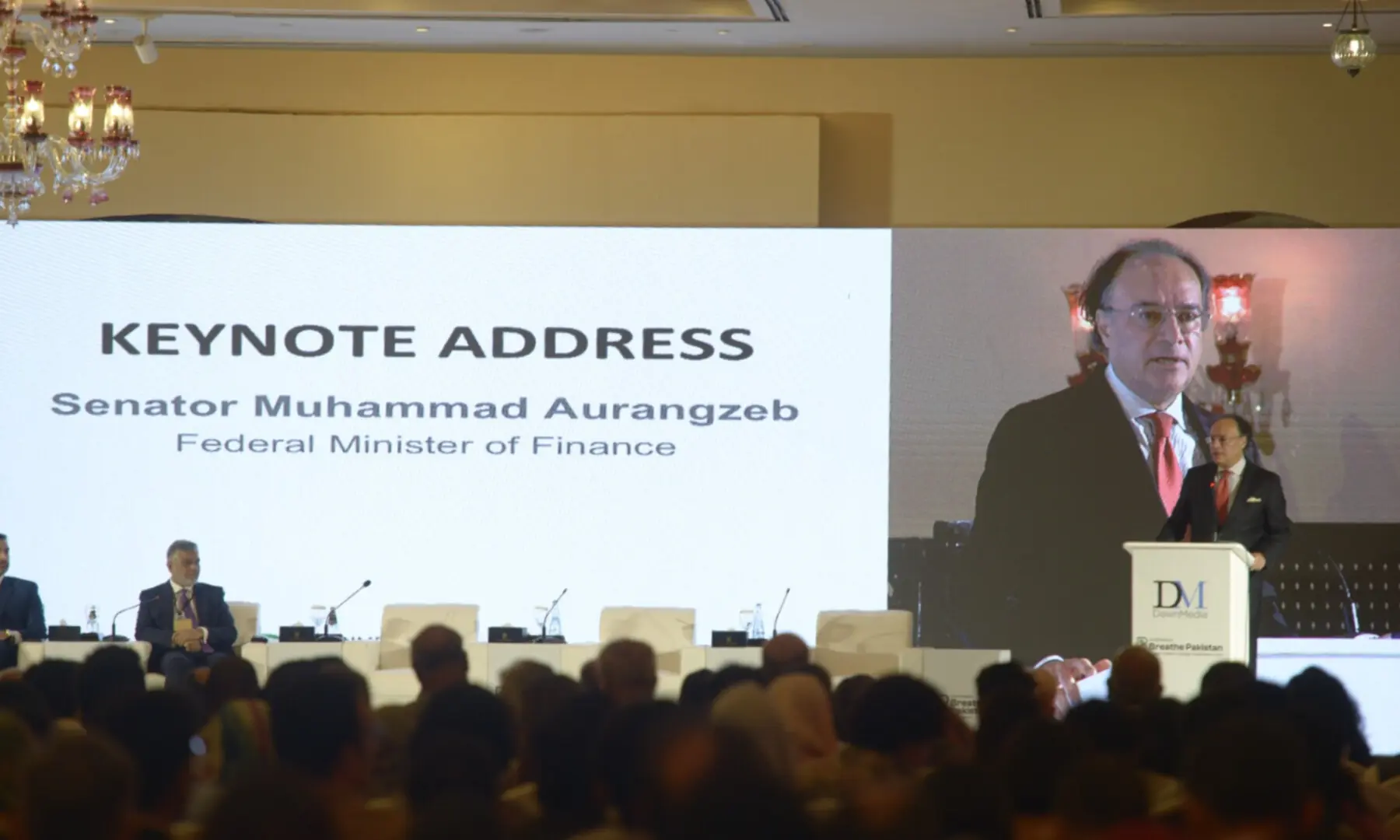
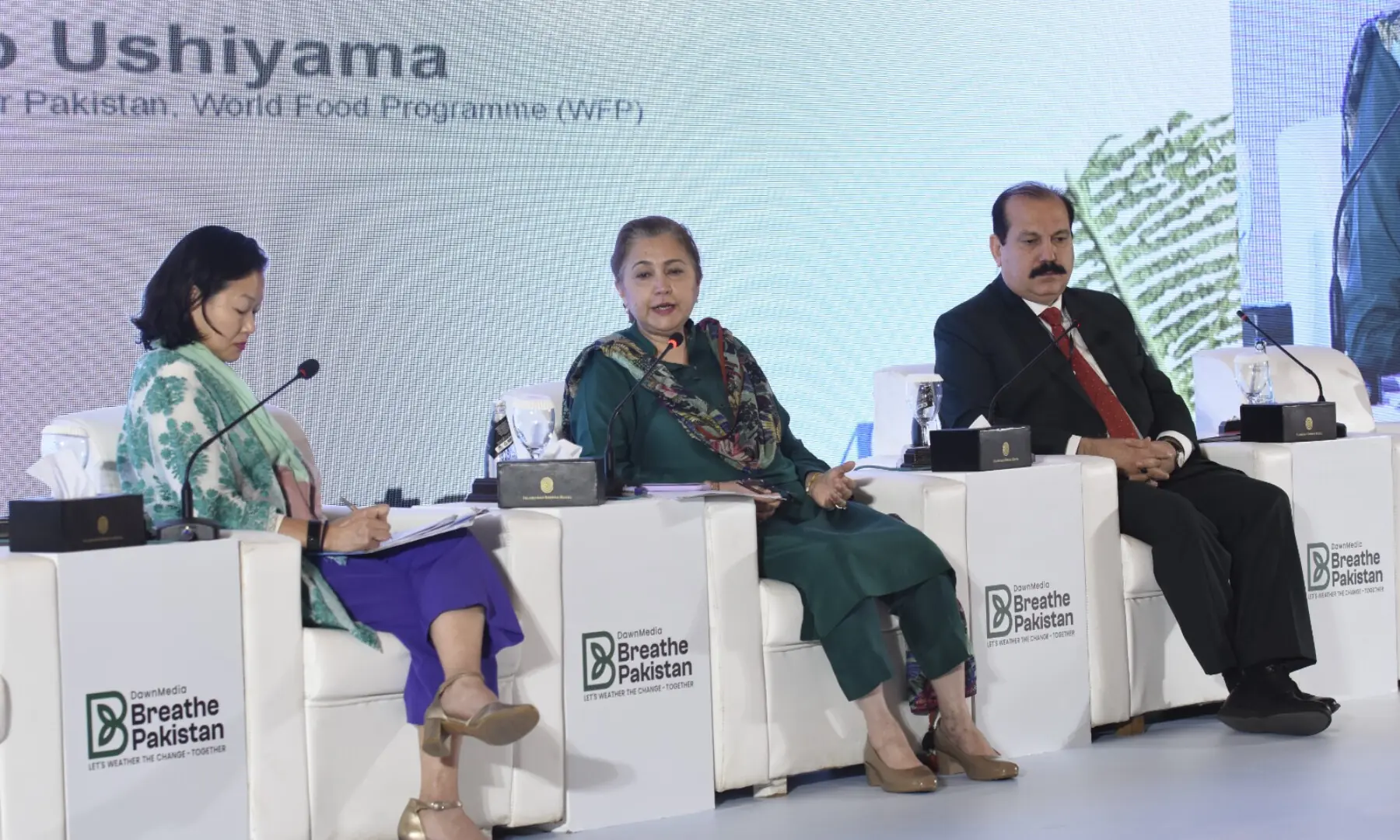
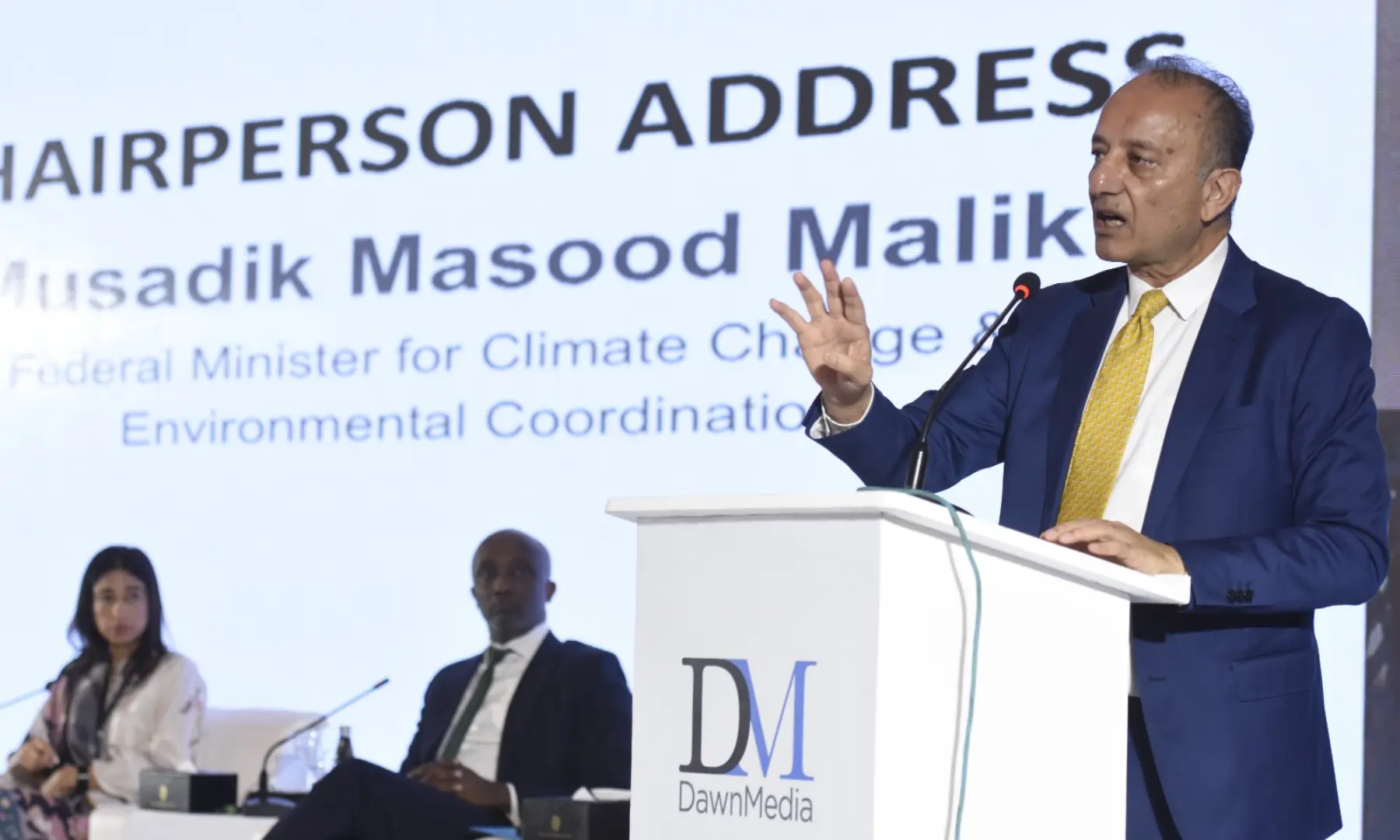
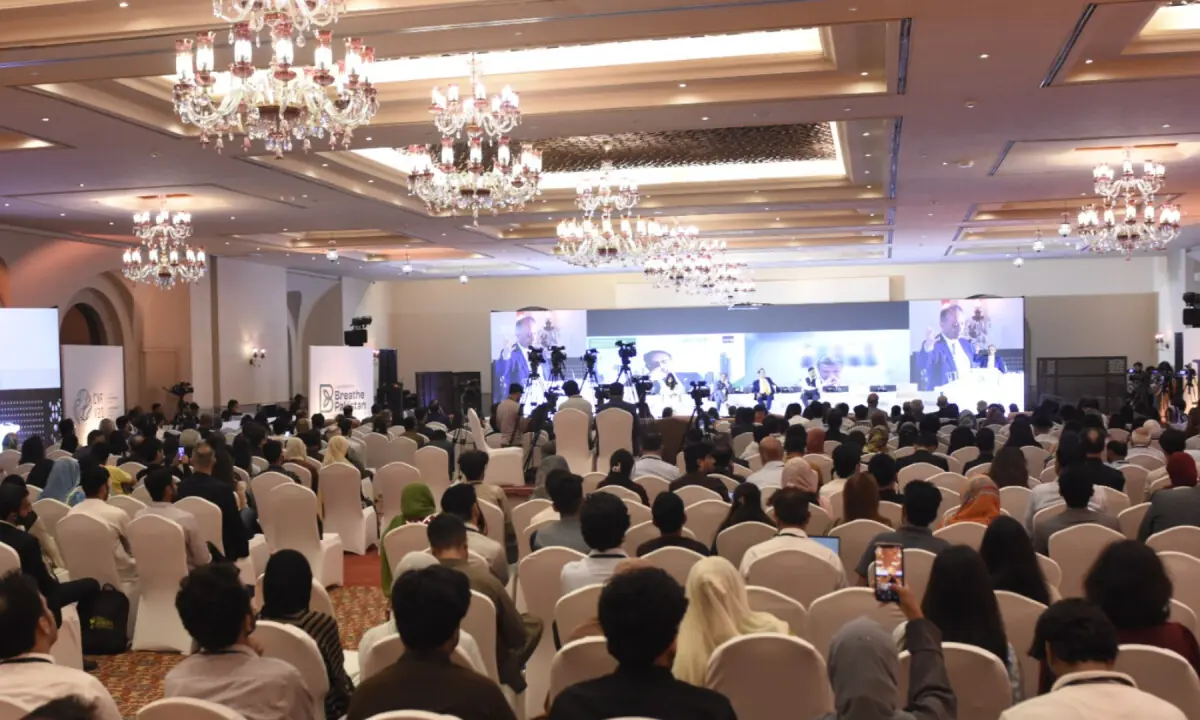
The second edition of The Breathe Pakistan International Climate Change Conference, organised by DawnMedia, is currently underway in Islamabad.
Despite contributing minimally to global emissions, Pakistan remains among the most climate-vulnerable nations, underscoring the critical need for coordinated, locally grounded, and globally informed responses.
The two-day conference brings together policymakers, experts, and stakeholders from across sectors to examine intersecting challenges and chart a path forward.
The first edition of Breathe Pakistan sparked national dialogue and global collaboration around vital climate challenges — from climate justice and finance to renewable energy transitions, disaster risk reduction, and inclusive public-private partnerships.
A panel talk, titled “The Indus Basin: Sustainable Governance or Ad Hoc Responses?” has begun.
Mirey Atallah, head of adaptation and resilience at United Nations Environment Programme (UNEP), is moderating the panel.
3:05pm — Researcher presents findings from glacier study project
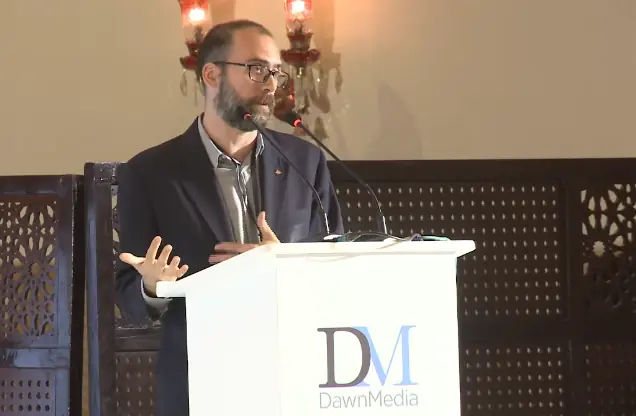
Dr Davide Fugazza speaks at the Breathe Pakistan conference. — screengrab
Dr Davide Fugazza, a glaciologist and a faculty member at the University of Milan, is giving a presentation on a research project done on glaciers.
He spoke about the phenomenon of “Karakoram Anomaly”, adding that even if the glacier area was still, they might be losing glacier mass.
“I personally visited these glaciers last year […] and we’re going again this year. We are performing investigations using satellite data to really look at the […] debris and identify the mineralogical properties and what it means for the glacial melt,” he said.
2:58pm — Cannot escape responsibility by evading it today: Erum Sattar
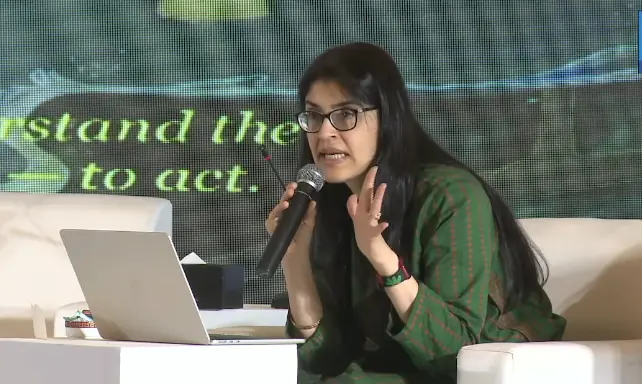
Sattar, speaking at the panel, highlighted the need for action to ensure the conservation of the Indus Delta.
“The Indus River has sustained civilisations for thousands of years, and what happens next will be determined by the choices Pakistan makes,” she asserted.
She further said that Pakistan cannot “escape responsibility” for the Indus River by “evading it today”. Sattar contended that political will and moral courage were required to tackle the issue.
2:53pm — What is ‘ethical leverage’ and why Pakistan can claim it
Dr Erum Sattar speaks at the Breathe Pakistan conference. — screengrab
Dr Erum Sattar shed light on the concept of “ethical leverage” in climate diplomacy, explaining that it meant “the strategic power that accrues to a nation when it bears a legitimate moral claim with a demonstrated governance competence”.
She asserted that Pakistan has “one of the most legitimate moral claims” as it contributed even less than one per cent of global emissions but still absorbed some of the “worst storms”.
2:47pm — Water expert warns Indus Delta is shrinking
Dr Erum Sattar further noted that the Indus Delta, which she said was “once one of the most productive ecosystems”, is now “shrinking” and its fisheries “collapsing”.
“An estimated 50 million people in Sindh alone have livelihoods that depend on the way the river functions,” she noted.
Sattar observed that in a world with fracturing global supply chains and climate disruptions impacting harvests, every drop of water saved and every unit of food grown efficiently was part of “national security”.
2:38pm — Indus basin being squeezed: Erum Sattar
Dr Erum Sattar, a water law and policy expert, noted that the Indus Basin was being squeezed “by climate change from above, from north by glacial disruption, from east by an extremely revisionist neighbour and from within a governance system that is designed for a much more stable world”.
She pointed out that the Indus river irrigates about 90pc of Pakistan’s food production, yet half of all irrigation water no longer comes from the river but from aquifers.
“We are quite literally mining the water beneath our feet.”
2:26pm — Water management no longer optional but a necessity: minister
Water Resources Minister Mian Muhammad Mueen Wattoo highlighted the need for efficient water usage, stressing that the country cannot afford wastage.
Noting that the agriculture sector consumed the largest share of the country’s water, he said the ministry was focusing on efficient use.
“Better irrigation practices [..] and rational water management are no longer optional but necessary,” he added.
“Water must be an area of discipline, not dispute,” he said, highlighting that the water issue was about national food security and economic stability.
“Above all, we must keep the people at the centre, the farmers, the villagers, the communities,” he said, adding that the Indus basin would require “careful management, strong institutions and consistent policy direction” for long-term sustainment.
2:20pm — Pakistan’s ‘lifeline’ Indus River basin under pressure: water minister
Water Resources Minister Mian Muhammad Mueen Wattoo speaks at the Breathe Pakistan conference. — White Star/ Tanveer Shahzad
In his chairperson address, Water Resources Minister Mian Muhammad Mueen Wattoo emphasised the importance of the Indus River basin for Pakistan’s agriculture and the livelihoods of the people.
“If it is secure, Pakistan is secure. But today, that lifeline is under pressure,” he said, pointing out that the behaviour of glaciers in the north was “no longer predictable”.
“Downstream, the Indus delta is shrinking, sea intrusion is advancing, communities that once thrived are now at risk,” Wattoo said.
2:15pm — Fourth session begins
The day’s fourth discussion, titled “From Glacial Melt to Delta Discharge”, is now underway.
1:35pm — Lunch break till 2pm
1:25pm — ADB official notes lack of ‘concessional finance’
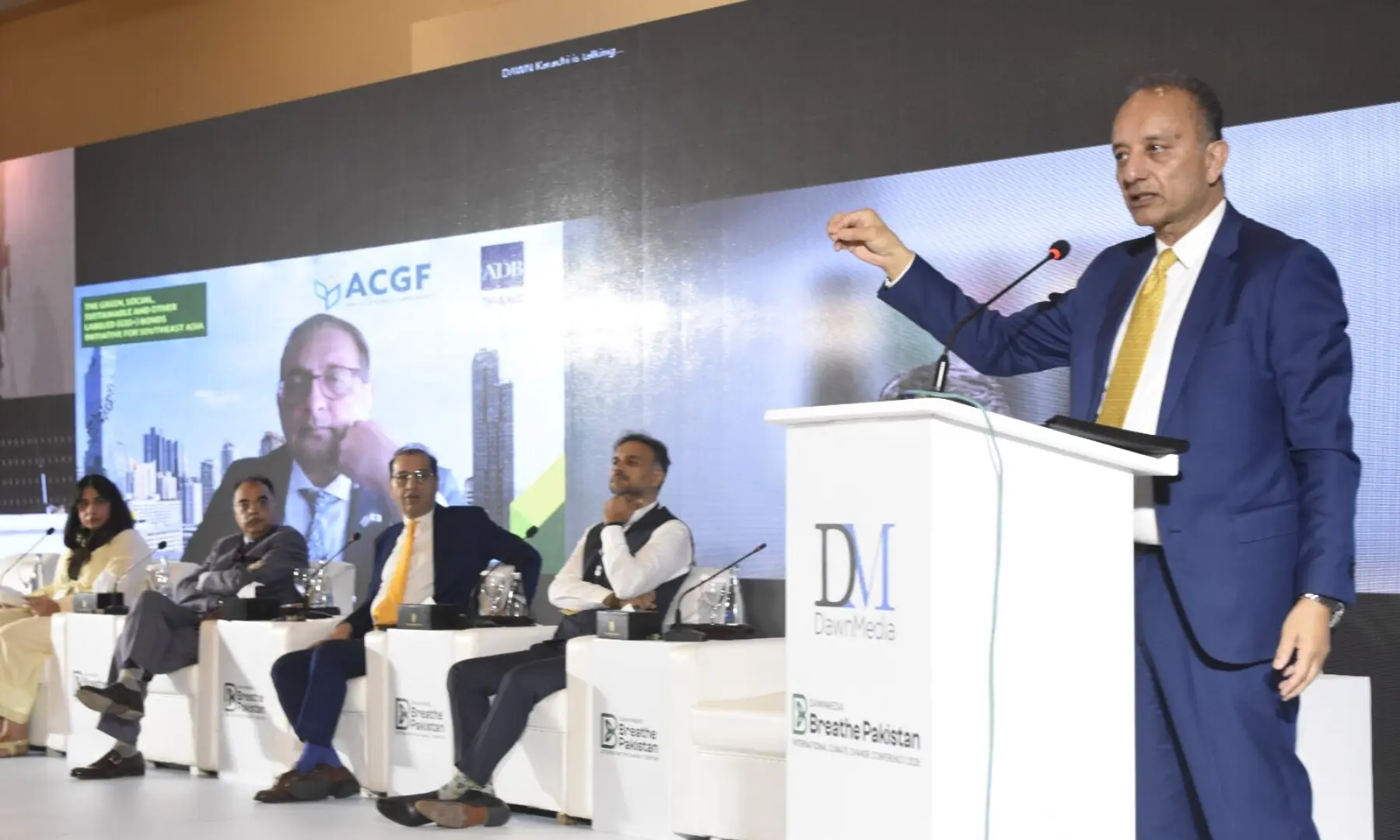
Speaking on climate financing, Anouj Mehta, an adviser at the Asian Development Bank, said there was an absence of the “amount of concessional finance that we would like to have to make a lot of things work”.
He also highlighted the issue of affordability, asking whether green bonds could be made more affordable. He cited Thailand and Uruguay’s bonds as examples.
The ADB official said there were two approaches: instruments that can raise money from outside sources and developing projects. “And the last part of that is institutions which can implement projects’ will,” Mehta added.
1:18pm — Climate minister calls for investment in youth-led projects
The climate minister called on investors to fund youth-led climate projects.
“Come to the table, listen to these guys, and if it makes sense, give them money,” Musadik Malik said, stressing the need for investing in youth.
He stressed that the solutions had to “come from the youth and for the youth”.
1:02pm — Conversations do not save people, something real has to happen: Musadik Malik
Climate Change Minister Musadik Malik speaks at the Breathe Pakistan conference. — White Star/ Tanveer Shahzad
In his closing remarks of the session, minister Musadik Malik asserted that the gap between what we are talking about and the reality” needs to be acknowledged.
“Conversations do not save people. Conversations do not improve air quality. Something real has to happen between all of these billions and billions of dollars of conversations and the reality that I’m struck with when I go to Gilgit-Baltistan,” he said.
WATCH: A glimpse into this year’s Breathe Pakistan conference
12:58pm — Banker Zafar Masud calls for ‘climate emergency’ to be declared
Zafar Masud called for a climate emergency to be declared, “not just as a policy statement but as an action”.
He asserted that this was the right time as there was a “feel-good factor” in the international community, underscoring the need to grab the opportunity.
He further proposed the “radical idea” of having a climate-specialised bank.
12:51pm — Climate repercussions do not have any borders: Zafar Masud
Pakistan Banks Association Chairman Zafar Masud speaks at a panel at the Breathe Pakistan conference. — White Star/ Tanveer Shahzad
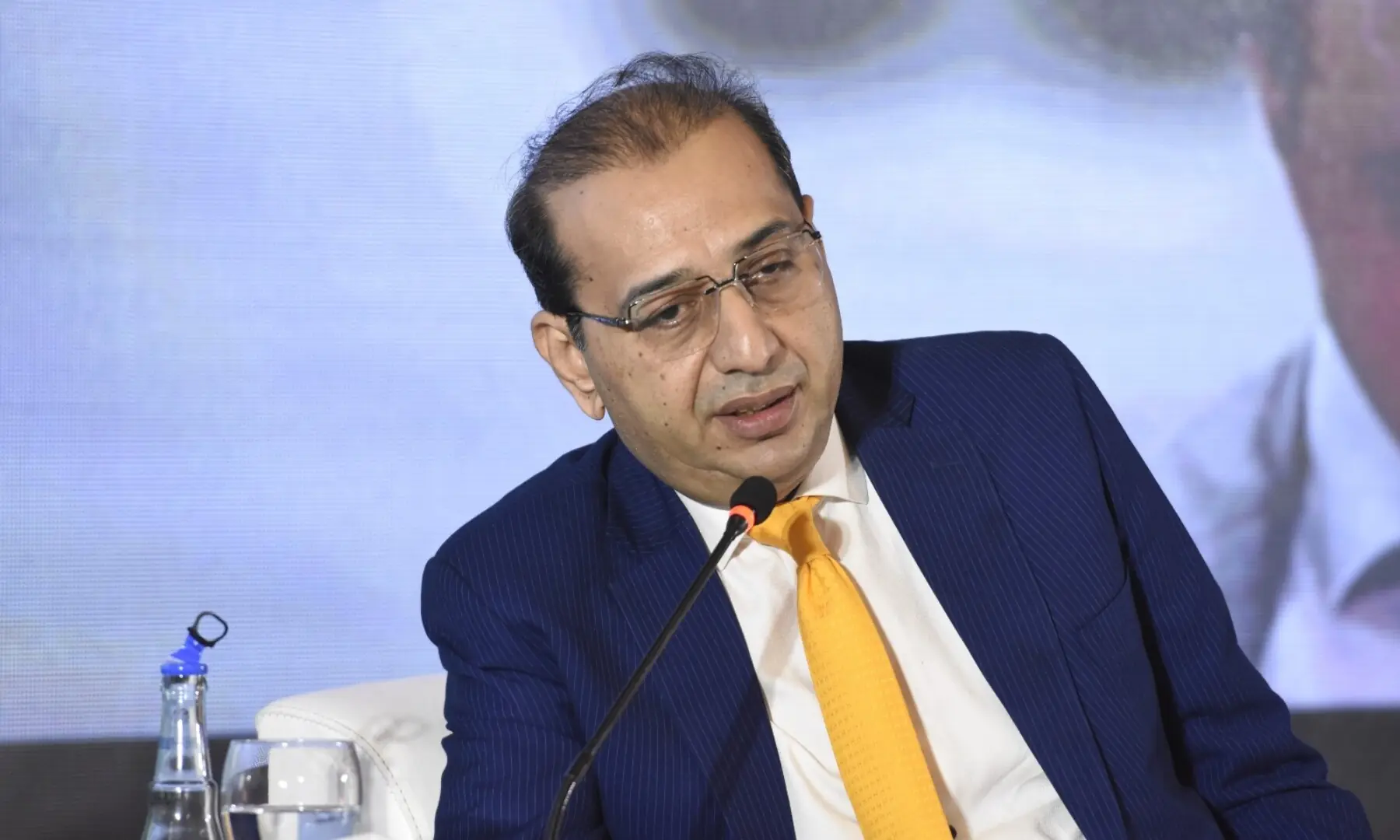
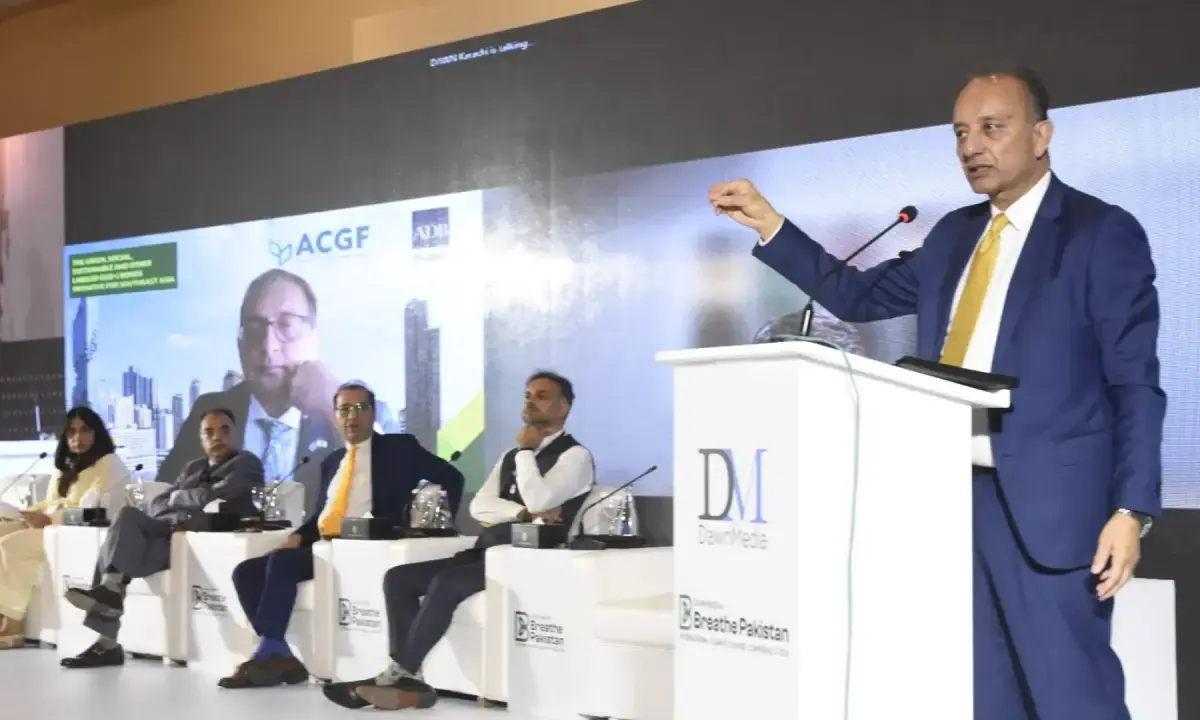
Pakistan Banks Association Chairman Zafar Masud has pointed out that “climate repercussions do not have any borders”, calling for “collective work” to address them.
He also noted that there was no lack of funding “both locally and internally”; however, it was an issue of “mindset and awareness”. He held that people need to be made aware of how climate change can impact them directly.
Masud, also the Bank of Punjab CEO, further wondered why “we are so averse to the idea of not asking for support from the federal government”.
12:40pm — ADB official says $50bn allocated for ‘regional Asian grid’
ADB Principal Project Officer Shauzab Ali speaks at a panel at the Breathe Pakistan conference. — White Star/Tanveer Shahzad
ADB Principal Project Officer Shauzab Ali said ADB has allocated about $50bn for a “regional Asian grid” and another $20bn for transformation in the same project.
He highlighted the need to simultaneously work with all stakeholders, including on how to improve the air quality. He also underscored the importance of having “the right kind of data”.
“We will be providing technical assistance and grant facilities to all stakeholders who can actually bring things to fruition,” Ali affirmed.
12:33pm — AIIB official highlights challenges for developing countries in accessing climate financing
Dr Murtaza Syed of the Asian Infrastructure Investment Bank speaks at the Breathe Pakistan conference. — White Star/Tanveer Shahzad
Dr Murtaza Syed of the Asian Infrastructure Investment Bank noted that fiscal risks and macroeconomic vulnerability make it “very difficult” for developing countries to access climate finance.
“We don’t have enough financing going for emerging markets and developing economies, and yet the global fight against climate change cannot be won without these countries on board.”
He contended that countries like Pakistan could not rely solely on external financing to mobilise the needed funds.
12:26pm — Green Climate Fund official stresses importance of coordination
Alain Beauvillard addresses the Breathe Pakistan conference via video link. — White Star/Muhammad Asim
Alain Beauvillard, director of Department of Strategy, Policy, and Innovation at Green Climate Fund (GCF), stressed the need for coordination.
“You need to be able to coordinate them (different players) around the pipeline that you want to push in your country,” he said.
12:14pm — Panel talk on climate finance begins
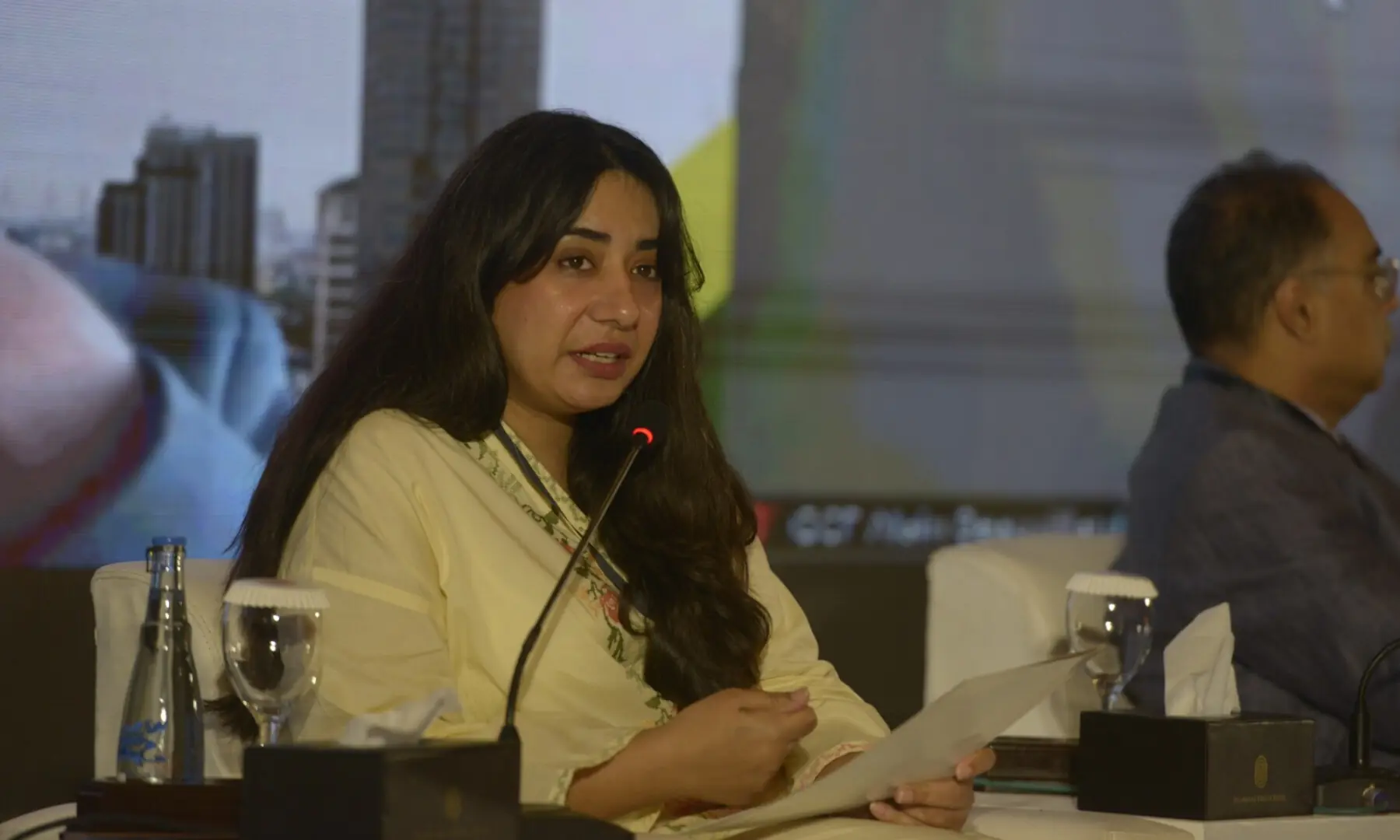
Anam Rathor at the Breathe Pakistan conference. — White Star/Muhammad Asim
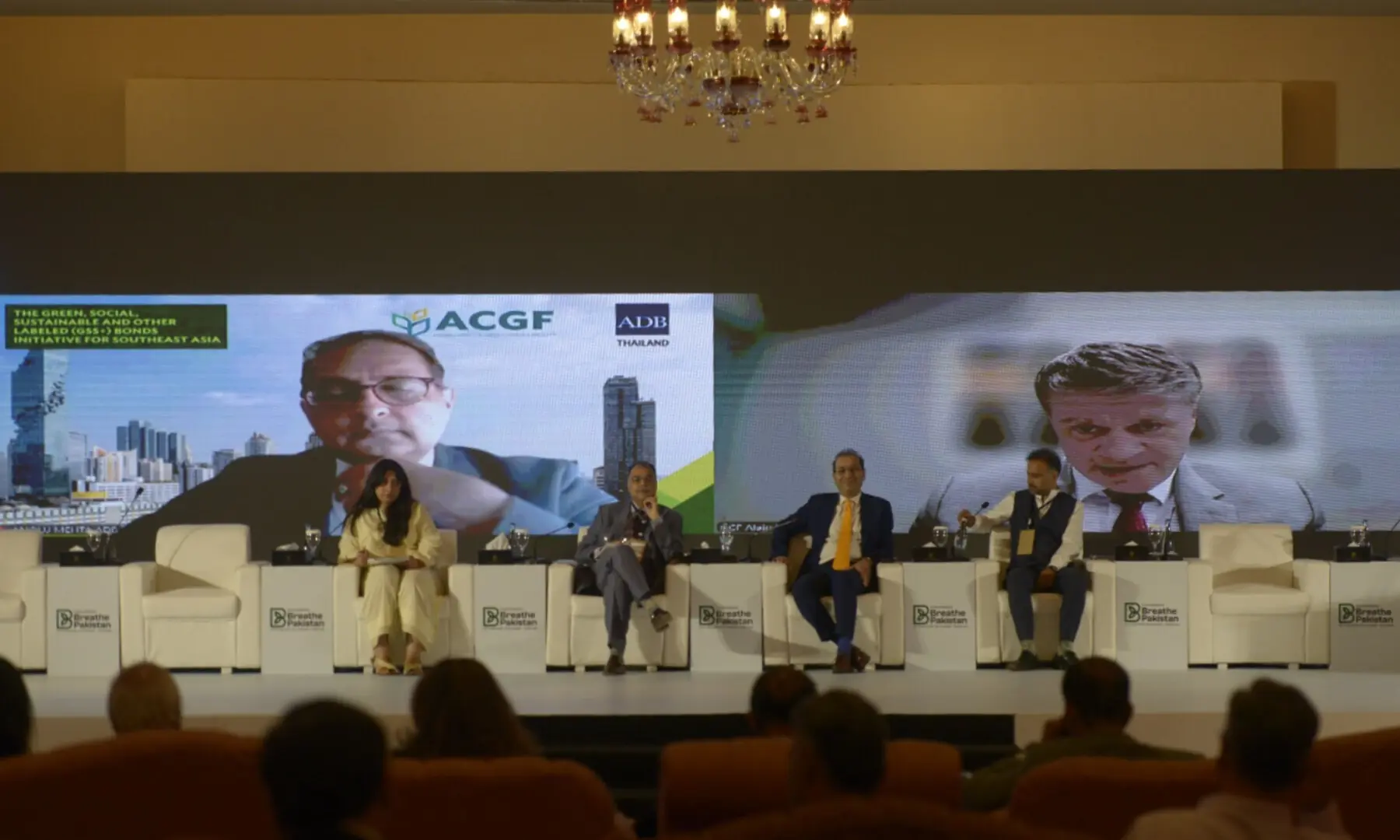
A panel discussion, titled “From Pipelines to Capital: Delivering Climate Finance at Scale”, has begun.
Anam Rathor, programme lead for Pakistan at CVF-V20, is moderating the panel.
12:07pm — ‘Plans should not end up collecting dust, but cheques’: Hamza Ali Haroon
Hamza Ali Haroon, regional director for South and West Asia at CVF-V20 Secretariat, delivering an online address at the conference, said that Pakistan’s climate plans must not “end up collecting dust, but rather cheques”.
“Let me be candid here, we are experts at making plans, and carefully designed plans,” he said; however, he maintained that they must focus on mobilising capital and must deliver.
11:58am — Intensity of 2025 floods ‘much larger’ but govt deemed int’l aid not needed: Aurangzeb
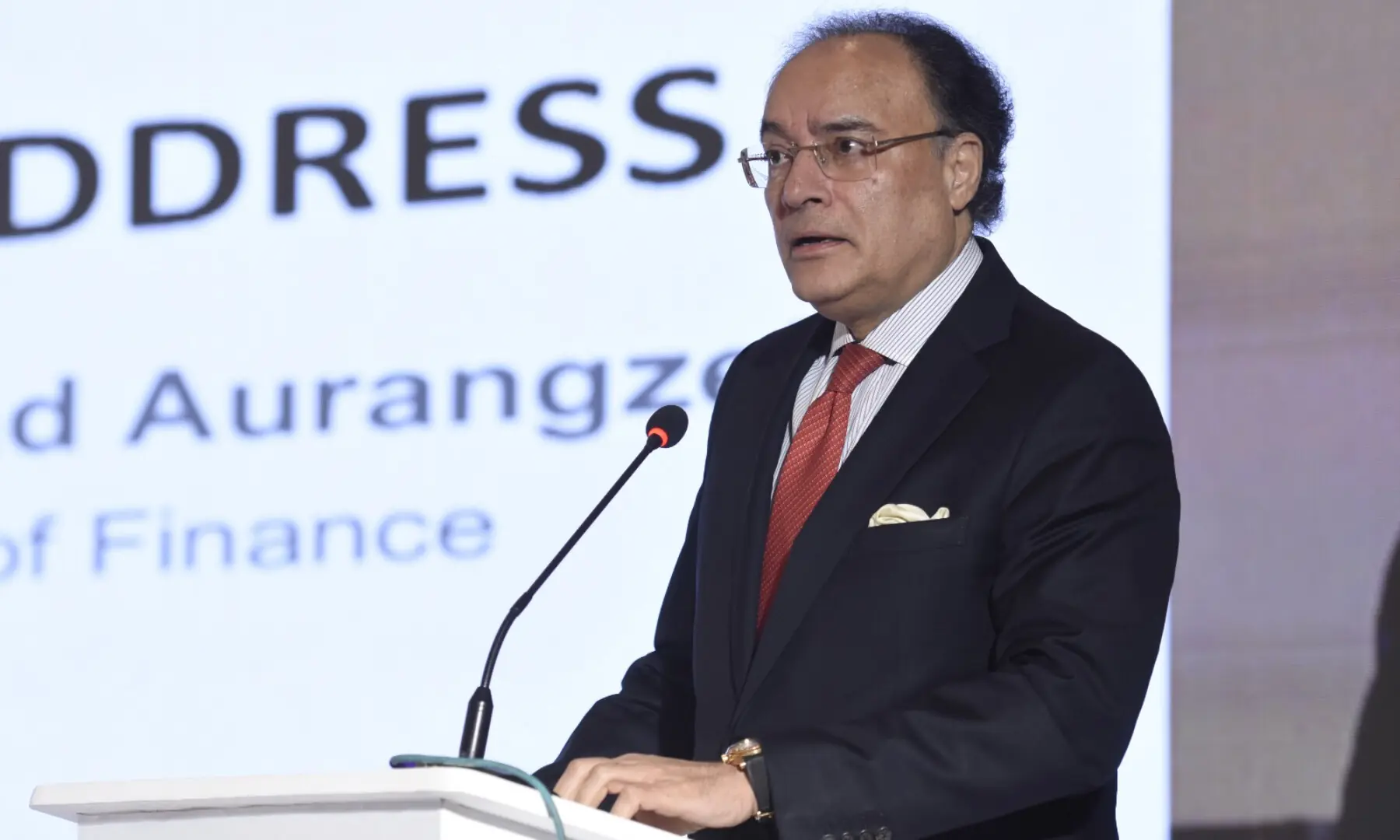
Finance Minister Muhammad Aurangzeb addresses the Breathe Pakistan conference. — White Star/Muhammad Asim
Speaking about what his ministry could do regarding climate change, Aurangzeb underscored the importance of macroeconomic stability, terming it as necessary as “basic hygiene”.
He mentioned the disastrous floods of 2022, as well as 2025, adding that “this time around, the intensity was much larger” as three rivers and almost the entire country were facing floods.
The minister noted that despite demands to seek international funding, the government decided not to, as it deemed there was “fiscal buffer and fiscal space available”.
“Let’s first use the funds which are available now and put them to good and effective use,” he said.
11:50am — Aurangzeb warns against climate change ‘remaining academic discussion’
Finance Minister Muhammad Aurangzeb addresses the Breathe Pakistan conference. — White Star/Tanveer Shahzad
Finance Minister Muhammad Aurangzeb stressed the need for all ministries to work together and bring the climate change discourse “into the mainstream”, otherwise it would “remain an academic discussion”.
“It is quite clear that we have to work very closely with our counterparts, ministers of climate change, planning ministry, we need to take a whole of government approach,” the finance minister said.
He asserted that Pakistan was now in a “very very good place”, hailing the NDMA’s work and highlighting that “AI-led early warning systems” were in place.
The minister noted that the country now had “very scientific data” available about what actions were ought to be taken.
11:42am — World Bank official explains climate financing
Adeel Abbas, Senior Climate Change Specialist (Regional Climate Lead) at World Bank Group speaks at the Breathe Pakistan conference. — White Star/Tanveer Shahzad
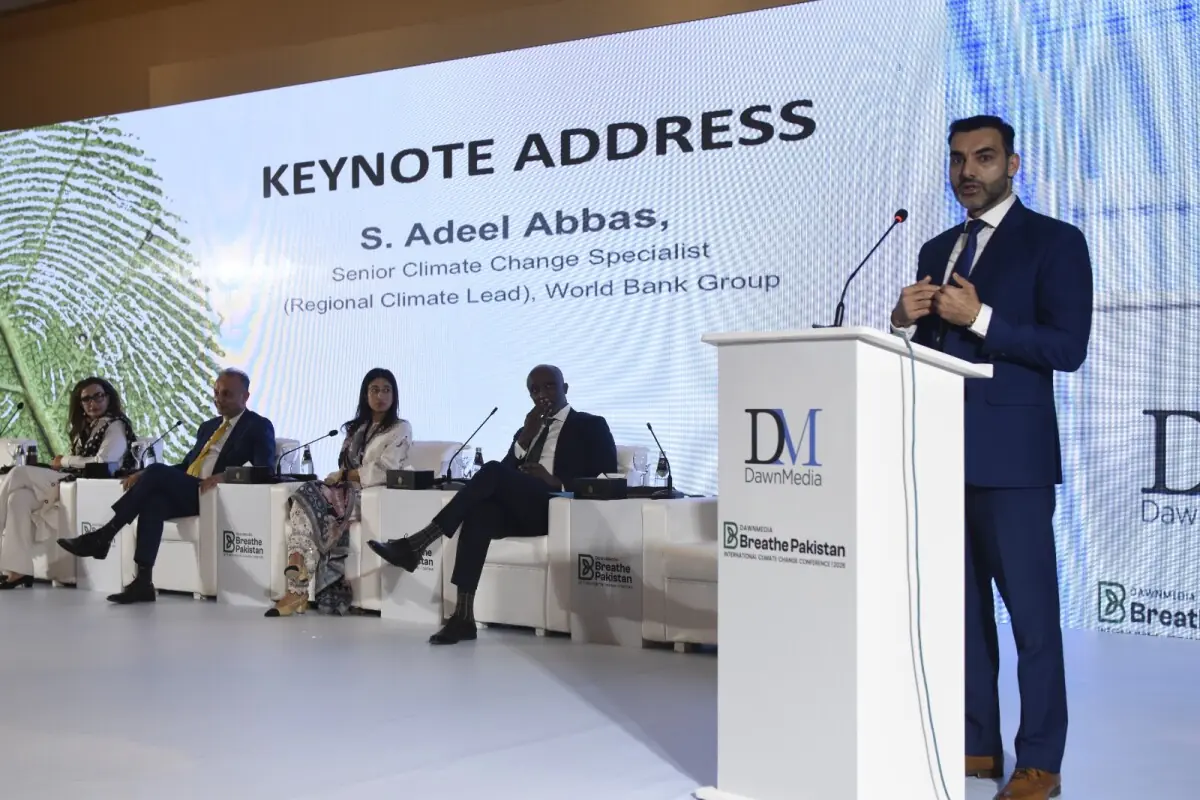
Adeel Abbas, senior climate change specialist (Regional Climate Lead) at World Bank Group, presented global statistics on climate financing.
He noted that combatting climate change was a collective responsibility, stressing the need to bridge the “huge financing gap”.
Explaining what climate financing comprises, Abbas noted the “innovative instrument” of using revenues from carbon finance.
“While we say $6.3bn are required for climate, we know that there are more than $28 trillion invested last year in long-term structure financing. So those resources are there in the global economy,” he noted.
11:30am — Over $550m needed for ‘very ambitious plan’ to reduce emissions by 50pc: SBP official
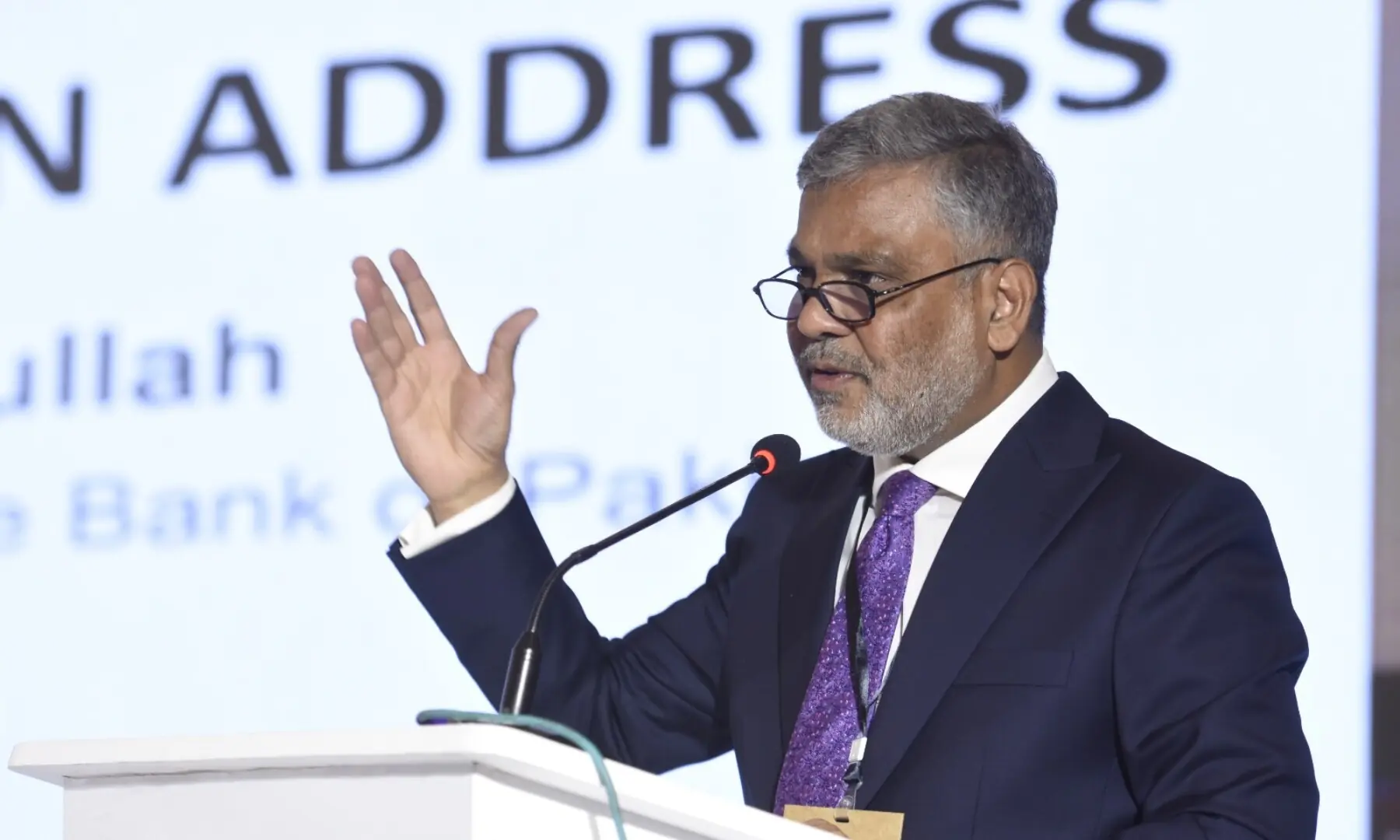
State Bank of Pakistan Deputy Governor Saleemullah addressing the conference. — White Star/Tanveer Shahzad
SBP’s Saleemullah highlighted that heatwaves in Pakistan were intensifying, with temperatures above 50°C no longer being a rare event.
He noted that while the losses from the 2025 floods remained “relatively contained”, they displaced millions and caused great disturbance and losses.
He noted that Pakistan’s aim to reduce its greenhouse gas emissions by 50pc was a “very ambitious plan” that requires financing to the tune of more than $550m.
11:22am — Third session begins
The next session, titled “Mobilising Climate Finance for Pakistan” has begun.
Saleemullah, State Bank of Pakistan’s deputy governor, is addressing as the session chair.
11:15am — NDMA official stresses need for district-level action
NDMA official Idrees Mahsud, asked about synergy within the authority and other institutions, pointed out that the PDMAs were now working actively.
“Personally, I would like to see a dedicated department assisting the deputy commissioner or the district disaster management authority championing DRR and adaptation measures at the district level,” he added.
11:11am — ‘NDMA working on initiatives to make better mitigation decisions’
Idrees Mahsud . — White Star/Tanveer Shahzad
Idrees Mahsud highlighted that the NDMA has been working since 2007 on different initiatives, including multi-hazard vulnerability risk assessments, to better make decisions to mitigate the impact of those hazards.
He stressed that NDMA’s “prime importance” was building resilient infrastructure and community, along with other interventions.
11:05am — Pakistan doesn’t see adaptation, DRR as ‘very different’
Idrees Mahsud . — White Star/Tanveer Shahzad
Idrees Mahsud, member of the National Disaster Management Authority’s Disaster Risk Reduction unit, said Pakistan did not see “climate change adaptation and disaster-risk reduction as very much different”.
He said climate change adaptation “is actually disaster-risk reduction, mostly against hydrometeorological” hazards, adding that DRR, on the other hand, could be broader.
11:00am — Govt ‘very actively engaged’ with all provinces: official
Aisha Humera Chaudhry. — White Star/Tanveer Shahzad
Speaking during the session, Aisha Humera Chaudhry, secretary of the climate change ministry, said climate challenges have “forced us to choose between” disaster-risk reduction and adaptation.
She stated that adaptation has more than 170 actions, adding that the government was “very actively engaged” with all the provinces.
Chaudhry said district adaptation plans were the “main building blocks”, noting they included hazard mapping, which was important for disaster-risk reduction.
The official affirmed that Prime Minister Shehbaz Sharif was “regularly taking stock” of the steps, commending the level of seriousness of the leadership.
“Adaptation is an area where Pakistan is very seriously working,” she asserted.
10:52am — Climate change leading to ‘long-term developmental challenges’
Coco Ushiyama. — White Star/Tanveer Shahzad
Coco Ushiyama, country representative for the World Food Programme in Pakistan, noted that climate change was transforming disasters from emergencies to long-term developmental challenges.
“Adaptation and disaster-risk reduction need to come together, not just in theory but in practice,” she stressed, adding that much of the climate-related finance was “reactive”, mobilised after disaster struck.
Ushiyama also underscored the importance of governance and strengthened inter-ministerial coordination.
10:47am — Second session begins
Today’s second session, titled “Synergies Between Adaptation and Disaster Risk Reduction”, has begun.
10:38am — Youth can find the solution, says climate change minister
Climate Change Minister Musadik Malik. — White Star/Tanveer Shahzad
Speaking further, Musadik Malik noted that about two-thirds of Pakistan’s population comprised the youth.
He lauded the good education provided by several universities across Pakistan.
“It is their air. They are breathing; they will find the solution,” he said, contending that the youth could find innovative solutions to climate change.
“And what if they fail?” he added. The minister also floated the idea of a “green university” for conducting research in collaboration with Italian experts.
10:25am — Musadik Malik highlights impact of global emissions
Climate Change Minister Musadik Malik. — White Star/Tanveer Shahzad
Speaking on the impact of air pollution on life expectancy, Climate Change Minister Musadik Malik highlighted that Pakistan did not even contribute 1pc to global carbon dioxide emissions.
He further pointed out that 10 countries produced about 78pc of the global emissions, quipping that those facing the impact of climate change in Gilgit-Baltistan were not the ones responsible for it.
“Is this about rights or justice or political will, and even our political will, not just international?” he wondered.
10:17am — UN official says cost to build resilience is growing
Mohamed Yahya, the UN resident and humanitarian coordinator in Pakistan. — White Star/Tanveer Shahzed
Mohamed Yahya, the UN resident and humanitarian coordinator in Pakistan, has said that the cost to build resilience is growing and financing is “nowhere to be seen”.
He said that in the global debate, there was a tendency to frame countries like Pakistan as “victims of climate change”. He said that while it was true, Pakistan was also a “test case for solutions”.
“If progress is to be accelerated, especially in a country like Pakistan, it will send a powerful signal to the world,” he said.
10:14am — UN official says execution is major challenge to tackling climate challenge
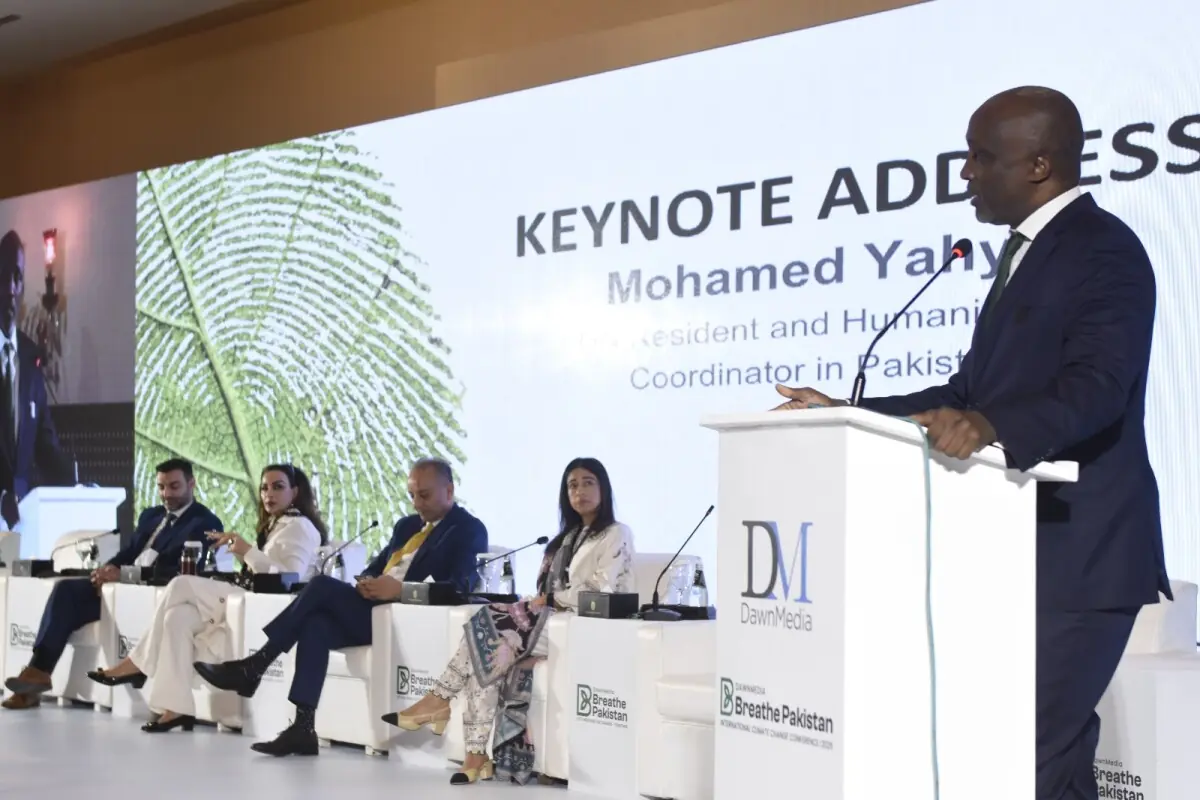
Mohamed Yahya, the UN resident and humanitarian coordinator in Pakistan, in his keynote address, said that Pakistan has witnessed constant floods that cost billions of dollars. He said that the losses every year were probably equal to the IMF programme. He also pointed to the high temperature in Karachi on Monday.
“The constraints and the challenges overall is one of execution … we are seeing very little implementation,” he said.
10:05am — World Bank official recognises Pakistan’s efforts to tackle climate change
S. Adeel Abbas, the regional climate lead at the World Bank Group. — White Star/Tanveer Shahzad
S. Adeel Abbas, the regional climate lead at the World Bank Group, has acknowledged the government’s commitment and policy toward tackling climate change.
“I work on 24 countries in the region on climate change. I think Pakistan is among one of those countries that have set the agenda right,” he said, calling for moving toward action.
He said that the World Bank was supporting various climate projects in Pakistan.
9:56am — Sherry Rehman asks why the cost of conflict is not being counted
“Why is the cost of conflict not being counted? That carbon footprint is missing,” PPP Senator Sherry Rehman said. She said that geopolitics was “devouring the future”.
9:53am — PPP Senator Sherry Rehman says conflicts are costing the environment
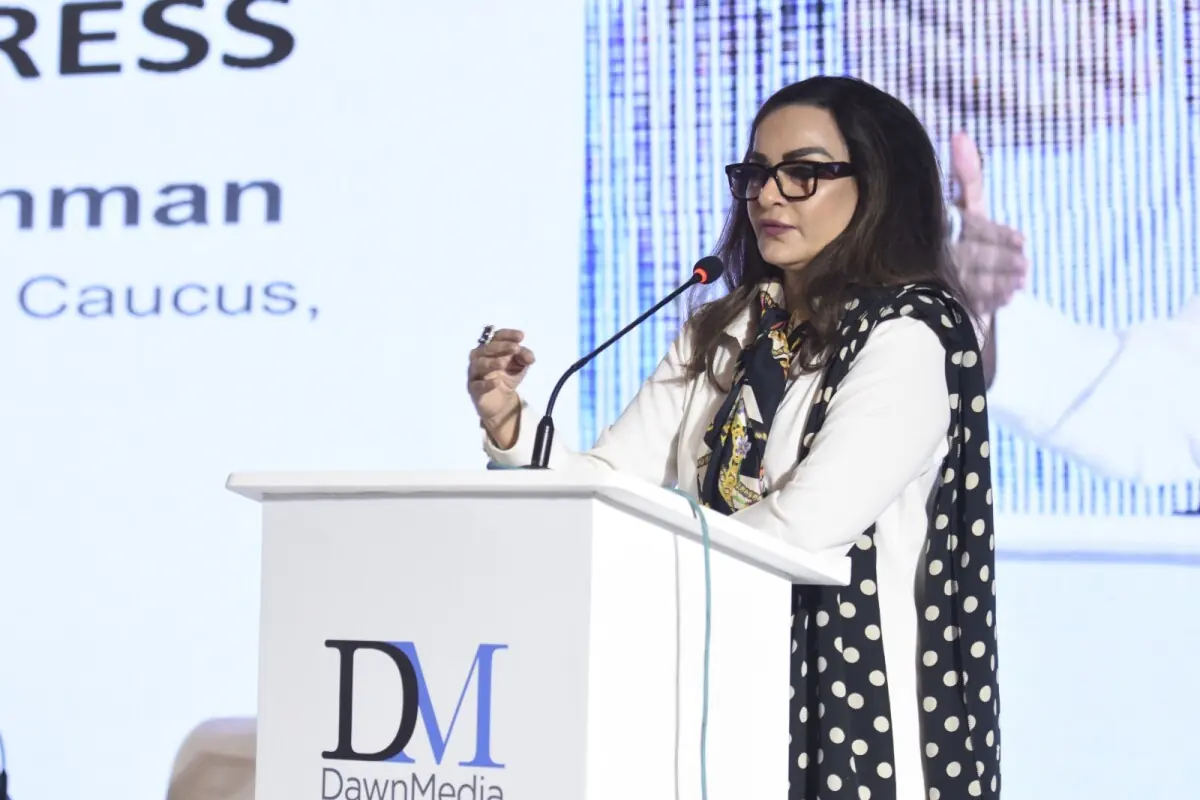
PPP Senator Sherry Rehman said that “conflicts are costing the environment much more than we know, compute or understand”. She said that there were more than 60 active conflicts in the world.
She also said that data on this was missing. She also said that there was very little discussion on the impact of these wars on the environment.
9:50am — PPP Senator Sherry Rehman highlights gap between action and ambition
PPP Senator Sherry Rehman. — White Star/Tanveer Shahzad
PPP Senator Sherry Rehman, in her keynote address, said, “All state climate action … there is a splintered, fragmented movement”.
“While the global crisis is staggering, what is equally devastating is the state of the global movement itself. It is defunded and derided,” she said.
9:47am — Dawn CEO calls for shift in priorities at home
Dawn CEO Nazafreen Saigol Lakhani has called for shifting priorities at home.
“Pakistan must place far greater emphasis on adaptation,” she said, adding that this was not enough.
“At the global level, climate finance must be rebalanced to reflect the reality on the ground, not just global ambition. Adaptation needs to sit alongside mitigation, not behind it,” she said.
“At the same time, we must be disciplined in how we manage the energy transition. We need to scale renewables without constraining growth, invest in modernising our grid, and ensure that transition financing supports development rather than creating unsustainable debt burdens,” she said.
9:44am — Dawn CEO says urgency for Pakistan is immediate
Dawn CEO Nazafreen Saigol Lakhani has said that no single actor can address the challenge of climate change alone.
“Governments provide policy direction and frameworks. The private sector drives investment, innovation, and execution. Communities bring lived experience and accountability. Media plays a critical role in informing the public, shaping discourse, and holding all stakeholders accountable. Real progress depends on aligning these roles into a coherent whole,” she said.
“For Pakistan, this urgency is immediate, and it sits alongside deep economic and development pressures that are already shaping national priorities. Decisions made today on energy, infrastructure, agriculture, and urbanisation will define not just our climate resilience, but the direction of our economic future,” she said.
9:42am — Dawn CEO says climate change threat to Pakistan’s economic stability
“Pakistan is among the most climate-vulnerable countries in the world, facing increasingly severe floods, heatwaves, water stress, and dangerously poor air quality. These are no longer abstract risks or rare phenomena; they are recurring shocks,” Dawn CEO Nazafreen Saigol Lakhani said.
“Behind every statistic showing up on our screens are real lives. Farmers are losing entire harvests, families are forced to leave their homes, children are growing up in hazardous air, and communities are rebuilding after each disaster only to face the next one,” she said.
She said that climate change was not just an environmental crisis.
“It is a threat to Pakistan’s economic stability, public health, and the country’s development trajectory. And the burden is not shared equally,” she said.
9:40am — Dawn CEO delivers opening remarks
Dawn CEO Nazafreen Saigol Lakhani. — White Star/Tanveer Shahzad
Dawn CEO Nazafreen Saigol Lakhani addressed the second edition of the Breathe Pakistan International Climate Change Conference. In her remarks, she said that the platform had grown into “an important space for dialogue, collaboration and action on one of the defining challenges of our time”.
“When we first convened this platform in 2025, we did so with a clear belief that climate change is no longer a distant threat. It is not a conversation for tomorrow. It is a lived reality for Pakistan, for South Asia, and for millions across the globe. Today, as we gather again, that reality has only intensified,” she said.
9:34am — 2-day conference begins
The two-day conference has officially begun. It is being held at the Sheesh Mahal Hall of Serena Hotel, Islamabad. The conference began with the national anthem and the recitation of the Holy Quran.
A man accused of murdering 15 people in an anti-Semitic mass shooting at Australia’s Bondi Beach is facing a raft of fresh charges, court records released on Wednesday showed.
Naveed Akram is accused of opening fire as families thronged Bondi Beach for a Hanukkah celebration in December.
The 24-year-old has already been charged with dozens of serious crimes, including 15 murders and committing an act of terrorism.
Court records showed he is now facing 19 additional charges, including multiple counts of shooting with intent to murder, wounding with intent to murder, and discharging a firearm with intent to resist arrest.
Akram, who is being held in a high-security prison, is yet to indicate how he will plead.
His father and alleged co-conspirator Sajid, 50, was shot and killed by police during the assault.
The charges were released after a sweeping inquiry opened public hearings into Australia’s deadliest mass shooting for 30 years.
“The sharp spike of anti-Semitism that we have witnessed in Australia has been mirrored in other Western countries and seems clearly linked to events in the Middle East,” inquiry chief Virginia Bell said in opening remarks earlier this week.
“It’s important that people understand how quickly those events can prompt ugly displays of hostility towards Jewish Australians simply because they are Jews.”
The mass shooting has sparked national soul-searching about anti-Semitism and widespread anger over the failure to shield Jewish Australians from harm.
Australia announced a suite of gun law reforms following the shootings, including a nationwide gun buyback scheme.
‘Meticulously planned’
The buyback scheme has since stalled as the federal government struggles to convince Australia’s states and territories to sign on.
Naveed Akram was flagged by Australia’s intelligence agency in 2019, but he slipped off the radar after it decided that he posed no imminent threat.
Police documents released following the attack said he and his father had carried out “firearms training” in what was believed to be the New South Wales countryside prior to the shooting.
They said the suspects “meticulously planned” the attack for months, releasing pictures showing them firing shotguns and moving in what they described as a “tactical manner”.
The pair also recorded a video in October railing against “Zionists” while sitting in front of a flag of the Islamic State and detailing their motivations for the attack, police said.
A year ago, Pakistan was engaged in a military conflict with India, dealing the boastful neighbour an internationally recognised “clear setback”.
The conflict with India, starting from the April 22 Pahalgam attack to the end of Operation Bunyanum Marsoos, with a ceasefire ending a military escalation between the two countries on May 10, has been called “Marka-i-Haq” (Battle of Truth) by the state.
But from the night of May 6 to May 10, the drums of war were echoing loudly across South Asia as the nuclear-armed arch-rivals exchanged missiles, raising global alarm over the risk of unpredictable escalation.
Dawn retraces the period of military hostilities, recounting not just the decisive moments etched in history, but the less-noticed developments that shaped the news cycle at the time.
With exchange of fire on the Line of Control (LoC) beginning on April 26 — bringing tensions between India and Pakistan to an alarming level — the armed forces were prepared with their full might for what was to come.
This was reflected in Prime Minister Shehbaz Sharif’s visit to the Inter-Services Intelligence (ISI) headquarters on May 6.
“We are ready for them everywhere at all times,” said Defence Minister Khawaja Asif hours later, cautioning that a clash with India “can happen anytime”.
Prime Minister Shehbaz Sharif, Deputy PM Ishaq Dar, Defence Minister Khawaja Asif and the services chiefs pose for a group photo at the ISI headquarters in Islamabad on May 6, 2025. — X/PTVNewsOfficial/File
May 7
Shortly after midnight, the military’s spokesman, Inter-Services Public Relations (ISPR) Director General Lt Gen Ahmed Sharif Chaudhry, confirmed that India carried out missile strikes at Bahawalpur, Muridke, Narowal and Sialkot in Punjab, and Muzaffarabad and Kotli in AJK.
Those attacks, which killed at least 31 Pakistani civilians and left many others injured, did not go unanswered.
What unfolded next did not merely showcase the Pakistan Air Force’s (PAF) battle capabilities but also became a potential case study for militaries worldwide.
By dawn, Pakistan had shot down at least five Indian jets — a figure later raised to seven. These included at least threeRafale fighter jets — the pride of the Indian Air Force (IAF).
The US, which ended up brokering peace between the nuclear-armed neighbours, immediately activated its diplomatic channels. President Donald Trump hoped the fighting would end “very quickly”.
Then came a press briefing by the DG ISPR, detailing the extent of the Indian strikes’ damage and Pakistan’s response in self-defence to the “uncalled-for aggression”.
Top-level huddles were underway in Islamabad, where the prime minister, the three services chiefs and the newly appointed national security adviser (NSA) were attending a meeting of the National Security Committee (NSC).
The NSC authorised the military to “undertake corresponding actions”.
Across the border, New Delhi was busy broadcasting its narrative, with its military officials briefing the media on the strikes carried out as part of “Operation Sindoor”.
In China, defence-manufacturing companies enjoyed rallying stocks amid widely believed reports — later confirmed — that the PAF shot down India’s prized Rafales using Chinese J-10C jets.
In the skies, pilots had to divert their planes onto alternative routes as airlines scrambled to avoid flying over the conflict zone.
This was also the day when X perhaps no longer posed enough of a threat to national security, as the ban imposed on the social media platform since Feb 17, 2024, was finally lifted.
Pakistan and India also engaged in cyber warfare. Besides foiling cyber attacks, Islamabad responded to New Delhi’s social media blockade by restricting access to Indian videos and websites.
Rare political unity was seen in Sindh as workers from various political parties took part in a solidarity rally organised by the PPP.
In the evening, PM Shehbaz and Deputy PM Ishaq Dar delivered firm speeches before the National Assembly (NA), with the prime minister also appearing on television later that night to address the nation.
Punjab invoked ‘War Book’ protocols for maximum preparedness and took measures to ensure public safety.
By then, New Delhi had started its preparations for Pakistan’s expected retaliation. The Indian capital went dark when power was cut off for an emergency drill.
At 10pm, about 12 hours after his earlier press briefing, the DG ISPR provided an updated toll of casualties from the Indian strikes. Meanwhile, Trump offered his help in calming down tensions.
May 8
The second day of active conflict, in the words of the DG ISPR, marked a “serious provocation” as India sent 25 Israeli-made Harop drones into Pakistan — all of which the military said it intercepted.
While Dar said at this point that the Pakistani and Indian NSAs had spoken to each other, a day later the DG ISPR said no direct communication had taken place. Regardless, firing across the LoC had continued overnight, while Indian cities witnessed blackouts as part of a nationwide civil defence drill.
The conflict’s impact extended to the country’s south, with an Indian drone falling on the outskirts of Karachi and in villages in Sindh near the border.
One drone crashed near the Rawalpindi Cricket Stadium, the venue of the then-underway Pakistan Super League’s 10th edition, resulting in the death of a vendor.
An Indian drone “managed to engage in a military target near Lahore”, injuring four army personnel, DG ISPR Chaudhry said.
With drones hovering in the skies, flights from major airports largely remained suspended. In India, around 27 airports were closed, with the Delhi airport alone seeing as many as 90 flight cancellations.
After India’s strikes the previous day accompanied by a barrage of drones, Indian Foreign Minister S. Jaishankar claimed it was not their “intention to escalate the situation”, and warned Pakistan against retaliating. Defence Minister Rajnath Singh claimed that New Delhi was willing to engage in dialogue.
In Islamabad, PM Shehbaz endorsed the NSC’s decisions made a day earlier.
Meanwhile, the NA witnessed a rare moment of the treasury and opposition benches being on the same page, as the PTI expressed its clear support for the armed forces.
Speaking on the NA floor, Information Minister Attaullah Tarar said Pakistani forces killed “40 to 50 Indian soldiers” across the LoC.
At this point, the US’ mediation efforts were publicly acknowledged by the defence minister, who said Washington was leading efforts to reduce tensions between Pakistan and India.
This was followed by US Secretary of State Marco Rubio’s separate phone calls to PM Shehbaz and Jaishankar, wherein he urged both sides to de-escalate. This was reiterated by the US State Department hours later, which said the US was “engaged with both governments at multiple levels”.
Interestingly, US Vice President JD Vance called for “de-escalation” but also said that the conflict between neighbours was “fundamentally none of our business”.
After a long day, Dar and the DG ISPR held a joint press conference, with the former accusing India of “deliberate” attacks in its Punjab province to “falsely implicate Pakistan”. The number of drones neutralised by Pakistan was now 29.
Pakistani state media said the armed forces also dealt heavy damage to an Indian battalion headquarters in occupied Kashmir.
Alongside the on-ground skirmishes, the misinformation and disinformation warfare was already underway. Information Minister Tarar promptly refuted “fake and concocted stories” about India downing PAF F-16 and JF-17 jets, as well as claims of a Pakistani pilot being in their custody.
“Get out of [your] B-tier Bollywood mindset,” he quipped.
May 9
The drone incursions continued on Friday. By 1pm, Pakistan’s defence systems had shot down another 49 drones sent by its eastern neighbour, taking the total tally to 77.
The LoC remained very active, with Indian shelling killing at least five civilians and Pakistan destroying three Indian posts in response. Amid a war-like situation, civil defence drills were conducted in Punjab.
In the afternoon, leaders across the political spectrum slammed India’s actions as they spoke on the NA floor. The defence minister contended that New Delhi planned to detect the locations of sensitive sites inside Pakistan through its drone flights.
The ongoing drone attacks prompted the Pakistan Cricket Board (PCB) to postpone the remaining eight PSL matches. New Delhi also suspended the Indian Premier League (IPL) for one week.
Meanwhile, DPM Dar was busy communicating Pakistan’s stance to other countries as he spoke on the phone with variouscounterparts, including the United Kingdom’s foreign secretary.
The Foreign Office, in its weekly press briefing, called out India’s “irresponsible, unlawful and belligerent conduct” that “brought the two nuclear-armed states closer to a major conflict”.
In the evening, the now-familiar trio of DG ISPR, Air Vice Marshal Aurangzeb Ahmed and Vice Admiral Raja Rab Nawaz held a joint press briefing. The number of civilian casualties from Indian attacks had now risen to 33, with 76 injured.
Lt Gen Chaudhry highlighted that India had still not given any evidence regarding its allegations against Pakistan on the Pahalgam attack, while AVM Aurangzeb provided a reconstruction of how the PAF shot down Indian jets on May 7.
Despite the ongoing escalation, backchannel diplomacy continued. Later that night, the White House confirmed that Rubio was in constant contact with leaders in Islamabad and New Delhi.
May 10
Saturday was busy for everyone — from the personnel on the defence frontlines to journalists sifting through the barrage of reports, and from top global leaders to those involved in relaying diplomatic messages.
Things escalated pretty early on. Shortly after 3am, the DG ISPR confirmed that India targeted three PAF bases, located in Rawalpindi, Chakwal and Shorkot.
The majority of the missiles were intercepted and all PAF assets remained safe. But this did not mean that India’s “madness”, as per the military spokesperson, would go unanswered.
A map showing three Pakistan Air Force airbases that were targeted by Indian missiles on May 10, 2025. — Datawrapper
What followed was a thundering response from Pakistan, dubbed Operation Bunyanum Marsoos (concrete structure).
Over a span of about 12 hours, the armed forces targeted multiple strategic and military sites in India and occupied Kashmir, destroying the S-400 missile system in Adampur and a storage site of the Brahmos missiles in Beas, among other targets.
The retaliatory attacks targeted at least 26 locations, India acknowledged, adding that at least five airbases suffered damage to “equipment and personnel”.
In the morning, state media reported that PM Shehbaz had called a meeting of the National Command Authority (NCA), which is responsible for making operational decisions on Pakistan’s nuclear weapons. However, hours later, the defence minister said the nuclear option was “not on the cards” at the moment.
In between these developments, Rubio spoke separately with Chief of the Army Staff Gen Asim Munir and Dar, offering US assistance in talks for de-escalation.
Rubio also spoke with Jaishankar, emphasising the need to identify methods to de-escalate.
Pakistan’s airspace remained off-limits for all types of flights. There were also reports of cyber attacks continuing, with Indian websites being hacked.
Following active US diplomatic efforts, at around 5pm, Trump announced that both India and Pakistan had agreed to a full and immediate ceasefire.
The cessation of hostilities, effective 4:30pm PKT, was confirmed by both countries. Subsequently, air traffic across Pakistan resumed later that night.
A day of intense military activity finished off with statements from across the globe hailing peace as the brief conflict finally came to an end.
Pakistan Markazi Muslim League (PMML) activists hold a portrait of Chief of the Army Staff General Asim Munir and wave the country’s national flag to celebrate Pakistan-India ceasefire in Lahore on May 10, 2025. — AFP/File
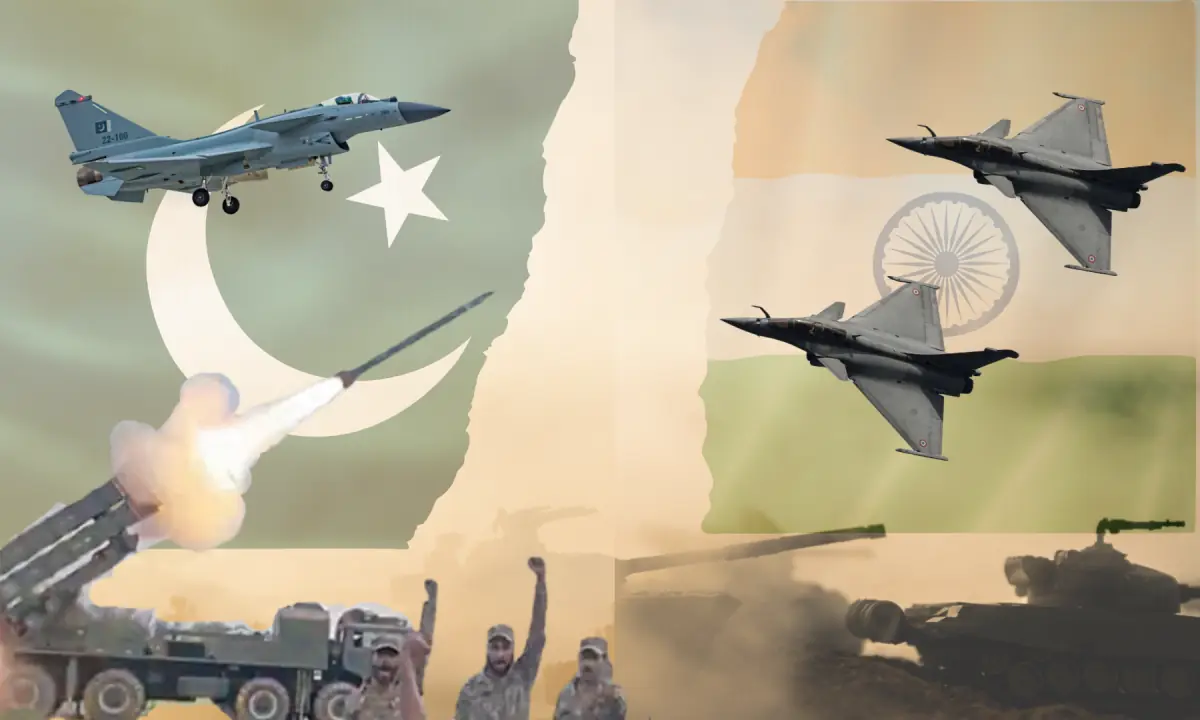
Header image: Illustration made on Canva using file photos of Rafale and J-10C fighter jets sourced via Reuters.
• Bench acquits four appellants from terrorism charge; commutes life term awarded in 2024 into time served • Court asks IGP to find out what ‘compelled police to conduct a weak investigation in this very high-profile case’
KARACHI: While commuting the life term of four appellants into the period they have already undergone in jail, the Sindh High Court on Tuesday ruled that the targeted killing of former Muttahida Qaumi Movement-Pakistan (MQM-P) MNA Ali Raza Abidi did not fall within the definition of terrorism.
A two-judge bench headed by Justice Omar Sial passed this order while hearing appeals of convicts Muhammad Farooq, Muhammad Ghazali, Abu Bakar and Abdul Haseeb against their life term by an anti-terrorism court (ATC).
In April 2024, the ATC had sentenced them to life in prison for facilitating absconding accused in the killing of the MQM-P leader in December 2018 outside his Defence Housing Authority home.
The bench acquitted the appellants from the charge of terrorism and the life term awarded under the Pakistan Penal Code by the ATC was commuted to the period they have already served.
In its verdict, the bench stated that the appellants were convicted for the offence of terrorism, but no cogent evidence was produced at the trial court to show that there was an intent or design to coerce and intimidate public or create a sense of fear or insecurity in society.
It said that this was a case of targeted killing, but the motive for which was never discovered by the investigators.
It said only evidence against the appellants was their “extrajudicial confessions” recorded by police in the presence of the complainant and call date record (CDR).
It noted that alleged confessions were inadmissible in evidence as admittedly, none of the confessions was made before a judicial magistrate while there were indications of “unlawful force” having been used in their arrests and subsequent detention.
“An extra-judicial confession is a weak piece of evidence and it must be corroborated and supported before it can form a part of admissible evidence,” the bench remarked.
Regarding CDR, the bench noted that it was admissible as electronic evidence, but generally treated as circumstantial evidence rather than conclusive proof especially without accompanying call transcript or voice recordings.
The verdict said that the CDR in question was obtained through the technical branch of the Counter-Terrorism Department (CTD) and produced in the trial court on plain sheets.
“After having commented on the specifics of the case from a legal perspective and giving our observations on the evidence relied upon for the conviction, we would like to record that the Sindh Police failed completely in solving and proving this case,” it added. “The alleged actual shooters i.e. Bilal and Hasnain disappeared into thin air, and the police had nothing to say about them. No effort was made to get the shooters. Important leads like the bullet match with a pistol in an earlier case were ignored,” it added.
The bench further noted that no effort was made to record the confessions before a magistrate and a deliberate attempt appeared to have been made to avoid producing the CDR in a professional, complete and legal manner.
“The police have some brilliant and brave investigators. What compelled the police to conduct a weak investigation in this very high-profile case must necessarily be looked into by the inspector general. People’s faith in the police must not be tarnished,” it added.
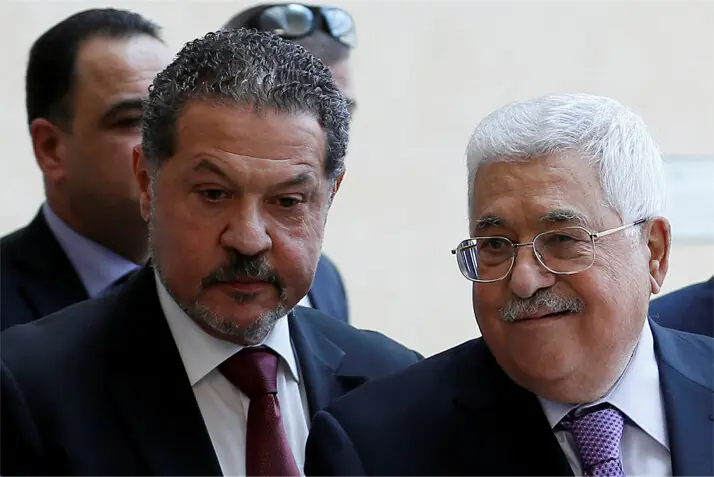
RAMALLAH: The millionaire businessman son of Palestinian President Mahmoud Abbas is expected to run for a steering role in his 90-year-old father’s political party, sources say, as a succession fight looms for control of the embattled Palestinian Authority (PA).
Yasser Abbas runs tobacco and contracting firms in the parts of the Israeli-occupied West Bank where the PA exercises limited self rule. His critics have long accused him and his brother Tarek, also a businessman, of using public funds to fuel their businesses, allegations both men reject.
His foray into politics has fuelled widespread speculation within the Palestinian Territories that Mahmoud Abbas may be seeking to position Yasser, 64, to succeed him as head of his powerful Fatah party that controls the PA.
That has drawn criticism from some Fatah officials, who say that Yasser Abbas would be unable to unify Palestinians or help them chart a new political future after years without any national elections or tangible steps toward statehood.
Seat on Fatah committee
Yasser Abbas is expected to seek one of 18 seats on Fatah’s Central Committee that are being contested during a party conference in the West Bank city of Ramallah from May 14-16, its first such gathering in almost 10 years, sources familiar with his plans said.
In recent weeks, Yasser Abbas has held meetings with party factions representing the PA’s security establishment as well as groups representing prisoners held by Israel, an influential constituency whose support could bolster him when Fatah’s estimated 2,500 voting members cast ballots for the committee.
He has long joined his father in political meetings, including on a visit to Moscow last year when they met President Vladimir Putin and Egypt’s Abdel Fattah al-Sisi. Last year, his father asked him to lead Lebanon affairs for the Palestine Liberation Organisation, overseeing weapons handovers by Palestinians to the Lebanese army.
Sabri Saidam, who was elected to the Central Committee during the last Fatah conference in 2016, said the party had democratic bylaws that allow any member meeting requirements to run for the body.
“I hope to see a renewal in leadership and a renewal in the movement’s capabilities, safeguarding for a future stage that is clearly more complex and difficult,” Saidam said.
Succession fight
The PA was set up as an interim administration under the 1990s Oslo accords between Israel and the Palestine Liberation Organisation, an umbrella group still internationally recognised as the representative of the Palestinian people.
In the more than two decades since Mahmoud Abbas was elected as the successor to the charismatic Fatah founder Yasser Arafat, the PA’s public standing has sunk among Palestinians, who have grown to view it as ineffective and corrupt.
In 2007, the PA was driven out of the Gaza Strip by Hamas, who had won an election there on an anti-corruption platform. No Palestinian leadership elections have been held since, and Abbas has ruled by decree since his mandate expired in 2009.
A peace process meant to lead to the creation of a Palestinian state in the West Bank, Gaza and East Jerusalem collapsed in 2014, and expanding Israeli settlements have since carved up areas once slated for eventual Palestinian control.
The PA has also been battered by a severe financial crisis, intensified by sharp cuts in US and Gulf donor aid and a refusal by Israel to release Palestinian tax money in a dispute over payments the PA makes to prisoners jailed by Israel for deadly attacks.
The entry into politics of Yasser Abbas further expands a succession fight for control of both the PA and the PLO.
Those viewed as possible successors to Mahmoud Abbas include Hussein Al Sheikh, his longtime confidant and vice president of the PLO. They also include Marwan Barghouti, a leader of two intifadas, or uprisings, against Israel from 1987-1993 and in the early 2000s, who enjoys great popularity among Palestinians despite being jailed by Israel since 2002 over charges including murder.
Criticism within Fatah
One Fatah leader described Yasser Abbas’ potential role on the Central Committee as “the beginning” and said he would eventually seek a role on the PLO’s top Executive Committee, giving him sway over the umbrella group.
“This seems to be what Yasser Abbas is being prepared for,” said the Fatah leader. But critics within Fatah say the elevation of Yasser Abbas, who controls one of the West Bank’s main cigarette importers, could further entrench distrust among Palestinians with their government after years without national elections.
“Abbas is trying to make holes in the Fatah ship before (his death) by installing his son as heir to the crown. This should be confronted and rejected by all Fatah men,” said another senior Fatah official.
Reham Owda, a Palestinian political analyst, said that while Abbas may be able to help promote his son within Fatah, there is no guarantee that holding a position within the party would translate into success at the polls if and when elections are held.
“This does not resolve the frustration of the Palestinian people, as no democratic elections have taken place since 2006; rather, it increases frustration, since the public is looking forward to democratic elections, legislative and presidential elections,” Owda said.

 Login
Login