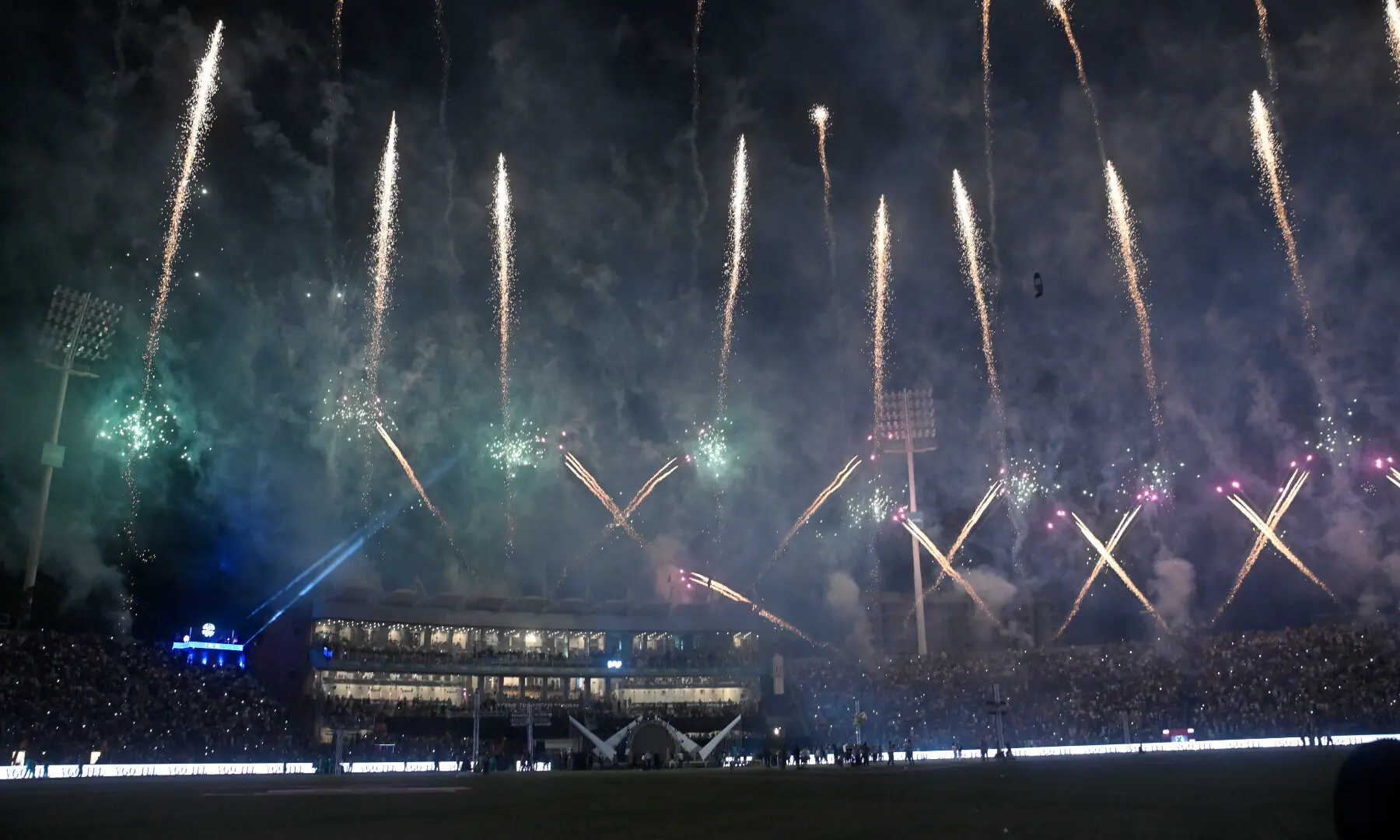
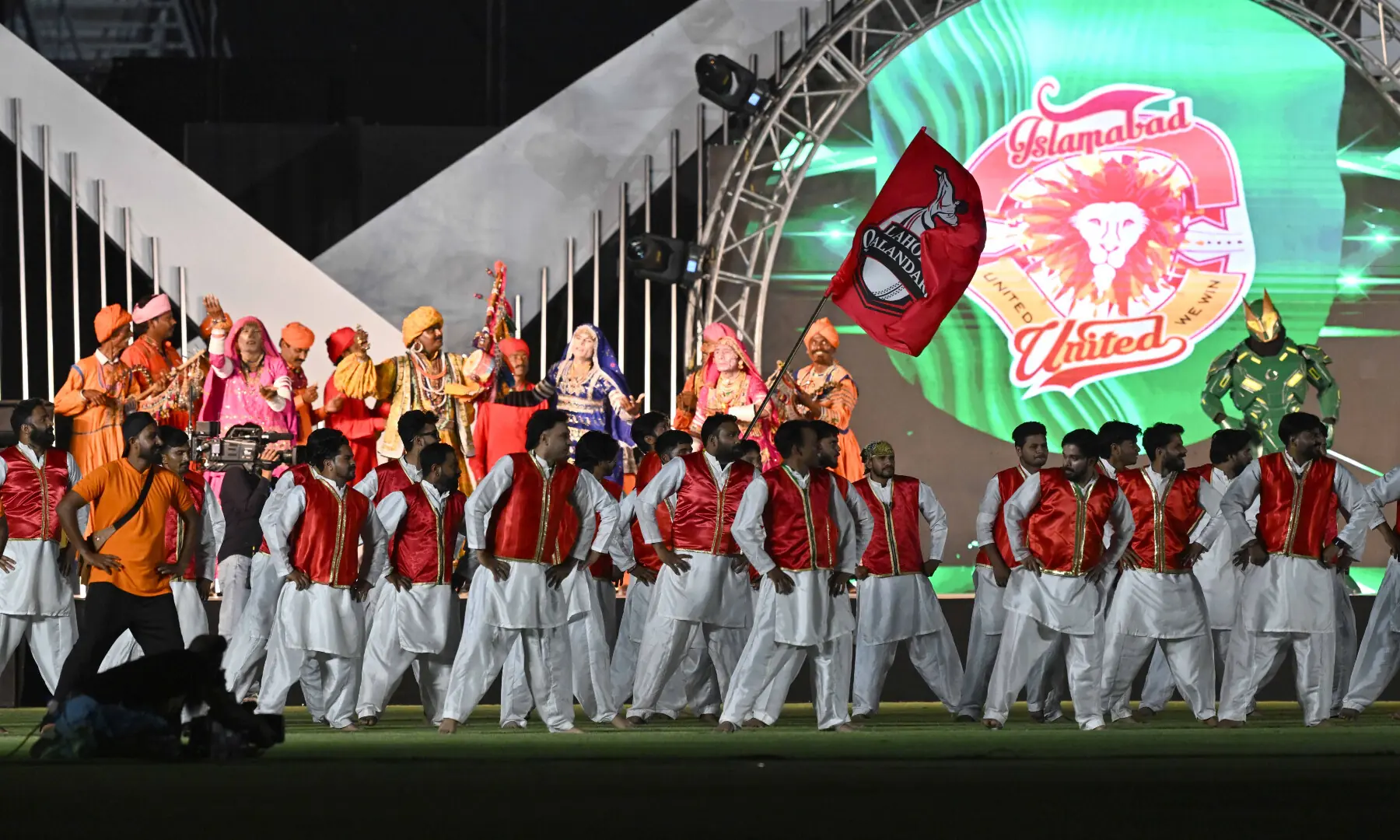
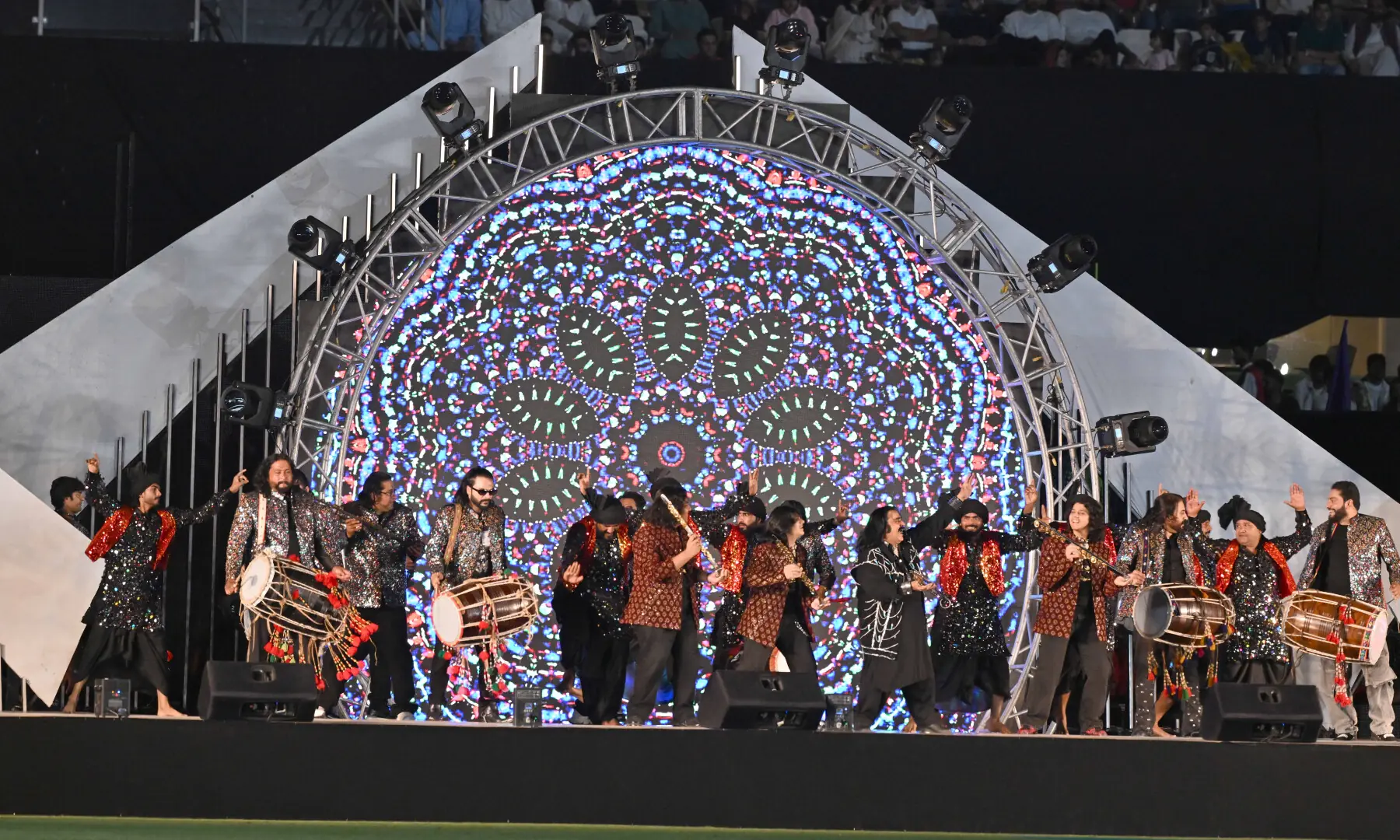
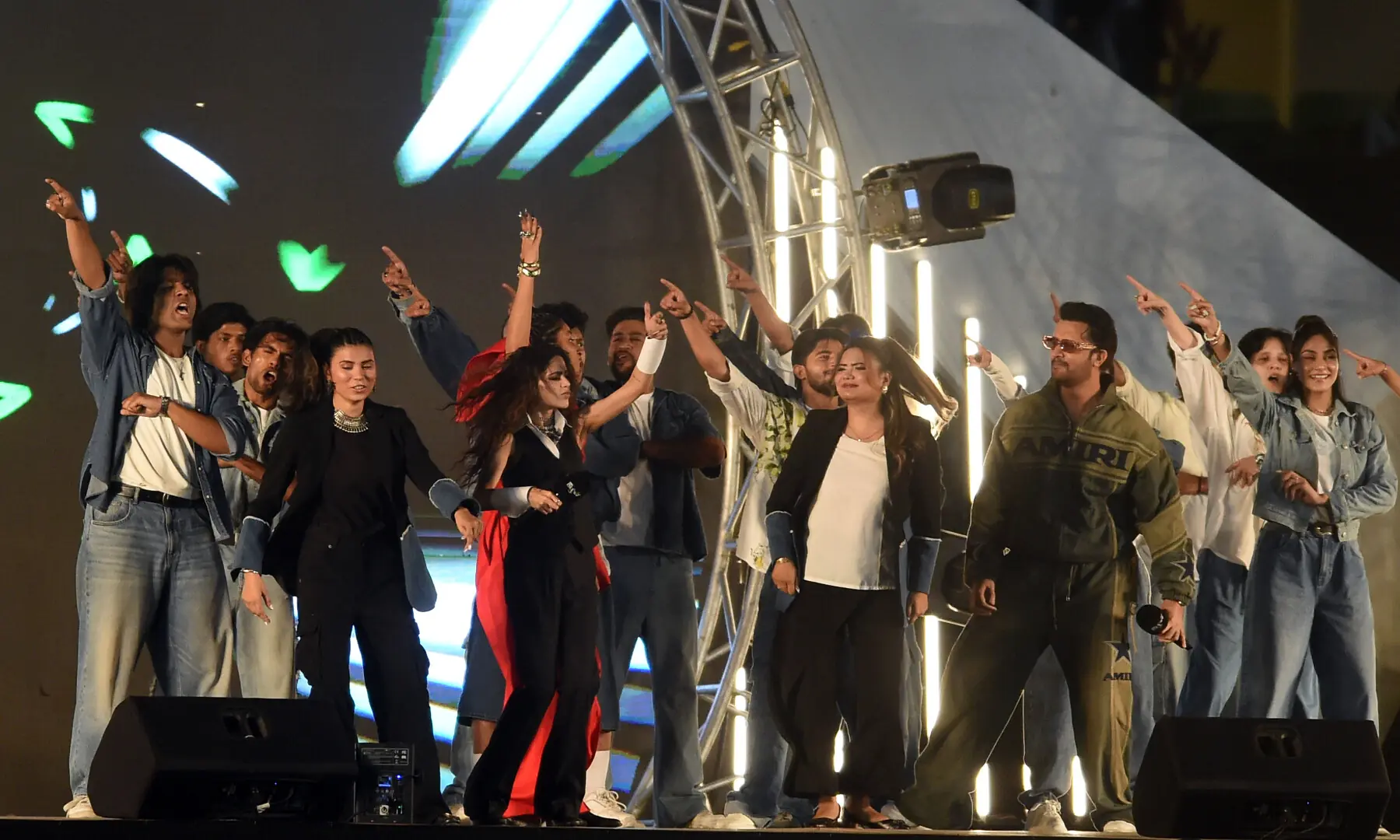
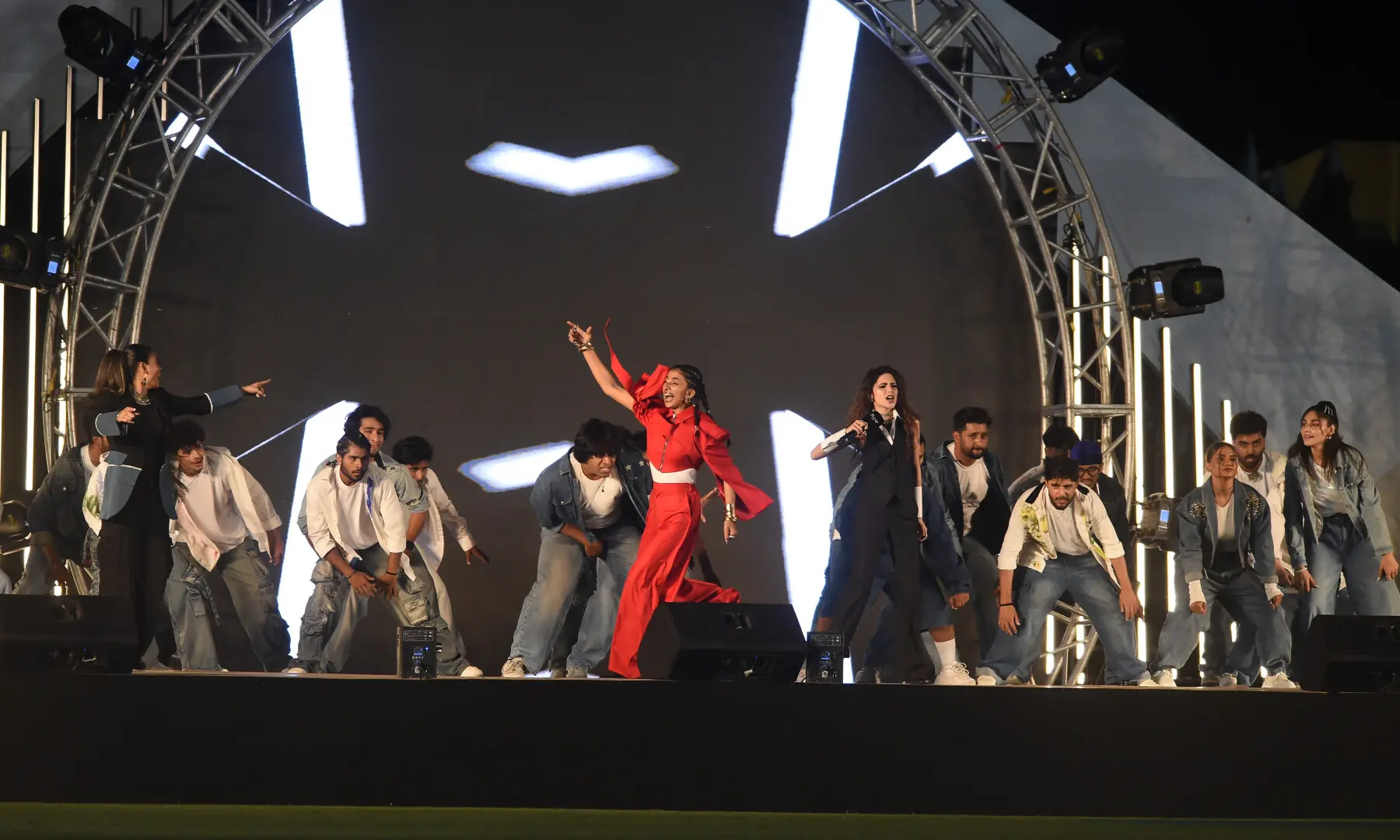
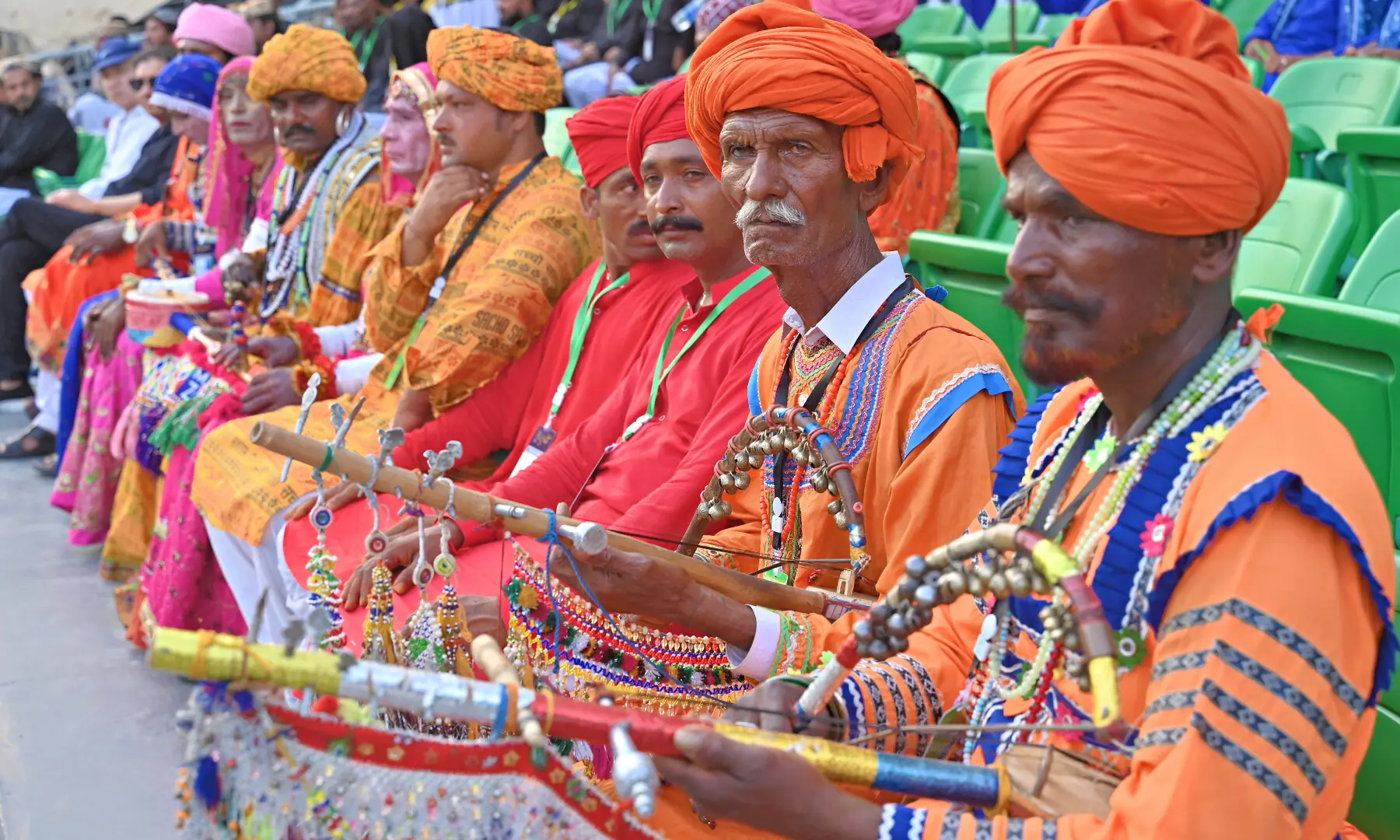
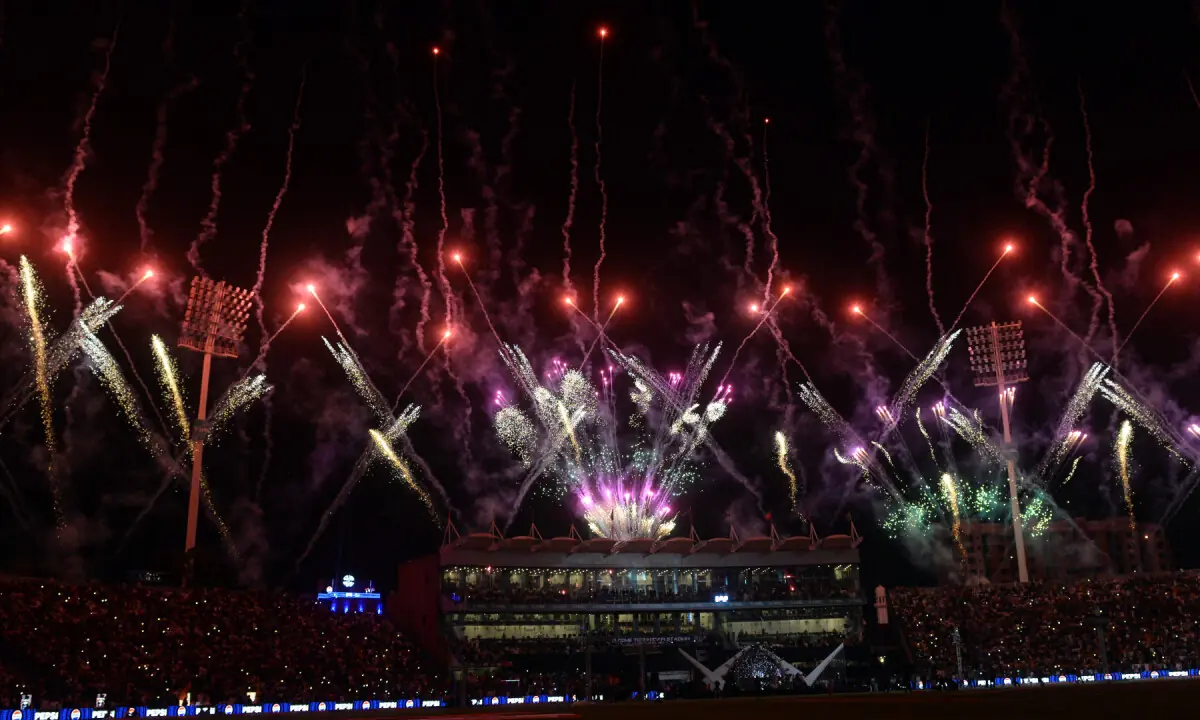
The final match of the 11th HBL Pakistan Super League (PSL) edition was preceded by a star-studded closing ceremony, featuring fireworks and performances by popular singers, including Aima Baig, Arif Lohar and Atif Aslam.
Scores of spectators arrived at Lahore’s Gaddafi Stadium on a hot Sunday to witness the gala event that was followed by the final clash between Peshawar Zalmi and debutants Hyderabad Kingsmen.
Here are some glimpses of the closing ceremony.
Spectators witness fireworks at Lahore’s Gaddafi Stadium ahead of HBL PSL 11 final match on May 3, 2026. — White Star
Dancing groups representing different franchises perform at the closing ceremony of the HBL PSL 11 on May 3, 2026. — White Star
Singers perform at the closing ceremony of the HBL PSL 11 on May 3, 2026. — White Star
Singer Arif Lohar performs at the closing ceremony of the HBL PSL 11 on May 3, 2026. — White Star
Singers Aima Baig and Atif Aslam perform at the closing ceremony of the HBL PSL 11 on May 3, 2026. — White Star
Singer Aima Baig performs at the closing ceremony of the HBL PSL 11 on May 3, 2026. — White Star
A snapshot from the Gaddadfi Stadium ahead of the HBL PSL 11 closing ceremony on May 3, 2026. — White Star
Header image: Spectators witness fireworks at Lahore’s Gaddafi Stadium ahead of the HBL PSL 11 final match on May 3, 2026. — White Star
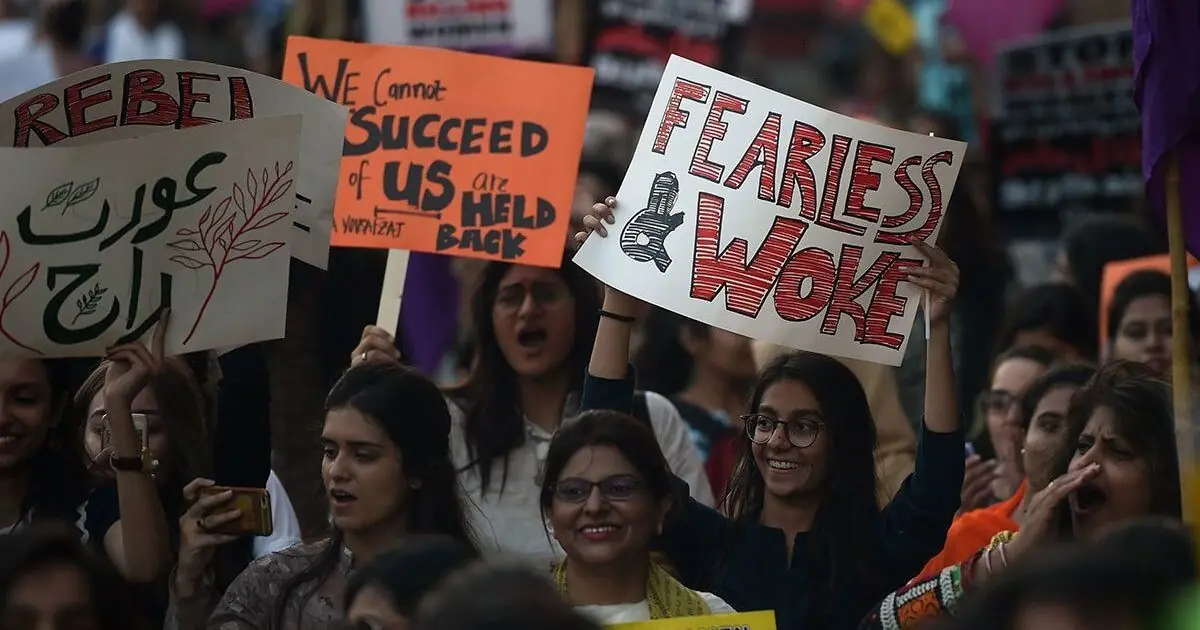
KARACHI: Aurat March organisers in Karachi said on Sunday that they had not been issued a no-objection certificate (NOC) yet for holding the annual march in the city, scheduled for May 10.
The organisers said they had sent a letter to PPP’s Aseefa Bhutto Zardari “after receiving no positive response from the authorities” on the matter.
“Seven days to the march, and we still have no NOC! We really hope that Aseefa Bhutt-Zardari will stand with Aurat March in the spirit of Sindh’s history of women in political life, and ensure that an NOC is promptly issued!” they said in a post on X.
The march is planned to be held at Sea View on Mother’s Day, which is observed on the second Sunday of every May.
Dawn reached out to the relevant authorities regarding the matter, among whom South Deputy Inspector General Asad Raza said police would provide “maximum security to the organisers of the Aurat March” like they did every year.
But as far as the issuance of an NOC is concerned, that was to be “dealt with by the district administration or South deputy commissioner”, he added.
However, sources in the district administration told Dawn that the South senior superintendent of police had been asked to submit a report, including recommendations, to further process the Aurat March’s request for an NOC. The report was yet to be submitted, they added.
Meanwhile, Aurat March organisers shared the letter they said they had sent to Aseefa on X.
It stated: “We are approaching you with the confidence that, as the First Lady of the province’s ruling party, who has a deep interest in women’s issues, you will help us.”
The organisers further noted that Sindh had history of women in politics. “This is also the history that Mohtarma Benazir Bhutto represented: a woman who claimed political space in the face of forces that tried to deny it.”
The letter said, “Aurat March Karachi comes from the same history. Every year, we march to raise our voices and demands. This year, too, our demands are rooted in dignity, safety, livelihood, bodily autonomy, freedom from violence, and the right of women to exist fully in public and political life.”
It added that the organisers had applied to the relevant offices for an NOC for the march at Sea View on May 10.
“However, with only 7 days left and no response, we are anxious.
“For a province that has long taken pride in its democratic, progressive, and anti-authoritarian traditions, this delay is painful. Sindh’s political legacy is built on women who have spoken, organised, led, and refused to disappear from public life. At a time when women are preparing to gather PEACEFULLY and CONSTITUTIONALLY, that legacy should be carried forward with care and urgency,” it read.
The organisers further expressed hope that Aseefa would “stand with Aurat March Karachi and support our right to march safely and peacefully”.
“We request your urgent help and support in ensuring that the NOC is issued without further delay,” they appealed.
The first Aurat March in Pakistan was held on March 8, 2018, in Karachi. The next year, it was extended to more cities, including Lahore, Multan, Faisalabad, Larkana, and Hyderabad.
It has been traditionally held on International Women’s Day, but this is the second year the Aurat March Karachi is being held on Mother’s Day instead. In March, the organiser announced that they would not be marching on March 8, International Women’s Day, due to Ramazan.
An Israeli court on Sunday extended for two days the detention of two foreign activists from a Gaza-bound flotilla, who were brought to Israel for questioning, a rights group representing them said.
The flotilla of more than 50 vessels had set sail from France, Spain and Italy to break Israel’s blockade of Gaza and bring supplies to the devastated Palestinian territory.
They were intercepted by Israeli forces in international waters off Greece early on Thursday, with Israel saying it had removed some 175 activists — two of whom were taken to Israel for questioning.
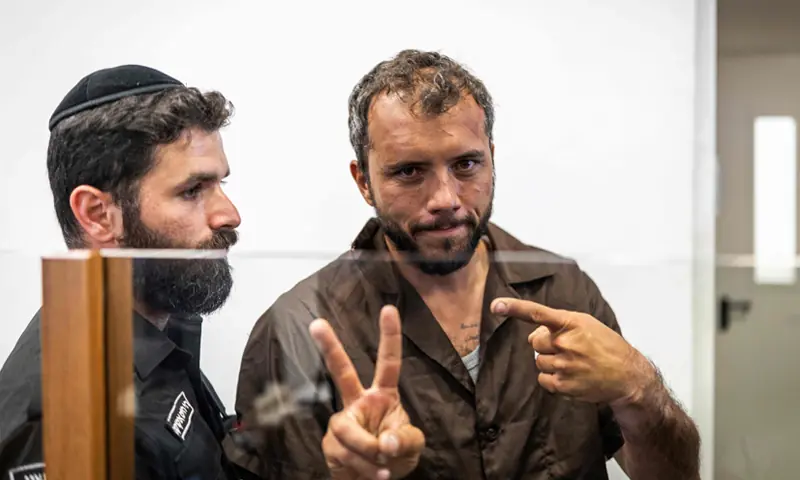
Spanish national Saif Abu Keshek and Brazilian Thiago Avila appeared before a court in the southern city of Ashkelon on Sunday.
AFP footage showed the pair being escorted into the courtroom, with Avila walking with his hands behind his back and Abu Keshek’s feet in shackles.
“The court extended their detention by two days,” Miriam Azem, international advocacy coordinator at the rights group Adalah, told AFP.
Adalah said the state attorney had presented a list of suspected offences authorities said the pair was accused of committing, including “assisting the enemy during wartime” and “membership in and providing services to a terrorist organisation”.
But Adalah’s lawyers challenged the state’s jurisdiction, arguing against the “unlawful abduction” of the two activists in international waters.
Its lawyers told the court Avila and Abu Keshek had testified to “severe physical abuse amounting to torture, including being beaten and held in isolation and blindfolded for days at sea”.
Call for swift release
Israel’s foreign ministry rejected accusations that the men were subjected to physical violence.
“Contrary to the false and baseless claims prepared in advance, at no point were Saif Abu Keshek and Thiago vila subjected to torture,” ministry spokesman Oren Marmorstein told AFP.
“Following violent physical obstruction by Saif Abu Keshek and Thiago vila against Israeli staff members, staff were compelled to act in order to stop these actions. All measures taken were in accordance with the law,” he insisted.
No formal charges were filed against the two, Adalah said.
“We argued that … they were part of a humanitarian mission that aimed to provide humanitarian aid to the civilians in Gaza, and not to any other organisation, whether terrorist or not,” lawyer Hadeel Abu Salih told journalists after the court hearing.
“We deny all the accusations that were presented … and demand these two men be released immediately,” she said.
Spain’s government has called for Abu Keshek’s “immediate release”, the foreign ministry said in a statement to AFP, indicating the Spanish consul had accompanied Abu Keshek to the hearing.
Adalah’s lawyers had met the activists at Ashkelon’s Shikma Prison on Saturday.
They said Avila recounted being “subjected to extreme brutality” by Israeli forces when the vessels were seized, saying he was “dragged face-down across the floor and beaten so severely that he passed out twice”.
Abu Keshek was also “hand-tied and blindfolded … and forced to lie face-down on the floor from the moment of his seizure” until reaching Israel, it said.
Accused of Hamas ties
Israel’s foreign ministry said the pair were affiliated with the Popular Conference for Palestinians Abroad (PCPA) — a group accused by Washington of “clandestinely acting on behalf of” Hamas.
It said Abu Keshek was a leading PCPA member, and that Avila was also linked to the group and “suspected of illegal activity”.
The Global Sumud Flotilla’s first Mediterranean voyage to Gaza last year drew worldwide attention, before being intercepted by Israeli forces off the coasts of Egypt and Gaza.
Avila was one of the organisers of that flotilla, which was also intercepted by Israeli forces, with crew members — including Swedish activist Greta Thunberg – arrested and expelled.
Israel controls all entry points into Gaza, which has been under an Israeli blockade since 2007.
Throughout the Gaza war, there have been shortages of critical supplies in the Palestinian territory, with Israel at times cutting off aid entirely.
ISLAMABAD: The Asian Development Bank (ADB) announced on Sunday a $70 billion initiative on Sunday to expand energy and digital infrastructure across the Asia-Pacific region by 2035, aiming to strengthen power grid links, boost cross-border electricity trade and increase broadband access.
The plan includes $50bn for a new Pan‑Asia Power Grid Initiative and $20bn for the Asia-Pacific Digital Highway project.
At the inaugural session of its May 3-6 annual meeting in Samarkand, the Manila-based lending agency said it “will back $70bn in new energy and digital infrastructure initiatives by 2035, aiming to connect power grids, expand cross-border electricity trade, and improve broadband access across Asia and the Pacific”.
“Energy and digital access will define the region’s future,” said ADB President Masato Kanda. “These two initiatives build the systems Asia and the Pacific need to grow, compete, and connect. By linking power grids and digital networks across borders, we can lower costs, expand opportunity, and bring reliable power and digital access to hundreds of millions of people”, he said, according to the ADB announcement.
Pan‑Asia Power Grid Initiative
Pakistan, that continues to face the complex challenge of electricity shortages despite surplus generation capacity, could benefit from the initiative. But an official told Dawn that it was too early to reach a conclusion.
Pakistan sits at the crossroads of surplus generation capacity, demand curve and supply shortage, said a government official, adding that with regional cooperation facilitated by an international multilateral and digitally synchronised by AI-driven smart infrastructure could be win-win solution for all. He declined to officially comment on record, saying the initiative had just been announced and would have to be examined in detail on technical, financial and diplomatic grounds once it passed through the official channels and forums.
Pakistan’s daytime demand drops to an average of 9,000-10,000 megawatts (MW), owing to large penetration of solar systems, and peak demand surges beyond 29,000MW while grid-connected generation capacity exceeds 36,000MW. Off-grid, hybrid and net-metered solar capacity takes the country’s total installed capacity beyond 58,000MW. Yet, consumers at times suffer long hours of electricity loadshedding due to fuel shortages.
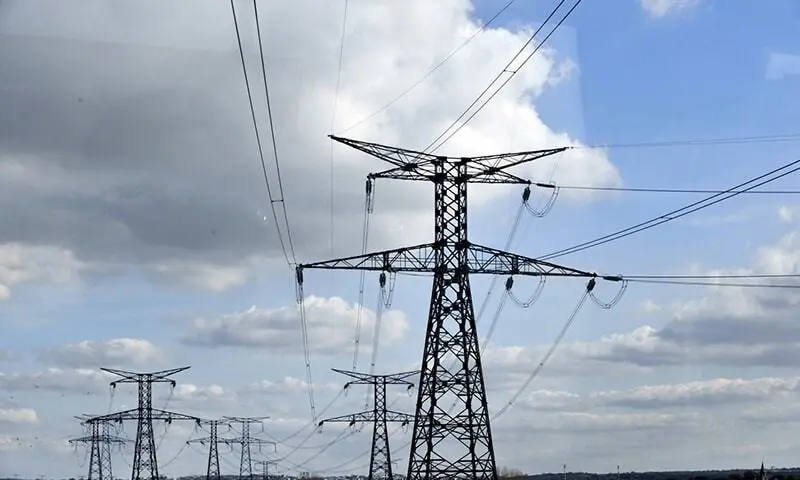
“The Pan-Asia Power Grid Initiative will connect national and subregional power systems so renewable energy can flow across borders, while the Asia-Pacific Digital Highway will help close the digital infrastructure gap and enable the region to benefit from AI-driven growth,” the ADB said. Under the Pan-Asia Power Grid Initiative, ADB will work with governments, utilities, the private sector, and development partners to mobilise $50bn by 2035 for cross-border power infrastructure that can unlock renewable energy at scale, it added.
The initiative will focus on transmission and grid integration, including cross-border lines, substations, storage, and grid digitalisation. It will also support power generation linked to electricity trade, including renewable energy export projects, regional renewable hubs, and hybrid generation-storage facilities.
By 2035, ADB aims to integrate about 20 gigawatts of renewable energy across borders, connect 22,000 circuit-kilometres of transmission lines, improve energy access for 200 million people, create 840,000 jobs, and cut regional power sector emissions by 15 per cent.
ADB expects to finance about half of the $50bn initiative from its own resources and raise the rest through cofinancing, including from the private sector. Up to $10m in technical assistance will support efforts to align regulations, adopt common technical standards, prepare feasibility studies and advance other work needed for major projects.
The Pan-Asia Power Grid Initiative marks a shift from country-to-country energy links to a regional approach to power trade. It builds on existing subregional cooperation initiatives, including the South Asia Subregional Economic Cooperation programme, the Bay of Bengal Initiative for Multi-Sectoral Technical and Economic Cooperation grid interconnection planning, the Asean Power Grid, and the Central Asia Regional Economic Cooperation Energy Strategy 2030.
Asia-Pacific Digital Highway
The Asia-Pacific Digital Highway will mobilise $20bn by 2035 to finance digital corridors, data infrastructure, and AI-ready economies. Investments will focus on connected infrastructure, including terrestrial and subsea fiber networks, satellite links and regional data centres. ADB will also provide policy and regulatory support, including on cybersecurity risk management, and invest in skill programmes to strengthen digital and AI readiness, ADB said.
By 2035, the initiative aims to provide first-time broadband access to 200 million people and faster, more reliable digital connectivity for another 450m people across the region. It is expected to cut connectivity costs in remote and landlocked areas by about 40pc and help create 4m jobs. “ADB expects to finance $15bn of the $20bn initiative from its own resources and raise $5bn through cofinancing, including from the private sector”, it said, adding the Centre for AI Innovation and Development will be established in Seoul to support the initiative.
Backed by a $20m contribution from the Korean government, the centre will promote responsible and inclusive AI adoption and help train about 3m people in digital and AI-related skills by 2035.
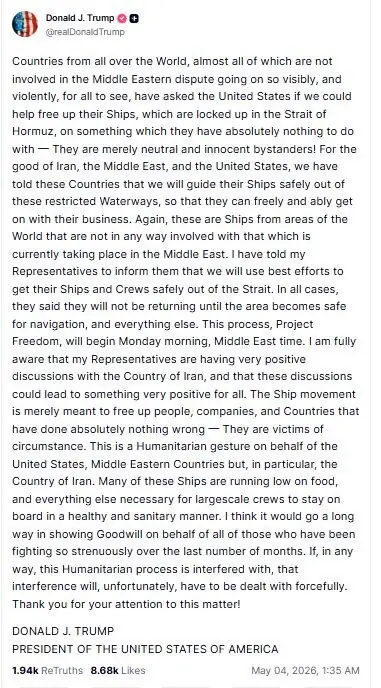
US President Donald Trump said on Monday that his representatives were having “very positive discussions” with Iran that could “lead to something very positive for all”.
He made these remarks in a Truth Social Post, also announcing an initiative to guide vessels stuck in the Strait of Hormuz out of the waterway, hours after Tehran said on Sunday that the United States had responded to its 14-point proposal via Pakistan.
Iranian state media quoted a foreign ministry spokesperson as saying that Tehran was reviewing the response.
Later, US Special Envoy on Middle East Steve Witkoff told CNN the US was “in conversation” with Iran as they weighed negotiations to end the war.
This was followed by Trump’s post on Truth Social, where he said: “I am fully aware that my Representatives are having very positive discussions with the Country of Iran, and that these discussions could lead to something very positive for all.”
He also said that countries from across the world, “almost all of which are not involved in the Middle Eastern dispute going on so visibly, and violently, for all to see, have asked the United States if we could help free up their Ships, which are locked up in the Strait of Hormuz”.
“For the good of Iran, the Middle East, and the United States, we have told these Countries that we will guide their Ships safely out of these restricted Waterways, so that they can freely and ably get on with their business.”
He added, “I have told my Representatives to inform them that we will use best efforts to get their Ships and Crews safely out of the Strait. In all cases, they said they will not be returning until the area becomes safe for navigation, and everything else”.
Trump announced that this process, “Project Freedom, will begin Monday morning, Middle East time”.
“The Ship movement is merely meant to free up people, companies, and Countries that have done absolutely nothing wrong — They are victims of circumstance. This is a Humanitarian gesture on behalf of the United States, Middle Eastern Countries but, in particular, the Country of Iran.
“Many of these Ships are running low on food, and everything else necessary for largescale crews to stay on board in a healthy and sanitary manner. I think it would go a long way in showing Goodwill on behalf of all of those who have been fighting so strenuously over the last number of months. If, in any way, this Humanitarian process is interfered with, that interference will, unfortunately, have to be dealt with forcefully,” he added.
The proposal
Negotiations between the US and Iran had been deadlocked since a ceasefire, brokered by Pakistan, came into effect on April 8, with only one round of direct peace talks held in Islamabad so far.
And after it was reported that Iran had submitted its 14-point proposal, Trump was initially quick to cast doubt on it.
“I will soon be reviewing the plan that Iran has just sent to us, but can’t imagine that it would be acceptable in that they have not yet paid a big enough price for what they have done to Humanity, and the World, over the last 47 years,” he had said on his Truth Social platform.
US news website Axios reported, citing two sources briefed on the proposal, that it set “a one-month deadline for negotiations on a deal to reopen the Strait of Hormuz, end the US naval blockade and permanently end the war in Iran and in Lebanon”.
Separately, Al Jazeerareported, citing sources, that the proposal envisaged three main stages, aiming to “transform the ceasefire into an end to the war within 30 days”.
According to the report, the proposal “envisions a pledge of nonaggression, including from Israel, to ensure there’s no return to war and an end to fighting throughout the Middle East”.
It said the proposal suggested the gradual reopening of the Strait of Hormuz in the first phase, as well as lifting of the US blockade of Iranian ports.
Under the proposed plan, Tehran would take charge of dealing with sea mines, the report said.
It added that the second phase was proposed to include “Iran’s return to uranium enrichment after the time limit at 3.6 per cent in accordance with the ‘zero-storage principle’“.
Moreover, the plan includes the US and Israel refraining from attacking Iran and its allies in exchange for Iran refraining from launching strikes, the report said, adding that Iran had also rejected “dismantling nuclear infrastructure or destroying Iran’s facilities”.
“Lifting sanctions includes the gradual release of frozen funds,” it said.
In the third phase, Tehran proposed to enter “into a strategic dialogue with Arab neighbours and building a security system that includes the entire Middle East”, the report stated.
‘Impossible operation or bad deal’
Following Trump’s remarks about the proposal likely being unacceptable, the Revolutionary Guards said he must choose between “an impossible operation or a bad deal with the Islamic Republic of Iran”.
“The room for US decision-making has narrowed,” they said.
The day before, Deputy Foreign Minister Kazem Gharibabadi told diplomats in Tehran that “the ball is in the United States’ court to choose the path of diplomacy or the continuation of a confrontational approach”.
Iran, he said, was “prepared for both paths”.
‘If they misbehave’
In a brief interview with reporters in West Palm Beach, Florida, on Saturday, the US president declined to specify what could trigger new American military action.
“If they misbehave, if they do something bad, but right now, we’ll see,” he said. “But it’s a possibility that could happen, certainly.”
Mohsen Rezaei, a military adviser to Iran’s Supreme Leader Mojtaba Khamenei, said Iranian forces would sink US ships.
“The US is the only pirate in the world that possesses aircraft carriers. Our ability to confront pirates is no less than our ability to sink warships. Prepare to face a graveyard of your carriers and forces,” he posted on X.
His remarks came after Trump, while addressing a rally in Florida, compared the US action in the sea to that of pirates. “We’re like pirates” as he described an earlier helicopter raid on an oil tanker under the US blockade of Iranian ports.
“We … landed on top of it, and we took over the ship. We took over the cargo, took over the oil. It’s a very profitable business,” he remarked.
On Sunday, Iran’s envoy to Pakistan, Reza Amiri Moghadam also said that the continuation of talks between Tehran and Washington depended on the latter’s behaviour.
He expressed these views while speaking to Iranian official news agency IRNA.
The envoy said Iran had shared a comprehensive plan with the US, but “progress hinges on the US’s sincerity and willingness to resolve issues through genuine diplomatic efforts”.
He reiterated Iran’s commitment to safeguarding its national interests and defending its rights.
Moghadam also appreciated Pakistan for its efforts in facilitating dialogue between the US and Iran, and criticised US behavior, describing it as “unpredictable and aggressive”.
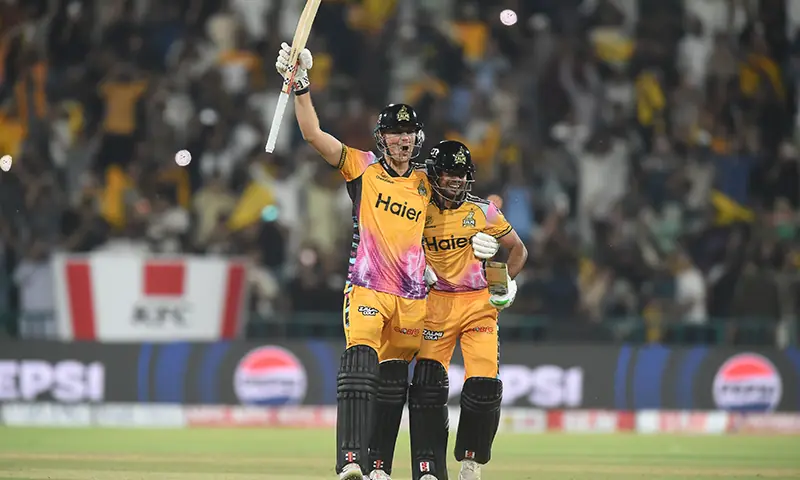
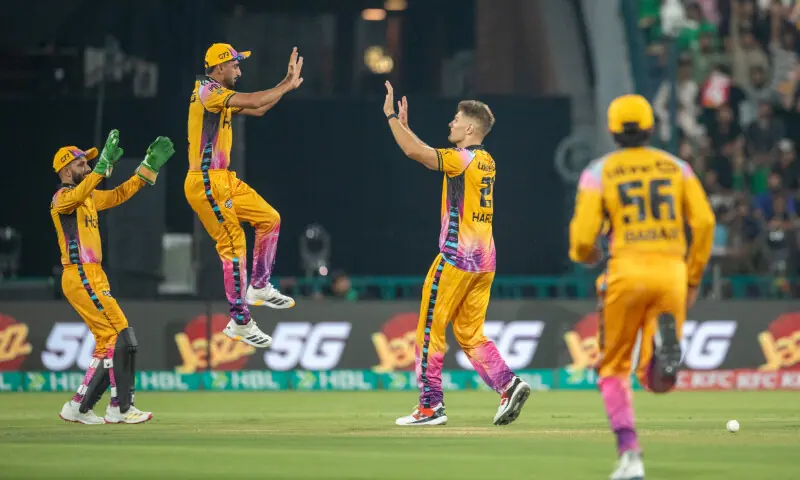
The final of 11th HBL Pakistan Super League edition turned out to be a one-man show as Aaron Hardie’s spectacular all-round performance led Peshawar Zalmi to their second title win on Sunday in Lahore.
They defeated Hyderabad Kingsmen by five wickets after opting to bowl first against the debutants at the Gaddafi Stadium.
Peshawar Zalmi achieved the 130-run target in the 16th over of the second innings, becoming the HBL PSL champions for a second time.
The first claimed the trophy with a win against the Quetta Gladiators in 2017.
They have now joined Islamabad United and Lahore Qalandars as the winners who have lifted the PSL trophy more than once.
Zalmi’s second win was led by a stunning performance by Hardie, who took four wickets before scoring an unbeaten 56 runs off 39 deliveries. He smashed a total of nine boundaries and was named the player of the match.
They initially quickly lost four wickets after scoring just 40 runs by the end of five overs.
In a disappointing start, opener Muhammad Haris and Kusal Mendis, who batted at number three, lost their wickets on just six and nine runs, respectively. Captain Babar Azam, who opened alongside Haris and has been the season’s highest run-getter, also went back to the pavilion on a duck.
However, batsman Abdul Samad and Hardie shared a 85-run stand to change the course of the game.
Samad added 48 runs to the scoreboard before he was caught out at the boundary line.
For Hyderabad Kingsmen, medium-fast bowler Mohammad Ali clutched three wickets, playing a key role in splintering Zalmi’s top order. Meanwhile, Akif Javed and Hunain Shah took a single wicket each.
In the first innings, Saim Ayub scored 54 runs for the Kingsmen as the rest of the batting order struggled to survive the pace-buttressed attack of Peshawar Zalmi.
Hardie grabbed four crucial wickets for Zalmis, including batting prowess Glenn Maxwell, sending him back to the pavilion on a duck. He also took Saim’s wicket.
He has now become the first player to take a four-fer and hit a 50 in a PSL final.
Bangladesh’s Nahid Rana, who was called in the Zalmi squad in place of Khurram Shehzad, grabbed a couple of wickets as well, including Kingsmen captain Marnus Labuschagne.
Sufiyaan Muqeem and Muhammad Basit also clasped a wicket each for Peshawar Zalmi.
Labuschagne and Hassan Khan added 20 and 12 runs, respectively, to the scoreboard, and seven out of 11 Kingsmen batters were not able to score runs in double figures.
Peshawar Zalmi had reached the final with eight victories and after losing just one match, sealing the top spot in the points table.
Meanwhile, Kingsmen — one of the two new franchises added to the PSL circuit in this edition — secured a stunning 2-run victory over Islamabad United in the make-or-break eliminator on Friday to book a place in the final.
Kingsmen had a rough start to the campaign, losing five games in a row before getting back on track to win the next five fixtures and qualify for the playoffs.
BAJAUR: Two people, including a social activist, were killed in separate attacks in Khyber Pakhtunkhwa’s Bajaur district on Sunday, police and rescue officials told Dawn.
The first incident took place in the Kohi area of Salarzai tehsil, where unidentified armed assailants attacked social activist Malik Ziaur Rehman near his residence, Salarzai Deputy Superintendent of Police (DSP) Jamal Shah said.
“Unidentified assailants opened fire on him near his house, leaving him critically injured,” he said.
According to Rescue 1122 Khar station spokesperson Riaz Ahmad Khan, the 37-year-old succumbed to his injuries at the district headquarters hospital Khar, where he was taken in a critical condition after the attack.
An official at the Salarzai police station told Dawn that a team of law enforcers was immediately sent to the site of the incident, and a search had been launched to locate the attackers, who had fled after firing at Rehman.
Police are also further investigating the incident.
Area residents told Dawn that Rehman’s father, Malik Fatchi Khan, was also killed by unidentified attackers a few years ago.
Separately, a man identified as Sayed Door Khan was killed in a blast caused by an improvised explosive device in Bajaur’s Asil Targaoo area, Khar DSP Saidur Rehman said.
He said Sayed was critically injured in the blast and succumbed to his injuries at the hospital.
The DSP said an investigation of the incident was under way to trace those responsible for the blast and ascertain the motive of the attack.
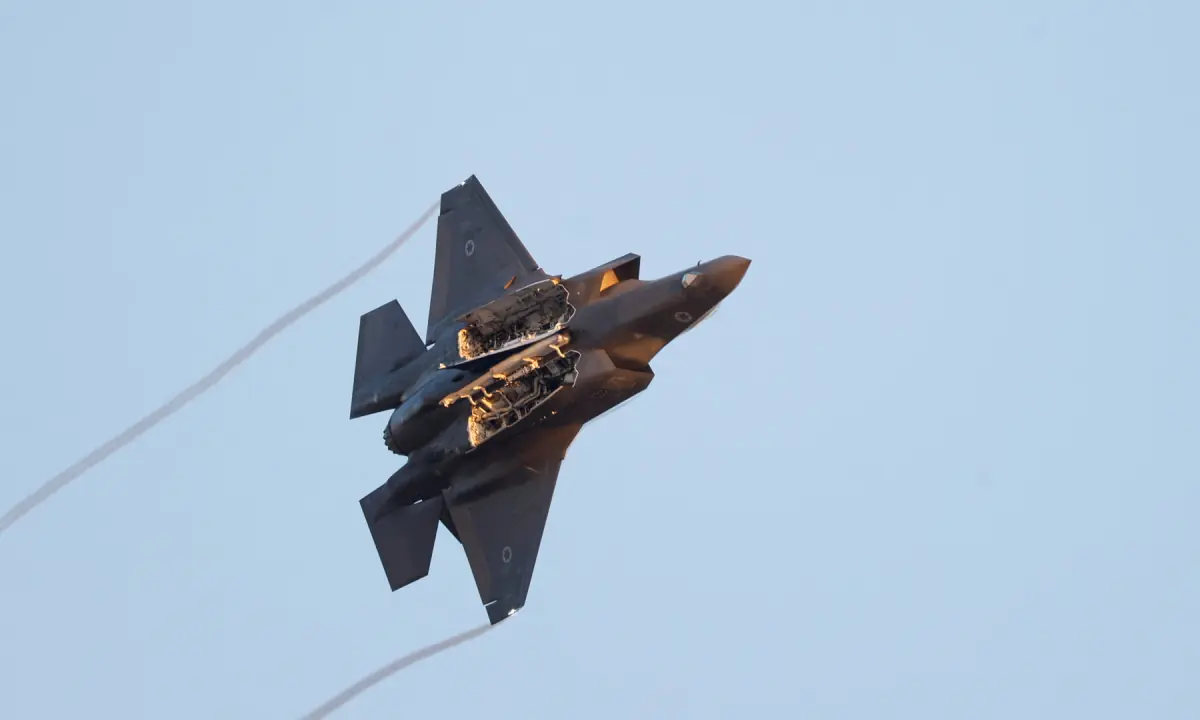
Israel gave final approval for a plan to purchase two new combat squadrons of F-35 and F-15IA advanced fighter aircraft from Lockheed Martin and Boeing in a deal worth tens of billions of dollars, the defence ministry said on Sunday.
The deal, approved by Israel’s Ministerial Committee on Procurement, is a first step in a 350 billion shekel ($119 billion) plan to bolster Israel’s military and “strengthen readiness ahead of a demanding decade for Israeli security,” it said.
Prime Minister Benjamin Netanyahu said much of this expanded defence budget will be to produce munitions in Israel and not be dependent on foreign countries. Israel, he noted, will also develop “groundbreaking” aircraft.
The ministry added that the new squadrons will serve as a cornerstone of the military’s long-term force development, addressing regional threats and preserving Israel’s strategic air superiority.
“Alongside immediate wartime procurement needs, we have a responsibility to act now to secure the Israeli Defence Forces’ military edge ten years from now and beyond,” said ministry Director General Amir Baram.
The recent US-Israeli war on Iran “reinforced just how critical the US-Israel strategic relationship is, and how essential advanced air power remains,” he added.
Under the deal, Israel would buy a fourth F-35 squadron from Lockheed Martin and a second squadron of F-15IA fighter jets from Boeing.
“Israel is stronger than ever, and Israel must always be much stronger than our enemies,” Netanyahu said. “These aircraft strengthen Israel’s overwhelming air superiority.”
In December, Boeing was given an $8.6bn contract for Israel, including 25 new F-15IAs and an option for 25 more.
Baram said the next step would be to move forward with finalising the agreements with the US government and military counterparts.
The US and Israel launched airstrikes on Iran on February 28, but a ceasefire has been in place since April 8. The US Navy maintains a blockade of Iranian ports.
Defence Minister Israel Katz said the conflict demonstrated the air force’s power and its decisive role in protecting Israel.
“The lessons of that campaign require us to keep pressing forward on force buildup, to ensure air superiority for decades to come,” he said.
Katz said the new aircraft would lead to a significant technological leap in integrating autonomous flight capabilities, next-generation defence systems, and establishing Israeli military dominance in space.
“Our mission is clear: to ensure the IDF has the tools, capabilities, and strength to operate anywhere, at any time,” Katz said. “We will continue to invest, to grow stronger, and to stay ahead of our enemies - to keep Israel secure today and in the future.”
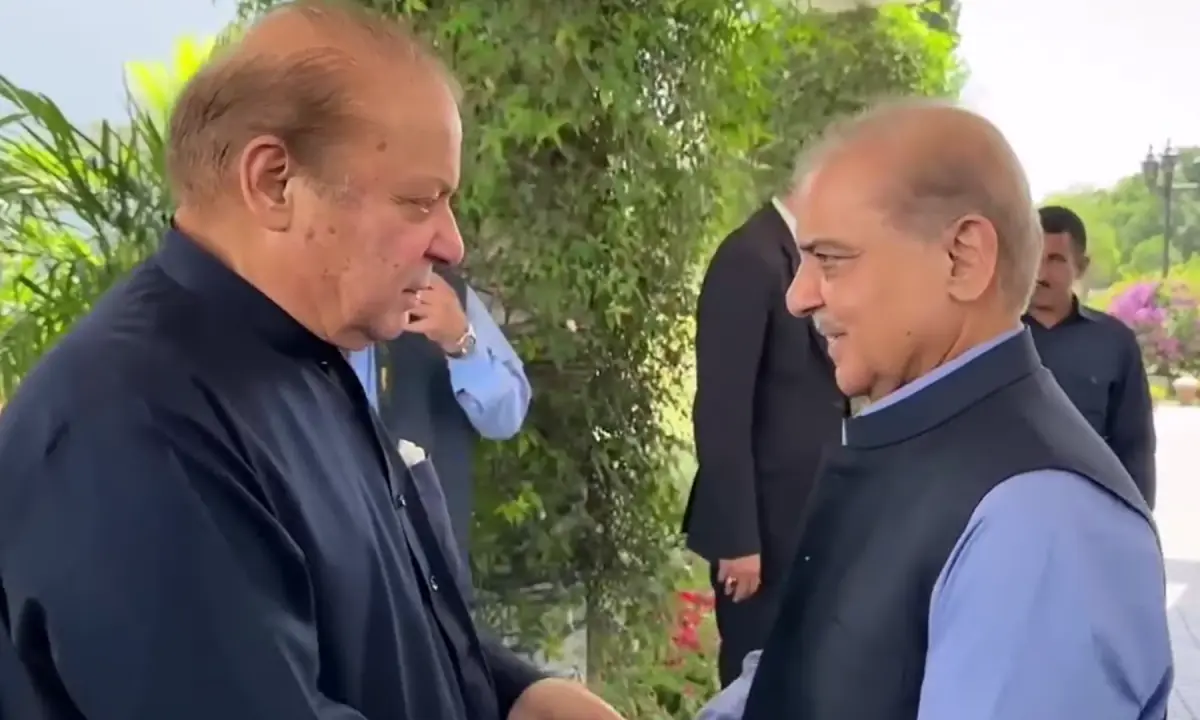
Prime Minister Shehbaz Sharif called on PML-N supremo Nawaz Sharif at their Jati Umra residence in Lahore on Sunday, a statement issued by the PM’s Office (PMO) said, adding that the Middle East conflict and the political situation in the country were discussed during the meeting.
Punjab Chief Minister Maryam Nawaz was also present on the occasion.
The PMO statement said the premier briefed Nawaz on the “situation in the country” and exchanged views on the political situation.
He further informed him about the situation in the Middle East and Pakistan’s efforts for the restoration of peace in the region, the statement added.
The conflict in the Middle East, which is now more than two months old, began with US-Israeli strikes on Iran on February 28. And while hostilities have paused following a Pakistan-brokered two-week ceasefire on April 8 — which has been extended indefinitely by US President Donald Trump — the world continues to face its consequences.
Pakistan’s civil and military leadership has been engaged in feverish diplomacy, leading the efforts for de-escalation.
On April 11-12, Pakistan hosted the first high-level contact between Iran and the US in decades and mediated the meetings, known as the “Islamabad Talks”. However, with challenges in convening a second round, Islamabad has shifted back to its role as a facilitator and go-between.
Meanwhile, the conflict has also resulted in the closure of the Strait of Hormuz — through which one-fifth of the world’s oil and gas supply used to pass in peacetime — giving rise to a global energy crisis and an increase in oil prices in the international market.
The PMO statement said PM Shehbaz also took Nawaz into confidence regarding oil prices in the international market and the steps the government has taken to “provide relief” to the people against this backdrop.
However, in the following weeks, PM Shehbaz said he had rejected recommendations to further increase fuel prices despite an increase in the global market on three occasions.
But on April 2, Petroleum Minister Ali Pervaiz Malik and Finance Minister Muhammad Aurangzeb announced an unprecedented increase of 43 per cent and 55pc in the prices of petrol and high-speed diesel, respectively. The ministers had also announced a targeted fuel subsidy programme.
However, just a day later, PM Shehbaz slashed the petroleum levy by Rs80 per litre and brought the price of petrol down to Rs378 per litre.On April 10, PM Shehbaz further decreased diesel prices and petrol prices by Rs135 and Rs12 per litre, respectively.
The government has twice increased the prices of the two commodities since, first on April 24 and later on April 30.
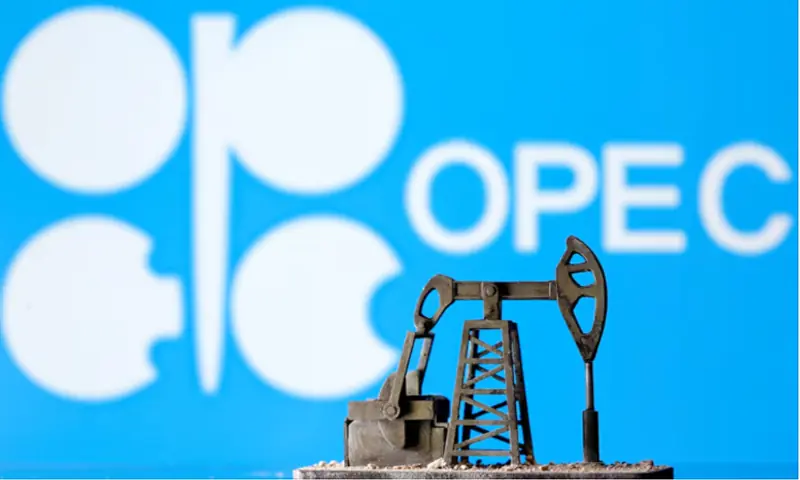
Opec+ agreed on Sunday on a modest oil output hike for June, an increase that will remain largely on paper as long as the US-Israeli war on Iran continues to disrupt Gulf oil supplies through the Strait of Hormuz.
Seven Opec+ countries will raise oil output targets by 188,000 barrels per day in June, the third consecutive monthly increase, Opec+ said in a statement after an online meeting. The increase is the same as that agreed for May minus the share of the United Arab Emirates (UAE), which left the group on May 1.
The move is designed to show the group is ready to raise supplies once the war stops and signals that Opec+ is pressing on with a business-as-usual approach despite the departure of the UAE from Opec+, sources associated with the alliance and analysts said.
Opec+ is sending a two-layer message to the market: continuity despite the UAE’s exit, and control despite limited physical impact, said Jorge Leon, an analyst at Rystad and former Opec official.
While output is increasing on paper, the real impact on physical supply remains very limited, given the Strait of Hormuz constraints. This is less about adding barrels and more about signaling that Opec+ still calls the shots.
Top Opec+ producer Saudi Arabia’s quota will rise to 10.291 million bpd in June under the agreement, far above actual production. The kingdom reported actual production of 7.76m bpd to Opec in March.
The seven members who met on Sunday were Saudi Arabia, Iraq, Kuwait, Algeria, Kazakhstan, Russia, and Oman.
With the UAE leaving, Opec+ comprises 21 members, including Iran. But in recent years, only the seven nations plus the UAE have been involved in monthly production decisions.
Hike remains largely symbolic until Hormuz reopens
The US-Israeli war on Iran, which began on February 28, and the resulting closure of the Hormuz strait have throttled exports from Opec+ members Saudi Arabia, Iraq and Kuwait, as well as from the UAE. Before the conflict, these producers were the only countries in the group able to raise production.
Even when shipping through the Strait of Hormuz reopens, it will take several weeks if not months for flows to normalise, oil executives from the Gulf and global oil traders have said.
The supply disruption has propelled oil prices to a four-year high above $125 per barrel as analysts begin to predict widespread jet fuel shortages in one to two months and a spike in global inflation.
Crude oil output from all Opec+ members averaged 35.06m bpd in March, down 7.70m bpd from February, Opec said in a report last month, with Iraq and Saudi Arabia making the biggest cuts due to constrained exports.
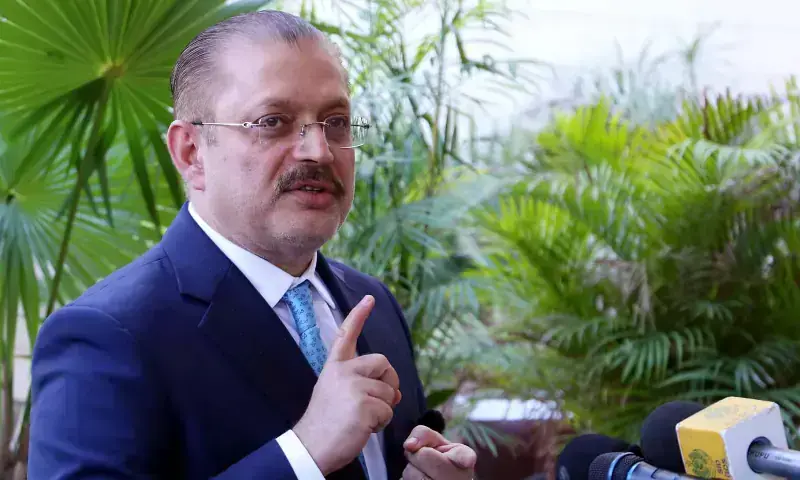
Sindh Senior Minister Sharjeel Inam Memon on Sunday acknowledged that the Bus Rapid Transit (BRT) Red Line had proven to be a “very tough” project for the provincial government, but asserted that there had been no delay on its end.
Speaking to reporters in Karachi, Memon said the Sindh government had to make some difficult decisions on the BRT Red Line after “all other options were exhausted”.
The senior minister asserted that there had been “no mistake, mal-intent or delay” from the Sindh government on the BRT Red Line.
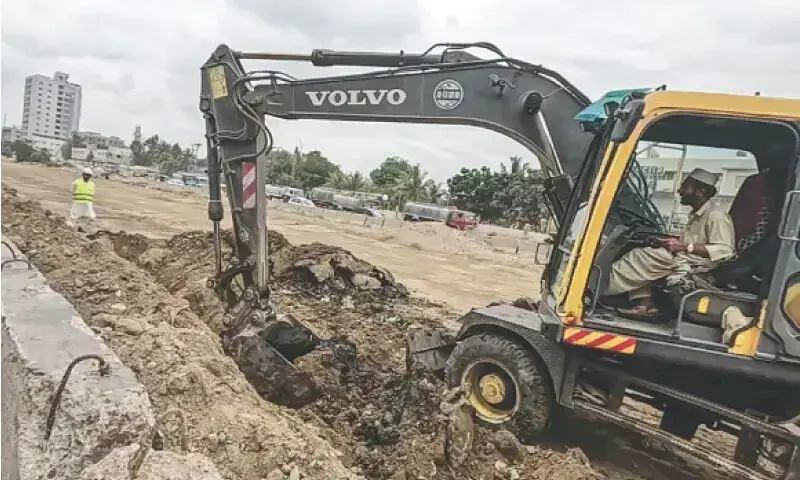
He noted that work on the project’s Lot-1 was “underway with great speed”, while work on Lot-2 had been restarted.
The Sindh government recently cancelled the construction contract for the BRT Red Line project. Subsequently, it chose the Frontier Works Organisation (FWO) to resume construction on a section of the BRT Red Line along University Road, where commuters have been facing inconvenience.
Designed to cover around 27 kilometres from Malir Halt to Numaish via University Road, work on BRT Red Line commenced in early 2022. While initially scheduled for completion by 2024, the project has faced persistent delays, with its finishing timeline most recently pushed to 2028.
A week ago, CM Murad, while “apologising” to the people of Karachi, announced that the deteriorated University Road will be reconstructed within 90 days.
In today’s media talk, Memon reiterated: “We will try that by the end of July, this road is opened for mixed traffic by working day and night, so that there is no nuisance for the public.”
“We realise the difficulty being faced by the public, but as they say, you have to swallow a bitter pill to achieve something big,” he remarked.
The minister recalled that the Sindh government approached the FWO for the reconstruction of University Road after “issuing warnings and clearing claims” of the contractors of the BRT Red Line project.
He noted that the government also took the Asian Development Bank (ADB) into confidence about the FWO’s involvement in the road reconstruction. While the BRT Red Line is an ADB-funded scheme, the reconstruction of the University Road will be undertaken as a separate project funded through the Sindh government’s own resources.
For the bus project itself, Memon said the government would follow up with the necessary legal actions, such as re-contracting or re-tendering.
The minister said it would have been “very easy” for the government to simply launch buses, such as the People’s Bus Service, but it decided to construct the BRT project for future generations, considering Karachi’s growing population.
Criticising certain political elements for “politicising” the BRT project, Memon said the government’s aim was to finish the project.
Meanwhile, Sindh Chief Minister Murad Ali Shah carried out an early morning inspection of BRT Red Line from Jail Chowrangi to Nipa, reviewing progress on mixed traffic lanes, drainage, asphalt work and traffic management.
“People’s hardship is unacceptable. Roads must be restored tonight, quality cannot be compromised and traffic flow must improve immediately,” he was quoted as saying by CM House, warning that he would continue surprise visits to monitor progress.
CM Murad directed all departments and contractors to accelerate work, restore roads on an emergency basis and ensure minimum inconvenience to citizens.
He also ordered the immediate commencement of the remaining work on the Red Line Mosamiyat Flyover so it could be opened for mixed traffic at the earliest.
The chief minister was accompanied by provincial ministers, Karachi Mayor Murtaza Wahab and project officials.
The Sindh CM also reviewed progress on Shahrah-i-Bhutto after inspecting the BRT Red Line project.
He was told that 38-kilometre Shahrah-i-Bhutto corridor, stretching from Jam Sadiq Interchange to M-9 Kathore Interchange, has reached 93 per cent completion.
The project is now targeted for completion by June 30, 2026, with efforts underway to open it to the public before Eidul Azha.
Murad termed Shahrah-i-Bhutto a “gift for people of Karachi”, asserting that it would play a key role in easing traffic congestion, shifting heavy traffic outside the city, and improving connectivity between M-9 and N-5 highways.
He also termed the project a “lifeline for Karachi’s economy”.
Renowned mountaineer Sajid Ali Sadpara summited the world’s fifth-highest peak, Mount Makalu (8,485m) in Nepal, without supplementary oxygen, the expedition’s organisers said on Sunday.
Sadpara is on a mission to summit all 14 “eight-thousanders” in the world without supplemental oxygen, and this marks his 10th summit of that mission.
According to a statement issued by Seven Summit Treks, the expedition team Sadpara was part of, an excellent summit push at 5am on May 2 successfully reached the summit of Makalu.
The statement added a team of three members, including Sadpara from Pakistan and Johannss Lau, with seven sherpas, stood on the summit, marking a remarkable achievement on the technically demanding peak.
“We wish them a safe and smooth descent back to base camp,” Seven Summit Treks added.
Sadpara had arrived in Nepal on April 4 for the mission and reached Makalu base camp on April 16. The expedition team completed their summit rotation at Makalu on April 25.
Sadpara is the proud son of the legendary Muhammad Ali Sadpara, who tragically lost his life during a winter ascent of K2 in 2021. Carrying his father’s legacy with honour, Sajid has emerged as a powerful symbol of Pakistani mountaineering strength and global excellence.
Alpine Club of Pakistan (ACP) President Irfan Arshad, renowned climbers, and civil society members congratulated Sadpara on his remarkable and successful summit of Makalu.
In a statement, Arshad extended heartfelt felicitations to Sadpara on achieving the feat, terming it a moment of great pride for the nation.
The statement noted that summiting one of the world’s most technically challenging peaks reflected Sadpara’s courage, determination, and exceptional mountaineering skills.
“This outstanding achievement is not only a personal milestone but also a proud moment for the entire Pakistani mountaineering community,” it added.
The ACP president lauded Sadpara’s perseverance and dedication, saying his accomplishment would inspire young climbers across the country and further strengthen Pakistan’s presence on the global mountaineering stage.
ACP Vice President Karrar Haidri also congratulated Sadpara, noting, “At just 29 years old, Sajid has displayed remarkable endurance, resilience, and dedication to high-altitude mountaineering.”
Speaking to Dawn before beginning his summit, Sadpara had said he would attempt to climb the peak without supplemental oxygen.
Sadpara has made a name for himself in the alpine community with his summits of the most daunting peaks at a young age.
He has climbed K2 twice; once without supplemental oxygen. He also set records when he summited both Gasherbrum-I and Gasherbrum-II peaks in three days and 18 hours without supplementary oxygen.
In February 2021, his father Muhammad Ali Sadpara, Iceland’s John Snorri and Chile’s Juan Pablo Mohr went missing while attempting to summit the K2 during the winter season. Their bodies were found in July, nearly five months after they went missing.

 Login
Login