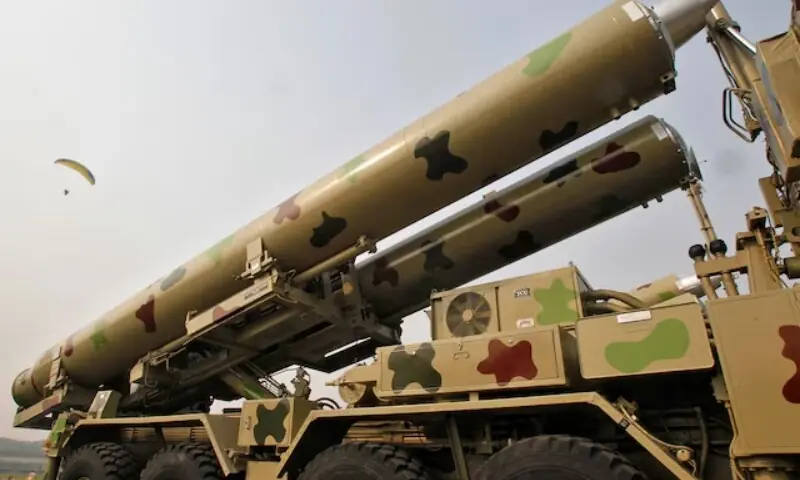
Vietnamese President To Lam is expected to discuss expanding defence ties with India during a visit to New Delhi this week, including the potential purchase of BrahMos missiles jointly developed with Russia, two sources said.
India, which has been building up domestic defence manufacturing for local use and exports, has already sold the supersonic cruise missiles to the Philippines and signed a contract with Indonesia in March.
A deal with Vietnam could be worth about 60 billion Indian rupees ($629 million), including training and logistical support, said one of the sources.
India considers Vietnam a key part of its strategy to ensure stability in the Indo-Pacific region amid China’s growing influence.
A third source said some defence cooperation announcements could be made during To Lam’s May 5-7 visit, though no signing of a weapons deal was expected.
To Lam arrived on Tuesday in the eastern city of Bodh Gaya, a Buddhist pilgrimage site, on Tuesday.
All the sources declined to be identified as they were not authorised to talk to the media on government negotiations.
The foreign ministries of India and Vietnam, as well as missile maker BrahMos Aerospace, did not immediately respond to requests for comment. BrahMos is a joint venture between Indian and Russian government entities.
Two-way trade between India and Vietnam crossed $16bn in the last fiscal year and both sides have been keen to expand economic ties.
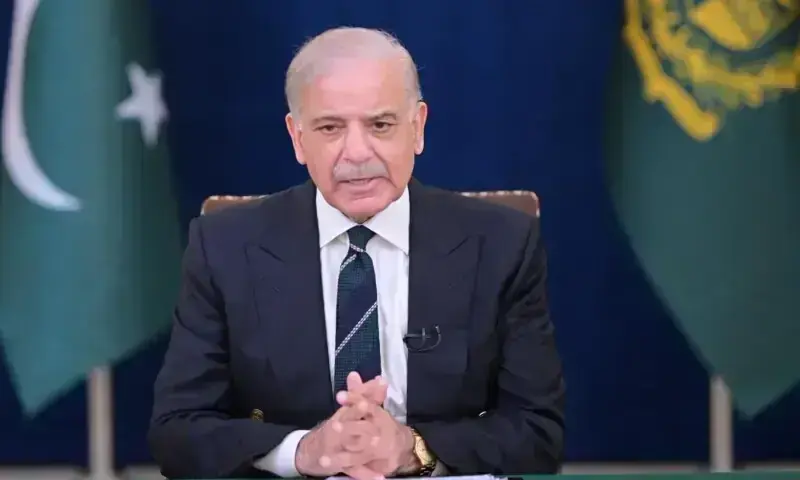
Prime Minister Shehbaz Sharif on Tuesday strongly condemned missile and drone attacks on civilian infrastructure in the United Arab Emirates (UAE), expressing complete solidarity with the country’s President Sheikh Mohammad bin Zayed Al Nahyan.
“Pakistan stands firmly with our Emirati brothers and sisters as well as with the government of the UAE at this difficult time,” PM Shehbaz said in a social media post on X.
“It is absolutely essential that the ceasefire be upheld and respected, to allow necessary diplomatic space for dialogue leading to enduring peace and stability in the region,” he said.
On Monday, the UAE said it was targeted by Iranian strikes, including one on its vital Fujairah energy hub that wounded three Indians.
Fujairah lies beyond the Strait of Hormuz, making it one of few export routes for Middle East oil that does not require passing through it.
“These attacks represent a dangerous escalation and an unacceptable transgression,” the UAE’s foreign ministry said, adding that the country reserves the “right to respond”.
Iran’s state television network said military officials had confirmed they attacked the UAE in response to the “US military’s adventurism”.
The attacks shattered a period of relative calm in the UAE since a Pakistani-mediated ceasefire between Washington and Tehran took effect on April 8, pausing more than a month of intense fighting in the Gulf region.
Monday’s strike was not the first time Fujairah’s energy infrastructure had been in the crosshairs. A drone attack on March 14 had previously hit the Port of Fujairah, triggering fires and the suspension of some oil-loading operations.
Meanwhile, India on Tuesday condemned the incident, urging uninterrupted access to the Strait of Hormuz, the foreign ministry said.
“We call for immediate cessation of these hostilities and the targeting of civilian infrastructure and innocent civilians,” India’s foreign ministry spokesperson Randhir Jaiswal said in a statement.
“We also call for free and unimpeded navigation and commerce through the Strait of Hormuz in keeping with international law,” Jaiswal added.
“India stands ready to support all efforts for a peaceful resolution of issues,” he said.
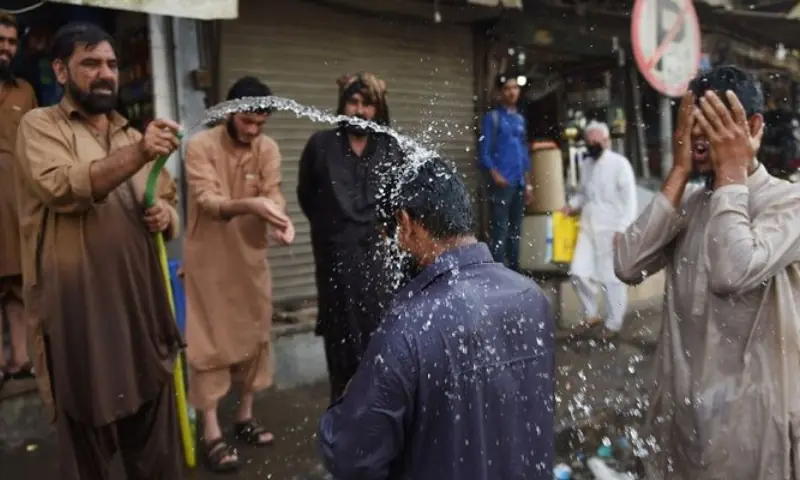
KARACHI: The Pakistan Meteorological Department has predicted the temperature in Karachi Division to remain hot but below 40°C.
According to the PMD’s weather forecast till Thursday, “hot and humid” weather is expected to persist on Tuesday, with the maximum temperature forecasted to be between 37–39°C.
Similar conditions will persist on May 6 (Wednesday) and May 7 (Thursday), PMD said in its advisory, when the maximum temperature will be between 36–38°C and 35-37°C, respectively.
As per the forecast, “hot/very hot and dry weather” was likely to prevail over most parts of Sindh.
Meanwhile, K-Electric’s Head of Distribution Operations, Khurram Abdullah, said on Tuesday that there will be no loadshedding in “any areas where the ‘feels-like’ temperature reaches 45°C”.
Addressing a live session from the utility’s Facebook account, he added, “maintenance shutdowns have been suspended due to the heatwave”.
He further stated that illegal connections (kundas) caused overloading, leading to localised faults and accidents.
“Cooperation from residents is essential to resolve local faults,” he said.
A day earlier, the metropolis witnessed its highest temperature since 2018 at 44.1°C accompanied by gusts of continental winds that persisted throughout the day, claiming the lives of at least 10 people.
Despite the record temperature in eight years, it was notable that the “feels-like” temperature did not exceed 40°C due to relatively low humidity.
A PMD official said the maximum temperature recorded in the city on Monday was 44.1°C with 17pc humidity.
Based on current trends and data, he said, the temperature was expected to start declining from Tuesday (today) as dry winds subsided, and would gradually drop further over the week.
The National Disaster Management Authority (NDMA) on Tuesday also issued sweeping emergency protocols and placed hospitals on alert as extreme, above-normal summer temperatures persisted throughout the country.
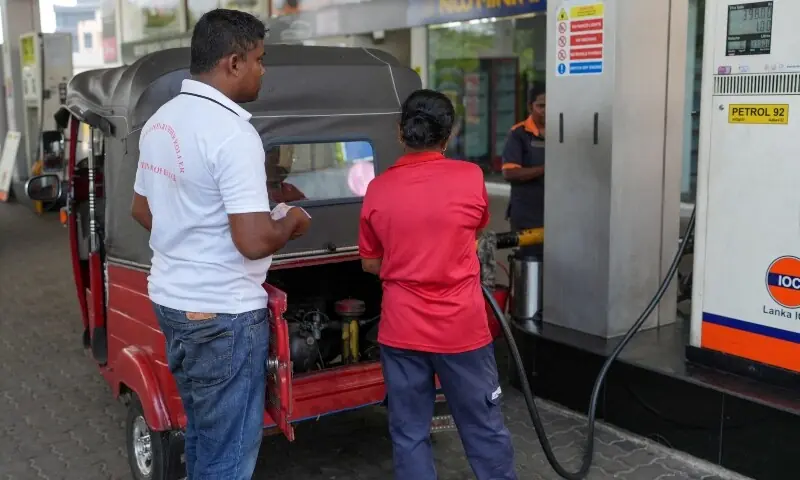
Governments in Asia, the top oil importing region, are scrambling to find alternatives and insulate their economies from the worst of the energy crisis triggered by the Iran war, but the pain is getting increasingly costly.
The disruption spurred the Asian Development Bank to cut its growth forecast for developing Asia and the Pacific to 4.7 per cent this year and 4.8pc in 2027, down from 5.1pc for both years previously, and lifted its inflation outlook to 5.2pc for this year.
Overall oil imports to Asia, which takes 85pc of Gulf crude shipments, plunged 30pc in April on the year, to their lowest since October 2015, Kpler data shows, after two months of the near-closure of the Strait of Hormuz, a key chokepoint for a fifth of global oil and gas supplies.
Fiscal strains are mounting across the region, particularly South Asia, as governments spend billions of dollars on subsidies and import duty waivers to compensate.
“The first line of defence … is that the governments decided to absorb the initial shock by either providing subsidies or cutting excise duties on fuel products,” said Hanna Luchnikava-Schorsch of S&P Global Market Intelligence.
India’s state-dominated refining sector has kept fuel prices steady despite surging crude costs, losing about 100 Indian rupees ($1.06) a litre on diesel and 20 rupees on gasoline, but some analysts forecast price hikes after state polls ended in April.
Many regional governments have moved to limit fuel use or clamp down on hoarding, while several have curbed exports and many, including Australia, have espoused diplomatic efforts to ensure access.
China, the world’s biggest oil importer, has shielded itself with sizeable reserves, a diverse energy supply chain and export curbs on fuel and fertiliser, although Beijing is making exceptions for some regional buyers, from Australia to Myanmar.
Even as governments tap fiscal resources, forex reserves and oil inventories, the war’s economic impact on Asia has not been as bad as feared, Goldman Sachs said.
Nevertheless, it trimmed 2026 growth forecasts for Japan and some Southeast Asian countries and slightly lifted inflation expectations, while warning of a key unresolved question.
“How much of the resilience thus far reflects structural factors versus unsustainable declines in buffer stocks?” its analysts said in a note.
First line of defence
Asia’s emerging market currencies have fallen furthest and to lower lows against the dollar, compared with global peers and the region’s bigger currencies, with the peso, rupee and rupiah all making record lows.
Since the war started at the end of February, the Philippine peso has dropped more than 5pc, the Thai baht and rupee more than 3pc each and the rupiah more than 2.5pc.
By contrast, China’s yuan is the region’s top performer, up 0.8pc against the dollar, while Japan has intervened to push up the yen, to stand 0.4pc higher than pre-war levels. South Korea’s won is down about 1.1pc.
The South Asian economies of Pakistan, Bangladesh and Sri Lanka are the most vulnerable to the burdens triggered by the crunch, S&P Global Market Intelligence said.
Pakistan, for example, recently issued its first tenders since 2023 to buy liquefied natural gas.
It is looking to replace supply it is unable to source from Qatar, paying $18.88 per million British thermal unit for one cargo, or roughly $30m more than market prices before the war, according to Reuters calculations.
“These countries use more of their resources on subsidising domestic public energy enterprises and basically shielding the final consumers from the energy price shock,” added Luchnikava-Schorsch, the S&P unit’s head of Asia-Pacific Economics.
“These are also the countries which have the slimmest fiscal buffers.” Still, regional economies are better positioned than when the start of the Ukraine war in 2022 triggered the last energy shock, she said.
Coping mechanisms
Responses across Asia are shaped by the circumstances of individual nations.
For example, energy producer Indonesia has told operators to prioritise the domestic market over exports and is halting LNG shipments that were not under contract.
Southeast Asia’s biggest economy is also looking to Africa and Latin America to replace Middle Eastern oil, and plans to buy 150m barrels from Russia by year-end.
In Thailand, a source at a state-owned refiner said the firm had paused crude purchases as national stocks of refined products rose after refineries stepped up output and a government ban closed off exports.
At the same time, curbs on energy use and high prices have led to falling demand, he added.
Japan, which buys 95pc of its oil from the Middle East, has stepped up purchases of US oil, paying spot market prices that soared after the start of the war, plus the cost of shipping from the US, which takes twice as long as from the Gulf.
On Friday, Japan began releasing 36m barrels of crude from stockpiles, its second release since the start of the war.
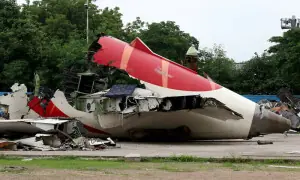
An Indian pilot group has submitted a letter to the aviation ministry suggesting that electrical failure, and not pilot action, could have caused the deadly Air India crash last year.
The submission by the Federation of Indian Pilots (FIP), which has more than 5,000 members, comes ahead of the expected final report into the crash of the Boeing 787-8 Dreamliner that killed 260 people shortly after takeoff on June 12, 2025.
As required by international law, India’s Aircraft Accident Investigation Bureau (AAIB) published a preliminary report on July 12, one month after the disaster, when the plane exploded into flames shortly after takeoff from Ahmedabad in western India.
That 15-page document said the fuel supply to the jet’s engines was cut off moments before impact, raising questions about possible pilot error.
It did not mention whether the turning off of the fuel switches could have been caused by pilot manoeuvre, or by any kind of malfunction.
The FIP letter, dated May 1 and seen by AFP, offers what it called a “technical note” that “suggests a credible cause” requiring further investigation.
“A prelift-off electrical disturbance could have caused unintended relay operation and dual engine fuel cut-off without pilot input”, it read.
“Media reports … continue to suggest pilot action,” it added.
“However, the International Civil Aviation Organisation … requires all credible technical causes be ruled out first.”
The final report is expected by next month, within a year of the crash.
“It is submitted that this may be treated as a testable hypothesis and examined through detailed electrical analysis… Technical causes cannot be ruled out till this analysis is made,” it argued.
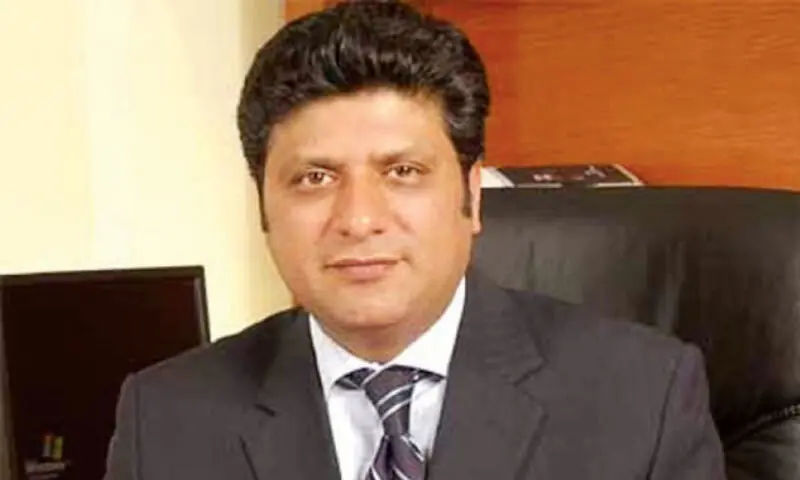
ISLAMABAD: Former Nadra chairman Tariq Malik has been named one of the world’s top 25 identity leaders by US-based company Okta.
The list, by Okta Ventures, the venture investment arm of Okta, is a “diverse compilation of forward-thinking developers, strategists, business leaders, and public servants”.
“The honorees are being recognised for their tireless efforts in software creation, standards evolution, and strategic implementation to keep digital transactions safe and seamless. Their work tackles some of the most pressing challenges in the digital age,” it said.
To mark the honour, Malik has been featured on the Nasdaq billboard in Times Square, New York City, alongside 24 other global leaders.
In his featured interview, Malik said: “Digital identity succeeds or fails not on technology, but on whether its governance can withstand political pressure.”
He argued that identity systems must be treated as core governance infrastructure, supported by institutional independence, legal safeguards, and accountability to sustain public trust.
He highlighted three global trends: passwordless authentication and verifiable credentials; machine-readable governance that embeds rules and consent directly into systems; and the convergence of identity, data, and artificial intelligence into a unified trust layer.
Drawing on his tenure at Nadra, Malik said adoption depends on “trust, utility, and governance”.
Successful systems, he noted, deliver value to citizens from day one, ensure inclusive enrolment, and embed visible safeguards.
“When identity systems improve transparency or disrupt entrenched interests, they inevitably face resistance,” he said. “Durability depends on anticipating this pushback and building institutional coalitions.”
Malik had resigned as Nadra chairman in 2013 after completing his three-year term. He currently serves as technical adviser to the World Bank’s Identification for Development (ID4D) programme and has advised large-scale digital identity and digital public infrastructure projects across Africa, South Asia, and the Middle East.
He previously also served as the chief technical adviser on digital ID and digital governance at the United Nations Development Programme (UNDP).
Malik has previously been named among the World’s 100 most influential people in digital government by Apolitical and the top 100 digital influencers by One World Identity (OWI).
He also received the ‘Outstanding Achievement Award’ at the 2009 ID World International Congress in Italy, and the Sitara-i-Imtiaz for advancing governance through digital innovation.
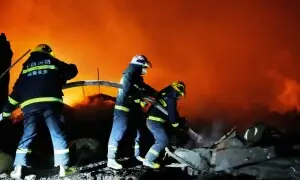
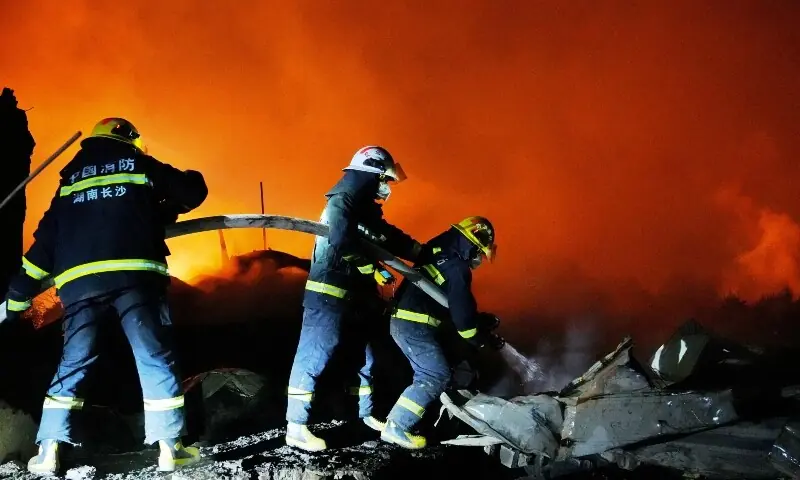
A blast at a fireworks factory in China’s Hunan province has killed 21 people and injured 61, prompting a call from President Xi Jinping for a thorough investigation, state media reported on Tuesday.
The explosion in Liuyang, under the administration of Hunan’s capital city of Changsha and a hub for fireworks manufacturing, occurred on Monday at around 4:40 pm (0840 GMT), according to reports by CCTV and Xinhua.
Social media footage showed massive plumes of smoke billowing up into clear blue skies against a backdrop of lush, green mountains.
Reuters verified the location shown in the footage, which was posted on social media on May 4, as Changsha.
A Xinhua video showed thick clouds of smoke rising from a large site littered with collapsed buildings and debris.
Five rescue teams of nearly 500 personnel, together with three rescue robots, were dispatched to the scene, adopting a “human machine coordinated approach” to conduct grid-style searches, according to Xinhua.
Two black powder storage warehouses within the factory compound posed high-risk hazards, the report said, adding that authorities had evacuated residents from danger zones, established a 1 km rescue area and a 3 km control zone.
The blast happened at Huasheng Fireworks Manufacturing and Display Company, state media said.
Reuters could not find a telephone listing for the company to seek comment.
The person in charge of the company has been detained and the cause of the accident was being investigated, state-run China Daily reported.
Xi called for a speedy investigation to determine the cause of the explosion and strict accountability for the incident, Xinhua reported.
Last year, China exported $1.14 billion worth of fireworks, more than two-thirds of global sales, data from the Observatory of Economic Complexity showed.
Xi also ordered authorities to strengthen risk screening and hazard control in key industries, enhance public safety and ensure the safety of people’s lives and property.
Xi often issues “important instructions” to local officials after major accidents and disasters with fatalities.
Last week, he urged a nationwide upgrade in China’s disaster response capacity.
Xi also issued instructions after a fire tore through several residential towers in Hong Kong’s Wang Fuk Court complex in November killing 168 people.
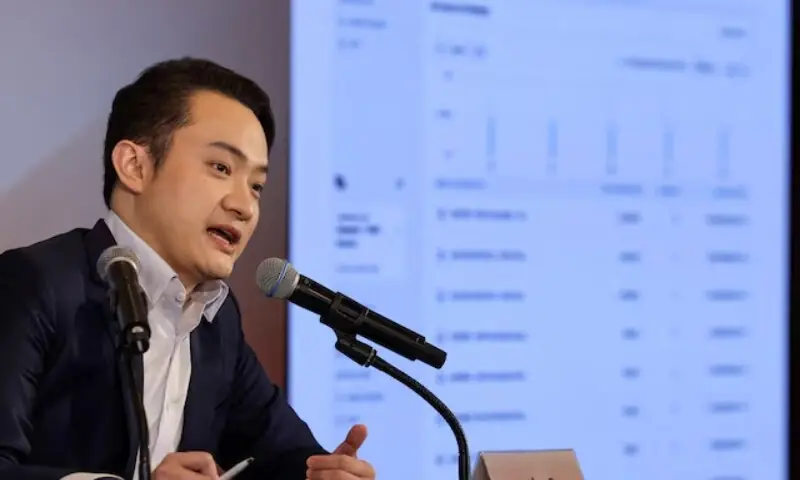
WASHINGTON: World Liberty Financial, the crypto venture co-founded by US President Donald Trump and his sons, said on Monday it had filed a defamation lawsuit against Hong Kong-based crypto entrepreneur Justin Sun, in the latest escalation of a dispute between the project and one of its most prominent backers.
World Liberty posted a copy of its lawsuit on X in which it accused Sun of launching a “public smear campaign” including claims that it said were false.
The crypto project – one of several lucrative crypto businesses co-founded or controlled by the Trump family — said that Sun had done things he wasn’t allowed to do with his tokens, including transferring them to crypto exchange Binance.
In April, Sun sued World Liberty Financial saying the company had illegally frozen the tokens he had bought. Sun said World Liberty secretly installed tools to prevent the sale of his tokens after they became tradeable in September 2025.
In its lawsuit, World Liberty said its ability to freeze tokens had been disclosed in the Terms of Sale.
Sun told Reuters: “The alleged defamation lawsuit that World Liberty announced on X today is nothing more than a meritless PR stunt. I stand by my actions and look forward to defeating the case in court.” He posted the same message on X.
The president’s son, Donald Trump Jr, reposted World Liberty’s thread, with the comment “Read this entire thread for the truth!!!!” Zach Witkoff, World Liberty’s chief executive and a co-founder, said on X, “I look forward to the truth coming out in court.”
CHARSADDA: Renowned cleric and former Jamiat Ulema-i-Islam-Fazl (JUI-F) MPA Maulana Muhammad Idrees was killed on Tuesday after unidentified assailants opened fire on him, police said.
Police Personal Relations Officer Safiullah told Dawn that Idrees left for Darul Uloom Noumania from his home in Tarangzai. He said that shortly before he arrived at his destination, armed assailants fired at the vehicle in the Tariqabad Utmanzai area.
He said that two officials were also injured in the incident, adding that police had obtained CCTV footage of the incident.
The cleric’s body was subsequently shifted to the District Headquarter Hospital.
The deceased’s father-in-law, Maulana Hassan Jan, who had defeated Awami National Party (ANP) leader Abdul Wali Khan in his native Charsadda constituency, was also gunned down by the banned Tehreek-i-Taliban Pakistan (TTP) for opposing armed struggle.
Idrees hailed from Charsadda’s Tarangzai area. He was also the JUI-F district ameer and was considered one of Maulana Fazlur Rehman’s trusted advisers.
Meanwhile, KP Inspector General Zulfiqar Hameed took notice of the incident. According to a post on X by KP police, the IG sought a report from the Mardan regional police officer. He also told the official to take the necessary steps to arrest those responsible for the incident.
IG Hameed also expressed his condolences to the bereaved family and expressed his resolve to arrest those responsible soon.
President Asif Ali Zardari expressed sorrow at the attack and offered condolences to the family of the deceased cleric, state broadcaster PTV reported.
“Such cowardly acts cannot demoralise the nation,” the president was quoted as saying. He stressed that the country’s resolve to eradicate terrorism remained “strong and unwavering”.
Prime Minister Shehbaz Sharif, in a statement, also expressed deep grief over the cleric’s killing and extended his condolences to the bereaved family, state-run APP reported.
Praying for the elevation of the deceased’s ranks and for patience for his family, the premier wished the injured policemen a speedy recovery.
KP Chief Minister Sohail Afridi took notice of the incident and strongly condemned it. According to an official statement, he also sought a report from the police.
“The martyrdom of Maulana Muhammad Idrees is regrettable. We stand with the family members in this hour of difficulty,” he said. He also directed to provide the best possible medical treatment to the police officials injured in the incident.
KP Governor Faisal Karim Kundi also expressed sorrow at the incident and sought a report from the authorities concerned. According to a statement issued by his office, he termed the Maulana’s death an “irreparable loss” for the country.
JUI-F Secretary General MNA Maulana Abdul Ghafoor Haideri also expressed grief over Maulana Idrees’s demise, terming it a “national tragedy”, a statement issued by the party said.
Haideri was quoted as saying that the void left by his death “will not be filled for a long time”.
The JUI-F secretary general said targeting clerics was a “conspiracy to spread unrest in the country”.
He acknowledged Maulana Idrees’s “valuable services for the religion and the country”, and demanded that the government should “immediately” arrest the cleric’s killers.
Haideri said ensuring clerics’ security was state’s responsibility and that such incidents were not to be tolerated. “If effective measures are not taken against terrorism, the situation will worsen,” he warned, stressing the need for “concrete steps” for peace in the country.
ANP’s Aimal Wali Khan also condemned the incident, stressing that it was “clear evidence” of the “deteriorating” law and order situation in the province.
“Target killing and terrorism incidents have become a norm in KP now,” Khan said, calling on the federal and provincial governments to put their differences aside and take steps towards restoring peace in KP.
Meanwhile, former senator Mushtaq Ahmed Khan said that he was deeply saddened by the news of the cleric’s killing.
“Can the provincial and federal governments, security agencies, and intelligence agencies tell us when terrorism will end in KP? No one is safe from terrorists,” he said.
Already reeling from the effects of conflict in the Middle East, Asia is now facing the prospect of strong El Nino conditions that could spike energy demand, sap hydropower, and damage crops.
El Nino is a naturally occurring climate phenomenon that brings worldwide changes in winds, air pressure, and rainfall patterns.
Last week, the United Nations’ weather and climate agency said El Nino conditions could develop as soon as May to July.
The World Meteorological Organization, meanwhile, said early signs indicated the event could be particularly strong, with some dubbing the impending event a “super El Nino”, although the term is not used by scientists.
That is not good news for Asia, parts of which are traditionally heavily affected by the heatwaves, drought and heavy rains that El Nino can bring.
The phenomenon essentially shifts traditional weather patterns around, for example moving rain that normally falls over Indonesia out to sea, leaving the country vulnerable to drought and wildfires.
El Nino occurs around every two to seven years and is forecast based on sea temperatures.
“The subsurface anomaly that we’re seeing so far is pretty strong,” said Peter van Rensch, a climate scientist at Australia’s Monash University.
“It does look a little bit like what we saw in the 1997/98 event, and that was probably the strongest El Nino,” he told AFP.
There are still plenty of uncertainties, and van Rensch cautioned it was possible an El Nino might not develop at all.
Catastrophic impacts
But the 1997 El Nino brought catastrophic impacts, including extreme drought and devastating wildfires in Indonesia that burned through millions of hectares and created regional air pollution.
Authorities there have already identified peatlands at risk, and warned the country could see its lowest rainfall in 30 years.
The warnings come with Asia buckling under the strain of an energy supply crunch and fears over shortages of fertiliser and other industrial and agricultural components which pass through the Strait of Hormuz.
Iran has effectively closed the strategic waterway since the United States and Israel launched attacks on the country on February 28, disrupting global fuel supplies.
Hotter weather will strain energy grids already experiencing fuel shortages, as populations seek to cool homes and workplaces, warned Haneea Isaad, energy finance specialist at the Institute for Energy Economics and Financial Analysis.
“For countries that are highly dependent on the Strait of Hormuz for oil and gas deliveries and other trade, strained supply will lead to further fuel rationing, demand-side management and a reduction in economic activities … impacting overall GDP growth,” she told AFP.
The droughts that El Nino can bring to parts of the region also pose a threat to countries that are highly dependent on hydropower, said Dinita Setyawati, senior energy analyst for Asia at the Ember thinktank.
“Most ASEAN countries use a lot of hydropower,” she warned, highlighting Mekong countries, Nepal, and parts of Malaysia as particularly vulnerable because of their dependence on the sector.
The risks were laid bare in 2022, when a heatwave in China saw hydropower generation in Sichuan fall over 50 percent, creating shortages that impacted households and industry alike.
Agriculture risks
Hotter, drier conditions will also create fresh risks for agriculture, already under pressure as the ongoing conflict raises the costs of fertiliser and fuel needed for farming equipment.
“If crop prices do not rise enough to offset these higher input and shipping costs, producer margins will be squeezed, raising the likelihood of lower fertiliser application and weaker yields,” warned BMI, a unit of the Fitch Solutions research company.
“This would intensify food price inflation and worsen food insecurity, especially in import-dependent and climate-vulnerable markets.”
For some parts of Asia, an El Nino can bring bouts of intense rain and provoke flooding, which could impact sectors like southern China’s late-season rice harvest, added Isaad.
How climate change affects the emergence and strength of El Ninos is still not well understood.
But research shows climate change itself will bring more frequent intense heatwaves, as well as sudden heavy rainfall that can cause flooding.
So experts said countries across the region should further insulate energy systems against more frequent disruptive weather events by diversifying and greening their grids.
“Solar and wind, coupled with batteries, provide a more resilient infrastructure than a centralised fossil infrastructure,” said Setyawati.
JOSEPH Stalin’s spirit has been showing up at diverse places in recent days, amused, perplexed and despondent. One could see him chortling at the toast King Charles raised to the Anglo-Saxon brotherhood at the White House. He looked saddened to see one of his more erudite followers and among the gentlest of ‘Stalinists’ you would meet saying adieu to admirers in Delhi.
Stalin’s spirit has looked despondent and shocked at his followers in Iran, the Mujahideen-i-Khalq, who are siding with Israel as Western stooges against the country’s battle with imperialism. And he didn’t look too pleased with the election verdict in crucial Indian states whose results were still coming in on Monday and where comrades sworn to Stalinism as their creed just helped Hindu fascism consolidate its hold over India.
Mamata Banerjee lost West Bengal to Narendra Modi on Monday. He was enabled in the task by the secular left led by the CPI-M. Mamata Banerjee offered the doughtiest challenge to Hindu fascism among all the opposition parties. Rahul Gandhi is also a leading challenger to Modi, but far too many of his Congress colleagues look poised to desert him at the first temptation from the ruling classes — Judas pretending to be Nehruvian activists. A woman candidate for the communist party, which together with the BJP sought Mamata’s arrest for any number of frustrated charges, was canvassing with a singular message in her Bengal constituency. The CPI-M’s view of Mamata was so shocking that I recorded the message on the phone to be sure I had heard it right. The woman was lying to her voters: “We believe that if Trinamool is defeated, the BJP is defeated automatically.” At the last count as I write, the BJP was leading in 192 out of the state’s 294 seats with Mamata’s Trinamool Congress trailing at 95. Mamata has questioned the count, but it would be a stretch to see the leads reversing.
A solitary CPI-M candidate was likely to get one seat, if at all, and the Congress, likewise, one. Rahul Gandhi also uncharacteristically laid into Mamata during the campaigning, describing her rule as terrorism. The comment may have put paid to the future of the perennially fractured INDIA bloc opposition. Everyone who has ruled West Bengal needed an iron hand, given the state’s history of militant agitations.
Stalin had little clue that Indian comrades would one day shore up Hindu nationalism, hitching their anti-Congressism with Hindutva forces.
The late Mubashir Hasan, who helped found Pakistan Peoples Party as a left-of- centre hub, visited West Bengal during CPI-M’s rule. As a perceptive former administrator in various Bhutto ministries, Hasan put his finger on the button. He told me he saw little that was Marxist about the communist party’s rule in Kolkata. “All you need is a strong cadre and the police with you, as is the case here. And you are invincible as long as you don’t make an error of judgement.” The CPI-M ruled Kolkata with an iron hand for a record 34 years until it hit an ideological sandbar and wooed corporates against the people’s will to rural regions of Singur and Nandigram. Left rule ended in 2011.
India’s communist party was born in 1925. In 1946, the party turned to armed struggle and waged guerrilla warfare against feudal satraps in the Nizam’s territory of Telangana abutting Hyderabad. Its best songs and poetry and creative juices flowed in this period. The idea was to launch a rural-based movement à la China. But in 1951, Stalin summoned its leaders and said their conditions were different from Mao’s. There was no USSR in the neighbourhood to provide a lifeline or sanctuary to guerrillas. Besides, the network of railways and a battle-hardened army would enable the colonial state to crush the movement with ease. Stalin advised his Indian comrades to suspend the Telangana movement and join the national democratic mainstream.
The party obeyed and won enough seats (16) in the first elections to become the main parliamentary opposition to Nehru in 1952. It went on to establish the world’s first elected communist government in Kerala in 1957. So far, so good. Stalin would be happy with this less-discussed preference for bourgeois democracy if the time so dictated. He had little clue, though, that Indian comrades would one day shore up Hindu nationalism, hitching their anti-Congressism with Hindutva forces. The slide started with coalition state governments in 1967. The left enabled the RSS to join the federal government in 1977 and immediately felt the pain when Romila Thapar’s and Bipan Chandra’s history textbooks were banned. The left again shored up V.P. Singh jointly with the BJP in 1989. And now a self-inflicted disaster in West Bengal.
Stalin’s spirit was smiling sardonically when King Charles and Donald Trump were engaged in one-upmanship of faux historiography last week. Trump claimed that without US troops, Europeans would be speaking Deutsch. Charles returned the compliment in a toast to the Anglo-Saxon brotherhood. Had Britain not defeated Napoleon, Trump’s ilk would be speaking French. The exchange by habit was noteworthy for willfully airbrushing a chunk of vital history.
An age-old custom has plied with a Western bias to belittle the critical role of Joseph Stalin in Hitler’s defeat and demise. But for the 27 million Soviet citizens who laid down their lives in fighting Nazism, Winston Churchill and Franklin D. Roosevelt would have perhaps not met Stalin at Yalta but would have been summoned instead by the Fuhrer to sign a surrender in Berlin.
Stalin’s spirit was saddened when Prof Vijay Singh passed away in Delhi last month. Stalin had a life-sized presence in Vijay’s revolutionary and intellectual life, a soft-spoken and widely respected authority on Soviet and Russian history. Stalin inspired Mao’s China, Castro’s Cuba, Ho’s Vietnam, Lumumba’s Congo. That was Vijay’s view, and there’s something about the argument that his demise was mourned across the world’s history faculties. He was remembered in Lahore by his comrades in the Pakistani Inqilabi Party and Pakistan Mazdoor Mahaaz.
I HAVE a confession to make. I was far from a kid when the Harry Potter books came out and I inhaled them after being introduced to them. I didn’t just read them but also noted the publication dates and was among those who would pick up the latest copy on the eve of its release. And then re-read them.
That was, however, quite a few years ago; I haven’t returned to the series in a while. But once a fan and all that… A sprinkling of the wizarding world vocabulary still pops up here and there in everyday conversation. And sometimes more.
The Potter series, for those who may not be familiar with the story, is about the boy wizard who defeats Voldemort, another older and more proficient wizard, over seven books.
The reason the two become protagonists dates back to Harry’s birth. He is still a baby when Voldemort attacks him but survives; Voldemort fears the baby is destined to cause his (Voldemort’s) death. This is where the story begins.
No one really believes that the conviction of Imaan Mazari-Hazir and Hadi Ali Chattha is fair.
Later, Harry wonders why Voldemort zeroes in on him. The explanation he is provided is that regardless of whether he was the one who could have killed Voldemort, once the latter attacked Harry, the baby, the elder wizard (popularly known as ‘he-who-must-not-be-named’) marked him as his equal and his foe. And thus destiny was made.
For some reason, it is this part of the story that has been in mind this week as I came across post after post on Imaan Mazari-Hazir and Hadi Ali Chattha’s incarceration. The married couple are human rights activists and lawyers who have been sentenced to 17 years in prison for tweets! That is it. Some tweets.
This past week marked 100 days of their imprisonment. And so far, these new and improved courts gifted to us by this PML-N-PPP government have not heard their appeal for bail. In the meantime, all those who used to count on Imaan and Hadi for legal assistance are perhaps left all alone, already abandoned by this state. And many did. From the victims of the blasphemy gang to the families whose relatives disappeared to journalists picked up, these two lawyers were the first choice.
Outside of those in power, no one really believes that the conviction is either fair or just. But in this day and age, few have the strength to say this. Most would prefer to simply ignore the issue or express some horror and change the topic. But then, none of that comes as a surprise.
Others still shrug their shoulders and point to other such travesties of justice or simply refer to the past. It is true, we live in terrible times where no one is spared. Consider Yasmin Rashid in Lahore, who is in her 70s and a cancer survivor; she has been behind bars for longer than Imran Khan. And her sin is basically her political views. There is also Ali Wazir, who has been imprisoned more or less since 2018; so much so that he wasn’t even allowed his right to attend parliament after having won an election. Neither the PTI speaker nor the PDM one was willing to ensure Wazir enjoyed his parliamentary rights.
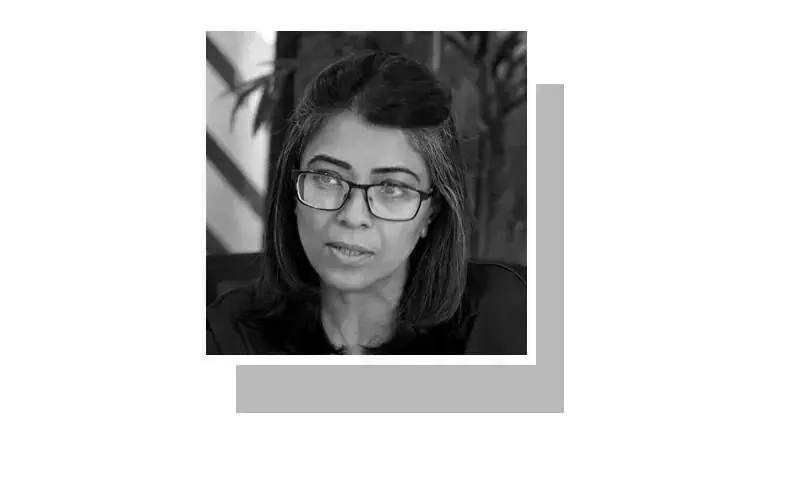
One could argue that Imaan and Hadi are younger and healthier than Yasmin Rashid and have been incarcerated for a shorter period than many political prisoners and ask why so much attention is being paid to them. But I digress, for by now, readers may be wondering what Imaan and Hadi’s link with Harry Potter is. I sometimes wonder if those who cannot be named have not marked Imaan as an equal by targeting her.
Don’t get me wrong. She is exceptional. I say this as someone who admires her greatly. For someone so young and still inexperienced in some ways, her sheer courage and empathy did make her stand out. She wasn’t afraid to even take on her mother, Shireen Mazari, when the latter was a federal cabinet minister. This is not easy in our society where children barely have the space to disagree in private, let alone publicly. Neither was she less courageous when it came to support for those facing state violence be it the Baloch or the Pakhtun. But most of all, her empathy for the vulnerable was inspiring. The last time I met her was when the Baloch protesters were in town. She and Hadi had taken the protesters’ children out for a meal and a drive. Most of the rest who showed up to express solidarity chatted with the women and perhaps helped them out with food and so on. But few turned up there nearly every day or even thought of entertaining the children who had no choice but to play on concrete as their mothers sat waiting. And this is what Imaan and Hadi did — regularly.
And this is why many of us thought that Imaan would eventually become one of the big names, the heroes this country has and will continue to produce. A role model for women and for human rights activists. After all, because of her youth, she had a long journey ahead of her.
But I was wrong. Little did I know that some unnamed people would decide to turn her into a heavyweight overnight. By throwing her into prison, they have simply acknowledged her as an equal, someone they fear. After all, isn’t this what is happening with the likes of Imran Khan or Mahrang Baloch. They are imprisoned because at some level their presence outside is deemed a threat. And now how can Pakistan or the world view Imaan and Hadi any differently when you’ve have been marked by the powerful?

 Login
Login