Reading view

Sharjeel Memon says BRT Red Line 'very tough' project, asserts no delay from Sindh govt

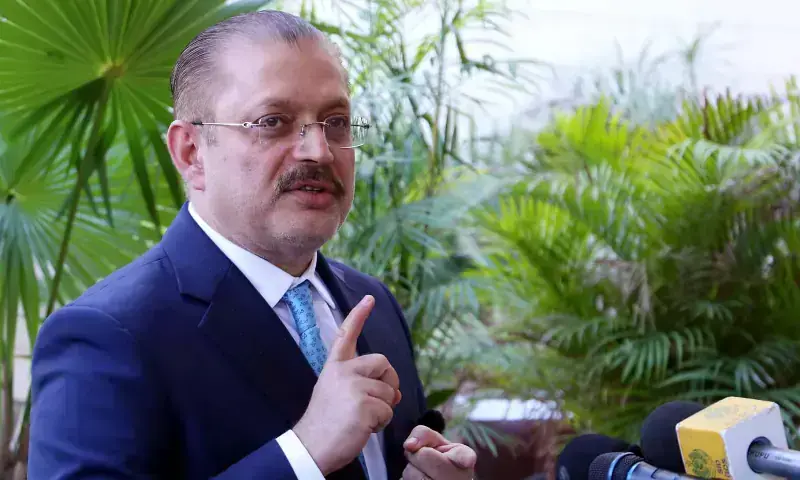
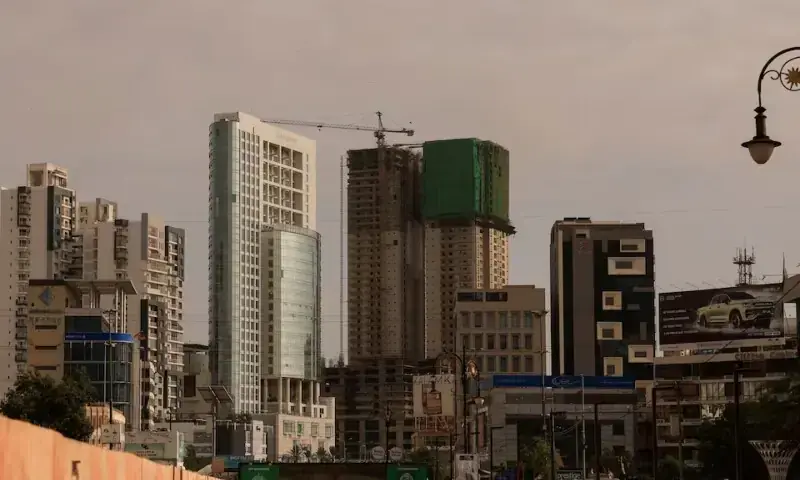
Sindh Senior Minister Sharjeel Inam Memon on Sunday acknowledged that the Bus Rapid Transit (BRT) Red Line had proven to be a “very tough” project for the provincial government, but asserted that there had been no delay on its end.

Speaking to reporters in Karachi, Memon said the Sindh government had to make some difficult decisions on the BRT Red Line after “all other options were exhausted”.

The senior minister asserted that there had been “no mistake, mal-intent or delay” from the Sindh government on the BRT Red Line.

He noted that work on the project’s Lot-1 was “underway with great speed”, while work on Lot-2 had been restarted.

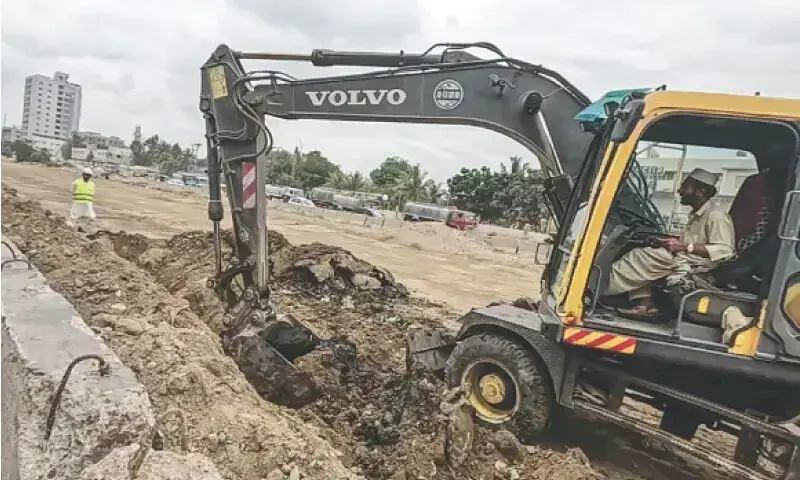
The Sindh government recently cancelled the construction contract for the BRT Red Line project. Subsequently, it chose the Frontier Works Organisation (FWO) to resume construction on a section of the BRT Red Line along University Road, where commuters have been facing inconvenience.

Designed to cover around 27 kilometres from Malir Halt to Numaish via University Road, work on BRT Red Line commenced in early 2022. While initially scheduled for completion by 2024, the project has faced persistent delays, with its finishing timeline most recently pushed to 2028.

A week ago, CM Murad, while “apologising” to the people of Karachi, announced that the deteriorated University Road will be reconstructed within 90 days.

In today’s media talk, Memon reiterated: “We will try that by the end of July, this road is opened for mixed traffic by working day and night, so that there is no nuisance for the public.”

“We realise the difficulty being faced by the public, but as they say, you have to swallow a bitter pill to achieve something big,” he remarked.

The minister recalled that the Sindh government approached the FWO for the reconstruction of University Road after “issuing warnings and clearing claims” of the contractors of the BRT Red Line project.

He noted that the government also took the Asian Development Bank (ADB) into confidence about the FWO’s involvement in the road reconstruction. While the BRT Red Line is an ADB-funded scheme, the reconstruction of the University Road will be undertaken as a separate project funded through the Sindh government’s own resources.

For the bus project itself, Memon said the government would follow up with the necessary legal actions, such as re-contracting or re-tendering.

The minister said it would have been “very easy” for the government to simply launch buses, such as the People’s Bus Service, but it decided to construct the BRT project for future generations, considering Karachi’s growing population.

Criticising certain political elements for “politicising” the BRT project, Memon said the government’s aim was to finish the project.

Meanwhile, Sindh Chief Minister Murad Ali Shah carried out an early morning inspection of BRT Red Line from Jail Chowrangi to Nipa, reviewing progress on mixed traffic lanes, drainage, asphalt work and traffic management.

“People’s hardship is unacceptable. Roads must be restored tonight, quality cannot be compromised and traffic flow must improve immediately,” he was quoted as saying by CM House, warning that he would continue surprise visits to monitor progress.

CM Murad directed all departments and contractors to accelerate work, restore roads on an emergency basis and ensure minimum inconvenience to citizens.

He also ordered the immediate commencement of the remaining work on the Red Line Mosamiyat Flyover so it could be opened for mixed traffic at the earliest.

The chief minister was accompanied by provincial ministers, Karachi Mayor Murtaza Wahab and project officials.

The Sindh CM also reviewed progress on Shahrah-i-Bhutto after inspecting the BRT Red Line project.

He was told that 38-kilometre Shahrah-i-Bhutto corridor, stretching from Jam Sadiq Interchange to M-9 Kathore Interchange, has reached 93 per cent completion.

The project is now targeted for completion by June 30, 2026, with efforts underway to open it to the public before Eidul Azha.

Murad termed Shahrah-i-Bhutto a “gift for people of Karachi”, asserting that it would play a key role in easing traffic congestion, shifting heavy traffic outside the city, and improving connectivity between M-9 and N-5 highways.

He also termed the project a “lifeline for Karachi’s economy”.
  •  

Sajid Sadpara summits world’s 5th highest mountain Makalu without supplemental oxygen

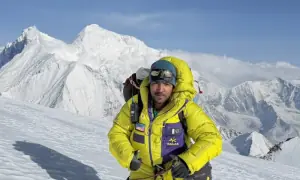
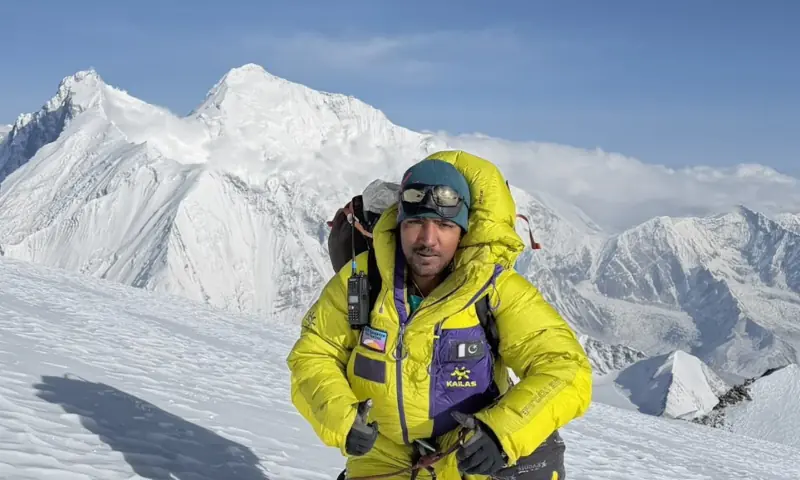
Renowned mountaineer Sajid Ali Sadpara summi­ted the world’s fifth-highest peak, Mount Makalu (8,485m) in Nepal, without supplementary oxygen, the exp­e­­dition’s organisers said on Sunday.

Sadpara is on a mission to summit all 14 “eight-thousanders” in the world without supplemental oxygen, and this marks his 10th summit of that mission.

According to a statement issued by Seven Summit Treks, the expedition team Sadpara was part of, an excellent summit push at 5am on May 2 successfully reached the summit of Makalu.

The statement added a team of three members, including Sadpara from Pakistan and Johannss Lau, with seven sherpas, stood on the summit, marking a remarkable achievement on the technically demanding peak.

“We wish them a safe and smooth descent back to base camp,” Seven Summit Treks added.

Sadpara had arrived in Nepal on April 4 for the mission and reached Makalu base camp on April 16. The expedition team completed their summit rotation at Makalu on April 25.

Sadpara is the proud son of the legendary Muhammad Ali Sadpara, who tragically lost his life during a winter ascent of K2 in 2021. Carrying his father’s legacy with honour, Sajid has emerged as a powerful symbol of Pakistani mountaineering strength and global excellence.

Alpine Club of Pakistan (ACP) President Irfan Arshad, renowned climbers, and civil society members congratulated Sadpara on his remarkable and successful summit of Makalu.

In a statement, Arshad extended heartfelt felicitations to Sadpara on achieving the feat, terming it a moment of great pride for the nation.

The statement noted that summiting one of the world’s most technically challenging peaks reflected Sadpara’s courage, determination, and exceptional mountaineering skills.

“This outstanding achievement is not only a personal milestone but also a proud moment for the entire Pakistani mountaineering community,” it added.

The ACP president lauded Sadpara’s perseverance and dedication, saying his accomplishment would inspire young climbers across the country and further strengthen Pakistan’s presence on the global mountaineering stage.

ACP Vice President Karrar Haidri also congratulated Sadpara, noting, “At just 29 years old, Sajid has displayed remarkable endurance, resilience, and dedication to high-altitude mountaineering.”

Speaking to Dawn before beginning his summit, Sadpara had said he would attempt to climb the peak without supplemental oxygen.

Sadpara has made a name for himself in the alpine community with his summits of the most daunting peaks at a young age.

He has already summited nine of the world’s peaks above 8,000m, including Everest, K2, Nanga Parbat, Broad Peak, Gasherbrum-I, Gasherbrum-II, and Dhaulagiri. He has also taken part in rescue operations at several peaks, including K2.

He has climbed K2 twice; once without supplemental oxygen. He also set records when he summited both Gasherbrum-I and Gasherbrum-II peaks in three days and 18 hours without supplementary oxygen.

In February 2021, his father Muhammad Ali Sadpara, Iceland’s John Snorri and Chile’s Juan Pablo Mohr went missing while attempting to summit the K2 during the winter season. Their bodies were found in July, nearly five months after they went missing.

  •  

Policeman gunned down near his home in KP's Lakki Marwat

LAKKI MARWAT: A police official was martyred in a gun attack in the Kaichi Kamar area of Khyber Pakhtunkhwa’s Lakki Marwat district on Sunday.

Lakki Marwat district police officer’s (DPO) spokesman Qudratullah Khan confirmed that terrorists targeted Constable Irfanullah near his house in the trans-river belt known as Kurrum Par area.

The incident occurred within the limits of Dadiwala police station. Qudratullah said that the policeman received critical bullet injuries and died on the way to the Tehsil Headquarters Hospital in the Serai Naurang town.

The police official said that the martyred cop was posted in Peshawar and had come to his native village on leave.

“After the attack, a large police contingent reached the area and launched a search for the assailants,” he added.

Today’s incident comes just a day after unknown terrorists attacked the house of a police official with explosives in the district’s Shadikhel area, causing significant damage.

Also in the Shadikhel area, a policeman embraced martyrdom in a fierce gunfight with terrorists on Thursday following an attack on a police post.

Over the last few months, several areas of KP, including Bannu, Peshawar, Karak, Lakki Marwat and Bajaur, have witnessed a series of terrorist attacks on police personnel.

On April 7, at least five policemen, including an officer, were injured in an explosion in the Shahbazkhel town in Lakki Marwat.

On April 20, two terrorists were killed while a police constable was martyred in a gun battle in Lakki Marwat when police conducted a targeted operation.

  •  

Heat by design: Can cities be cooled without air conditioning?

Cities heat up faster than surrounding areas because of how they’re built.

Urban areas can be up to 5.6 degrees Celsius warmer than nearby regions because of roads, concrete surfaces and dense construction that absorb heat during the day and release it slowly at night, preventing cities from cooling down. This is known as the urban heat island effect.

This means that when heatwaves hit, cities are already at an elevated baseline temperature and more prone to overheating.

In most places, conventional planning prioritises plot sizes, road widths, and construction speed without mapping heat pockets or protecting natural cooling systems. However, climate sensitive urban planning incorporates nature as a fundamental element of urban living.

How can climate smart urban design be integrated into our cities practically, and how does it differ from conventional urban planning?

DawnNews discusses all this and much more with urban planner Sana R Gondal.


As Pakistan confronts the accelerating realities of climate change, the urgency to move from awareness to action has never been greater.

Despite contributing minimally to global emissions, Pakistan remains among the most climate-vulnerable nations, underscoring the critical need for coordinated, locally grounded, and globally informed responses.

The Breathe Pakistan International Climate Change Conference 2026 on May 6 and 7 brings together policymakers, experts, and stakeholders from across sectors to examine these intersecting challenges and chart a path forward.

See the agenda here.

  •  

US Secretary of State Rubio to visit Vatican, Rome after Trump's row with Pope

US Secretary of State Marco Rubio will visit Rome and the Vatican this week, an Italian government source said on Sunday, just weeks after a clash between Donald Trump and Pope Leo.

Rubio, who is a Catholic, is expected to meet Vatican Secretary of State Pietro Parolin and Italian Foreign Minister Antonio Tajani, the source told AFP.

Italian media reported that he would also meet Defence Minister Guido Crosetto during the Thursday-Friday visit.

The meetings come several weeks after US President Trump’s extraordinary criticism of Pope Leo XIV over the Catholic leader’s anti-war rhetoric.

Trump also dismissed Italian Prime Minister Giorgia Meloni — one of his closest European allies — as lacking courage after she defended the US pontiff.

Italian media on Sunday presented Rubio’s visit as a meeting to “thaw” relations.

Since taking over as leader of the world’s 1.4 billion Catholics on May 8, 2025, following the death of Pope Francis, Leo has criticised the Trump administration’s crackdown on immigration.

But it was his increasing anti-war rhetoric, particularly following the US-Israeli attack on Iran, that triggered Trump’s ire.

Leo, on April 7, declared Trump’s threat to destroy Iran “unacceptable” and urged Americans to demand that US lawmakers “work for peace”.

The US president subsequently slammed the pontiff in a social media post as “WEAK on Crime, and terrible for Foreign Policy”.

Trump also said he was “not a big fan of Pope Leo” and that he does not “want a pope who thinks it’s OK for Iran to have a nuclear weapon”.

Meloni condemned as “unacceptable” Trump’s criticism — prompting the president to turn his fire on her.

“I’m shocked at her. I thought she had courage, but I was wrong,” the US president said in an interview with Italian daily Corriere della Sera.

He also accused Meloni — a far-right leader who has sought to act as a bridge between diverging US and European views — of failing to help the United States with Nato.

Trump has threatened to pull US troops from Italy, saying Rome “has not been of any help to us” in the Iran war. He has made a similar threat towards Spain, while the Pentagon has announced it is withdrawing 5,000 US troops from Germany.

  •  

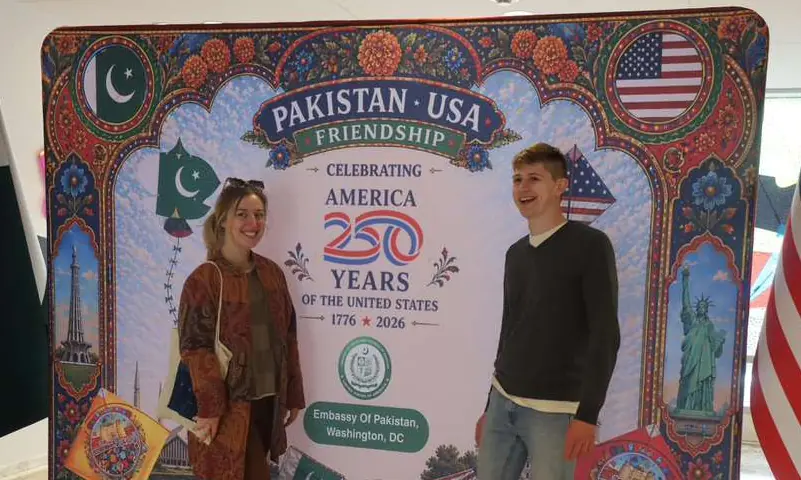
A world of cultures comes alive at embassy fair in Washington

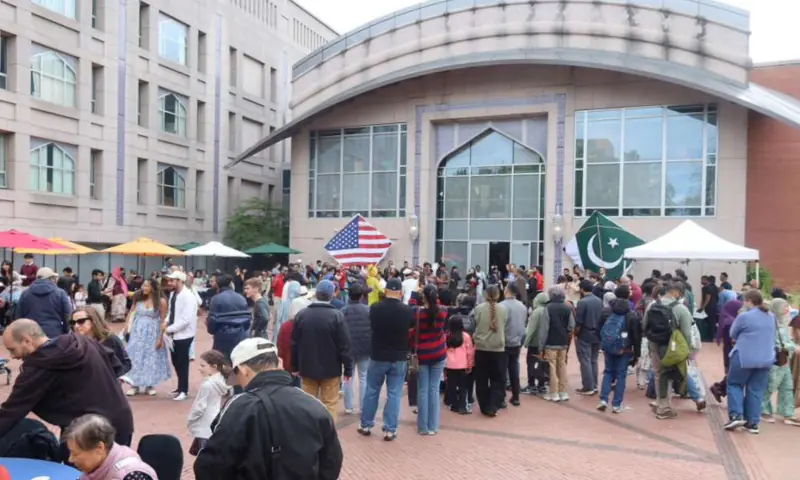
The sound of drums from the Pakistan Embassy could be heard distinctly as soon as visitors turned into International Drive, where the usually quiet diplomatic corridor had been transformed into a global fairground for the annual Passport DC “Around the World Embassy Tour”.

From early morning, crowds moved steadily along the tree-lined street, following a trail of music, aromas and colour that flowed from one embassy to the next. The dhol at the Pakistan Embassy set the tone — deep, insistent, and celebratory — cutting through the spring air and pulling visitors toward gates already filling with activity.

Inside the Embassy of Pakistan in Washington DC, the sensory experience was immediate. The aroma of kebabs and samosas drifted far beyond the entrance, while food trays disappeared almost as quickly as they were placed on counters.

Visitors lingered under displays of truck art, embroidered textiles, gemstones and handicrafts, while mehndi artists worked patiently on outstretched hands and calligraphers wrote names in flowing Urdu script for curious guests who watched each stroke form a language unfamiliar yet visually captivating.

A steady stream of rickshaw rides added a playful rhythm to the embassy grounds, with visitors laughing, posing for photographs, and treating the brightly decorated vehicles as moving pieces of South Asian street culture temporarily transplanted into Washington.

In the background, tabla, flute and harmonium blended into a continuous cultural score that followed visitors from hall to courtyard.

Elsewhere in Washington’s diplomatic enclave, the world unfolded in equally vivid chapters.

At the Ethiopian Embassy, the slow, ceremonial preparation of coffee drew quiet circles of observers. Beans were roasted, ground and brewed in a ritual that held visitors in place, as the rich aroma became one of the most distinctive scents of the day.

Across another courtyard, several South American embassies turned into a burst of music and dance, where salsa rhythms and live bands pulled crowds into spontaneous movement, blending performance and street celebration.

The Bangladesh Embassy offered a different but equally compelling atmosphere. Cultural performances brought the space alive with traditional music and dance, while stalls showcased handwoven textiles, jamdani fabrics, crafts and traditional Bangladeshi products.

Visitors moved between displays of heritage crafts and tables offering familiar dishes — rice-based delicacies, sweets and snacks — introducing many to flavours less known but warmly received. The mix of cultural pride and hospitality drew steady interest throughout the day.

Further along the route, the Mexican Embassy was alive with mariachi music, folkloric dance and bright costumes that swirled through courtyards in bursts of colour. The Brazilian Embassy pulsed with samba and carnival energy, while the Nigerian Embassy showcased bold fashion, Afrobeats and contemporary cultural expression.

At the UAE and Brunei embassies, a quieter elegance defined the space, with fragrances, dates, chocolates and carefully arranged displays reflecting tradition through restraint.

Together, these embassies formed a living map of global cultures, each offering a distinct rhythm yet sharing the same spirit of openness. Diplomacy, often confined to formal rooms and official language, took on a more human expression—spoken through food, music, craft and conversation.

For visitors —Washington residents, Pakistani-Americans, students and tourists from across the United States — the experience was less about observation and more about immersion.

Children tried unfamiliar foods, families paused to listen to unfamiliar music, and strangers asked questions that crossed borders without hesitation.

As afternoon light softened over the capital, the crowds thinned only slightly, with many still moving from embassy to embassy, carrying with them bags of crafts, lingering flavours, painted hands and phone galleries filled with sound and colour.

By the time the gates began to close, the diplomatic enclave returned to its usual quiet.

But for a few hours, it had been something else entirely: a place where Pakistan’s drums, Ethiopia’s coffee ritual, Cuba’s music, Bangladesh’s textiles and dozens of other cultural expressions coexisted in a single, continuous celebration of the world within Washington.

  •  

INTERVIEW: Qualifying for LA2028 Olympics Pakistan’s main focus, says Manzoor Sr

KARACHI: The year 2026 is crucial for Pakistan hockey that has endured many crises on and off the field for ages.

After a gap of eight years, the national team finally made it to this year’s World Cup, by reaching the final of a qualifying event in Ismailia, Egypt during March. Following the World Cup, Pakistan are set to lock horns with their continental rivals in the Asian Games scheduled to be staged in Aichi-Nagoya, Japan during Sept­ember-October.

Pakistan, the former four-time World Cup winners, lost the decider in Ismailia 4-1 to England, the same team whom the Green-shirts will be facing in the pool stage of the World Cup being co-hosted by Belgium and the Netherlands from Aug 15 to 30.

So, the challenge for Pakistan looks massive particularly when one glances at the prevailing state of affairs in the national game.

Head coach stays upbeat ahead of this year’s World Cup

However, Manzoor-ul-Hassan Senior, the recently-appointed head coach of the national senior team, remains optimistic about Pakistan’s show in the forthcoming World Cup.

“In my opinion, the current Pakistan team contains six, seven players who can be ranked among the world’s top players. They have the capability to perform [well] in any [top-level] international event,” Manzoor, who replaced Khawaja Junaid after the Ismailia event, said in an exclusive interview with Dawn.

“Nothing is impossible in sports, as it depends on how a team performs on a given day,” the member of Pakistan’s bronze-medal winning squad at the 1976 Olympics added.

“As regards the World Cup, the players’ hard work will be crucial. I, as the head coach, will try my best to facilitate them in every way so that they can focus fully on the game and perform to the best of their abilities.”

Interestingly, the head coach responding to a query asserted that Pakistan’s main focus, above everything, was on qualifying for the 2028 Los Angeles Olympics.

“Definitely my and the team’s aim is to give our best in the World Cup. However, our main target is to play the [2026] Asian Games final in order to qualify for the Olympic Games,” he said.

“Time has come for Pakistan to start producing legendary Olympians again; in this regard we have an extremely rich legacy which should be revived.”

On what steps the Pakistan Hockey Federation (PHF) was planning to take for building mental strength of the players, Manzoor said that it depended on a player’s calibre.

“If a player is talented, and succeeds in keeping his performance above average for the first couple of years in any global-level contest, he sooner or later embarks on a journey in international competition,” the coach stated.

“We, on our part, will try to engage and groom players of national senior and junior teams, or other players who have been part of national training camps during the past five years or so in order to develop a solid pool of campaigners to secure the future of Pakistan hockey.”

Answering a question on Pakistan’s strategy for the World Cup, the 74-year-old coach elaborated a plan.

“We held trials in Karachi, Lahore and Peshawar [for national senior and junior tea­ms] last month, in which some 200 players appeared. On the basis of these trials, we will now select a certain number of players who will participate in a national camp during the first week of May,” the head coach added.

“In this camp, we will be concentrating on polishing the best available talent in Pakistan to prepare them for the World Cup.”

PRO LEAGUE BENEFICIAL

Manzoor insisted that Pakistan’s participation in the FIH Pro League during the month of June would benefit them ahead of the 16-team global event.

“Unfortunately, Pakistan have not won a major international title since clinching the World Cup way back in 1994. Moreover, we did not play [enough] international games abroad after that, and kept on competing mostly in second-tier events,” he said.

“We did not participate in the Pro League [that started in 2019] either. Now we are going to compete in the final leg of this year’s Pro League [before the World Cup] in Belgium and England where our team will play eight matches, two each against Spain, Belgium, England and India.

“Whereas other top-level teams have played 70 odd matches which gives them much more exposure to world-class competition.

“Still these eight [Pro Lea­g­ue] outings will benefit us in our preparations for the World Cup.

“No doubt, the World Cup is very tough but there is no need to be disappointed. Playing in the Pro League before the World Cup will be a golden opportunity for us,” he maintained.

Here it is pertinent to mention that Pakistan lost all their matches of the first two legs — held in Argentina and Australia — of the ongoing Pro League season.

DEEP DEFENCE A CONCERN

Giving his view on Pakistan’s weak area, the head coach pointed out that the team’s defence needed improvement.

“Looking at Pakistan’s previous matches of the 2025-26 Pro League, I reckon deep defence is our team’s weak area. If we scored [even] three goals in a match, we conceded four,” Manzoor underlined.

“This will be addressed by the coaches in the training camp being held [in Lahore] for the World Cup.”

When highlighted that Pakistan qualified for the World Cup by beating relatively easier opponents, like China, Japan, Malaysia and Austria in Ismailia, but suffered a big loss at the hands of England in the final, the head coach sounded technical.

“Undoubtedly, the 4-1 loss was a bad result but of those four goals, two were made due to [inadvertent] deflections of our players. [Still] mistakes like these in a high-profile game prove costly, as happened in the Ismailia [final],” said Manzoor while disagreeing that China, Japan and Malaysia were weaker opponents.

“Our players have the potential [to compete]. However, utilising that potential at the right time is the key.”

Pakistan, the head coach emphasised, were competing against world’s prominent teams like Australia, Germany, Belgium, Spain, England and India in the 2025-26 Pro League, which he termed “a very good step” by the PHF for the better future of the country.

Published in Dawn, May 3rd, 2026

  •  

President, PM renew resolve to protect journalistic freedom, stress credible reporting

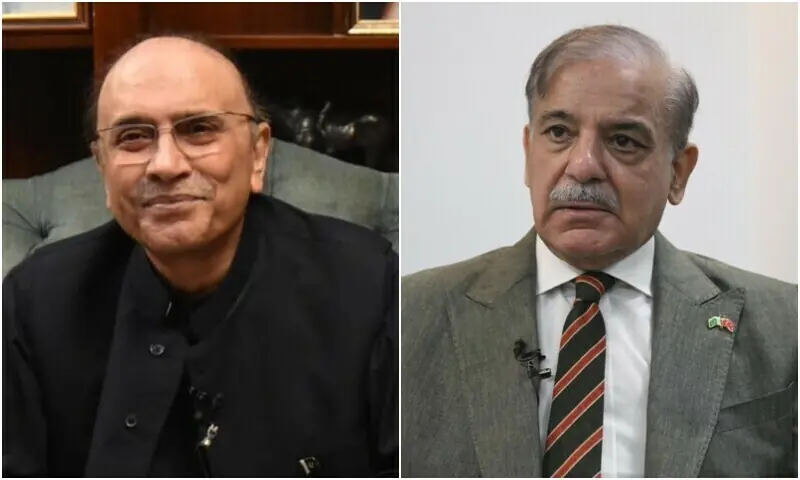
President Asif Ali Zardari and Prime Minister Shehbaz Sharif on Sunday expressed the government’s resolve to protect press freedom and stressed the importance of credible journalism.

They issued separate messages on the occasion of World Press Freedom Day, reaffirming that Pakistan, as a state, remained firmly committed to safeguarding and promoting freedom of the press.

In his message, President Zardari said this year’s theme, “Shaping a Future at Peace”, underscored that peace cannot be secured without truth.

Noting that Article 19 of the Constitution guaranteed the right to press freedom subject to any reasonable restrictions imposed by law, the president said, “A free, independent and diverse media is not a threat to a confident nation, rather a proof of one.”

“At the same time, freedom brings responsibility. Accuracy must not be sacrificed for speed and balance must not give way to partisanship. Public trust, the most valuable asset of free press, must be earned, protected and never taken for granted,” he remarked.

President Zardari added, “We face a moment of particular urgency. Deliberate campaigns of falsehood targeting Pakistan seek to sow division and weaken our national cohesion.”

He hailed the Pakistani media for “standing firm like a wall against the wave of disinformation” during the conflict with India last year.

“It responded not with force, but with facts. Not with noise, but with clarity. A nation that aspires to be a trusted voice in the world needs a credible information environment at home.”

The president called on the federal and provincial governments to ensure enabling laws and a safe environment for journalists.

“I also urge media institutions to uphold rigorous ethical standards and call upon the citizens to reject falsehood and support credible journalism,” he added.

In his statement, the president also pointed out the risks posed by disinformation, misinformation and artificial intelligence. “Across the world, journalists continue to face harassment, legal intimidation, economic pressure and in far too many cases, physical danger.”

He continued: “Sadly, powerful global media, especially social media with the help of artificial intelligence, deep fake, today is promoting jingoistic, xenophobic, racist, populist, fascist and might-is-right agendas.”

He observed that tech giants that own social media platforms viewed nation states “with disdain and try to manufacture consent, many a times against the working people and oppressed nations using their algorithmic interventions”.

“Today, the free press is threatened more by the non-state actors, and that includes tech giants and big business,” President Zardari highlighted.

Meanwhile, in his statement, PM Shehbaz noted that “timely dissemination of accurate, impartial, and unbiased information remains the cornerstone of credible journalism”.

“It is the responsibility of every journalist to uphold professional ethics by countering propaganda, fake news, and by effectively discouraging the spread of unverified information. Journalists are not only the custodians of professional standards but are also the guardians of societal values,” he stressed.

The prime minister said the spread of “fake news and coordinated disinformation campaigns poses a real threat to national cohesion and global credibility”.

“Ensuring both speed and credibility in news dissemination is imperative. I urge all journalists to uphold the highest standards of verification, integrity, and professionalism, so that in this fast-paced digital era, competition never comes at the cost of truth,” he said.

The premier also lauded the national media for showing “commendable responsibility during critical conflict moments”, including the May 2025 conflict with India a year ago.

He recalled that the media “contributed to a coordinated national response, reinforced unity, and presented Pakistan’s position with clarity and accuracy”, while also countering misinformation.

Referring to this year’s theme of “Shaping a Peaceful Future”, PM Shehbaz highlighted that the “availability of credible information, responsible journalism, and informed public discourse play a decisive role in shaping sustainable peace globally”.

“The media holds immense potential to promote constructive engagement and strengthen diplomatic, economic, and social ties among nations. Often, accurate representation of perspectives can help resolve complex issues,” the prime minister remarked.

He further noted, “The media landscape is rapidly evolving with technological advancements. Digital platforms now play a pivotal role in shaping both national and global public opinion.

“In this changing environment, the media has an important responsibility to effectively project Pakistan’s national identity and perspective on the global stage. Media institutions must adapt to digital transformation with both speed and a strong sense of responsibility.”

A recent report, released by the Pakistan Press Foundation (PPF), noted that Pakistan’s media is caught in a bind — squeezed simultaneously by legal pressure, physical violence, digital harassment and financial coercion.

It documented at least 233 incidents of journalists being targeted between January 2025 and April 2026, including 67 assaults, 67 criminal complaints, 11 arrests, 11 detentions and three abductions.

  •  

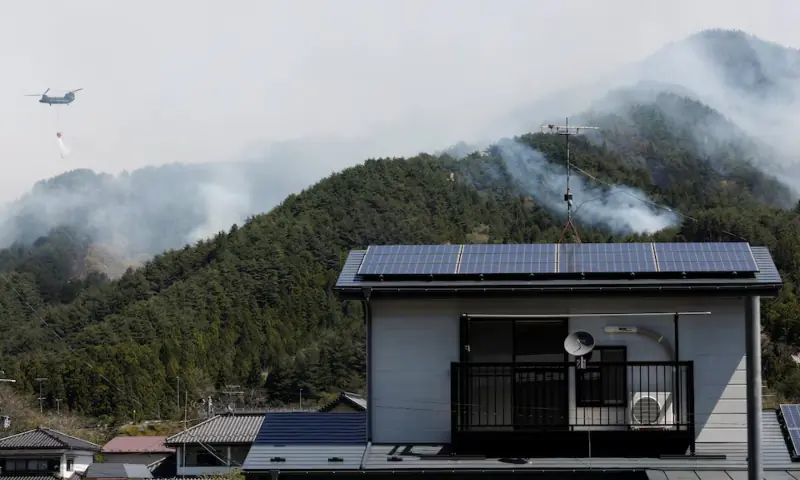
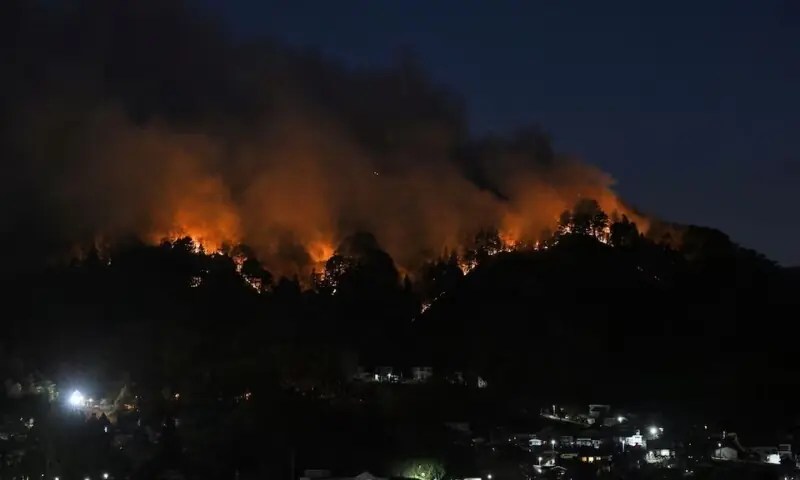
Japan contains one of its biggest wildfires in decades after 11-day battle

Wildfires that scorched forests in northern Japan, reportedly the second biggest in over 30 years, have been brought under control after 11 days, officials have said.

Hundreds of firefighters and more than 1,000 military personnel had battled the blazes since late April, as they burned around 1,600 hectares (4,000 acres) across the mountainous Iwate region.

The affected area is almost five times the size of New York City’s Central Park.

At least eight buildings were damaged, and two people suffered minor injuries, according to the Fire and Disaster Management Agency. Thousands of people were evacuated as fires picked up.

Otsuchi town mayor Kozo Hirano told reporters on Saturday that he had been “informed that… the fire had been brought under control” after visiting the area with fire officials.

He credited aerial and ground firefighting operations, as well as heavy rainfall, for containing the flames.

But Hirano said authorities would remain vigilant as there was a possibility that smouldering embers would remain.

Kyodo News described the blaze as Japan’s second-largest wildfire in over 30 years.

Increasingly dry winters have raised the risk of wildfires. Last year, Iwate suffered a separate wildfire that burned 2,600 hectares, the largest in Japan since 1975, when 2,700 hectares were scorched by fire in Kushiro, on the northern island of Hokkaido.

Scientists have long warned that climate change caused by mankind’s burning of fossil fuels will make periods of drought more intense and longer-lasting, creating the ideal conditions for wildfires.

  •  

Ancient Dharmarajika Stupa in Taxila echoes with Dhamma sermon after 1,500 years

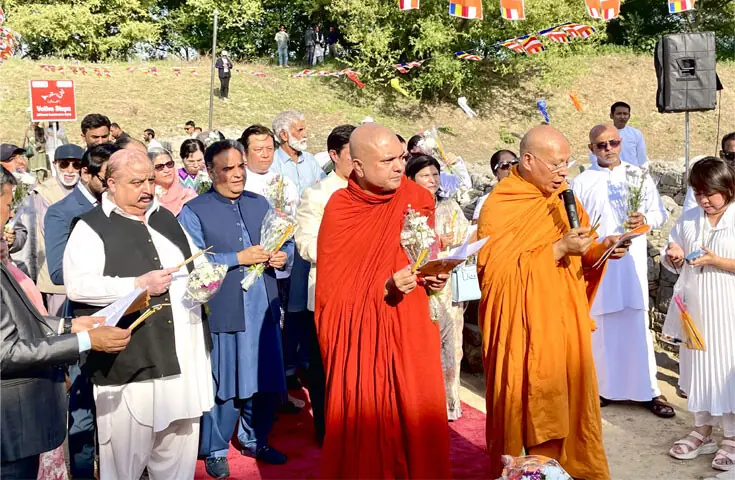
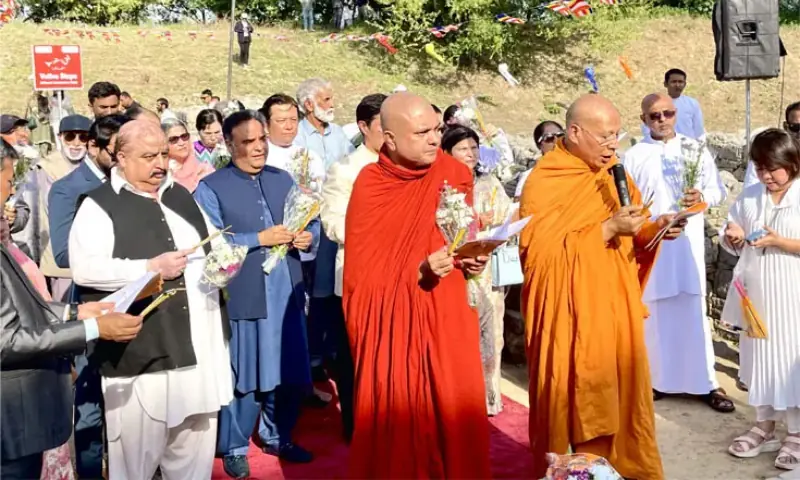
 Monks perform rituals in connection with Vesak Day at Dharmarajika Stupa near Taxila. — Dawn
Monks perform rituals in connection with Vesak Day at Dharmarajika Stupa near Taxila. — Dawn


TAXILA: After nearly 15 centuries of silence, the ancient Dharmarajika Stupa came alive on Friday as chants of Buddhist monks echoed once again across the historic site, marking the first such occasion since its destruction in the 5th century CE by the White Huns.

For centuries, the site had remained largely quiet, disturbed only by the soft tread of visitors and the rustle of leaves in the breeze. On Friday afternoon, however, the centuries-old calm gave way to a spiritually charged atmosphere as monks performed religious rituals and delivered a Dhamma sermon at one of the most significant Buddhist heritage sites associated with Emperor Ashoka.

The peace prayer ceremony was organised by the Punjab Archaeology Department in collaboration with Buddhist delegations from five Southeast Asian countries, including Sri Lanka, Thailand, Nepal, Vietnam and Myanmar.

The ritual began in the afternoon with venerable monks from Sri Lanka presenting traditional offerings of incense, light, water, flowers, fruit and rice, followed by the delivery of the Dhamma sermon.

Each offering carried symbolic meaning. Incense represented purity and moral essence, light signified wisdom, water reflected clarity and purification, flowers symbolised the transient nature of life, fruits represented enlightenment, while rice and other food items embodied sustenance for both body and mind.

The ceremony concluded with circumambulation around the main stupa.

The event coincided with Vesak Day, the most sacred Buddhist festival, which marks the birth, enlightenment and passing of Gautama Buddha. Observed by Buddhists around the world, the day, also known as Buddha Purnima, commemorates the birth of Buddha in 623 BC, his attainment of enlightenment, and his passing at the age of 80, all believed to have occurred on the same day. According to Buddhist tradition, the year 2026 marks the 2,570th anniversary of Buddha’s enlightenment.

The United Nations declared Vesak as International Vesak Day in 2000.

Most Venerable Thebo, a distinguished monk from Sri Lanka, along with the renowned Most Venerable Anil Sakiya and other monks, led prayers and delivered sermons while circling the stupa. They called for the revival of the message of peace associated with Emperor Ashoka, who is believed to have promoted Buddhist teachings from this very site over 1,500 years ago.

In his sermon, Most Venerable Anil Sakiya described the stupa as a symbol of peace and said the ceremony was a reminder of the urgent need for harmony in today’s world.

He noted that Taxila was a major centre of learning in the ancient Gandhara civilisation and played a key role in the spread of Buddhism across the region and beyond.

Speaking to the media, Thailand’s Ambassador to Pakistan, Rongvudhi Virabutr, said five Southeast Asian countries had joined hands to celebrate Vesak Day at Taxila. He expressed optimism about increased religious tourism from Thailand but noted the need for improvements in infrastructure and services.

Sri Lanka’s High Commissioner, retired Admiral Ravindra Chandrasiri Wijegunaratne, said such events would further strengthen the longstanding cultural ties between the two countries and help promote a global message of peace.

Ambassador of Nepal to Pakistan, Ms Rita Dhital, termed the event a success, noting that joint participation by multiple countries highlighted the shared values of peace and interfaith harmony. She said such initiatives would enhance mutual understanding and promote religious tourism.

Syed Zaheer Shah Zaildar, an office-bearer of the Pak-Romania Friendship Association, described the event as a potential “game changer” for Taxila, saying it could boost religious tourism and support infrastructure development under a Rs3.97 billion heritage project.

Later, addressing a seminar titled “A Confluence of Faith, Culture, and Shared Heritage” at the Taxila Museum, Federal Minister for National Heritage and Culture Aurangzeb Khan Khichi reaffirmed Pakistan’s commitment to preserving its Buddhist heritage.

He said the country held immense potential for religious tourism due to its rich cultural legacy.

Published in Dawn, May 3rd, 2026

  •  

SMOKERS’ CORNER: LOSING THE PLOT

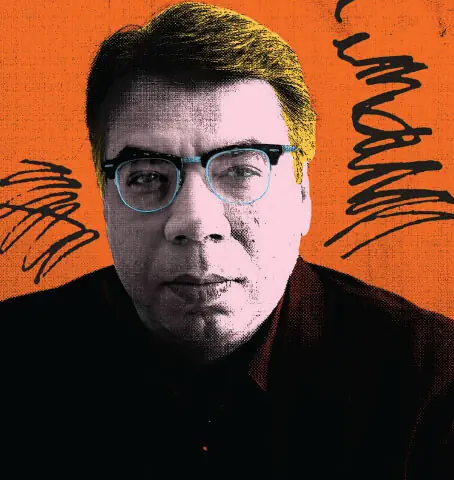
 Illustration by Abro
Illustration by Abro

The West’s ’legacy media’ and cultural products might be suffering from what is often called ‘institutional inertia.’ Recently, they have been using old conceptual understandings of a world that is fast being changed by new realities. According to the American sociologist William F. Ogburn, this condition occurs when “mental models” fail to adjust to rapid shifts in the material and geopolitical reality.

In the context of the 21st century, this inertia is particularly visible in Western media’s refusal to acknowledge the erosion of long-standing hegemonic narratives, especially those concerning American power, the state of Israel, the emergence of assertive ‘middle powers’, and the reshaping of nations such as Pakistan.

The response of Western media and cultural products to the sudden waning of the traditional Israeli victimhood narrative provides a primary example of institutional inertia. For decades, Western media and Hollywood operated within a framework and paradigm that instinctively cast Israel as a vulnerable democratic outpost in the Middle East, surrounded by hostile players that are hell-bent on wiping out Israel.

According to the Palestinian-Turkish academic Ahmet Alioglu, this narrative was reinforced by an “institutional editorial logic” that humanised Israeli suffering while rendering Palestinian people as either invisible or viewed only through the lens of terrorism.

As global power shifts and narratives evolve, Western legacy media remains trapped in outdated frameworks. Its inability to recalibrate reveals deeper institutional inertia that risks rendering it irrelevant

But things in this regard are shifting. Data from the 2024 Harvard CAPS-Harris Polls has shown a stark age-gap in the perception of Israel. The data confirms that Americans aged 18–24 are the first generation to view the Israel-Palestinian conflict primarily through the lens of “oppressor vs oppressed” rather than “vulnerable democracy vs existential threat.”

Yet, the institutional inertia within Western media lies in the refusal to recognise that for the generation under 30, Israel’s victimhood narrative has been replaced. To most young Americans, seeing an advanced and aggressive military power being framed as a vulnerable victim creates severe cognitive dissonance.

Filmmaker Raoul Peck’s recent and much-hyped documentary Orwell: 2+2=5 deconstructs the Orwellian newspeak and doublespeak of Vladimir Putin’s Russia vis-a-vis Ukraine, but casually fails to apply the same Orwellian scrutiny to the Israeli militarist regime. By selective application of the totalitarian label, the film follows a traditional hierarchy of villains, demonstrating that even recent critiques are often drawn from a map of the world established in the 20th century.

Hitler, Stalin, Mao, Khomeini, Saddam, Qaddafi, et al: these are the usual culprits. In Peck’s film, Donald Trump too makes multiple appearances. But there is no mention of Benjamin Netanyahu, a virtual dictator who is sought by the International Court of Justice for committing war crimes.

In a review of the documentary on Counterfire, author and activist Elaine Graham-Leigh wrote, “Gaza and Lebanon are mentioned, but there is comparatively little about Israel, which, considering the centrality of questions like how states lie to promote their interests, seems like a pointed omission.”

Indeed, it can be a “pointed omission”, one which is driven by the institutional inertia that a lot of Western journalists and cultural products are struggling to break out of. But many may even be unwilling to let go of the narratives that were so carefully crafted and curated for them years ago. The fear of being labelled as ‘anti-Semitic’ is always there as well.

It is becoming quite apparent that Western media often overlooks how much things are changing. And I’m not talking about tech stuff. I’m referring to how Western media continues to view rising nations such as Türkiye, Brazil, Pakistan, Indonesia etc as minor players who simply follow orders from the West. The fact is, these states have become assertive ‘rule-shapers’ that exercise significant soft power and diplomatic autonomy. They are no more the ‘rule-takers’, or at least not as much as Western media likes to believe.

On the other hand, Hollywood’s inertia continues to treat non-Western cultures as spaces populated by chaotic and even idiosyncratic caricatures. However, the emergence of the ‘Korean Wave’ or Turkish media exports, for instance, is representing a challenge to this imagination.

It is a process that the media scholar Dal Yong Jin describes as “counter-hegemonic.”

But legacy Western institutions struggle to categorise these changes as anything other than a temporary occurrence, failing to account for what the professor of media Koichi Iwabuchi identifies as the rise of “asymmetric global cultural centres” that no longer require Western validation to thrive.

The Western perception of Pakistan is a further case in point. Despite the country’s shift towards geo-economics and its role as a strategic broker in the current multipolar world, Western reporting on Pakistan is frequently governed by a crisis loop that focuses on imminent collapse and radicalisation.

This framing ignores the reality of a tech-literate, urbanised youth population and a nation that maintains strategic autonomy by refusing to join a specific geopolitical bloc. By filtering a changing Pakistan through the decades-old lens of a security state, Western media exhibits what the American political psychologist Philip Tetlock identifies as a form of “expert overconfidence.”

This mindset assumes that, because a narrative worked for decades, it remains valid regardless of the transformation of historical conditions. The most ironic bit in this regard includes Indian commentators who peddle themselves as ‘Pakistan experts’ to find space in Western legacy newspapers. They, too, have to embrace the inertia, even though they often mention Imran Khan to exhibit their updated take on Pakistan. But there’s a slight problem in this. Realistically speaking, Khan has very little to do with the Pakistan of 2026.

Recently, this lag was exemplified by an article on Khan by the Indian journalist Rana Ayyub in The Washington Post. It would’ve had more relevance two or three years ago. It’s completely out of sorts in 2026. Who has Ms Ayub been talking to in Pakistan?

Pakistanis, of course. But here’s the problem: the sources that Western media has within Pakistan have remained largely unchanged, with the same individuals applying outdated lenses to their own country. These folk are often trapped by their own inertia, perhaps fearing that challenging the established perceptions of their Western employers would lead to their professional abandonment.

This often creates a self-perpetuating cycle, where local intermediaries reinforce the stereotypes that scholars such as Edward Said identified as essential to maintaining Western “narrative hegemony.” Western media and cultural institutions now risk speaking to an empty room, while the rest of the world adopts a language of transformation and multi-polarity.

Time to let go of fading narratives and catch up.

Published in Dawn, EOS, May 3rd, 2026

  •  

Bahria Town residents in Rawalpindi protest against absence of ‘basic amenities’

RAWALPINDI: The residents of Bahria Town Rawalpindi on Saturday staged a protest demonstration against the administration of Bahria Town for not providing civic facilities despite getting hefty fees from them.

A large number of residents, traders, property owners, investors, families, and community leaders from Bahria Town Phases 1-8 assembled at Allama Iqbal Junction Phase 8.

Jamaat-i-Islami representatives also participated in the protest. The participants carried placards, banners, and display boards, clearly expressing their demands and urging Malik Riaz and Bahria Town Private Limited to relinquish control.

Tahir Nihad Bajwa, Chairman of RABT and President of BRACE, led a procession and said that highlighted systemic failures in governance, service delivery, and regulatory oversight and declared that the community has been paying heavily without receiving basic rights or services.

He presented the charter of demands and said that it had already been submitted to all relevant authorities.

He urged the Rawalpindi Development Authority (RDA), Capital Development Authority (CDA), and district administration to appoint owners’ association to look after the affairs of Bahria Town within 15 days.

He said that the electricity system in Bahira Town would be handed over to Islamabad Electric Supply Company under the National Electric Power Regulatory Authority Financial Justice, an independent audit of 21 years to be held, refund of excess charges, property rights, relief for investors and affected property owners, legal and technical audit of projects, Accountability and action against regulatory failures (RDA, CDA, others).

Traders representative Atta Khan highlighted excessive charges for electricity, water, maintenance, and security and stated that services have consistently failed despite heavy payments.

Published in Dawn, May 3rd, 2026

  •  
❌