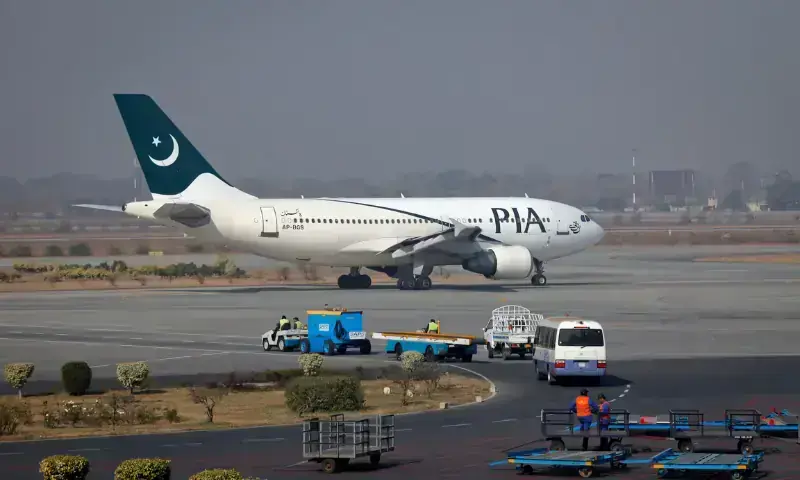
ISLAMABAD: The Privatisation Commission announced on Thursday that the consortium led by Arif Habib Corporation Limited has notified it of its intent to acquire the remaining 25 per cent equity stake in Pakistan International Airlines Corporation Limited (PIACL), paving the way for full private-sector ownership of the national carrier.
It said that the total private-sector investment in the transaction was expected to amount to approximately Rs180 billion, comprising a minimum of Rs55 billion payable to the government as divestment proceeds and Rs125bn to be injected as fresh equity into PIACL to support the airline’s recapitalisation.
“The planned equity injection will support fleet expansion and modernisation, route development, and improvements in customer service and operational systems,” the commission said.
It said that management control was expected to be transferred on or before May 25, the first closing date announced by the Privatisation Commission, subject to the fulfilment of conditions set out in the Share Purchase and Subscription Agreement (SPSA) signed on January 29.
“The notice of intent to acquire the remaining 25pc equity stake (call option) has been accompanied by the requisite standby letter of credit and will be exercised in accordance with the terms of the SPSA,” it said.
It added that the Privatisation Commission, the consortium, the government of Pakistan, and PIACL were working jointly to fulfil the conditions precedent ahead of the first closing.
The consortium comprises Arif Habib Corporation Limited, Fatima Fertiliser Company Limited, Lake City Holdings (Private) Limited, The City School (Private) Limited, AKD Group Holdings (Private) Limited, and Fauji Fertiliser Company Limited.
Earlier this week, the consortium submitted a standby letter of credit and a bank guarantee to the Privatisation Commission to acquire the remaining shares from the government.
The consortium had acquired a 75pc stake in the national flag carrier for Rs135bn in December 2025.
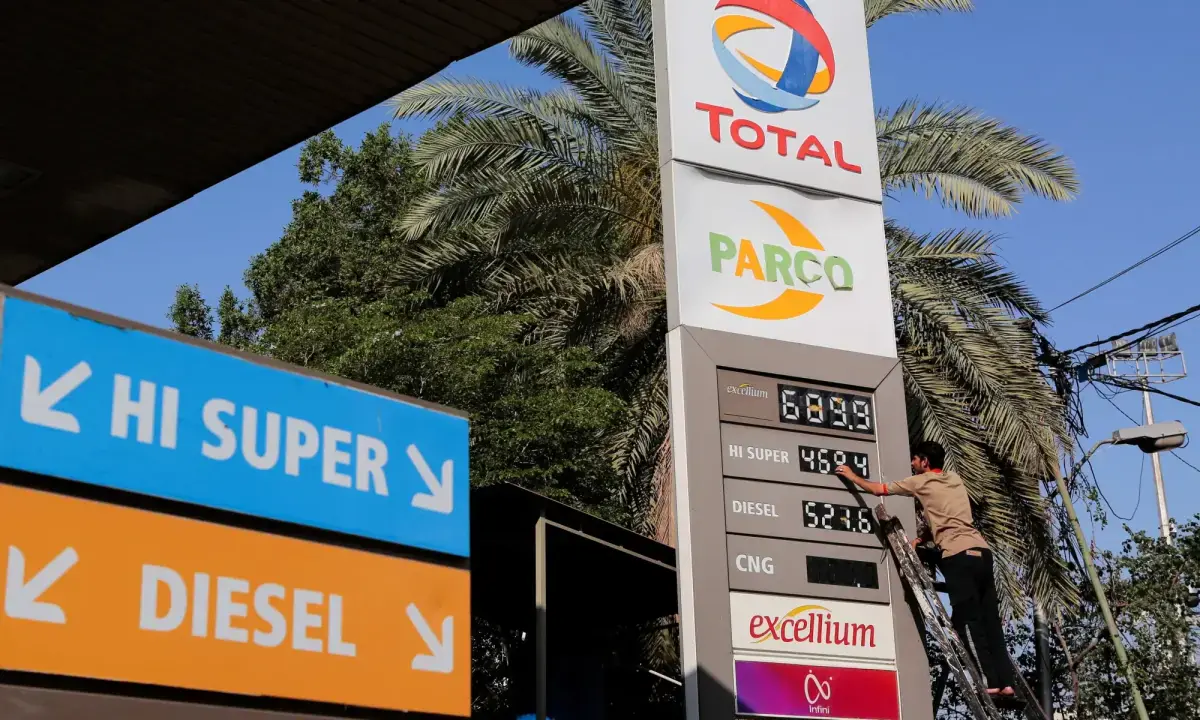
Prime Minister Shehbaz Sharif on Thursday decided to extend the fuel subsidy for motorcyclists, and public and goods transport by one month.
According to a statement issued by the Prime Minister’s Office (PMO), the premier decided to continue providing relief to the economically vulnerable sections of society during the current situation.
It said that the prime minister “had decided to extend fuel subsidy given last month to motorcyclists, public and goods transporters by one more month”.
He also directed transporters not to increase travel and freight fares. He further issued instructions to maintain “effective monitoring” of relief measures.
According to the statement, PM Shehbaz vowed to continue the government’s relief efforts, stressing that “providing relief to the common man remained the government’s top priority”.
“The people will not be left alone under any circumstances,” the premier asserted, hoping that the “regional situation will improve soon so that fuel prices can stabilise”.
The subsidies were part of the targeted relief measures announced earlier this month for bikers, farmers and transporters to cushion the impact of global oil price shocks amid the US-Israel war on Iran.
The measures included a subsidy of Rs100 per litre for two-wheeler users, capped at 20 litres per month for three months. It was also announced that trucks carrying 80-85pc of food items would receive direct support of Rs70,000 per month, large transport vehicles would be given Rs80,000 per month and inter-city public service vehicles would receive Rs100,000 per month to help keep fares stable.
The provinces have taken the lead in administering subsidised fuel quotas. Altogether, the provinces are pooling around Rs200bn for three months on the pattern of their National Finance Commission (NFC) shares — Rs100bn or so from Punjab, Rs51-Rs52bn from Sindh, Rs15bn from Khyber Pakhtunkhwa and about Rs8-Rs9bn from Balochistan.
A day earlier, the premier, while addressing a meeting of the federal cabinet, said consultations were underway with provinces for the extension of fuel subsidies. He also said that the country’s weekly oil bill had reached $800 million amid the oil crisis from around $300m prior to the outbreak of the conflict.
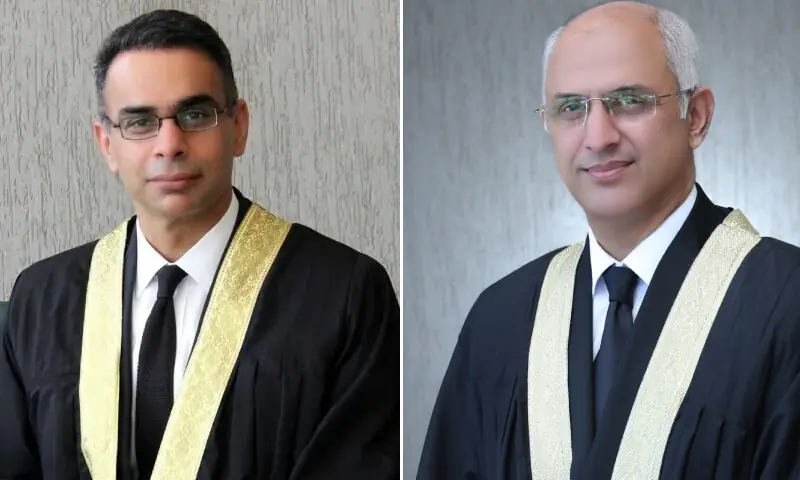
PESHAWAR/ LAHORE: Justices Babar Sattar and Mohsin Akhtar Kayani will begin presiding over proceedings at the Peshawar High Court (PHC) and Lahore High Court (LHC), respectively, in the coming week following their recent transfers from the Islamabad High Court (IHC).
Their transfers, along with that of IHC judge Saman Rafat Imtiaz to the Sindh High Court, were approved by the Judicial Commission of Pakistan (JCP) on April 28 and notified by the law ministry on April 29 amid criticism from lawyers’ bodies.
On Thursday, the names of Justices Sattar and Kayani were included in the rosters of the high court courts to which they have been transferred.
The LHC’s revised roster for May 4 to July 4 shows that Justice Kayani will be presiding over proceedings as judge on a single bench at the court’s principal seat.
The roster, notified by Additional Registrar (Judicial) Shabbir Hussain Shah, shows that 27 single benches and nine division benches have been constituted at the principal seat for this period.
Meanwhile, according to the PHC’s roster for May 4-7, Justice Sattar will be presiding over proceedings as part of a division bench at the court’s principal seat on Monday.
The roster, approved by PHC Chief Justice SM Attique Shah, lists nine single benches and just one division bench, headed by Justice Wiqar Ahmad and also including Justice Sattar.
The judges were transferred under Article 200 of the Constitution. Under clause (1) of Article 200 of the Constitution, the president may transfer a high court judge from one high court to another on the recommendation of the JCP. Clause (2) provides that the seniority of a transferred judge shall be reckoned from the date of his or her initial appointment.
Justice Kayani, who was IHC’s senior puisne judge, has lost his seniority and been relegated to the 12th spot on the LHC seniority list. His transfer has also increased the number of sitting judges at the LHC to 41 against a sanctioned strength of 60.
Justice Sattar was appointed as an additional IHC judge on December 30, 2020 and confirmed as a permanent judge around a year later. He was number three in terms of seniority at the IHC. But at the PHC, he is seventh in terms of seniority.
With the transfer of Justice Sattar, the number of judges in the PHC has risen to 21 against the sanctioned strength of 30.
In its April 28 meeting, the JCP also decided that any vacancy arising as a result of the transfer of judges from the IHC would be filled through transfer only, and such slots would not be treated as vacancies for initial appointment.
Subsequently, the Khyber Pakhtunkhwa Bar Council had expressed reservations over the transfers and demanded that the transfer of a judge from any other high court to the PHC should be made on a reciprocal basis. The council believed that the reciprocal transfer of judges would neither affect the overall strength of the PHC judges nor would it affect the rights of the province.
Transfer of judges
Chief Justice of Pakistan Yahya Afridi, who also serves as chairman of the JCP, had earlier raised serious constitutional concerns over the prospect of transferring judges from the IHC.
In his response to informal requests by IHC Chief Justice Sardar Mohammad Sarfraz Dogar, the CJP had warned that such transfers could undermine federalism and equitable representation, reducing judicial appointments to temporary and reversible administrative decisions.
The transfers from the IHC follow an amendment to Article 200 of the Constitution, which empowers the JCP to recommend such transfers without requiring the consent of the judges concerned.
Prior to the amendment, introduced through the 27th Constitution Amendment, a judge’s consent was mandatory for transfer from one high court to another. The revised provision has now vested this authority in the JCP.
It also stipulates that a judge who refuses to accept a transfer may face proceedings under Article 209 before the Supreme Judicial Council.
The transferred judges were among the six who had, in a startling letter written to SJC members in March 2024, accused the country’s intelligence apparatus of interference in judicial affairs, including attempts to pressure judges through abduction and torture of their relatives and secret surveillance inside their homes.
They were also among the five judges who had formally opposed in February 2025 the then-potential transfer of then-LHC Justice Dogar, warning that his elevation as the IHC chief justice would violate constitutional procedures and judicial norms.
Nevertheless, Justice Dogar was appointed as the acting IHC chief justice on Feb 13, 2025. The next day, he took the oath in a ceremony where all IHC judges were invited, but five of them — including those being transferred — did not attend the ceremony and boycotted it.
Following the development, the IHC went through a major administrative restructuring, which notably reduced the authority of senior puisne judge Justice Kayani — who previously held key decision-making roles — following amendments to the high court rules.
The IHC Administration Committee, previously comprising the chief justice, the senior puisne judge and a senior judge, was restructured to include CJ Dogar and two of his nominees. This reconstitution significantly altered the court’s decision-making authority.
Justice Dogar later took his oath as the IHC CJ on July 8, 2025. And the five IHC senior judges who had opposed his transfer were sidelined in the subsequent reshuffling of key committees.
In September last year, the five judges had submitted separate petitions to the Supreme Court together against a number of issues affecting the court, from the composition of benches to rosters to case transfers.
ISLAMABAD: Despite a healthy primary balance of 3.3 per cent of gross domestic product (GDP) at home, the Ministry of Finance on Thursday warned that Pakistan’s external sector may be facing risks owing to emerging global uncertainties and regional supply disruptions amid a higher rate of inflation.
“External demand may remain supportive in some markets but the balance of risk becomes less favourable than in a pre-war setting,” the ministry said in its Monthly Economic Update and Outlook for April 2026.
It said the ongoing Middle East conflict was posing new risks and heightened uncertainty regarding the macroeconomic outlook.
The ministry forecast April’s inflation rate — measured by the consumer price index — at 8 to 9pc, significantly higher than 7.3pc in March.
It highlighted that the overall primary surplus in the first eight months of the current fiscal year was recorded at 3.3pc of GDP (Rs4.319 trillion) as compared to 3pc (Rs3.452tr) last year.
During July-March Fiscal Year 2026, the Federal Board of Revenue’s tax collection grew by 10.1pc to Rs9.306tr, the ministry said.
It said this growth was driven by both direct and indirect taxes, which grew by 12.4pc and 7.9pc, respectively. Within indirect taxes, sales tax, customs duties and federal excise duty increased by 8.5pc, 3pc and 13.3pc, respectively.
It said the government’s strategy to optimise revenue collection and improve expenditure management was reflected in the overall fiscal position during the July-February FY2026, with a deficit of 0.1pc of GDP (Rs161.2 billion) compared to 2.2pc of GDP (Rs2.524bn) during the corresponding period last year.
Net federal revenue increased by 10.1ppc to reach Rs7.463tr, which was contributed to by growth in both tax and non-tax revenues by 10.6pc and 7.7pc, respectively.
“Total federal expenditure declined by 10.9pc to Rs9.232tr. This contraction was mainly driven by curtailment of current expenditure, which fell by 11.4pc on account of 25pc decline in markup expenditure,” it said.
The ministry said the economy completed its third quarter of the year on a stable footing, underpinned by macroeconomic stability and gradually strengthening growth momentum.
On the domestic front, the manufacturing sector continued its growth impetus while the external sector witnessed three consecutive monthly current account surpluses driven by strong remittances and rising IT exports, it added.
|Inflation inched up but remained within the annual target. Prudent fiscal management enabled continued improvement in the fiscal position. Timely Eurobond repayment, successful International Monetary Fund staff-level agreement and Fitch’s B- rating with stable outlook further reinforced external credibility, reflecting continued reform efforts and overall positive direction of the economy,” it said.
It highlighted that the ongoing Middle East conflict was posing new risks and heightened uncertainty regarding the macroeconomic outlook amid escalating energy costs, yet Pakistan’s economy appeared relatively better positioned than in previous episodes of external stress to manage these emerging challenges effectively.
The ministry also said that the Bureau of Emigration and Overseas Employment registered 50,506 workers in March 2026, showing a reduction of almost 14pc as compared to 58,555 in March, 2025.
According to the ministry, despite prevailing geopolitical uncertainties, key macroeconomic indicators had remained stable, including sustained growth momentum in large-scale manufacturing, particularly reflected in a broad-based recovery in the automobile sector, and rising cement dispatches, pointing to improving domestic demand.
“Based on this momentum, economic activity is expected to remain firm,” it said, but hastened to add that “amid ongoing supply chain constraints, inflation is anticipated to remain within the range of 8-9pc for April 2026”.
It added that “despite the potential risk posed by Middle East war and consequently global commodity prices rise and supply chain disturbance, the external position is likely to remain stable, underpinned by higher remittance inflows and IT exports”.
“Overall, the economy appears well-positioned to continue its growth trajectory, supported by the strengthening of macroeconomic fundamentals vis-à-vis appropriate and swift policy response to minimise the adverse impacts,” the ministry said.
The ministry said that given ongoing geopolitical uncertainty and the unclear path toward a durable settlement, the conflict continued to reverberate through disrupted oil supply and pricing, reinforcing volatility in global energy markets.
“Despite global emerging uncertainties, major trading partners of Pakistan’s economy, like the US, are showing resilience,” it added.
Likewise, it said that Pakistan’s major export destinations (except China, showing persistent moderation in growth momentum for several months) were hovering near their long-term potential.
Amazon said on Thursday that restoring cloud computing operations in the United Arab Emirates (UAE), which were damaged in the conflict in the Middle East, is expected to take several months.
Amazon’s data centres in the region were hit by Iranian retaliatory drone strikes in early March, amid the conflict, disrupting cloud services and making a recovery “prolonged”.
When asked if the latest update was related to a new incident, an Amazon spokesperson said that the latest update dated April 30 related to the previous operational issues in March.
Amazon Web Services (AWS) is the world’s largest cloud computing provider, serving a global client base.
Its key customers include companies such as Netflix, BMW and Pfizer, as well as major financial institutions, media groups and public sector organisations.
It is also the company’s main driver of profits.
AWS recommended customers migrate all accessible resources to other regions and restore inaccessible resources from remote backups as soon as possible, according to the status update posted to its website on Thursday.
The AWS status page showed that 37 services in the UAE have been listed as disrupted as of the week of April 30.
Several of these services have been disrupted since early March, according to the status page.
The firm said that the damage suffered to its operations in the UAE has led to a suspension of billing operations in the region.
Last month, Amazon’s cloud region in Bahrain had been “disrupted” due to drone activity in the area.
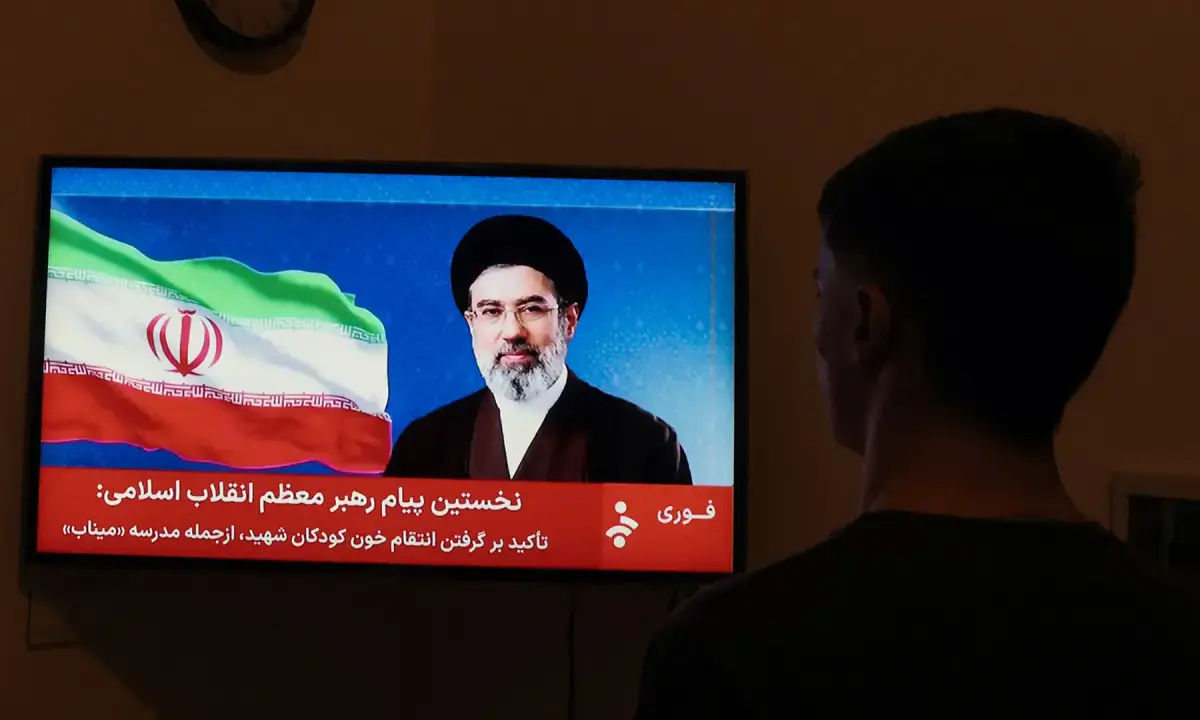
Iran’s Supreme Leader Ayatollah Mojtaba Khamenei declared on Thursday that the United States had suffered a shameful defeat, defiantly rejecting a warning from President Donald Trump that an economically punishing US naval blockade could be enforced for months to come.
“Today, two months after the largest military deployment and aggression by the world’s bullies in the region, and the United States’ disgraceful defeat in its plans, a new chapter is unfolding for the Persian Gulf and the Strait of Hormuz,” said Khamenei in the message read on state television.
The message by Khamenei, who has yet to appear in public since his appointment on March 9 as Iran’s new supreme leader, came on the annual national celebration of “Persian Gulf” day in Iran.
Khamenei became the supreme leader after the US and Israel launched a massive campaign of strikes on Iran on February 28, assassinating his father and predecessor, Ayatollah Ali Khamenei.
In his Thursday message, he said US bases in the region “lack even the capacity to ensure their own security, let alone provide any hope of securing their allies.”
He hailed what he called Iran’s “new legal framework and management” of the strategic Strait of Hormuz, a key energy chokepoint, as a means to bring “comfort and progress” for countries in the region.
The strait has become a major flashpoint since the outbreak of the Middle East war, with Iran allowing only a trickle of ships to pass through the waterway.
Khamenei, in his message, predicted a bright future for the Gulf without the US and condemned what he described as “outsiders”, saying those who interfere from thousands of kilometres away “have no place there except at the bottom of its waters”.
“The record of repeated invasions by European and American foreigners —the insecurities, damages, and multiple threats they have imposed on the region’s countries — reflects only a fraction of the malicious schemes of global oppressors against the peoples of the Persian Gulf,” the message read.
He also lauded the people of Iran, who he said “consider all national capacities — identity, spiritual, human, scientific, industrial, and advanced technologies from nano and bio to nuclear and missile — as their national capital”.
Earlier on Thursday, Iran’s President Masoud Pezeshkian had said a US naval blockade imposed in retaliation against Iran’s action in Hormuz was “doomed to fail”.
Pezeshkian added that such measures would “not only fail to enhance regional security, but are in fact a source of tension and a disruption to lasting stability in the Persian Gulf”.
Other figures have also struck a tone of defiance, with Navy Commander Shahram Irani signalling that Iran will deploy “in the very near future” naval weaponry which it has recently developed.
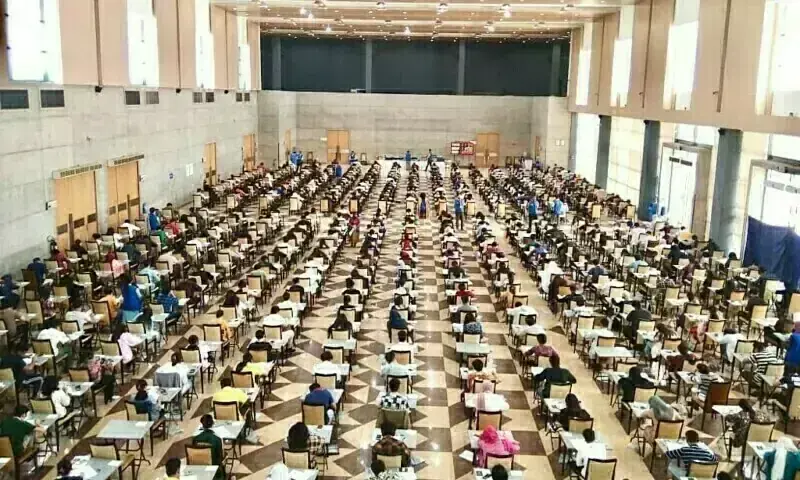
Cambridge International Education (CIE) on Thursday confirmed that its AS-level mathematics paper was “shared prematurely” against its regulations.
The development comes after the Inter-Board of Coordination Commission (IBCC) on Thursday announced it would seek a report from Cambridge as parents and students raised questions about the transparency of the exam system following reports of the leak.
In an official statement, CIE said, “We can confirm that Cambridge International AS-Level mathematics paper 12 (9709) taken in our Africa, Europe, Middle East, Pakistan and South Asia regions, was shared prematurely against our regulations.
“We investigate such incidents promptly and thoroughly and we are now working to understand the extent of the leak and determine next steps,” it added.
It affirmed its priority to ensure that the students were not disadvantaged by this incident, saying it would take all possible measures to protect the integrity of its exams.
“It is important that candidates continue to prepare for, and take, the upcoming exam,” it advised. It said that it would issue a further update on its progress on May 7.
The CIE, part of Cambridge University Press and Assessment, offers internationally recognised exams to over scores of schools in 160-plus countries. In Pakistan, O Levels (grades 9–10) cover a broad subject range, while A and AS Levels (grades 11–12) are more specialised and advanced, providing pathways to higher education in Pakistan and abroad.
In a statement yesterday, the CIE stated that it was “aware of news about a reported paper leak of a question paper” after social media was abuzz with complaints from disgruntled parents and students. Users pointed out the high examination fees and the fact that Cambridge question papers had leaked in the previous years as well.
In June last year, question papers of three AS and A-Level examinations were partially leaked across Pakistan. The CIE had then offered free November 2025 resits for candidates who set for the three exams in question.
ISLAMABAD: Human rights lawyers Imaan Zainab Mazari-Hazir and her husband, Hadi Ali Chattha, on Thursday approached the Supreme Court (SC), seeking an early hearing of their appeals against their conviction under the Prevention of Electronic Crimes Act (Peca) in the controversial social media posts case.
On January 24, a sessions court had sentenced Imaan and Hadi to a total of 17 years in prison on multiple charges in the case. The lawyer duo were sentenced to 10 years’ imprisonment under Section 10 (cyber terrorism), five years’ imprisonment under Section 9 (glorification of an offence) and two years’ imprisonment under Section 26-A (false and fake information) of Peca.
Moved through senior counsel Faisal Siddiqi under Article 185(3) of the Constitution, the application filed in the SC on Thursday requested the grant of leave to appeal against the Feb 19 Islamabad High Court (IHC) order. The IHC in February had admitted the appeal against the trial court’s verdict. However, while it had issued notices to the respondents on the application for the suspension of sentence, it had not suspended the sentence.
The fresh application filed before the SC called for fixing the appeals preferably in the week commencing from May 4.
The petition contended that the appeals be accepted and the sentence awarded to the petitioners through the impugned judgement be suspended till the disposal of the criminal appeal pending before the IHC.
Citing urgency, the application contended that it was the SC’s settled policy that criminal matters should be given priority, especially when the matters pertain to bail or suspension of sentence.
The petitioners had no other adequate remedy available to them other than to file the appeals, as the IHC, after issuing notices through the Feb 19 order, had not fixed any date for the hearing, the petitions said.
In terms of Section 7 of the Supreme Court Practice and Procedure Act, 2023, it is expressly stated that any application pleading urgency will be fixed for hearing within a period of 14 days, they added.
The applications pleaded that the petitioners, Iman and Hadi were young lawyers but remained incarcerated for around 100 days in a case where conviction was the result of a “sham trial”.
The case stems from a complaint filed on Aug 12, 2025, at the National Cyber Crime Investigation Agency (NCCI) in Islamabad. The NCCIA complaint accused Imaan of disseminating and “propagating narratives that align with hostile terrorist groups and proscribed organisations”, while her husband was implicated for reposting some of her posts.
The first information report (FIR) of the case alleged that the two held security forces responsible for cases of missing persons in Khyber Pakhtunkhwa and Balochistan.
It also stated that they had portrayed the armed forces as ineffective against proscribed groups, including the banned outfits Baloch Liberation Army (BLA) and the Tehreek-i-Taliban Pakistan (TTP).
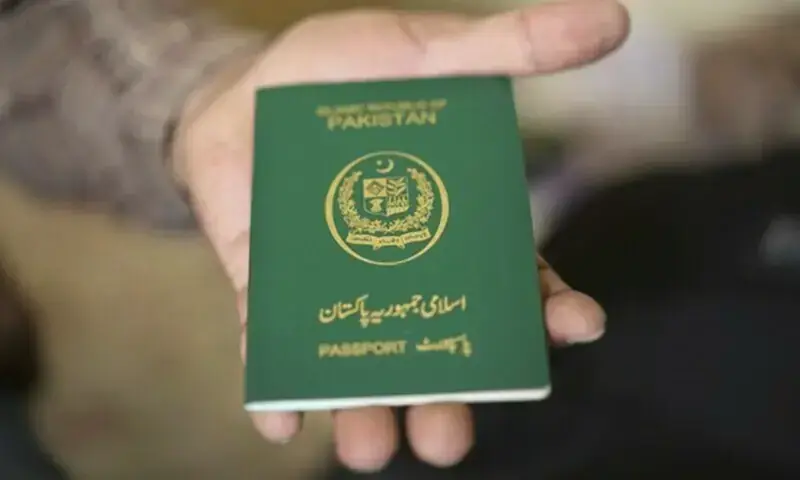
ISLAMABAD: The government on Thursday slashed the delivery time for ordinary passports from 21 days to 14 days and ordered all passport offices to go fully cashless within 15 days.
The decisions were taken at a high-level meeting chaired by Interior Minister Mohsin Naqvi and Minister of State for Interior Tallal Chaudhry in Islamabad.
“We have reduced the delivery time for normal passports from 21 days to 14 days,” Naqvi said, according to an official handout.
The minister further stated that “a complete cashless system will be implemented in passport offices,” while giving passport authorities 15 days to end cash transactions at all offices nationwide.
“Eliminating cash payments will end the agent mafia and facilitate citizens,” Naqvi said.
Officials said the 14-day timeline for normal passports comes into effect immediately.
Officials were also directed to finalise a separate “business passport” category soon and make the home-delivery system for passports more effective, the statement said.
Naqvi said that establishing a dedicated Passport Authority was “extremely necessary” to improve the system and public service.
Interior Secretary Khurram Ali Agha, Director General Passports and Immigration Muhammad Ali Randhawa and senior officials attended the meeting.
The development comes as passport offices struggle with long queues and complaints of delays. Demand for passports has surged since 2022, with over 6.5 million issued in 2023 alone, according to immigration data. Applicants also complain of being forced to pay agents for faster processing.
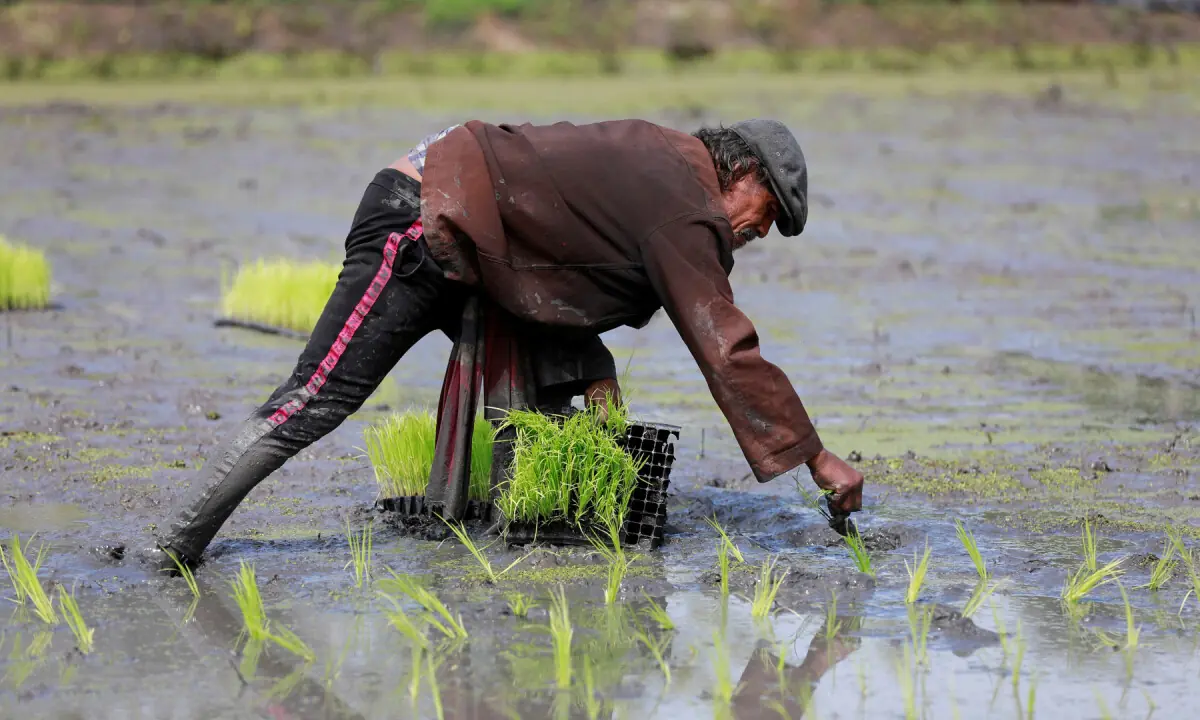
Rice supply is expected to fall this year as farmers cut planting acreage across Asia because of fertiliser shortages and soaring fuel costs from the Iran war, with an emerging El Niño also set to squeeze output of the world’s most consumed staple.
Rice is central to global food security, and even modest supply disruptions can ripple through countries, lifting prices and straining household budgets, particularly among price-sensitive consumers in Asia and Africa.
The UN Food and Agriculture Organisation (FAO) in April forecast rice output would expand by 2 per cent to a record high in 2025/26.
The effects of the Iran war are impacting farmers in top exporters Thailand and Vietnam, as well as the import-reliant Philippines and Indonesia, growers and traders said. The war has cut fuel and fertiliser flows through the Strait of Hormuz, a key chokepoint that connects the Gulf to global markets.
Southeast Asia’s mainly smallholder farmers also face mounting stress as the El Niño weather phenomenon is set to usher in hotter, drier conditions for the region in the second half of the year.
“Farmers have already started planting rice in some countries and are using fewer inputs because prices have gone up,” said Maximo Torero, chief economist at the UN FAO.
“We are going to see a tighter global supply situation in the second half of the year and early next year.”
In 2008, export curbs by key suppliers more than doubled prices to about $1,000 a metric ton , triggering unrest in several countries. More recently, supply tightness in 2022 to 2023, exacerbated by India’s export restrictions, lifted prices and prompted panic buying.
Supply-chain disruption
Rice shipments are already facing supply-chain bottlenecks.
“Logistics have become a nightmare, especially in Asia as there is a shortage of polypropylene bags, limited truck availability to move rice to ports and shipping itself has been disrupted,” said a Singapore-based trader at a top global rice merchant, who asked to remain unidentified as they are not authorised to speak to the media.
While fertiliser shortages and dryness are already curbing yields of smaller crops being harvested in Southeast Asia, the next crop will likely face a bigger reduction.
India, Thailand and the Philippines plant their main crops in June and July, while Vietnam and Indonesia are now sowing their second-season crops.
Most Asian producers grow two or three rice crops a year.
Farmers cut planting
Sripai Kaew-Eam, a 60-year-old farmer in Thailand’s Chai Nat province about 151 km (94 miles) north of Bangkok, said high fertiliser and fuel prices have pushed production costs to about 6,000 baht ($183.99) per rai (0.4 acre), from around 4,500 to 5,000 baht for the previous crop, while the price she receives for the unhusked rice she harvests is about 6,200 baht per metric ton.
Fertiliser prices have risen to 1,000 to 1,200 baht per bag, from 850 baht, forcing her to cut her use by half.
“Fertiliser prices are high, fuel prices are high,” she said.
The Philippines, the world’s biggest rice importer, faces a similar situation.
“Some farmers are now saying they may not plant or will reduce fertiliser use, which would inevitably cut production,” said Arze Glipo, executive director of the Integrated Rural Development Foundation.
The country’s output could fall by as much as 6 million tonnes from its typical 19m to 20m.
“That would leave the Philippines in a precarious position, as imports are also uncertain due to export restrictions, making it extremely difficult to cover any production shortfall,” Glipo said.
In Indonesia, fertiliser supply is not a constraint, but the El Niño is expected to curb output.
Indonesia’s statistics bureau estimates the rice harvest area in the March to May period will shrink by 10.6pc to 3.85m hectares (9.5m acres), while unhusked rice production will drop 11.12pc to 20.68m tonnes.
Despite the supply worries, the world has ample rice inventories following years of bumper output, with India, the world’s biggest exporter, holding a record 42m tonnes or about one-fifth of global stockpiles, according to US Department of Agriculture data, cushioning any drop in global production.
Most rice grade prices are currently steady but will likely rise even if the Hormuz situation were resolved immediately, the FAO’s Torero said.
Opening the strait soon would avoid a major supply issue but “if we don’t reopen this in the next two to three weeks, the situation is going to get pretty serious”, he said.
Pakistan is in contact with the Somali government over the hostage crisis involving Pakistani sailors aboard a hijacked oil tanker, the Foreign Office (FO) said on Thursday.
Last week, armed pirates hijacked the oil tanker near the Somali coast and took 11 Pakistani crew members and the Indonesian captain of the vessel hostage.
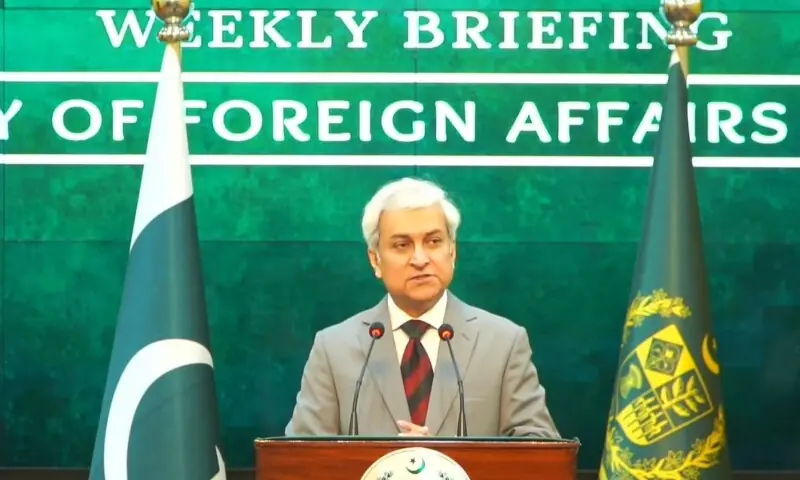
Addressing the weekly press briefing, FO Spokesperson Tahir Andrabi said the pirates are also in touch with the ship’s owner.
Hijackings off Somalia have fuelled concerns about a resurgence of Indian Ocean raids by opportunistic pirates. Pirate attacks off the Somali coast peaked in 2011 — with gunmen launching attacks as far as 3,655km from the Somali coast.
The incident also comes at a time of heightened regional tensions and disruptions to shipping routes, including the Strait of Hormuz.
Speaking about the blockaded strait, Andrabi said it is a key transit route for maritime trade and oil shipments, reiterating support for an early restoration of normal maritime flow in the region.
“The closure of the Strait of Hormuz affects the entire world,” he added.
He further elaborated that keeping the Strait of Hormuz open is essential for energy, trade, and the supply of goods, adding, “We hope the negotiations will succeed and the trade route will be restored.”
“We are in contact with the relevant parties on the matter. Regarding negotiations, both new and old proposals are on the table. We hope peace will prevail,” Andrabi said, referring to efforts to bring the United States and Iran on the same page and to bring about an end to hostilities between the two countries.
Following a raid on a “scamming compound” in Cambodia, the spokesperson said that the total number of Pakistani nationals detained in the country has risen to 84, including 76 men and eight women.
He added that “all Pakistani citizens are safe and that Cambodian authorities have assured full cooperation. The Pakistani Embassy has been granted consular access to the detainees”.
“Deputy Head of Mission Bilal Mohsin met the detained Pakistanis, and the Cambodian authorities are providing them with food and medical facilities,” added the FO spokesperson.
He said most of the Pakistanis had travelled to Cambodia after being lured by fake job offers. Some were found working illegally after entering on tourist visas, while others had overstayed their permitted duration.
The spokesperson added that Cambodian authorities are considering waiving fines and that the return of Pakistani nationals is expected after the completion of legal proceedings, while urging citizens to remain cautious of “fraudulent” overseas job schemes.
In an earlier statement, the FO said Cambodian authorities agreed on the early repatriation of 54 Pakistanis arrested following the raid on a “scamming compound”.
The statement came after reports emerged that more than 200 Pakistanis were in the custody of Cambodian police in overcrowded facilities and facing a lack of basic facilities.
“As a result of the embassy’s efforts, the host authorities have agreed to the early repatriation of 54 Pakistani nationals detained in Siem Reap province. These individuals were arrested following a raid on a scamming compound,” it said.
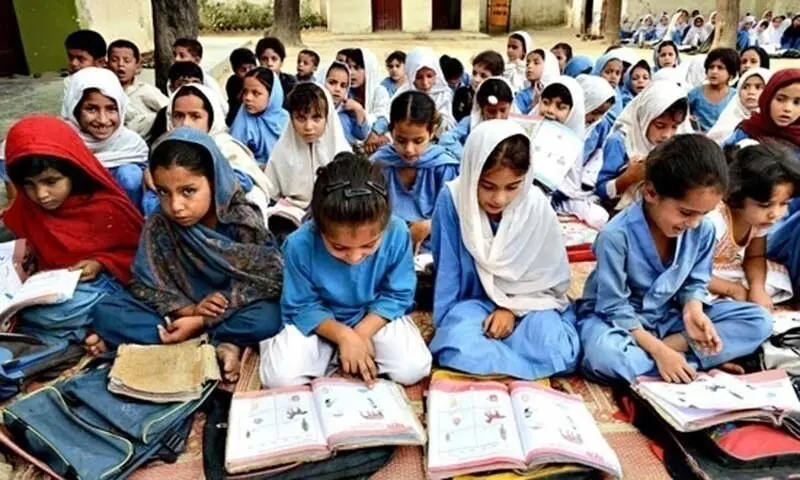
KARACHI: The Sindh Education and Literacy Department is set to introduce religious textbooks for Hindu students to be taught in grades three to five across government schools in Sindh, it emerged on Thursday.
In a letter dated April 29 to the chairman of the Sindh Textbook Board (STBB), the education department requested the distribution of “three religious books for grades III to V for the current academic year 2026–27”, referring to a decision taken at a meeting of the Executive Committee of the Sindh Curriculum Council on April 20.
Chief Executive Advisor Dr Fauzia Khan wrote in the letter that the cost of publication will be borne by a social welfare organisation, Prem Sagar Sanstha Karachi, for the current academic year.
“The distribution of the books will be carried out through STBB,” the letter said. Khan also requested the board to “allocate/adjust budget for the publication of the religious books for the next academic year”.
A similar move was made by the federal government in 2023, when the National Curriculum Council (NCC) issued no-objection certificates (NOCs) for publishing religious books for students from seven minority groups enrolled in federally supervised educational institutions.
The NCC issued NOCs for publishing books on religions, including Hinduism, Sikhism, Christianity, Baha’i, Zoroastrianism, Kalasha and Buddhism.
According to a study by the Centre for Social Justice (CSJ), it was found that there appeared to be a direct link between exclusionary narratives in textbooks and rising social intolerance against religious and sectarian minorities in the country.
The study highlighted that the percentage of religiously inclusive content remained low across textbook boards.

 Login
Login