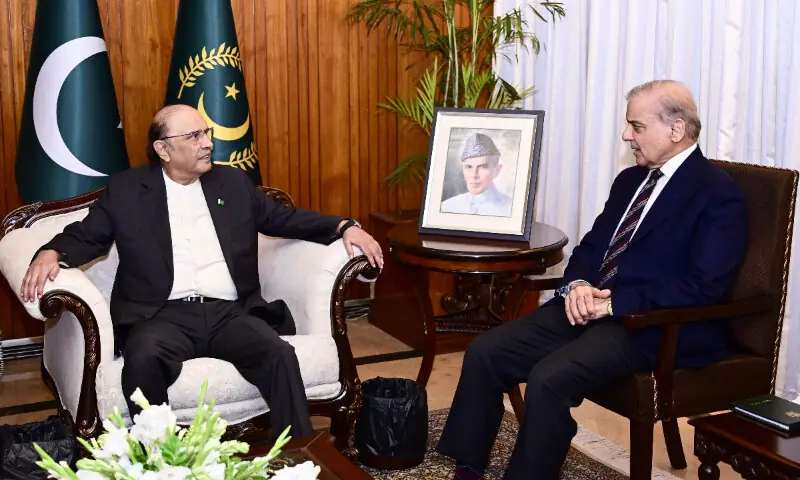
President Asif Ali Zardari on Monday stressed that the upcoming 2026–2027 federal budget should prioritise “public welfare, provincial rights and economic stability” during a meeting with Prime Minister Shehbaz Sharif, the Presidency said.
The meeting, part of wider pre-budget consultations between major allied parties in the Centre, came a couple of days ahead of the government’s announcement to present the federal budget for FY2026–27 on June 10.
A handout released after the meeting said Zardari and Shehbaz discussed the upcoming budget at the President’s House.
“While discussing budget proposals and public relief, the president stressed prioritising public welfare, provincial rights and economic stability in the federal budget,” the handout said.
It added that the president directed that every effort should be made to harmonise the growth rate with public welfare schemes in the upcoming budget.
National security, as well as the internal and regional situation, were also discussed.
The Presidency said Interior Minister Mohsin Naqvi briefed the president on his recent visit to Iran and regional diplomatic engagements.
Apart from the federal budget and national security, the meeting also discussed the economy, the recent Gilgit-Baltistan elections, the situation in Azad Jammu and Kashmir, law and order, and other matters of national importance, the handout said.
Deputy Prime Minister and Foreign Minister Ishaq Dar, Law Minister Azam Nazeer Tarar, Finance Minister Muhammad Aurangzeb, and Prime Minister’s Adviser on Political Affairs Rana Sanaullah were present at the meeting.
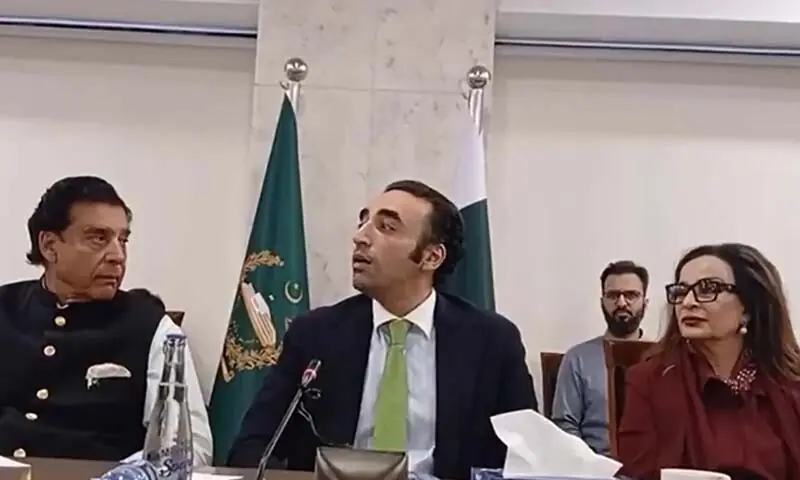
PPP Chairman Bilawal Bhutto Zardari, Sindh Chief Minister Syed Murad Ali Shah, Prime Minister of Azad Jammu and Kashmir Raja Faisal Rathore, and MNA Raja Pervaiz Ashraf also attended the meeting.
Senator Sherry Rehman, MNA Syed Naveed Qamar, Senator Saleem Mandviwalla and Senator Ahad Cheema were also present, according to the presidency’s brief statement.
On Sunday, a PPP delegation, led by party chairman Bilawal, had expressed its reservations related to taxes during a pre-budget meeting with FM Dar.
During the meeting, FM Dar assured the PPP that their proposal would be incorporated into the budget.
The IMF has asked the Centre to introduce at least Rs430bn worth of additional budgetary measures in the upcoming budget, alongside a nearly matching amount of Rs430bn to be generated by the four provinces.
In this connection, the PPP had asked FM Dar for ways for the provinces to increase their tax revenues during the meeting.
PPP leaders also opposed new taxes and hoped the government would change its approach to taxation to provide relief to inflation-hit masses, asserting that the government should prefer a broader tax base instead of exerting pressure on the same class, which is already paying taxes.
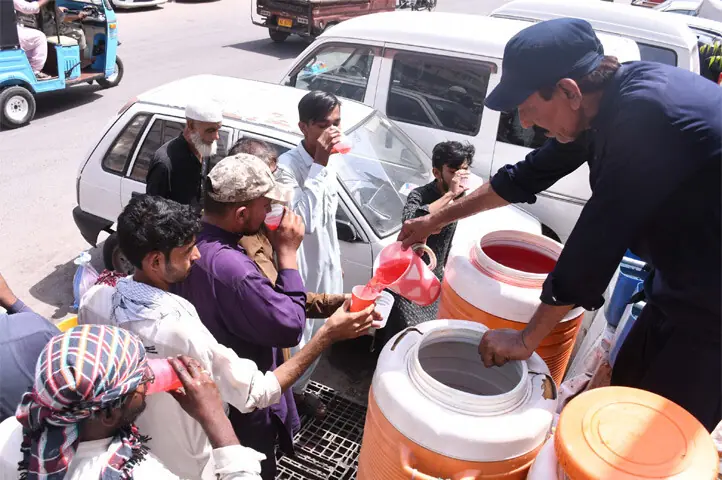
A man distributes free cold drink among passers-by at a roadside stall on Tuesday.—Online
KARACHI: The city experienced hot and humid weather throughout Tuesday, with the maximum temperature reaching 36.5 degrees Celsius. However, due to high humidity levels, the “feels-like” temperature surged to around 48°C during the day, making conditions significantly more uncomfortable for residents.
The Met Office said the maximum temperature recorded in the city was 36.5°C, while relative humidity remained at 62 per cent, significantly increasing the perceived heat.
“At around 2pm the temperature was recorded at 36°C with 60pc humidity while southwest winds were blowing 21 kilometres per hour. At that time the feels-like temperature was touching 48°C,” said an official.
In other parts of Sindh, a severe heatwave continued to grip upper and central parts of the province, with temperatures reaching extreme levels across several districts.
According to the Met Office, Dadu recorded 48°C, while Sukkur, Rohri and Khairpur registered around 46.5°C.
The Pakistan Meteorological Department warned last week that heatwave conditions are likely to persist across Sindh, with temperatures remaining four to six degrees above normal in many areas.
According to the Met Office, the maximum temperature in Karachi on Wednesday (today) will be around 36°C but humidity may cross 70pc mark.
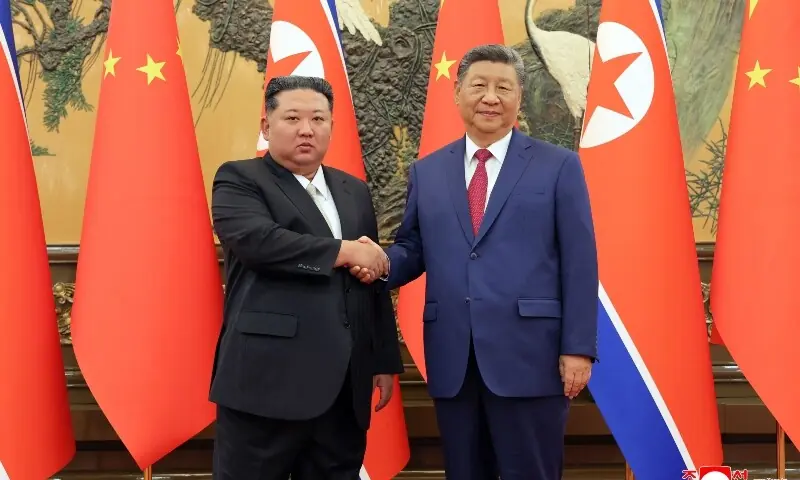
Chinese President Xi Jinping will visit North Korea from June 8 to 9, state news agency Xinhua said on Friday, his first trip in nearly seven years as Beijing looks to reassert ties with Pyongyang.
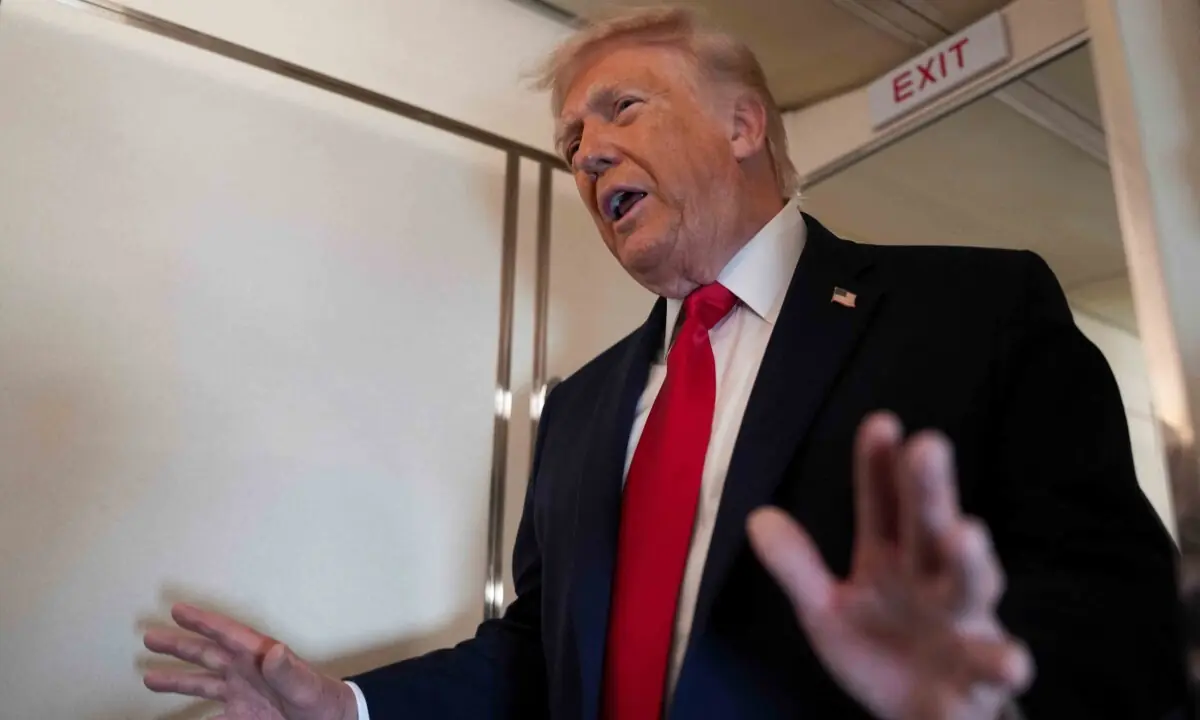
The announcement follows separate summits Xi hosted in Beijing for US President Donald Trump and Russian President Vladimir Putin last month. Trump, who met North Korean leader Kim Jong Un three times in his first term, previously said he would be open to meeting the North Korean leader again.
Xi would be visiting on an invitation from Kim, North Korean state media KCNA said. Kim was a guest at a massive military parade in Beijing last September, travelling to the Chinese capital on his signature green armoured train.
Beijing has worked to draw Pyongyang — its only formal treaty ally — back into its fold, after the Covid-19 pandemic froze exchanges and the North Korean leader deepened relations with Moscow by sending troops and weapons to support Russia’s invasion of Ukraine.
“The message implicit from the Chinese side is … we are still the principal actor when it comes to North Korea,” said John Delury, a senior fellow of the Asia Society.
“One of the audiences is Russia,” he said.
Passenger train services between Beijing and Pyongyang resumed in March, after a six-year suspension that began with the pandemic, with Air China later restarting flights between the capitals. Bookings, however, have been limited to some business travellers and exchange students, with Chinese tourists still excluded.
First overseas trip this year
Pyongyang will be Xi’s first overseas visit this year. The 72-year-old, whose trips abroad are becoming less and less frequent, last travelled internationally in late October when he went to South Korea, where he also met Trump.
“At the symbolic level, it is important for Xi to keep tabs on what’s going on in Pyongyang,” said Delury, who said Xi visiting both Koreas within a year would be a “big win” for the peninsula.
“There’s a kind of symmetry that the Chinese like to keep up” regarding the two Koreas, he said.
Since becoming China’s top leader in 2012, Xi has so far visited North Korea once and South Korea twice. He also travelled to Pyongyang in 2008 when he was vice president and Kim’s father — Kim Jong Il — was the North’s leader.
Experts have linked Kim’s site visit to the impending meeting with Xi. Before travelling to Beijing in September, Kim inspected plans for a new intercontinental ballistic missile, the “Hwasong-20”.
‘FUNDING, funding and regular funding’ is what Pakistani women athletes say they need most to compete internationally. Talent alone, they point out, cannot take them to the world stage; it must be backed by quality equipment, top-notch coaching, proper training facilities, nutrition and the means to travel and compete.
For most athletes, both male and female, except those supported by the departmental sports system such as the Pakistan Army, Wapda, the Higher Education Commission, National Bank, Pakistan Railways, police and airlines, the struggle begins long before competition day: finding the resources simply to stay in the game. State patronage is limited, private sponsorship even scarcer — and for women, almost non-existent.
Even for female athletes with supportive families or relatively privileged backgrounds, funding remains a constant struggle. Eman Khan, who won the gold at the 2024 International Mixed Martial Arts Federation Asian Championships, receives only sporadic private sponsorships. To sustain her career in the intensely male-dominated and often ‘violent’ world of the martial arts, she relies on coaching others to fund her own training and competition expenses.
The barriers are even greater for girls from Pakistan’s remotest and poorest districts. Without sponsors or financial backing, many are forced to quit before their talent is ever discovered; this is not just an individual but also a national loss.
Stadiums are largely empty and media attention wanes when it comes to women playing sports.
In Jacobabad, the Star Women’s Sports Academy, the only women’s sports club in Larkana division, trains 32 girls from low-income homes in football, hockey, cricket and tennis for free. But with little funding and a severe shortage of equipment, many aspiring players are turned away. The club cannot afford to send athletes to private tournaments.
Founded in 2017 by hockey player Erum Baloch, in April the academy had to appeal on social media for basic gear — goalkeeping kits, hockey sticks and balls. Baloch, who teaches at a private institution, uses much of her own salary to keep the club — her passion — running. Help poured in from ordinary citizens and philanthropists. Even a sportswoman from Peshawar rushed to ensure the girls had the equipment they needed to continue playing. The appeal is a stark reflection of the lack of official support for women’s sports.
Similarly, last year, after reading about the plight of these athletes, the Australian high commission helped fund a hockey training camp for them in Islamabad.
However, ad hoc support and one-off training cannot produce national or international athletes. When coaches constantly scramble for basic equipment, training becomes inconsistent, eroding the very backbone of competitive sport.
Star Academy is far from the only women’s sports club trudging along with limited resources. Founders in Karachi, Hyderabad and Mirpurkhas say they often reach into their own pockets to keep girls playing — from water to rickshaw fares, they even buy shoes for those who cannot afford them. At the same time, they have to spend hours convincing hesitant parents to let their daughters continue.
But this financial strain is intertwined with harassment within the system. Coaches have observed that girls from poorer, more conservative homes — some describe their charges as ‘less educated, less confident and unable to speak in English’ — often become a target of sexual harassment. Many girls stay quiet for fear of being pressured to leave the sports premises — or the sport itself. Others, the coaches allege, are sidelined (even if talented) as ‘punishment’ for refusing the inappropriate advances of male officials who influence selection and careers.
Another reason why women’s sport remains chronically underfunded compared to men’s, said Dr Sadia Sheikh, founder of Pakistan’s first women’s sports club, Diya Academy (established in 2002), is that: “Women’s sports are less marketable.”
“Inn ki tau kal shadi ho jai ge; hum ko kiya return milay ga?” (Tomorrow these women will get married; if we invest in them, what returns will we get?) is a common excuse by corporations for turning them away, she said. This dismissive attitude, pointed out Dr Sheikh, is reinforced by the lacklustre viewership: stadiums remain largely empty and media attention wanes when it comes to women playing sports.
However, in sports such as cricket and football, there has been some positive development of late. The state and private sponsors are investing in female athletes. The latter receive enviable packages (though not equal to their male counterparts’) consisting of comfortable accommodation, good meals, daily allowances and even salaries or stipends, when compared to female athletes in other sports. They are even sent abroad for training and also get a chance to play against international teams.
Yet women in field hockey remain under the radar. It would be worth asking if our women’s national hockey team has qualified for the 2026 16-nation World Cup set to be held in Belgium and the Netherlands in August. Surely a country whose national sport is hockey must have a strong women’s team to be sent alongside its male counterpart!
Recently, Prime Minister Shehbaz Sharif approved budgetary allocations to promote sports and supported a sports endowment fund for veterans, while also pledging “all-out support” and equal opportunities for women in sport. However, a dedicated national fund for women athletes is yet to be announced.
But there is still time to act. The Pakistan Sports Board, along with the national federations, is drafting a four-year athlete development programme and has sought a budget increase from Rs1.2 billion to Rs4.9bn to support training, coaching, infrastructure and international participation.
Before the PM gives his final approval, and before flagship projects, such as the Rs2.85bn Arshad Nadeem High Performance Sports Academy in Islamabad or the Rs 241 million multi-purpose sports complex in Faisalabad move ahead, it is worth asking what place, if any, women athletes occupy in this vision.
Their struggles are systemic. The answer lies not only in more funding, but in fairer allocation, stronger governance, greater media visibility and genuine inclusion. Without that, financial investment will not change the game.
The writer is an independent journalist based in Karachi.
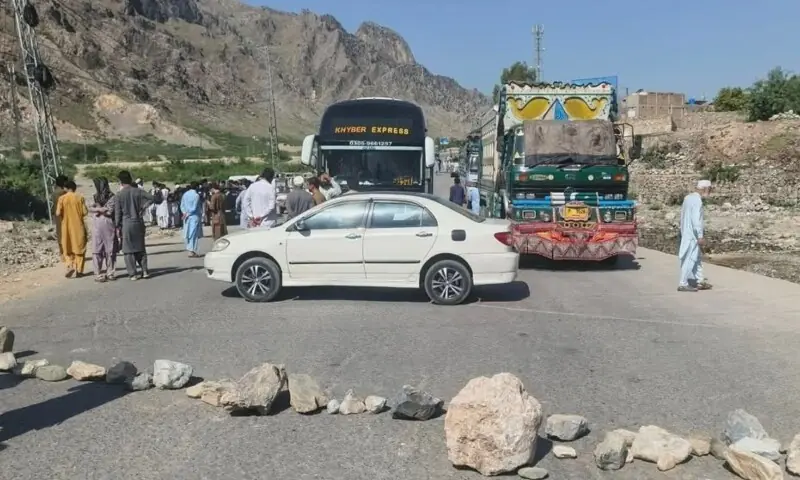
KHYBER: Enraged Zakhakhel tribesmen blocked the main highway leading to Torkham on Saturday and announced that they would take up arms in self-defence after two men were killed in a targeted attack late on Friday evening.
Led by local tribal elder Malak Abdullah Khan, the protesters — including scores of political party activists, civil society members and tribesmen — announced that armed volunteers would be assigned the responsibility of patrolling local areas.
They also announced a complete ban on motorcycle riding and barred all government employees belonging to the Zakhakhel tribe from performing their official duties until a durable solution for restoring peace was found.
Furthermore, they called for a boycott of polio vaccination campaigns and the closure of all government and private schools in the Zakhakhel area.
The protesters also refused to meet any government functionary until a meaningful crackdown was launched against suspected militants holed up in Mazreena and the surrounding localities.
They also advised local police personnel against wearing uniforms to avoid being targeted.
A fine of Rs1 million was announced for anyone found spying for either outlawed militant groups or law enforcement agencies.
The protesters said the road blockade would continue until those involved in the targeted killing were apprehended and the area was cleared of all undesirable elements.
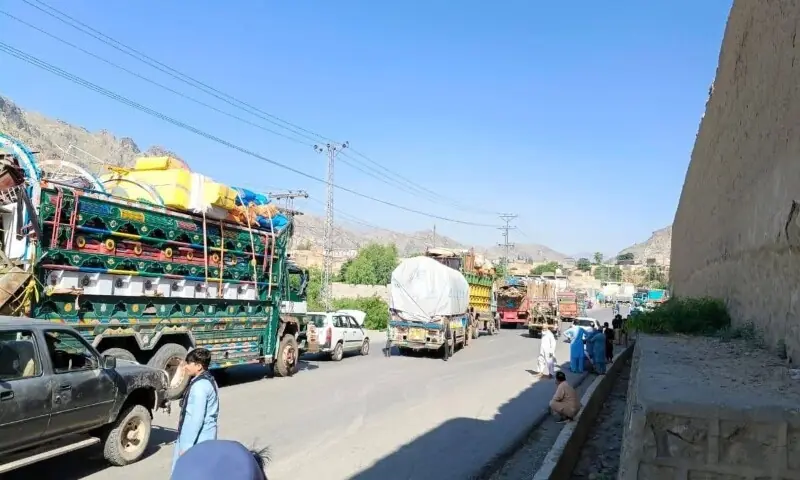
The road closure also suspended the repatriation of Afghan families, leaving many vehicles carrying Afghan nationals stranded.
Furthermore, the Zakhakhel elders criticised a series of raids carried out on private residences. They said that armed men, mostly local residents, regularly patrolled the main road at night.
The highway protest followed the killing of two people in the Sultan Khel area of Landi Kotal late on Friday evening.
According to police, the two men, who were relatives, were gunned down by assailants riding motorcycles in front of their house.
Police said both men died on the spot, while the attackers managed to escape to a nearby hilly area, where a search operation was later conducted.
The incident was the third of its kind since Ramazan. Earlier, unidentified gunmen targeted two policemen and a teenage relative of a police officer in the same area.
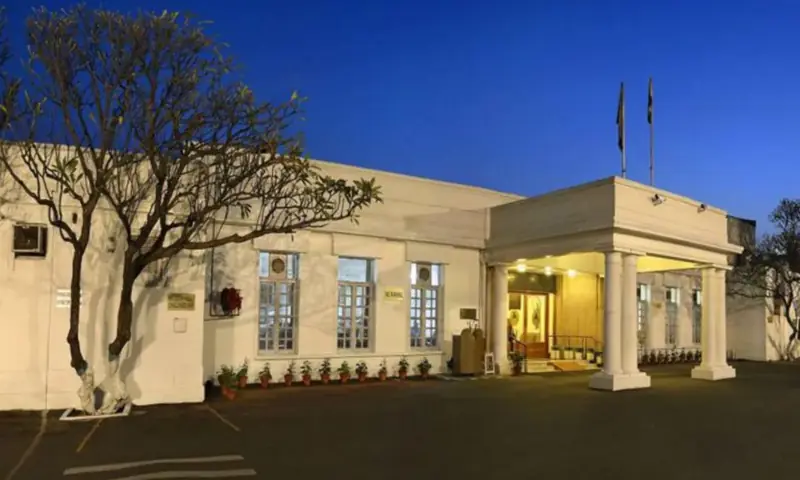
The Delhi Gymkhana Club was born in 1913, raised for British officers and the colonial set, and was later inherited by bureaucrats, politicians, and the comfortably connected. None of that pedigree could save it, however, from the law. Last week India told it to vacate the land by June 5. The government read a single clause from the club’s own lease, named a public purpose, and issued the notice. The land returns to the state as do the buildings on it. The club says it will fight the decision in court, and it may. But the order is out and the clock has started.
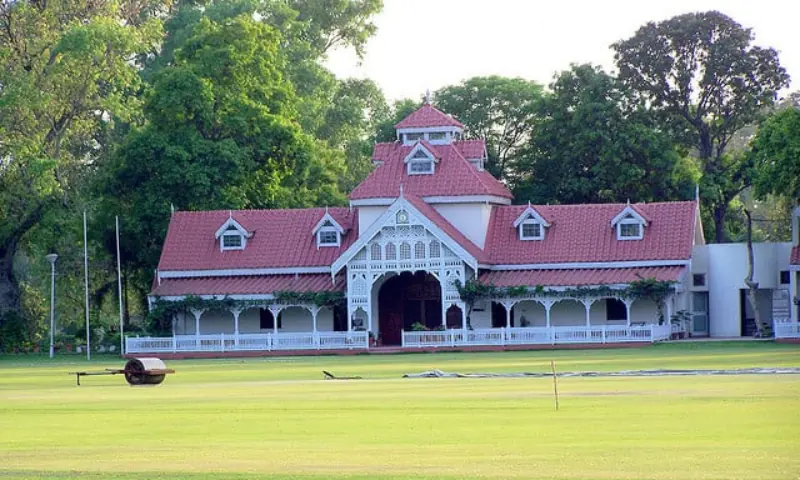
In Pakistan, the Lahore Gymkhana was born in the same year, is grander than Delhi’s and also sits on land worth a king’s ransom. But no notice to vacate has been issued.
These are the facts from the government documents that explain why.
India has ordered the Delhi Gymkhana Club to vacate its premises by June 5 — Credits: BBC
38 paisas a kanal
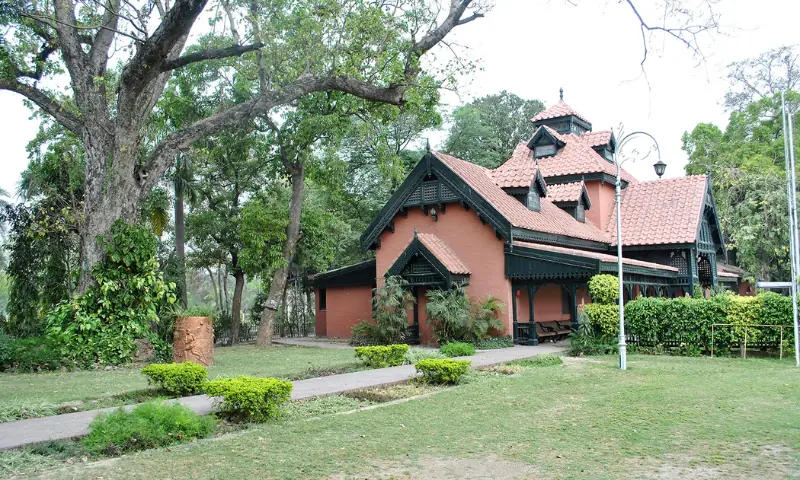
The Lahore Gymkhana sits on state land ringed by The Mall, Jail Road, and Zafar Ali Road. There is no pricier address in the province. Its 1913 lease stretches back to the Raj, and has been repeatedly extended in 1921, 1960, and, in haste in 1996, five years before its expiry. This time it was extended for 50 years to cover the years 2000 to 2050.
The gymkhana estate sprawls over 112 acres and the club holds three kanal and 16 marlas more than the record of rights allows — a tiny trespass that nobody thought to note until now.
But that is not all. Inside Lawrence Gardens (Bagh-e-Jinnah), the Gymkhana keeps an exclusive cricket ground on three-and-a-half acres of the Agriculture Department. This was never part of the lease, there is no grant for it and no rent is paid. No paper explains how a public garden was fenced off for a private game.
The land is worth Rs218 billion so fair rent would be about Rs4.36 billion a year. Under the government’s 2023 policy, clubs can pay a tenth of market rent, but this would still come to Rs400 million a year. The club pays Rs5000.
For years, the land’s real value sat behind a nominal colonial rent. It became visible when market figures were placed on the record.
The admissions of guilt
The club filed its defence with the Assembly admitting the buildings came after the lease, which said the government had to approve construction. Over the decades the club built its clubhouse, golf clubhouse, pool, two guest blocks, health club, administration block, mosque and a café in 2012. The Board of Revenue searched for permissions but none were on record. The club has not even paid its token Rs5,000 rent. The Additional Deputy Commissioner’s office sent a notice, dated 26 August 2020, saying that rent had not bee paid since 2011.
Then the money. The club swears no public funds reach it but then lists them in the next breath: Rs2 million from President Zia in 1985, Rs2 million from PM Nawaz Sharif the same year, Rs50 million from CM Pervaiz Elahi in 2006, Rs10 million from CM Shehbaz Sharif in 2014. Four heads of government, four gifts from the public purse, to a private club.
And who is the club for? Its rulebook answers. Every civil servant of Grade 18 and above may join for a token fee, and so may every commissioned officer of the armed forces. The other way to become a member is to inherit membership. The capture is not an accident of history. It is written into the founding charter. The roll of ordinary members, meanwhile, the club guards as confidential as if it were a list belonging to a Freemason Lodge.
The instinct to maintain secrecy runs deep. When citizens used the Right to Information law to ask for the lease and the donor records, the club refused, and carried its refusal to the Lahore High Court, pleading, without blushing, that as a public limited company it was no “public body” and owed the public nothing. In January 2023, the court dismissed the plea. The land belongs to the state, the judge held. Handing over land worth billions of rupees almost free was an enormous benefit and rent of Rs5,000 a year “cannot be even termed as any rate whatsoever.” The same shrug was then offered to the Assembly when it asked who the club’s members were.
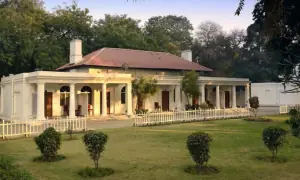
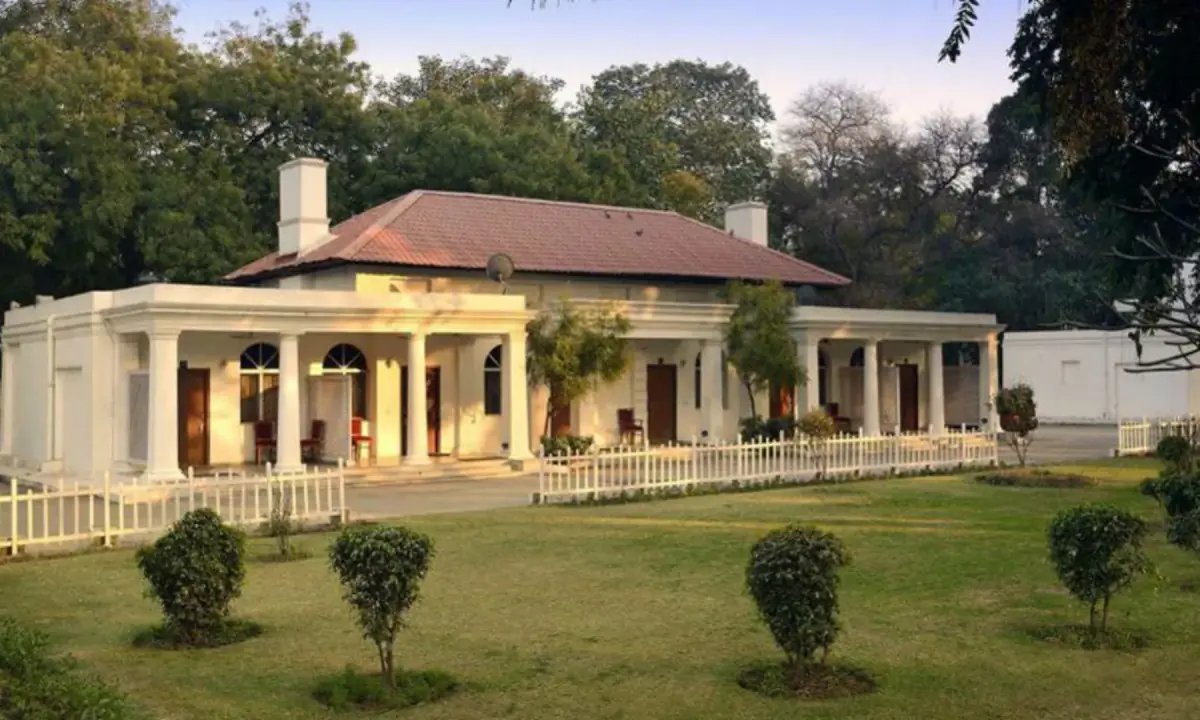
Lahore Gymkhana — Credits: Express Tribune
Institutionalising the giveaway
The Gymkhana is no aberration. It is the template: in May 2023 the state made the template law.
That month, a caretaker government in Punjab, an unelected stopgap whose only charge was to hold an election, approved a sweeping new policy. It had no mandate to make long-term land decisions but it made one anyway. On May 10 2023, the Colonies Department opened the door to hand prime state land to gymkhana clubs across the province, and fixed their rent at a tenth of market value. The discount was sewn into the rules.
The Board of Revenue reports the harvest. The figure that matters is what the clubs actually pay, after the 90 per cent is shaved away: Rs20,000 an acre a year at Dera Ghazi Khan, Mandi Bahauddin, and Chiniot; Rs50,000 at Vehari, Sahiwal, and Dera Ghazi Khan; Rs60,000 at Kamalpur Syedaan in Attock; Rs100,000 at Saddar Gymkhana, Gujranwala; Rs120,000 at Jhang; Rs140,000 at Jhelum and Gujranwala City. An acre of prime city land, for the price of a secondhand motorcycle, every year. And the final irony: this generous policy, the Board says, does not reach the Lahore Gymkhana, because its lease is older.
Elite enclaves on public land
The Gymkhana is not the only refuge for the officer class in Lahore. Inside the GOR, that broad expanse of prime central land set aside for officialdom, stands the Punjab Civil Officers Mess on Tollington Road. At GOR’s gate stands the colonial Punjab Club. A short walk off, the Lahore Polo Club keeps its grounds and stables inside the Race Course, public parkland surrendered to horses and a handful of players. An exclusive school for the male heirs of the elite, Aitchison College (Chief’s College), spreads over 200 acres. None of these entities bought their land. It is public land, held in trust, enjoyed by the few.
Islamabad tells the same story more starkly. The Islamabad Club, sprawled across 352 acres of CDA land, pays about three rupees an acre a month as its gates remain closed to ordinary citizens. The Gun and Country Club rose up on land meant for the Pakistan Sports Board; the Supreme Court declared it illegal in 2018 and ordered the land to be taken back, yet years later auditors could not trace some 38 acres, and the club sat on roughly 37 with no deed, no lease, no licence at all. The court said it aloud: there was no land in Islamabad for a public hospital [for the poor], but there was land aplenty for clubs for the rich. And the hunger has not eased. In Multan, the district administration moves to slice 15 acres off the Central Cotton Research Institute, founded in 1970, the cradle of more than forty cotton varieties, including the region’s first virus-free strain, to feed another gymkhana, while the country’s cotton reserves sit at a record low and we spend hard currency importing the very crop the institute exists to improve. The Pakistan Business Forum has written to the chief minister to stop it. The clubs took the parks. Now they reach into the seed bank.
When the same hands value, grant, and enjoy the land
This mechanism endures not through sloth but through strategy, as the actors make clear. The land belongs to the state. The men who grant it are senior civil servants in the Colonies Department, the Board of Revenue, the office of the Deputy Commissioner.
The men who set the value of the land, and thus decide the rent, are with the same revenue service. And the men who enjoy the clubs are, by rule, civil servants of Grade 18 and above and senior officers of the armed forces. The same hands own the land, price the land, rent it, and carry the membership cards.
When one cadre handles every aspect of a deal, its low price is no blunder. It is the purpose. No one at that table has any interest in making public land fetch a public price, for all of them gain from the opposite. The officer who would raise the rent, enforce the breach, or cancel the lease must act against his service, his colleagues, and likely his own leisure. That is what makes Sohaib Butt’s report so rare, and so telling. It took a man willing to go against the grain of his service to do the simplest thing: write down what the land is worth.
This is the truth worth stating plainly. In Pakistan, real power does not change hands at the ballot box. Governments arrive and depart; the bureaucracy and elites abide. And on the matter of state land for clubs, those who never leave office and those who enjoy the clubs are one and the same. That is why such a file scarcely moves. And it is why it matters so greatly who, in the end, forced it into the open.
Nestled within the Bagh-e-Jinnah, is one of the most picturesque cricket arenas of the world — Credits: Dawn archives
Two-tiered justice
The state can, of course, move on land with great speed if it wants. Take Islamabad, the capital that prides itself on order. For three months its bulldozers have flattened katchi abadis or the informal colonies where the city’s gardeners and nannies, washerwomen and labourers have lived for a generation.
Around 25,000 people were driven out of Mulism Colony in Bari Imam alone. Settlements a quarter-century old, Rimsha Colony in H-9 and the largely Christian Allama Iqbal Colony in G-7, were marked for the same fate, along with the ancient villages of Saidpur and Nurpur Shahan.The state’s housing policy counts 60 such settlements in the city, home to between 300,000 and half a million souls; the CDA recognises barely 10 as lawful and brands the rest squatters.
And here is the part that should silence the room: a Supreme Court order from 2015 was passed after the merciless clearance of the I-11 settlement left 25,000 people homeless. It stayed the summary evictions altogether. The bulldozers came regardless. The same legal system that cannot dislodge an unpaid colonial lease in 18 months had no trouble dislodging the poor in open defiance of its highest court.
Punjab is no kinder about informality. It is just quieter about it. For three decades, it has promised to regularise its katchi abadis, and for three decades that promise has mostly stayed on paper. There is a law to sanction the work done and an agency to get it done but the number of settlements grows faster than the lists of “regularised” ones. Surveys are started and abandoned. Notifications are issued and forgotten. The poor who put up their housing on the edges of Lahore and Faisalabad and Rawalpindi live out their years in limbo, always one bureaucrat’s signature away from eviction. Three decades is a lifetime. A child born in one of these colonies has grown, married, and had children, and the family still cannot say for certain that the ground beneath their feet is legally theirs.
Meanwhile, the new law enforcer is punishing and swift. The Punjab government created the Punjab Enforcement and Regulatory Authority (PERA), to clear what it deemed to be encroachments. It is aided by deputy and assistant commissioners and a uniformed force with black Vigos.
Through 2025 PERA hired thousands of staff and opened stations across Lahore and beyond, as its drives targeted the small folk.Traders protested its methods: a shop photographed in the evening, sealed the next morning, fined Rs10,000 to Rs25,000, kept shut until the owner paid. Thella wallahs, vendors, kiosks punished for setting up on a footpath.
But 112 acres of the city’s finest land, held on a dead lease, built over without leave, exempted by a rule the board invented, is “legitimate possession,” defended for generations. The bulldozer works swiftly for the weak but stalls for the strong.
What Rs218 billion could buy instead of membership
It is worth listing what Rs218 billion would buy in a place that cannot pay for medicine.
In 2025-26, Punjab set aside Rs630.5 billion for its health sector, and proudly announced that for the first time this included Rs79.5 billion for free medicine. And yet Dawn reported that Rawalpindi’s three public hospitals (Holy Family, Benazir Bhutto, and the Teaching Hospital) were given a fraction of Rs4.5 billion they asked for. Their vendors are refusing to deliver stocks until the bills are cleared.
The Lahore Gymkhana land, on the other hand, is worth Rs218 billion, or three times the free medicine funding. A single elite golf-and-dining estate, that pays Rs5000 in rent, is worth more than the tab for medicines in a province of 120 million people.
The Assembly did its job
It took an elected Assembly more than one attempt to set this right. The matter was brought up at the last session but did not move ahead for “mysterious” reasons. The House pressed further. A member moved an adjournment motion and the Speaker called it out: this was elite capture of state land.
The Speaker formed a committee and for the first time in history, opened its hearings to the public and TV cameras. The House’s members killed it at the first sitting by placing on the record, all of them, that they sought no membership of the club, only the public interest. In a few weeks they ferreted out from their government two documents that settled everything.
The first was the valuation, ADC(R) report (shown above), which turned Rs5,000 into a scandal by comparison. The second document ended the argument. The Law and Parliamentary Affairs Department gave a clean opinion on what the state may do: Clause 6 of the 1996 lease lets the government end the lease at any time, on six months’ notice. Clause 8 says that when it ends, the club is owed nothing for any building it raised. The Board of Revenue added that the state is bound to resume the land when public purpose requires it, or when the lease is broken.
India reclaimed its gymkhana land by reading one clause of a lease. Punjab’s lawyers have now confirmed the province holds the same power to take back the Rs218 billion estate, with every building on it, on six months’ notice, and pay nothing.
Credit for this denouement goes to the House of elected representatives. What they cannot do alone is sign the order. That pen rests with the executive, which is the same bureaucracy that would rather keep the file shut.
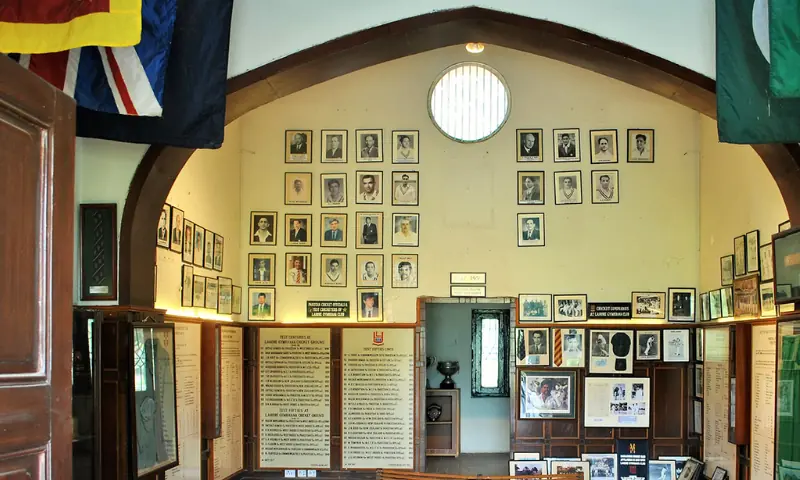
Inside Lahore Gymkhana Cricket Museum, the first of its kind in Pakistan — Credits: Dawn archives
Options
The remedy is not exotic. The simplest one is to cancel the lease. The second option is to take back the land for public use, which is what Delhi did. We don’t need to look far to find precedent. When the Royal Palm Club in Lahore defaulted on its lease of Railways land, the state took the land back and pulled down structures. Indeed, members on both benches have said if it can be done to a club on railway land in Lahore, it can be done to a club on nazul (state) land in Lahore.
The most durable option is a legal statute to dedicate the gymkhana estate to a fixed public use. And one use should unite the benches. The estate is a manicured, thirsty green in one of the most poisoned cities on earth. Take it back. Grow a native forest on it the fast and thick Miyawaki way and plan a park. Such greenery traps the dust, cools the air, and pushes back against the smog that sends people to our hospitals each winter. A golf course serves a hundred men. A forest would serve millions.
We say the law protects everyone alike but we must admit it does not. The thella wallah is presumed to be illegal and is not given time to prove otherwise. The Lahore Gymkhana Club is presumed to be lawful no matter what the file says.
Delhi has shown us the way. There was never a question of what the law allowed if elite land had to be taken back. The Assembly has proven this twice and put proof on record. What remains is the will to choose a public forest or park over a private fairway, the many over the few, the medicine over the membership. The House has spoken. The executive has not. For now, the silence belongs to the people holding the pen, and everyone can see why they would rather not sign.
ISLAMABAD: PPP Chairman Bilawal Bhutto Zardari on Friday welcomed Prime Minister Shehbaz Sharif’s statement regarding the formation of a government in Gilgit-Baltistan (GB) and expressed his gratitude.
The PPP is all set to form a government in the region after it gained 11 out of 24 seats in the GB Legislative Assembly, according to the unofficial results (Form-47) of the June 7 elections.
According to Radio Pakistan, the prime minister assured full support from the PML-N to the PPP on government formation.
The prime minister said the PML-N has decided to sit on the opposition benches in the Gilgit-Baltistan Legislative Assembly, but its elected members will vote in favour of the PPP to form the government.
In a statement, Bilawal said that recognising the PPP’s majority in GB is the continuation of a democratic tradition and added that the party views the premier’s invitation to form the government as a “positive step”.
“As a result of a consensus agreement, the positions of governor and deputy speaker of Gilgit-Baltistan will be allocated to the PML-N,” he was quoted as saying. “The PPP will utilise all its capabilities to serve the people of Gilgit-Baltistan.”
The party chairman specifically thanked the people of GB, saying that by placing their trust in the PPP, they entrusted the responsibility of safeguarding their property rights, employment rights, and constitutional rights to the party.
“The Pakistan Peoples Party will fulfil this responsibility effectively and with dedication,” he concluded.
A day earlier, delegations of the PPP and PML-N met in GB to discuss proposals for forming a government in the region after the recent elections. Key leaders from both parties held detailed consultations on government formation proposals.
In its statement, the PPP described the talks as a “major breakthrough”, saying both parties agreed to present proposals to their respective central leaderships.
It said the discussions also covered political cooperation and various national and regional issues.
OBSERVERS across the world have long questioned the utility of Donald Trump’s now three-month-old war on Iran. But a growing number of voices from within the US president’s Republican party are saying that this futile and illegal conflict must end. A resolution calling for the withdrawal of US troops from Iran passed narrowly in the Republican-controlled House of Representatives recently, with four members of the US leader’s own party backing the resolution.
The move has expectedly incensed Mr Trump, who called it “unpatriotic”. Since the start of the war, most American lawmakers had only mildly been criticising the joint US-Israeli attack on the Islamic Republic. But now, with US mid-term elections in November inching closer, both Republican and Democratic lawmakers want to avoid the voters’ wrath at the ballot box.
Like people around the world, Americans are also paying high prices at the petrol pump and rising energy prices have sparked a global spike in inflation. Many Americans are rightly asking why they are paying the price — in blood and treasure — to protect Israeli militarism.
Moreover, the feeling that this misadventure must be brought to a close echoes across the American political spectrum. For example, House Democrats have called for an end to the “deeply unpopular and illegal war of choice”, while many conservative Republicans, including the MAGA wing, have lashed out against getting tangled in another ‘forever’ war. Only Israel and its hard-line Zionist supporters in the US have an interest in keeping the Iranian front open. Most other people of the world, including level-headed Americans, want a swift end to the war.
But the problem is that Mr Trump does not seem to have a workable game plan to extricate himself from this quagmire. For three months, he has been unable to bring to heel a militarily and economically much weaker foe. It was clear from day one that this mission was doomed to fail, and the reasons for attacking Iran kept changing. At times it was said that the Islamic Republic was being punished for its supposed crushing of internal dissent, at others it was to keep the world ‘safe’ from the Iranian nuclear ‘threat’.
All of these were flimsy pretexts for what was in reality an imperial mission to punish an unyielding foe, and forward the Israeli agenda for perpetual regional chaos. Mr Trump must listen to what his own lawmakers are saying. Instead of further escalation, he should, in all earnestness, work towards reaching a long-term ceasefire with Iran that Pakistan and other regional states are pushing for.
The deal must promise respect for sovereignty of all regional states, while all the Gulf’s littoral states should work together for a mutual security agreement without the interference of outsiders.
• Clashes with law enforcers reported as rallies from various parts of region attempt to converge on Muzaffarabad • Several feared dead, two cops among scores injured • PM Rathore urges a return to talks • Five held from Muzaffarabad on suspicion of ‘links to foreign agencies’
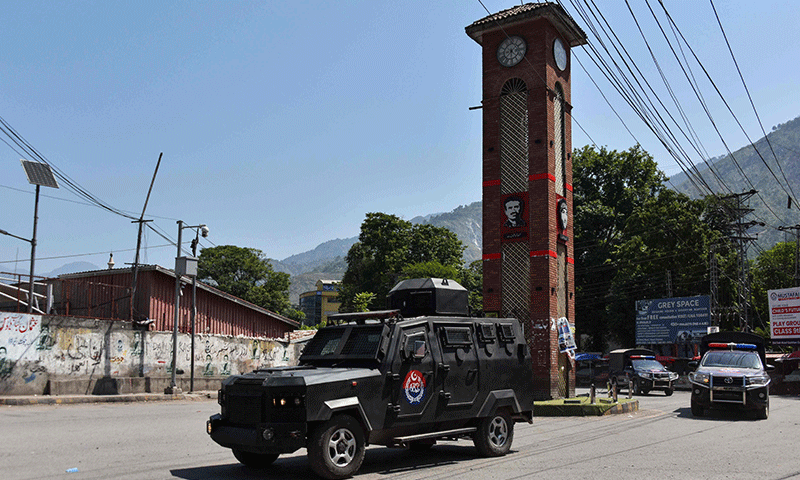
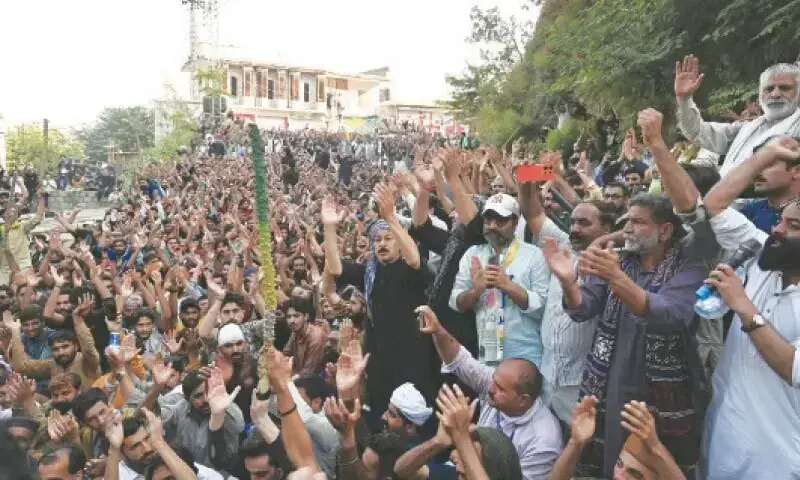
MUZAFFARABAD: Parts of Azad Jammu and Kashmir (AJK) remained in the throes of a crippling shutter-down strike on Tuesday, which was punctuated by clashes between law enforcers and supporters of the recently-proscribed Joint Awami Action Committee (JAAC).
The AJK government has issued orders to initiate sedition proceedings against two JAAC figures, and also announced a Rs10 million reward for information leading to the arrest of four of the group leaders.
At the same time, AJK Prime Minister Faisal Mumtaz Rathore urged a return to the negotiating table in a bid to end the tensions that have gripped the region over the past few days.
The clashes occurred when protesters from different areas of Mirpur division, comprising Mirpur, Bhimber and Kotli districts, took out rallies in line with the JAAC’s plan, envisaging a long march towards neighbouring Poonch division, en route to Muzaffarabad.
In the lakeside city of Mirpur, hundreds gathered outside the Quaid-i-Azam Cricket Stadium. They later began marching towards Plaak bridge, where they were reportedly joined by another rally from Dadyal, led by Khawaja Mehran Arshad at the border of Kotli district.
On the outskirts of Mirpur, two policemen and some protesters were injured in a brief clash in Pind Sabharwal village, an official said.
However, most violent clashes took place in Kotli city, after a procession of hundreds arrived there from Khuiratta tehsil. Though officials remained tight-lipped, residents and members of the AJK cabinet told Dawn — on condition of anonymity — that several people, including a doctor and a woman, were killed and scores of others wounded in the clashes.
According to initial reports, the doctor was on the roof of his home when he was hit by a stray bullet.
The strike and the ongoing closure of internet and mobile data services in the region has made it difficult to obtain real-time information from AJK.
Earlier in the day, all cities, towns and villages across AJK observed a complete shutter down strike. Even the banks, medical stores and bistros were closed and public and private transport off the roads.
However, in many areas motorcycles and a few private cars were occasionally seen moving through the streets without any disturbance.
In Muzaffarabad – the ultimate destination of protesters – riot police had taken positions in and outside government buildings and main thoroughfares to meet any eventuality. However, the capital remained completely calm on Tuesday.
Meanwhile, the AJK legal fraternity boycotted judicial proceedings on a call by the AJK Bar Council, to protest the alleged arrest of senior lawyer Amjad Ali Khan, a core member of the JAAC.
Action against JAAC leaders
The AJK government issued orders to initiating sedition proceedings against JAAC leaders Shaukat Nawaz Mir, resident of Muzaffarabad, and Mehran Arshad Khawaja, resident of Mirpur.
A notification issued by the AJK Home Department accused both leaders of committing “sedition through their speeches, written material, videos and audios”.
The government has issued instructions to the Mirpur and Muzaffarabad senior superintendents of police (SSPs) under Section 196 of the Code of Criminal Procedure (CrPC) to review the available records/materials.
It also directed the SSPs to register a case against Mir and Khawaja, and submit a charge-sheet in court after completing the investigation.
The two men were also among a group of four JAAC figures for whom ‘head money’ of Rs10m was announced.
“The president of Azad Jammu & Kashmir has been pleased to fix Rs10m reward money to be granted to any person who provides information leading to the successful arrest of the following offenders belonging to the proscribed JAAC,” said another notification.
Those named in the notification include Shaukat Nawaz Mir, Umar Nazir Kashmiri, Khawaja Mehran Arshad and Sardar Aman Khan.
Five held over ‘suspicious links’
According to the state-run Associated Press of Pakistan, law enforcement agencies arrested five suspects in an intelligence-based operation, seizing laptops, mobile phones, and various communication devices.
During interrogation, information provided by one of the detainees led to the recovery of a large cache of arms, including seven automatic weapons, multiple grenades, and other military hardware.
According to APP, investigators have uncovered evidence pointing to their alleged contact with hostile foreign intelligence agencies.
‘Find a way out’
In a post on X, the AJK premier reiterated his call for the issue to be resolved through talks.
“Please come back to the negotiating table. I’m requesting everyone on daily basis to resolve matters through discussions instead of fire and blood,” Rathore wrote on X.
He added that the protesters’ “abusive comments, constant threats and senseless agitation” were not helpful to anyone in AJK.
“A political activist without the ability to debate and negotiate is like a pilot without the ability to fly an airplane. They both end up causing hurt and damage to people behind them,” the PPP leader remarked.
“Everyone recognises your rights and liberties,” the AJK PM assured, stressing that both sides needed to “remain calm and find a way out through talks”.
“The only weapon a political activist carries is his reasoning and negotiation skills,” he said.
Rights bodies concerned
Human rights watchdog Amnesty International expressed concern over the violent and sweeping crackdown on protests - including an internet shutdown, mass arbitrary arrests, and deadly use of force – and called on the authorities to take immediate steps to deescalate the situation.
Separately, the Human Rights Commission of Pakistan (HRCP) said it was “deeply concerned by the escalating confrontation” in AJK and the loss of life among both protesters and law enforcement personnel.
• Police arrest at least 72 people, recover ‘weapons, suspicious documents’ • Situation tense in Poonch after trader gunned down in ‘clash with police’
MUZAFFARABAD: Authorities in Azad Jammu and Kashmir (AJK) on Saturday launched a crackdown on the proscribed Joint Awami Action Committee (JAAC), arresting scores of its leaders and activists from different areas.
“In fulfilment of its responsibility to maintain public order and protect the lives and properties of citizens, police have arrested around 72 people affiliated with the proscribed JAAC over the past 18 hours,” said a handout issued by a spokesperson for police chief Liaqat Ali Malik.
“During initial action, weapons, communication gadgets, suspicious documents, material related to plans that could adversely affect public order and organised mechanisms for violent agitational activities had been found, in addition to indications of questionable contacts with patrons and foreigners which are being investigated under law,” it added.
The police spokesperson said the police and other institutions concerned were examining information, digital evidence and contacts indicating that some elements were “trying to exploit public issues to disrupt law and order, influence the electoral process, damage public and private property, incite hostility against state institutions and paralyse normal life through unconstitutional and violent actions”.
He urged the public to remain peaceful, restrict movements and avoid taking part in any activity by any outlawed organisation and extend cooperation to law enforcers in their own interest.
The police statement came in the wake of a tense situation in Poonch, where a trader, Shahzeb Habib, was killed by a gunshot wound late on Friday night.
According to sources, Habib was last seen accompanying Umar Nazir Kashmiri, a JAAC core member from Poonch, on Friday night when they were returning from Khaigalla to Rawalakot. Their vehicle was intercepted by law enforcers near Barmang bridge, which reportedly led to “an exchange of fire” between the two sides during which Habib was believed to have been critically injured and later died.
“At 11:45pm on Friday, when police tried to intercept a suspicious vehicle near Khaigalla, its armed occupants opened fire on them. Police also retaliated with firing, which led the armed men to escape,” claimed a post on the Facebook page of the AJK police. It made no mention of any death.
Sources said the body of Habib was brought to the Combined Military Hospital (CMH) Rawalakot, but his relatives did not allow the post-mortem. Mr Kashmiri was also said to have received minor injuries, but he had managed to escape arrest, according to some of his associates.
On Saturday, relatives placed Habib’s body outside the hospital where they staged a sit-in for about four hours. Afterwards, it was taken to Tarar, his native village. Initially, it was decided that the funeral prayer would be held at 6pm. However, later his family and colleagues changed their mind and brought the body back to the CMH for a post-mortem examination, which could not be conducted when this report was dictated on phone, amid an internet shutdown.
Witnesses said dozens of people were on a dharna (sit-in) outside the hospital. Reportedly, they were waiting for some JAAC core member to visit them and issue a direction regarding the next course of action.
Earlier in the day, most shops in Rawalakot remained shut, except for those selling groceries, dairy products, fruits and vegetables, medicines, and restaurants, which recorded a “rush of panic buyers,” according to witnesses.
“Rangers and police personnel are standing alert at many important points in the town. But I tell you there is hustle and bustle here,” a resident told Dawn by telephone.
Witnesses said that a main route from the Azad Pattan Bridge had been blocked by protesters by placing boulders and other obstacles in the jurisdiction of the Mang police station, but other roads were mostly open.
In Muzaffarabad, life remained normal. Though shops stayed open, traffic was thin on the roads. Police staged a flag march in various parts of the city.
Meanwhile, a senior official at the AJK Supreme Court told Dawn that the two-member bench, comprising Chief Justice Raja Saeed Akram and Justice Khalid Yousaf Chaudhary, had finalised the apex court’s advice in response to a presidential reference under Article 46-A of the AJK Interim Constitution by 8pm.
The sealed envelope, containing the advice, had been delivered by acting Registrar Malik Ahtisham to the secretary for presidential affairs at the President’s House here, he said.
Fruit sellers at roadsides and bazaars are bracing for Pakistan’s yearly mango madness. Their baskets are filled with the early Sindhri crop for now as they wait for the Punjab Langra and Dusehri, soon to be followed by the Chaunsa and Anwar Ratol.
This year’s season arrives with as much anxiety as anticipation. Fluctuating temperatures, erratic rain and hailstorms early in the year, the period critical for flowering, fruit set and ripening, have damaged orchards across Punjab’s mango belt, covering Multan, Dera Ghazi Khan and Bahawalpur divisions in the south and Sahiwal, Faisalabad, Sargodha and Lahore in the central and northern parts of the province.
The prolonged stagnation after last year’s floods weakened root systems and stressed trees already battered by climatic shocks. These setbacks, coupled with uncertainty in export markets amid tensions surrounding the US-Iran-Israel conflict, have kept growers, contractors and traders on the edge over the season’s fragility.
“I can safely say that around 40 per cent of the crop in my area has been damaged,” said Rabia Sultan, a grower who cultivates several varieties, including Summer Bahisht, White Chaunsa, Anwar Ratol and Sindhri, across nearly 100 acres of fertile land in Kot Addu, South Punjab.
Major Tariq Khan, director Lutfabad Farms and director operations Progressive Mango Growers Group, said the yield has been dropping over the last few years, but this year has been particularly “troublesome”. “If you drive through the mango-growing belt of South Punjab for instance, you’ll witness the extent of damage,” he said.
Although the Dusehri and Langra have been spared somewhat as they develop earlier in the season. “They had matured before the early-season stress set in. Chaunsa and Ratol that ripen later in the season have been most affected.”
Bad weather
Usually, from the cool days of February to the scorching months of May and June, each stage of the mango cycle is delicately timed. The trees emerge from dormancy, begin flowering, pollinate, and eventually bear and ripen fruit in smooth succession. This year, however, abrupt temperature swings tore through this cycle.
News reports, AccuWeather forecasts, and Pakistan Meteorological Department (PMD) outlooks say that February clearly departed from normal winter conditions across Punjab. It turned unusually warm, with day-time temperatures rising to 24°-28° Celsius and night-time lows ranging between 11°-14°. The PMD said the monthly mean was 17.1°, which is about 2.5° above average.
If it was warmer, it was also parched. It rained 88.8pc less across Punjab in February, leaving orchards thirsty at a critical stage of crop development. Perhaps the only upside to this pattern was that it sped up flowering earlier than usual. “We surveyed the orchards in February and saw trees profusely laden with boor (flowering),” said Hafiz Asif Ur Rehman, Principal Scientist, Mango Research Institute in Multan. This development initially gave them the impression that 2026 would yield a bumper crop.
Unexpectedly, the mercury stayed up as March rolled around, with day-time highs inching to between 32° and 37° — roughly 2° to 6° higher than normal. The night-time temperatures stayed at between 14° and 18° which was around 1° to 3° above normal for this time of the year.
“The high temperatures during this flowering period suddenly reduced pollen viability,” said Riaz Hussain, a scientific officer at the Mango Research Institute. “[This] disturbed pollinator activity, and conducive flowering. It also caused some premature fruit to drop.”
Worse, by mid-March, the pattern shifted again. Instead of temperatures transitioning into warmer degrees, they sank from the 30s to the 20s during the day. The night-time temperature remained more or less consistent.
This contrast between an unusually hot start and a cooler, unstable end of the month, complicated the crop cycle. Many orchards showed uneven flowering, multiple fruit-setting waves, delayed fruit maturity, and “increased bator or malformed clusters that favour pest infestation, particularly mango hoppers and fungal problems,” said Hussain.
April and May settled back into seasonal norms but sporadic hail, rain, and windstorms continued to disrupt the pattern. Temperatures would fall several degrees below average in affected areas. “Such bursts of temperature may scar the mango skin and make it less suitable for export and reduce its market value,” said Waqas Bucha, who manages 30 acres of orchards along Bosan Road in Multan.
Drowning
Even before the temperatures played up, prolonged waterlogging after the 2025 floods had damaged feeder roots, reduced soil aeration, and weakened overall tree physiology, particularly in low-lying orchards near riverine areas of Chenab.
According to the Pakistan Society for Horticultural Science, last year more than 41,000 acres or over half of the total orchards in Multan, Shujabad, and Jalalpur were left under water. “The brunt fell on small and medium-aged orchards, where trees, still in their most productive years, were uprooted or severely stressed,” it said.
In several areas, late vegetative growth remained tender for longer periods, making them more vulnerable to insect attacks and nutrient imbalance because saturated soils don’t absorb fertiliser the same way.
These conditions created an environment for the hopper and other stubbornly resistant pests. Waqas Bucha has already sprayed pesticides twice, but the disease refuses to go away. Major Tariq Khan has done it thrice, yet the infestation persists. “In some areas,” he added, “farmers have gone up to eight sprays, but still cannot bring pests under control.”
Dawn reported on May 13 that the Ministry of Commerce has extended the start of export season to June 1, 2026, saying it was doing so because of stakeholder requests and climatic shifts that have delayed fruit maturity, particularly for the Sindhri.
Long-range shifts
In the last five years Punjab has had a clear officially documented shift from seasonal stability to exceptional high heat and rainfall. It has prolonged summers, hitting up to 40°-45° Celsius, and shorter and milder winters, with day temperatures ranging between 18°-24° and night-time lows of 5°-10°, both reflecting an estimated 3° rise in mean temperature.
Rainfall has become far more unstable. The 2022 monsoon delivered about 77pc above-normal rainfall while 2024 again recorded above-normal monsoon activity.
Shrinking acreage
Across the five-year trajectory, according to the Final Kharif Estimates by the Punjab Agriculture Department, the mango economy shows a clear move from a stable, productivity-led system to an expansion-driven model in which land increase is beginning to compensate for weakening efficiency per acre.
In the early phase (2019-20 to 2020-21) the cultivated area was relatively stable, hovering around 240,000-244,000 acres. But yield fell 6pc from 143.79 to 135.02 maunds per acre. In the next phase (2021–22 to 2022-23) the area stayed at 244,500 acres, but yield dropped 4pc from 148 to 142 maunds. In 2023-24, the yield increased sharply to 173.5 maunds per acre despite unchanged acreage, possibly due to better weather. Last year, 2024-25, cultivated area jumped 55pc to 378,975 acres. But yield dropped to 148.4 maunds per acre, 14.5 percent lower.
Dr Azeem Sardar, an Agricultural Development specialist with The Urban Unit, is clear that the changing weather is “one of the major reasons behind the lower mango yield.”
Warning signs
Tariq Khan’s area was once known for its thriving cotton fields, which were slowly abandoned by farmers who could not keep fighting climate change, pests and sinking yields. He fears mangoes could meet the same fate unless growers adapt.
Hafiz Asif Ur Rehman said they advise farmers to adopt careful irrigation, like avoiding watering already wet soil, maintaining a green grass cover outside the canopy to reduce heat stress, spraying water on the sun-facing side of fruit-bearing trees during extreme temperatures above 45°C, and applying mulch under the canopy to regulate soil temperature. Farmers who combine good agricultural practices, such as timely pruning, nitrogen application during dormancy, and scheduled pesticide sprays, have been better able to protect their crops.
Weather forecasting and early warning systems help, but Dr Azeem Sardar added that “climate-smart orchard management remains an evolving field in the country.”
Experts say transitioning from traditional mango cultivation practices to climate-resilient approaches remains gradual and faces several challenges. “Many small and medium-scale farmers continue to rely on conventional farming practices due to financial limitations, lack of technical knowledge, and restricted access to efficient irrigation systems and quality inputs,” said James Robert Okoth, Officer in Charge, FAO Pakistan.
Farmers are slow to pivot but so is government. “We have approached the climate change ministry, Muhammad Nawaz Sharif University of Agriculture, and other bodies, but it is always the same response, ‘yes, yes, let’s do something,’ and then nothing materialises,” he said.
Around 92pc of mango growers in South Punjab are small landholders who don’t have the capacity to innovate or independently adapt to climate pressures. And each damaged crop and shrinking yield is spreading the fear that the king of fruit, the Pakistani mango may become another casualty of the global climate crisis.
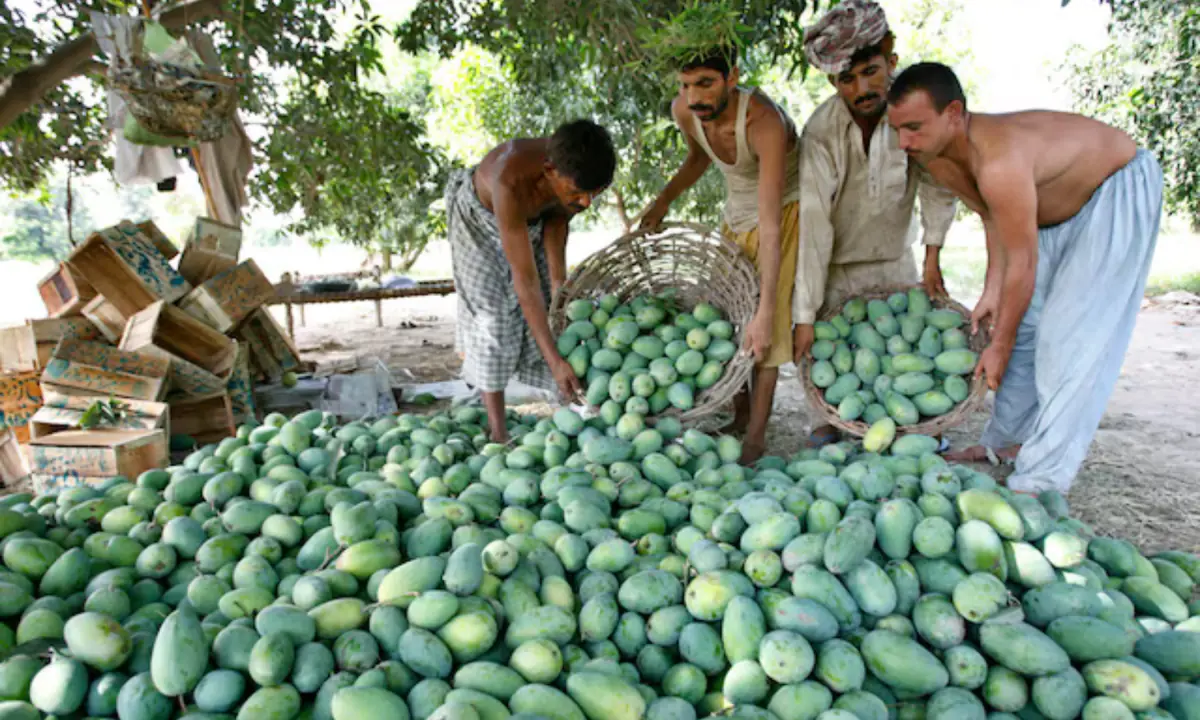
Header Image:Farmers sort mangoes near Multan August 15, 2007. Credits: Reuters
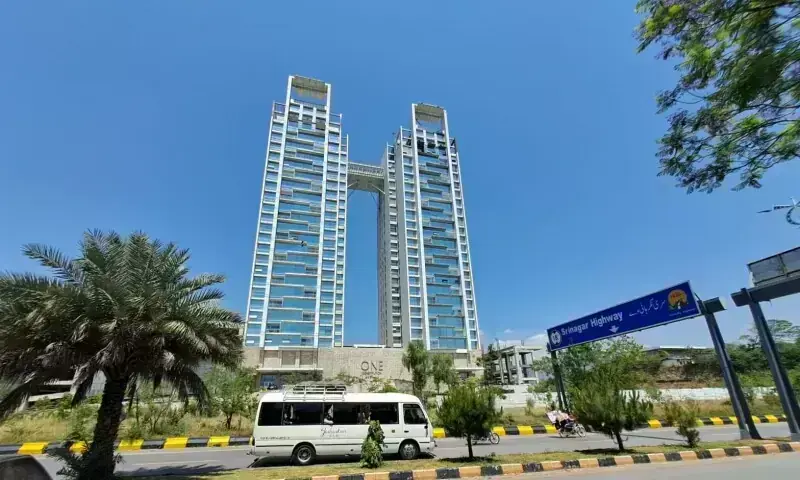
ISLAMABAD: The controversy surrounding the luxury flat once owned by former prime minister Imran Khan reached the Islamabad High Court again on Tuesday.
A division bench had already restrained the Capital Development Authority (CDA) from dispossessing buyers of One Constitution Avenue, including the man who purchased Mr Khan’s apartment, and issuing a stay order on intra-court appeals filed against a single bench verdict that had left their fate tied to the defaulting builder.
The flat originally owned by Mr Khan was sold directly to Shahid Naseer through the builder of the controversial project, M/s BNP’s Farooq Ahmed Sheikh.
A division bench, comprising Justice Mohammad Azam Khan and Justice Raja Inaam Ameen Minhas, heard the appeals filed by the residents of One Constitution Avenue, and directed the CDA not to take any coercive action against the occupants till the next hearing.
The dispute traces back to a 2005 lease agreement between the CDA and BNP (Private) Limited for a five-star hotel project, later converted into the luxury residential and commercial complex, One Constitution Avenue. The lease was terminated in 2016, restored by the Supreme Court in 2019 on stringent conditions, including payment of Rs17.5 billion in instalments backed by bank guarantees, and then cancelled again after BNP allegedly defaulted.
Last month, a single bench of the IHC upheld the CDA’s cancellation, ruling that third-party buyers would “sink or sail” with the original lessee. That verdict triggered panic among residents, with reports of officials breaking down doors to serve eviction notices.
Mr Naseer, who purchased the flat originally owned by the former prime minister, signed a serviced apartment booking agreement with BNP in July 2022 for a two-bed unit on the 11th floor of Tower C, for Rs93.575 million.
Mr Naseer has already paid Rs45.5 million — nearly 48 per cent of the total price — via wire transfer, according to the agreement available with Dawn. The apartment, described as approximately 1,970 square feet, was to be ready for possession by August 31, 2022, with BNP reserving the right to extend the deadline up to February 28, 2023.
That deadline has long passed. No completion certificate has ever been issued by the CDA for the project.
The agreement places most risks on the buyer. Clause 4 states that the risk of loss or damage to the apartment passes to the buyer on the completion date “irrespective of whether he has physically taken possession”. Clause 13 allows BNP to forfeit up to 25 per cent of the consideration if the buyer defaults on payments. Clause 12, which deals with default by the sub-lessor (BNP), gives the buyer the sole remedy of terminating the agreement after December 31, 2023, and getting payments back — less any amounts already paid to the buyer as a 6pc annual surcharge.
Court records show that 240 flats in the disputed project were allotted to the country’s power elite. The list included a former acting president (who served two non-consecutive terms), a former Senate chairman, a former prime minister, a former chief of air staff, former naval chief, two former chief justices of Pakistan, a former chief justice of the Lahore High Court, and a former defence minister.
Intriguing new facts have also surfaced in the court record, including a 2012 interim arbitration award issued by incumbent Defence Minister Khawaja Mohammad Asif — then a private citizen — and a former chamber president to resolve disputes between the two main partners of the project.

 Login
Login