Reading view

Can’t get your HRT patches? What to do and what to avoid

BSIP/Universal Images Group/Getty

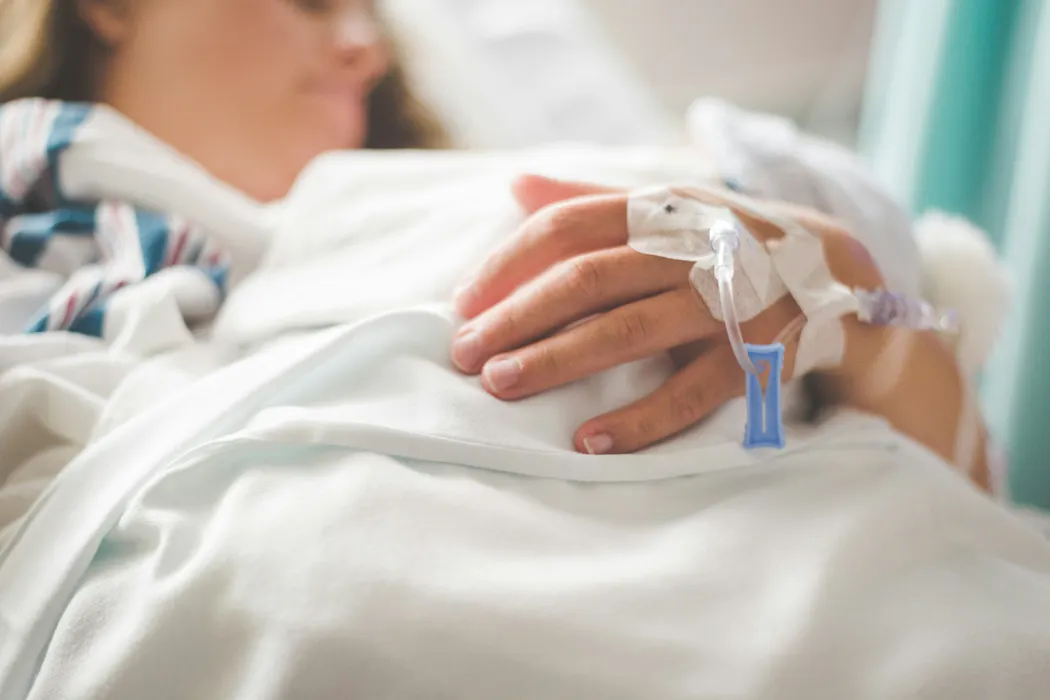
Since 2020, Australia has had an ongoing shortage of oestrogen patches, which are usually prescribed to help ease menopause symptoms.

In March, the Therapeutic Goods Administration (TGA) confirmed shortages of several brands and doses of patches will last until at least the end of this year. But this estimate has already been pushed back many times.

So, what can you do when the pharmacy has run out of the hormone replacement therapy (HRT) patches you rely on?

You don’t need to ration your supply (and this doesn’t work anyway). Here are your other options.

What are HRT patches for?

HRT patches are small sticky squares worn on the skin, usually on the lower belly, back or buttock. This is sometimes also called menopausal hormone therapy (MHT).

HRT patches slowly release oestrogen (and sometimes a second hormone called progestogen) through the skin and into the bloodstream. Most brands need to be replaced every 3–4 days (twice a week).

Patches are prescribed to two groups of people. The vast majority are women going through perimenopause and menopause, when the ovaries make less oestrogen. Menopause typically happens around 50 years of age, but low oestrogen can occur earlier due to certain conditions, as well as surgery or cancer treatments.

The drop in oestrogen is what causes hot flushes, night sweats, broken sleep, brain fog, mood changes, joint aches and vaginal dryness. Symptoms vary from person to person, but about one in ten women in Australia are prescribed HRT for menopause.


Read more: What are the most common symptoms of menopause? And which can hormone therapy treat?


A much smaller group using HRT patches is transgender women and some non-binary people. They make up less than one per cent of Australia’s overall population.

As part of gender-affirming hormone therapy, HRT patches raise oestrogen levels in the body to bring about physical changes that align with the person’s gender, and to support their mental health and wellbeing.

The medication is identical. The shortages hit both groups.

Patches are a popular first choice for hormone therapy for a good reason. They deliver the hormones via the skin and not the gut, meaning unlike tablets the liver doesn’t have to process them. This carries a lower risk of blood clots, which matters for people with migraine, high blood pressure or a higher clot risk.

Patches also release a steadier level of hormone in the blood than a once-a-day pill.

Hormone patches are not just “good to have”. For many people they are the difference between functioning at work and home, and not.

What happens when you stop using them

If you stop using your HRT patches, your oestrogen levels will drop. This can mean hot flushes, night sweats and disrupted sleep return – usually within days.

Symptoms can really impact mood and mental health. This is not “withdrawal” in the way people withdraw from alcohol or opioids, as oestrogen patches are not addictive. But as the oestrogen that was easing symptoms is no longer there, the symptoms come back.

Many people may choose to stop HRT after a period of time. Research has shown that around half of people report a return of symptoms after stopping, which can sometimes lead them to restart treatment.

Some longer-term benefits of HRT, such as stronger bones, take months to fade. A short gap of a week or two while finding an alternative will not make a big difference.

If you have limited patches and can’t find more, you may consider tapering off. This means gradually using less over time (for example, by using fewer patches a week). But this doesn’t prevent symptoms returning – it only delays them. So if supply has run out, the priority is switching to another formulation, rather than rationing what remains.

One thing to avoid: cutting patches in half to make them last longer. The TGA specifically warns against this. It can affect how the patch sticks to the skin and how the oestrogen is absorbed, making the delivered dose unreliable.

What are the other options?

The first is a different patch. Pharmacists can now swap one brand for another brand or strength without a new prescription, under rules that specifically address medicine shortages. The TGA has also approved an overseas patch called Estramon, which is available in Australian pharmacies now.

A pharmacist may also provide multiple lower-dose patches, to use together.

The second option is an oestrogen gel, rubbed on the skin once a day. It works the same way as a patch and, as it’s delivered through the skin, has the same benefit of lower blood clot risk. But gels need to be applied daily. The Australasian Menopause Society has a dose conversion guide that doctors use to match a usual patch dose to other forms.

The third option is a tablet. Oral oestrogen works well for hot flushes and other body-wide symptoms, and may also be used alongside progesterone tablets. The trade-off is a slightly higher clot risk than skin-based options, because the hormone passes through the liver first. So tablets may not suit those with a history of clots or migraines.

For those whose main problem is vaginal dryness or discomfort during sex, a vaginal oestrogen cream or pessary works right where it is needed. Very little hormone reaches the bloodstream, so it is generally safe and can often be used with, or replace, other forms of HRT.

The shortage is frustrating for patients, pharmacists and doctors alike, and won’t be fixed any time soon. There are many alternative options. A chat with a GP or pharmacist is the place to start.

The Conversation

Ada Cheung is an Endocrinologist and Professor at The University of Melbourne. She has received travel support as an invited speaker from the Australasian Menopause Society and International Menopause Society. Ada Cheung has received research funding from National Health and Medical Research Council, Medical Research Future Fund, Heart Foundation, Suicide Prevention Australia, The Paul G. Allen Frontiers Group, University of Melbourne, Endocrine Society of Australia, Royal Australasian College of Physicians Foundation, Austin Medical Research Foundation, Sir Edward Dunlop Medical Research Foundation and Viertel Charitable Foundation. She is currently a member of the Endocrine Society (US), Endocrine Society of Australia, Australian Medical Association, World Professional Association for Transgender Health and Australian Professional Association for Trans Health.

  •  

Crashes involving animals spike in winter. Here’s how to avoid them

If you’ve driven on regional Australian roads, you’ve likely seen the signs warning of kangaroos and other animals – the familiar “wildlife ahead” signs.

They are supposed to warn drivers of the dangers of wildlife on our roads, but collisions with animals are rising in Australia.

So how widespread is the problem? How can you reduce the risk? And what should you do if you do hit one?

A growing concern

Recent insurance data suggest the risk is higher than many people realise.

Tens of thousands of collisions with animals are recorded each year across Australia and the number appears to be rising.

According to NRMA Insurance claims data, there was a 21% rise in animal collision claims from 2024-2025.

The risk is not evenly spread. It varies by time of day, season and location, meaning there are periods when drivers are significantly more exposed.

Understanding when and where that risk is highest is the best way to avoid animals while driving.

How common are crashes with animals?

Insurance data provides the clearest indication of the scale of animal-vehicle crashes:

When and where is the risk highest?

There are distinct risk patterns when it comes to animal crashes and the strongest and most consistent pattern is time of day.

Crashes involving animals are heavily concentrated in low-light conditions (dawn and dusk), particularly from early evening through to midnight.

Analysis of serious crashes shows they are significantly over-represented between 6pm and 6am, with the highest risk typically in the evening (6pm–12am).

This pattern is closely linked to animal behaviour. Many large animals, including kangaroos, are most active at dusk and night, often moving to feed along roadside vegetation.

Reduced visibility also means drivers detect animals later, leaving less time to react.

Seasonal patterns also exist, though are less pronounced. Insurance data shows collisions increase through the cooler months, with a clear peak in mid-winter (June–July).

This is largely due to shorter daylight hours, which extend the time drivers are exposed to high-risk, low-light conditions.

Location matters, as well. Insurance data shows collisions are concentrated on regional and rural roads, where higher speeds, limited lighting and greater exposure to wildlife increase risk.

Insurer data consistently identifies specific hotspots across the country.

In New South Wales, the highest number of claims were recorded in Dubbo, Bathurst and Wagga Wagga. In Victoria, collisions are concentrated around Sunbury and Melbourne’s northern fringes, including rapidly growing outer suburban areas.

Some road users are more vulnerable and exposed than others. Motorcyclists are consistently over-represented in serious animal crashes and are more likely to suffer severe injury, a pattern observed internationally.

To swerve or brake?

There’s no silver bullet solution to animal-vehicle crash risk. It comes down to understanding the conditions that increase exposure, and how drivers respond in the moment.

Not all widely used measures work. Wildlife warning signs are common but evidence suggests they have limited impact: drivers become accustomed to them and often ignore them.

The safest response is not always clear.

Drivers confronted by an animal may brake or attempt to swerve, and the evidence on these decisions is more nuanced than some road safety messaging suggests.

Among crashes that led to hospitalisation, direct impacts were associated with higher injury severity (than swerving), while swerving was linked to a greater likelihood of rollover.

In other words, swerving does not necessarily eliminate the risk; it can change it from an animal impact to a loss-of-control crash, such as a rollover or collision with another object.

But not swerving does not guanrantee lowering the severity of occupant injuries.

The best advice is to reduce speed early which allows the driver to maintain control, particularly at dusk, dawn, night and in known wildlife zones. Lower speeds give drivers more time to brake safely and reduce the severity of both direct impacts and evasive manoeuvres.

What should you do if you hit an animal?

Dead or injured animals on the road can lead some drivers to stop, get out of the car, or try to move an animal. This can expose them to passing traffic and can prove fatal.

In many cases, the safest option is to call a wildlife rescue service and report the location, rather than intervening directly.

Play it safe

Animal crashes are inherently unpredictable. The most effective approach is to understand the patterns and risk factors and respond proportionately.

Reduce exposure to high-risk times where possible, and if not, remain vigilant in those conditions.

There is no single fix. The risk and outcome depends on when you drive, where you drive, and how you react in the moment.

The Conversation

Milad Haghani receives funding from the Australian government's Office of Road Safety.

  •  

Albanese’s ratings jump in federal polls; Liberals easily retain Nepean at Victorian byelection

In both the Redbridge and Freshwater polls, Anthony Albanese’s net favourability has jumped eight points since late March to -9. In Redbridge, the Coalition rebounded from a low of 17% in March to 22%.

The Liberals have easily held the Victorian state seat of Nepean at a byelection on Saturday. In Tasmanian upper house elections also on Saturday, a left-wing independent is likely to gain the seat of Huon from a conservative independent.

Redbridge poll

A national Redbridge and Accent Research poll, conducted April 24–30 from a sample of 1,014, gave Labor 31% of the primary vote (down one since the previous Redbridge poll in late March), One Nation 27% (down two), the Coalition 22% (up five), the Greens 13% (steady) and all Others 7% (down two).

By respondent preferences, Labor led the Coalition by 54–46, a one-point gain for Labor. Labor led One Nation by 55–45, a two-point gain for Labor. By 2025 election preference flows, Labor led the Coalition by 53–47, a two-point gain for the Coalition. The March poll’s respondent preferences were likely too weak for Labor.

Albanese’s net favourability jumped eight points to -9. Angus Taylor was up one point to -2, Pauline Hanson up two points to -1, Nationals leader Matt Canavan up one point to -2, Greens leader Larissa Waters down one point to -4 and Energy Minister Chris Bowen down two points since December to -16.

US President Donald Trump had by far the worst net favourability with Australians, down three points since March to -58.

In a three-way preferred PM question, there was no change, with Albanese at 33%, Hanson 23% and Taylor 14%.

Combining the issue scores of Labor and the Greens against the Coalition and One Nation, the right led by 37–30 on cost of living, 33–28 on housing, 53–22 on immigration, 41–26 on national security and by 42–30 on economic management. The left’s one lead was on healthcare, by 35–31.

Freshwater poll

A national Freshwater poll for News Corp, conducted April 28–30 from a sample of 1,046, gave Labor 32% of the primary vote, One Nation 25%, the Coalition 23%, the Greens 12% and all Others 8%, with no changes since the late March Freshwater poll. By respondent preferences, Labor led the Coalition by 53–47, a two-point gain for Labor.

Albanese’s net favourability jumped eight points to -9, Taylor’s was down four points to +10, Hanson’s was down five points to +5 and Canavan debuted at +4. Albanese led Taylor as preferred PM by 44–38 (42–36 previously).

Cost of living was rated the most important issue by 44%, with housing the only other issue in double digits at 12%. By 47–32, respondents were dissatisfied with the government over the rise in fuel prices, a big improvement from 59–18 dissatisfied previously.

By 37–33, respondents were dissatisfied with the government’s response to the Iran war (33–31 previously). By 37–34, they were dissatisfied with the response to the Bondi terrorist attacks. By 41–27, they were dissatisfied with the response to the rise in antisemitism. By 38–31, they thought the government was enforcing the social media ban on children under 16 poorly.

By 63–31, respondents were aware of the government’s plans to cut the NDIS. By 47–25, they supported the NDIS cuts.

Liberals retain Nepean at Victorian byelection

A Victorian state byelection occurred in Liberal-held Nepean on Saturday after the resignation of MP Sam Groth. Primary votes were 38.5% for Liberal Anthony Marsh (down 8.5% since the 2022 election), 24.7% One Nation (new), 21.7% for teal independent Tracee Hutchison (new), 9.3% Greens (up 0.5%) and 2.9% Legalise Cannabis (new). Labor did not contest after receiving 32.6% at the 2022 election.

The electoral commission selected Marsh and Hutchison as its final two candidates. Marsh defeated Hutchison by 63.5–36.5 (56.7–43.3 to the Liberals against Labor in 2922).

Although One Nation has a 3.0% primary lead over Hutchison, The Poll Bludger’s projections have Hutchison beating One Nation into second by 30.6–28.3 on Greens’ preferences. Even if One Nation remains second, the Liberals will still win easily.

This was a good result for the Liberals in easily beating both One Nation and a teal independent. The last Victorian Resolve poll suggested the Coalition is the favourite to win the late November state election, but One Nation could win enough seats to hold the balance of power.

Tasmanian upper house elections

The 15 members of Tasmania’s upper house have rotating six-year terms. Every May, two or three of the 15 seats are up for election. On Saturday, elections occurred in Huon (held by conservative independent Dean Harriss) and Rosevears (held by Liberal Jo Palmer). Analyst Kevin Bonham has profiles of the candidates.

Only primary votes were counted on Saturday, with the winners to be determined by a full distribution of preferences when nearly all votes are counted. Most postal votes won’t be included until Thursday.

In Huon, Harriss won 30.4% of the primary vote, left-wing independent Clare Glade-Wright 27.8%, Labor 16.5%, the Greens 15.3% and two other independents a combined 10.0%. I expect Labor and Greens preferences to help Glade-Wright, and she is likely to gain Huon from Harriss.

In Rosevears, Palmer won 42.6% of the primary vote, Labor 24.7%, the Greens 16.8% and independent Susan Monson 16.0%. Postals are likely to further assist Palmer. Greens’ preferences will flow strongly to Labor, but Palmer is far ahead on primary votes, and Labor would also need a strong flow on Monson’s preferences. The Liberals are very likely to hold Rosevears.

The current upper house has three Liberals, three Labor, one Green and eight independents. If the results in Huon and Rosevears are as expected, there would be no change in party standings, but a left-wing independent would replace a conservative independent. Bonham says Labor has voted with the Liberals in the upper house more often than any other member.

The Conversation

Adrian Beaumont does not work for, consult, own shares in or receive funding from any company or organisation that would benefit from this article, and has disclosed no relevant affiliations beyond their academic appointment.

  •  

Making tech giants pay for news was a success the first time around. It can be done again

With the release this week of the government’s News Bargaining Incentive, it’s worth reconsidering the origins and achievements of its predecessor, the News Media Bargaining Code.

Both have the same aim: to gain payment from the search and social media companies that profit from the use of media content, but do not effectively pay for this necessary input to their business.

So what did we learn from the first laws, and how can that be applied to this new attempt to make tech companies pay for news?

A case of market failure

The bargaining code had its origins in the Australian Competition and Consumer Commission’s (ACCC’s) Digital Platform Inquiry from December 2017 to June 2019. The inquiry was tasked with examining competition, consumer, advertising and news issues.

There were 23 recommendations, one of which was for a news media bargaining code.

The logic for the code was that search and social media companies needed news, but they could choose any media outlet. But the media had no choice but to align with the major platforms.

There was thus a market power imbalance, a classic market failure. While not all market failures need a response, this one did, given the critical role that news media plays in our democracy.

The logic for the design of the code came from access regimes which the ACCC regulated in other areas. For example, many companies export their produce, but only having one port from which to do so gives the port huge market power.

In that situation, “regulated access regimes” can be used that require the parties to negotiate on the access fees and, failing agreement, they would be set by arbitration. The fees would be set via a negotiate/arbitrate process, not the use of significant market power.

A contentious start

The news media bargaining code required designated platform companies to negotiate with media companies and, failing agreement, an arbitrator would decide the payment for media content by search and social media companies.

Naturally, there were some enhancements. Perhaps the key one was that the code required the platforms to negotiate will all eligible media companies, which were to be those primarily devoted to public interest news.

Both Google and Meta objected to the legislation. Google threatened to leave Australia, while Meta removed all news and much more from Facebook.

Both eventually backed down, but they obtained one compromise from the government: platform companies would not be designated under the code if they did a sufficient number of deals with media companies.

This actually turned out well for the media companies as the platforms did numerous deals within around six months – much faster than had they been designated.

They were not designated under the code but this was never the objective; deals were.

More than $1 billion in deals

As public policy initiatives go, the News Media Bargaining Code was a success and a world first.

Deals worth around $250 million per year to Australian media companies were done, meeting the expectations of the ACCC.

Google did deals with virtually all relevant media companies, while Meta did deals with most. Importantly, some small media companies achieved deals better that the larger companies on a per-journalist basis.

While more than $1 billion was paid to media companies over five years, a problem emerged. When Meta’s three-year deals expired, it said it would not do any further deals. Google’s largely five-year deals continued.

Meta said it did not need news on its platform and, in response to legislation in Canada that largely copied the Australian code, but under which Meta was automatically designated, Meta took all news off its Canadian platforms.

While many called for Meta to be designated under the code here, it had to be assumed that if it was, Meta would also take news off its platforms in Australia.


Read more: Facebook won’t keep paying Australian media outlets for their content. Are we about to get another news ban?


How is the new initiative different?

More than 18 months ago, the Australian government said that to address this “flaw” in the News Media Bargaining Code it would proceed with a new approach. A News Bargaining Incentive would be introduced, which would cover the platforms whether or not they carried news.

What has never been explained, in any way, is why this provision could not have been inserted into the original code. That is, the News Media Bargaining Code would apply to Google, Meta and say TikTok whether or not they carried news.

This would have provided continuity, as Google was continuing to work under the code and was providing 70% of the total payments.

Of course, Meta would have objected, but no more than it will under the News Bargaining Incentive.

Because there is no arbitration mechanism under the incentive, the government has said the platforms do not have to do deals with all media companies. Indeed, four can be enough. To require deals with everyone would mean the media companies could extract high payments knowing the platform has to do a deal with no resort to arbitration to settle a dispute.

The incentive sets financial parameters on what the deals will be worth using the News Media Bargaining Code payment as a guide. If the deals are not done, the covered platforms will need to pay a “charge” set at 50% higher than the value of the envisaged deals. This is a very different approach with some complexity and potential inequity.

That said, the government is to be congratulated for pushing on with the noble cause of protecting journalism. Consultation is occurring on the News Bargaining Incentive, and it may well be legislated by mid-year.

Australia is again leading the world by taking such action. Let us hope some amendments are made and that the incentive works well.

The Conversation

Rod Sims was Chair of the Australian Competition and Consumer Commission from 2011 to 2022.

  •  

‘No gap’ private health insurance can save you money. But there’s a catch

Stephen Andrews/Unsplash

During a cost-of-living crisis, many Australians may be wondering if their private health insurance policy actually delivers.

Rising premiums, the high costs of specialists’ fees, large out-of-pocket costs and bill shock are some common concerns.

So it might be tempting to look for a “no gap” and “known gap” arrangement. These are in the news this week due to concerns about how health insurer Bupa is negotiating with hospitals to provide this type of care.

But when it comes to hospital care more broadly, what do the terms “no gap” and “known gap” really mean? And how do these options affect your choice of doctor?

Out-of-pocket costs are high

Australians spent A$44 billion out-of-pocket on health in 2023-24. Per person, that’s $1,636 a year.

But averages mask the real problem. Costs are concentrated among people who use the private system, where a single hospital admission with multiple specialists can easily generate thousands of dollars in gap payments, many unexpected.

Examples include a bill from:

  • an anaesthetist who charges well above the Medicare schedule fee (patients rarely choose their own anaesthetist so this bill often comes as a surprise)

  • a surgical assistant whose fees the insurer does not cover

  • consulting specialists seen during an admission who charge more than the Medicare rebate and do not participate in your insurer’s “no gap” arrangement.

The underlying problem is specialist fees in Australia are unregulated. This means doctors can charge what they like.

No wonder privately insured Australians are looking at cheaper, or more predictable, options.

What is a ‘no gap’ arrangement?

“No gap” means you pay nothing out-of-pocket for your doctor’s fees. But that’s only if your doctor has agreed to participate in your insurer’s scheme.

Here’s how it works. Usually, for private patients (in private hospitals or as private patients in public hospitals), Medicare pays 75% of the Medicare schedule fee (the fee the Australian government sets for providing certain services). Your insurer covers the remaining 25%. If your doctor charges above that combined amount, you pay the difference.

Sometimes patients pay for their hospital admission first, then their private health insurer reimburses them later.

Under a “no gap” arrangement, your insurer pays participating doctors an agreed rate in exchange for them charging patients nothing extra.

This means no surprise bills for that service. For a planned procedure with a surgeon you can choose in advance, this matters.

But you’re limited to doctors in your insurer’s preferred network. If your preferred surgeon isn’t in the scheme – or the anaesthetist assigned on the day isn’t – you’re back to paying out-of-pocket.

“No gap” also only covers doctors’ fees. Hospital room charges, theatre fees and prostheses may still generate gap fees depending on your plan.

There is also an important distinction for outpatient care – the specialist consultation you have before or after a procedure, in the specialist’s private rooms.

Private insurers are legally prevented from covering these visits. For outpatient consultations, Medicare pays 85% of the schedule fee. If your specialist charges above the schedule fee – which most do – you pay the full gap out-of-pocket, with no insurance coverage at all. That can easily run to a few hundred dollars per visit, and adds up quickly if you need ongoing specialist care.

What is a ‘known gap’ arrangement?

“Known gap” is a middle ground. The doctor charges above the schedule fee, but the insurer caps how much you pay – typically up to $500 per service – and you’re told the amount before the procedure.

More doctors participate under “known gap” than “no gap” schemes because they can still charge above the schedule fee. That means more choice for consumers, who also know what they’ll pay upfront.

But when multiple specialists are involved – surgeon, anaesthetist, assistant – those capped gaps add up. Having a “known gap” arrangement reduces the surprise, but it doesn’t eliminate the cost.

What’s in it for insurers?

Insurers have a clear financial interest in such arrangements. By negotiating agreed rates with doctors, insurers limit their liability and have predictable costs.

Large insurers – those with millions of members – have real bargaining power. Doctors who want access to their patients have an incentive to join the scheme, even at rates below what they’d otherwise charge.

This shifts pricing power from individual specialists toward large insurers. For patients of participating doctors, that can mean lower costs.

But it also means insurers have growing influence over which doctors patients can see without a financial penalty.

Is it like US health care?

The United States has “managed care”, which has been the dominant model of health care for decades. This is where insurers build networks of preferred providers and financially penalise patients for going outside them.

But Australia’s system is different. We have universal health-care coverage through Medicare, and private health insurance sits alongside it.

With Australia’s “no gap” or “known gap” schemes, you can still see any specialist doctor using your private health insurance, but you may pay more for ones outside your insurance company’s network.

What else would work to fix specialists’ fees?

Ultimately “no gap” and “known gap” schemes are a private-sector response to a problem – reducing out-of-pocket health-care costs – that ultimately requires a public policy fix.

A better approach would be for the government to set a fair Medicare schedule fee, updated annually, and tie rebates to specialists who charge at or near that fee. Specialists who charge well above it should not receive the same taxpayer subsidy (Medicare rebate) as those who charge reasonably.

This would address the root cause. “No gap” and “known gap” schemes may be useful. But they are a workaround to reduce out-of-pocket health-care costs – not a solution.

The Conversation

Yuting Zhang has received funding from the Australian Research Council, Department of Veterans' Affairs, the Victorian Department of Health, National Health and Medical Research Council, and Eastern Melbourne Primary Health Network. In the past, Professor Zhang has received funding from several US institutes including the US National Institutes of Health, Commonwealth fund, Agency for Healthcare Research and Quality, and Robert Wood Johnson Foundation.

  •  

Trump’s US ratings are near a record low after dropping further last week

US President Donald Trump’s net approval is near a record low after a further dip, despite a surging US stock market. In Australia, there are federal Essential and Morgan polls and a Queensland Resolve poll.

In analyst Nate Silver’s aggregate of US national polls, Trump’s net approval has dropped 1.3 points since my April 9 article to -18.2, with 57.5% disapproving and 39.2% approving.

Trump’s net approval is only slightly above his -18.8 net approval on April 22. It’s below what any past president since Harry Truman had at this point in their term, with Trump during his first term the closest at -12.1.

On four issues tracked by Silver, Trump’s net approval is -9.2 on immigration, -26.3 on the economy, -19.7 on trade and -41.5 on inflation. Since mid-March, Trump’s net approval on the economy and inflation have both slumped, while his ratings on trade and immigration have been relatively stable.

Despite the continued closure of the Strait of Hormuz, the benchmark US S&P 500 stock market index has surged 12.5% in the past month, hitting a new record high in Monday’s session, 3.3% above the level it was at in the week before the Iran war began.

While consumers have been hurt by high fuel prices, the stock market has surged owing to the AI boom.

Silver also has an aggregate of US support for the Iran war. Net support has dropped 0.8 points since April 9 to -15.9, with 54.8% opposed to the Iran war while 39.0% support it.

At November midterm elections, all of the House of Representatives and one-third of the Senate will be up for election. In Silver’s aggregate of the generic ballot polls, Democrats currently lead Republicans by 48.2–42.6, a 5.6-point margin. There has been very little change since January.

In my April 9 article, I said this Democratic margin would be enough for them to gain control of the House, but not the Senate. On a uniform swing, Democrats need a double-digit margin in the generic ballot to win the Senate.

Welsh and Scottish elections on May 7

I wrote on Monday for The Poll Bludger about the May 7 Welsh and Scottish parliamentary elections. In Wales, Labour’s dominance is set to end, with the nationalist Plaid Cymru and populist right Reform likely to be the top two parties. In Scotland, the Scottish National Party is likely to retain government with the Greens’ support.

Over 5,000 English councillors are also up for election on May 7. Reform and the Greens are set to make massive gains from Labour and the Conservatives.

In the US, Virginia passed an April 21 referendum by 51.7–48.3 that will allow a 10–1 Democratic gerrymander of Virginia’s 11 federal House seats, a four-seat gain for Democrats.

Australian Essential poll

An Australian federal Essential poll, conducted April 22–26 from a sample of 1,002, gave Labor 30% of the primary vote (down one since the late March Essential poll), One Nation 25% (up one), the Coalition 24% (steady), the Greens 11% (up one), all Others 5% (steady) and undecided 5% (down two).

By respondent preferences, the Coalition led Labor by 49–47 (47–46 previously). Applying 2025 election preference flows to the primary votes in this poll would give Labor above a 51–49 lead. A low Others vote and weak respondent preference flows to Labor are features of Essential’s polls.

Essential’s last three polls have been the only ones since the 2025 election to have the Coalition leading Labor after preferences. All other pollsters have had Labor ahead.

Anthony Albanese’s net approval improved two points to -10, with 51% disapproving and 41% approving. Angus Taylor’s net approval was down two points to net zero (34% both approving and disapproving). Pauline Hanson debuted at +18 net approval (52% approve, 34% disapprove).

On who was blamed most for the fuel crisis, 42% blamed the US and Israel for initiating the Iran war, 32% the Australian government for not planning ahead and 17% Iran for closing the Strait of Hormuz.

On the economic outlook in the next six months, 55% (up 20 since August 2025) said it will get worse, 31% (down 12) stay the same and 14% (down eight) improve.

Morgan poll and additional Resolve questions

A national Morgan poll, conducted April 20–26 from a sample of 1,587, gave Labor 30% of the primary vote (down 0.5 since the April 13–19 Morgan poll), the Coalition 22.5% (down 0.5), One Nation 22.5% (up one), the Greens 14% (up 0.5) and all Others 11% (down 0.5).

By respondent preferences, Labor led the Coalition by 54.5–45.5, a one-point gain for the Coalition. By 2025 election preference flows, Labor led by 54–46, a 0.5-point gain for the Coalition.

I previously covered the mid-April federal Resolve poll for Nine newspapers. In additional questions, just 15% believed Australia would avoid a recession in the next year, 12% thought we are already in a recession and 52% thought we would have a recession within the next year.

Respondents overstated the amount of money spent on various priorities in the federal budget. They particularly overstated the amount spent on foreign aid ($59 billion average estimate vs $4.5 billion actual).

Queensland Resolve poll

A Queensland state Resolve poll for The Brisbane Times, conducted with the federal March and April Resolve polls from a sample of 870, gave the Liberal National Party (LNP) 30% (down four since February), Labor 28% (up two), One Nation 17% (up one), the Greens 11% (up one), independents 10% (up one) and others 6% (up one).

Resolve doesn’t usually give a two-party estimate for its state polls. Applying preference flows from the 2025 federal election would give about a 50–50 tie between the LNP and Labor.

LNP Premier David Crisafulli’s net likeability was down two points to +19. Labor leader Steven Miles’ net likeability was down two points to -5. Crisafulli led as preferred premier by 42–26 (44–23 previosuly).

A Queensland byelection for the Labor-held Stafford will occur on May 16. Former MP Jimmy Sullivan won Stafford for Labor at the October 2024 election by a 55.3–44.7 margin over the LNP. Sullivan was expelled from Labor over domestic violence issues in May 2025 and was found dead on April 9.

Labor, the LNP and the Greens (who won 18.1% in 2024) are contesting the byelection, but One Nation is not contesting.

The Poll Bludger covered a Queensland state draft redistribution on March 10. Katter’s Australian Party lost one of its three seats to the LNP at a byelection in November 2025, and would lose another in the redistribution. Labor was adversely affected.

The Conversation

Adrian Beaumont does not work for, consult, own shares in or receive funding from any company or organisation that would benefit from this article, and has disclosed no relevant affiliations beyond their academic appointment.

  •  
❌