Reading view

Urban trees cool the world’s cities more than we thought – but we can’t rely on them alone

Oliver Strewe/The Image Bank/Getty

Cities and towns are usually 1–3°C hotter than the surrounding countryside, because asphalt, concrete and brick absorb heat from the sun and radiate it slowly. Some cities can be as much as 7°C hotter. This effect is known as the urban heat island.

This can be dangerous, especially in hot countries. In very hot conditions, dehydration and heat exhaustion become real risks. If it gets too hot, it can be lethal.

There’s one simple antidote: urban trees. Authorities around the world have planted more trees to counteract the heat.

But how effective is this? How much hotter would our cities be without trees?

To find out, we analysed data from nearly 9,000 cities around the world, home to about 3.6 billion people. As our new research shows, trees almost halve how much heat is trapped by the urban heat island effect.

This cooling is welcome. But it is far from even. Wealthier, suburban and humid cities have more trees on average.

Why focus on trees?

Trees act like natural air conditioners. They shade the ground and stop asphalt and buildings from heating up in the first place. They also cool the air by releasing water vapour from their leaves in a process called transpiration, lowering surrounding temperatures. They can make a noticeable temperature difference, especially on sizzling summer days.

Trees offer a simple way to counteract urban heat. This matters. More than half the world’s population (55%) now live in urban areas according to the United Nations. By 2050, that figure is expected to rise to 68%. Cities are facing a hotter future, as climate change drives more intense and more frequent heatwaves. The urban heat island effect makes cities hotter still.

What did we do?

We wanted to know the answer to a simple question: how much hotter would cities be without trees?

To find out, we analysed global datasets of air temperature and fine-scale tree cover across almost 9,000 cities. Then we modelled a “what if” scenario, where all tree cover was removed, and compared it to current conditions.

This allowed us to estimate the real-world cooling effect trees provide for air temperature, which is the main way we perceive heat.

Most previous global studies have used surface temperatures, often from satellite data. But surfaces like roads and rooftops can become much hotter than the surrounding air above them, especially in direct sunlight. That can give an overestimate of how much cooling trees provide. Air temperature, by contrast, better reflects what people actually feel, making it a more reliable measure of heat.

So what effect do trees really have?

The effect was much larger than we had anticipated.

Globally, trees cut the urban heat island effect by almost 50%. Since the average urban heat island effect typically adds around 1–3°C, this translates into cooling of roughly 0.5–1.5°C in many cities.

For more than 200 million people, trees reduce local air temperatures by at least 0.5°C, enough to make a meaningful difference during extreme heat.

Cooling can vary a lot from place to place.

In hot, dry cities such as Phoenix in the United States, differences in tree cover can create clear differences in air temperatures. In more temperate cities like Lisbon in Portugal or Gothenburg in Sweden, the overall cooling is still significant, but generally smaller and more consistent across the city.

Trees are not evenly distributed

A city’s trees are not spread evenly. They’re often concentrated in wealthier neighbourhoods and suburban areas. Cities in cooler or more humid climates tend to have more.

Trees are scarcer in lower-income cities or in rapidly growing regions. This inequality is also visible in many cities. Leafy suburbs are usually several degrees cooler than nearby neighbourhoods with little vegetation.

There’s a strong link with wealth. In the United States, lower-income areas average 15% fewer trees than wealthier areas – and are 1.5°C hotter. This means the people who need free cooling from trees the most are often the least likely to receive it.

Planting more trees isn’t enough

Planting trees is often promoted as a simple solution to city heat. Trees are visible, relatively low cost and come with other benefits such as cleaner air and better mental health.

It’s no wonder authorities look to urban trees as a way to counteract the heat from escalating climate change. When you stand under a tree on a sweltering day, the cooling feels immediate and powerful.

But our study shows their effect is more limited in the face of climate change. The world’s current urban trees would, we estimate, offset just 10% of the extra heat expected by mid-century under moderate climate change scenarios. With ambitious planting, this could rise to around 20%.

While important, it’s not enough. A large majority of the extra heat will go unaddressed.

What else can be done?

If the world’s cities are to cope with rising temperatures, trees have to be seen as part of a broader strategy – not the whole answer.

Clever urban design can cut heat by using reflective materials, increasing green spaces and improving airflow between buildings. Green roofs and shaded streets can also make a difference.

New tree plantings should target hotter neighbourhoods with less existing tree canopy, as these will deliver the greatest benefits.

Of course, these measures don’t replace the need to tackle climate change directly by cutting greenhouse gas emissions.

Using trees wisely

Billions of trees grow in the world’s cities. They are hugely valuable, acting to cool cities, support biodiversity and making urban areas more liveable.

The challenge for city residents and authorities is to use trees wisely. Plant them where they’re needed most and combine them with other methods of reducing heat. Trees are remarkable. But they can’t do it all.

The Conversation

Rob McDonald works for The Nature Conservancy, an environmental nonprofit.

Tirthankar Chakraborty has received funding from DOE, NASA, and NIH to study urban environments, including impacts of vegetation on urban heat.

Manuel Esperon-Rodriguez does not work for, consult, own shares in or receive funding from any company or organisation that would benefit from this article, and has disclosed no relevant affiliations beyond their academic appointment.

  •  

Recreational fishing in the US catches far more fish than previously estimated

Fishing is recreational, but it's also an inexpensive way to add protein to people's diets. Allen J. Schaben / Los Angeles Times via Getty Images

One of the United States’ largest fisheries is hiding in plain sight. Recreational freshwater anglers in the lower 48 states catch – and keep – far more fish than any official body has estimated, according to new research from our team of North American fishery scientists.

Specifically, our analysis, which integrated thousands of recreational fishing surveys across the U.S., found that people who engage in recreational fishing in the country’s lakes, ponds and reservoirs catch between 2 billion and 6 billion fish each year. Many of them practice catch-and-release fishing, but even after accounting for all the fish released, we estimated that they keep between 230,000 and 670,000 metric tons of fish in the U.S. alone.

That’s between 17 and 48 times more fish than prior U.S. estimates that have been reported to the United Nations’ Food and Agriculture Organization.

And it’s about 20% of the United States’ total recorded annual consumption of fresh fish that has not been frozen. We estimated the value of the recreational fish catch is roughly US$3 billion a year. By contrast, domestic commercial processed fishery products are valued at about US$12 billion a year.

Not just for fun

Historically, most researchers and policymakers viewed recreational fishing as a leisure activity rather than a significant part of the nation’s food supply.

However, for many households, recreationally harvested fish – fish that people catch and keep, often to eat – represent a meaningful source of protein at very low cost. By recognizing this unseen harvest as a significant food source, policymakers can recognize that changes in recreational fishing opportunities don’t just affect anglers’ enjoyment, but also millions of households’ food security.

The immensity of recreational fishing also likely has effects on freshwater ecosystems that have gone unrecognized by fisheries managers.

For example, a 2019 analysis of nearly 200 lakes in northern Wisconsin found that around 40% of walleye recreational fisheries were overfished. Even when fish are released and not kept for eating, they can die shortly after release or be injured or stressed from having been caught. Injured and stressed fish may produce fewer offspring, be more vulnerable to predators and be less capable of catching prey.

Together, these effects on fish populations and the act of fishing can substantially change how freshwater ecosystems function. For example, removing top predators like walleye can lead to an increase in small fish, which eat tiny zooplankton, which feed on phytoplankton. If zooplankton populations fall, that can ultimately lead to more frequent algal blooms.

Effective fisheries management requires accurate estimates of fishing activity. Without that information, officials may overestimate fish population size, which could lead to unexpected population collapses and new fishery regulations and closures.

Why the numbers don’t add up

Official harvest statistics for fisheries, which are collected by the U.N. from national governments, usually focus on ocean fisheries, which are typically the largest and most lucrative.

As a result, the only official statistics for the U.S. freshwater fisheries harvest cover commercial fisheries that primarily operate in the Great Lakes.

Collecting data on recreational fisheries is challenging. Unlike commercial fisheries that unload their catch at centralized ports, it is impossible to know where recreational fishers are and what they are catching across the entire country. With an estimated 35 million people fishing across millions of rivers, lakes, ponds and reservoirs, the amount of recreational fishing makes it an extremely difficult activity to track.

A person stands on the shore of a lake with a fishing pole as swan-shaped boats pass by.
A person fishes in Echo Lake in Los Angeles. Jason Armond / Los Angeles Times via Getty Images

Recreational fisheries data tends to be collected by state agencies that conduct angler surveys. Angler surveys involve counting and interviewing anglers at specific rivers, lakes, ponds and reservoirs to provide snapshots of who is fishing, how they fish and what they catch. Each state collects data differently, and surveys typically focus on a few locations rather than the entire state.

Without a coordinated national effort, the total recreational catch has remained effectively invisible because one state’s questions and findings do not always align with those in other states.

From local surveys to national statistics

Our new research, a collaborative effort between myself and four colleagues from the U.S. Geological Survey, the University of Missouri and Louisiana State University, sought to improve the quality of recreational fishing data. Over the past several years, our team has worked to compile angler surveys from across the country into a single database.

We have not received data from every river, lake, pond and reservoir; in fact, we have not even collected data from every state. But we have collected over 15,000 surveys from 40 states, and we are collecting more surveys every day.

To calculate our estimates, we combined three major factors:

  • Nationwide numbers of fish caught and hours spent fishing.

  • Assumptions about how many lakes, ponds and reservoirs people fish based on the relationships between water body size and known fishing locations.

  • The proportion of caught fish that aren’t thrown back.

We arrived at an estimate of 2 billion to 6 billion fish caught.

Rethinking recreational fisheries

Even our most conservative assumption of harvested fish – 236,000 metric tons – is much higher than the prior U.N. estimates of 13,388 metric tons. We hope these new numbers will serve as initial estimates that will be continually refined as we and other researchers collect more data and better understand where and how people fish.

Getting this first estimate provides a baseline for fisheries managers to ensure fishing policies line up with the actual effects of recreational fishing.

We also note that recreational freshwater fishing happens across the globe. If the actual recreational fish harvest is significantly higher than has previously been estimated in the U.S., the same is likely true worldwide.

The Conversation

Matthew Robertson receives funding from a Marine Institute of Memorial University Start-Up Fund, the Canadian Natural Sciences and Engineering Research Council of Canada (NSERC) Discovery Grant, the Newfoundland and Labrador Innovation and Business Investment Corporation’s Research and Development program, the Atlantic Groundfish Council, the Environment and Climate Chance Canada (ECCC) Environmental Damages Fund, and the Robert and Edith Skinner Wildlife Management Fund. This research was funded by a grant for the U.S. Geological Survey Climate Adaptation Science Center.

  •  

Bullying is common in elementary school – and it’s more likely to happen in classrooms that are chaotic

Experiencing bullying frequently in childhood can have lifelong consequences. Malte Mueller/iStock illustrations/Getty

About 1 in 4 elementary students in the United States reports being bullied at least once during a given school year.

Children who are frequently bullied are more likely to struggle in school, experience poorer physical health and face higher risks of depression, anxiety and substance use as they age. These effects can persist into adulthood, contributing to unemployment and financial instability.

Most bullying research focuses on children’s individual traits, such as whether they display signs of aggressiveness or whether their parents physically punish them at home. Children who experience non-physical but harsh or punitive discipline at home may also be more likely to engage in bullying.

Overall, bullying rates vary widely across classrooms.

New research I conducted with colleagues at the University at Albany and other schools finds that classroom environments play an important role in bullying. Children have a slightly higher risk of being bullied when they are in classrooms that are frequently disrupted by student misbehavior, or are chaotic – even after considering individual factors, like a child’s personality and family experiences.

Our findings show that bullying is not only influenced by who children are, but by the environments they are exposed to at school.

Evaluating classroom environments

We analyzed teacher and student surveys collected by the U.S. Department of Education’s National Center for Education Statistics from 2014 through 2016. This nationwide data looked at teachers and children who were in the third, fourth and fifth grades.

Teachers evaluated whether their classroom environment was disruptive by reporting how many students struggled to pay attention, behave appropriately or follow instructions. They also gave an overall rating of classroom misbehavior. Students reported how frequently they were bullied, including being teased, called names, intentionally excluded from play or subjected to physical aggression like pushing and hitting.

To make sure the findings reflected a real pattern and not a coincidence, we used a statistical method that tests whether the same students reported more or less bullying when they were in more or less disruptive or chaotic classrooms across different grades.

In other words, we looked at how changes in a child’s classroom environment were linked to changes in their own experiences of bullying. This approach helps separate the effects of a classroom environment from differences between children’s personal characteristics and experiences at home.

A red sign in the window of a yellow school bus says the bullying stops here!
Bullying prevention often focuses on the behavior of individual children, not classroom environments. Lindsey Nicholson/UCG/Universal Images Group via Getty Images

Reducing classroom chaos

Traditionally, anti-bullying efforts target individual students’ behaviors or family dynamics. Interventions might include teaching social skills or giving parents more support and training in responding to their kids’ behavior.

However, programs that target only bullies or victims are not always effective at preventing bullying.

Our findings suggest that reducing classroom chaos is a viable path toward decreasing bullying. The effects we observed are small but consistent, meaning the pattern held even under strict tests. We think awareness of this connection could help make a meaningful difference across a classroom.

Teachers reporting that classrooms are disruptive reflects both students’ behavior and the challenges teachers face in overseeing a classroom full of students. These challenges include keeping students focused, encouraging appropriate behavior and ensuring that students follow instruction.

In more chaotic classrooms, students may be talking over one another, leaving their seats or struggling to stay on task. This creates an environment where it is harder to maintain order and can lead to a “spillover effect,” in which negative behaviors spread. As a result, aggression can become more common and even be reinforced within the peer group, increasing the likelihood of bullying.

Managing a chaotic classroom can also be demanding and emotionally exhausting for teachers. They must spend more time handling disruptions and keeping students on task. This can limit not only the time and energy they have to prevent or respond to bullying but also their ability to notice it in the first place.

At the same time, it is important to recognize that chaotic or disruptive classrooms often reflect broader challenges, such as large class sizes, limited school funding and students dealing with difficulties outside of school, such as poverty, housing instability or trauma.

Supporting educators with professional development options, like offering training on how to support students emotionally and connecting rules to positive or negative consequences, can help to reduce the likelihood that children will misbehave in class.

The impact of classroom chaos also intersects with broader social inequalities.

Previous studies show that students from low-income families, racial and ethnic minority backgrounds and those with disabilities face higher risks of being bullied. Our study helps explain why: These students are more likely to be in chaotic classrooms.

This is not because they are deliberately placed in such environments, but because they are more likely to attend schools with low budgets that might have large class sizes, fewer experienced staff and less specialized kinds of support for students.

Next steps

Bullying is a serious issue that often occurs in elementary schools, making prevention an urgent priority. Our findings shift the focus from students’ individual characteristics and backgrounds to the broader classroom environment.

Our findings suggest that reducing classroom chaos may be one promising approach to addressing bullying. Further research is needed to identify additional classroom factors that capture the complexity of classroom dynamics and how they contribute to bullying.

The Conversation

Qingqing Yang receives funding from Spencer Foundation.

  •  

Umbilical cord blood may hold clues for a child’s risk of developing Type 1 diabetes

Some people with Type 1 diabetes wear continuous glucose monitors to manage their condition. Svetlana Repnitskaya/Moment via Getty Images

Your early life may quietly set the stage for developing Type 1 diabetes, an increasingly common, lifelong condition that can significantly affect daily life.

Our team’s research, published in the journal Nature Communications, shows that biological pathways associated with future Type 1 diabetes may begin as early as pregnancy, and that these signs could be detected in umbilical cord blood.

As a group, we study how living systems respond to stress. Understanding the early biology of Type 1 diabetes can help uncover windows of opportunity to treat the disease sooner.

Early stressors and Type 1 diabetes

Type 1 diabetes affects the pancreas. Specifically, its insulin-producing beta cells that help control blood sugar are progressively destroyed.

While this condition has typically been attributed to a dysfunctional immune system, a growing body of research suggests that beta cells themselves play an active role in disease development. Beta cells become stressed when overworked or exposed to harmful conditions. In some cases, they may even self-destruct before the immune system shows signs of affecting the pancreas. Potential stressors include infection, increased energy demands and smaller pancreas size.

Type 1 diabetes involves overly high glucose levels in the blood.

Type 1 diabetes does not fit neatly within the traditional definition of an autoimmune disease. It ultimately develops when the body can no longer make enough insulin. During periods of increased demand for insulin, such as after consuming a large amount of carbohdyrates or during infection, beta cells are forced to work harder. When stressed beta cells stop working properly or die, they release molecular signals that can activate an immune response. This raises the possibility that immune responses may, in some cases, follow rather than initiate beta cell injury.

These observations suggest that stressed beta cells are not merely a consequence of Type 1 diabetes but also a contributor to its onset.

Studying diabetes in a general population

Our team wanted to see whether we could detect early signs of beta cell vulnerability before Type 1 diabetes symptoms start – or even before the immune system begins attacking the pancreas.

While genetics does play a role in Type 1 diabetes, an increasing number of people without a family history of diabetes are developing the disease. Much of the existing research has focused on children with high genetic risk. This is in part because, although Type 1 diabetes is increasing, it’s relatively rare – affecting less than 1% of people globally – making it hard to study before the disease starts.

In contrast, we sought to study children from a general population, not just those known to be at high risk for Type 1 diabetes. So we used data from the All Babies in Southeast Sweden cohort, a longitudinal study founded by one of us, Johnny Ludvigsson, which has been following mothers and their children since the late 1990s.

As part of the study, researchers collected and stored umbilical cord blood samples. Decades later, we selected samples from babies who later developed Type 1 diabetes for this study and screened them for proteins known to be involved in inflammation. We then used machine learning tools to identify factors linked to disease risk.

Two clinicians in scrubs holding newborn in a bassinet after cutting the umbilical cord
A child’s risk of developing certain diseases later in life can be detected before they’re even born. dimarik/iStock via Getty Images Plus

We found that the levels of several proteins in umbilical cord blood predicted the likelihood of whether a child in this cohort developed Type 1 diabetes in the future. These protein biomarkers fell into a few categories, including ones that help molecules get to where they need to be; ones that do not belong in the body, such as pollution; ones involved in the maintenance of cell structure; and ones that help regulate immune responses.

Our machine learning tool also identified some proteins that were associated with the absence of future Type 1 diabetes. These proteins, like tissue inhibitor of metalloproteinases-3 (TIMP3) and adenosine deaminase (ADA), are known to regulate inflammation by suppressing overactive immune responses, supporting healthy cellular communication and improving insulin production. Researchers have previously found that TIMP3 plays a role in glucose stabilization.

We found that levels of two specific proteins best predicted whether a baby would eventually develop Type 1 diabetes: IDS, which helps break down the long sugar molecules giving tissues strength and flexibility, and HLA-DRA, which is involved in activating the immune system. Type 1 diabetes is known to affect the long sugar molecules that IDS breaks down in several organs.

Importantly, the ability of these proteins to predict disease risk wasn’t heavily reliant on genetics. Although some differences were more pronounced in children with certain variants of HLA linked to increased risk of Type 1 diabetes, including this information in our machine learning algorithm only marginally improved accuracy. Instead, the proteins themselves were driving disease risk.

Type 1 diabetes isn’t inevitable

To be clear, the biomarkers we identified reflect possibility, not destiny. Like blood pressure and growth milestones, these measures could tell clinicians about someone’s risk of disease and ways to treat it.

Currently, screening for Type 1 diabetes typically relies on genetic testing and testing for the presence of autoantibodies, which are proteins that indicate the body is attacking insulin-producing cells. However, by the time autoantibodies appear, it may be too late to address the biological changes that set the stage for Type 1 diabetes.

Some of the markers we observed could be linked to widespread environmental exposures, including PFAS and other forever chemicals, that affect disease risk. Understanding how these toxic substances that pregnant people routinely and inadvertently encounter affect early biology could inform environmental and public health policies.

Child sitting in examination room, clinician measuring their blood sugar levels with a finger prick test
Type 1 diabetes is a condition that requires lifelong management. Maskot/Getty Images

Our findings suggest that umbilical cord blood could help clinicians and parents more proactively address a child’s risk for Type 1 diabetes. Cord blood is often tossed out during the birthing process. But this “waste” can hold valuable information about early life and future health outcomes.

Beyond its potential value for early screening, cord blood is already used to source lifesaving stem cell treatments. Our work adds to growing evidence that cord blood is an important resource for supporting child health.

What’s next?

We are a long way from applying our findings to the clinic. Our study identified biomarkers associated with the later development of Type 1 diabetes in a group of Swedish children. But we now need to study broader populations and biomarkers, as well as figure out the biology behind these signals. Identifying whether there are specific factors in the first several years of life that could be addressed to offset these protein imbalances could help reduce disease risk.

Our group is also studying umbilical cord blood markers in relation to other conditions, including childhood obesity, depression, autism and inflammatory bowel disease. As a data scientist-, pediatrician- and microbiologist-led team, we use biological data to look for early signs of these conditions to find opportunities to support children before those disease pathways are set.

The Conversation

Eric W. Triplett receives funding from the EU Horizon program.

Johnny Ludvigsson receives funding from the EU Horizon program

Angelica P. Ahrens does not work for, consult, own shares in or receive funding from any company or organization that would benefit from this article, and has disclosed no relevant affiliations beyond their academic appointment.

  •  

I’ve fired one of America’s most powerful lasers – here’s what a shot day looks like

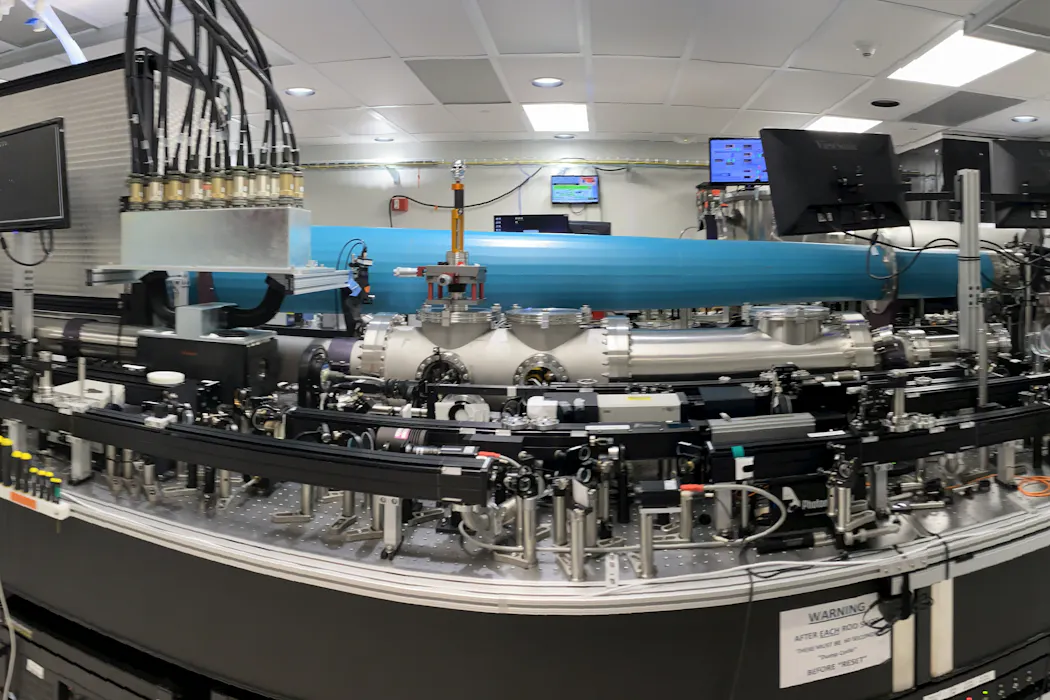
Inside a laser clean room. The beam is contained within the blue pipe. Ahmed Helal

If you walk across the open yard in front of the Physics, Math and Astronomy building at the University of Texas at Austin, you’ll see a 17-story tower and a huge L-shaped building. What you won’t see is what’s underneath you. Two floors below ground, behind heavy double doors stamped with a logo that most students have never noticed, sits one of the most powerful lasers in the United States.

I was the lead laser scientist on the Texas Petawatt, or TPW as we called it, from 2020 to 2024. Texas Petawatt, which is currently closed due to funding cuts, was a government-funded research center where scientists from across the country applied for time to use specialized equipment. It was part of LaserNetUS, a Department of Energy network of high-power laser labs.

This type of laser takes a tiny pulse of light, stretches it out so it doesn’t blast optics to pieces, and amplifies it until, for a brief instant, it carries more power than the entire U.S. electrical grid. Then it compresses the pulse back to a trillionth of a second to create a star in a vacuum chamber.

On a typical shot day, the target might be a piece of metal foil thinner than a human hair, a jet of gas or a tiny plastic pellet – each designed to answer a different scientific question.

Scientists from across the country applied for time on TPW to study everything from the physics of stellar interiors and fusion energy to new approaches for cancer treatment.

Most people hear about petawatt lasers and picture something out of a movie. A “shot day” is actually hours of quiet, repetitive work followed by about 10 seconds where nobody breathes.

I now work as a research scientist at the University of Texas-Austin, studying the interaction of lasers with different materials, but a typical shot day during my time running TPW would look like this:

7 a.m.

I arrive two hours before the first scheduled shot. I put on my gown, boots and hairnet and step into the cold clean room. The laser doesn’t just turn on. You coax it awake.

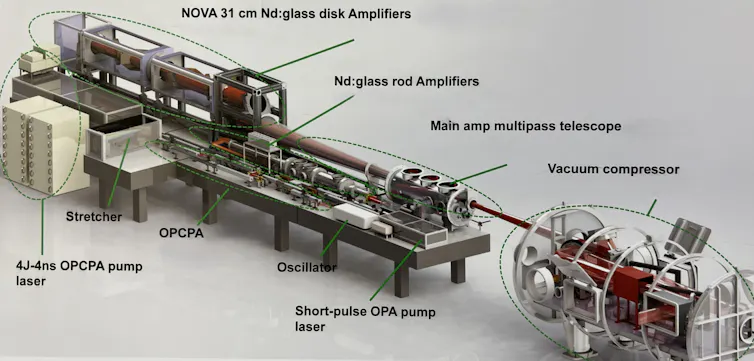
I start with the oscillator, a small box that generates the first seed of light. I write down the parameters that define how the laser will behave during the shot: energy, center frequency, vacuum pressure in the tubes, cooling water level and flow. At this stage, they are fixed regardless of the experiment. The laser must perform the same way every time before the science can begin. Then I fire up the pump laser that will amplify this tiny pulse from nanojoules to about half a joule.

A diagram showing the layout of a large laser
The anatomy of a petawatt laser. A tiny pulse starts at the oscillator, gets stretched in time to avoid damaging the optics, is amplified through progressively larger stages, then is compressed back down to a trillionth of a second inside the vacuum chamber at right. Ahmed Helal, Fourni par l'auteur

The system needs at least 30 minutes to stabilize. During that time, I check alignment through every pinhole and every camera along the beam path. A slight misalignment at this stage isn’t just a problem; it can be catastrophic – a mispointed beam at full power can burn through optics that take months to source and replace, setting the entire laser back.

Building the beam

Once the system is warmed up, I send the beam into the first amplifier: a glass rod surrounded by bright flash lamps that pump light into the glass – like charging a battery. With each pass, the beam absorbs energy from the glass and grows stronger. Then the beam travels into a larger rod, where it makes four passes, picking up more energy each time until it reaches about 12 joules, roughly the energy of a ball thrown hard across a room.

This process alone takes the better part of an hour, most of it spent checking and confirming alignment and energy at each stage.

I expand the beam and send it through the final stage: the disk amplifiers. Two amplifiers, each consisting of two massive 30-centimeter glass disks, are pumped by a huge bank of flash lamps powered by capacitor banks – essentially giant batteries that store electrical energy and release it in a sudden burst. They are so large that they have their own room on a separate floor. Fast optical shutters between each stage act as gates, controlling exactly when and where the beam travels.

The shot

When the experimental team confirms that the target is in position, it asks me to prepare for a system shot. I run through the long checklist. We test the shutters and switch to system shot mode. Every monitor in the facility changes to display the same message – “System Shot Mode” – and flashes red.

A desk with 11 monitors displaying graphs.
The Texas Petawatt control room allows scientists to track a variety of parameters and metrics. On the left is the big red emergency stop button. Ahmed Helal

I lean into the microphone at the control desk, a vintage piece that looks like it belongs in a World War II radio room, and announce that we’re going into a system shot. Then I open the compressor beam dump: a heavy glass plate that normally blocks the beam from reaching the target. It takes about two minutes to move.

“Sweeping, sweeping for a system shot.”

The announcement goes out over speakers across the facility. I grab a small interlock key, put on my laser safety goggles and head downstairs. I walk a specific pattern through every room, checking that nobody is still inside. As I go, I lock each door with the key. If anyone opens one of those doors after I’ve locked them, the entire shot sequence aborts.

A microphone on a stand sitting on a desk.
Texas Petawatt scientists make announcements about the shot through a microphone in the control room. Ahmed Helal

Back in the control room, I sit down and start charging the capacitor banks. At this point, there’s no going back except for an emergency shutdown, and that means losing the shot and waiting for everything to cool down.

“Charging.”

The room goes silent. Everyone’s eyes are on the monitors. Nobody talks.

I typically will share a glance with the researcher whose project the shot is for – today it’s Joe, a visiting scientist from Los Alamos National Lab, who designed the target we’re about to vaporize. He’s gripping his coffee cup like it owes him money. I turn back to the console.

“Charge complete. Firing system shot in three, two, one. Fire.”

I press the button. A loud thud rolls through the building as all that stored energy dumps into the beam. The monitors freeze, capturing everything at the moment of the shot: beam profiles, spectra, diagnostics – these metrics provide a full picture of exactly how the laser performed and whether the shot was clean. Downstairs, in the vacuum chamber, a spot smaller than a human hair just reached temperatures measured in millions of degrees.

I lean back in my chair and start recording laser parameters as everyone exhales. A radiation safety officer heads down first to check readings around the target chamber before anyone else can enter. The experimental team follows to collect data.

Sometimes it all works perfectly. Sometimes a shutter fails to open and you lose the shot.

For example, one afternoon in 2023, we’d spent three hours preparing for a high-priority shot. Target aligned. Capacitors charged. I pressed the button and heard nothing. A shutter had failed somewhere in the chain. The monitors stayed frozen, showing black. Nobody said anything. I wrote SHOT FAILED in the logbook and started the hourlong cooldown sequence. That’s the part they don’t show in movies: sitting in silence, waiting to try again. We got the shot four hours later.

This anticipation is all part of the job: hours of patience for 10 seconds you never quite get used to. Everything happens underneath a campus where thousands of people walk above, unaware that for a fraction of a second, a tiny point of matter hotter than the surface of the Sun just existed below their feet.

The Conversation

Ahmed Helal is currently the Founder and CEO of Photonics Dynamics LLC, a consulting company.

  •  
❌