Reading view

Hostage‑taking by rogue states is on the rise. New research provides fresh ways to tackle it

Hostage-taking by nation-states is emerging as an overlooked consequence of the more unstable and dangerous world that’s been created by the fracturing rules-based order.

In an increasingly might-is-right system of international relations, malign actors have become even more emboldened to take the citizens of Western democracies hostage.

Once primarily the domain of non-state actors, including terror groups, drug cartels and armed gangs, hostage-taking has become a lucrative bargaining chip in the hands of countries like Iran, Russia, China, North Korea and Venezuela. (I was imprisoned by Iran for more than two years on false charges of espionage.)

It has become an unorthodox yet highly effective means of forcing concessions, including prisoner swaps, financial payments and the removal of sanctions.

The unfortunate truth is that hostage diplomacy works, and there is usually a lot to gain and not much to lose for the countries that practice it.

However, very little scholarly research has examined the phenomenon. The data we do have on cases is patchy. This is in part because the governments whose citizens have been taken hostage usually prefer to negotiate in the shadows. We only tend to hear about select cases that attract media coverage.

Part of the challenge in proposing ways to tackle an amorphous problem like state hostage-taking is that, while out-of-the-box thinking is required, some approaches may not be feasible or may not work at all. We shouldn’t shy away from this.

Treating state hostage-taking as a consular issue to be solved via traditional diplomacy hasn’t worked. Bad actors haven’t been deterred; rather the opposite. An innovative new approach is long overdue.

What we’ve found

A new, special edition of the the Journal of Policing, Intelligence and Counter Terrorism (which I guest edited) highlights some possible policy solutions.

Grappling with this issue requires us to ask: what kinds of dynamics are motivating states to take hostages in the first place? And how can governments take better care of former hostages and their families?

The special issue is a collaborative effort between practitioners and scholars, featuring contributors from a variety of backgrounds. These include human rights lawyers who have represented victims, the current UN special rapporteur on torture, activists, specialists in trauma recovery, and even former hostages themselves.

Some of the ideas put forward in our research include:

1) Expanded international legal approaches

This includes reframing state hostage-taking as a form of torture and, under certain conditions, even a war crime or crime against humanity.

UN torture rapporteur Alice Edwards argues this would help open avenues for victims seeking justice. Many have been frustrated by impediments to restitution when a nation-state is responsible for hostage-taking, not an individual.

Legal academic Carla Ferstman suggests governments should look to existing models in the US and Canada and consider passing legislation to allow victims of state-sponsored terrorism to sue hostage-taking states in their domestic courts.

2) Stronger government-led responses to hostage-taking

Many countries don’t have a designated office or role within government to coordinate domestic and multilateral responses to hostage-taking.

These positions exist now in the US and Canada. This step was also proposed in a 2024 Australian Senate inquiry into the wrongful detention of Australian citizens overseas. The government has yet to respond to the inquiry.

3) Innovative models for multilateral rapid responses to hostage crises

Several contributors to the journal have proposed new ideas for how states can do this, including former Canadian Justice Minister and Attorney General Irwin Cotler (with international human rights lawyer Brandon Silver) and former hostage Michael Kovrig (with international security and diplomacy expert Vina Nadjibulla).

Their recommendations include:

  • developing rapid-response mechanisms to hostage-taking in pre-existing multilateral groupings, such as the G7 or NATO

  • strengthening the Declaration on Arbitrary Detention in State-to-State Relations (launched by Canada and now supported by more than 80 nations)

  • imposing multilateral sanctions and other tools of economic leverage against states that engage in hostage-taking.

4) Greater investment in post-detention recovery care for both victims and families

Proposals for taking better care of former detainees came from the NGO Hostage International, human rights lawyer Sarah Teich and an Israeli team involved in designing reintegration programs for Gaza hostages.

These proposals include:

  • passing legislation to mandate a “duty of care” by governments to former hostages

  • developing new strategies for helping former hostages overcome their psychological challenges, based on emerging research in the field.

Learning from specific cases

It’s also important we learn from the recent incidents of hostage-taking around the world. These need to be viewed as a global problem, not a series of separate incidents to be managed in isolation by governments.

For instance, in an innovative study on Israeli public opinion in the wake of the mass hostage-taking by Hamas and other armed groups on October 7, 2023, our contributors found that feelings of connectedness to hostage families had an impact on how the public perceived hostage deal-making. This emphasises the importance of family advocacy in cases like these.

Other research shows Russia escalated its strategy of taking US citizens hostage as the relationship between the two countries deteriorated, particularly following the outbreak of war in Ukraine.

Russia’s approach differs from that of other hostage-taking states as it appears to be primarily used to target Americans. As such, it should be viewed as a feature of the bilateral relationship.

A way forward

If the world wants to do something about hostage diplomacy, we need to brainstorm, exchange ideas and test solutions, no matter how radical.

What has emerged from our research is that hostage diplomacy is a complex phenomenon that is difficult to identify and even harder to deter and prevent.

This is where scholars and practitioners can play an important role. They are the ones who can gather data, identify trends and focus the attention of policymakers trying to tackle this growing international issue.

The Conversation

Kylie Moore-Gilbert does not work for, consult, own shares in or receive funding from any company or organisation that would benefit from this article, and has disclosed no relevant affiliations beyond their academic appointment.

  •  

Climate disasters don’t just destroy homes, they change lives forever. We spoke with cyclone survivors in Zimbabwe

When environmental hazards strike, the damage is usually counted in numbers: how many people died, how many homes were destroyed, how many people were displaced, and how much money it will take to rebuild.

But not all losses and damage can be measured in financial terms. Some of the most profound impacts of climate-induced disasters are emotional, cultural and social, affecting how people feel, relate to each other and think about their world.


Read more: Tropical cyclone Idai: The storm that knew no boundaries


We are scientists who research environmental hazards, climate change impacts and development practice. We wanted to find out what recovery meant for survivors of Tropical Cyclone Idai, which hit eastern Zimbabwe’s Chimanimani District for five days in 2019, turning mountains into mudslides and leaving hundreds of people dead.

We interviewed community members, including survivors and local leaders, and held discussions with government officials and aid organisations. We also spent time in affected communities, observing daily life and listening to how people spoke about the disaster and its aftermath. This allowed us to capture not just what had happened, but what it meant to those who’d lived through it.

Our research found that survivors of climate disasters didn’t only speak of losing their houses and other material goods. They also talked of grief, dislocation, loss of places of cultural significance, and a lingering sense that life would never return to what it once was.


Read more: Cyclone Idai is over – but its health effects will be felt for a long time


These experiences are harder to quantify, but no less important. If recovery efforts overlook these less visible losses, they leave deep social and emotional wounds unaddressed.

Disaster recovery is not just about rebuilding material objects or infrastructure. It is about rebuilding lives.

The hidden losses

Tropical Cyclone Idai affected over 3 million people across Malawi, Mozambique and Zimbabwe. In many places, it destroyed whole communities. In eastern Zimbabwe’s Chimanimani District hundreds died, many people went missing, and thousands were displaced from their ancestral lands.

Cyclone Idai, 2019. Al Jazeera.

The cost of the economic losses and damage was more than US$2 billion. This amount does not include the non-economic losses – the damage to people’s sense of belonging, identity, relationships and emotional well-being that cannot be measured by money.

Our findings show that Cyclone Idai caused four major types of non-economic loss:

Loss of life and lasting trauma

The cyclone caused floods in the middle of the night, while people were sleeping, leaving them little chance to escape to higher ground before their houses collapsed or were washed away. Many families lost loved ones and said that grief remained a constant presence. A survivor told us:

What changed most is that we were a big family, but we lost two kids due to the cyclone. That alone has changed our lives and has affected us very much. We can hardly move forward because of these bad memories that we still have.

More than two years after the cyclone, some people said they still lived with injuries that prevented them from working or living as they once did. Mental health impacts, including anxiety, insomnia and post-traumatic stress, are widespread yet rarely addressed in formal recovery efforts.

Loss of sense of place and belonging

Displacement was one of the most significant consequences of the tropical cyclone. Families were moved to temporary camps and, later, resettled in new areas that were often very different from their original homes.

For example, people who had survived by farming and selling bananas were moved to a government housing compound (Runyararo village), where low rainfall makes it difficult to grow the fruit.


Read more: Rwanda has moved people into model ‘green’ villages: is life better there?


Their new area also has no tarred roads or electricity, yet people who had lived in urban and peri-urban areas were moved there. For many, this meant more than just relocation. It involved losing connection to ancestral land, familiar environments and ways of life. As one survivor described, it felt like being uprooted not just physically, but emotionally and culturally.

Breakdown of social networks

Before the cyclone, communities in Chimanimani were tightly connected through kinship, shared histories and mutual support systems. The disaster fractured these networks by separating families and neighbours. One survivor said:

We lost our younger daughter to the tropical cyclone. The older one is now living with my parents in another village, as we no longer have space … Since then, we have been helpless.

Well-intentioned aid agencies had various ways of describing the cyclone survivors – as “victims”, “directly affected people” or “beneficiaries or non-beneficiaries of disaster aid”. Our research found that using different labels for the survivors created new social tensions within communities that were already under strain.

Disruption of cultural and spiritual life

Tropical Cyclone Idai also disrupted cultural practices and belief systems. Sacred sites were destroyed, and burial rituals, which are deeply significant in local traditions, could not always be properly observed. Bodies were handled hastily due to damaged mortuaries, the absence of electricity, and acute labour shortages.

Some people were buried in pairs, which is against the Ndau culture of the area. A cultural leader said:

It was not proper to bury people who were not related, who did not share a totem, in one grave.

Breaking with established burial customs created a sense of spiritual unease and disturbed the moral and cultural order that helps people make sense of life and death.

A more human approach to disaster response

Climate change has been shown to intensify extreme weather events like Cyclone Idai, increasing both their severity and impacts. This is why disaster policies matter, including what governments and agencies do after extreme weather catastrophes.

Our research shows that disaster response must go beyond financial compensation and physical reconstruction. It must support survivors with the emotional and non-material dimensions of well-being.


Read more: Loss and damage: Who is responsible when climate change harms the world’s poorest countries?


Most importantly, it should involve affected communities in decision-making, ensuring that their experiences and priorities are recognised.

This is also a matter of justice. Whose losses are acknowledged? Whose voices are heard, and who gets support?

The stories from Chimanimani remind us that extreme weather and climate disasters tear apart the very fabric of life. When attention is focused mainly on what can be seen and measured, other forms of suffering remain invisible. But these “invisible” losses shape how people recover.


Read more: Mental health distress in the wake of Bangladesh cyclone shows the devastation of climate-related loss and damage


Emotional trauma can affect livelihoods. Loss of social networks can weaken resilience. Disconnection from place and culture can make it harder to rebuild a meaningful life.

Listening to these experiences is essential for building recovery efforts that are both effective and humane.

The Conversation

The authors do not work for, consult, own shares in or receive funding from any company or organisation that would benefit from this article, and have disclosed no relevant affiliations beyond their academic appointment.

  •  

Chinese and Canadian approaches to math teaching have a lot to learn from each other

What kind of education best helps students learn math?

In the province of Ontario, the most recent provincial standardized results (2024–25) show modest improvement in elementary mathematics achievement, but overall performance remains uneven, particularly in the junior grades.

Provincially, 64 per cent of Grade 3 students met the provincial standard, up from 61 per cent the previous year. In contrast, only 51 per cent of Grade 6 students met the standard, indicating that about half of students are not yet achieving expected levels by the end of the junior division.

Student attitudes toward mathematics also decline with age: while 67 per cent of Grade 3 students reported liking mathematics, this dropped to 48 per cent in Grade 6.

These results suggest gradual recovery following COVID-19 pandemic disruptions, but they also point to the necessity for more work to be done for both teachers and students to develop a deeper understanding of the 2020 math curriculum. This curriculum incorporated new priorities like social–emotional learning, coding, mathematical modelling and financial literacy.


Read more: 6 changes in Ontario’s not-so-basic new elementary math curriculum


My research has examined Ontario math education taught by generalist elementary school teachers in dialogue with Chinese mathematics instruction taught by specialist math teachers. Grounded in this work, I believe we should firstly be proud of Ontario math education instead of criticizing it.

This research was part of a partnership grant project from the Social Sciences and Humanities Research Council, with education researchers Shijing Xu and Michael Connelly.

Dialogue between teachers

In our research with a “Sister School Network” project, generalist elementary teachers from a Windsor, Ont. public school and mathematics specialist teachers from a Chongqing, China primary school participated in monthly online knowledge-sharing meetings.

At the meetings, teachers shared and compared curriculum. They offered demonstrations on topics such as fractions, multiplication and estimation, and discussed student learning and parent engagement.

From 2016 to 2019, Xu and I co-ordinated these monthly exchanges and organized visits of Canadian teachers to Chongqing as well as Chinese teachers’ visits to Windsor.

Other sister schools that are part of Xu and Connelly’s project include Shanghai-Toronto, Shanghai-ChangChun and Windsor-Beijing.

Special education, professional autonomy

Chinese mathematics specialist teachers deeply appreciated the strengths of Ontario’s generalist model — particularly the comprehensive learning support provided to students with diverse needs and the high level of professional autonomy granted to teachers.

One Chinese participant with more than 20 years of mathematics teaching experience reflected:

“I wish we could have a special education support system like in Canada.”

Such perspectives highlight a key strength of Ontario’s elementary generalist system — one that educators in the province can take pride in. In an interview I did with mathematics education researcher Christine Suurtamm, whose research has engaged international perspectives on mathematics education and Canadian teachers’ practice, Suurtamm noted:

“I think the idea that we have great faith in teachers’ professional judgment to work with a curriculum, and to determine the best way to sequence and select the kinds of activities that address the curriculum expectations and meet their students’ needs, is a real benefit to our students in Ontario. I think that is something we should be proud of.”

Value of working with a specialist

In my study, a Grade 5 Canadian teacher also appreciated the opportunity to co-plan and co-teach with a Chinese mathematics specialist teacher. In interviews, the teacher emphasized a deep appreciation for this collaborative approach and expressed the hope that Canadian schools could provide more structured opportunities for such professional collaboration.

In my interview with Suurtamm, she also noted it would be worthwhile if Ontario teachers had more time to develop their math lessons in collaboration with other teachers.

In 2023, Ontario announced funds to double the number of school mathematics coaches. Research about how and where the coaching model has been implemented, how teachers are relying on it and its real effects in the classroom would help gain insight into the efficacy of this approach.

Challenges with Ontario math education

My research also suggested ways Ontario mathematics education might learn from Chinese mathematics learning.

Two key challenges emerge in Ontario mathematics teaching. First, teacher collaboration is limited. Unlike Chinese mathematics specialists who routinely engage in co-planning, lesson observation and collective reflection, Canadian generalist teachers have few structured opportunities for sustained collaboration, despite a clear desire for it.

Second, the consolidation of mathematical learning seen in Ontario is relatively weak. One Chinese math specialist teacher described teaching mathematics as a dynamic balance between Fang (放) — encouraging open exploration and the use of multiple strategies — and Shou (收) — a structured consolidation phase. In this phase, key ideas are clarified, connections are synthesized and methods are formalized.

Ontario educators and policymakers may consider these insights in ways that are responsive to local situations.

Curriculum and approaches evolve

Overall, my collaborative research views improving mathematics teaching and curricula as an ongoing and progressive process.

As Suurtamm notes, curriculum changes should be approached as an evolution rather than a revolution. Changes build thoughtfully on existing foundations rather than seeking to replace them wholesale.

Before pursuing new directions, it is important to reflect on and recognize the strengths that already characterize Ontario’s mathematics education system.

The Conversation

Chenkai Chi receives funding from SSHRC Doctoral Fellowship, Ontario Graduate Scholarship and Mitacs Globalink Fellowship.

  •  

Lake mud reveals 7,000 years of Kangaroo Island’s complex fire history

Lashmars Lagoon, Kangaroo Island. Quentin Chester

During the summer of 2019–2020, half of Australia’s third largest island was on fire. Kangaroo Island, also known as Karta Pintingga or Karti in local mainland Aboriginal languages, was one of the worst-hit places during the Black Summer fires. Two people lost their lives and almost all the remnant vegetation on the island burned.

In the wake of the fires, fears grew for unique species that live on the island, such as the green carpenter bee, a critically endangered dunnart, and the Kangaroo Island micro-trapdoor spider.

Increasingly unstable climate conditions are exacerbating fire risk across the globe. Since the Black Summer fires six years ago, we’ve seen many more megafires as far north as the Canadian Arctic. Every fire season in Australia brings more devastation as well.

In the months following the 2020 fires, we headed to Lashmars Lagoon on the Dudley Peninsula, eastern Kangaroo Island. Here, trapped within the mud, are thousands upon thousands of charcoal fragments built up over time from ancient fires. By analysing them we could reconstruct valuable long-term context for what’s happening today.

Our findings, now published in Global and Planetary Change, tell a complex 7,000-year-long story of how fire was shaped by the climate, vegetation and people.

A rare case study

To understand environmental change and how ecosystems cope with extreme events, we need perspectives longer than written observational records.

Studies of long-term fire histories from mainland Australia propose that Indigenous management reduced fuel loads, thereby reducing the occurrence and risk of bushfires.

After European colonisation, much of the Indigenous land management stopped. Since then, plant life in many parts of Australia has changed, exacerbating the risk and impact of wildfires.

But these changes also coincided with long-term fire suppression by the colonisers, landscape degradation and anthropogenic climate change. This makes it hard to untangle the exact effect of any one of these changes on fire regimes.

Kangaroo Island provides a rare chance to study the long-term fire history of an Australian environment that wasn’t managed by First Nations people in recent times. Early European colonisers in the 1800s noted Kangaroo Island’s thick scrub and lack of campfire and cultural burning smoke as evidence for lack of human habitation.

Indigenous oral histories also describe the departure of people from the island following isolation from the mainland. Archaeological work further supports the idea that the island was uninhabited for thousands of years.

Kangaroo Island is famed for its high biodiversity and unique ecosystems. There are 45 species of plants not found anywhere else. Have widespread wildfire events in the past contributed to this high biodiversity? Or are increasingly frequent fires threatening these remnant ecosystems?

This is where we come back to a seven-metre-long sediment core (a cylindrical sample) we collected after the fires in 2020.

Example of a sediment core extracted from a Kangaroo Island lagoon. Jonathan Tyler

Painting a detailed picture

We were not the first scientists to examine the mud from this site. Fifty years ago, Australian biologist Robin L. Clark established methods central to research in this field. She used fragments of charcoal and pollen grains found in the sediment of Lashmars Lagoon to paint a picture of past fire and vegetation.

We also used these techniques, combined with scientific advances in sediment dating, analysis and interpretation, to re-evaluate Clark’s hypothesis that fires became bigger after the departure of people from Kangaroo Island.

After a rigorous screening of archaeological data, we found the last reliable evidence for people living on the island was between about five and six thousand years ago. After people left, a more shrubby, denser vegetation established on the island.

Despite this, fire remained relatively rare and subdued in the landscape for a further 3,000 years under relatively wet climates. Then, fires increased over the last 2,000 years, culminating in prominent fire activity between 700 and 900 years ago.

This increase in fire activity coincided with a trend towards the climate becoming dryer, possibly due to changes in the southern westerly winds.

Lucinda Duxbury surveying the damage and the regrowth about a year after the fires, western Kangaroo Island. Farhan Farizi

Crucially, this increase in fire activity is at odds with evidence from mainland Australia. Over the same 2,000-year period, fire activity in southeastern Australia was actually lower. This suggests the importance of Indigenous stewardship in suppressing bushfires, even when contending with the impacts of a drying climate overall.

Ultimately, our study has a message of optimism. Biodiversity on Kangaroo Island appears to have weathered major changes in climate and fire regimes in the past. However, questions still remain as to whether this unique environment can continue to withstand decreasing water resources and more frequent intense fires.

One thing is certain. With a rapidly changing climate, there is an urgent need to combine Indigenous wisdom, community engagement and western scientific evidence to conserve these unique ecosystems for future generations.

The Conversation

Haidee Cadd receives funding from the Australian Research Council.

Jonathan Tyler receives funding from the Australian Research Council (ARC) and the Australian Nuclear Science and Technology Organisation (ANSTO).

Lucinda Duxbury does not work for, consult, own shares in or receive funding from any company or organisation that would benefit from this article, and has disclosed no relevant affiliations beyond their academic appointment.

  •  

With a shrinking population, China needs new drivers of growth. Consumer spending has yet to fill the gap

China’s latest national accounts show the economy grew by about 5% through 2025 and into the first quarter of 2026, pointing to resilience despite ongoing trade tensions.

But the underlying picture is weaker: growth slowed last year and, while it has stabilised, it remains below pre-COVID levels.

China used to regularly report GDP growth rates above 10% before 2010 and around 6-8% after 2010. So, what’s behind the slowdown from those growth rates?

Weak consumption, uncertain exports

Household spending growth remains modest, while exports are growing more slowly amid global uncertainty and the Iran war.

Together, these trends point to softer growth, weak domestic demand and more fragile external support.

China has long been seen as an economy needing to shift from heavy reliance on exports and investment spending towards stronger domestic demand.

To understand whether this shift is actually happening and whether these recent patterns are temporary, or part of a deeper shift, we examined what has been driving China’s growth over the past decade or so. Our results do not suggest that consumer spending has yet become a stronger supporter of China’s growth.

A shift in the drivers of growth

In a recent paper, we compare the sources of growth across two periods: 2012–2017 and 2017–2022.

From 2012 to 2017, China’s growth was relatively strong, with real gross domestic product (GDP) rising by more than 40%, supported by solid consumption, robust investment and steady trade expansion.

Between 2017 and 2022, however, the picture weakened: GDP grew by about 30% – one quarter less than in the earlier period. While the pandemic played a role, trade tensions and deeper structural changes were also important, with slower import growth, weaker domestic demand, and a smaller contribution from exports.

At the same time, demographic trends turned less favourable, with slower population growth, fewer working-age people, and falling labour force participation and employment rates, all of which added further downward pressure on growth.

What has caused this change?

The charts above show a clear shift in China’s growth pattern after 2017. To understand why, we used an economy-wide model to identify the main drivers of growth in each period.

In both periods, productivity was the biggest contributor to China’s growth. But before 2017, foreign demand, a shift towards domestic sourcing and stronger business investment all supported growth. Together, these factors generated relatively balanced expansion.

After 2017, the picture became less favourable. The contribution from foreign demand fell, although it remained positive. The contribution from domestic consumption growth also turned slightly negative.

China’s workforce is shrinking as the population ages, and this demographic shift has become a more significant drag, reducing growth by 3.8 percentage points after 2017.

With demographic pressures intensifying and both household consumption and foreign demand weakening markedly, China’s growth has become increasingly reliant on productivity improvements.

A shrinking population and slowing productivity

This helps explain the slowdown in growth in recent Chinese data. Demographic change is a larger drag, and productivity growth has slowed.

Looking ahead, demographic pressures are set to intensify. China’s population began to decline in 2022, and the pace of decline is expected to accelerate. The working-age population is shrinking even faster than the total population.

Population projections suggest China’s working-age population could fall to less than one-third of its 2014 peak by the end of the century.

Other traditional supports for growth also look weaker. Total public and private investment growth has weakened in recent years, with fixed-asset investment turning negative in 2025.

At the same time, slowing global demand amid heightened geopolitical uncertainty is proving challenging for exports. Trade patterns are also shifting as higher US tariffs on Chinese goods have encouraged diversification to other markets.

What this means for the future

Our central finding is straightforward. China’s growth is now being increasingly shaped by two forces: slower productivity growth and a drag from demographic change.

This is not to say the demand side of the economy does not matter. But in our analysis, changes in consumer demand, investment and trade make only limited direct contributions to GDP growth. Their significance lies more in what they reveal about the broader structure of the Chinese economy.

In particular, both the 2017-2022 period and recent data show little evidence of a shift towards consumer spending playing a larger role in supporting growth.

What this means for the rest of the world

Looking ahead, the main question is whether productivity growth can remain strong enough to offset the effects of a shrinking workforce.

Our results suggest some caution on that front. The scope for continued rapid growth by adopting and adapting existing technologies from more advanced economies is narrowing. Population ageing is likely to place continuing downward pressure on the supply of workers. Although China is investing heavily in automation and robotics, these advances may not be sufficient to fully offset these headwinds.

The international implications are harder to predict. Slower growth in China would weaken demand for goods and services that are exported from countries like Australia.

But it could also create new opportunities for other developing economies. This is already evident in the shift of some manufacturing investment to Southeast Asia, partly in response to rising costs and trade tensions.

The effects are therefore likely to differ across countries and industries. What is clear is that the character of China’s growth is changing, and that change will matter well beyond China itself.

The Conversation

The authors do not work for, consult, own shares in or receive funding from any company or organisation that would benefit from this article, and have disclosed no relevant affiliations beyond their academic appointment.

  •  

A year on from the election, what has the Albanese government achieved?

This time last year, Prime Minister Anthony Albanese was jubilant. Having just won 94 of the 150 seats in the House of Representatives, Labor had its best result in terms of seats since 1943.

In his victory speech, Albanese said:

[…] I know there is still much more to do to help people under pressure. That is why it means so much that in these uncertain times, the people of Australia have placed their trust in Labor once again.

The times would only go on to become more uncertain. The war in Iran, the Bondi terror attack and the rise of One Nation’s vote have all thrown up new issues for the government (and the country) to deal with in the past 12 months.

So what has the government achieved in the past year? How has it performed on its key election promises and the issues most important to people?

What mattered most to voters?

Despite its historic outcome, the 2025 election was something of a lukewarm endorsement. Labor’s primary vote share was around 35%, only a few points higher than the Liberal-National Coalition under Peter Dutton.

Polling before the election suggested the issues on people’s minds were cost of living (57%) and managing the economy (22%), as well as the quality of healthcare (31%), crime (23%) and climate change (23%).

After the election, when voters were asked to name their most important issues, economic concerns still dominated, expressed as anxiety about cost of living (36%), housing affordability (8%), taxation (10%) or economic management (12%). Climate change and the environment were still top of mind for 17% of people.

Immigration, which has now become more important, was only of primary importance to 6% of people.

Cost of living and the environment

Labor made a lot of promises during the campaign – around 63, according to the Parliamentary Budget Office. This analysis will look primarily at the biggest of those.

Many were oriented toward the concerns people were expressing, especially around the economy. For the first time since 1987, voters believed Labor would make the better economic managers, showing their messaging was well targeted.

On cost of living, progress is visible, though mixed.

With relatively high inflation and interest rates, cost of living was and is an issue that cuts across many policy areas. The war in Iran’s effects on fuel prices have made people’s lives and the government’s job harder since 2025.

In terms of directly putting money in people’s pockets, Labor promised tax cuts over the next few years, which are in train. Modest rebates to energy bills continued until the end of 2025.

On the environment, the government passed previously stalled legislation to create a national Environment Protection Agency and invest more heavily in conservation. These efforts are ongoing, and don’t go far enough for environment groups.

Education, wages and childcare

On education costs, Labor enacted a 20% reduction of students’ HECS debts on June 1. Similarly, 100,000 free places in vocational education per year to train more builders and nurses were made permanent.

Less directly, alongside unions, Labor lobbied the Fair Work Commission to increase the minimum wage beyond inflation. Labor also provided funding to age care providers to pay higher wages and leave entitlements as determined by the commission.

For eligible families, promised subsidies for childcare began in January 2026.

Health

Albanese spent much of the 2025 campaign focused on health, waving his Medicare card around at every opportunity.

Labor promised, and has acted, to deliver policies such as cheaper medicines, improved access to telehealth, and free mental health support.

The government’s signature health promise was improved access to bulk-billed GP visits, aiming for 90% to be bulk-billed by 2030. As out-of-pocket costs for primary care continue to rise, the government made little progress after the election, with rates staying around 72%.

From November 1, however, expanded access to incentives for GPs began to flow, with an uptick to 81% by January 2026.

Whether these incentives are sufficient to equitably meet the public’s needs has been questioned by the sector.

Funding negotiations with state governments to improve health service provision have recently been concluded, but are always fraught. Although not a major election issue, upcoming reforms to the NDIS will place extra strain on this relationship.


Read more: Tightened eligibility and cuts to plans: what the NDIS changes mean for participants


Housing

Access to affordable housing has been hotly debated since COVID and will require sustained action at all levels of government to address.

The rise of One Nation’s vote throughout 2025 and 2026, and increased focus on social cohesion since Bondi, have crossed over into this debate. Playing to the exaggerated link between immigration and housing affordability, the government promised to restrict foreign purchases for two years during the election campaign.

Albanese also promised assistance for first home buyers through government-backed 5% deposits and loans. These have seen some uptake, though house prices have risen higher for eligible properties in major cities, limiting their usefulness.

Promises were also made about investment in infrastructure to enable delivery of more affordable housing and continue investment in social housing. Progress is slow. The federal government is working to reverse decades of underinvestment by delivering around 55,000 new low-income homes by 2030.

But unmet need (and their own target) is much higher, and long-term commitment is not guaranteed. During the 2025 campaign Albanese promised Labor wasn’t planning to revisit changes to tax settings such as capital gains and negative gearing floated in the 2019 campaign.

However, he has recently been trying to draw a link between intergenerational inequity as a threat to social cohesion and moves to water down these policies.

In this way, anxiety about cherished but debated Australian values may be the impetus for unexpected economic reforms.

Overall, the Albanese government has been working to fulfil its modest promises and address people’s pressing concerns.

However, whether the government can continue to do so, and whether what it promised to do is enough, is unclear.

Australians are persistently anxious about the present, and pessimistic about the future. The government will need to work hard to persuade people it’s doing enough. It has two years until the next election to do so.

The Conversation

Pandanus Petter is employed at Australian National University with funding from The Australian Research Council.

  •  

Extreme heat is a growing threat to health, jobs and food security in southern Africa – study looks for practical solutions

Extreme heat is not just uncomfortable weather – it is becoming a serious threat to health, jobs and food security across southern Africa, especially for those least able to cope.

Unlike floods, cyclones, wildfires or storms, extreme heat rarely leaves dramatic images of destruction. But it builds without relief, putting strain on people’s bodies, homes and health systems.

In many cases, the danger is intensified when temperatures stay high overnight, leaving little chance to recover.


Read more: Heat with no end: climate model sets out an unbearable future for parts of Africa


Even temperatures that seem manageable can be dangerous, depending on where people live and how well they can adapt.

We are members of a group of researchers and practitioners from across southern Africa working on climate, health and policy.

We recently conducted a regional consensus study for the Academy of Science of South Africa (ASSAf) to assess how extreme heat affects health and daily life across the region. Our aim was to determine what practical steps are needed to reduce the harm caused by extreme heat.

We worked with a team of independent experts from across disciplines to review scientific evidence, regional data and policies, and to develop a shared, evidence-based view of how extreme heat is affecting the region.

Our study was unique because it brought together evidence from across health, labour, food systems and infrastructure to show how heat affects everyday life, analysing heat not just as a weather event, but as a system-wide risk.


Read more: Heat extremes in southern Africa might continue even if net-zero emissions are achieved


We found that extreme heat is already a defining climate and health threat in southern Africa.

One of the biggest mistakes in public discussion is to treat heat as simply a weather event. It is much more than that. Heat immediately increases the risk of dehydration, heat exhaustion and heat stroke. Heat can also worsen existing conditions such as cardiovascular, respiratory and renal (kidney) disease.

Heat needs to be treated as a major public health and development priority across the Southern African Development Community.

Heat is a health issue – not just a weather issue

The Southern African Development Community has 16 member states, home to more than 400 million people. Yet collectively, these countries contribute less than 1.3% of global greenhouse gas emissions.

Despite this, southern Africa is already heating up fast. Average surface temperatures across the region have risen by 1.0-1.5°C since 1961. A further 4.5-5°C increase is projected by 2050 under high-emission scenarios (where fossil fuel companies continue to pollute at the same rate as they are now).


Read more: Climate change has doubled the world’s heatwaves: how Africa is affected


In our report, we describe extreme heat as an “integrator hazard” (a multiplier). This means it is not only one risk but makes existing problems worse all at once.

For example, extreme heat can reduce crop yields and nutrient quality, increase water stress, worsen air quality through dust and wildfire smoke, and disrupt livelihoods that depend on safe outdoor work – all at the same time. That is what makes heat so dangerous.


Read more: South African study finds 4 low-income communities can’t cope with global warming: what needs to change


It can also make already hot environments – especially informal settlements with limited shade, ventilation or cooling – far more dangerous. Extreme heat can place added strain on electricity systems. This increases the risk of power outages just when cooling, water supply and health services are most needed.

In many communities, heat also shortens the safe life of perishable food – including food sold informally that isn’t stored in fridges. This too increases the risk of food-borne illness. That matters in a region like southern Africa where street food and informal food economies are part of everyday life.

The burden is deeply unequal

Extreme heat does not affect everyone equally. One of our study’s central findings is that the people and communities most exposed to heat are often those with the fewest resources to adapt. This includes people living in informal settlements, those without reliable electricity or cooling, communities facing water scarcity, and workers who must work outside all day.

Across much of southern Africa, many people work outdoors or in poorly ventilated environments – from subsistence farms and construction sites to factories, markets and transport hubs. Being forced by heat to slow down, stop work, or continue working under dangerous conditions affects both health and livelihoods.


Read more: Zambia’s farmers are working in dangerous heat – how they can protect themselves


Heat exposure affects daily life: children may walk long distances to school or spend hours outdoors. It affects pregnancy and newborn health, causing risks such as premature birth, low birth weight and pregnancy complications.

For this reason, extreme heat is also an ethical and justice issue. The people who contribute least to climate change are often the ones most exposed to its effects – simply because of where they live, the work they do, and the resources available to them.

What governments should do now

Extreme heat is not a problem that can be solved simply by telling people to “drink more water” or “stay indoors” – especially where safe housing, water, electricity and cooling are not guaranteed. But there are practical measures that governments and institutions can take.

These include:

  • improving locally appropriate early warning systems

  • tracking heat-related illness and deaths to guide response and planning

  • making clinics and hospitals more climate-resilient, through reliable electricity, cooling, water supply and backup systems

  • protecting workers through rest breaks, shaded areas, access to water and adjusted working hours

  • improving urban design and housing so that buildings and neighbourhoods stay cooler

  • integrating heat into national climate and health planning.

Governments can also establish public cooling spaces – such as community centres, schools or clinics – where people can safely rest during extreme heat.


Read more: Climate change: the effects of extreme heat on health in Africa – 4 essential reads


There are already promising examples in the region. South Africa has begun strengthening heat-health early warning and surveillance systems. Malawi is helping farmers adapt to rising temperatures in climate-smart agricultural planning.

Namibia has supported community-level water and resource management in heat-prone areas. These examples show that progress is possible, but they need to be expanded and sustained.


Read more: Climate information is useful at local level if people get it in good time: how African countries can build systems to share it


Heat does not respect borders, and coordinated action within countries and across borders can better prepare countries for heat disasters. National meteorological services, health departments, local governments, labour authorities and emergency services should work together so that heat warnings lead to clear, coordinated action on the ground.

For too long, extreme heat has been treated as a secondary climate risk. That is no longer tenable. Heat now needs to move to the centre of climate policy. The question is no longer whether southern Africa can afford to act. It is whether it can afford not to.

The Conversation

Jerome Amir Singh has received funding from the Academy of Science of South Africa (ASSAf). ASSAf is a statutory body that is funded primarily through a parliamentary grant allocated by the South African government's Department of Science, Innovation, and Technology.

Caradee Yael Wright receives funding from the South African Medical Research Council.

  •  

Ten compelling poems about climate change – chosen by our experts

Three Reading Women in a Summer Landscape by Johan Krouthén (1908). WikiCommons

We asked ten literary experts to recommend the climate poem that has spoken to them most powerfully. Their answers span over 200 years and a range of emotions from sorrow, to anger, fear and hope.

This article is part of Climate Storytelling, a series exploring how arts and science can join forces to spark understanding, hope and action.

1. Death of a Field by Paula Meehan (2005)

Published in the wake of the 2008 financial crisis, Paula Meehan’s Death of a Field critiqued the environmental impact of the Celtic Tiger economy in Ireland.

The poem anticipates the destruction of the titular field by property developers with little regard for native ecologies: “The end of the field as we know it is the start of the estate.”

Death of a Field read by Paula Meehan.

The global effects of the climate crisis are seen from a uniquely local perspective as the displacement of Irish wildlife mirrors the effect of colonial violence. “Some architect’s screen” is simply the latest iteration of imperial technologies that seek to plunder Irish landscapes. The poem gains further strength by refusing to replicate a hierarchical relationship to nature by preserving its many mysteries:

Who can know the yearning of yarrow

Or the plight of the scarlet pimpernel

Whose true colour is orange?

Jack Reid is a PhD Candidate in Irish literature

2. Darkness by Lord Byron (1816)

Darkness imagines the fallout of a volcanic eruption that has destroyed the Earth. The “dream” that the poem mentions was inspired by genuine weather conditions during the “year without a summer” in 1816, caused by the eruption of Mount Tambora in Indonesia the previous year.

Darkness by Lord Byron.

Sulphur in the atmosphere caused darkness and low temperatures across Europe. In Lake Geneva, Lord Byron experienced the infamous “haunted summer” of darkness.

Byron’s depiction of climate catastrophe is bleak, with words like “crackling”, “blazing” and “consum’d” bearing resemblance to contemporary reports of wildfires caused by climate change. After a famine, all elements of Byron’s Earth, from the clouds to the tide, eventually cease to exist: “Seasonless, herbless, treeless, manless, lifeless– / A lump of death – a chaos of hard clay.” Read as a portent of the Anthropocene, Byron’s poem urges readers to seriously consider the future of mankind.

Katie MacLean is a PhD candidate in English Literature

3. Mont Blanc by Percy Bysshe Shelley (1817)

Byron’s close friend Percy Bysshe Shelley was also inspired by the “year without a summer”. He witnessed temperatures drop, volcanic ash hanging heavy in the air and crops failing. While his wife Mary used the gloomy climatic event to inform her novel Frankenstein (1818), Shelley channelled them into his poem Mont Blanc.

A reading of Mont Blanc.

In his ode, Shelley describes a timeless “wall impregnable of beaming ice”. By drawing on his scientific reading, he then explains his fears regarding global cooling and the possibility of vast glaciers eventually covering the alpine valleys.

He imagines “the dwelling-place / Of insects, beasts, and birds” being obliterated and mankind forced to flee. While Shelley saw this process as “destin’d” and inevitable, it is clear that Mont Blanc is a poem with catastrophic climate change at its heart. In 2026, it is difficult to read in any other way.

Amy Wilcockson is a research fellow in Romantic literature

4. Characteristics of Life by Camille T. Dungy (2012)

There’s something gloriously elastic about invertebrates: the spinelessness of a worm, the pulsing of the jellyfish, the curling of an octopus. Spiders, snails and bees, too, with their exoskeletons on display, invite us to see things “inside-out”.

These are the thoughts I have when I read Characteristics of Life by Camille T. Dungy, which opens with a snippet from a BBC news report claiming that “a fifth of animals without backbones could be at risk of extinction”. What would a world be without the “underneathedness” of the snail beneath its shell beneath the terracotta pot in the garden? Or “the impossible hope of the firefly” whose adult lives span only a handful of human weeks?

Camille T. Dungy speaks about nature and poetry.

Dungy speaks from a “time before spinelessness was frowned upon”, and from a world where to dismiss a being as “mindless” (jellyfish have no brains) or even “wordless” would be “missing the point” entirely. As I think of these creatures that dwell beyond our usual line of vision – flying, crawling, tunnelling and swimming – I find my perspective on our beautiful world turning and shifting.

Janine Bradbury is a poet and a senior lecturer in contemporary writing and culture

5. Prayer at Seventy by Vicki Feaver (2019)

One of my favourite poems about climate change is Vicki Feaver’s Prayer at Seventy from her 2019 collection I Want! I Want!.

The speaker’s request of passing her “last years with less anxiety” appears to be denied by a god who first responds by changing her into “a tiny spider / launching into the unknown / on a thread of gossamer” and who, when she begs to “be a bigger / fiercer creature”, turns her into “a polar bear / leaping between / melting ice floes”.

A reading of Prayer at Seventy by Vicki Feaver followed by an explanation by the poet.

Both images present creatures who are in precarious positions, their futures uncertain, reflecting the state of a person contemplating the unknowns of old age and death. But the poem moves beyond the personal. The reference to the melting ice floes is not solely metaphorical: it reminds us that the planet itself is in danger and every living thing is therefore vulnerable – and will be increasingly so.

Julie Gardner is a PhD candidate in literature


Read more: How poetry can sustain us through illness, bereavement and change


6. Walrus by Jessica Traynor (2022)

Walrus, from Jessica Traynor’s 2022 collection Pit Lullabies expresses the quiet anxiety a mother has for her child in the world of climate breakdown.

While stripping wallpaper from the box room of her house, the poet discovers a mural of the Walrus and the Carpenter from Alice’s Adventures in Wonderland. Traynor takes part of Lewis Carroll’s poem about the Walrus and the Carpenter walking along the beach, eating the vulnerable oysters, and weaves it into her own poem.

Jessica Traynor reading poems from her collection Pit Lullabies.

Carroll’s absurd verse includes what, at that time no doubt, seemed like an impossible image of a “boiling hot” sea. In the 21st century, this is no longer an absurdity, as Traynor knows. She makes a connection with Carroll’s poem, imploring her child:

Sleep as the sun rises and ice melts

and for want of the freeze a walrus

pushes further up a cliff-face.

It’s a complex poem that reimagines a key work of children’s literature, connecting it with the reality of the changing world. All the while the mother keeps her fears at bay for the sake of her child, “brows[ing] washing machines” with a “ball of tears” in her throat.

Ellen Howley is an assistant professor of English

7. Ocean Forest, co-created by the We Are the Possible programme

Ocean Forest is woven out of words, research, ideas and stories shared by scientists, educators, health professionals, youth leaders, writers and artists. They took part in creative writing workshops to co-create the anthology Planet Forest – 12 Poems for 12 Days for the UN Climate Conference in Brazil in 2025.

In the shallows, alert to change,

the minuscule, overlooked creatures

weave between seagrass, and weed –

live their shortened lives.

When ships pass overhead, when sands shift,

fish navigate swell, migrate beyond

where coral’s been bleached, through schools

of silenced whales and barely rooted mangroves

struggling to thrive in darkening water.

Deeper down,

pressure builds, species exist, unaware,

undisturbed. As heat and waves rise there’s hope

the unfound, the unnamed, the unpolluted

in the remotest ocean forests will survive.

Through uniting disciplines and voices the poem takes unexpected shifts. It demonstrates that climate change affects and erodes the habitats that lie beneath the surface and that urgent action is needed to protect disappearing species.

Yet, there is also a glimmer of hope – that in the deepest, darkest parts of the ocean, where temperatures are near freezing and there are bone-crushing pressures, maybe there are creatures that will survive human interference and pollution.

Sally Flint is a lecturer in creative writing and programme lead on the We Are the Possible programme

8. Di Baladna (Our Land) by Emi Mahmoud (2021)

Emtithal “Emi” Mahmoud is a Sudanese poet and activist, who has won multiple awards for her slam poetry performances. Mahmoud performed Di Baladna at the United Nations Climate Change Conference in 2021.

Poetry – especially spoken word – helps people connect emotionally with the human side of climate-driven displacement, a topic that’s often explained only through technical language. The language of emissions targets, temperature thresholds, or policy frameworks can distance people emotionally from its consequences. Yet poetry can cut through this abstraction.

Di Baladna (Our Land) read by Emi Mahmoud.

Mahmoud’s performance gave voice to those forced from their homes by environmental collapse, reminding listeners that climate change is not only an environmental crisis but a deeply human one, with profound effects on individuals, families and communities.

By merging vivid natural imagery with the rhythms of displacement and lived testimony, the poem urges listeners to replace passive awareness with empathy. Mahmoud implores us to feel the loss, fear and resilience of displaced communities, looking beyond news headlines and images of victimisation. Engaging with such work helps transform climate refugees from statistics into people.

Clodagh Philippa Guerin is a PhD candidate in refugee world literature

9. Flowers by Jay Bernard (2019)

At first glance, Jay Bernard’s Flowers is circular poem (one that begins and ends in the same place) but you soon realise that the circle isn’t going to complete. It opens:

Will anybody speak of this

the way the flowers do,

the way the common speaks

of the fearless dying leaves?

And closes:

Will anybody speak of this

the fire we beheld

the garlands at the gate

the way the flowers do?

And the answer seems to be, no: no one will speak of these things – the “coming cold” and the “quiet” it will bring – only the things themselves as they die. With the songs Where Have All the Flowers Gone? by Pete Seeger and Blowin’ in the Wind by Bob Dylan in its DNA, Flowers has the eternal power of a folk-lyric – prophetic and unignorable.

Kate McLoughlin is a professor of English literature

10. Place by W.S. Merwin (1987)

Climate change poetry – should it be a thing? How do poets avoid the oracular pomp it threatens? Browsing my small library I’m shocked anew to realise most poets lived and died blissfully innocent of our condition.

OK, what about the late John Burnside’s lyric Weather Report (“this is the weather, today / and the weather to come”). It poignantly extrapolates from a sodden summer to his sons’ futures: “a life they never bargained for / and cannot alter”. Heartbreaking. Or the odd dread of spring in Fiona Benson’s Almond Blossom, a season characterised as Earth’s, “slow incline … inch by ruined inch”. Ditto.

W.S. Merwin reads Place.

But then I reach back to the great American poet W.S. Merwin’s short prayer Place to find that grace-note of hope which surely needs to thread through all poems, whether they speak of climate change, mortality or love: “On the last day of the world / I would want to plant a tree.” Me too.

Steve Waters is a playwright and professor of scriptwriting at the University of East Anglia

This article features references to books that have been included for editorial reasons, and may contain links to bookshop.org. If you click on one of the links and go on to buy something, The Conversation UK may earn a commission.

The Conversation

Amy Wilcockson receives funding from Modern Humanities Research Association as Research Fellow for the Percy Bysshe Shelley Letters project.

Steve Waters receives funding from AHRC

Clodagh Philippa Guerin, Ellen Howley, Jack Reid, Janine Bradbury, Julie Meril Gardner, Kate McLoughlin, Katie MacLean, and Sally Flint do not work for, consult, own shares in or receive funding from any company or organisation that would benefit from this article, and have disclosed no relevant affiliations beyond their academic appointment.

  •  

Coolcations: why people are heading away from the sun this summer

Planning summer holidays in Europe is beginning to involve more focus on avoiding high temperatures.

Destinations including the Greek islands and southern Italy have traditionally relied on warm, stable summers to attract tourists. But they have faced extreme temperatures causing mass evacuations, wildfires and putting lives in danger in recent summers.

Even without those conditions, high temperatures are changing the summer holiday experience. Tourists are often more exposed to heat risk than residents. They spend longer periods outdoors, take part in outdoor sports, and navigate unfamiliar environments without knowing where to find shade, or local healthcare. Yet despite this heightened exposure, tourists’ vulnerability to extreme heat remains relatively underexamined.

Recent summers have made these risks visible. During 2024, parts of southern Europe, including Greece, Italy, Spain and Cyprus, experienced temperatures exceeding 40°C. During Greece’s record-setting heatwave, several foreign visitors died or went missing including the British broadcaster Michael Mosley. Mosley went missing on the Greek island of Symi and a coroner found the cause of death could have been heatstroke. In response to these very high temperatures, countries including the UK, Germany, and Sweden issued travel advisories warning of extreme heat in popular destinations.

Heat is not just a safety issue; it is also reshaping the quality of the holiday itself. Extreme temperatures can shorten stays, reduce participation in outdoor activities, and lower overall satisfaction. Key tourist sites, such as the Acropolis in Greece, may close in extreme heat making trips less satisfying. As a result, rising temperatures are already influencing what tourists can do, when they travel, and how destinations function.

Shifting travel patterns

As heat intensifies, travel patterns are beginning to shift. A growing number of tourists are moving away from traditionally hot Mediterranean destinations towards cooler regions, a trend often described as “coolcations”. Emerging evidence points to declining tourist demand in parts of southern Europe during peak summer months, alongside increased interest in destinations with milder climates.

Elevated temperatures are also influencing when people take a trip. A recent report by the European Travel Commission found that 28% of travellers are planning to change the time of year that they travel. Avoiding extreme heat was cited as a key reason.

Regular intense heat in traditional summer holiday destinations may put tourists at risk.

Extreme heat also interacts with other climate-related pressures. Wildfires, drought and water shortages can disrupt tourism activities and local economies. As one participant in ongoing research at the University of East London described: “Our reservoir was very low over the summer… boating, sailing, and water sports couldn’t run. The centre has now closed. You see those ripple effects.”

Climate is not the only factor shaping travel decisions this year. Geopolitical tensions, including the ongoing conflict involving the US, Israel and Iran, are contributing to rising fuel and travel costs. This is adding another layer of pressure, encouraging some travellers to reconsider long-distance or high-cost travel

These pressures can reinforce climate-driven trends. If southern destinations become both hotter and more expensive, travellers may be more likely to choose nearer, cooler alternatives.

Extreme heat is no longer a marginal issue for tourism; it is becoming a structural one. As heatwaves intensify and seasonal patterns shift, traditional peak holiday seasons may no longer align with safe or comfortable conditions.

Adapting will require more than incremental change. It means rethinking infrastructure, timing and visitor management, from providing shade and cool spaces, to redesigning tourism calendars. In some destinations, this is already happening, with attractions shifting opening hours to cooler periods of the day, a trend increasingly described as “noctourism”.

But adaptation is not only physical; it is also behavioural. A key part of this transition lies in how travellers perceive and respond to heat. Perception shapes behaviour: whether visitors adjust their plans, seek shade, stay hydrated, or recognise when conditions have become dangerous. This is particularly important for travellers from temperate countries, such as the UK, where awareness and experience of extreme heat remain relatively limited. Without a strong perception of risk, even well-designed warnings may fail to prompt action.

Clear and timely communication will therefore be essential. Travellers need support to interpret unfamiliar risks and take protective action when needed. This includes clearer public messaging, accessible guidance on heat safety, and better integration of tourists into national and local heat health alert systems.

At present, most heat alerts are designed with residents in mind. Yet tourists represent a highly exposed and often overlooked group. Integrating communication to visitors into heat action plans, through multilingual alerts and travel advisories, will be increasingly important as global travel continues. This kind of information needs to be developed for travellers and tour operators.

It is vital to improve our understanding of tourists perceptions of risk from heat, how to respond, and the effectiveness of communications.

Airlines, hotels, and travel websites could provide key ways to communicate in future. Providing heat-related guidance at the point of booking, before departure, and during the stay could help bridge the gap between awareness and action. In years ahead, if summer temperatures continue to intensify this could be vitally important.

The Conversation

Mehri Khosravi does not work for, consult, own shares in or receive funding from any company or organisation that would benefit from this article, and has disclosed no relevant affiliations beyond their academic appointment.

  •  

How close reading took over the internet via The Devil Wears Prada’s cerulean monologue

The Devil Wears Prada 2 is the sequel to a film that launched a thousand memes.

For the film’s New York premiere in April 2026, fashion designer Evan Hirsh decided to commemorate one of the original 2006 film’s most celebrated scenes. He embroidered Meryl Streep’s infamous monologue on the fictional fashion history of the colour cerulean into the bright blue train of his coat.

In the monologue, ice-queen fashion editor Miranda Priestly (Streep) lambasts ingenue Andy Sachs (Anne Hathaway) for her ignorance about the blue – I mean, cerulean – colour of her sweater.

The infamous cerulean monologue.

Equal parts derisive and incisive, this monologue nods to the “ballroom” tradition of reading the flaws of others, in order to deliver a devastating (and often hilarious) insult. Ballroom is an underground scene of competitive balls created by Black and Latinx LGBTQ+ communities centred on dance, fashion and performance. There, reading functions as both art form and social critique.

The monologue also encapsulates a skill practised in humanities classrooms around the world: close reading. This is the art of unpacking a detail and contextualising it within a broader history, to see how artistic choices and media landscapes come together to shape the world around us – often without us really noticing.

Although an old idea (arguably, even Aristotle was doing it), in the early decades of the 20th century, literary scholars in Britain and America began to emphasise the skills we now know as close reading. They argued that small details and specific choices come together to create the reader’s experience of the text.

In 2006, to see close reading on-screen was rare. Prior to the rise of social media, virtuosic displays of close readings were often confined to academic settings, or the occasional documentary. Now, close reading can be found everywhere in our content diets – in podcasts, YouTube videos and on TikTok.

Close reading proves an ideal technique for generating constant content. It allows creators to unpack artistic choices and the aesthetic histories of just about anything.

A scene from Pose, a drama about ballroom culture, in which a character ‘reads’ a woman in a restaurant.

Some of this content presents itself as educational programming, making use of expert academic hosts (for example, in Architectural Digest’s series Every Detail or the London Review of Books’ podcast Close Readings).

These podcasts and videos form part of the history of post-war educational media, along with Open University programming that used to fill the BBC airwaves in the early hours. Contributors to this programming included Stuart Hall, whose criticism defined the field of Cultural Studies by melding historical analysis with questions of how media such as TV and film communicate with viewers.

Expertise in close reading, however, does not lie only within academia. Close readings can be found in fashion content that highlights the history of specific items, such as the 99% Invisible podcast Articles of Interest. And they’re also evident in the videos of influencers who examine the history of specific looks and the publications that shaped them.

Fan videos providing a close analysis of their favourite singer’s lyrics are very popular online.

Videos and podcasts on pop music and culture hosted by musicologists, such as Vulture’s Switched on Pop, also rely on close reading. Fan videos and tweets unpacking the work of singers like Taylor Swift or Sabrina Carpenter perform this same skill.

Every video breaking down the difference between gen Z and millennial makeup, every outfit takedown, every analysis of a political speech – close reading is everywhere.

Close reading in The Devil Wears Prada

Let’s return to that blue sweater. While fashion editors have debunked the scene’s representation of how the fashion industry operates, that is not what is at stake for the characters. This scene dramatises the allure of shared cultural knowledge. This kind of knowledge represents what it takes to succeed at the fictional Runway magazine.

By understanding and valuing the history of a colour, Andy could become part of a glamorous in group. Now, our phones contain our own personal Miranda Priestlys, explaining how and why an object, an image, a text matters – and perhaps why we should buy it.

The Met Gala, an annual evening of fundraising for New York’s Metropolitan Museum of Art, is always a key date in the close-reading calendar. The event exemplifies what art and music has always done for its wealthy patrons and consumers: it provides an opportunity to see and be seen, to participate in the performance of connoisseurship.

Videos analysing Met Gala looks can garner millions of views.

Former Vogue editor-in-chief Anna Wintour, the perennially sunglasses-clad inspiration for Priestly, helped make first Monday in May (when the gala is held) a covetable event in the fashion calendar. Days after the theatrical release of the Devil Wears Prada 2 in May 2026, a flurry of content will emerge close reading the outfit choices at the gala.

The message of the cerulean monologue is that culture, and the business of culture, exempts no one. Simply because we do not care about a certain aspect of culture does not mean we can escape its influence.

Like the blue of Andy Sach’s sweater, the act of close reading “represents millions of dollars and countless jobs”, and probably more hours of your own time than you would care to admit. Perhaps most importantly, close reading is the skill that enables us to unpack art’s political statements.

So, in case you had any doubt, it’s important that you know: it’s not just blue, it’s cerulean.

The Conversation

Kate Travers receives funding from the Leverhulme Trust.

  •  

How authoritarian regimes use education as a political tool

School students in a National Day parade, Asmara, Eritrea. Angela N Perryman/Shutterstock

It’s often assumed that expanding access to education is progressive – that it’s a means of ensuring social, economic and political development. However, this is not always the case.

We’ve carried out research examining the relationship between education and authoritarianism with a focus on Eritrea. Eritrea has been under a single political party and leadership since its independence in May 1993. The country lacks a functioning or implemented constitution and freedom of the press.

Our research has concluded that, in countries under authoritarian rule, education is not necessarily a path to empowerment. Instead, it’s a fertile ground for the spread of authoritarianism. Governments can spread their ideas and principles through repressive and ideological state apparatus – the processes and organisations they use to maintain power. This includes education.

Authoritarian regimes such as Eritrea claim to address societal problems through social justice and cohesion. However, they consolidate power around a single or dominant regime, which restricts democratic institutions and erodes civic liberties. They also apply preferential treatment based on political loyalty. People are elevated to positions of power for allegiance rather than merit. This causes division and political polarisation in the name of protecting national security.

Expanding education

Authoritarian states use education to maintain political stability to ensure the survival of the regime. Although many authoritarian regimes expand access to education, it is often used as a means of control and a tool for manufacturing loyalty.

For example, since independence, the number of schools and student enrollment in Eritrea has increased around fourfold. However, such regimes also see education as an opportunity to impose their attitudes onto young people. They use education to keep students isolated from ideas that may differ from or be critical of the regime.

Authoritarian regimes use deception and misinformation to uphold their ideology and extend their control. In doing so, they attempt to ensure that citizens accept the legitimacy of their rulers without question.

Additionally, authoritarian regimes politicise the school curriculum. They manipulate content, such as in history and citizenship education. This is used to mislead citizens and make them supporters of the degradation of human rights.

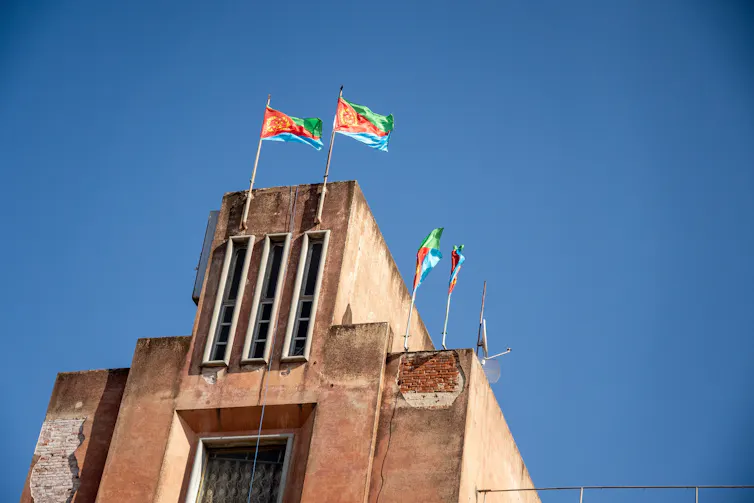
Building with flags against blue sky
Flags on a government building in Asmara, Eritrea. Angela N Perryman/Shutterstock

For example, Eritrea’s school curriculum normalises the creation of a militarised citizen who upholds the Eritrean People’s Liberation Front’s legacy and revolutionary culture. Similarly, North Korea uses school education to shape students’ behaviour, attitudes and beliefs to be compatible with and supportive of the regime. This is often supported by controlling the teaching and learning process and the academic environment.

Monitoring teachers and research

Authoritarian regimes recognise that safe education spaces can help students develop critical thinking and eventually question the country’s political system. They monitor teachers and school leaders, and promote those loyal to the regime’s ideas and principles. And, rather than encouraging critical thinking, they foster students’ sense of nationalism and patriotism.

Academic research is also a target of authoritarian regimes because of its scrutiny of government policies and actions. Researchers’ academic freedom is limited, and their choice of research topics is policed.

Most of these control measures are imposed in the name of protecting national security. For example, Eritreans are not allowed to conduct critical research that challenges the existing systems, inequalities and power structures of the country.

Researchers who cross the boundaries and criticise authoritarian regimes are silenced. Some are fired from their jobs while others face prison terms.

Meanwhile, authoritarian regimes rely on loyal academics to promote the state’s narrative. Loyal academics are also used to conceal authoritarian regimes’ failures by presenting selective evidence.

Many authoritarian states, such as China, Eritrea and North Korea, also incorporate military training into education. They blend political and ideological instruction to sustain their power. They teach students discipline and promote patriotism to develop loyal and obedient citizens.

Militarisation education sometimes places teachers and school leaders under military control. In Eritrea, all secondary school students complete their last year under military authority. This approach leads students to drop out of school. Additionally, it causes students and teachers to leave the country.

Authoritarian regimes manifest their true nature by spreading their ideas and principles. Our research shows that the education system is one of the most important levers in the propaganda machine for authoritarian countries.

The Conversation

Samson Maekele Tsegay is a Research Fellow at Anglia Ruskin University.

Zeraslasie Shiker is a PhD researcher at the University of Leeds.

  •  

What is lipoprotein(a) cholesterol, or Lp(a)? And can you lower yours?

Maskot/Getty Images

Most people know about “good” and “bad” cholesterol. But few realise there is another type called lipoprotein(a). It can raise the risk of heart attacks and strokes, even in people who do everything right.

This lesser-known cholesterol particle, often written as Lp(a), is gaining increasing attention from researchers and drug companies.

Lp(a) isn’t included in routine cholesterol tests and there’s currently little we can do about it. That may now be changing.

What is lipoprotein(a)?

Lipoprotein(a) is a cholesterol that carries lipoprotein – particles made of fats and proteins – in your blood. It’s structurally similar to LDL (low-density lipoprotein, or “bad” cholesterol), but with an additional protein attached called apolipoprotein(a).

This extra protein component seems to make Lp(a) more likely to contribute to the build-up of fatty deposits in arteries. It may also promote blood clotting. Together, these processes increase the likelihood of cardiovascular disease (heart disease and stroke).

Large-scale studies and international guidelines now recognise Lp(a) as a risk factor for heart disease and stroke.

What determines your Lp(a) levels?

Unlike most other cholesterol measures, Lp(a) is largely determined by genetics.

Around 70-90% of variation in Lp(a) levels is inherited. This is driven mainly by differences in the LPA gene, which controls the structure of apolipoprotein(a).

Because of this strong genetic control, Lp(a) levels are usually set early in life and remain relatively stable over time, with little influence from diet, exercise or body weight.

There are some smaller influences. Levels can vary by sex, ethnicity and hormonal changes, and may be slightly affected by factors such as menopause or kidney disease.

How does it affect your risk?

A growing body of research shows higher Lp(a) levels are associated with an increased risk of heart attacks, strokes and aortic valve disease.

Importantly, the relationship appears continuous. In long-term studies, cardiovascular risk rises step by step as Lp(a) levels increase.

Lp(a) also adds to overall risk. For example, someone with high LDL cholesterol and high Lp(a) is likely to be at higher risk than someone with elevated LDL cholesterol alone.

For people with higher Lp(a) levels, cardiovascular risk rises mainly when inflammation is elevated.

This helps explain why some people develop cardiovascular disease despite otherwise favourable risk profiles.

Can you lower lipoprotein(a)?

There are currently few options to lower Lp(a).

Lifestyle changes that improve heart health, such as eating well, being physically active and not smoking, remain essential. But they have minimal effect on Lp(a) itself.

Most commonly used cholesterol-lowering medications, including statins, do not reduce Lp(a). In some cases, statins may even increase Lp(a) slightly. Despite this, statins still reduce overall cardiovascular risk and remain a cornerstone of treatment.

Some newer drugs, such as PCSK9 inhibitors, can lower Lp(a), but typically only by a modest amount of around 15–30%.

Several drug companies, including Novartis, Amgen and Eli Lilly, are racing to develop treatments that specifically lower Lp(a). These new medicines work very differently from statins. Instead of helping the body clear cholesterol from the blood, they use a “gene silencing” approach that reduces how much Lp(a) the liver makes in the first place.

This means it switches off production of cholesterol rather than trying to remove what is already there.

In early clinical trials, these drugs have lowered Lp(a) levels by 80–90%, far more than existing treatments. This is why Lp(a) is suddenly getting attention.

If upcoming trials show these large reductions also lead to fewer heart attacks and strokes, it could change how cardiovascular risk is assessed and treated, especially for people whose risk is driven largely by genetics rather than lifestyle.

Should you get tested?

Lp(a) is not included in standard cholesterol tests. A specific blood test is required.

Medicare doesn’t cover these blood tests, so if your doctor orders one you’ll have to pay out of pocket – around A$25 to $80 – plus any costs associated with the consultation.

International guidelines now recommend measuring Lp(a) at least once in adulthood, particularly for people with a family history of early heart disease or unexplained cardiovascular risk.

Because levels are largely genetically determined and stable, a single measurement is often considered sufficient for most people.

What should you focus on?

Learning you have high Lp(a) can feel frustrating, especially given the limited options to lower it directly.

But it’s important to see Lp(a) as one part of your overall cardiovascular risk.

There are still many factors you can influence to lower your overall risk, and particularly your LDL cholesterol. These include:

  • LDL (bad) cholesterol
  • blood pressure
  • smoking
  • physical activity
  • diet quality
  • managing conditions such as diabetes

For people with elevated Lp(a), managing these factors may be even more important.

What happens next?

Research into Lp(a) is moving quickly. If current clinical trials show targeted therapies reduce cardiovascular events, testing and treatment may become more common.

For now, awareness is an important first step.

If you are concerned about your cardiovascular risk, it may be worth discussing Lp(a) testing with your doctor, especially if you have a strong family history of heart disease.

At the same time, the broader message to maximise heart health through healthy behaviours remains unchanged. Even as new risk factors emerge, the foundations of good heart health are still the things we can control.

The Conversation

Lauren Ball receives funding from the National Health and Medical Research Council, Health and Wellbeing Queensland, Heart Foundation, Gallipoli Medical Research and Mater Health, Springfield City Group. She is a director of Dietitians Australia, a director of the Darling Downs and West Moreton Primary Health Network and an associate member of the Australian Academy of Health and Medical Sciences.

Kirsten Adlard works for the National Heart Foundation of Australia and is an Honorary Research Fellow at The University of Queensland. She also has a membership and holds accreditation as an exercise physiologist through Exercise and Sports Science Australia.

  •  
❌