
 Login
Login
Osteoarthritis: how stimulating the muscles with electricity may help manage the condition
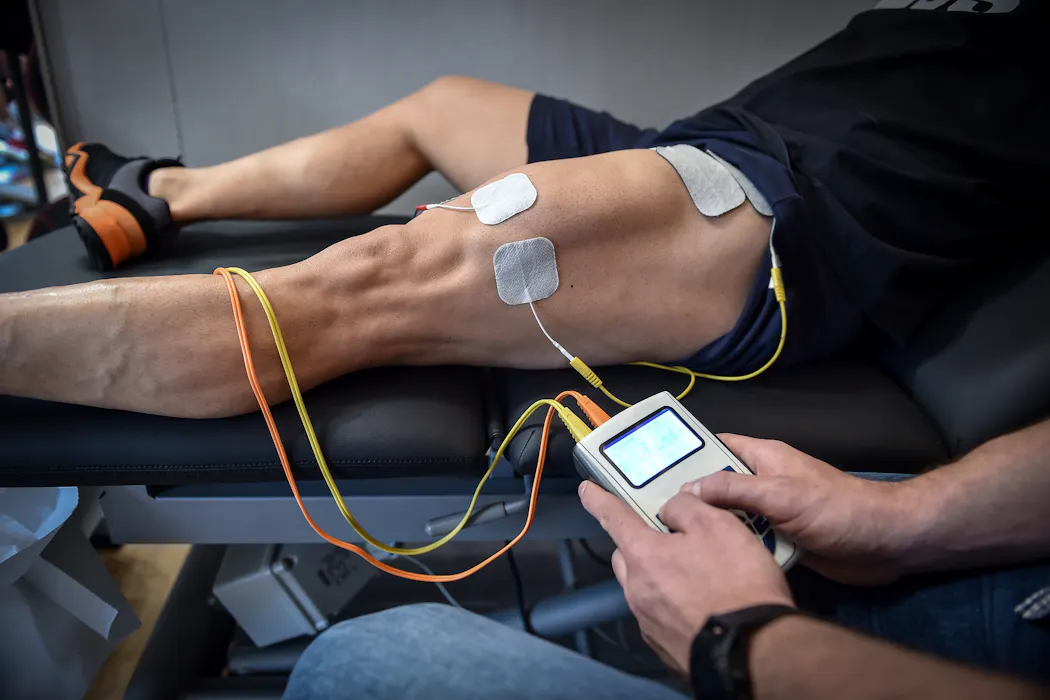
An estimated 595 million people globally are living with osteoarthritis. This makes it one of the leading causes of pain and disability.
Osteoarthritis is a degenerative joint disease, in which tissues in the joint break down over time. The condition can affect any joint, but most commonly the knees, hips, hands and spine.
However, the impact of osteoarthritis often goes beyond the affected joint. The condition can have profound effects on daily life.
Research shows that people with osteoarthritis are less likely to remain in work and more likely to develop additional health problems, such as diabetes, obesity and poor mental health, than those without the disease.
One of the key approaches recommended for managing osteoarthritis is exercise, including aerobic exercise and muscle strengthening. It’s shown to be extremely beneficial for managing the condition and its associated symptoms.
But not everyone who has osteoarthritis is able to exercise due to pain and limited mobility. This is why electrical muscle stimulation, a novel technology that uses small electrical impulses to help muscles contract, is being investigated for managing osteoarthritis.
Exercise for osteoarthritis
Aerobic and muscle strengthening exercises are both proven to address key drivers of osteoarthritis symptoms.
Aerobic exercise can help manage body weight and improve pain by enhancing circulation and reducing inflammation.
Muscle strengthening exercise improves joint stability by supporting the surrounding musculature. This reduces stress on the joint and improves movement.
Together, these approaches can help to break the cycle of pain, inactivity, weight gain and physical decline that can happen in osteoarthritis.
Read more: Joint pain or osteoarthritis? Why exercise should be your first line of treatment
But as beneficial as exercise is, many people with osteoarthritis are reluctant to try it or struggle to adhere to physical activity long term.
In fact, data suggests that people with musculoskeletal conditions (such as osteoarthritis) are around twice as likely to be physically inactive as their healthy counterparts.
Reported barriers to physical activity include pain, limited mobility, negative experiences of physical activity and a lack of motivation. But the less we move, the more muscle mass and strength we gradually lose.
A difficult cycle can then emerge, whereby pain, stiffness and fear of making symptoms worse all discourage movement. Then, without movement, stiffness and pain worsen.
An alternative approach
When exercise feels too painful or isn’t possible, electrical muscle stimulation (EMS) may offer an alternative method for maintaining and improving strength.
This works by placing electrodes on the skin to deliver small electrical impulses, causing muscles to contract without the joint needing to move. The electrical impulse is similar to the signal we normally send from our nervous system when we want to perform a movement.
When performed instead of exercise over several weeks and sessions, EMS has been shown to increase muscle size and strength and improve function in people with hip and knee osteoarthritis. For example, in people with knee osteoarthritis, EMS performed on the quadriceps muscles three days per week for 4-8 weeks has led to benefits.
The therapy can be used in isolation, or it can be applied during exercise to activate even more muscle fibres in what is called a superimposed muscle contraction.
Electrical muscle stimulation also shows promise for those with severe, end-stage osteoarthritis who are preparing for surgery.
For example, one study compared the effects of performing EMS or exercise before surgery for knee osteoarthritis on postoperative outcomes. The study found that participants who used EMS for 20 minutes a day, five days a week in the six weeks before surgery saw greater improvements in postoperative muscle mass, strength and function, compared with patients who performed physical exercise.
Muscle weakness is common both before and after surgery, partly due to pain and reduced movement. While exercise programmes before and after surgery are widely recommended, research suggests they often only have modest effects on functional recovery from joint replacement surgery.
One explanation may be that people with severe osteoarthritis cannot tolerate the level of intensity needed while exercising to build muscle effectively. In addition, joint trauma and swelling from surgery can cause disruption to the signalling pathways that are required to activate muscles.
Because EMS can bypass some of these signalling issues, it may help to maintain or rebuild muscle where conventional exercise is not feasible immediately after surgery. It’s often used in sports settings for this reason, such as when athletes require anterior cruciate ligament surgery.
Not a replacement for exercise
That said, electrical muscle stimulation is not a magic solution and has its limitations. In many cases, it works best as a complement to, not a substitute for, active rehabilitation.
The body of evidence for its effectiveness in osteoarthritis is also still evolving. Some studies showed inconsistent results or were only conducted using a small sample.
Some people find the sensation of electrical stimulation uncomfortable. Some aren’t suitable for its use (for example, those with pacemakers) and devices can be expensive to buy.
Nonetheless, for those who cannot exercise due to pain, swelling or limited mobility, EMS offers a practical tool to maintain muscle strength. This can help them stay active and independent for longer, recover quicker from surgery, and maintain a better quality of life.

Louise Burgess does not work for, consult, own shares in or receive funding from any company or organisation that would benefit from this article, and has disclosed no relevant affiliations beyond their academic appointment.
